Dorota Dziong is GlogauAIR resident from October 2025 to December 2025. Q4
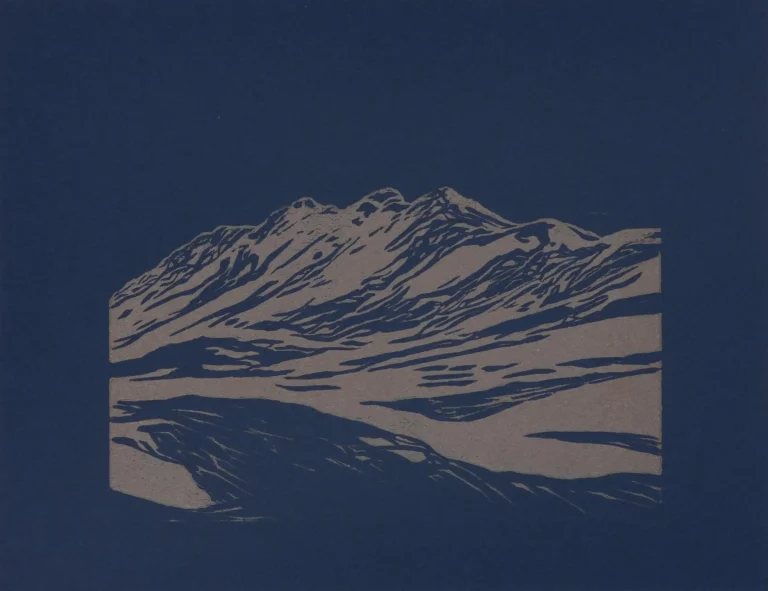
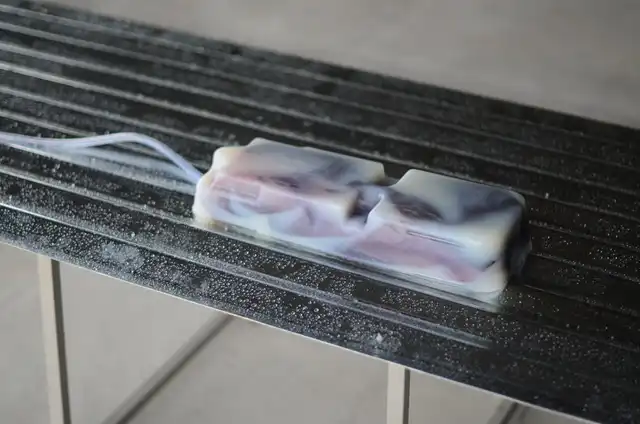
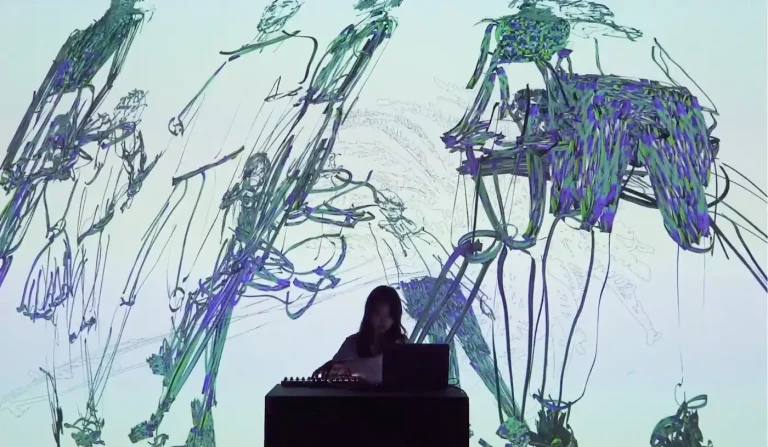
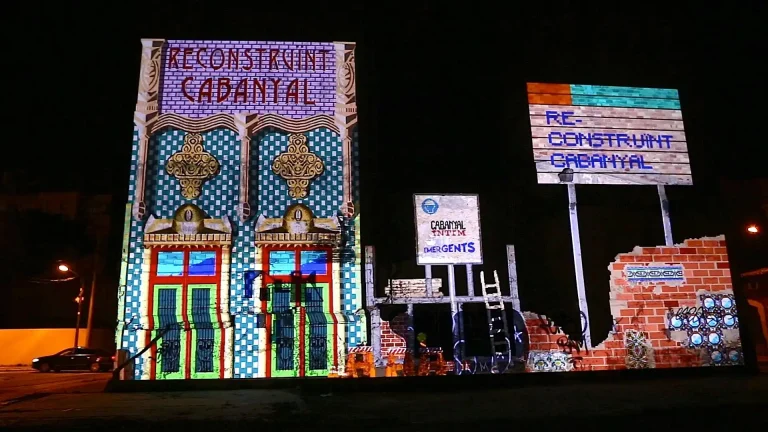
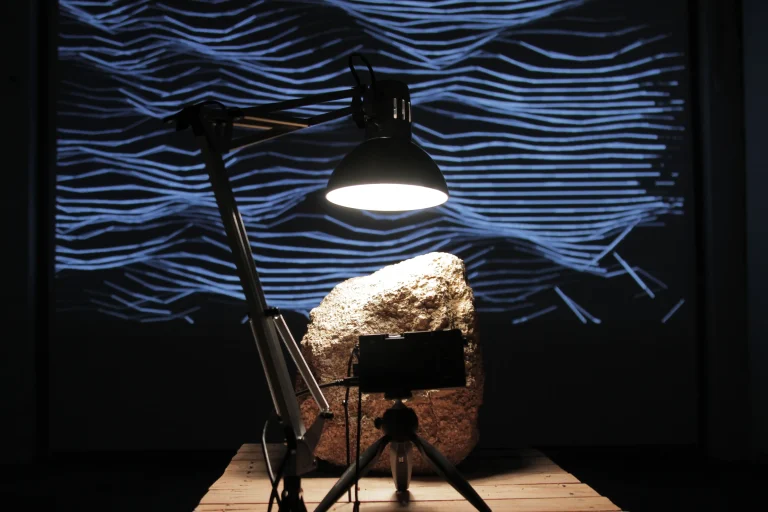
Dorota has a multidisciplinary practice spanning painting, video/animation, and site-responsive installation. Her practice explores the human need for containment, both physical shelter for our bodies and containers for the things we collect, using playful or absurdist approaches to grapple with complexity. She holds an MFA from KMD, University of Bergen, and an Hon. B.A. in Visual Studies & Art History from the University of Toronto.



Meet the Artist
Can you tell me a bit about your background and what you’re working on for this residency at GlogauAIR?
I had been working as a painter for quite a while, but recently I did my MFA in Norway, and went back to school after quite a long break. Going in I knew I wanted to look into animation, and by the end I was working in video, and video editing more broadly as well as installation. I really experimented and expanded into being more interdisciplinary at this point, though still very much based in drawing and painting.
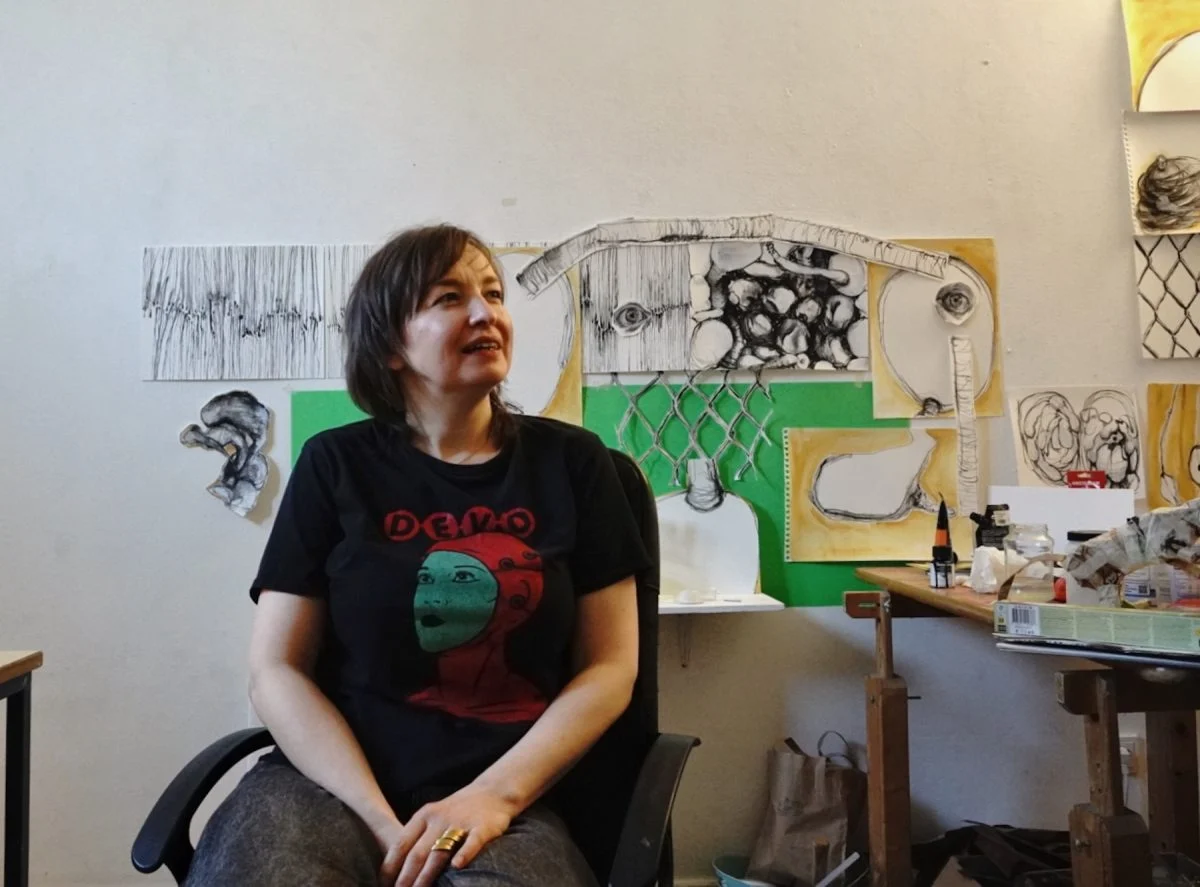
I was really struggling with the rigid frame and the preciousness of painting as these objects that you make. Also because my work is about objects, and collecting objects and the objects we surround ourselves with in our apartments and homes. So that played into it, and the fact that I moved around a lot and lost a lot of studios –that was the reality of Toronto in terms of the housing and real estate crisis. But wherever I moved since, that type of situation is happening everywhere even if it’s to a lesser degree. So even just carrying and packing and storing the paintings that I was making was an uncomfortable and strange thing to do.
I deal with objects and it comes from being an immigrant and a longer history of my family, having grown up in Poland, with the history of the war, and then communist regime and my grandparents getting expropriated, and ongoing housing instability as an artist.. I am also trying to look beyond myself, which is trickier to do well. That’s what I’m trying to work on too, looking beyond just me and my circumstances to the bigger political or historical context.
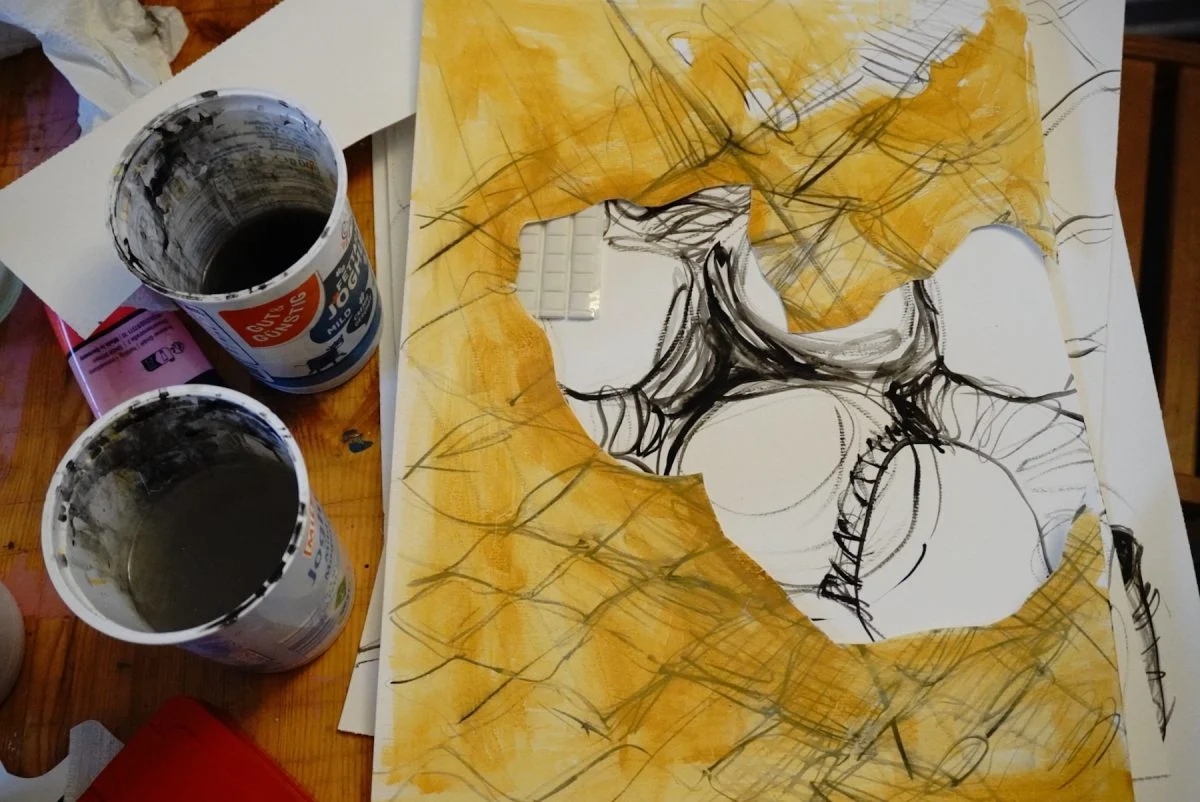
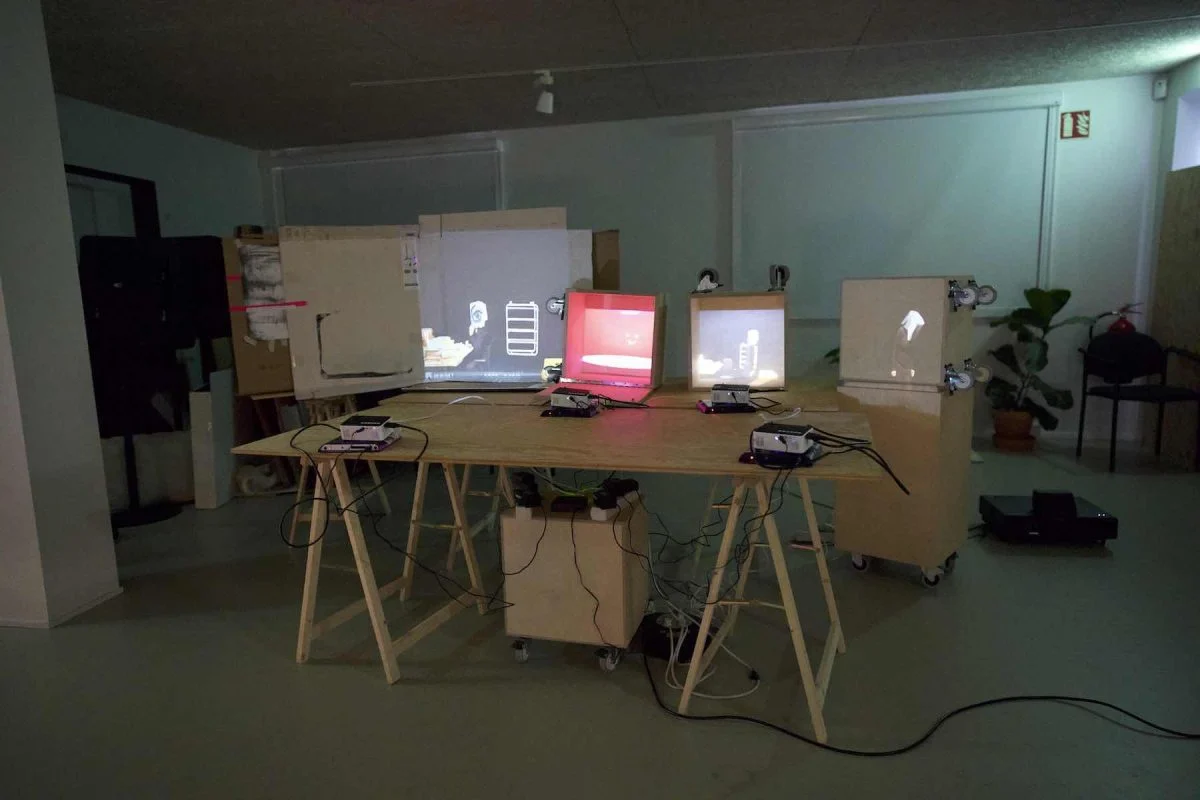
There are two parallel things I’m working on at GlogauAIR that will have some interplay, but right now they’re parallel, and more separate..
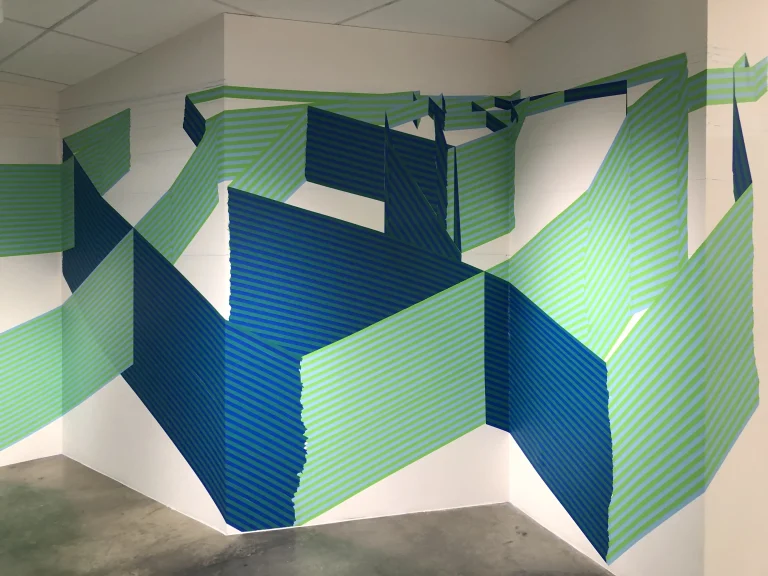
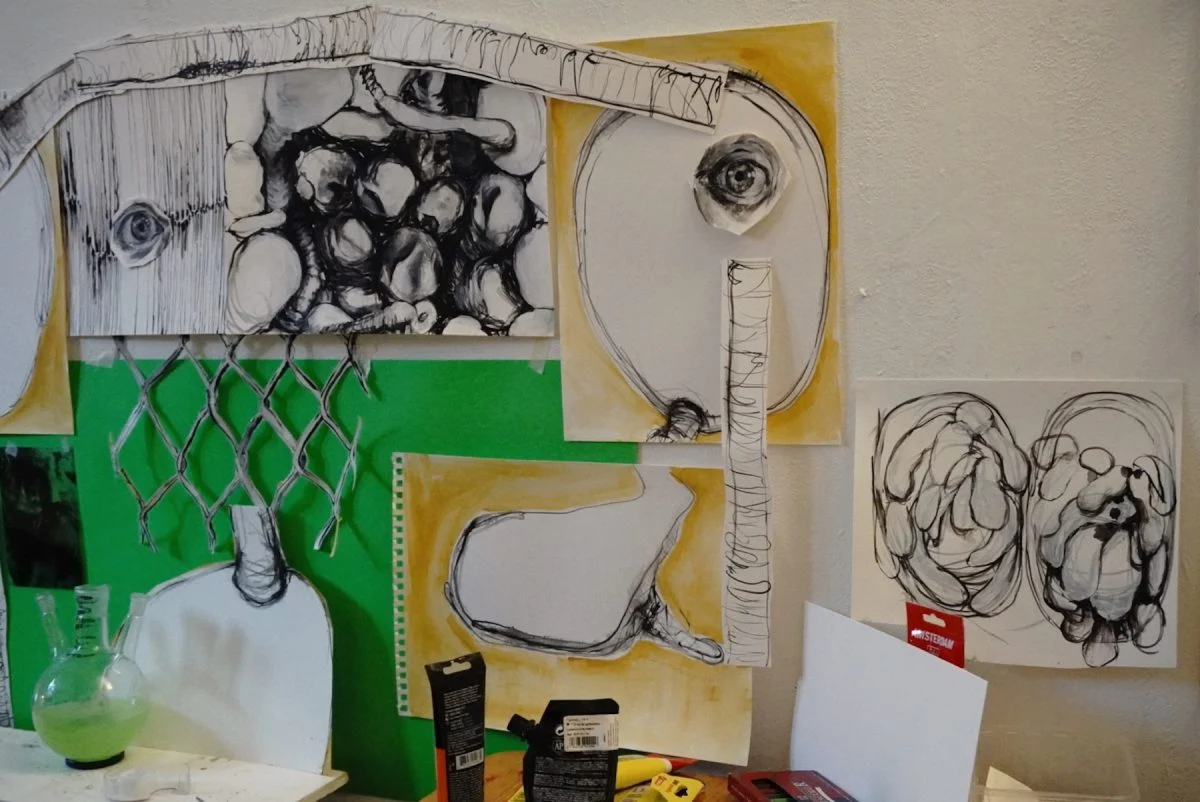
One of them is an installation, mostly of works on paper, as well as some objects, that is site-responsive and grows slowly throughout the residency on the walls of my studio. Shortly before coming to GlogauAIR I had an exhibition where I was able to work in a similar way, by working on drawings in the space where they were eventually exhibited and responding to that space over time.
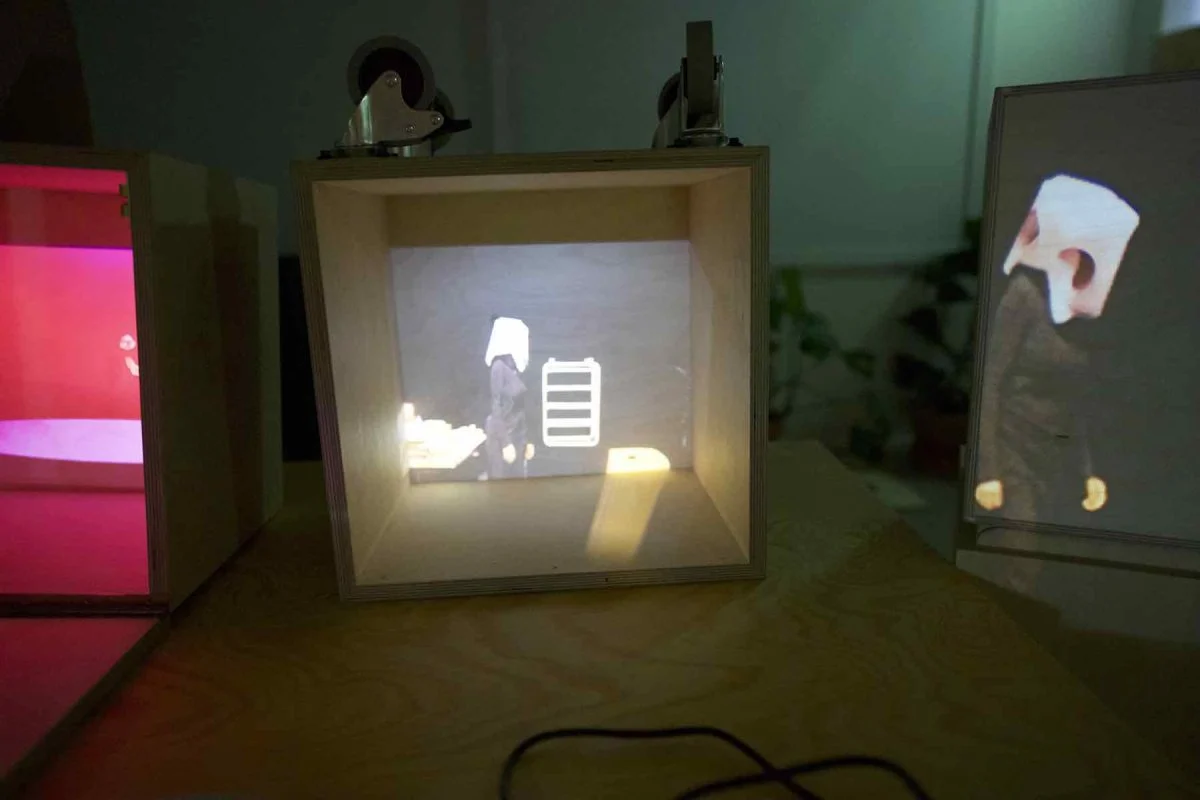
The other one is a video animation. I brought this cast iron dog that was my mom’s. My mom passed away last year, and I asked my uncle to bring it for me. He brought it from Canada to Poland, and then I went to Poland and brought it to Norway and then I brought it from Norway here with me. I haven’t unpacked it yet because I want to film the unpacking.
I want to hear about your process in animating and what pre-production looks like for you. You mentioned beginning to animate unwrapping your dog, are there materials and props guiding the plot or do you have a planned out storyboard?
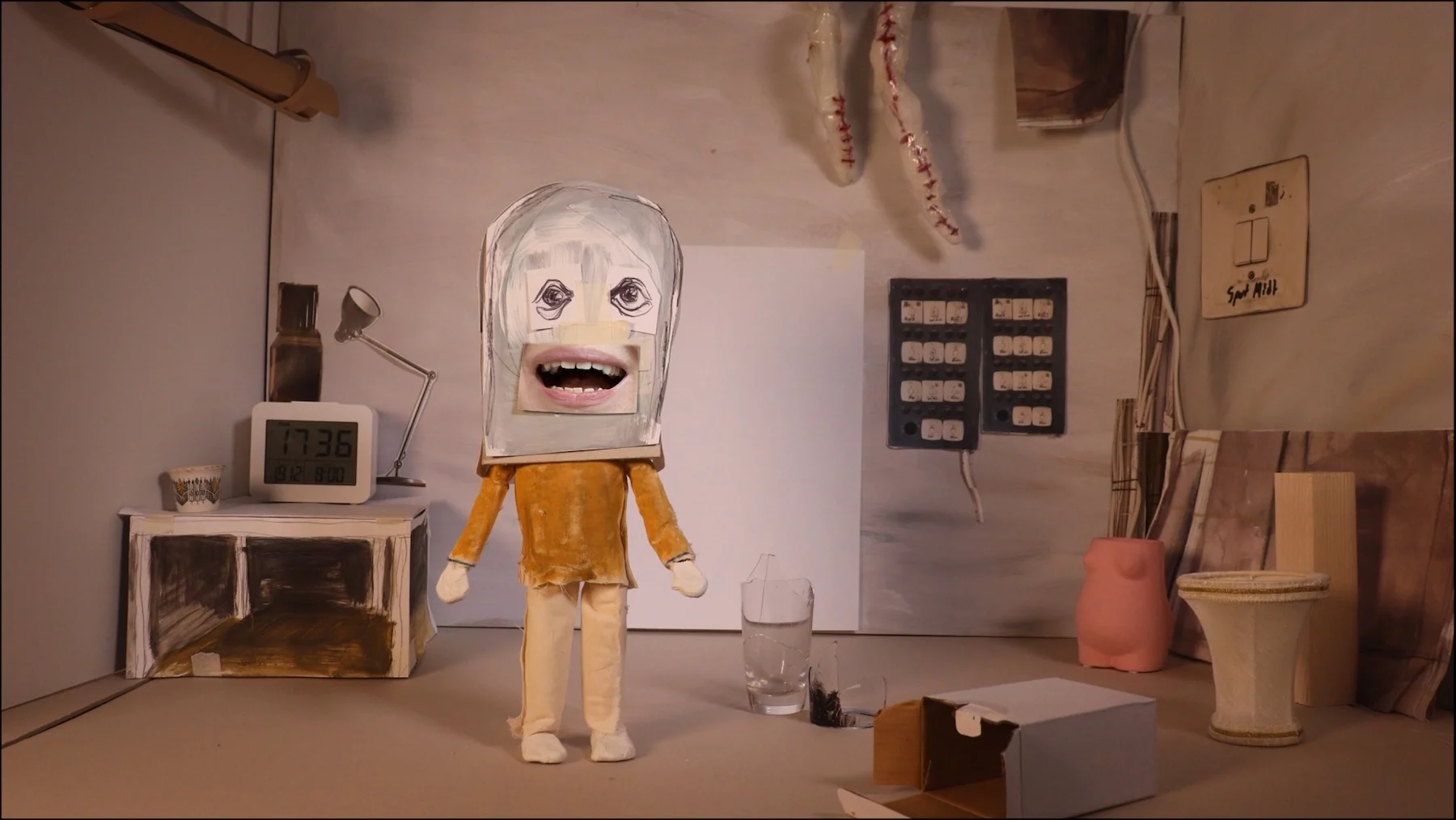
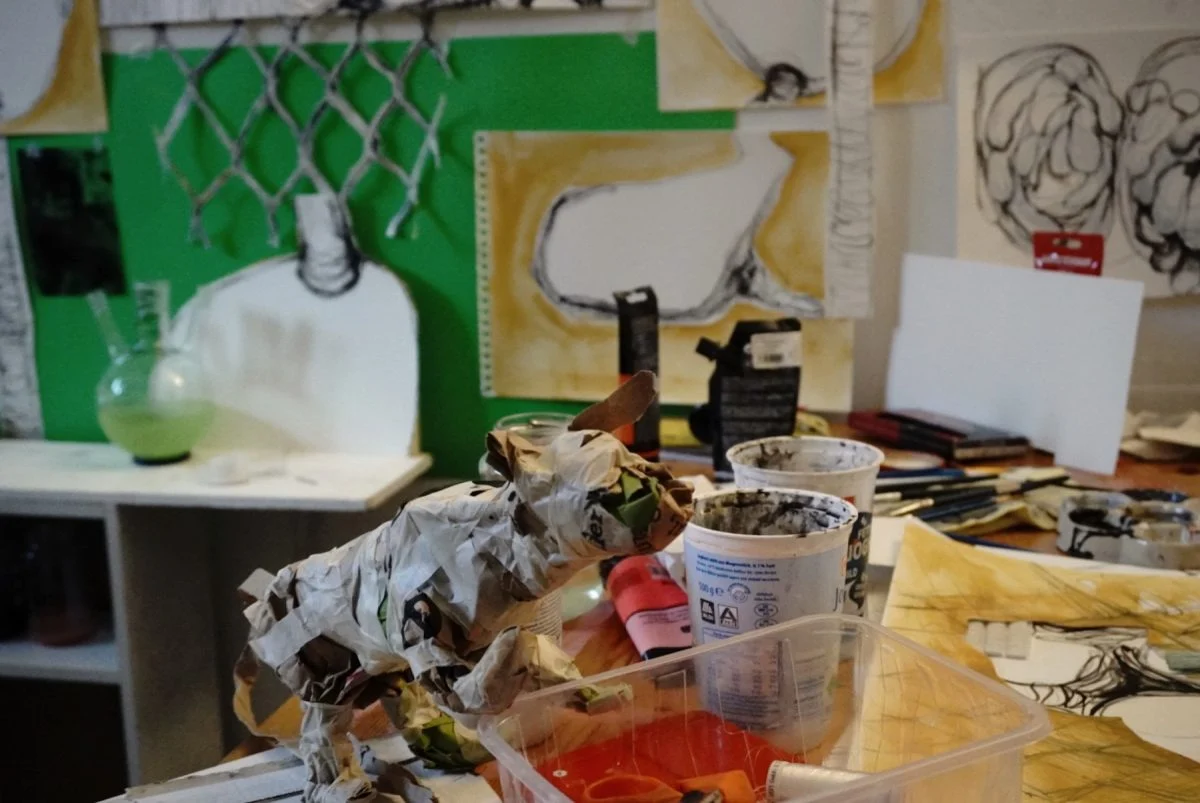
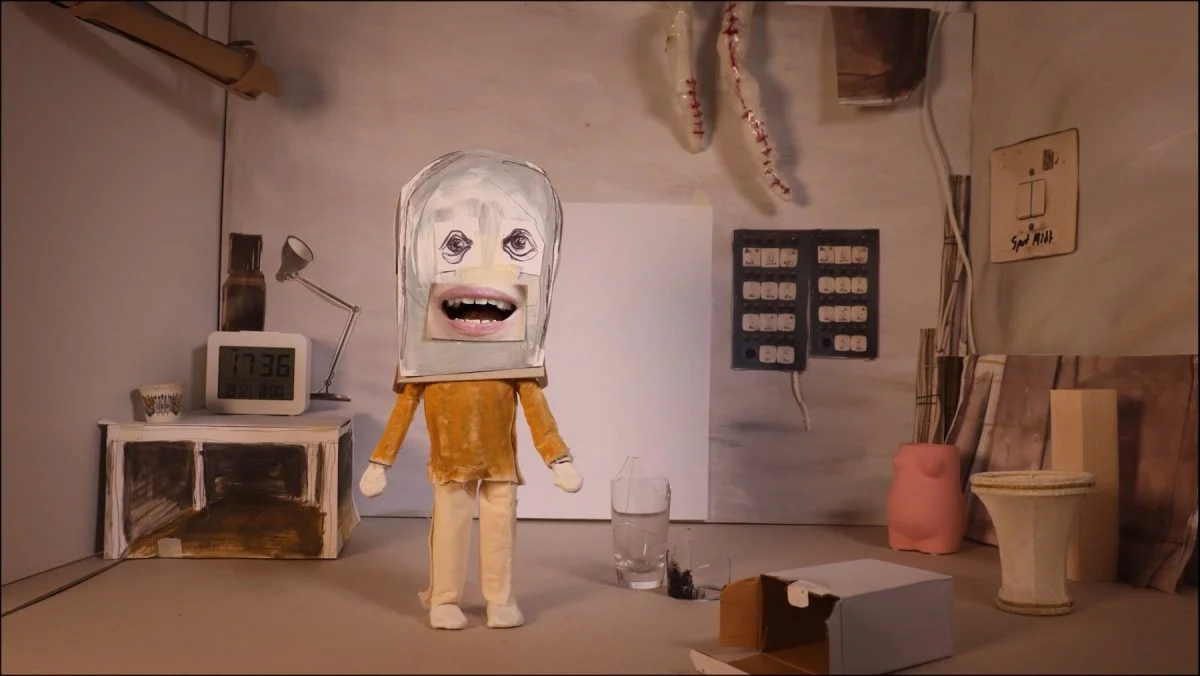
I’m quite new to animating and video; I made a few short films already, but I’m still very much learning. I don’t come from a background of a filmmaker or an animator, so the way I work is very similar to the way I work with anything else. It is very collage-like just like in painting, where I was cutting up my paintings and re-collaging them and moving away again from stretched canvas and using cardboard and being much more non-permanent.
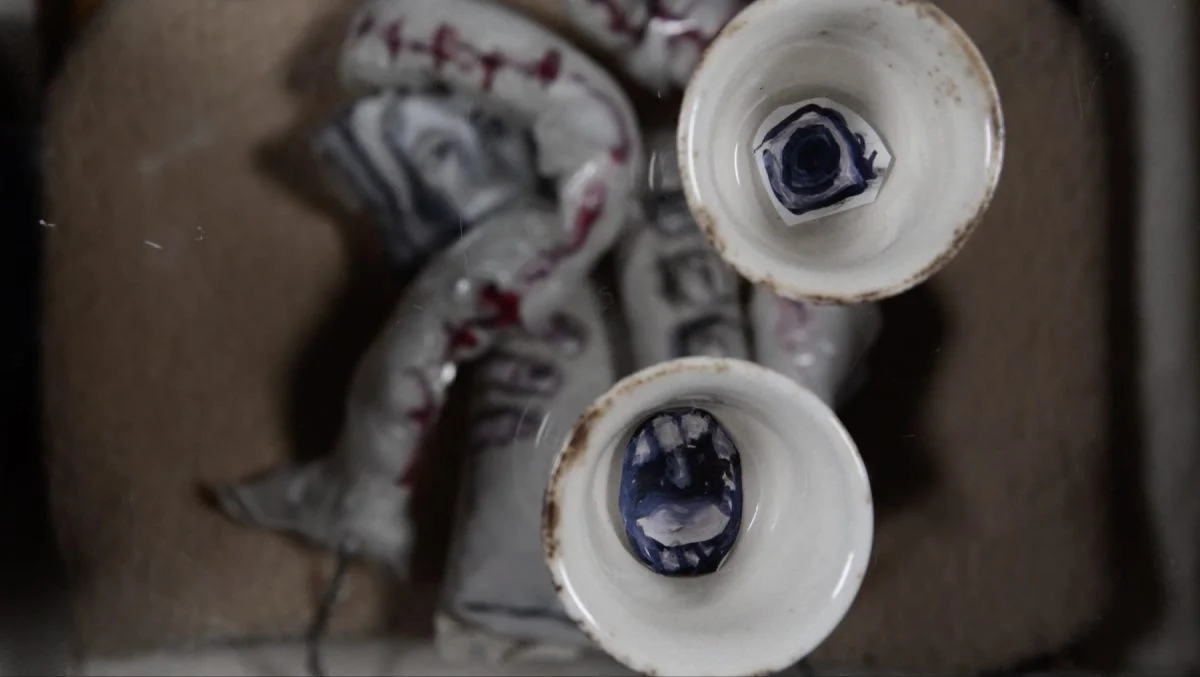
I don’t have a storyboard. I have some ideas of images and themes. Because I work with containers, I’ll often collect some cardboard boxes or make something that reflects what I’m thinking about. I want to unpack all of them first, being very open to what comes out, giving up control a little bit and following where the materials as I go. I bought some things at the flea market here and am playing with a balance of directing and following.
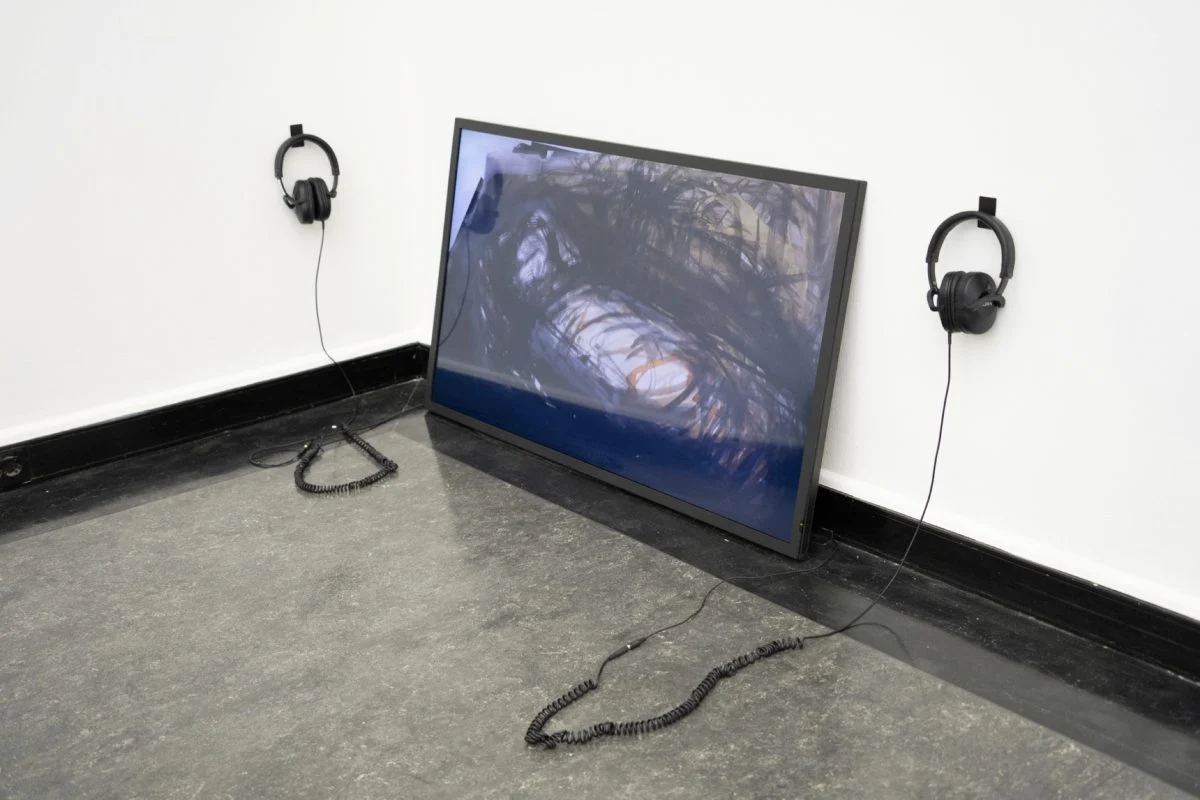
Right before I came here, I did a week-long residency in a sound studio in Bergen. Working with sound was even newer to me than video. I started writing and recording this script from the point of view of the dog, so there is some narrative existing already. I have no idea if I’m going to use it, but there was a story that came out this way, so there is more of a throughline that exists.
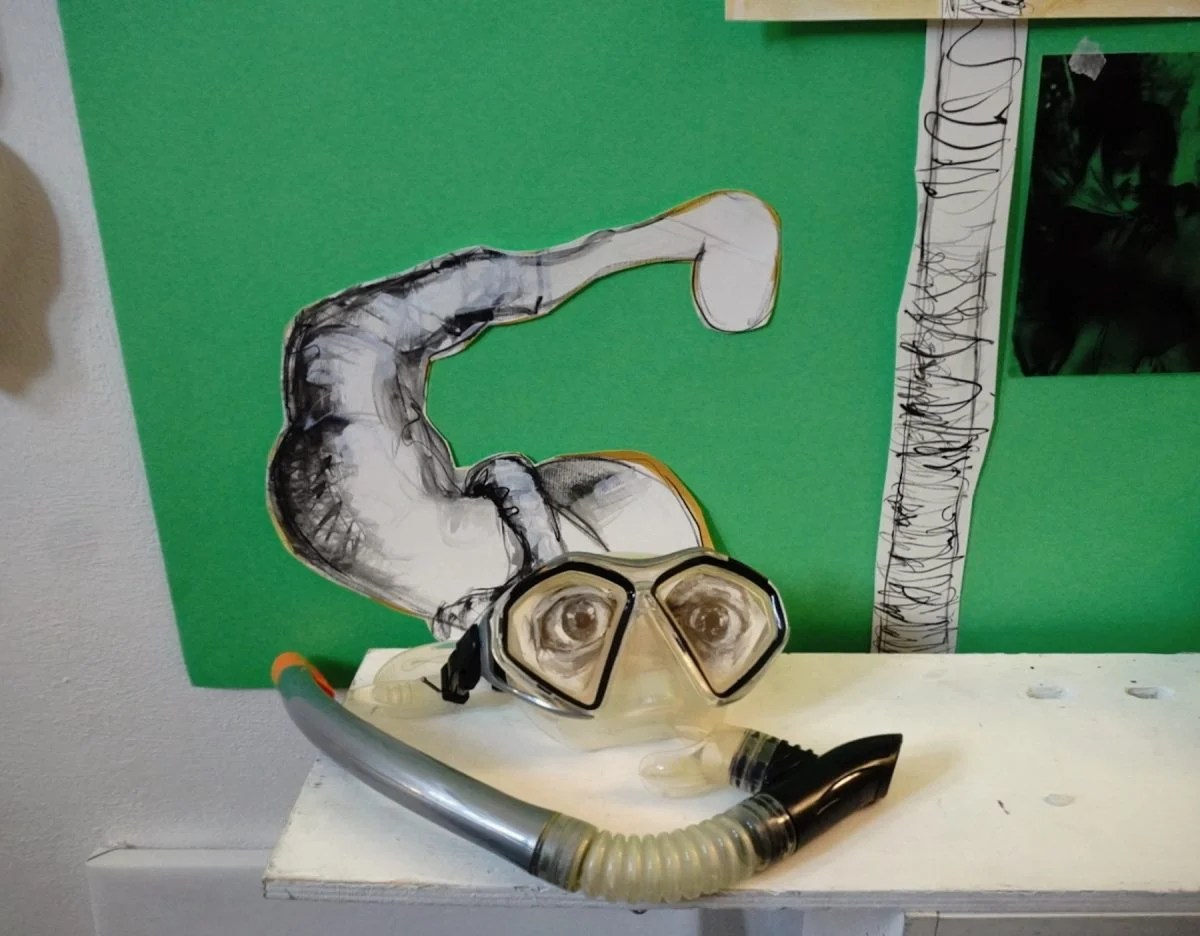
Absurdity and absurdism are quite important to me. It comes from collaging and Dada and using absurd as a method to deal with complexity. Speaking broadly, I think we can struggle with complexity of things that can be contradictory and it can draw people to dichotomies. Absurd juxtapositions can offer nuance through presenting familiar things in unfamiliar ways, disrupting habitual patterns of thoughts and not offering fixed meanings. And hopefully offer different approaches and unexpected connections.
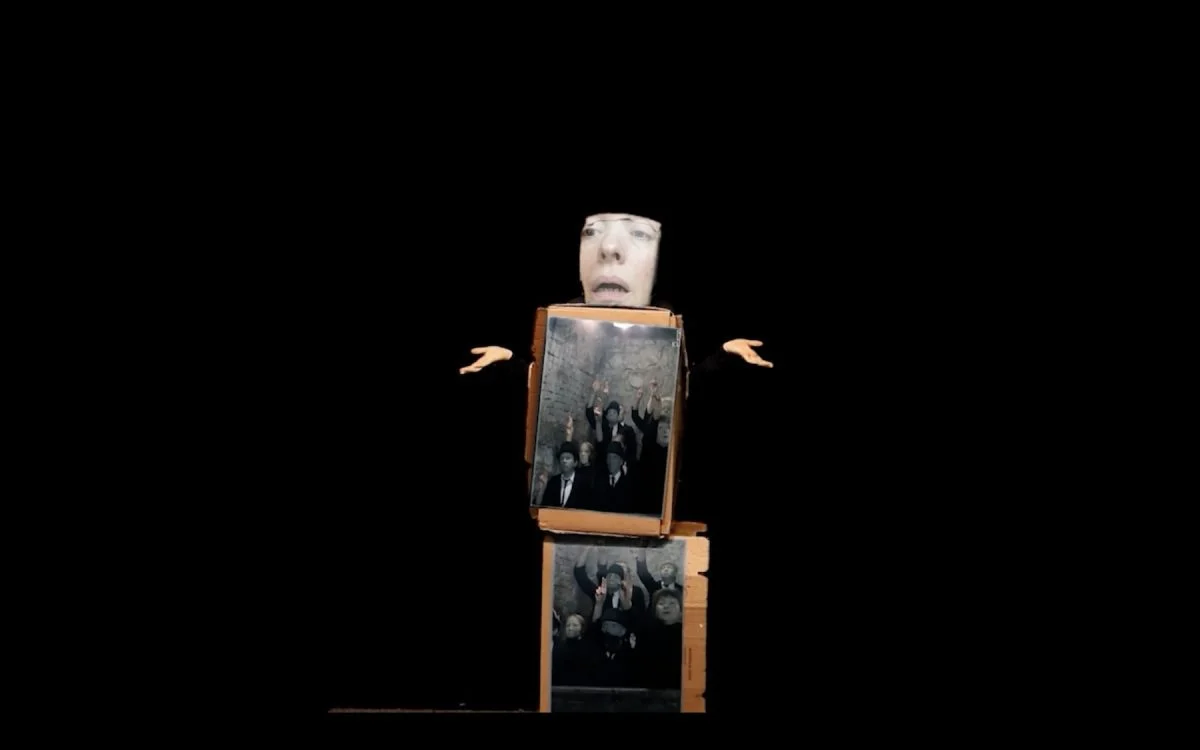
My last question for you is about your eye motifs, because I see that a lot in your work. You have eyes peeping out of dark corners, an isolated head and hands attached to a body. What’s your intention on abstracting the human body with cardboard and paper?
It goes back to collage history, for example when you look at the work of Hannah Höch. It’s about this surreal, dadaist, collage-like approach, but also this connection to objects as extensions of us; we don’t end where our bodies end.
It’s also like putting googly eyes on things. If you put googly eyes on anything, then it becomes like a body. It’s like dealing with objects, and dealing with spaces, and inanimate things, but trying to talk about how they’re kind of animate, and parts of us.
I also had this idea of monsters. I read Virginia Woolf’s Mrs. Dalloway during the pandemic, and she talked about a monster within us. And I ended up having these creatures in my films. They’re not scary: they’re really helpless, awkward, very flawed, and DIY. I’m connecting the idea of monster and grotesque. Monsters have been used politically to vilify the Other, the immigrants, queer people, the poor. Again, the grotesque comes from putting eyes on things, disembodying a body, and recombining it. There is an element of post-human, the body not being organic anymore, touching in some way on Donna Haraway’s way of challenging rigid boundaries between human and non-human and hybrid identities, which again challenges polarities.
Interview Shay Rutkowski (@sruutrut)
Photos Yasemin Erguvan (@yaseminerguvan)
- Statement
- GlogauAIR Project
- CV
- Gallery
- More
Statement
Dorota has a multidisciplinary practice spanning painting, video/animation, and site-responsive installation. Her recent work explores the intrinsic human need for containment, both physical shelter for our bodies and containers for the things we collect. Dorota examines real, imaginary, and metaphorical spaces to build a personal universe, using playful or absurdist approaches as a way of grappling with complexity. She recently completed her MFA at KMD, University of Bergen, and prior to that an Hon. B.A in Visual Studies and Art History at University of Toronto in Canada.
GlogauAIR Project
I plan to develop a site-responsive installation and animation that explores human needs for shelter and boundaries. I’ve lived in apartments all my life. An apartment is a box for living, a finite, enclosed space that holds personal history, objects, scents, routines, anxieties, the worn-out traces of our repeated movements, and the lives of those who came before.
The accumulation of possessions turns an apartment into an archive of a person’s identity; it becomes a set for living. Our physical things become extensions of ourselves, gathered, carried, and placed in space. Apartments and cardboard boxes.
CV
SELECT EXHIBITIONS
2025
- This vessel lets sound, two-person collaborative installation with drawing and sound, Isotop Fellesatelier, Bergen, Norway
- Sin Objeto/Intet Objekt video performance art event, Metronomen, Frederiksberg, Denmark
- Every single pocket has a hole in it, Thingness Gallery, Bergen
- After School Special event, Landmark, Bergen
- I could only see the back of it, KMD MFA Graduate Exhibition, Bergen Kunsthall, Bergen
2024
- It’s windy every day, Galleri Taxi, Bergen solo exhibition
- Stitching Dialogues, Etobicoke Civic Centre Art Gallery, Toronto, Canada
2023
- Tenderness, Modern Fuel Artist-Run Centre, Kingston, Canada
- (Un)Framed, Propeller Art Gallery, Toronto, Canada
2022
- Re(Moved), Red Head Gallery, Toronto, Canada, solo exhibition
- Through 100 Windows, Clark Centre for the Arts, City of Toronto
- and all of a sudden, Propeller Art Gallery, Toronto, curated by Simone Rojas-Pick and Chad Wolfond
- Toronto Outdoor Art Fair, Toronto
- Still Life, John B. Aird Gallery, Toronto
Additional Information
- Clark Centre for the Arts is a City of Toronto cultural facility in Guild Park and Gardens with specialized art studios and gallery spaces.
- Propeller Art Gallery is an artist-run co-operative and exhibition space in Toronto’s Queen West Art + Design District.
Gallery
More
We do not have any further information at this time.