Jupiterfab is GlogauAIR resident from April 2026 to June 2026. Q2
Jupiterfab is a community focused multimedia artist who combines art and science in socially engaged projects. The artist has worked in over 20 countries, collaborates with international organizations, and creates site specific exhibits with visual art, audio, and video installations. Their main media are murals and paintings, using exaggerated characters to express emotion and inspire reflection, dialogue, and community transformation.



Meet the Artist
Do you want to start by telling me a bit about yourself and what you’re doing while you’re at GlogauAIR?
My name is Fabrizio. Jupiterfab is my artist name. I’m an Italian artist, but I’m based in Mexico.
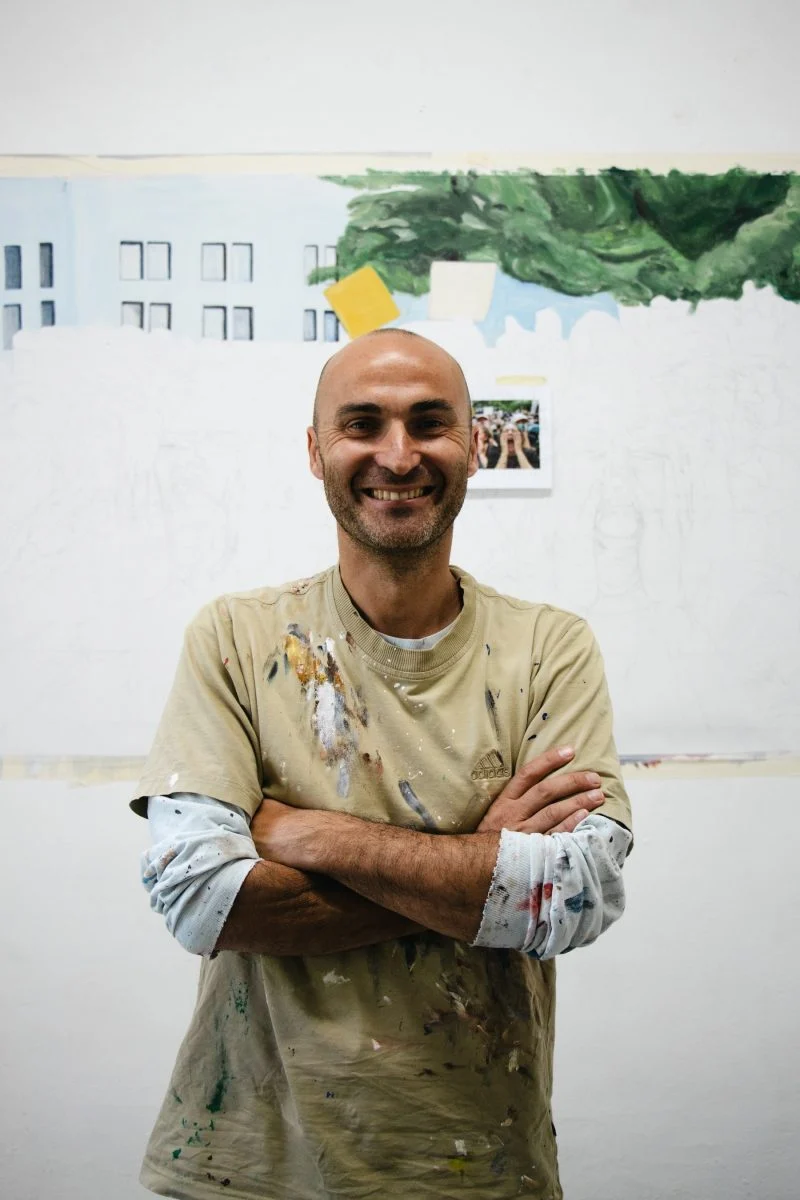
I work on art projects with social impact. What does that mean? It means that I use art as a tool to create social change in communities. I normally work actively with communities, trying to connect with them and create an empathic bridge. I discuss possible problems, or issues that they have or they want to improve. Together we achieve the artistic element , which is like a translation of everything we want to stress and visualize.
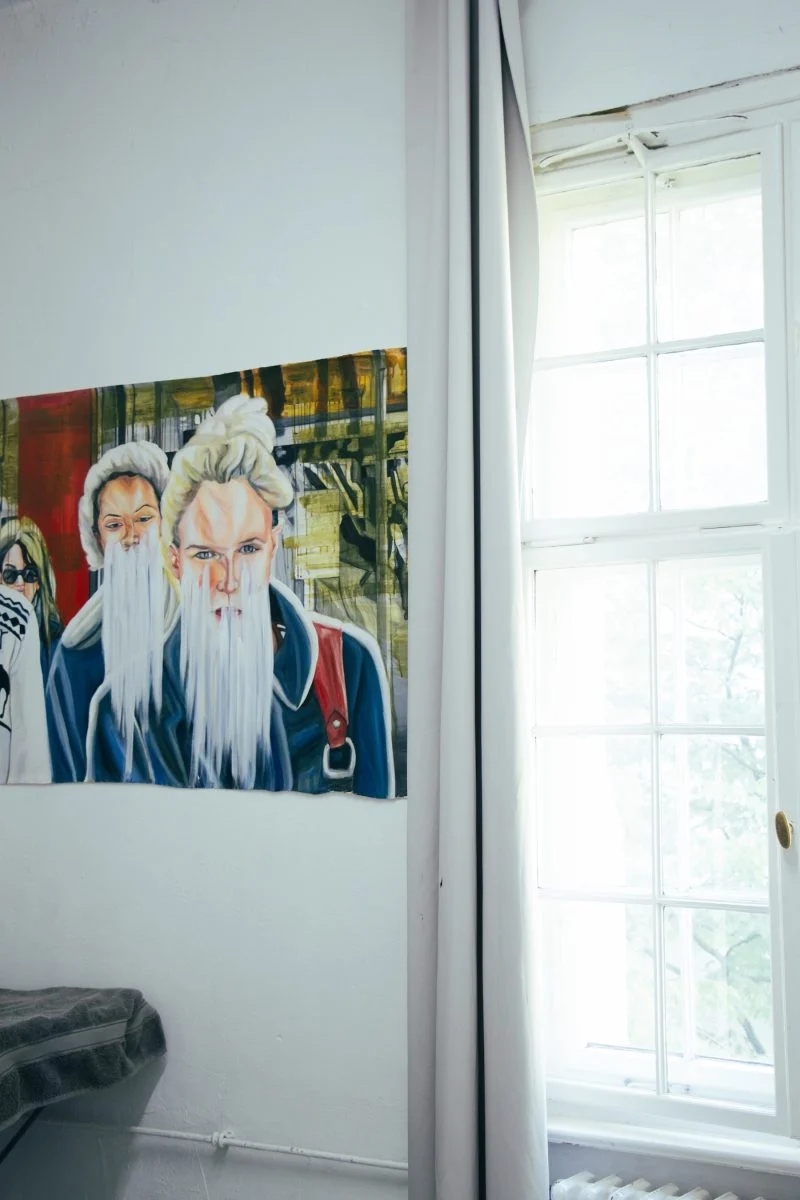
In the last few years, I started working with social scientists from different universities, which allows me to approach the project through knowledge. The community has the chance to get touched by the art, through emotions, while at the same time, they have the chance to get in touch with someone who has the knowledge to help them.
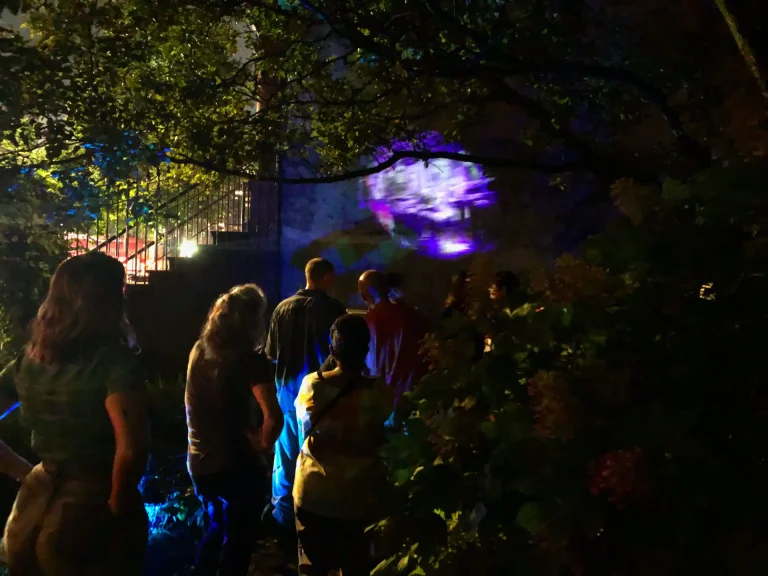
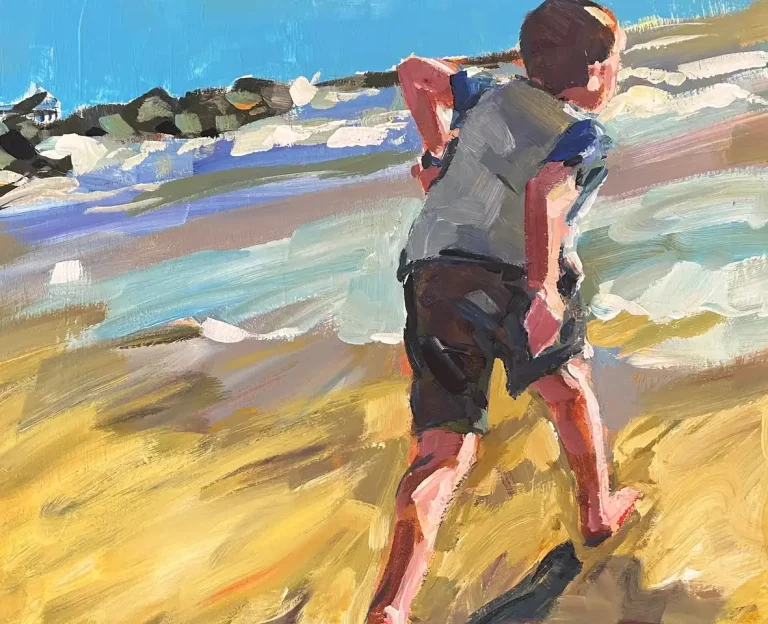
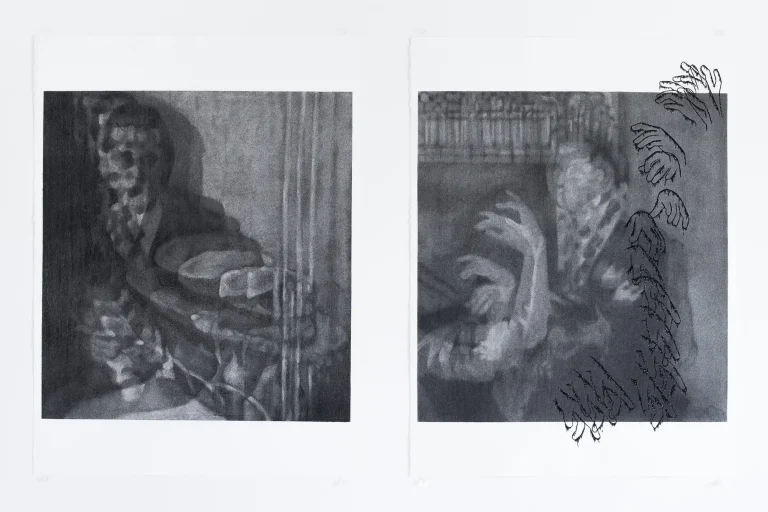
In terms of media, I work mainly with visual art. Indoors, I create paintings and drawings. Outdoors, I paint murals in public spaces. I like the idea of the mural because I think it’s the most democratic form of art that exists. You just paint in a street and everybody has access to it.
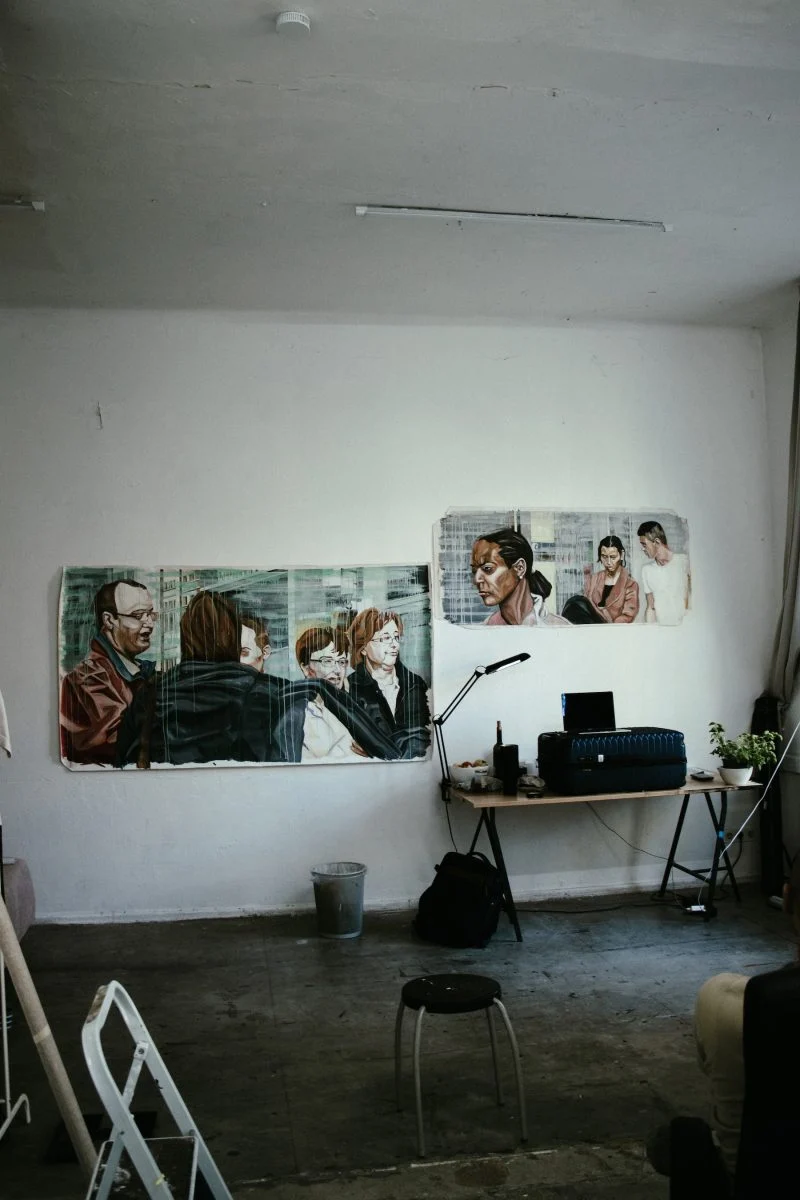
I’m here to work on a couple of projects.
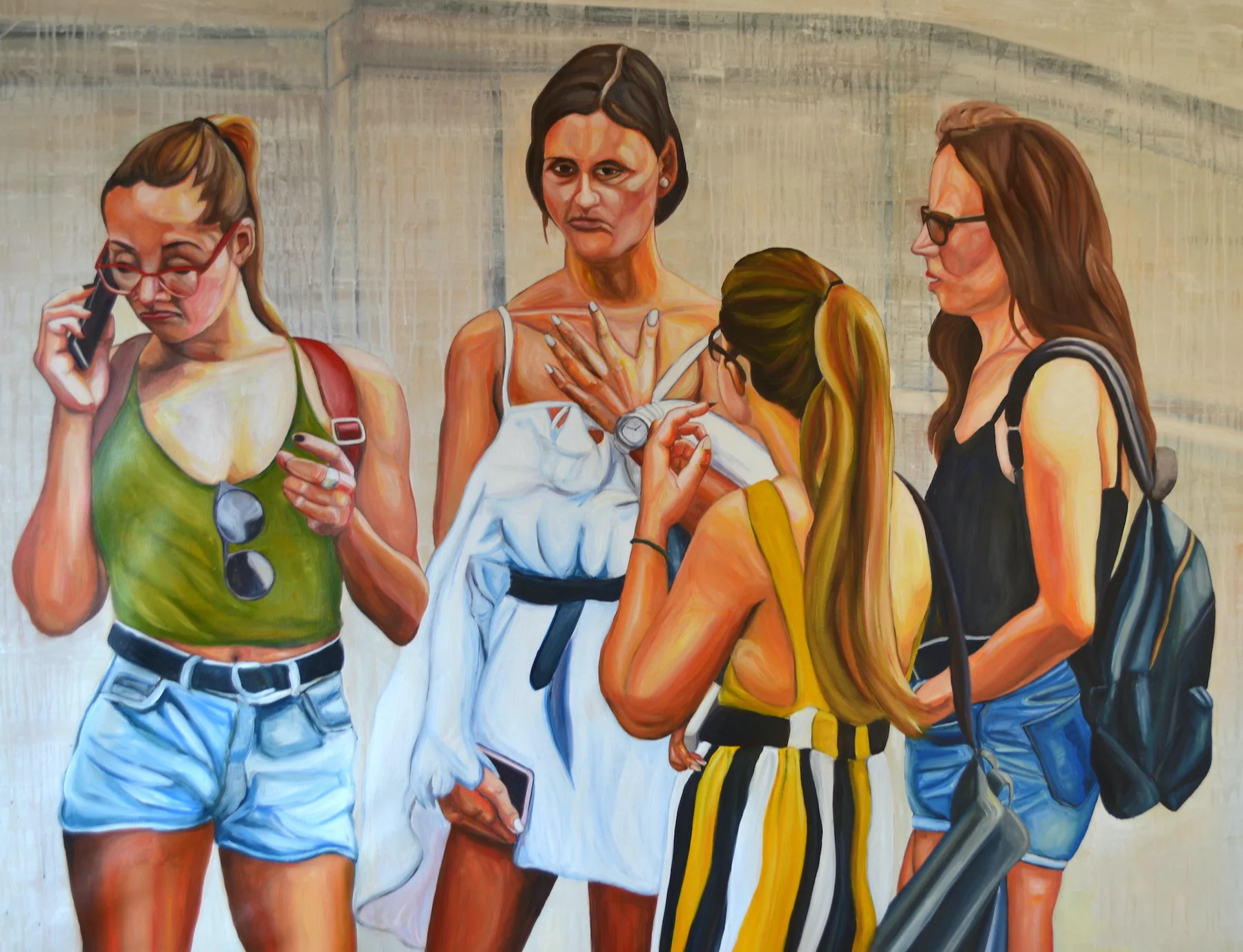
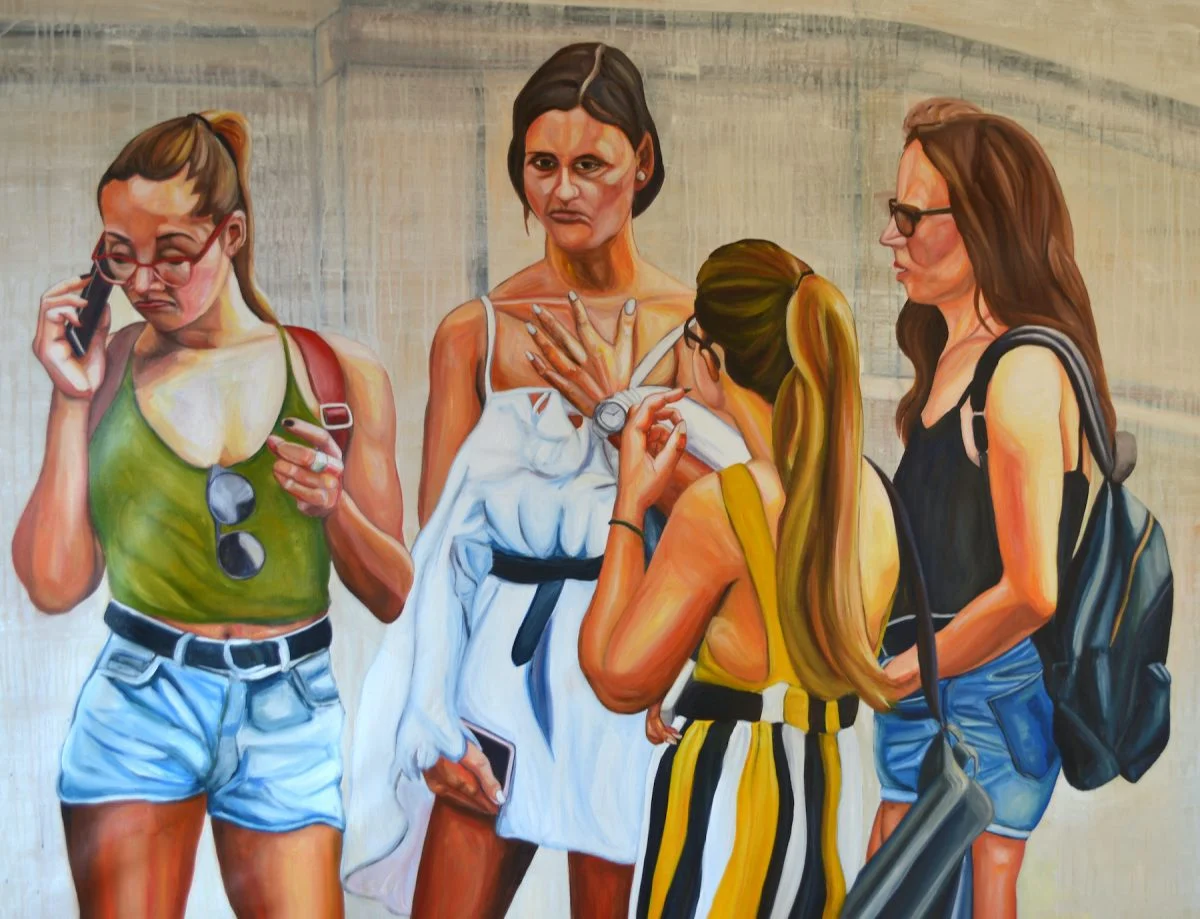
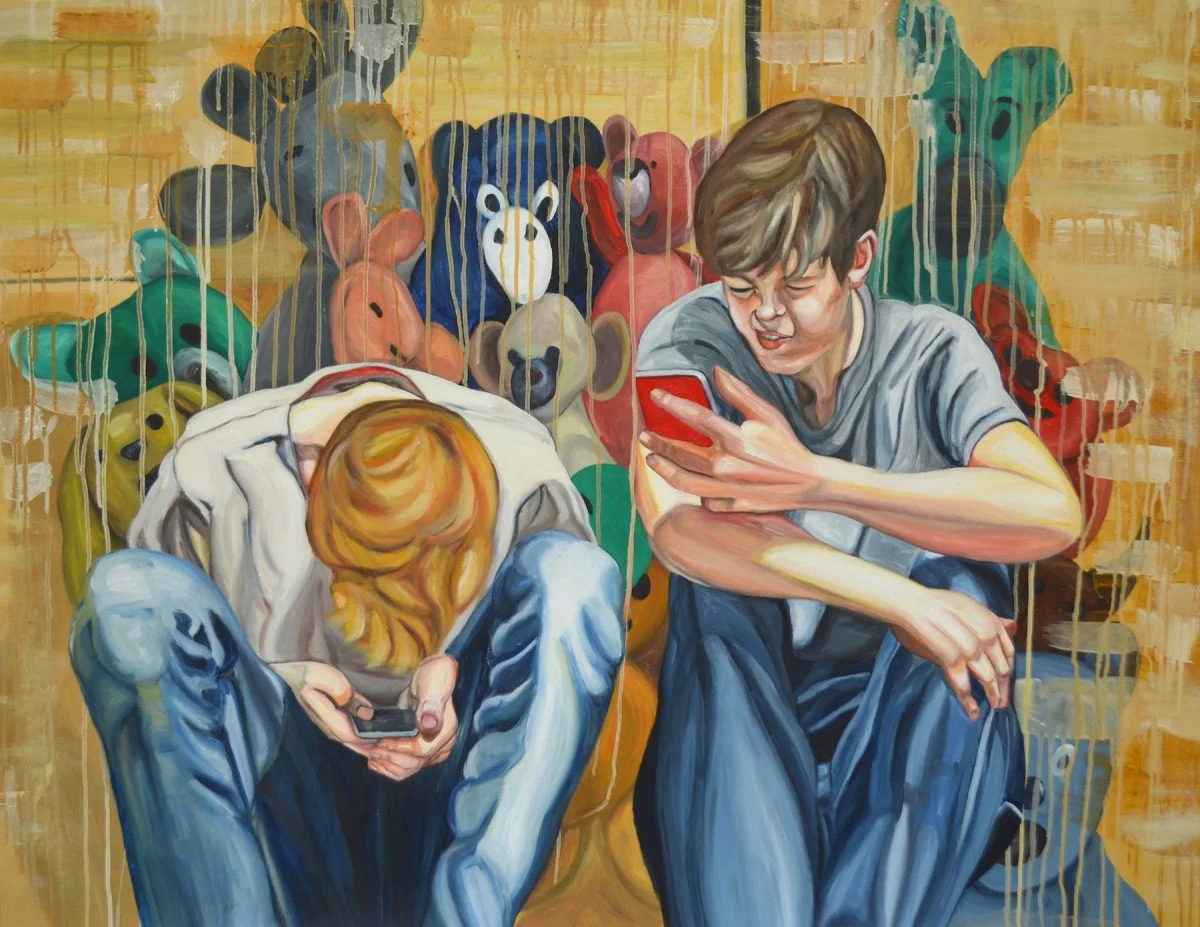
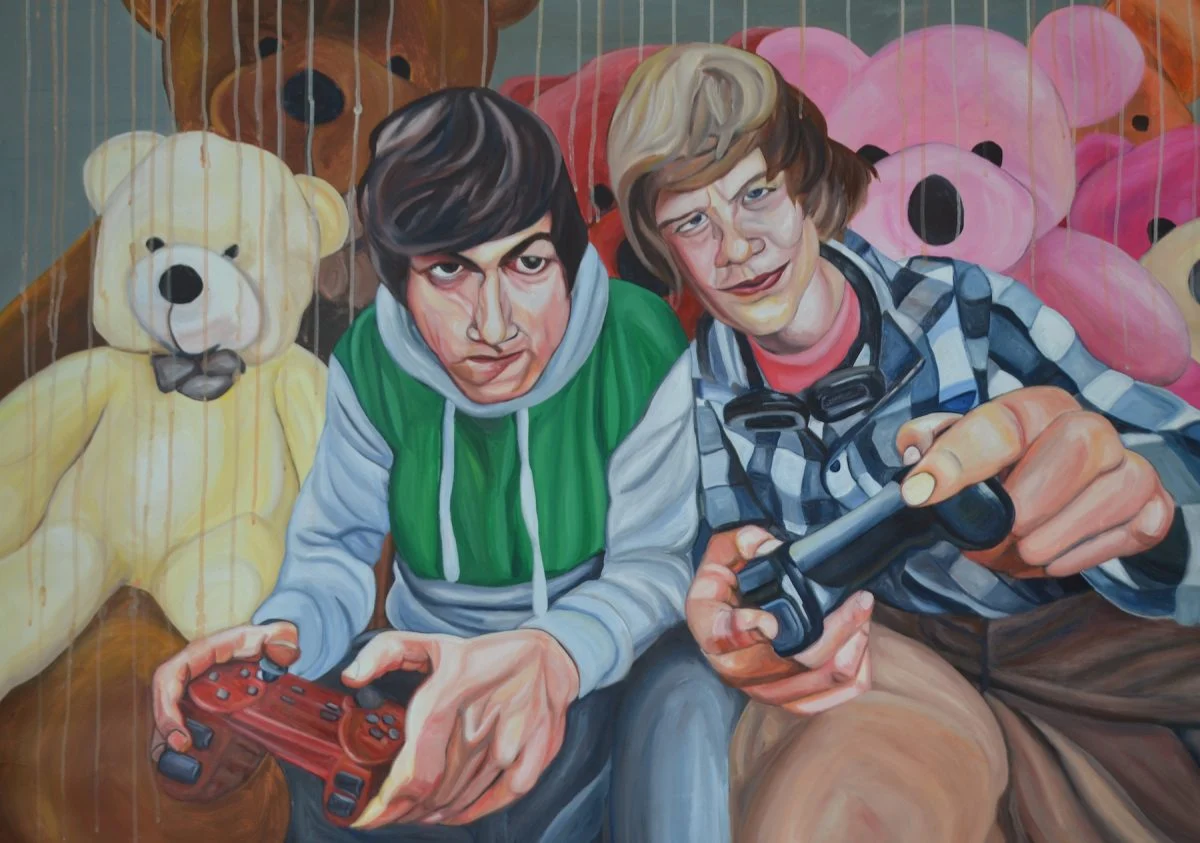
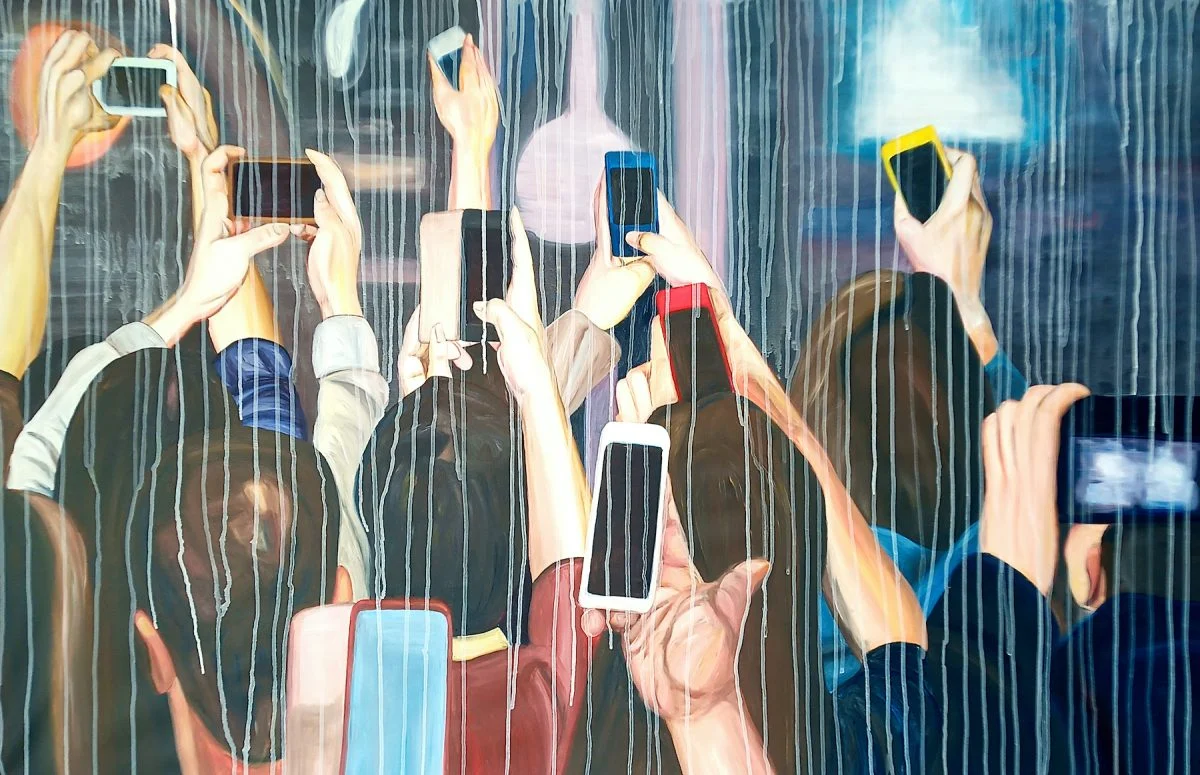
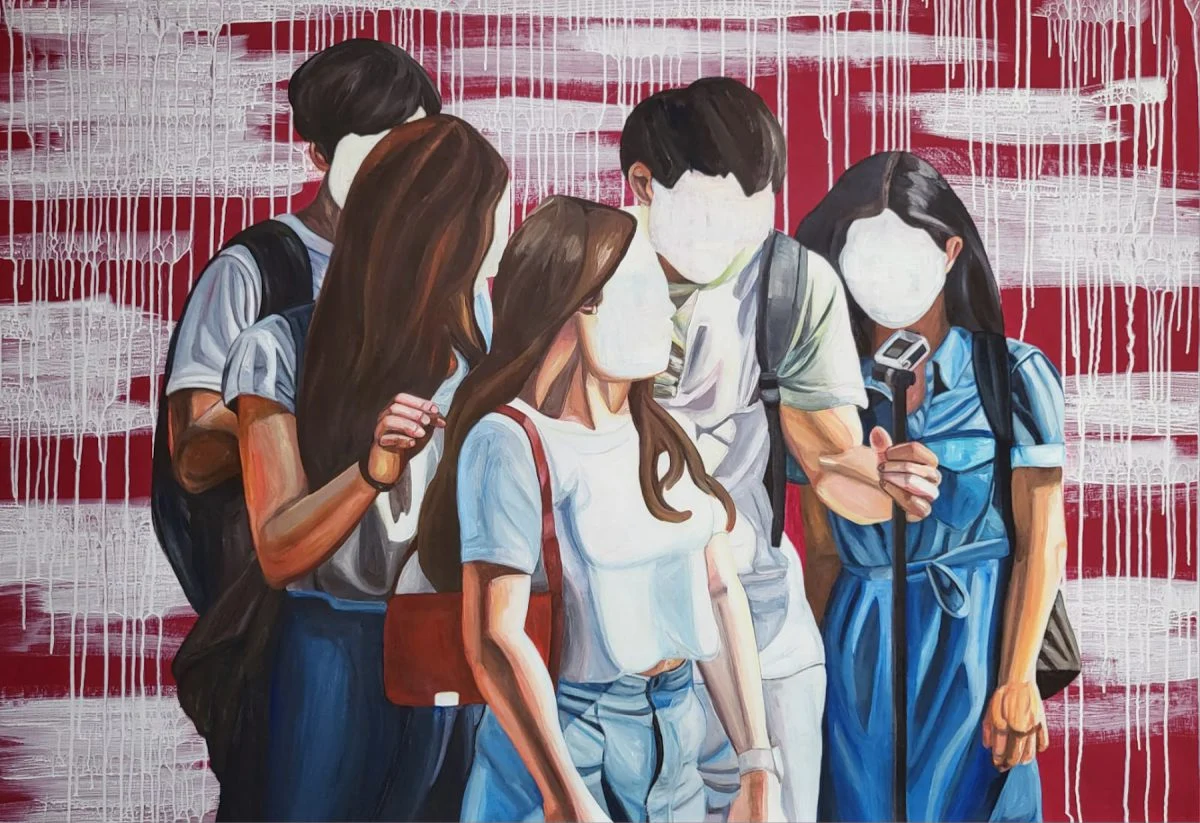
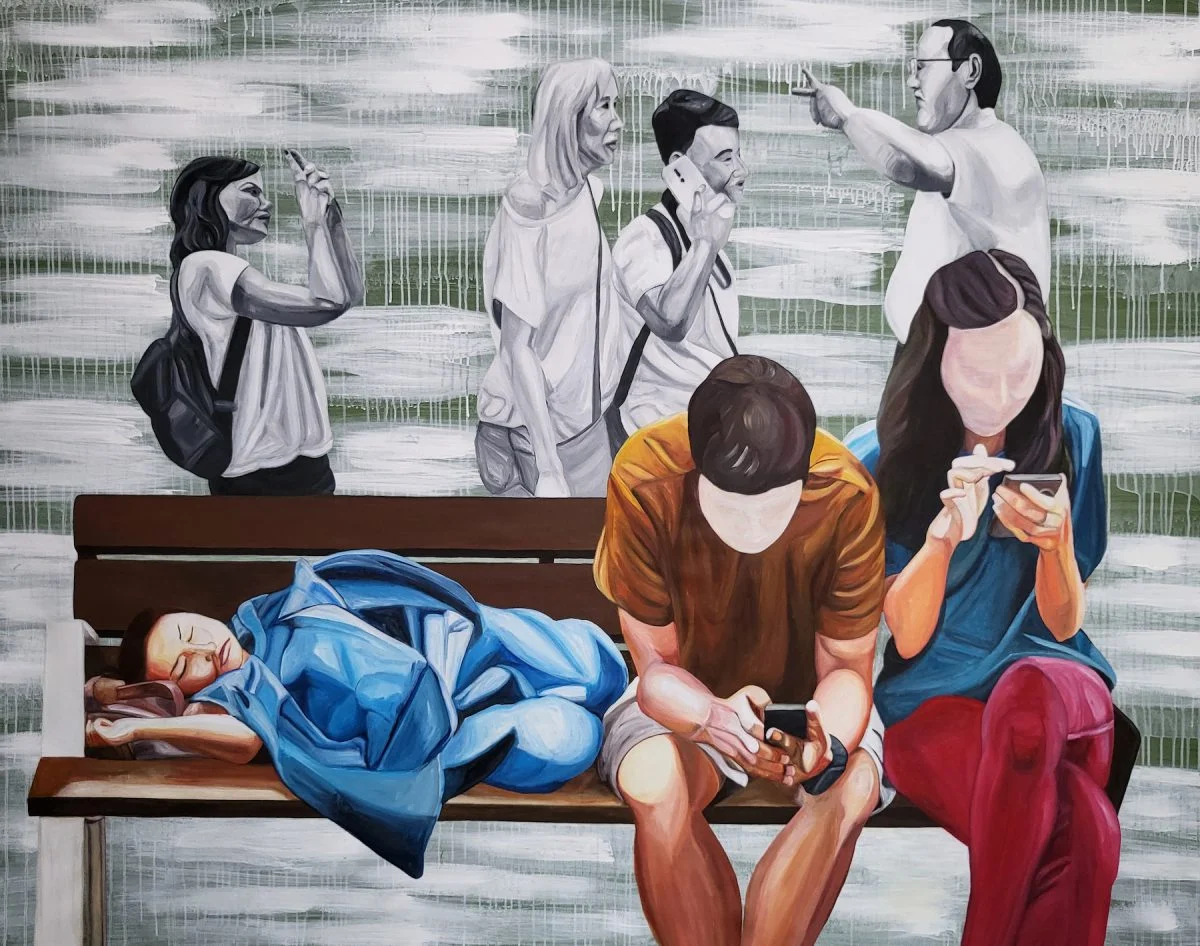
One is called Is This Modern Society? It’s a worldwide project that I started 10 years ago. It has been developed in 17 countries and four continents. It’s about the importance of finding a better balance with the use of digital technology in our lives.
The second project is called The Right to Protest, and it’s a project about the importance of protesting peacefully for our rights.
The idea for the project is actually new. I’m working with a team of professionals: a professor of digital art, an expert of authoritarianism and government, a journalist working in human resource, and a lawyer.
The idea in this case is to work in collaboration with several NGOs in different countries around the world to portray the importance of demonstrating peacefully in the street. We’ll link each location and each NGO with a specific right that is important in that area, then create a mural that represents people protesting peacefully. But the mural will also be activated with a series of information: video reportage about the specific case in that area, about the specific rights, and studied, deep analysis of the right to protest in the area or country we are working in.
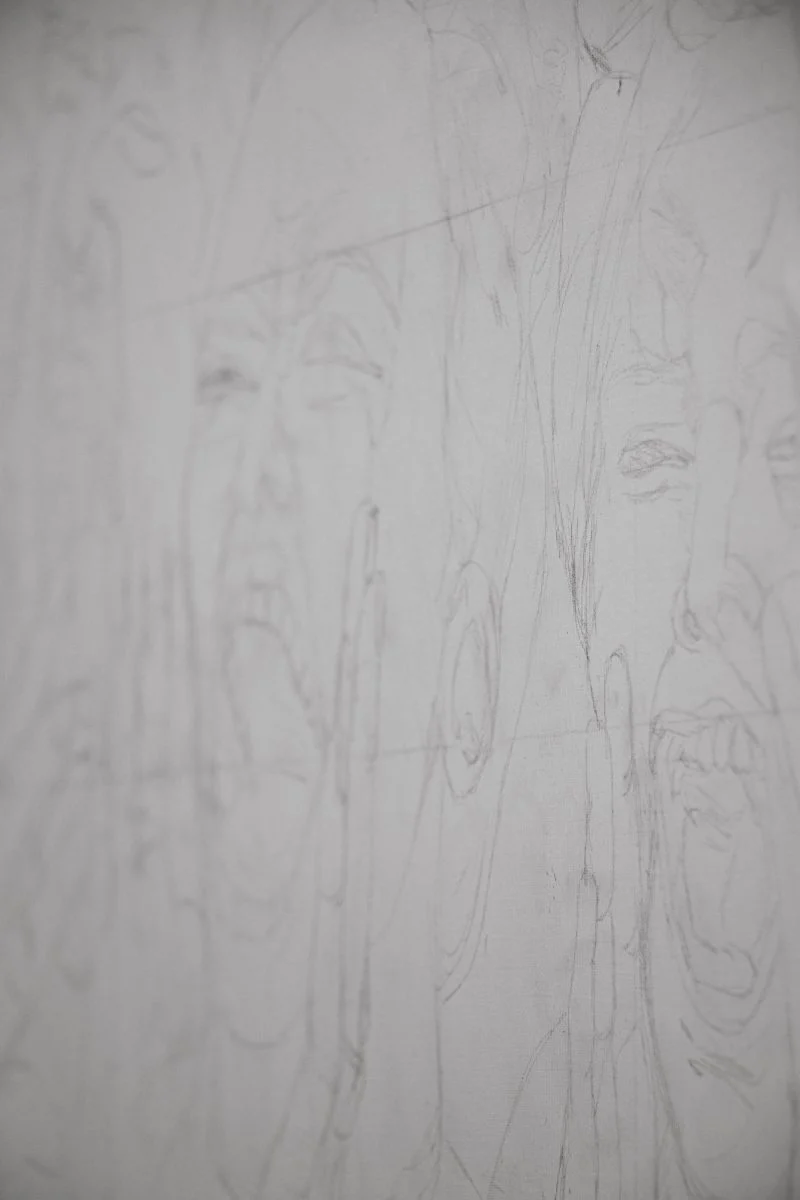
When you’re thinking about painting something indoor versus something outdoor, how does your process change?
When you paint outside, it’s very important to prepare. Preparing the sketch, studying the architecture of a building, the possible architecture limits, and the context of the area.
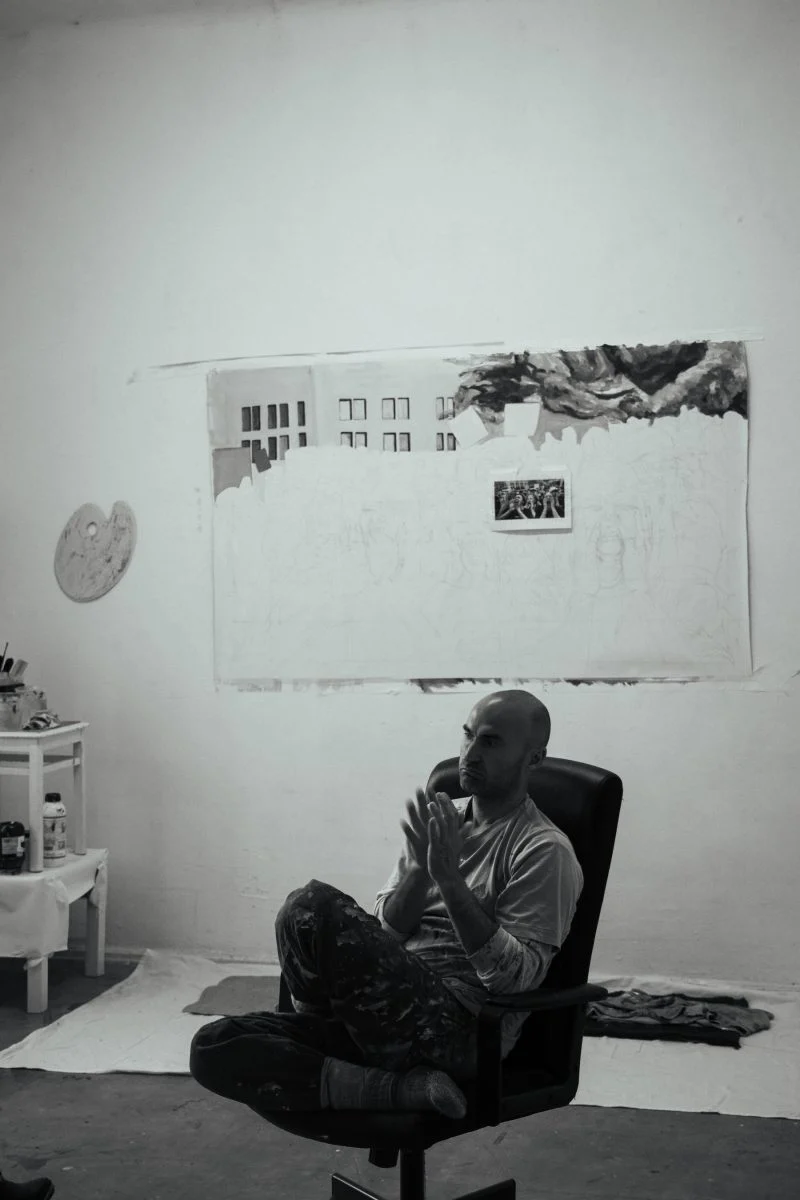
And then when you paint, it’s actually the fastest part of the process. Because you paint in the street, you want to be fast. You don’t want people to see a piece of art that is not finished. At the same time, you deal with the fact that you are outside, so there are natural elements.
There’s also a difference in messaging. The way I paint murals is more accessible, easier to understand. So if someone is in front of it, they can see the message clearly. Because it’s for everyone.
When I paint inside, it’s more intimate. I’m not stressed with deadlines , generally, so I can take more time. I can leave a piece and start again after a period of time. I can use my own language and play more with my visual language, because it’s not just for everyone. I mean, it’s still accessible, but I can play a little more in terms of time and in terms of complexity.
How do you want people to feel when they see your work?
Interview Jo Birdsell (jobirdsell.com)
Photos Raviva Nsiama (@raviva.ziama)
- Statement
- GlogauAIR Project
- CV
- Gallery
- More
Statement
I am a multimedia artist, community focused. I run projects mixing together art and science. I have worked in more than 20 countries, I collaborate with international organizations to create social change. I create site specific exhibits combining visual art with audio/video installations. My main media are murals and paintings. I exaggerate and deform my characters to reveal feelings and emotions. Each project seeks to generate reflection, foster dialogue, and transform communities.
GlogauAIR Project
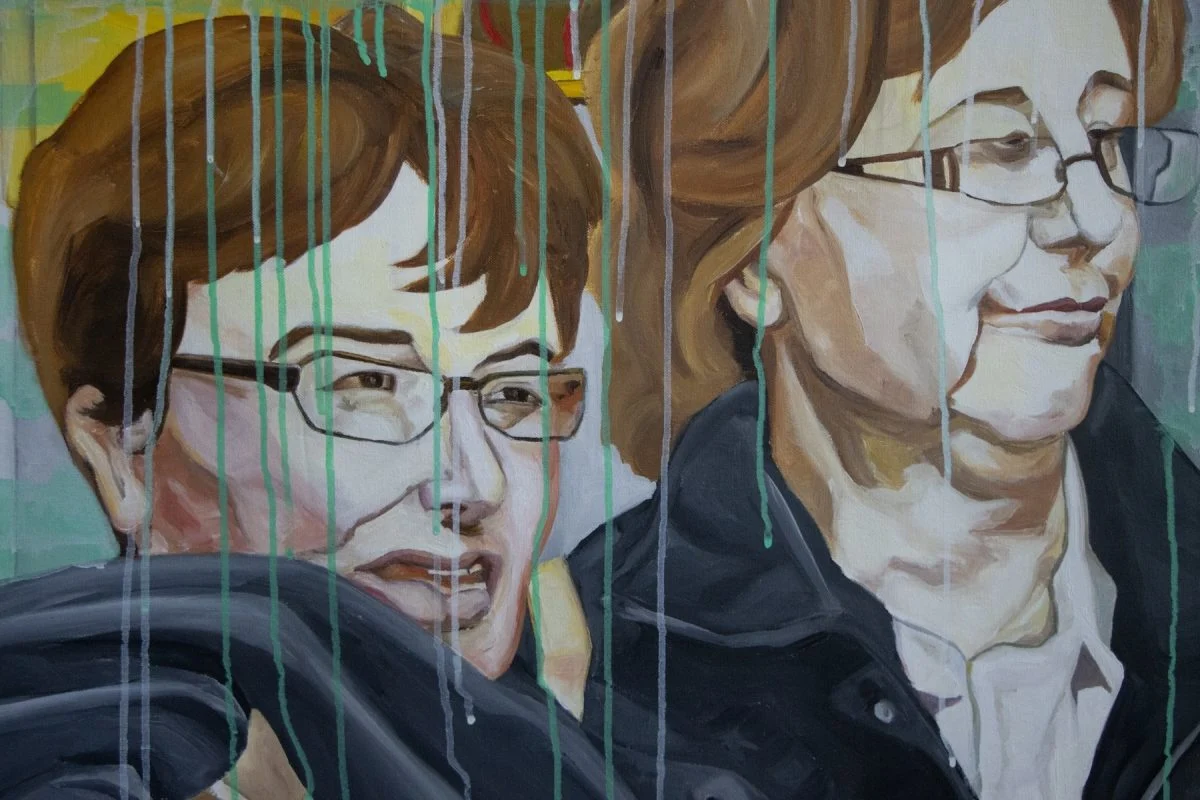
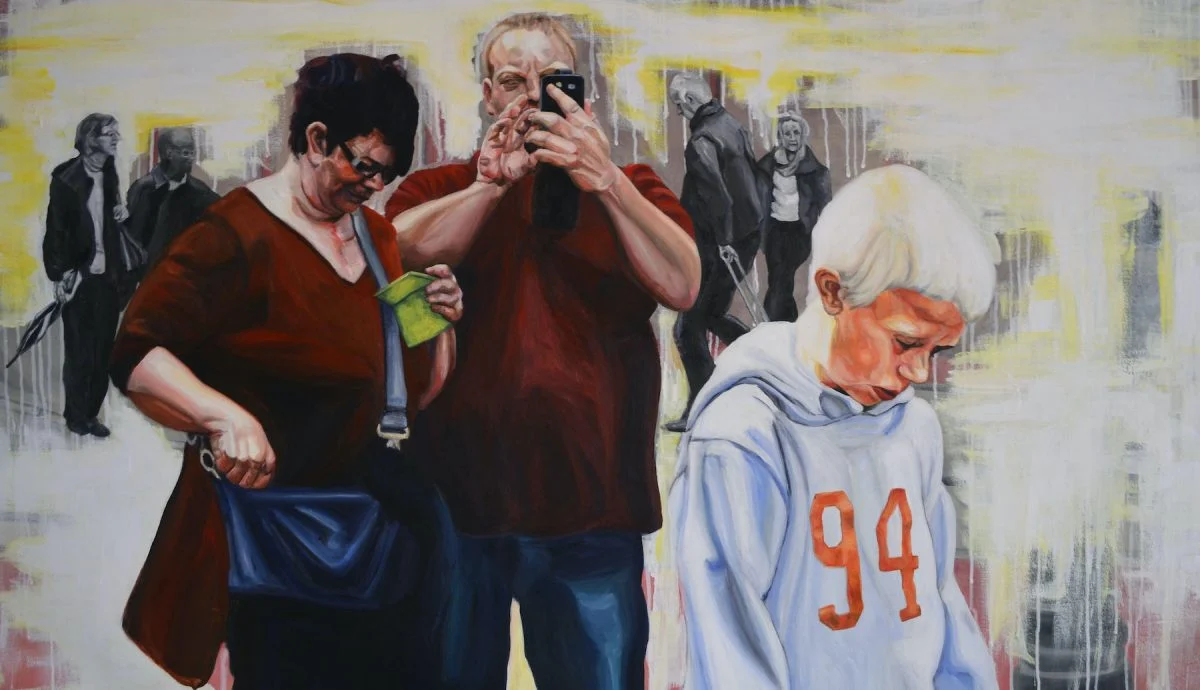
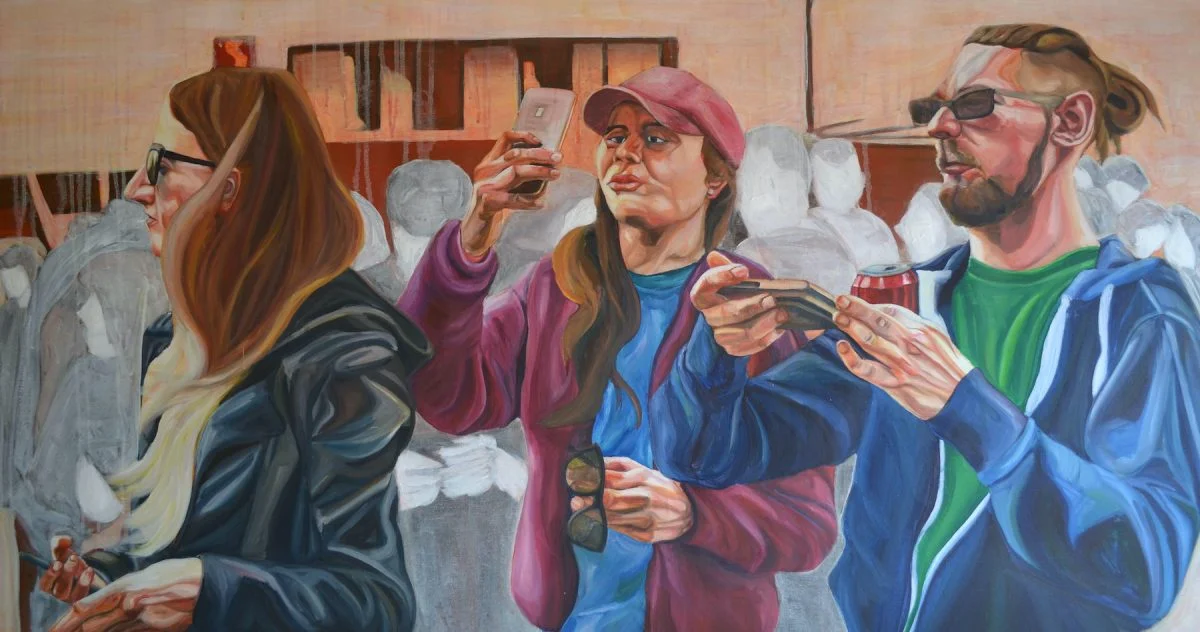
Is This Modern Society? https://www.isthismodernsociety.com/ is an artistic project that seeks to reflect, educate and offer solutions in an effort to help each person find a balanced use of digital technology (internet, smartphones, applications, social networks, artificial intelligence, etc.) in their day-to-day lives.
The project is led by the Italian artist Jupiterfab http://www.jupiterfab.com/the-artist/, who also created the project. Its title is an open question addressed to all people and all institutions: Is This Modern Society?
This project began in 2016 based on Jupiterfab’s observation and perception of the social mechanisms involved in the use of technology in everyday life. The artist believes that communication in our time is becoming faster, more comfortable and without borders, but, absurd as it may seem, it is becoming more difficult every day to develop it directly, closely and without the mediation of a screen. In addition, citing the words of the Mexican sociologist José Enrique Covarrubias “technology goes faster than our ability to assimilate it socially.”
Is This Modern Society? is developed on a global scale as it covers the current and developing topic of digital technology in each country. It does not currently have an expiration date given that these problems related to digital technology are in strong development. Jupiterfab collaborates with various artistic, educational, social, and governmental institutions to achieve the objectives of its work. In particular, he collaborates with researchers from the social sciences sector, making his project a source of qualitative and quantitative data for large-scale empirical studies.
The project is divided into two sections, one purely artistic and the other educational.
The artistic section provides for the creation of murals https://www.isthismodernsociety.com/murales/ in public spaces in various cities and exhibitions https://www.isthismodernsociety.com/exhibitions/ of visual works (paintings https://www.isthismodernsociety.com/20/ and drawings https://www.isthismodernsociety.com/drawings/), multimedia https://www.isthismodernsociety.com/installations/, sound and video installations in museums, exhibition spaces and art galleries.
Regarding the educational section, Jupiterfab works jointly with universities and cultural institutions, organizing debates, presentations and conversations https://www.isthismodernsociety.com/debates-presentaciones/ between professionals from various sectors related to the subject, such as anthropologists, sociologists, psychologists, doctors, marketing and communication specialists, with the intention of showing the public how technology is directly related to each discipline and how it affects daily life, both positively and negatively.
Jupiterfab also develops workshops https://www.isthismodernsociety.com/workshops/ in schools and universities to talk with the younger generations and uses art as an empathic bridge so that the schools themselves can deepen the subject by relating it to current problems that students are experiencing (cyber-bullism, porno, social medias abuse, IA, etc.).
The artistic element is essential. Art is a very powerful communication tool, which also serves to generate dialogue between people. The mural in particular, due to its dimensions, its historical relationship with education and its location in the public spaces of cities, has a direct impact on the sight and thought of people. The artistic work of an artist can represent the key to create an intimate dialogue between people and institutions.
The educational section of the project was added at the end of 2017 as a reaction by Jupiterfab to the lack of analysis by the population and institutional awareness about the various aspects of the subject of digital technology in relation to individual and collective life.
So far, the project has made its mark in the United States, Canada, India, China, Mexico, Great Britain, Europe and South America. It has been developed in conjunction with institutions such as the Institute of Culture of Puerto Vallarta, the Museum of the City of Buenos Aires, the Museum of Contemporary Art of Mexico City, the University of Sheffield and the Trent University of Nottingham, among others.
He plans to move the project to other cities and countries.
Project website: https://www.isthismodernsociety.com/
CV
SOLO EXHIBITS
- 2027 MIFA Miami (USA)
- 2026 Festival Aprile, Turin (Italy)
- 2026 Museo de la Ciudad de Guadalajara (Mexico)
- 2026 Istituto Italiano de Cultura, Mexico City (Mexico)
- 2025 Galeria Laboral, Mexico City (Mexico)
- 2023 Centro Nacional de las Artes, Mexico City (Mexico)
- 2022 Nottingham Trent University for 7th International Conference on Behavioral Addictions (UK)
- 2020 Gallery 19, Chicago (USA)
- 2017 Cage Gallery Barcelona (Spain)
- 2014 Can Felipa Centre for contemporary arts, Barcelona (Spain)
- 2012 Court of Justice of Rotterdam (The Netherlands)
- 2012 Manifesto Community and Project, Toronto (Canada)
- 2010 Rudolph V Galerie Amsterdam (The Netherlands)
- 2010 Hommes Gallery, Rotterdam (The Netherlands)
GROUP EXHIBITIONS
- 2015 Metamatic:taf Gallery, Athens (Greece)
- 2013 La Plataforma Galería, Barcelona (Spain)
- 2012 Regent park arts & Cultural Centre REOI Toronto (Canada)
- 2009 Duende Sthichting Rotterdam (The Netherlands)
RESIDENCIES/AWARDS
- 2026 Arts Residency GloguAIR Berlin (Germany)
- 2025 Arts Residency ATLAS Boulder (USA)
- 2025 Arts Residency NY20+ Chengdu (China)
- 2023 Triennal Tijuana (Mexico)
- 2022/2023/2024 Grant Proyecta Traslado Cultura Jalisco
- 2021/2022 Grant Origen y Destino Corporativas de Fundaciones/Giz Mexico
- 2021 Winner Biennial Niagara (Canada) for the best Outdoor Art
- 2016 Grant Italian Government“Periferie”
- 2020 TEDx Talk Av. Chapultepec, Guadalajara (Mexico)
- 2010 Selected in Rotterdam CBK file (The Netherlands)
- 2009 Arts Residency B.a.D. Foundation Rotterdam (The Netherlands)
PROJECTS
- 2025-2027: Peace and Mobilities, about forced migrations and peace. In partnership with UdG (Mexico), Universidad Pontificia Comillas (Spain), Università degli Studi di Milano (Italy), Universidad Nacional de Colombia (Colombia), Zaporizhzhia National University (Ukraine), Universidad Autónoma de Chile (Chile), University of Bielefeld and H401 (The Netherlands); Supported by EU
- 2016-ON: “Is This Modern Society?” about digital technology and disconnection. Worldwide, in collaboration with several universities, foundations, schools, NGOs, museums and local governments.
- 2020-2025 “Tus Raíces” about migrant’s groups in Jalisco State, in collaboration with UdG, FM4, local shelters, local governments ; supported by Cooperativa de Fundaciones, UNHCR and GIZ México
- 2024 “Building bridges”, about street kids. In collaboration with Street Light Uganda (Uganda)
- 2024: “Social Justice”, in collaboration with University Vanderbilt and professor Jaco Hamman (USA)
- 2019 Project “Desaparecidos in Jalisco”, in collaboration with FEU of UdeG (Mexico)
- 2021-2017: “Immigration and Integration”, about immigration and integration in the area of Via Milano. In collaboration with Brescia City-hall; supported by Italian Government
- 2018-2017 “You are the key” about homeless people in collaboration with Arrels Foundation (Spain)
- 2016-2013 “NowPoblenou”, about gentrification and touristification. In collaboration with several local NGOs, Barcelona City-Hall and Centre for Contemporary Arts Can Felipa (Spain)
- 2013 “600 Faces”, about street kids. In collaboration with Ong Ange (Togo)
- 2012 “(Re-) placing de city: Sacralizing Migrant Materials”, about migrants in Toronto Metropolitan Area and their relationship with religion and urban space. In collaboration with anthropologists Simon Coleman and Valentina Napolitano; supported by U of T, Jackman Humanities Institute and Centre for Diaspora and transactional Studies of Toronto. (Canada)
- 2010-2012 “Human Identity and Community”, about immigration and integration in Charlois District in Rotterdam. In collaboration with Hommes Foundation; sponsored by Rotterdam City-hall and Vestia Corporation (The Netherlands)
Gallery
More
We do not have any further information at this time.