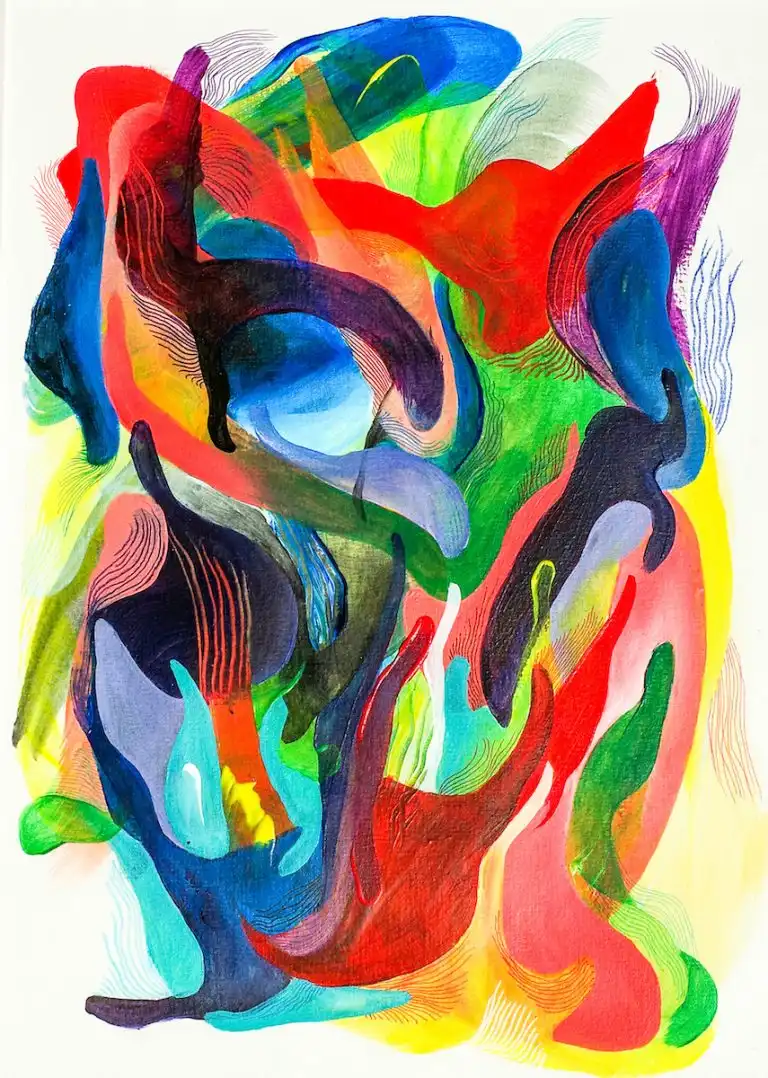
Xuecong Wang is GlogauAIR resident from July 2026 to September 2026. (Q3)
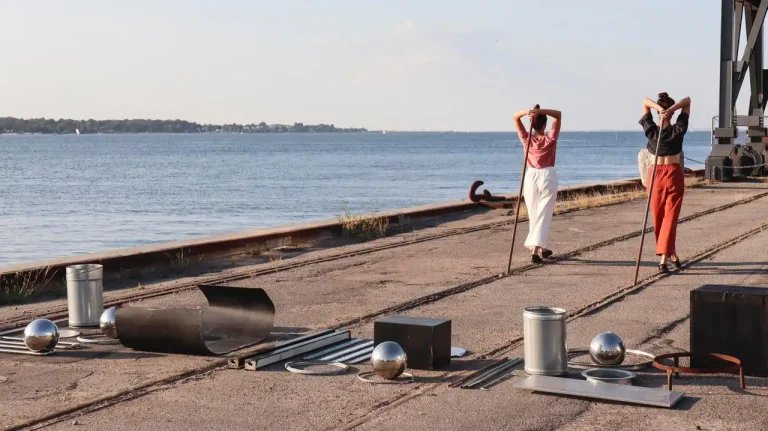
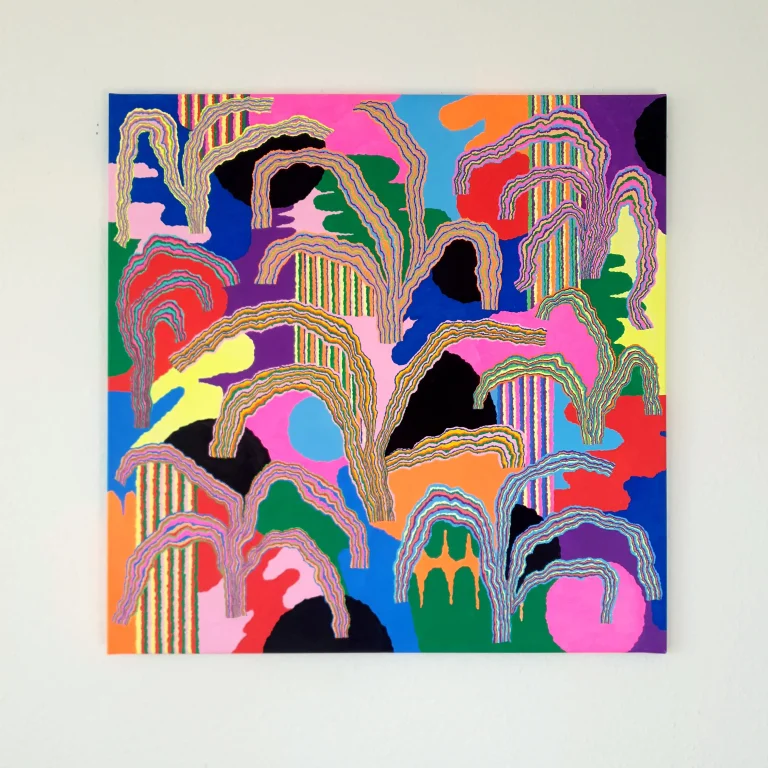
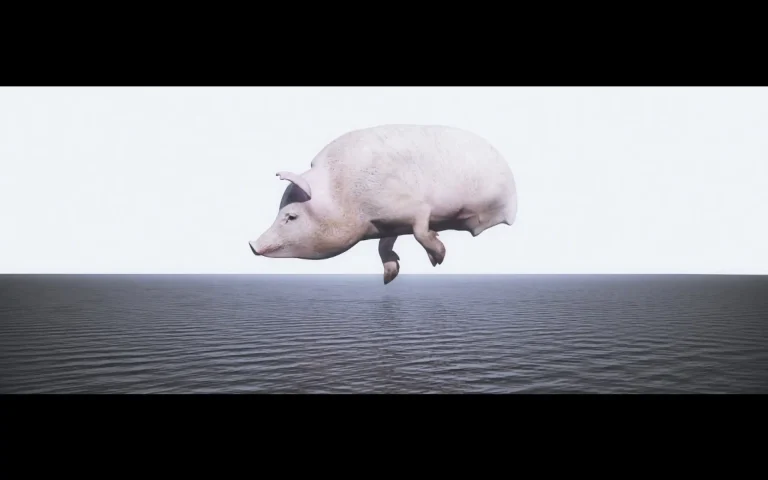
The artist’s practice examines how perception shapes reality. While the world we see and experience is often accepted as reality itself, shifts in scale and perspective can reveal entirely different ways of understanding the world.
Working across painting, installation, immersive theatre, moving image, and virtual environments, the artist creates situations that move between different scales, perspectives, and temporalities. Through hybrid forms and spatial experiences, the work explores how realities emerge through perception, suggesting that what is understood as reality may be only one of many possible ways of experiencing and interpreting the world.
Meet the Artist
Can you please tell us about yourself and your practice?
My name is Xuecong Wang. I’m originally from China, but I studied in New York for 4 years, and I’ve been living there since. I started drawing when I was very young. Then I studied Chinese calligraphy and Chinese ink painting. My dad used to practice calligraphy, so I had all of the tools around.
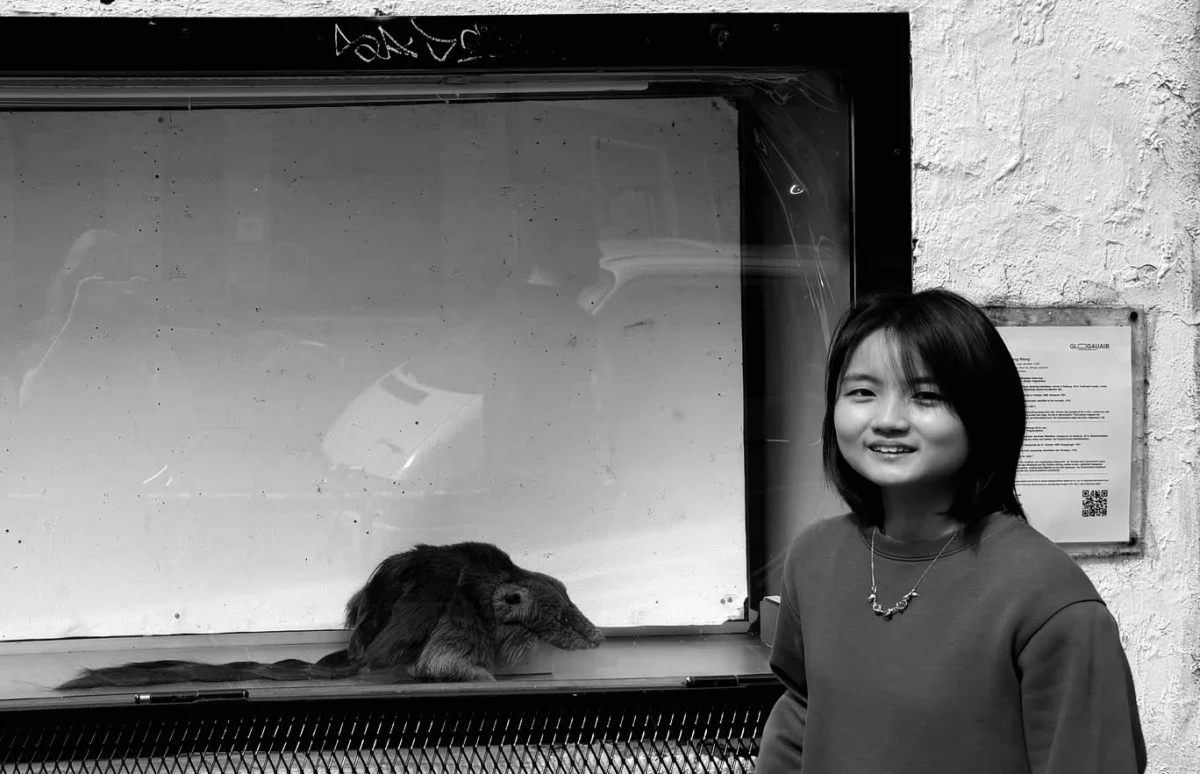
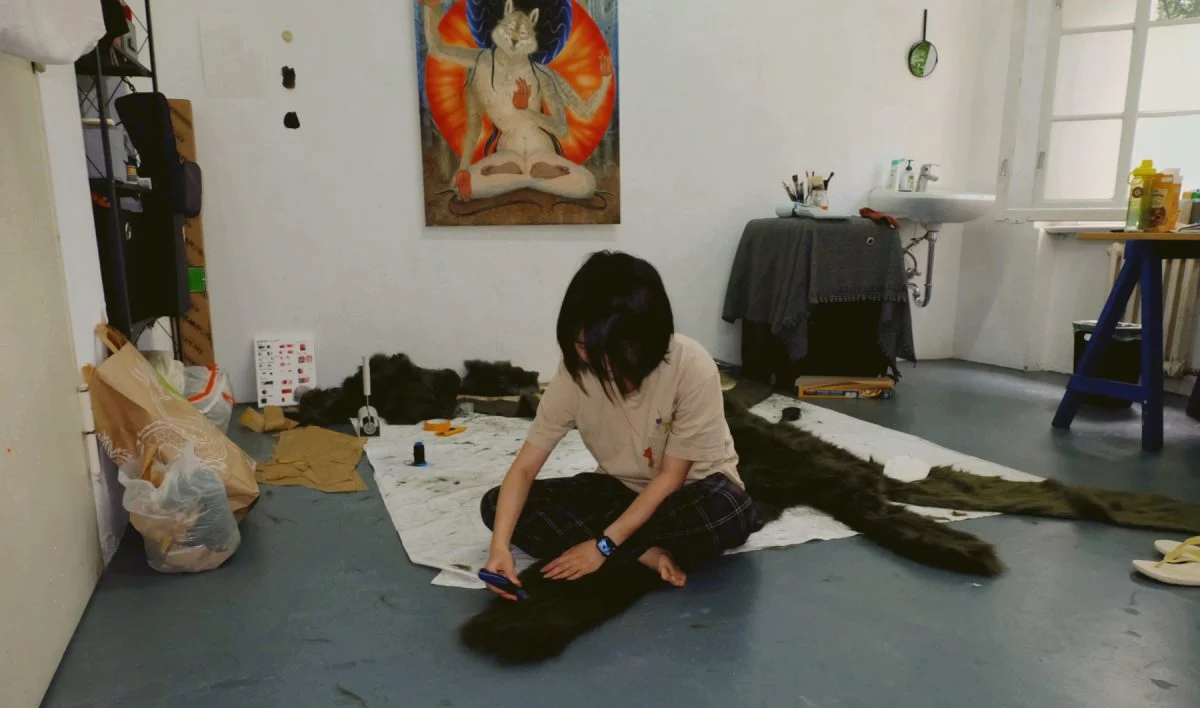
During my time in college, I realized that although I was trained in a Western way, I’m more drawn to the materials I’m familiar with, like ink. After graduation, I started working in watercolor, which is now my main medium in painting. My project at GlogauAir is the large painting [in my studio]. I’m also going to work with this [faux fur] textile next. The medium depends on what kind of subjects I work on.
You have a series titled Because I Might Not See. I’m very interested in your decisions about what experiences you depict and why.
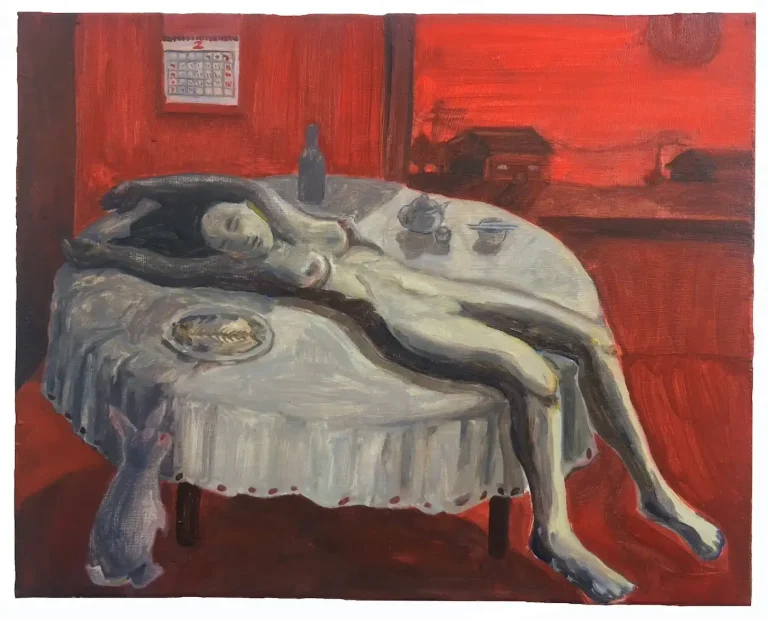
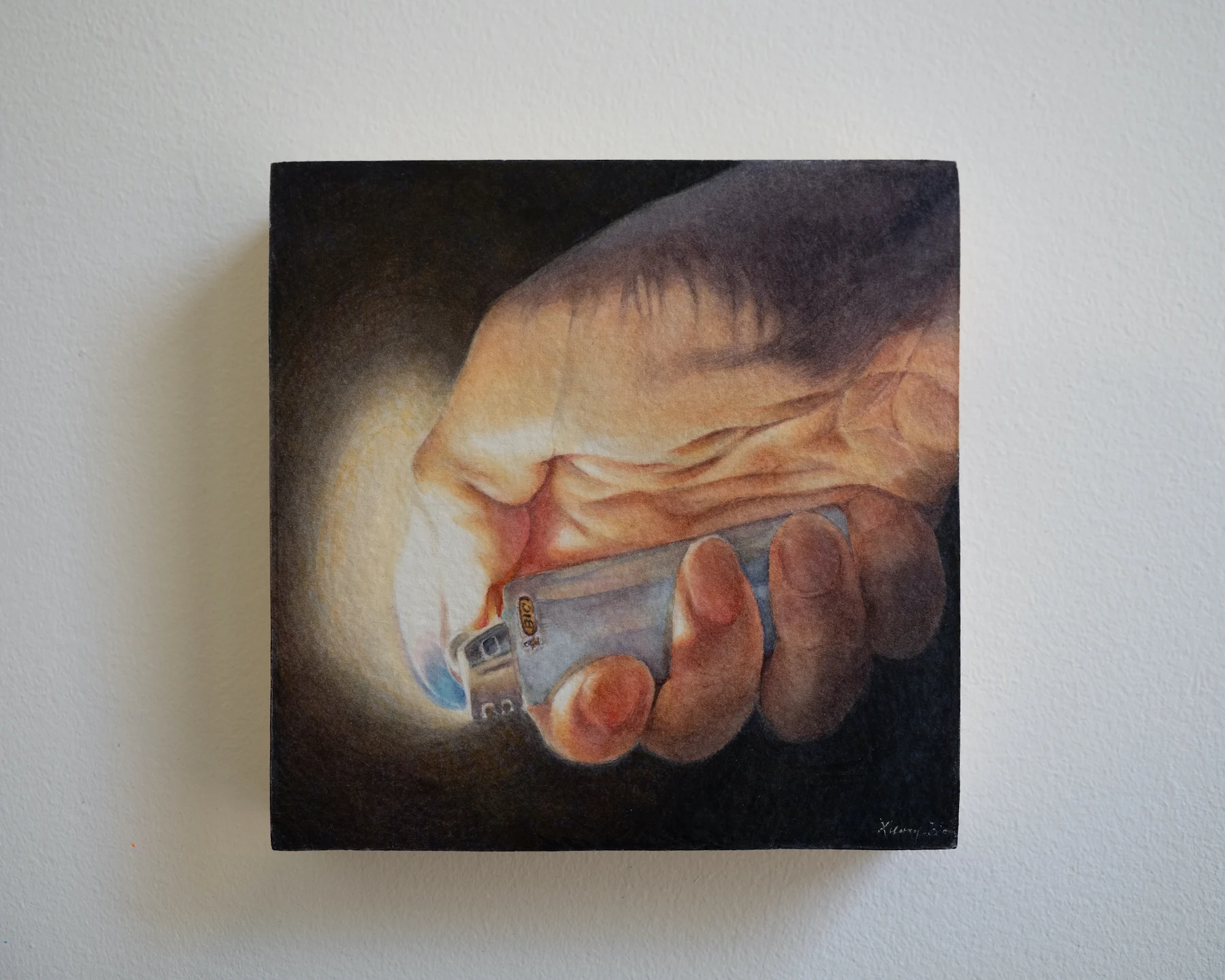
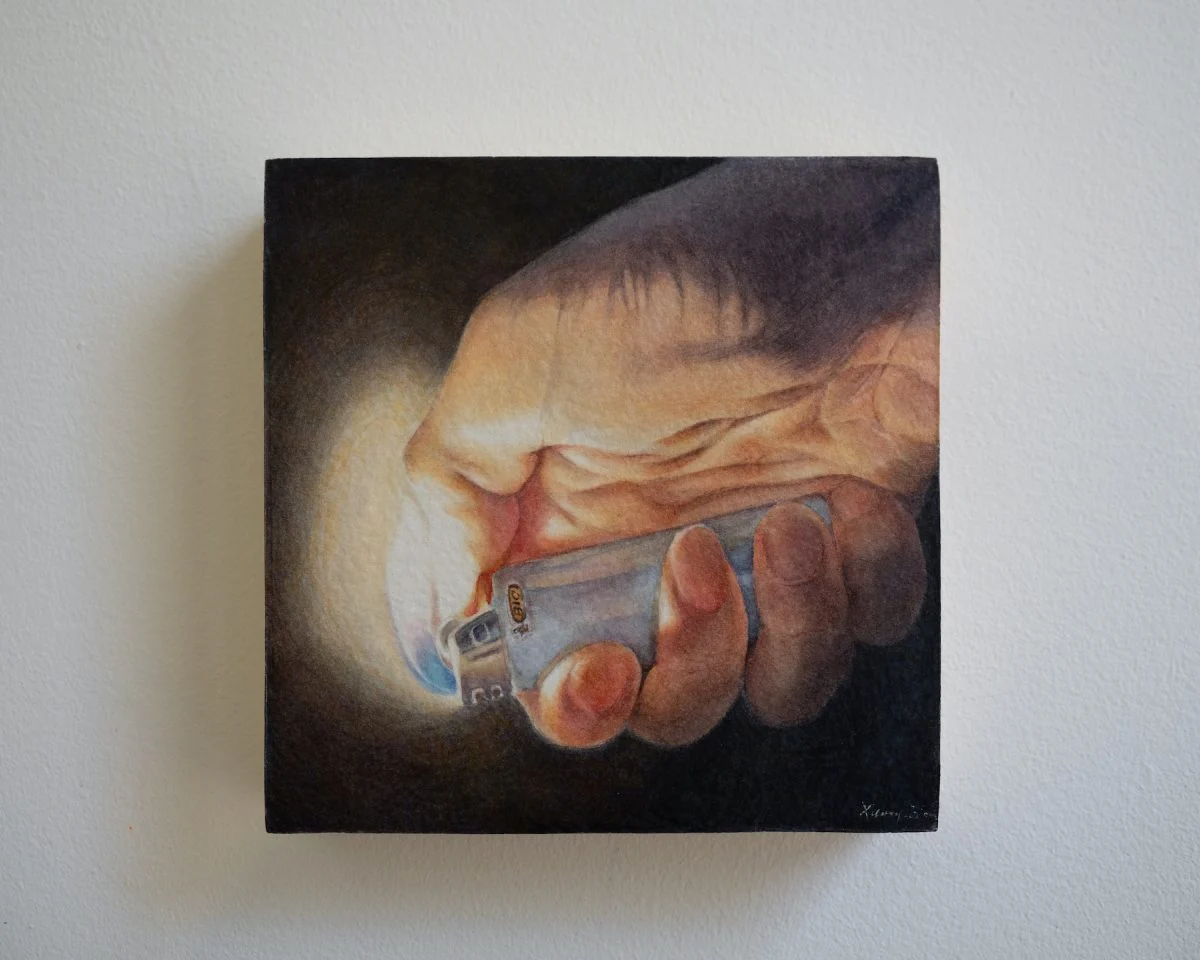
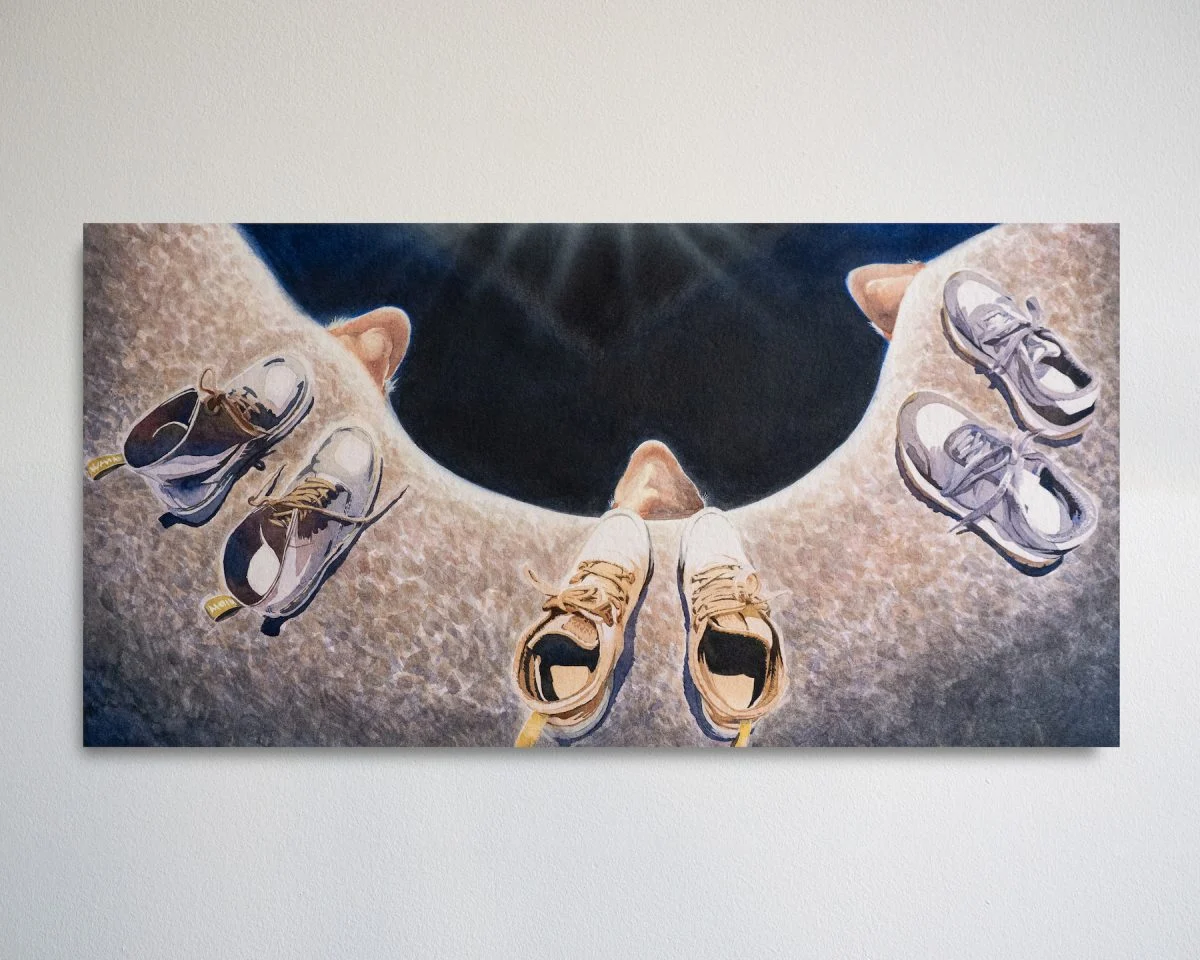
The root of it is this fear I used to have. Where I grew up in China, people take very good care of their health, and they think that if you break a body part, it becomes a defect. Under this ableist view, I realized that I have always had this fear about going blind one day. It made me want to pay more attention to the details. The subjects I have chosen for the series were very spontaneous, like inspiring moments in my life or things that reminded me of something else.
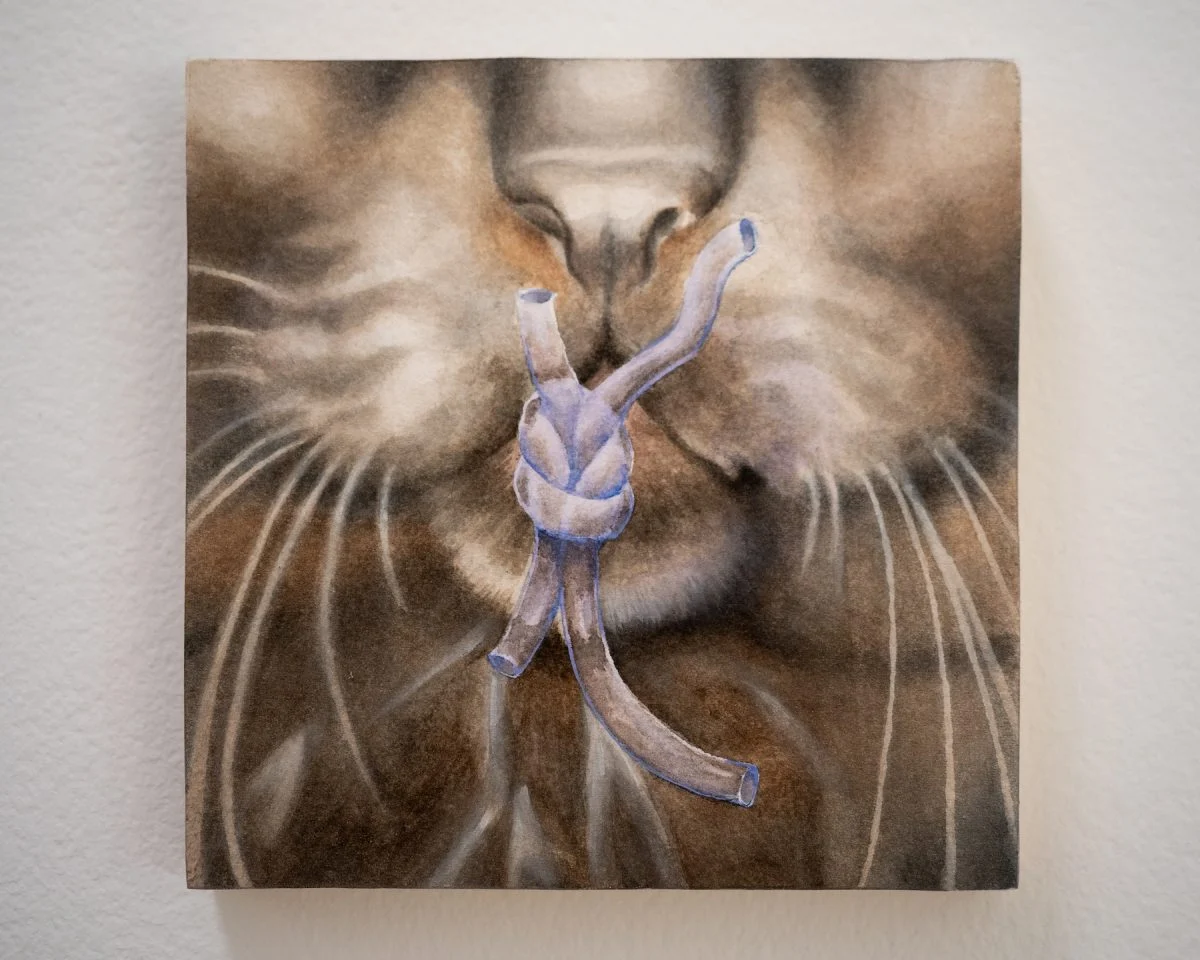
One of the recent works in this series was a portrait of my family members as cats. I was talking to my parents, listening to their complaints, and I just got frustrated. Being a human is so hard, especially as an adult with a child! It’s crazy. So I thought: what if I just paint them as a cat family? All other paintings in this series are based on different personal stories as well; on moments that felt beautiful and surreal.
You are building a contemporary myth during your GLO residency. What was your inspiration for this process?
My inspiration comes from something that I read: that a witch can turn into a werewolf if she eats a tomato. It’s magical to me, and that part of history inspires me, because werewolves and tomatoes are totally unrelated; one is a popular vegetable (or fruit), while the other one is part of a niche monster genre. Interestingly, their identities are transformed in the same way, like a path of domestication. Werewolves were recurring figures in Nordic legends, but as Christianity spread across Europe, they came to be associated with evil. They’ve been demonized, the same way people who didn’t obey certain rules were categorized as werewolves and put on trial. Nowadays they are often depicted in a very sexualized and muscular way, like a wonder of wildness.
To get back to tomatoes: the tomato has gone from a wild South American plant to a suspected poison to a grocery staple, with one of the highest numbers of commercial varieties.
I think this transformation of identities happens because of our evolving systems of classification, how science and reason help us to classify more features, and how fewer parts of nature remain unresolved. The unresolved part is often defined as wildness.
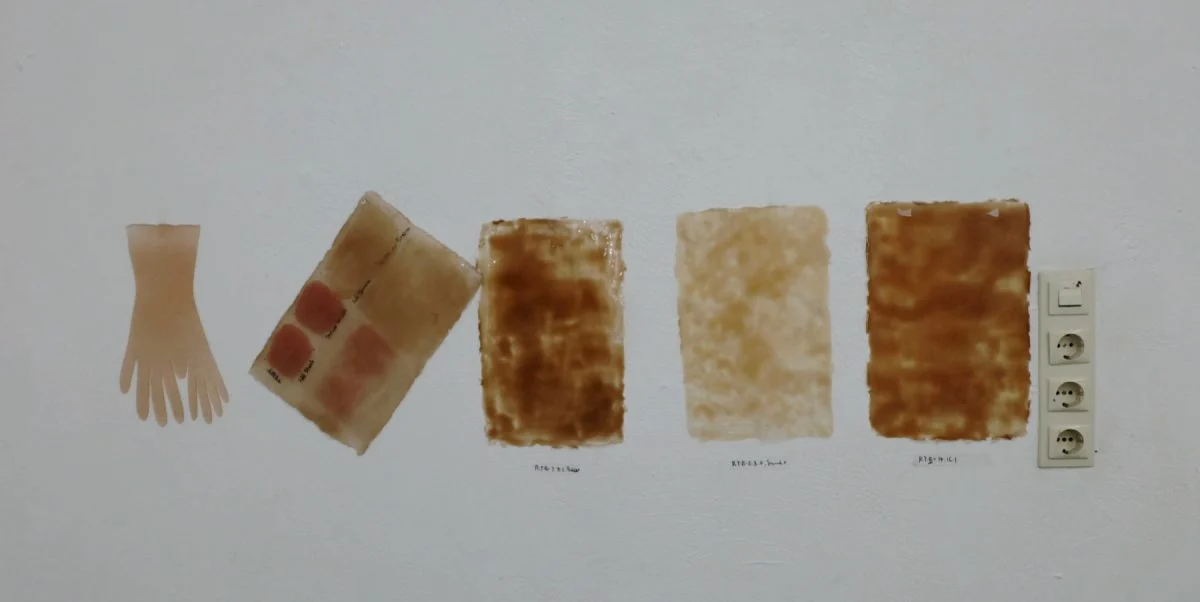
When it comes to female werewolves, women are turned into one because they are deemed crazy and wild. I started wondering about the hidden wild part and realized it conveys qualities that cannot be quantified by reason or science, such as emotion and impulse. If we call a woman wild, we often just mean her not being regulated by patriarchal structures. I think that’s a really interesting point. There’s a part of the self that couldn’t be classified as rational, and to admit that is a way for us to connect with nature.
How do you grant agency and authority to fantastical objects or subjects that you depict?
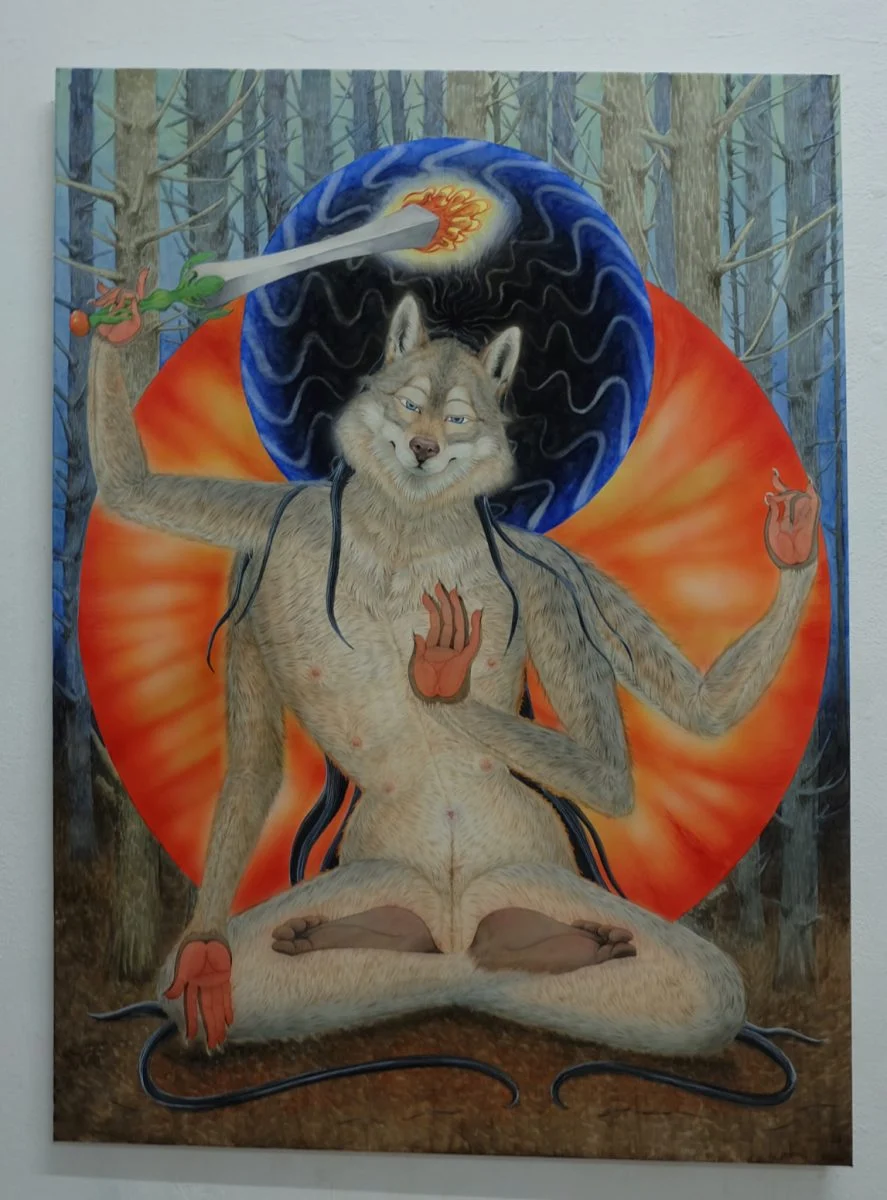
For one, I create a sacred image of them, like in this* painting. I also want to challenge the institutional view of archives, because they are very rationally defined. I’m going to make a werewolf pelt from the textile I mentioned, traditionally seen in taxidermy and archival formats, and use it to classify this myth in an archival setting.
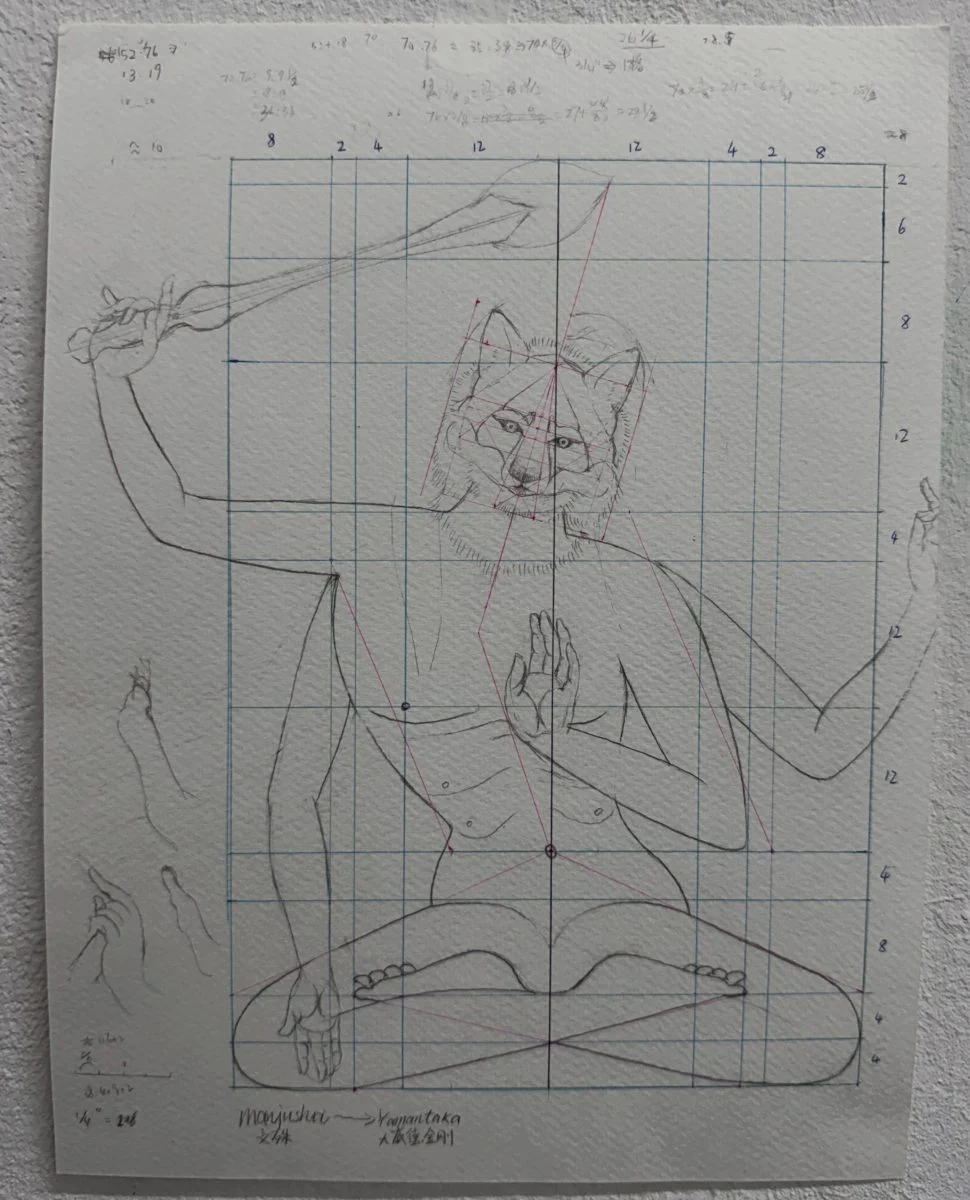
What moves you to challenge the notions of rational thinking?
On a personal level, my history of being educated in a very strict, competitive system. You can’t be vulnerable and emotional. You need to remain stable physically, emotionally, and even geographically. When I started making art, I realised that people are not naturally born like a perfect screw. I want my art to challenge this notion.
Another reason is to emphasize how people are connected to nature. We have so many similarities with our relatives, not only with primates, but with all creatures. The only thing separating us from animals is that we’ve been building this civilization for ages, and we cannot abandon it because our survival depends on it. I wonder if we are on a path to doom and isolation on Earth. That’s why I want to recall concepts that don’t separate us from the rest of the world.
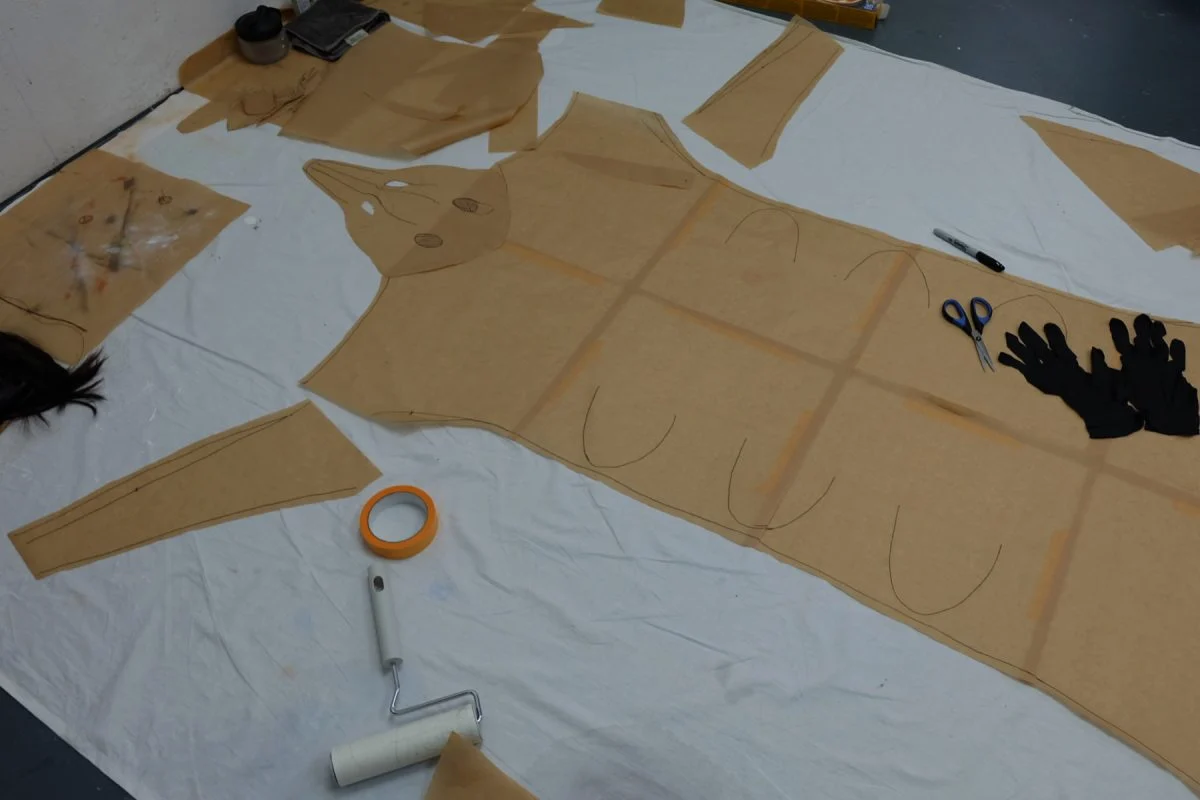
I’m also into storytelling. Most of my projects are based on stories; I think they are the way we translate the world around us, and it’s not objective. History is written by victors, but everything we have or know pushes us to believe that it’s an objective structure, when it’s actually very subjective. I want to challenge these narratives and the structural oppression of people’s actual nature.
Photos // Laura Bikulčytė
Interviewer // Veronika Laczai
- Statement
- GlogauAIR Project
- CV
- Gallery
- More
Statement
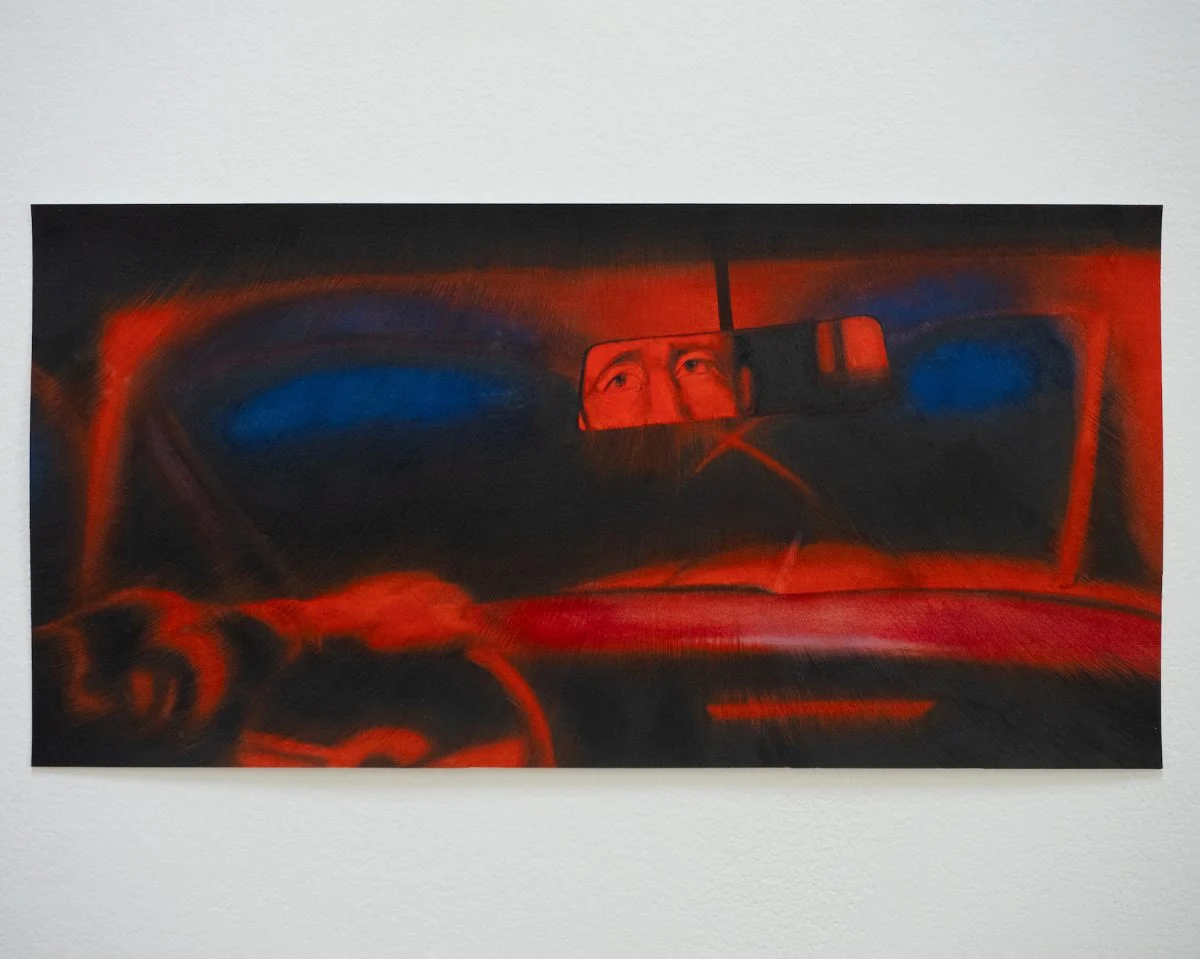
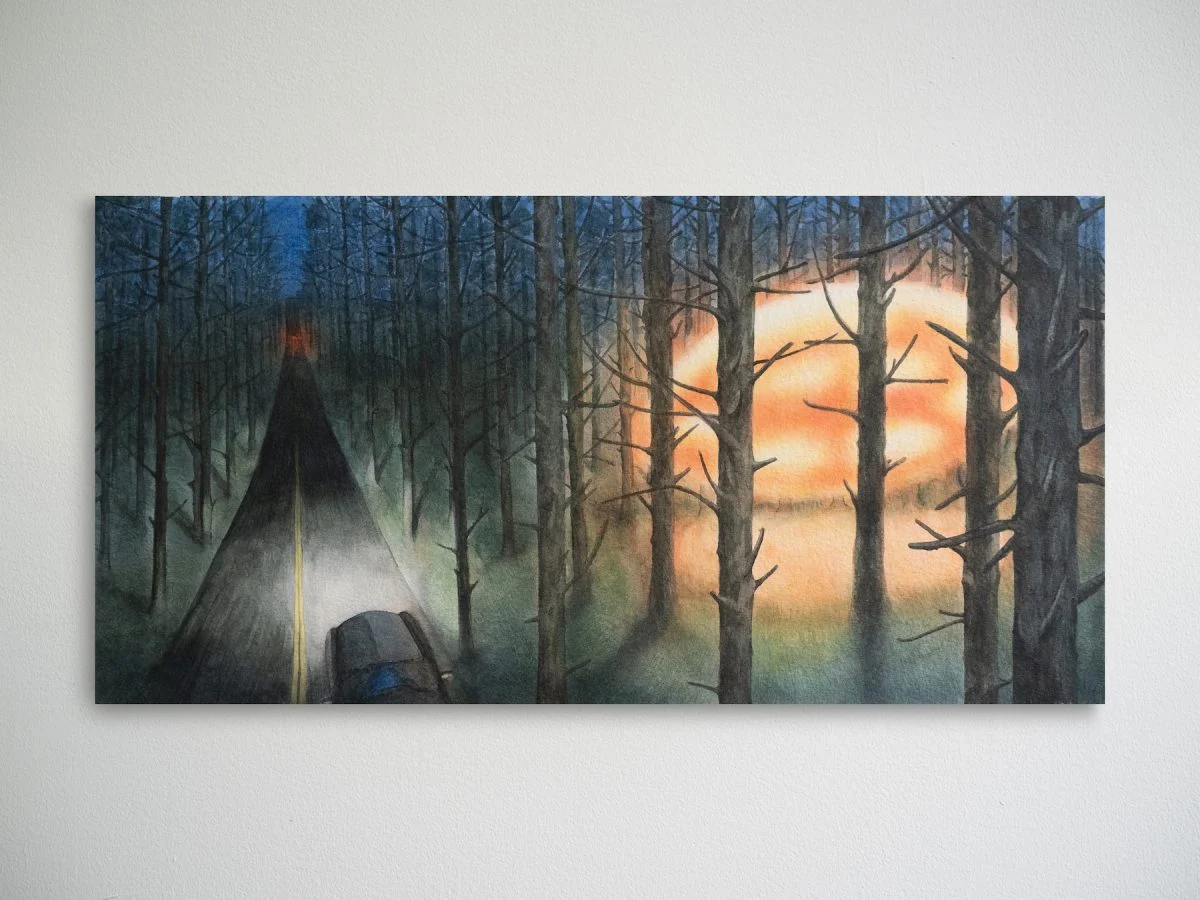
My art begins with a premise: a small, often unlikely proposition I take seriously for the duration of a work. It could be an imagined scenario, intrusive thought, or unrealistic hope. For instance, some have included the truth granted to a UFO encounter, the worry of one day going blind, and the possibility of a language built from gesture. Premises like these intrigue me because their unsanctioned status is exactly what lets them remove the implicit threshold of art as something didactic, transforming the audience from a passive receiver into a reader, an experiencer, a dreamer.
The premise sits on the edge of rational thinking and gazes into what we might call the unresolved. These states are the world as it appears refracted through the many overlapping conditions of being human — what we feel, what we think, what we have been taught, what we inherit, what we share with others. At each angle, what looked singular becomes plural; what looked settled becomes provisional.
I examine the unresolved because they reflect the ever-changing nature of the world today. The more eagerly we try to settle these states, the more chaotic they become. Within this loop, entropy alone holds steady. My art is not about offering resolutions; it is about stating the unresolved, and creating a place for viewers to feel the emotional weight of a world that will not stop changing.
GlogauAIR Project
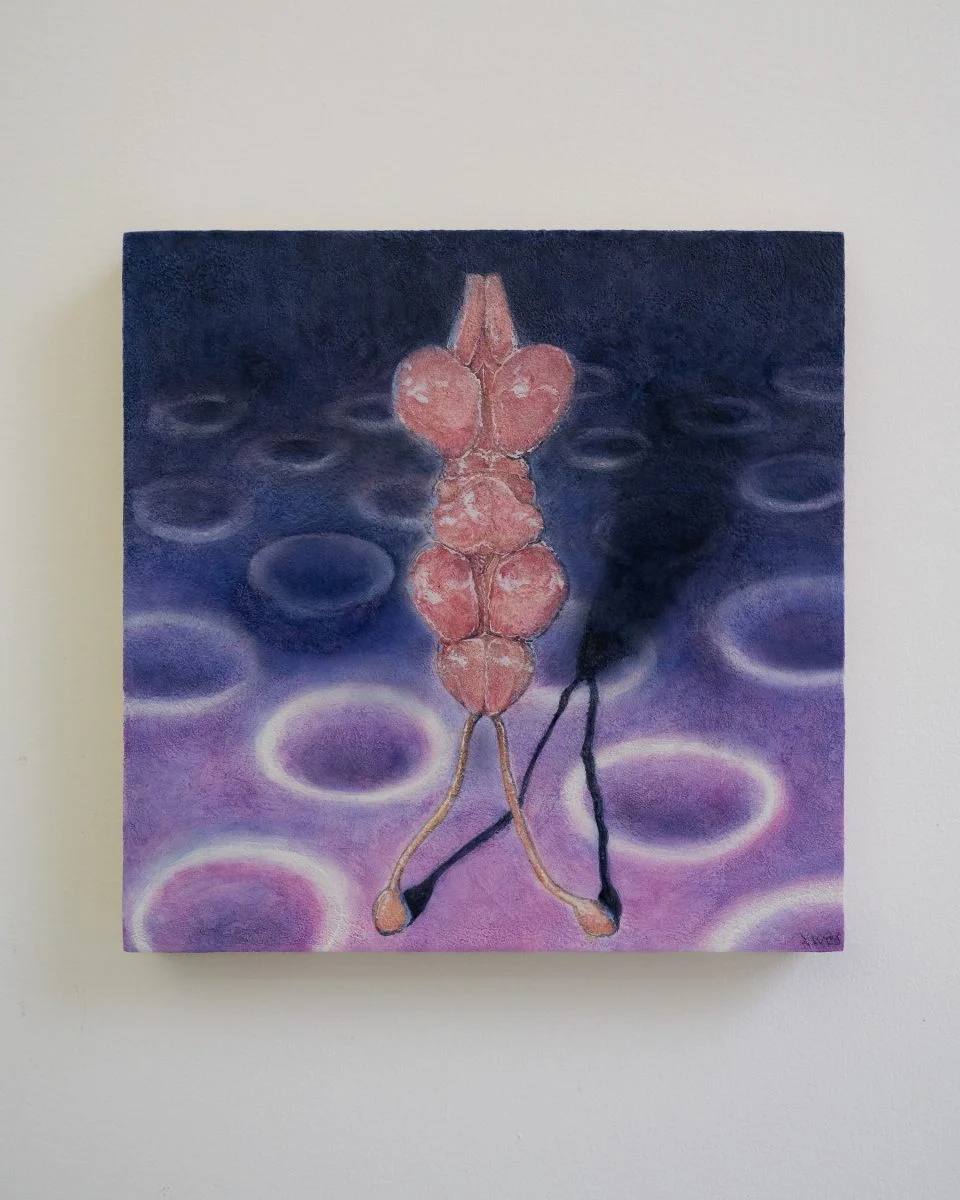
During the residency I want to explore the survival anxiety these turbulent times evoke, carried by our young generation but taught to hide. I’m interested in how that mental state transforms perception — how it bends the way we see our surroundings, and the way we feel our own bodies. Through a series of paintings I want to signal that shift by letting real, recognizable scenes slip into imagined, even absurd ones.
This residency in Berlin will facilitate my discussion: the city’s history of Weimar-era collapse, wartime devastation, Holocaust legacies, and today’s immigration debates offers a rich repository of collective coping mechanisms.
CV
Education:
- 2021-25 Bachelor of Fine Art, New York University, NY, United States
Selected Exhibitions:
- 2026 Bending the Arc, Perry Lawson Fine Art, Nyack, NY, United States
- 2026 Works on Paper, palladium/Athena Project, Brooklyn, NY, United States
- 2026 Showcase, GlogauAIR Art Residency Berlin, Berlin, Germany
- 2025 16th Annual Figurative Art Exhibition, Lore Degeinstein Gallery, Selinsgrove, PA, United States
- 2025 Spectrum: A Multidisciplinary Gallery & Reading, Brown Sugar Lit, Brooklyn, NY, United States
- 2025 Half Wind, Half Still, A Space Gallery, Brooklyn, NY, United States
- 2025 NYU ISA Public Showcase, La MaMa Theatre, New York, NY, United States
Residencies:
- 2026 GlogauAIR Art Residency Berlin, Berlin, Germany
- 2026 School of Visual Arts (SVA) Fine Art Summer Residency, New York City
Gallery
More
We do not have any further information at this time.