Melissa Schwarz is GlogauAIR resident from July 2026 to September 2026. Q3
Melissa Schwarz is an interdisciplinary artist, designer, and researcher exploring the intersections of ecology, technology, embodiment and extraction. Through her interdisciplinary and research-based practice, she investigates how landscapes, bodies, and infrastructures are shaped by environmental, political, and economic forces.
Drawing on critical ecology, hauntology, cyborg theory, and posthuman thought, her work examines artificial wilderness, technological mediation, and the lingering traces of human intervention within contemporary environments.
She currently teaches at the University of the Arts London and Goldsmiths, University of London.


Meet the Artist
Can you please tell us a bit about your background?
I’m a German interdisciplinary artist, designer, and researcher. I just started living between London and Berlin, as I’m about to start a PhD at Freie Universität here. I’m also an associate lecturer at the University of the Arts London and Goldsmiths.
You are working on a Hybridity Mapping Toolkit during your GLO residency, using collaborative methodologies among other research tools. How do you approach creating knowledge-sharing structures and what’s their place in your practice?
Because my work is mostly research-based, its purpose is in many ways to document what I’ve found out about an issue, something I’ve noticed, or that we should pay attention to, depending on whatever it is that I’m looking at, and to communicate it. I always approach it from that perspective, with the intention of sharing what I found out. So sharing knowledge is inherently part of the work. It’s also my job as a lecturer at university; you can’t shake it, it’s always part of the way you think about things.
The toolkit that I’m developing is going to be shared at UAL, one of the universities I work at, and it’s going to introduce different methods for how I investigate postindustrial landscapes. I will do a lot of field research here, find the best ways to experience them in a critical way, package that, and then give that to whoever wants to have some methods at hand, not necessarily just students. Something that can be extended by others as well – it’s about being in a space outside, physically, and learning together.
How do you find the right medium for the specific research that you’ve done? What challenges come with that, if any?
For me, it’s about thinking about the topic first, doing the research, and starting it before deciding on a medium. Most of the time, I just start researching and follow what comes my way. The different media find me through the research, and also by thinking about how I can best communicate it. That’s also why I don’t have one fixed medium.
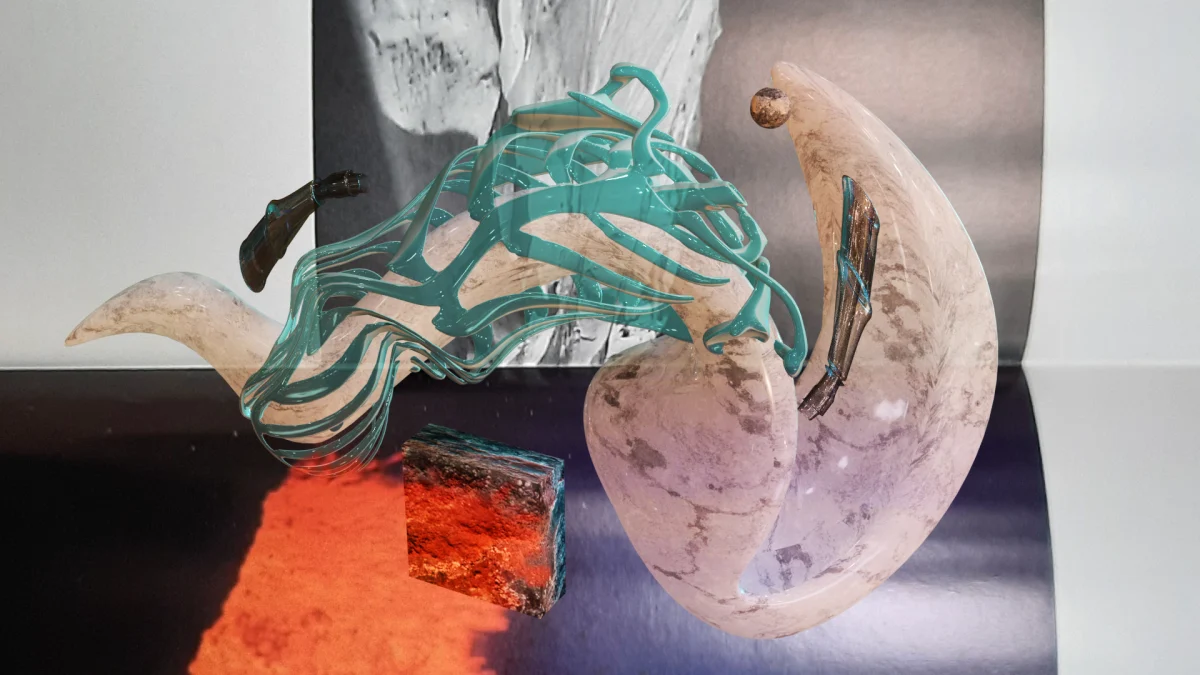
Another struggle is that the subjects that I work with are sometimes really hard to grasp, because they’re philosophical, subtle, and layered concepts, and how do you even make something like that visible? My brain sometimes breaks, trying to think about how I can best communicate them to an audience. You are also always limited in some ways; for example, when it has to fit in a gallery, or into a specific context. So often things get lost as you choose your medium. But that’s the beauty of it as well; picking up the things you had to leave behind.
What’s the source of your fascination with complex theoretical concepts?
How do the notions of hauntology, critical ecology or cyborg theory relate to your practice?
I can apply these ideas really well to both environments and the body, particularly through this idea that the past, present, and future are happening at the same time. I think that’s also one of the powers of art: as we’re making art, we’re making invisible things visible, but we’re also creating the future as we go. Everyone is doing that all the time, right?
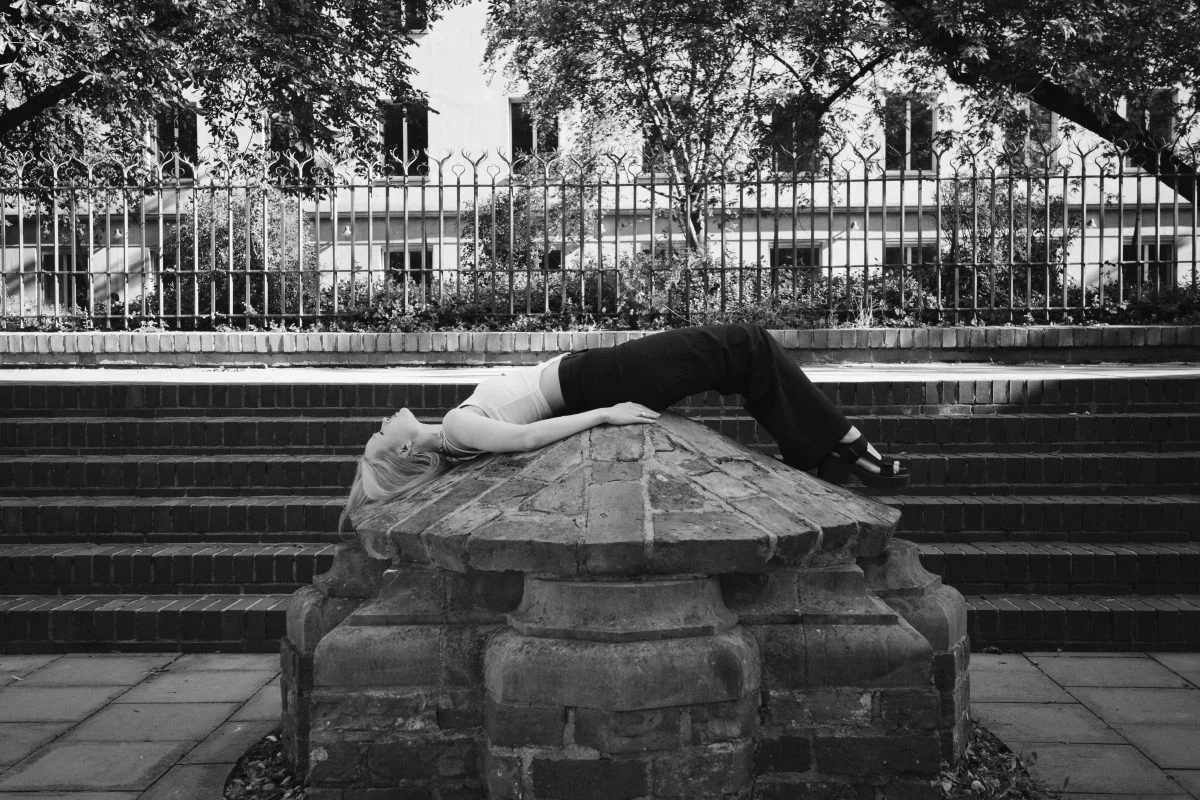
You’re always speculating on futures and trying to make something happen, or stop something from happening, and that’s always influenced by both the past and what you imagine the future to be. So, to think about time as purely linear is extremely limiting, and I don’t think it really holds. All of these concepts deal with that in really interesting ways. Hauntology is helpful, for example, because it suggests that there is no singular, self-contained present; the past persists, and possible futures are already shaping how we experience the present.
Critical ecology and cyborg theory allow me to think about similar entanglements materially – between bodies, technologies, environments, histories, and systems of power. These relationships can be messy, but I think you have to stay with the trouble, as Donna Haraway suggests, and be comfortable with that messiness rather than trying to resolve it.
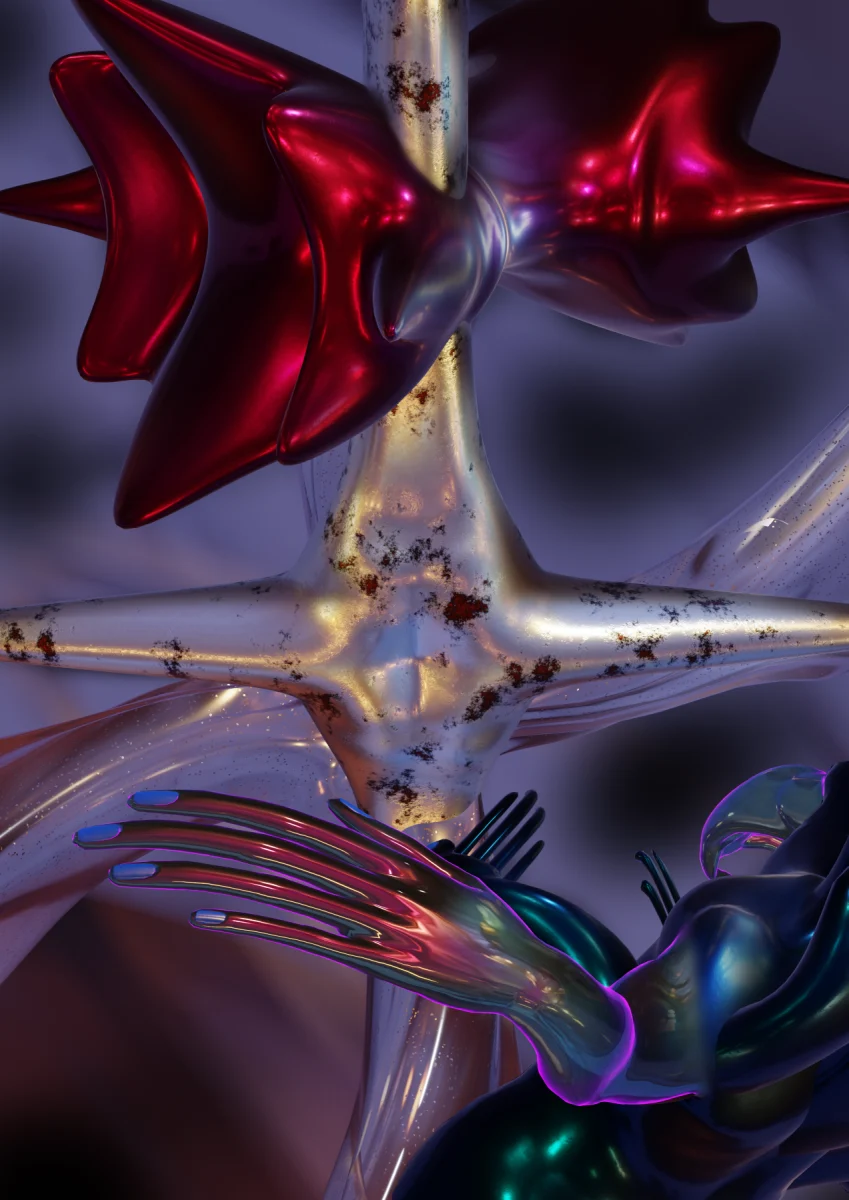
Everyone has a viewpoint and different ways of experiencing and knowing the world. For me, it’s less about using these theories to arrive at one answer and more about offering different perspectives, pulling in different disciplines, and opening up the conversation. All of these lenses give me methods for thinking about things in different ways, and then hopefully finding ways of communicating those complexities to an audience.
Photos // Dari
Interviewer // Veronika Laczai
- Statement
- GlogauAIR Project
- CV
- Gallery
- More
Statement
Melissa Schwarz is an interdisciplinary artist, designer, and researcher exploring the intersections of ecology, technology, embodiment and extraction. Through her interdisciplinary and research-based practice, she investigates how landscapes, bodies, and infrastructures are shaped by environmental, political, and economic forces. Drawing on critical ecology, hauntology, cyborg theory, and posthuman thought, her work examines artificial wilderness, technological mediation, and the lingering traces of human intervention within contemporary environments. She currently teaches at the University of the Arts London and Goldsmiths, University of London.
GlogauAIR Project
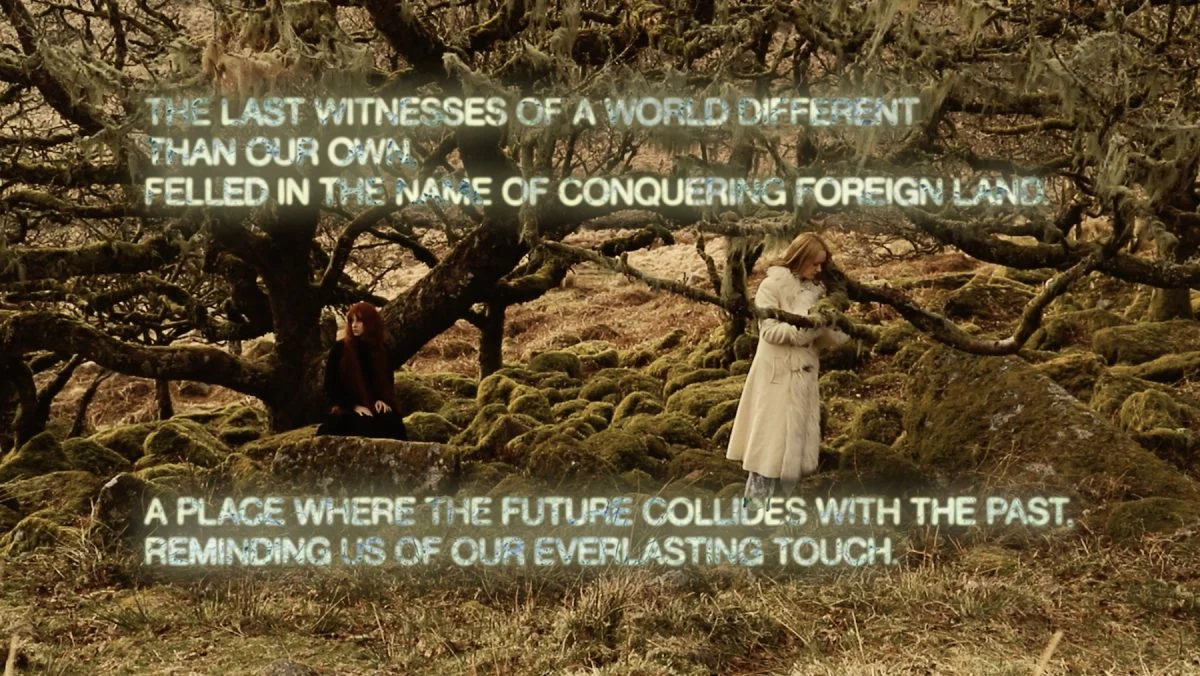
During my residency at GlogauAIR, I would like to further develop my research into post-industrial landscapes, hauntology, and artificial wilderness. Berlin’s constantly evolving urban fabric offers a unique opportunity to investigate how former industrial sites are transformed into cultural and ecological spaces. Through film, digital mapping, and sculptural work, I will explore the spectral overlaps between past, present, and future land uses.
Alongside this, I am going to be working on a ‘Hybridity Mapping Toolkit’, a participatory project developed with funding from the London College of Communication that explores hybrid identities, spaces, and forms of belonging through creative research and collaborative methodologies.
CV
Work
since 2022
- Associate Lecturer at Goldsmith’s, University of London and University of the Arts, London
Most recent Residencies
- SíM Residency August 2025
Reykjavík, Iceland
Resident Artist - Praksis August – September 2024
Oslo, Norway
Resident Artist as part of the residency theme ‘Your pleasure, our pain’
Selected recent work
- In/Human Infrastructures Symposium 21-23rd May 2026
with Xenofuturism Magazine at Gossamer Fog, London
Performance Lecture ULTRA/INFRAstructures - Thinkpiece ‘Cyborg Bodies and Grotesque Environments’ 2025
and Artwork for Wetware Magazine Issue 3, Fashioning rendered Worlds - Pandora’s Box September 2025
Frankfurt, Germany
9. Internationales Frauen Theater Festival
Ecofeminism – performing sustainability - Entangled with the landscape August 2025
Reykjavík, Iceland
Group show with The Association of Icelandic Visual Artists at SíM Korpúlfsstaðir - Radical Landscapes October 2023 – February 2024
London, UK
Artist Commission with Hervisions at the William Morris Gallery, presented at Softer Futures, Copenhagen, Forward Futures, Berlin and V&A, London - Desire Generation April 2023
London, UK
Group show with DIGI-GXL at Dalston Superstore - What are men to rocks and mountains June – October 2022
Nijmegen, The Netherlands
Group show at Platform P-OST - tunglið, tunglið taktu mig May 2022
Reykjavík, Iceland
Group show with The Association of Icelandic Visual Artists - Visceral Realities Exhibition December 2021
London, UK
London College of Communication MA ID Final Show - Ars Electronica – The View From Somewhere September 2021
Linz, Austria
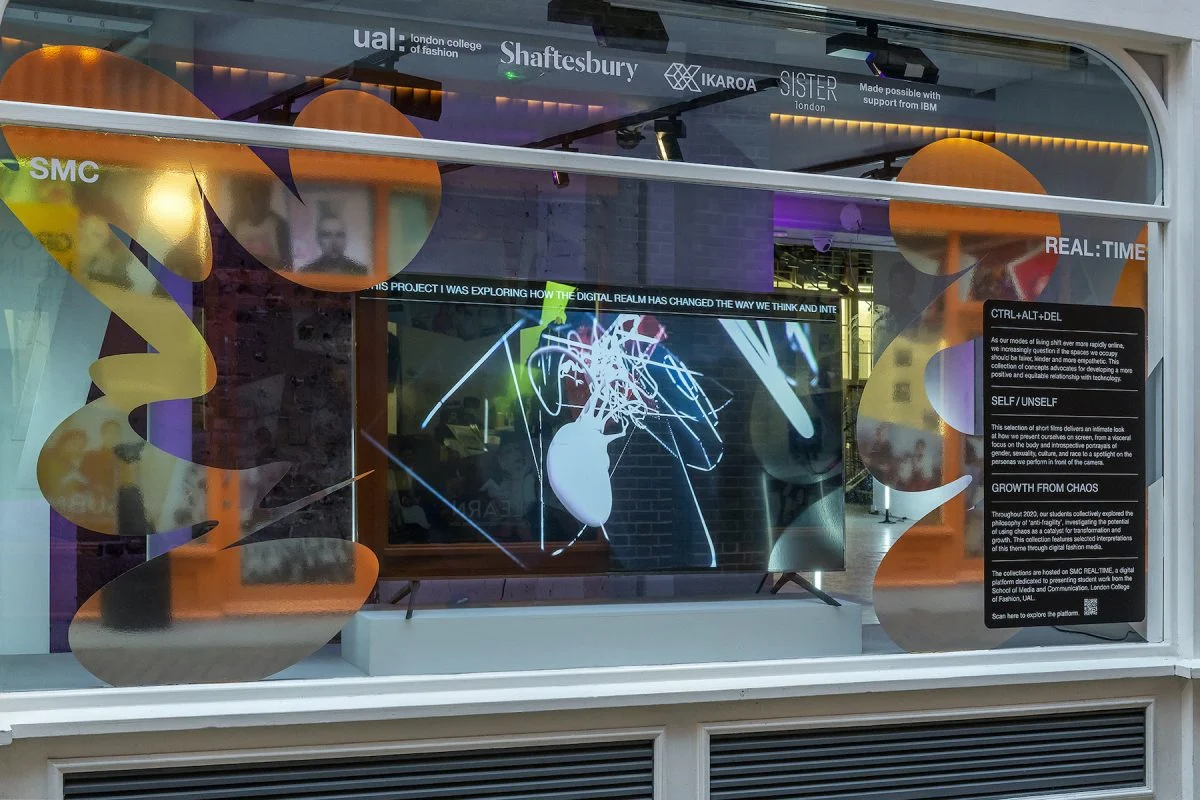
Desktop Cinema screening - CTRL-ALT-DEL SMC:Real Time Exhibition December 2020
London, UK
Group Exhibition Foubert’s Place Carnaby - Aesthetica Short Film Festival November 2019
York, UK
LCF Showcase screening
Summary
- Melissa Schwarz is a German interdisciplinary artist, designer, and researcher based in London, with a practice focused on ecology, technology, embodiment, extraction, critical ecology, hauntology, cyborg theory, and posthuman thought.
- Current role: Associate Lecturer at the University of the Arts London and Goldsmiths, University of London.
- Current research focus: extractivism and hauntology.
- She is about to begin a PhD at Freie Universität Berlin and is living between London and Berlin.
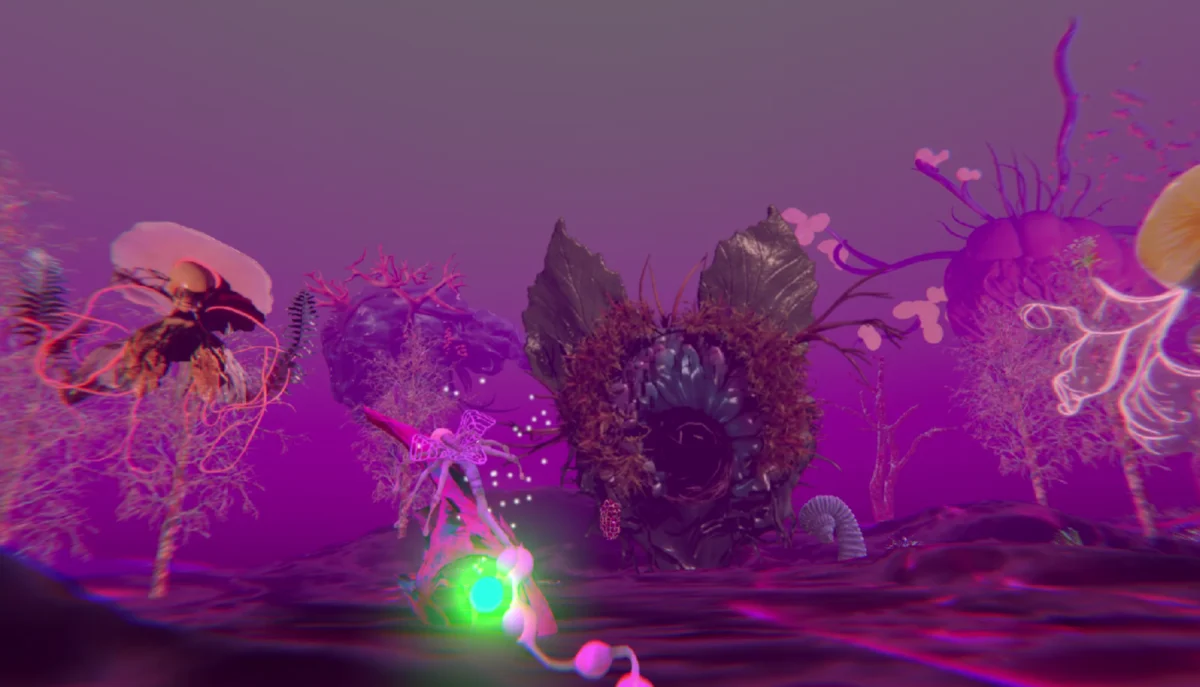
- Her work uses different media for poetic storytelling, ranging from traditional mediums to 3D.
- Her practice examines how landscapes, bodies, and infrastructures are shaped by environmental, political, and economic forces.
- She was a resident artist at SíM Residency in Reykjavík in August 2025 and at Praksis in Oslo from August to September 2024.
- She contributed a thinkpiece titled Cyborg Bodies and Grotesque Environments and artwork for Wetware Magazine Issue 3, Fashioning rendered Worlds in 2025.
- She presented a performance lecture, ULTRA/INFRAstructures, at the In/Human Infrastructures Symposium in London in May 2026.
Gallery

More
We do not have any further information at this time.