Archives: Artists

  • Carrie Stubbs

    Carrie Stubbs

    Carrie Stubbs is GlogauAIR resident
    from July, 2022 to September, 2022 and October, 2022 to December, 2022

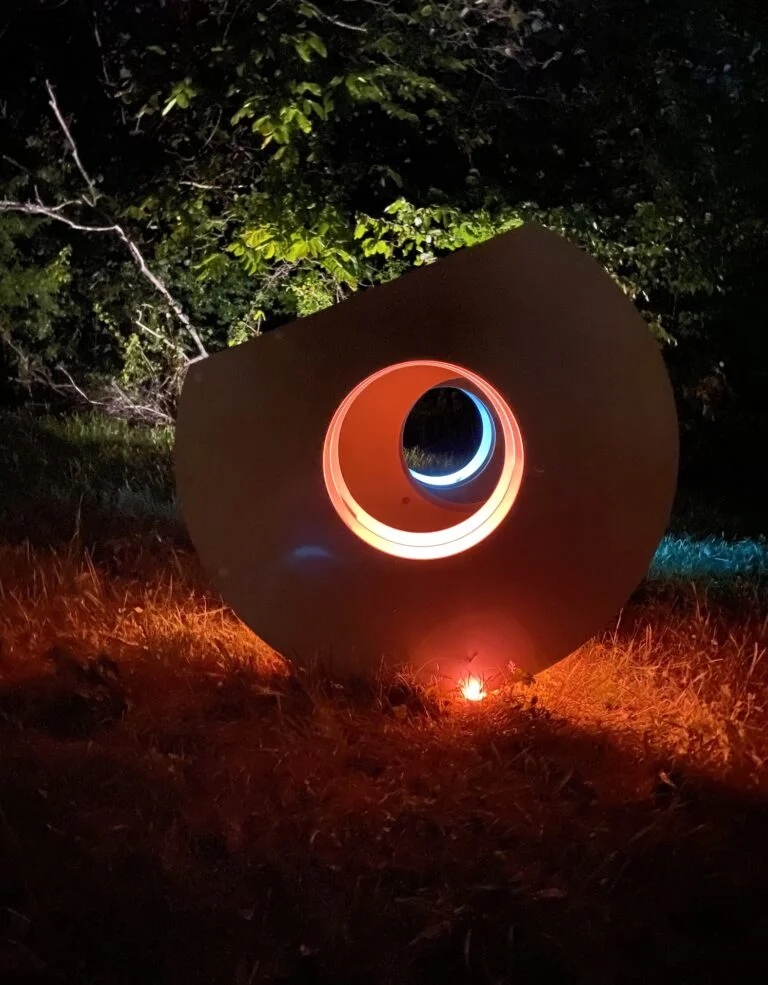
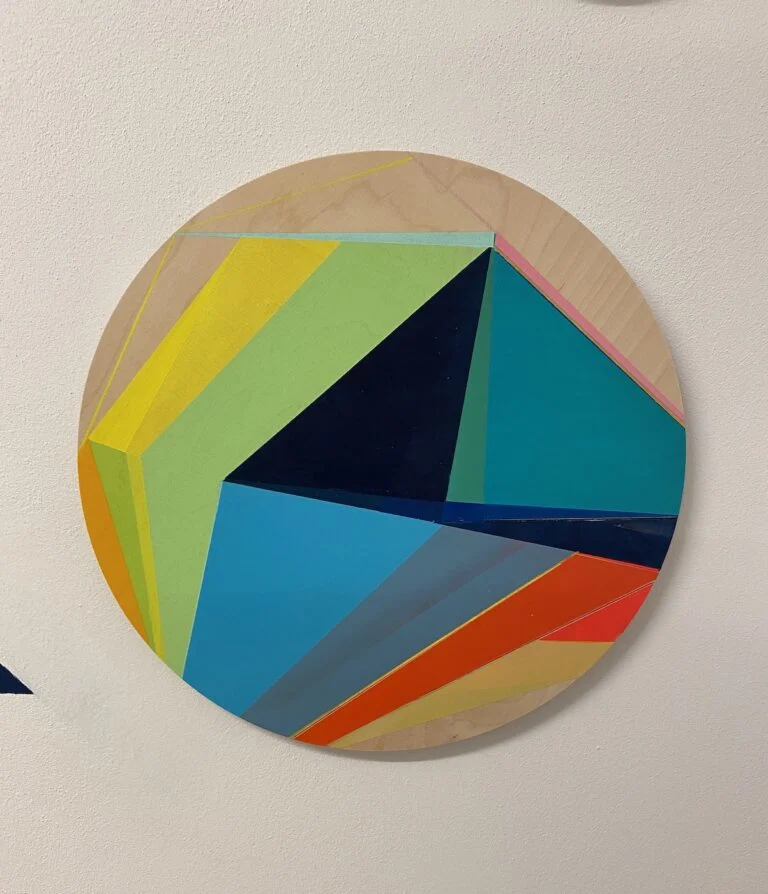
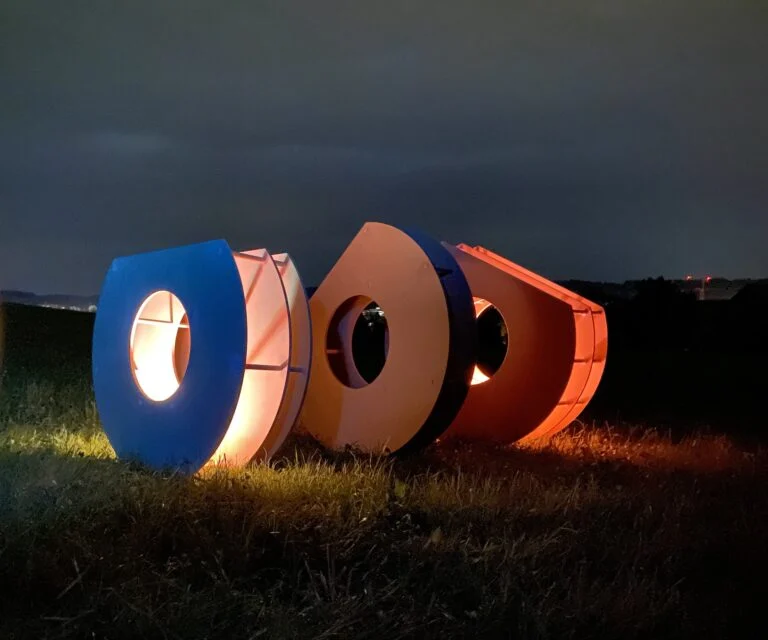
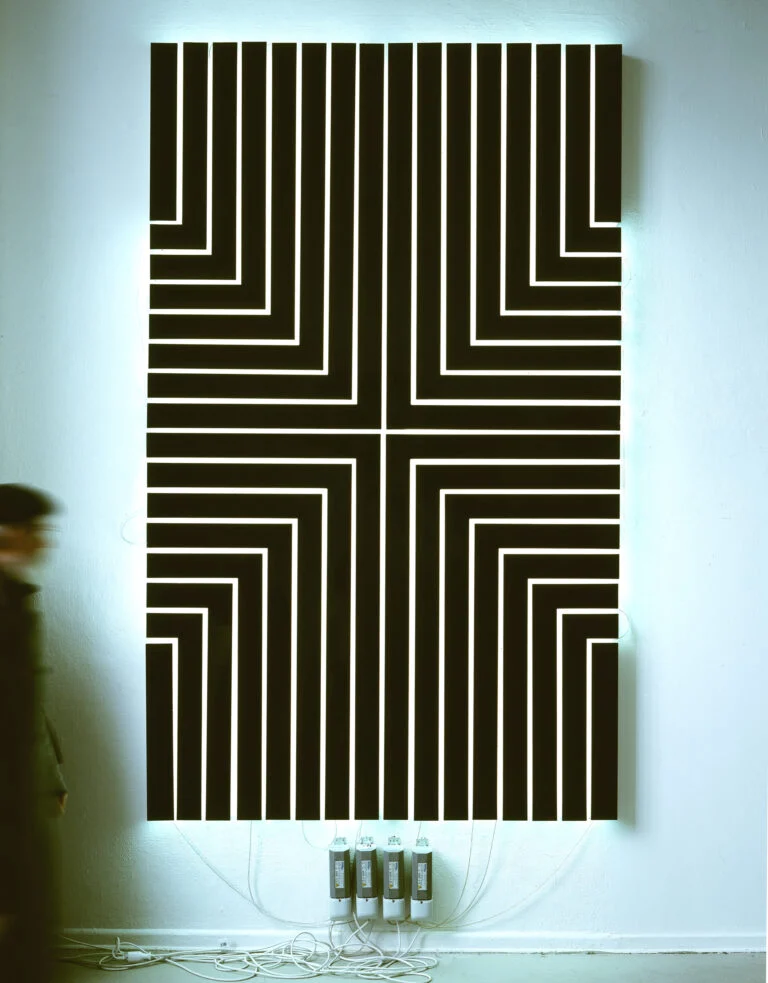
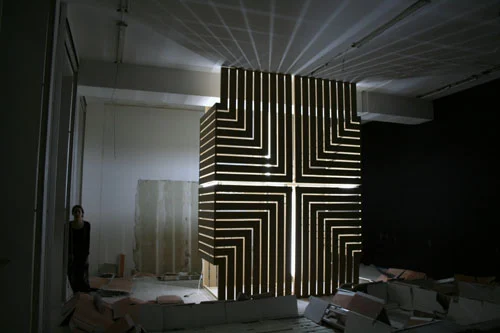
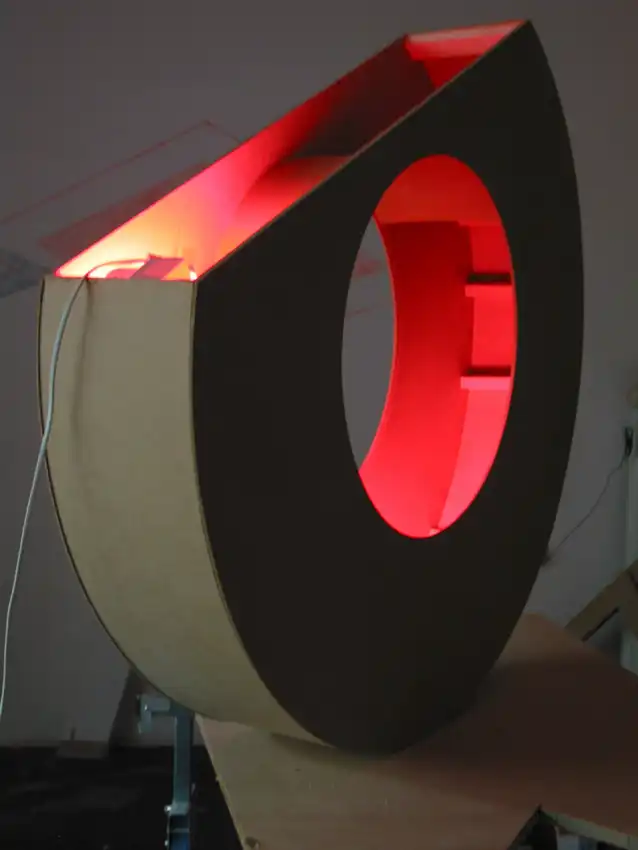
    The painter and light artist based near Zurich The Zurich-based painter and artist Carrie Stubbs delves into her artistic practice and her light sculptures. In the process and methodology, we find references to art history, mentioning Josef Albers, Dan Flavin or Carlos Bunga.

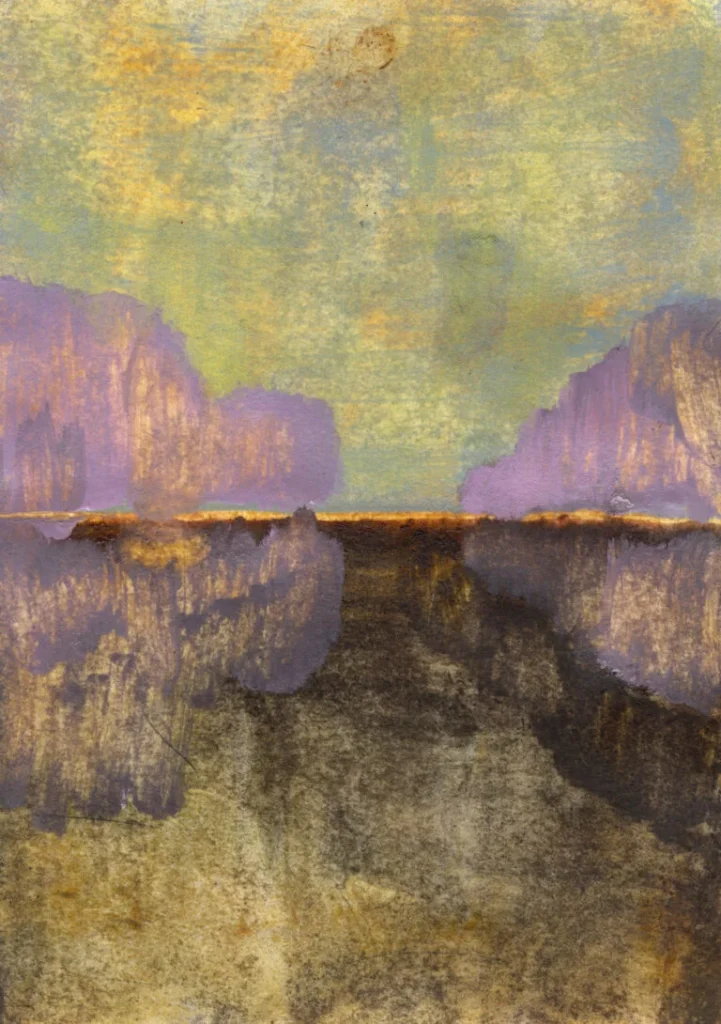
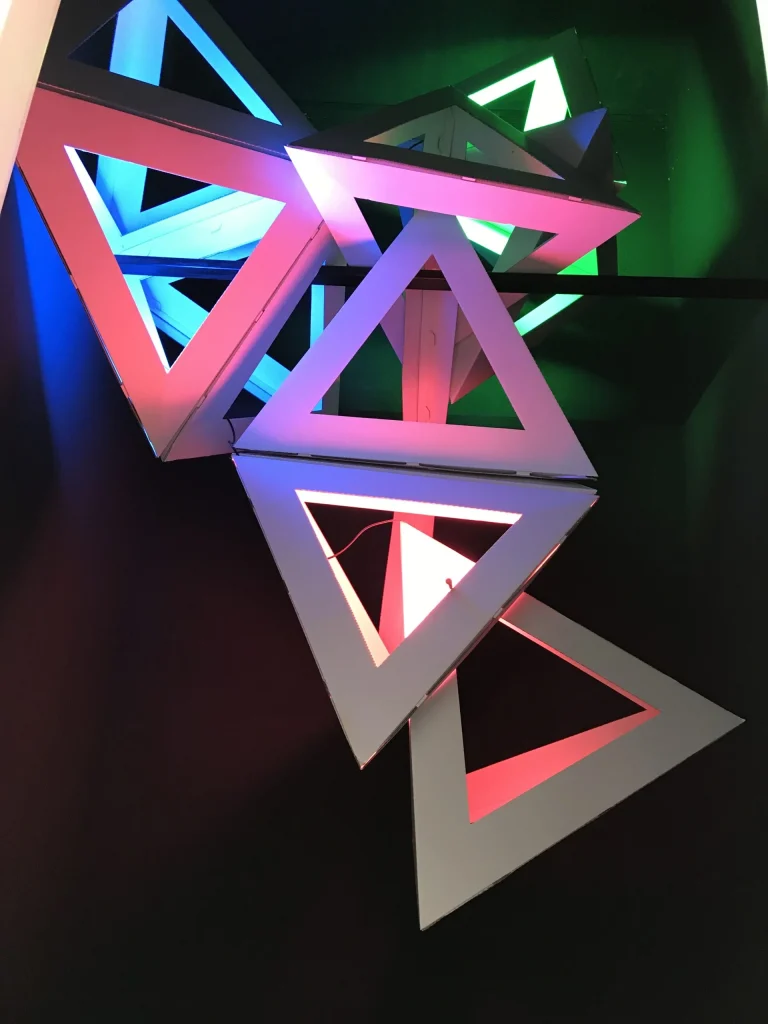
    Carrie’s work examines our perception of light and density of interactions of color. Her work has been described as decorative, as design and as kitsch, descriptions she embraces. Her work questions the sanctity of pure, reduced beauty.

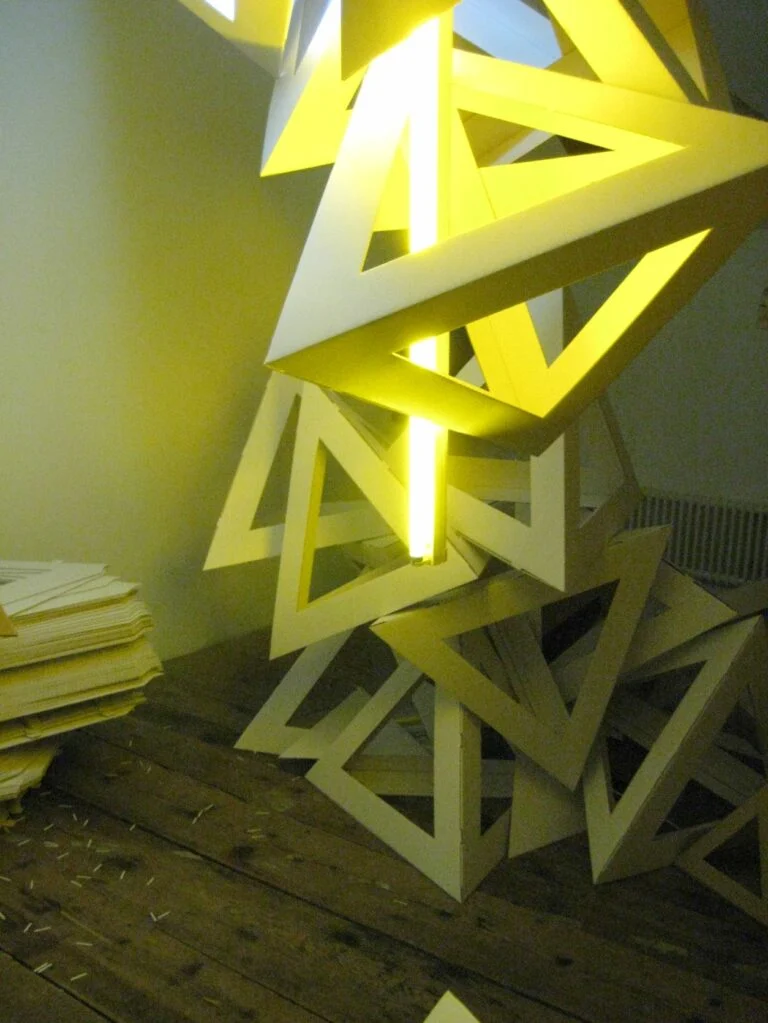
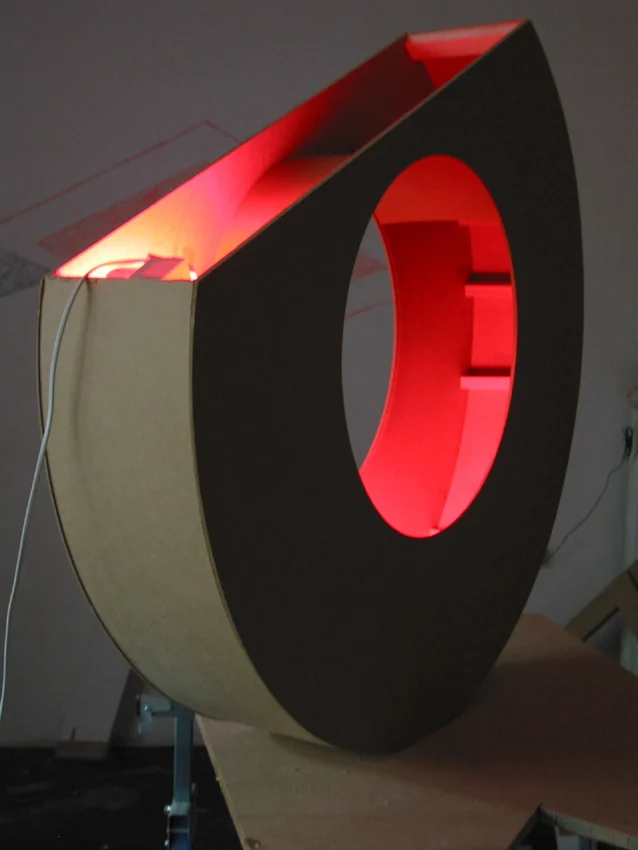
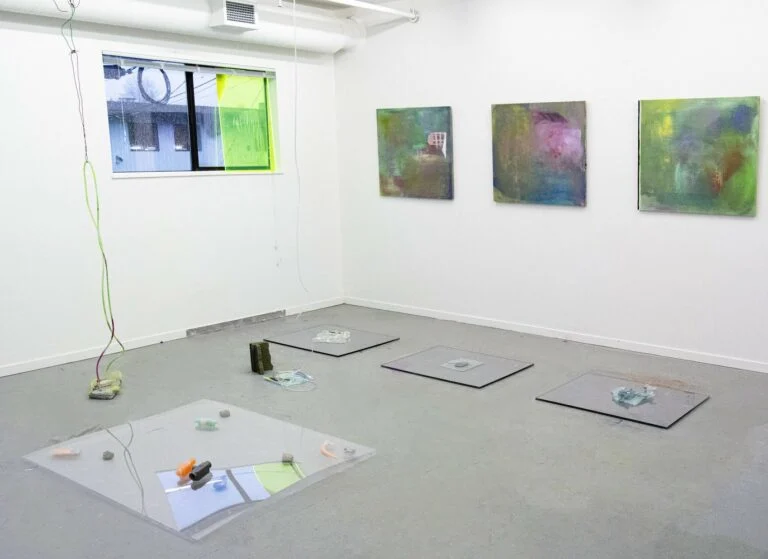
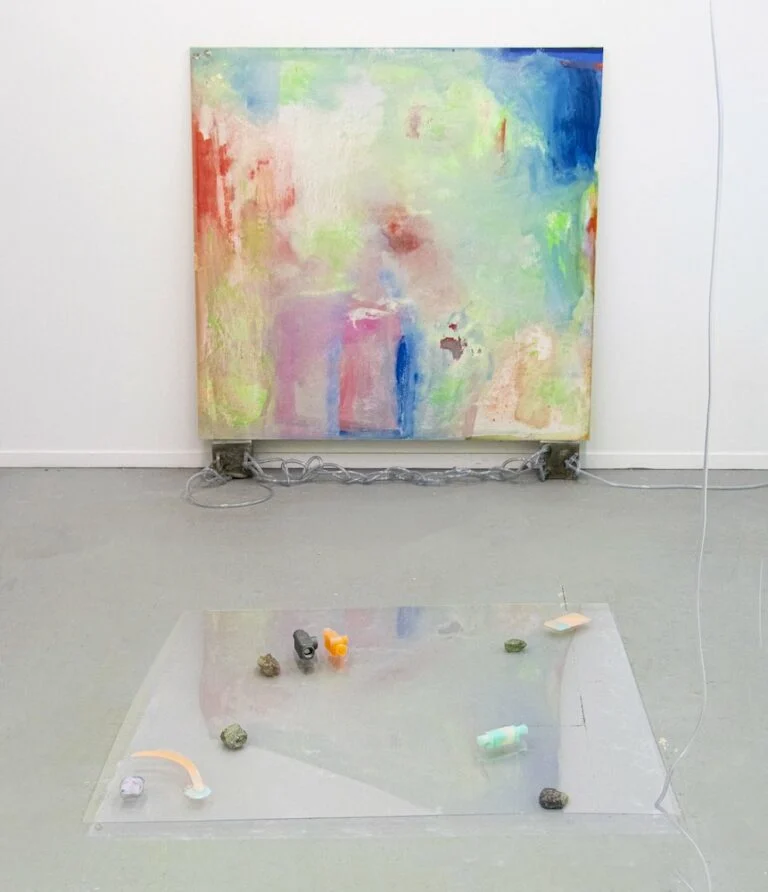
    Carrie has been exploring the connections between cast light, the drawn line of light and planes of color. How does colored light change when used / seen directly compared to reflective light?  What happens to the form that creates the frame for this light? How does that optical illusion change through color choice? Both painted works and light pieces will examine the connections of how our perception of light and color is that affected by a surface.


    Meet the Artist

    Interview 1

    This interview is the result of email correspondence between the online resident Carrie Stubbs and  Laura Olea López, from the curatorial team at GlogauAIR.

    Laura: Why is light central to your artistic practice? How did it start?

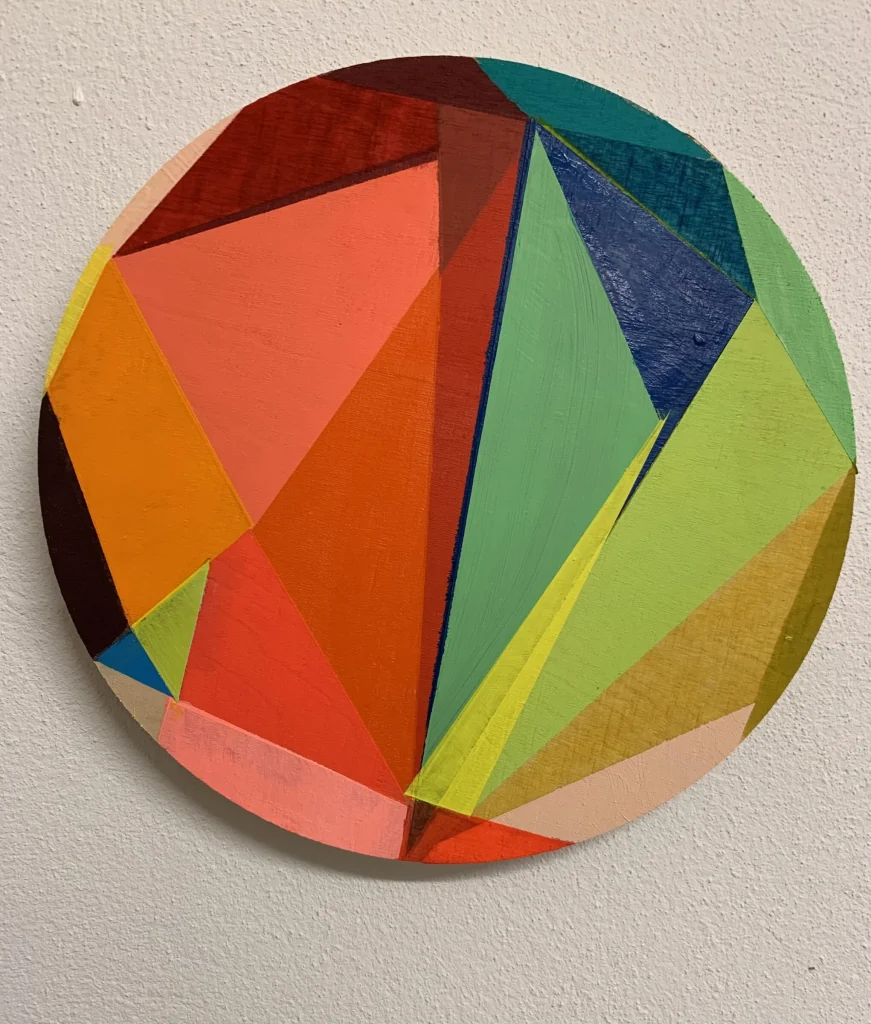
    Carrie: I guess I have always been interested in light. I mean, employing a sort of chiaroscuro when learning to draw is really important. Often artists look at how light falls onto an object and the light and shadows are used to create the illusion of 3D on a 2D surface. In that case, without light, there is no form. Also in landscape painting, many artists have focussed on how natural light comes through trees or the light appears in the landscape. 

    But when the light comes from a central source, (from the object itself) it gives off a dramatic feel, almost like the feeling you have when you are in a dark church and you look towards the altar. A special sensation is achieved and that is something I am trying to capture.
    L: What conditions, information or circumstances do you have to take into account when designing or conceptualizing a new light project?

    C: When thinking about an installation, I like to think about the architectural space that the piece or installation will live in and the scale of those two things to each other. Ideally, I want the work to have some sort of correspondence to the space the work will inhabit. That is not always an option, depending on the space. For that reason, I have been experimenting lately with taking my work outside and to see how it interacts within a space in the woods or in a field.

    L: Are there any artists that you listen to or read about whose work or own artistic practice informs you about your work?

    C: There are many artists whose work I look at and who inspire me. In addition, there are some artists who I refer to directly through appropriation; my installation ‘Die Fahne Hoch‘ is appropriated from Stella’s painting with a similar name.  I often feel references to Dan Flavin as a light artist. His work is extremely present in my work and in my practice. I mean, as an artist who works with light, you can’t avoid Dan Flavin.  But also the work of Eva Hesse. But also Mary Heilmann.

    Currently, I have spent a lot of time looking at Carlos Bunga’s work and listening to some of his interviews. I have not yet had the opportunity to see his work in person. I have only seen videos of his installations. I find his work really inspiring and even more so, what he says about his work. One thing that stands out for me is his use of materials. Through his choice of material, his work is only temporary. He uses cardboard, which is a commercial, mundane, everyday product. He calls cardboard ‘organic’ and ‘ephemeral’. I like those ideas. By making these paintings that the viewer can enter and by withholding the stretched canvas, he does something interesting. Also, his work feels at home within immense architectural spaces (which clearly feel permanent and solid in their structure). We usually do not associate cardboard structures with permanent or exact structures.  So his work has this kind of tension between these two worlds… ordered exact architecture and softer impermanent cardboard.

    L: I think he brings up something beautiful but also very important which is the difference between image representation (connected historically with painting so it’s very hard to avoid when working on canvas) and sensation, feelings, and emotions that installations can provide to the viewer/audience. At least, working in the space and different materials leave the room to ask other things before even asking ‘what does that mean?’ as your body is inserted or overwhelmed by that artwork. The relationship (of the viewer) shifts and changes completely in the way we (the viewer) interact with his work. We reach. We connect.

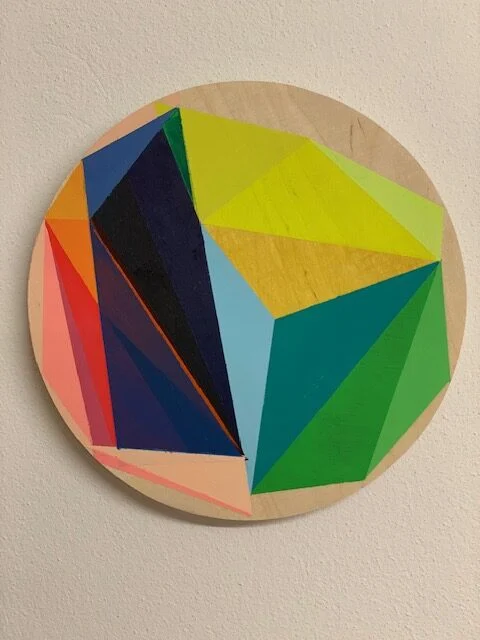
    I love to think about this because in your work there are two aspects present: image and sensation. Also in the creation of an image in the works that are paintings on wooden panels, there is also a connection with your installation practice: light is present in the distribution/scattering of colors, the juxtaposition of geometrical forms is the consistent presence of your work. What are the sensations, the illusions that you evoke with your work? What are the different intentions between your painting and your installations?
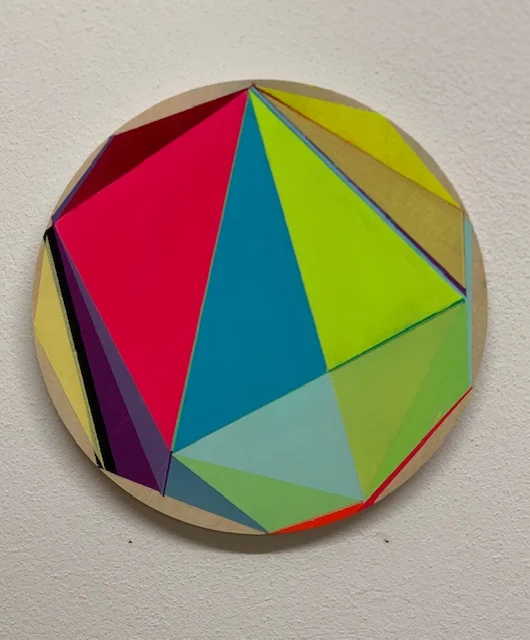
    C: Oh that is a good question. I often think about these two practices within my body of work. The paintings for me are almost like studies. In art school, I took a typical Josef Albers color theory class and it made my head explode. I loved it. In that class, we had to do exercises that Albers developed in his book Interactions of Color. I think almost every art student has had to complete such a course. We had to use ‘COLOR/AID Sets of Color Swatches‘ (boxes of 314 velvety-printed pieces of colored paper) to complete these tasks. For example, we had to make 2  small squares of the same color look like two different colors. Such exercises taught me how similar and different color can look and feel based on its surroundings, its temperature, based on everything. It made me curious.  Light does the same thing.  Light has a temperature and a color.  It has a huge effect on how we perceive our world and it fascinates me.  I think in both my installations and in my paintings, that need of exploration is what connects these two practices.

    When talking about his installations, Bunga said that his work invites the public to be or go inside. For him, this interaction activates the pieces and he thinks that the public has a different sensation, a subjective and personal one from that experience. I think that is something that I also hope for in my work – especially when working with light. 

    L: In reference to Josef Albers: your paintings are geometrical explorations of layers of solid colour and in a certain sense, similar to the approach of Albers in his series ‘Homage to the Square‘. Do you see your process as being similar to Alber’s work? and if so, how?  And, how is the process you use in your paintings parallel to the planning and design of the light sculptures and installations? 

    C: I do see the similarities between my process and that of Albers’.  Albers’ ‘Homage to the Square’ series are color studies. He had a given system, a set of rules about the format that he stuck to. He used that system to explore how different colors worked together. My painting process is not as rigid as Alber’s was, but my paintings all do have a similar format (size and shape of canvas).  However, they are much more about the exploration of how color moves forward away from the surface and back within the picture frame. While painting them, the process is not as set in stone. In other words, I react much more to what I see and they develop as I go. I have not planned the entire composition before I start a painting.  This is quite a different process compared to the installation and light sculpture. For installations, I usually plan out many elements of how the piece will be made and where it will be placed before starting to create it. So, these pieces are much more conceptual in the creation-process than the paintings.

    L: In an interview in 2012, Lucy R. Lippard recounts that she had always been interested in the word and the image, but that her efforts always fell somewhere in between and “you knew you could never get it”  I think what she is talking about is that there is this gap between the spoken/ written word and the image, or the experience of that artwork.  I also find it a struggle to approach, describe or talk about some specific artworks that I feel you have to experience the piece. In this case, I would say your light sculptures and installations – that I have never seen in real life – could also be challenging to describe. Could you describe your visual work to someone that didn’t experience your installations or seen any pictures? 

    C: I agree with you and with Lucy Lippard; at times words, and language does not do the work justice. For my work, I think the challenge lies in the essence of the piece I am trying to create. I have always been drawn to other people’s artwork that has some sort of aura (for lack of a better word). If I think back to work that has made some sort of impression on me in my development as an artist, I always think back to pieces where the experience or the sensation of seeing those pieces was visceral. For example, the first time I saw Donald Judd’s copper cube called ‘Untitled’ from 1972 with its shiny, reflective surface. When peering inside that sculpture, it felt like it was lit from within, as if it was standing by a perfectly minimalist campfire of warmth. It made a huge impression on me. It’s nearly impossible to explain such a sensation. You have to experience it. It’s something that I think I try to achieve in my own installations. 
    L: What is the relationship you would like the audience to have with your work? How do you imagine the interaction between the artwork and the public?

    C: Hmm, I think that when working with light, the audience automatically interacts with it. I mean, when someone enters the space, the light goes beyond the boundaries of the work itself and is cast throughout the room. The audience has to interact with it. Their presence automatically impacts that installation. 

    This goes back to what Carlos Bunga said so eloquently about his installations – that it invites the audience to interact with it, making their experience of the work much more subjective and personal.

    L: Would you describe and associate your work with minimalistic references? in terms of art history and also for the forms and shapes you choose?

    C: Definitely. I think of my work as being part of a post-minimalist discourse. The minimalists often created this ‘Reduced Perfection’- which is interesting because my work is anything but perfectionist. Often my choice of materials is a bit at odds with these references to the minimalists’ work, as is the final execution of the work itself. 

    Another one of my all-time favorite artists is Eva Hesse. She also often gets compartmentalized into the minimalist genre. For me, I am so interested in how her repetitions of geometries and material become almost organic.

    L: What are you working on next in this second term as an online resident at GlogauAIR?

    C: There are two projects that I am working on. One is an installation involving large frames. The other is a series of paintings that have a topographic surface structure.

    Interview 2

    Statement

    Light paints the air, the space. It enters the room, connecting the outside with the in. It takes on its own form. Forms and repetition of basic colored geometric forms manipulate their surroundings, they play with our perception. They become foreground. Background. Tension.

    Carrie’s work examines our perception of light and density of interactions of color. Her work has been described as decorative, as design and as kitsch, descriptions she embraces. Her work questions the sanctity of pure, reduced beauty. As a product of consumerism, she often uses packaging material (cardboard boxes, inexpensive wood similar to material used to make transportation crates) to create her work. At times, she also uses appropriation of the minimalists, as readily as she also appropriates from the geometric, mass-produced world around her.

    GlogauAIR Project

    Carrie will be exploring the connections between cast light, the drawn line of light and planes of color. How does colored light change when used / seen directly compared to reflective light? What happens to the form that creates the frame for this light? How does that optical illusion change through color choice? Both painted works and light pieces will examine the connections of how our perception of light and color is that affected by a surface.

    CV Summary

    Lives and works in Zurich, Switzerland

    Education

    • 2002-2005 Studied with Helmut Federle at Academy of Fine Arts, Düsseldorf, Germany (Akademiebrief in 2005)
    • 1997-2002 Studied with A.R. Penck at the Academy of Fine Arts, Düsseldorf, Germany
    • 1996-1997 Post- Baccalaureate in Studio Arts at Brandeis University, Waltham, Massachusetts, USA
    • 1989-1993 BA, Marlboro College, Marlboro, Vermont, USA

    Exhibition list

    • 2022, Penck Klasse, Coelner Zimmer, Düsseldorf, Germany *July/ September 2022
    • 2020, StudioK3 Cabinet, Museum Oltern, Olten Switzerland
    • 2019, Blue is Hot and Red is Cold, Kunsthalle Düsseldorf, Germany
    • 2019, Penck Klasse, Kultur Bahnhof Eller, Düsseldorf, Germany
    • 2018, A Line Allein, Hilbertraum, Berlin, Germany
    • 2018, Alchemical Vessels, Smith Center for Healing Arts, Washington DC, USA
    • 2009, Some Assembly Required, Reinraum, Düsseldorf, Germany
    • 2008, Make a Wish, Das Weltkabarett, Galerie für Zeitgenossiches Kunst, Düsseldorf, Germany
    • 2007, Conscience of a Blackened Street, Galerie Andreas Brüning, Düsseldorf, Germany
    • 2007, Anonymous III, Corcoran Gallery, Gallery at Flashpoint, Washington DC, USA
    • 2007, Vision, Verdichtung des Realen, Liesegang, Düsseldorf, Germany
    • 2006, Walz Schelle Wert, Clubruine, Düsseldorf, Germany
    • 2006, Form Follows Fiction, Exile III, Ellen Slegers Temp Art Space, Düsseldorf, Germany
    • 2006, Bretter, die die Welt nicht Braucht, Acapulco, Düsseldorf, Germany
    • 2006, Project Space, Chicago Art Fair, Chicago Illinois, USA
    • 2006, Exile on Cottage Street, Ellen Slegers Temp Art Space, Düsseldorf, Germany
    • 2004, Neustart- Wohin? Museum Baden, Solingen, Germany
    • 2004, My Father’s Eyes, Galerie Andreas Brüning, Düsseldorf, Germany
    • 2003, Paradeis im Bunker, Alexanderplatz, Berlin
    • 2003, Recent Work, Galerie Andreas Brüning, Düsseldorf, Germany

    Gallery
  • Carlos Asensio

    Carlos Asensio

    Carlos Asensio is GlogauAIR resident
    from July, 2022 to September, 2022
    and from October, 2022 to December, 2022

    Introducing Spanish artist Carlos Asensio.

    His practice focuses on paintings and collages and the overarching theme in his artwork is exposing the existing problems in contemporary society which directly affect the human condition and experience.

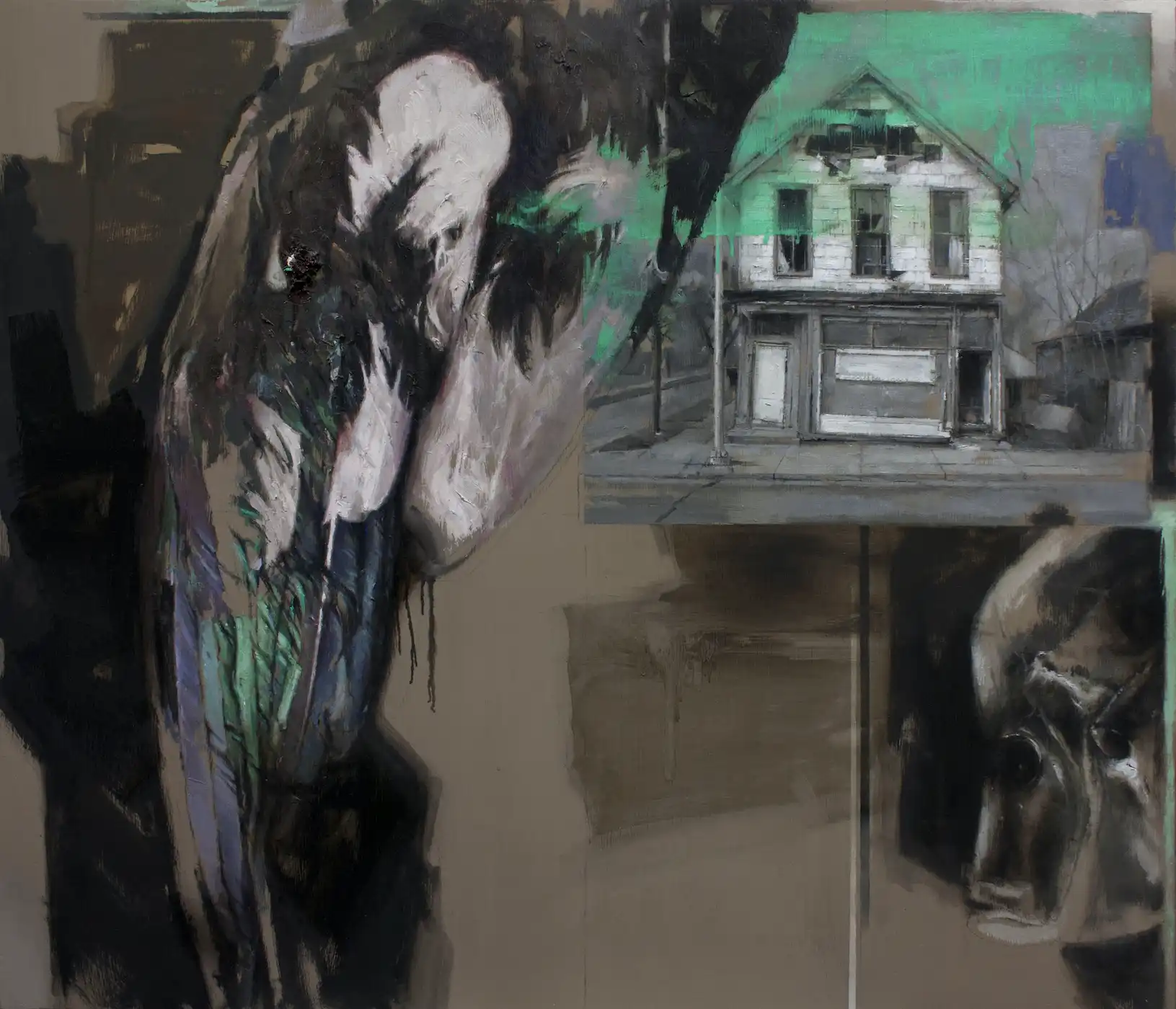
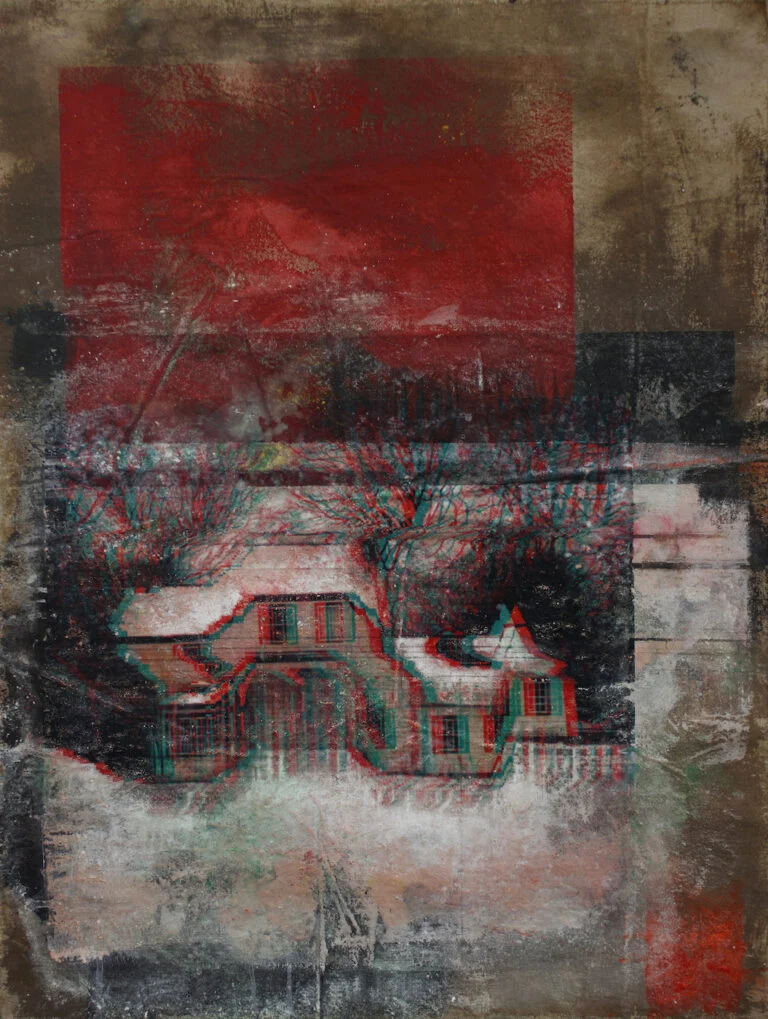
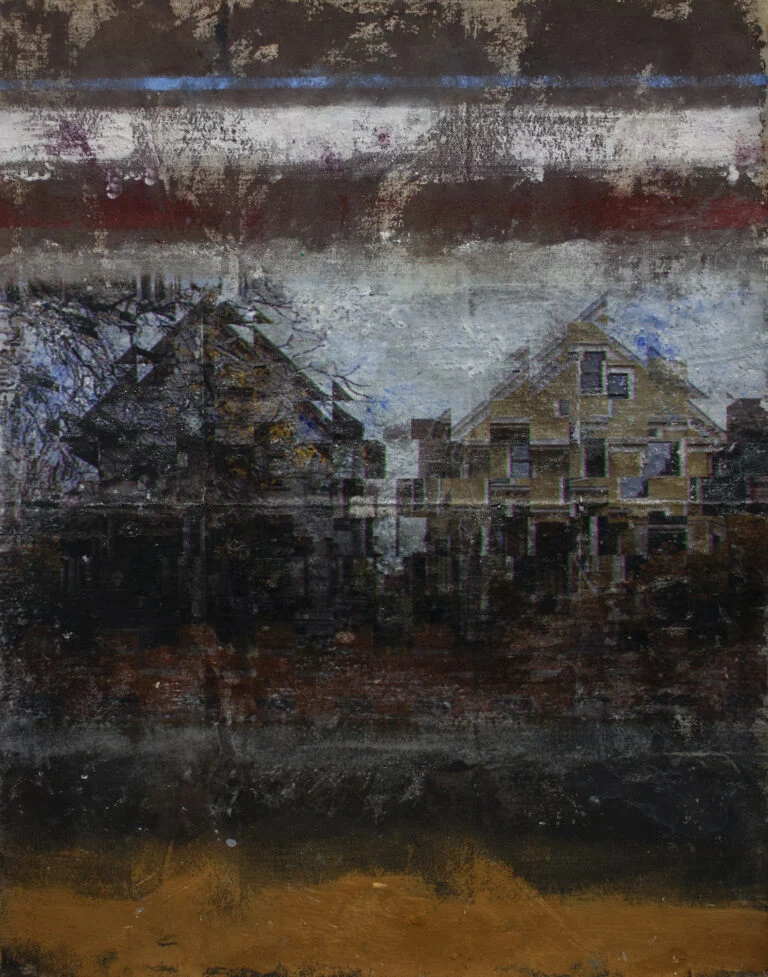
    His newest collection is dedicated to Glitch Houses, this term can be defined as failure in computing where the image field is not considered a software error, but rather an unforeseen feature. Carlos uses this concept of glitch houses to exploit the contradictory nature of the postmodern era.

    Carlos Asensio was supported by the city of Castelló.


    Meet the Artist

    Interview 1

    What is your name and where are you from?

    My name is Carlos Asensio and I´m from Castellón, a city on the east coast of Spain.

    When/ how did your art practice begin …. Do you think where you’re from has affected your work?

    I started painting when I was little, around 11 years old, although I started to take it more seriously when I was studying at the university. The fact of being from where I am from and having studied in Valencia definitely affected my work. There I received academic training focused on figuration. On the other hand, I have always had the great masters of Spanish painting as a reference.

    How has your practice changed over time?

    My artistic practice has evolved quite a bit in the last ten years. From a more academic figuration with great interest in the great pictorial genres and their technical execution towards a more experimental work with a stronger conceptual base. I think it is important to find a balance between the aesthetic part and the discourse of your artwork.

    Do you think your art has evolved being a different environment E.g. Do you think GlogauAIR / being in Berlin has influenced your work?

    Whenever you move to a different environment/city and live for a while, it´s inevitable to receive all kinds of external influences. The important thing is to know how to process them and choose those that can really contribute something significant to your practice.

    In the case of GlogauAIR, it turns out to be twice. On one hand, all the people with whom you share experiences help you grow on the more human side and the city enriches you on the more professional side thanks to the great cultural offer it has. In addition, the fact of being here has allowed me to learn about new techniques within the world of graphics that I´ve incorporated into the project that I´ve been developing.

    What are your next plans after your residency?

    First of all, finish the doctoral program in which I´m immersed and continue with art production, trying to incorporate all the knowledge acquired during my stay in Berlin.

    Interview 2

    Savanna: How did your artist journey begin?

    Carlos: I started painting when I was very young at a small private academy close to my house growing up. My mother introduced me to it. There I received very great instruction from my teacher who was a cuban painter. He now lives in Miami, but he was my teacher and became my mentor while I was growing up. The person that showed and taught me the most about art in my childhood. I am now an art teacher, and teach students the same as my teacher taught me when I was young. 

    S: What do you do as an artist? What is your process? Why do you create the art that you do – what are overarching themes in your artwork?

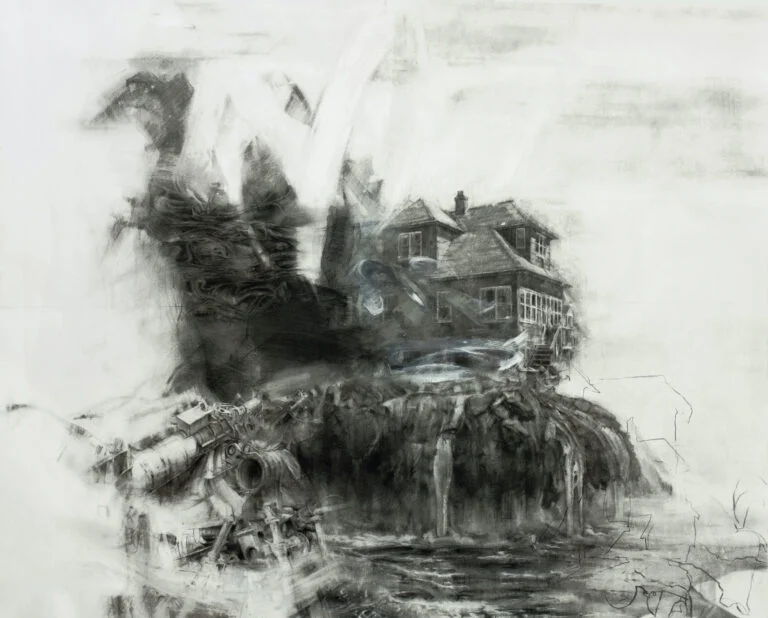
    C: I have always liked painting. I have academy training in painting from university. I also like drawing. Most recently, I have incorporated photographic techniques into my artwork. I like doing transfers and creating this effect called the ‘glitch’ effect. I enjoy the tradition of techniques but used in a contemporary approach. I love mixed media and experimenting with different techniques and mediums.

    S: What is your process? 

    C: My process has changed. I used to work with oil paints, which is a slower process. In the past I did more figurative paintings, more academic. I used to paint life drawings, many times from photographs. Many years ago I discovered a magical tool called photoshop. Now, I map out my composition and make preparation sketches on photoshop. There are many changes that happen between photographs and paintings. It is almost like you need to translate between the two mediums . 

    S: How has your work evolved since being here at GlogauAIR? How has GlogauAIR changed your practice?

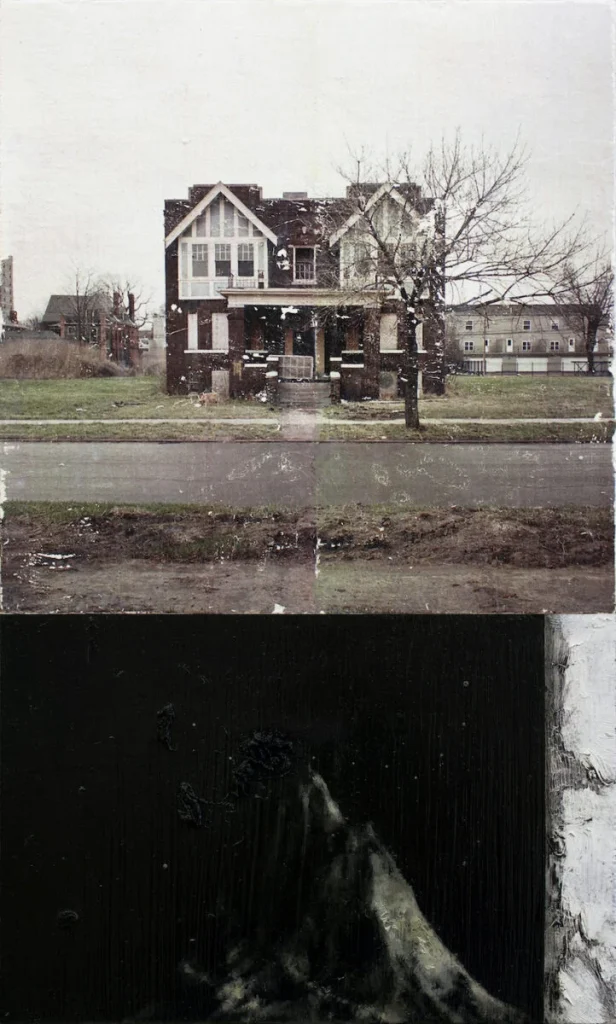
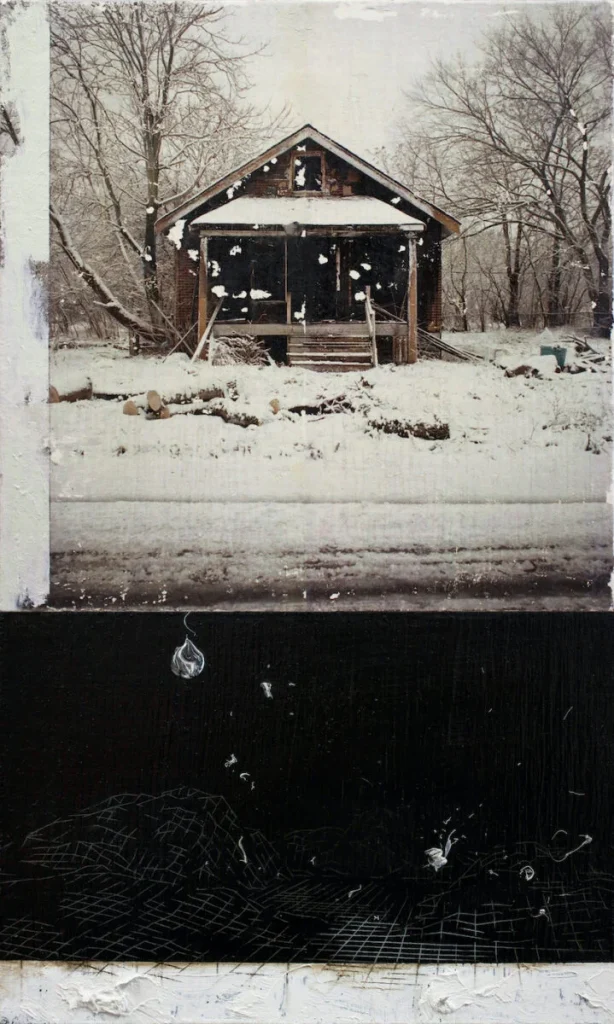
    C: Lately I have been focusing on the ‘glitch effect’ with a diptych format. I get photographs from my own archive, and I do two paintings, the first one I paint  realistically. Then I make another canvas with the glitch effect. This effect exploits the failure of a bad system. I do this effect over a photo transfer. You can see the transfer of the photograph in the background, but it looks as if it is broken or there was an error while loading the image. Almost like a technological error. I get this effect by transferring paper onto canvas with transparent latex. I express myself through this technique to share my views on the world, about society, the environment, politics, philosophy. The system is failing us and I think it is important to share my morality and have a message in my artwork. 

    S: Has GlogauAIR art residency affected you or your artwork?

    C: My artwork has evolved since I have been at GlogauAIR. My time in Berlin has had a big effect on my work here, and I know it will affect my work in the future. I wanted to create a new body of work here in Berlin, instead of continuing an old collection of work from Spain. I think it is important to do this at art residencies and start to create from zero. I also have gotten a lot of inspiration from the art scene in Berlin, which will impact my future works.

    S: What is next for you?

    C: Right now, I am focusing on the moment. I can’t think about what is going to happen in one or two years because it is so far away. I am currently working on getting my PHD which is taking up much of my time. After this residency, I go back to Spain to finish my PHD thesis. I will continue to work on my paintings, as well as teach! I teach all ages: teenagers to old people. I teach all the techniques with the method that I learned from when I was a kid. I love to pass on my knowledge to younger generations.

    Statement

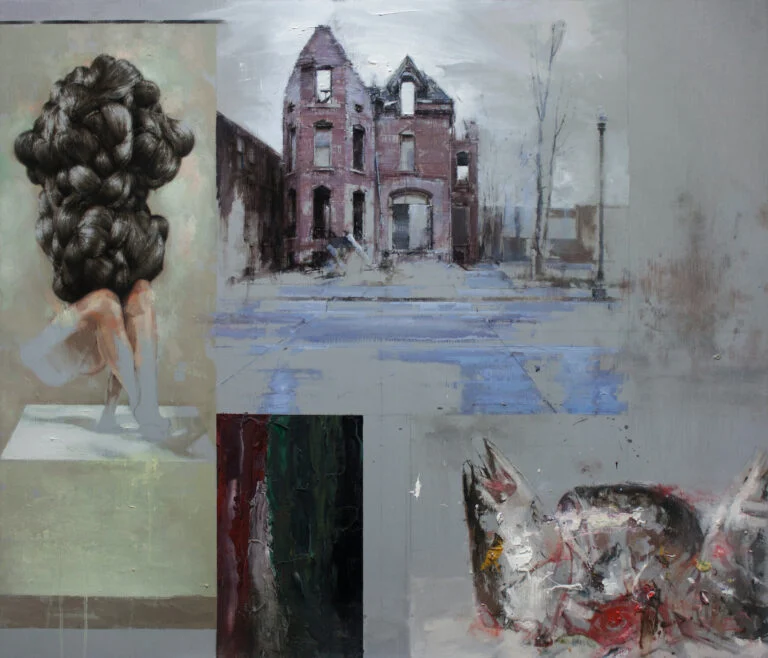
    My recent work arises as a need to delve into some concepts ascribed to the most immediate context and this means representing through art the existing problems in contemporary society which directly alludes to the necesity to review the values on which the human morality is based today. Therefore, there is no better example for this crisis of values or more specifically financial than Detroit. The initial proposal presents a conductive link through the dilapidated situation that characterizes the houses of the postmodern era in that city. At the beginning of the century, this was a model of prosperity and a clear reflection of the American dream. However, it is currently a benchmark of a city that has fallen into disrepair as a result of that economic depression, something that has happened in many cities worldwide due to the globalization of these social processes. After all, this entire series responds as a whole to an elaborate reflection directed towards the effects resulting from the acts produced by humanity and therefore inherent to the human condition. In first place, starting from the economic aspect that in some way is the germ on which the project begins to emerge. Not in vain, from there other subtopics begin to appear that, without losing any relationship with the genuine concept, provide a broader vision, enriching the work and at the same time providing it with greater continuity. Thus, aspects such as natural catastrophes or the mistreatment of the criatures that populate our nature in contrast with the agents of human progress come into play.

    GlogauAIR Project

    Glitch Houses

    As its name indicates, part of the glitch concept, which is an Anglo-Saxon term, whose translation into Spanish means failure and in computing or the image field is not considered a software error, but rather an unforeseen feature. These visual glitches can be observed due to badly encoded or damaged files that form erroneous figures or images. Thus, this conceptual aspect provides added value to the configuration of the reproductions, as well as a greater background in the discourse. Therefore, I intend to generate a link between that anomaly represented through those graphics and the malfunction of the system represented thanks to the figurative image, in the form of abandoned architectures and other related elements that have been appearing throughout the previous series. The multiple effects of distortion, fragmentation or decomposition of the image symbolize this disorder of the most immediate reality. The chromatic combinations of graphics, together with the manipulated variants of the figurative elements, can convey a confusion on the viewer. Some works that enjoy an aesthetic appeal to the eye and, however, contain a bitter social criticism. When it comes to putting into practice, I plan to explore the plastic possibilities that the hybridization of painting with image transfer systems can offer.

    CV Summary

    EDUCATION

    • 2020- PhD in Art and Production. Faculty of Fine Arts of San Carlos. UPV.
    • 2009-2010 MFA in Artistic Production. Faculty of Fine Arts of San Carlos. UPV.
    • 2004-2009 BFA Degree. Faculty of Fine Arts of San Carlos. UPV.

    SELECTED SOLO SHOWS

    • 2018 Inhospitable places. Tomás y Valiente Art Center. Fuenlabrada, Madrid.
    • 2016 Identidad y Movimiento. Ministry of Education, Culture and Science. Castelló.
    • 2014 Reflexiones sobre la Realidad. Municipal Museum. Albacete.

    SELECTED GROUP SHOWS

    • 2021
      • Atlas del arte español. Mauro Muriendas Room. Torrelavega.
      • Infinity Art – Affordable Art Fair. De Kromhoutal. Ámsterdam.
      • 10+6. MENADOR espai cultural. Castelló.
      • Atlas del arte español. O Vello Cárcere Cultural center. Lugo.
      • Infinity Art – Art Madrid. Crystal Gallery of Palacio de Cibeles. Madrid.
      • Infinity Art – Estampa, Contemporary Art Fair. IFEMA. Madrid.
    • 2019
      • 2019_n3. Piramidón Centre D´Art Contemporani. Barcelona.
      • BAI Fellows – Art Spring 2019. Berlin Art Institute. Berlin.
      • PAM´19. Faculty of Fine Arts of San Carlos. UPV. València.
      • Loud Places. Estudio 22. Logroño.
    • 2018
      • Arte Aparte X. La Carolina Cultural Center. La Carolina, Jaén.
    • 2017
      • Marte, International Contemporary Art Fair. Auditorium and Conference Center. Castelló.
      • Ciutat Vella Oberta. Octubre Contemporary Culture Center. València.
    • 2015
      • MarteLab – Incubarte 7. La Llotgeta de la CAM Classroom. València.
      • Collezione Macs – Sezione Internazionale. Contemporary Art Museum of Sicilia. Catania.
      • La New Fair. La New Gallery. Madrid.
    • 2013
      • Arte Propuestas 2013. Centro 14. Alicante.
    • 2011
      • 6th International Drawing Biennale – Benalla Art Gallery. Benalla.
      • 6th International Drawing Biennale – Steps Gallery. Carlton, Melbourne.
      • Arte Contemporáneo Siglo XXI. MEAM, European Museum of Modern Art. Barcelona.

    Gallery
  • Nicole Maloof

    Nicole Maloof

    Nicole Maloof is GlogauAIR resident
    from October, 2022 to December, 2022

    Nicole Maloof’s practice engages themes of assumption, expectation, seduction and the abject body. She investigates her relationship to her own body and its implications in the world through material exploration and abnormal forms.


    Meet the Artist

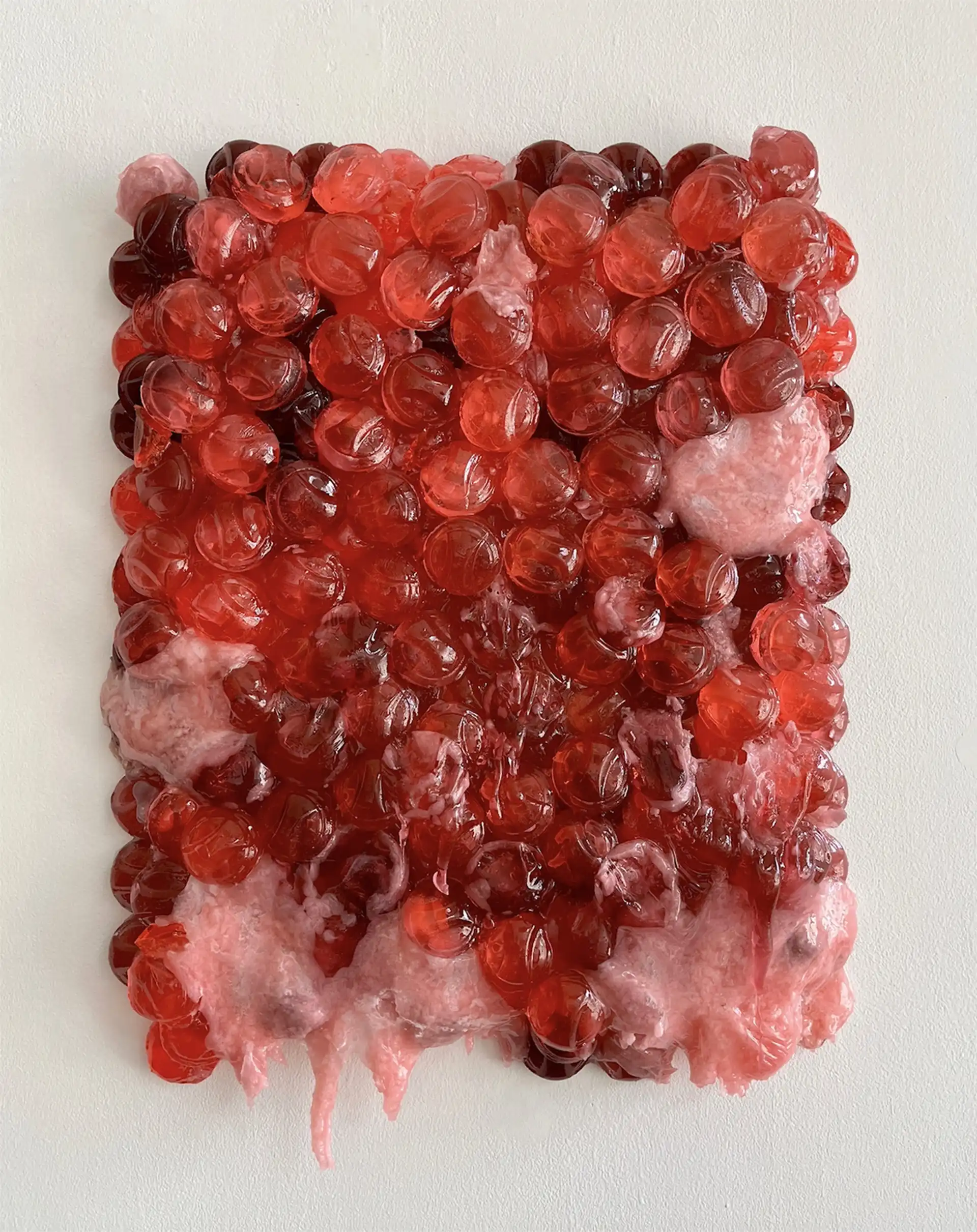
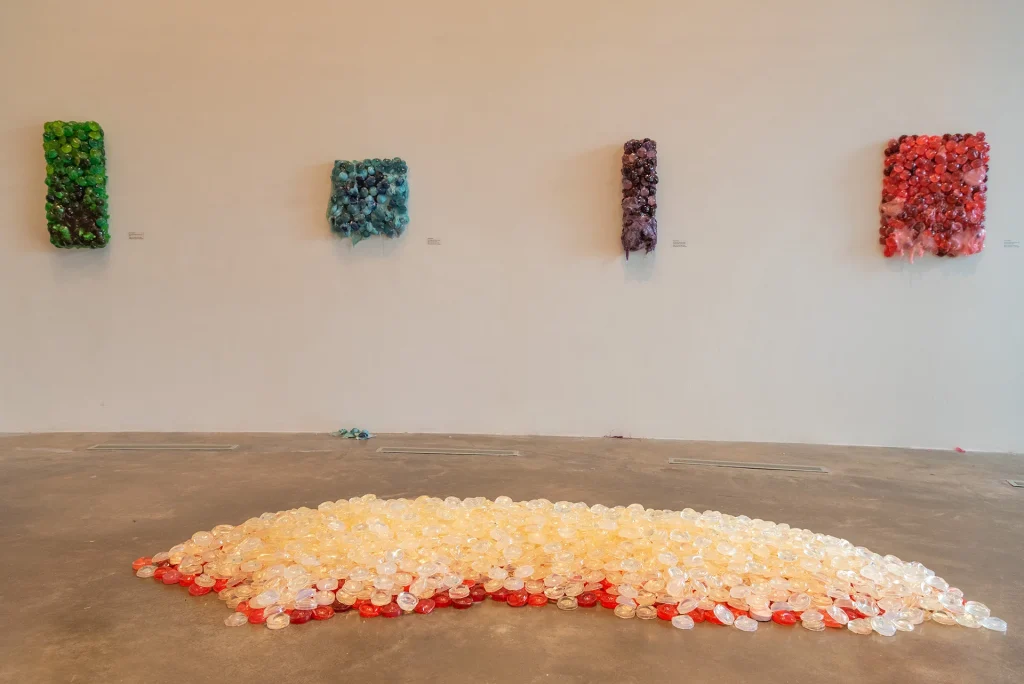
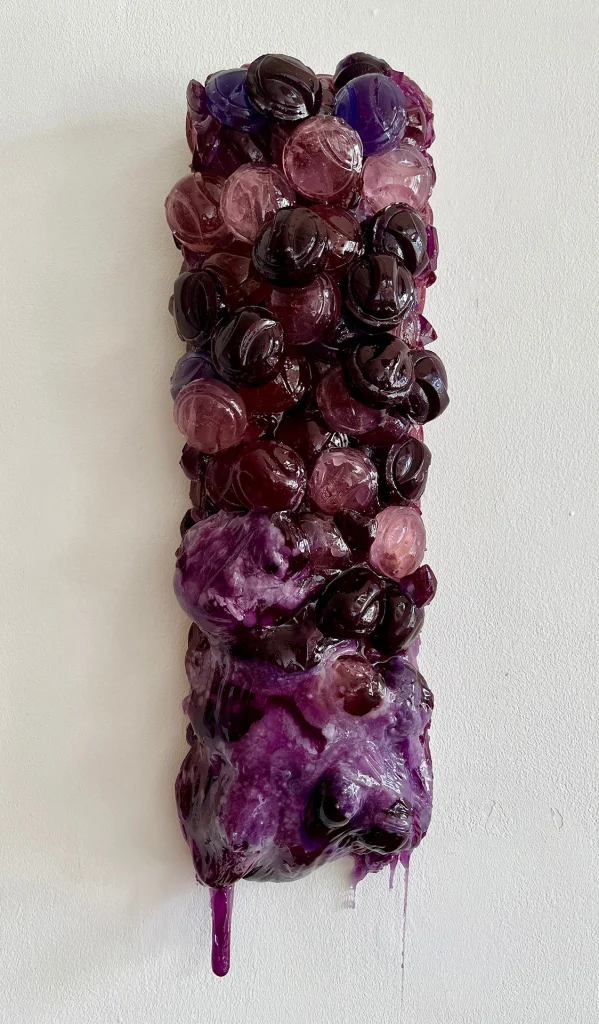
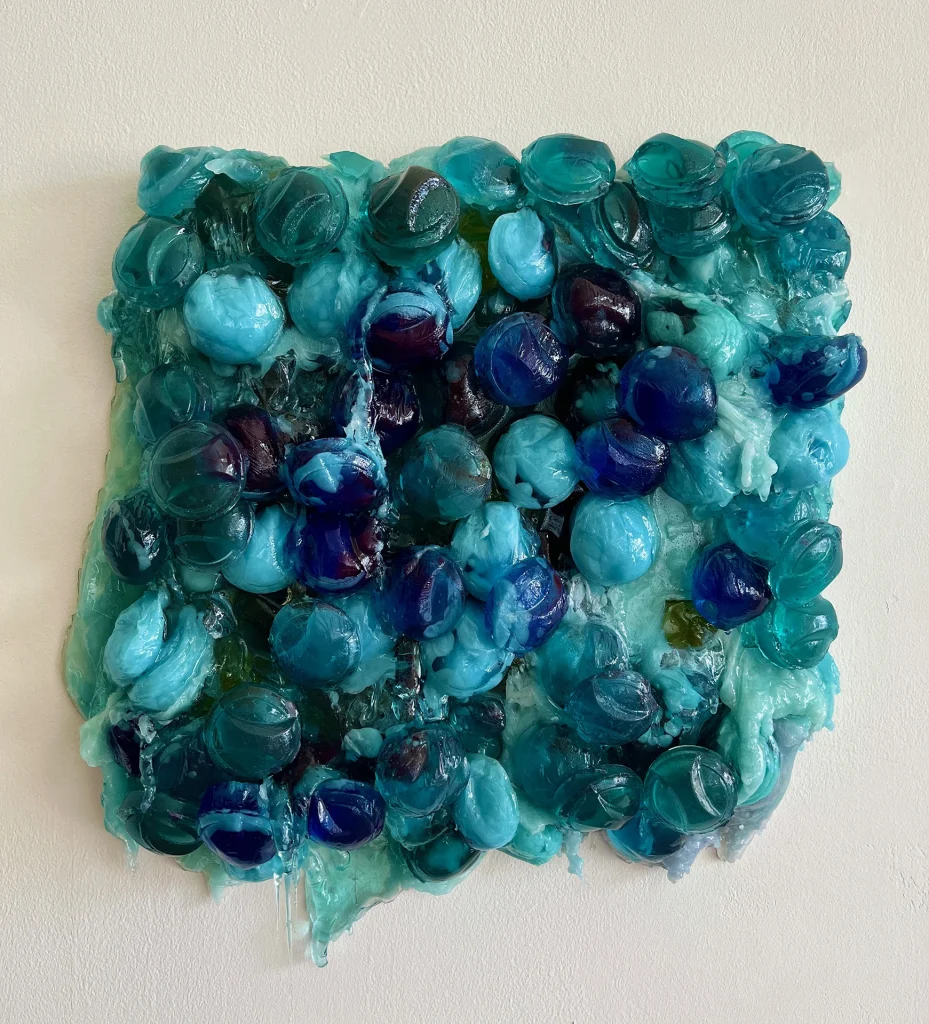
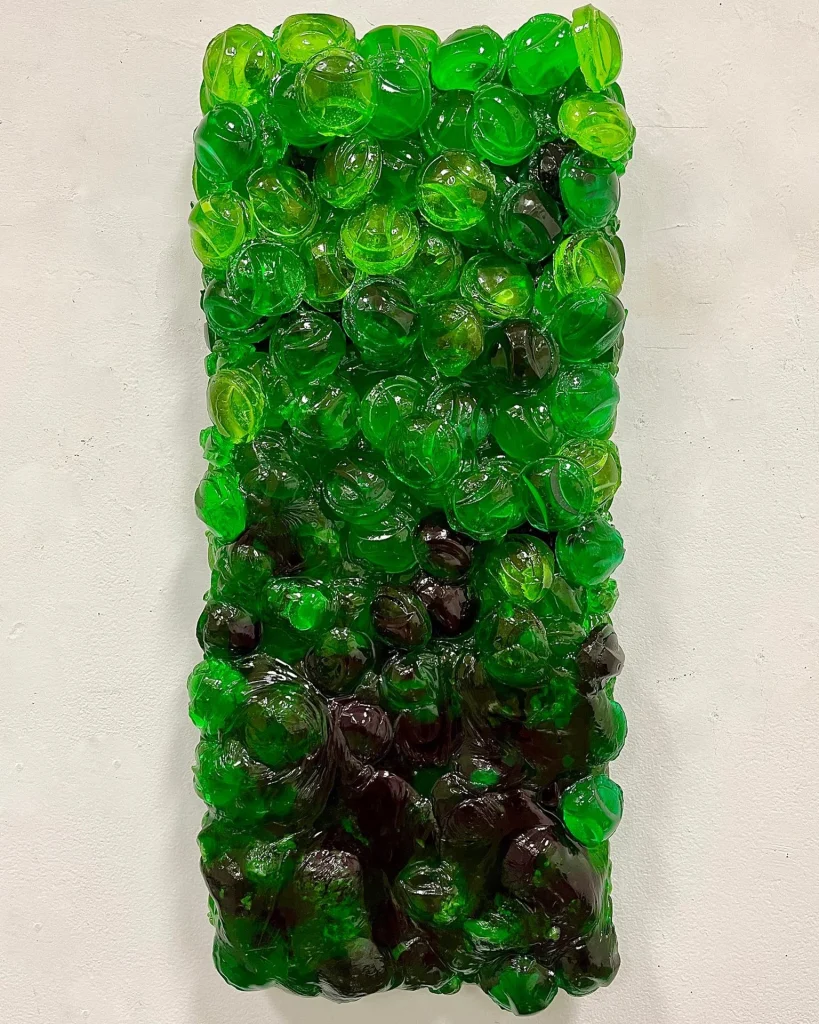
    Being diagnosed with type 1 diabetes at a very young age, Maloof developed part of her practice working with non traditional art materials, such as homemade hard candy, Jell-O and spent medical supplies in conjunction with more typical art materials including plaster and acrylic paint.

    Nicole seeks to challenge the audiences’ expectations as she creates bizarre sculptures that are humorous, ironic, childlike and disturbing all at once.

    Statement

    Nicole Maloof’s practice engages themes of assumption, expectation, seduction and the abject body. She investigates her relationship to her own body and its implications in the world through material exploration and abnormal forms. Maloof was diagnosed with Type 1 Diabetes when she was four years old. As someone with an autoimmune disease, she is constantly aware of the inner workings of the body; she hopes to bring this level of awareness to the viewer. By working with homemade hard candy, Jell-O and spent medical supplies in conjunction with more typical art materials including plaster and acrylic paint, Maloof seeks to challenge the audiences’ expectations as she creates bizarre sculptures that are humorous, ironic, childlike and disturbing all at once.

    GlogauAIR Project

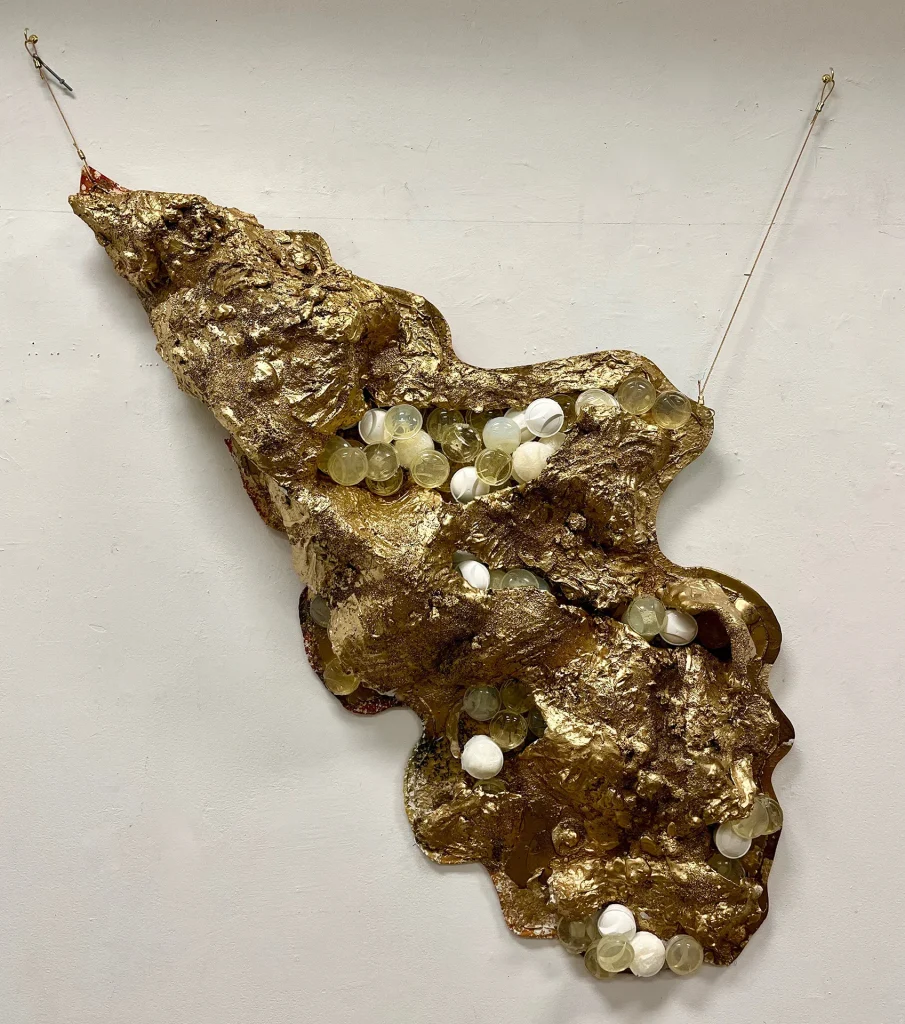
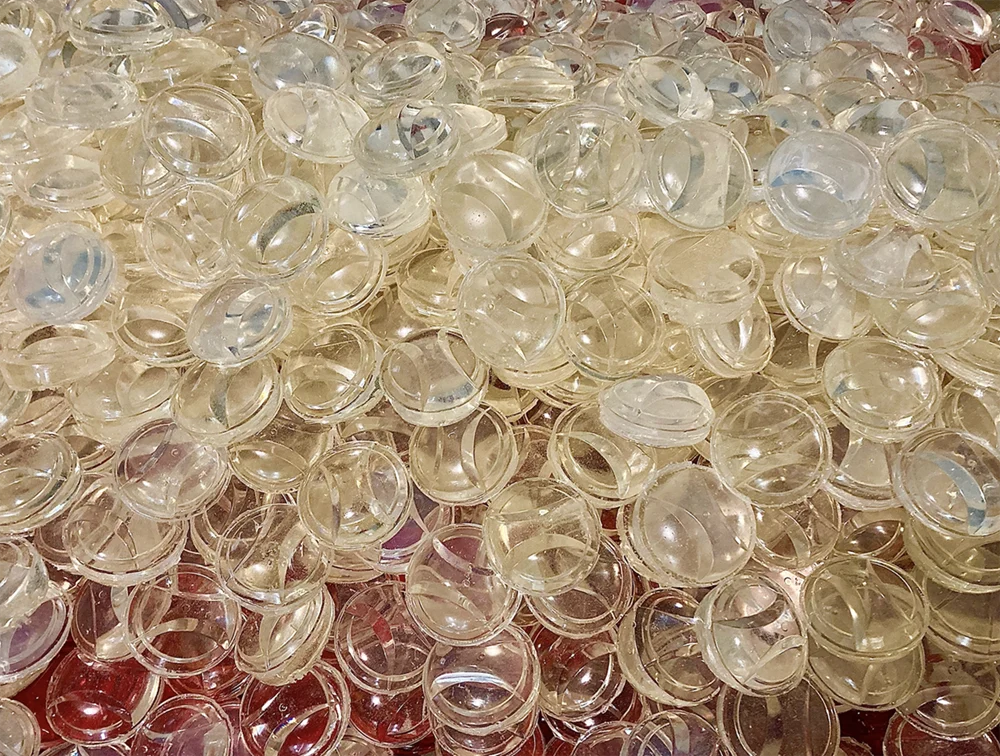
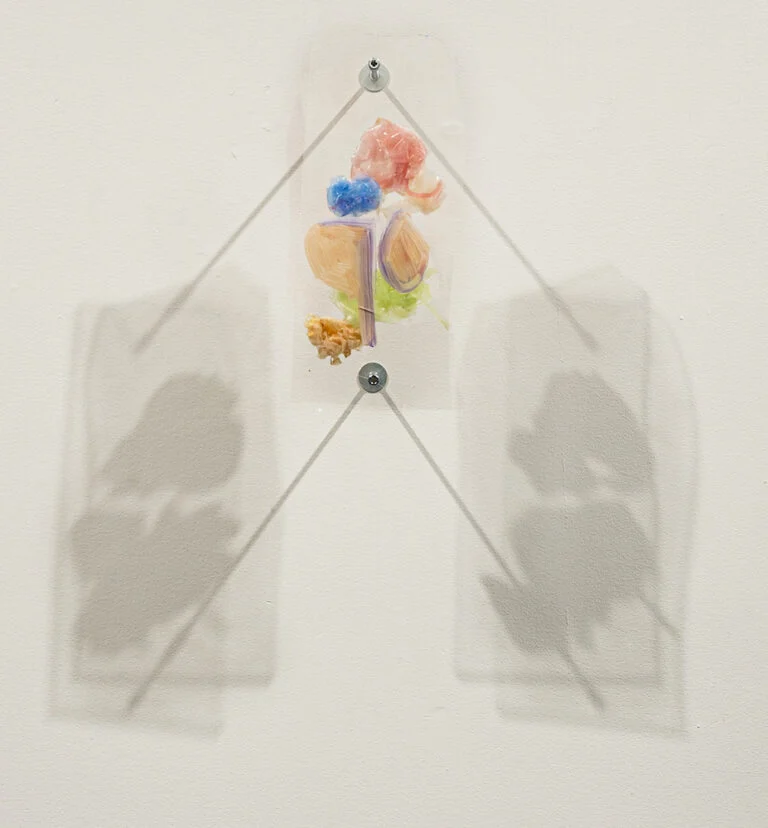
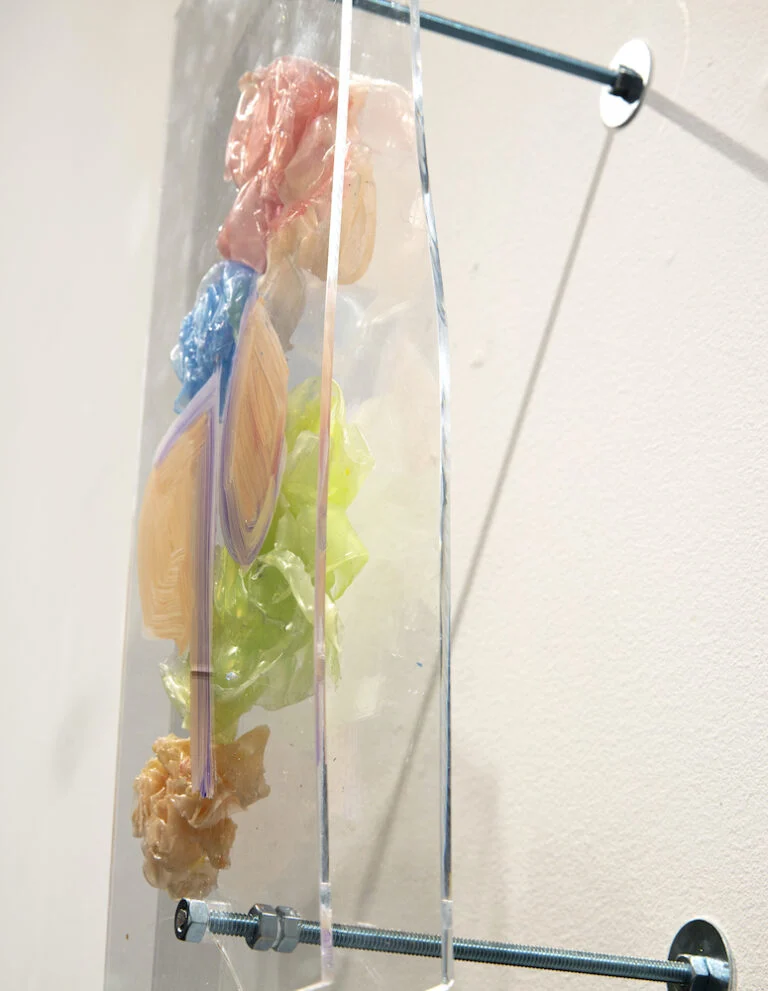
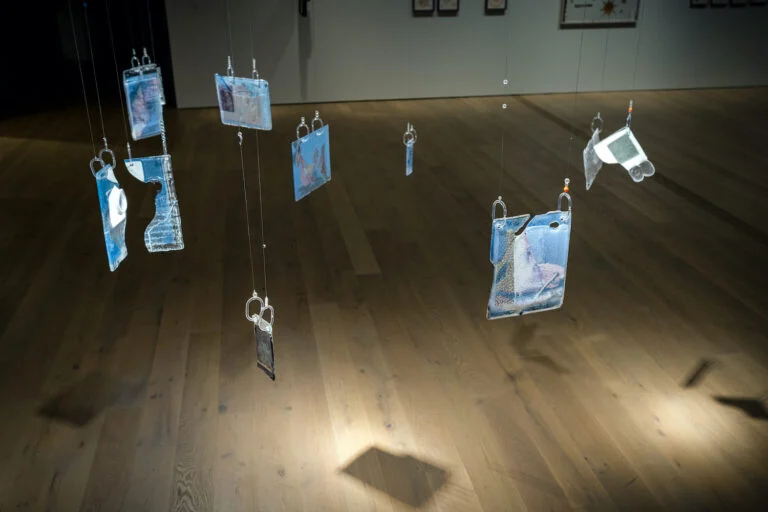
    Throughout the past two years while completing my MFA at American University, I have experimented with materials like candy, liquid plastic and Jell-O to create jewel-like sculptures comprised of hundreds of molds. I utilize my used Autosoft 90 Infusion Sets in order to create these molds. The Autosoft 90 Infusion Sets insert a cannula in my body where the insulin I administer enters; I use one set every three days and have done so since I was six years old. The infusion sets are both integrated with and foreign to my body. The gem-like exterior of the molds seduces the viewer into coming closer to contemplate – what exactly are these sculptures? The discarded bodily medical material the mold is made from creates distinct contrast to the beautiful exterior. I ask the viewer to question why they might find the sculptures straddling a line between alarming and beautiful.

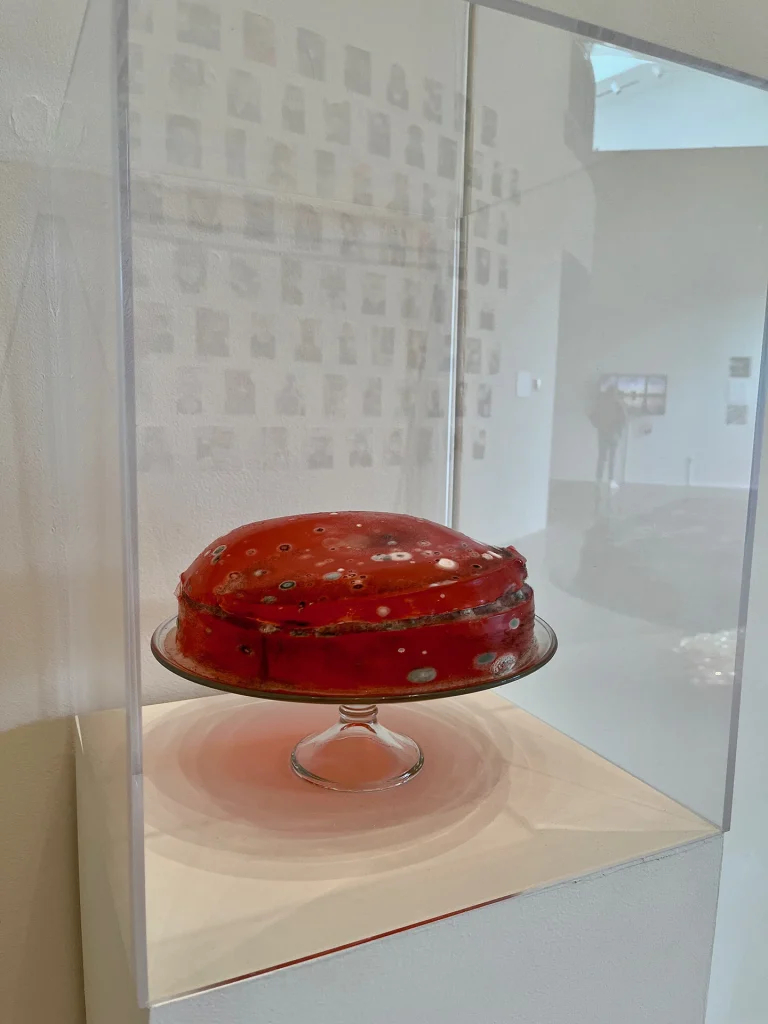
    The sculptures are simultaneously playful and twisted, seductive and repulsive based on their outer appearance and deeper meaning. Candy is a humorous material wrapped up in irony and resent. I have a complicated relationship with candy. On one hand, it is something I know I cannot eat all of the time; however, I also rely on sugar heavily when my blood sugar is low. Jell-O, a “clear liquid food,” is often administered in hospitals and conjures memories of sickness. Its confusing consistency and disappointing flavor emphasize the repulsive nature of the enlarged Autosoft 90 Infusion Set sculpture. The degenerative forms that are entangled amongst the sculptures parallel the way that the insulin I administer breaks down sugar in the blood.

    As an Online GlogauAIR artist, I will continue to explore the potential of the small Autosoft 90 Infusion set components I create. They are cellular and bodily, however, they are also industrial and visually sleek. I would like to push the form further by using materials including plaster, gold enamel paint and gel medium. These materials will allow me to further toe the line between the disgusting and the attractive, the beautiful and the repulsive. The Residency will provide me with space and support for this exploration.

    CV Summary

    EDUCATION

    • 2022 MFA, Studio Art, American University, Washington, DC.
    • 2019 BA, Studio Art and Psychology, Boston College, Chestnut Hill, MA.

    SELECTED EXHIBITIONS

    • 2022 in•position, MFA Thesis Exhibition, American University Museum at the Katzen Arts Center, Washington, DC.
    • What a Relief: small relief sculptures, Juried Exhibition, Phillips@THEARC, Washington, DC.
    • Sweet Tooth, Juried Exhibition, Torpedo Factory Art Center, Alexandria, VA.
    • Regional Juried Exhibition, Juried Exhibition, Hill Center at the Old Naval Hospital, Washington, DC.
    • FOOD GLORIOUS FOOD, Online Group Exhibition, Cultural Center of Cape Cod, South Yarmouth, MA.
    • Mind Body Spirit, Online Group Exhibition, J Mane Gallery.
    • Unity, Online Group Exhibition, Art Fluent, Boston, MA.
    • 2021 Envisioning Benefit Exhibition and Online Auction, Juried Exhibition, Transformer, Washington, DC.
    • Ruins, Still Point Arts Gallery, Online Group Exhibition, Brunswick, ME.
    • 2019 Senior Exhibition, Group Exhibition, Boston College, Chestnut Hill, MA.
    • Visual Arts Showcase, Group Exhibition, Boston College Arts Festival, Chestnut Hill, MA.
    • 2018 Happy Now?, Group Exhibition, Boston College, Chestnut Hill, MA.
    • Visual Arts Showcase, Group Exhibition, Boston College Arts Festival, Chestnut Hill, MA.

    AWARDS

    • 2021-22 Babs Van Swearingen Memorial Award, American University, Washington, DC.
    • 2020-21 Babs Van Swearingen Memorial Award, American University, Washington, DC.

    PUBLICATIONS

    • 2021 Still Point Arts Quarterly, Issue No. 44, Winter 2021.
    • 2020 CouCou Collective, Issue 1, June 16, 2021.
    • 2019 Stylus, Boston College, April, 2019.
    • The Laughing Medusa, Boston College, April, 2019.
    • The Medical Humanities Journal, Boston College, March 2019.

    Gallery
  • Gonzalo Morales Leiva

    Gonzalo Morales Leiva

    Gonzalo Morales Leiva is GlogauAIR resident
    from October, 2022 to December, 2022

    Gonzalo Morales Leiva is a visual artist from the city of Talca, southern Chile.

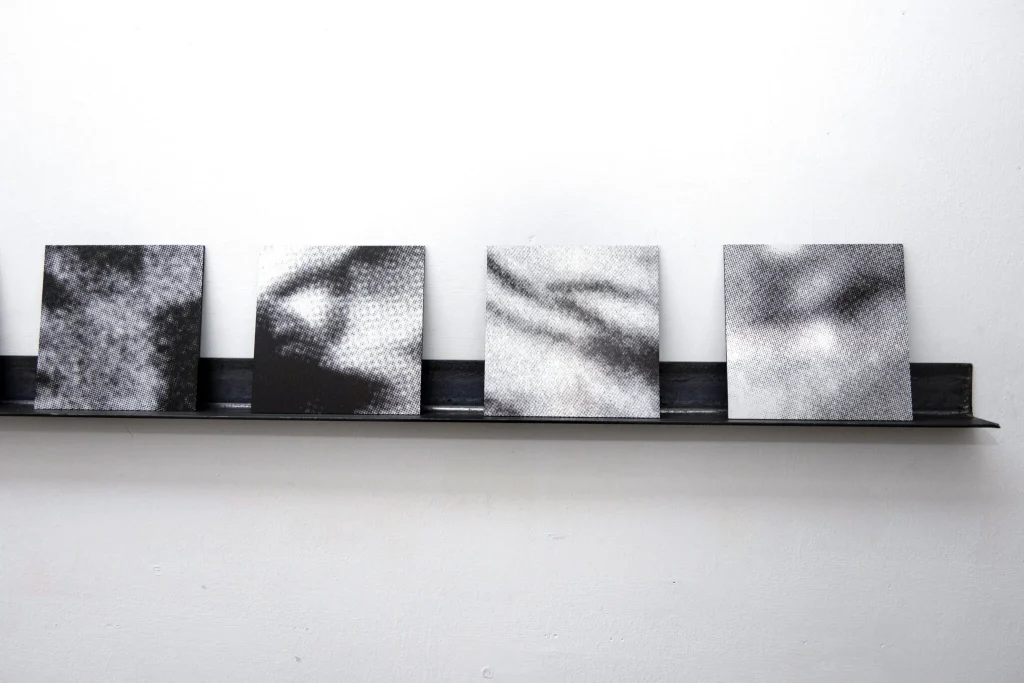
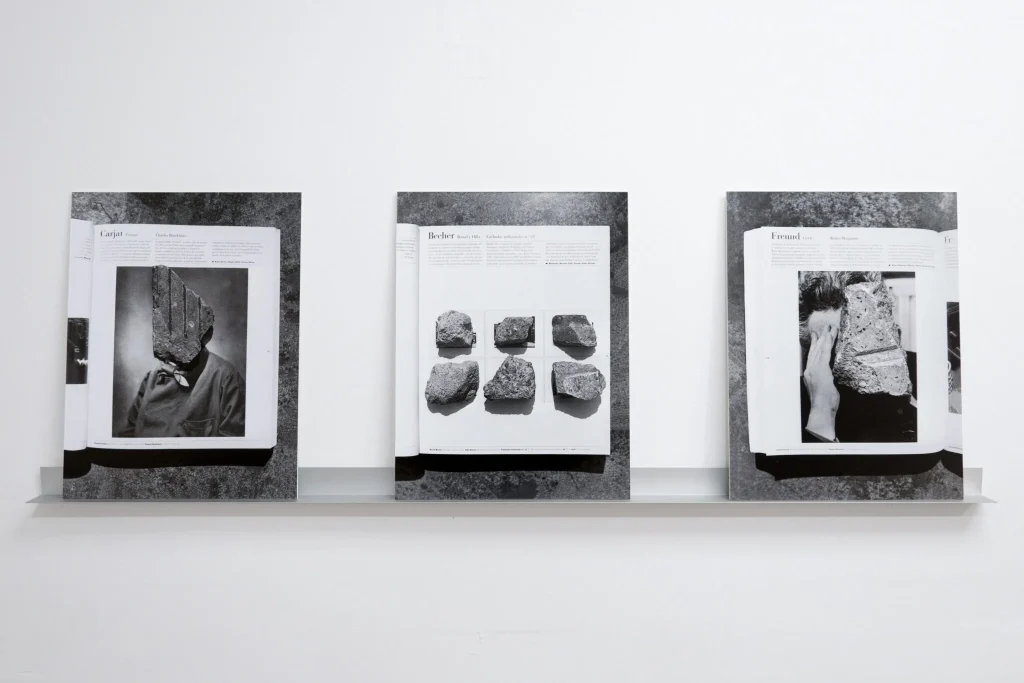
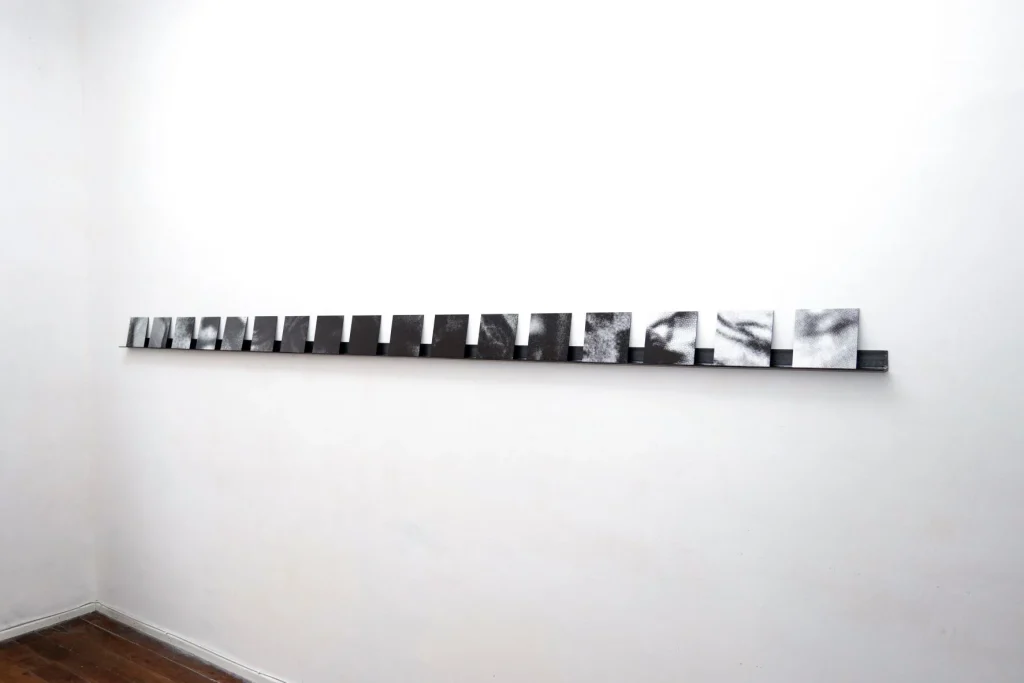
    His practice involves photography, poetry and his reflections on the materiality of the contemporary city. “I have an archive of black-and-white analog photographs taken from cities that I have lived and visited around the world. I constantly analyse my archive and translate its visual characteristics into other artistic media such as drawing.”


    Meet the Artist

    What is your name and where are you from?

    Gonzalo Javier Morales Leiva, Chile.

    When / how did your art practice begin …. Do you think where you’re from has affected your work?

    My artistic practice began in film school in Buenos Aires, Argentina, where I studied to be a film director. I will forever love that experience, but what I enjoyed most was the scenography and costume design class. When I finished my degree I knew I wanted to be a visual artist and not a film director. At the age of 19 I left my parents’ home to live in the capital of Chile, Santiago. At 21 I went to live alone in Buenos Aires. After 5 years I returned to Chile. Last year I lived for a long time in Mexico City. I think that more than territory or where I live, what affects my way of creating, is that I am open to change, I have tenacity and I am very curious. What I mean is that I love to experiment with different media, materials and techniques. I am restless, constant and brave. I am not afraid to take new steps.

    How has your practice changed over time? 

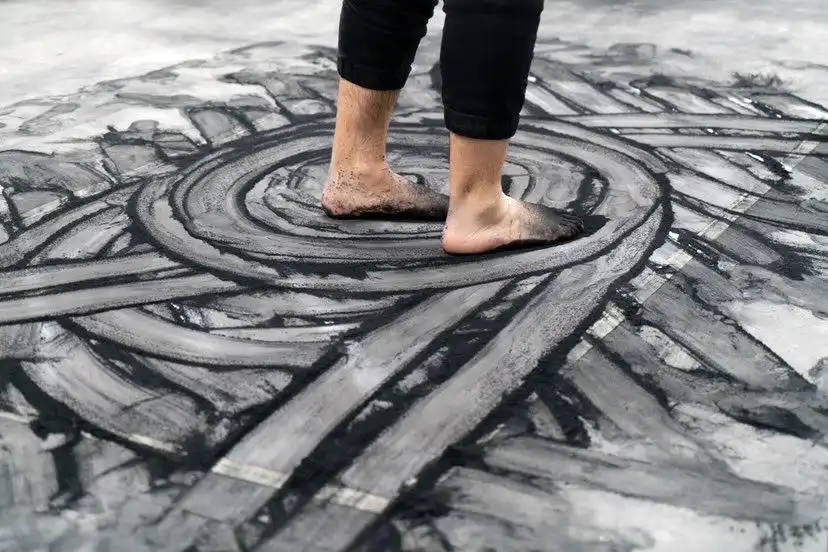
    My inspiration starts from the reading of poetry and the taking of black and white analog photography of city details. In this way of work I realized how I was interested in abstract evocative images, ruins, geometry, lines that create drawings, simple objects with signs of decay. This process is like a life journal, but visually, where I have understood who I am and what happens inside me and how my inner world relates to the outside world, what catches my interest it has always been deeply connected with my life story. By analyzing this photographic archive I have developed the need of expanding my artistic work to disciplines such as drawing, sculpture and performance. I believe that performance has allowed me to unite my spiritual world with my artistic work. My performative drawings with my feet are spiritual channellings for which I prepare myself through meditation, prayer and chanting. In this way I achieve a state of mind that allows me to let it flow towards the final result. In Chile, there is a very strong tradition that unites mind, hand and drawing. I think my twist in this order is that I am working from the cosmic spiritual, not the mind, and my feet and drawing follow that channelling. I am preparing myself every day to be a better channel, a medium. My intention is that my drawings heal the people who experience my performances and the people who see the final result.

    Do you think your art has evolved being a different environment E.g. Do you think GlogauAIR / being in Berlin has influenced your work?

    My answer is a resounding yes. GlogauAIR for me was like a doctorate in drawing and performance. The complete physical space, the personal work studio, the visits of experienced curators, the dialogue with artists from different countries and different disciplines and the receptive attitude that I have cultivated over time, allowed me to grow so much. In fact, now that I am back in Chile, I am taking the time to get to know better the artist I am now after the residency. I want to take the opportunity to thank Nasia Papavasiliou, visual artist from Cyprus, for allowing us to have dialogues and collaborations where we could both positively influence each other’s creative work. And of course to thank the curator of GlogauAIR, Suzy Royal, for being a beautiful person who welcomed my every needs, artistic, emotional and spiritual. Sincerely, because of her and her advices, my experience at GlogauAir was all about artistic growth.

    What are your next plans after your residency?

    I am currently planning for a year full of good news. In July I will have my third solo exhibition in Mexico City. I want to bring a strong body of work. In the second half of the year, I will return to Berlin for two solo exhibitions. Both came about thanks to the networking that I was able to build thanks to GlogauAIR. In addition, back to Chile, I magically met the experienced 70 years old chilean artist Juan Castillo, a great inspiration in my art and he has invited me to his home in Sweden, where he has developed much of his art work and where he has created an artist residency. The invitation is to undertake the residency since he has been very impressed by my work that i had developed thanks to my residency at GlogauAIR. And to close, I have found a very large studio where I can do my large scale drawings and performances with freedom and peace of mind. I am seeing a very joyful and hopeful future.

    Statement

    The body of my work is based on analog photography, video, scanner, graphic media, drawing and collage, to resolve questions derived from my reflections on the materiality of the contemporary city, Latin American history, the history of photography and art. Attracted by geometry, color, weft, ruin, objects considered remains or debris, I archive the urban experience to compose discourses of fragmentary aesthetics.

    The decontextualization and appropriation, both of urban elements and archival images, is recurrent in my work and responds to my concern about what is my own and what is not, what is individual and what is collective. I am interested in reconsidering the official narratives, decomposing them and formulating a personal version.

    I am currently working on the analysis of my analog black and white photographic archive, with the intention of translating its visual characteristics to works created in other media such as drawing and sculpture, with the intention of experimenting in the creation of art installations that allow me to unify my interests in poetry, writing, space and materialities.

    GlogauAIR Project

    My proposal for this residency is to continue my photographic research based on the relationship between poetry, territorial exploration and materialities of the city, adding a new element that I have been developing since 2021, which is the use of found objects for the creation of sculptures. I am interested in this new variant by the appearance of three-dimensionality and the reuse of objects considered waste. I consider this an important step in my artistic production since it would make possible the expansion of the imaginary present in my work, bringing me even closer to my goal of creating artistic installations.

    CV Summary

    • Gonzalo Morales Leiva studied Film Making (Argentina), Photography (Chile and Mexico) and Visual Arts (Chile).
    • Uses media such as analog photography, video, silkscreen on paper, drawing and sculpture to archive the city and history of Latin America in its different geometries, colors, shapes, materialities and iconographies.
    • Has exhibited in Chile, Mexico, Germany and the United States, highlighting places such as: Centro Cultural Futurama, Galería Cívica, Galería Kastanien, Taller Dardo, Galería CamaraLucida, Galería Página en Blando, Galería Metropolitana, CENTEX Valparaíso, Universidad Católica del Maule, Universidad de Talca and Praxis Gallery.
    • 2022/ Curator of the Visual Arts Catalog, Maule Region, Chile – Seremi de Cultura Artes y Patrimonio – Maule Region.
    • 2022/ Selected in the Artistic Residency of Glogauair, Berlin, Germany.
    • 2022/ Solo Exhibition “It could happen”, Página en Blando Gallery, Mexico City, Mexico.
    • 2022/ Artistic Residency Escuela y Galería Pagina en Blando, Mexico City, Mexico.
    • 2022 / Group exhibition “The abstract image”, Praxis Gallery, Minneapolis, Minnesota, United States.
    • 2022 / Group exhibition “Docum3nta” Futurama Cultural Center, Mexico City, Mexico.
    • 2022 / Solo exhibition “Mil Fragmentos de alba” Civic Gallery, Curico, Chile.
    • 2022 / Group exhibition “Envío 0,1” Kastanien Berlin Gallery, Berlin, Germany.
    • 2021 / Group exhibition “Casi sin Querer” Taller Dardo, Santiago, Chile.
    • 2021 / Solo exhibition “Tactics” Cámara Lúcida Gallery, Valparaíso, Chile.
    • 2021 / Selected to work in the collective project “Núcleos creativos”, Maule Regional Government, with the video “Asesino”, Talca, Chile.
    • 2021 / Editorial project “Ni Talca, ni París, ni Londres”, Metropolitan Gallery, Chile.
    • 2021 / Annual tutoring in visual arts at Taller Dardo, Santiago, Chile.
    • 2020 / Solo virtual exhibition “The truth is a suspended object”, Universidad Católica del Maule Gallery, Talca, Chile.
    • 2020 / Group exhibition “Objeto Paisaje” CENTEX Gallery, Valparaíso, Chile.
    • 2020 / Solo exhibition “Interrogación” Página en Blando Gallery, Mexico City, Mexico.
    • 2019 / Solo exhibition “Vanitas” Gallery University of Talca, Curico, Chile.
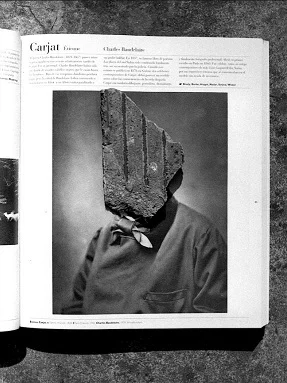
    • 2019 / Diploma in artistic photography at Cámara Lúcida School, Valparaíso, Chile.
    • 2019 / Laboratory of artistic criticism and curatorship Escuela Página en Blando, Mexico City, Mexico.
    • 2018 / Diploma in Creation of photographic projects and curatorial solutions, Escuela Página en Blando, Mexico City, Mexico.
    • 2017 / Script , production and direction of the short film “Sangre, muerte, llanto”, Talca, Chile.
    • 2007 – 2011 / Film direction, Universidad del Cine de Buenos Aires, Buenos Aires, Argentina.

    Gallery
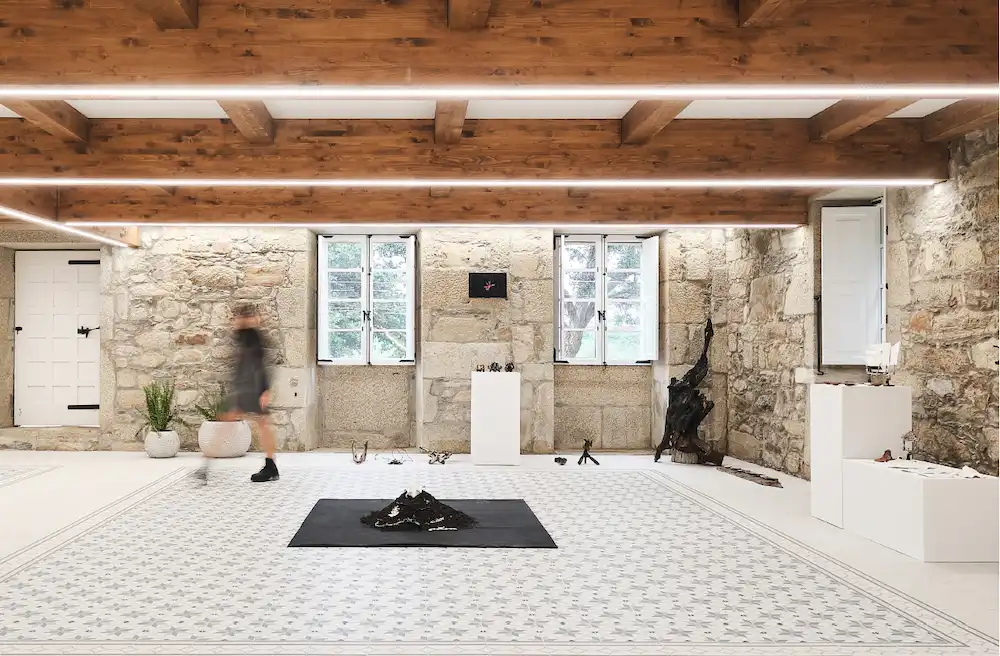
  • Clara Álvarez and Elena Rocabert

    Clara Álvarez and Elena Rocabert

    Clara Álvarez and Elena Rocabert is GlogauAIR resident
    from January, 2023 to March, 2023

    Spain


    Meet the Artist

    Coming soon

    Statement

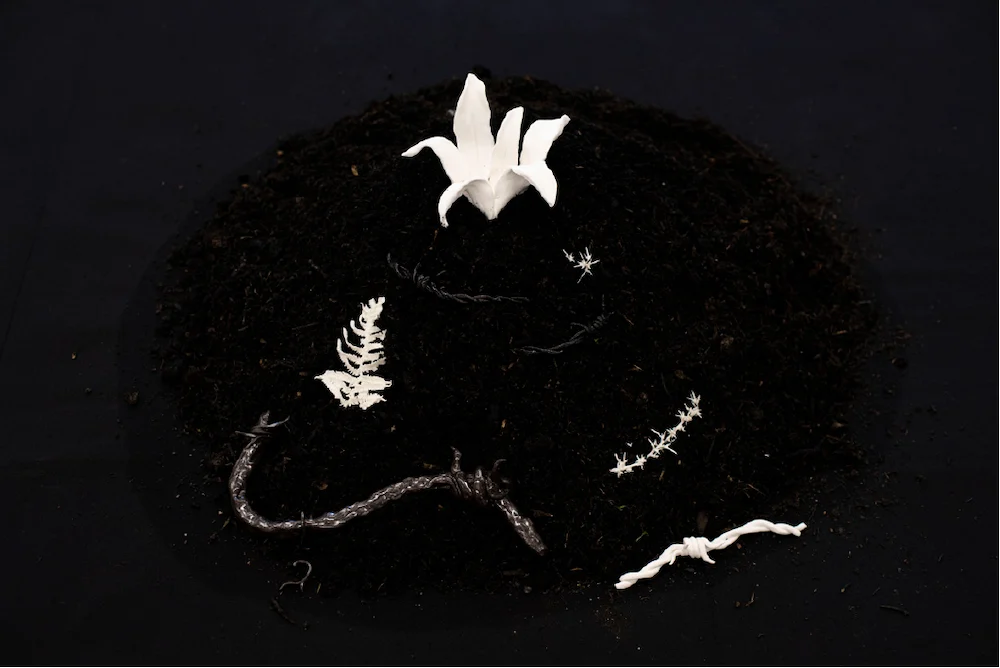
    For the last years, Clara Álvarez and Elena Rocabert have been exploring the margins of what is traditionally known as ‘architectural thinking’, seeking experimental environments of study, research and thought, alternative to the academy. They use sculpture, installation and spatial design as critical languages through which they build new narratives to unfold the way humans relate to the territories they inhabit -developing new dynamics of production, distribution and consumption.

    In their practice, they aim to generate ambiguous and complex spaces and objects through constant material transformation, deformation and reorganisation. They are particularly interested in the process of transforming and reusing industrial materials as tools to give life to new ideas, seeking experimentation and visual impact. Through their work, they are constantly questioning their relationship with the materials they create with and the territories they come from, as well as its consequences on a planetary level. Their work is therefore at the intersection between material cultures, post-natural landscapes and social ecologies.

    GlogauAIR Project

    The discourses of architecture and art constantly omit critical realities that are generated as a consequence of the materials we use to think and create, such as extractivism, mining operations, urban and natural peripheries, the origin of the land and minerals we use and their environmental impact. We believe that in these questions and in the search for possible paths through which to think about ourselves in the near future, we truly find all the beauty and complexity of the times we inhabit.

    Desertus, from the verb deserere, means to forget or to abandon. The opposite of ‘memory’. A sandy or stony territory which, due to the almost total lack of rainfall, has little or no vegetation.

    Every year, Spain loses millions of hectares of soil as a result of the erosive conditions generated by the unsustainable water exploitation of large areas of land. This problem is often aggravated by the mineral exploitation of certain areas. Global warming and resource depletion are accelerating desertification in areas such as Madrid. Here, the average temperature increase in the hottest month will rise by 6.4°C over the next 30 years, making summers very hot, with constant heat waves and little rainfall except in increasingly frequent torrential episodes. Aridity is subtly but violently undermining the landscape through an irreversible process that makes it impossible for its future inhabitants.
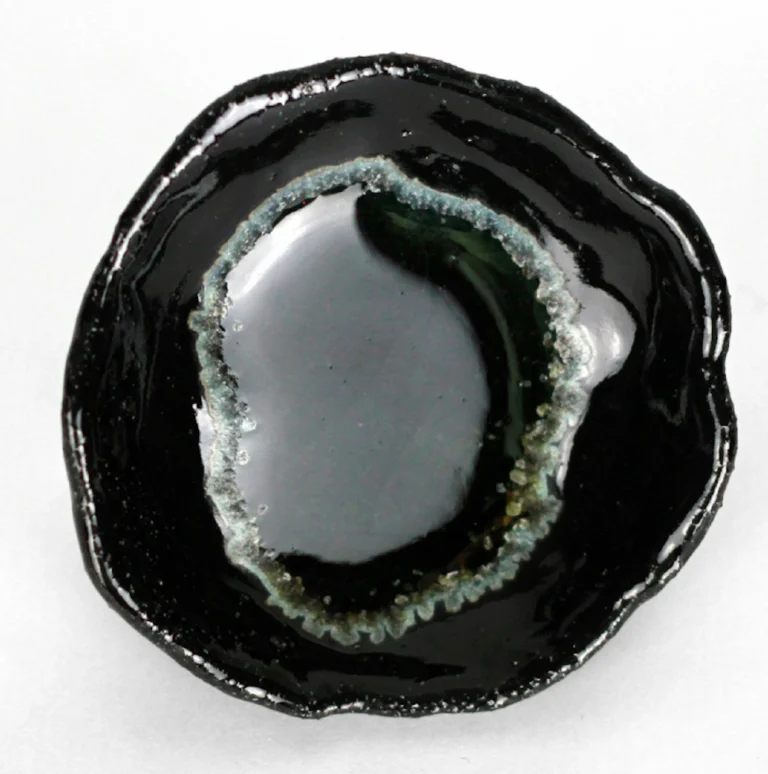
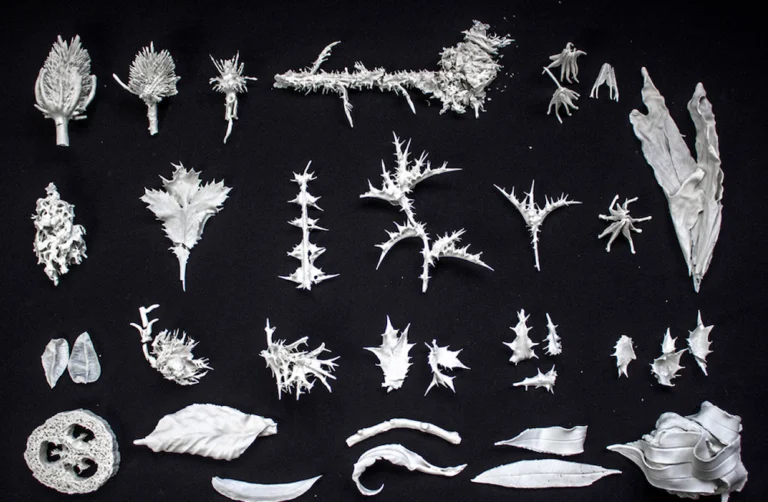
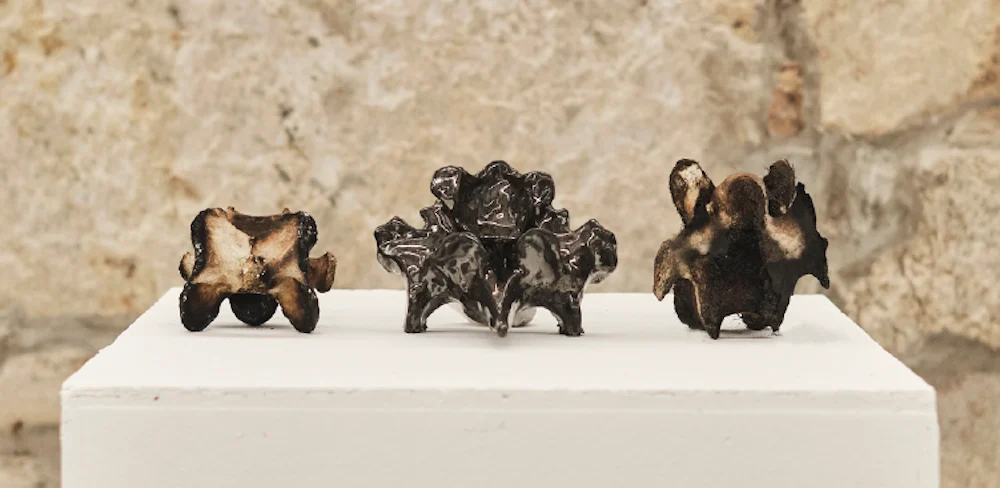
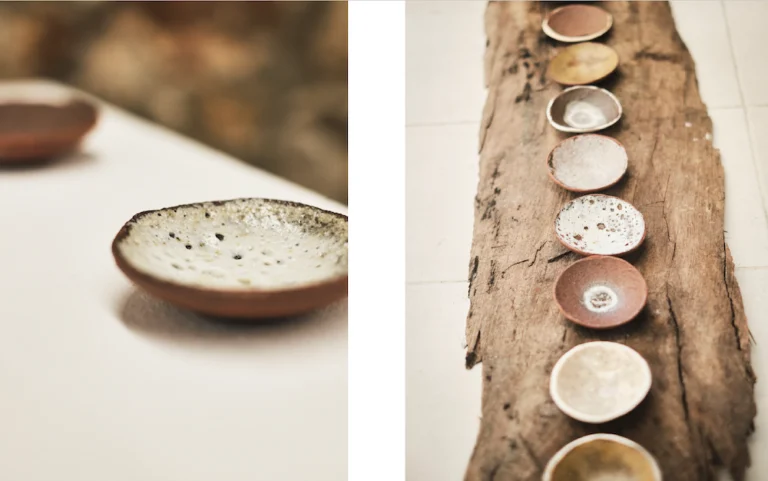
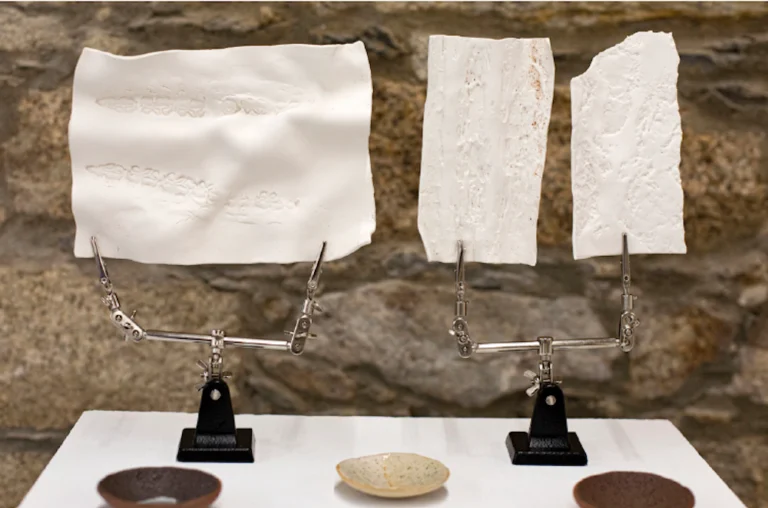
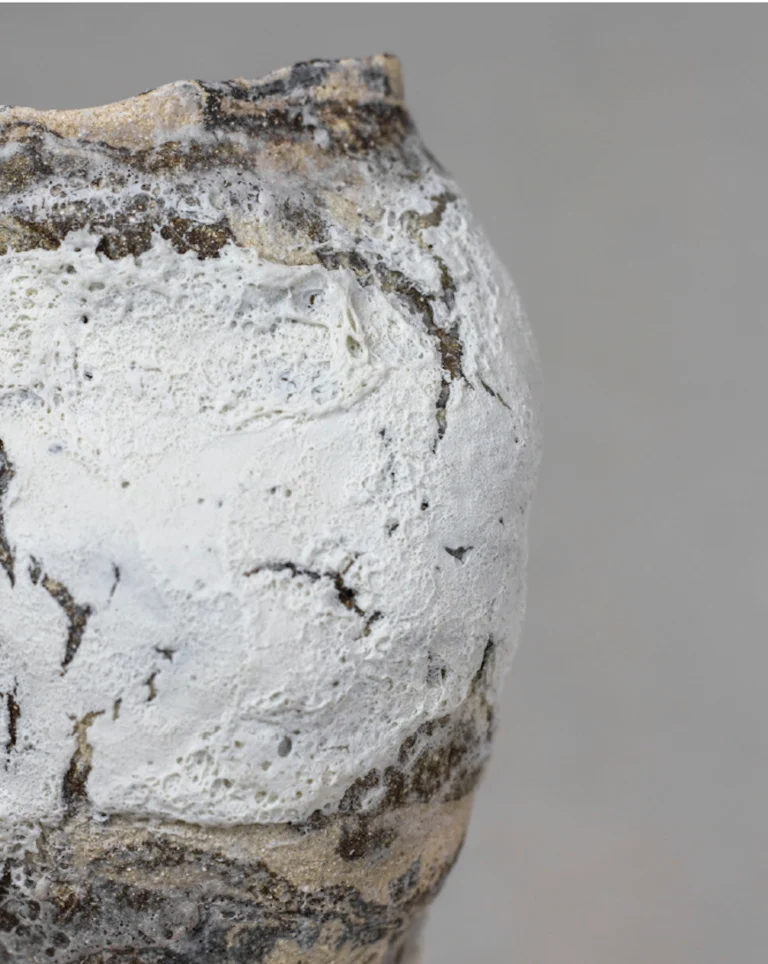
    Starting from this context, and taking into account that this reality will affect more and more places, we want to develop a project that we have been working on for a few months using post-industrial glass, a product of the extractivism that has brought us to where we are now. In our process, we will recycle and melt this industrial glass to give rise to new forms and materialities, to new future materials. We propose to understand the relationship between temperatures and the processes of transformation of the materials with which we create, to speculate on the contemporary aesthetics of the very thermodynamic change that we undergo. Furthermore, these materials allow us to study and experiment with the beauty that can be generated from used and discarded industrial materials, interceding to prevent them from becoming waste.

    In the process of generating industrial glass, sand is used for the manufacture of many glass products, extracted from seabeds, coasts or rivers (not just any land will do). The challenge is that these ecosystems do not regenerate at the rate required for extraction. Our aim is to explore the crossover between natural and industrial products and their consequences, to generate thought from a critical view of what surrounds us. Through this project, we would like to further understand the relationship between extreme temperature, bodies and their transformation processes. All this in order to answer a series of questions:

    Is the forest the real piece of art and is forest glass just a consequence of it? But, above all, in the face of the climatic paradigm shift we are experiencing, what forms survive other forms that are falling apart?

    Installation and Sculpture

    CV Summary

    Education

    • 2021-present Art & Nature Advanced Studio— Escuela de Cerámica de la Moncloa, (ECM)
    • 2019 Master of Architecture— ETSAM, Universidad Politécnica Madrid (UPM)
    • 2018 Bachelor of Science in Architecture— ETSAM, Universidad Politécnica Madrid (UPM)
    • 2015-2016 Study-abroad program (Bachelor)— Seoul National University (SNU, South Korea) / Universität der Künste Berlin (Germany)

    Professional experience

    • 2022-present Matadero Madrid (Spain) —Artistic and curatorial coordination at Medialab Matadero
    • 2021-present Cultural Landscape Research Group (GIPC) at ETSAM (UPM) — Research Assistant at Universidad Politécnica de Madrid
    • 2020-present Freelance collaborations —Art Production for emerging artists from Madrid such as Andrés Izquierdo, Clara Sánchez Sala or Jorge Anguita Mirón.
    • 2022 Studio Luis Úrculo, Madrid and Mexico City — Space design and Set design
    • 2019-2021 Studio Olafur Eliasson, Berlín (Germany) — Design, developement and production of art works
    • 2021 Studio Julius Von Bismarck, Berlin (Germany) — Design and production of artworks
    • 2017 María Mallo, Madrid (Spain) — Production team for ‘Ecosistemas emocionales diversos’ project at ‘En los Cantos nos Diluimos’ exhibition. ‘Sala de Arte Joven’, Madrid.
    • 2017 Studio Tomás Saraceno, Berlín (Germany) — Artwork design and production

    Selected shows

    • 2022 ‘Sen lume, negro noite’ — group exhibition of the Art Residencies 2022 at Pazo de Goiáns (Boiro), Galería LaDoce, Galicia (Spain).
    • 2022-2023 ‘Madrid, between River and Rails’ (Trahere Project) at CentroCentro exhibition space, Madrid (Spain). Exhibition of drawings, results and research process.
    • 2022 ‘Art and Nature’, collective juried show at Escuela de Cerámica de la Moncloa, Madrid (Spain).
    • 2022 ‘Enseres’, collective exhibition at Sistema Studio Gallery, Madrid (Spain).
    • 2021 ‘A Brief History of Planetary Ice’ lecture and performance at Escuela de Cerámica de la Moncloa (Madrid, Spain).
    • 2019 ‘Etenent a Miró’ collective exhibition at Casa Antillón
    • 2019 ‘ Other skins’ collective exhibition at Casabanchel
    • 2019 ‘ The Catenary & The Arc’, main collaborator of the artistic installation at Insòlit Architecture Festival 2019, Palma de Mallorca (Spain).
    • 2018 ‘Becoming’ 16th Biennale di Venezia, collective exhibition at the Spanish Pavilion, Venezia (Italy).
    • 2017 ‘Origami’, author of the main artistic pavilion for Concéntrico 03 Architecture Festival at Logroño (La Rioja, Spain).

    Seminars, Residencies & Awards

    • 2023 Artists in residence GlogauAIR, Berlín
    • 2022 How much space do we need? Grant of a 50 hours workshop with the awarded artist Ignasi Aballí— 12 miradas, Vilaseco Gallery (A Coruña, Spain)
    • 2022 Artistic Residencies 2022, Concello de Boiro — LaDoce Gallery, Galicia (Spain)
    • 2022 Acidic Waters, designing for coexistence— Institute for Postnatural Studies, Madrid (Spain)
    • 2019 Postnature and Contemporary Creation— Institute for Postnatural Studies, Madrid (Spain)
    • 2017 First Award at Concéntrico 03 Architecture&Art International Competition.

    Gallery

  • Katharina Langer

    Katharina Langer

    Katharina Langer is GlogauAIR resident
    from January, 2023 to March, 2023

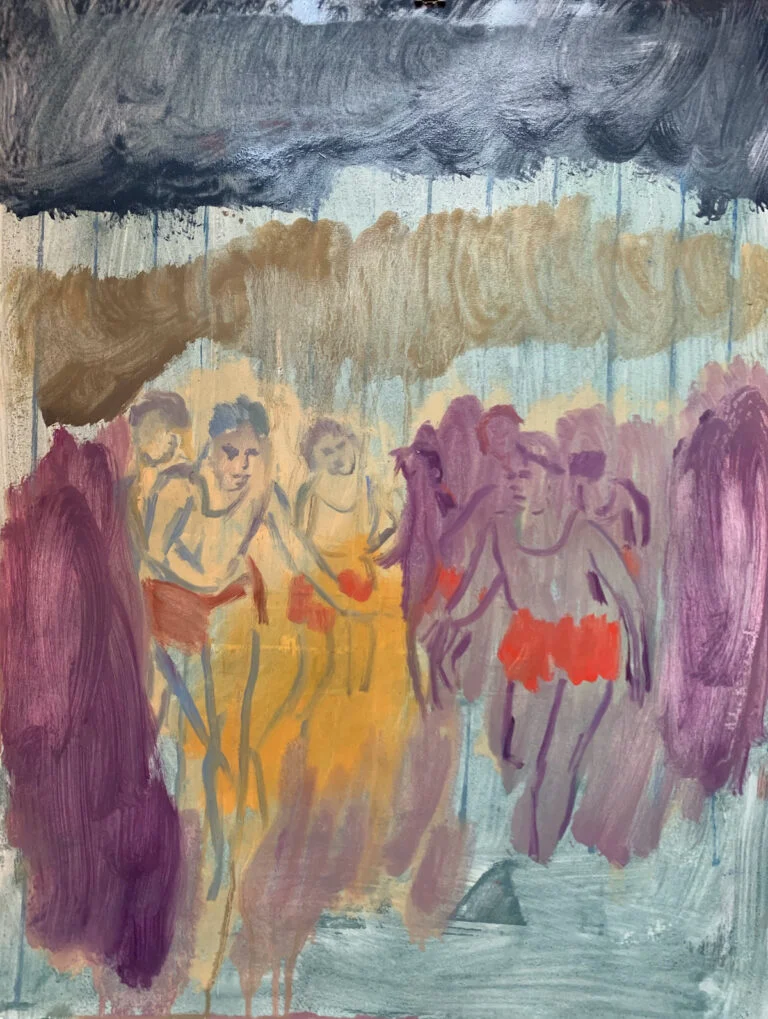
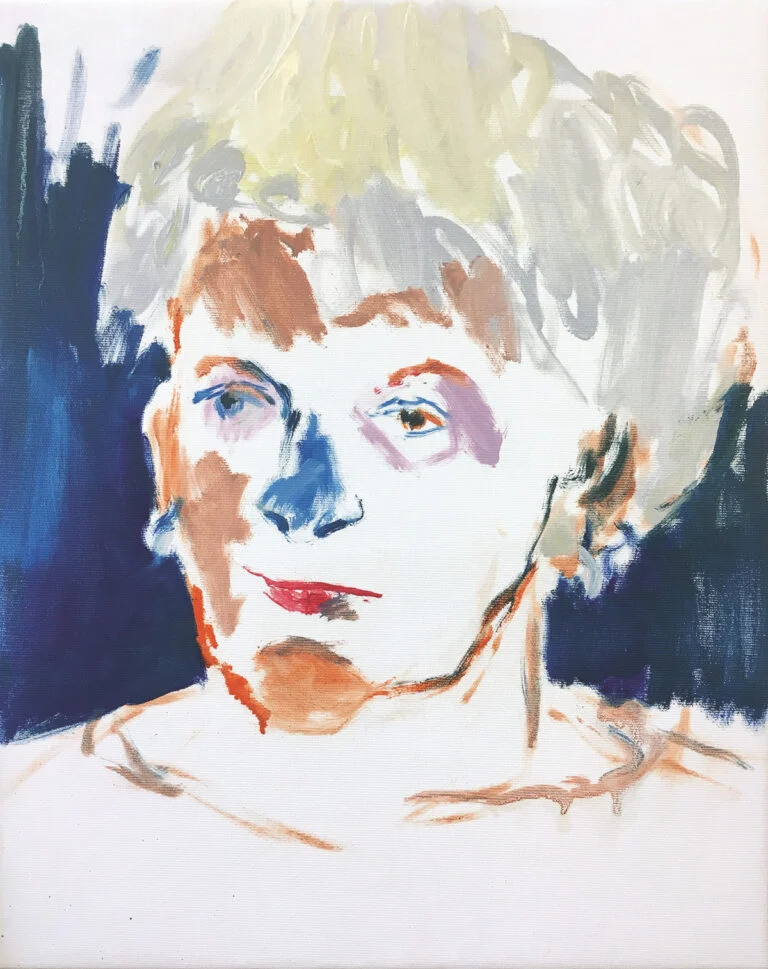
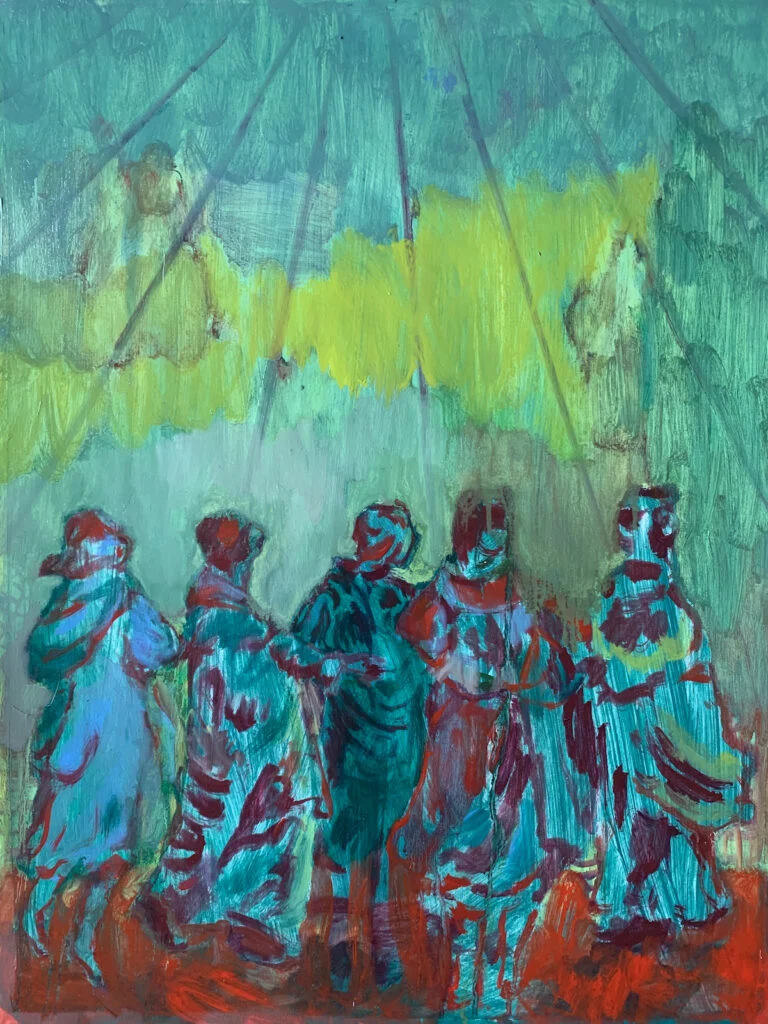
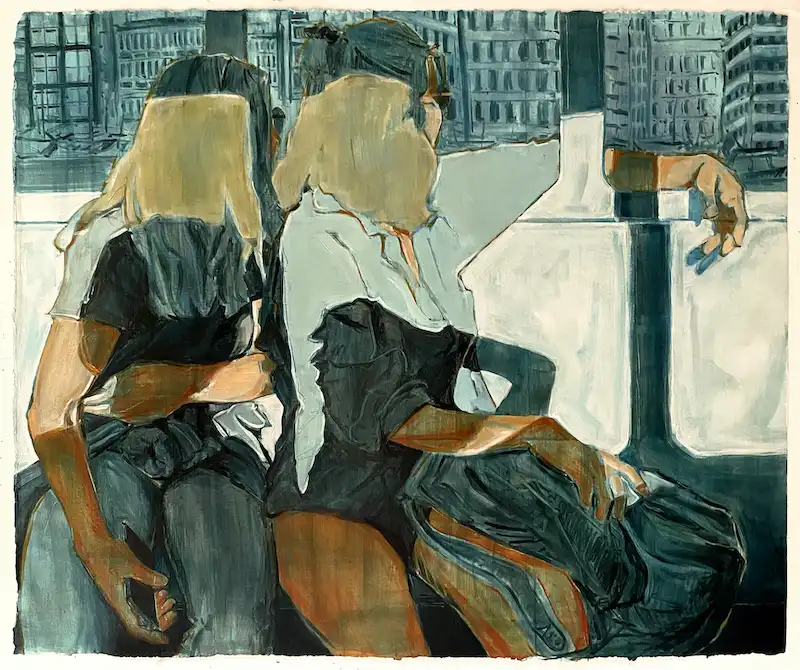
    Katharina Langer is an artist from Hamburg-Wilhelmsburg. In her paintings, she captures contemporary moments in oil and acrylic. Driven by curiosity, questioning, and a view of the essentials, Katharina’s pictures examine the human being beneath its surface.


    Meet the Artist

    Characteristic is the loose painterly brushstroke, which is always lost, but keeps the focus on the depiction. During the online residency, Langer would like to focus on the development of their paintings and visualisation of inner worlds in an open-ended and process-oriented manner.

    Statement

    Katharina Langer is an artist from Hamburg-Wilhelmsburg. In her painting she captures contemporary moments in oil and acrylic. Driven by curiosity, questioning and with a view to the essentials, Katharina’s pictures examine the human being beneath its surface. Characteristic is the loose painterly brushstroke, which is always lost, but keeps the focus on the depiction.

    GlogauAIR Project

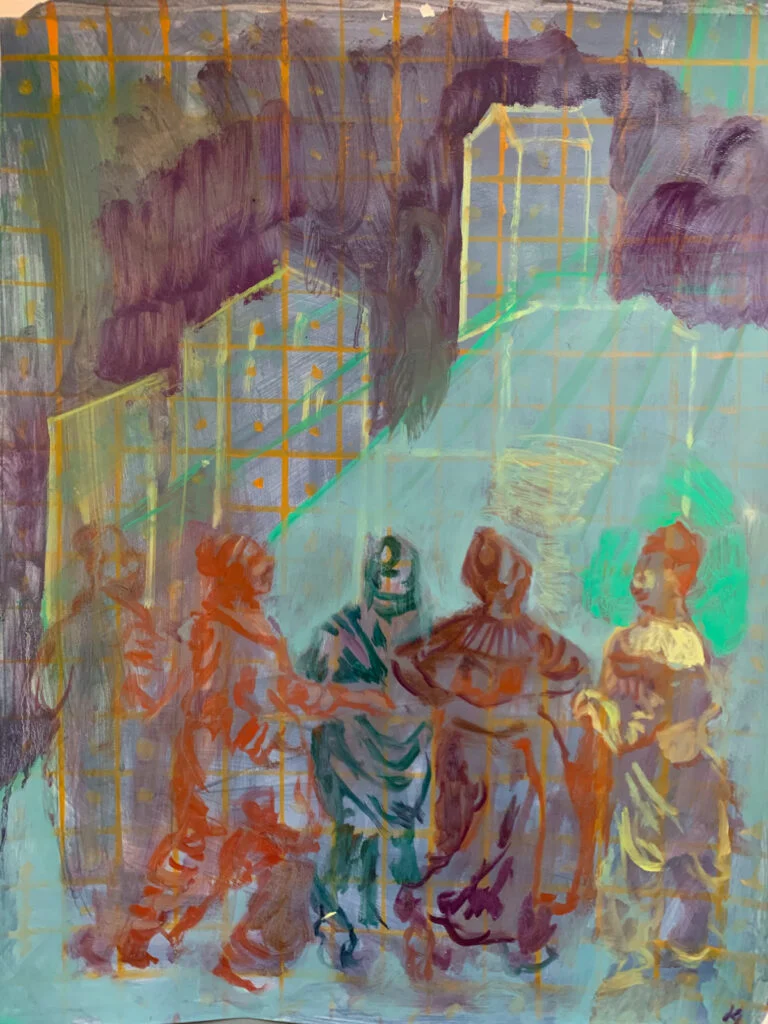
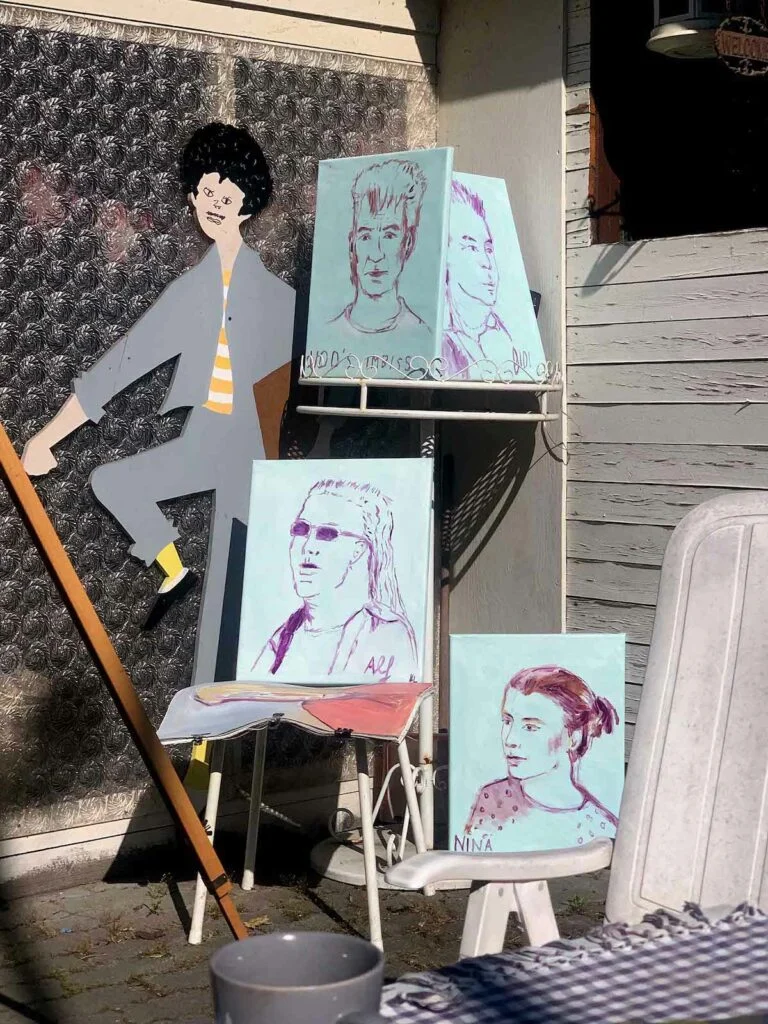
    For me, 2022 was the year in which I looked for inspiration outside. In June 2022 I did a painting performance in the port of Hamburg and portrayed people visiting a small port snack bar. Another project in 2022 was a portrait project where I portrayed female musicians who deal with counterculture. In the online residency 2023 I would like to focus in the development of my painting and visualization of inner worlds in an open-ended and process-oriented manner.

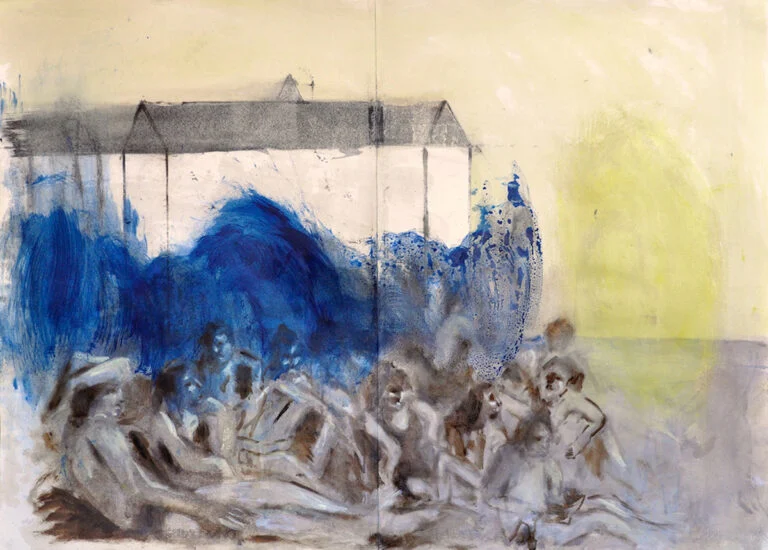
    The framework will be that I continue to deal with the topic “group”. It’s been with me since I’ve been painting. Characters create relationships in space on the canvas, a narrative often emerges that says more than I initiated.

    Drawing and Painting

    Gallery

  • Kate Corroon Skakel

    Kate Corroon Skakel

    Kate Corroon Skakel is GlogauAIR resident
    from January, 2023 to March, 2023

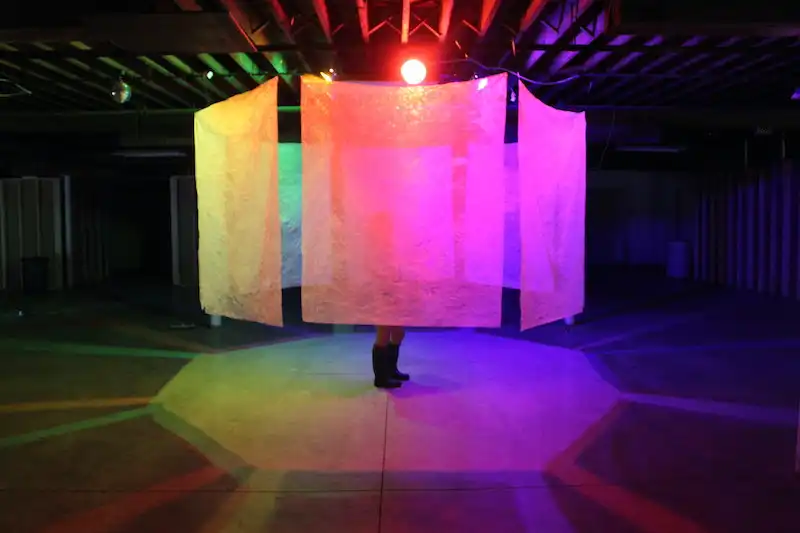
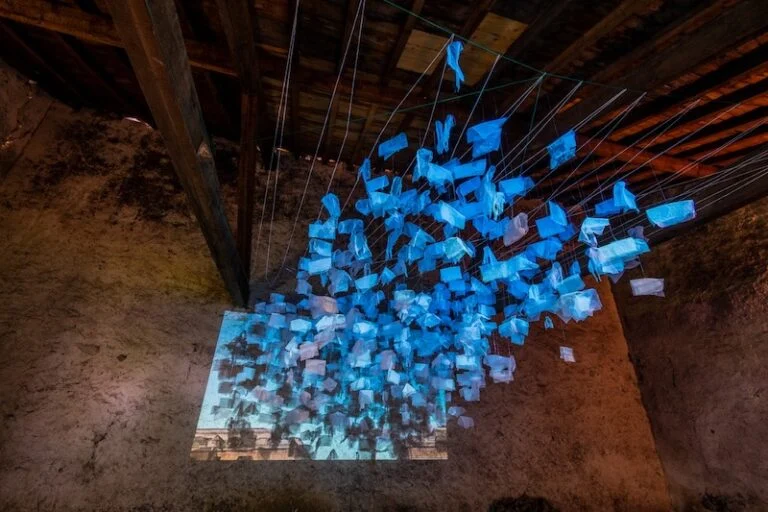
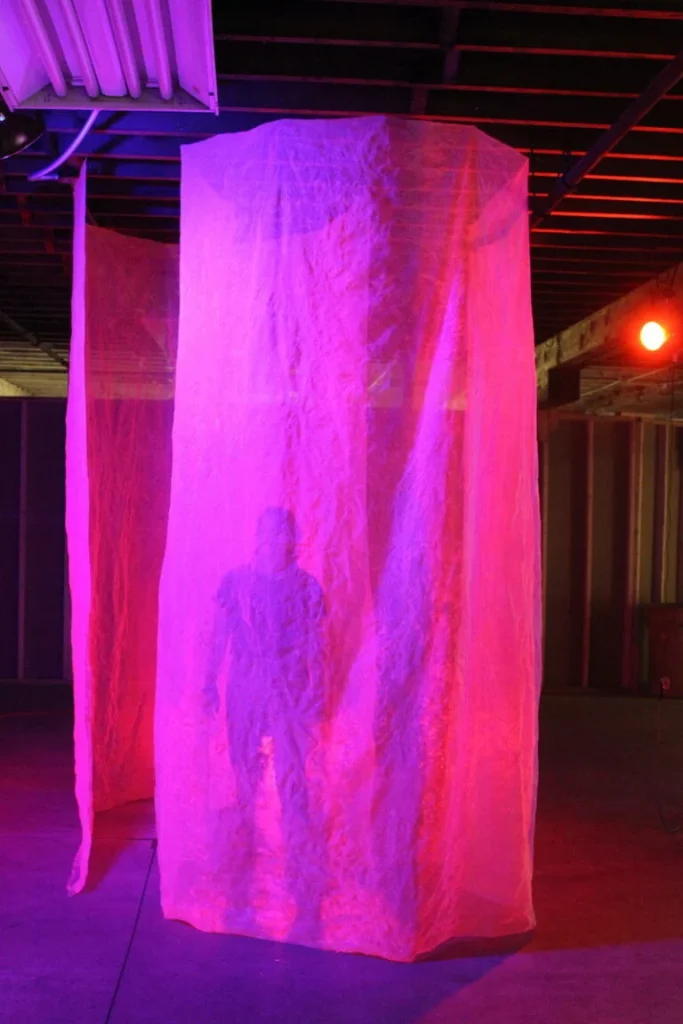
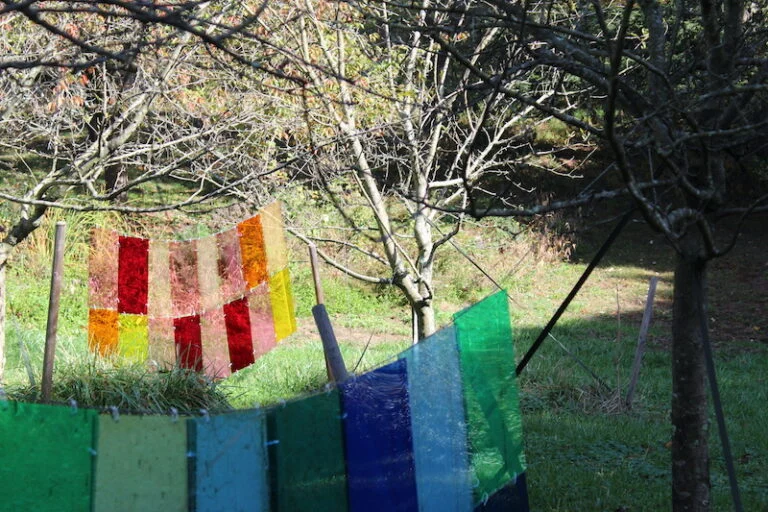
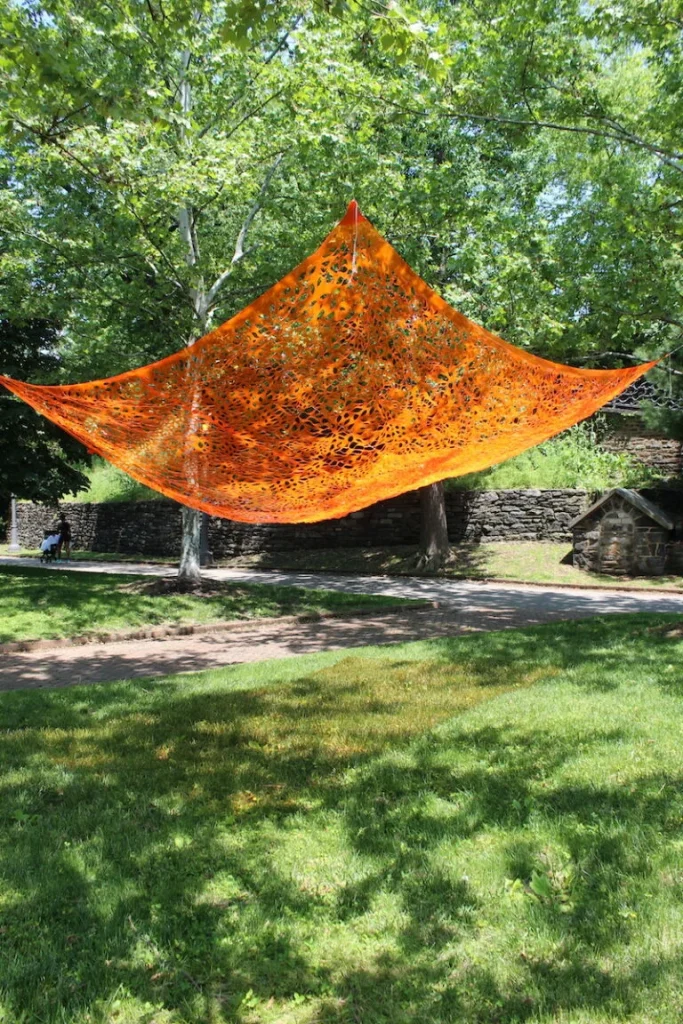
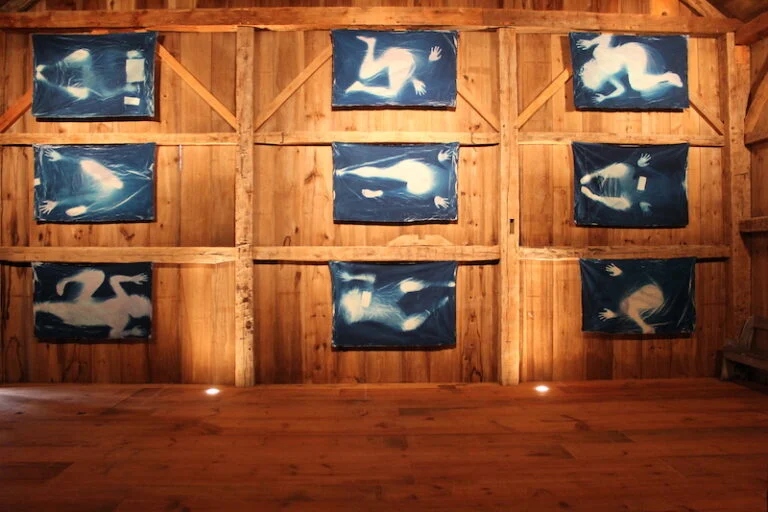
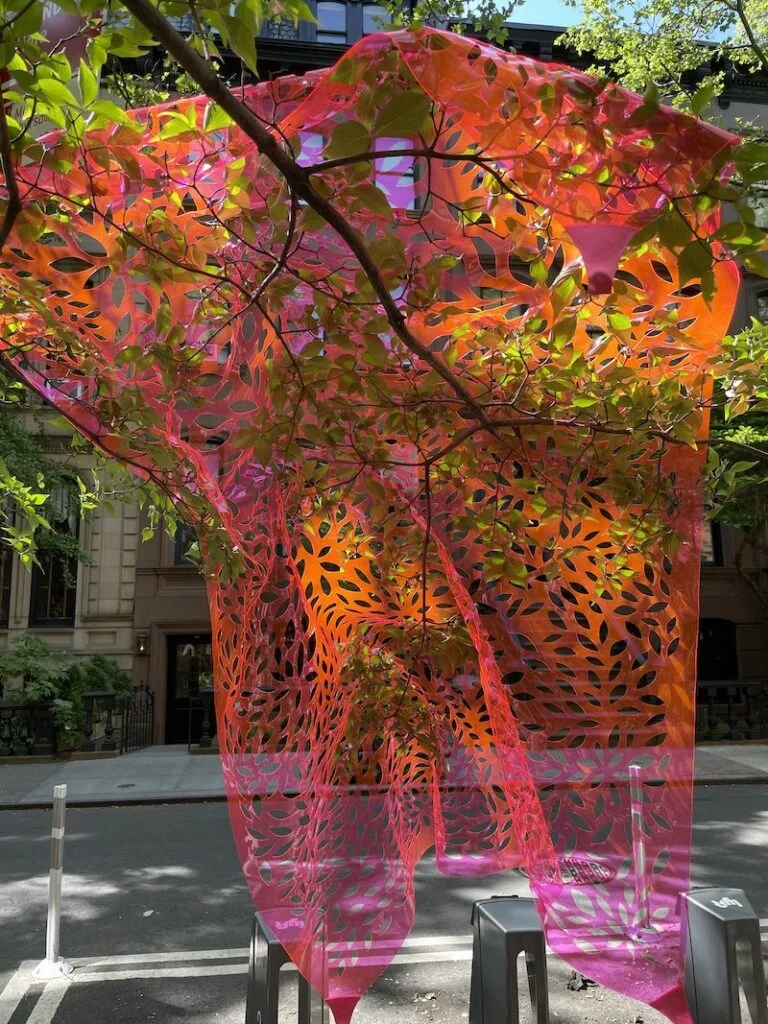
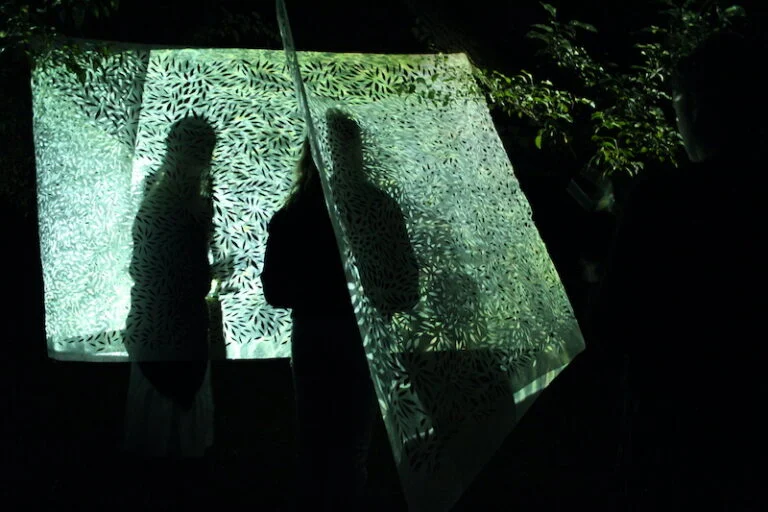
    Kate Corroon Skakel is from the United States and creates large-scale, temporal installations made of paper, fabric, and light, that challenge our preconceived notions of fragility, power, and how we occupy space.


    Meet the Artist

    The disorienting use of light, combined with the softness of the fabric, creates an immersive experience that can transport people out of their world, into a space where she can allow herself to feel tender. Her pieces are rebellions against the politics of hard power, contradicting the notion that space should be taken up with brute force, and instead positing that we need to make room for fragility.

    Statement

    I create large scale, temporal installations made of paper, fabric and light, that challenge our preconceived notions of fragility, power and the ways in which we occupy space. My installations take the forms of alcoves or pathways, hung intuitively from ceilings and walls to embrace the viewer. The disorienting use of light, combined with the softness of the fabric, create a totally immersive experience that can transport people out of their own world, into a space where they can allow themselves to feel tender. My pieces are rebellions against the politics of hard power. I am contradicting the notion that space should be taken up with brute force, and instead positing that we need to make room for fragility. When inviting viewers into my works, I am asking them to suspend their disbelief and their frustrations, and instead to be still, for a few moments.I create large scale, temporal installations made of paper, fabric and light, that challenge our preconceived notions of fragility, power and the ways in which we occupy space. My installations take the forms of alcoves or pathways, hung intuitively from ceilings and walls to embrace the viewer. The disorienting use of light, combined with the softness of the fabric, create a totally immersive experience that can transport people out of their own world, into a space where they can allow themselves to feel tender. My pieces are rebellions against the politics of hard power. I am contradicting the notion that space should be taken up with brute force, and instead positing that we need to make room for fragility. When inviting viewers into my works, I am asking them to suspend their disbelief and their frustrations, and instead to be still, for a few moments.

    GlogauAIR Project

    Fiber art has always been considered women’s work, and never fully respected. It was seen as frivolous or silly. But, darning, a traditional mending practice, fixes what is broken. Darning a sweater is a way of imbibing it with it love- you are putting your energy into something to ensure it lasts. This practice is a rejection of consumerist culture; I would rather fix something that I already own than buy more things. In the end, I am creating something stronger, more beautiful and more loved than when I found it. Throughout my residency I will be searching for ways to bring darning into the cityscape. New York is the most expensive city in the world, but it’s infrastructure is failing. By putting darned works throughout the boroughs I am offering up a reminder that we can help mend the world around us. This work is inspired by both graffiti artists and traditional weavers.

    CV Summary

    SOLO EXHIBITIONS

    • 2021 Murmurations, Vol. 2, Art Austerlitz, Austerlitz, NY
    • Negative/Positive, Window on Hudson, Hudson, NY
    • 2020 Untitled (Red, Reemay and Cotton), The In View Project, Danbury, CT
    • Untied Loose End, Shoebox Space, Digital Gallery
    • Murmurations, Studio Faire Artist Residency, Nerac, France (Presented Digitally)
    • 2018 Falling South, The Avondale Arts Center, Westerly, RI
    • Works of Paper, Book Club Gallery Cooperative, New Orleans, LA
    • 2016 Works in Print, The Avondale Arts Center, Westerly, RI
    • Living Womb, Williams Hall, The University of Vermont, Burlington, Vermont

    GROUP EXHIBITIONS

    • 2022 Art in the Open, Center for Emerging Visual Artists, Philadelphia, PA
    • 2020 Ether Vol. 1, In/Passing, Manhattan, NY (Presented Digitally)
    • Behind Closed Doors, Studio Appaix, New Orleans LA (Presented Digitally)
    • You’re Standing Too Close, SKAVO Gallery, Westerly, RI
    • 2019 Grand Point Weird, Grand Point North Arts and Music Festival, Burlington, VT
    • Show Me Your Paper, Women Made Gallery, Chicago, IL
    • Watch Hill Improvement Society Photography Show, Watch Hill Improvement Society, Watch Hill, RI
    • Mail Art Biennial, Ground Floor Gallery, Brooklyn, NY
    • Infinity in a Tiny Room, SKAVO Gallery, Brooklyn, NY
    • South Brooklyn Open Studios, Brooklyn, NY
    • 2018 Table of Contents, Book Club Gallery Cooperative, New Orleans, LA
    • 2017 Yestermorrow Design and Build School Woodworking Certificate Program Final Show, Warren, VT
    • 2016 Exposed, The Helen Day Art Center, Stowe, Vermont
    • Communications in Color, The Davis Center, University of Vermont, Burlington, Vermont
    • Exquisite Corpse in 3D, The Francis Colburn Gallery, University of Vermont, Burlington, Vermont
    • 2015 Abstraction, The Francis Colburn Gallery, The University of Vermont, Burlington, Vermont

    ARTIST RESIDENCIES

    • 2023 GlogauAir Online Residency, Berlin, Germany
    • 2020 New York Crit Club Member, Fall 2020 Participant, Instructed by Demetrius Oliver
    • New York Crit Club Member, Spring 2020 Participant, Instructed by Arthur Pena
    • Studio Faire Artist Residency, Nerac, France
    • Critical Feedback Program, Trestle Gallery, Brooklyn, NY, Instructed by Margie Neuhaus
    • 2019 Critical Feedback Program, Trestle Gallery, Brooklyn, NY, Instructed by Catherine Haggarty
    • New York Crit Club Member, Fall 2019 Semester Participant, New York, NY, Instructed by Hillary Doyle
    • Open Wabi Artist Residency, Fredricktown, Ohio

    COLLABORATIONS & TALKS

    • 2022 Culture Tennis X Kate Corroon Skakel, bespoke embroidered merchandise collaboration
    • 2020 Featured Artist, Corona Times, Digital Publication
    • 2019 Creator and Director, Corroon 2D Art Exchange, Throughout the US
    • 2018 Invited Speaker at the City Year Professional Networking Event, New Orleans, LA

    Gallery

  • Ellen-Rose Wallace

    Ellen-Rose Wallace

    Ellen-Rose Wallace is GlogauAIR resident
    from January, 2023 to March, 2023

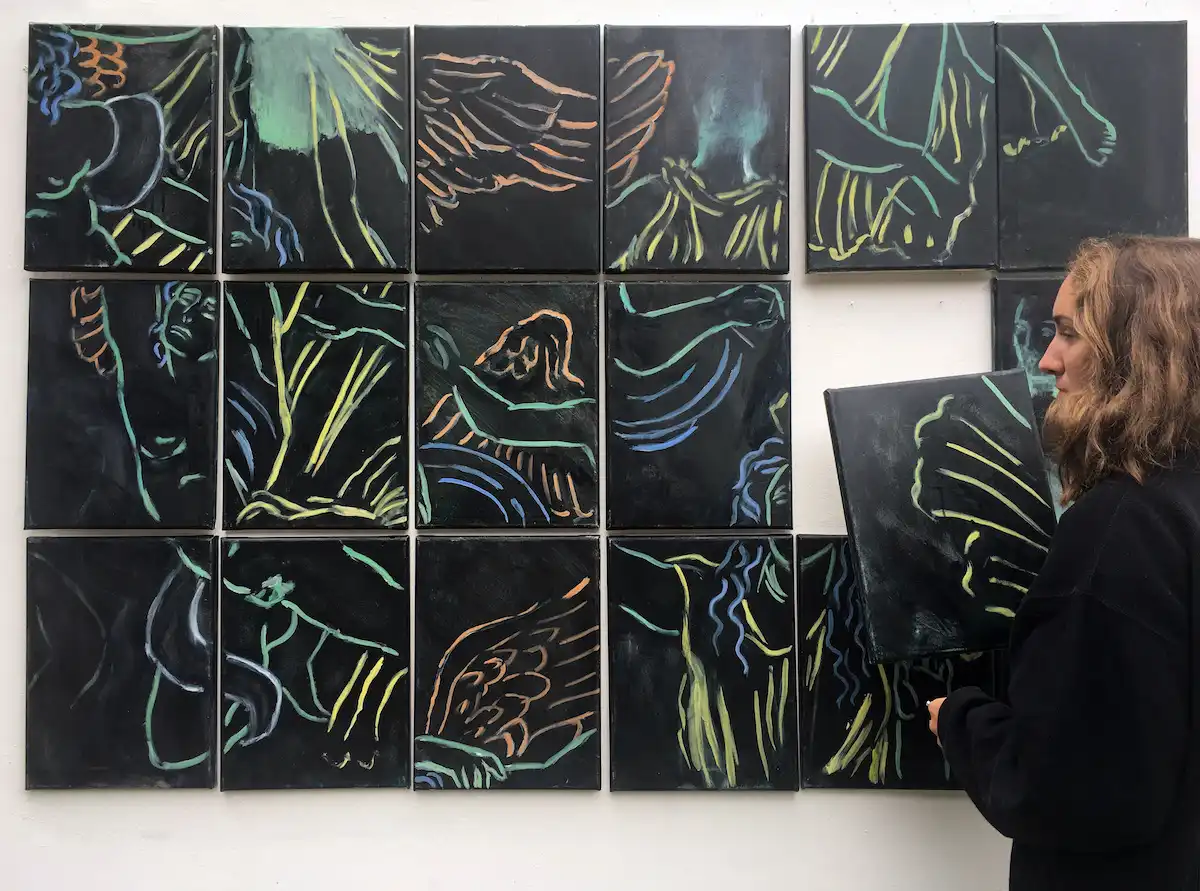
    Ellen-Rose Wallace works with lens-based media, 3D animation, sculpture, and sound art, developing from an interest in oral tradition, her practice is concerned with how we conceptualise time, history, and narrative. In particular, the writings of Gilles Deleuze and Henri Bergson are central to her work.


    Meet the Artist

    Wallace is currently developing a body of work using traditional dry stone walling to investigate human interpretations of time in the context of the climate crisis. This work will be interested in the division of time into periods of history, mythology, and geology, and how certain narratives have influenced our interpretation of the past and future. This body of work incorporates sculpture, lens-based media, 3D animation, and sound. It explores the significance of the mythological “deluge” in a contemporary context where further great floods are imminent. In the mythology of various cultures, the creation of life begins in a vast ocean. The work approaches this pattern of the “flood myth” as a cycle from end to beginning. The narrative presented in the work takes place in a period ‘before’ a disaster.

    Statement

    I am an artist working with lens-based media, 3D animation, sculpture, and sound art. Developing from an interest in oral tradition, my practice is concerned with how we conceptualise time, history and narrative. In particular, the writings of Gilles Deleuze and Henri Bergson are central to my work.

    My long-form video and audio work is interested in how the experience of time can be articulated through unfinished, unending or cyclical narrative structures. It focuses on cycles in nature, often framed through objects that symbolise transition. These objects are displaced or misused, reflecting on a feeling of stasis during the pandemic. More recently I have begun to develop a body of site specific work using the medium of traditional limestone dry stone walling.

    GlogauAIR Project

    I’m currently developing a body of work using traditional dry stone walling to investigate human interpretations of time in the context of the climate crisis. This work will be interested in the division of time into periods of history, mythology and geology, and how certain narratives have influenced our interpretation of the past and future.

    This body of work incorporates sculpture, lens based media, 3D animation and sound. It explores the significance of the mythological “deluge” in a contemporary context where further great floods are imminent. In the mythology of various cultures, the creation of life begins in a vast ocean. The work approaches this pattern of the “flood myth” as a cycle from end to beginning. The narrative presented in the work takes place in a period ‘before’ a disaster.

    Installation, New media, and Sound Art

    CV Summary

    A member of the Douglas Hyde Student Forum 2023, Visual Artists Ireland and Limerick Printmakers.

    EDUCATION

    • 2017 – 2021 TUS Limerick School of Art and Design, BA Sculpture and Combined Media (1:1)

    SHOWS

    • 2022
      • ‘After Our Own’ at Sailors Home, Limerick, curated by the OOBLECK Collective
      • ‘Generation’ at Birr Vintage Week and Arts Festival, curated by Finn Nichol
      • ‘K-FEST’ Arts Festival, Killorglin
      • ‘you breathe differently down here’, Draíocht Gallery, curated by Amanda Coogan
    • 2021
      • K-FEST Arts Festival, Killorglin
      • ‘Ascend | Recede’, Solo Exhibition at Ormond Art Studios
      • ‘Through the Looking Glass’, Birr Vintage Week and Arts Festival, curated by Therry Rudin 2021
      • ‘RALLY’, Limerick School of Art and Design’s online Graduate Show
    • 2020
      • ‘Luan Gallery Art Fair’, a showcase of artists from the Midlands at the Luan Gallery, Athlone
      • ‘Field Test’, a showcase of video work presented beside the Silvermine Mountains, curated by Aideen Barry 2020
      • ‘Mixtape’, an exhibition of video works at South Tipperary Arts Centre, curated by Helena Tobin

    RESIDENCIES & AWARDS

    • 2023
      • GlogauAIR Online Artist in Residence
    • 2022
      • Arts Council Agility Award, Dry Stone Walling Bursary
      • Draíocht Open Call Graduate Exhibition Prize €2000
      • Roscommon County Council Artist Bursary
    • 2021
      • Arts Council Agility Award, 3D Animation Bursary
      • Shortlisted for the RDS Visual Arts Awards
      • Runner-up prize for the Screaming Pope Prize at K-FEST
      • Ormond Art Studios Graduate Residency Award

    Gallery

  • Mollie Burke

    Mollie Burke

    Mollie Burke is GlogauAIR resident
    from January, 2023 to March, 2023

    Mollie Burke’s work explores the processual impulses of spilling, overflow, and excess in relation to structures of framing, containment and confinement. Through staging events of movement and motion on substrates such as canvas, walls, floors, and space, her work expands abstract painting into a dimensional interrogation of absence and fragmentation. By referencing and mixing histories of expressionist and hard edged painting with the poetics of light and space, her work provides a mapping of embodied affect along with entangled modes of perceiving.


    Meet the Artist

    What’s your name and where you come from?

    My name is Mollie Burke, I am from the West Coast of Canada. I live in Vancouver, on unceded Coast Salish land. 

    How did your artist journey begin?

    I think that journey basically describes my whole life – I was always drawing and painting from a very early age. I started studying art history and cultural theory as a way to work as a curator, but then enrolled in a studio art program afterwards. I think of my commitment to being an artist as a conscious choice I make every day, and as a way to engage and think critically about what’s around me. 

    Do you find inspiration in real-life situations and moments you experienced? 

    Absolutely – art does not exist in a vacuum. For me my work is a way of elaborating upon my encounters with the world – that each small moment could be a fragment, an indication, or a symptom of much larger systemic or cultural processes. And these processes are the things that inform and shape our perception and social reality. 

    What is your process? What are your overarching themes in your artwork?

    My central theme is that of paradox. I call it dissonance, because that term places it in a psychological and emotional framework instead of an abstract one. I think the experience of contradiction, call it dissonance or paradox, is a really interesting emotional state that we all occupy today, navigating late stage capitalism, climate collapse, consumerism, the global division of labour, etc. I personally am navigating binary structures constantly, to try and orient or place myself in global and local contexts. An example, and what I’ve been making work about while at GlogauAIR, is the contradictions that are set up in the idea of consumption. I have to negotiate my need to consume things – food, clothing, water, heat – with the knowledge that my need is creating waste that impacts people’s lives across the globe. It’s a way that my own body is, in a way, extended into space and time – I eat a chocolate bar, the wrapper ends up in the pacific ocean, and the chocolate came from a corporation with ties to colonial histories, and on and on it goes. Of course, what’s revealed in this thinking is that it can’t be up to us as individuals to navigate this – it’s a systemic thing. But I think these systems and policies inform our imaginations, and our conceptions of ourselves. 

    I work sculpturally in order to explore these tensions; With materials that reference the actual lived reality of my different “case studies” in dissonance. In Berlin, I have been collecting detritus from around the streets, and embedding them in fabrics that are used in clothing. The familiarity of the materials and the way they exist in public and private spaces in our lives is important in how I want to reconfigure the symbolic elements in them. I want to negotiate relationships to desire and impulse in relation to these objects, by breaking down their elements and rebuilding them in ways that render their operations new or strange. As another example, I work with glass as a reference to the materiality of screens in order to describe the effects and impacts of interfaces without all the loaded preconceived ideas around screens as objects. So, I describe and reference objects that contain systemic complexities within them. I use them as sites to pull out the dissonance and contradiction within them. I want my work first and foremost to operate perceptually, shifting our relationships to the material world around us. 

    Do you think your art has evolved being in a different environment E.g. Do you think GlogauAIR / being in Berlin has influenced your work?

    I was able to participate with and take in so much diverse artwork in Berlin, which of course informs my approach and practice. It’s all a big conversation. In addition to seeing all the impressive institutions here, living with such a great group of artists and people informed my work in a deep way. The conversations I have with friends, the debates and experiences, all play a big role in the way I approach or think about topics. While I work in the studio solo, I consider my work to be grounded in a very social and collaborative place. Having the time and space at GlogauAIR, and literally living inside of my installation, made me feel very close to what I was doing and making. I am excited for the work I make in the next year, following this special time of thinking, making, and experiencing.

    Statement

    I explore materiality to question the relationship between entropy and order. I am interested in the way experience and knowledge is mediated through tools of understanding the undetectable – screens, telescopes, microscopes, X rays. How are is the unseen made visible through these devices, and what can it reveal about the limits of our perception? My work references the “Gods eye view” of scientific imagery such as microscopic slides of ocean plastics and aerial views of landscape designs as methods of exposing and critiquing the dominant forms of understanding and approaching the human “other”. To challenge the particular processes of relating to the natural world, my work intentionally sits in a dialectical space, holding the tensions of many opposites – digital/physical, nature/culture, hard/soft, self/other. I call this “dissonant aesthetics”, a term that describes my approach to collage and assemblage, where I oscillate between chance events and ordered process to capture these multiple tensions. By referencing and mixing histories of expressionist and hard edged painting with the poetics of light and space, I want my work to provide a mapping of embodied affect along with entangled modes of perceiving.

    GlogauAIR Project

    This project will document my interaction with the urban environment of Berlin, filtered through my interest in the relationship between order and entropy. The history of modernism in Berlin combined with the reclaiming of public spaces by grafiti and industrial decay are sites that I will study through sketches, material salvaging, and photography. I am interested in the decaying nature of industrial sites, as well as the way memory and politics are embedded in the architecture and planning of the city. I will collect detritus and create soft sculptures with varying levels of opacity and transparency that will house found objects along with my own painterly interventions. As I work at the intersection of sculpture and painting, these pieces will balance painterly considerations of composition, colour, and optics, along with the sculptural concerns of weight and gravity. In this work studying the city, I want to explore the inherent tension of being a consuming body in an urban environment, while being hyper aware of this consumption as a destructive force in the context of a climate emergency. I will examine how the body interacts and moves as a result of the civic infrastructure, and sites where the order and design of the city turns into entropy and decay.

    Installation, Painting, and Sculpture

    CV Summary

    Mollie holds a BA from McGill University in art history and cultural studies, a diploma of fine art from Langara College, and a Masters of Fine Art from Emily Carr University of Art and Design. She was awarded the Bill Watson award for excellence in printmaking, the Barbara and Arne Vengshoel scholarship for excellence in visual arts, and the SSHRC graduate scholarship. In 2021 she completed residencies at Griffin Art projects and Material Matters design research lab. She is a board member at Unit/Pitt in Vancouver and teaches sessional courses at Emily Carr University of Art and Design.

    Gallery

  • Hannah Stoll

    Hannah Stoll

    Hannah Stoll is GlogauAIR resident
    from January, 2023 to March, 2023

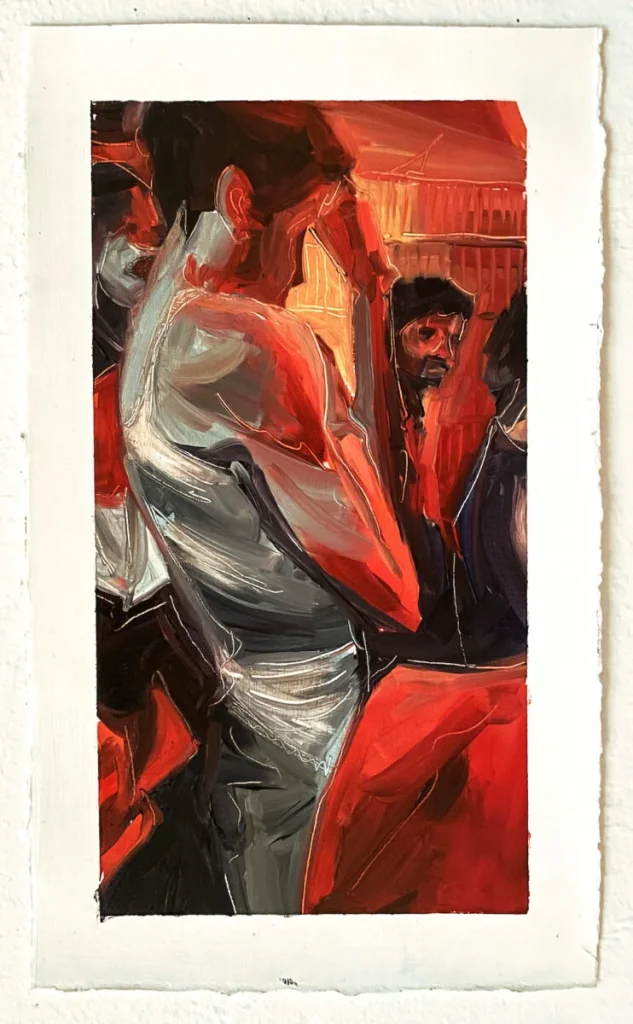
    “My current paintings are based off of my own photography of daily life. They concern memory, nostalgia, relationships, and gathering places.” Hannah Stoll


    Meet the Artist

    What’s your name and where you come from?

    Hannah Stoll, VT, USA

    How did your artist journey begin?

    I have always spent time drawing and painting, but I did not begin my regular studio practice until the
    summer of 2020 in the wake of the pandemic. I started oil painting out of a need for creative
    expression and the meditative headspace it gave me. At first I was very interested in portraiture and
    practicing formal technique, but through exposure to various art communities this has evolved into an
    interest in using paint as a form of personal, wordless communication.

    Do you find inspiration in real-life situations and moments you experienced?

    Yes, I am often inspired by visual events in my life. I take a lot of photos and interpret my experience
    of these moments through paint.

    What is your process? What are your overarching themes in your artwork?

    My process is changing a lot these days, but generally an idea for a work begins with something I see
    in the world that sparks a connection in my head to themes that resonate with me. Because I am a
    visual mental processor, I often have ideas about color and composition before I know what the
    subject matter will be. I take photos and videos and use those as reference material, sometimes
    painting a composition quite literally and sometimes creating a composite or abstracted painting only
    loosely based on the photos. I use oil paint and mix my colors from a limited selection of primaries. I
    am very drawn to texture, layering, loose and quick line work, and subtractive techniques. My work
    tends to depict people and the built environment, speaking to the way people interact and respond
    emotionally to experiences.

    Do you think your art has evolved being in a different environment E.g. Do you
    think GlogauAIR / being in Berlin has influenced your work?

    Yes—I have not spent time in a city with as much opportunity to see art as Berlin, and have loved the
    chance to draw inspiration from the overwhelming amount of creativity here. Talking to local artists
    and the other residents and about their work and their life experience is helping me develop my
    creative practice as well as better understand practical options for working as an artist, I.e. school,
    funding, etc. I have done a lot of experimentation here and have been able to expand the way I see
    my practice in a way that feels very exciting.

    Statement

    Hannah Stoll (b. 1997, NYC) was raised in rural Vermont where she first learned to paint in oil. Following curiosities about the natural world, she obtained a B.A. in Organismal Biology and Ecology in the spring of 2020. Though this experience shaped both her perspective and methods of thought, after graduating she quickly redirected her efforts towards pursuing a career in the arts. While living in a mountain town in western Colorado, Stoll began working for artists and creative nonprofits while taking up a studio practice of her own. She has exhibited work in various galleries in Western Colorado, Denver, and Vancouver, BC.

    Stoll’s paintings have been linked to photography from the start, though the relationship between the two mediums has evolved over time. Because her practice was born in the wake of the pandemic, she has a persistent interest in the role of technology in the way we socialize and see ourselves. Her paintings are often conspicuously painted from photos, existing in a balance where technology is used as a tool, with one’s immediate reality and company taking precedence every time.

    GlogauAIR Project

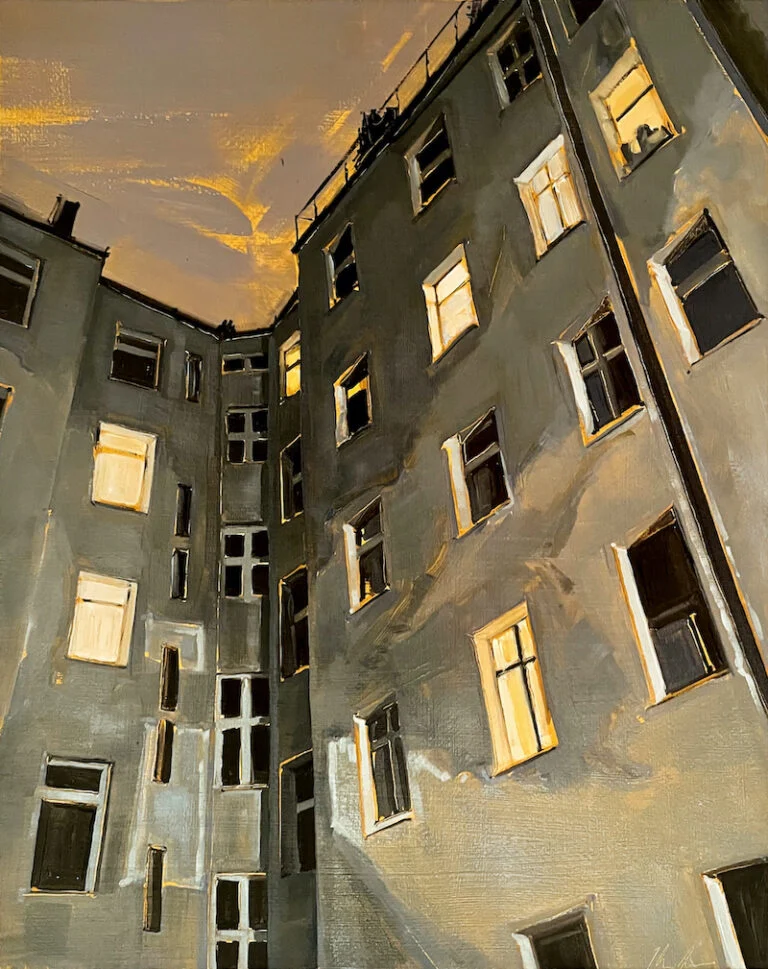
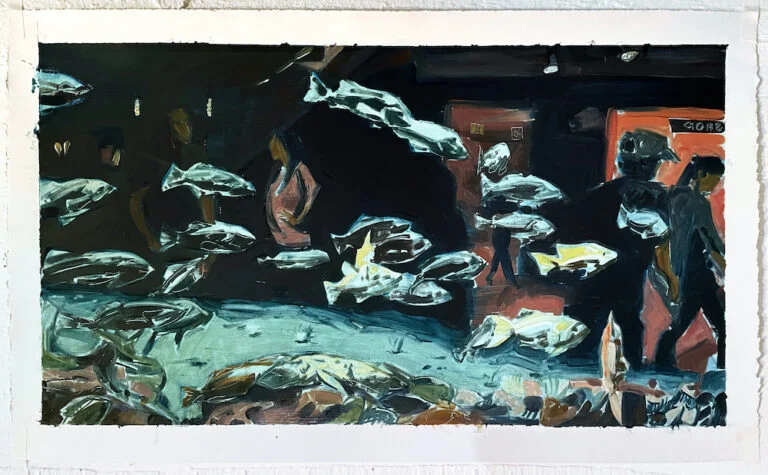
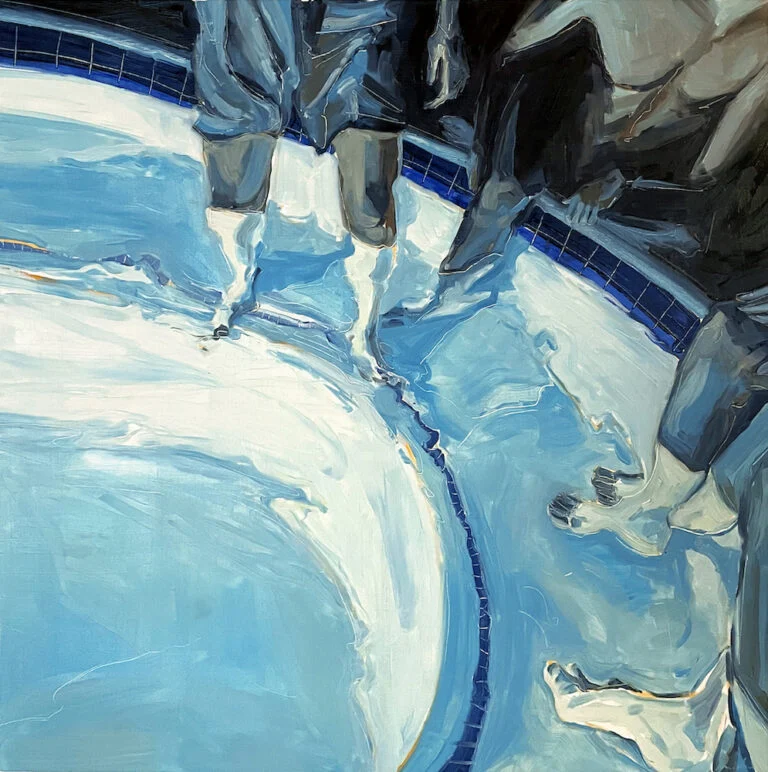
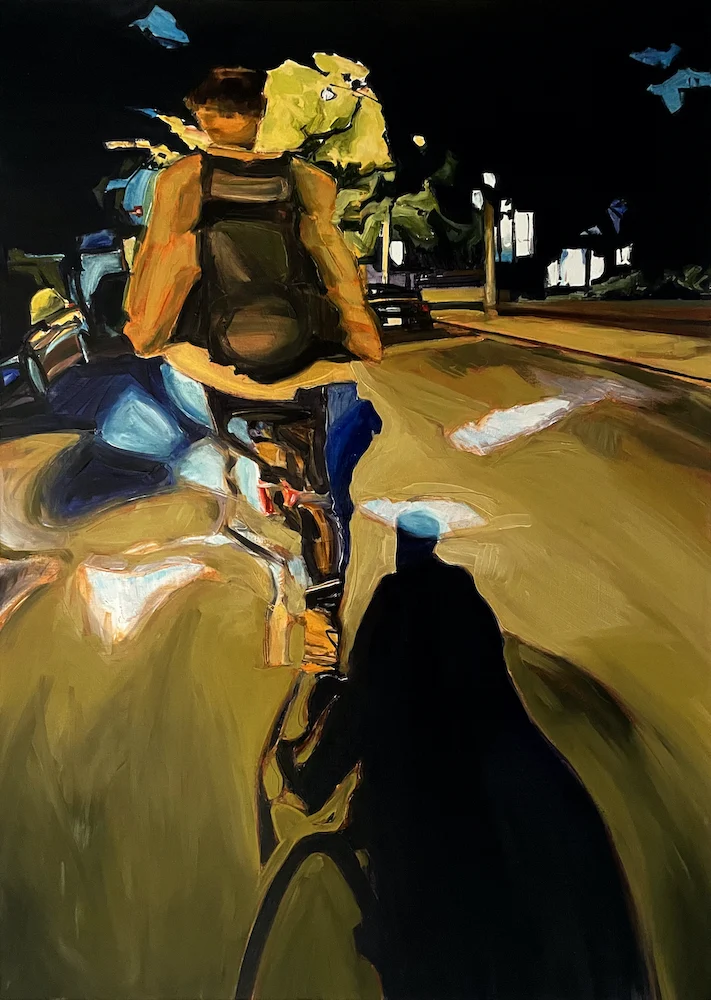
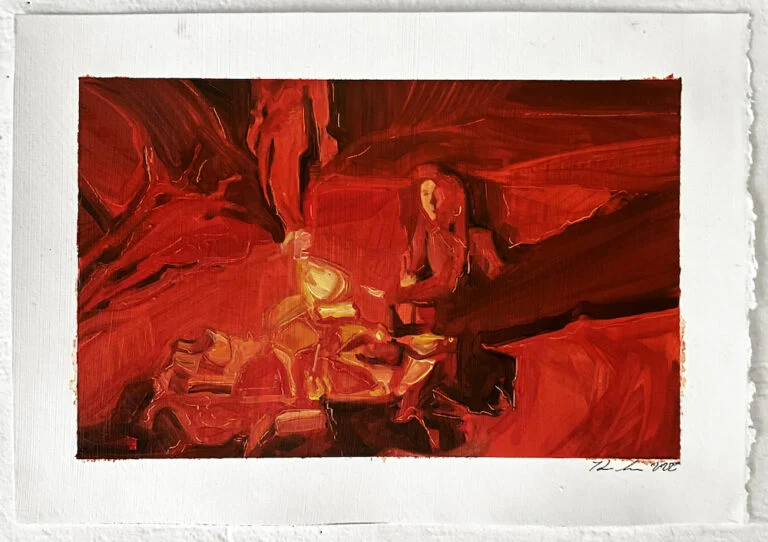
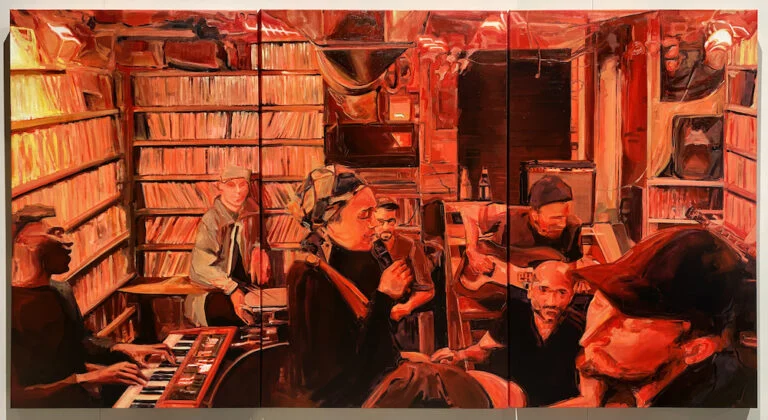
    My current paintings concern memory, nostalgia, and the act of looking. In particular, I am interested in the habit of outsourcing memory to a camera roll. My photography captures that which might otherwise be left behind but carries intangible kinds of importance and the trace of other senses. I am particularly drawn to figures, relationships, and gathering places. Painting in reference to these photos becomes a process of careful looking as I work to distill the psychology of the moment. Expressive line quality and interpretations of complex light are central to my evolving approach.

    During the residency I plan to continue my work of interpreting snapshots of my experience in oil. I look forward to responding to the city of Berlin, with its uniquely lively social culture, international community, and particular brand of well-loved infrastructure. The community of the residency itself is an excellent opportunity to hear new perspectives, gain inspiration, and grow through critique.

    I would like to gratefully acknowledge the support of the Elizabeth Greenshields Foundation in making this residency possible for me.

    Drawing and Painting

    CV Summary

    EDUCATION

    • Colorado College, Colorado Springs, CO, 2016-2020 , Bachelor of Arts in Biology and Ecology

    EXHIBITIONS

    • 2023 – (upcoming), The Art Base, Basalt, CO, Solo exhibition
    • 2023 – Carbondale Clay Center, Carbondale, CO, The Way We Are: Women in the Roaring Fork Valley
    • 2022 – Pendulum Gallery, Vancouver, BC, NEXT: Eastside Culture Crawl Preview Exhibit
    • 2022 – Aspen Chapel Gallery, Aspen, CO, Group Exhibition w/ nonprofit Voices
    • 2022 – R2 Gallery, Carbondale, CO, Prospects: Solo Exhibition
    • 2022 – Red Brick Center for the Arts, Aspen, CO, Intimate Appearances: Group Exhibition
    • 2022 – R2 Gallery, Carbondale, CO, Valley Visual Art Show: Group Exhibition
    • 2021 – West + Main Homes Gallery, Denver, CO, Solo Exhibition
    • 2021 – The Arvada Center, Arvada, CO, Viral Influence: Art in the Time of Coronavirus

    RESIDENCIES AND AWARDS

    • 2023 – (upcoming), GlogauAIR, Berlin, Germany
    • 2023 – Elizabeth Greenshields Foundation Grant
    • 2022 – First Place People’s Choice Award, Valley Visual Art Show, R2 Gallery
    • 2015 – Allison Green Fine Arts Scholarship

    PROFESSIONAL EXPERIENCE

    • 2022 – Red Brick Center for the Arts, Aspen, CO, Art instructor
    • 2022 – The Art Base, Basalt, CO, Art instructor
    • 2022 – The Project Shop, Carbondale, CO, Studio assistant
    • 2022 – Anderson Ranch Arts Center, Snowmass, CO, Children’s Workshop Faculty
    • 2021 – 2022 – Isa Catto Studio, Woody Creek, CO, Graphic Design & Studio Assistant
    • 2020 – Anderson Ranch Arts Center, Snowmass, CO, Print Shop Intern
    • 2020 – Cipher Magazine, Colorado College, CO, Editor & Contributing Artist
    • 2019 – Arts and Crafts Dept., Colorado College, CO, Adjunct Screenprinting Teacher

    Gallery