Archives: Artists

  • Czeslawa Wojtkowski

    Czeslawa Wojtkowski

    Artist main image

    Czeslawa Wojtkowski is GlogauAIR resident from April 2026 to June 2026. Q2

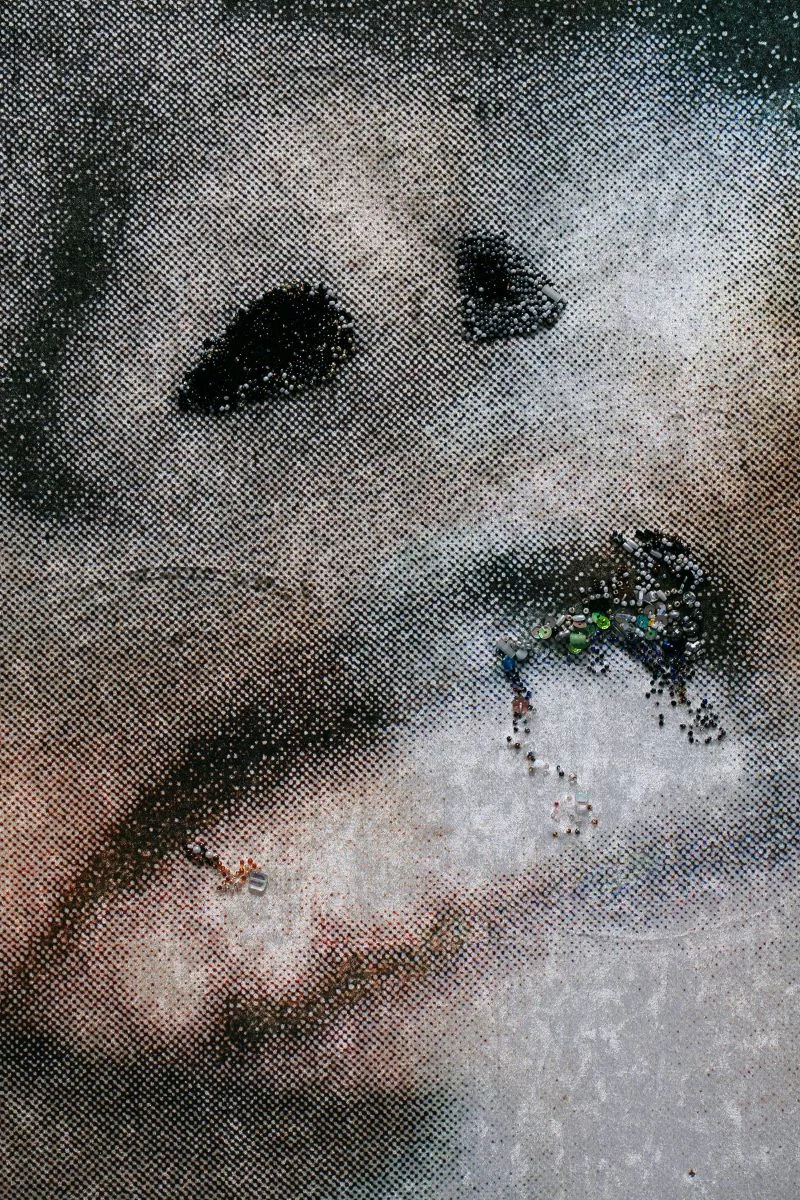
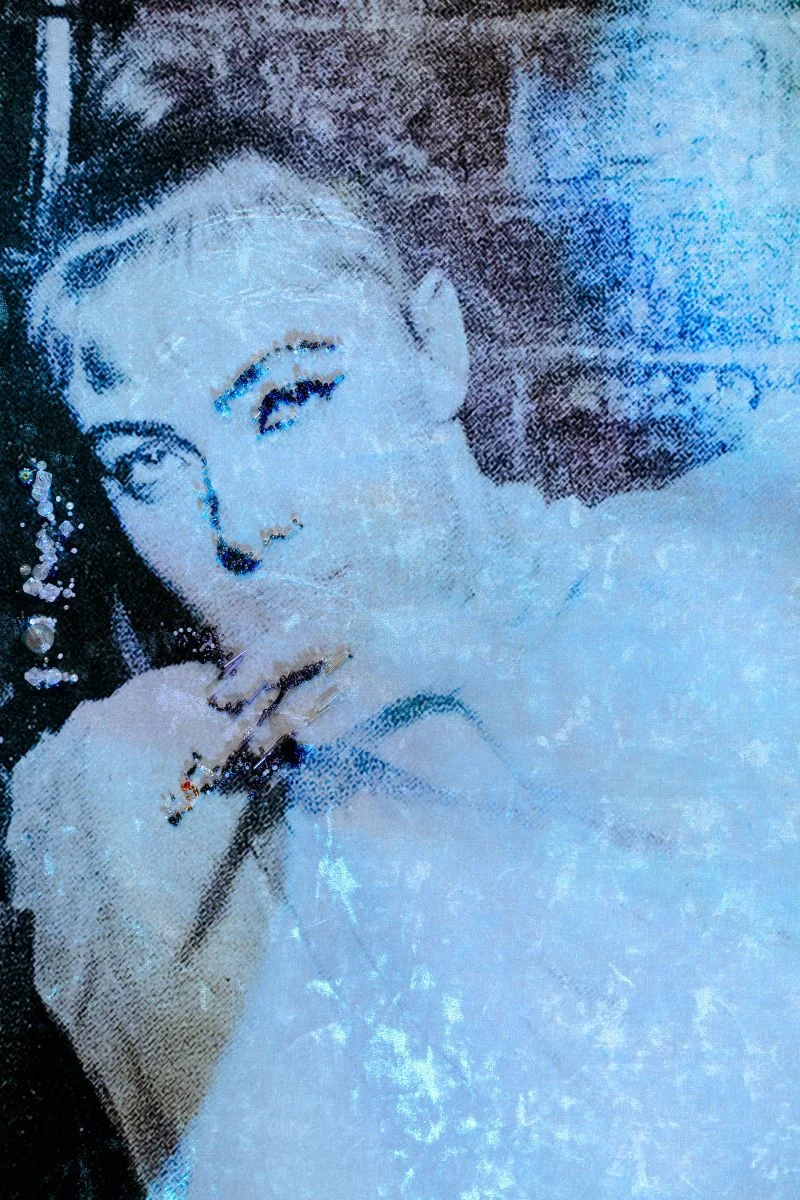
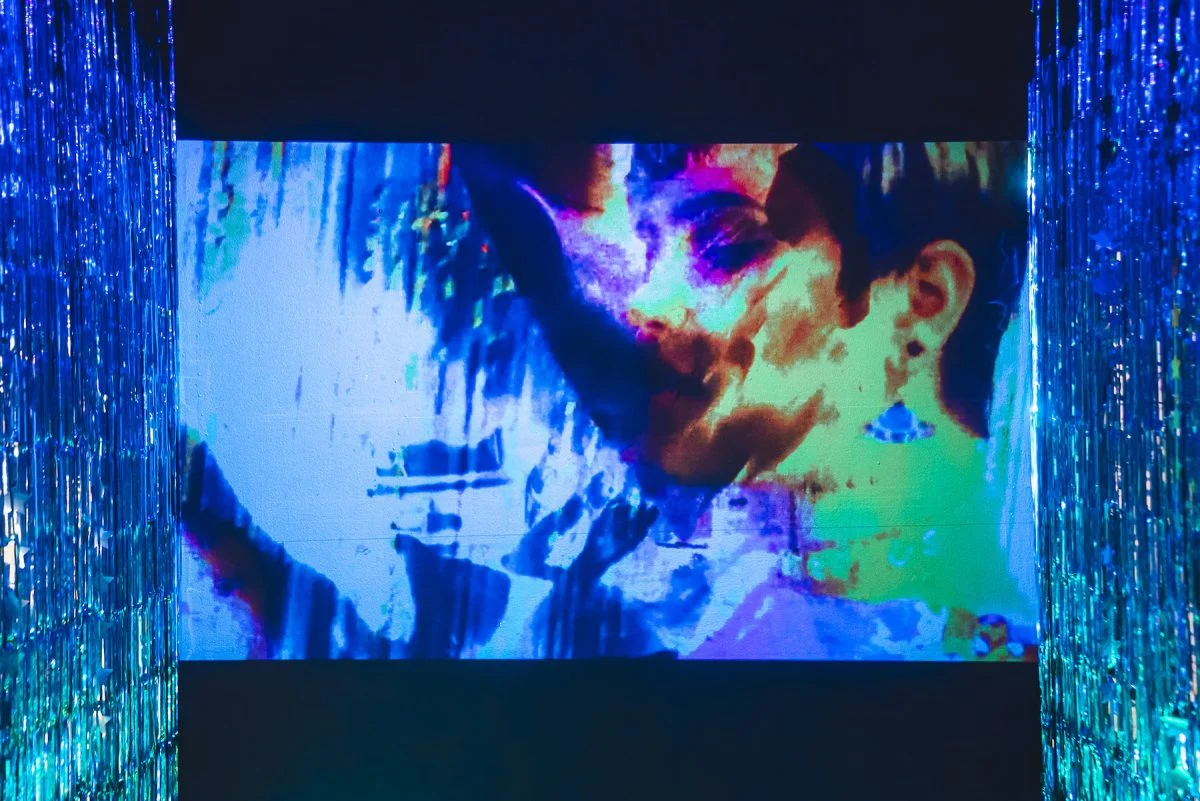
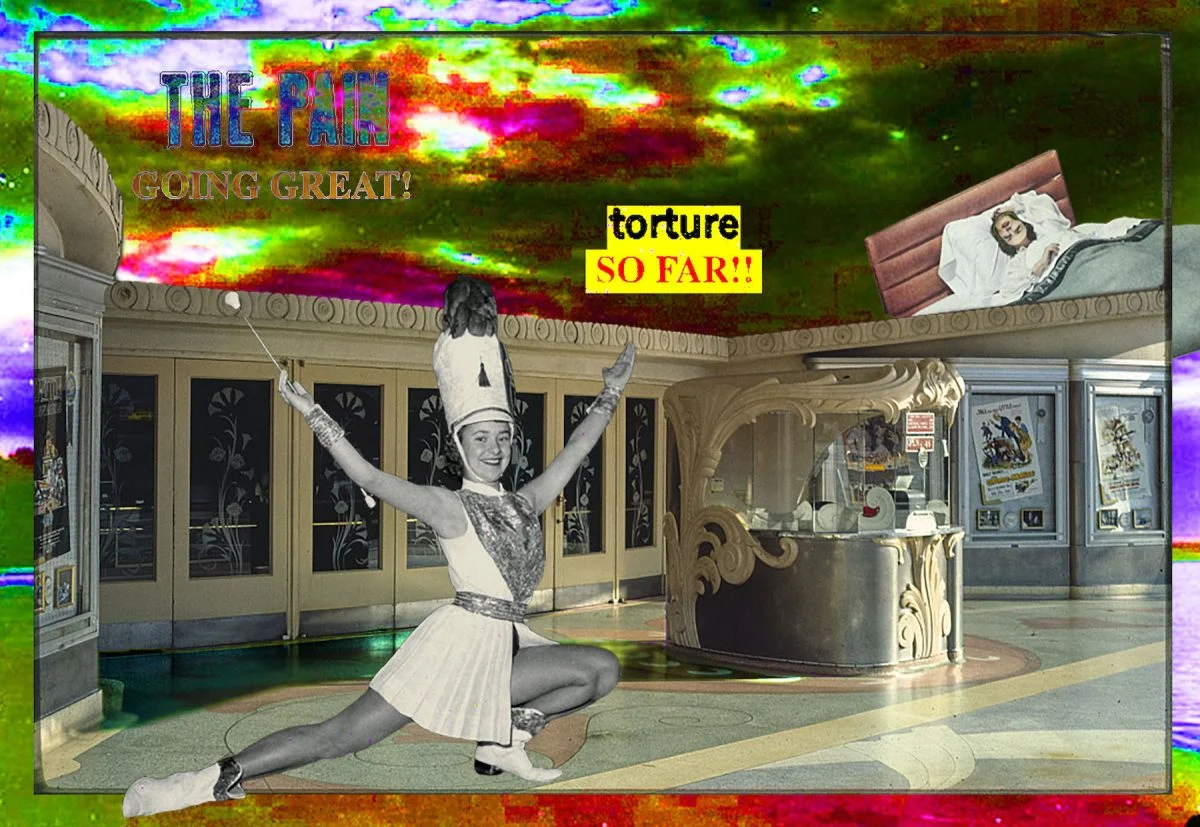
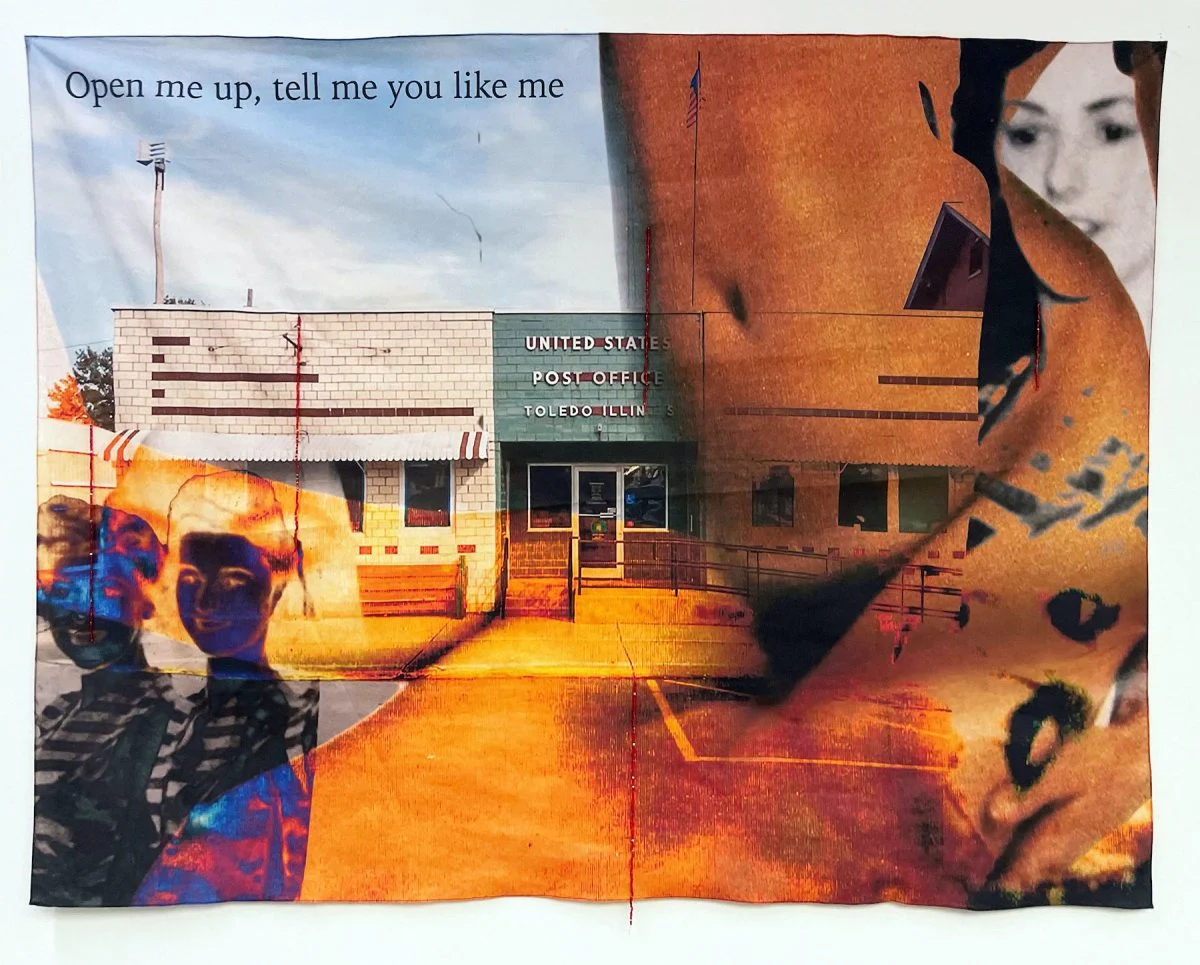
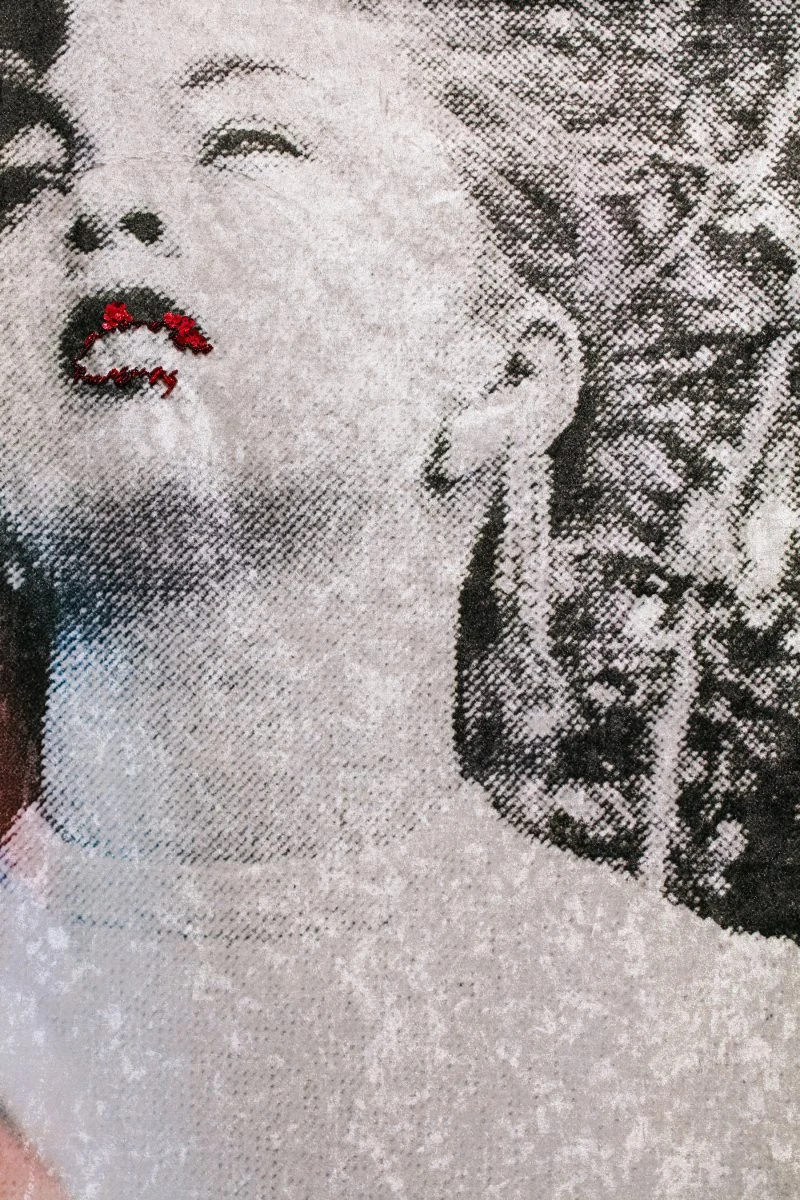
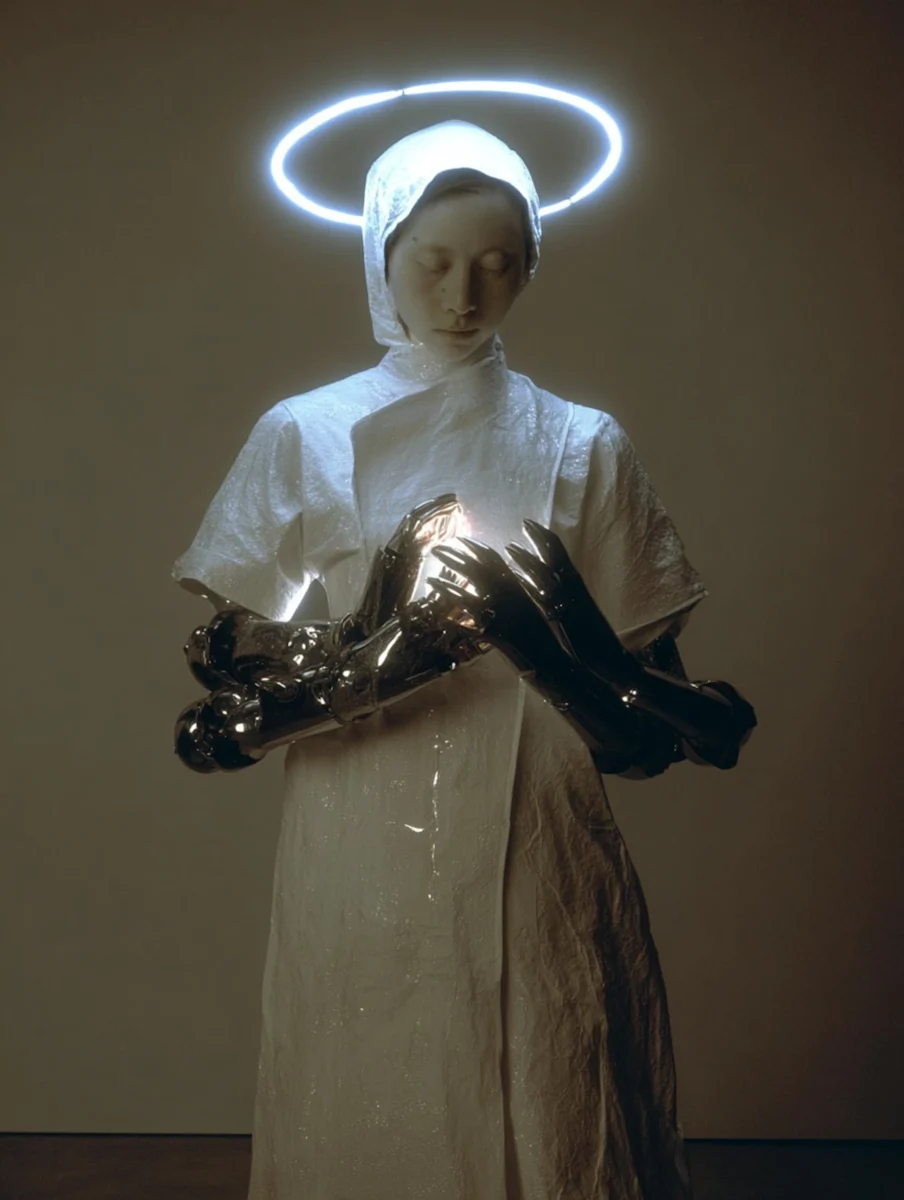
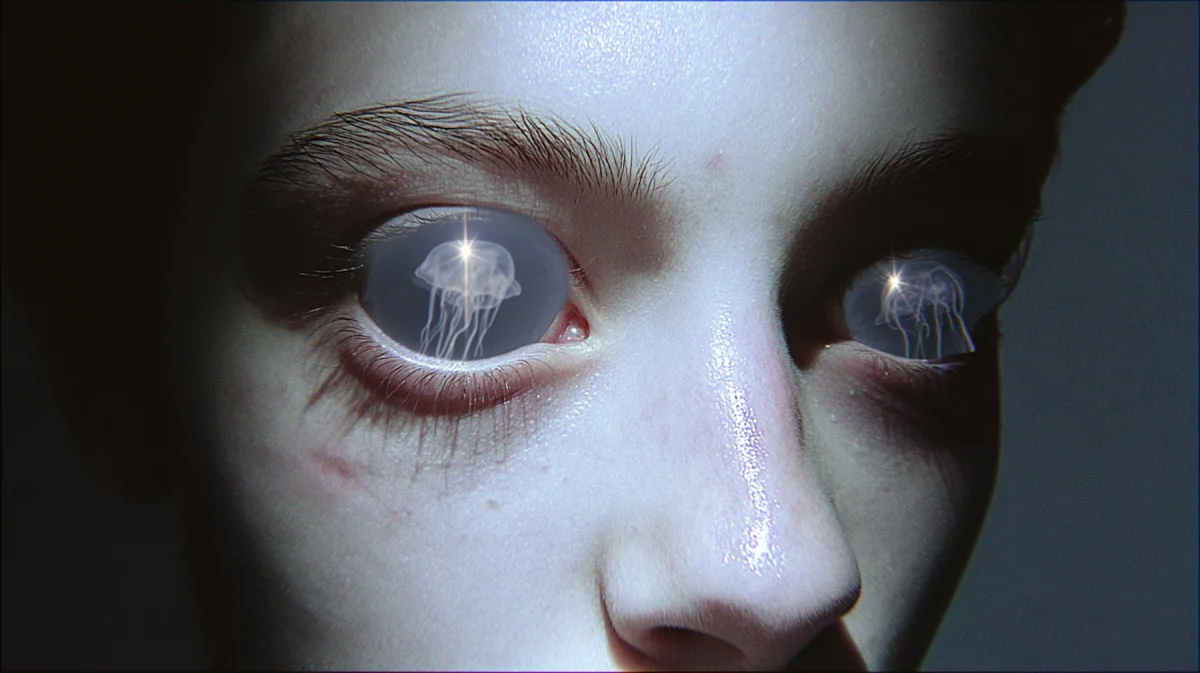
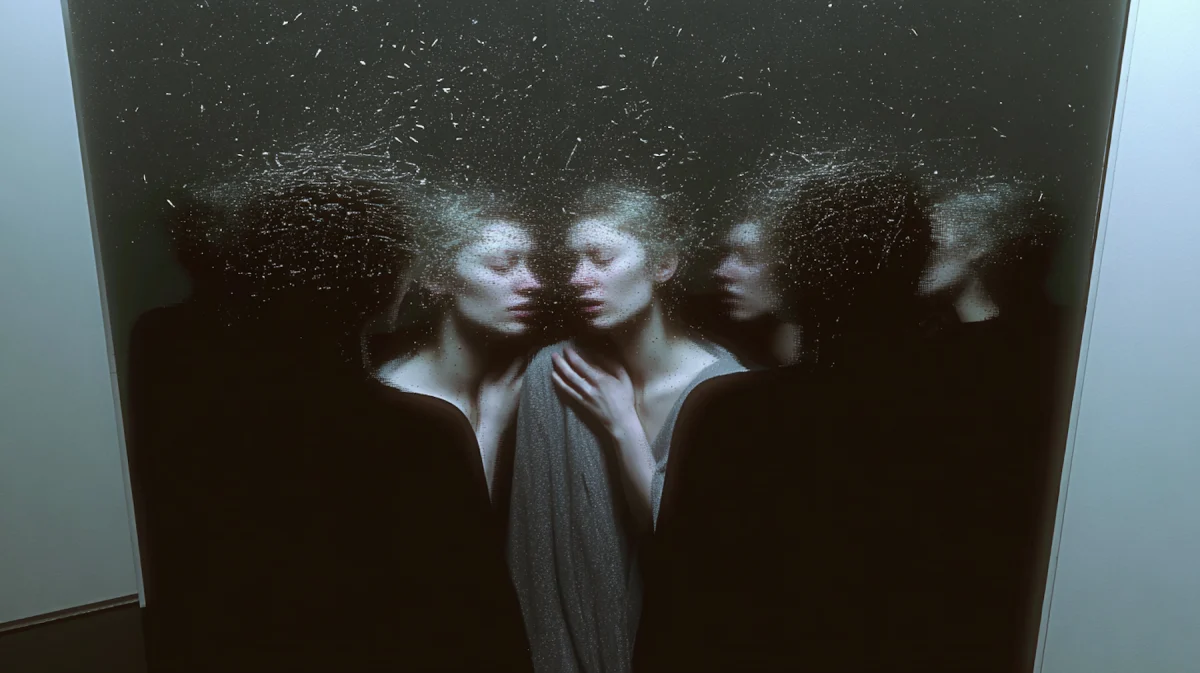
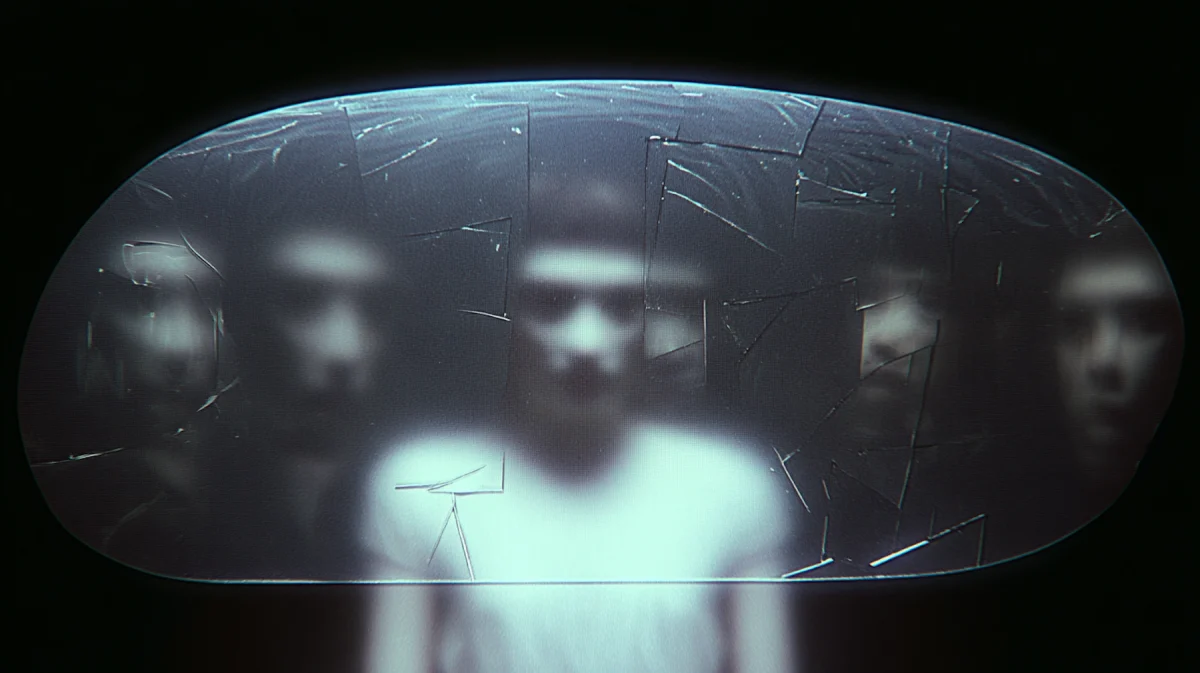
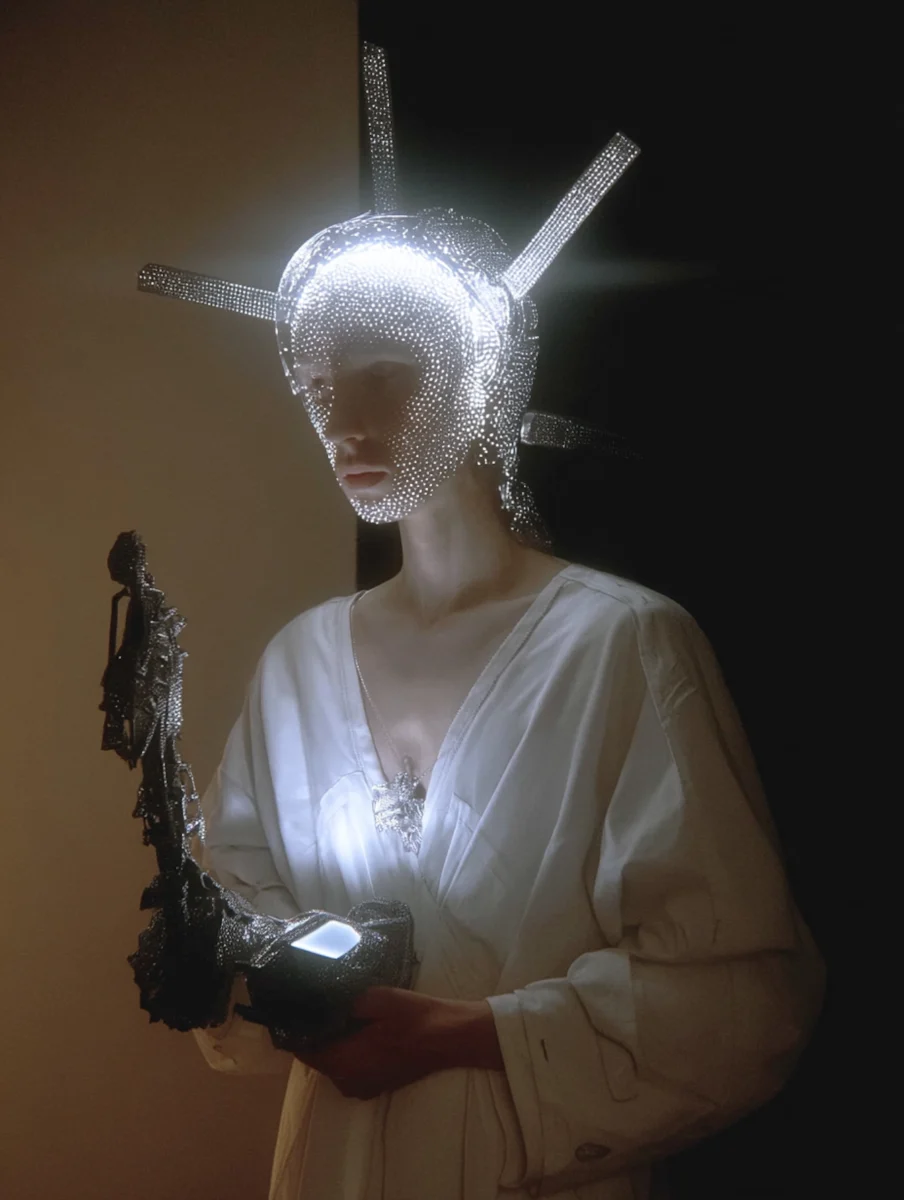
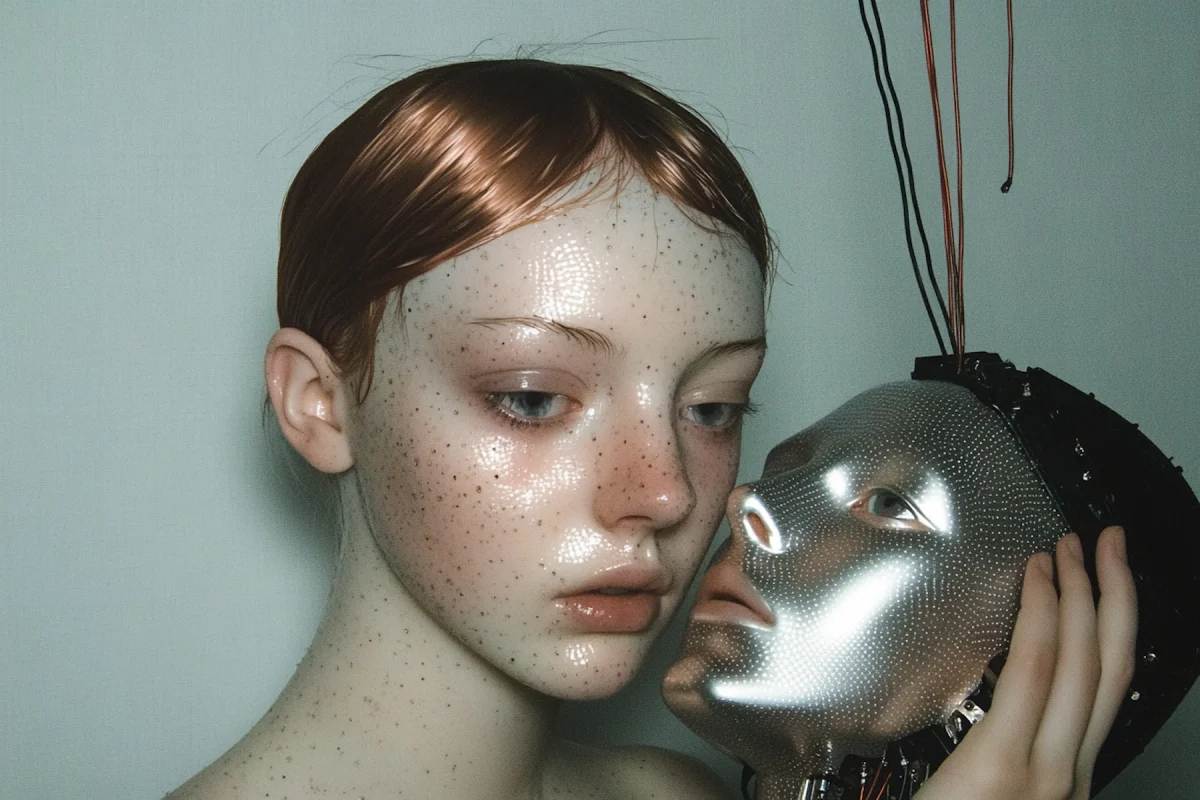
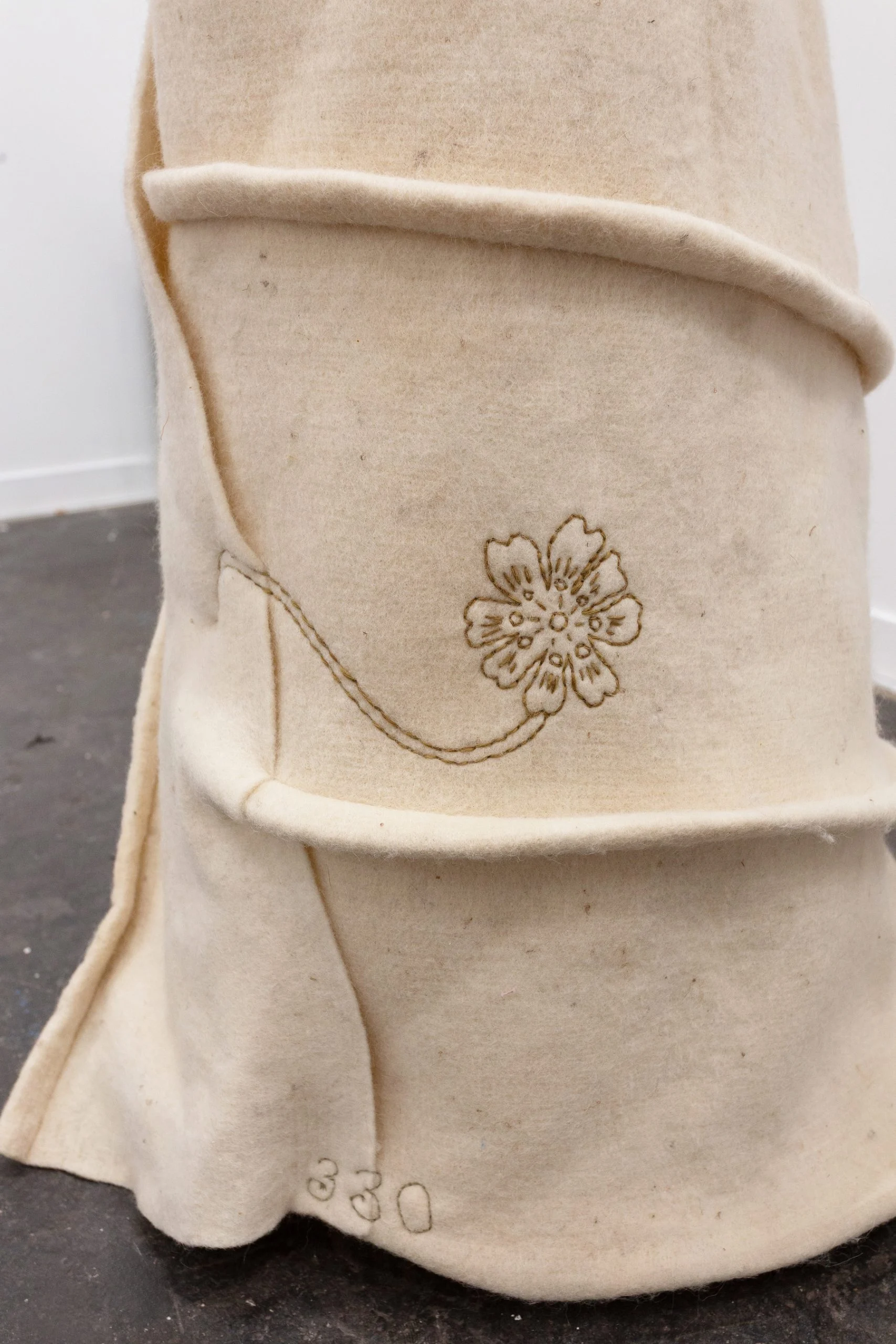
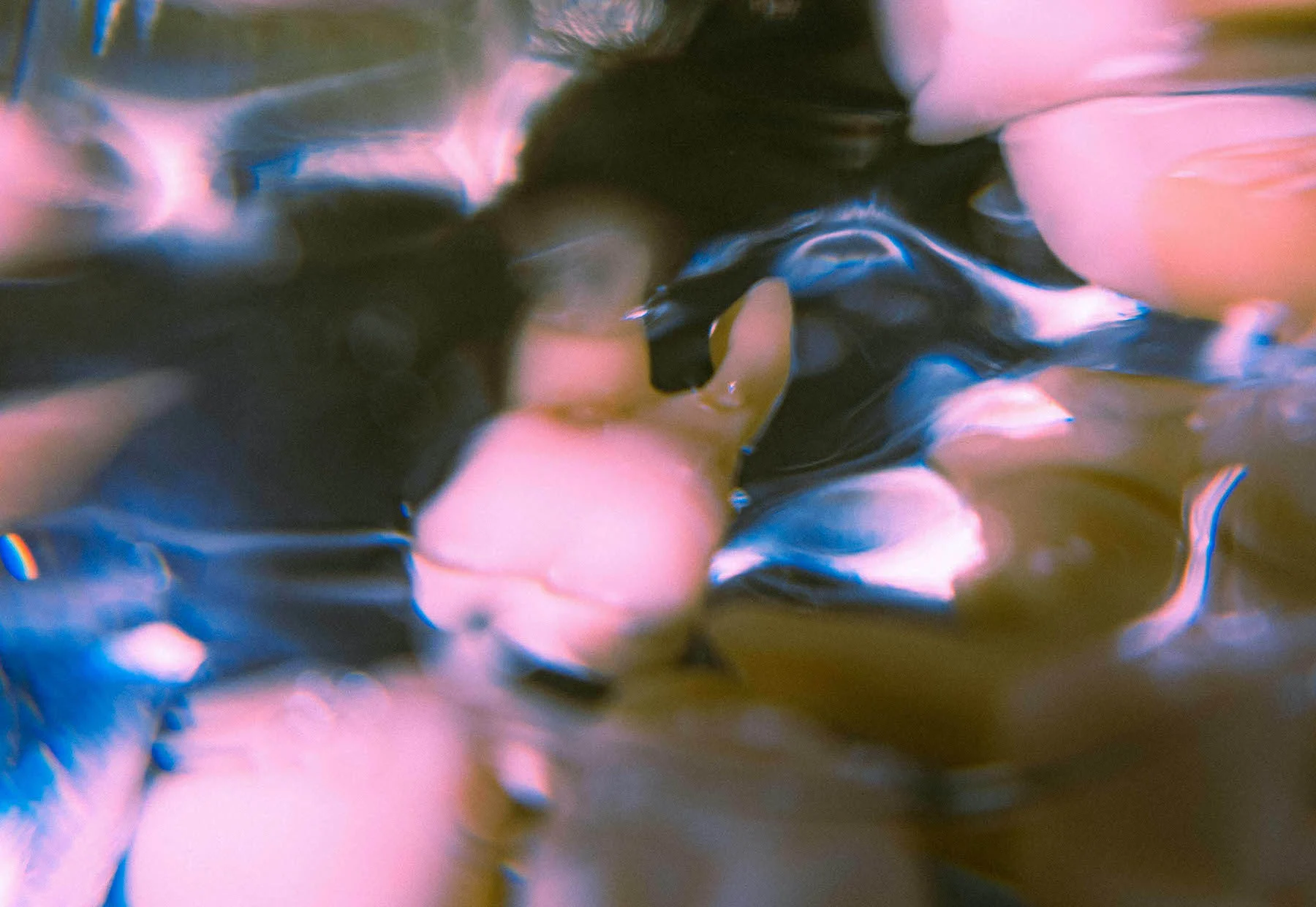
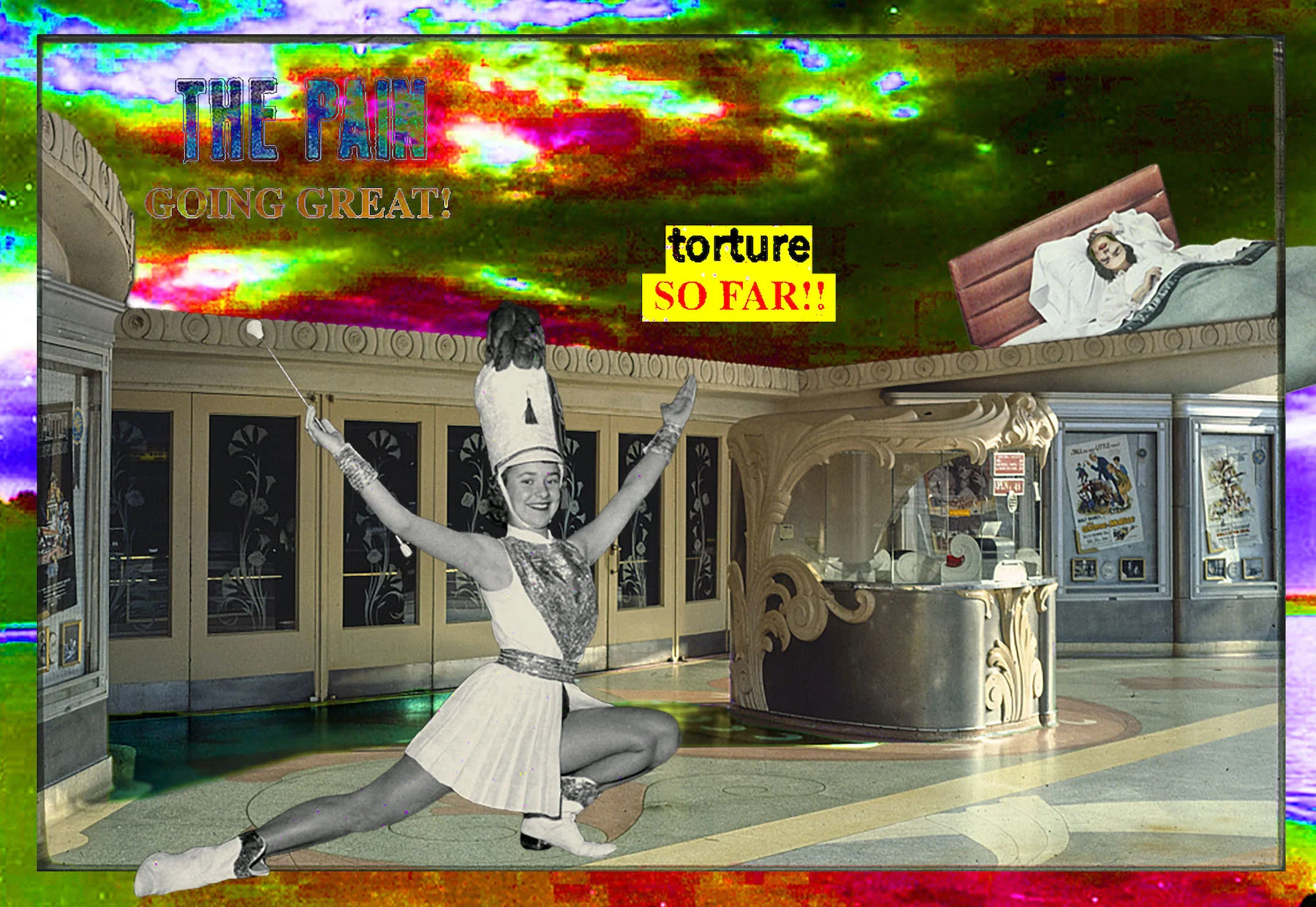
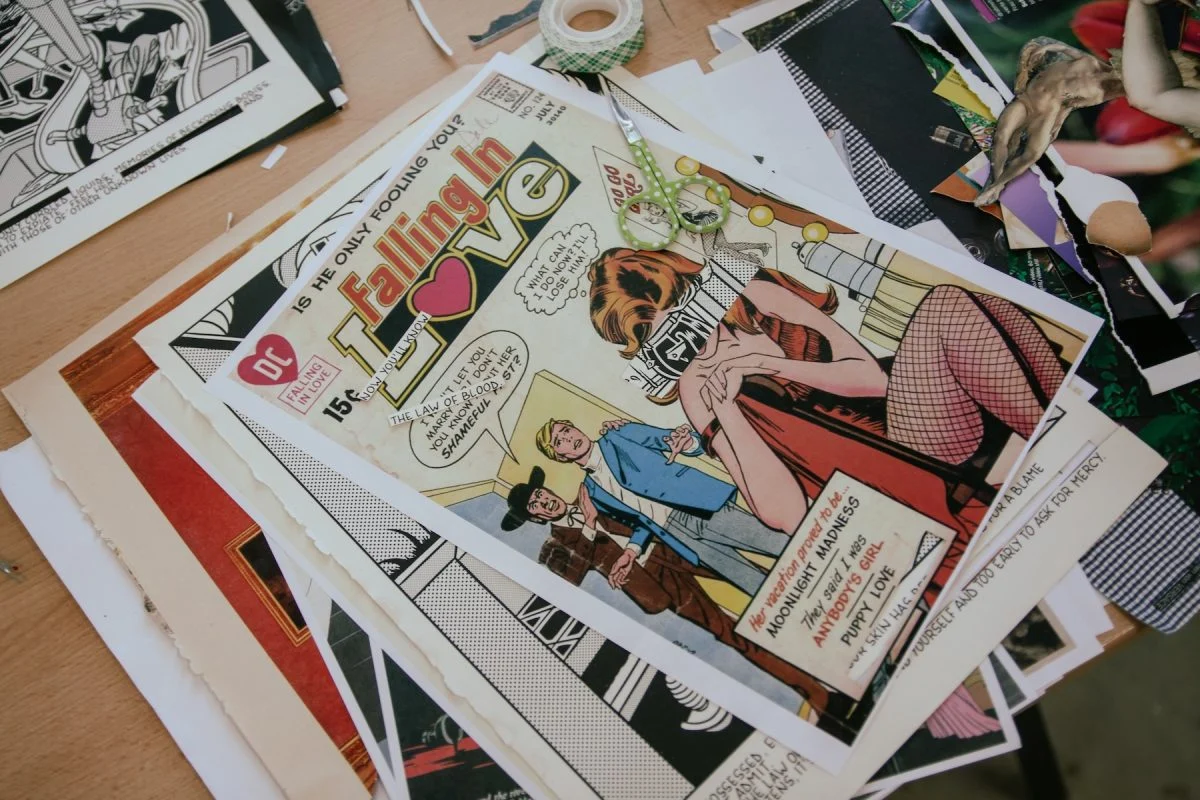
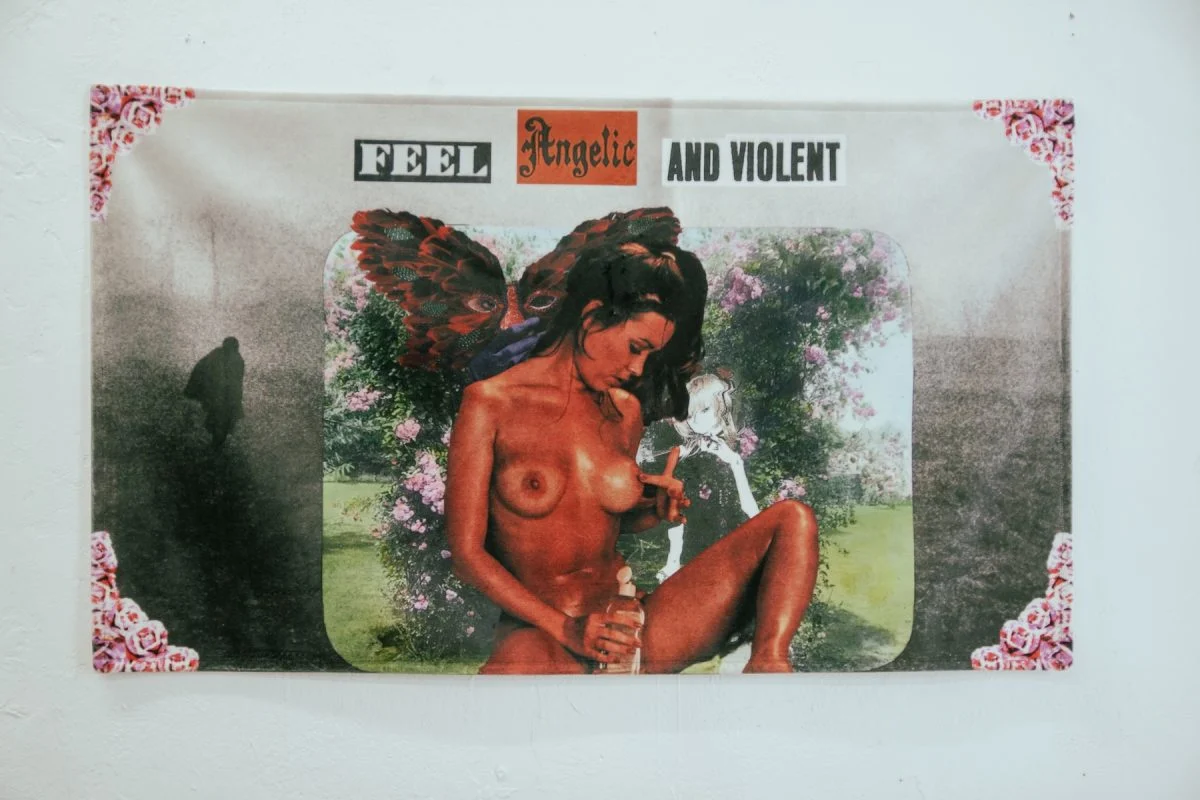
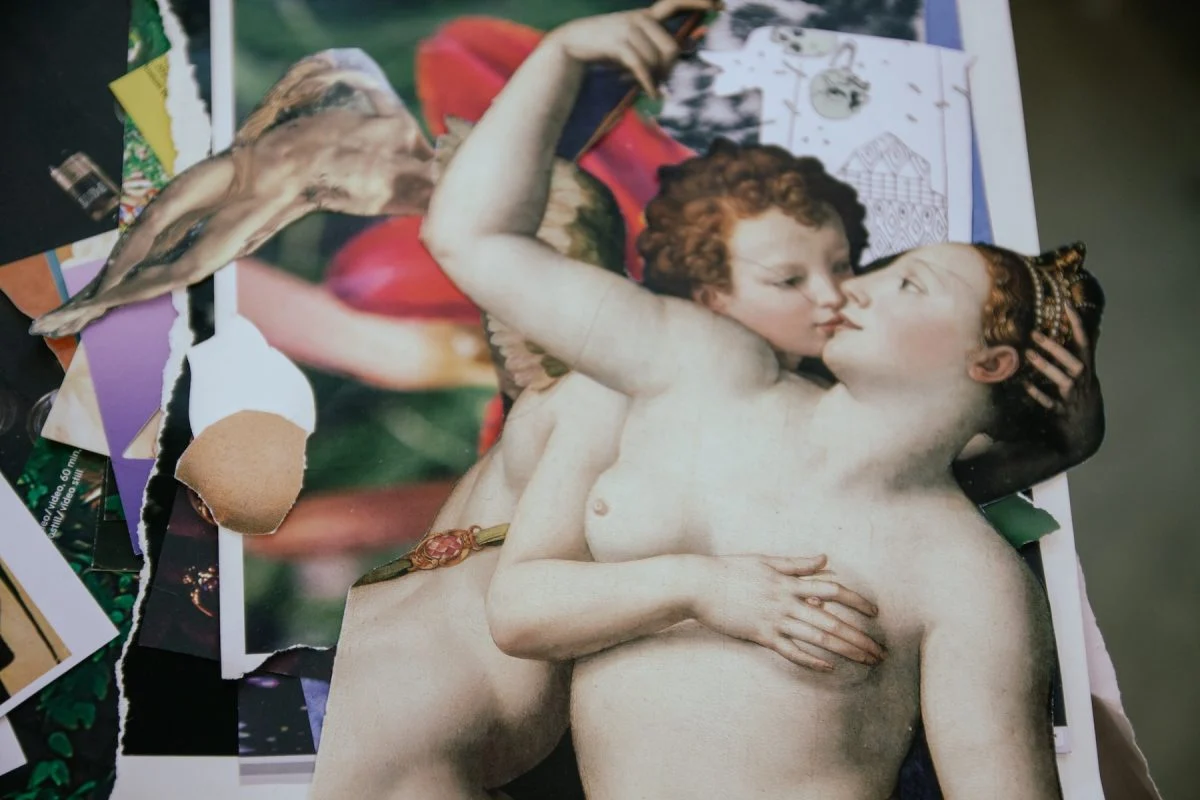
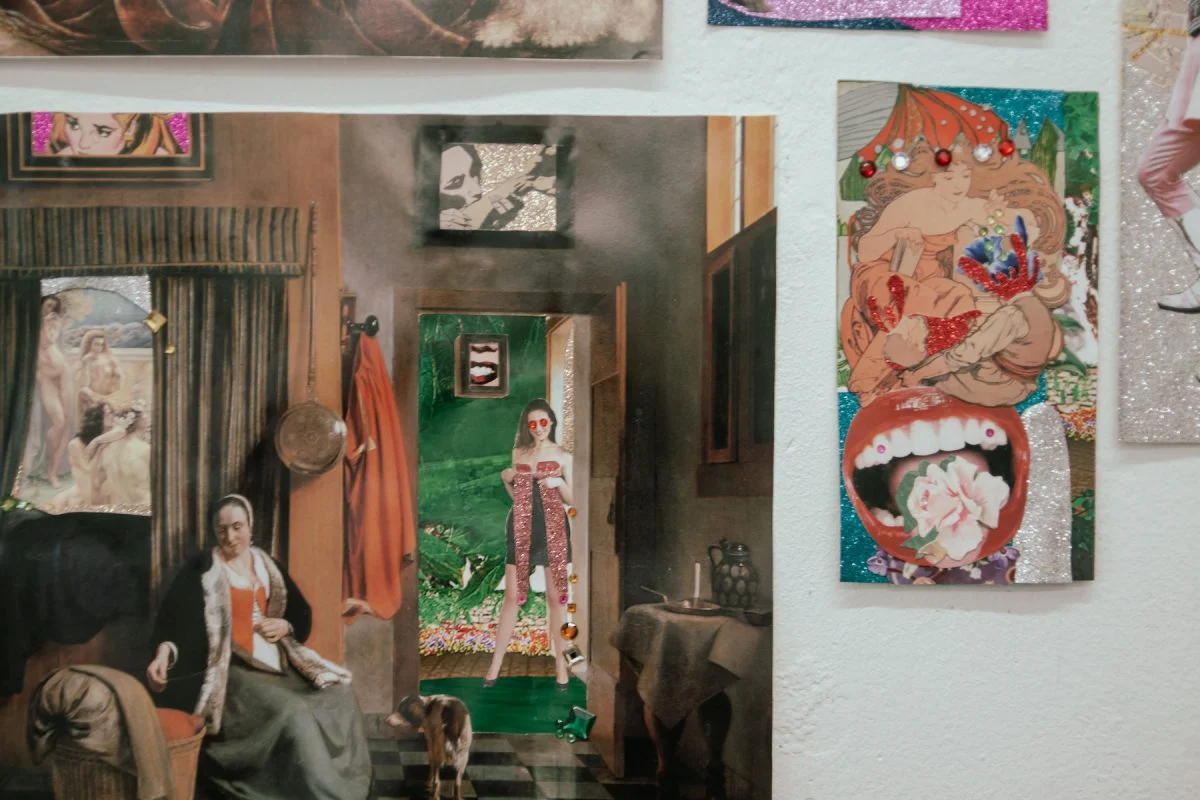
    Czeslawa interrogates trans and non-binary femme representation through fiber art, new media, and collage techniques. Sourcing material from sensationalized, often disposable media like tabloids, erotic ephemera, direct-to-video VHS films. Czeslawa transforms the subjects depicted therein into precious treasures. The process ensures that every interaction with my subjects’ visages is made with the utmost intention. Thoughtfully choosing and placing photographs, fabrics, and embellishments are acts of resistance.

    Meet the Artist

    Do you want to start by telling me a little bit about yourself and what you’re working on while you’re here at GlogauAIR? 

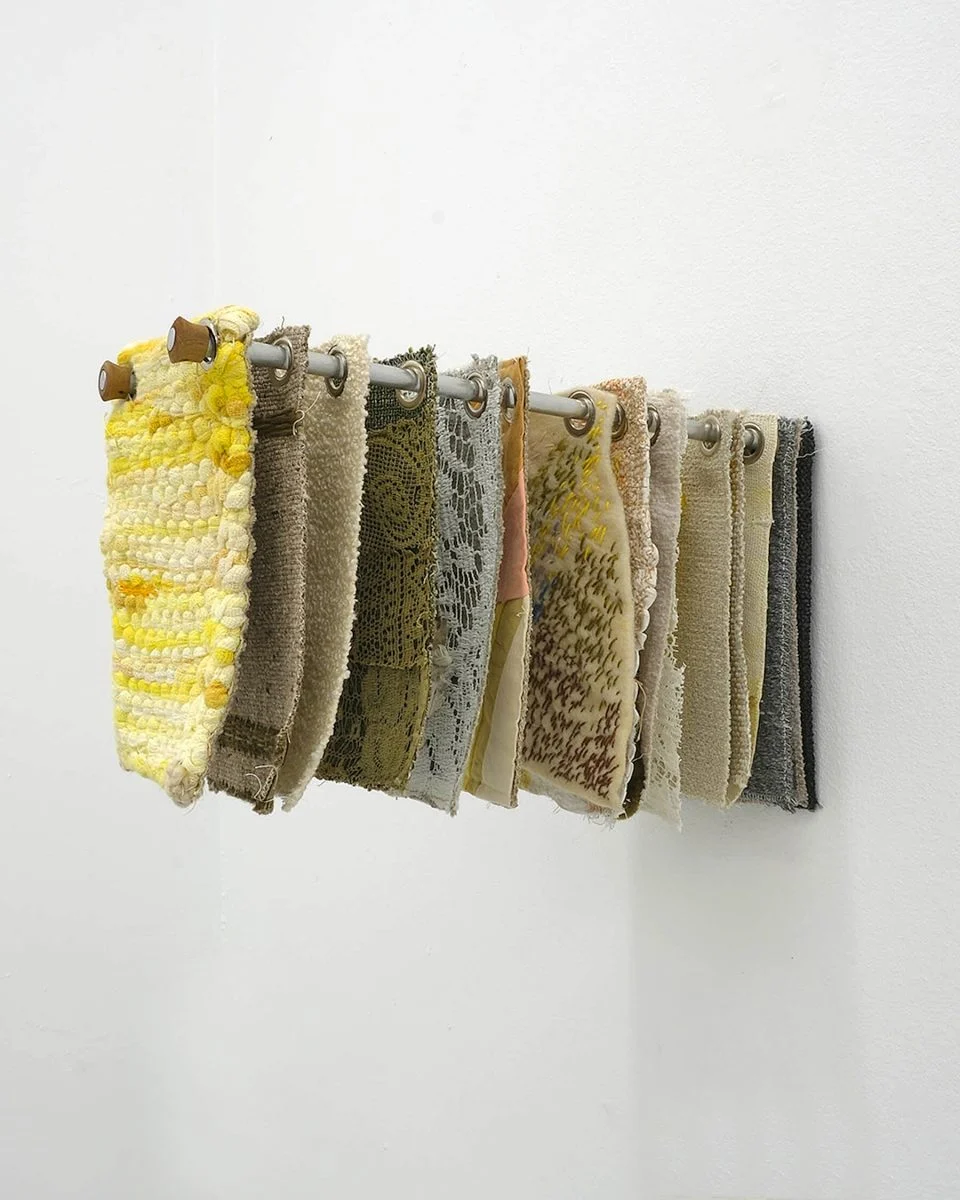
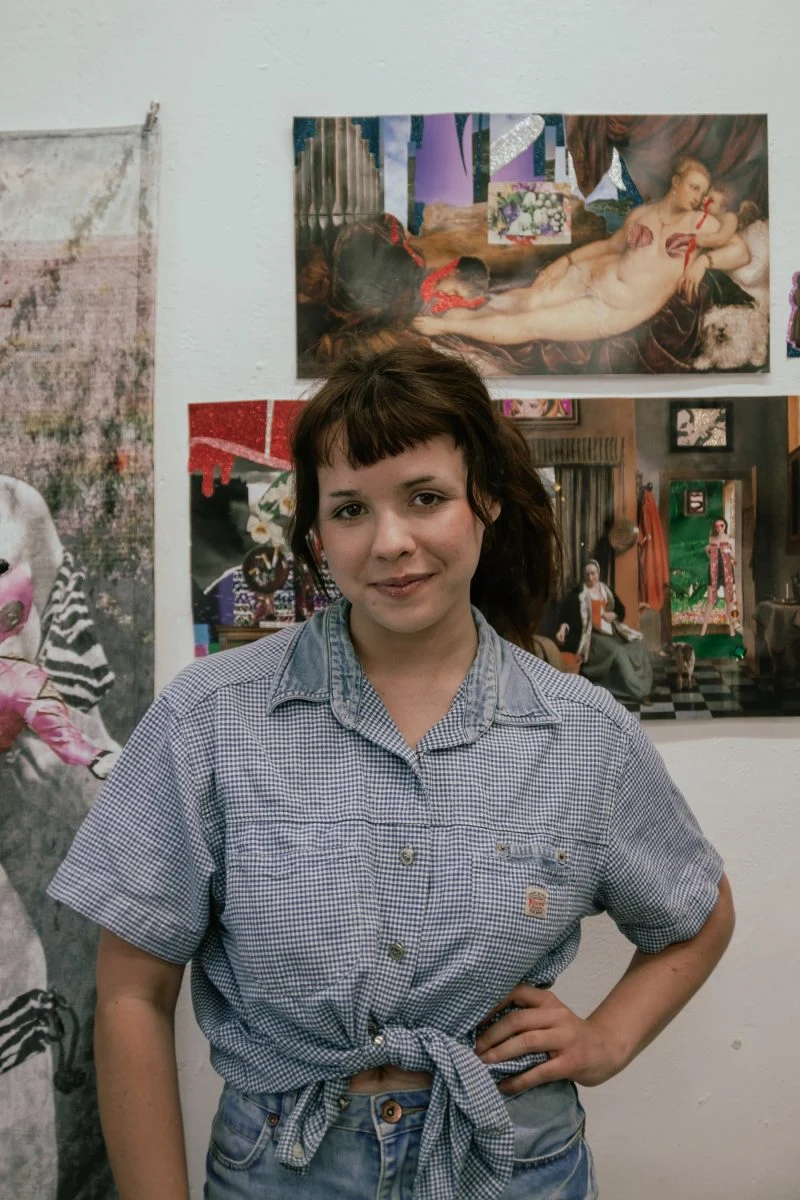
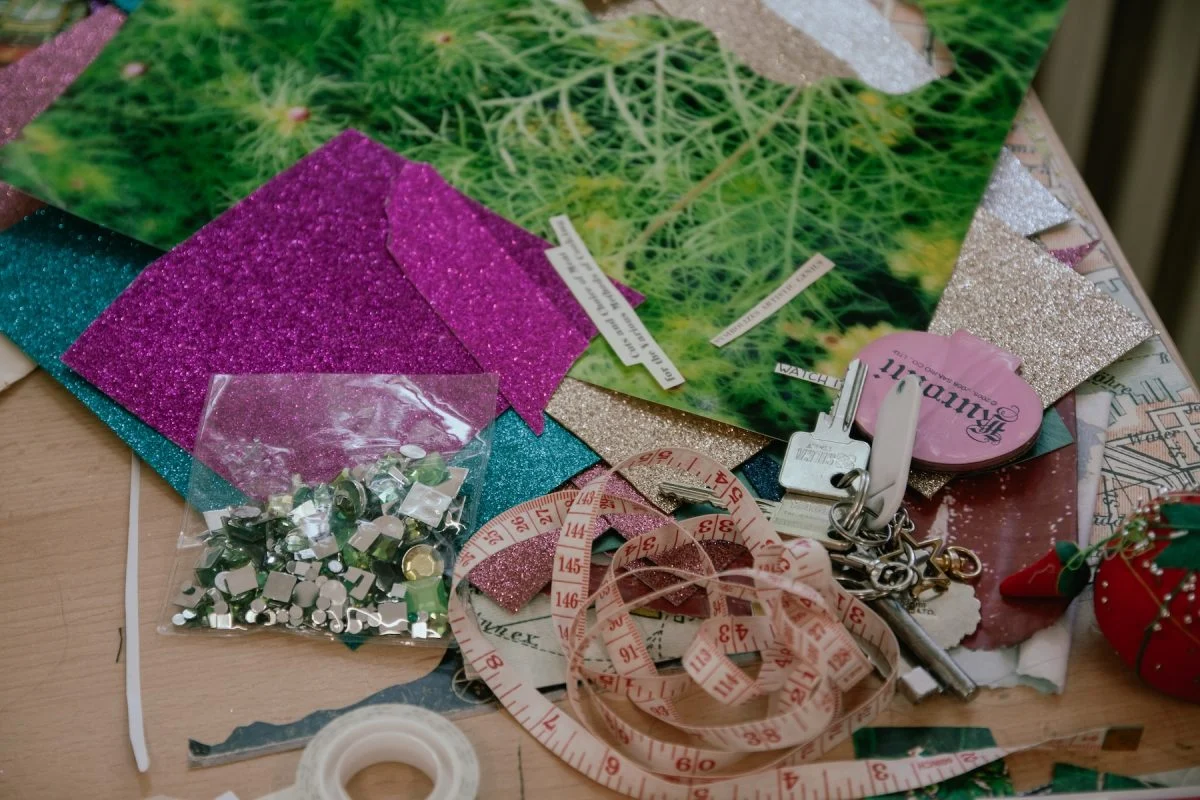
    I would call myself a multidisciplinary collage artist, because everything I do is a collage and uses collage techniques. I know that’s like a really big buzzword right now, but I actually do collage. I’ve dabbled in video collage, but primarily I do digital collage using Photoshop. Recently, since coming to the residency, I’ve gotten back into doing physical collage as well, because I wanted to use the materials that are available to me in Berlin. I feel like it would be a waste to not take advantage of the materials in the city.

    Where do your images come from?

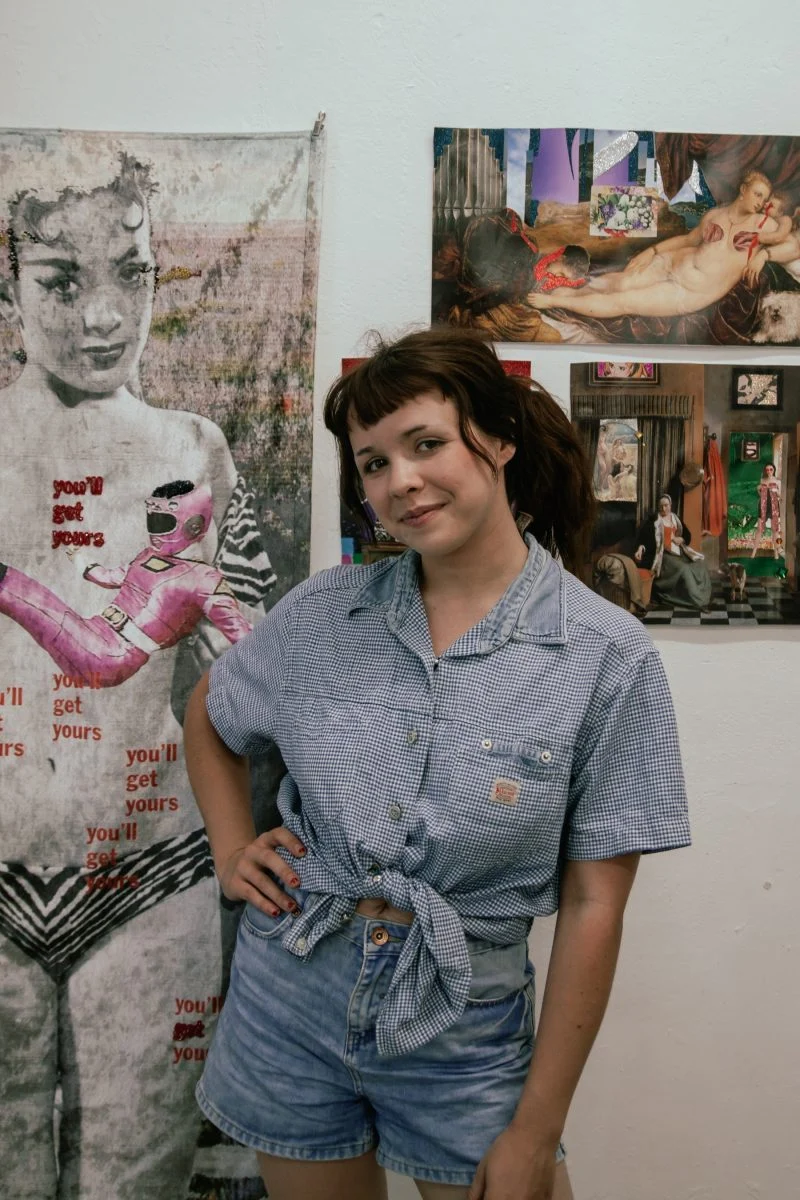
    For the last two years, I’ve been really into Tokusatsu, which is a Japanese genre of masked heroes. It’s the same genre as Power Rangers. So you’ll see a lot of those in my work. Since undergraduate school, mid-century, iconic Americana motifs have also been coming up in my work, like pinups and fetish material. I use a lot of pop culture images and images from comic books as well. Or images from the Gothic Lolita subculture. There are queer undertones to being so hyper femme that you’re no longer desirable as an object, or even identifiable as female. It’s interesting to me. You’ll see it throughout my work. 

    You have a very strong visual language. Where did it come from?

    My visual language comes from the fact that I’ve never been one to feel things lightly. I either feel something very intensely, or not at all. I think my visual language reflects that. It’s very strong and in your face. I’m incapable of being subtle or poetic. It’s much more fun for me to just be in your face. 

    I think experiencing injustices, like misogyny and queerphobia and living in a country where the government uses their language to terrorize my community daily, it just makes me want to yell even louder.

    My work is heavy handed. It’s so over the top that it becomes camp. I use camp as a cushion around the violent aspects of my work. I think it makes my work slightly more digestible. You have to laugh to keep from crying, you know? Especially when you’re dealing with such heavy subject matter. 

    Talk to me a bit more about that. I mean, we’re both coming from the U.S. as a queer people. It’s something I think about a lot. What are you thinking about right now?

    Right now, I’m really focused on the counter-terrorism memo that the U.S. Department of Defense released where they name radically pro-transgender ideology as domestic terrorism. What does that mean? They’re intentionally using very vague, broad language so they can ostensibly prosecute any instance of pro-transgender sentiments. 

    I want to make works that specifically provoke them. They haven’t killed me yet, so I’m going to use my language to be even more radical. 

    I was assigned female at birth. I’m nonbinary, but when I go out in the world, I’m usually perceived as a woman, which gives me a privilege that a lot of people who are actively transitioning don’t have. So I feel like making specifically radical work that is a call to arms is one thing that I can do, because I have more security than other people. 

    What do you want people to take away from your work?

    I think people who have suffered injustices can immediately recognize something in my work. One reason I prefer to manipulate the highly sexualized female body, is because that also draws in a cisgender male audience. They expect to be titillated, but instead, my work actively pushes them away. Whereas with a queer audience, all the details of my work bring them in closer. I want my work to be like an alternate world. 

    I want my work to light a fire in people. I hope it connects with something they’re feeling as well. And that it can be, in a way, soothing for people to know they’re not alone.


    Interview Jo Birdsell (jobirdsell.com)

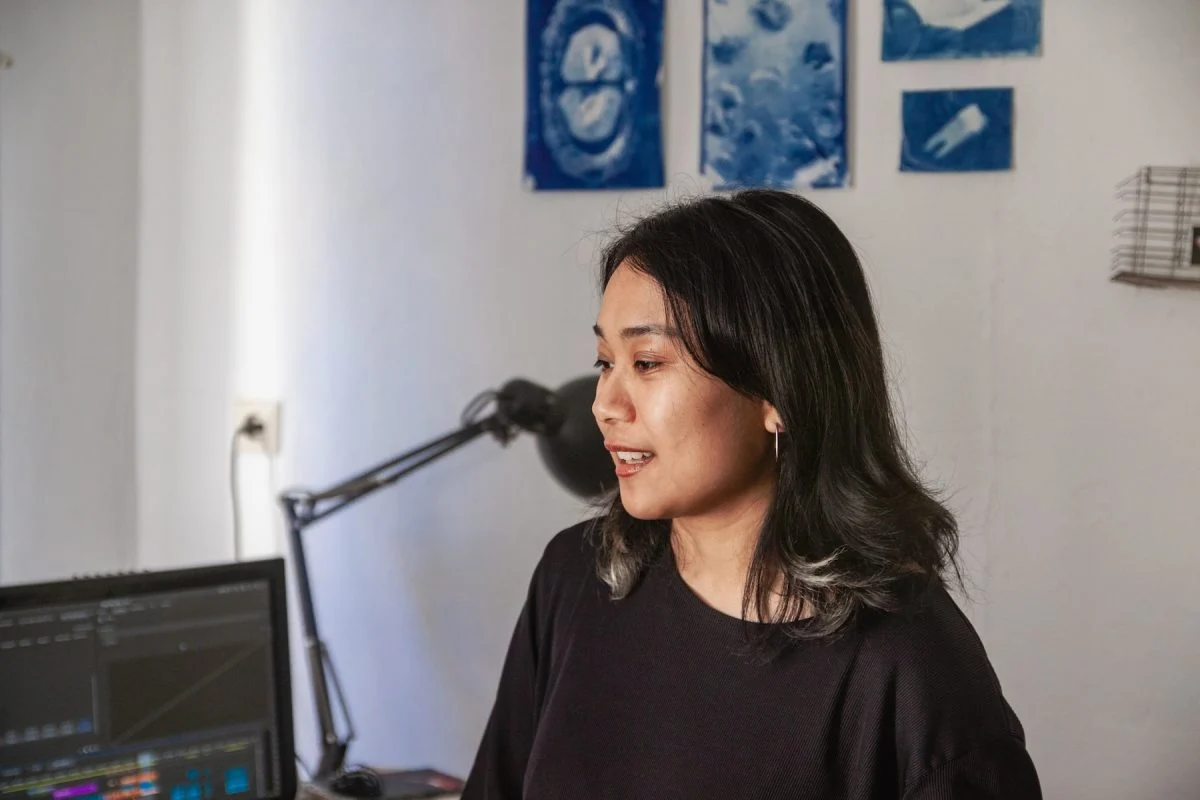
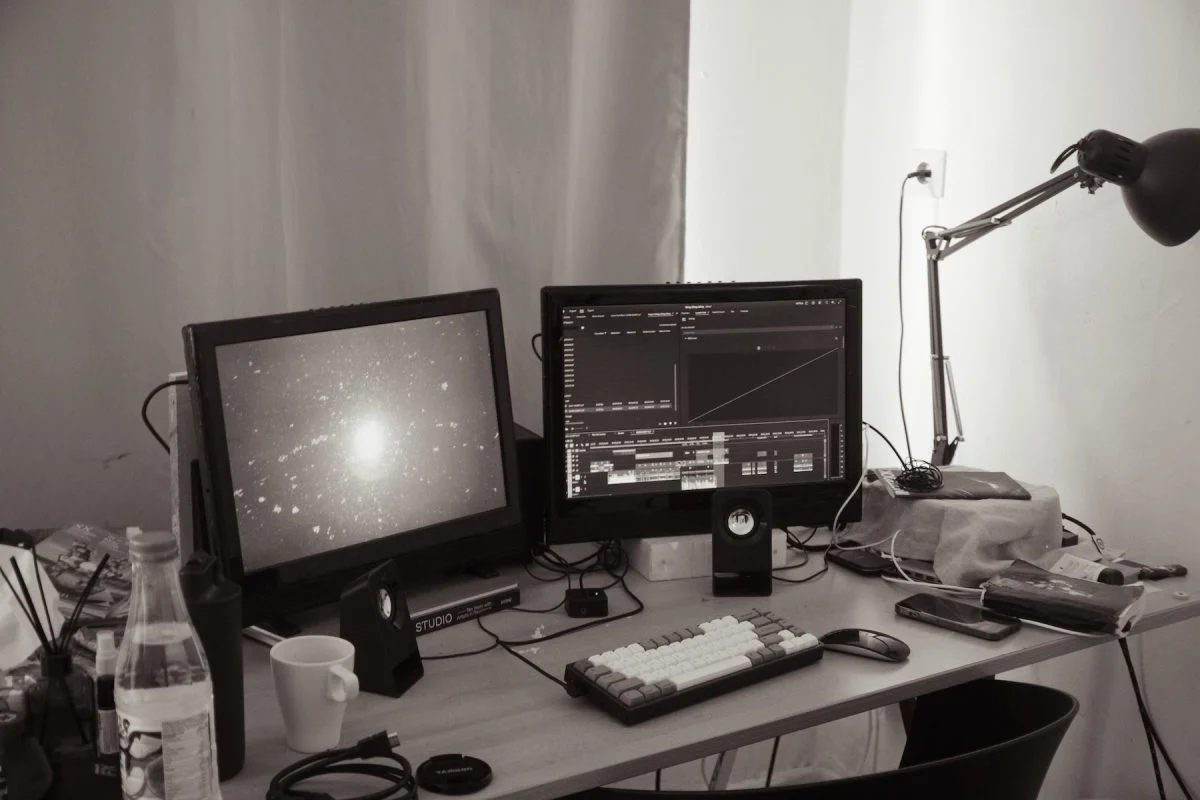
    Photos Raviva Nsiama (@raviva.ziama)

    • Statement
    • GlogauAIR Project
    • CV
    • Gallery
    • More

    Statement

    I interrogate trans and non-binary femme representation through fiber art, new media, and collage techniques. Sourcing material from sensationalized, often disposable media like tabloids, erotic ephemera, direct-to-video VHS films, I transform the subjects depicted therein into precious treasures. My process ensures that every interaction with my subjects’ visages is made with the utmost intention. Thoughtfully choosing and placing photographs, fabrics, and embellishments are acts of resistance. The care involved in such repetitious activities is a defiant rebuke of the idea that there are those inherently unworthy of existing.

    GlogauAIR Project

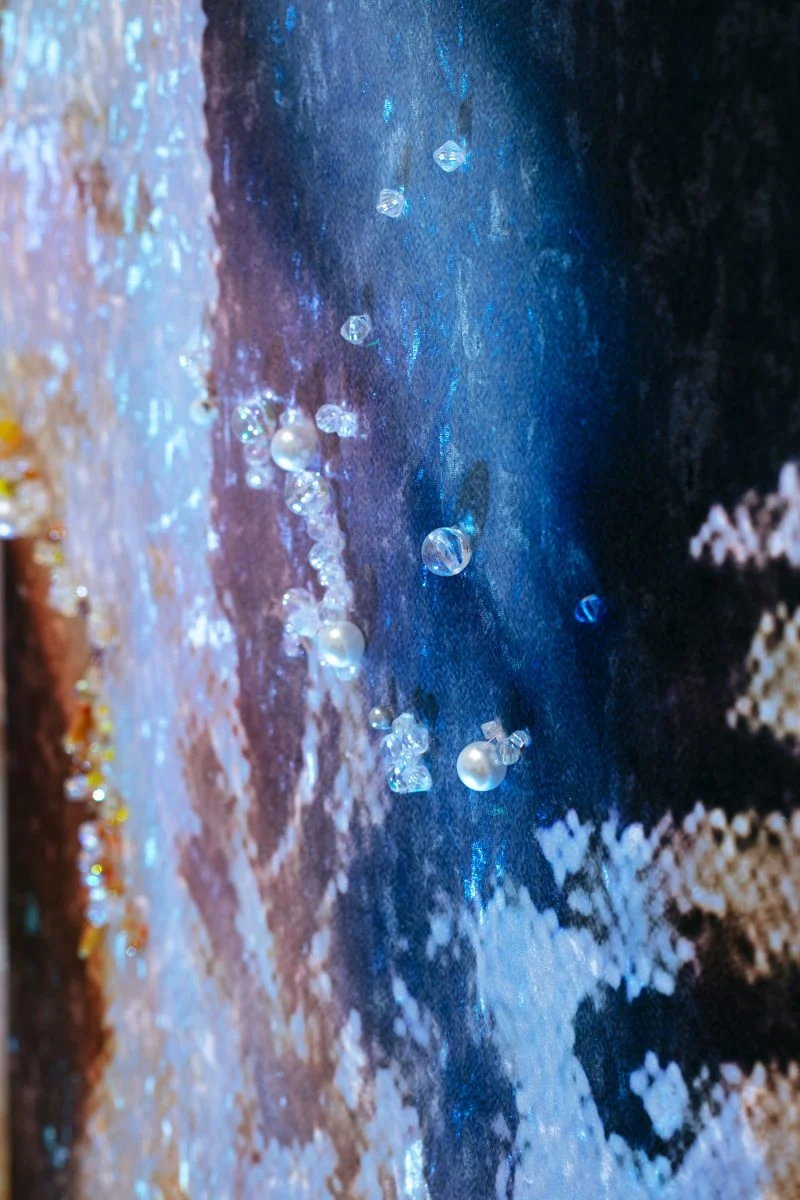
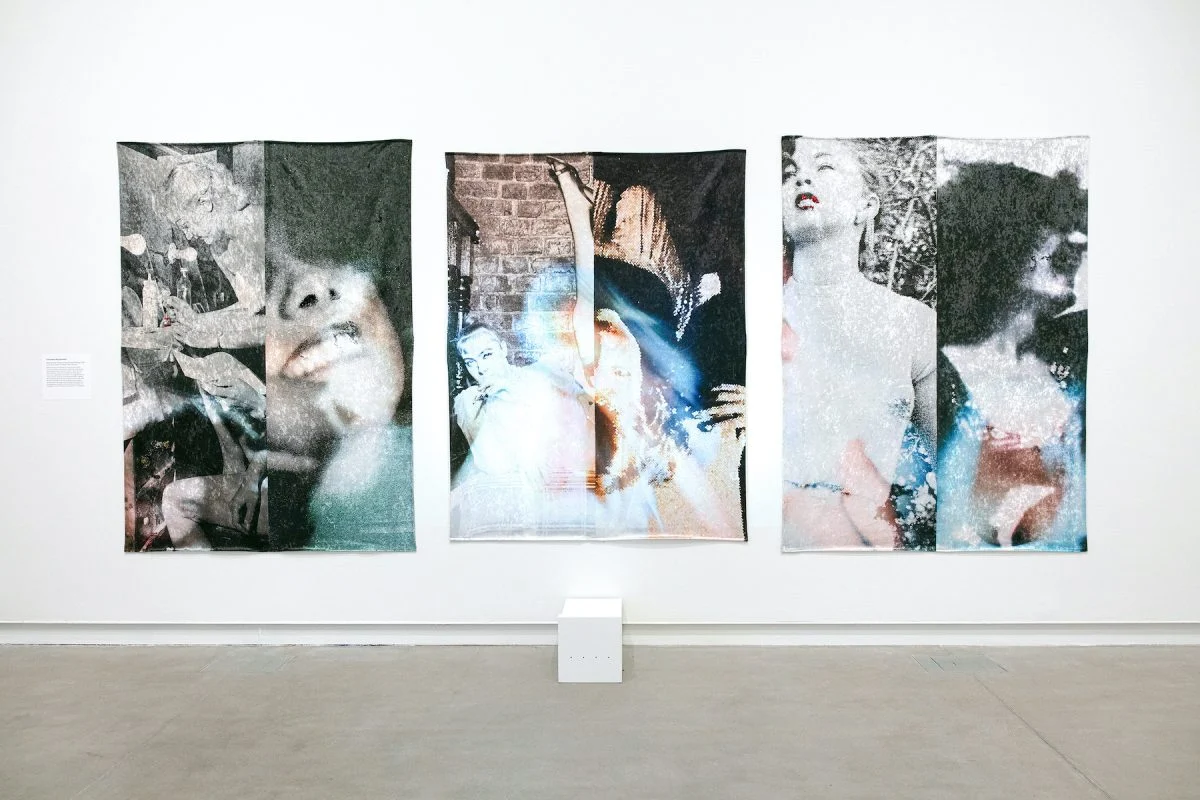
    This project continues my material, conceptual, and research concerns through the creation of brightly-colored, maximalist fabric banners that assert the autonomy and human rights of transgender and non-binary femmes. A vein of evil runs through American politics at the moment, one that wants to explicitly eradicate my friends and I. The only way to silence this unconscionable rhetoric is to be louder, more visible, more GONZO than the genocidal ghouls running the society I live in. To achieve this, I am channeling Berlin’s specific queer club culture in the aesthetic of banners, which will be made out of decadent materials such as sequins, mesh, and velvet. The resulting work will be gorgeous and unrepentantly aggressive, all while invoking the joyful protest of queer nightlife.

    CV

    Solo Exhibitions

    • 2026 Angad Arts Hotel, St. Louis, MO

    Group Exhibitions

    • 2025 Ann Metzger National Memorial Exhibition, St. Louis Artists’ Guild, St. Louis, MO
    • An Ominum-Gatherum of Gender Multifariousness, Agitator Gallery, Chicago, IL
    • Flat Earth Film Festival: The Eighth Edition, Seydisfjordur, Iceland
    • Slow Gardens, Kemper Art Museum, St. Louis, MO
    • 2024 Eleventh Hour, Des Lee Gallery, St. Louis, MO
    • The Art of Music, Red Gate Gallery, St. Louis, MO
    • Hide and Seek, Granite City Art and Design District, Granite City, IL
    • Parabola, Des Lee Gallery, St. Louis, MO
    • 2023 So Many Hammers, Sam Fox School of Design & Visual Arts, St. Louis, MO
    • 2022 Uncommon Threads, San Fernando Valley Arts and Cultural Center, Tarzana, CA
    • Outstanding, Las Laguna Art Gallery, Laguna Beach, CA
    • Art in the Time of Corona Vol. 3, Dab Art Co., Los Angeles, CA
    • It’s OK to Laugh, O’Hanlon Center for the Arts, Mill Valley, CA

    Residencies

    • 2026 GlogauAIR, Berlin, Germany
    • 2025 Fine Arts Work Center, Provincetown, MA

    Curatorial Projects

    As Lead Curator

    • 2024 1492: The Stranger (Eva Agüero), Des Lee Gallery, St. Louis, MO

    As Assistant Curator

    • 2025 FEMME Sound Art (Group Exhibition), Sam Fox School of Design & Visual Art, St. Louis, MO
    • 2024 Double Take: Reimagining Duality (Group Exhibition), Des Lee Gallery, St. Louis, MO

    Education

    • 2025 Master of Fine Arts – Visual Arts, Sam Fox School of Design & Visual Arts, St. Louis, MO
    • 2019 Bachelor of Fine Arts, School of the Art Institute of Chicago, Chicago, IL
    • Wojtkowski interrogates trans and non-binary femme representation through fiber art, new media, and collage, using tabloids, erotic ephemera, and VHS material in her process.

    More

    We do not have any further information at this time.
  • Karl von Orb

    Karl von Orb

    Artist main image

    Karl von Orb is GlogauAIR resident from April 2026 to June 2026. Q2

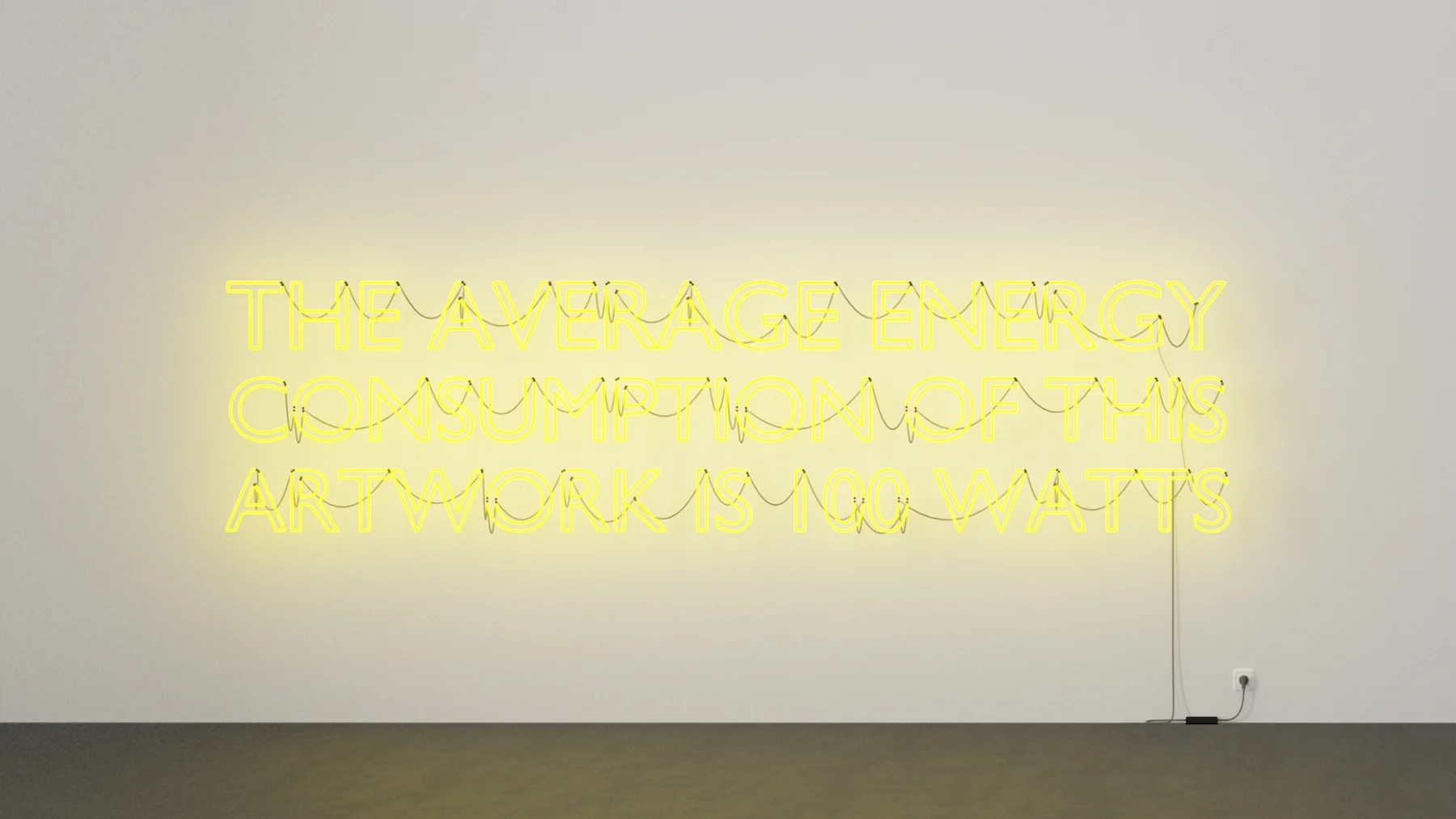
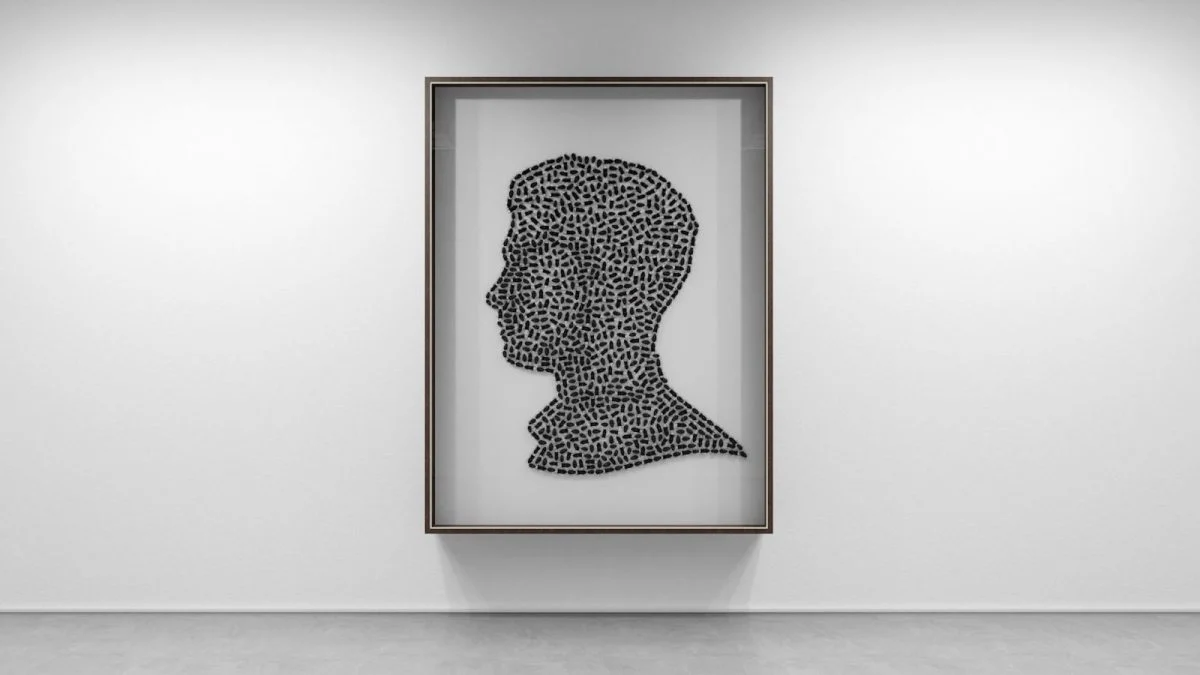
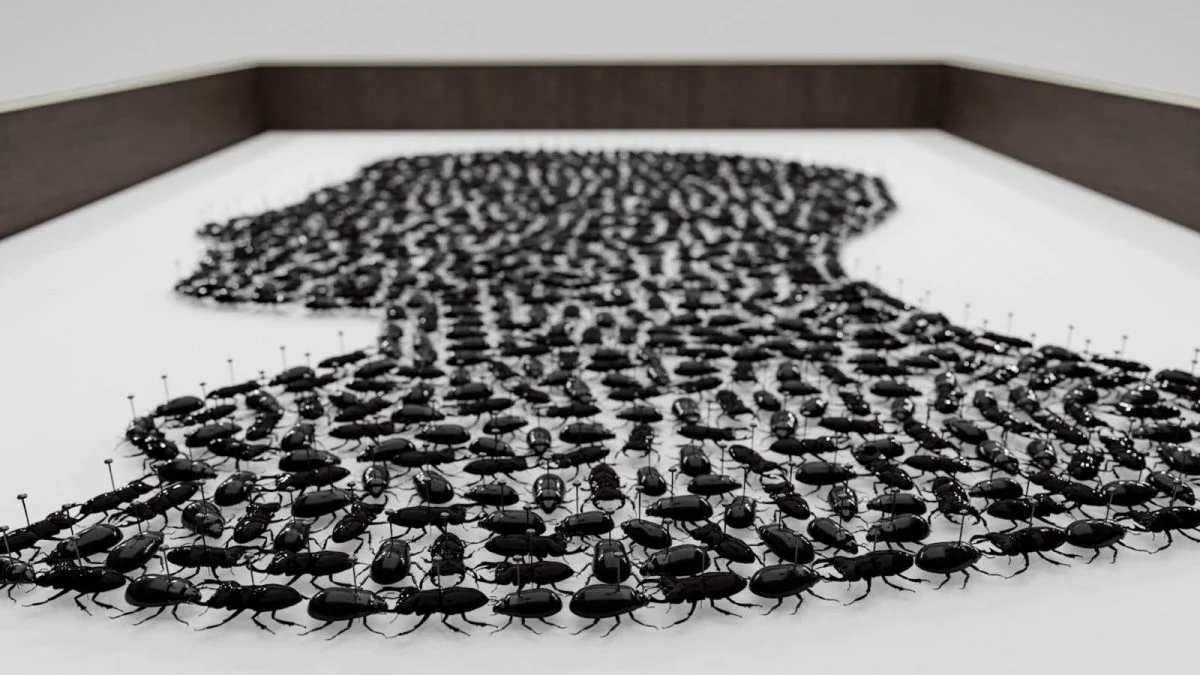
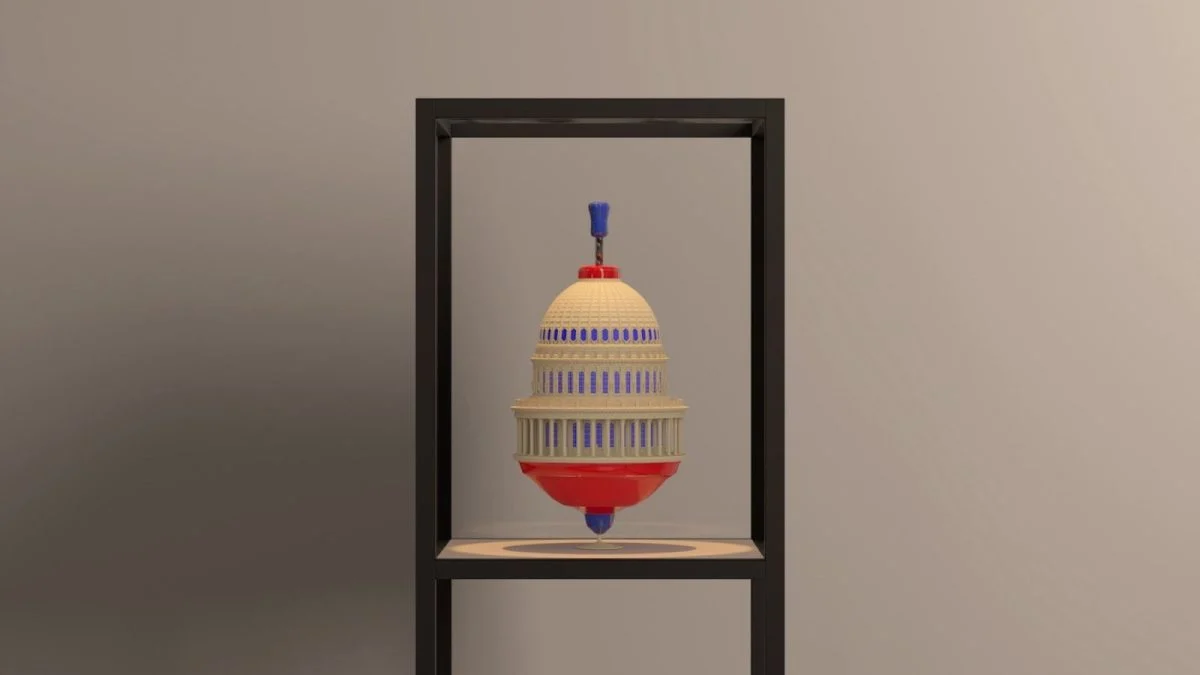
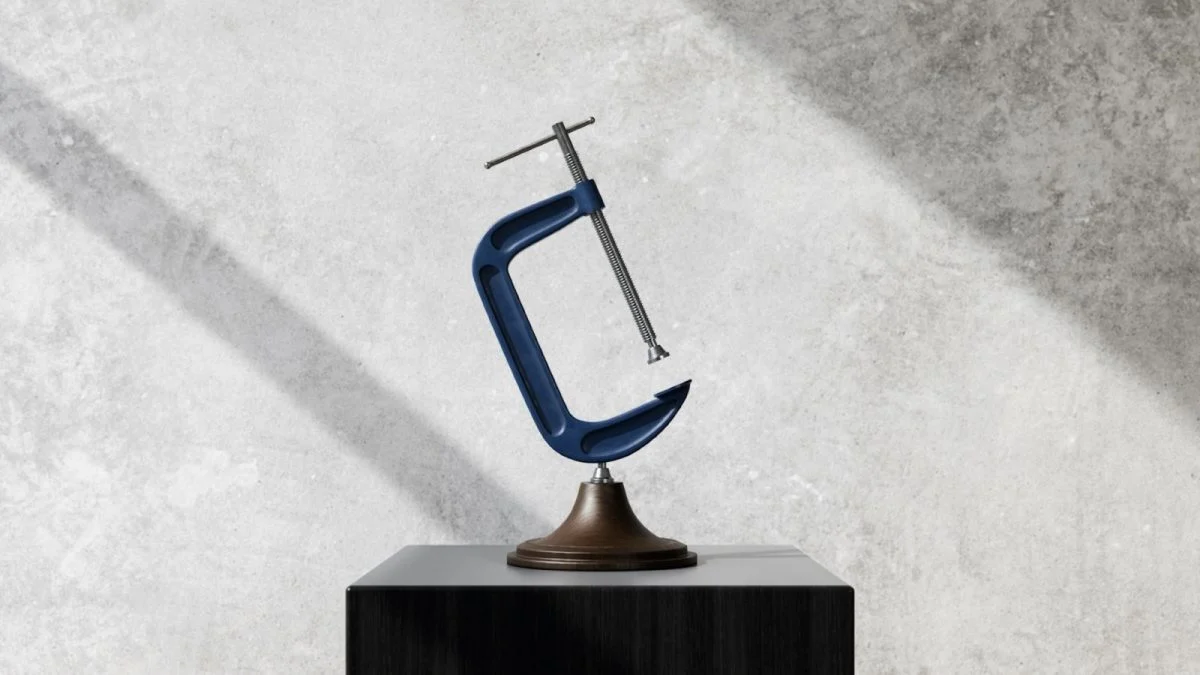
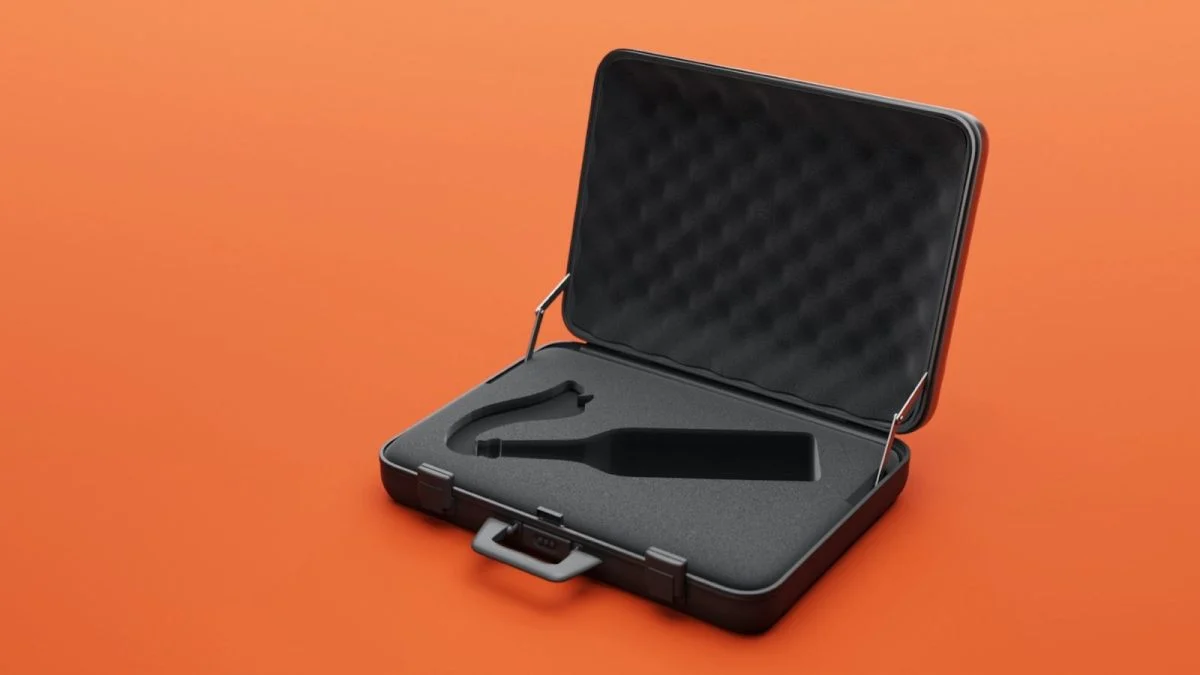
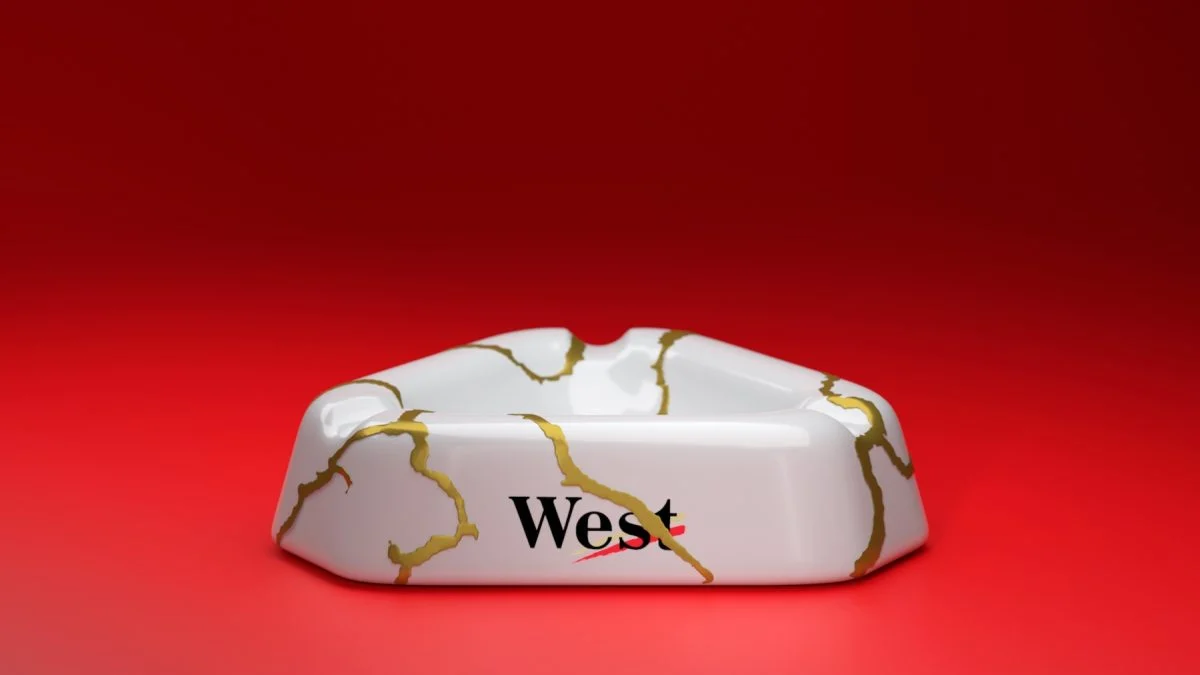
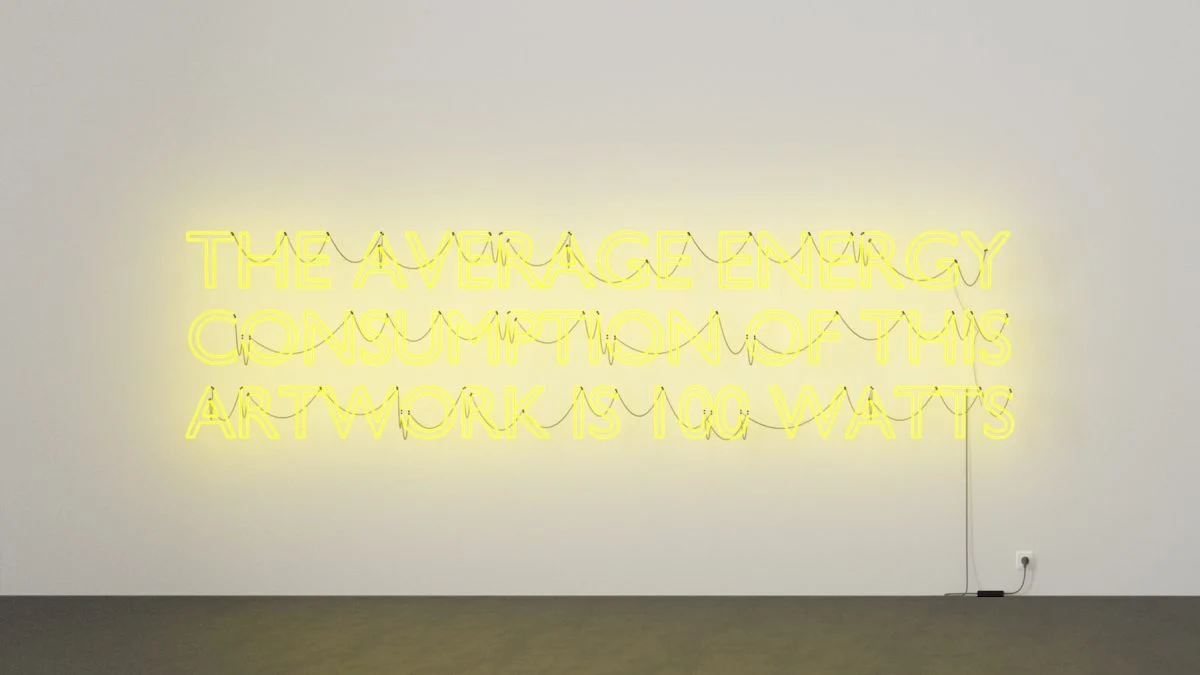
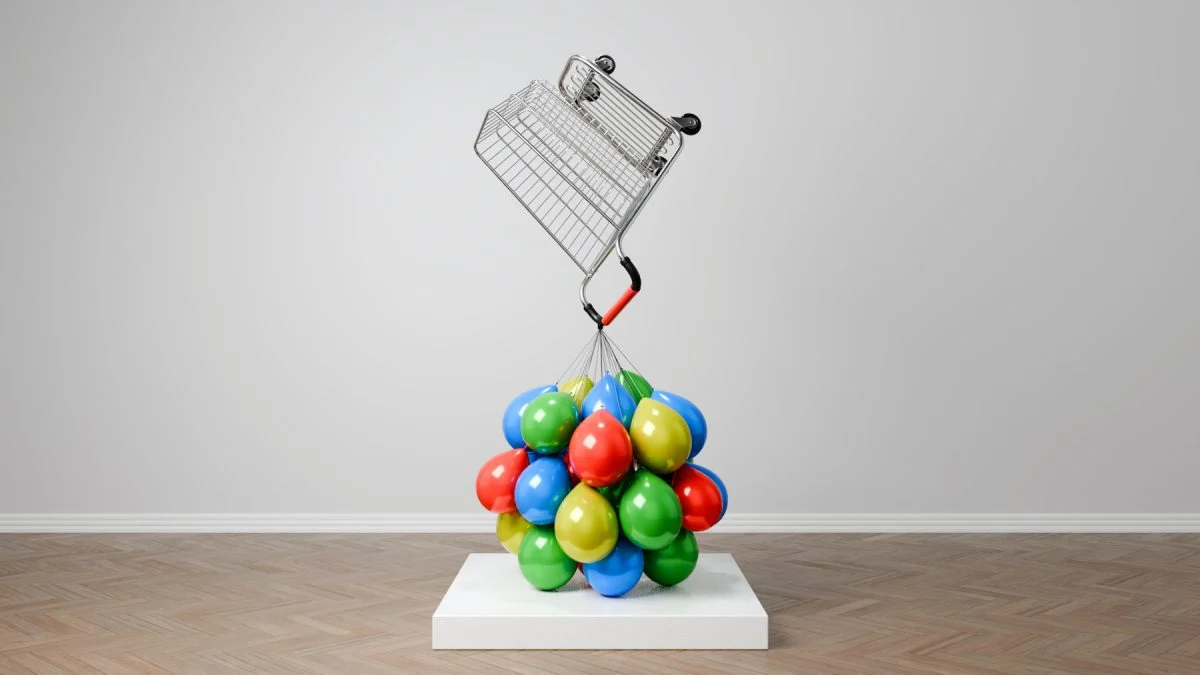
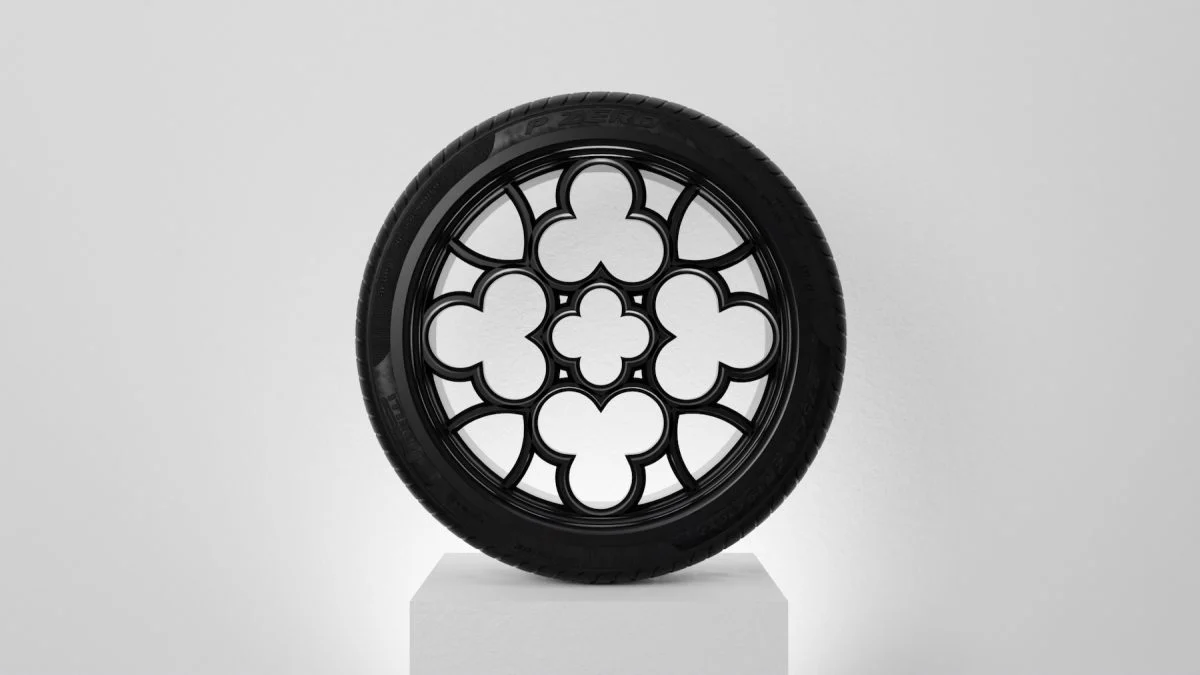
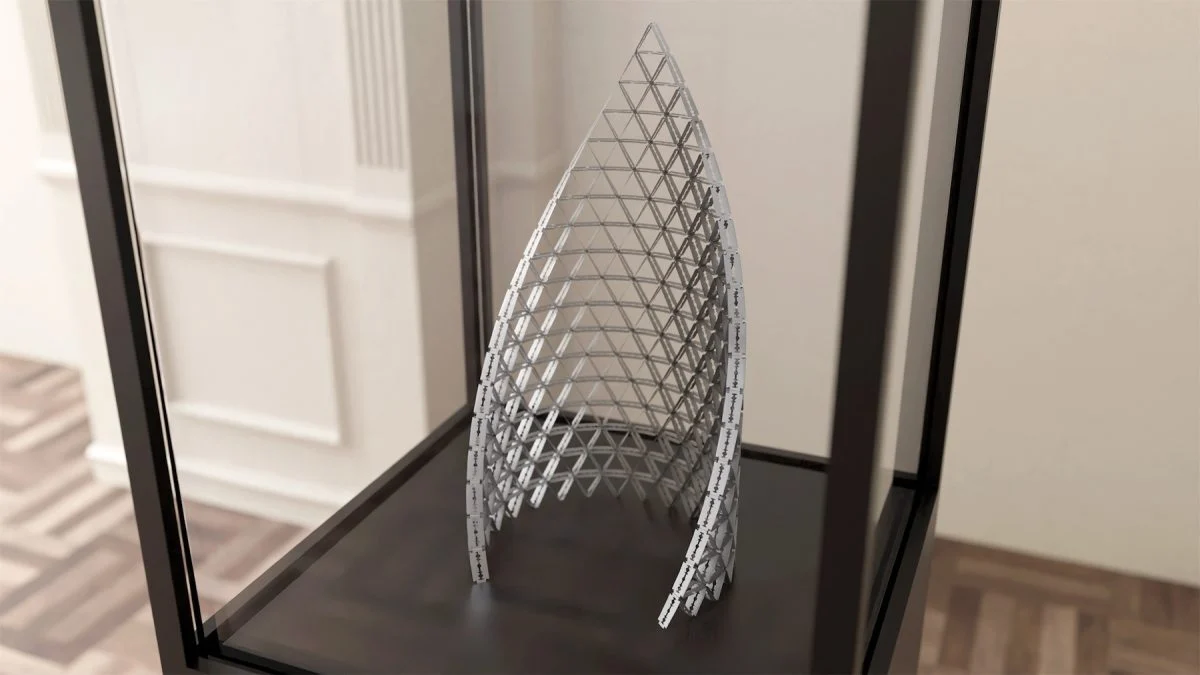
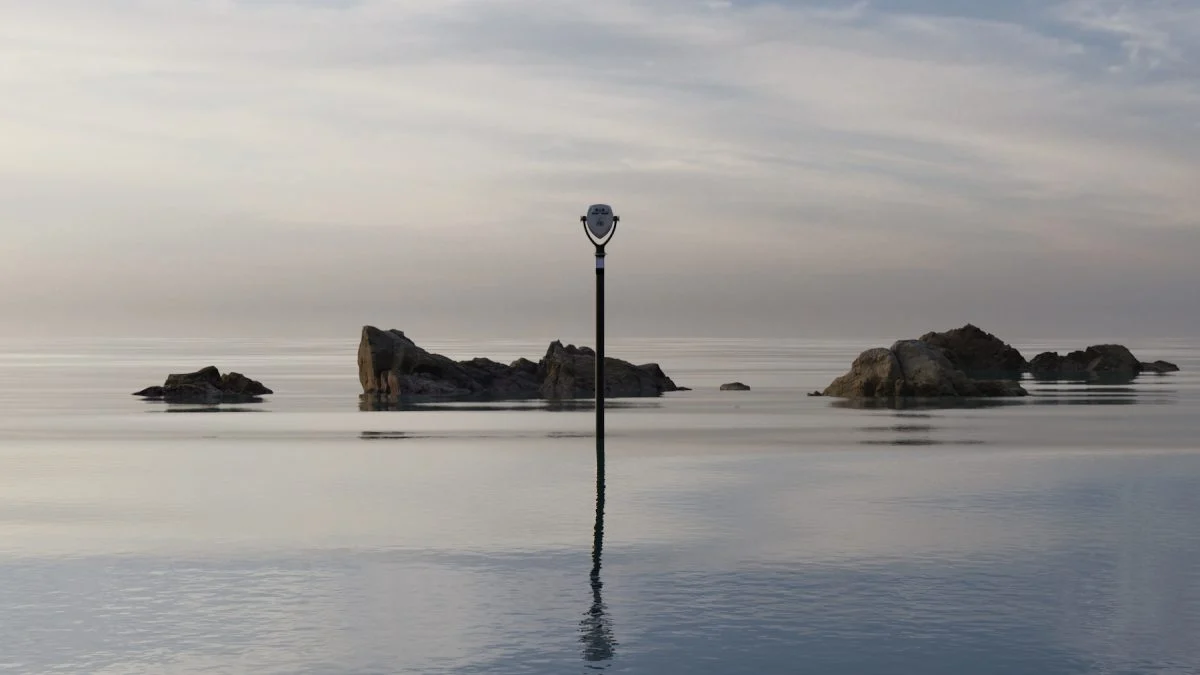
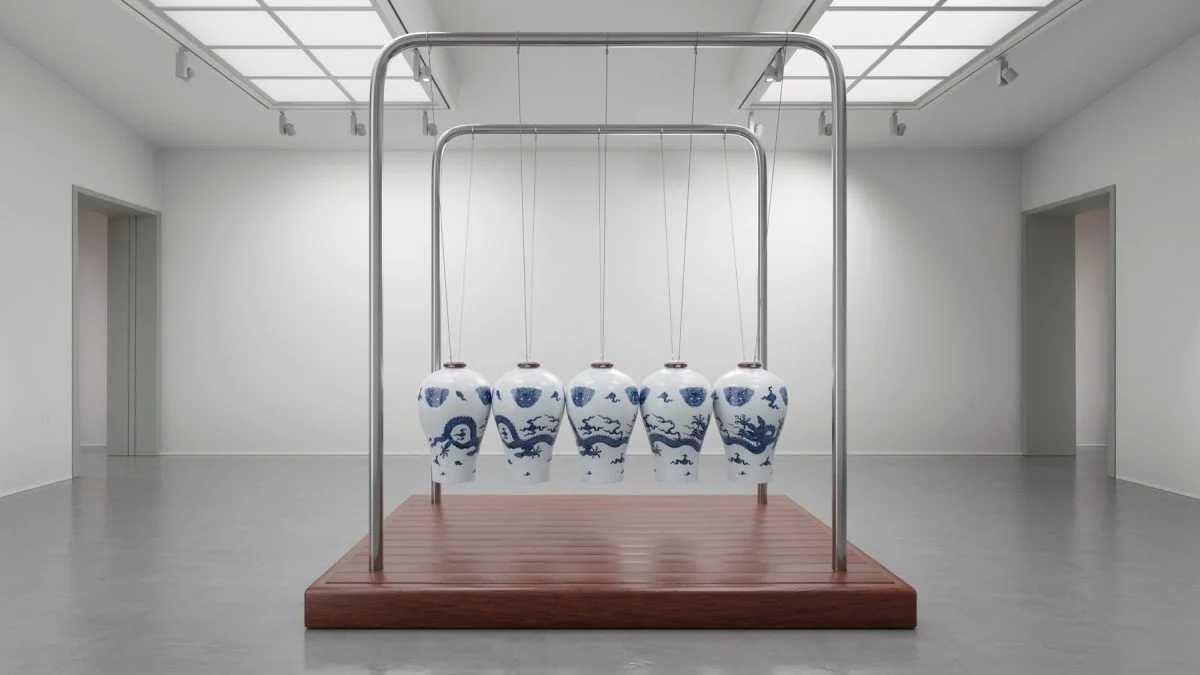
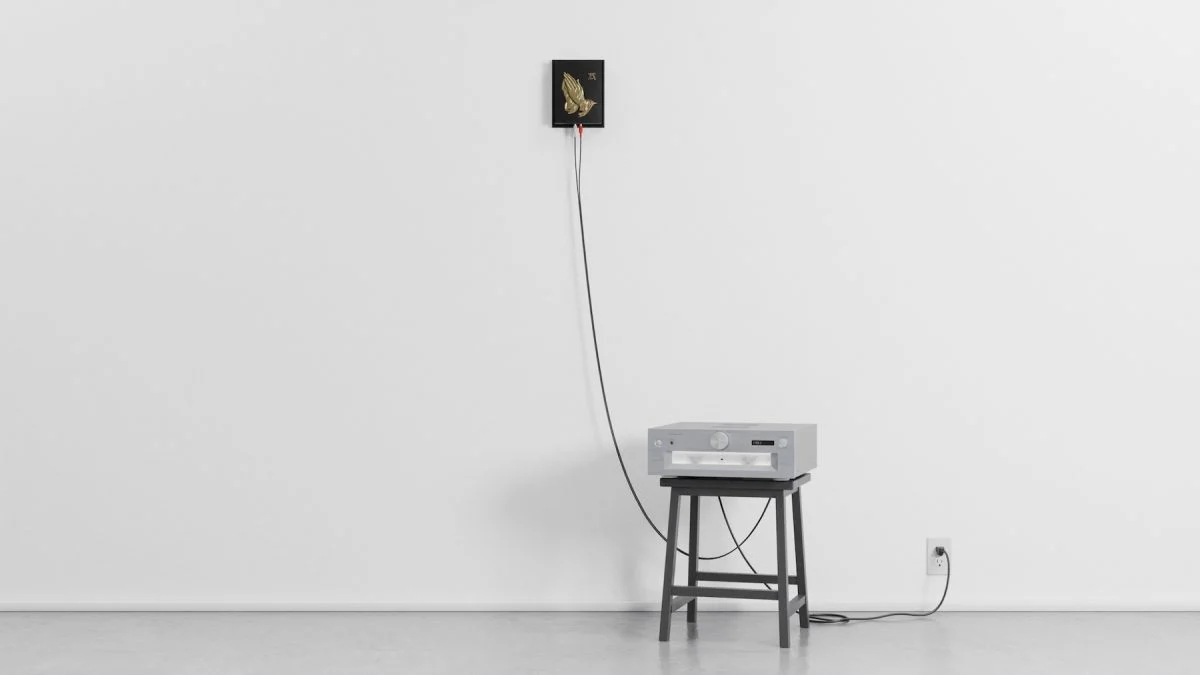
    Karl works with object-based constellations drawn from everyday systems, creating subtle displacements that destabilize familiar functions. Through repetition and minimal shifts, the work reveals tension, latent absurdity, and moments where structures lose their apparent stability while remaining intact. The practice engages space as an active element, emphasizing the provisional nature of order and coherence.

    Meet the Artist

    Can you tell us a little bit about yourself? Specifically, we’d love to know about your background

    I’m Karl von Orb, I’m based in Berlin, and I came to art relatively late – which I think shows in the work, probably in a good way. I have a background in philosophy and German literature, and I suspect that never really leaves you. I tend to notice things that are slightly off, systems that are pretending to work, objects that have stopped meaning what they were supposed to mean. That’s more or less where everything starts.


    How would you describe your artistic practice?

    I work with displacement – very small shifts that make something familiar quietly unstable. Not broken, not dramatic, just… no longer entirely trustworthy. What interests me is the moment when something continues to function but has lost its self-evidence. There’s often humor in that, which I didn’t plan for but have learned to accept.

    The ideas come from a place of discomfort, honestly. Something in the world that bothers me – an injustice, an absurdity, something that shouldn’t be the way it is. I don’t fully understand where the ideas come from, they tend to arrive when I’m not looking for them. What I can actually control is the form – finding the simplest possible shape for something, stripping it down until only the essential tension remains. That part I care about deeply.


    What is your methodology or process of creating a new project?

    It usually starts with an irritation rather than a concept. Something I keep returning to, something that doesn’t sit right. At some point an idea surfaces – and then the real work begins, which is reduction. How do you get from an observation about the world to an object that holds that observation without explaining it?

    I work a lot with 3D visualizations and drawings early on, testing whether something has a form worth pursuing. And I’m quite happy to hand things over to craftspeople who know better than I do how to actually build something well. I’m not precious about making it myself – what matters is that the object ends up doing exactly what it needs to do, no more.


    Tell us about the project you are working during your online residency at GlogauAIR?

    Honestly, the residency has been less about making new things and more about learning to speak about what I already make – which turns out to be its own kind of work. A lot of what I’m doing is translating ideas into proposals, finding the language that allows a project to exist in the world beyond my desk. That process of articulation has forced me to get clearer about what actually drives the practice: this sense of the subtle shift, the minimal displacement that makes something tip. Getting that to the surface, in a form that someone else can engage with – that’s been the real project.


    Interview conducted by: GlogauAIR Team

    • Statement
    • GlogauAIR Project
    • CV
    • Gallery
    • More

    Statement

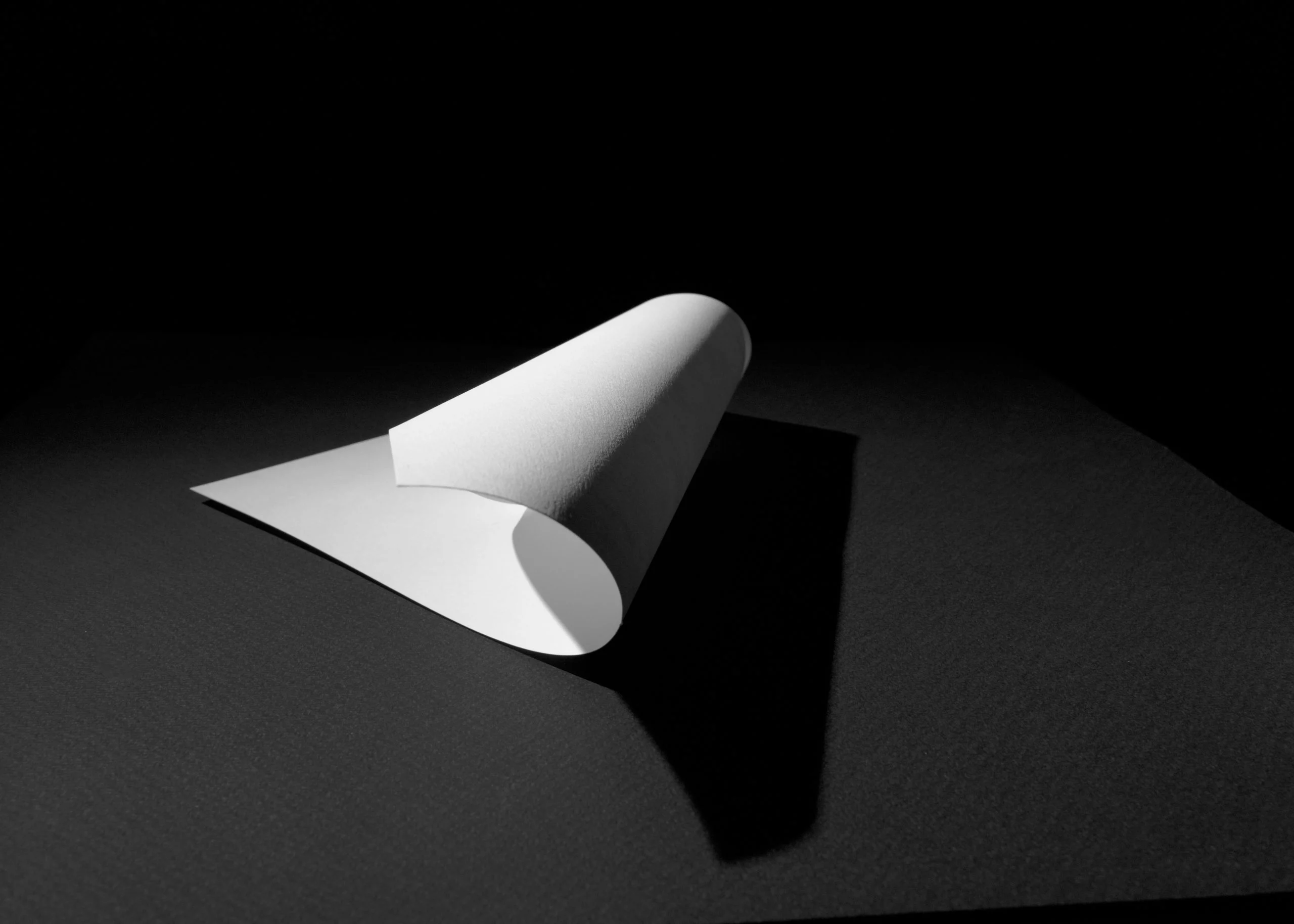
    I work with object-based constellations from everyday systems of use. Through subtle displacements, familiar elements enter relations that remain plausible while becoming internally unstable. The works appear coherent – yet this coherence falters: functions stay legible but no longer fit their conditions.

    Repetition, seriality, and procedural constraint structure the work. What appears rational tilts through minimal shifts, allowing strain or latent absurdity to surface without spectacle. Humor emerges as a by-product of precise misalignment.

    Grounded in objects, the practice unfolds in relation to space. The work focuses on moments where structures remain intact yet lose their self-evidence – departing from one basic intuition: that the stability of things is always provisional.

    GlogauAIR Project

    During the GlogauAIR Online Residency, I will pursue a series of object-based and spatial investigations revolving around how apparently coherent systems begin to shift when their internal relations are slightly displaced. Rather than working toward resolved outcomes, the residency will function as a structured research phase – testing emerging configurations through sketches, physical studies, and visual renderings, allowing formats to evolve through critical dialogue.

    The focus will be on clarification rather than expansion: examining whether an underlying logic is forming across my practice, and how far it can be articulated without closing down the openness that sustains it. The objective is to clarify direction, not to fix outcome.

    CV

    Karl von Orb

    Karl von Orb is a Berlin-based artist working with objects, images, and spatial situations drawn from familiar functional and cultural contexts, using subtle displacements to make familiar structures quietly unstable.

    Education

    • Studied philosophy, German literature, and medieval and modern history at Johann Wolfgang Goethe University in Frankfurt am Main.
    • Began artistic education at the Akademie für Malerei Berlin.
    • Specialized training in classical atelier practice with Sadie J. Valeri.

    More

    We do not have any further information at this time.

  • Ioanna Loup

    Ioanna Loup

    Artist main image

    Ioanna Loup is GlogauAIR resident from October 2025 to December 2025.
    Q4

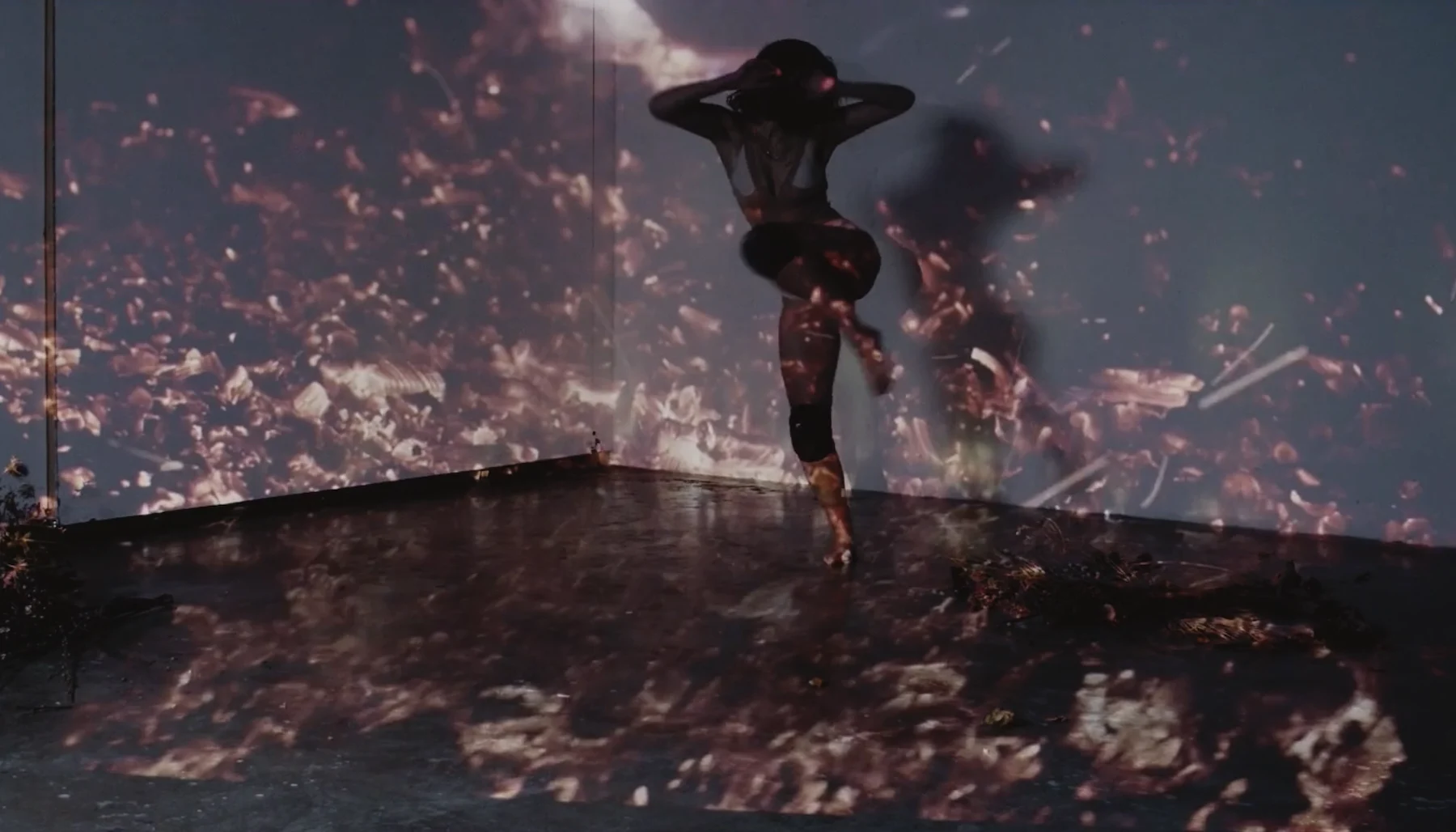
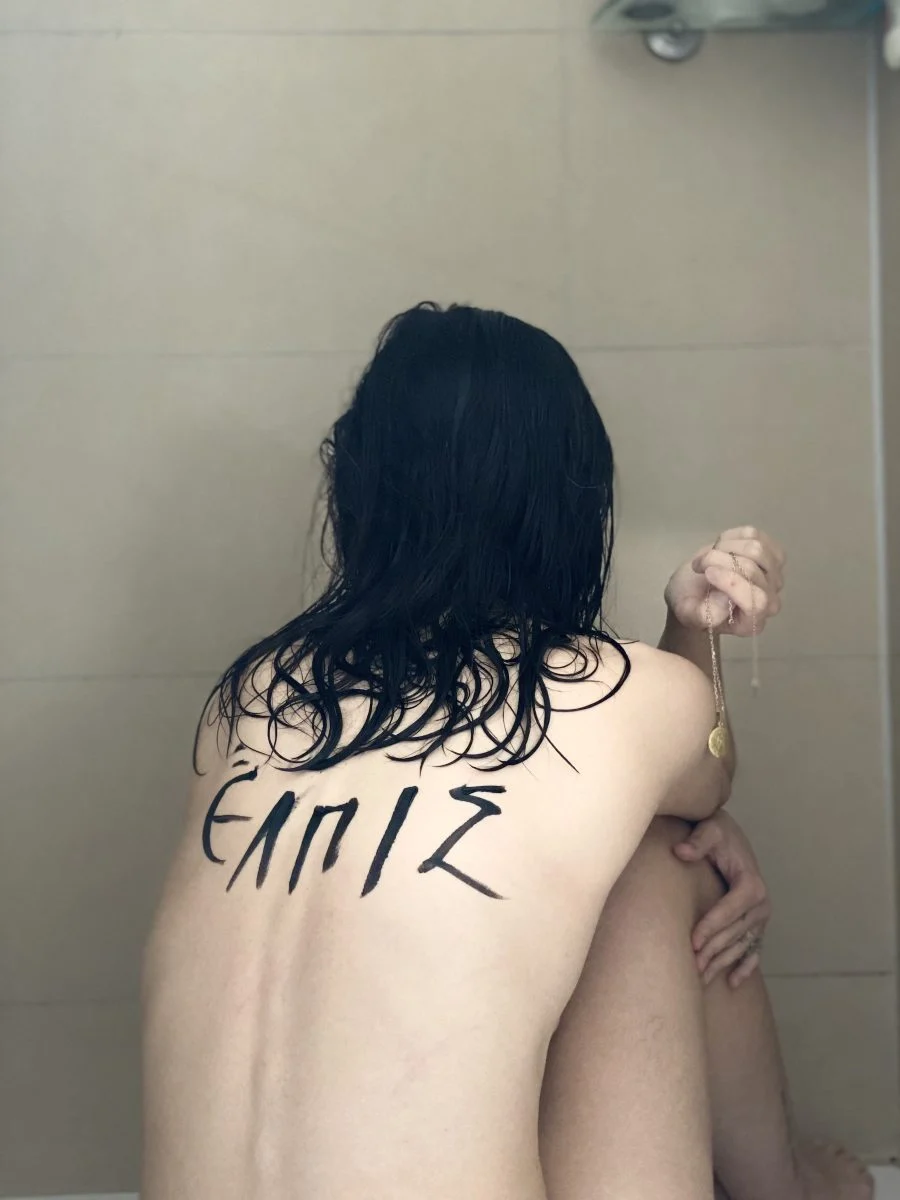
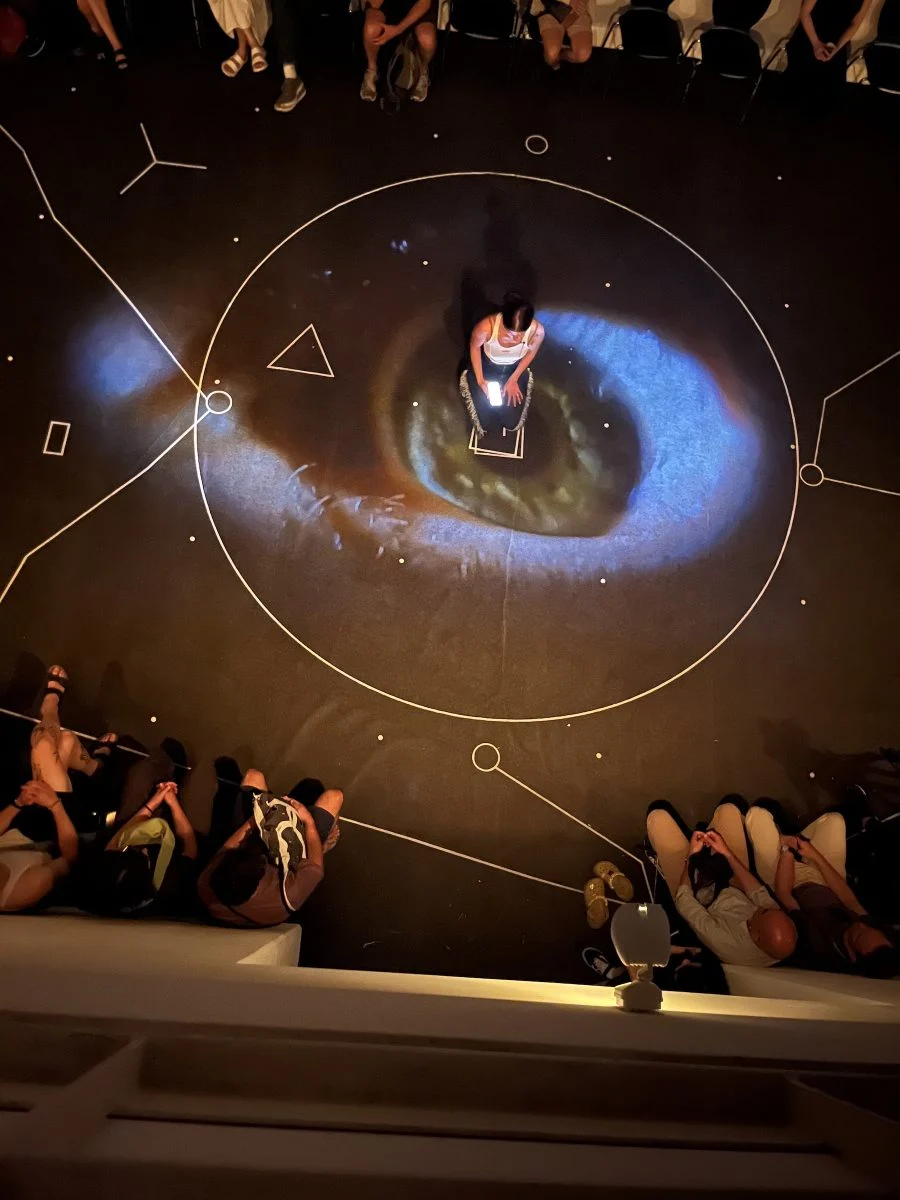
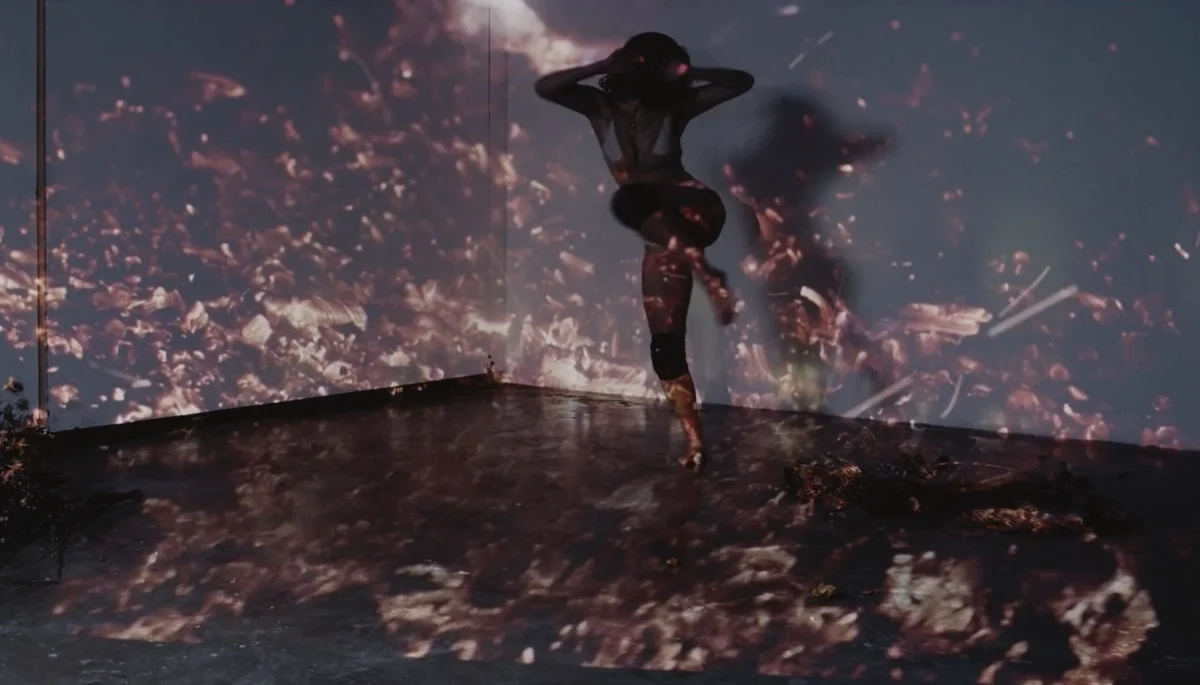
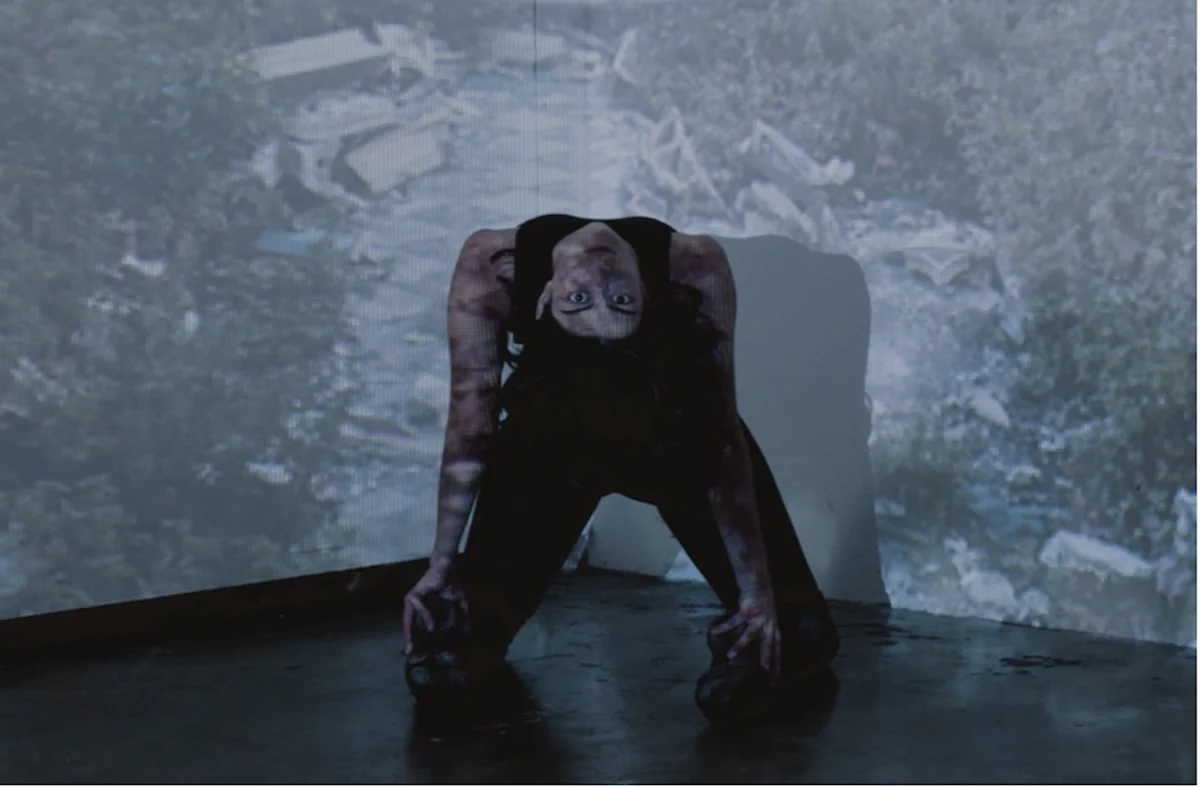
    Ioanna Loup is a performer, dancer and medical doctor from Athens, based in Berlin. Her multidisciplinary practices focus on embodied movement practices, video, text, poetry and healing through art therapy. Her work focuses on the human body both as anatomy and a system of movement and e-motions and using the body as a material. She is currently studying in the Academy of Fine Arts Munich and leads community movement sessions “Express Express” blending dance, art, play, writing and imagination.

    Meet the Artist


    • Statement
    • GlogauAIR Project
    • CV
    • Gallery
    • More

    Statement

    Ioanna Loupasaki (she/her) is a performer, dancer and medical doctor from Athens, Greece based in Berlin, Germany. Her multidisciplinary practices focus on embodied movement practices, video, text, poetry and healing through art therapy. Her work focuses on the human body both as anatomy and a system of movement and e-motions and using the body as a material. She reflects on the way we look on things and how this is translated in our brain bringing the science of vision into performance lectures. Moreover, drawing from a very personal grief and mourning experience, Ioanna questions the nature of society’s separation from grief, while attempting to bring to the forefront a more visible, colourful, and vivid expression of mourning and loss as a part of everyday life.

    She is currently studying in the Academy of Fine Arts Munich, in the class of new media (Professor Rosefeldt). She also facilitates regularly community movement sessions ‘’Express Express‘‘ where she blends dance, art, play, writing and imagination.

    GlogauAIR Project

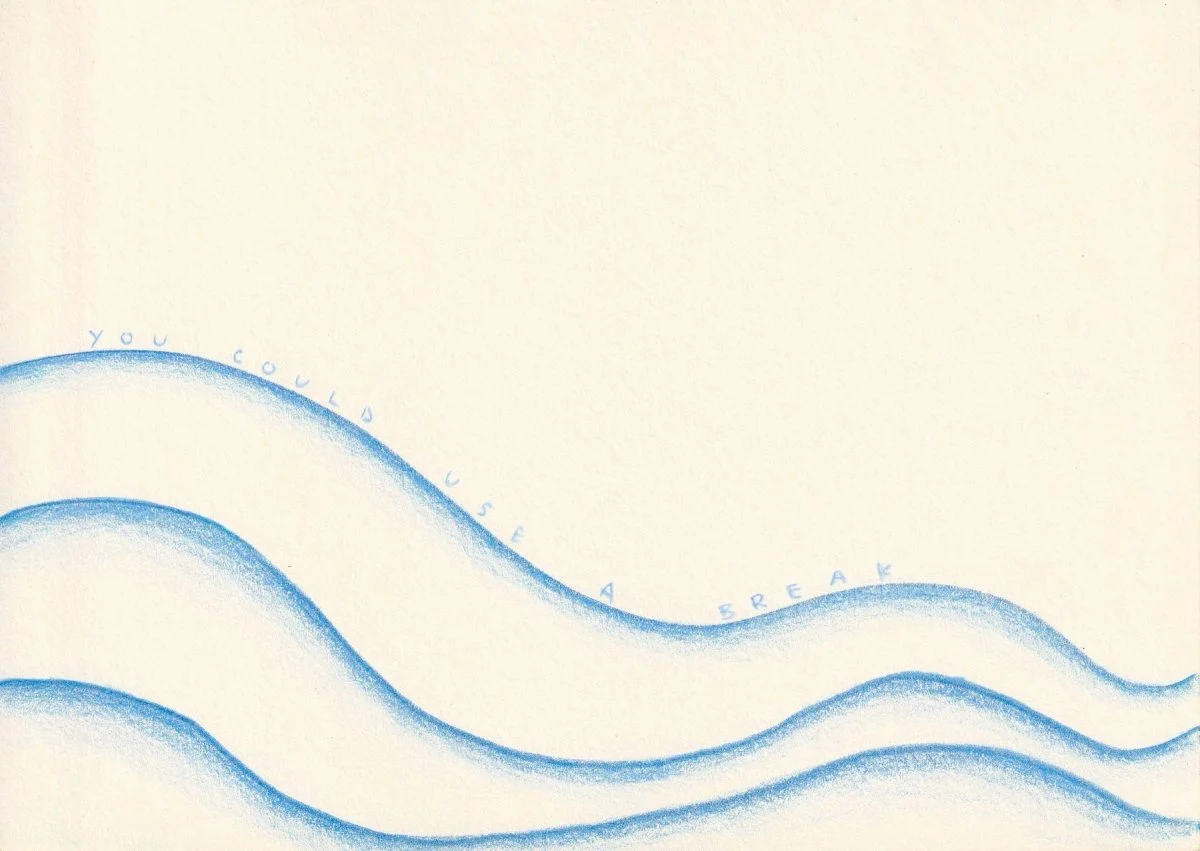
    My proposal is a research on ”taking a break”. My working title is Interval, and I’m evolving a performance series with text, sound and movement.

    Nowadays we are flooded from “how to take a break” with books, podcasts, internet, life coaches, human advice in order to create a state of epicurean ataraxia, shorter or longer, in order to continue life again after “the break”. Interval draws inspiration from childhood games/memories like hide & seek or hopscotch, the weirdness of homo ludens, internalised capitalism on never taking a break and winning a prize for achieve the best break.

    CV

    Professional and Academic Qualifications

    • October 2023- today : Academy of Fine Arts Munich, Media Arts, Professor Julian Rosefeldt
    • October 2022-September 2024: Masters in Creative Writing (focus on Performance writing) University of Western Macedonia, Greece
    • October 2021- November 2022: Certificate in Expressive Arts, Avi Goren Bar , “AEON” Institute of Drama therapy, Greece
    • April 2021- November 2021: Certificate in Performance: Theoretical and Practical Approaches, University of Patras, Greece
    • 2020 – Jungian coaching Training, Jungian coaching school international
    • 2019-2021 Certificate in Mind Body Medizin, Prof. Dr Dobos , Essen
    • 2018-2019 Yoga Teacher and Mindfulness Training, Berlin
    • 2016-2017 Certificate in Urban and Contemporary Dance, Motions Dance School Berlin, Germany

    More

    We do not have any further information at this time.
  • Meredith Toyama

    Meredith Toyama

    Artist main image

    Meredith Toyama is GlogauAIR resident from April 2026 to June 2026. Q2

    Influenced by their childhood spent in Asia, Europe, and the Middle East, Meredith Toyama is interested in exploring how we exist in relation to others and the relationship between the mind and body.

    With their primary medium of expression being painting and drawing, Toyama’s practice seeks to externalise their internal world, showcasing how one perceives and expresses their thoughts, as well as how we share space and emotions.

    Meet the Artist

    Can you tell us about yourself and give a quick overview of your background?

    I am an emerging visual artist from Japan and Thailand, currently based in Bangkok. I graduated from the University of New South Wales with a degree in Fine Arts, specialising in painting and moving image. I spent my childhood living in Asia, Europe, and the Middle East. This shaped my interest in interpersonal relationships, as well as different cultures and languages.


    How would you describe your artistic practice?

    My work presents itself in the form of life lessons, observations of the self, and reflections of our relationship with others. In hindsight, there is a simple reason for my fascination with exploring how we exist in relation to others, and the relationship between the mind and body: masking. I was able to connect the dots during this residency, despite having my ADHD diagnosis for a couple of years now. It all makes sense. Little me found coping strategies and hyperfixated on them. I am looking forward to how my practice will expand through this revelation.

    My primary mediums of expression are painting and drawing, however I incorporate crafts such as embroidery and collage depending on the project. I enjoy working on paper the most. I grew up folding origami and collecting various washi papers for their colours and texture. It’s perhaps what is most familiar and comforting. Letting my working surfaces’ imperfections and textures shine through in my works feels greatly sentimental to me.

    My work tends to be on a smaller scale, often within an A4 size. It feels more intimate but I also enjoy including small details in my pieces. More often than not I make art because I have emotions and thoughts that need a place to overflow into. Holding onto them makes me overthink and ruminate. So smaller scales are less daunting and more practical to create what feels like a complete timestamp of myself during that particular headspace.

    As a person, I strive to be the kind of adult I wanted and needed as a child. From warm comfort and gentleness to pain and anguish. Face-to-face tangible bonds to the digital. Small everyday moments to large life-altering moments. I want to experience and remember every moment of that journey. By documenting these moments, my goal is to encourage further understanding of ourselves and remind visitors of the larger world of emotions that we all engage in.


    What is your methodology or process for creating a new project?

    Since my practice is heavily driven by process over outcome, I let materials or objects I collect and find guide me. Therefore I don’t have a set formula, but below are some recurring things I use as a jumping off point.

    One method of working I have is repetition. Whether it be repeating the same movements to build layers, or creating different iterations of the same object. Having a pattern allows me to return to a state of peace when my mind is full of clutter. Keeping my hands moving distracts me from getting too much into my own head. It’s almost a meditative process, and helps me untangle my thoughts. Whatever movement I discover during this process informs the final product.

    When I am able to articulate my thoughts, I write. It doesn’t have to be polished, and no one has to see it so it’s safe. I let everything sit in my book so I don’t have to carry the weight around. Sometimes a phrase pops out of the page that I really like, and I incorporate it into the final artwork. It’s a snippet of something that is only for my eyes that I hope will resonate with someone else.

    Sometimes I see or smell something that reminds me of a specific memory or person. I can’t get it out of my head until I do something about it. Other times there’s a topic I hyperfixate on that I want to make something about. Occasionally there would be a specific colour or material that I’m really excited to use and play with. Sometimes there’s a space on my wall that I want to fill and it’s a very specific shape or size. Overall, being creative keeps me grounded, and I let anything happening in my life kickstart my process.


    Tell us about the project you are working during your online residency at

    GlogauAIR.

    My project started with the concept of memory being attached to objects, and how multiple forms of connection can stem from them. I examined the connection someone could feel with an object, the emotions surrounding them, and how bonds can be created with others through their memories. I was inspired by family heirlooms and the stories they hold, and how a seemingly insignificant item or symbol can evoke an emotion.

    Since I had recently relocated from Sydney to Bangkok, I had the opportunity to go through the attic at my grandparents’ house. I hadn’t been at home since I was a teenager so I was able to examine everything with a new lens. I stumbled across things that reminded me of my paternal grandmother who passed almost exactly a year ago.

    I journal about how sometimes I view my life like one large painting. I know how to add the colour, but I need people in my life like my grandmother to add texture. During the residency I experimented a lot with materials and their attributes. I started by archiving objects and photographs I found with my scanner. I mourned my grandmother a year ago, and now I am looking at ways to preserve the memory of her from my perspective. I have regrets about not knowing her entire life, and who she might have been when she was my age. But the version of her that existed when I was a child is mine. I wanted to document that before time distorts her memories again.

    My practice so far has focused on how we connect in relation to others, and expressing my internal world externally. Through this residency I was able to lean my focus on connection through memory and nostalgia. While we may not be able to understand the full depth behind an individual’s emotional reaction, the feeling itself can be shared. It’s intimate, vulnerable, and honest.

    Interview conducted by Meredith Toyama and GlogauAIR.

    • Statement
    • GlogauAIR Project
    • CV
    • Gallery
    • More

    Statement

    Influenced by their childhood spent in Asia, Europe, and the Middle East, Meredith Toyama is interested in exploring how we exist in relation to others and the relationship between the mind and body.

    With their primary medium of expression being painting and drawing, Toyama’s practice seeks to externalise their internal world, showcasing how one perceives and expresses their thoughts, as well as how we share space and emotions.

    GlogauAIR Project

    My project explores the concept of memory being attached to objects, and how multiple forms of connection can stem from them. I examine the connection someone could feel with an object, the emotions surrounding them, and how bonds can be created with others through their memories. I am inspired by family heirlooms and the stories they hold, and how a seemingly insignificant item or symbol can evoke an emotion.

    My practice so far has focused on how we connect in relation to others, and expressing my internal world externally. I am focusing on connection through memory and nostalgia. While we may not be able to understand the full depth behind an individual’s emotional reaction, the feeling itself can be shared. It’s intimate, vulnerable, and honest.

    CV

    EDUCATION

    • 2022 Bachelor of Fine Arts, University of New South Wales, Sydney, Australia

    SOLO EXHIBITIONS

    • 2022 ‘Tenderness’, AD Space, Sydney, Australia

    GROUP EXHIBITIONS

    • 2022 ‘Secret Sitter’, Goodspace Gallery, Sydney, Australia
    • 2021 ‘Mental Health and Me’, UNSW Library, Sydney, Australia
    • ‘Jenny Birt Award’, AD Space, Sydney, Australia
    • ‘Pulse’, AD Space, Sydney, Australia
    • 2019 ‘Sexual Harassment – It Happens’, UNSW, Sydney, Australia

    AWARDS AND RESIDENCIES

    • 2022 AD Space Student Residency, Sydney, Australia
    • 2021 Jenny Birt Award (finalist), UNSW Art and Design, Sydney, Australia

    PUBLICATIONS

    • 2022 ‘Framework Collection #34 – Coalescence’, UNSW Art and Design, Sydney, Australia

    More

    We do not have any further information at this time.
  • Nina B

    Nina B

    Artist main image

    Nina B is GlogauAIR resident from April 2026 to June 2026. Q2

    Nina B is a London-based visual artist and filmmaker working across photography and moving image. the artist explores memory, identity, and landscape through observational and atmospheric work, creating immersive and emotionally resonant visual narratives.

    Meet the Artist

    • Statement
    • GlogauAIR Project
    • CV
    • Gallery
    • More

    Statement

    Nina Bumbalkova is a London-based visual artist, cinematographer, and director working across photography and moving image. Her practice explores themes of memory, identity, landscape, and human presence through documentary observation and visual research.

    With over ten years of experience in film and visual storytelling, Nina’s work moves between still and moving images, often focusing on atmosphere, fragmentation, and quiet moments of transition. Her projects have been shown internationally through film festivals, exhibitions, and broadcast platforms. She is interested in creating work that is both visually immersive and emotionally resonant, with a strong emphasis on process, place, and sensory detail.

    GlogauAIR Project

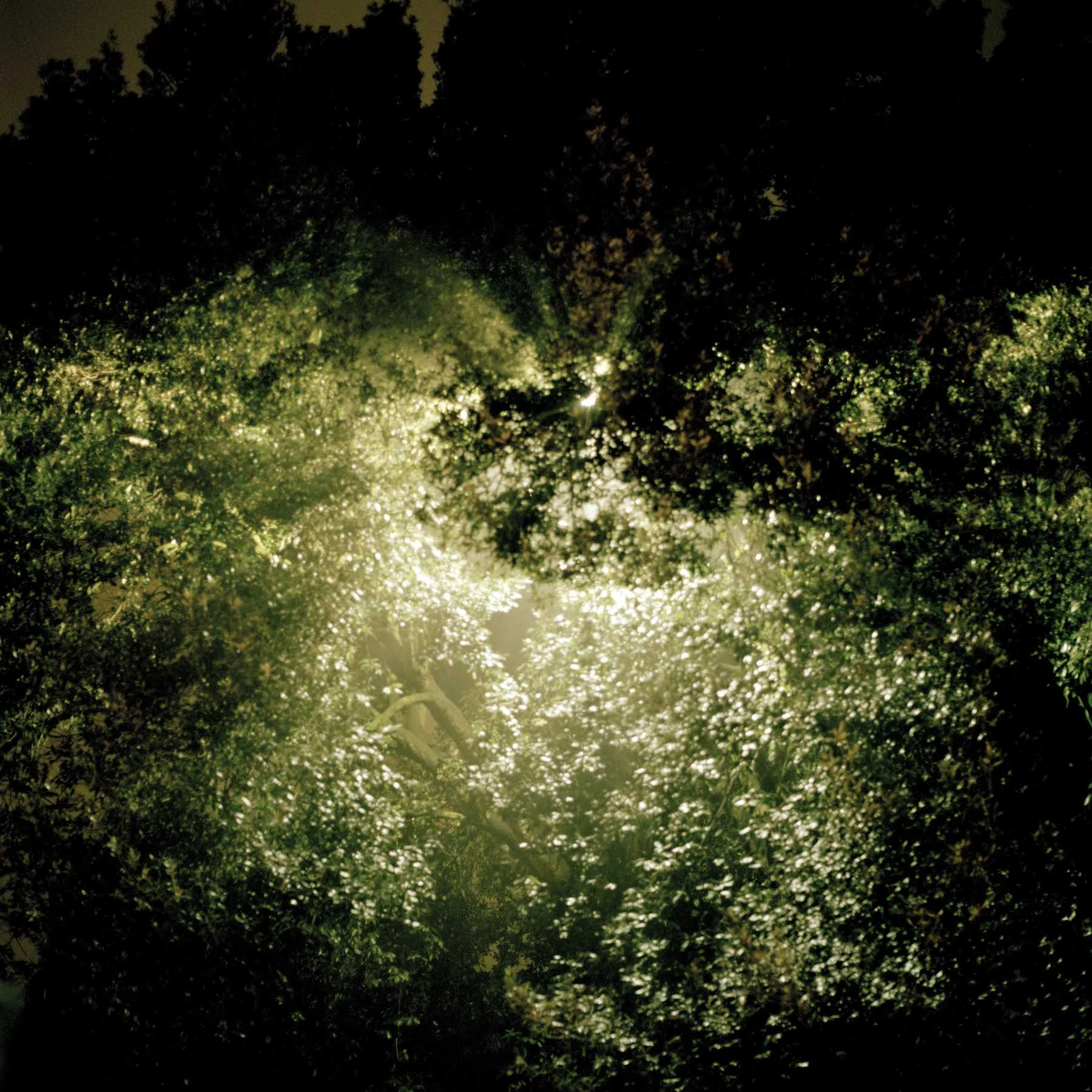
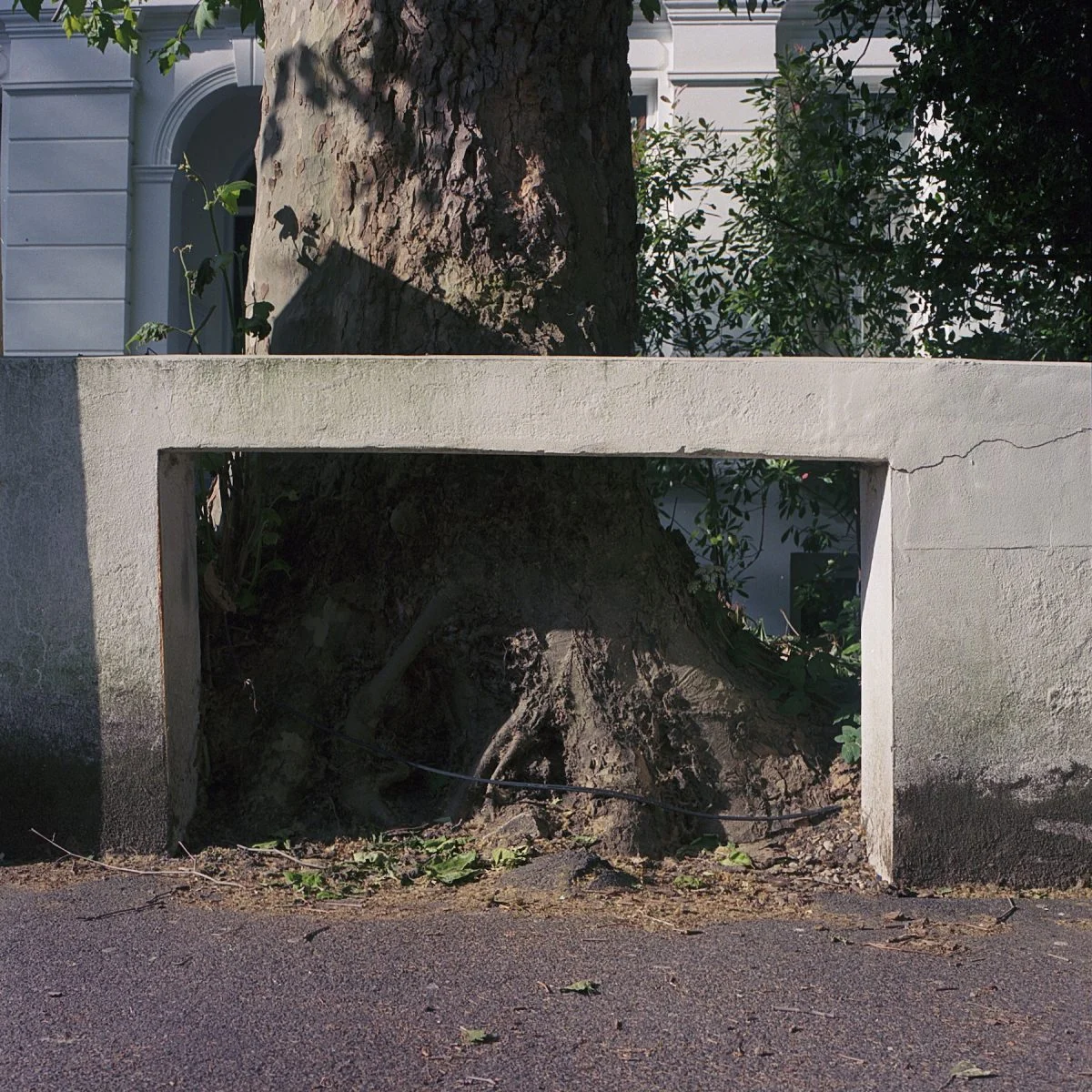
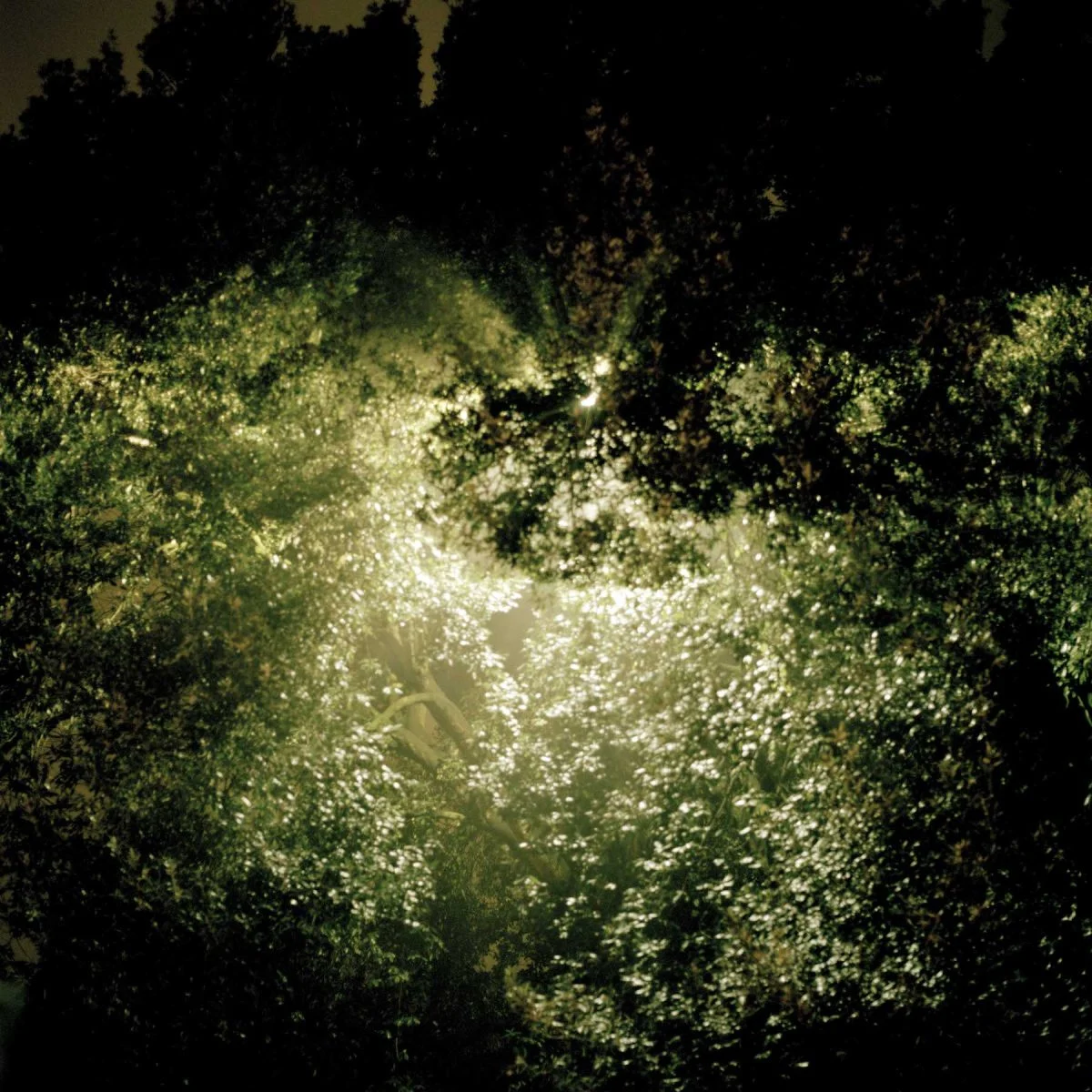
    During the residency, I would like to continue developing my ongoing Book of Trees project — a long-term visual exploration of trees as living witnesses to time, memory, and place. The project combines photography, moving image, and collage to examine the emotional and symbolic relationship between landscape and personal history.

    My approach is rooted in close observation and intuitive image-making. I am interested in the textures, rhythms, and quiet transformations of natural environments, and in how trees can hold traces of absence, resilience, and change. Through this residency, I plan to deepen the visual and conceptual language of the project by revisiting existing material, producing new collage works, and experimenting with sequencing and presentation.

    The residency will offer valuable space for reflection, dialogue, and refinement. I hope to use this time to expand the project’s form and consider how it might evolve into a publication or exhibition-based work.

    CV

    SELECTED FILMOGRAPHY AND PROJECTS

    • Remi Milligan: Lost (Feature Film) – Director and Editor. Screened at Ramsgate International Film and TV Festival 2024, Shockfest US 2023 and Hastings Rocks International Film Festival 2024.
    • Footprints in History: Sardinia (Documentary) – Cinematographer and Editor documenting historical landscapes and cultural heritage.
    • Men in a Box – Director and Director of Photography. Visions du Reel Digital Selection.
    • Unattended – Second Camera. Porto Fashion Film Festival 2019.
    • Glastonbury Festival Cultural Coverage – Editorial photography and video coverage for international publications.
    • COP27 UN Climate Change Conference – Camera Operator documenting international environmental discussions.

    EXHIBITIONS

    • Book of Trees, Solo Show, Czech Republic (2025)
    • Postcards from Europe, Shutter Hub, Cambridge UK (2022)
    • Cache, Clandestine Perspective, London UK (2021)
    • Cutting Corners, London UK (2019)
    • Portrait of London, Solo Show, Kolin Czech Republic (2018)
    • Ethnoscapes, New York USA (2012)
    • Voice of the Grain, London UK (2012)

    PUBLICATIONS

    • Photograd (2021)
    • Maps6 (2021)
    • Projection216 (2021)
    • Art Lover Magazine (2019)

    RESIDENCIES

    • Cill Rialaig Artist Residency, County Kerry, Ireland (2026)

    AWARDS AND GRANTS

    • Department of Culture, Czech Republic – Artist Grant (2017)

    PROFESSIONAL EXPERIENCE

    • Printspace London – Fine Art Print Studio (2022): Print Studio Assistant supporting fine art print production, colour workflow and exhibition preparation.
    • Clipper Round the World Yacht Race – 1080 Media TV (2022): Senior Video Editor working with multi camera documentary material.
    • WebsEdge (2022): Executive Producer and Video Editor producing short form films for international platforms.
    • H10 Media (2021-2022): Video Editor producing corporate and event documentation.

    EDUCATION

    • 2019 – National Film and Television School UK – Camera Assistant Course
    • 2012 – MA Photographic Studies – University of Westminster
    • 2011 – BA Moving Image – London College of Communication
    • 2010 – BA Photography – Academy of Arts Architecture and Design Prague

    More

    We do not have any further information at this time.
  • Christiaan Moll

    Christiaan Moll

    Artist main image

    Christiaan Moll is GlogauAIR resident from April 2026 to June 2026. Q2

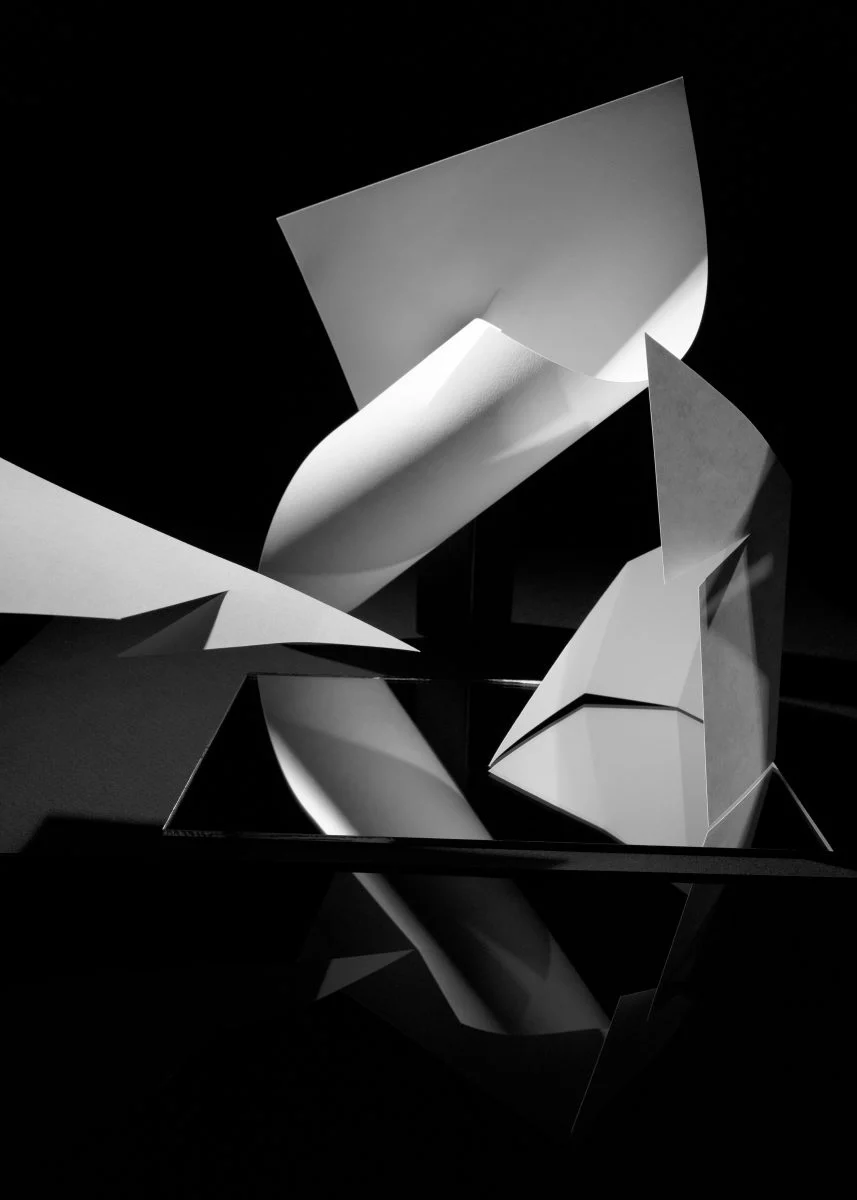
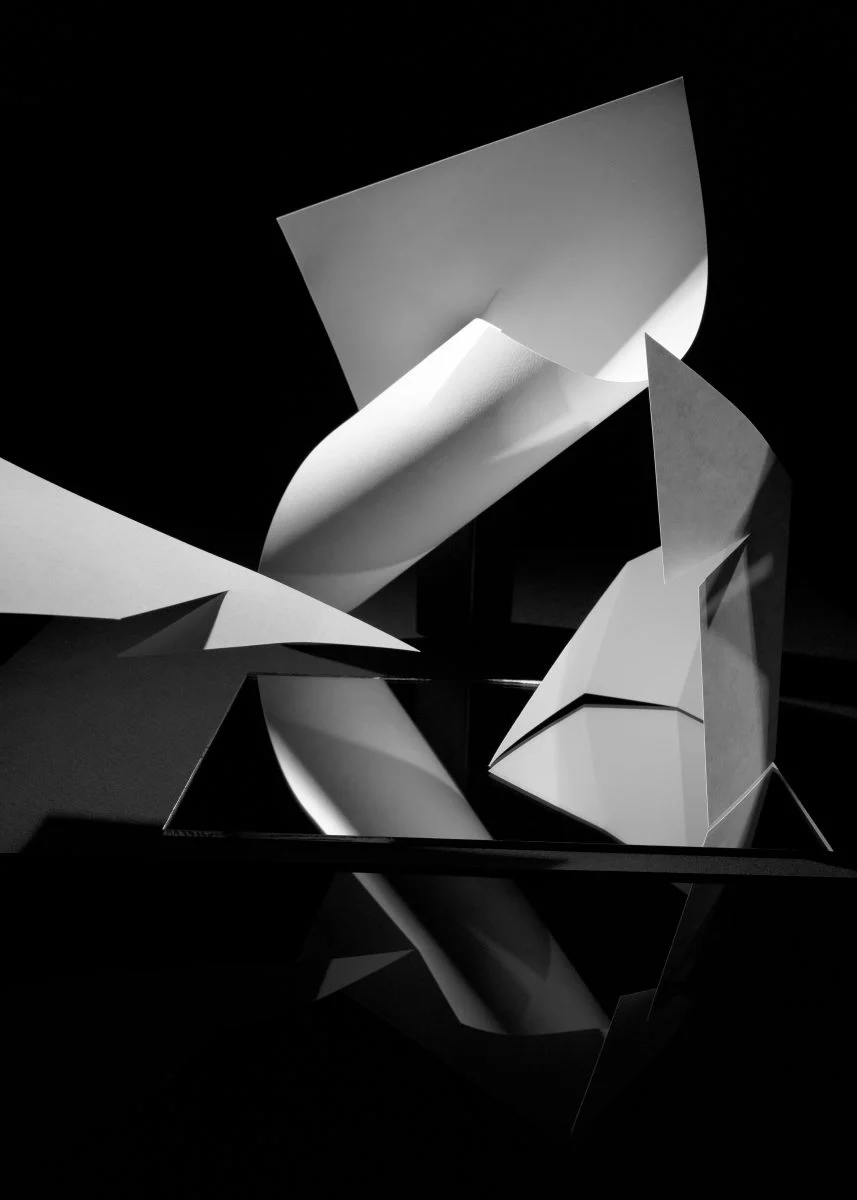
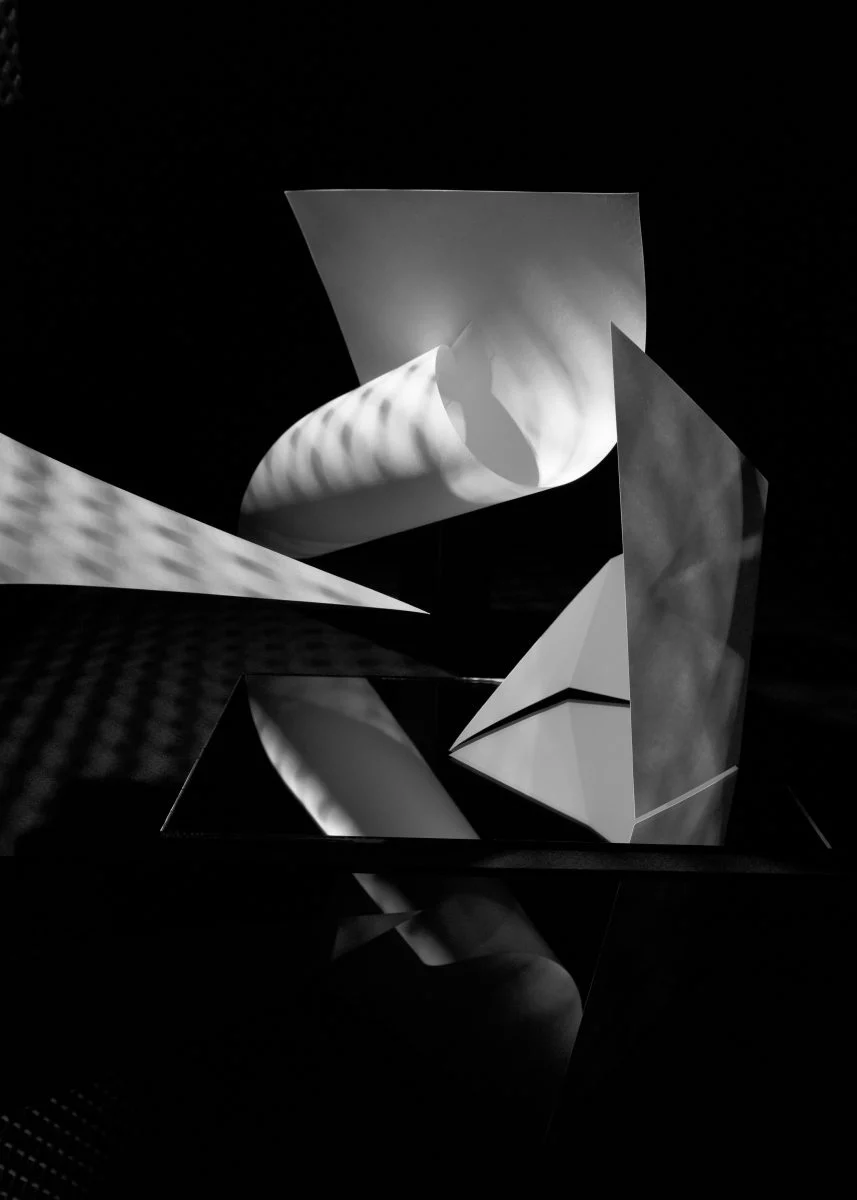
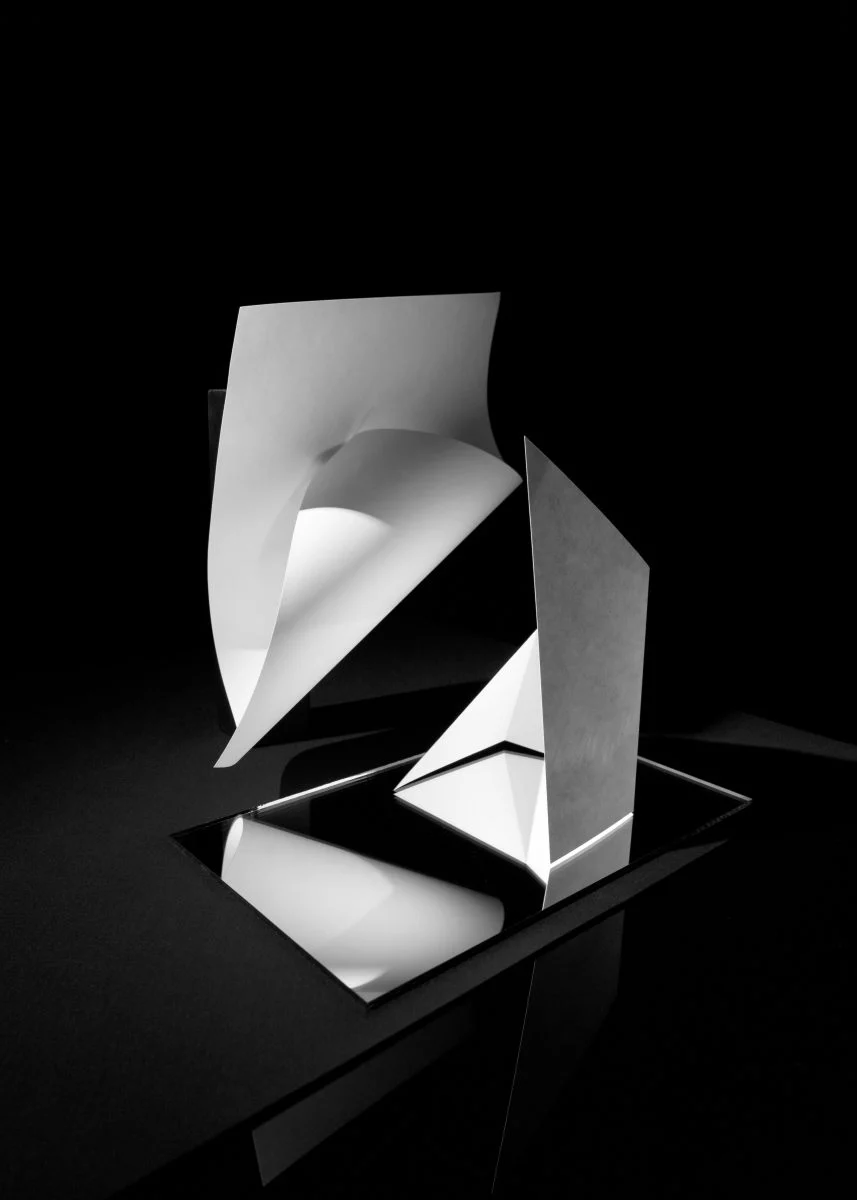
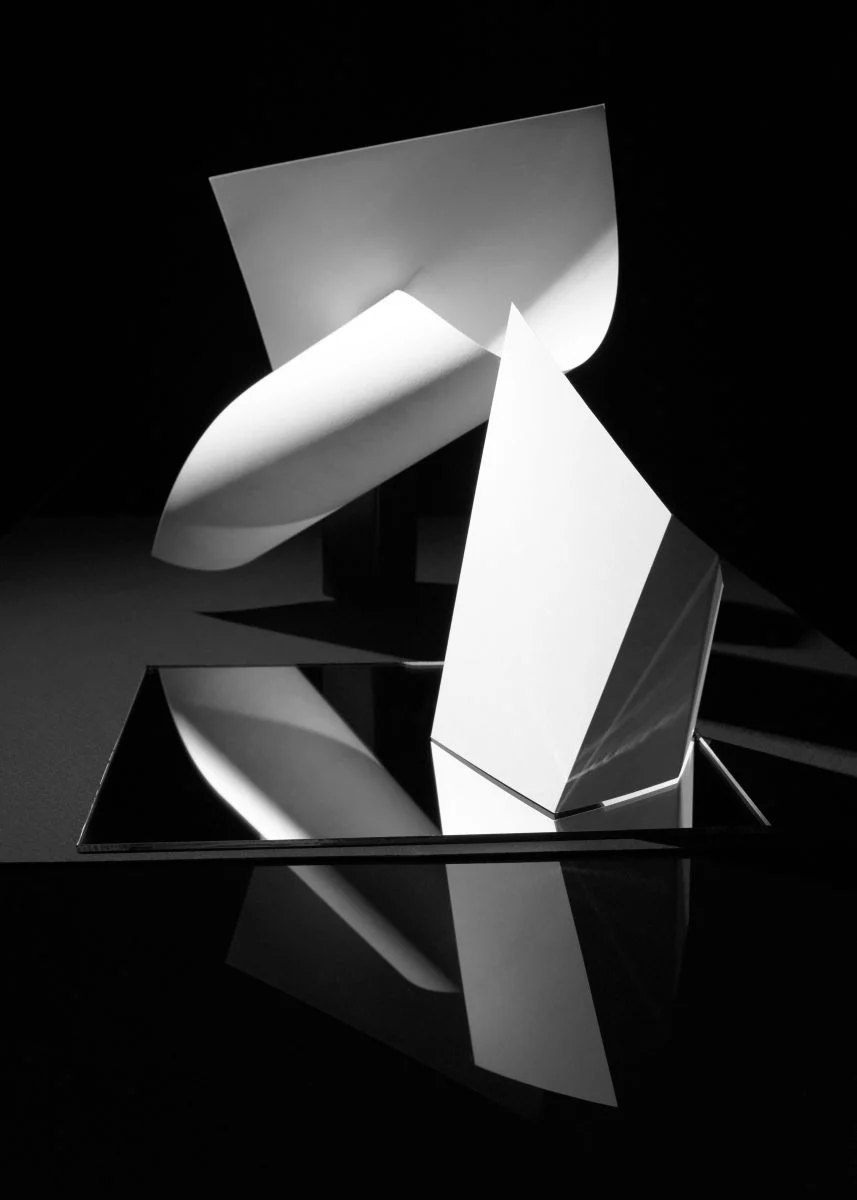
    Christiaan Moll is a lens-based visual artist. He holds a BFA from the Fotoacademie, Amsterdam, which he pursued after a career in international law, security, and geopolitics. In developing his photographic language, he blends art, science, and technology. Practically, he conducts research and eagerly experiments with light, geometric shapes, abstractions, transformations, dimensions, and materials. In his academic research and work, Moll establishes his visual process as the abstract threefold pattern of ‘construction, deconstruction, and reconstruction’ based on a single image. He adopted this trinity as core to his creative and production concept, in which he conceives scientifically intuitive and intellectual modes of visual structuring in connection with practically distinct perceptual viewpoints.

    Meet the Artist

    Can you tell us about yourself and give a quick overview of your background?

    I am Christiaan and I live around The Hague, The Netherlands. After a long career in international law, security and geopolitics, which took me to a range of interesting countries and regions, I am pursuing my development as a lens based visual artist. Last year I obtained a BFA at the Fotoacademie, Amsterdam. My academic endeavours will certainly not stop here, as I am currently considering next steps for further development.

    How would you describe your artistic practice?

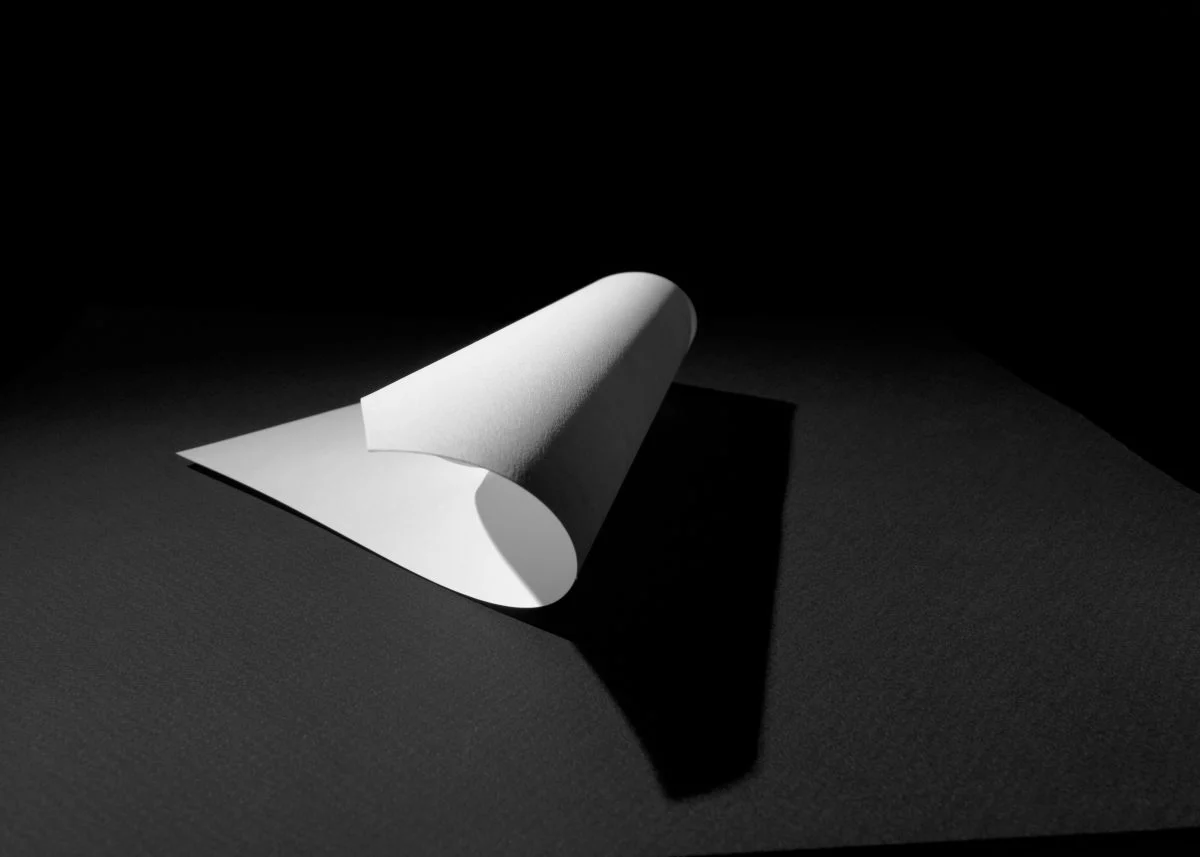
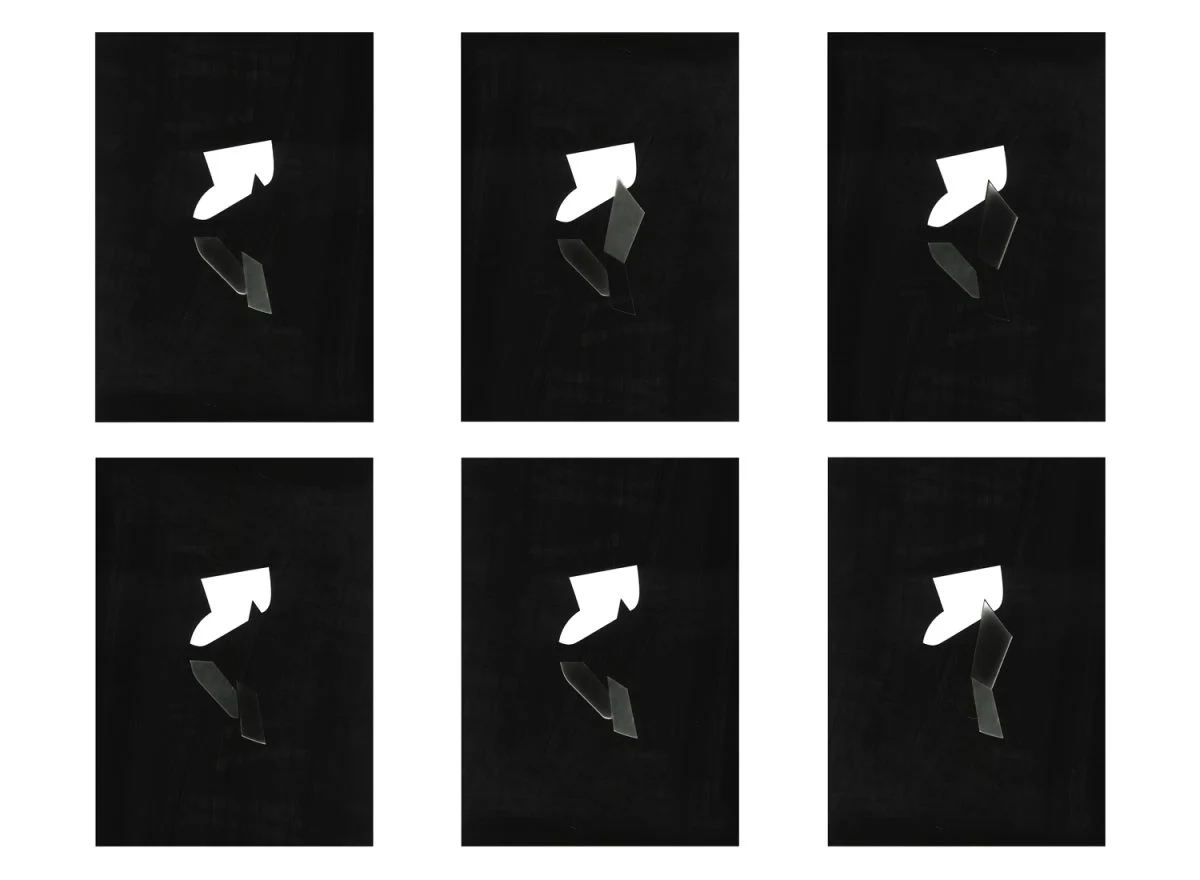
    In the development of my photographic language, I blend art, science and technology. Practically, I conduct research and eagerly experiment with light, geometric shapes, abstractions, transformations and dimensions. Both emotionally and artistically, intellectually and scientifically, I am strongly drawn to the inspiring epoch of the Interbellum with its disruptive art movements. Not surprisingly, I am fascinated by the geometric 1 abstractions, work, writings and findings of experimental artists involved. The list is considerably longer, but I would like to mention Marlow Moss, Piet Mondriaan, Lazlo Moholy-Nagy, Alexander Calder and Christo. Their curiosity, their wonder hugely inspire me. At the same time, I am equally drawn to theories and publications of scientists, in particular those dealing with visual perception, like Rudolf Arnheim on the ‘’Gestalttheory’’. The fascinating theme of visual perception is core to my concept; the urges for experiment and research are part of my creative process. As for the mediums of my choice: apart from using photographic canvas, so far I have created collages, photogrammes and objects, while experimenting with paper and acrylic. Video is new challenge, as I will experiment with this in my current project during this residency.

    What is your methodology or process for creating a new project?

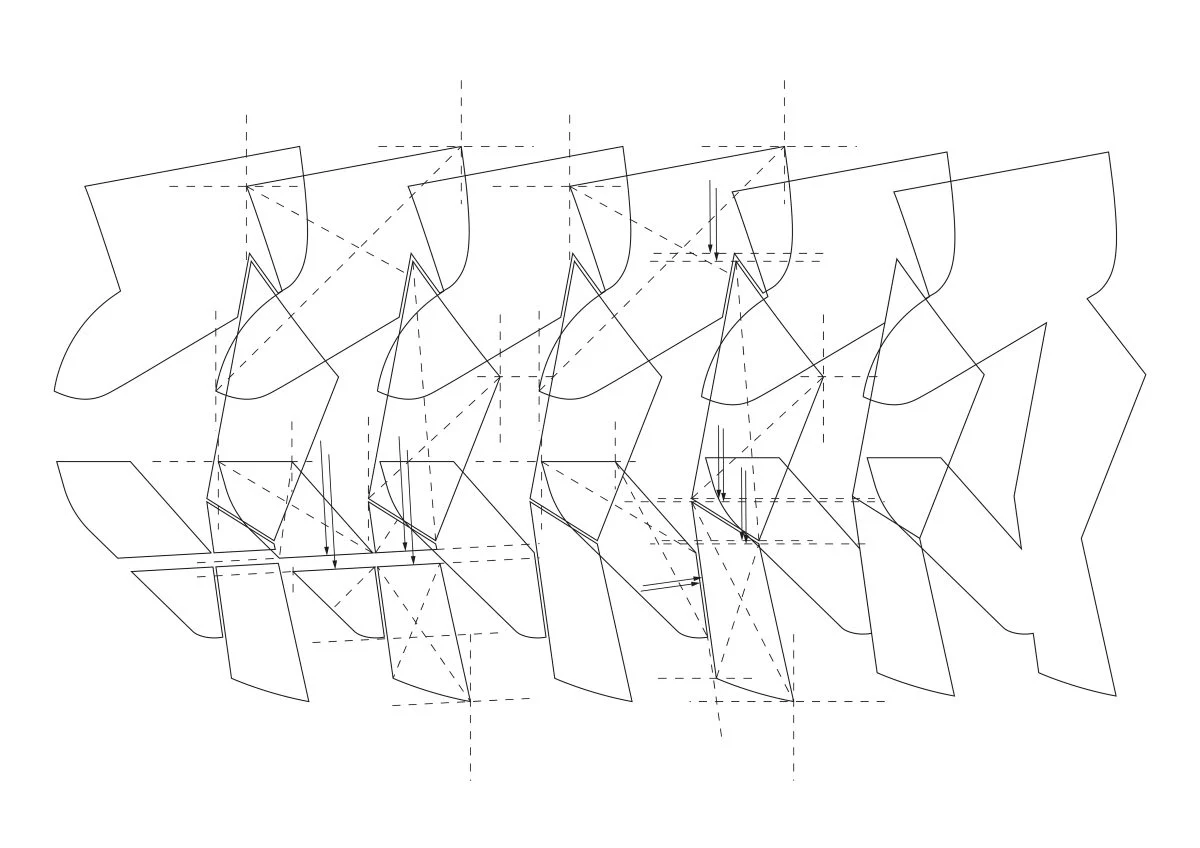
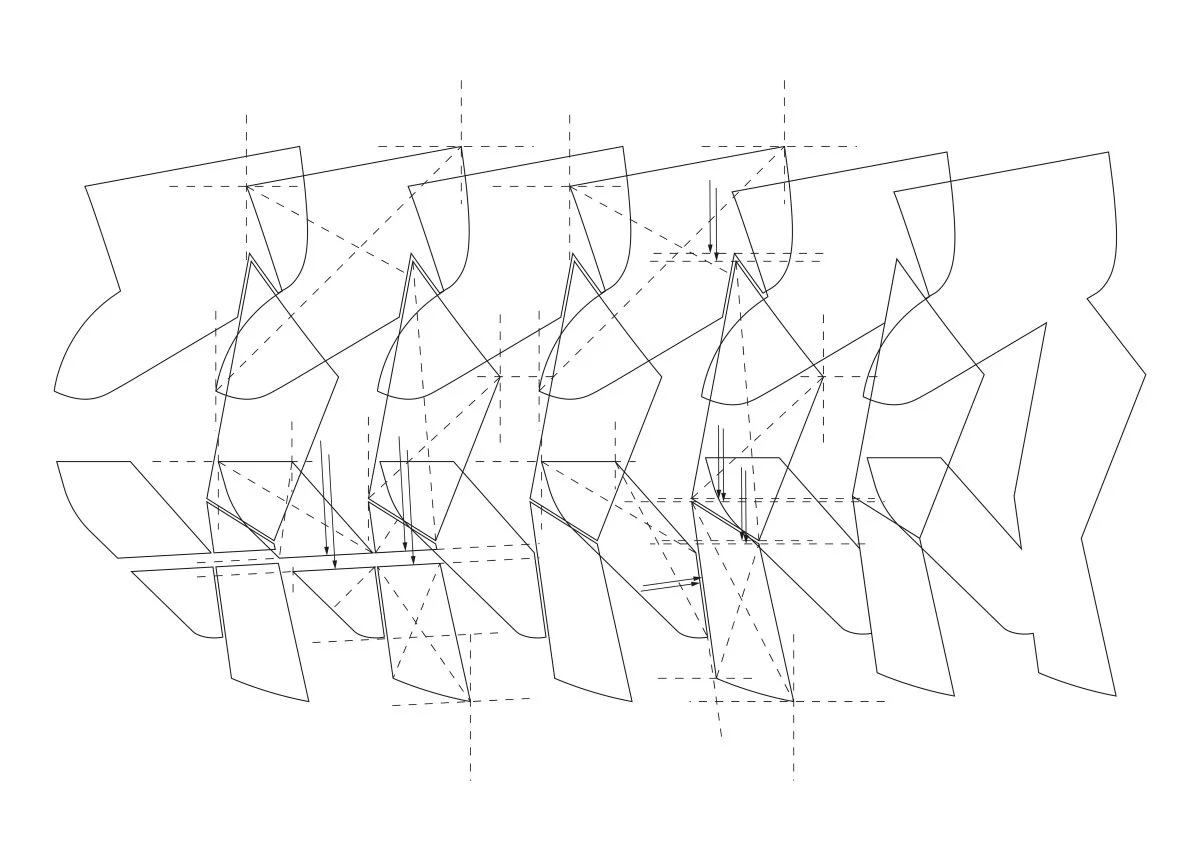
    In the conduct of my research and work, I gradually realized that my visual process unfolds along the abstract threefold pattern of ‘construction, deconstruction, and reconstruction´ based on a single image. So, what happens is that I create an image (my own work, work of other artists) in order to memorize it. Next, I retrieve it visually and analyze it mentally into abstract components. After this, I use these components to re-image the (original) image. I adopted this trinity as core to my creative concept in which I connect the (scientifically) intuitive and intellectual modes of visual thinking and structuring with (practically) distinct perceptual viewpoints. In my work I appeal to the relevance of visual perception, as it is pre-conditional for our social perception. What we see, guides us socially in dialogue, debate or conflict on urgent societal issues. I intend to make viewers and others aware of this.

    Tell us about the project you are working during your online residency at GlogauAIR.

    About my project for this residency in brief: I will take on a self-made image and will subject it to this sequence of construction, deconstruction and reconstruction, as I outlined above. And surprise myself with the outcome. I expect to make a substantial number of digital collages. Furthermore, I intend to experiment with video; a challenge, as I am not very smooth yet in working with this medium. So, even more surprises are upcoming, not in the least for myself!

    Interview conducted by Christiaan Moll and GlogauAIR team

    • Statement
    • GlogauAIR Project
    • CV
    • Gallery
    • More

    Statement

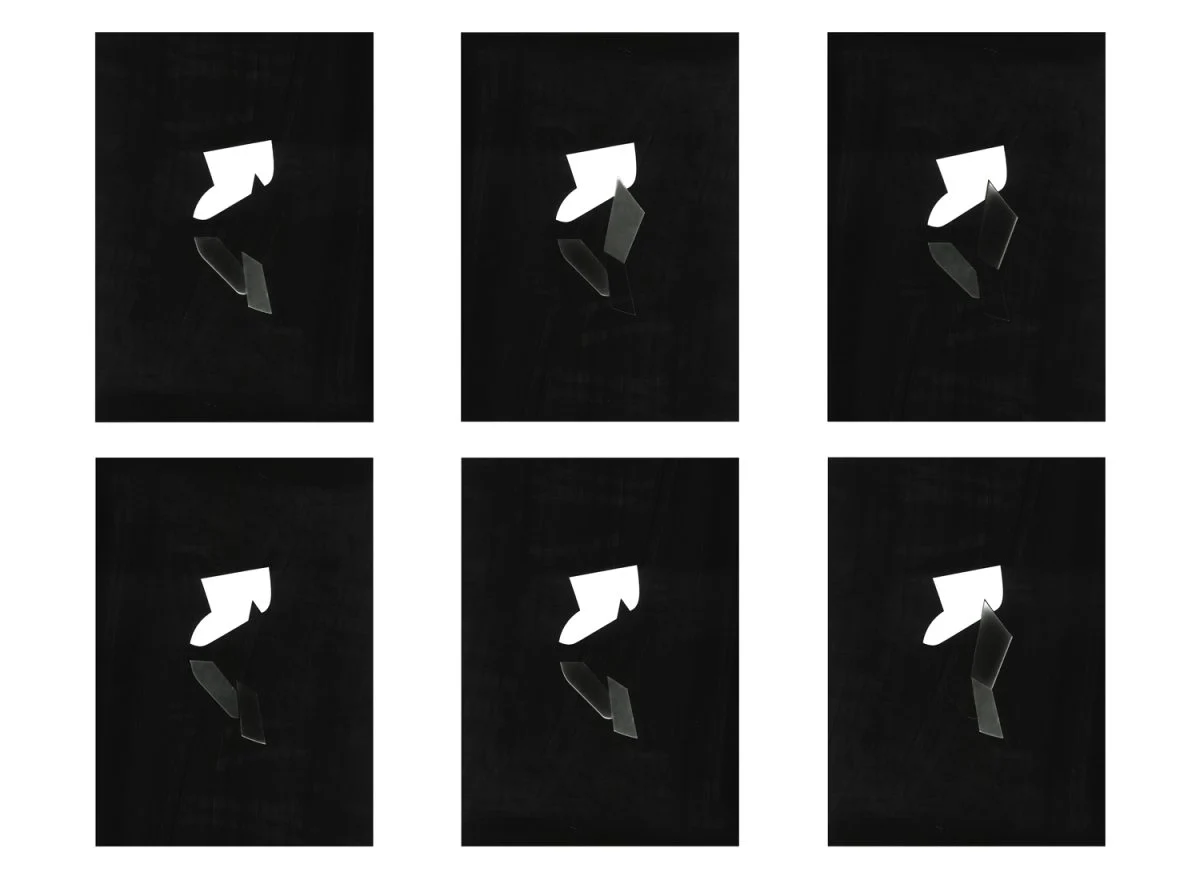
    In developing his photographic language by self-questioning visual intelligence, Christiaan mixes art, science and technology. Practically, he conducts research and eagerly experiments with light, geometric shapes, abstractions, transformations and dimensions.

    Seemingly, his visual practice unfolds along three consecutive abstract stages of “construction, deconstruction, and reconstruction”. He adopted this trinity in conceiving the (scientifically) intuitive and intellectual modes of visual structuring in connection with (practically) distinct perceptual viewpoints.

    GlogauAIR Project

    Scrutinizing my creative concept for work and display will be core to my GlogauAIR project-aims. By exploring and conducting new research, allowing in fresh findings and doubt. But equally so, by warmly welcoming critical viewpoints from the GlogauAIR curators, other Berlin-based professional and residential peers. Moreover, I will insist on shaping, sharpening my research question with artistic and societal relevance “Is abstraction boosting, or blurring essence?” and integrating it in abstract visualisation, while simultaneously exploring a best expressive-purpose fit for exhibition.

    CV

    Education and Exhibitions

    • 2021–2025. Bachelor of Fine Arts, Fotoacademie, Amsterdam, The Netherlands
    • 2025. Graduation Exposition Lumen 25, De Kelder, Haarlem, The Netherlands, (YouTube at 3.19 min.; 3.49 min.)
    • 2025. Participated in Lumen: The Art and Science of Light, used for a Getty exhibition title (no source links Christiaan Moll to it)
    • 2025. No additional verified public CV details about Christiaan Moll were found in the provided search results

    More

    We do not have any further information at this time.
  • Siyuan Qin (Luna)

    Siyuan Qin (Luna)

    Artist main image

    Siyuan Qin (Luna) is GlogauAIR resident from April 2026 to June 2026. Q2

    Luna is a Berlin-based artist and visual designer working across AI imagery, moving image, 3D, and interactive media. the artist explores digital culture and experimental storytelling, examining how AI reshapes visual language, authorship, and perception across digital and physical forms.

    Meet the Artist

    To start, could you introduce yourself and give us an overview of your background?

    My name is Siyuan Qin. I am an emerging artist and visual designer from China, currently based in Berlin. I graduated from Camberwell College of Arts, University of the Arts London, where I received my MA in Illustration with Distinction. Recently, my practice has gradually moved from illustration into AI-generated imagery, moving image, 3D modelling, and installation.

    I am very interested in digital culture, online visual language, and how technology changes the way people communicate, imagine, and build emotional connections. Living between different cultural and digital environments has also deeply influenced the way I think about images, identity, and intimacy.

    How would you describe your artistic practice?

    My practice is research-led and image-based, but it is also very interdisciplinary. I work with AI-generated images, moving image, 3D, AR, and sometimes physical objects or installations. Many of my works begin with questions about how images shape belief, desire, and emotional projection. I am especially interested in AI-generated images because they are not created by one single author. Instead, they are produced through large systems of data, prediction, and collective visual memory.

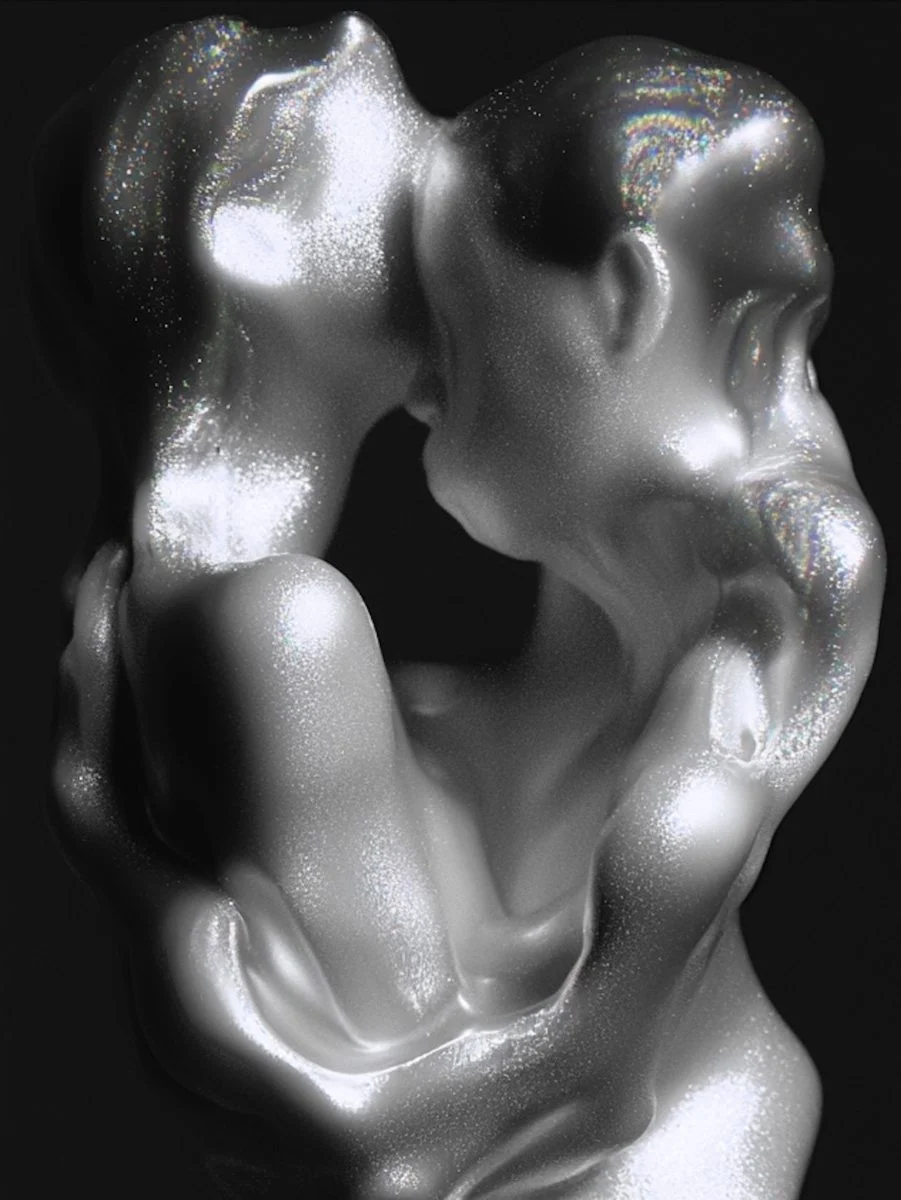
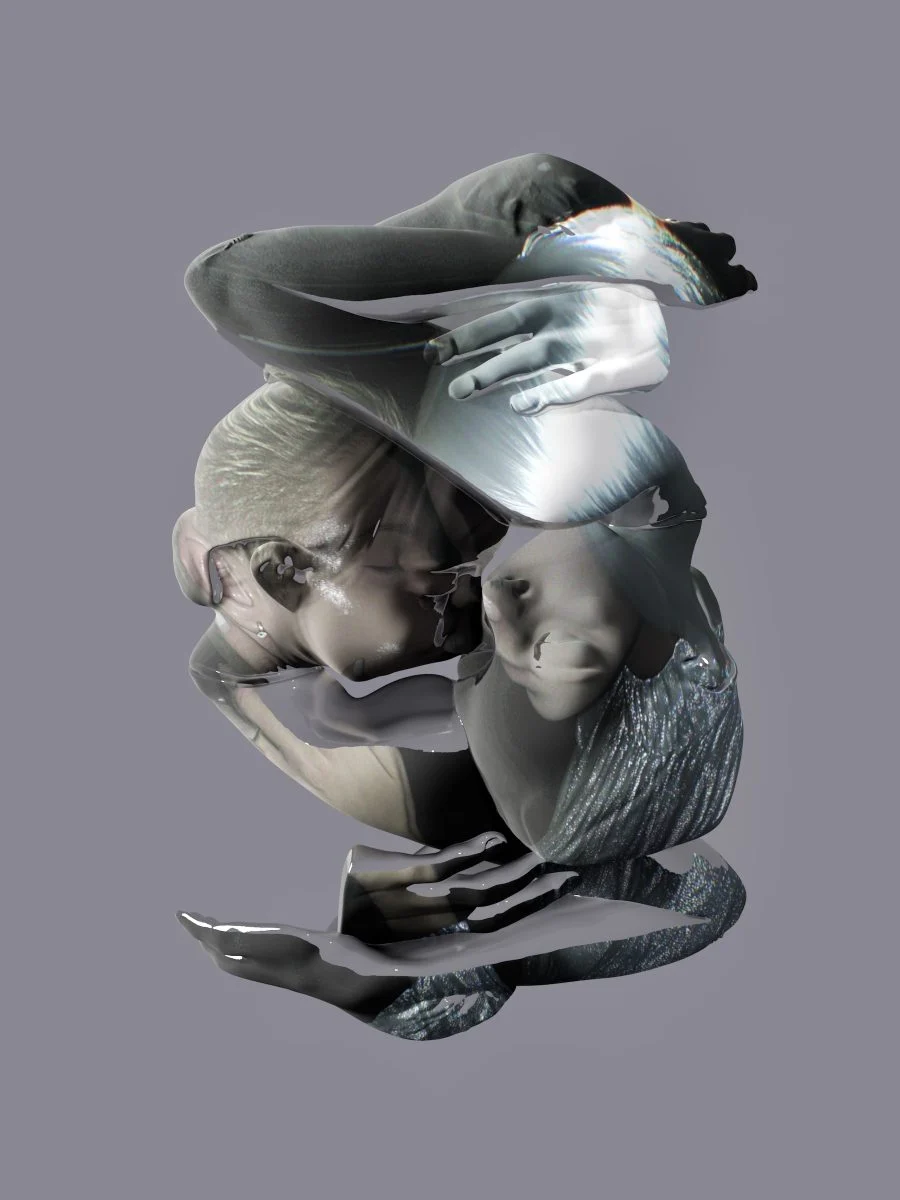
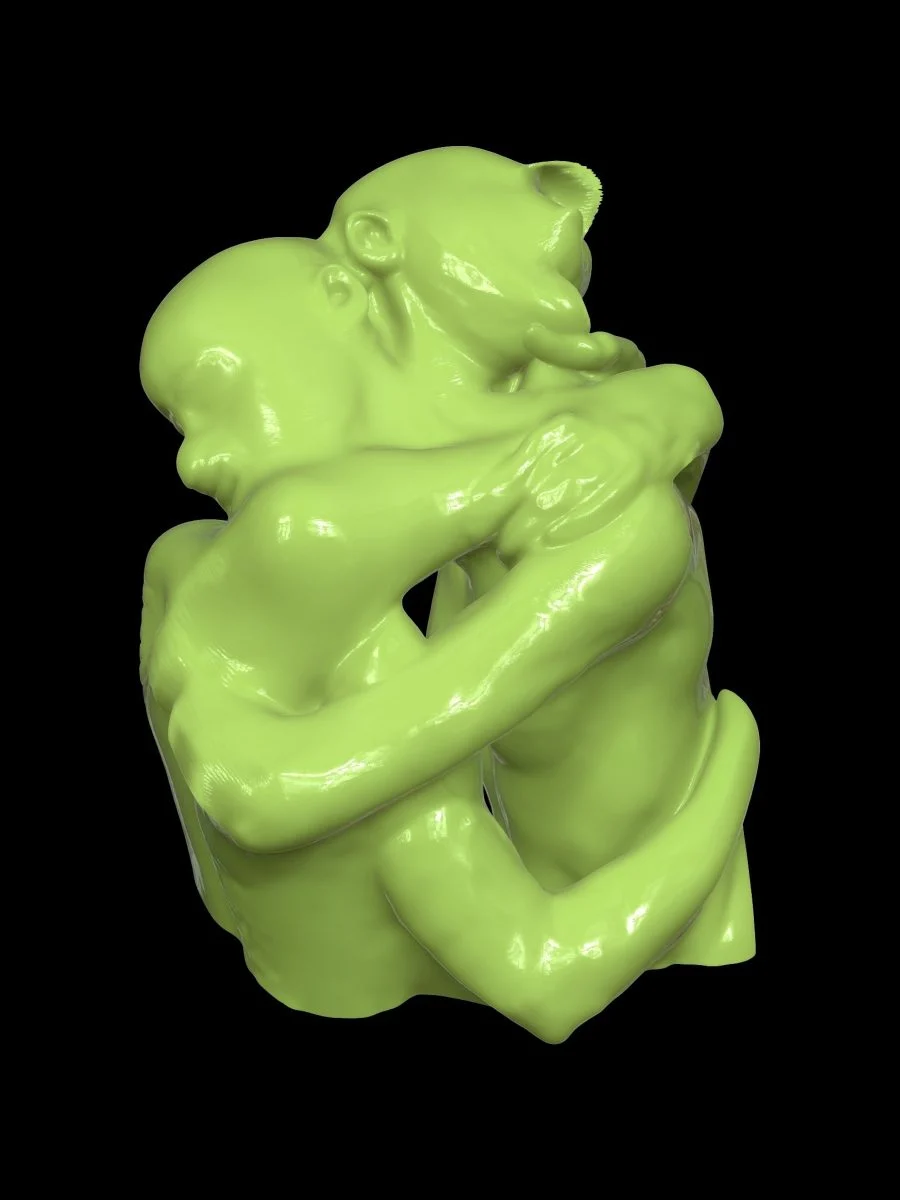
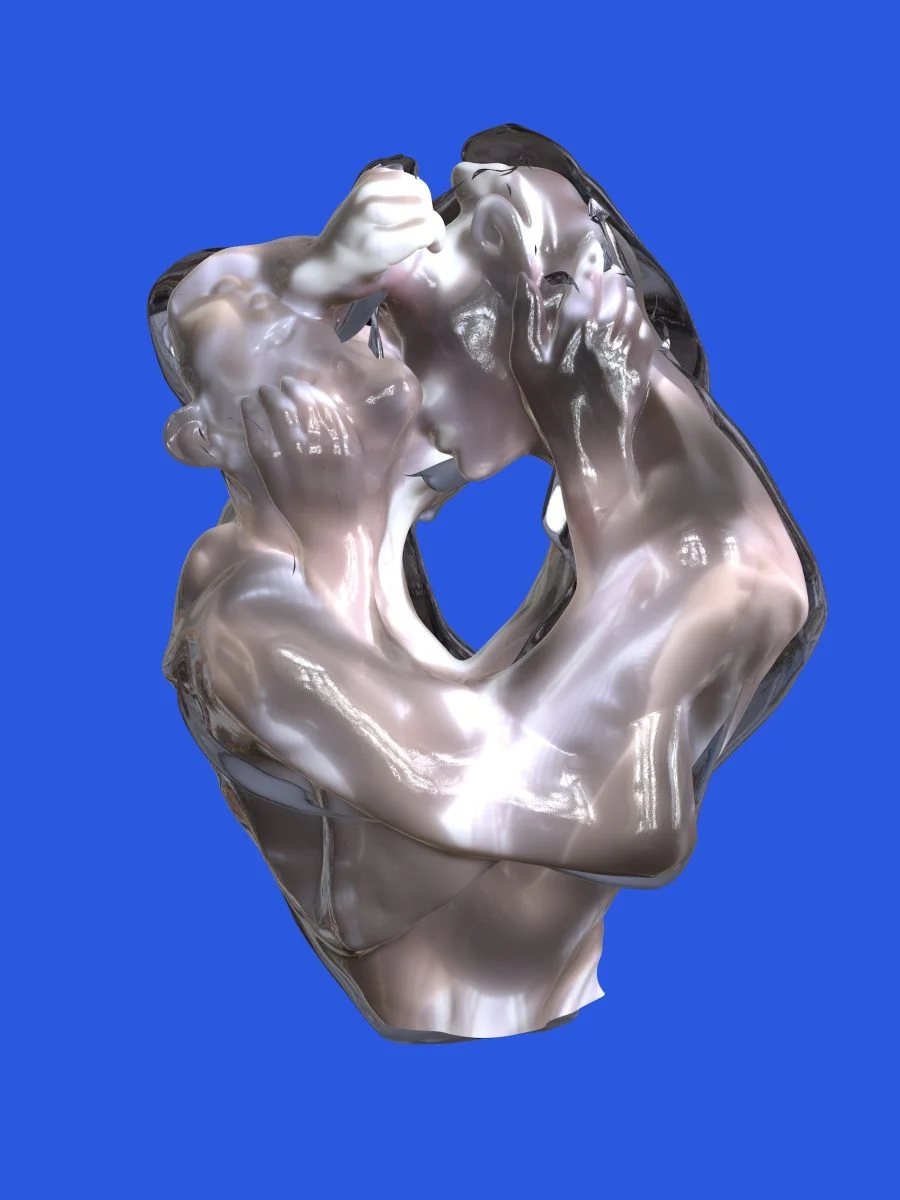
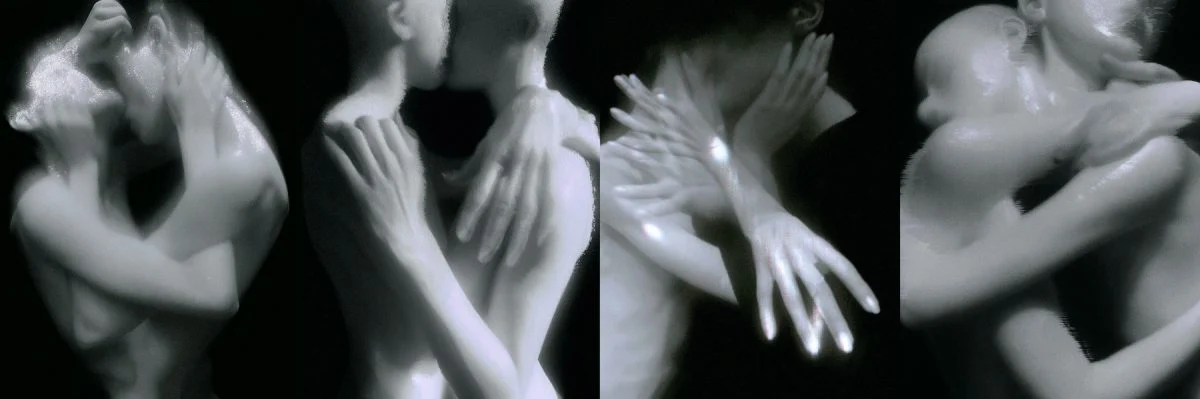
    Recently, I have been researching algorithmic intimacy. I am interested in how AI represents closeness, love, and the body. Intimacy is usually very private and personal, but when it appears through AI, it often becomes standardized or repetitive. I look at the strange mistakes AI makes, such as distorted bodies, merged limbs, and unnatural physical closeness. Instead of seeing these mistakes only as technical failures, I treat them as a new kind of visual material.

    What is your methodology or process for creating a new project?

    My process usually starts with a question, an image, or a visual problem that I cannot fully explain at the beginning. I often start by collecting references, reading theory, writing short notes, and experimenting with AI image generation.

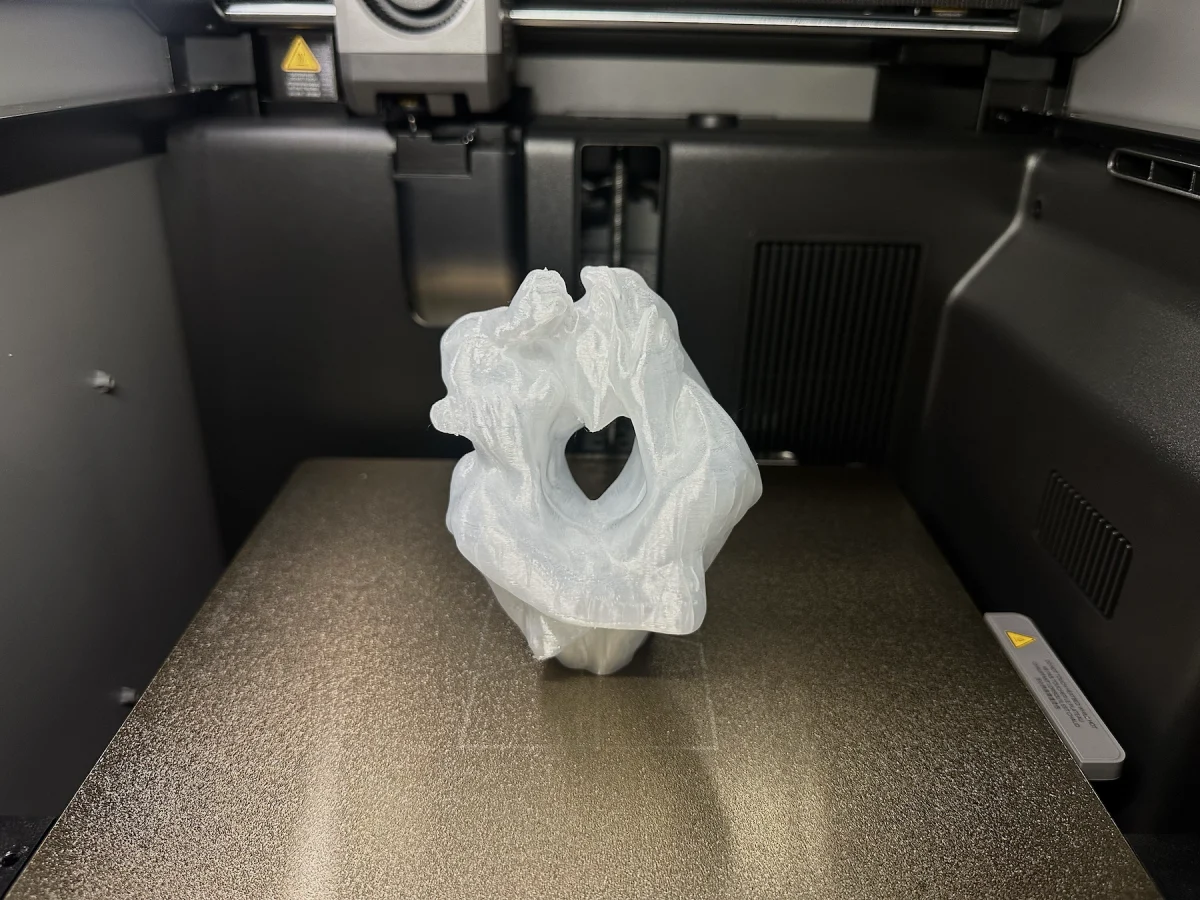
    For me, prompting is not only a technical tool. It is also a way of thinking and working with the machine. I generate many images and pay close attention to the moments when an image becomes unstable, strange, or unsuccessful. These failures are very important in my process, because they often reveal something I could not have planned in advance. After generating images, I select, edit, and transform them through different media. Sometimes I develop them into moving images. Sometimes I bring them into 3D modelling, AR, projection, or physical forms, such as 3D-printed objects. I am interested in how an image changes when it moves from one medium to another.

    So my method is iterative and experimental. It moves between prompting, generating, selecting, editing, writing, and material transformation. I am especially interested in the tension between control and unpredictability, between what I ask the machine to produce and what it accidentally reveals.

    Tell us about the project you are working during your On-line residency at GlogauAIR.

    During my online residency at GlogauAIR, I am developing a project called: Fusion Protocols— Algorithmic Intimacy.

    My starting point is the visual “errors” that AI often produces, such as distorted bodies, merged limbs, and unnatural physical closeness. I do not see these distortions simply as technical failures. Instead, I see them as a new visual material.

    In these AI-generated scenes of intimacy, the boundary between two bodies often becomes blurred. This makes me question whether AI is simply imitating socially idealized images of love, closeness, and connection.

    The project is supported by two theoretical directions. First, I draw on David Seamon’s concept of the “body-subject.” I understand the fused body as a new shared center of perception in digital space. Second, I refer to Lynn Jamieson’s idea of “boundary work” to think about how intimacy depends on boundaries, and what happens when AI removes or weakens them.

    At the same time, I question whether AI is only repeating idealized images of intimacy. Intimacy is deeply personal, but AI-generated images often turn it into something recognizable, idealized, and standardized. When AI tries to create a perfect image of closeness but produces distortion instead, I think this failure becomes meaningful. It may reveal that ideal intimacy is not always soft or harmonious. It can also contain tension, blurred boundaries, and even a hidden form of violence.

    Interview by Siyuan Qin and Luna

    • Statement
    • GlogauAIR Project
    • CV
    • Gallery
    • More

    Statement

    Luna is an emerging artist and visual designer from China, currently living and working in Berlin. Her practice spans AI-generated imagery, moving image, 3D, and interactive media. Her research-led practice explores digital visual culture and AI image and video workflows, with a focus on experimental storytelling and concept-driven visual systems. She works across digital and physical formats, extending screen-based outputs into spatial and material forms through interaction and 3D printing. Through iterative workflows, she examines how AI reshapes visual language, authorship, and perception in the digital age.

    GlogauAIR Project

    My recent research investigates belief, emotional projection, and the ways AI-generated images and moving-image practices shape meaning today.

    I am interested in how AI-generated images become sites of projection, where viewers encounter not only artificial visuals but also their own desires, anxieties, and beliefs. Focusing on errors, instability, and misreadings in AI image generation, my work considers how such imperfections can intensify, rather than weaken, emotional and symbolic resonance.

    During my residency at GlogauAIR, I plan to develop an interdisciplinary project combining AI-generated imagery, moving image, and spatial installation. Through 3D printing and AR, I will investigate how digital images move across media and acquire material and immersive form. Using an iterative workflow of prompting, generating, selecting, and transforming images, I aim to create a system of continual reinterpretation that examines the tension between control and unpredictability, belief and illusion, and technological mediation.

    CV

    Education

    • 2024–2025. Master of Arts in Illustration with Distinction. Camberwell College of Arts, University of the Arts London, London, UK.
    • 2023–2024. Graduate Diploma in Illustration with Distinction. Camberwell College of Arts, University of the Arts London, London, UK.

    Projects and Residencies

    • 2025. Tech, Tea & Exchange, residency participant, Tate Britain, London, UK.
    • 2026. The Voice You Projected, AI-generated experimental short film for ArtEvol 2025, London, UK.
    • 2027. AI Hallucination as Faith — Dreaming with the Machine, visual essay and public presentation, London, UK.

    More

    We do not have any further information at this time.
  • Lara Ordoñez

    Lara Ordoñez

    Artist main image

    Lara Ordoñez is GlogauAIR resident from April 2026 to June 2026. Q2

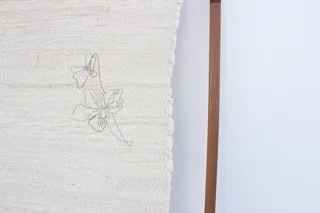
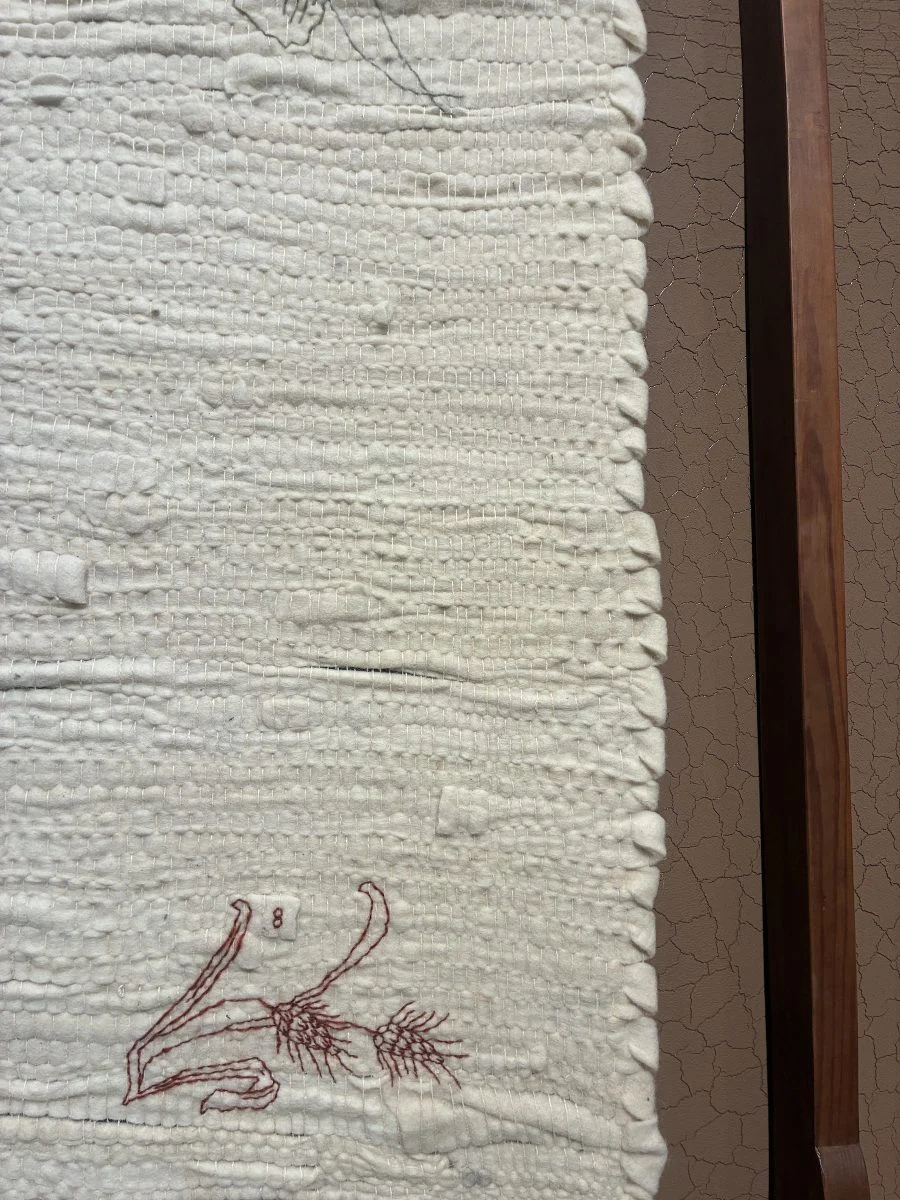
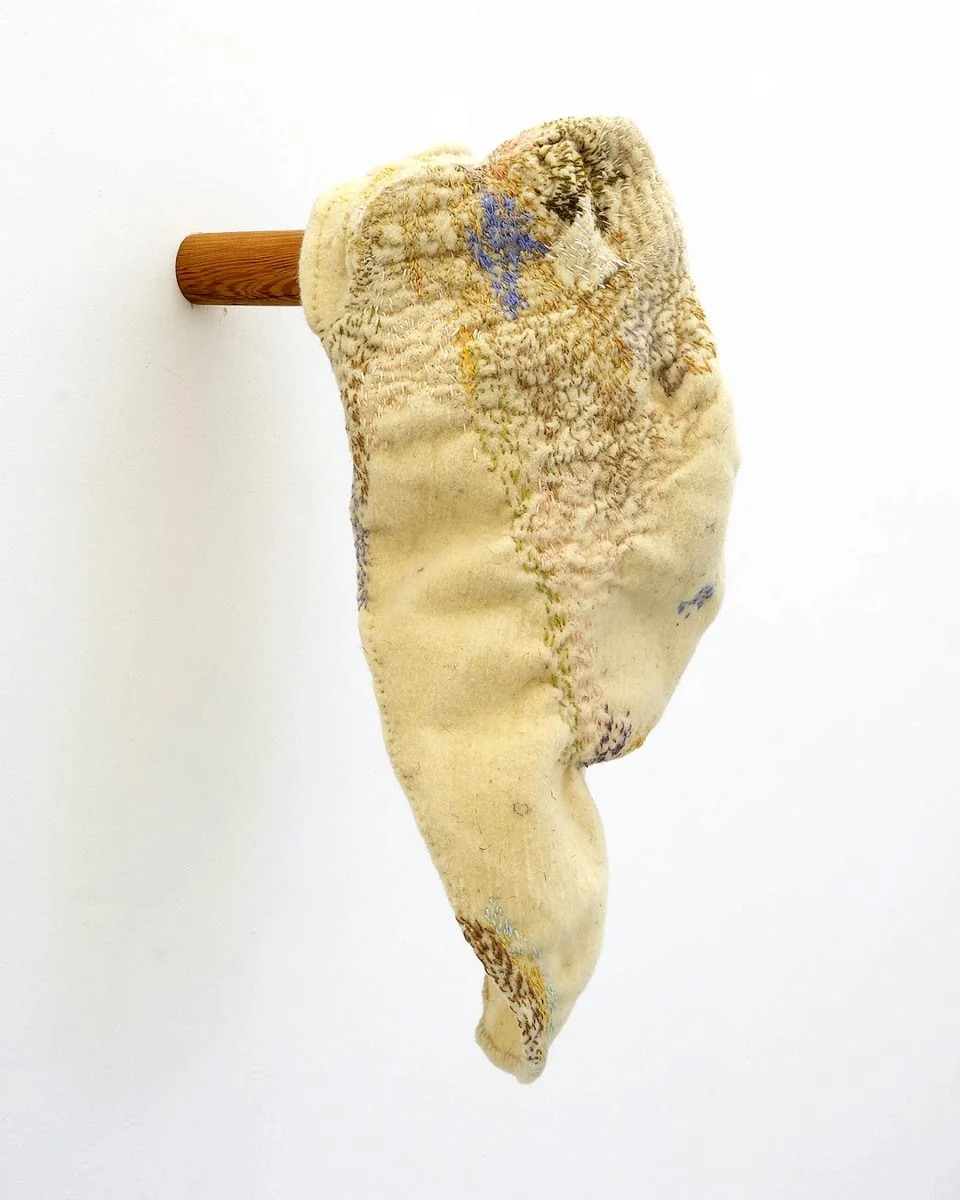
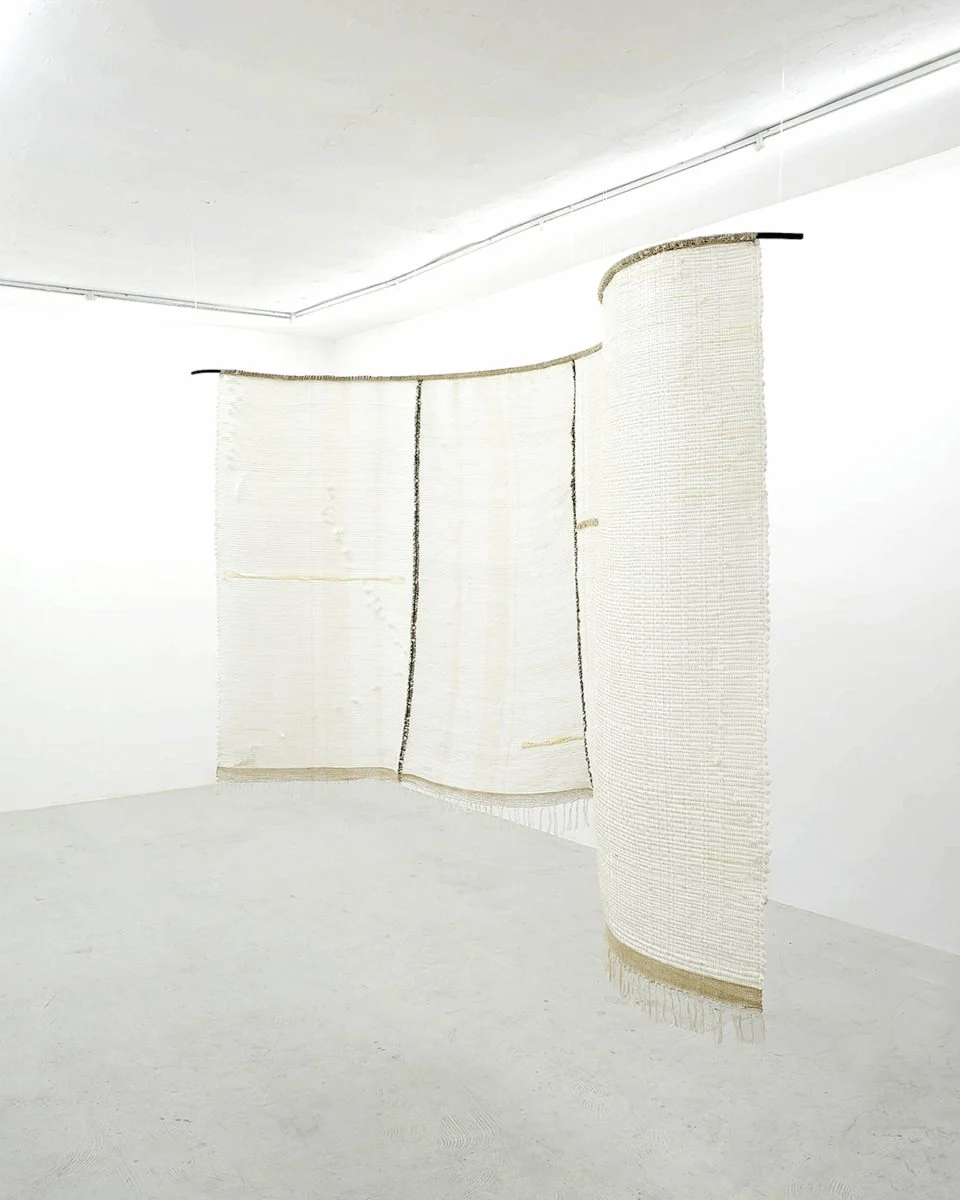
    Lara explores storytelling through text and textile, connecting fabric, language, and material. Working with natural fibers, dye, and weaving, the practice reflects on identity, memory, and cultural heritage. Processes of making become a tactile form of reading and writing, shaped by time, touch, and material presence. the artist links personal experience with collective narratives embedded in material traditions

    Meet the Artist

    Tell me about yourself and what you’re working on during your residency at GlogauAIR.

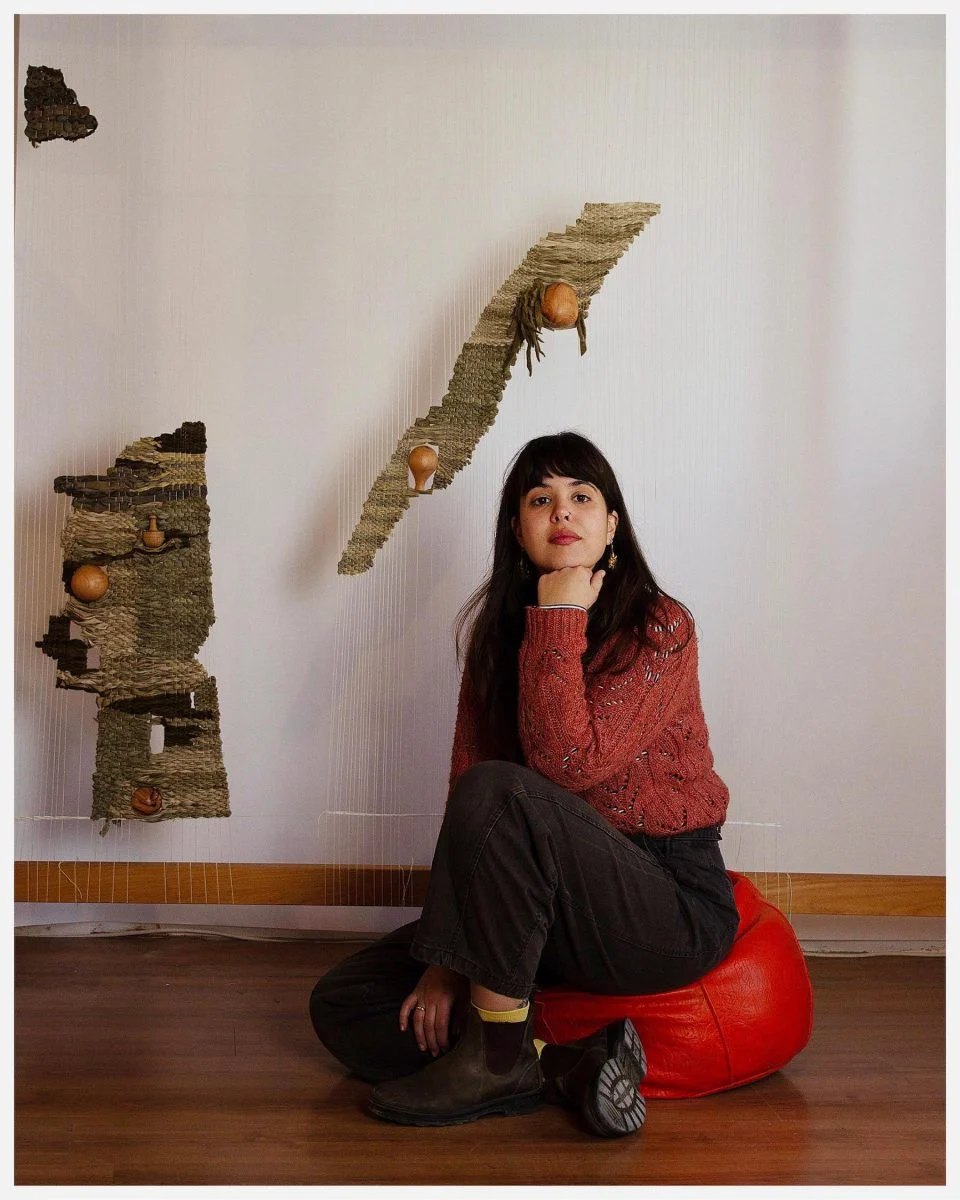
    I’m Lara, and I usually work with textile techniques.

    I‘m interested in investigation through materials. I source them and research traditional techniques to produce textile art.

    My work is related to the origin of these materials, such as wools, cottons and natural materials.

    What draws you to natural materials?

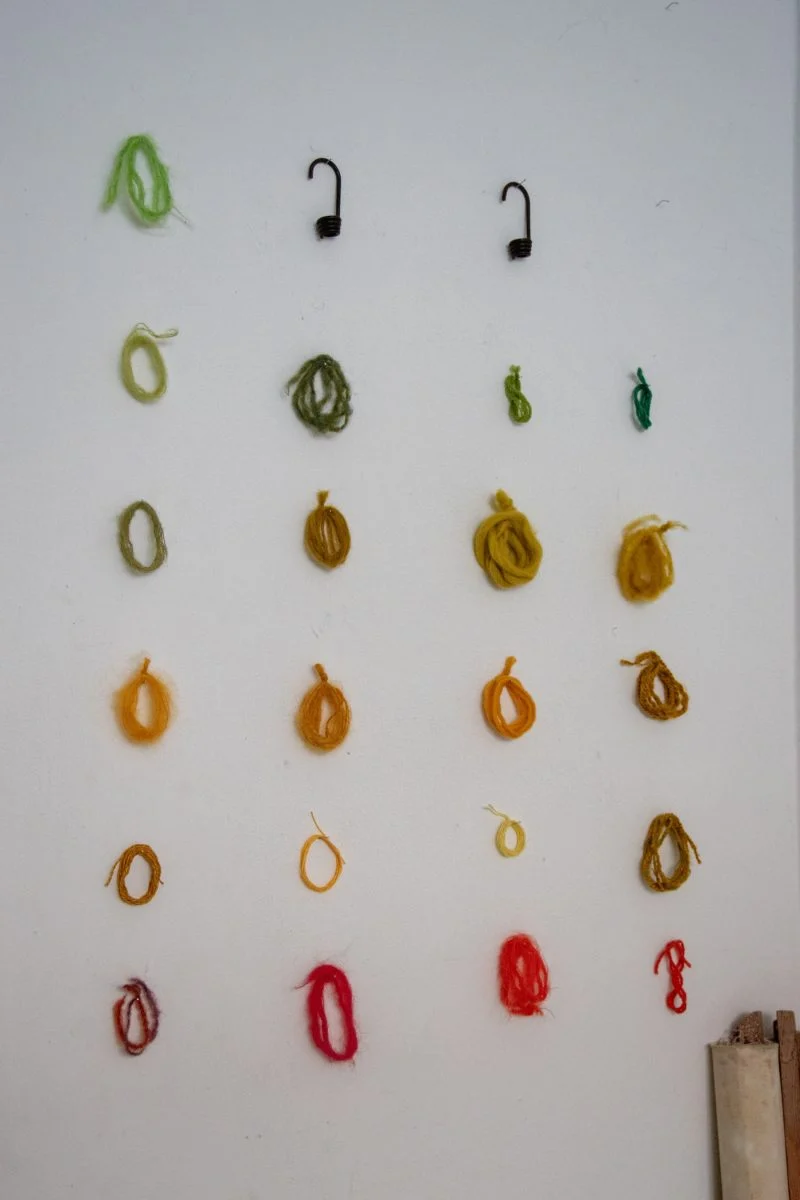
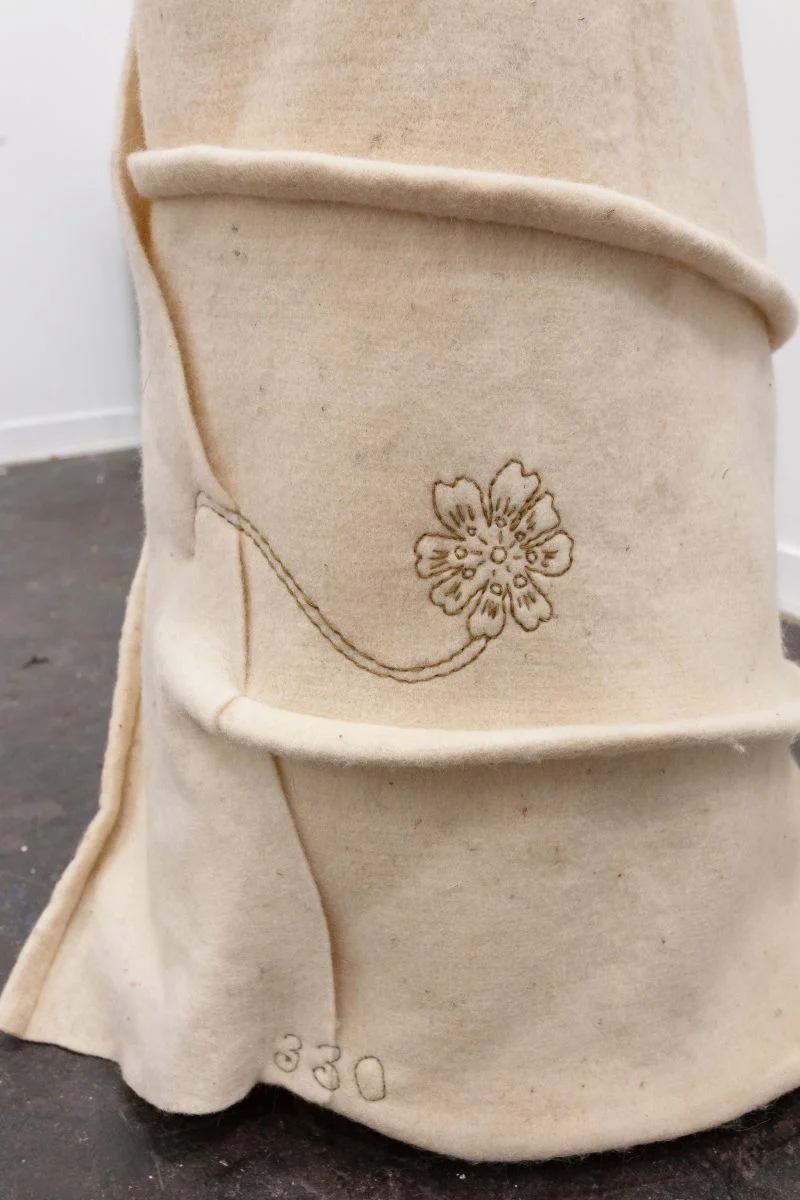
    I started working with textiles at university when I was doing my studies in fine arts.  When I started my master’s, I tried to use materials that I had around. I always try to recycle materials and give them a second life. Because where the material comes from is really important in my practice. So, for example, in my region in Spain, we have a lot of weeds that we use for making robes, baskets, and even clothes. There’s a long tradition based on natural materials. And I use that tradition in my practice.


    How do tradition and heritage impact your work?

    Textiles are a way of telling stories.  It could be a fairy tale, it could be your own story. But one of the most important things to me is to be able to tell the story of the material before it comes into my hands. I look at where materials and practices come from. I try to recover techniques by asking people who have been working with them, but it has become really hard to find these people.

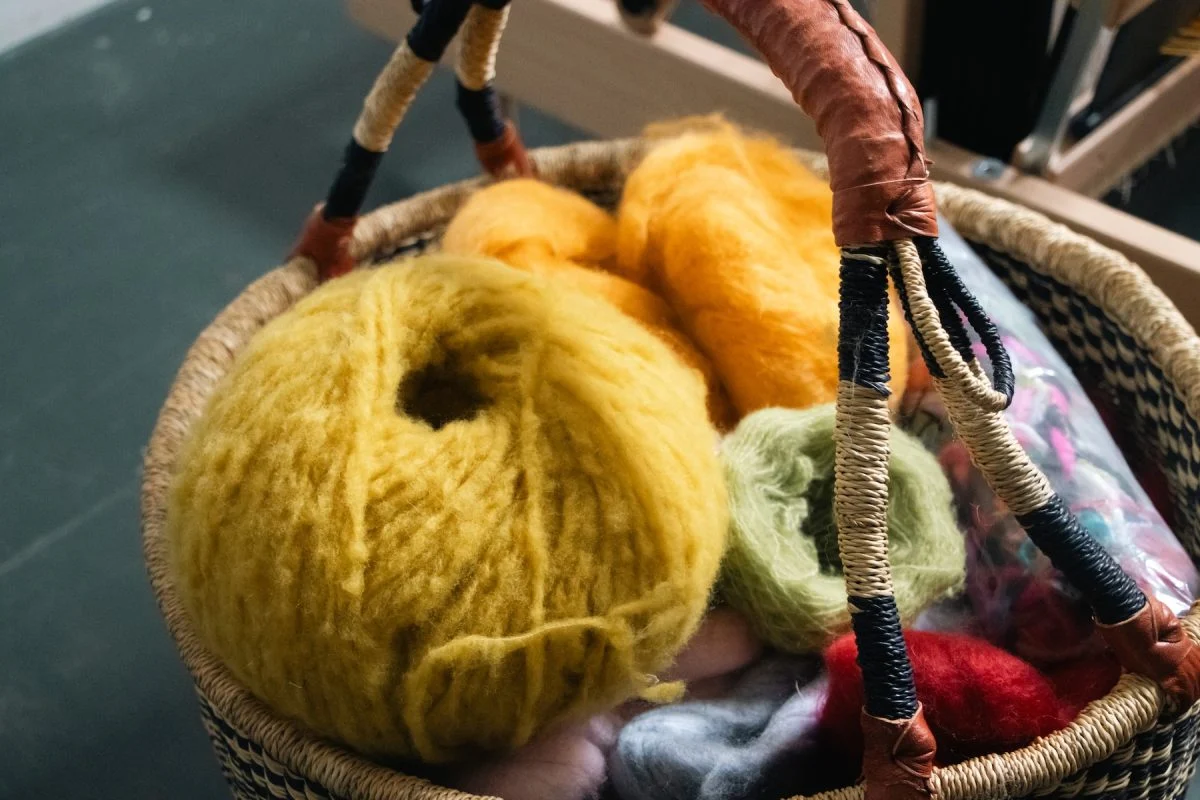
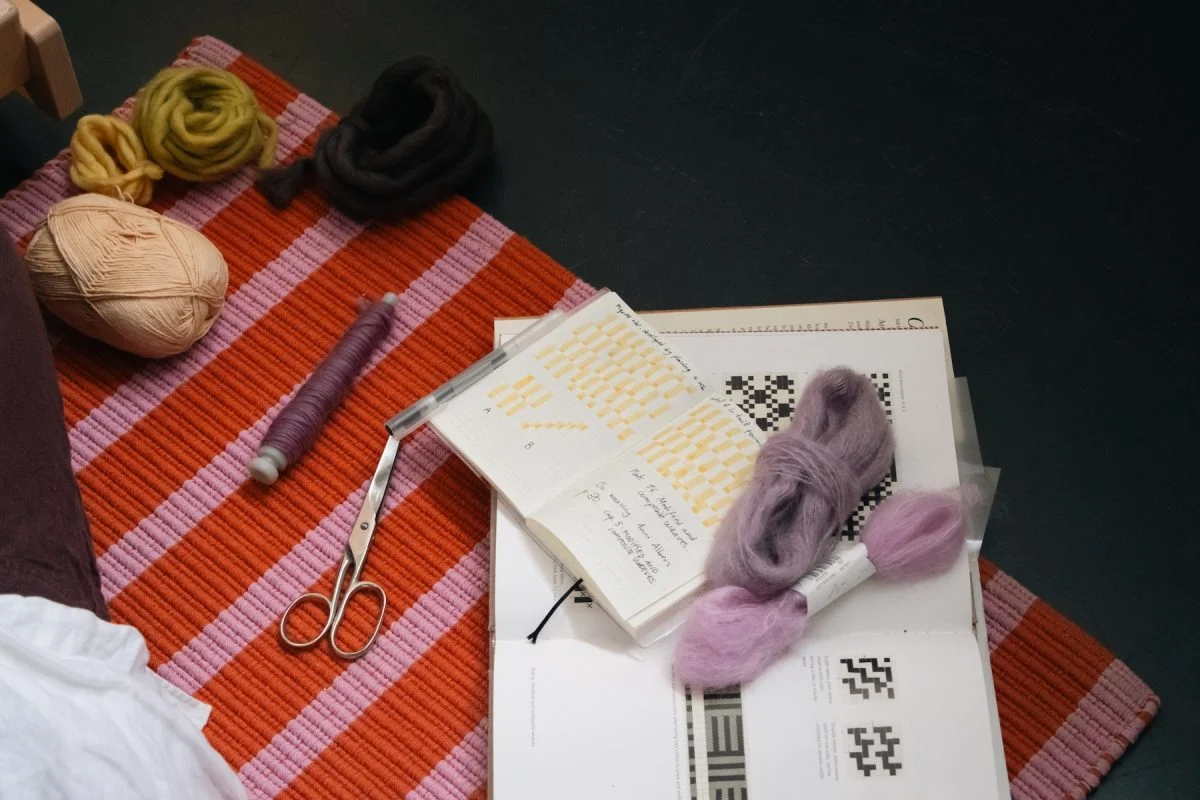
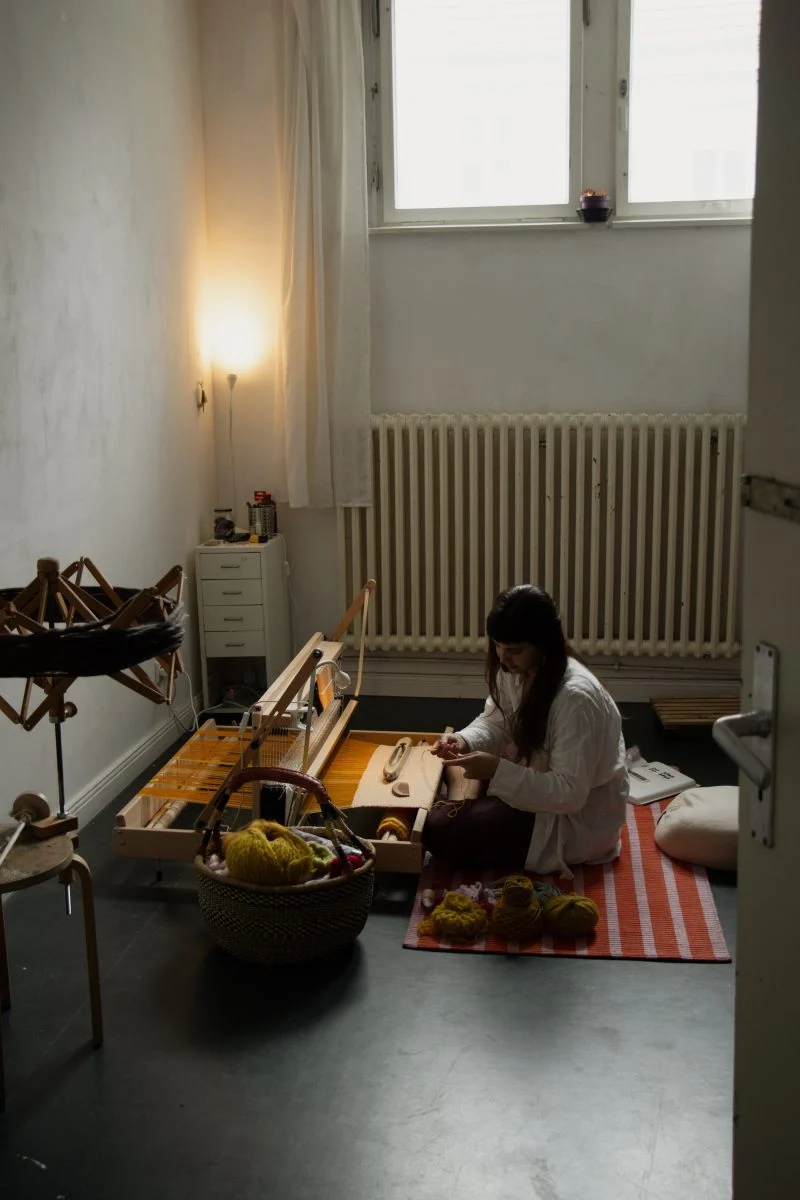
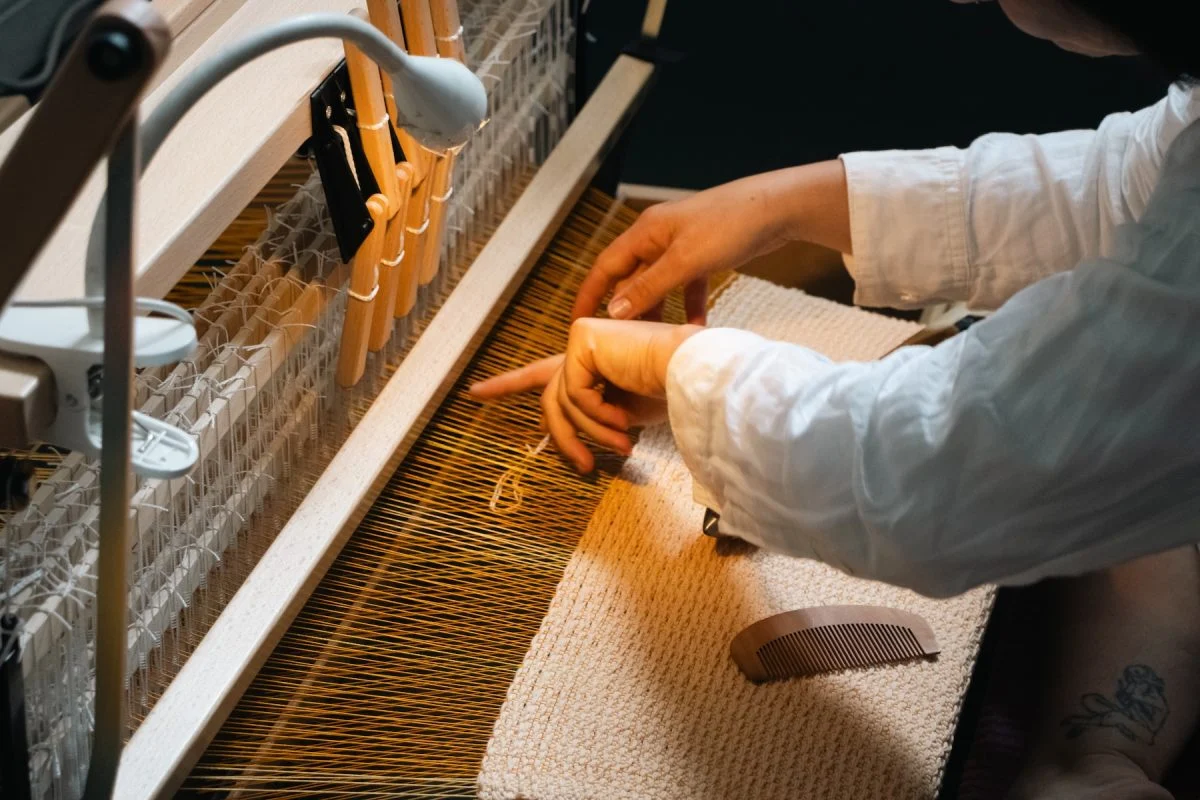
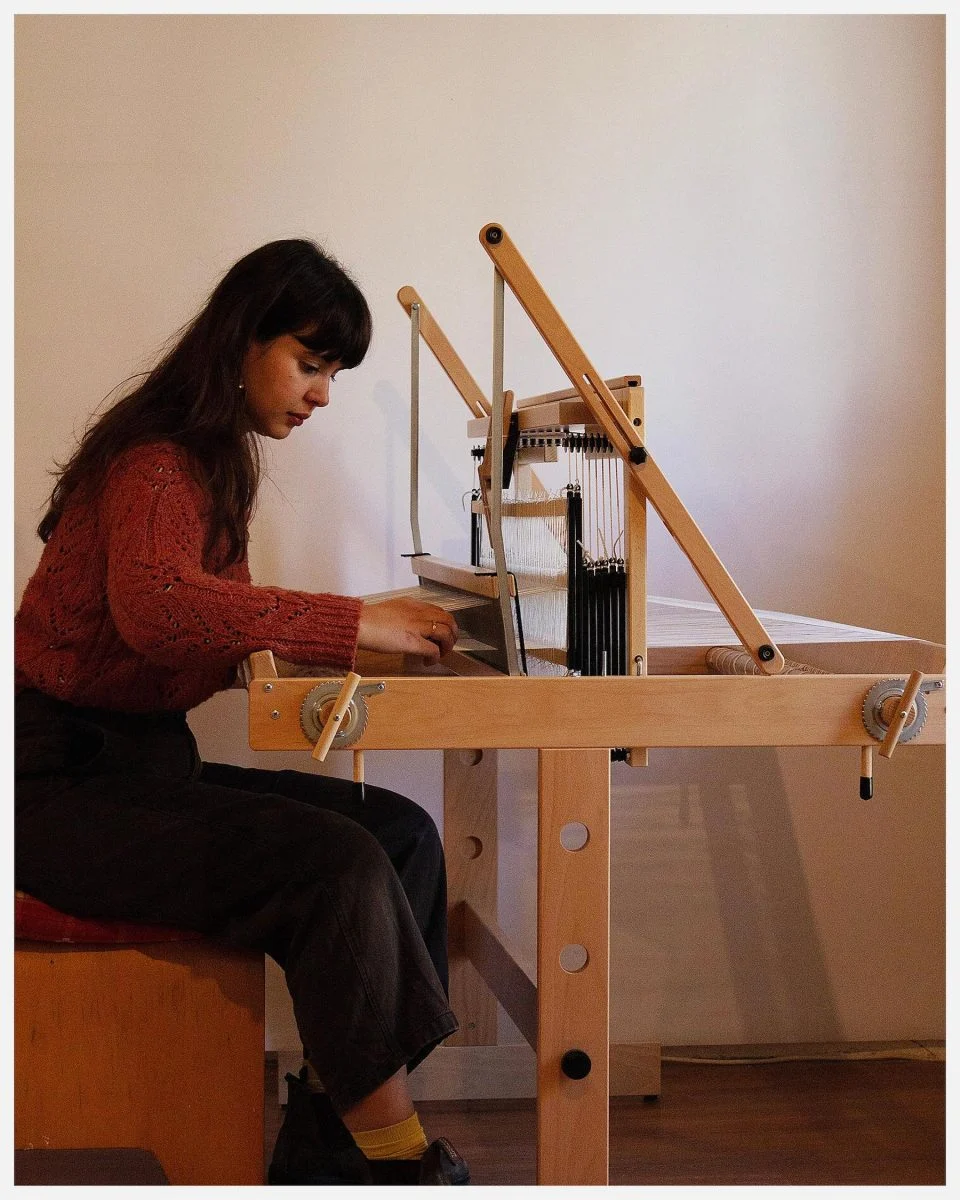
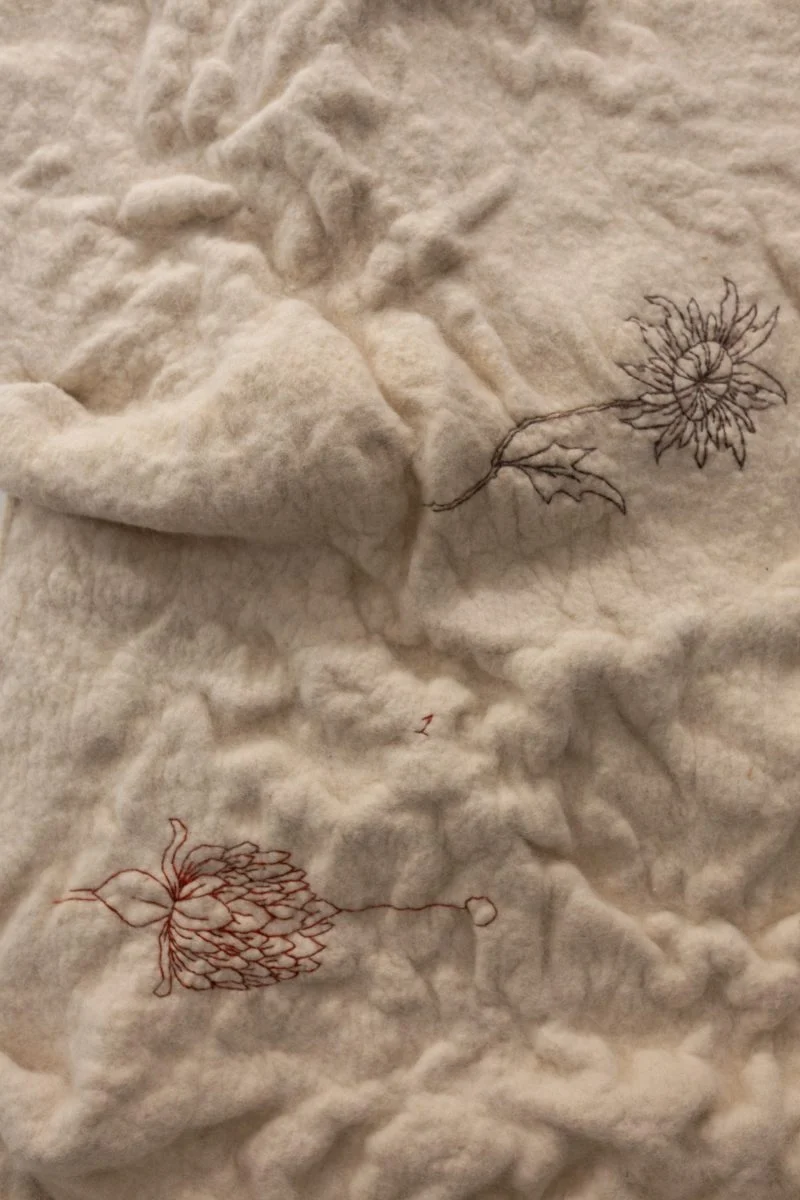
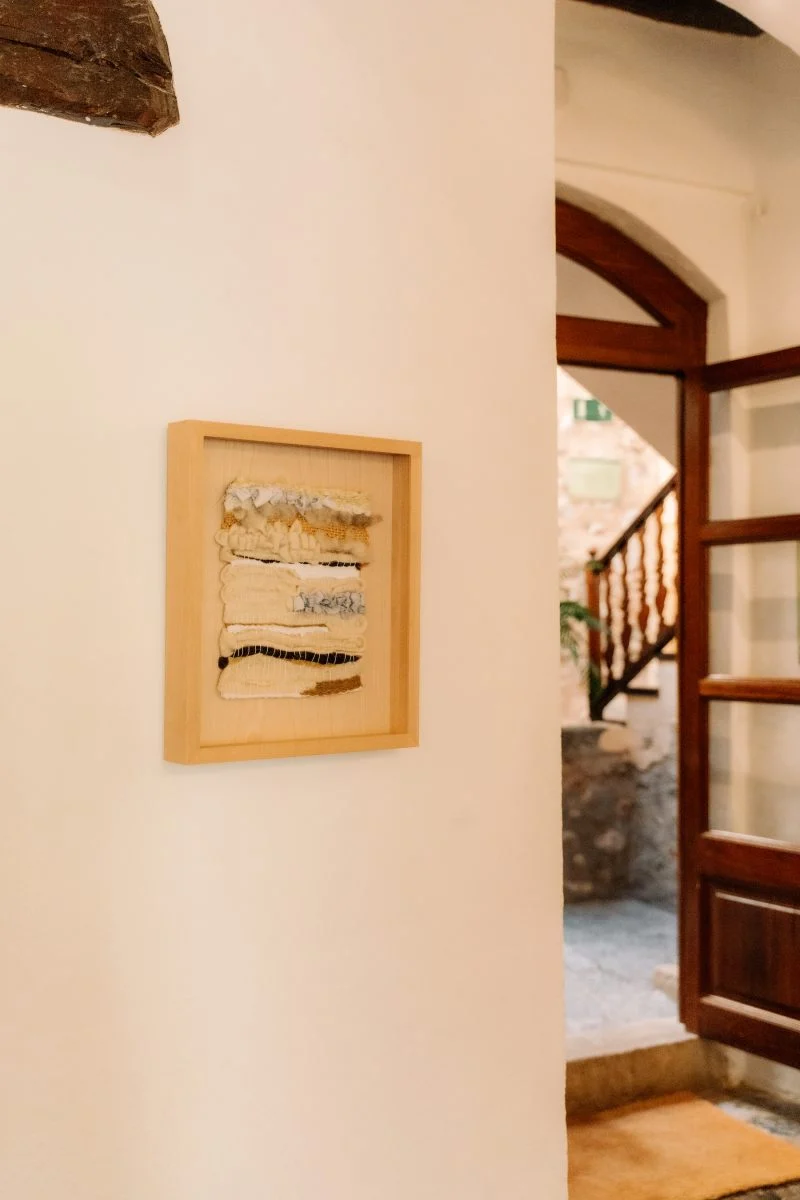
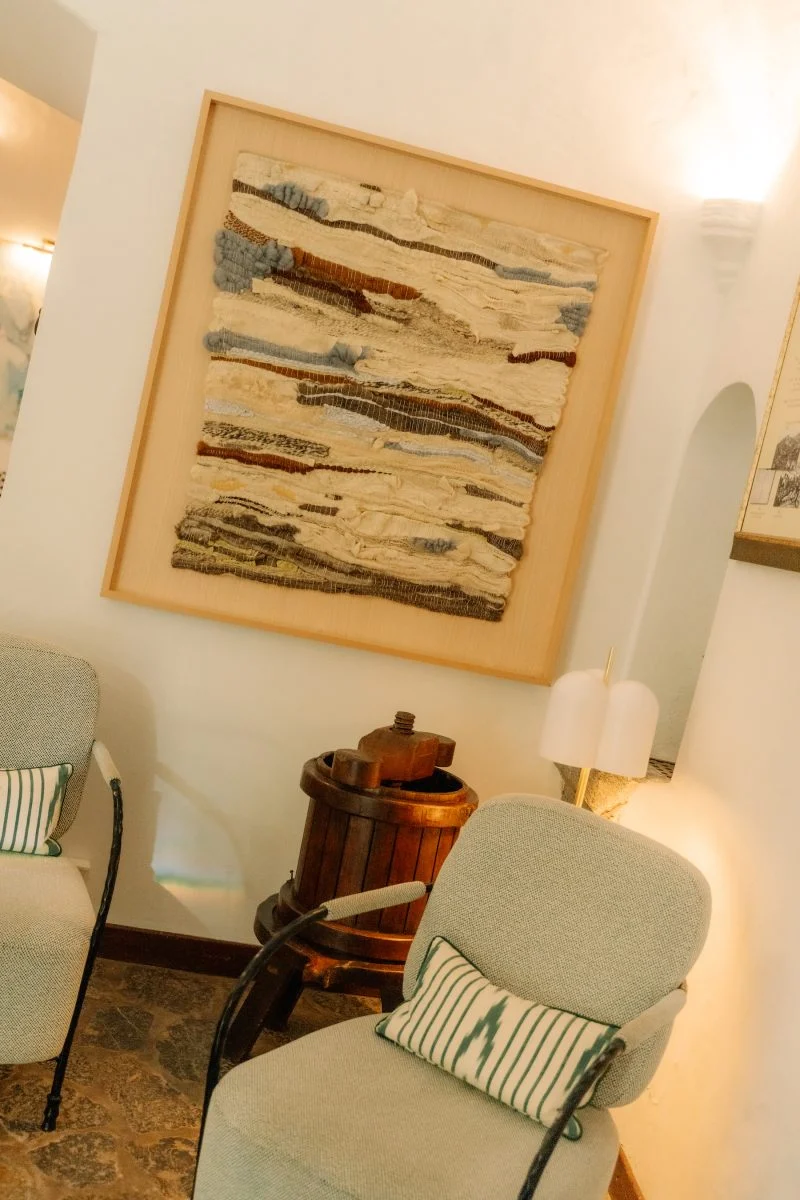
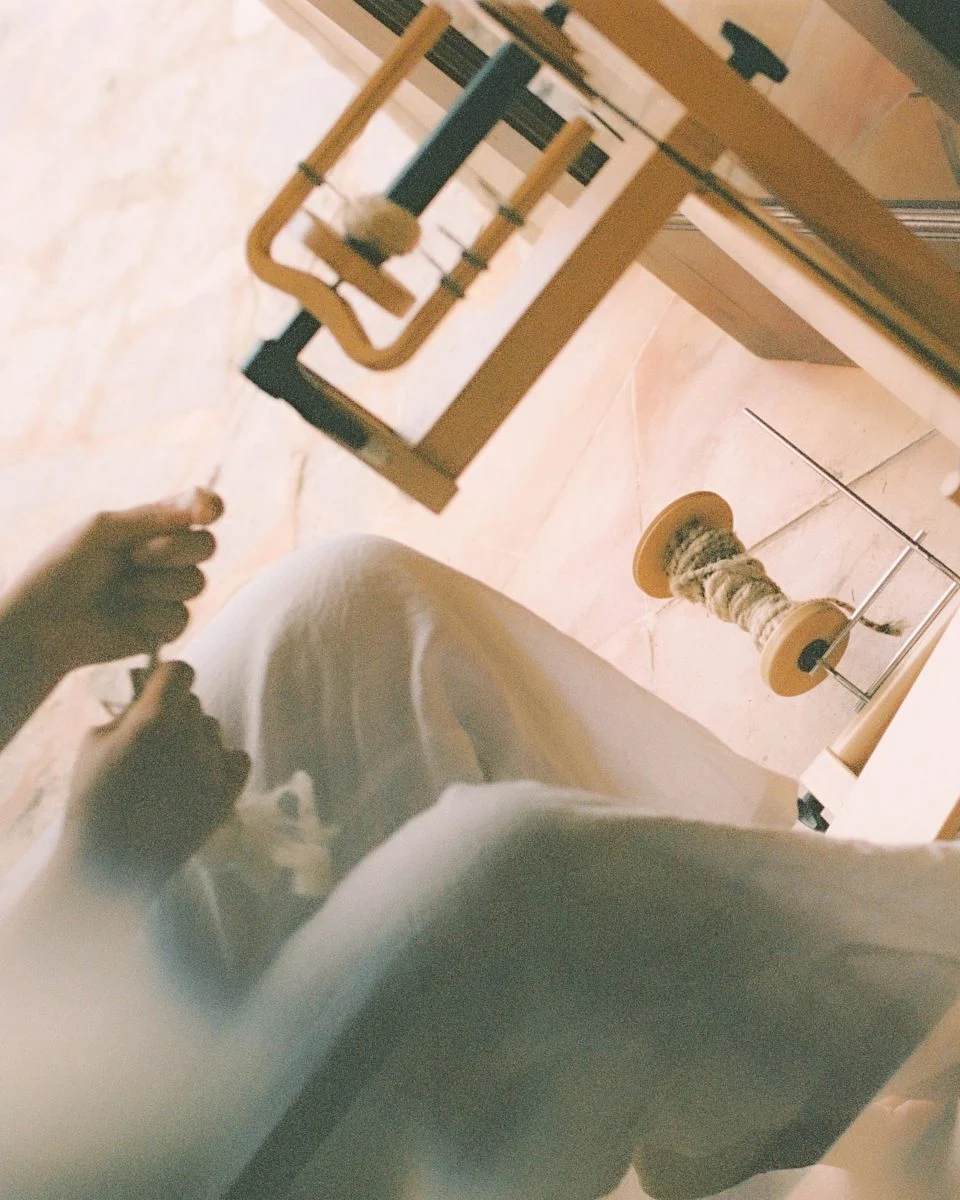
    Usually, I don’t sketch or draw before I make work. The material builds the piece. For me, instead of using words, I use thread and wool to build sentences on the loom. It’s about the texture or the volume that the material has. The material builds a story almost by itself.

    Of course, parts of my story are woven in. I’m telling my own story, but also a story of the people who came before me. It’s really related to women’s work and the space of the house. Textile was a way for women to express themselves when they couldn’t do it openly anywhere else, and part of that identity and memory is really linked to what I’m doing. Sometimes, when people see my work, they start telling me about how it reminds them of when they were little kids: sometimes they talk about their grandmas, their houses, or little reminders of home.

    What do you want people to take away from your work?

    Textiles are something everyone relates to. So using all these techniques and materials is a way of connecting with other people. Textile languages are universal. It’s like all our stories are getting put together inside the loom.

    We’re talking about soft materials, and it’s something I find awesome about fabrics: that softness brings you closer to a piece by instinct. As you get closer, you see all these little things that you didn’t perceive at first. I like this feeling of slowing time and getting closer. It’s a way of caring.


    Interview Jo Birdsell (jobirdsell.com)

    Photos Raviva Nsiama (@raviva.ziama)

    • Statement
    • GlogauAIR Project
    • CV
    • Gallery
    • More

    Statement

    I have always been interested in stories—both the written ones I could read, and the ones people told me, whether real or fictional, or the ones I could invent and create as I pleased.

    After completing my studies in Fine Arts and Art Production, I decided to continue learning to read and tell stories through materials and their manipulation. While writing my doctoral thesis, I discovered the parallels between text and fabric, and how these two forms of expression have coexisted throughout human history.

    Soft materials and plant and animal fibers have their own significance. By working with materials drawn from nature, directly from the physical context in which I find myself, the resulting pieces are rooted in this context from the very moment they begin to be worked on.

    I am interested in identity, both my own and the collective one. Cultural heritage endures through expressions, objects, places, materials, and processes. I try to incorporate that heritage into my discourse through the use of textile techniques, natural dyeing, and the formats I work with.

    Textiles invite manipulation, experimentation with materials and techniques. They present me with opportunities to discover how to tell stories through a process in which time is yet another element to consider.

    My languages are textures, colors, light, and the materials my hands manipulate as I work. I think about my surroundings and find connections everywhere between text and fabric—between what my hands recognize and know how to read. That is how I have learned to read with my hands.

    When working at the loom, an exchange of imaginations takes place, just as when I open the page of a book. This happens when the weft is joined with the warp. Writing with thread, string, and wool. Leaving a written record of what has been lived, of what has been witnessed through the interplay of long sentences followed by periods and commas, knots and ends forming words until a story, a tale, is told.

    GlogauAIR Project

    The project aims to explore the possibilities and codes of textile languages through a methodology based on formal and material experimentation on the loom, as well as a theoretical study of key references.

    This is similar to the Bauhaus Textilwerkstatt (textile workshops), spaces dedicated to research into creation and technical and process-based innovation, where many of the foundations of contemporary textile art were laid.

    Taking as its starting point the recent research carried out during the doctoral thesis entitled Narration through Threads: Textile Languages in Contemporary Artistic Practice and their Link to Oral Tradition and Memory, the project seeks to delve even deeper into the codes specific to the language of textiles and to establish materials as the primary narrators of the story.

    CV

    Formación académica

    • 2025. Doctora Cum laude. Doctorado en Artes: Producción e Investigación. Universitat Politècnica de València UPV. España.
    • 2019-2025. Estudiante de doctorado. Doctorado en Artes: Producción e Investigación. Universitat Politècnica de València UPV. España.
    • 2021-2024. Técnica Superior Investigadora. Universitat Politècnica de València UPV. España.
    • 2021-2024. Forma parte del grupo de investigación Laboratorio de Creación Intermedia (LCI), UPV, Universitat Politècnica de València UPV. España.
    • 2017-2018. Máster en Producción Artística. Facultad de Bellas Artes Sant Carles. Universitat Politècnica de València UPV. España.
    • 2013-2017. Grado en Bellas Artes. Universitat Politècnica de València UPV. España.

    Premios y Becas

    • 2025. Artsist in residence. La Residencia. Artnet. Deià, Mallorca, España.
    • 2026. Premio Adquisición Colección Cervezas Alhambra. Estampa 2024. Madrid, España.
    • 2027. Premio Adquisición Colección La Escalera. Estampa 2024. Madrid, España.
    • 2028. Premio Adquisición Fundación Hortensia Herrero. Abierto Valencia 2024. Valencia, España.
    • 2029. Premio Adquisición Feria Marte en Abierto Valencia. Valencia, España.
    • 2030. Premio Adquisición Colección La Escalera en Abierto Valencia 2024. Valencia, España.
    • 2031. Premio Artista de Castellón. MARTE, Feria de Arte Contemporáneo. Castelló, España.
    • 2021-2024. Beca. Contrato predoctoral para la formación de doctores en el programa propio de la Universidad Politécnica de València.- Subprograma 1 (PAID-01-20). Universidad Politécnica de Valencia, UPV. España.
    • 2020. Beca. Beca Hàbitat Artístic 2020. Ayuntamiento de Castellón. Barcelona, España.
    • 2021. Beca. Ministerio de Educación: Departamento de Pintura. Universidad Politécnica de Valencia UPV, España. Proyecto metodologías en producción artística / artes visuales.
    • 2016-2017. Beca. Becas de Colaboración Cultura Vicedecanato Facultad de Bellas Artes. Universidad Politécnica de Valencia, España.
    • 2016. Selección. Ministerio de Educación. Documentación del archivo de dibujos históricos de la asignatura Dibujo, Lenguaje y Técnicas. Departamento de Dibujo Universidad Politécnica de Valencia, España.

    Residencias artísticas

    • 2025. Artist in Residencia x Artnet. La Residencia, Belmond. Deià. Mallorca, España.
    • 2026. Interntional WoolSymposium. El Arreciado. Toledo, España.
    • 2027. AVAN04/ Despatrimonialitzar el patrimoni. Xarxa de Centres rurals per a la recerca contemporània. AVAN y Universitat Jaume I. Castelló, Espanya
    • 2028. Centre d’Art La Rectoria (Fundació la Rectoria de Vilamajor). Barcelona, España.
    • 2029. Berlin Art Institute (BAI). Berlín, Alemania.

    Obra adquirida por Museos e Instituciones

    • 2026. Museu d’Art Contemporani Vicente Aguilera Cerni de Vilafamés (MACVAC). Obra: Aixovar Impropi.
    • 2027. Colección de arte Cervezas Alhambra. Obra: Lana Tramada.
    • 2028. Colección La Escalera. Obra: Caja con relato I
    • 2029. Fundación Hortensia Herrero. Obra: Tuft II
    • 2030. Colección La Escalera. Obra: Tejerindo III
    • 2031. Feria Marte. Obra: Aixovar Impropi
    • 2032. DiGoodCollection. Obra: Mel I
    • 2033. Colección La Escalera. Obra: Mostrari II
    • 2034. Museu de la Ciutat de Castelló (MUCC). Obra: Ramat (Schäfchen).
    • 2035. Museu de la Ciutat de Castelló (MUCC). Obra: Máscara I.

    Docencia Impartida

    • 2024. Colaboración docente. Curso 2023-2024. Asignatura impartida: Escultura I, primer curso del Grado en Bellas artes. Universidad Politécnica de Valencia. España.
    • 2025. Conferencia universitaria. Knowledge transmission and oral memory through graphic-textile and installation formats. Educational actions in the visual arts. Palazzo Arese Borromeo, Cesano Maderno, Milan, Italy.
    • 2026. Conferencia universitaria en la asignatura Ontología Social. Asignatura a cargo de la Doctora Francesca De Vecchi. Facultad de Filosofía, UniSR. Milán, Italia.
    • 2027. Colaboración docente. Curso 2023-2024. Asignatura impartida: Taller interdisciplinar de materiales, Tercer curso del Grado en Bellas artes. Universidad Politécnica de Valencia. España.
    • 2028. Colaboración docente. Curso 2023-2024. Asignatura impartida: Diseño de espacios publicitarios y escenografía, Tercer curso del Grado en Diseño y Tecnologías creativas. Universidad Politécnica de Valencia. España.
    • 2029. Colaboración docente. Curso 2022-2023. Asignatura impartida: Taller interdisciplinar de materiales, Tercer curso del Grado en Bellas artes. Universidad Politécnica de Valencia. España.
    • 2030. Colaboración docente. Curso 2022-2023. Asignatura impartida: Diseño de espacios publicitarios y escenografía, Tercer curso del Grado en Diseño y Tecnologías creativas. Universidad Politécnica de Valencia. España.
    • 2031. Colaboración docente. Curso 2021-2022. Asignatura impartida: Escultura I, primer curso del Grado en Bellas artes. Universidad Politécnica de Valencia. España.

    Talleres y cursos impartidos

    • 2025. Formació en pigments naturals. Laboratori de didáctica i d’experimentació plástica. Universitat Jaume I, UJI. Castelló, España.
    • 2026. Talleres de introducción al textil en La Residencia, Belmond. Deià. Mallorca, España.
    • 2022-2023. “Textile Experimentation Lab. Collective artistic Art Production”. Espacio de encuentro social y artístico Schmatzkammer. Eberswalde, Alemania.
    • 2021. Talleres transdisciplinares: “Memoria textil”. Residencia Artística GlogauAir. Berlín, Alemania.
    • 2022. Taller textil interdisciplinar. Eberswalde, Alemania.
    • 2023. Talleres de iniciación al grabado para niños. Escola d’Estiu UPV. Valencia, ES.
    • 2024. Talleres de iniciación al grabado para niños. Primavera Educativa. Generalitat Valenciana GVA, Conselleria d’educació, investigación, cultura i esport. Valencia, ES.

    Exposiciones individuales

    • 2026. Zurcir el Tiempo. Río & Meñaka galería, Madrid.
    • 2027. La memoria dels Horts. VII Edición del Festival dels Horts, Valencia.
    • 2028. Carmenar la maraña. Vangar galería, Valencia.

    Exposiciones colectivas

    • 2026. A media lumbre. IVAM. Valencia, España.
    • 2027. Urdir: Convivencias. Centro Cultural Casa de Vacas en el Parque del Retiro, Madrid, España.
    • 2028. Sures. Palacio Provincial de Cádiz. Cádiz, España.
    • 2029. Diarios de DiGood. MACVAC. Vilafamés, Castellón, España.
    • 2030. Castelló contemporánea. El Convent, espai d’art, Vilareal, Castellón, España.
    • 2024-2025. Si pudiera elegir mi paisaje. Centro del Carmen de Cultura Contemporània, CCCC. Valencia.
    • 2024. Encuentros y desencuentros: retratosde la conexión. Colecciones Universidades Públicas Valencianas y Cañada Blanch. La Nau, Valencia.
    • 2025. Encuentros y desencuentros: retratos de la conexión. Colecciones Universidades Públicas Valencianas y Cañada Blanch. Campus universitario, Gandía, Valencia.
    • 2026. Llet llum mel. Galeria Vangar, Valencia.
    • 2027. COS I FICCIÓ. Dilalica Barcelona, Espai ECO Les Aules Castelló.
    • 2028. Catarsis. ECA Ribaroja del Turia, Valencia.
    • 2029. El grito contado. Fundación Schlotter, Altea.
    • 2030. 7+7=13, Adquisición obra MUCC, Museu de la Ciutat de Castelló.
    • 2031. Cartografías textiles. Universitat de València.
    • 2032. El Descrédito de la Realidad. EACC, Espai d’Art Contemporani de Castelló.
    • 2021-2022. Beques Hàbitat Artístic Castelló. Espai Menador.
    • 2021. Open Studios. Centre d’Art la Rectoria. Barcelona.
    • 2018-2019. Posquins. Valencia.
    • 2018. IV Premio Libro de Artista de Móstoles. Madrid.
    • 2019. TransportArte 2018. UPV y EMT, Empresa Municipal de Transporte, Valencia.
    • 2020. PAM’18. Universitat Politécnica de València.
    • 2021. Festival Intramurs 2018 con la instalación “Invaïts”. Valencia.
    • 2022. Breaking de Wall. Rompiendo el muro. Arizona, US.
    • 2023. 17:46 – 20:02. Salamanca.
    • 2024. 17:46 – 20:02. Universidad Politécnica de Valencia.
    • 2025. [Insertar feminismo aquí]. Burjassot.
    • 2026. Memorial Emiluo Sdun, Universidad Politécnica de Valencia.
    • 2016-2017. Memorial Emilio Sdun, Museo de Jaén, Jaén.
    • 2016-2017. Dadadá Dadadá dulce Dadadá. Exposición en homenaje al Cabaret Voltaire y al movimiento Dadá, Valencia.
    • 2016. 1 de diciembre. Ca Revolta, Valencia.
    • 2017. Exposición de artistas locales, Villalonga, Valencia.
    • 2018. Asociación Cultural de Vecinos Els Mestrets, Castelló.
    • 2019. Jóvenes Artistas. Fundación Dávalos Fletcher, Castelló.

    Asistencia y participación en ferias de arte

    • 2024. Estampa 2024. Madrid
    • 2025. Swab 2024, Barcelona.
    • 2026. MARTE, Feria de Arte Contemporáneo Castellón. Participación con stand individual.
    • 2027. MARTE, Feria de Arte Contemporáneo Castellón.
    • 2028. Obra seleccionada para la feria CONTEMPORARY VENICE 2020. Venecia, Italia.
    • 2029. GRAF 2019. Barcelona.
    • 2030. Festival Tenderete 2019. Valencia.
    • 2031. Sindokma 2018. Valencia.
    • 2032. ArtsLibrsis 2017. Barcelona.
    • 2033. ARCO Madrid 2017. Madrid.
    • 2034. SINDOKMA, festival del libro de artista. Valencia
    • 2035. Papelcontinuo: Festival de edición gráfica independiente. Málaga.

    Colaboración en proyectos artísticos internacionales

    • 2025. Colaboración con Ubiko, marca de arquitectura y diseño, en el shooting para el proyecto Recer.
    • 2026. Colaboración con la marca valenciana de diseño Teulat. Edición de 20 piezas.
    • 2027. Diseño y producción artística Máscara textil para el videoclip “Espacio vacío” del grupo musical Carolina Durante en colaboración con Él Mató A Un Policía Motorizado.
    • 2028. Colaboración en Libro intervenido (problemas. ca), Asociación L’Horta Gràfica, Valencia.
    • 2029. Colaboración en Memorial Emilio Sdun, “Con muchos caracteres”. Museo de la Imprenta y las Artes Gráficas del Puig. España.

    Comunicaciones presentadas

    • 2024. Participante en el III Congreso internacional de pensamiento, cultura y sociedad: Investigación, Divulgación y Transferencia (I+d+T), “Leer y contar, el hilo y las manos como herramientas narrativas. Relaciones entre el arte textil y la pedagogía.” LOGOS. Universidad de Córdoba.
    • 2025. Participante XI Congreso Internacional Multidisciplinar de Innovación Edicativa. “Memoria textil. Exploración plástica colectiva en el espacio GlogauAir de Berlín.” CIMIE. Sanander. España.
    • 2026. Participante mesa redonda. Artistes visuals, Temps de dones, dones en el temps. Organiza: Intersindical y MUCC, Museu Ciutat de Castelló.
    • 2027. Participante. XIX Congreso Internacional de la SEDLL. “Libro de artistas, una aproximación de género al cuento de Caperucita Roja”. SEDLL. Almería, España.
    • 2028. Participante. I Congreso Internacional de Docentes. Universidad Jaume I, UJI, España.

    Asistencia conferencias y talleres

    • 2022. Curso. Agroversitat, Laboratorio de Arte, Agroecología y Pedagogías Críticas. Organiza colectivo Viridian. Produce Consorci de Museus de la Comunitat Valenciana.
    • 2023. Asistente. I Congrés Estètiques i Cultura Valencianes. Universitat Politècnica de València, UPV. Facultat de Belles Arts.
    • 2024. Curso. Taller de Bogolán: artesanía textil africana de la cultura Bambara. Imprte Sakimba Hema. Organiza Departamento de Dibujo Universitat Politècnica de València.
    • 2025. Asistente. Congreso Re/Des Conectar. Organiza Asociación Nacional de Investigadores en Artes Visuales, ANIAV.
    • 2026. Curso. Cestería silvestre. Organiza e imparte Val Castellet.
    • 2027. Jornadas feministas. Organiza EACC, Espai d’Art Contemporani de Caastelló.
    • 2028. Asistente. VI Interdisciplinary and Virtual Conference on Arts in Education – CIVAE 2021. Organiza Musicoguia Magazine.
    • 2029. Asistente. Mushroom Color Atlas: A Chromatic Universe of Fungi. Organiza Surface Design Association.
    • 2030. Asistente. Freire: La Pedagogía Crítica que transforma y la educación, la ciencia y el mundo. Organiza CREA.
    • 2031. Asistente. III Interdisciplinary and Virtual Conference on Arts in Education – CIVAE 2021. Organiza Musicoguia Magazine.
    • 2032. Curso. On streaming. Curso en Arteterapia. Plataforma Formación al Cuadrado. Duración 100 horas.
    • 2033. Asistente. Seminario web. How To Get Published. CRUE y Wiley.
    • 2034. Asistente. Seminario: El género en disputa 30 años después. Facultat Bellas Artes de Sant Carles, Universitat Poliècnica de València, UPV. València, ES.
    • 2035. Asistente. Atenea 2020. Arte, Moda y Tecnología sostenible. Organizado por atenea.in, Women in Arts y STEM.
    • 2036. Asistente. V Jornada sobre Artes y Activismo contra la Violencia de Género: Arte, Feminismo y Violencia de Género en Contexto de Pandemia. Organizada por Arte Contra Violencia de Género ACVG, UPV.
    • 2037. Asistente. SIPADI. Seminario Internacional sobre nuevas propuestas desde el Arte en la Docencia e Investigación. Facultad de Bellas artes de Altea, ES.
    • 2038. Taller. Curso online en streaming: Bioplásticos con Sara González de Ubieta. Duduá, Barcelona, ES.
    • 2039. Asistente. I Jornada de sensibilización sobre igualdad de género y diversidad sexual a través de intervenciones artísticas en contextos universitarios. Universidad de Valencia (UV), Valencia, ES.
    • 2040. Curso. Mediación social intercultural a través del arte. Medyart. Medyart. Mediación y Arte para la Paz, Granada, ES.
    • 2041. Asistente. IV Congreso Internacional en Artes Visuales. UPV València, ES.
    • 2042. Asistente. XIX Congreso Internacional de la SEDLL. Almería, ES.
    • 2043. Asistente. I Congreso Internacional de Docentes. UJI. Castellón, ES.
    • 2044. Taller. La litografía en color como medio de creación. (Rompiendo el muro: Tumbando el muro). UPV. Valencia, ES.
    • 2045. Taller. Técnica del enrollado: Policromía simultánea de la impresión calcográfica con una sola matriz. UPV. Valencia, ES.
    • 2046. Taller. El arte del papel como soporte y narrativa para el Libro de Artista. Procesos creativos en la fabricación de papel artesanal. Universidad Politécnica UPV. Valencia, ES.
    • 2047. Taller. Libros en 3D. Re-lectura. Castellón, ES.
    • 2048. Asistente. Naufragios. Instituto Valenciano de Arte Moderno, IVAM. Valencia, ES.
    • 2049. Asistente. El objeto y la mirada. Un diálogo con Chema Madoz. Fundación Mainel. Valencia, ES.
    • 2050. Taller. Taller de encuadernación. De la hoja a la costura. Universidad Politécnica UPV. Valencia, ES.
    • 2051. Asistencia. Simposio Antimonumentos: La crítica en el espacio público. Espai d’Art Contemporani Catelló, EACC. Castellón, ES.

    Colaboración en publicaciones didácticas, proyectos de investigación y catálogos

    • 2013. Incluida en la selección de trabajos de estudiantes del cuaderno Cuaderno de prácticas de dibujo para la presentación de diseños de producto, editado por la Universitat Jaume I.
    • 2024. Participación en la publicación del catálogo Col·leccions Universitats Públiques i Cañada Blanch 2024. Trobades i desacords: retrats de la connexió.
    • 2024. Participación con capítulo en Diálogo frente a espejismo: ensayos sobre pensamiento y sociedad en el mundo contemporáneo.
    • 2025. Participación con capítulo en el libro de resúmenes del III Congreso internacional de Pensamiento, Cultura y Sociedad, editado por Egregius.
    • 2024. Colaboración en la traducción al valenciano y voz en off del vídeo Pastat manual de colors mitjançant moleta en Riunet.
    • 2016. Colaboraciones en la traducción al valenciano y voz en off de los vídeos Entubat manual de pintures artístiques, Diluyentes y disolventes en la práctica pictórica y Aglutinant per a pintura a l’oli en Riunet.

    More

    We do not have any further information at this time.
  • Panida Te Petchara

    Panida Te Petchara

    Artist main image

    Panida Te Petchara is GlogauAIR resident from April 2026 to June 2026. Q2

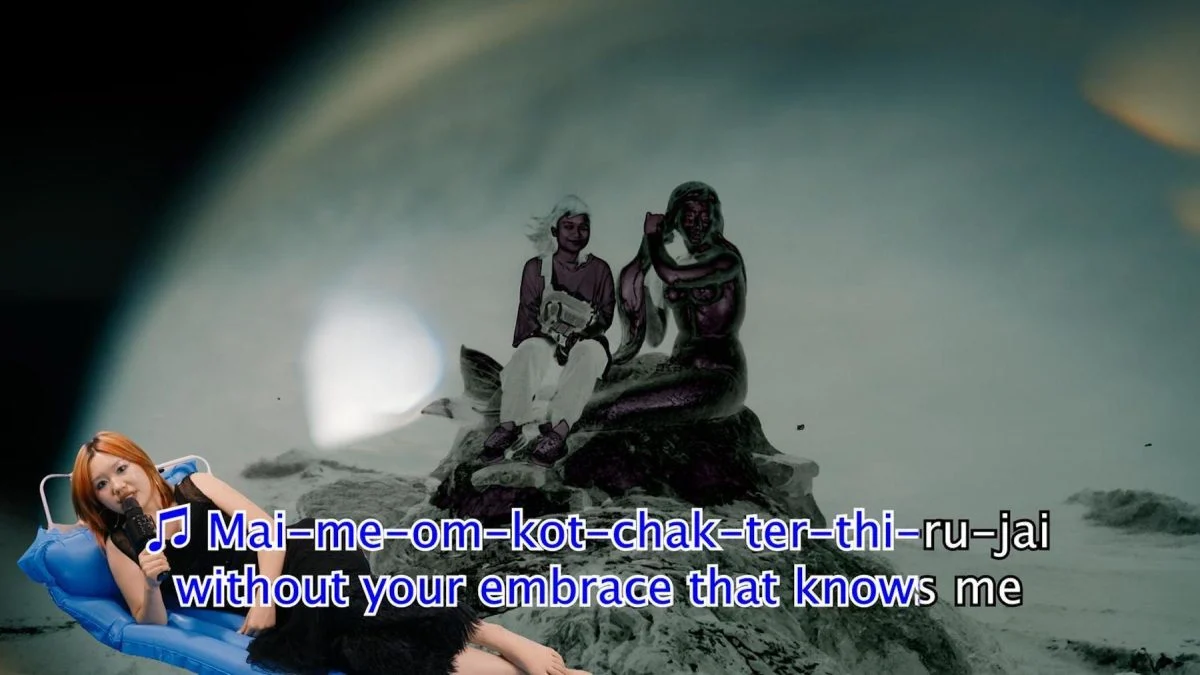
    Panida Te Petchara is a Rotterdam-based artist-filmmaker who employs moving image and installation to explore the tensions of displacement and capitalism.

    Her relocation from Thailand to the Netherlands directly informs her study of personal memory and collective consciousness.

    She subverts everyday objects with humor and satire to tell stories of migration and the struggles of underrepresented communities.

    Meet the Artist

    Do you want to start by telling me a little bit about yourself and what you’re working on while you’re here at GlogauAIR? 

    I’m a visual artist working mainly with video, photography, and installation. I’m originally from Thailand, but I’ve been living in the Netherlands since 2022, when I started my master’s in lens-based media. 

    Right now, I’m working on a short experimental film called Falling, Falling, Falling.

    I’m in the research and development stage, drafting the script while experimenting with moving images and installation materials. The idea stems from dreams that I had frequently last year about my teeth falling out. Sometimes I dreamt of it in a very commercial shot, like in a spinning display of teeth. Sometimes it’s very bloody and like a horror movie. 

    I guess the dreams are because I have a problem with my dental crown. But really, it’s all about anxiety and worry, living abroad, and not having easy access to healthcare. It’s about the worry of an unstable mind. I am curious to research more on how social conditions can influence the subconscious or dreams, especially in migrants, because I am a migrant. 

    Is migration a central theme of your work?

    After I moved to the Netherlands, yes. It’s become central to my work. Mostly because I draw inspiration from what’s around me and what’s inside me. 

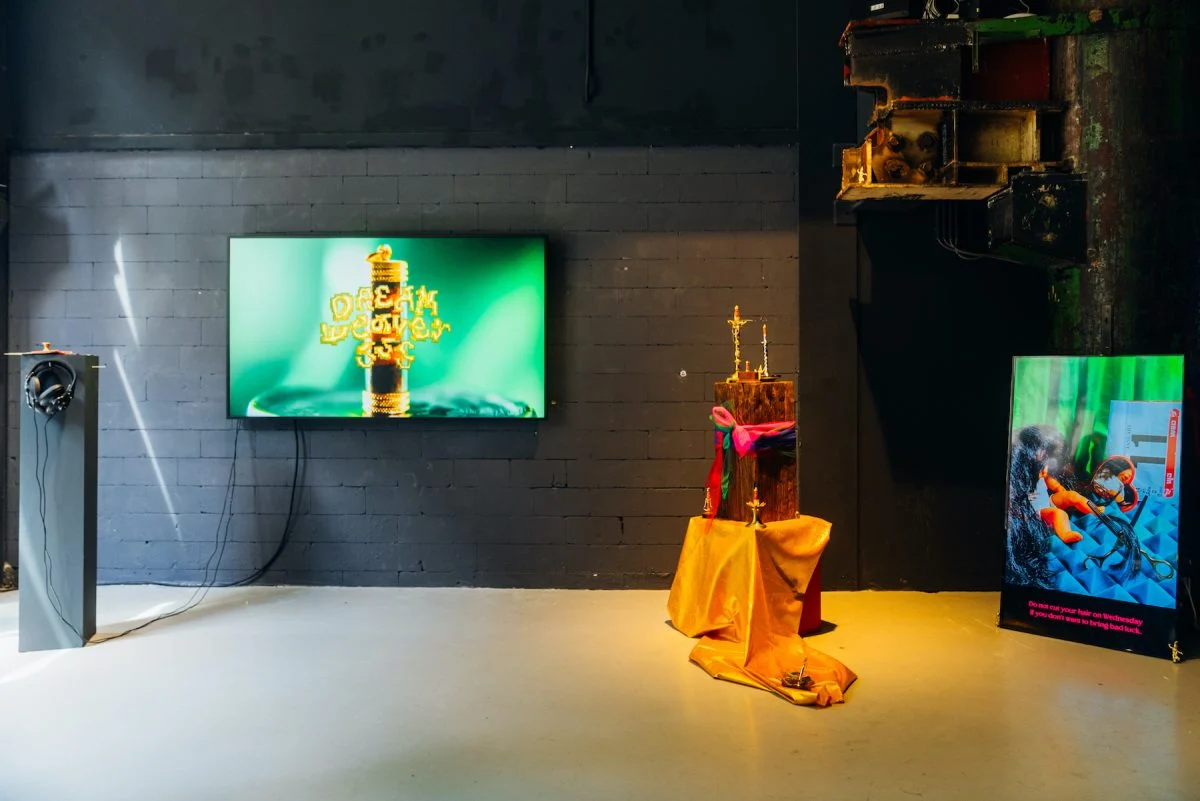
    The early work that I did after moving to Europe was inspired by Thai superstition. When I first moved to Rotterdam, everything seemed new to me except for a huge tree that was wrapped in a little colorful fabric. Thai people recognize that fabric very well. We believe that there is a sacred spirit in trees, and the sacred spirit can give us financial fortune. So I created a short film talking about that superstition in the Dutch context. It was deeply personal, reflecting my experience of moving to the Netherlands and my journey to redefine my identity by integrating my background in the media industry with humour and satire on the effects of capitalism.

    Over the past three or four years, my work has explored displacement, Thai culture, labour, identity, and of course, memory.

    Tell me more about that. How does memory come up in your work?

    I think memory is not just the past. It’s something that’s inside you. Something that you recall. 

    After moving to Europe, my identity as a Thai person became clearer to me. Because when I was living in Thailand, nobody talked about being Thai. But after moving away from home, I saw the difference between myself and the people around me. And memory is one of the biggest factors that identify who you are, because different people have different memories. 

    I use childhood memories and cultural memories as a starting point for my work. In a way, memory connects me remotely to a place, to another place, where I was but no longer am. 

    What do you want people to take away from your work?

    I think different audiences have different understandings of work. My work talks about my culture. So I think Thai people and Asian people tend to understand my work on a deeper level. Other people might only get part of it, but that’s fine. I think that’s the fun part of interpretation. 

    I hope people approach my work with curiosity. That they come with an open mind and experience it. And then, depending on who they are, maybe they’ll pick something up or ruminate on something later.

    Interview Jo Birdsell (jobirdsell.com)

    Photos Raviva Nsiama (@raviva.ziama)

    • Statement
    • GlogauAIR Project
    • CV
    • Gallery
    • More

    Statement

    Panida Te Petchara is a Rotterdam and Bangkok-based artist-filmmaker. Through lens-based media and installation, she subverts everyday objects to interrogate capitalism, displacement, and the struggles of underrepresented communities. Her transition from the Thai media industry to an MFA in the Netherlands informs her study of migration and cultural complexity, navigating the tension between personal memory and collective consciousness.

    GlogauAIR Project

    My project, failing, falling, falling, stems from a recurring dream of falling teeth. In Thai superstition, this symbolizes familial loss, while in the Dutch context, it reflects social embarrassment. To me, it’s a symbol of losing one’s foundation, especially during the housing crisis. I’m not interested in the migrant-as-victim trope. Instead, I explore urban boredom through dream logic, using a pop fever dream aesthetic to rupture the bleakness of temporary housing. At GlogauAIR, I’ll research how social conditions shape migrant dreams to develop my script and experimental film.

    CV

    Education

    • 2022 – 2024 Master of Fine Arts and Design in Lens-Based Media (Cum Laude), Piet Zwart Institute, Rotterdam, NL
    • 2013 – 2017 Bachelor of Fine Arts in Communication Design (First Class Honor), King Mongkut’s University of Technology Thonburi, Bangkok, TH

    Screenings

    • 2026
      She Cries (The Holy Water), 55th International Film Festival Rotterdam, Rotterdam, NL
    • 2025
      DREAM WEAVER 555, Wuhan Bailin Film Festival 2025, Wuhan, CN
      DREAM WEAVER 555, Asian Movie Night x QYZQARAS Film Festival Almaty, KZ
      DREAM WEAVER 555, 54th International Film Festival Rotterdam, Rotterdam, NL
    • 2024
      DREAM WEAVER 555, Melted Film Festival, Dutch Design Week, Lab-1, Eindhoven, NL

    Exhibitions

    • 2026
      Dead Circuits, Ground Floor, VLAK, Rotterdam, NL
    • 2025
      Trashscape Playground, CRASH, HK
      She Cries (The Holy Water), Mirror Becomes a Partner: photography as (im)material encounters, FOTODOK x RIB, Rotterdam, NL (Panida Te Petchara credited as Te Petchara; installation includes single-channel video and melting ice ball made of collected rain and tears, shown 18–27 September 2025)
    • 2024
      Yours Strangers, NGO DEI, The Hague, NL
      DREAM WEAVER 555, Wanderings Inside A Waiting Room, Szczur Gallery, Poznan, PL

    More

    We do not have any further information at this time.
  • Chiu I-Chi

    Chiu I-Chi

    Artist main image

    Chiu I-Chi is GlogauAIR resident from April 2026 to June 2026. Q2

    Chiu I-Chi is a Taiwanese artist whose work explores the relationship between the body, nature, and trauma through fictional organisms. Drawing from personal experiences of illness, caregiving, and recovery, she creates hybrid life forms that merge human and botanical elements. Working across painting, embroidery, soft sculpture, and installation, she constructs biological landscapes that reflect processes of healing, mutation, and decay

    Meet the Artist

    Do you want to start by telling me a little bit about yourself and what you’re working on while you’re here at GlogauAIR? 

    My name is I-Chi. I’m a visual artist from Taiwan. I work with oil painting, embroidery, soft sculpture, and installation.

    My practice focuses on the relationship between the body, nature, and trauma. At GlogauAIR, I’m developing a new project that combines two of my previous series: my soft sculpture project Hello, Would You Like a Piercing? and my oil painting series Beneath the Skin.

    In this new project, I want to create sculptural bodies with cellular and organic painting textures on their surfaces. After the bodies are formed, I will pierce them. For me, the piercing becomes a symbolic and ritual action, marking a moment of transformation for these fictional organisms.

    You’re working with quite a few different materials. How do they all come together?

    Painting was the first medium I learned, so most of my work begins with painting. In the past, I have created oil painting series, embroidery series, and soft sculpture works. This time, I want to bring all of these languages together.

    My process often begins with observation. I take photographs of forms that interest me, such as tree wounds, tree burls, tree hollows, or scars on bark. Then I make sketches and begin to develop the shape of the soft sculpture. After that, I sew, embroider, paint, and eventually pierce the work.
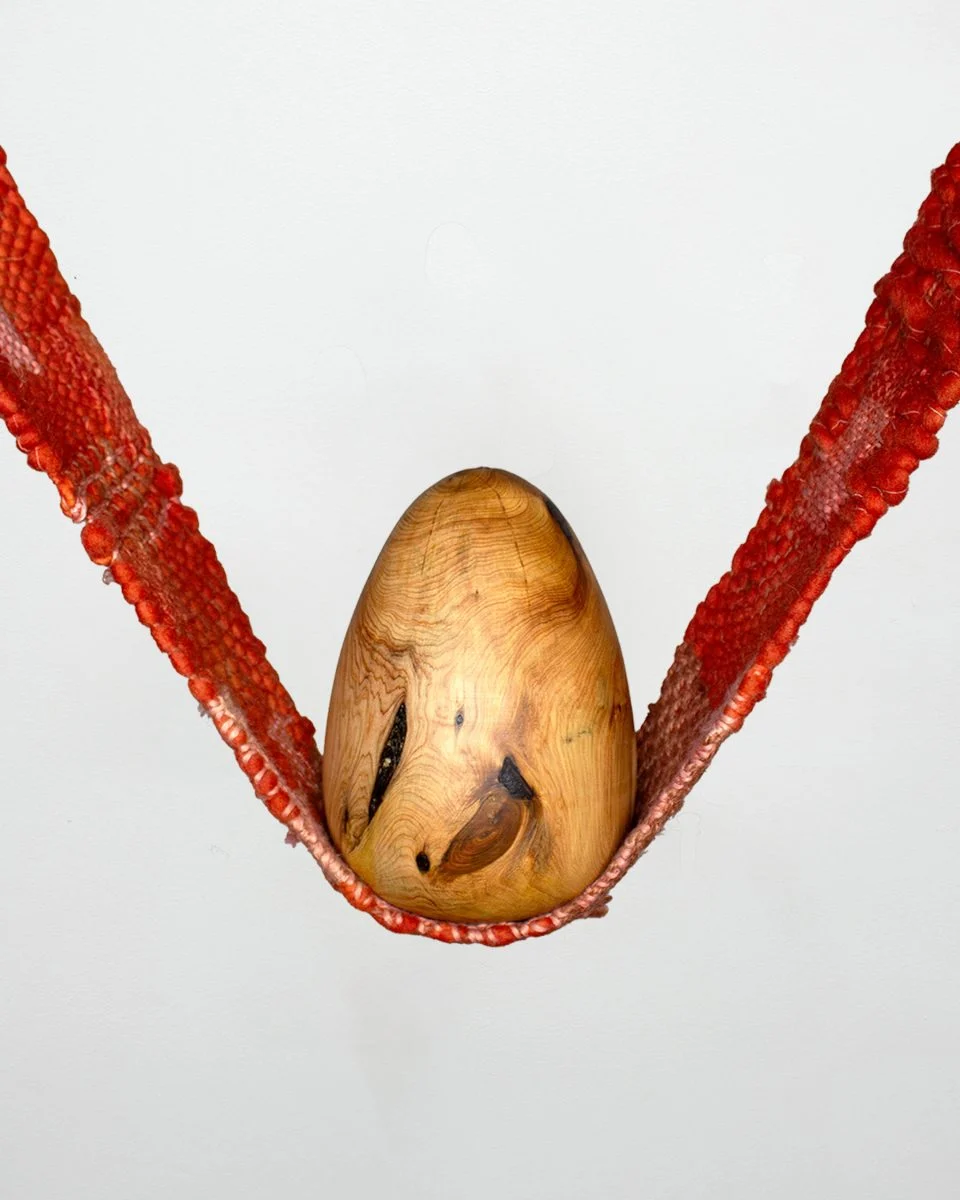
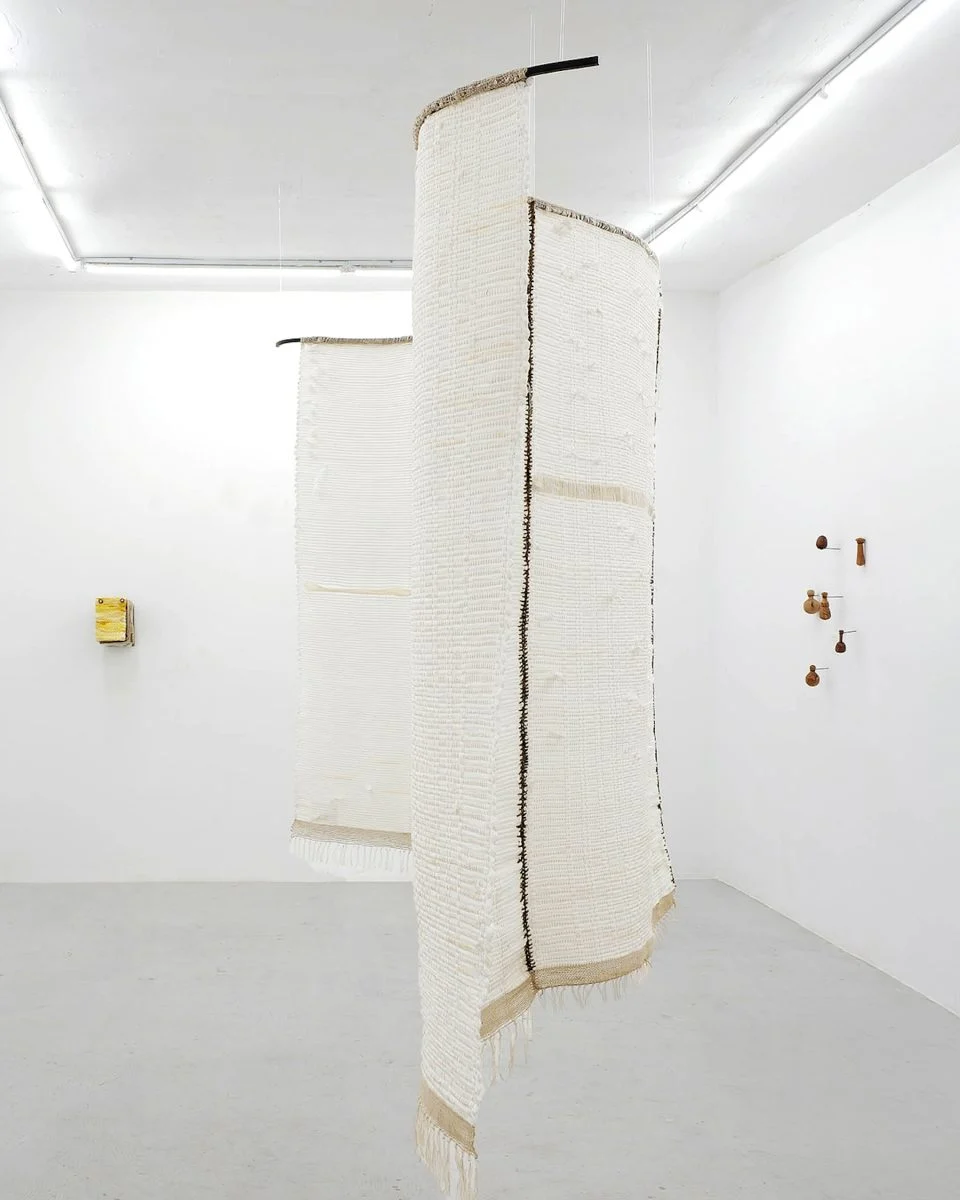
    I find that each material asks me to think in a different way. Embroidery and fabric are very soft and human-like; they feel almost like working with skin. Painting allows me to create cellular, organic, and wounded textures. Piercing connects to my family background, because I grew up in my family’s piercing shop.

    As a piercer, I feel that piercing is more than decoration. It is a practice of transformation, and a way for people to mark change on their bodies.In my family’s piercing shop, people come for many different reasons. For example, some migrant families, especially from the Philippines and Indonesia, bring their one-month-old baby girls to get their ears pierced. Teenagers may come because they want to change something about themselves. Through these different experiences, I started to see piercing as a personal, cultural, and sometimes ritual act.

    Where does your inspiration come from?

    Most of my inspiration comes from personal experience. I have an illness that requires me to go to the hospital regularly for checkups, such as blood tests and ultrasounds. These experiences made me more aware of the body: its fragility, its inner systems, and the way it is always trying to maintain and repair itself.
    I have also witnessed how illness changes the bodies of people in my family. My grandmother had rheumatoid arthritis. When I was very young, her hands and body looked quite normal, but over the years, her joints became deformed and her hands gradually lost their ability to hold things. Her body became smaller and more fragile, almost like a child’s body. Watching her illness changed the way I understand the body. It made me think about how disease can transform not only the shape of the body, but also its rhythm, movement, and dignity.

    I also spend a lot of time walking in forests and observing trees. Some trees have wounds, scars, holes, or damaged bark, but they still continue to grow beautifully and strongly. I feel that humans are similar to trees. No one goes through life without being wounded in some way.

    For me, wounds are not only damage. They can also be places where transformation begins. This is why I am interested in healing, mutation, wounding, and decay. They are not separate from life; they are part of how life changes and continues.

    What do you want people to take away from your art?

    I hope people can relate my work to their own experiences. I want them to feel that their wounds, scars, and difficult experiences can also carry a kind of beauty.

    I want to challenge the way we usually think about wounds and scars. Instead of seeing them only as damage or something to hide, I hope people can feel more comfortable with their own scars. For me, a scar is not only a mark of pain; it is also evidence that the body has lived, survived, and transformed.

    Interview Jo Birdsell (jobirdsell.com)

    Photos Raviva Nsiama (@raviva.ziama)

    • Statement
    • GlogauAIR Project
    • CV
    • Gallery
    • More

    Statement

    Chiu I-Chi is a Taiwanese artist whose work explores the relationship between the body, nature, and trauma through fictional organisms. Drawing from personal experiences of illness, caregiving, and recovery, she creates hybrid life forms that merge human and botanical elements. Growing up in her family’s piercing shop, Chiu also reflects on practices of bodily modification and transformation.

    Working across painting, embroidery, soft sculpture, and installation, she constructs biological landscapes that reflect processes of healing, mutation, and decay. Through these imagined species, she transforms personal memory into ecological narratives that exist between scientific observation and poetic imagination.

    GlogauAIR Project

    This residency project continues my exploration of fictional, human-like species as a way to reflect on how life transforms under environmental and cultural pressures. During the residency, I will create five soft sculptures representing the life cycle of an invented species—birth, growth, love, aging, and death. Alongside these sculptures, I will develop a series of paintings depicting their imagined habitat, anatomical structures, and cellular forms. Inspired by my family’s background in body piercing, piercing becomes a symbolic language within this species’ culture, marking identity, memory, and rites of passage.

    CV

    Education

    • 2017 B.F.A., Department of Fine Arts, Tunghai University, Taichung, Taiwan

    Residencies

    • 2026 Artist in Residence, GlogauAIR, Berlin, Germany
    • 2025 Artist in Residence, Arteles Creative Center, Finland

    Solo Exhibitions

    • 2023 Beneath the Skin, NY Gallery, Kaohsiung, Taiwan
    • 2022 The Birth of Frognus, Jin Car Arts & Culture Center – Chengde Space, Taipei, Taiwan
    • 2017 A Parasite in the Mind, Tunghai 43 Art Space, Taichung, Taiwan

    Selected Group Exhibitions

    • 2025 Nuit Blanche Taipei, Taipei, Taiwan
    • 2025 Participated in Art Taipei 2025 context via gallery/fair listings
    • 2024 How’s Your Job?, FreeS Art Space, Taipei, Taiwan
    • 2024 Taoyuan Fine Arts Exhibition, Taoyuan Arts Center, Taoyuan, Taiwan
    • 2024 Selected for Art Taipei 2024, Taipei World Trade Center, Taipei, Taiwan
    • 2024 Included in Taipei 2024 hosted by Res Artis / Taiwan Art Space Alliance, Taipei, Taiwan
    • 2024 Featured in the Taipei Fine Arts Museum 2024 highlights context for Taiwanese artists
    • 2022 Trees Inside the House, Islands Art Park, Taichung, Taiwan
    • 2021 Kaohsiung Awards Exhibition, Kaohsiung Museum of Fine Arts, Kaohsiung, Taiwan

    More

    We do not have any further information at this time.