Archives: Artists

  • Morgen Christie

    Morgen Christie

    Morgen Christie is GlogauAIR resident
    from January, 2023 to March, 2023

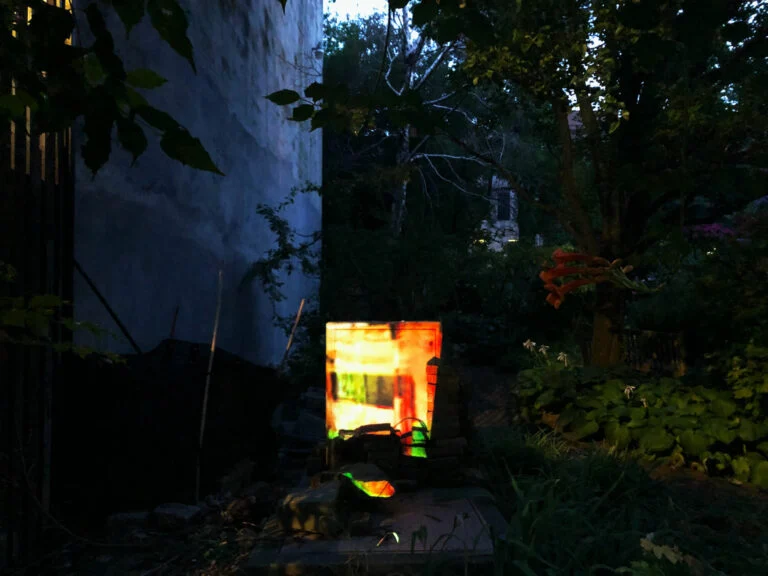
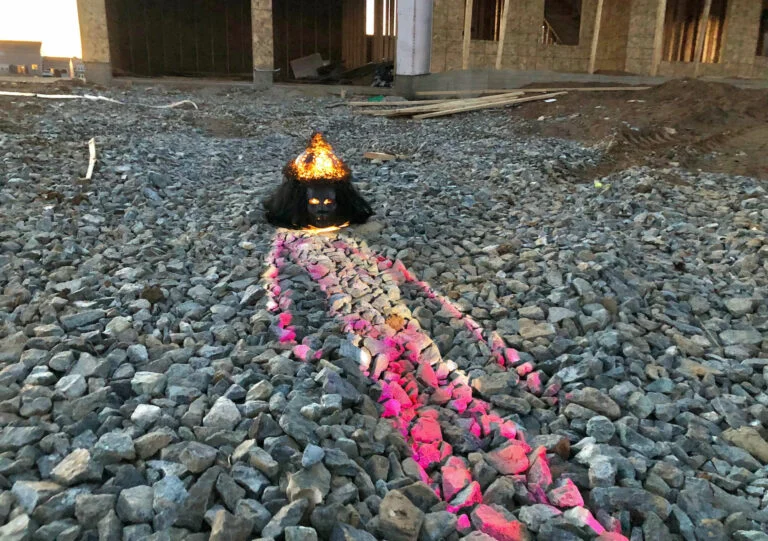
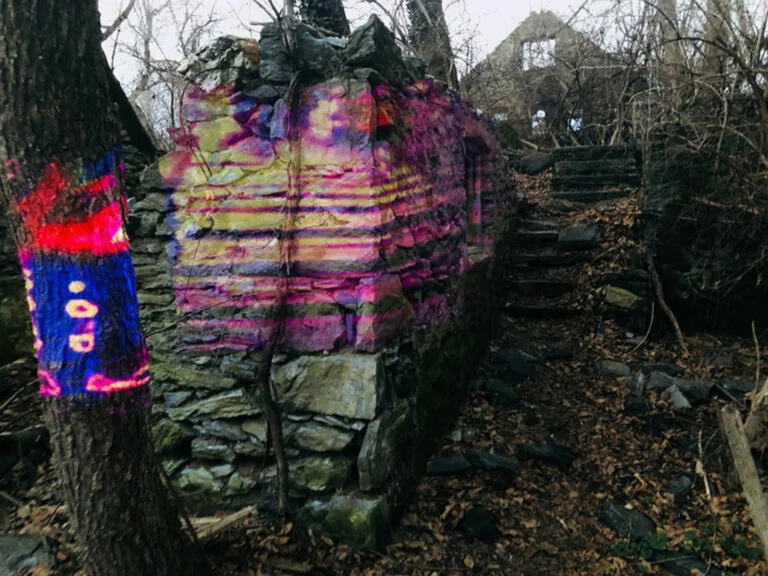
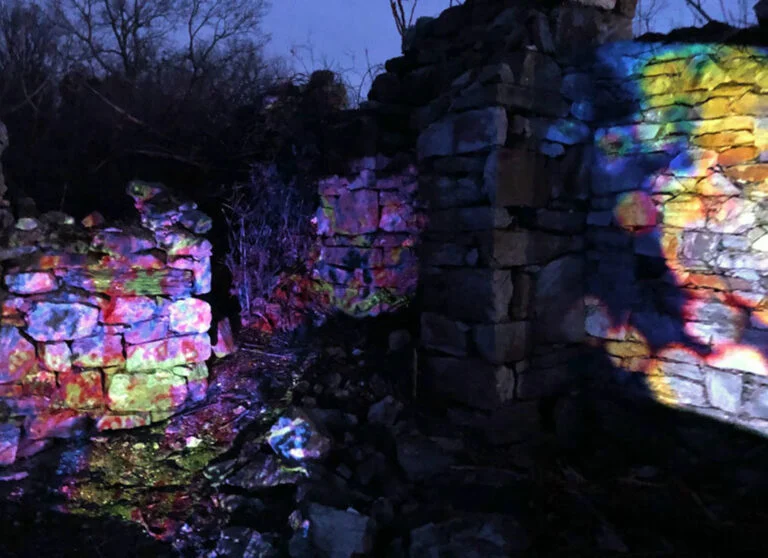
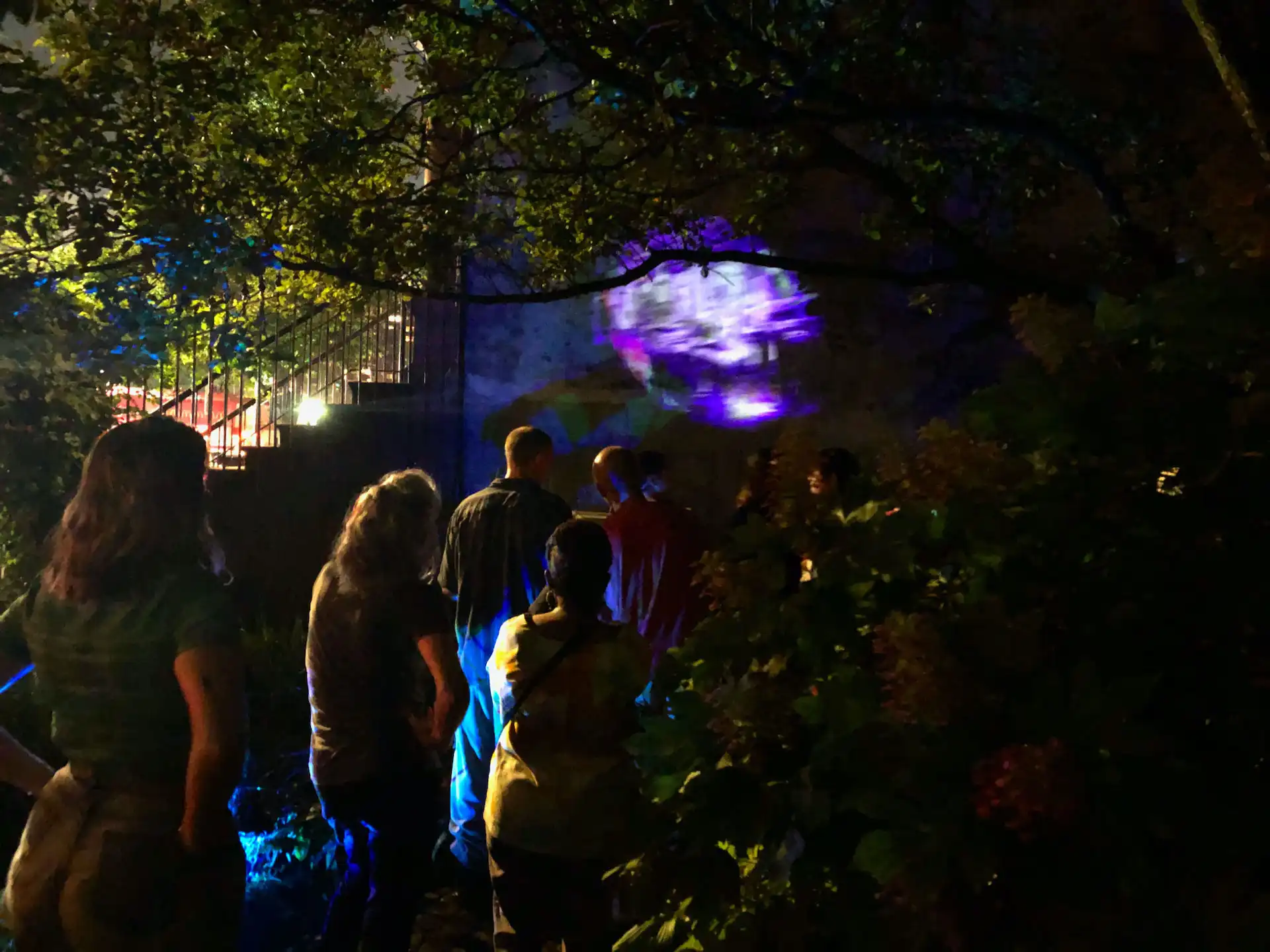
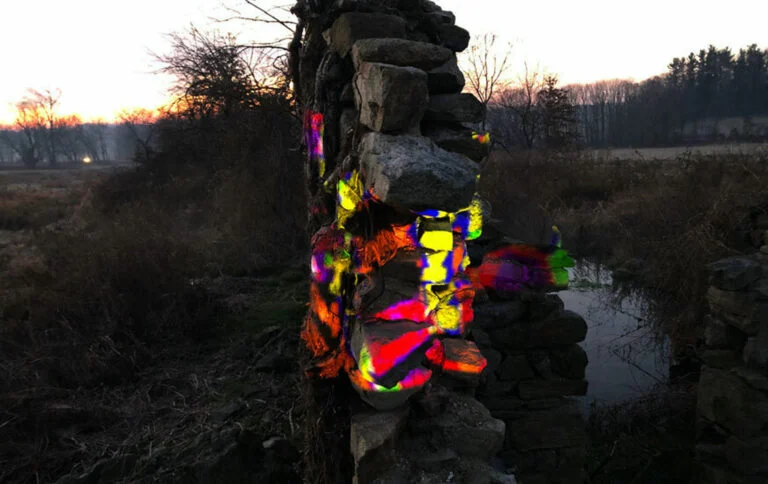
    Hailing from the United States Morgen Christie says “The history of a place has given me so much in the way of understanding simply ageing. In a 15-minute light change duration but also a time, century change duration. The relationship of time to memory is incredibly important to me. I hope to cement the neighbourhood to its subconscious through memorials. I reinstate the history of a place with the present by cleansing it with liquid light. I work with projections. I think of these spaces as ephemeral memorials. These projections are so temporary the memory will only be reconciled in the documentation”


    Meet the Artist

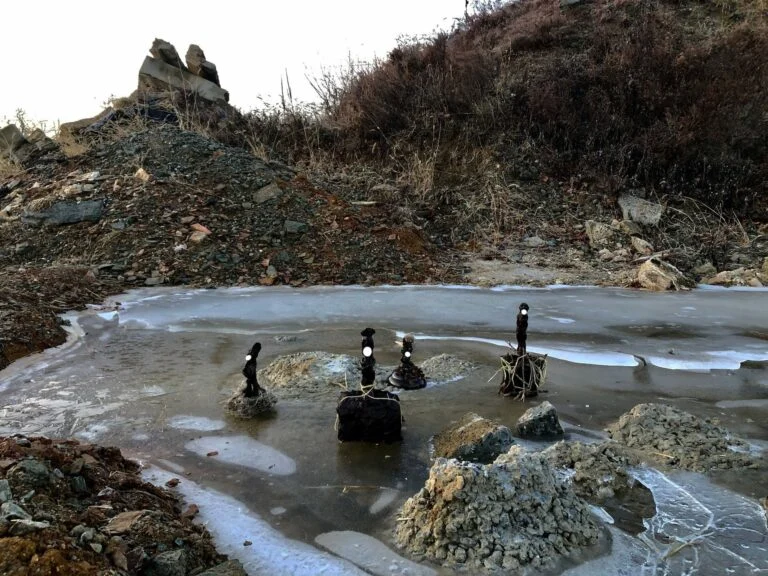
    During her online residency, Christie is proposing a project on Hannah Freeman or “Indian Hannah.” Hannah Freeman was the last Lenni Lenape or Delaware tribe healer in the Chester County, PA, USA area. William Penn, Pennsylvania’s founder, made a deal with her tribe. It stated the land would belong to the Lenape as long as one of their people remained. Christie aims to use the language she created to make an installation. All of the structures will be spray painted white and installed on Lenape land during snowfall. The sound will fill the space. Video and photo documentation will be used to share the project online. The title for the piece is “Whitewashed Tomb”.

    Statement

    The history of a place has given me so much in the way of understanding simply aging. In a 15-minute light change duration but also a time, century change duration. The relationship of time to memory is incredibly important to me. I hope to cement the neighborhood to its subconscious through memorials. I reinstate the history of a place with the present by cleansing it with liquid light. I work with projections. I think of these spaces as ephemeral memorials. These projections are so temporary the memory will only be reconciled in the documentation.

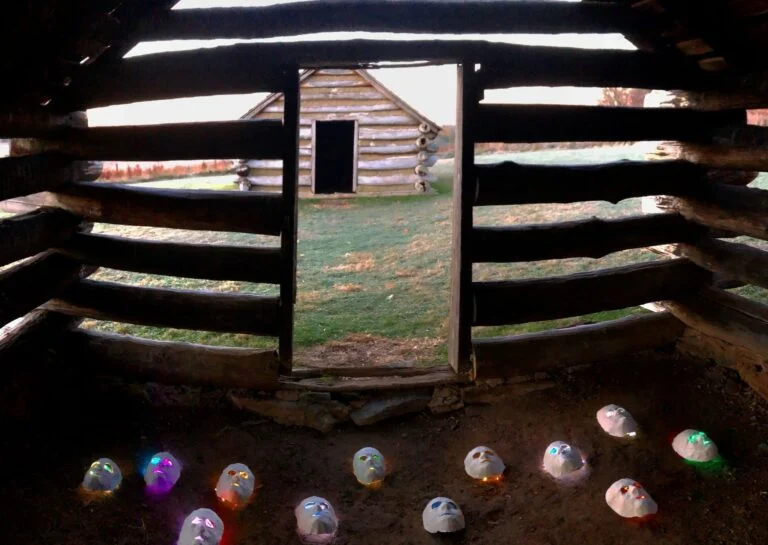
    I think a lot about blurring the timeline of history. I’ve used ancient traditions of death masks and reliquaries combined with video and LEDs to develop the age of memory. Recently, I have been using my own ancestry to evolve my practice holistically: by returning the maker to what is being made. I am self-described time artist and I make work in relationship to location and life span.

    GlogauAIR Project

    The project I am proposing for the online residency, January through March is based on Hannah Freeman. Hannah was also known as “Indian Hannah.” She was the last Lenni Lenape or Delaware tribe healer in the Chester County, PA, USA area. William Penn, Pennsylvania’s founder made a deal with her tribe. It stated the land would belong to the Lenape as long as one of their people remained. I am writing narration based on Hannah. She would be speaking from the perspective of knowing she was living her last days.

    As my family belongs to a nearby tribe, and many of us still live on this land, Hannah was not the last. The actual sculptural element would be a bust of Hannah seated on a tree stump, representative of Roman statues. The bust is made of grass and reeds, while the stump maintains the trunk branches. In front of the figure is a 5-foot-wide round basket weaved parabolic-like speaker laying on the ground. Hannah made many baskets for the local settlers. I am using the language she created to make this installation. All of the structures will be spray painted white and installed on Lenape land during snow fall. The sound will fill the space. Video and photo documentation will be used to share the project online. The title for the piece is “Whitewashed Tomb”.

    CV Summary

    SCREENINGS

    • 2022 My mama told me I’m experimental, Long Bien District, Hanoi, Vietnam
    • 2022 #Post RE:SET@New Future, art/channel, Austria, Vienna (online)
    • 2021 Simultan Festival, MultipleXity, Timișoara, Romania
    • 2021 Good + Well, San Diego, CA (online promo)
    • 2020 Corona Film Collection, Alphabet Cinema, Cologne, Germany (online)
    • 2020 Mad Lab Theater, Experiment 5, Guild Cinema, Albuquerque, NM
    • 2019 Saigon Experimental Film Festival II, Ho Chi Minh City, Vietnam
    • 2019 Saigon Experimental Film Festival, Ho Chi Minh City, Vietnam
    • 2019 Sixth Annual Philadelphia Independents Animation Festival, Plastic Club, Philadelphia, PA
    • 2018 Alexandre Trauner Film Festival, Szolnok, TiszaPart Cinema, Hungary
    • 2018 Unseen Festival, Counterpath, Denver, CO
    • 2018 Horn: Experimental Film Festival, Musrara School of Arts, Jerusalem, Israel
    • 2018 We Invented Nothing, BAM Film Festival, Bierum, The Netherlands
    • 2017 Earth Works, Panorama Festival, Main Line Art Center (online)
    • 2016 Grain Film Festival, Richmond, VA
    • 2015 Usurp Zone 5 Film Festival, London, UK
    • 2015 Sunday Video Spot, Transmedia Artist Marketing Resources (online)
    • 2015 iPhone Film Festival, 5th Annual (online)
    • 2014 Vidiot Eyes, The Unstitute, London, UK (online)
    • 2014 Tenacious Dreams Film Festival, Modesto, CA
    • 2013 Home Movie Day, EMP Collective, Baltimore, MD
    • 2013 International Streaming Festival, Edition 8 (online)
    • 2013 Pop Rally, Abstract Currents, Museum of Modern Art, New York City, NY

    EXHIBITIONS

    • 2022 Remix, Wanderlife Gallery, Philadelphia, PA
    • 2021 ColorWheels, Cherry Street Pier, Philadelphia, PA
    • 2021 Members Show, Philadelphia Photo Arts Center, Philadelphia, PA
    • 2021 Backslash Lit, Issue 3, Cmd (command), Digital Literature, Potomac, MD (online)
    • 2020 Backslash Lit, Issue 1, Init, Digital Literature, Potomac, MD (online)
    • 2019 Members Show, Philadelphia Photo Arts Center, Philadelphia, PA
    • 2018 The Future, Exchange Gallery, Bloomsburg, PA
    • 2017 The Melting Pot, Exchange Gallery, Bloomsburg, PA
    • 2016 Terminal F, Philadelphia International Airport, Philadelphia, PA
    • 2016 Collaboration with Erin Belair, Pair Shaped (online)
    • 2015 Photo Day, Philadelphia Photo Arts Center, Philadelphia, PA
    • 2015 Will You Think About Me, Interactive Project (online)
    • 2014 BIO50, 24th Biennial of Design, Ljubljana, Slovenia
    • 2014 Broken Spoken, Old City Publishing, Philadelphia, PA
    • 2014 Photo Day, Philadelphia Photo Arts Center, Philadelphia, PA
    • 2014 Members Show, 3rd Street Gallery, Philadelphia, PA
    • 2013 Small Works, Garrison Art Center, Garrison, NY
    • 2013 Instagram Show, Melrose Lightspace, Los Angeles, CA
    • 2013 Photo Day, Philadelphia Photo Arts Center, Philadelphia, PA
    • 2013 Small Works, Frameworks Gallery, Philadelphia, PA
    • 2013 Members Show, Crane Arts Center, Philadelphia, PA
    • 2012 Photo Day, Philadelphia Photo Arts Center, Philadelphia, PA
    • 2011 Work in Progress, Woodward Gallery, Baltimore, MD
    • 2010 Baptistry, Fox 2 Gallery, Baltimore, MD
    • 2010 MICA @ SACI, Fox 2 Gallery, Baltimore, MD
    • 2009 MICA @ SACI, Palazzo Jules Maidoff, Florence, Italy
    • 2008 Juried Undergraduate Exhibition, Meyerhoff Gallery, Baltimore, MD
    • 2007 Chester County Art Association, Tel Hai Gallery, West Chester, PA

    SELECTED SITES

    • 2022 Echoes in Harlem, The Artist Gardener, W. 132nd Street Block Association Garden, Harlem, NY
    • 2022 Stargazers’ Stone, Embreeville, PA
    • 2022 Derry Union American Methodist Episcopal Cemetery, Coatesville, PA
    • 2022 Doorway, Centuries Limited Antiques, Chester Springs, PA
    • 2022 Lied’s Silo, Lied’s Park, Coatesville, PA
    • 2021 Continental Soldier Death Masks, Valley Forge Park, Valley Forge, PA
    • 2021 Civil, Ebenezer AME Church, Frazer, PA
    • 2021 Time-Worn Hazard, Marsh Creek State Park, Downingtown, PA
    • 2021 Feed, Roger Hunt Mill, Race St, Downingtown, PA
    • 2021 Ash, Ashbridge House, Downingtown, PA
    • 2021 Recall, Snyder’s Mill, Phoenixville, PA
    • 2021 Pitfall, Bryn Coed Preserve, Chester Springs, PA
    • 2021 Trifecta, 398 West Kings Highway, Coatesville, PA
    • 2021 Bonded, Bondsville Mill, Downingtown, PA
    • 2020 Inside a Projector, Beaver Run Knoll, Downingtown, PA
    • 2018 Viewfinder, Marsh Creek State Park, Downingtown, PA
    • 2017 Recollection, Longwood School, Exton, PA
    • 2017 Eclipse, Lancaster Court, Downingtown, PA
    • 2013 Water Table, Hibernia Park, Coatesville, PA
    • 2011 Sightseeing, Cohen Plaza, Baltimore, MD

    EDUCATION

    • 2011 Maryland Institute College of Art, MICA, Baltimore, MD, General Fine Arts, Video & Film Arts, Bachelor of Fine Arts
    • 2009 Studio Arts Centers International, SACI, Florence, Italy, Honors Study Abroad

    AWARD & RESIDENCY

    • GlogauAIR online Artist Residency, Berlin, Germany (forthcoming)
    • School of Visual Arts, SVA, New York City, NY, The Artist Residency Project
    • The Exchange Gallery, The Future, 2nd place prize
    • Studio Art Centers International, SACI, Florence, Italy, Honors Study Abroad
    • Maryland Institute College of Art, MICA, Baltimore, MD, Trustee Award
    • Maryland Institute College of Art, MICA, Baltimore, MD, Presidential Award
    • Chester County Art Association, West Chester, PA, Jetee Award

    Gallery
  • Abigail Severance

    Abigail Severance

    Abigail Severance is GlogauAIR resident
    from October 2024 to December 2024

    Abigail Severance is a Los Angeles-based artist creating films and images that explore nostalgia, flawed history, and queer thought. Her richly composed, meditative works blend documentary, fiction, and abstraction, reflecting on post-pandemic fragility, entropy, and queer futurity. Through sensory imagery, she examines time’s impermanence as a form of witnessing, offering both refuge and a space for imagining radical possibilities.


    Meet the Artist

    Can you describe a little bit about these tree visuals on your wall?

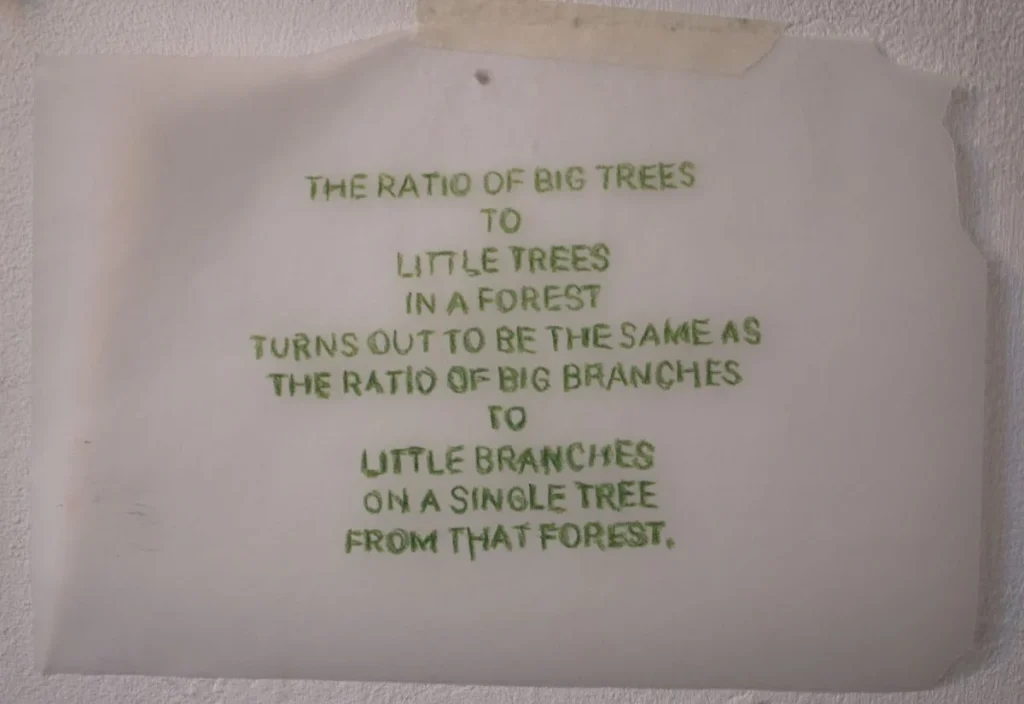
    This passage is from Brian Enquist, in Katie Holden’s amazing book “About Trees,” which is a real north star for me right now. He says “The ratio of big trees to little trees in a forest turns out to be the same as the ratio of big branches to little branches on a single tree from that forest.” And we’re not talking about a cultivated forest, right? Because if you walk around Berlin, you’ll see that they trim the trees back, and there’s all these tiny branches that wouldn’t be there organically. But in an organic forest that’s not being managed, or at least it’s not having its branches trimmed, a single tree is a dimensional representation of the entire forest. It’s a fractal. Apparently, according to Enquist, Leonardo da Vinci was the first one to observe this relational thing about trees, that the circumference of a tree’s branches corresponds to the ratio of big to little trees.

    I’ve been working through this idea of an individual human being as an archive – a collection of senses, experiences, losses and surprises – and we apply that archive to everything we encounter. We are also fractals that relate to things. The Hindu idea of the eternal return says something about fractals too: There’s an infinite world inside every human and then an infinite world inside that world, right? There’s all of this remarkable science about how trees warn one another about viruses or infestations. Trees figure out how to help each other. And I just think we have so much to learn from that.

    And how arrogant we’ve been, right? To think that we’re the species that is the most sophisticated, the most advanced. I think that conversation’s changing. That’s one of the things I’m really interested in: what models for cooperative living are offered by non-human systems? I think this is deeply related to queer models of futurity, too.

    I think a lot about how softly “the apocalypse” (as if there will be only one) will come, how slow and quiet it will feel until it is everywhere. And I think about what we might draw from radical queer thought, particularly José Muñoz’s provocation to inhabit and express queerness as a broad social challenge, not just an identity but a position. Maybe it’s the radical queers that will show us the way through the end of this human world. Most of us already invented ourselves out of nothing, so you know we’re imaginative.

    Here in Berlin, I’ve been experimenting with moving image and sound that can provoke thought around this idea of how to face the apocalypse, the possibilities offered by other threatened systems, models we might look to as the Anthropocene comes to an end. I’m not interested in making a documentary or even an essay film that explicitly says these things, but the reading and the research on natural systems like forests, glaciers, oceans is really informing how I’m shooting and listening here. So I can make something where this idea is felt, sensed.

    Can you talk about some themes in your recent work – changing cities, resistance of marginalised bodies, and the ‘’intertwined viruses of capital, COVID, and climate’?

    During the pandemic, we had a really useful thought exercise put in front of us – a disastrous thought exercise, which was: what if we do this differently? Clearly we can. We can shut down the world and try at least to protect people, right? We fought about it, and made stupid political moves over it, and stupid economic and capitalist moves over it. But our focus was on recovery, economic recovery, social recovery. In a general sense, I think when the story is told of this time, it will be one of recovery. Which is too bad because we could have experimented much more with how to live differently on a global scale.

    Our studio visit yesterday brought up the word rewilding – this idea of either encouraging, actively helping or allowing a place to be taken over by nature, or retaken by nature. I like that idea, that we have a role to play… mostly we can get out of the way, let things deteriorate or regenerate. What if this were an intentional stewarding process, to agree to and enable entropy?

    And I’ve been obsessed with trains! As an American in Europe, it feels very novel to travel by train so much. Maybe they are also an example of systems we can learn from. A train is both soothing and sinister, and I think, a kind of time and space machine.

    What sparked your initial interest in film?

    As a teenager and a young adult, I was working with photography and poetry a lot but feeling itchy and unsatisfied. I moved to San Francisco in the early nineties, after college. It was this explosive time for confrontational, aggressive art. And because of the AIDS crisis, largely, we turned to this radical expression of queerness. We were coming right on the heels of the early, explosive days of ACT UP and Queer Nation, just at the start of protease inhibitors, drugs which finally made it so AIDS might not be a death sentence. And the dyke community in San Francisco took great inspiration from the activist landscape, turning it into a sex positive, post modern pastiche with tons of heart. All kinds of performances were happening, alongside the activism.

    And you pair that with the incredible art house cinema that San Francisco had since the seventies, eighties, and definitely in the nineties. It’s really diminished now. But I went to movies that blew my mind. I didn’t know you could make movies like that. I saw the most random assortment of films in a short span of time. I saw Bertolucci’s The Conformist, a French film called Latcho Drom, Todd Haynes’ Poison. It was also the explosion of New Queer Cinema, a key moment in the 90’s. And I realized that film was a way to put it all together – history, sex, politics, words, images.

    At film festivals, there was this growing body of international queer, short experimental work, you know, stuff that you would never just find on TV. This is at the same time that X-Files and Friends were on. Our world was really different!

    San Francisco is different now, of course, but I don’t want to be nostalgic and lament a certain period because it is always changing and has to change. We were benefiting from something else being lost – from an entire generation of gay men being lost, in a weird way, because it ignited us. I wouldn’t wish for it, but it generated something, you know. And certainly we were displacing other people, as artists often do.

    You have to be willing to let it happen and let it go. Take the energy of the time and hopefully replicate it in some way. Part of what I love about this neighborhood here, Kreuzberg, is seeing the really old punks. I’m like, dude, that’s hardcore. You’re still living the life, you know. You never see that in LA.

    What plans do you have for after this residency?

    Forcefully keeping my calendar open! I have had so much time and space here. It’s so rare for me because I have a full-time teaching job and it can be so hard to make any room within that work for creative thought, let alone making new work. So I think the task for me is to figure out how to keep that space open.

    I’m shooting another new little film in Berlin in January just before I go back to the U.S.
    And I have two other films that I’m finishing that will probably be done by the summer. So I’ll be in LA editing those. I don’t go back to CalArts until next fall, which is amazing.

    I have a short residency in Iceland this spring, too. There’s something about the light in northern places that is specific, and to me, fragile. I’m really drawn to it, to photograph it. I noticed how late in the fall people eat outdoors here. Partly I think it’s because Germans smoke a lot. But also, I think it’s the feeling of wanting to drink up all the light possible. I wonder if that human sort of thirst or hunger for light and warmth is related to this thing about how we might relate to natural systems. I’m also interested in places and cities that have rewilded themselves, you know, and have a sort of un-worlding going on, transitional places. So I’m still hunting for more images that go with the human-as-archive film.

    I like the idea of relating to natural systems, like we’re no different than trees.

    We are different, though, right? We’re not different in that systemic way, but we’re different in our cunning, in our strategy, to have more and go faster. Industrialization definitely plays a role here, something that made us go in this direction. Now it’s really a question of how do we engage critical thinking about natural systems? I’m not suggesting we drop every intervention we’ve ever made in what was natural. That’s flawed logic and easy nostalgia. A lot of queer people have been told what they do is not “natural” and it’s wrong because it’s been proven in nature that there’s lots of homosexual behavior. But it’s that we’re not doing a great job of integrating technology in a way that isn’t a slave to empire. How can we integrate labor with things like the seasons? As an example of a critical engagement about what’s considered natural.

    I think that’s where some of this recent science about how other systems live is really helpful. You know, the trees shed their leaves for a reason. What is a human corollary of that for our times?

    Statement

    Abigail Severance is a Los Angeles-based artist making films and other images about nostalgia, flawed history and queer thought. She has shown at Sundance, The Broad, MOCA/LA, Studio Museum Harlem and Wexner Center, among other spaces. With rich color, intimate composition and layered sound, her films exist between documentary, fiction and abstraction, using moving image as a meditative practice for contemplation.

    Severance’s recent work delves into post-pandemic fragility, asking how entropy might stir radical imagination and how queer futurity might activate a sense of longing for something beyond the present. For her, working with the moving image means constantly chasing time; its very impermanence a haptic, existential form of witnessing where we tumble through memory, anticipation, longing and back again. She aims to use such sensory images as a language of resistance, both as a refuge for the weary soul and as a space for dreaming radical possibilities.

    GlogauAIR Project

    Abigail Severance makes films and other images about nostalgia, material history, and the queer mind. Her work has screened at the Broad Museum, MOCA/LA, Sundance, REDCAT, Studio Museum of Harlem, Boston Museum of Fine Arts, Wexner Center for the Arts, Ann Arbor Film Festival, Curta Cinema Rio, Women in the Director’s Chair, London LBGT Festival, MIX, and the National Museum of Women in the Arts, among other sites. Her essay film ACADIA, about nationalist nostalgia and queer origin stories, is currently in post. She has received a Fulbright, a Film Independent fellowship, and a CalArts Research & Practice Grant for WE THE DEVOTED, a near-future narrative about borders and labor, made collectively with its ensemble cast. She has been faculty at the CalArts School of Film/Video since 2009 and served as Dean 2019-2024.

    CV Summary

    RESIDENCIES, FELLOWSHIPS + AWARDS

    • 2024 Glogauair Residency, Berlin
    • 2023 Flaherty Film Seminar: Queer World Mending
    • 2022 Flaherty Film Seminar: Continents of Drifting Clouds
    • 2020 Fulbright (awarded), Univ. College Cork, The Edge of the Flat Earth (canceled; COVID)
    • 2018 Research + Practice Grant, CalArts, We The Devoted
    • 2015 Faculty Development Grant, CalArts, Acadia
    • 2014 Creative Capital: On Our Radar
    • 2010 Artist-in-Residence, Stonelake Farm, Humboldt, California
    • 2009 FIND Fellowship, Screenwriting + Directing Labs, The Summer We Drowned
    • 2004 Spotlight Award for Directing, Saint Henry
    • 2002 Wasserman Fellowship, Come Nightfall
    • 2002 Carl David Fellowship for LBGT Filmmakers
    • 2000 Best Gay/Lesbian Film, Ann Arbor Film Festival, Pump
    • 1999 Director’s Citation Award, Black Maria Film + Video Festival, Pump

    WORKSAMPLES (moving image)

    SCREENINGS + EXHIBITIONS (select)

    • 2021 Pump Ann Arbor Film Festival, New Queer Cinema retrospective
    • 2018 Evidence The Broad, Los Angeles (in En Cuatro Patas/On All Fours)
    • 2017 But How We Long ATA, San Francisco // Last Projects, LA
    • 2015 Kinesthesia Series REDCAT, LA, Transforming Spaces: New Work from L.A. Filmmakers // Outsider Arts Festival, Austin // Antimatter, British Columbia
    • 2014 Evidence Commissioned by VisualAIDS for 25th Anniversary of A DAY WITHOUT ART. Studio (w. Julie Tolentino) Museum of Harlem // New Museum, NY // MOCA LA // Dallas Museum of Art // Andy Warhol Museum // Brooklyn Museum // Contemporary Arts Museum, Houston + over 50 more
    • 2013 Kinesthesia Series Feral Studios, Joshua Tree // Jenny Mi Amor Houston Queer Film Festival // Boston LBGT Film Festival
    • 2012 Kinesthesia Series Proteus Gowanus, New York in Negro Marfil/Ivory Black // Jenny Mi Amor Curta Cinema, Rio // Mezipatra, Prague // Melbourne Queer Film Festival // Frameline, San Francisco // Outfest, LA // Austin Gay + Lesbian Festival // Image + Nation, Montreal
    • 2011 Hard Times The Ruckus // Music Fog // Jenny Mi Amor Antimatter, BC // Eye Witness Performance space, London // Feral Studio, Joshua Tree
    • 2009 Eye Witness Phyllis Stein Gallery, LA
    • 2004 Saint Henry Los Angeles Film Festival // Nat’l Museum of Women in the Arts // American Cinematheque, LA // Directors Guild of America // Palm Springs Intl Shorts Festival // Women in the Director’s Chair, Chicago–National Tour // Frameline // London Lesbian + Gay Film Festival // Budapest Lesbian + Gay Film Festival // New Festival, NY // Outfest // Image + Nation
    • 2003 Come Nightfall Sundance Film Festival // Los Angeles Film Festival // Ann Arbor // Women in the Director’s Chair // Frameline // London Lesbian + Gay Festival // Outfest
    • 2002 Siren Sundance // Ann Arbor // New Festival // Outfest // Image + Nation // Berlin Lesbian Film Festival // MIX, New York + Sao Paolo // Women in the Director’s Chair // Wake Wexner Center for the Arts // HBO // Sundance Channel // Ann Arbor // Pesaro Film Festival, Italy // European Media Arts Festival, Osnabruck, Germany // San Francisco Cinematheque // Nashville Film Festival // Come Nightfall Austin Lesbian + Gay Film Festival // MIX, New York + Sao Paolo
    • 2001 Bone Wish Los Angeles Film Festival // Ann Arbor // Sao Paolo Shorts // New Festival // Outfest // Austin Lesbian + Gay Festival // Berlin Lesbian Film Festival // Siren Frameline // Dublin Lesbian + Gay Festival // Pump Tokyo Intl Lesbian + Gay Film Festival
    • 2000 Pump Ann Arbor Film Festival (best queer short) // Yerba Buena Center for the Arts, Bay Area Now 2 // BFI UK Tour–26 cities // Los Angeles Film Festival // Hamptons Intl Film Festival // Black Maria Film Festival (director’s citation) // Chicago Intl Lesbian + Gay Film Festival (best short) // Verzaubert Tour, Germany–5 cities // Sensory Perceptions, Portland (best short) // New Festival, NY // Image + Nation // Berlin Lesbian Film Festival // London Lesbian + Gay Film Festival
    • 1999 Pump Frameline // Cork Intl Film Festival // Film Arts Festival // Outfest

    PRESENTATIONS + ARTIST TALKS

    • 2019 The Horrible Image: Aesthetic Strategies for Representing Misery + Violence , AFI Directing Workshop, LA
    • 2018 Generative Dysphorias in the Homeward-Bound Essay Film , Visible Evidence XXVI, USC
    • 2018 Manifesto: Radical Hope (keynote) & The Horrible Image: Ethics + Aesthetics of Representing the Abject, Creative Research Conference, Ibero American Association, Mexico City
    • 2018 CalArts: Pioneering Radical Arts Education , 22nd Festival de Cine de Lima, Perú
    • 2016 Visually Speaking: Non-Fiction Poetics, Panel with Lourdes Portillo, Bassma Al-sharif, presented by of The Flaherty Seminar (moderator) , IDA International Documentary Conference, LA
    • 2014 Improvisation & Experimentation in Teaching Narrative Cinema Forms Chapman University
    • 2011 The L.A. Rebellion (seminar) , CalArts, UCLA Film & TV Archive + Getty’s Pacific Standard Time 1945-1985
    • 2007 Aesthetics of Digital Narratives, University of Southern California

    TEACHING/ACADEMIC EXPERIENCE

    • 2019-2024 Dean, CalArts School of Film/Video, Valencia, California
    • 2009-present Faculty, Film Directing Program, CalArts School of Film/Video (sabbatical 2024-2025)
    • 2005-2009 Special Faculty, Program in Film and Video, CalArts School of Film/Video
    • 2006 Lecturer, Visual Arts Department, University of California, San Diego

    EDUCATION

    • MFA UCLA — School of Theater, Film + Digital Media
    • BA Hampshire College — Cultural Studies, Latin American focus

    Gallery
  • Chi Zhang

    Chi Zhang

    Chi Zhang is GlogauAIR resident
    from October 2024 to December 2024

    Chi Zhang is a visual artist, art educator, and art professional. Her practice spans installation, painting, and documentation, focusing on personal narratives shaped by diverse social contexts. Zhang’s art explores inner peace, the beauty of emptiness, and fostering meaningful connections, encouraging reflection and empathy in a complex social climate.


    Meet the Artist

    Can you give me a little bit of an introduction about yourself?

    I’m Chi, originally from China. I was born and raised in Beijing, but my family is in Shanghai, so I’ve spent much of my life moving between the two cities. I completed both my undergraduate and graduate studies in New York and have been dividing my time between these three cities for the past two decades.

    I earned my MFA from the School of Visual Arts, graduating ten years ago. Since 2016, I’ve worked as an art educator in China, teaching high school art, including AP, A-level, and IB courses. Currently, I’m working part-time while dedicating myself fully to my art practice.

    Do you have a specific art style or artist that influences you?

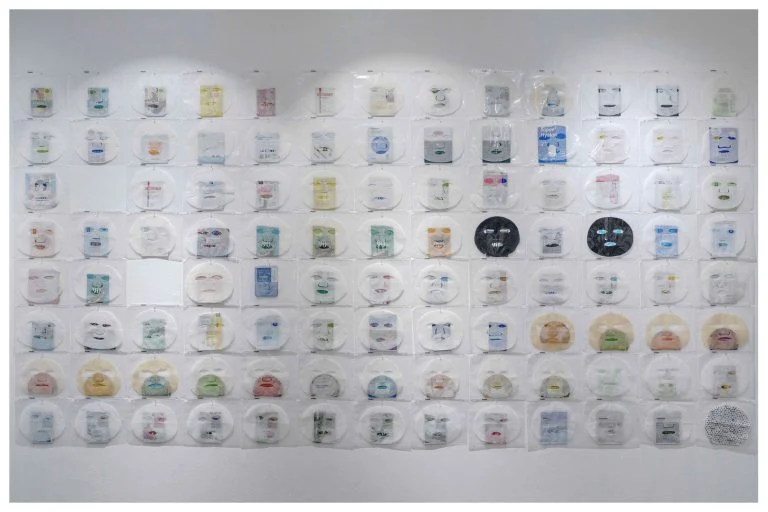
    Yes – there are a few artists that have been influencing my art ever since my school years. For my 2D works, like my paintings and drawings, I would say Robert Ryman and Agnes Martin. I look up their work from time to time, to see the way they’ve produced their work, and how they think. More recently, there’s this artist Song Dong, and he does work related to the engagement of daily life. He used a lot of mundane objects, so I’d say he influenced me to do my facial mask project, for sure. Yoko Ono, too, with the simplicity of our life and the universe … connection, everything.

    In terms of style, I will always say my work is minimalist – I always try to be as simple as possible, but there are a lot of stories and layers underneath.

    Could you talk a little more about your face mask project?

    For a lot of my work, not just that one, they don’t begin as an artwork in the beginning. They’re more like small things I do everyday, and then there’s a point that I feel that I have something I could make into artwork. For the facial mask project, it actually started in 2017, and that was the time when I started working as an art teacher – I wanted to be an artist, but I found it more sustainable to be a teacher, to work and make money and then at the same time, practice art. I committed a lot of time to learning so many things, building up my own portfolio … even though I spent so much time doing that, I still managed to spend almost an hour or two every night doing my nighttime skincare routine.

    I would say that’s a very normal thing in Asia. People don’t think of that as crazy, and I think it’s just the whole social norm there. You have to fit the beauty standard – you have to look young, and look lean, and have pale skin, which is a really trendy thing that has been going on for thousands of years.
    When I see my students, they look up all these influencers on the internet, and they skip meals because they want to look a certain way, which is very unhealthy, because I feel like that’s not the point of life. I will tell them it’s more about eating healthy, exercising, travelling, meeting friends, in order to be both physically and mentally healthy. That’s more important than just having a good appearance.

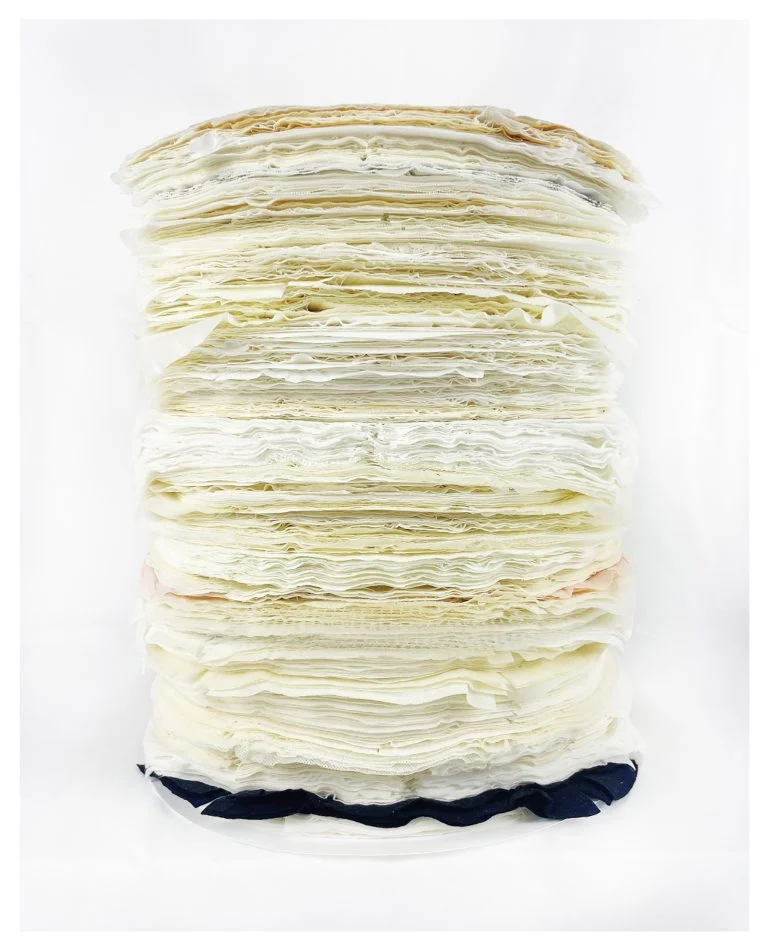
    Now this project has two parts – one is the used facial masks, all the ones I’ve used, all in a stack. I’m planning to collect them to the point that they’re my height, as a self-portrait. I don’t know how long that’s going to take – probably another 20 to 30 years. Another part is the packaging, because I consume so much of them – the brands from Asia, the Swiss brands, French, and American brands. I want to try something new, and even now in Berlin, I want to try something locally. It’s like a documentary.

    How do you think the Youth Project intersects with the theme of healing?

    I think there’s an overlap. I get questions about what is healing to me. Healing can be a momentary and temporary thing. For example, I love chocolate croissants, so if I’m craving it and I have one, that little bit of healing comes from it. Nothing lasts forever, and everything is temporary, so I want to provide this momentary healing aspect to people’s lives. It’s the same as a facial mask. The facial mask is a day-to-day, mundane thing, and my work is a mundane thing as well. The masks are necessary in order to heal the surface of your skin, so there are layers and aspects to healing within that.

    How has Berlin been influencing your practice?

    A lot of ways. After visa issues, I had to postpone my residency to the fall, so the very gray, gloomy weather changed the aspect of Berlin for me. I definitely feel like there is a huge weight in the city that comes from the war and the history. The city is like a giant museum from the war. Things move on, but there’s a part that’s still the same. You’re healed, but it’s not completely. There’s a Japanese technique of creating a broken vase, but you’re putting it together with a gold string. So you see that it’s broken, but it’s been put back together, so it’s more beautiful. This is how I feel about Berlin.

    I did the first healing painting series in Beijing, during COVID, but it’s such a different city from Berlin. The history of Beijing – going thousands of years back – feels very distant, so I feel less of a connection. With Berlin, it’s not just the city, it’s the history.

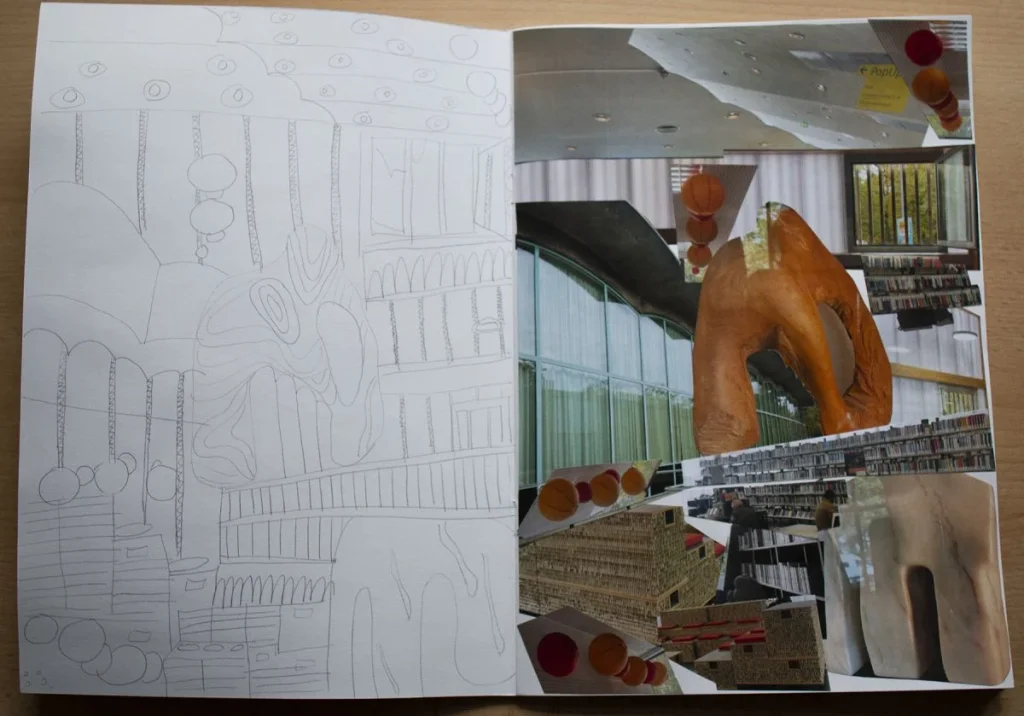
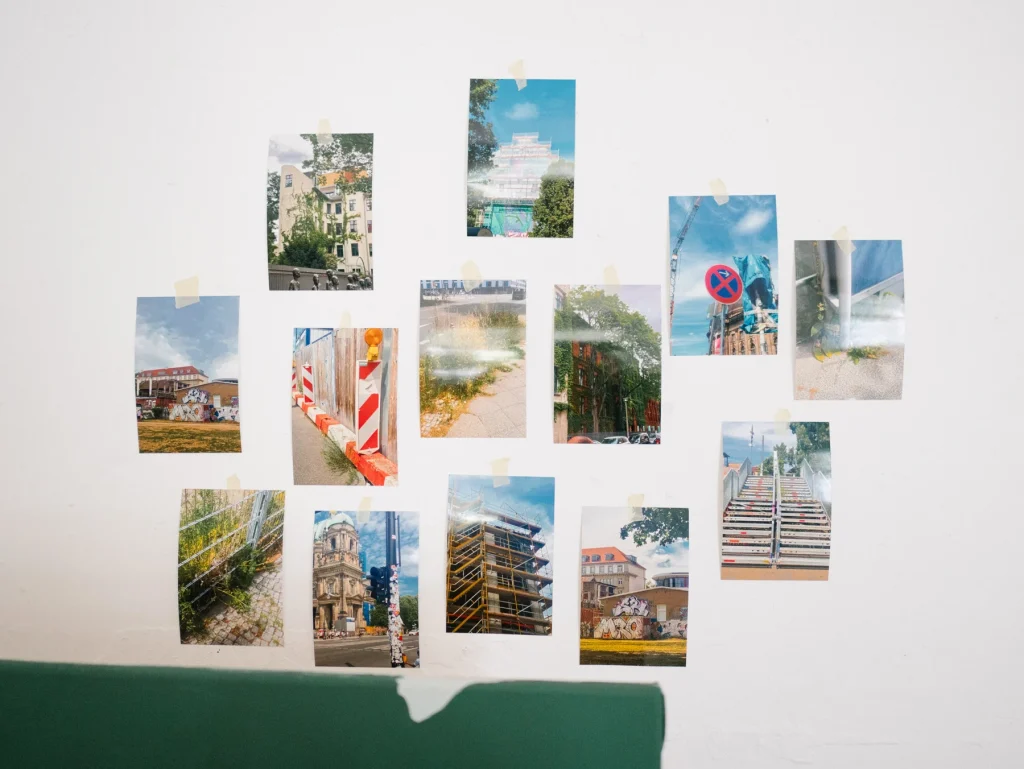
    I know you put a lot of collages together with photographs in Berlin, like one with photographs from a library. Would that be an example of how themes of healing within the city are present in your work?

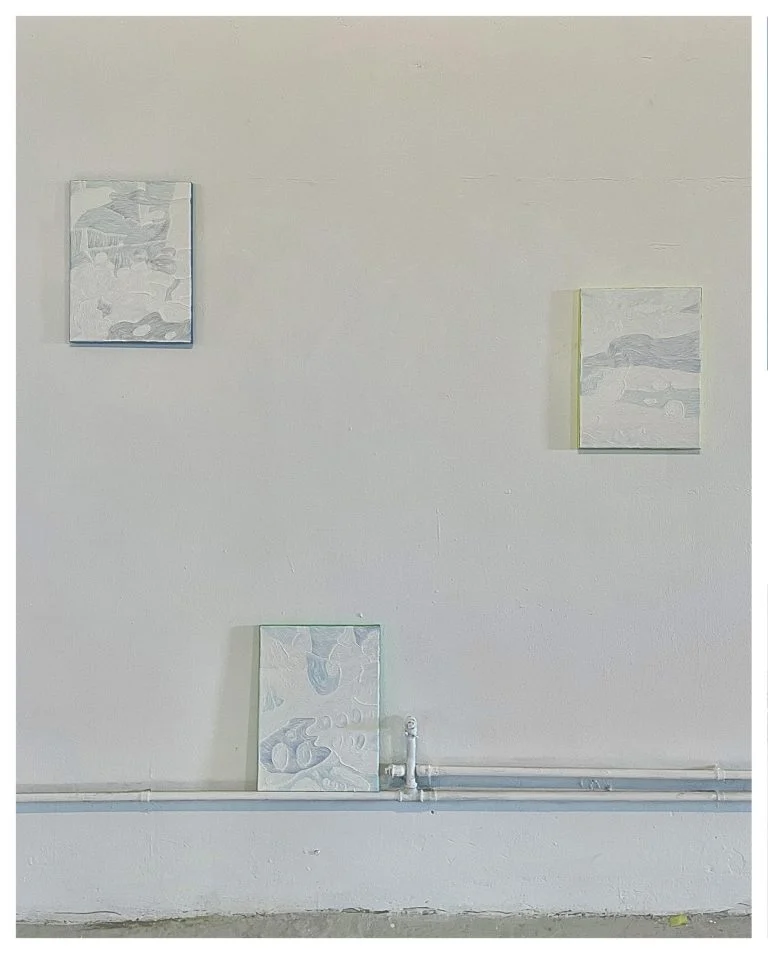
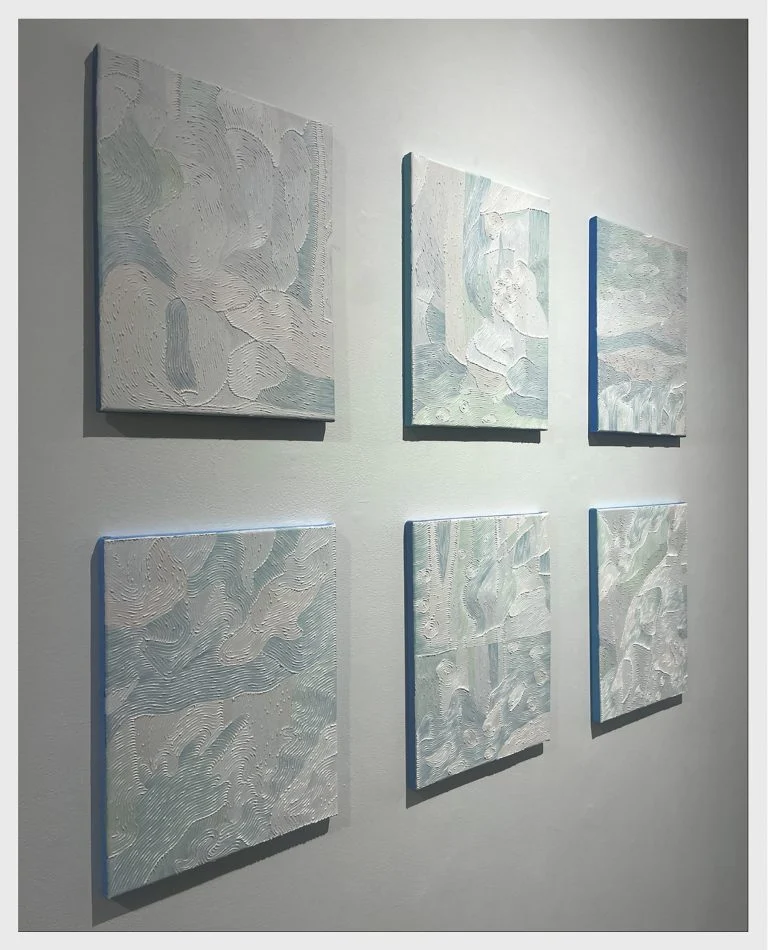
    Yes – originally, I was just thinking because Berlin can be really loud, with a lot of things going on, the library would be the perfect place to be at this time of year. But this one library I went to, you do see the history, and when you’re in that spot, it’s timeless. It feels like you’ve time traveled. I want my work to have that layer of time, space and healing, with everything combined together. [The paintings based on the collage] aren’t finished yet. I’ve put down the colors first, and the base paint.

    For the color scheme for these paintings, do you intuitively apply the colors? How do you go about that?

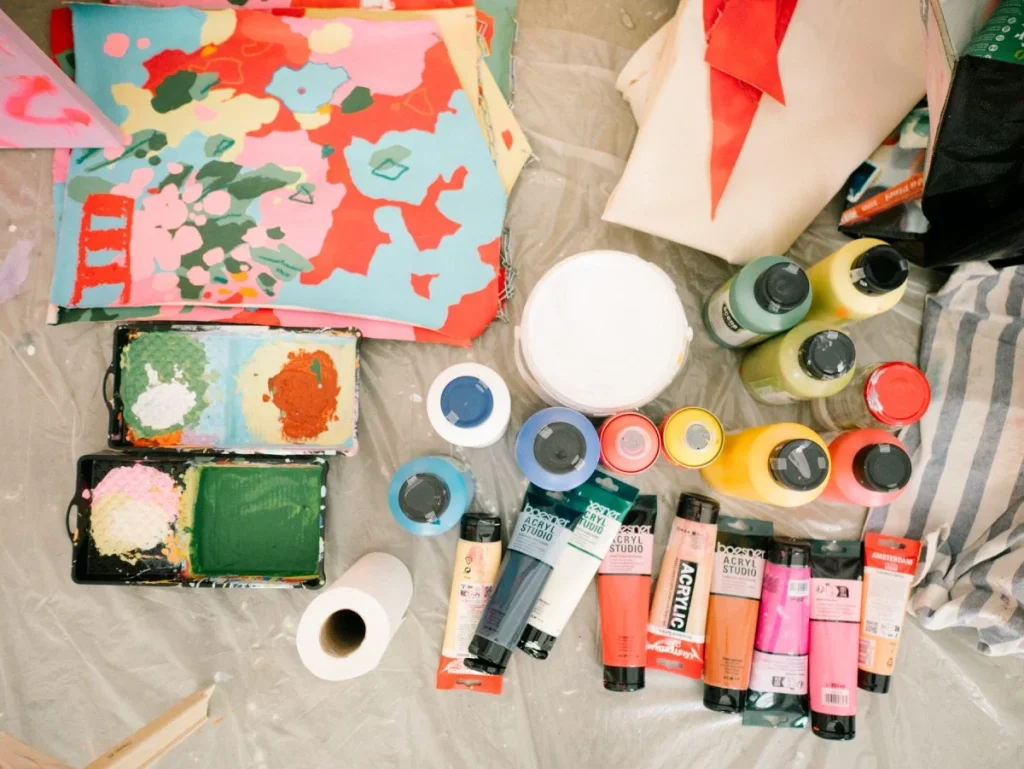
    The colors are actually a reference from the collage. I do use a little bit of intuition – for example, the top one is actually this huge sculpture in that library, and it’s mainly white, but this whole space is a very orange and warm color tone, so I didn’t want the white color to be involved with that sculpture. In libraries, you get lots of good, natural light, which adds a lot of life. I want it to be lively, in a way, and I don’t want these works to be so down, like the color of the season now. They’re different from the ones I did in New York and in Iceland – I used a lot of earth tone in this series – maybe that’s how I feel about the city. Iceland is very blue and cold. And then the New York series is super vibrating.

    What plans do you have after the residency?

    For the first half of the year, I’m going to work on paintings, because I have a lot of photographs and research documents I did for this year in Iceland, in New York, and in Berlin, and I wanted to finish them. I’m going to a residency in Japan next year, and that’s gonna be in the countryside, very calm and peaceful. I’m in conversation with people about shows coming up – one in Japan, and one in China as well.

    I still feel like I need to be distilled with all these thoughts and ideas I want to put together. I want to have solid time working with them. That’s what I did over the summer, in China. I was in the mountains for a while. It was nice, but I got kind of bored, because it’s a mountain, nothing else is there. I still consider myself a city person.

    Statement

    Chi Zhang is a visual artist, art educator, and art professional who lives and works between Beijing, Shanghai, and New York. Her multidisciplinary practice encompasses installation, painting, drawing, and the documentation of daily activities, all of which revolve around personal narratives and perceptions shaped by diverse social contexts. In an increasingly complex and tumultuous social climate, Zhang’s art explores the pursuit of inner peace and the beauty of emptiness while fostering meaningful conversations and connections beyond the confines of the artwork. Through her exploration of the human experience, Zhang offers a personal perspective on contemporary society, encouraging viewers to reflect both inwardly and outwardly with greater empathy and understanding.

    GlogauAIR Project

    In 2022, during the third consecutive year of COVID-19, as the world began to reopen and life slowly returned to normal, I found myself still facing ongoing lockdowns, frequent COVID tests every 72 hours in Beijing, and endless international travel restrictions. This surreal time brought intense challenges, causing extreme emotional strain and prompting me to embrace the concept of healing as a daily art practice—almost like a religious routine for emotional recovery.

    My art practice became a powerful portal for healing, fostering new dialogues and connections around well-being. This experience has reshaped my understanding of what is truly important in life. At GlogauAIR, I aim to further explore this therapeutic aspect of art and create new work that reflects the healing experience in Berlin.

    The project will take the form of an installation featuring a variety of paintings and mixed-media works. These pieces will come together to create a temporary space where visitors can find moments of peace and comfort. Audiences will be invited to engage with the installation, as this interaction is intended to enhance mental and emotional well-being, fostering a deeper, more meaningful connection to the work.

    CV Summary

    EDUCATION

    • 2013 Master of Fine Arts (MFA) in Fine Arts, School of Visual Arts, New York, NY, USA
    • 2010 Bachelor of Arts (BA) in Studio Art, minor in Art History, Stony Brook University, Stony Brook, NY, USA

    SELECTED GROUP EXHIBITIONS

    • 2024 A Journey of Unbound Mind to the Worldly Wanderings (乘物以遊心), curated by Zhaoqi Yu, Golden Alchemist Gallery, Yuyao, Ningbo City, Zhejiang, China
    • 2024 Ritual of Repeating Insubstantiality (循環末微的儀式), curated by Ivy Haoying Huang, Chinese American Arts Council Gallery 456, New York, NY, USA
    • 2023 Mirror, Portal, NARS Foundation Season IV Residency Exhibition, NARS Foundation Main Gallery, Brooklyn, NY, USA
    • 2017 New Sound — SFK International Art Education Faculty Exhibition, Li Peak Modern MOMA, Beijing, China
    • 2016 Between Senses, curated by Grace Noh, Gallery House, Brooklyn, NY, USA
    • 2015 Shou Qi — Make Object (守器 — 造物), Shijiazhuang Art Museum, Shijiazhuang, Hebei, China
    • 2015 MiA: Beijing Station:: First Chapter, DDC Space, Beijing, China
    • 2015 5 en Sync, Shi Yu Tang Art Space, 798 Art District, Beijing, China
    • 2015 GoArt Festival, Zhonghai Plaza, Beijing, China
    • 2014 Group Velocity, curated by Summer Guthery, Interstate Projects, Brooklyn, NY, USA
    • 2014 330 Bond Street Art Show, Brooklyn, NY, USA
    • 2013 WE OBJECT, curated by Wallace Whitney, SVA Chelsea Gallery, New York, NY, USA
    • 2012 Summer Residency Exhibition, Pantocrator Gallery, M50 Art District, Shanghai, China
    • 2010 Printmaking Exhibition, Tabler Art Gallery, Stony Brook University, NY, USA
    • 2009 ARS 351 PAINTING SHOW, Tabler Art Gallery, Stony Brook University, NY, USA

    RESIDENCY / AWARD

    • 2025 Studio Kura, Fukuoka, Japan (forthcoming)
    • 2024 GlogauAIR Artist in Residence, Berlin, Germany
    • 2024 SÍM Residency (Association of Icelandic Visual Artists AiR Program), Reykjavik, Iceland
    • 2023 NARS Foundation International Artists Residency, Brooklyn, NY, USA
    • 2012 Pantocrator Gallery, M50 Art District, Shanghai, China
    • 2010 Mural Artist Award, Stony Brook University Melville Library Mural Project, Stony Brook, NY, USA

    PRESS / PUBLICATION

    • 2024 GAG Artist Conversation x Chi Zhang, interview by Golden Alchemist Gallery, Chinese, September 24, 2024
    • 2024 STORIES & INSIGHTS: Meet Chi Zhang, interview by CanvasRebel Magazine, Digital Art Magazine, English, April 8, 2024
    • 2015 Shou Qi — Make Object (守器 — 造物), Exhibition Catalogue, Hebei Art Press, China, Chinese, November, 2015

    CURATORIAL EXPIERENCE

    • 2016 CONCEPT NOW, Beijing Design Week, Xinhua 1949 Park, Beijing, China
    • 2015 MiA: Beijing Station:: First Chapter, DDC Space, Beijing, China

    RELATED PROFESSIONAL EXPERIENCE

    • 2020 – 2023 Director of Fine Arts and Illustration Department, Art Educator, Artist Lecturer, and Art Curriculum Consultant, Maxsine International Art Education, Beijing, China
    • 2019 Educator, “Connecting Collections: Integrating Modern and Contemporary Art into the Classroom”, The Metropolitan Museum of Art, The Museum of Modern Art, The Solomon R. Guggenheim Museum, New York, NY, USA
    • 2018 – 2020 Founder, Art Educator, Artist Lecturer, and Art Curriculum Consultant, UNIC Art Center, Inc., Beijing, China
    • 2016 – 2018 Art Educator and Artist Lecturer, SFK International Art Education, Beijing, China
    • 2014 – 2016 Artist, Writer and Curator, MiA Collective Art, New York, NY, USA
    • 2013 – 2014 Studio Assistant and Project Assistant, Xu Bing Studio, Inc., Brooklyn, NY, USA

    Gallery
  • Emilia Franciszka Jechna

    Emilia Franciszka Jechna

    Emilia Franciszka Jechna is GlogauAIR resident
    from October 2024 to December 2024

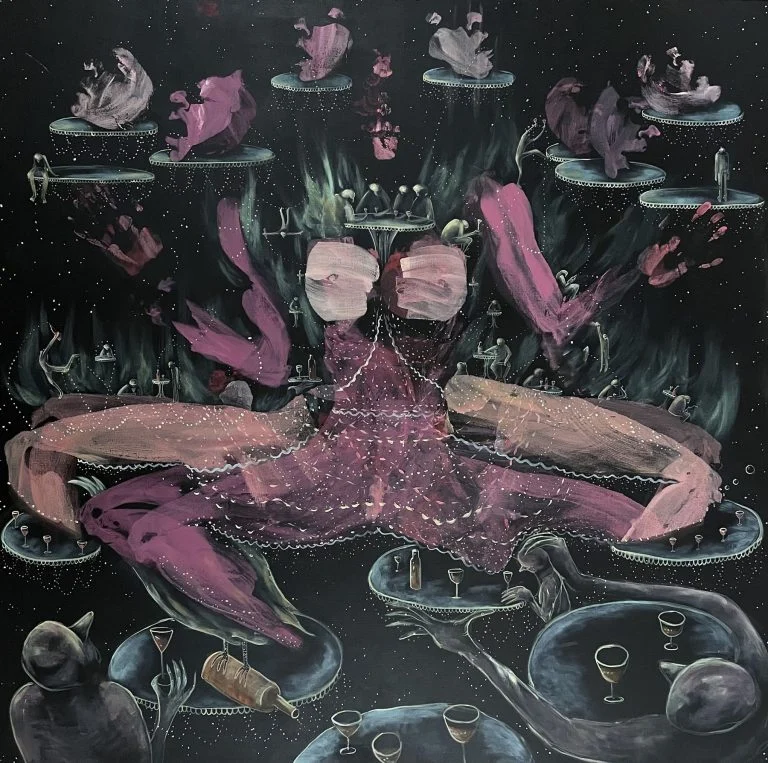
    Emilia uses her body as a brush to imprint herself on canvases, merging with her art as a form of therapy and self-expression. Inspired by Lou Andreas-Salomé’s interpretation of Narcissus, Emilia views him not as vain but as someone who discovers his essential role in the beauty of existence. Like the water reflecting Narcissus, her paintings aim to mirror and affirm life itself.


    Meet the Artist

    Can you give me an introduction about yourself?

    Yes. I don’t come from Berlin, but I’ve lived in Berlin for three years now. I’m doing my second residency here. I graduated in art education with an emphasis on art therapy and then did a Master’s in painting. Apart from painting, I also do set design for film.

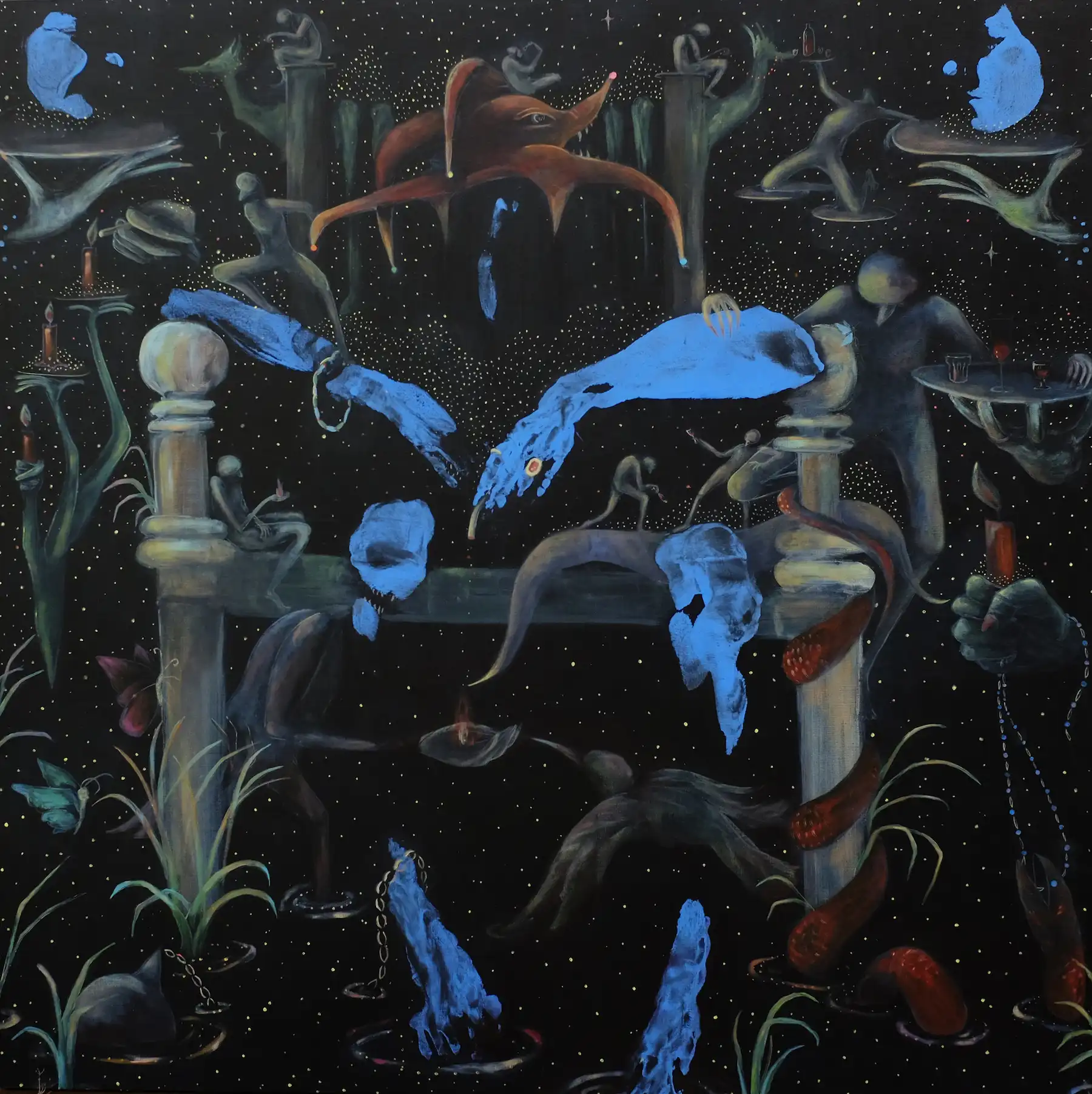
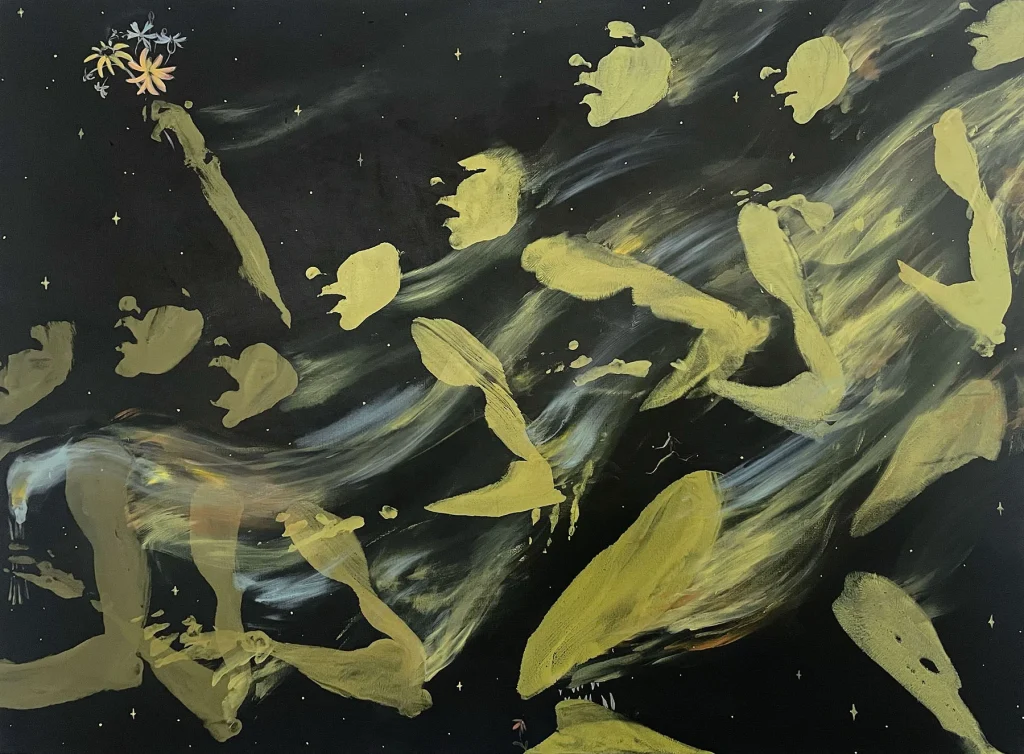
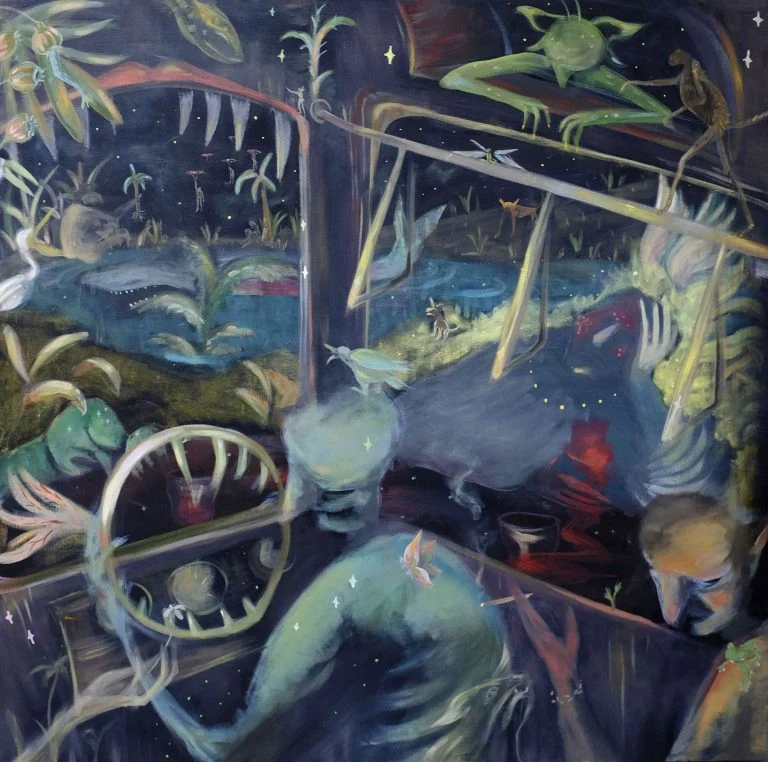
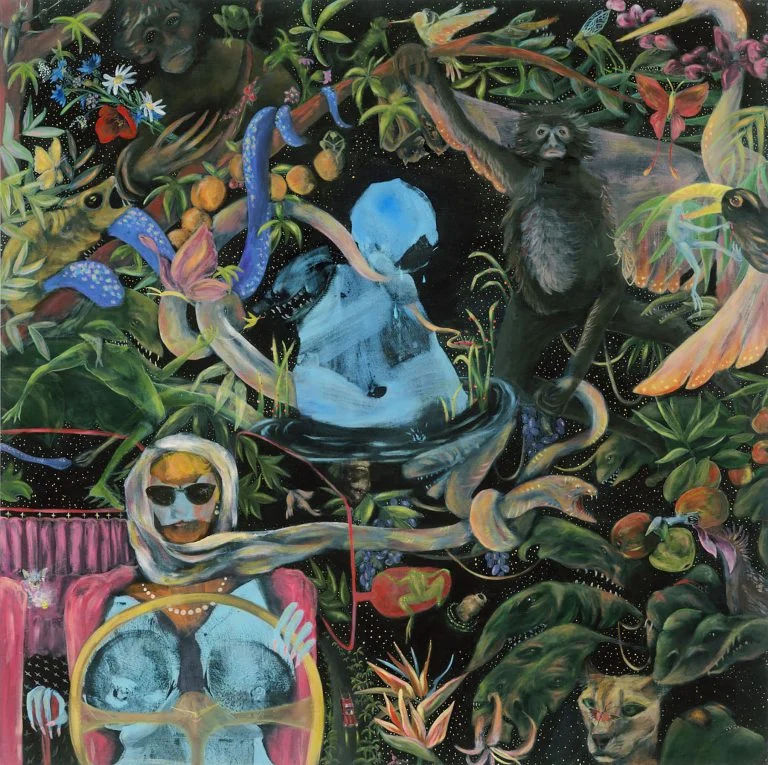
    I mainly paint on black backgrounds, and it’s been five years since I started imprinting human bodies, and I’m pretty excited about it still. So, it’s basically the series that I still work on and invite more and more people to collaborate on it.

    It’s nice and communal – it’s like inviting the viewer into your art.

    Yeah, it’s cool, it’s really, really fun. I had to learn some things along the way too – some people think if they imprint themselves, the painting’s going to be theirs. I found this a bit challenging, because for me, it was obvious that it’s probably not going to be theirs, because it’s my work, you know? It’s not just something I can give away.

    Now I try to let them know. But it’s nice, actually, when I think about it – because as I said, they contributed a lot.

    Can you tell me the story of how you started painting with a black background?

    I was painting a big painting, and I didn’t like it. It was a very long time ago, like eight years ago, when I was just starting my Bachelor. I like it when I see the pictures, but back then I didn’t like it, and I decided to overpaint it with black, because to me it was the easiest color that would be sure to cover all of the other colors.

    So that was the only reason why I chose black – I wanted to be sure that nothing would be visible. But I left one little window that I didn’t overpaint, and it looked very cool that there was this window to a crazy world. I loved the idea, it looked really nice. It was like you were looking through a little keyhole.

    I added stars too, even though my teacher would have killed me if she knew I was adding stars on every painting – because for her it was the easy way to just cover your background with anything. But I just think it really works on a black background. It gives you a feeling of space. Because my paintings are kind of flat, you know? So the stars give you some sense of distance.

    For your references to mythology – is that something you’ve always been interested in or wanted to do?

    Yeah – I was in Catholic school for ten years, and I was raised on biblical stories in a way. I appreciate them, even though I really don’t support the institution now. It made my imagination as a child really rich. From the Bible and from Greek mythology – for me, it’s more that we cannot deny that our culture is based on these stories. And I like to kind of rewrite them and think about them differently. You know, maybe the interpretation that we are taught is not the only one that was right. So I just like playing with that.

    It was like, when you believe in these stories as well, it kind of transfers to when you’re older and you still have the memories of that in your head, and you want to have your own interpretation because some people chose to write the Bible with certain stories, but it’s still like, who knows what really happened? So we’re always coming up with our own things.

    So now that you’re in your second residency in Berlin, do you think anything has changed in your art since you started at SomoS?

    That’s a good question, I’m not sure. Definitely, when I was at SomoS, I think I imprinted maybe only one person that wasn’t me. So here, I went much more into the direction of inviting more people. But when it comes to images itself, I think I’m starting to look a little bit more for different backgrounds besides black.

    I mean, I know I’ve changed inside. Something is shifting inside. I’m not sure if it’s visible yet outside of what I do, but I’m looking for myself all over again.

    Also at SomoS, it felt like everything had to be connected. Here, every painting changes a little bit, so sometimes I feel my core is not as strong. But there was this Polish psychiatrist, Kazimierz Dąbrowski, who said that basically, we usually believe that when we are fourteen, we go through this ‘F*ck everything’ phase. But actually, he said that we have that repeatedly throughout our lives. So sometimes you just have to kind of erase yourself to go further. And I believe that. So maybe I’m going through the phase again.

    I discovered here, for example, that by imprinting my lips and my jaw, they become like a dog’s eye. And now it’s a dog’s face. And when I don’t know what to paint, I usually paint wine, people who drink wine, and falling people.

    I love these types of paintings because the more you look at them, the more you see. And you come back another day and see something totally new.

    Yeah, I like it too. I like working on that. I like adding. Also, sometimes when you don’t have anything to add, maybe you shouldn’t. But in paintings like this one, you absolutely can, because it doesn’t make any sense from the beginning anyway.

    How do you know when you’re done?

    I don’t know. I never know. I can make the paintings very detailed. There was one about Adam and Eve. But Eve decided to leave Adam. She was just tired of him constantly claiming she comes from his rib. But when there was any problem, it was only her fault – a bit absurd, right? So I was working on this painting for so long. I was finishing it and the girl I was renting the studio from, came for her stuff. She told me, ‘Emilia, I look at this painting and it’s looked the same for a month now. What are you doing with it?’ She actually helped me finish it because she told me she doesn’t see any difference. Sometimes you just have to set a timer for yourself because you can get so dialed in. And you don’t know when to stop.

    So you’re moving, but what else will you be doing after this residency?

    I will need to find a new studio. But other than that, I don’t know. I think I need to not have a plan for a bit, because something is shifting in me. I don’t know what’s happening. Maybe I’m fourteen again, I need to think about myself. Start over.

    Statement

    The greatest brush is my own body. Imprinting myself on the canvases allows me to connect with the painting and become part of it, which has a soothing effect, almost like a therapy. When I paint, my silhouette becomes a part of my creation allowing me to make it into anything I want to.

    My creative process is profoundly influenced by Lou Andreas Salome’s interpretation of the story of Narcissus. She pointed out that our apathy towards him might be a result of a common misunderstanding of the myth rather than him objectively being a one-dimensional and a conventionally bad character.

    All of the magic he’s experienced, the beauty he’s seen on Earth and the unreachable stars – all of this is incomplete without his existence. He finally sees himself not only as a passive observer, but as an essential participant, as life itself.

    I want my paintings to be what the surface of the water was for Narcissus.

    GlogauAIR Project

    My goal is to paint a polyptych on which other artists and GlogauAIR residents would leave their mark. It would be a dinner-scene with many guests at the table – each of them imprinted by different person.

    I have already painted feasts and suppers – always imprinting my own body as every attendee.

    It’s time to finally share the canvas with other inspiring people. I hope that by sharing such a moment with different people, I will be able to create new beautiful connections, and as a result paint the work of unity.

    CV Summary

    Education

    • MA in Painting, The Eugeniusz Geppert Academy of Art and Design, 2021, Wrocław
    • BA, Art Therapy, The Maria Grzegorzewka University, 2019, Warsaw
    • Diploma in Scenography Techniques, Studium of Scenography Techniques, 2016, Warsaw

    Chosen Exhibitions

    • 06/2024 – Just In View, Tendermesh x Mojo Studios, Berlin
    • 05/2024 – HAZE.UNTITLED 001, Haze Gallery, Berlin
    • 11/2023 – Body Alchemy, Haze Gallery, Berlin
    • 06/2023 – Beyond Contemporary, Get Preise, Berlin
    • 05/2023 – What Narcissus Saw, Somos Arts, Berlin
    • 09/2023 – Triennale of Sacred Art, Czest Gallery, Częstochowa

    Chosen Set Design

    • ‘Supper’ etude by Julia Dziworska, 2023
    • ‘Bodily responses’ short by Emma Lindahl, 2022
    • ‘Utrata Równowagi’ feature film, dir. Korek Bojanowski, 2024
    • ‘Cicho coraz ciemniej’ dir. Joanna Różniak, 2024

    Gallery
  • Emily Lynn Dzieweczynski

    Emily Lynn Dzieweczynski

    Emily Lynn Dzieweczynski is GlogauAIR resident
    from October 2024 to December 2024

    United States


    Meet the Artist

    Coming soon

    Statement

    I make things that help us connect—to one another and the universe. At the heart of my practice is a curiosity for empathy and alterity.

    My work celebrates the poetics of science, art, and technology. I question the lengths and limitations of these fields when they intersect at the concept of empathy. I am inspired by science, broadly, and psychological literature informs my art making decisions—bringing something that is analyzed into something that is felt. Often, my work includes data collection in process and product.

    Ultimately, your reality is vastly different than mine and I want to understand that.

    GlogauAIR Project

    My work questions how we can use technology to better connect—with each other and the universe. I have circled around themes of empathy, aspects of the human condition, science, data, and the natural world. During this residency, I hope to tie together my interests in both the human experience and the natural world by creating an Environmental Memory Database. This interface can be accessed globally to record, document, and collect memories that pertain to natural and urban environments. I hope to use this, too, as a space to reflect on the differences of what is felt and analyzed in our environments by utilizing data collected by scientists as a measure of comparison.

    CV Summary

    Education

    • 2021 Web Development Certificate, Minneapolis College of Art & Design, Minneapolis
    • 2019 BA Studio Art & Psychology, Gustavus Adolphus College, St. Peter, MN, USA
    • 2017 Semester Abroad, Fine Arts Media, Slade School of Fine Art, London, England

    Grants & Awards

    • 2024-28 National Science Foundation Grant, “From Peaks To Slopes To Communities, Tropical Glacierized Volcanoes As Sentinels of Global Change: Integrated Impacts On Water, Plants, and Elemental Cycling”, The National Science Foundation, research conducted in Cayambe, Ecuador
    • 2022-23 Artist in Residence, Cedar Creek Ecosystem Science Reserve, MN, USA
    • 2022-23 Creative Support For Individuals, Minnesota State Arts Board, MN, USA
    • 2020 Artists Respond: Combating Social Isolation, Springboard for the Arts
    • 2020 Artist Development Grant, Prairie Lakes Regional Arts Council
    • 2019 National Science Foundation Grant, “Determining the eco-hydrogeologic response of tropical glacial watersheds to climate change: an integrated data approach”, The National Science Foundation, research conducted in Cayambe, Ecuador

    Solo/Two Person Shows

    • 2024 bleeding from the outside in, Larson Gallery, St. Paul, MN, USA
    • 2022 i sat in the zoom room and wondered what you smell like, Second Shift Studio Space, St. Paul, MN, US
    • 2020 Reservoir, with Betsy Ruth Byers, Rosalux Gallery, Minneapolis, MN, USA
    • 2019 0 Degrees C, -3 Degrees C, with Betsy Ruth Byers, 410 Gallery, Mankato, MN

    Selected Group Shows

    • 2023 Serious Play, JAG Gallery, St. Paul, MN, USA
    • 2020 Living//Room, School of Visual Arts Curatorial Gallery, New York City, NY, USA
    • 2020 SWITCH, Kaiser Gallery, Cleveland, OH, USA
    • 2020 Simulacra, REM5VR, Minneapolis, MN, USA
    • 2019 CollabArts V.2, Praxis Gallery, Minneapolis, MN, USA
    • 2019 C4W, Gamut Gallery, Minneapolis, MN, USA
    • 2019 The Human as a Vessel, Larson Gallery, St. Paul, MN, USA
    • 2019 Habitats, Target Gallery, Alexandria, VA, USA
    • 2019 Fruition, The Hillstrom Museum of Art, St. Peter, MN, USA
    • 2018 Snap to Grid, Los Angeles Center for Digital Art, Los Angeles, CA, USA
    • 2018 Supposition, 410 Gallery, Mankato, MN, USA
    • 2018 Migration, Ridgewater College, Hutchinson, MN, USA
    • 2018 World In Flux, Vine Arts Center, Minneapolis, MN, USA
    • 2017 Prints on Ice, Highpoint Center for Printmaking, Minneapolis, MN, USA
    • 2017 Carnegie Art Center Juried Show, Carnegie Art Center, Mankato, MN, USA

    Gallery
  • Esteban Patino

    Esteban Patino

    Esteban Patino is GlogauAIR resident
    from October 2023 to December 2023

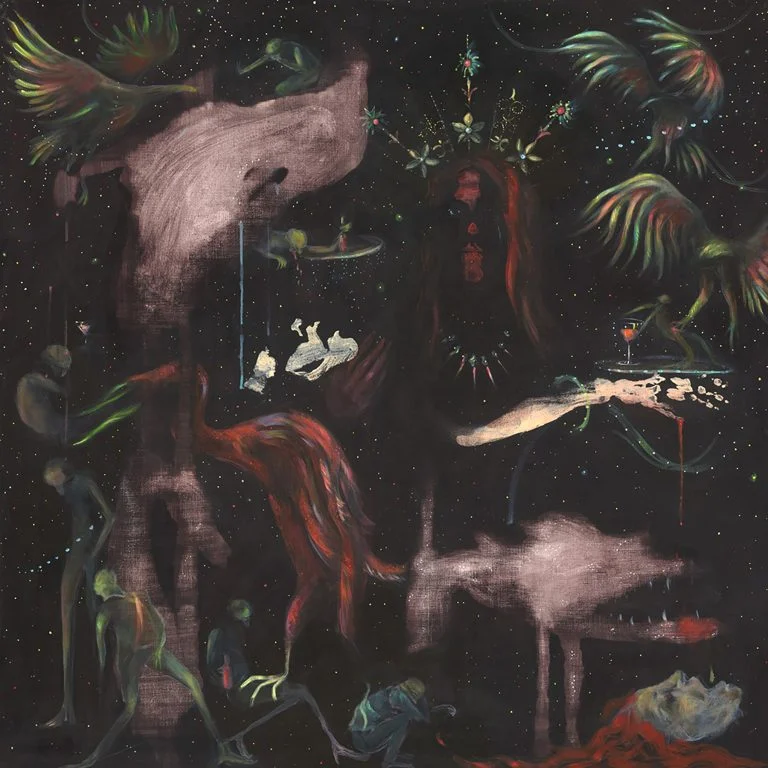
    Esteban Patino’s work delves into language creation and perception through sculpture, collage, and painting. Using a self-designed 24-character symbolic system, he explores the illusion of language and its structures. Sculptures focus on universal, timeless shapes; collages depict humanoid forms reflecting existence’s complexities; and paintings bring intuitive, mythical entities to life. These distinct styles interconnect, examining words as symbols with infinite interpretations and the human mark on our world.

    Patino’s GlogauAIR project will explore the universal power of symbols and visual language, inspired by ancient cave paintings, modern pictographs, and timeless shapes that transcend eras. Through painting, collage, and sculpture, Patino aims to create a unified body of work that engages the public, fostering a message of shared humanity and connection. The project investigates the essence of universal comprehension, using art as a timeless code for communication to inspire unity, innovation, and trust.


    Meet the Artist

    Can you give us a bit of an introduction to you and your background?

    I was born in Medellín, Colombia. When I was a kid, I liked art. I used to draw a lot. When I was about 16, I went to an art academy – an uncle was the one that got me into it. So I started classical drawing and classical painting at the same time that I was going to high school, because you could do that back then, and this is in Colombia. When I finished high school, I went to a university for art for one year, and then my dad and I moved to the United States.

    We moved in 2001 or so, and then for a while, I didn’t do much art. Finally, I moved to Atlanta, Georgia from Florida. When I got to Atlanta, as a coincidence, I went to a warehouse where other artists were doing work. A friend of mine got me a studio there, and I  started making work and meeting people, getting into the art scene, the art world. That became kind of like my home and where I do my work. So Atlanta’s home. I’ve been there for 24 years at this point.

    So you started with a more classical sort of drawing – how would you say your interest in symbolic language began?

    When I was studying more classical things in school, I was most interested in Surrealism and things like that. It was the Surrealists that were using symbols to decode the human psyche. They were using automatic drawing and things like intuition, more than really looking at [physical] things.

    I don’t remember exactly what sparked it, but somehow I got interested in universal shapes or almost cave painting – just things that humans started doing by intuition or painting images that were so basic, like a hand or an animal. It was universal. And so when I was doing the classical drawings and paintings and learning more about art history, I started focusing on Surrealism. I started focusing more on what I felt would be immediate. Also, I’ve always liked anthropology and the study of humans – why we came up with society and structure and language. There was a point where I was doing paintings, using more bodies or shapes, very graphic. And then, since I was interested in language, I kind of started breaking those forms apart, making my own symbols to play with – not so much to write things with my shapes, but to play with abstract forms.
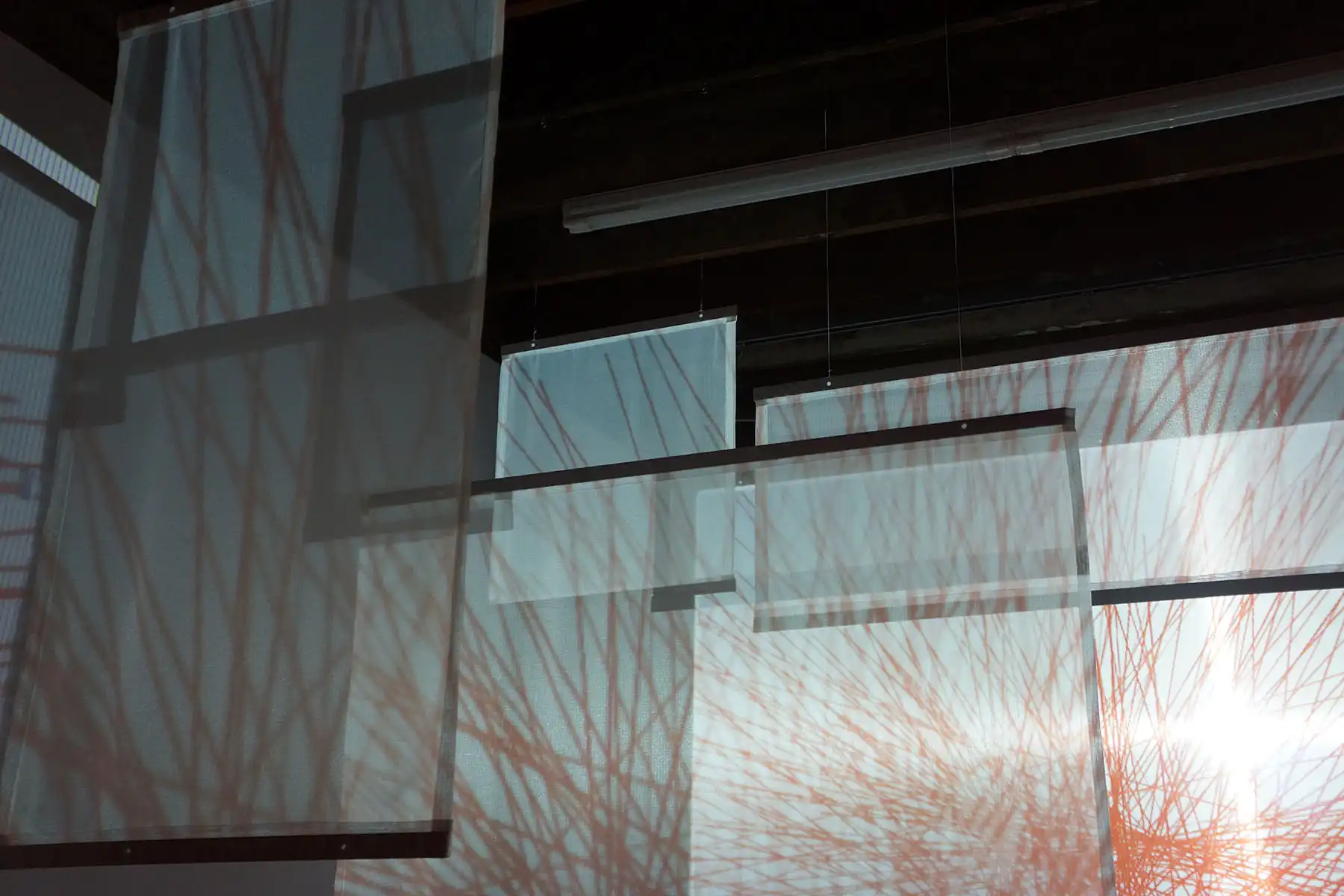
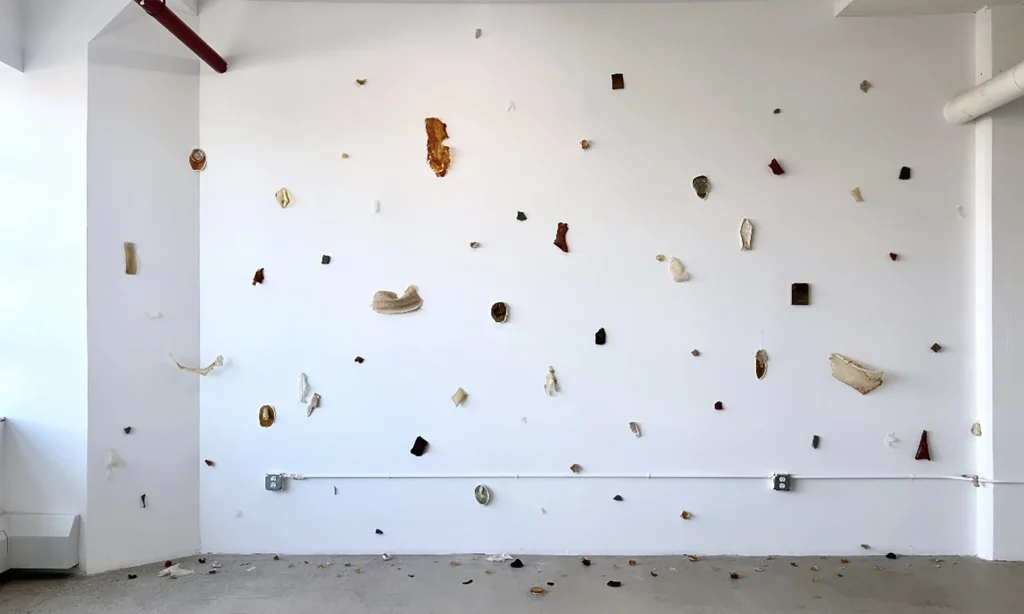
    I don’t know exactly where it’s going when I start – I just start putting things together, and then some shapes or forms or entities come up. So it’s a very intuitive process.

    So it’s a sort of primitive kind of interest.

    Yes, primitive. And what they call Art Brut, right? But also with some background and investigation – investigation into art history and contemporary art. So you have to be informed a little bit of what’s happening around you, with some knowledge of the past, and then you go in with your style or your technique.

    I do like some of the Art Brut artists – they were really repetitive, which is something that I like to do in my work. With the language, the alphabet that I sometimes work with, or with the shapes that I’m using right now – with stencils. I don’t really sketch much but I do build on what I’m doing. The piece informs me of where it should go, instead of having a set on this work. On the sculptural work, which is more with my alphabet pieces or with my tool set, then I do have an agenda, and I do know what it’s going to be, because they’re made out of steel. That’s more conscious.

    Regarding your paintings – is there anything you consciously start with, besides the alphabet? Or do you just let your intuition guide it?

    When I started here at GlogauAIR, I did have a background and a plan. I do have a few set of guidelines, but then I break them. In one piece, it was going to be two colors only, and then I ended up with three – the orange, the blue and the gray. So those rules were meant to be broken, right? And it was just a coincidence – I ran out of orange.

    You do have to have some rules so you’re not all over the place or not knowing where to start, but then you get to a point where you say, okay, now I’m going to break some rules. Otherwise, it’s kind of like you’re getting in your head too much.

    How do you think your practice is changing or developing?

    It’s funny – when I started working with the alphabet pieces, I wanted to work with representing language, working with text, and then that became sculpture, which became more random abstraction. I am very aware of when it stops giving me what I want, then I’ll drop it. My work is not like that phrase ‘’one-trick pony’’ – my body of work may seem similar in a way, but it’s very broad.

    There were ones that I did with a background behind that was the same letter repeating itself. Adding the black shapes started within the last four or five months before coming here, and it was the perfect excuse to explore that more here, instead of what I did last time, which was collage. I’m finding things as I go, as well.

    Infinite possibilities.

    Language, especially. It’s always developing, and you can always find a new aspect to it. That’s what we are as humans – that is my fascination. Every culture just came up with some little shapes – they’re so different, but they used them to communicate. I thought, I want to do something like that. I want to create my own little shape, and use it to communicate abstract painting, or other things like that. And you don’t have to know exactly what it is. If you know all the answers, then what’s the point, right?

    What are your plans for after this residency?

    I’ll go back to Atlanta, but I have a project, which is starting a residency in the mountains of Colombia. There’s a big coffee farm there that an uncle owns – the same uncle that started my art career – and I want to set up a small residency for five artists. I want to see if that’s a possibility.

    If not, if it’s too much for me to do, then I’ll just go and paint for a couple of months in the mountains. I’m an artist, you know, but I can be more than one thing. I think it’s just the timing of it all. I still want to do more with the paintings.

    How do you come up with the ideas for the stencils? Is that conscious?

    No, not at all. I’m just creating fun shapes, and universal images. The hand, of course, is very easy. That’s why it’s in the first piece I did here, because I needed to start with something.

    I want these paintings to look like it could be done by anybody in any country. You know, I don’t mind if it has a South American look, but I don’t define myself as a Colombian artist. I’m just an artist. Certain things are so universal, like this stencil of a hand I’ve been using. It’s basic, but universal … there’s an idea that we can all do it.

    Is Berlin inspiring you in any way, when it comes to the shapes and your intuition?

    I do let it filter through the work, because I’m here, you know. Some people, they bring what they do and they keep repeating what they do, but I think if we’re here we should let it come through. There’s another month and a half, so we’ll see.

    There’s one painting that started to look like birds flying away, and there are a lot of birds and those sounds around here. And there’s a blue and orange one I was working on, and just finished a couple of days ago – to me, it looks like an owl, so I named it Night Owl. Because in Berlin, you go out a lot, and you stay out really late. And you start seeing things that aren’t there.

    Statement

    My work involves exploring the multitudes of language creation and perception. Spanning sculpture, collage, and painting, I investigate the transmission, reception, and creation of arbitrary forms and semiotics that permeate my work. In order to consider these questions I created a system of symbols that are based on 6 characters, each of which rotate on their own axis 4 times to make a total of 24 characters. With these shapes—which are an alphabet that creates the illusion of language—I play with word structures by creating text based pieces , such as speech bubbles, palindromes and metaphors to represent how we understand written and visual language.

    Aesthetically, each iteration of my language study is distinct: my sculptures are systems of repetition , seeking symbolic approximation to atemporality and the possibility of universal shapes; my collages are humanoid bricolages, amorphous inquisitive monsters that portray the complexities of time and human existence; my paintings are deeply intuitive forms that awaken on the canvas, sometimes producing a sort of mythical beings or entities they aim to bring into existence the representation of timeless activities and timeless interactions.

    However distinct, these styles are deeply in concert with one another—forming my praxis and pushing to me (re)consider the multifarious nature of words as symbols with infinite idiosyncratic interpretations as well as the human mark in our landscape.

    GlogauAIR Project

    I’ve always been drawn to the importance and magic of universal symbols, from figures made in cave paintings that convey daily life and make us witness to what was once happening, to images that unite humanity and their pacts, warnings or collective ideas, to the signs we use today–the pictographs that tell us when to cross a street, or what not to do in certain spaces.

    I would use this opportunity to be able to create a whole body of work in the different mediums I currently use to express these ideas and feelings , through painting , collage and sculpture.

    I would love to be able to put all this interpretation under one roof , and have the public engage with this universe in hopes that a message of unification reaches us all when we can recognize our shared humanity through the universal power of the language of Art.

    I am attracted to the idea of a universal visual language that could have existed through shapes (as it always has) thousands of years ago, symbols that could be global, and transcend time. I often imagine my sculptures one day being found at the bottom of the sea and having people wonder when these shapes were created–thousands of years ago or in the 21stcentury?

    My work deals with this fascination, this desire for unity and comprehension, the question of what it is that makes us human and what can be universally understood.

    I feel that this concept, this investigation, this approach to language and symbol representation, is to be understood as a unifier and a timeless code for communication, inspiring feelings of innovation, partnership and trust.

    CV Summary

    2024

    • Beastiario | Ger-Art Gallery | Atlanta GA , USA ( Curator )
    • Meaning/making | Spalding Nix Gallery | Atlanta GA , USA
    2023

    • Thoroughfare | Spalding Nix Gallery | Atlanta GA , USA
    • Artist in Residence | Georgia College | Leland gallery | Milledgeville GA , USA
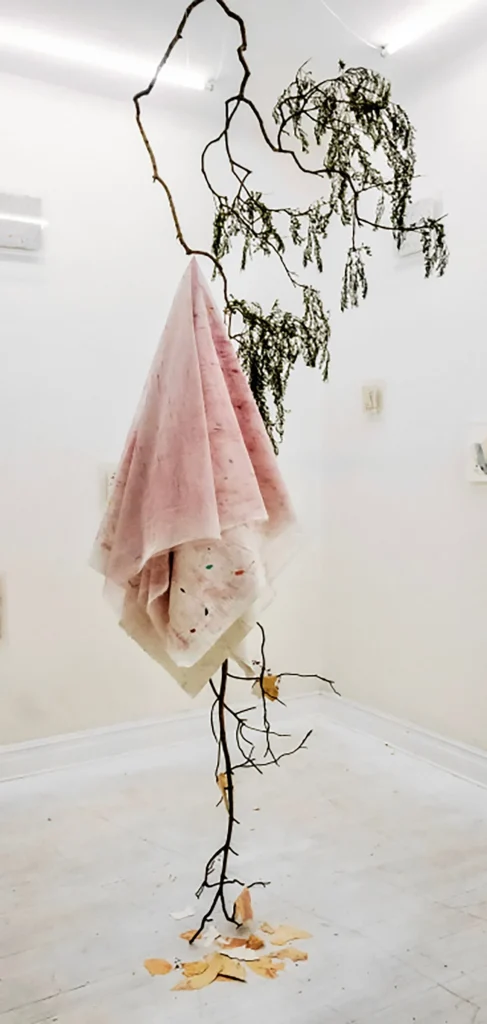
    • Emerging National XI | Macon Museum of Arts and Sciences | Macon GA USA

    2022

    • Ensemble| Spalding Nix Gallery | Atlanta GA
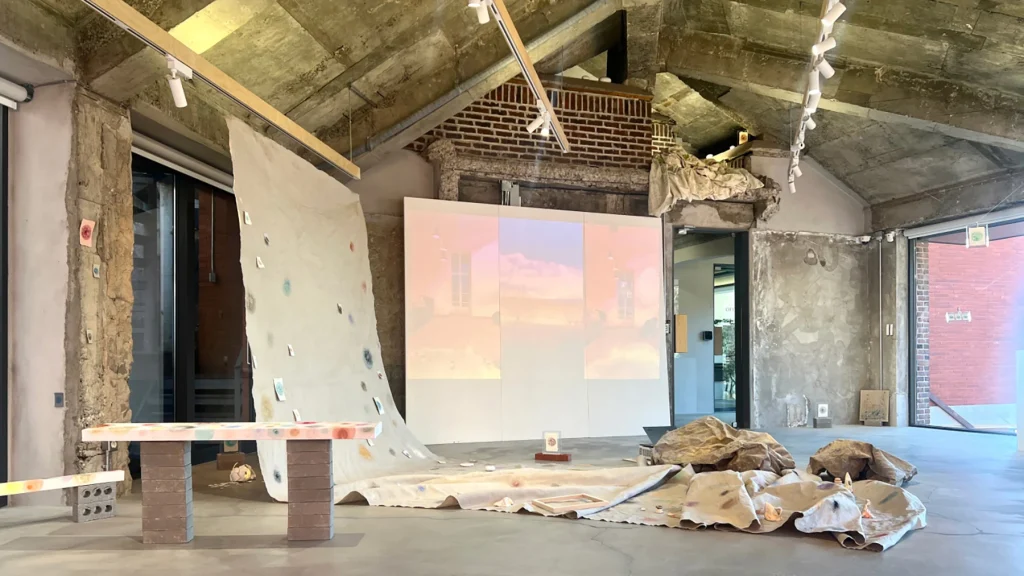
    • Das Volk | Freemarket Gallery | Atlanta GA | Solo Show
    • Gathered : Georgia Artists selecting Georgia artists | MOCA GA , USA

    2021

    • Re:Play \ the Bascom center for visual arts | North Carolina USA

    2020

    • The elusive divide | Hambidge center | Atlanta GA
    • Geoforms | Swan Coach house | Atlanta GA
    • Celebrating Georgia Artists of Hispanic\latinx origin | MOCA GA

    2019

    • The Odds are Good, but the Goods are Odd | Solo Exhibition | Sandler Hudson Gallery | Atlanta, GA
    • Fine Art Acquisition Program | Group Exhibition | Fulton County Department of Arts and Culture | Atlanta, GA
    • Art in the Atl | Group Exhibition | Hope Cohn Projects | Atlanta International Airport | Atlanta, GA

    2018

    • Till the Lights Go Out | Group Exhibition | Hathaway Gallery | Atlanta, GA
    • Beyond Words | Group Exhibition | Swan Coach House | Atlanta, GA
    • Nuevolution, Latinos in the South | Group Exhibition | Atlanta History Center | Atlanta, GA
    • Shadow as Witness | Group Exhibition Curated by Erika Hirugami | Curator Love | Los Angeles, CA

    2017

    • Black, White, Red | Solo Exhibition | Westobou Gallery | Atlanta, GA
    • Racecar | Group Exhibition | Zuckerman Museum of Art | Kennesaw, GA
    • The Game Show | Group Exhibition | Lyndon House Gallery | Athens, GA

    2016

    • Decahedron | Solo Exhibition | Westside Cultural Arts Center | Atlanta, GA
    • Hambidge Art Auction | Group Exhibition | The Hambidge Center | Rabun Gap, GA

    2015

    • (A)round November | Solo Exhibition | Ger-Art | Atlanta, GA
    • Sprawl | Group Exhibition | The High Museum of Art | Atlanta, GA
    • Hambidge Art Auction | Group Exhibition | The Hambidge Center | Rabun Gap, GA

    RESIDENCIES

    • GlogauAir Artist Residency | Berlin | Germany ( Summer ( 2023)
    • Georgia College & State University | Artist in Residence ( 2023 )
    • Art-Lab | High Museum of Art | Atlanta, GA (2016 )
    • Hambidge Artist Residency (2016)

    PERMANENT COLLECTIONS

    • The High Museum of Art
    • Georgia Cyber Center
    • Fulton County Arts Center
    • Facebook Atlanta Data Center / Newton County
    • Microsoft Corporate Collection / GA
    • Re/Max Real Estate Group
    • Colony House

    Gallery

  • Arta Delharte

    Arta Delharte

    Arta Delharte is GlogauAIR resident
    from April, 2025 to June, 2025

    Arta’s body of work encompasses an undisciplined, appropriationist, and Conceptual practice. Arta seeks to explore the intersection between the pictorial and the digital. Addressing themes such as the transcendence of pictorial connotative codes, the Internet, and the problematic pictorial references we have inherited in the category of “geniuses”. Through different media, Arta seeks to free the spectator and invites them to reflect, whilst emphasising that everything concerning her practice originates from the pictorial.


    Meet the Artist

    Can you tell us a bit about your background and the project you’re working on during this three-month residency at GlogauAIR?

    My practice begins with painting, but from the very start it’s been driven by an interest in how images circulate, how they’re produced, and how they become distorted. Living in the time I live in — and carrying the weight of everything that’s historically been defined as “art” — I can’t help but try to create something that speaks to the present, without forgetting everything that came before. For me, all of my work is archive, because it’s rooted in historical material. And it’s all pictorial, because it all starts with painting.

    That research inevitably led me to question what images really are, how we consume them, and what effects they have on us. My last exhibition, FAKETORIES, dealt with all of this in relation to cultural spaces, the factory, the history of images — and more specifically, the first moving images by the Lumière brothers. In the video I made in collaboration with Dolorcica, we revisited texts by Hito Steyerl and Harun Farocki, asking ourselves where the exit might be from this regime of image-consumption we live under — where we’re slaves to the screen, and the only thing we’re offered is the chance to consume ourselves.

    Eventually, I understood that this “exit” doesn’t exist yet — and I’m not even sure it ever will. So I proposed something else: to open a window and install a slide. It’s not an escape, but it’s an alternative. And honestly, beyond all the layers of theory, I just wanted to create something that wouldn’t add more suffering to this 2025. A fun, absurd little moment for the people who came to the open studio. Of course, you can find meaning in the act of sliding down, the speed, the impact… but right now, I’m more interested in something lighter, more mundane. There’s space for that too.

    At the moment, I’m working around the concept of the slide—not necessarily as a functional object, since I currently lack the means to produce a usable one, but rather as a conceptual entry point into a project that is deliberately open-ended. The slide becomes a placeholder, a speculative interface for thinking through trajectories, descents, and failures of structure. As such, what you’ll encounter in the open studio might be anything—or nothing at all.

    So, you said that your work starts with painting but also connects with the digital and the conceptual. So how is this mix reflected in this new project for GlogauAIR?

    When I say my work starts with painting, I mean it in a deeper, almost primal sense. For me, painting was the first innate symptom of being human — the impulse to express, to communicate, to create something. I think of Altamira, of those first marks on stone. Sadly, that symptom has ended up confined under the label of “art,” but I see it more as the act of creating images as a form of language.

    I don’t really believe there’s a strict separation between the pictorial, the digital, and the conceptual. It’s not about connecting them — they’re all part of the same continuous story. One is the development of the other. Virtual images are not separate from painted ones; they are their evolution. Also I believe that, intentional or not, all contemporary art is conceptual in its structure

    Honestly, I don’t know if all of this is reflected in the project I’m working on right now — and I’m not particularly worried about it either. I’m more interested in inhabiting the question than trying to answer it.

    You have mentioned before, Hito Steyerl, Altamira Caves. What artists, works, or texts have been fundamental in the development of your past works, and how do they relate to the project you’re working on now at GlogauAIR?

    As I had already mentioned, artists like Hito Steyerl, Harun Farocki, and Walid Raad have been essential in helping me think of the archive as a fictional and political construction. From Steyerl, The Wretched of the Screen and her video How Not to Be Seen have been particularly influential. They’ve helped me understand how invisibility, fragmentation, and oversaturation function as strategies within the contemporary image ecosystem. Steyerl doesn’t just critique the dominant visual regime — she also proposes tactics to resist it through artistic practice.

    In Harun Farocki’s case, his book Distrust of Images was a revelation. It taught me to be skeptical not just of what images show, but of the structures and mechanisms that produce and circulate them. That critical stance deeply influences how I work with found footage, screenshots, archival material, and optical devices. Both artists have pushed me to rethink the systems of image connectivity and consumption we’re embedded in, and to better understand the current state of art and visual culture in this post-human, algorithmic era — a time when images operate not only for human viewers but also between machines, independent of us.

    Equally fundamental to my practice are the writings of Paul Virilio and Jacques Derrida. From Virilio, I draw on the idea of speed as a form of power and violence. From Derrida, the concept of the archive as something always incomplete, contested, and unstable. These ideas permeate my work and are at the core of the project I’m developing at GlogauAIR: a visual investigation that seeks to open cracks in the polished surface of contemporary imagery — proposing zones of interference, suspicion, and fiction.

    You describe your practice as undisciplined and appropriationist. Can you expand on these characteristics, on how these characteristics manifest in your work and what you aim to transform through them?

    I use the word “undisciplined” ironically. In my context, when someone calls you undisciplined, it’s in a very pejorative way — “what an undisciplined little girl!”— and I found it funny to reclaim that term instead of saying I’m multidisciplinary, interdisciplinary, or transdisciplinary — terms I find very confusing for a non-specialized audience to understand.

    It’s true, I don’t have an exact discipline, and I don’t want one. I’m not looking for a discipline. For me, “Undisciplined” feels messier, freer, harder to categorize — and that suits my practice better.

    Appropriation appears in my work both as a method and as an attitude: I rewrite images, quote without permission, turn found fragments into part of a personal narrative. It’s not just about using what already exists — it’s about intervening in the way images circulate, hacking the authority of the original. Often, there’s no need to add much more, because, as I already said, everything has already been done. What changes is how we look at it, how we shift it, how we make it speak differently.

    Statement

    My body of work encompasses an undisciplined, appropriationist, and Conceptual practice. Examining the blind spots of a sector that promotes progressive values yet remains subjected to market dynamics, I seek to explore the intersection between the pictorial and the digital.

    My artistic practice addresses themes such as the transcendence of pictorial connotative codes, the instability of meaning in language, permanent connectivity regimes, speed, the “crashed” society, the Internet, the role of new generations who are more uninformed than ever despite having more access to information, and the problematic pictorial references we have inherited in the category of “geniuses”.

    Through different media, I seek to free the spectator from the duty-free zone and the romanticized vision of the artist, inviting them to a reflective contemplation — without a supplement of dignity. In this process, I use error, interference, and discontinuity as strategies of resistance against the inertia of visual language.

    Despite everything mentioned, I would like to emphasize that everything concerning my practice originates from the pictorial. For me, painting is neither a device of mimesis nor of technical virtuosity. It is the residue of a language prior to its semantic domestication, a system of signs in which the possibility of meaning is always on the verge of disappearance.

    It is not bound to established codes or the need for explanation; it is an autonomous language that resists categorization. As Jacques Derrida said,”Language never says exactly what we want it to say”, but painting does.

    GlogauAIR Project

    “COMO NO HEMOS ENCONTRADO LA SALIDA, HE HABILITADO UNA VENTANA” (SINCE WE HAVEN’T FOUND THE EXIT, I SET UP A WINDOW)

    During my stay at GlogauAIR, my intention is to continue the line of research I developed in my last exhibition, FAKETORIES, particularly with the video collaboration with Dolorcica, titled “La Última Película del Mundo” (The Last Movie on Earth), and to further explore the concept of THINKING ABOUT THE EXIT. I propose the installation of a slide emerging from the building’s window. This project would serve as a starting point for exploring connectivity systems, drawing analogies between the conduit and the slide, and addressing ambivalences such as the perception of ‘play’ versus ‘work.’ The meanings that emerge will undoubtedly be endless, exploring the image of the slide as a playful conduit and the space of play as an extension of artistic experience and reflection. (I would like to emphasize that these are the first strokes of a work that may transform and adapt).

    CV Summary

    Education

    • 2018 — 2023 University of Castilla-La Mancha (UCLM), Cuenca, ES — BA in Fine Arts.
    • 2018 Central Saint Martins, University of the Arts (UAL), London, UK — Fashion Folio Foundation (Stage 1).

    Extracurricular Courses

    • 2024 Museo Nacional Centro de Arte Reina Sofía, Madrid, ES — Course: Artists’ Figures. From Bohemia to Stardom.
    • 2022 MACBA Artists’ Lab, Barcelona, ES — Between Action and Object.

    Exhibitions

    • 2025
      • Hybria, collective show, curated by Motherlode collective, Zurich, CH
    • 2024
      • Montones de Mantequilla, Duo show with Adela Angulo Portugal, Madrid, ES
      • FAKETORIES, Solo show, Chaiz Studio curated by Arturo Fernández, Madrid, ES
    • 2023
      • Performance by the 1/4 collective at the inauguration of the XIX Artists Meeting of the Amelia Moreno Foundation. El Dorado Art Space curated by David Cohn. Toledo, ES
      • Solo show of the Final Thesis ARTA DEL ARTE, UCLM, Cuenca, ES
      • Untitled (Something that doesn’t allow itself to be seen), Solo show, UCLM, Cuenca, ES
    • 2022
      • Sala de Despiece, solo show, UCLM, Cuenca, ES
      • Upload it to TikTok, collective show curated by Antolín Murcia at UCLM, Cuenca. Cubículo, collective show, Madrid, ES
      • Alqvimia, collective show, Espacio Naranjo, Madrid, ES
    • 2021
      • Emerging Emergency, collective show, in collaboration with Phase Collective, Madrid, ES
      • Collective show at Casa Balandra curated by Mercedes Kerch & Gabriela Caulonga, Mallorca, ES
      • Natalia López de la Oliva, Alex Eiffel, Sofía López Briales y Adela Angulo Portugal, collective show, UCLM, Cuenca, ES
      • And you, how do you feel?, collective show, curated by Maya Alarcón Watson, UCLM, Cuenca, ES
    • 2020
      • Horror Vacui, collective show, Espacio Kanoko, Cuenca, ES

    Relevant Experience

    • 2023 Gallery Assistant — Gratin Gallery, New York, NY

    Gallery

  • Christina Krah

    Christina Krah

    Christina Krah is GlogauAIR resident
    from July, 2025 to September, 2025

    Christina Krah is a German-Spanish abstract painter whose practice revolves around nature and landscape as emotional and historical witnesses. By mixing her own colors, she develops distinct palettes that reflect the shifting impressions of natural environments, translating their complexity and depth onto canvas. Her work explores the relationship between people and the land and reveals nature as both responsive and resilient amid cultural transformations.


    Meet the Artist

    Could you tell me about your background and the project you are proposing for this three-month residency at GlogauAIR?

    I am a Spanish-German painter, born in Barcelona but raised in Germany. I studied Fine Arts in Madrid and was lucky enough to have my first solo exhibition in Barcelona when I was in my final year of the Bachelor. Since then, I have dedicated myself fully to painting. My work deals with the contrast between the urban city and delicate nature.

    The project I ́m working on here during the residency is related to creating works for my third solo exhibition in Taché Art Gallery in Barcelona, which will be presented as part of an art festival in Barcelona. It ́s about Berlin and the contrast and interaction between the city and nature.

    What draws you most to the interaction between nature and the urban landscape? How do you perceive this interaction in Berlin compared to other major cities such as your home city Barcelona?

    There is a quote in the book Chemistry of Beauty, by Deborah García Bello that describes pretty well my view on this topic: “The areas where the urban landscape becomes naturalised are frictions. Often these frictions are ruins: man-made constructions, landscapes that belonged to civilization and have been abandoned by it and reconquered by the wild. A beautiful phenomenon of transparency occurs in these places. Something is a ruin only for a certain time, as long as you can glimpse part of what it has been and part of what it will be. Its whole microcosm of traditions and traces assumes its end and is erased, like a tombstone with an eroded inscription that is covered with moss and weeds. Not all ruins are monumental, they are not always abandoned buildings. There are small ruins in every street. These gardens in movement – as the botanist and landscape designer Gilles Clement called them – appear in any crack in the pavement. They are small ruins that adorn the streets. It is paradoxical that wildlife comes alive in places where we have stopped living. We call these frictions ‘third landscapes’. The first landscape is the natural, the second landscape is the urban. The third landscape is the beautiful transparency of one over the other.”

    Regarding the comparison between the two cities, Berlin is the chaos where nature grows wild and free and in Barcelona they try to control nature.

    Your vibrant color palette and the way you work with space suggests a deeper exploration than that of a simple landscape. What are you seeking to convey through these artistic choices?

    I simply observe. Nature is brilliant and incredibly colorful; you just have to notice. I paint what I see, what nature inspires in me, and what I perceive from it. There are so many tones and colors in nature that they seem too fake to be natural. But the reality is that I don’t exaggerate the colors in my paintings; nature’s palette really is that strong and colorful.

    But there’s this way how you present your artworks also…they are not just plain canvases.

    Yes, I like to present them standing in different lines across the space so you can walk around the paintings and explore them from different angles, like when you walk around the city and its nature. I aim to make an exact representation of the city.

    For your project for GlogauAIR, you invite the audience to reflect on how humans interact with the city in contrast to how nature does. What is your perspective on this duality?

    The city is a structured and organized place. The buildings, sidewalks, and streets guide us in the direction we should take to reach our destinations. However, when you’re in nature, you’re free to choose which path to take. You have all the freedom to choose which direction to take. There are no rules, no paths, no signs. I also reflect on the transcendence of nature, because it persists during decades and eras and we people are just passing by in this world, so nature is kind of a witness of us and the evolution of the city as well.

    Statement

    In my work, I explore the themes of nature and landscape through abstract painting. I create varied interpretations and impressions of landscapes, aiming to capture their emotional and historical depth. Nature, as a witness to different eras and cultural changes over time, plays a central role in my artistic practice.

    By mixing my own colors, I develop unique palettes that reflect the diverse impressions a landscape can evoke in the viewer. This process highlights the idea that nature is not static, but engages in a continuous, mutual influence with people. Through distinct color combinations and shifting perspectives, I translate this relationship onto the canvas.

    GlogauAIR Project

    During my stay at GlogauAIR I want to explore the relationship between nature and city through painting, taking as a starting point the contrast between fast-paced urban life and the silent but persistent presence of nature. In a context such as Berlin, a city in constant transformation, I propose to visually reflect on how nature interacts with the urban environment and how, despite the brutality of the environment and the pace imposed by contemporary society, nature always finds a way to reappear and flourish.

    The work starts from a poetic image: buildings from which vegetation emerges, roots that go through cracks, trees that sprout in forgotten corners. This vision projects the idea of a nature that not only resists, but also coexists and transforms the urban space, revealing a transcendental dimension of the natural in the midst of chaos. In this duality between the built and the organic, I also seek to represent the ephemeral nature of human presence as opposed to the silent permanence of nature, which acts as a witness of the epochs, of change and of the passing of time.

    Through this project, I want to open a space for contemplation and dialogue about how we inhabit the city, what we leave out of our daily rhythm, and how we could look again – with different eyes – at that nature that is still there, patient, alive, latent.

    CV Summary

    Education

    • 2023 Bachelor in Fine Arts, Universidad Francisco de Vitoria (UFV), Madrid, ES
    • 2023 participation in the Daniel Canogar seminar, Madrid, ES

    Exhibitions

    • 2024 LANDscaping, solo exhibition, Taché Art Gallery, within the Art Nou art festival, Barcelona, ES
    • 2024 JUSTMAD Art Fair, collective show, curated by Daniel Silvo, Madrid, ES
    • 2024 ARTE, collective show, Galería Silvia Sennacheribbo, Barcelona, ES
    • 2023 Energy, solo exhibition, Galería Silvia Sennacheribbo, Barcelona, ES
    • 2020-2022 Solo exhibition, Hotel Pestana, Berlin, DE

    Grants and awards

    • 2020 Honors Distinction in Morphological and Movement Anatomy Drawing, Universidad Francisco de Vitoria, Madrid, ES

    Gallery

  • Judith Fang

    Judith Fang

    Judith Fang is GlogauAIR resident
    from October 2024 to December 2024

    Judith Fang is an independent artist and amateur astronomer whose work explores the nostalgia and disconnection of urban life amidst constant change. Inspired by the night sky as a stable backdrop to her rootless surroundings, she reflects on shared human experiences across diverse backgrounds. Through her art, she connects science, nature, and language to evoke empathy and poetry.


    Meet the Artist

    Can you give us an introduction about yourself and your background?

    I’m Judith. I graduated from the School of the Art Institute of Chicago. I spent four years there, but it was abruptly stopped by the pandemic in 2020. I moved to London for another year of study in the middle of my undergraduate, and afterwards, I moved to a very small town in China.

    It’s a historical town of porcelain industry and ceramics. A lot of people who graduated from art school, they’ve all moved to that town. I don’t know why.

    It’s probably that they’re like me – there’s sort of a pressure in China in general – because I was born and raised in Shanghai – living in big cities. Everything needs to be done within a social pace that your parents expect, stuff like that. So escaping from urban life to smaller towns has become a popular move in recent years. That also happens in my artwork as well – the theme of escaping from urban life.

    I remember you saying that moving there made you realize how many stars there are. Is that when your interest in astronomy started?

    Yes, exactly. Because I think the stars really mark how close you are to nature. Every time I was in Shanghai, I didn’t realize that we have so many stars, especially the moon. You can only see the brightest ones in the sky, because of the severe air pollution and the light pollution. You’re living in a bubble of a man-made world. And you don’t really get any idea of how other kinds of life live.

    Was that in addition to the work you were doing before you moved to the suburbs? Or did it break away from the work you were doing before?

    I think there are certain connections. I still have a very long-term anxiety that was from Shanghai, a traumatic experience from Chinese education and pressure from school.

    But I drive my art direction a little bit different from before. I was talking about control and being in control at the very beginning of my career. That’s also why my previous portfolio website is called Judith Square. the idea of the square, compared to the studio, is a very open space outdoors. So I didn’t name my studio a studio. I called it a square. And I make every work interact with physics. I try to leave many decisions to nature itself.

    For example, I do ceramics. And there are a lot of decisions of the color – the appearance is made by the kiln, by the temperature. I used to work with gravity as well. There are ideas around thinking that I don’t have absolute authority when I’m making art. This is also a sort of anxiety treatment as well.

    To me, astronomy perfectly follows that formula. It’s not up to us what happens in the sky or the way the earth turns. Or if a comet decides to come down and wipe us all out. We’re not in control at all. Like in China, during the pandemic, Shanghai was totally locked down at the beginning of the year. And at the end of the year, the little town that I lived in was locked down too. All the shops were closing and people didn’t have enough food. People were drawing in the anxiety. So I just ran all the way to the top of the building, to the rooftop. I grabbed a seat and just sat there stargazing. I realized that the stars rise every single year at the same time. They have their own pace and nothing influences their pace. This sort of macroscopic way of thinking really relaxed me a lot.

    When did the work with Braille begin? Is this recent, and what led you to that?

    When I was looking at the stars, there’s a method when you look at them called Star Bridge. You just build compositions between dots to a shape. And then that links by maybe six or five degrees to another star. This is how you seek deeper, celestial bodies, such as galaxies and all the clusters. So I look at all these spots and think about their compositions, trying to link them from one to the other.

    This sort of way of reading the stars made me think of them as a language. We’re making sense of it, at least making them into something comprehensible. So when I read Braille, I realised that they have many connections between them. Braille is also called ‘night language’.

    There are so many poetic parallels between Braille and stars. Another thing I realized is that when I take my telescope, everything that shows in my lens is reversed from the natural world. So you see everything upside down. This is how you write and read Braille – you write it from right to left and read from left to right. I’m highly interested in the connections between these two semiotics.

    As far as being in Berlin, now that you’re almost finished, how has it been working here with your practice as a whole, but also with your interest in Braille?

    In my first proposal to GlogauAIR, I wrote that I was going to paint the night sky outdoors. Then I realized it was too cold, so I didn’t do that. I think that Berlin is very inspiring to me in a lot of ways, even the way of living.

    The way I’m thinking about graffiti was just a random decision I made. I wanted to try something different because I didn’t want to repeat myself. Eventually, I’m recreating the Braille project with an advanced version. Just to make sure the work affects the audience. But still, I do think that the study of graffiti made me learn a lot about the composition of urban life again. This sort of urban life is not the specific urban life that I was trying to escape. It’s about freedom of speech in urban life. It’s more about how we treat all these languages and voices. Anonymous voices especially.

    On the architectural surface, and the urban surface in general. And they have very weird or interesting compositions happening at the same time. With the tracing of graffiti, I don’t know how that would be linked to an independent project yet. The whole idea of graffiti ensured and reinforced my ideas and my interest in semiotic studies. The very blurred boundary between image and text.

    What are your plans for after the residency?

    I like Berlin, first of all. This is my first time here – I lived in London and I moved to Ireland as well, but I’ve never been to other parts of Europe. I want to come back if there is a chance. I’m still looking for opportunities in Amsterdam. I do want to move out of my original country and I’m trying to seek a new way of living. This is what all my artworks are doing as well.

    Statement

    Judith Fang (b. 1998) is an independent artist and amateur astronomer whose work reflects the nostalgia and placelessness of fast-paced urban living amidst relentless change. This sense of rootlessness derived from her familiar surroundings, inspires her to gaze at the stars, viewing the night sky as a constant landscape. Through her art, she delves into the universally shared human experiences across different races and physiological bodies. She examines how nature is embedded in common language and meanings, striving to reveal that the principles of science can serve as a foundation for empathy and poetry.

    GlogauAIR Project

    The semiotics study of Stars and Brailles.

    As my eyes wandered across the night sky, I realized that our modern understanding of constellations is largely a cultural projection rooted in ancient civilizations. The names of stars differ dramatically, from Arabic, and Chinese to Greek mythology, transforming the night sky into a tapestry of anthropomorphic imagination. This revelation prompted me to question semiotics: how we perceive and encode the objective world into our everyday language.

    One profound moment for me was when I learned to read Braille, leading to the epiphany that both stars and Braille represent transcendent languages. They convey information through simple dot compositions, deeply connected to their contexts. For blind individuals, Braille serves a purpose similar to that of stars for those with sight: both are symbols of an endless night, representing a yearning to grasp the unknown external world. This study aims to critique the phenomenology of shifting meanings in language from a semiotic perspective while celebrating the innate human drive for phototaxis, both spiritually and physically.

    CV Summary

    EDUCATION

    • Bachelor of Fine Arts, 2021, The School of the Art Institute of Chicago (SAIC), Chicago, IL
    • Emphasis on Sculpture and Visual Critical Studies
    • Bachelor of Arts (Study Abroad), 2019-20, Central Saint Martins, the University of the Arts London, UK Program of Cultural Criticism and Curation

    SELECTED GROUP EXHIBITIONS

    • 2025 Playground*, Froots Gallery, Jingdezhen, China (upcoming)
    • 2024 What if ‘Faileas’ Evaporate From Liquid, Absent Gallery, Online
    • Constellation, Newtown Castle, Ballyvaughan, Ireland
    • 2021 Don’t Mind the Thing, Wedge Gallery, Chicago, IL
    • Dream Residue, 33 E.Washington Gallery, Chicago, IL
    • 2019 Zendai Art Exhibition, Himalayas Museum, Shanghai, China
    • Shanghai Young Art Fair, 2019 National Tour in China
    • 2018 Light Sleepers, ZhouB Art Center, Chicago, IL

    RESIDENCIES

    • 2022 The Pottery Workshop, Jingdezhen, China
    • 2024 Burren College of Art Residency, Ballyvaughan, Ireland
    • GlogauAIR on-site, Berlin, Germany

    Gallery

  • Jay Lee

    Jay Lee

    Jay Lee is GlogauAIR resident
    from October 2024 to December 2024

    Jay Lee, a nomadic visual artist from Seoul, creates art that explores time, memory, and place through found objects and natural materials. Influenced by motherhood and diverse environments, her work invites viewers to reflect on identity, belonging, and the transient nature of home.

    During her residency at GlogauAIR in Berlin, she will create site-specific works exploring memory, identity, and place, using found and locally sourced materials. Inspired by Berlin’s history and diversity, the project reflects themes of transition and invites viewers to engage with the evolving narrative of identity within the urban landscape.


    Meet the Artist

    Can you give us an introduction about yourself and your background?

    I started painting about seven years ago – it started as a weekend bonding activity with my daughter. It was a sort of a creative outlet for both of us. And then it turned into a more serious job, as you can tell. I started a nomadic practice about three and a half years ago. I just continued experimenting from there, with new mediums based on location, and as inspirations came up.

    How old is your daughter?

    She’s 14 now. So when we started, she was about eight. And we started painting on the largest canvases we could get, because everybody told us, ‘Oh, you gotta start small.’ So we did the exact opposite.

    We were just using rather faster-to-dry mediums, like acrylic, and a little bit of watercolors. It was mostly painting on large scale canvases. Often, we would paint on the floor like action painting. So it was very playful, a lot of movement with the body, with the flow of energy and emotions. Later, we realized that making art sparks better conversation – and better energy – among people.

    As you’re settling into Berlin, do you think your artistic practice is changing at all? How do you find yourself inspired by the city versus nature – by landscapes and all of that?

    It’s always different depending on locations. I’ve been collecting a lot of flowers and plants, little weird things, like hairy balls and pumpkin on a stick. I found it very funny and wanted to use them.

    I was in Istanbul for two and a half months before coming here… it’s always about connecting back to the previous locations and then finding connections and reconnections throughout the journey. I don’t have to stick to only Berlin stories, because everything I experienced and explored in past locations just adds up in the end. I was in Leipzig last year in about the same period, from October until December, so coming back to Germany brings all the memories back. It’s the seasonal changes, like falling leaves. The days get shorter. I find beauty in the transient moments and love having ephemeral elements in my art.

    Berlin has a lot of diverse dynamics in terms of small venues, and a lot of funky exhibitions, non-commercial, experimental. I like it very much. I find it somewhat relatable to the scenes I experienced in New York this year. It’s a busy city, so much is happening. It’s very similar to New York but also different and unique.

    I’ve heard that.

    Still, [Berlin is] homey. Very cozy and chill, compared to New York.

    Yeah, a city for artists.

    Definitely.

    Is this [various materials around the studio] a big thing for your creative process? Picking things up that you see and putting them on the wall for inspiration? Is that your typical process or do you have other ones as well?

    Usually, I’ll just put everything on the floor. But because I’m in this living-and-working studio situation, I have this feeling that I can’t really work on the floor as much as I usually do. So I’m putting more things on the wall and on the desks.

    This time I’m trying to work with a more delicate, smaller scale. Aesthetically, I don’t know what I will do eventually, but I think in terms of size and materials, I want something very delicate. Something tangible, in your hand and then even smaller. In terms of materials, I’m exploring options like glass, casting. Or I may end up making large-scale paintings in the end… who knows.

    I’m collecting a lot of seasonal and local materials and trying to put them together. Glass feels very dominant in this room, because of the street view that I have. I find lots of glasses here… big windows, glass bottles, glass candles, et cetera. I realized I use a lot of candles whenever I come to Germany, especially in this season. It makes the room cozy.

    So as far as being a nomadic artist … after being an artist for six or seven years, you have only been nomadic for three. How did that develop, and what led to that decision?

    First and foremost, I always wanted to explore the world. So when my daughter grew up a bit, and became a teenager, I thought it was my chance to go travel longer-term. I got a job opportunity at a tech company in the US, and thought, okay, I’ll take it. Because it was fully remote, I realized I could spend a lot of spare time doing what I love, which is art and also travel. I decided to just travel across the country – mostly California first, like San Francisco, San Diego, and then extended my reach to Mexico.

    Being in Mexico, I realized I really love doing a lot of experimental installations and learning about local materials and local crafts. So it wasn’t only about paintings anymore, on those framed canvases. The curators there pushed me to go further into three-dimensional works. And it suited me really well. So that’s when I started doing more site-specific installation work researching local materials, often natural, employing tree branches and rocks and found objects.

    I wanted to expand my reach to Europe. Germany was the first country in Europe that I came to practice art, and I really liked it. I decided to split my time into one-third in America, one-third in Europe, mostly around Germany, and one-third in Korea and nearby countries, going back to my family and my daughter.

    I feel like I’m going through a lot of transitions in my life now. I’m thinking I’ll stretch it a little bit further maybe. Stay experimental, at least for the next couple of years. I’m considering Latin America, going further south, going to the jungle and mountains. But I always plan to come back to the major cities like New York or Berlin. I’ve never been to Paris to show my works. So maybe Paris.

    I always leave the summer and winter for my daughter. This year, Istanbul was the place that I went to with her, and we stayed in a residency together. We put on a solo show. It was really awesome to work with her, travel with her and then tell the story through an exhibition.

    So she still makes art?

    Yeah, she makes great art. And sometimes she makes much better things. I’m feeling intimidated by this little young lady! But it’s so awesome because I got it from my mom, this crafty side. I feel very proud of this genetic heritage that we’re getting from all these great women.

    You have some long-term plans set up, but are some of the residencies sort of spontaneous?

    Yeah, I’m planning on doing this crazy jumping from one to another, at least for a couple of years. And then trying to find a place to settle in. It could be Berlin. Very likely. It has a reasonable living cost, I think, considering everything.

    Were you always drawn to art?

    My educational background is in international politics and relations, and I wanted to be a diplomat. I feel doing art is connecting people, understanding culture, so it almost feels like diplomatic action to me, and I think it’s somewhat connected to my core interests and endless curiosity. When I was a teenager, I wanted to be an artist. And then when I got older, I wanted to be a diplomat and travel around the world, so I’m kind of mixing the both. Once I’m trying to settle in, I feel more pressure to know what suits me best for sure. I don’t feel like I need to jump into one option right now. I’m enjoying this experimental and highly productive period. Moving forward, I feel more free to incorporate AI, maybe coding, whatever medium and skills I can utilize at my disposal. I’m still expanding and exploring, rather than just trying to push or limit myself to focus on one thing.

    But everything I make are aligned and they share the same vein. I enjoy this art making process in my moving studios.

    When you move on from this residency, what do you think you’ll take with you from Berlin?

    People. It’s always people, I think. It’s quite funny how small the world is. Even on the first day at GlogauAIR, at the exhibition opening we had here, I bumped into a person that worked at the residency I did last year. I also invited a friend who decided to live here – she’s from Norway, and she’s living here now. We participated in the same group show in Copenhagen, so the world is really, really small.

    And there’s this very unique experience of living in this building. It’s my first residency living with this many people. So this is very new.

    I can imagine.

    Yeah – this is very new, but still I’m feeling like, okay, this is a life that I chose to experience. It’s all about the new experiences. And then also, really figuring out in which environment I thrive. We’ll figure it out. But, you know, that’ll come up naturally.

    Statement

    Jay Lee is a nomadic visual artist from Seoul whose practice deeply explores the passage of time, memory, and the essence of place. Her work is a confluence of found objects, natural materials, and serendipitous encounters, woven together to create pieces that transcend geographical and cultural boundaries. This process reflects the fluidity of identity and captures the transient nature of existence, shaped by the ever-shifting landscapes that she inhabits. Each piece Jay creates is an intimate dialogue between the past and the present, offering a visual narrative that encourages viewers to reflect on their own experiences of belonging, displacement, and the concept of home.

    Jay’s art is profoundly influenced by the rapid transitions of early motherhood and the diverse environments she has traversed, from the bustling streets of New York to the tranquil settings in nature. These varied landscapes are not just backdrops but active participants in her creative process, informing the materials she uses and the themes she explores. Through her work, Jay seeks to foster a deeper connection between individuals and their environments, encouraging contemplation of the temporal and spatial. By inviting viewers into these carefully crafted spaces, she aims to create an immersive experience that resonates on both a personal and universal level, ultimately exploring the ever-evolving narratives of identity, memory, and the search for a sense of place in a constantly changing world.

    GlogauAIR Project

    During my residency at GlogauAIR in Berlin, I will explore the intersection of memory, identity, and place through a series of site-specific installations, paintings, and sculptures. Drawing inspiration from Berlin’s rich history and multicultural vibrancy, I plan to incorporate found objects, natural materials, and elements sourced locally. My work will focus on the themes of transition and transformation, reflecting my ongoing journey as a nomadic artist. This project aims to create a dialogue between Berlin’s past and present, inviting viewers to engage with the evolving narrative of identity within the urban landscape. The pieces will evolve throughout the residency, capturing the fluidity of time and place as they interact with the unique environment of Berlin.

    CV Summary

    Solo Exhibition

    • Unrolled / 2024.09.20 – 09.30 / Arthereistanbul (Istanbul, Turkey)
    • Home of Emotions; Moving Home, Moving Emotions / 2023.09 / El Sur (Mexico City, Mexico)
    • Dreams / 2023.06.23 – 07.23 / KOIK Contemporary (Mexico City, Mexico)

    Three-Person Exhibition

    • Someone’s ( ) Stories / 2024.01.10 – 01.30 / Samseyoung (Seoul, South Korea)

    Selected Group Exhibition

    2024

    • The Summer project / 2024.08.06 – 09.26 / The CUT (Halesworth, UK)
    • At Different Speeds / 2024.06.28 – 07.28 / UA Gallery (Brooklyn, New York, United States)
    • The Material Way / 2024.06.12 – 06.14 / 3 Days of Design at Øens Have (Copenhagen, Denmark)
    • Observe and Obsess / 2024.06.05 – 06.13 / UA Gallery (Brooklyn, New York, United States)
    • Perspectives 2024 / 2024.01.31 – 02.18 / CICA Museum (Seoul, South Korea)

    2023

    • Lichtspiele des Westens 2023 / 2023.12.09 / West (Leipzig, Germany)
    • Say – Sweet, Silence / 2023.12.16 – 12.20 / Alte Handelsschule (Leipzig, Germany)
    • Smoking Materials / 2023.11.16 / Pilotenkueche (Leipzig, Germany)
    • Meals on Different Tables / 2023.02.15 – 02.20 / Gallery Is (Seoul, South Korea)
    • The Flap of Wings; Flight / 2023.02.01- 02.06 / Gallery La Mer (Seoul, South Korea)

    2022

    • My First Painting / 2022. 10.5 – 10.10 / Gallery M (Seoul, South Korea)
    • RAF: Rising Artist Festival / 2022.12.09 – 12.18 / Ccollabohaus Mullae (Seoul, South Korea)
    • Arte Local: Casa de la Cultural Tulum / 2022.11.29 – 12.06 / Terrenos de la Expoferia Tulum (Tulum, Mexico)

    Gallery