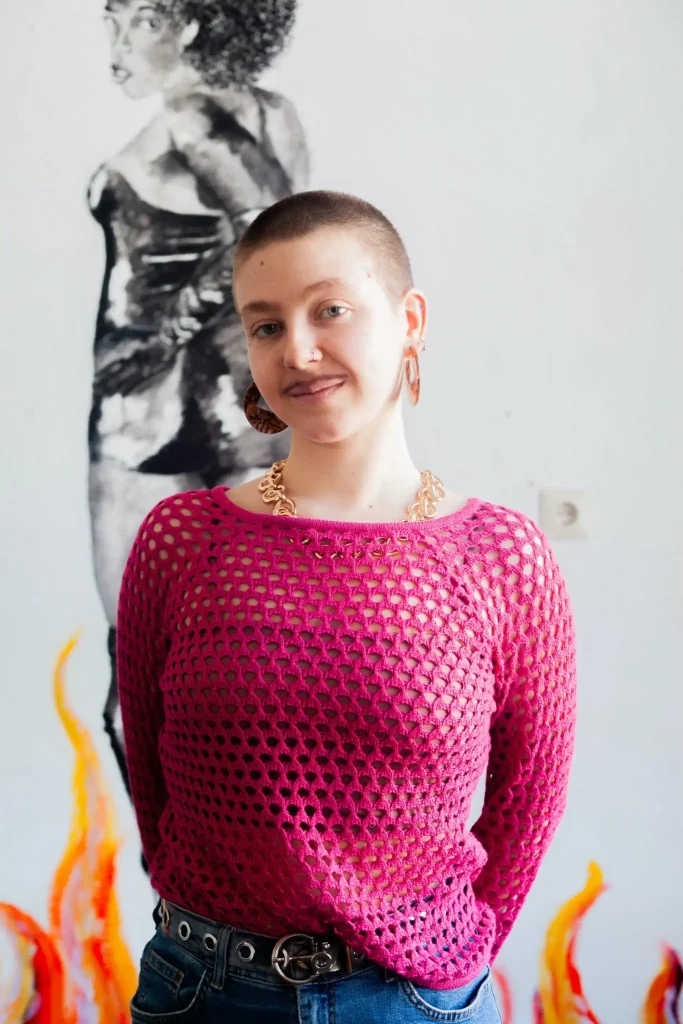
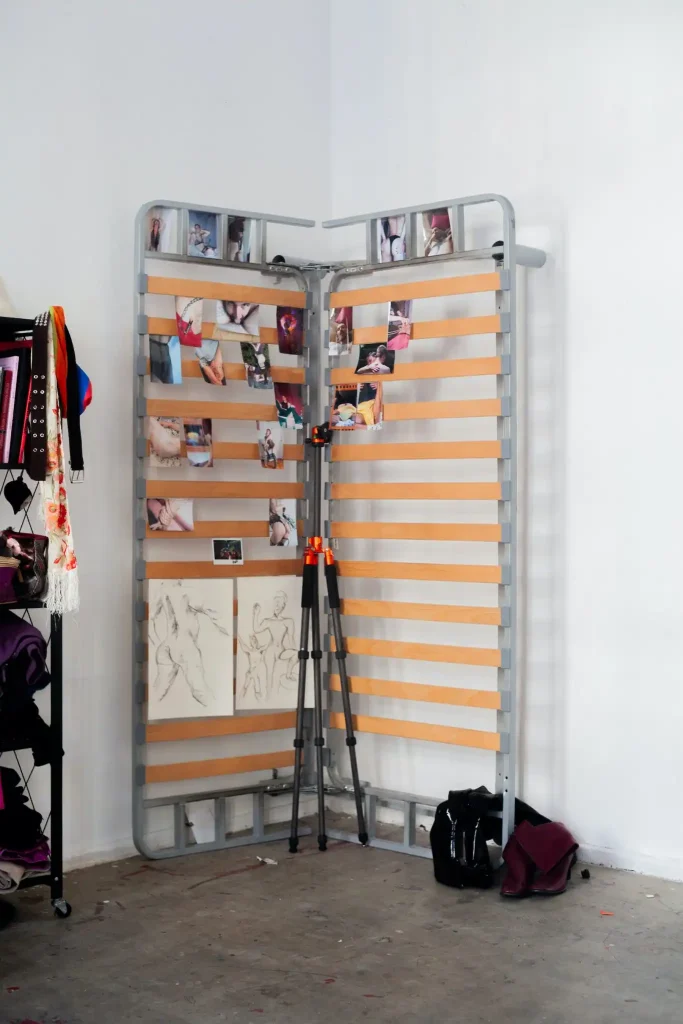
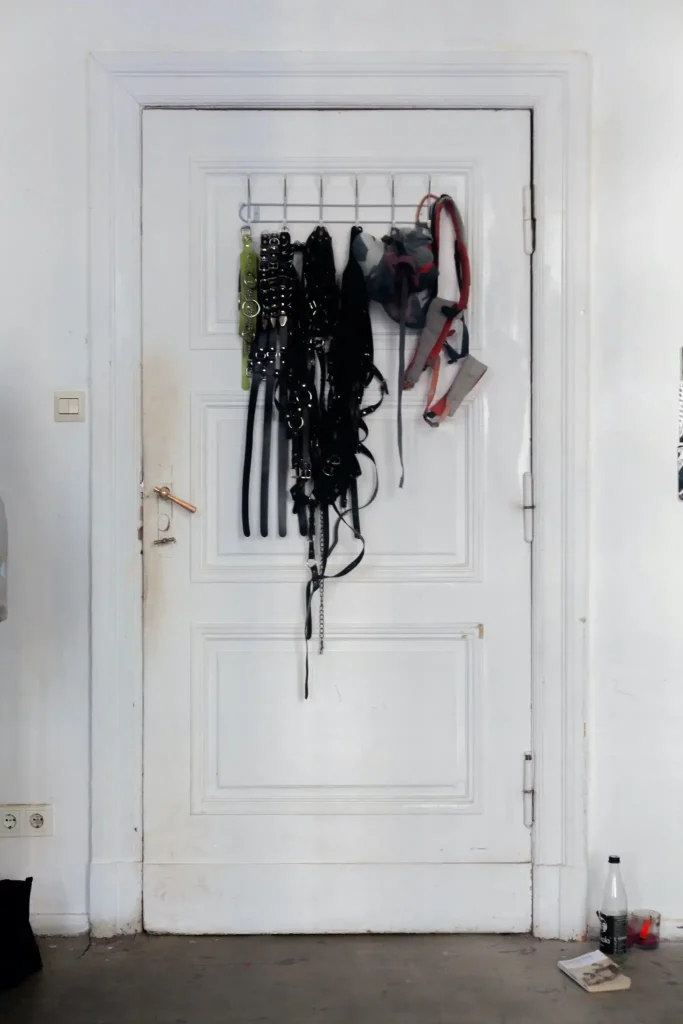
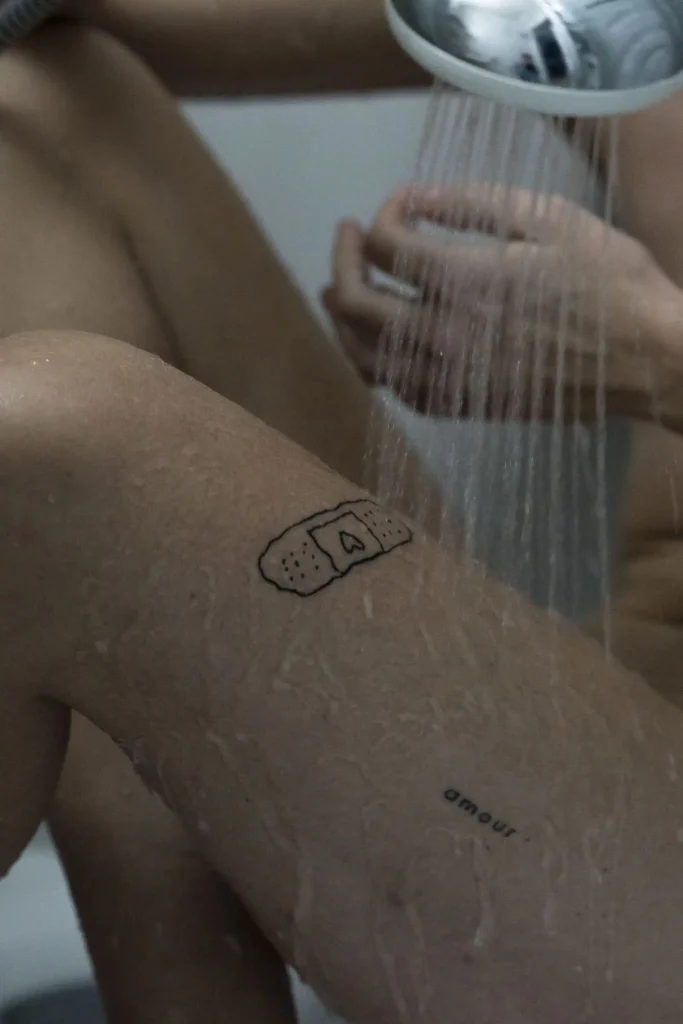
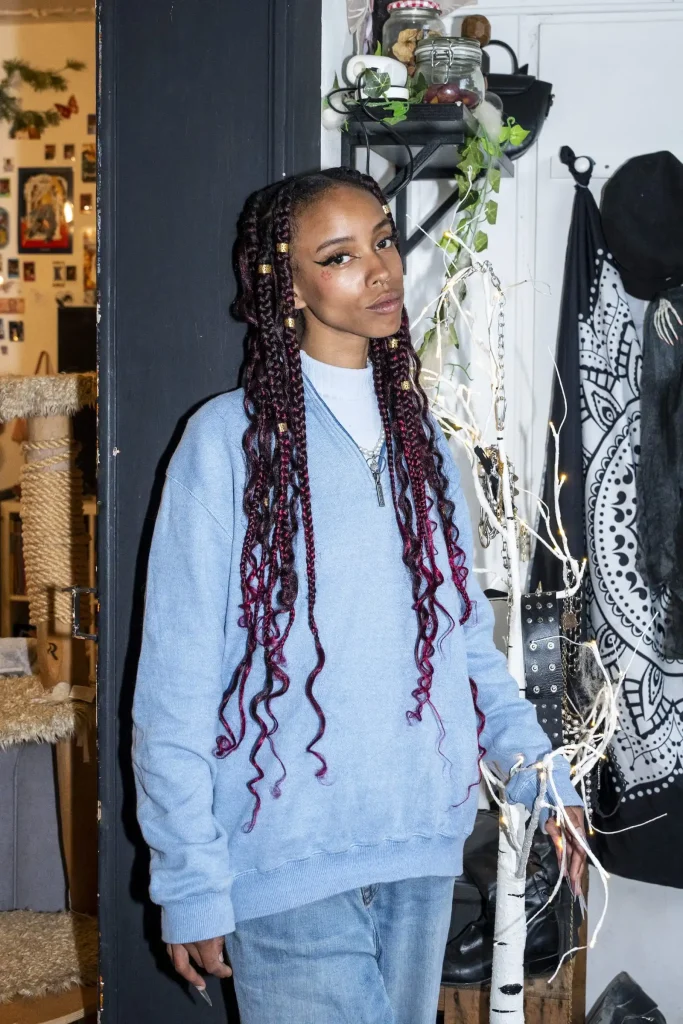
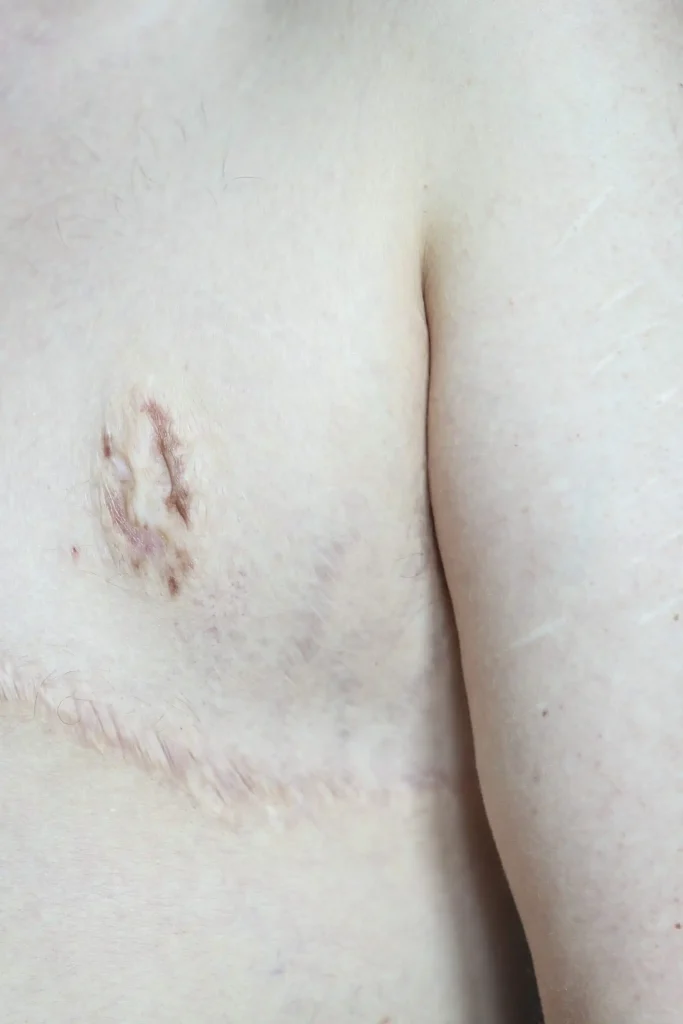
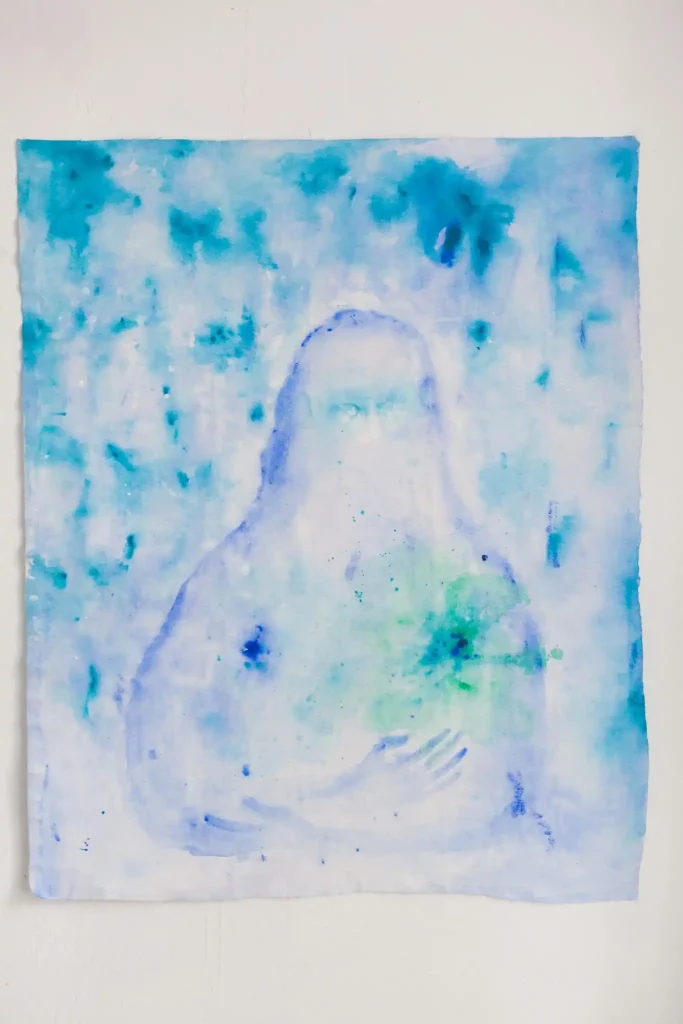
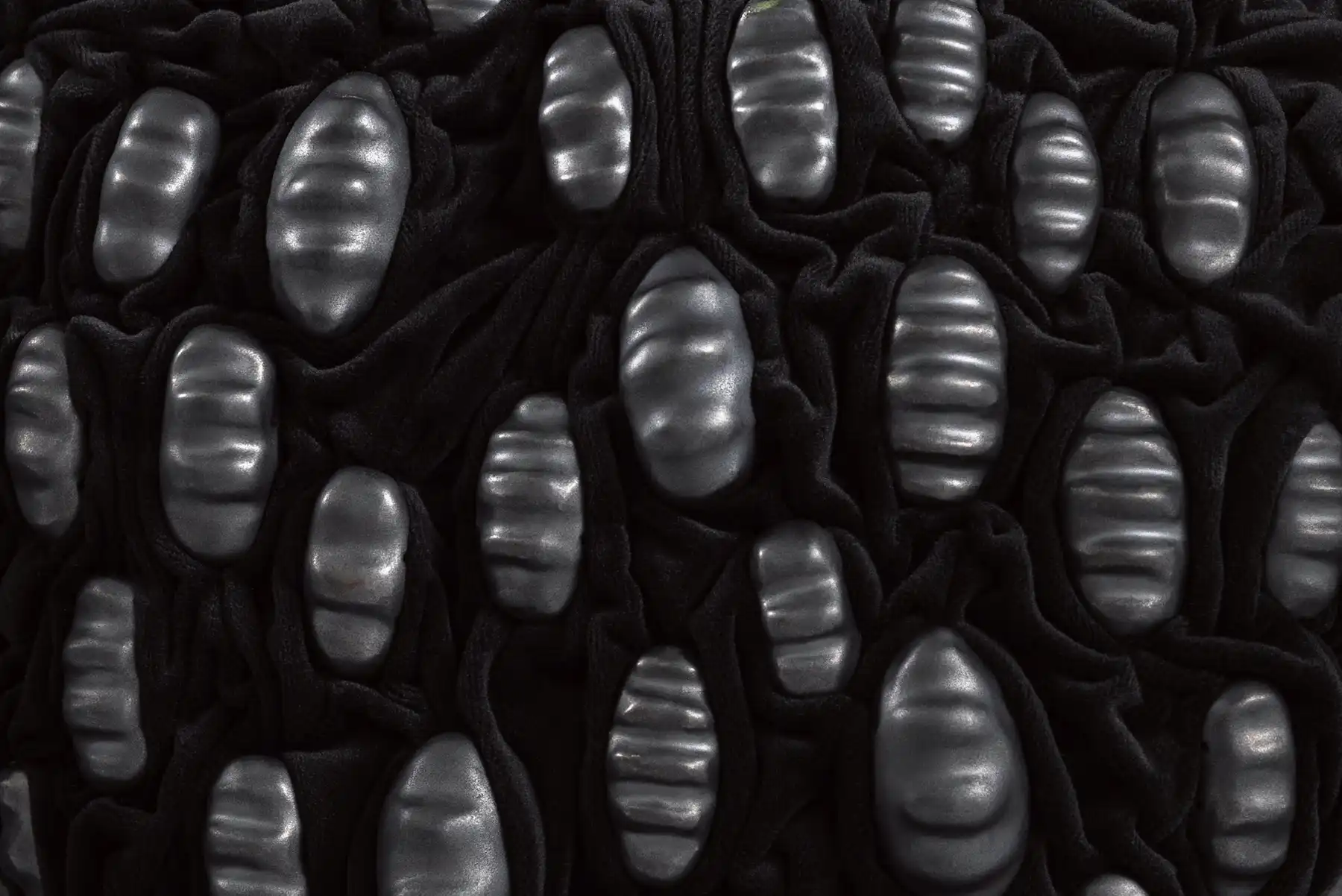
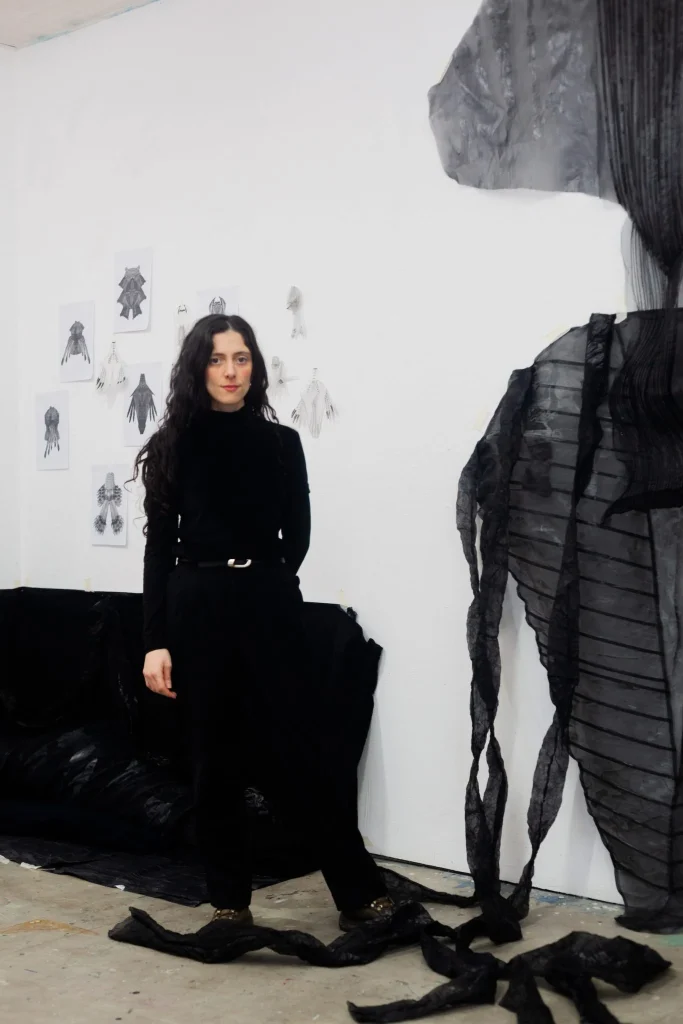
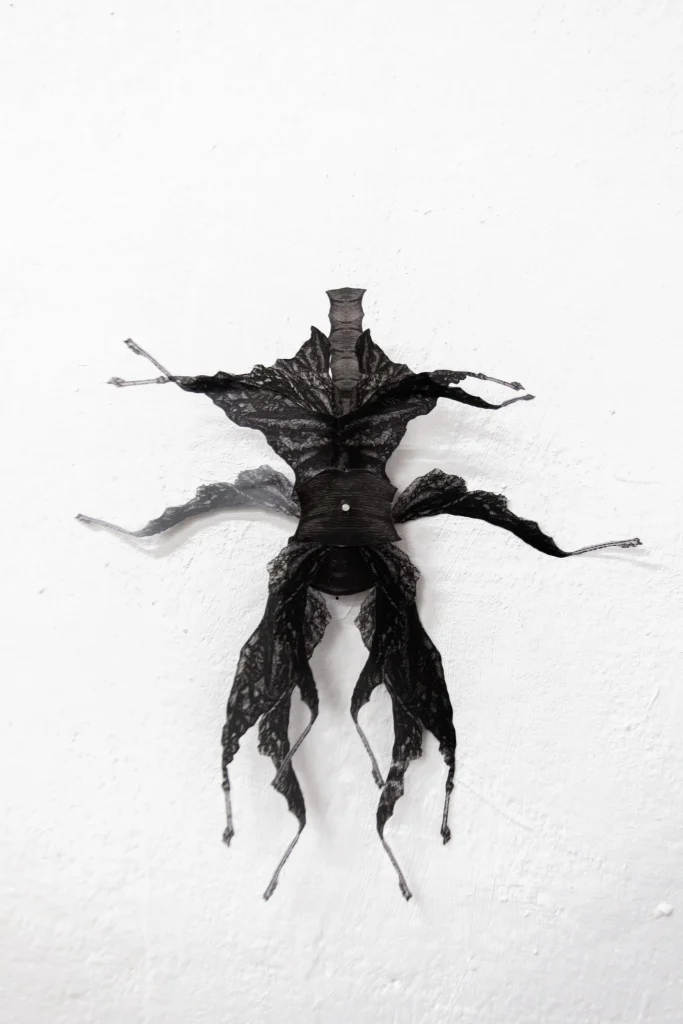
Finn Theuws is GlogauAIR resident from July, 2022 to September, 2022
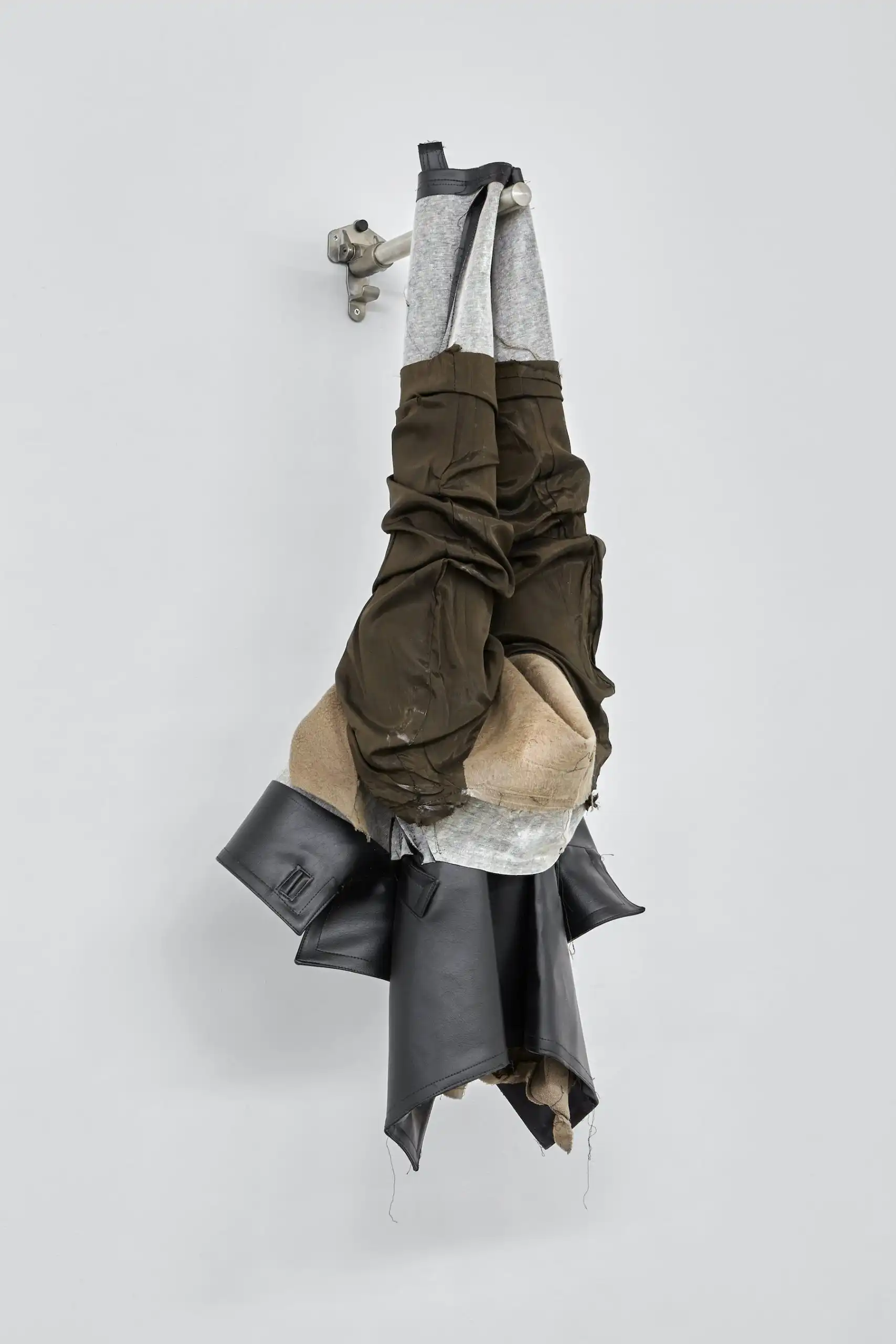
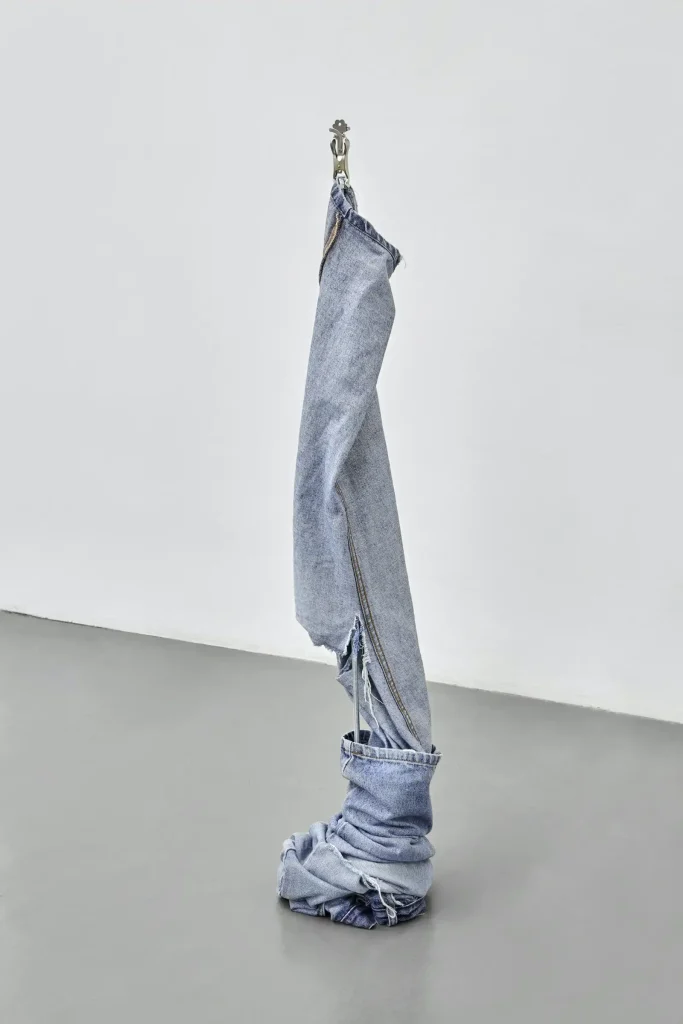
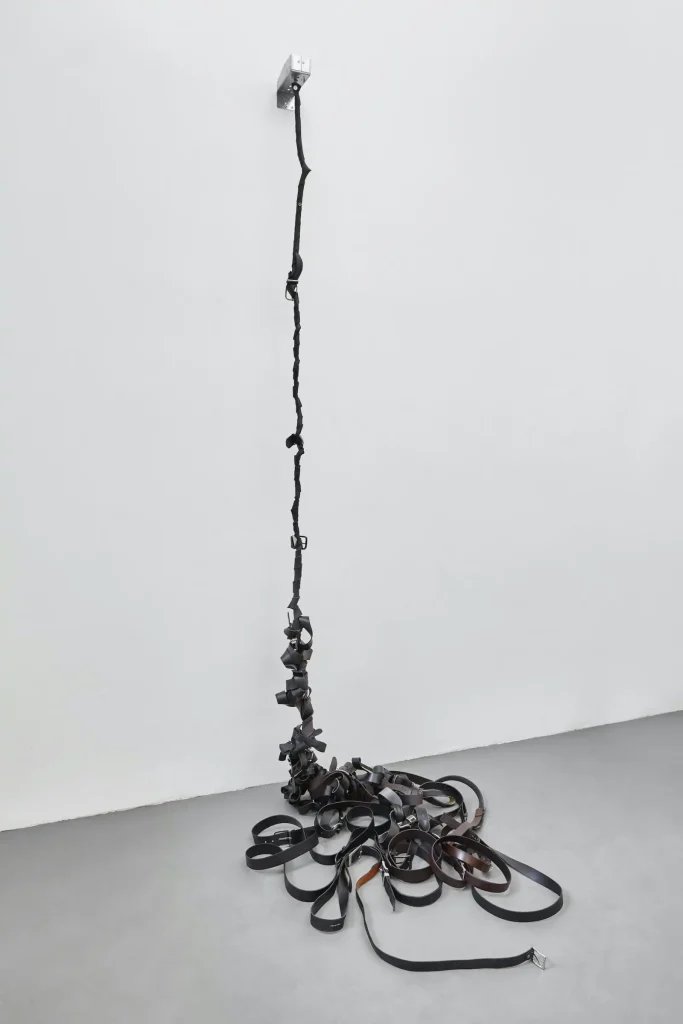
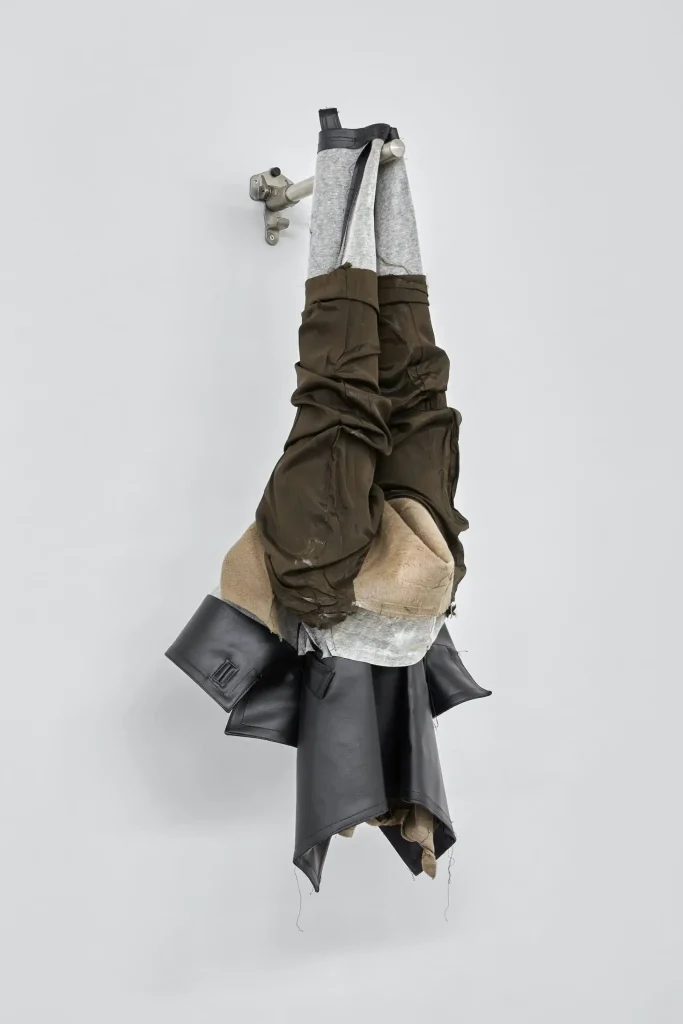
Finn Theuws (b. Amsterdam 1997) is a multidisciplinary artist whose artistic practice consists of the various media of sculpture, installation and writing. His work presents a visual language of personal memories and figures of speech.
Finn Theuws’ practice is driven by a profound fascination with the potential of the inanimate to convey meaning and reciprocally affect the human subject.
The interest fuels his efforts to meticulously deconstruct inherent value systems embedded in both man-made and natural objects, to fragment and dismantle their objecthood, reverting them to things and material components.
While preserving echoes of their original identity during the processes of fragmentation, Theuws’ sculptures come into being, consisting of a reconstruction and juxtaposition of the disassembled components.
Imbued with a new language, frequently incorporating figures of speech and hints of the surreal, he reimagines narratives and semiotics associated with objects, particularly in relation to concepts of masculinity, gender, labour, leisure, sports performance and the domestic.
During the GlogauAIR residency period I want to expand my research on primal forms of hegemonic masculinity and interpretations of social roles dating back as far as hunter-gatherer societies; and embody the research into new tangible work.
I’m planning to combine this historical research with contemporary conditions; such as the social dynamics in video game culture and employ both visual narratives and references within the embodiment. Discussing how these historical and fictional worlds (which rely on the first) merge and how in both realities forms of masculinity take on a questionable dominant role. I believe Berlin and its (queer) history will act as a major information hub and influential source and the perfect motivation for me to enlarge my research perspectives.
CV Summary
Education
2024 – 2025 De Ateliers, Amsterdam (NL)
2020 – 2021 Royal Academy of Fine Arts, Antwerp (BE) – MFA Sculpture
2016 – 2020 Gerrit Rietveld Academie, Amsterdam (NL) – BA Fine Arts
Selected exhibitions
2024 Big Fortune, Woonhuis (De Ateliers) – Amsterdam (NL)
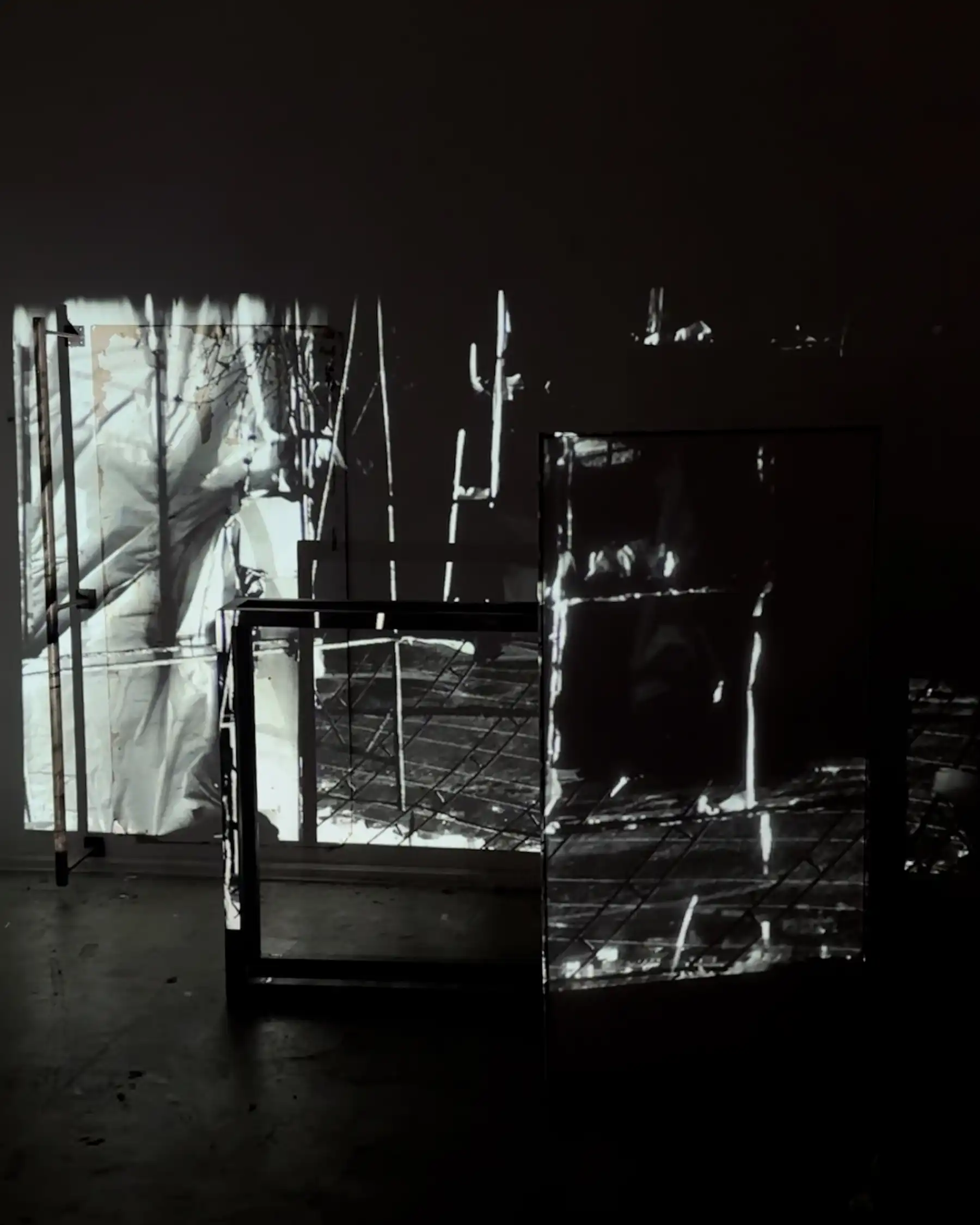
Liang He is GlogauAIR resident from October 2024 to December 2024
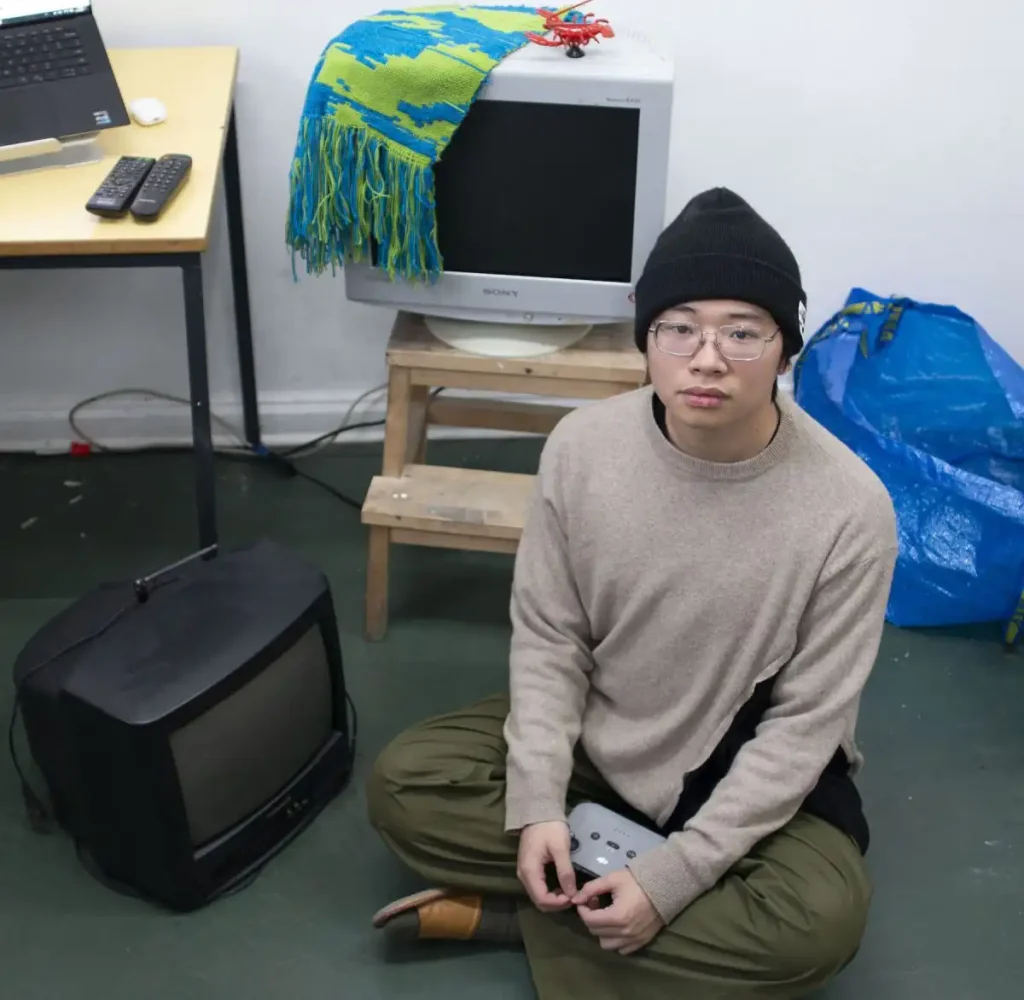
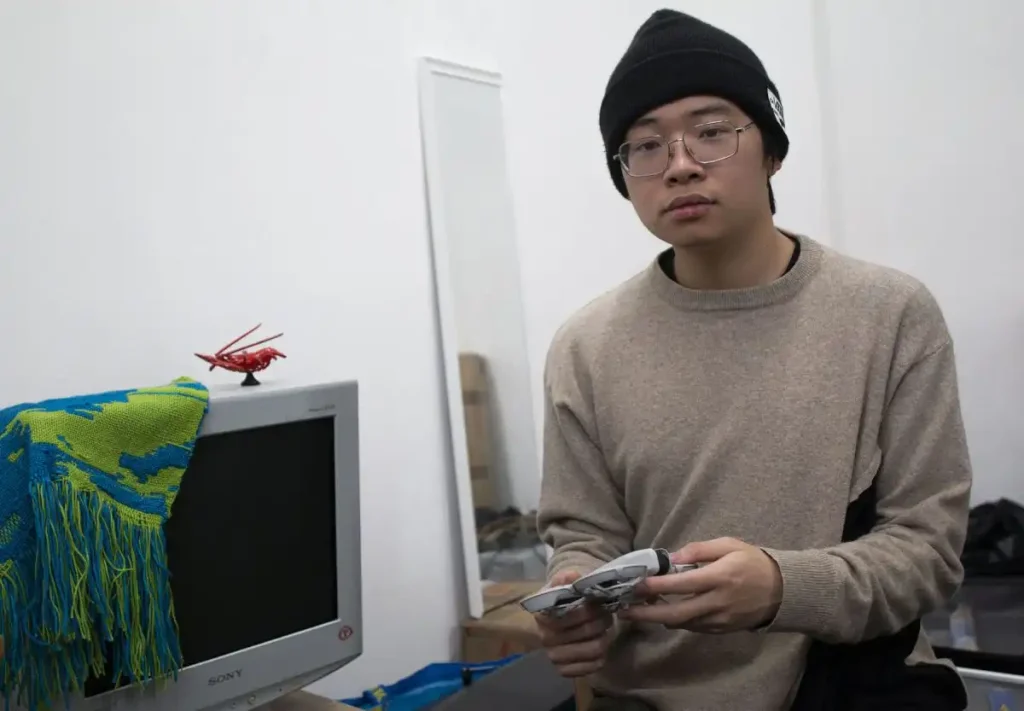
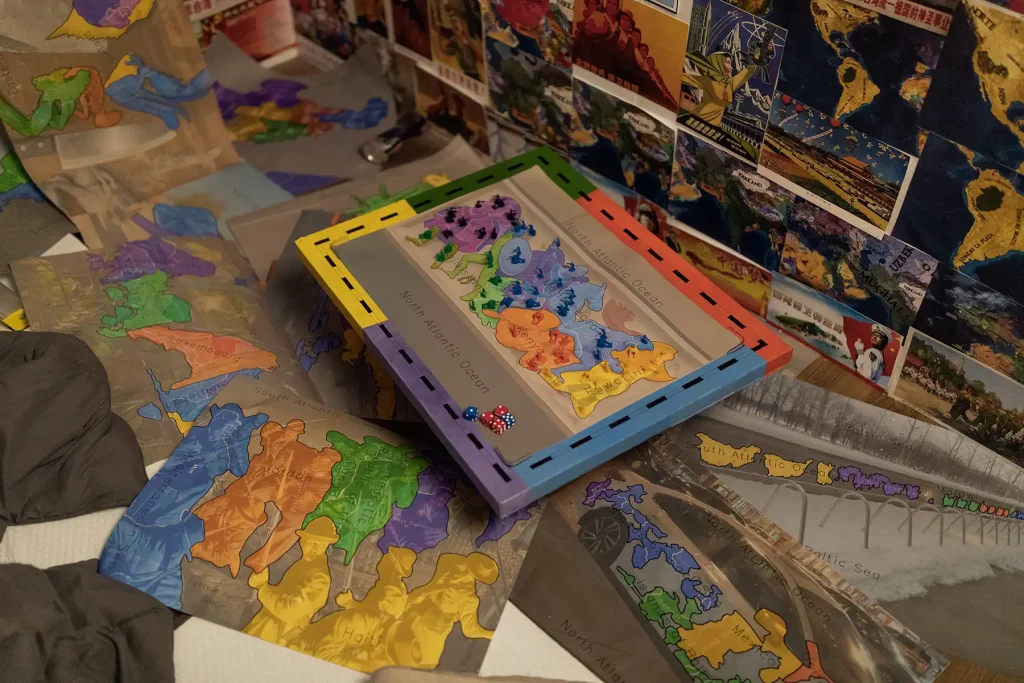
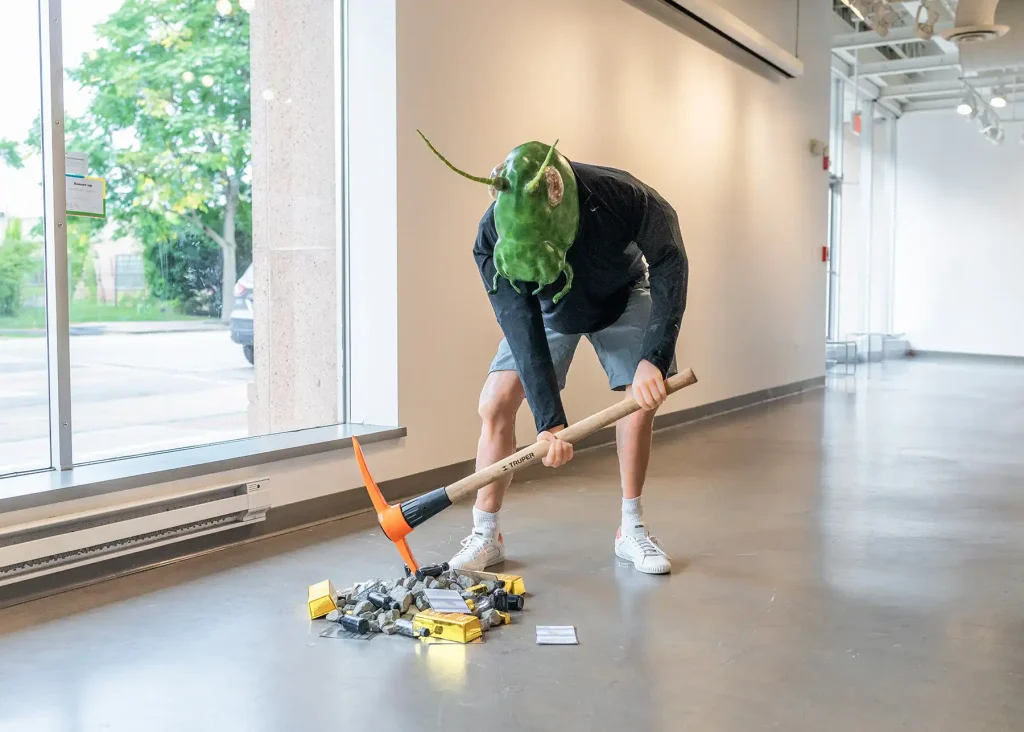
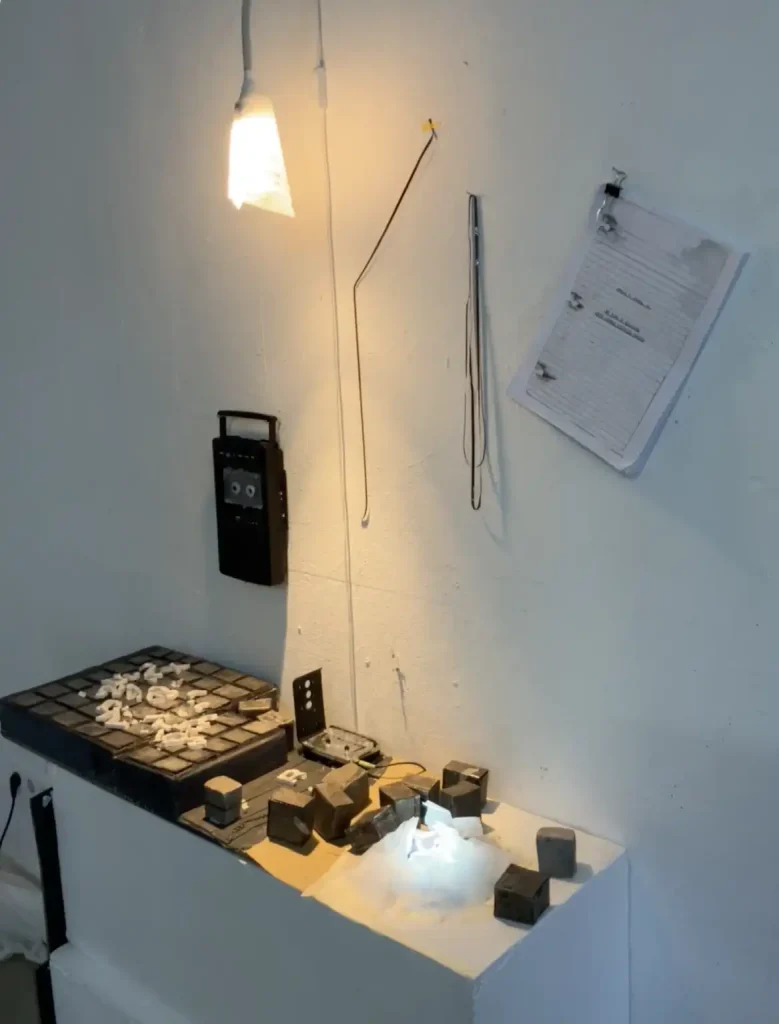
Liang He is an interdisciplinary artist, researcher, and gamer. He creates sculpture, installation, and cartography to replicate, and counterbalance anxiety concerning human subjectivity under capitalism. His research focuses on discourse around domination, delving into political, spiritual, physical and technological violence surrounding drones, cyborg, and cold war bunker.
Meet the Artist
Can you give us an introduction to yourself and your background?
I’m currently taking a gap year from my MFA, which I’m doing at the School of the Art Institute of Chicago. I study art in the art and technology department. I also went to undergrad in the same school, where I focused more on photography and sculpture. Video games and play has become a central focus of my practice for the past few years. They have shifted from more of my hobby to a research focus which drives my artistic practice.
So over the course of the past year, you turned it from a hobby to a career.
Yeah. I’m trying to find a practice that would make sense for my life, and a practice that can be sustainable for both my mental health and also from an economic standpoint. It has been a big shift, because I figured that in order to make art for the next ten years at least, I have to find something that I really enjoy doing.
Are video games where your interest in machines began, or did you always have that interest?
When I look at the history of video games and computer genealogy, they overlap hugely, so that’s a part of it. But, my interest in video games led me to want to be playful within all the elements that I would use in my practice, no matter what it is. When it comes to machines, it’s reassembling, hacking, and just appropriating and repositioning the narrative to somewhere that they are originally not, hoping to poke at something relevant to ideas in our time.
I’m thinking about this quote by Felix Katari, and I’ll narrate it in my own words, he talks about the experience of watching television and when you’re watching it, you are first kept by this materiality of the television – the pixels, the light, the sound, and everything, the physical enjoyment – and then secondly, the narrative content of it – maybe it’s talking about an advertisement, maybe the news. And then the third – your fantasies, what’s going on in your mind, your daydreams. And then it’s along with your surroundings and what’s going on in your environment, like water boiling, music, ambulances. That kind of stuff is what draws my interest to human machines – this complicated experience of our lives, while living amongst machines. It’s all tangled together, and I want to recreate that in my artwork.
Whenever I use a machine in the artwork, I’m trying to refer to both the literal sense of a machine, that’s functional, and how it engages with you. Also, how it leads to this broader relationship of ourselves with the system.
Do you foresee a world, maybe 20 or 30 years from now, where it’s so integrated that we can’t even tell the difference between a virtual world and a non virtual world?
In 20 years, I’m not optimistic about it. I saw an artwork recently – it was an NFT, and the artists built a big sandbox, kind of like a city, with all these building parts, and you can register your own robot in that city. They created a whole virtual system to simulate the robot’s life – they have an economy, they have a day job, they have to work and rest like us.
They start a family, and their children become NFTs, and it goes on forever. I think that’s a very good metaphor for our future.
I’m reading a book right now on the conscious machine, and I’ve just reached a point where they are talking about building a robot that is conscious, that has its own subjectivity and their own thinking. It’s really interesting to see how far we’ve come from what we set out to do in the 60s, when the study of AI was just starting. Right now, our models can only understand language, and they predict what you say based on the data that is used to train them. So actually, back then they predicted that nowadays we would have had more sophisticated machinery. It’s completely possible and it shouldn’t be hard, in theory. We have machines that can calculate as long as we give it the right input, but the problem is how long it’s taking. It could take forever.
Another problem we need to work on – we need more data. You really need thousands of millions of this kind of data in order to make a machine sufficient enough.
They have been processing data through a technology called neural network, which is a network of computational unit that try to mimic our brain. We’re also constrained by brain science – we don’t fully understand our brain yet.
About computers taking human jobs, it’s not something that will happen soon, because computers are just not far enough. People should learn to use AI like everybody else – it’s become a part of many jobs, helping with certain tasks, especially as it relates to language and translation coding and writing. We have machine arms, which can be their physical agency, but they are far less sophisticated. With AI for writing, I use it for making the writing more accessible to different levels of audiences. So the jobs have just changed, right? But it’s not going to disappear.
It’s like a thinking partner. You brainstorm with it.
We’re always so worried we’re going to get replaced, but I don’t think that will actually happen with machines. That’s one thing that I’m studying – I’m trying to create my own history and alternative computer history, but one that’s specifically related to subjectivity. As a machine, it’s there to serve as an instrument, and I think it’s very interesting how we have been developing this dynamic. Sometimes the machine processes more knowledge than humans when we ask them for help, but in turn we as humans are processing knowledge with feelings. There’s always going to be some sort of benefit that people will see with machine integration, and machines as liberation tools, for example, with disabled people.
With myself as an artist, I can now use these tools to generate imagery, generating 3D models, which would really save me a lot of money and work if I can invest in it. The problem is when our government and capitalist system has applied this technology as a force of control. There’s the good and the bad. Facial recognition technology, for example, is not the problem per se, but it’s how people and governments apply it. If it’s properly decentralized, and machines don’t fall into the wrong hands, and it can be used more liberally by common people, then it can do good.
Liang He is an interdisciplinary artist, researcher, and gamer. He creates sculpture, installation, and cartography to replicate, and counterbalance anxiety concerning human subjectivity under capitalism. His research focuses on discourse around domination, delving into political, spiritual, physical and technological violence surrounding drones, cyborg, and cold war bunker. Through various system building, he infuses research-based strategies to experiment and reconfigure the dynamics in social reality.
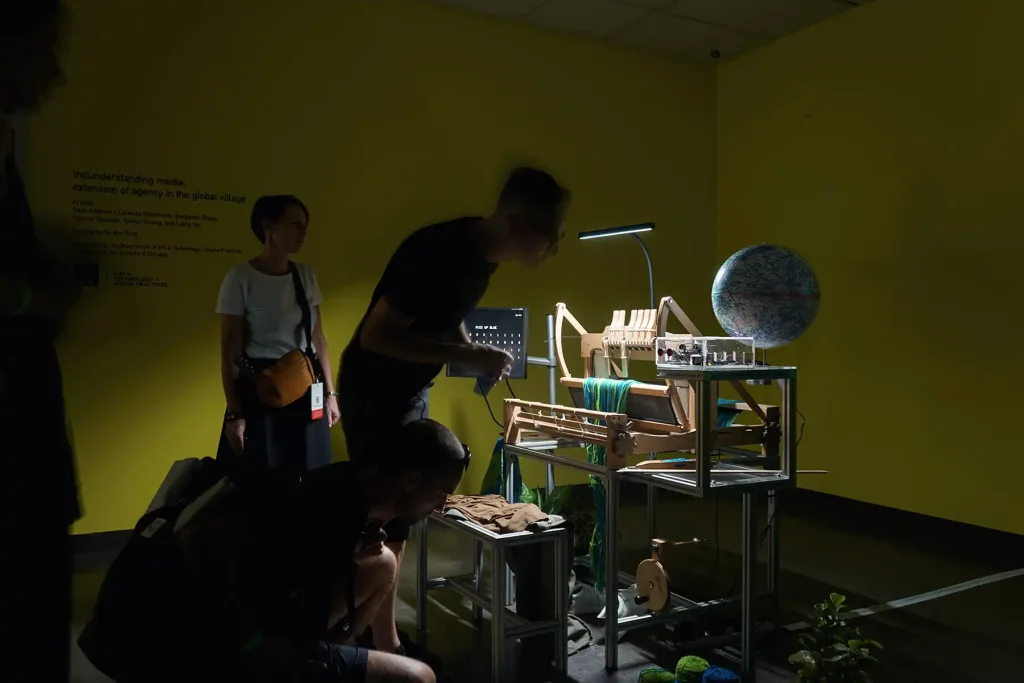
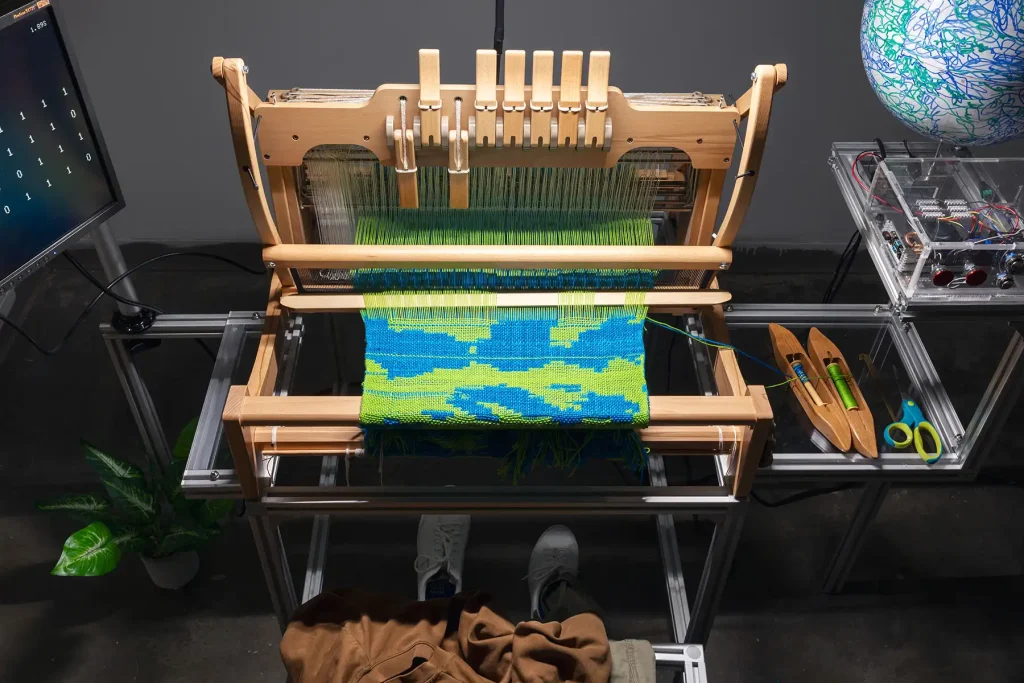
During my residency at GlogauAIR, I would like to continue to develop an in-progress work currently titled How I Become a Punch Card. It is an installation centering around a weaving workstation. This project attempts to delineate a feedback loop between the earliest and the latest machine considered as computers, activated by a human medium as a necessary gear.
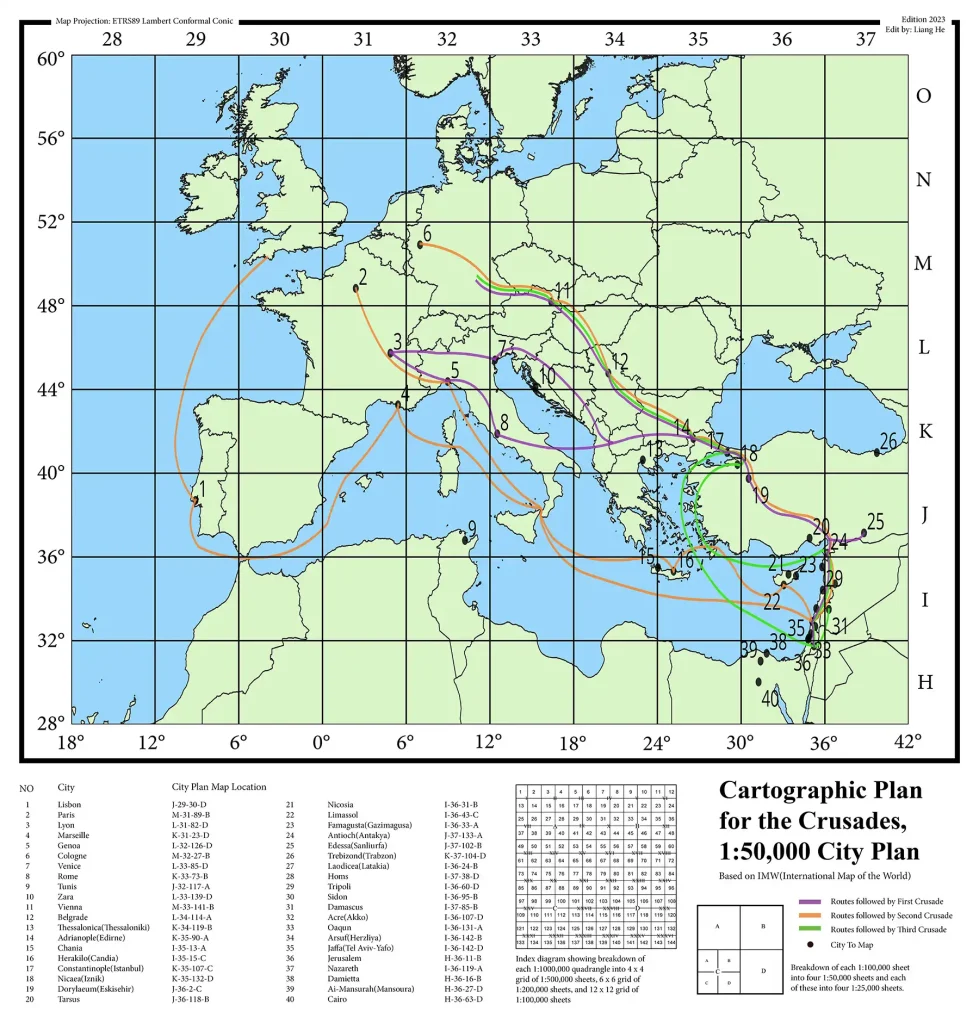
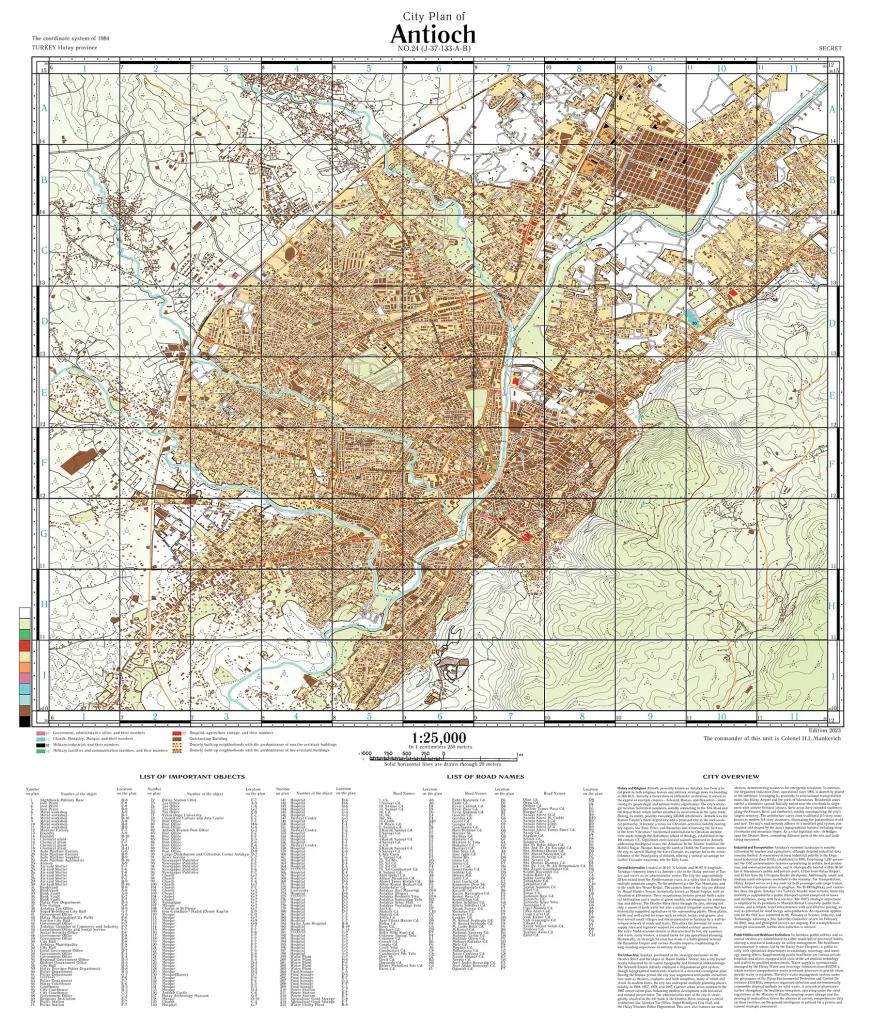
In the project, an algorithm perpetually generates maps and delivers weaving instructions with text, and binary codes. These languages then are translated onto the weavings by a human loom operator.
The role of humans as the dominator, and machine as the subordinate has been reshuffled, switched over, their minds collide.
CV Summary
EDUCATION
2026 MFA Candidate Art and Technology Study, School of the Art Institute of Chicago, Chicago, US
2022 BFA Studio Art, School of the Art Institute of Chicago, Chicago, US
RESIDENCY
2023 Artist-in-Residence, Kunstraum LLC, New York City, US
2022 Summer Residency, School of Visual Art, New York City, US
AWARDS
2023 Runner Up Prize, Evanston Art Center Biennial, Evanston, US
2022-2018 Presidential Merit Scholarship, School of the Art Institute of Chicago, Chicago, US
2018 First-Year Scholars Program, School of the Art Institute of Chicago, Chicago, US
SELECTED EXHIBITIONS
2024 The Ars Eletronica Festival, Linz, AT
2023 //Sense Video Exquisite Corpse, Gene Siskel Film Center, Chicago, US
2023 Memory Mirage, Kunstraum, New York City, US
2023 Evanston Art Center Biennial, Evanston Art Center, Evanston, US
2023 Artificial Nature Game Jam, Basecamp, Shanghai, CN
2023 A4 Art Book Fair, A4 Art Museum, Chengdu, CN
2023 Yonder Crush, Satchel Projects, New York City, US
2022 Hot Box, SVA Flatiron Gallery, New York City, US
2022 Senior Undergraduate Exhibition, SAIC Galleries, Chicago, US
2021 Don’t Mind the Thing, Wedge Project, Chicago, US
2021 New Work 2021, SAIC Galleries, Chicago, US
2021 Making It, SAIC Wellness Center Gallery, Chicago, US
2021 Olfactory Art Show, Aroma Workshop, Chicago, US
2019 ArtBash, SITE Gallery, Chicago, US
2017 Pingyao International Photography Festival, Pingyao, CN
LECTURE
2024 Artist Talk, Ars Eletronica Festival, Linz, AT
2023 Artist Talk, Asian Artist Propagation, Sulivan Center, Chicago, US
2022 Artist Talk, Kunstraum, New York City, US
BIBLIOGRAPHY
2024 HOPE who will turn the tide, Ars Eletronica Festival (ISBN 978-3-7757-5822-2)
2024 Artist of the month, Asian Artist Propagation Newsletter Issue 03
2023 Evanston + Vicinity Biennial highlights artists from the Midwest, The Daily Northwestern
2023 In spring the wind passing by plays the harmonica for me, Incosa Magazine
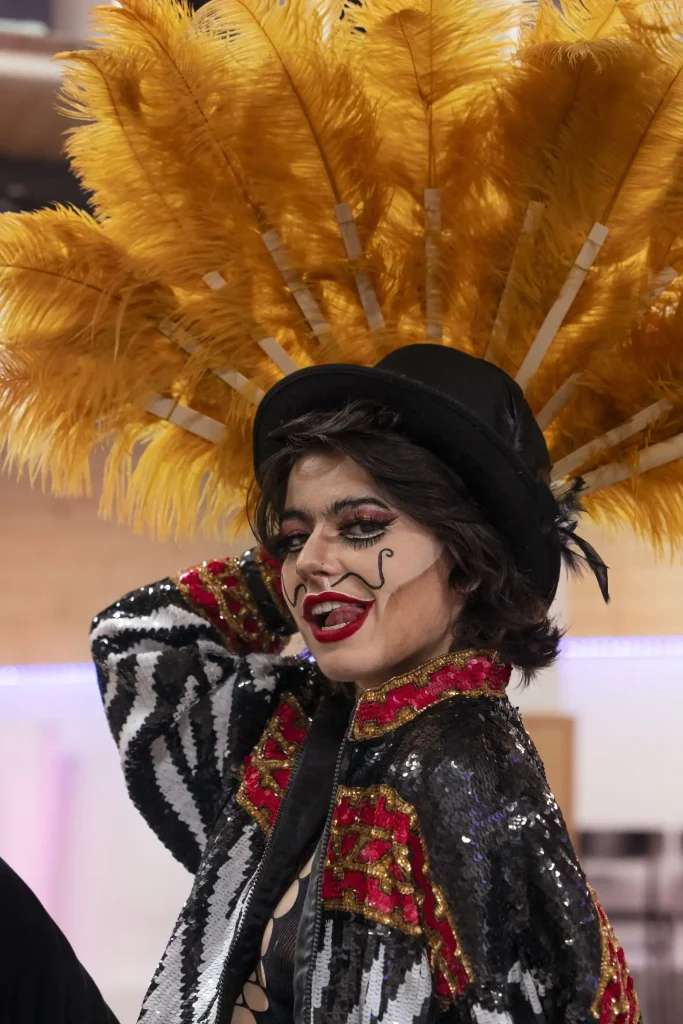
Emal Dubskis GlogauAIR resident from January, 2025 to March, 2025
Emal focuses on capturing moments of sensitivity, extravagance, and sublime movement, with a mission to empower minorities and represent the diversity of non-cisgender experiences. Through documentary research, stage photography, and commissions, his work highlights beauty and authenticity while staying true to his community and the stories he portrays.
Meet the Artist
Can you give us an introduction about yourself and your artistic background?
Hi, I’m Emal Dubsk. I’m from Switzerland and have lived in Lausanne my entire life so far. My mom is Romanian, so I feel connected to both cultures. Dubsk is my artistic name; it’s actually a mix of my parents’ family names. I studied photography for four years, during which I also explored cinema and design. We had workshops with photographers from around the world. It’s been almost two years since I finished my studies, and now I work as an independent photographer. I mostly focus on stage photography for concerts and queer events, like the drag scene, but I also do portrait photography and food photography.
In my free time, I paint and draw. It’s funny because I’ve been doing this much longer than photography. For the past three years, I’ve felt more freedom in my artistic practice, especially with painting and drawing, because I no longer rely on models. I can have a reference, but I now know exactly what I want to paint, including the colors and the fluidity of my pieces.
The main themes in my art, both in photography and other practices, are intimacy, queerness, feminism, sex work, and erotica. I’m deeply passionate about these topics and actively advocate for them in my daily life. One of my ultimate goals is to continue documenting these subjects and give more visibility to minorities.
Can you tell us more about your artistic process?
I really enjoy spending time with people in general—hearing their stories, learning about their backgrounds, just chilling and observing. I focus on the details that make people unique: the way they walk, their style, their behaviors. These little things are where the freedom in my practice lies. I always aim to create an intimate bond with the model during a shoot, sharing a moment together. I love focusing on the details and paying attention to how people present themselves in their lives. I’m particularly drawn to capturing vulnerability, because in those moments, I find true beauty. Sometimes it’s so fleeting, just a few seconds where you catch that perfect moment.
Consent is absolutely essential in my practice. I always make sure the person feels comfortable in front of the camera. Occasionally, I have to photograph very intimate moments, including nudity or erotic poses, and I make sure everyone involved feels good and respected. Clear communication before every shoot—no matter the subject—is key. We discuss boundaries to ensure everything goes as smoothly and comfortably as possible.
Can you tell us about the project you’re working on at GlogauAIR?
I’ve been working on a photo and text documentary titled “Safe Place” for the past 10 months. This project focuses on non-cisgender individuals, including gender identities outside the binary norm (trans femmes, trans masc, non-binary, intersex, genderfluid, agender, genderfuck, etc.). Through portraits and interviews, the project seeks to highlight the diverse experiences of these often marginalized identities. The title refers to the places chosen by the participants—symbols of safety and acceptance where people can express themselves freely.
I came out to myself as a transmasc non-binary person more than two years ago, and I came out to my community and friends over a year ago. In the beginning, I felt overwhelmed and lonely. Even though there’s more representation of non-cisgender people in the art world and society in general, I still felt isolated. I wanted to show the diversity of the gender spectrum and give a voice to all identities, not just trans people, while helping to make these identities more visible.
It’s interesting to approach this project with an “inner eye” because, being part of this community, I feel that my own experience can help connect me more with others. We often find similarities in our pasts and lives. It’s important for me to highlight the different places where people can feel safe and be themselves. Sometimes, I see striking similarities in the spaces people choose for safety—it’s fascinating to witness how these choices are tied to their sense of trust and vulnerability.
Was there a specific reason for choosing residency in Berlin? Is living in Berlin affecting your work?
Yes, the queer community here is much larger, and that was a big draw for me. Where I come from, my city is small, but the community there is strong and becoming more active, with more events, parties, and shows. It’s wonderful to see that. However, I wanted more stimulation and new opportunities, and Berlin offered that. There are so many spaces here, like FLINTA events, which are rare in Switzerland. The artistic scene here is incredible—there are exhibitions and openings all the time, and you have endless opportunities to meet people and explore new artistic processes.
I also decided to move here to gain a different perspective on non-cisgender people for my documentary interviews. Since arriving, I’ve met four amazing people for the project, and their stories have been incredibly inspiring. Berlin’s vastness can make it seem like there are endless opportunities, and I’m grateful for the chance to expand my work here.
Who are some of your favorite artists or artists who have influenced your work?
Tal Madesta, a trans male writer, is one of my favorites. I recently read his latest book, and it resonated deeply with me. He talks about his transition at 27, and I could really relate. Like him, I didn’t have the chance to explore my identity while living at home, and I had to leave my old environment to begin to be myself in a safer space. Now, in a much better place in my life, I’m doing my best to learn and inform myself about the queer community, our rights, struggles, and joys. Reading is a crucial part of that learning process and helps me gain new perspectives.
In terms of photography, I have many references, but a few stand out immediately. Laia Abril, a photographer who works with feminist themes, has a powerful body of work that addresses abortion, femicides, and other sensitive topics with great subtlety.
I also discovered the work of Eric Jasper, who created a photographic book documenting the transition of a trans male individual. The images follow the transition process over time, including the effects of testosterone and top surgery, showing how the person gains confidence. It’s such an incredible project that highlights how transitioning can positively change lives and, in some cases, even save them.
Of course, Nan Goldin is a major influence. Her work capturing raw, difficult moments, especially during the AIDS crisis in New York, is iconic. She photographed the hardest subjects with such naturalism and without any artifice. Spencer Tunick’s landscapes of naked bodies are also inspiring—he challenges conventional notions of nudity in a way that is both beautiful and thought-provoking. Bieke Depoorter’s three-year documentary following a sex worker, and their evolving relationship through letters and trips, is another example of powerful, intimate storytelling that I admire.
I also follow queer/trans activist influencers on Instagram who inspire me and help deepen my understanding of queerness. Their work as humorists, artists, and activists resonates with me because, like them, I’m trying to use my artistic process to represent the community and fight for queer lives.
Between light and shadow, I like to capture the moment of a sensitive, extravagant and sublime movement. Presently, I represent the diversity of experiences among non-cisgender people through documentary research. My photographic universe aims to represent beauty with a particular focus on the empowerment of minorities. Between documentaries, stage photography and various commissions, my aim is always to represent the best I can from my community and what I’m asked to portray.
Safe Place is a photographic documentary dedicated to non-cisgender people, including gender identities outside the binary norm (including non-binary, intersex, genderfluid and agender people). Through portraits and interviews, this project aims to highlight the diverse experiences of these often marginalized identities. The title refers to the places chosen by the participants, symbols of a space of safety and acceptance where everyone can express themselves freely.
CV Summary
Education
2021-2023 Advanced Federal Diploma of Higher Education in Photography, CEPV, Vevey
2019-2021 Federal Diploma of Vocational Education and Training in Photography, CEPV, Vevey
Work experience
2024 – Official photographer of the “House of Scandal”
2023 – Food Photographer: Coco Mama Montreux, Bla Bla Vevey, Coucou Haut de Caux, Lilo Montreux
2023 – Official stage photographer for artist Allanoirceur
2023 Internship in visual communication and assistant photographer for Sophie Kietzman, New York
2022- Event photographer, L’Usine , Geneva
2020-22 Official photographer, Les Docks , Lausanne
2018 Internship in MAG events, Montreux
Exhibitions
2023 A piece of cake , CEPV Diploma class exhibition, Vevey
2023 Nature Forme et Figure , Alice Project, CEPV & EPFL, Geneva
2023 Are you a magician , collective class project in partnership with Vidy theater, Vidy
2022 Festival Images Vevey, Camille Guerrero, Vevey
2022 Parade Parade , Festival Images Vevey, collective class project, Vevey
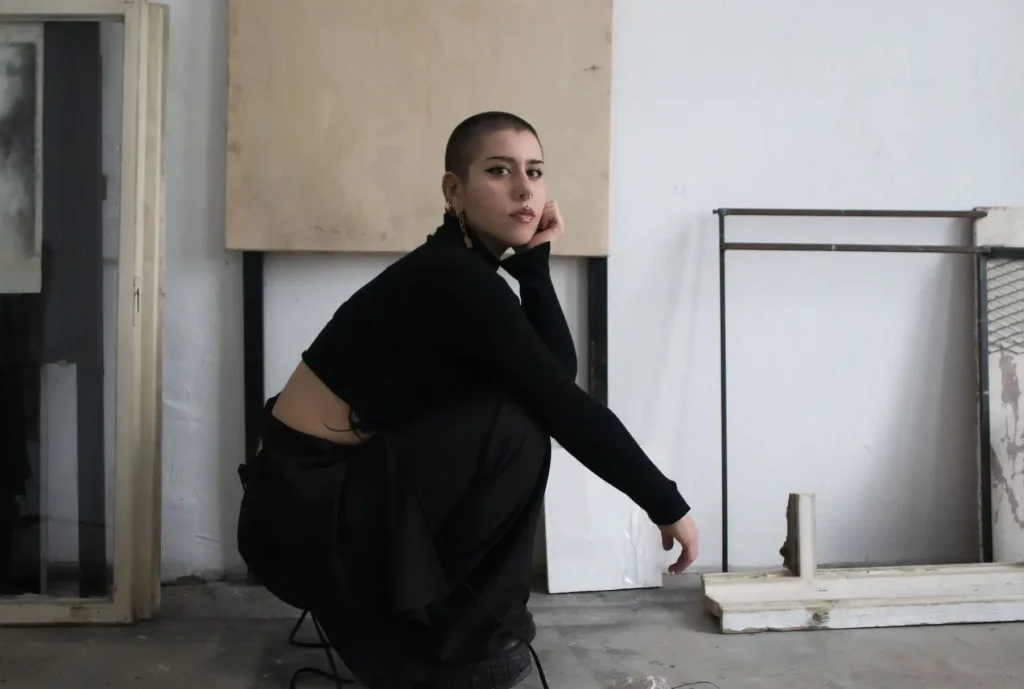
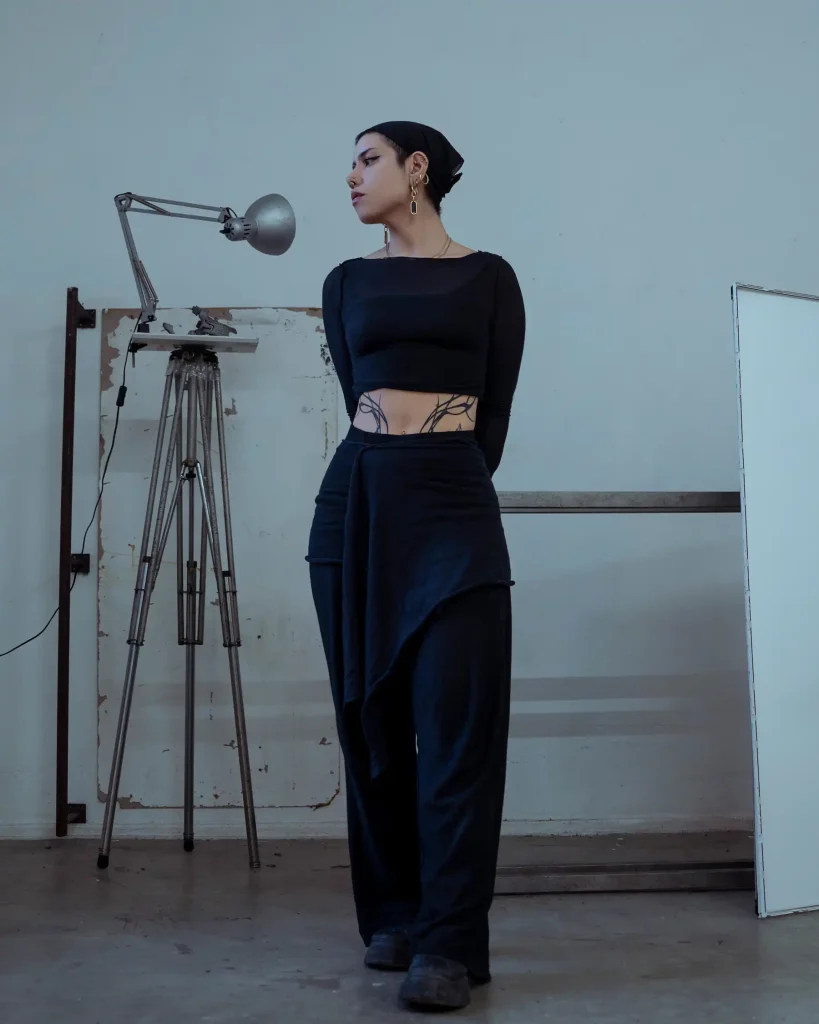
Farhat is GlogauAIR resident from October 2024 to December 2024andfrom January 2025 to March 2025
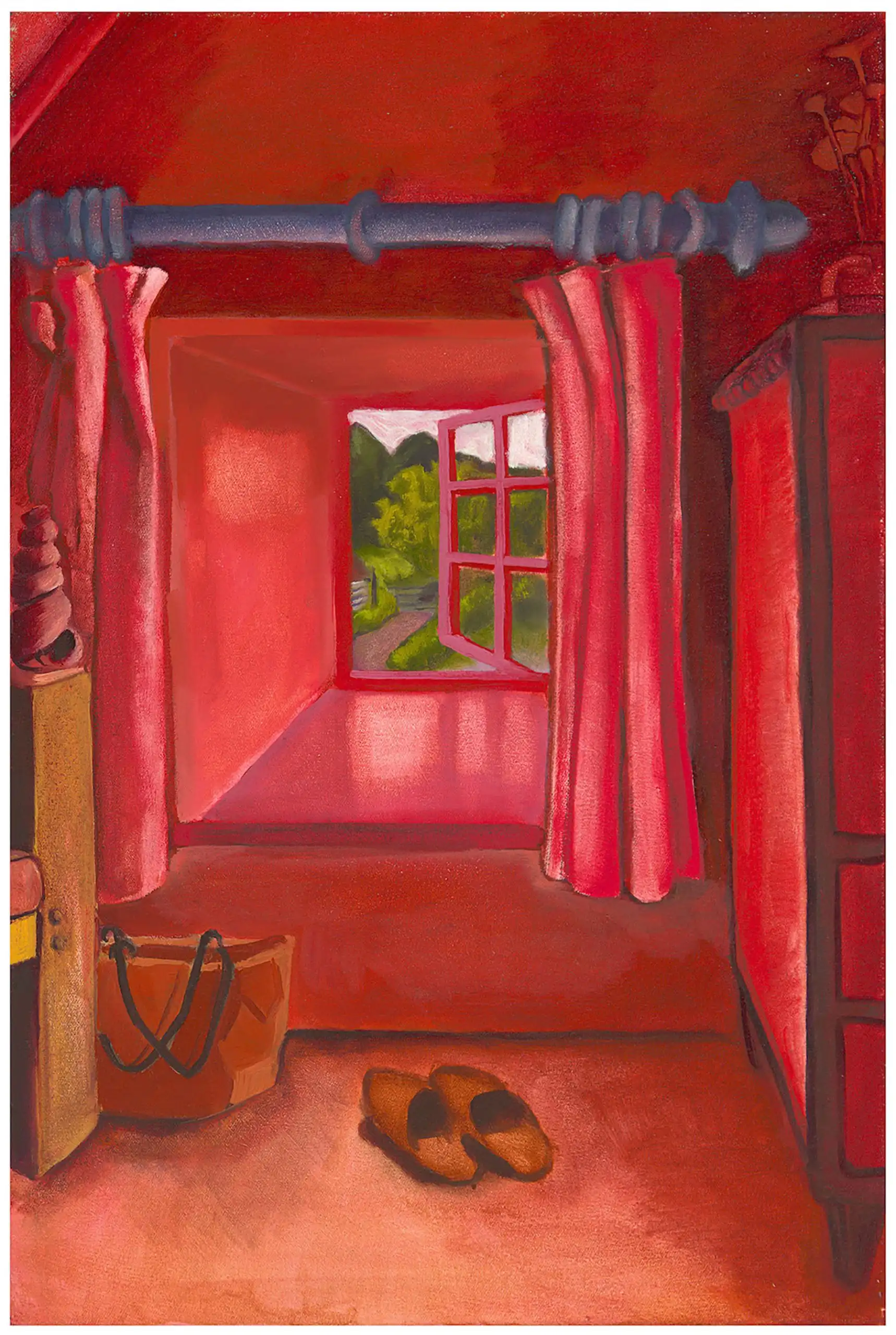
Farhat’s work combines drawing, sculpture, photography, and painting to create three-dimensional objects. By isolating and redefining details, it transforms chaos into controlled compositions, where the detail becomes the whole. This process explores identity and perception, culminating in objects that embody totality rather than representation.
Meet the Artist
So this is your first residency. How is it going for you?
It’s going well. I think it’s a great space to try to develop and have more of an experience of the process of your work, rather than focusing on the final object that needs to be completely perfect, one that’s going to be isolated in a gallery. It’s more about finding a way to navigate the materials, navigate your aesthetic. And you’re in a building full of other artists with different interests and backgrounds.
And you inspire each other, I’m sure.
Oh, yeah a lot! It’s really good when you can converse with them each day, bouncing off ideas.
And there’s guidance, you know, in a residency, without it being academic. It helps us to navigate a little bit of the art world, which can be very ambiguous, as we know.
Being in a residency is being so intimate with your art – the fact that you wake up and go to sleep every day and it’s right there. Have you had a studio before, or is this the first?
I had a studio when I was younger, but then I started to work with a lot of metal and bigger pieces, so I worked in workshops, more traditional ones. The place where I work is very close by but not like this, you know? It’s not so intertwined. This is the first time that I have lived and worked in the same space.
Can you give a little insight into your background as an artist?
I studied sculpture, fine arts. When I was in university, I felt it was only possible to develop a sort of sense of how to conceptualize your work or to develop it. I didn’t feel I learned a lot about techniques and materials. And that’s something that was really missing.
So, when I finished university, that’s when I sat down to learn more of the technical part so that I could join the two things together. I started to work with metal a lot, and I went to a lot of traditional workshops. I learned how to do iron casting with sand, with an older man who was 83 years old. And then I met João Coelho, he is my teacher of everything that I know about metal, and I worked with him in a small workshop.
It’s a very, very small workshop in the center of Porto. And he taught me one of the techniques that I love the most – chiseling. That’s when I started working for the church to do sacred art. That gave me a really good technical foundation to upscale my work. I also went to a factory to learn how to weld. So I know how to solder and to weld, and now I can just combine all of those different techniques and put them into a bigger scale.
Which is what you’re doing now.
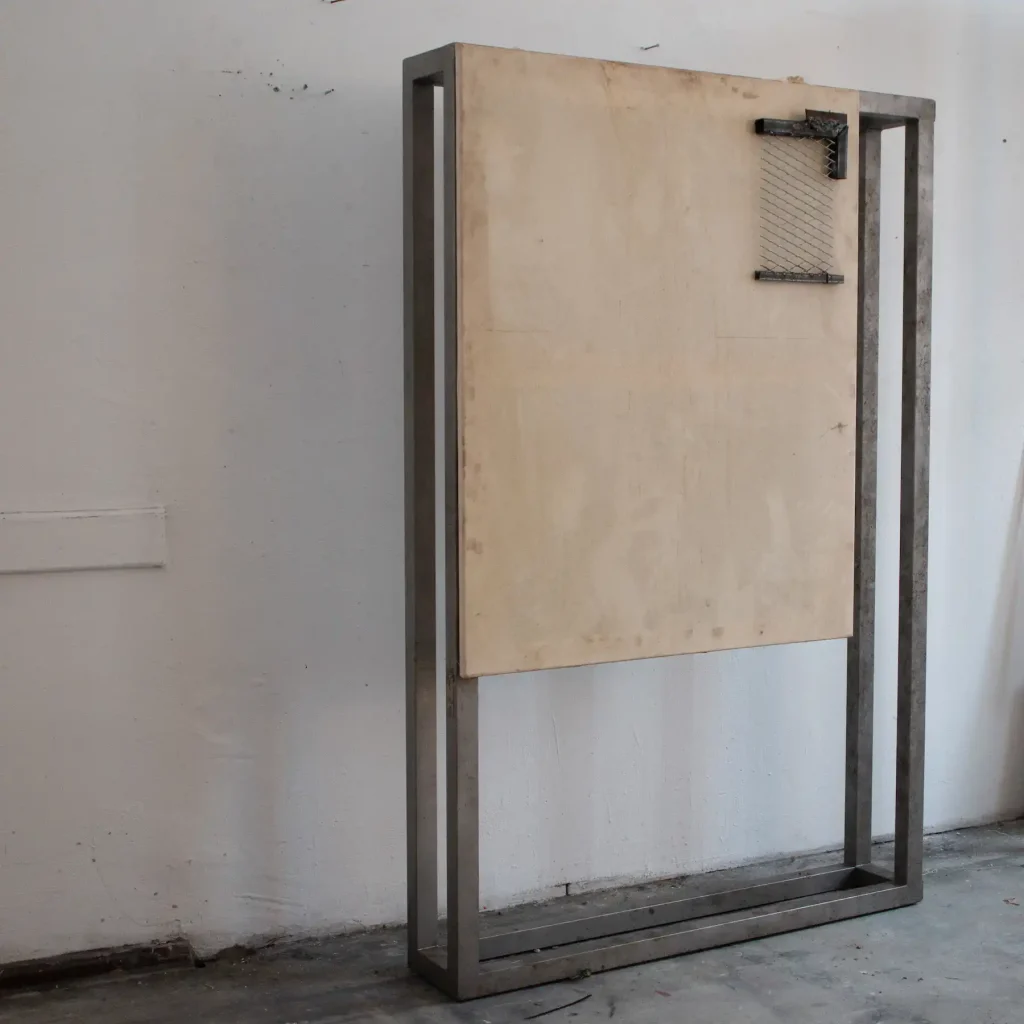
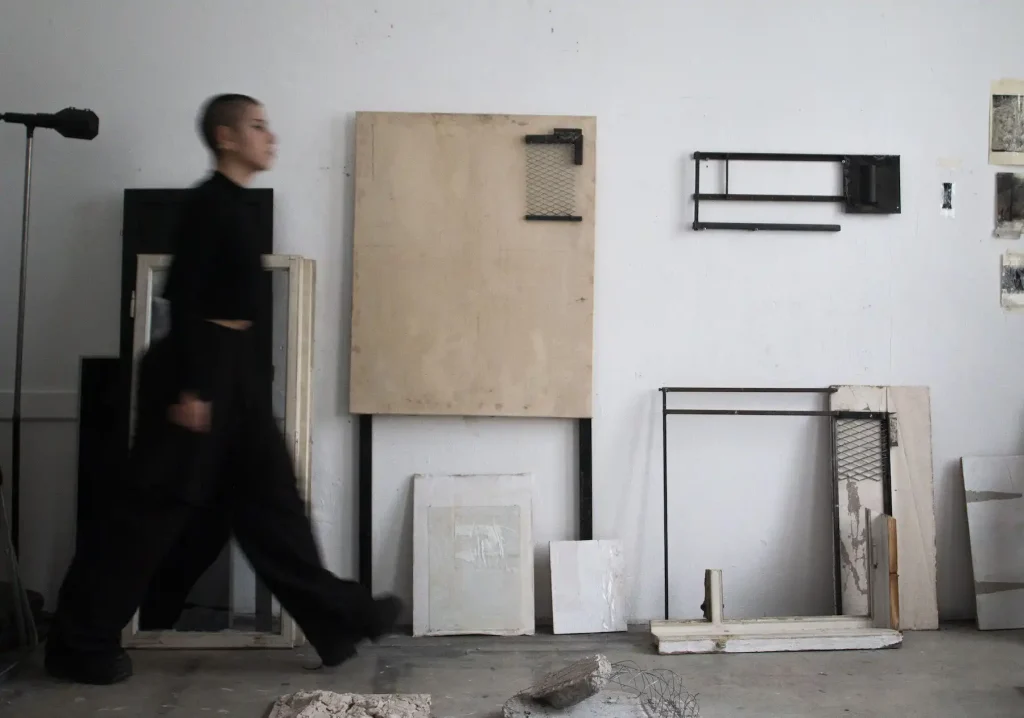
Which is what I’m doing now, yeah. All of these pieces are movable. They’re modular. You can add some pieces and interchange them. So my work is mostly about perspective and composition. What I like to do is create possibilities. Someone can intervene and interact with the piece, and show their own individuality and the perspective that they see within the piece.
With the work, it’s mostly me leaving the object and becoming the observer. It’s more subjective than objective. A break in the authority.
In your creative process, are the works always fluctuating? You’re always moving things from one place to another?
Sure, yeah. The work process always starts with photography and with drawing. The objects I find … I don’t imagine a piece and then look for the objects. I just find the objects and then the piece comes from them. I have the little elements and I start to play with them. They start to interchange, until there’s a point where it makes sense and I don’t change them anymore.
What have you been trying out that’s new for you?
Here, I’m starting to work a little bit with whitel. Normally, I work more with just the metal itself orr black. But here, a lot of the elements that I’ve found have that old chipped paint. It’s always very beige or white, and so that’s starting to integrate into my work.
I got inspired by a lot of the objects that I was finding in the city, because here in Berlin, you have a lot of material on the street. I have no difficulty here finding pieces to work on. The ones that caught my attention always had those colors, and then it just evolved to trying to do something outside of the materials, but it’s the paintings that connect everything.
Has Berlin been influencing your practice in other ways as well?
I think in other ways, it’s given me an opportunity to just experiment a lot on interactiveness within pieces. Aesthetically, as well – observing what’s around me. A lot of the noises, too. It’s chaotic, but also calm.
So I’m painting, I’m doing metal work. Downstairs I’m playing with clay. I’m focused more on textures and transparencies, because I feel like that’s something very relevant here. And visually in the city, with all the different windows or different types of materials that are bonded together. There are visual and sound textures that are very chaotic, but you can still find some sense of cohesion in them.
All of those elements influence the process of the work and the way I approach the objects.
It’s organized chaos.
It’s funny you say that. Because I have a tattoo that says ‘organized chaos’.
That’s awesome. Is that your motto?
I don’t think it’s my motto, it’s just the way it is. It’s an acceptance of how it is.
Is there a way you’ve been making art in this studio that’s different or similar to the one in Portugal?
It’s completely different. Normally I’m used to working with more people in the same space. Normally people that are not doing what I’m doing and are doing completely different things.
I think living and working in the same room is very good, and also not good at all. Sometimes it’s very difficult to have an outside perspective of your work when you’re always in the same space. It blurs the line between when you need to rest and when you need to get into your working mode.
For me, I feel like I need some sort of schedule for work to begin. Then it’s okay.
The work process arises by merging different areas such as drawing, sculpture, photography and painting. In this way, the different fields interconnect in an exploration of plastic and visual languages capable of initiating a creative process and later, culminating in a tridimensional object.
By collecting information and visual references as a processual basis, it is possible to observe the search for this commonality, the search to redefine isolated contexts in the face of personal experiences, turning them into a Whole. Something inherent to all places is visual chaos, identified and demonstrated in the aesthetic of the work in a way of implementing a sense of control, imposed by the manipulation of perception and the resizing of the desired focus.
In-depth focus is the decontextualisation of the detail. The Detail becomes the whole perspective, with no surrounding environment, no references that allow it to be framed. As a result, the detail is transmuted into a totality through isolation.
A parallelism is created between identity and the compositional representation of individual perception in a project.
The object is a culmination and not a representation.
With references and details selected and pre-manipulated, what is the end result achieved by various artists? If the initial intention of capturing the perspective is removed, what is the impact on the feeling of search? Does restriction redirect and narrow, or does it take away identity? How does each person, faced with limited and imposed choices, develop and manipulate reality through their understanding?
By “imposing” the methodology to be applied, removing the possibility of the first two moments (collecting references, by photography and sketchbooks) and leaving only the moment of construction of the final object, a simulation can be provoked. Therefore, on a diminished scale, the possibility of establishing an analogy between social and environmental limits and the predetermined artistic process would be staged.
The object is not an aesthetic conclusion but a collective demonstration of interpersonal reality, the detail/individual in society/process that resizes itself in the face of conditions and creates its belonging/work.
CV Summary
EDUCATION
2022 Jewelry Design, Alquimia-Lab School of Jewelry, Porto, Portugal
2020 BFA in Sculpture, Faculty of Fine Arts of the University of Porto, Portugal
2015 Soares dos Reis School of Visual Arts, Specialization in Sculpture
FURTHER EDUCATION
2023 Enamel Workshop, Marcelo Bessi Studio, Porto, Portugal
Stone Setting Workshop, CINDOR, Gondomar, Portugal
2022 Pedagogical Training for Instructors, ENA – School of Business and Administration, Porto, Portugal
2017 Fusion and Slumping Workshop, CRISFORM, Marinha Grande, Portugal
PROFESSIONAL EXPERIENCE
2023 – Present Founder and Jeweler, FARHATT, Porto, Portugal
2023 – Present Chiseler, Chiseling and Sacred Art Workshop of João Alves Coelho, Porto, Portugal
2022-2023 Jewelry and Chiseling Instructor, Alquimia-Lab School of Jewelry, Porto, Portugal
2021-2023 Bench Jeweler, Claudiouro, Porto, Portugal
Francesca Rosati is GlogauAIR resident from January, 2025 to March, 2025
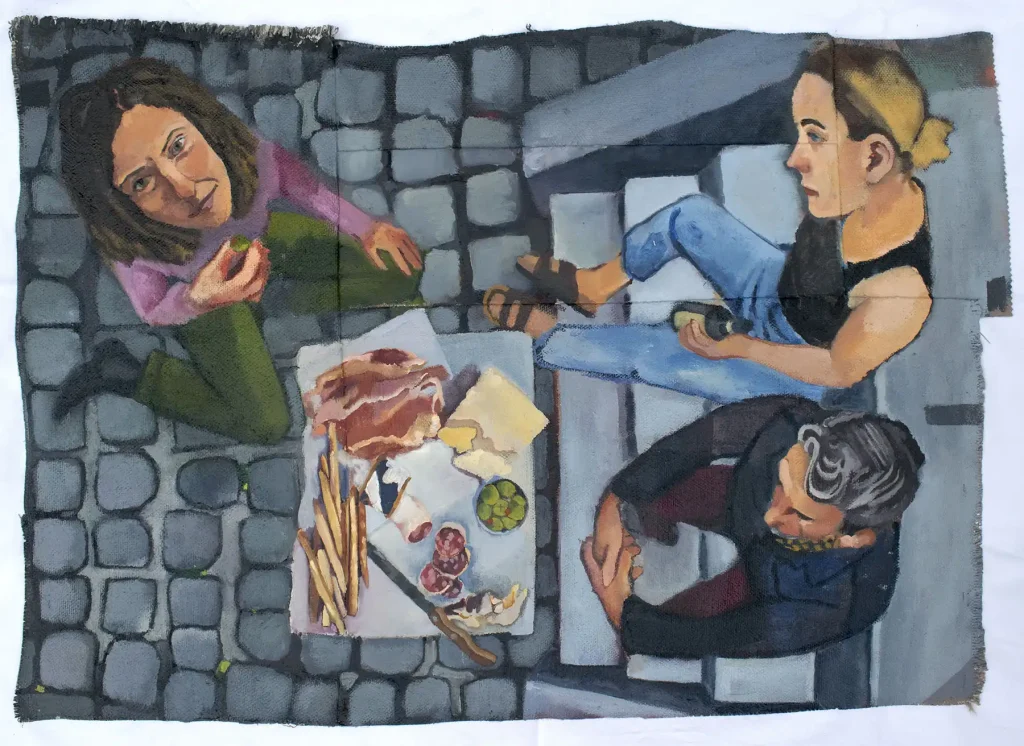
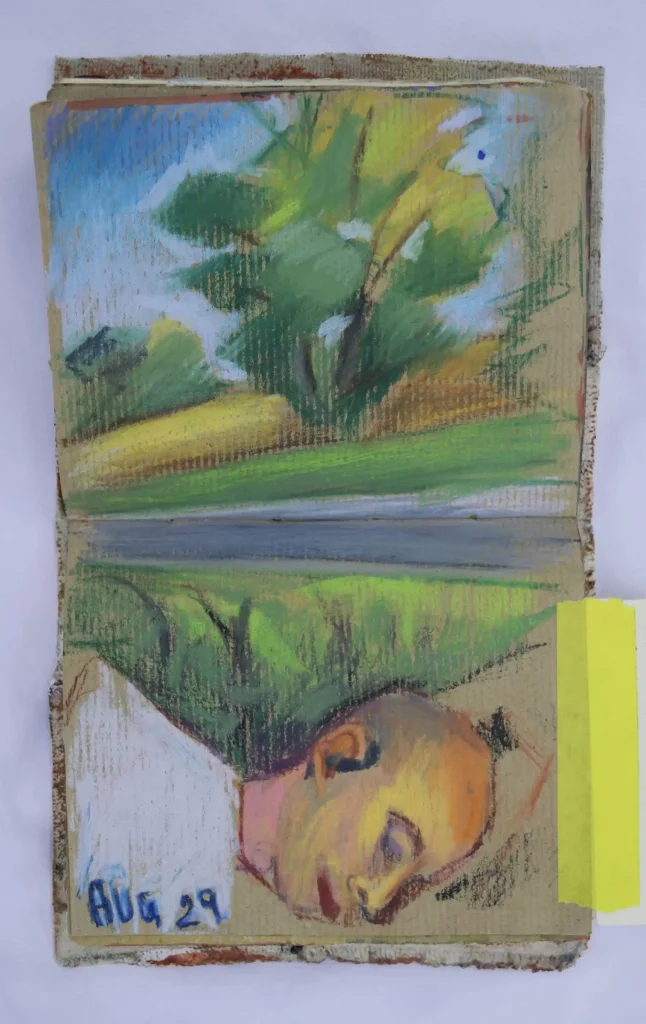
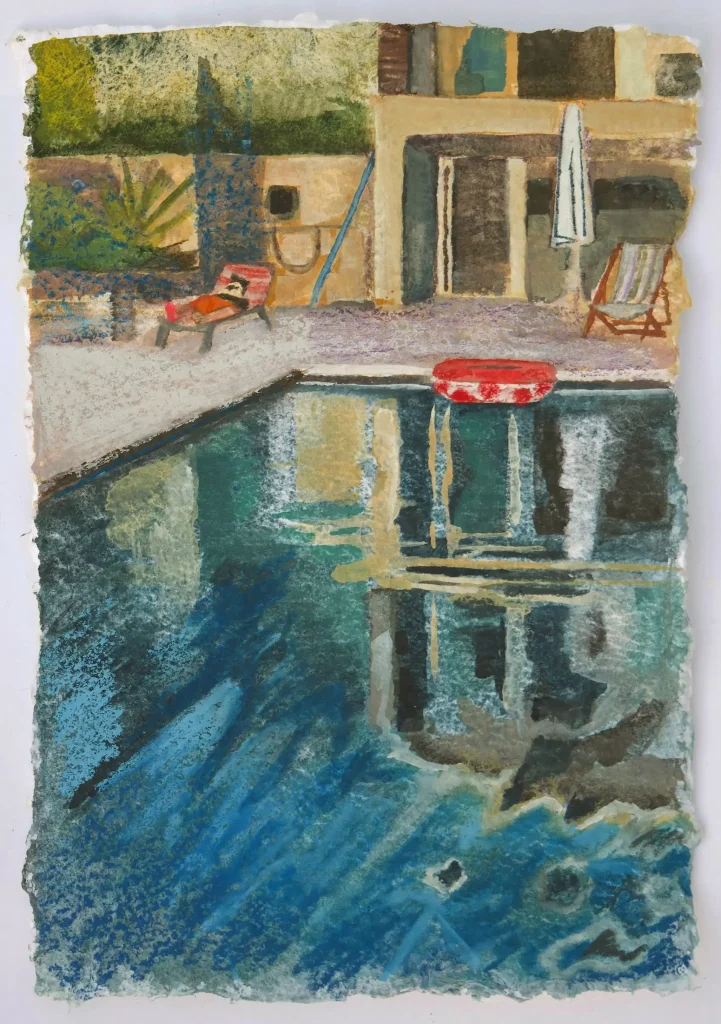
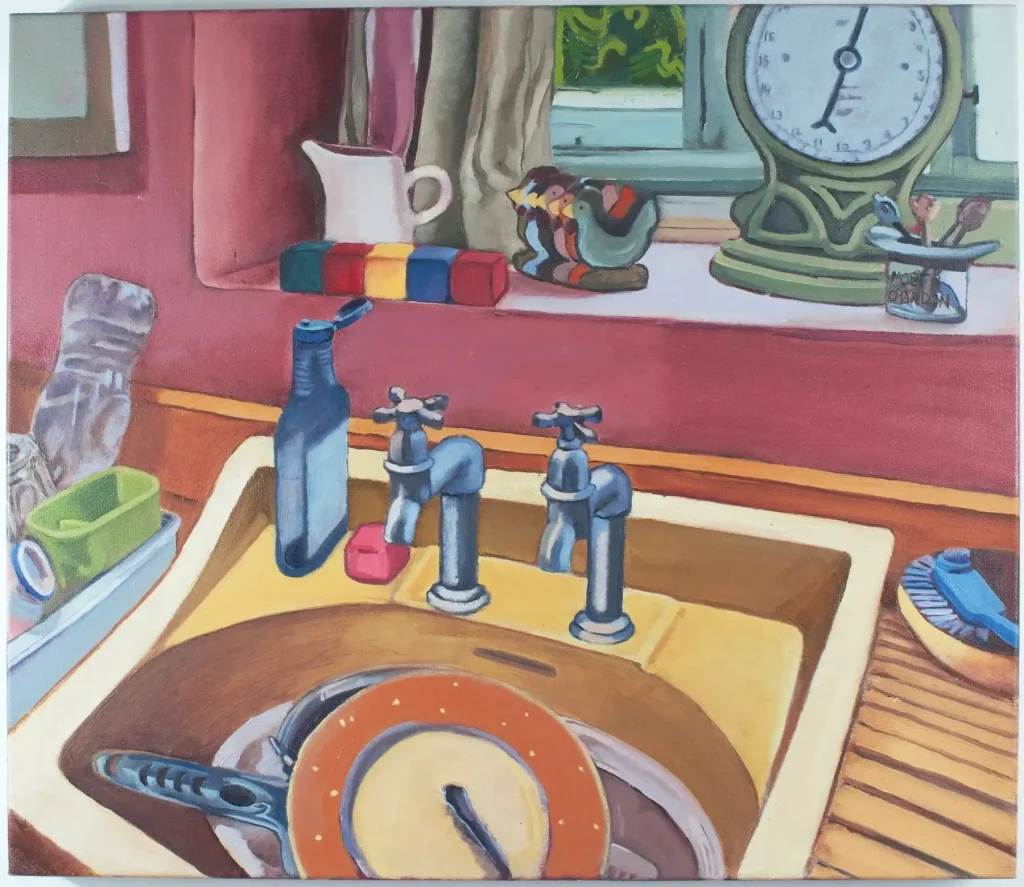
Fascinated by ritual and routine, Francesca´s work captures scenes of cleaning her dishes, sharing a meal with close companions, to the striking tree she spotted on her evening walk at dusk. In devoting an entire composition to these subjects, she honors them. In recounting a memory or theme in a painting, her priority is not to create an identical representation but to develop an interpretation.
Meet the Artist
Can you give us an introduction about yourself and your practice?
My name is Francesca Rosati and I am from Seattle, Washington (in the US). I have a long history with Europe, my family is Italian, so I have spent many years in Italy which is where my understanding of painting initially began. Currently, I am living in Vienna − where I have been focusing on my painting practice. Before then, I was in Seattle where I was working as a full time Visual Arts Educator, teaching teens and adolescents Art and Design.
I’ve always been inspired by landscape and color and objects. Observation is a huge part of my practice. Maintaining a routine of sketching “en plein-air” depictions is invaluable to me. When I am unable to depict my subjects in real-time − I use photography and memory to compose my vision. I will often create a quick collage, to which I use as the base reference for my paintings. This process allows me to break down my understanding of the composition and translate the key components that matter most to me.
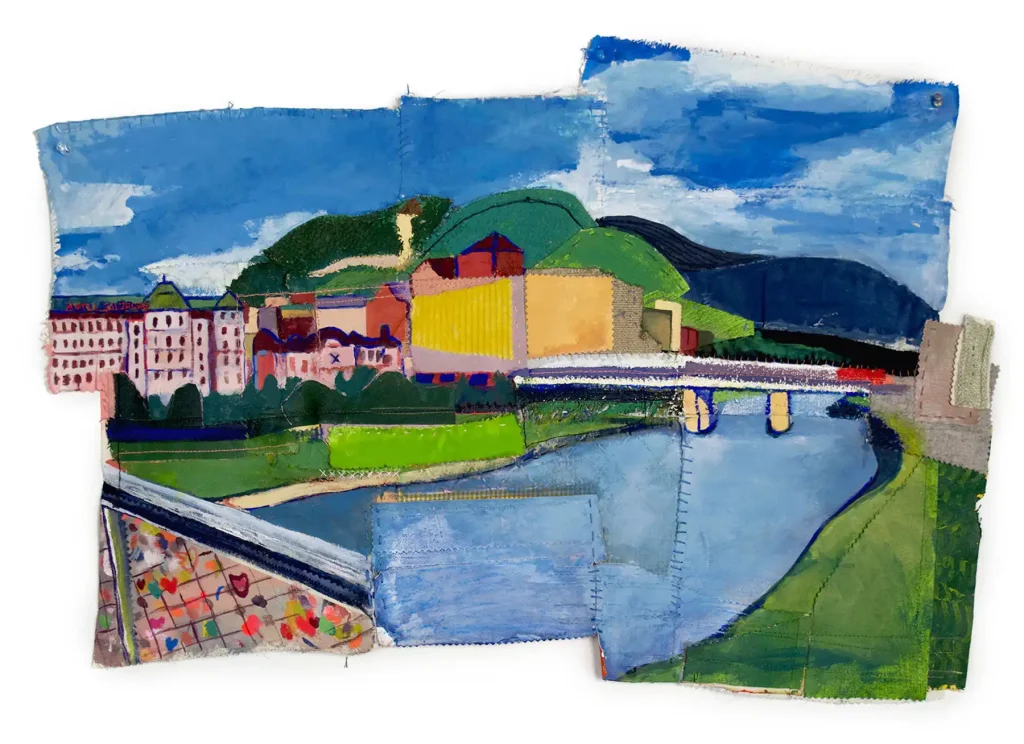
For the past several years, my paintings have found themselves coming off the stretcher bars and taking into a new form of a tapetsy, or what I like to call a “soft scape.” I have been incorporating found fabric and canvas and stitching them together to create my upcycled base. This process has allowed my paintings to turn sculptural. I like its tactile nature because it invites the viewer to break the boundary between themself and the artwork − to which it allows the observer to potentially touch and interact with the work.
So do you mix your paintings and textile as some sort of collage?
Yeah definitely. I’ve always been drawn to collage and experimenting with fabric and paint to create these effects of fresh compositions that they might not necessarily belong together otherwise. Canvas is meant to be painted on. It’s fine and smooth, especially when working with oil paint but putting that one another kind of fabric like burlap or felt brings in a whole other effect because the surface relieves itself in a whole over way. Combining paint and textile is “collage” because the paint reacts differently to the surfaces it’s painted on, once the paint seeps into it, it creates a whole new effect to the composition.
Can you give us an example of an artwork you made recently that demonstrates this sort of experimentation?
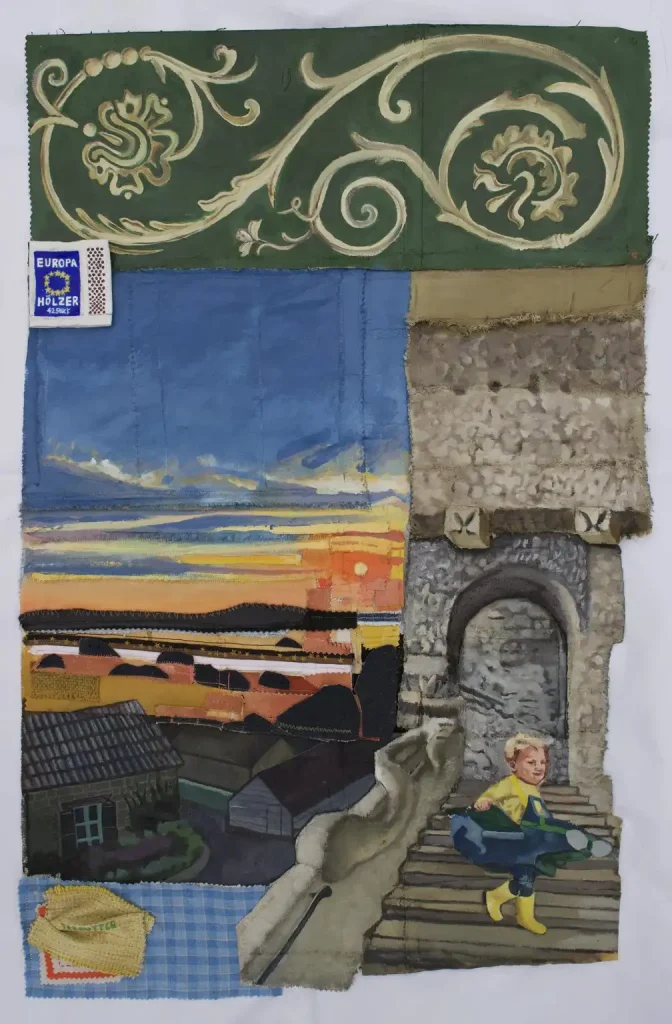
Yes. Recently I finished this “soft-scape” and what I did was I started off with breaking up this composition working from back to front. I wanted to challenge myself and so I used a variety of different fabrics and mediums. I played around with how paint changes depending on the surface it’s painted on, while using oil and acrylic (separately of course). I tried something new, where I created little textile replicas of everyday objects. There is a small blue matchbox, on the top left corner of the work. Adding this 3D element gave a playful touch to the work and allowed the composition to come out and towards the audience.
Take a look at this work below, it’s titled “EURO DREAMS”:
You mentioned that you’re into landscape. Can you tell us a bit more about the Berlin landscape and how do you feel about it?
It is funny because I’m here in the darkest time of the year in January. I have been to Berlin in the spring and I’ve seen how wonderful it is with all of the foliage and everything in bloom. It is drastically different other times of year and right now it has a spookier sort of dark energy. What an exciting challenge to create a captivating landscape in the dead of winter! Why do all the landscapes have to be beautiful and romantic and depicted at a specific time of day? Of course I’m drawn to the season of summer and spring, but that’s not the reality of what we live in now. I think in the Winter, our attention shifts away from the outside and towards the people, they are what makes Berlin bustling the city that it is. I’ve been interested in incorporating the people I see on the UBahn and bus into the landscape somehow. The contrast of the elderly lady’s warm smile against the gray overcast sky that surrounds us, is the feeling I want to capture in my Winter Berlin landscapes.
You also participated in GlogauAIR’s online program. How is it different from being here on site with other artists?
The online program was great. I had the privilege of working with Justin Ross who’s one of the online curators. And he was helpful for me because we were in conversation weekly and he had helpful and insightful feedback to give me. The onsite residency has been so different because I’m physically here, in the space! I’m waking up in my studio, constantly reminded that I’m here for a project. My purpose for these next three months is to focus on my work, ask myself what I want out of my work, and learn how to develop it. If I were to give anyone advice doing the online program I’d say really make sure you are carving out time to focus on the program. It’s built so you can do multiple things while you’re in the online program – have your full-time job and have another life – but I think it’s valuable to just stay present in that. I do wish I had protected my time more. In Berlin, I feel like I am coming into this space knowing what I want to do. After being involved with GlogauAIR already for three months, I understand how the program is run and I feel like I can get a head start with my ideas. Also it’s been great to have fellow residents with me, that was something I wished I had done when I was in the online program, to reach out to my fellow residents because unfortunately I wasn’t really interacting with them too much and for me having a dialogue with the other people is really important.
Who are some of your favourite artists or artists who have influenced your work?
I am constantly thinking of many painters but these are some that are always on my mind: Charles Birchfield, Charlotte Salmon, Neo Rauch, and Dawn Clements. Charles Birchfield was a landscape painter but he makes these really unusual paintings of nature. You feel like you’re on another planet when you’re looking at his work. His trees look like they are exploding shooting stars and his skies look like they’re blooming. The viewer must remind themself that he is looking at a landscape that’s on this earth. I’m inspired by Birchfield because I like thinking of landscapes in an imaginative and magical way.
Charlotte Salomon made hundreds of gouache paintings of her dreams, memories, and realities of her daily life. Her life was tragically cut short when she was just 26, at Auschwitz concentration camp in 1943. Her paintings are rich in color and have cinematic compositions to them. When I look at her work, I feel as if I am watching an array of dream sequences. Her vibrant paintings give me a sense of lightness and childlike-play – perhaps that is what gave her solace in the devastating reality she was living in. Neo Rauch makes huge and dynamic paintings. I would call them landscape scenes but there are typically multiple figures involved and a story being told. To me his work is very impressive because of the way he’s focusing on these very specific subjects and combining them in these unpredictable ways. He’s making a collage, but he’s doing it with paint. They also have a vintage essence to them – perhaps this is because of his color palette and the characters he chooses to incorporate. One more artist, Dawn Clements, is the master of observation. She makes these fine detailed drawings on these huge pieces of paper and uses watercolor and graphite. When she draws a crumpled piece of paper, she makes sure to capture every fold, shadow, and highlight. She will capture these arrangements in her kitchen or in her living room, that very much honors the mundane and intimateness in her home. I have always been drawn to her work because I’m interested in those little mundane objects in our lives that we might not pay attention to otherwise.
Fascinated by ritual and routine, my work captures scenes of cleaning my dishes, sharing a meal with close companions, to the striking tree I spotted on my evening walk at dusk. In devoting an entire composition to these subjects, I honor them. In recounting a memory or theme in a painting, my priority is not to create an identical representation but to develop an interpretation. I exercise my creative liberties by using carefully selected paints, drawing tools, textile, and threads that emphasize the scene I am viewing.
The “landscape” has remained a constant in my work. I look for sites that reveal the particularity of a place and work to interpret that essence in a piece. I find sites that have rich histories especially compelling. I am transfixed by the evidence of time revealed from restored to aging materials of the apartment buildings, churches, castles and alleyways that have sustained life in city centers for hundreds of years. During my time with GlogauAIR, I plan to explore Berlin and its surrounding areas, and convey its rich and complicated history as it continues to grow into a new kind of place.
CV Summary
Education & Certifications
Certified Residency Teacher of Washington State – Designated Arts : Visual Arts, Certificate No. 597381C; issued: 3/25/2023
Rhode Island School of Design, Providence RI, Master of Arts in Teaching (Art + Design), Teaching + Learning in Art + Design, 2020
Rhode Island School of Design, Providence RI, Bachelor of Fine Arts (Painting) and Concentration in Theory and History of Art and Design, 2019
European Honors Program at the Rhode Island School of Design, Rome Italy, Residency and Study-Abroad Program, January to May 2018
Exhibitions
[Virtual] Open Studios at GlogauAIR Artist Residency · Berlin, DE · 2024
Would You Like to Come Over? A RISD Reunion Show, 2305 Western Ave · Seattle, WA · 2024
Gather & Devour at Side Rail Collective . Seattle, WA · 2024
Open Studios at the Summer Academy in Salzburg · Salzburg, Austria · 2022
RISD Grad Show 2020 (Teaching + Learning Art + Design dept.) · Providence, R · 2020
Senior Group Show: “Love Me Tender,” Memorial Hall Gallery · Providence, RI · 2019
Senior Painting Show, Woods-Gerry Gallery · Providence, RI · 2019
____scapes, RISD Museum’s Gelman Gallery · Providence, RI · 2019
EHP Finial Exhibition: Allora, RISD European Honors Program · Rome, Italy · 2018
Residences
GlogauAIR online residency, October – December 2024 Resident · Berlin, DE · 2024
Awakenings at Wick, Summer 2022 Resident . Langport, United Kingdom · 2022
Awards & Achievements
AAF/Seebacher Prize for Fine Arts, Fellow 2022 · The American Austrian Foundation
Graduated with Honors, Recipient 2020 · Rhode Island School of Design
Graduated with Honors, Recipient 2019 · Rhode Island School of Design
Kathleen Judge is GlogauAIR resident from January, 2025 to March, 2025
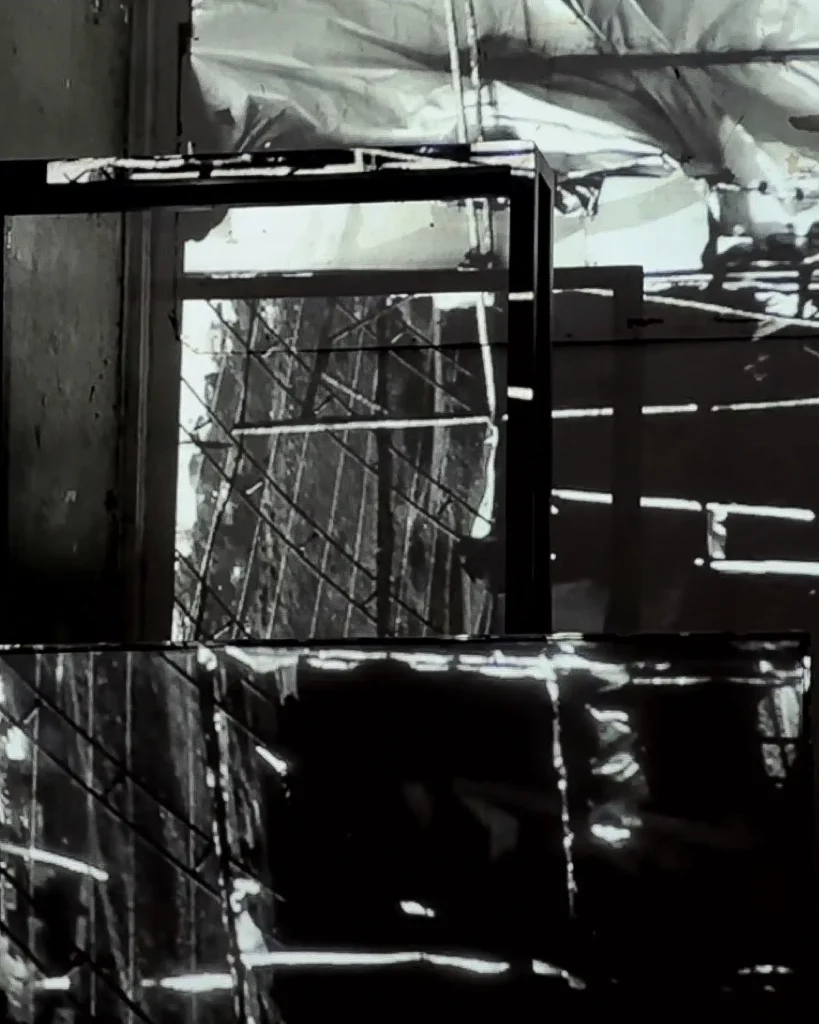
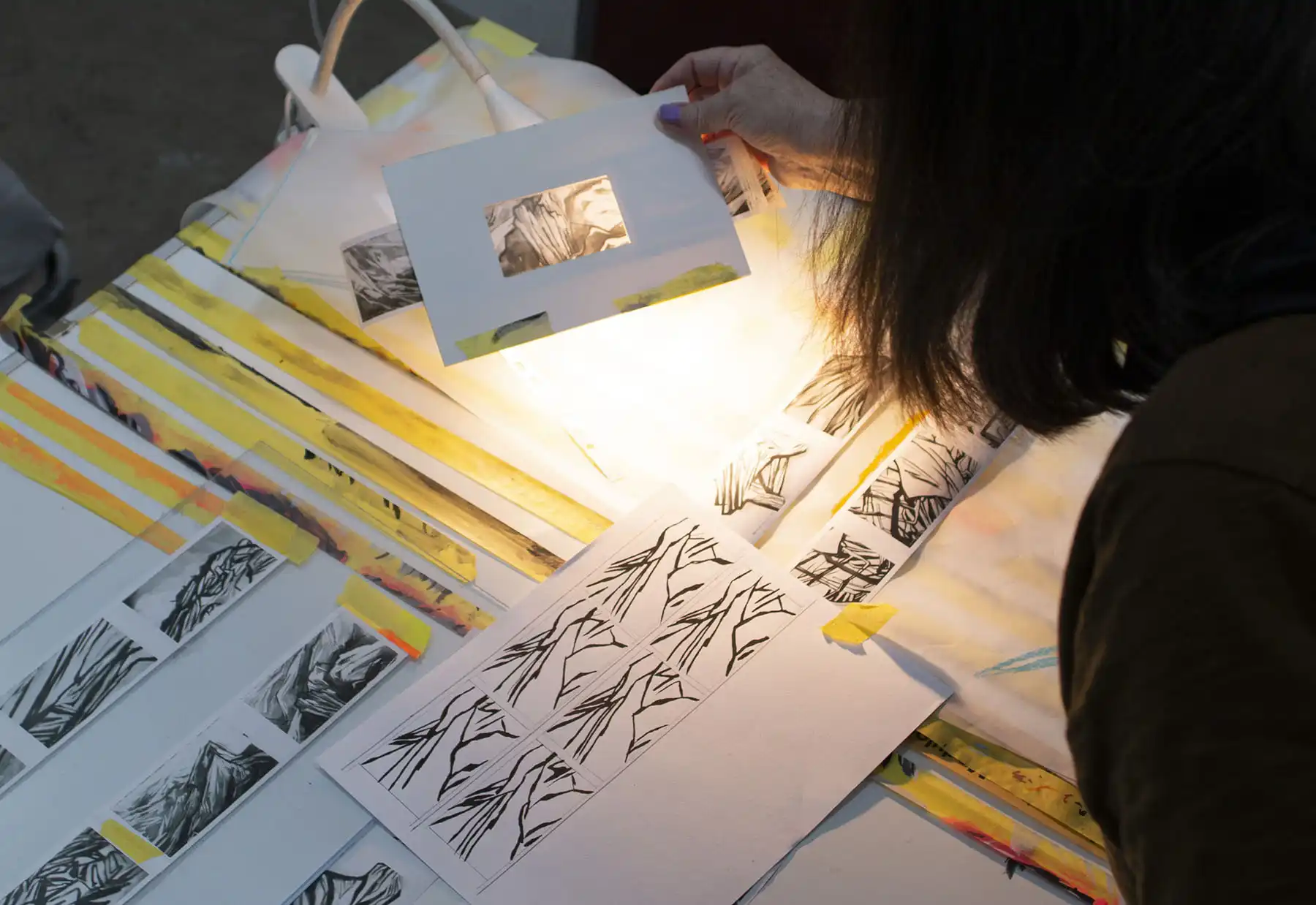
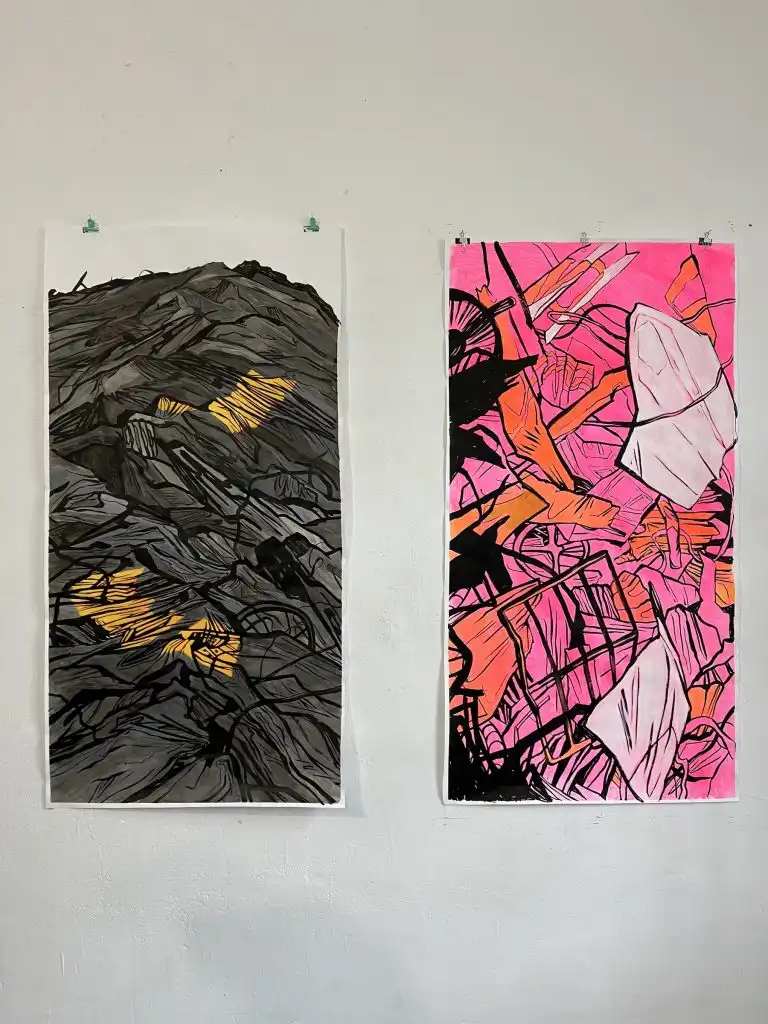
Kathleen Judge is a mixed-media artist from the United States who explores the representation of landscape through ink drawings, acrylic paint, animation and sound.
Meet the Artist
Can you give us an introduction about yourself and your background?
My name is Kathleen Judge. I’m a visual artist working across different mediums such as printmaking, drawing, animation and video projection. My life in arts has run on a couple tracks at once; Commercial arts such as storyboarding, animation, illustration, print and video work while simultaneously pursuing independent artworks in print, drawing and more recently with painting and sound.
As an artist, how would you say you’ve grown since the start of your career?
I’m not sure it’s possible to create art without growth and change. Whether through ideas, concepts, craft and skill. Time with materials and ideas are essential for that growth. Recognizing and respecting my intuition has been one of the essential tools of growth that helps me creatively. When I was younger my intuition was there but I didn’t trust it and often disregarded that instinct. My confidence to trust my instincts and intuition has strengthened over time.
When you say you’re coming back into painting and going in and out of animation, does that have to do with your intuition as well?
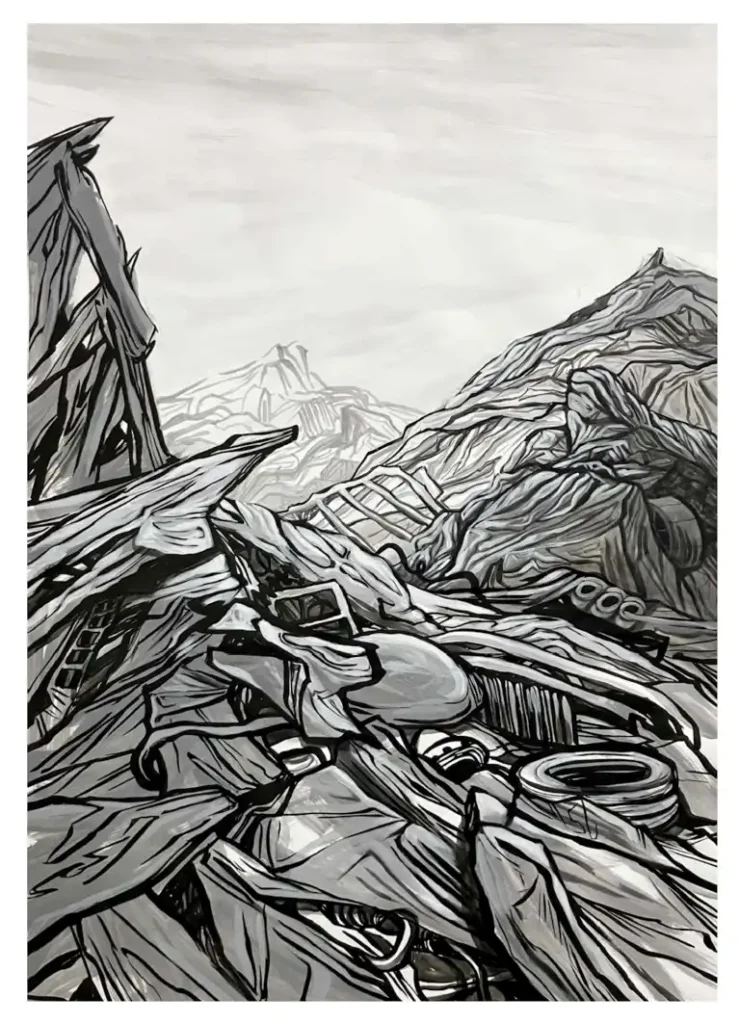
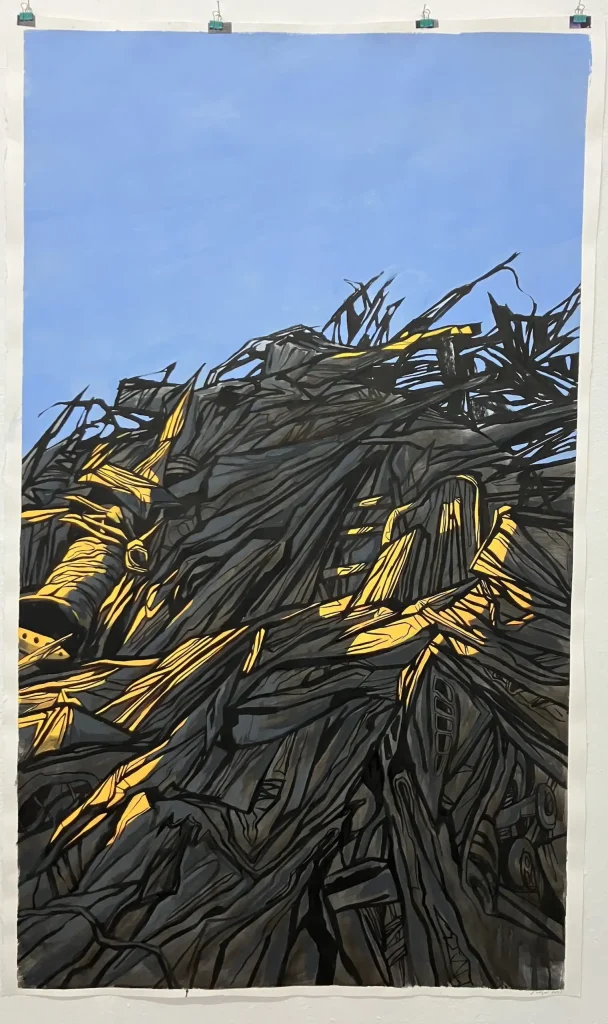
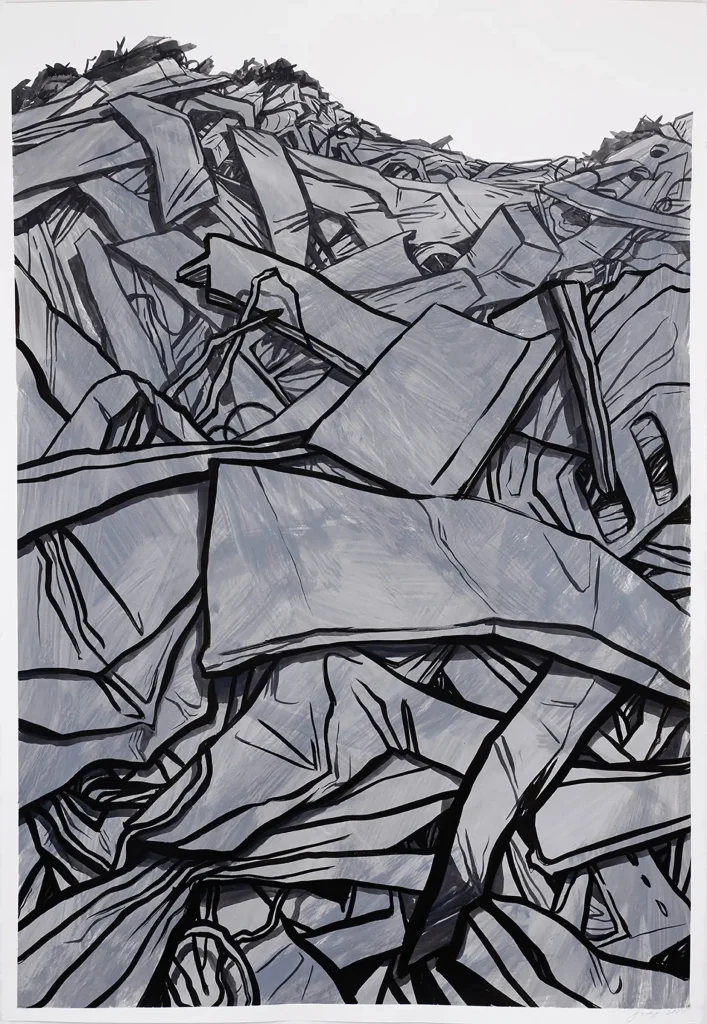
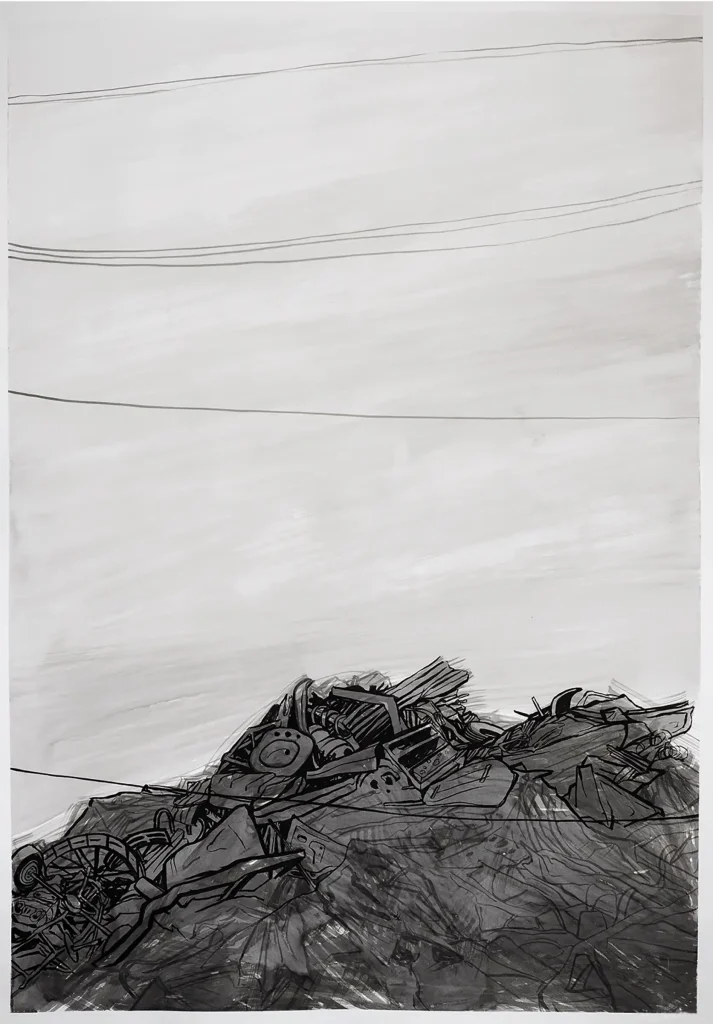
Yes, I’d say that’s part of it. For example, years ago I stumbled on a closed junkyard in process of being dismantled and moved from Wyoming to another state. Everyday I went and drew the heaps of metal and debris, the engines strewn about, the stacked cars. I loved it. The machines, landscape, wind, the lines and energy of the crumpled metal and parts sticking out and stacked all over. The scraggly feral goats, dog and rabbits that follow me around the junkyard from a distance. An extremely rural environment. After that I returned to the city and shifted from drawing cityscapes and buildings to finding metal scrap yards to draw from.
As the years passed I moved away from the junk and scrap yards and almost forgot about the work and experience. I don’t know how something so important to a person can drift away and be forgotten—but that happened. Years passed and I found I’d drifted away from large-scale drawing and the junk and scrap metal yards.
When Covid happened, I began to look back at old sketchbooks and drawings I’d done years before. I rediscovered my original Wyoming artwork and it reminded me of the excitement and insight the landscapes of metal had revealed to me. That’s when I decided to seek out local junkyards again and to see what happens. I started spending a lot of time biking to different scrap metal yards to do on-site paintings and sketches. I’d also make audio recordings of the environmental sounds I heard while painting, which were mostly large groups of motorcycles and birds. The streets had that Covid emptiness that occurred all over the world. It was at this time that I’d say my intuition led me back to the places I’d loved but had forgotten about since that first Wyoming junkyard. Originally I had worked in charcoal but now I’ve switched to ink and acrylic paint. There’s a boldness and ‘you can’t erase it’ quality and intention with ink that I really like.
Returning to the junkyards and scrap metal yards and large-scale painting and drawing has recentered me to the gesture that originally captivated me back in that original Wyoming junkyard—the lines and energy of the metal and the emotional color of each particular site.
What inspires you?
Light and lines, marks. That’s one reason I love printmaking – with woodcut or scratchboard, when you’re scratching the ink off of the board, it gives you sharp lines and dynamic marks. That’s also the appeal in animation, especially abstract animation. I love the ephemeral quality of motion, light and the time element within animation.
You’ll be here for three more months – what are you planning to do?
This next segment of the residency I’ll keep on creating large-scale ink and acrylic paintings and continue the animation experiments, I started, which build out from small close-up sections of the larger drawings. Light is a feature within a number of the drawings and sculptures which I’ll continue to develop. I’ll expand and explore more of my Berlin field recordings and see how they may integrate into the animation/video projection artwork.
On a community level, It’s been fantastic getting to explore the vast and varied arts communities in Berlin. Also, to have the space to live and work among artists from Berlin and all parts of the world has been a real privilege and a great experience.
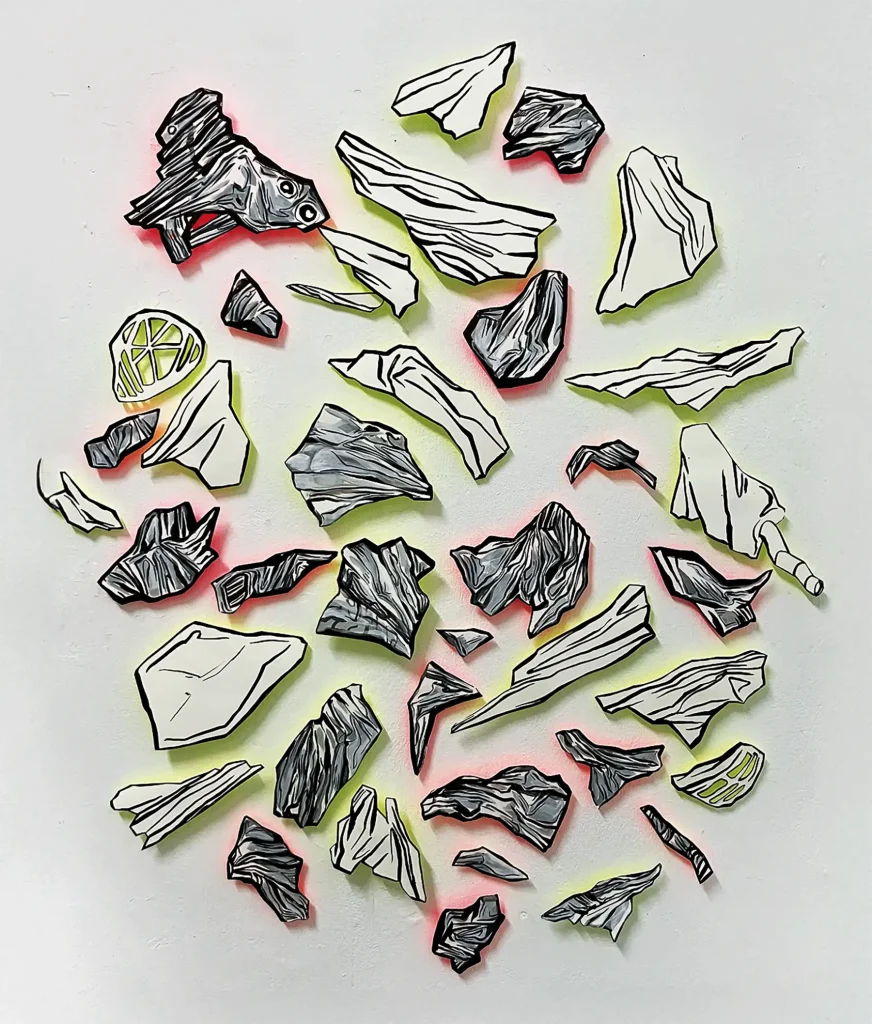
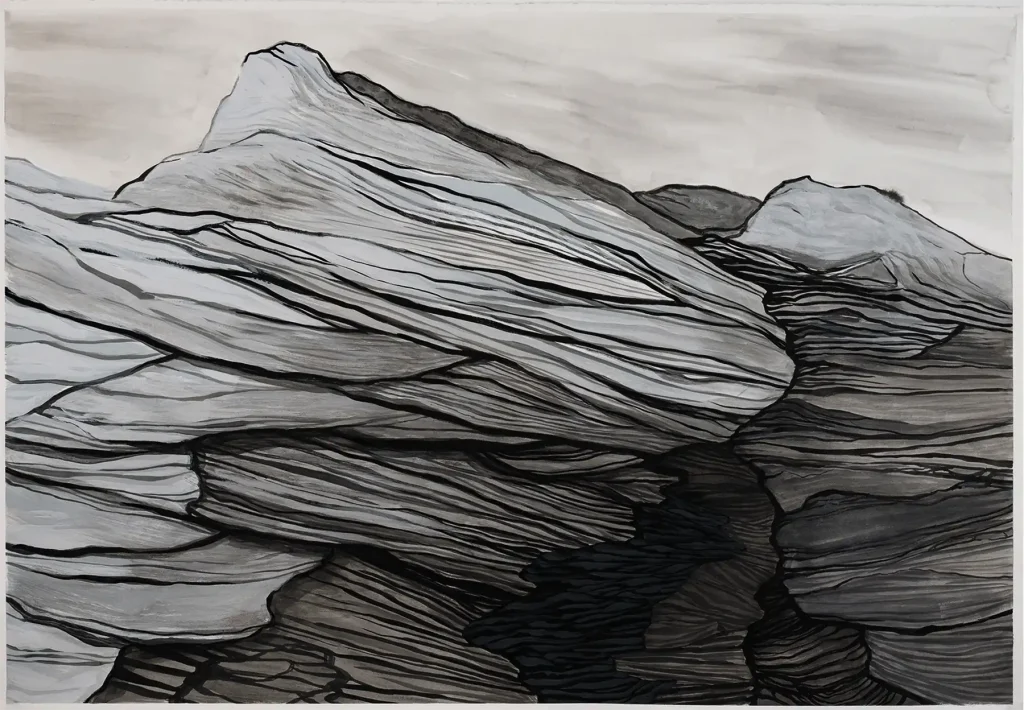
Kathleen Judge is a mixed-media artist from the United States who explores the representation of landscape through ink drawings, acrylic paint, animation and sound. Her current series of drawings are influenced by scrapmetal yards, junkyards and rocky terrain she finds across the US and in other regions. Her inspiration comes from the evidence of immense forces exposed in the twists and gasps of metal, the punch of metamorphic rocks against the edges of land and water, places of unmovable mass existing with delicate, vulnerable things.
In her residency Judge continues to explore landscapes structurally through paint and ink drawings. One aspect of these explorations are experiments with reflected and diffused light and its interplay with grayscale mediums. These paint and light works will flow into short experimental animations and video projections Judge will begin while on this section of the residency.
CV Summary
EDUCATION
Rhode Island School of Design / BFA Animation|Painting
SELECTED EXHIBITS
2024 | GRACE JANE PROJECTS | CHICAGO USA Solo exhibit ‘TRACES’. Drawings and paintings.
2024 | BUENA VISTA PROJECT | CHICAGO USA Curator and participant in group animation exhibit, ‘LIGHT PLAY”.
2023 | ANNY | NEW YORK CITY USA Animation shown as part of Animation Nights New York.
2023 | BUENA VISTA PROJECTS | CHICAGO USA Group exhibit ‘WHEN I DIE REMEMBER ME’. Paintings.
MUSIC VIDEOS & PROJECTIONS
Art directed and animated music videos for Judson Claiborne and Freakwater.
Created artwork and animated permanent museum video install for The Barona Cultural Center and Museum.
Co-created and animated a music video for Guster.
RECOGNITION
Created artwork and animated segments in documentary “FLANNERY” (dir. Elizabeth Coffman/Mark Bosco) received the first Library of Congress Lavine/Ken Burns Prize for Film.
Art directed (along with Neko Case) the album artwork “Middle Cycle”, which received a Grammy nomination for best ‘ Recording Package’.
Created artwork for all Chicago locations on the Chicago Poetry Tour, nominated for a National Magazine Awards for Digital Media in the category of Multimedia Feature or Package.
Storyboard artist for Emmy nominated animated show ‘Downtown’
Loktung Wong is GlogauAIR resident from January, 2025 to March, 2025
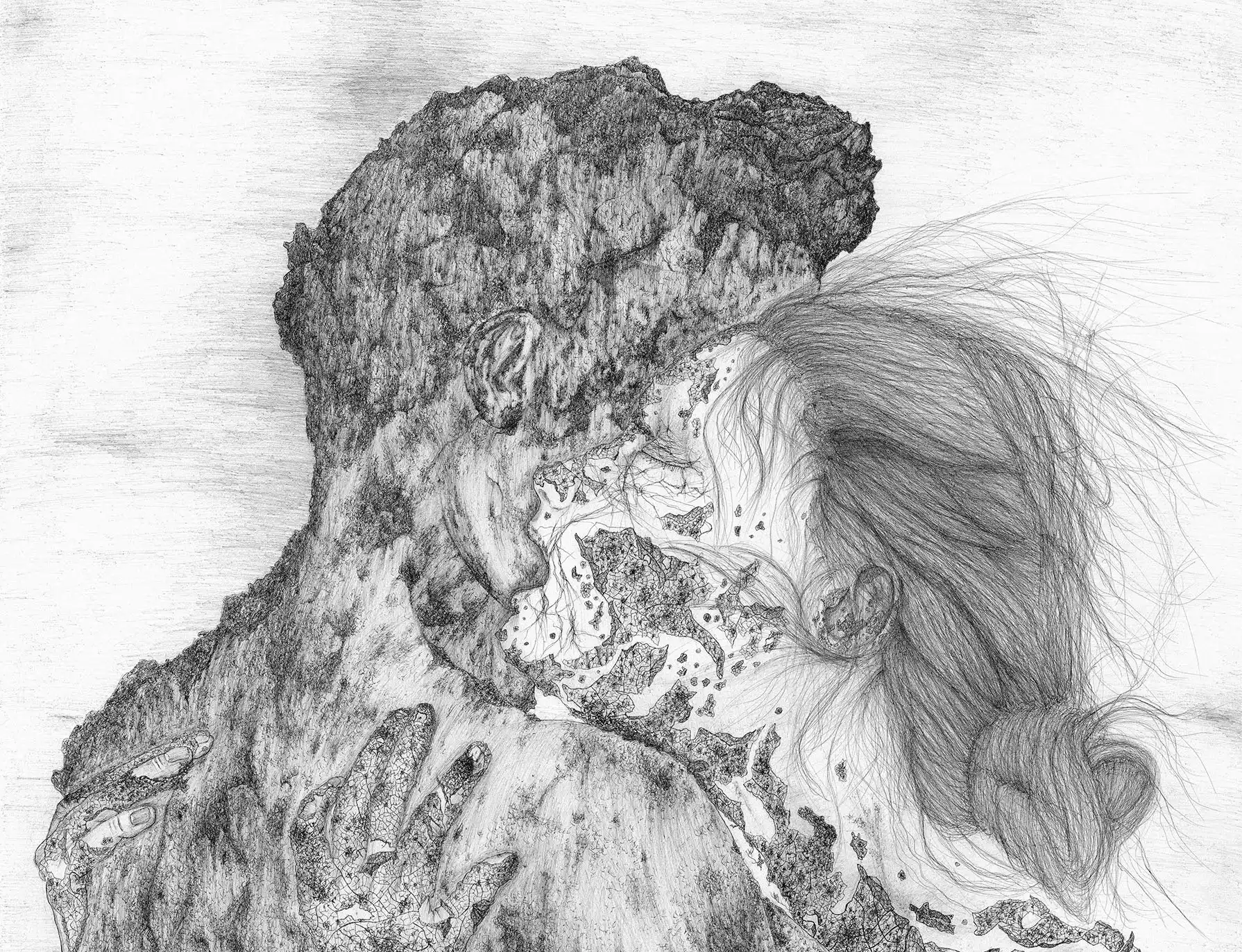
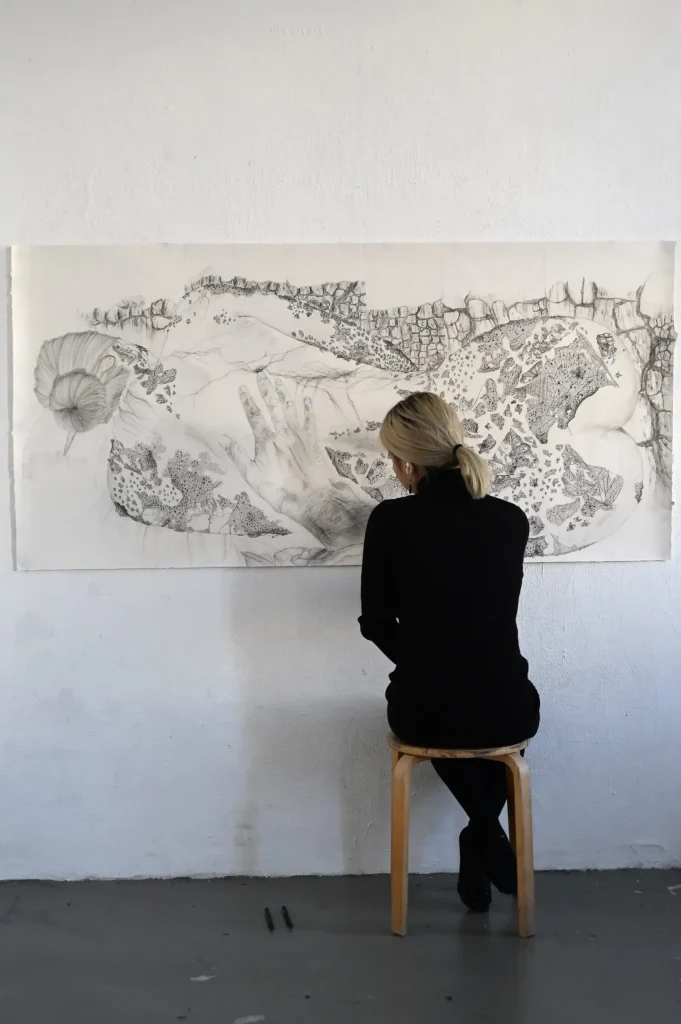
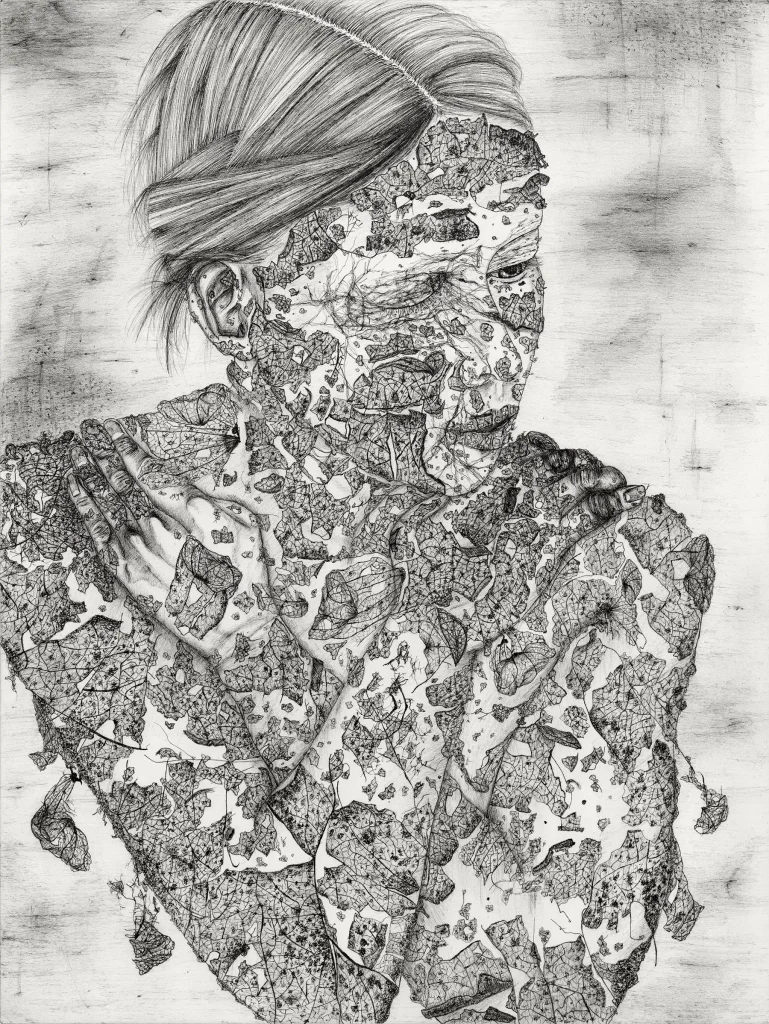
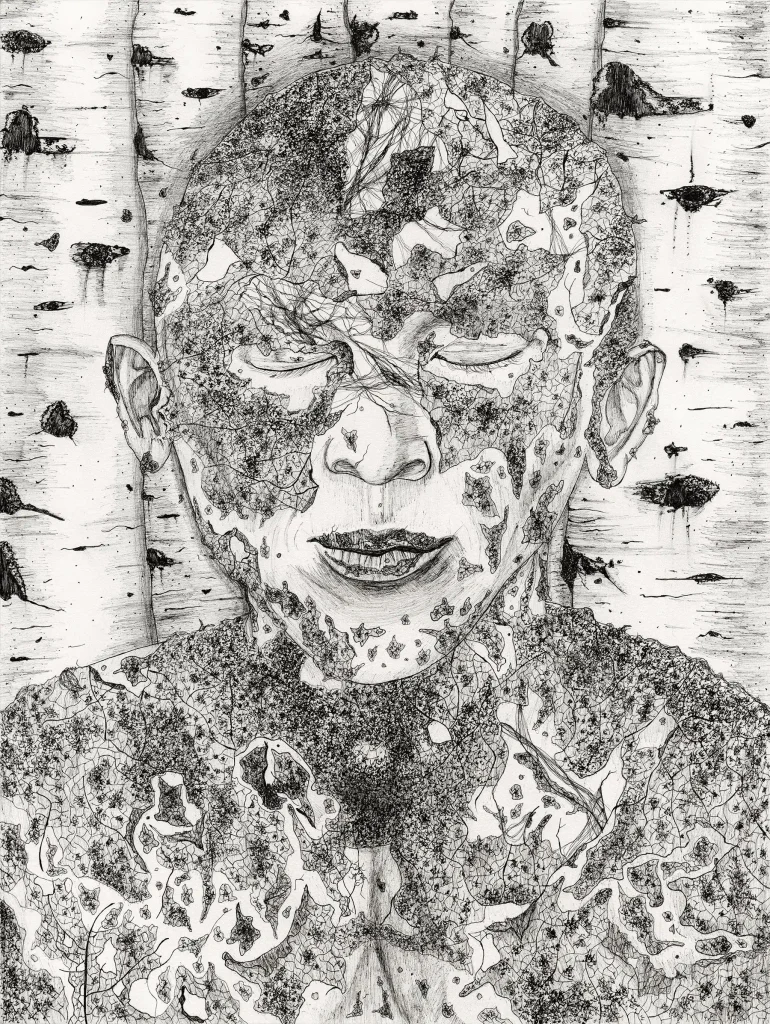
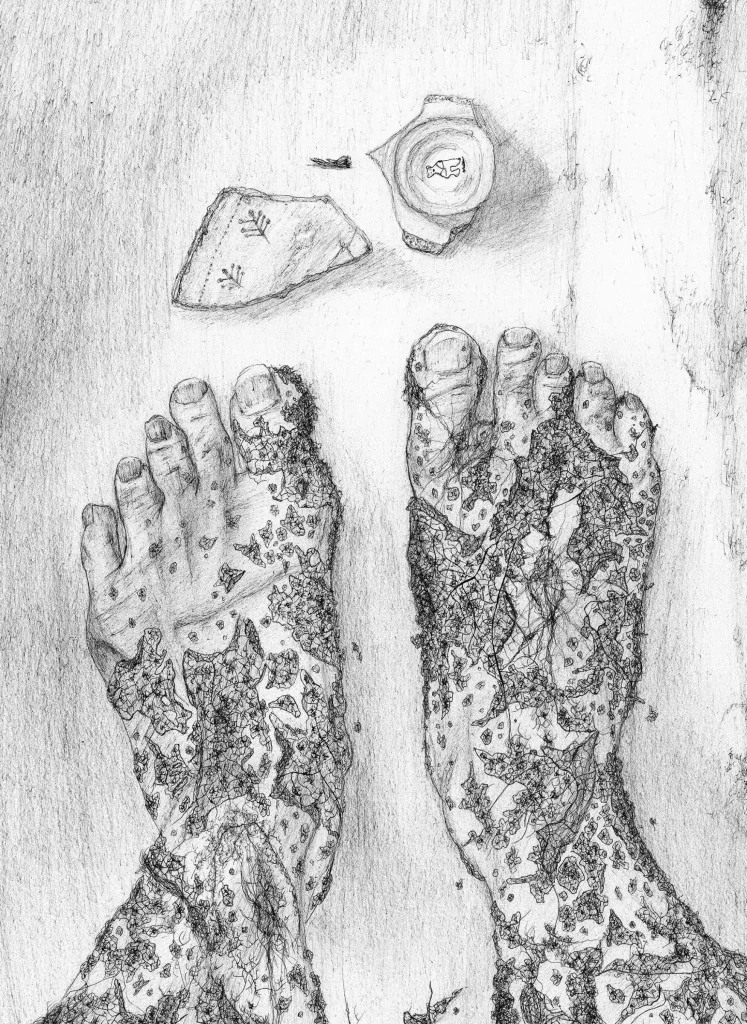
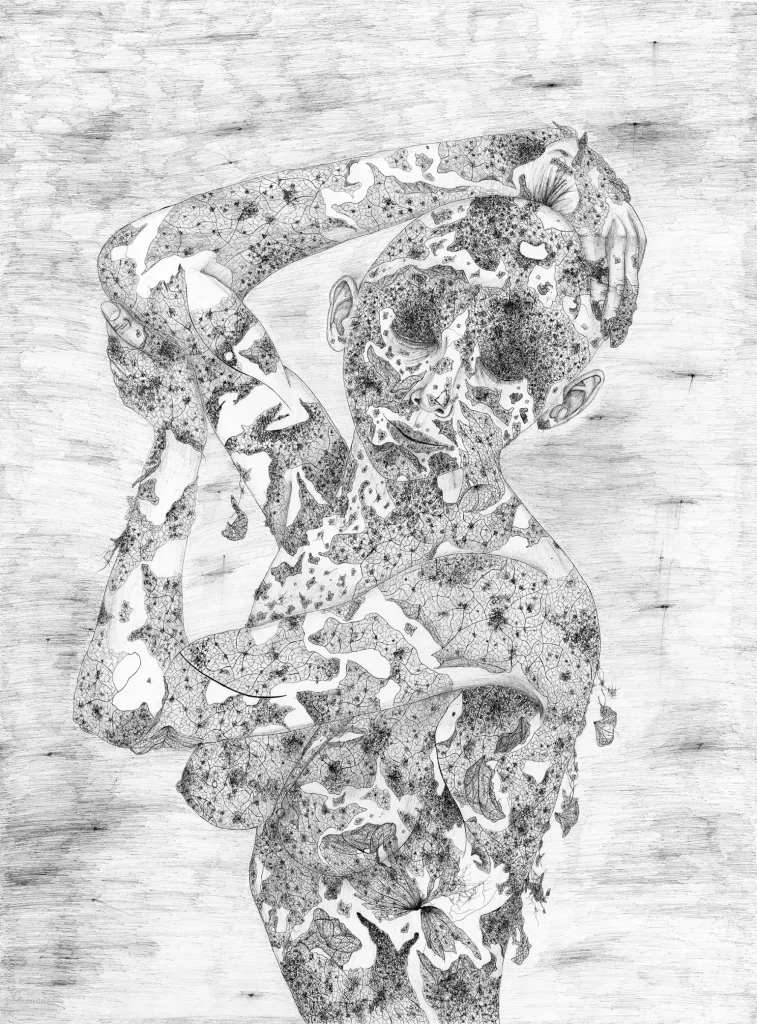
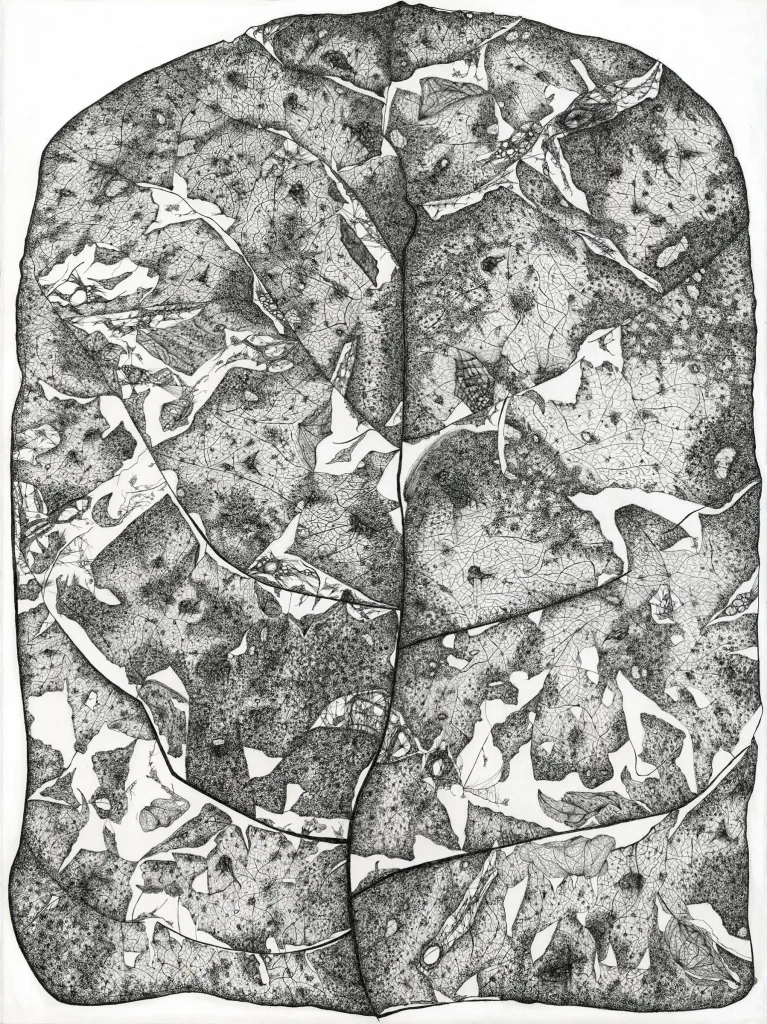
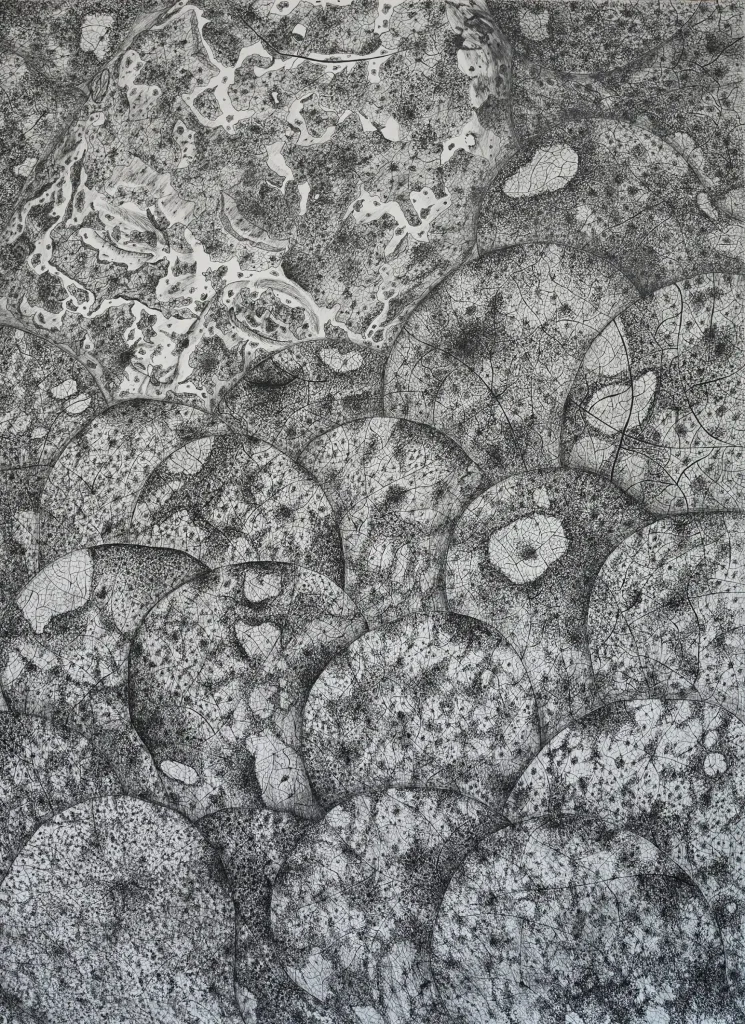
Loktung Wong’s works are ultimately about being human. Every decision she makes from the creation of textures, layers and patterns of nature to pushing boundaries of an ink pen is so she can resonate with the complexity of the human emotion. Her realisation on the human experience underscores the intricate textures and layers of nature on the figures. The leaves or rocks may seem pleasing at first glance, but within the fine details viewers will notice there are so much distortion and brokenness.
Meet the Artist
Can you give us an introduction about yourself and about your artistic background?
I only started to realise that I wanted to be an artist a few years ago. A lot of people assume I studied fine art or that I was always an artistic child, but I actually had the lowest grade in art at school and was definitely not seen as creative, nor did I think I was. I didn’t even know I could draw like this until a few years ago. I always struggle to explain to people how I got into art, because really it was through recognising my own experiences and emotions, I started realising that I can actually draw. I am still in the process of understanding myself how I can suddenly draw like this.
Can you tell us more about your artistic method and how you came up with your drawing techniques?
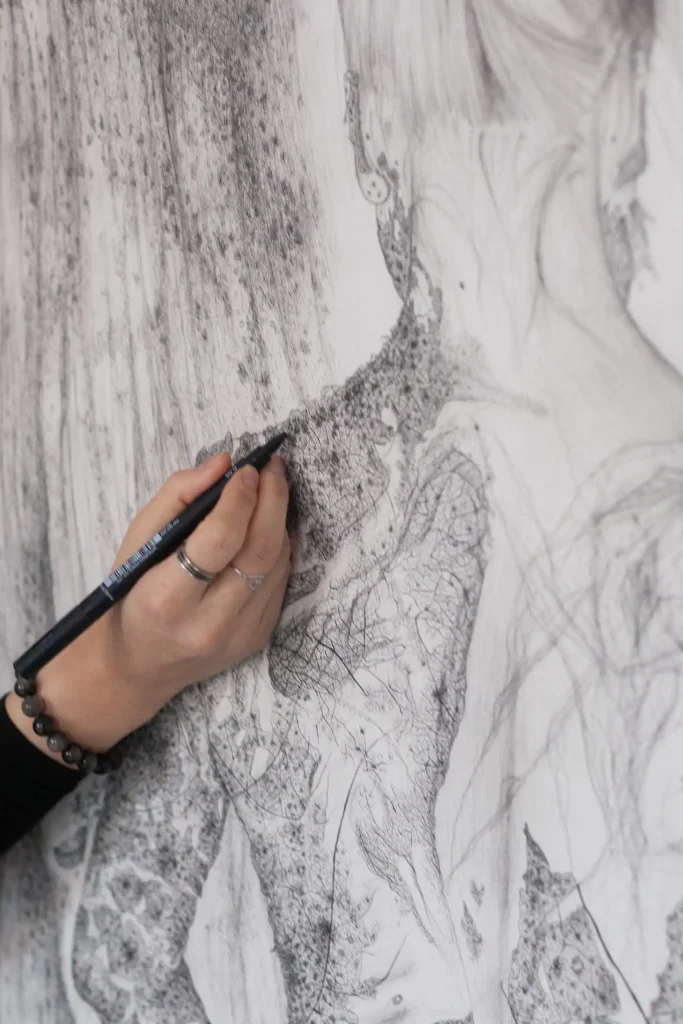
A lot of people think I’m obsessed with ink pens, but that’s not actually true. I always put my feelings first, so it’s whatever I can resonate with. I believe humans are very complex creatures, especially when we become more aware of ourselves. I think why I use this medium is because I can feel the complexity of humans through the creation of intricate and delicate details with just an ink pen. The chaos within the details of nature, such as the peeling of dead skin and the black blots on the figures, make me able to relate with the pain and the different layers of humans.
Maybe it’s normal for you to know how to be aware of your feelings and surroundings, but for me it felt like I woke up from a coma. I am now constantly asking myself ‘do I like this, do I like that?’ Sometimes drawing can be quite meditative for me, because I’m constantly teaching myself to be present. I would be like ‘okay, there’s a shadow under my armpit. Oh, the wrinkles on my fingers are curved shapes. Oh, there are five fingers on my hand.’ I think maybe partly I have become so obsessed with being aware of what is in front of me, which has led me to having the ability to draw realistically.
Is there anything that inspires you in your daily life? What do you seek your inspiration from?
I think it’s mainly from my experiences and recognizing its impact. But apart from that, I’m inspired by many other artforms. A while ago someone said to me there’s a lot of tension in my art and it is actually very still even though my art can be sad. I never realised this but actually a lot of the art I have been attracted to has a certain kind of tension and stillness. For example, Li-Young Lee has a poem called The Undressing which basically involves him trying to seduce God while God explains to him the meaning of life. This creates a slow tangle of sex and Zen, making it even more sensual to me. I like analysing art; not just feeling an artwork, but also questioning how it delivered this kind of emotion. I realise I also apply the concept of using a combination of contradictions in my art. I remember when I was initially attracted by the leaves I used on my figures because they seemed pleasing at first glance, but at a closer look there is a lot of ugliness within them, which created a tension
that really provoked me. I think there are a lot of things in this world we assume are so simple but are actually quite profound once we grasp them.
How do you like your experience in GlogauAIR so far and the experience of living with all the other artists?
It’s nice because in my studio back home in Hong Kong, it’s very solitary. Here I always see people in the kitchen and it’s nice to be around artists, and see their thinking process. And also, what is interesting is that people here in Berlin are so open to nude or even dark art, or aggressive art, like it’s normal. From what I am used to, Hong Kong is more conservative. Here no one would tell me my art is too dark, but in Hong Kong, I always get told my art is too sad or dark. People don’t jump to conclusions too quickly, because they find it too melancholy. So it has been so nice to experience that.
My works use earthy elements to explore the complexity of being human. I am fascinated by the textures in nature that may be overlooked, such as the freckled moulds of a rock, and how humans can relate to them. My contemplation on my personal experiences underscores the intricate patterns of the protagonists. Viewers can see the reticulate venation of a leaf which are veins irregularly distributed, and I find have similarities to the human pattern. By using my trypophobia and manipulating it poetically into art through the countless black blots, I want to demonstrate the truth of being human.
Lucija Zaja is GlogauAIR resident from January, 2025 to March, 2025
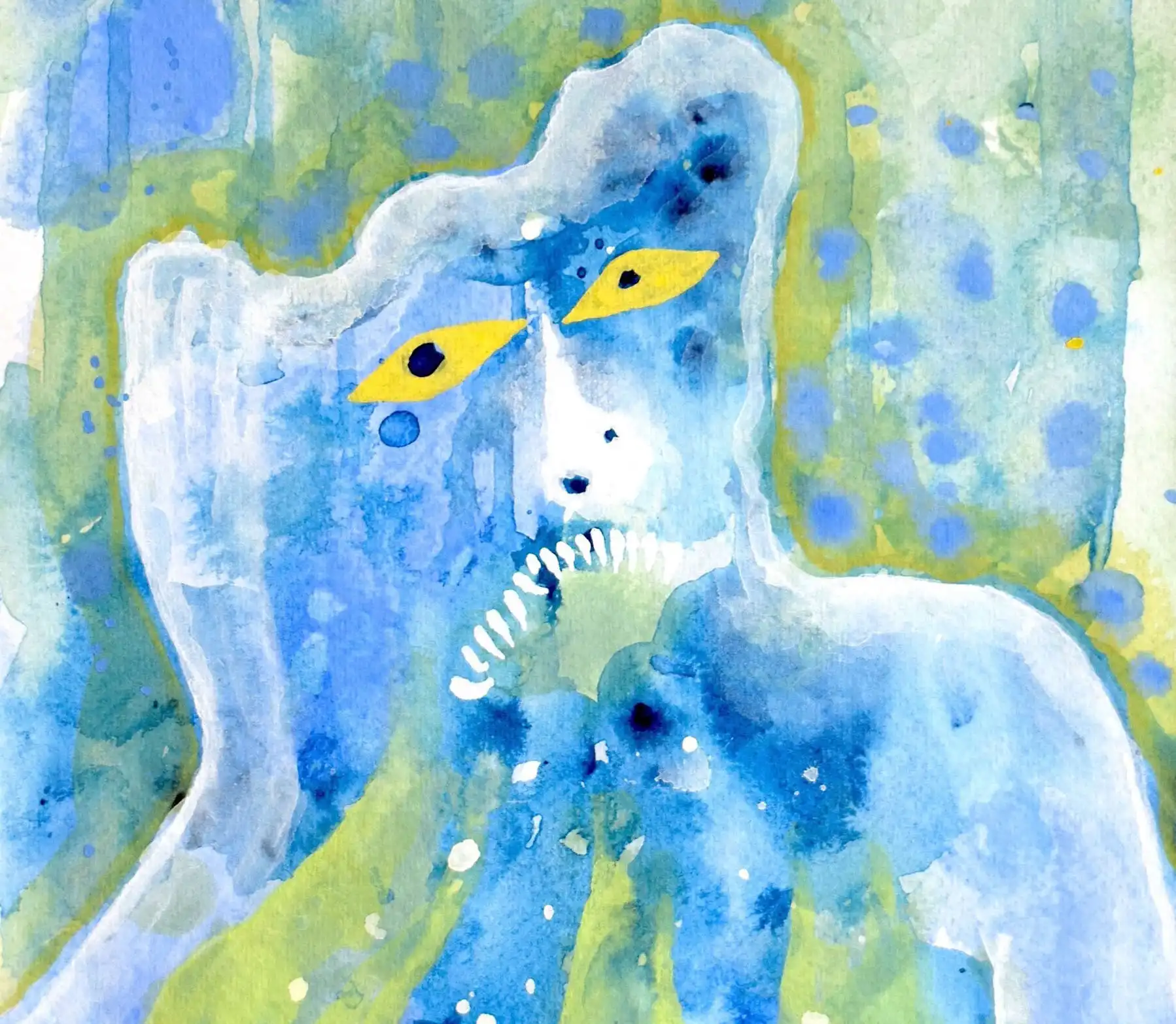
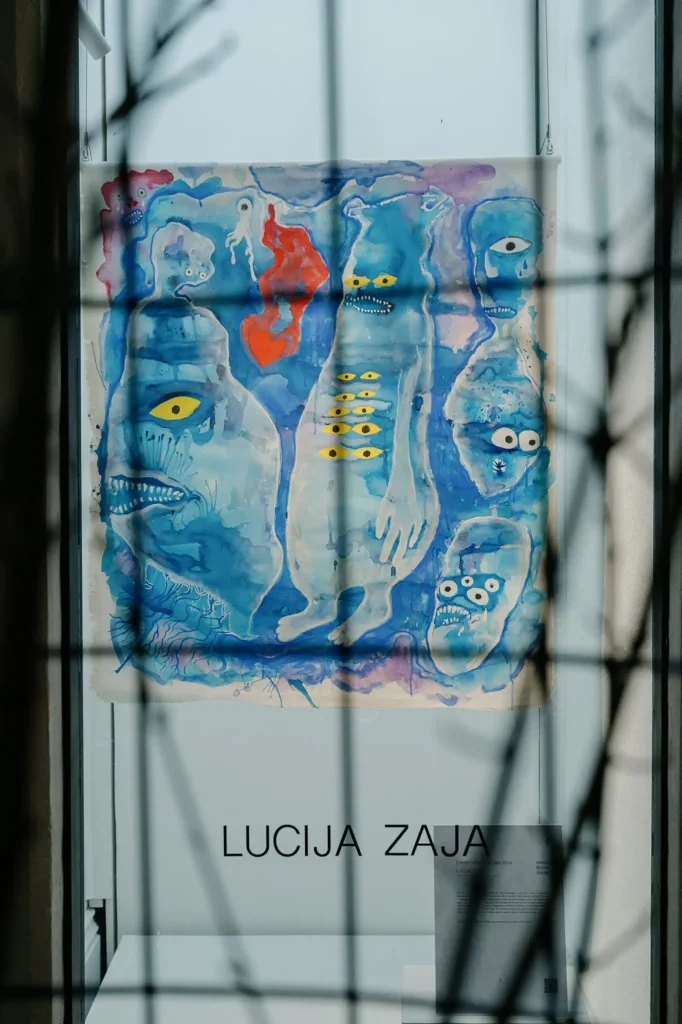
Lucija’s work blends abstraction and figuration to explore self, memory, and collective trauma, especially war. She captures life’s paradoxes—love and pain, softness and aggression—through layered acrylic, gouache, and collage on various surfaces. Recurring symbols reflect the universality of suffering and belonging, transforming tragedy into inspiration.
During her residency, Lucija will expand her current practice, experimenting with sewing canvas and other textile materials in unconventional ways. Moving beyond traditional uses of canvas and paper, she aims to deconstruct her chosen mediums, reinterpreting her past work and themes with a fresh perspective. Her exploration is deeply influenced by the darker corners of the human mind, the impact of trauma, and the violent histories of different places.
Meet the Artist
Can you give us an introduction about yourself and your practice?
My name is Lucija. I was born and raised in Croatia. After I finished my studies in landscape architecture, I moved with my partner to Berlin. I lived here for seven years, then I moved to Australia, and now I’m back here. I think Berlin influenced my work a lot. In my artistic practice, I mostly draw my inspiration from Croatia, where I’m from. I was born during the war and that influences me as an artist. I gravitated towards traumatic themes, and that’s why I’m so drawn to Berlin, because of its history. I’m interested in what happens when people or places go through trauma, and then how do you continue with your life, and how it influences everything you do.
In which mediums do you work?
I usually use acrylic paint and gouache, and collage sometimes. I also like to use textiles, that’s my new interest, which I’m going to experiment more with here at GlogauAIR. It’s mostly a combination of a lot of different things. Sometimes I have my phases where I focus on one thing or another, but I like to combine a lot.
Can you tell us more about your artistic process?
For me it’s very intuitive, almost like some kind of spiritual practice. I don’t have any preparation when I’m painting. I don’t do sketches. I do the first layer, I choose the colors, but then I see whatever comes out. That’s why sometimes it’s probably hard to understand what it is about. With drawing it reminds me of the music process. You just go for it.
What have you been interested in recently?
I’m interested to dive into where I’m coming from, and my ancestors. I want to do some research about where I’m standing in terms of where I’m coming from, because I have a lot of issues with it, because of everything that happened in the past. And I just want to make peace with it, so I want to focus on that right now. I have a whole plan for open studios. I’m going to put the paintings of these little creatures that represent spirits before me, the ancestors, or anyone who was before me, who had anything to do with me on one wall. And then on the other side, I would like to do a couple of self-portraits. I would like to face them, and I want them to face me. I want to resolve this trauma, and shame, and all the negative feelings that I have towards my place of origin and to make peace with it.
Your creatures have multiple breasts, what is it about for you?
I also find inspiration in feminism and feminist art. To me breasts represent women but also some kind of burden, the pressure to have children and just enduring a lot of things in your life. It also reminds me of Croatian grandmas and what women of that generation have been through, living in the village. I feel like it’s tough for women.
How does it feel being back in Berlin, and how is it going so far with the residency?
It’s great. It’s just that winters in Berlin are difficult. But I think it’s good for my work, because I can concentrate on my practice more. I think it’s good to be back in Berlin. Like I said, I’m really drawn to its history. I think it’s interesting that if I draw a parallel with Croatia, and Yugoslavia when it fell apart. Berlin went through this union, and that was kind of the opposite of what I experienced when I was a small child. So I’m really drawn to places that went through this huge trauma. In Berlin things went crazy and It takes a lot of time to process it. But I also find it inspiring. Because then something new happens, a new reality is born, and people do amazing things after that. It’s good to be here. This is my first residency, and it’s going amazing. I like to be surrounded by other artists. I feel like whenever I need advice, or just someone to look at my work, or maybe to help me with something, I can just go next door. And it’s great.
Who are some of your favourite artists or artists who have influenced your work?
I really like Louis Bourgeois. Maybe because she also comes from a traumatic childhood and that’s where she draws her inspiration and views from. She’s also into subjects like being a woman, a mother or a housewife. The relationships with her parents also have affected her, with her father and her mother who died. I feel very connected to that because that’s also where I draw my inspiration − war and domestic life. I love Marina Abramović. I love that she was painting, but then she realized that it’s too simple for her. And that she needs to be in the moment with herself and with people and to do her own thing. What she does is temporary, but she gets to the essence of it. She’s there for a while and then she’s gone. It’s not like a painting that you can preserve. It’s in the moment and you have to experience it. I mean, it’s like with all performance art, but she’s a pioneer.
Are you interested in performance as an artist?
No, at least not for now. Maybe in the future. But I really appreciate it.
My work is a fusion of abstraction and figuration. I am on the quest of understanding myself, experiences that shaped me, and the world we live in. My main sources of inspiration include memories and traumas related to my own experience with war, as well as our universal and collective pain. Relationship between hurt and love, frustration and peace, soft and aggressive is reflected through delicate brushstrokes, pouring methods, and prominent body parts, in which I try to capture these polarities and paradoxes of our lives. I use mainly acrylic paint, gouache, and collage to create layers often represented on paper, canvas, and sometimes dolls. Repetition of themes and symbols acts as an invitation to understand that love and hurt are universal, thus becoming intertwined. In my work I am trying to investigate where I belong, how the environment I live in shapes me, and if I can embrace tragedies as inspirations.
The project I’m developing during my residency acts as a continuance of my current practice where I recently started experimenting with sewing canvas and other textile materials. This distancing of the traditional ways of using canvas and paper is serving as an entrance into deep investigation of deconstructing materials and mediums that I use. The mediums I feel very drawn to in my practice include acrylics, gouache, and different types of collaging where I can play with the theme of constructing something new from old, putting a twist on existing work and themes, and exploring it to the very depths. My interest in this is mostly fuelled by inspiration that I find in dark corners of our minds, traumatic events that shaped us, and violent histories of different places.
CV Summary
Education
2014 Bachelor of Landscape Architecture, University of Zagreb, Croatia
Exhibitions
2023 Mid-Year Group Show, Tap Gallery, Sydney, Australia
2023 Emerge:Twelfth Edition (group exhibition), Brunswick Street Gallery, Melbourne, Australia
2023 Palava Group Show, Woodburn Creatives, Sydney, Australia
2023 Internal Thresholds (group exhibition), The Waiting Room Project, Sydney, Australia
2024 To all my Monsters (solo exhibition), AirSpace Project, Sydney, Australia
2024 Mix & Match (group exhibition), Goodspace Gallery, Sydney, Australia
2024 Inner Saboteurs (solo exhibition), RubiconARI Gallery, Melbourne, Australia
2024 Palava Buffet (group exhibition), Mothership Studios, Sydney, Australia
2024 Arrival of the New Things (solo exhibition), SOL Gallery, Melbourne, Australia
Lucila Sancineti is GlogauAIR resident from January, 2025 to March, 2025
Lucila Sancineti explores the intimacy of matter and the body in her artistic practice, where everything a body touches becomes a body. Her work invites a tactile encounter with porous surfaces, fostering connections with otherness through fragments like scales, crusts, and fossils. These remnants evoke suspended states of transformation, embodying a temporal paradox. Her pieces become poetic attempts to grasp the ungraspable, the elusive flow of change and becoming
Meet the Artist
Can you give us an introduction about yourself and about your background?
I’m a visual artist from Argentina. I work across disciplines, experimenting with different materials and techniques. I think that I’ve always been curious and interested in very diverse things. For example when I was young I wanted to be a marine biologist and I was also obsessed with the Egyptians, jewellery and fantasy books. At university I studied Literature, and at the same time I trained myself as an artist through different workshops. I took sewing lessons with a seamstress for five years, which was actually something in-between sewing and haute couture. I mean it wasn’t just sewing, it was also in a way fashion designing. Besides, I took painting and sculpture classes with other artists and studied scenography for a while. I was also teaching at a high school.
So in these years when I was beginning my artistic practice I was in contact with a lot of different things. I started painting but quickly began to incorporate all these other areas of interest. It was really bothering me to separate my passions, that literature seemed to be one thing and art another thing. At some point I started to intertwine all these worlds and practices and I think that right now my art has a lot of this. And because I love to learn new techniques to incorporate into my work, I’m constantly taking new workshops, like ceramics or biomaterials workshops.
So you don’t work in just one medium?
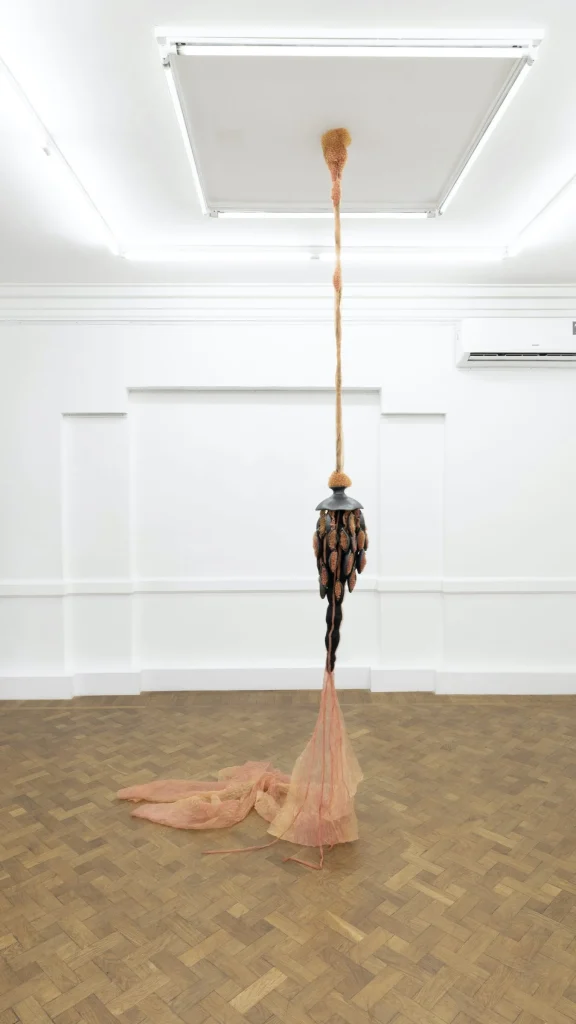
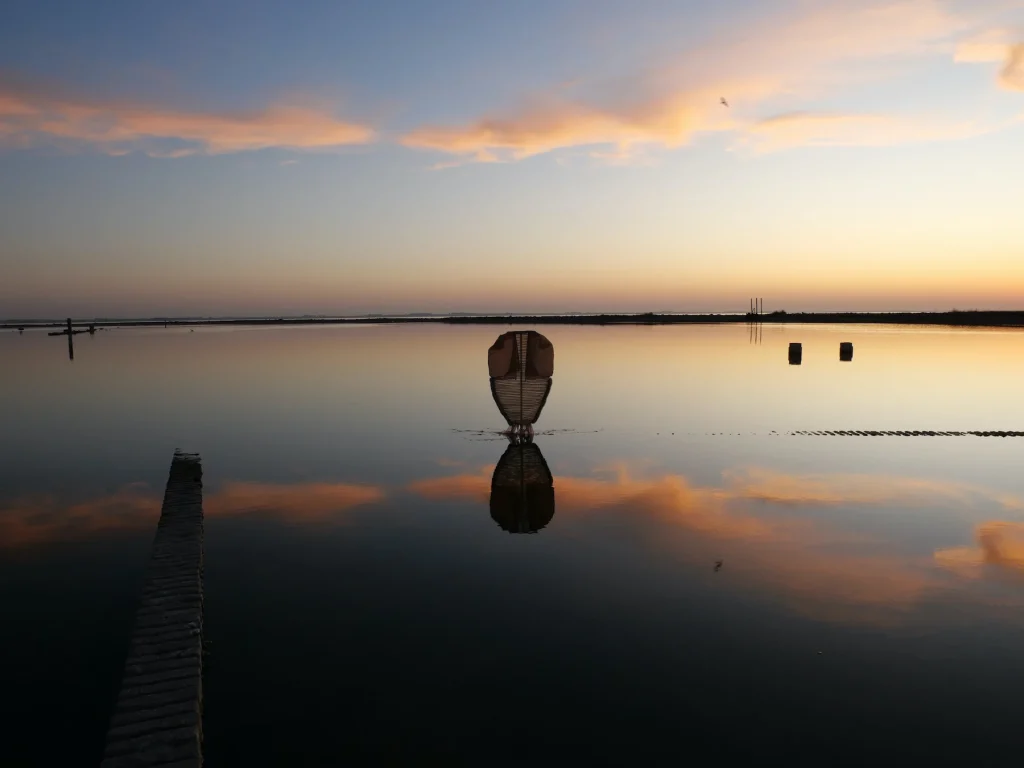
No, I always work across different mediums to create object-like pieces and installations. I’m interested mostly in building atmospheres, and for the pieces to really take up the space, to inhabit it, sometimes in a parasitical way even. I want people to feel that they are co-inhabiting the space, that they are entering a habitat where you have to share that space with the pieces. It’s very important for me that the pieces feel like entities, in the sense of something that is alive or has been alive, so you wonder whether this is what’s left of a critter, maybe the skin of a critter, their remains, something that was here and it’s not anymore. And you are trying to understand what this was, what its shape was, how it behaved. You’re constantly pursuing something that keeps getting away, it’s like hunting, chasing this entity that is constantly moving.
I feel like this comes from my interest in narrative, in story-telling. I want you to be able to think ‘Oh, if this is the leg, then what happens with the head?’ And to start thinking about that piece, trying to build a story in your mind about what’s happening with it.
Can you tell us about your recent work and what are you planning to work on during the residency?
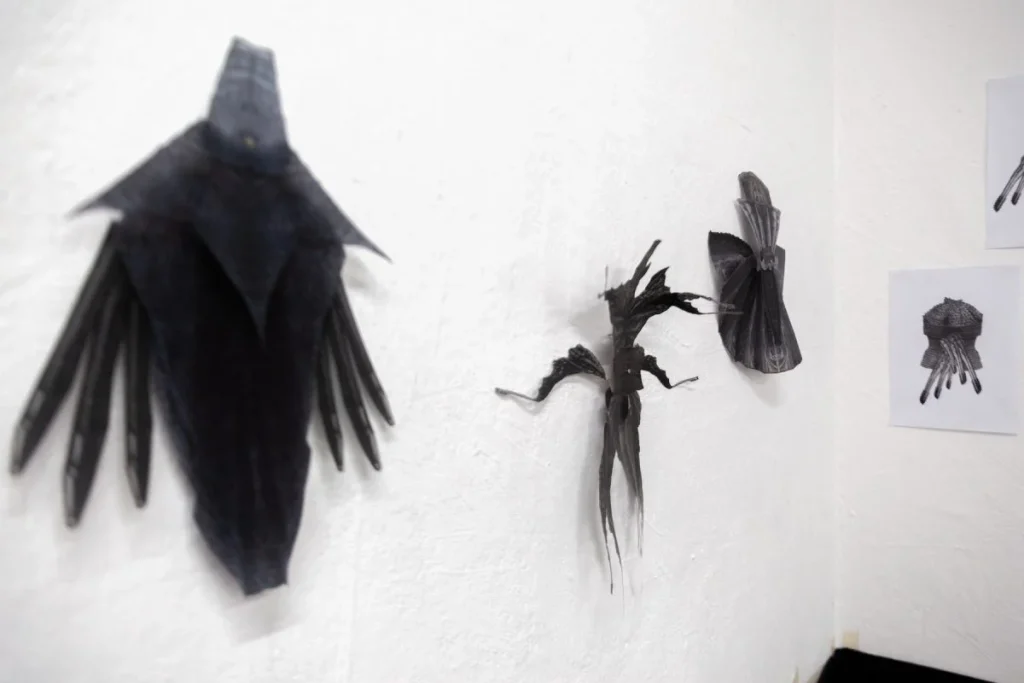
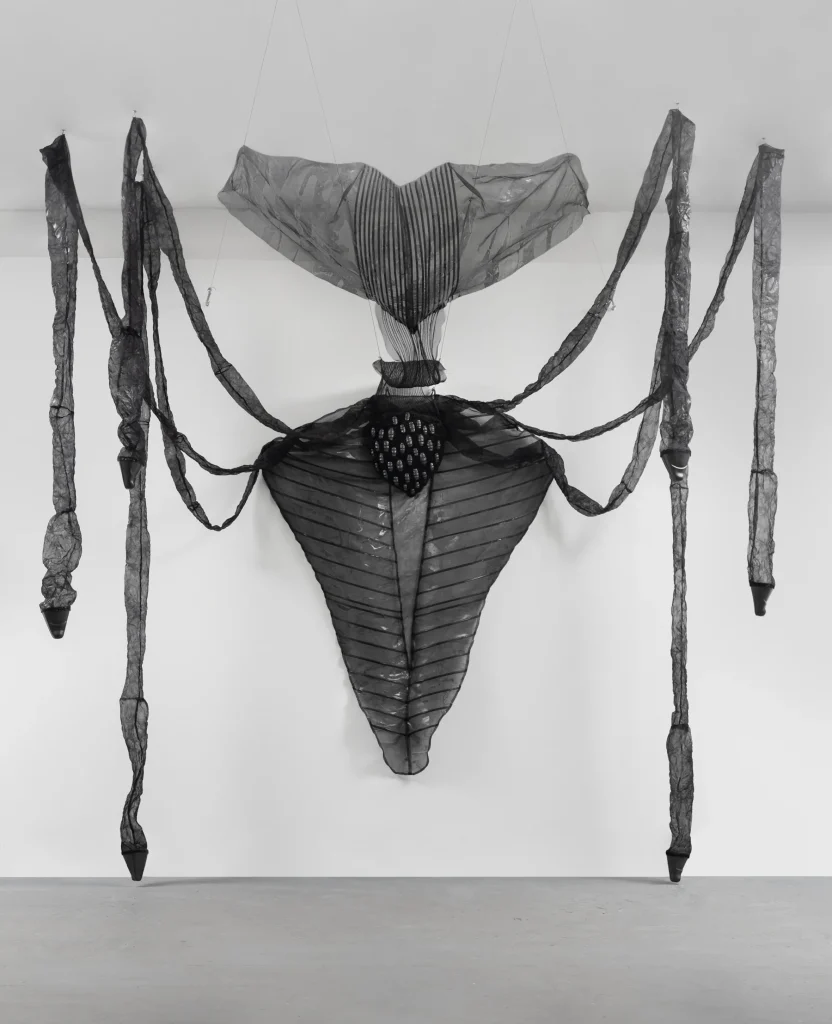
My current project started with a research on fashion patterns. I was looking at sewing patterns from old fashion magazines like La Mode Illustrée, and also at exuviae, that are the skins that insects and other species leave after they moult. Sometimes you can see the whole cast of the insect attached to a tree. I have this love/repulsion relationship with insects, I feel very attracted to them, but at the same time very disgusted by them. I like that feeling. When you feel disgusted by something, for me, it’s a good feeling. It shows that there is something happening with how we understand the world, with how we were taught to understand the world.
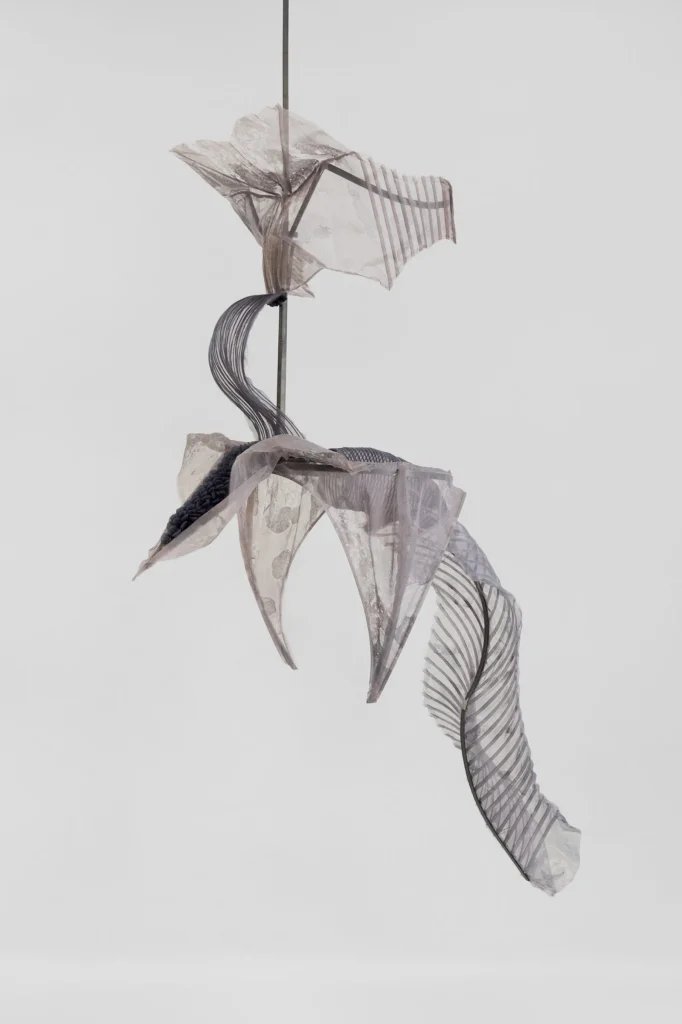
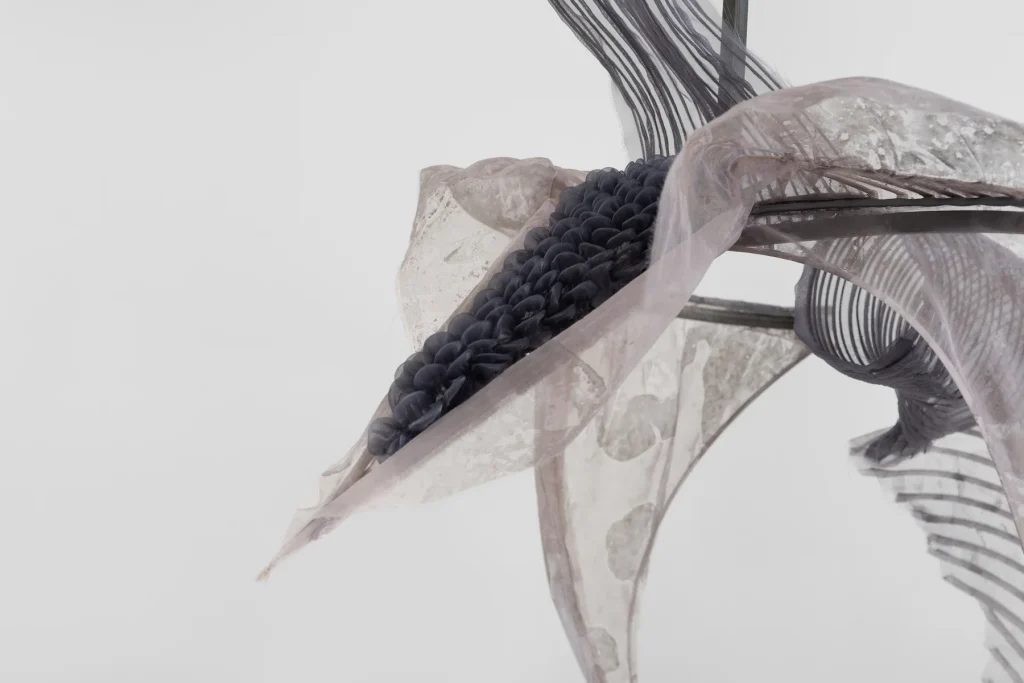
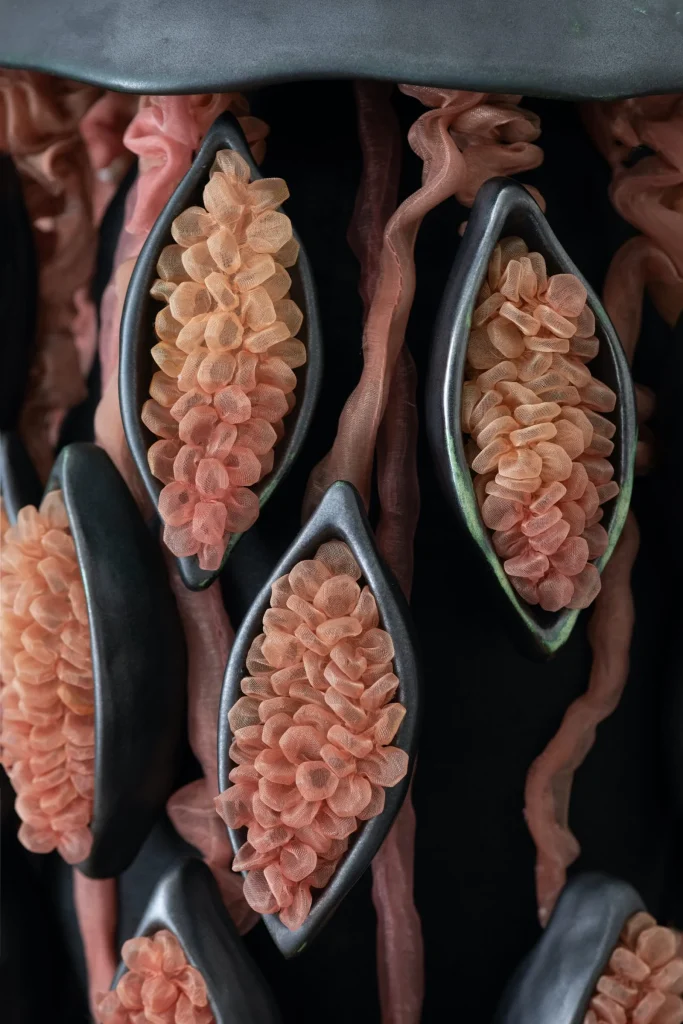
So while looking at exuviae and at the sewing patterns, I started thinking that our skin actually grows with us. With people you don’t see the phases of change as you do with insects through these skins they leave, that show a mutated organism. These casts are like frozen stages of the body. It’s like a picture of a body, but a physical picture. I began to wonder, if our human bodies mutated, what would that look like? I started building these pieces with this idea, as if we could have these skins that were shed by some human-insect-like shape. What I’m doing at the residency is a continuation of that process of crafting textile pieces that investigate shapes that come from mutated fashion patterns. At the same time, it’s an investigation on creating different textures using one very specific fabric, organza, and shaping it organically so that it feels like a layer of skin.
I’m also working on a series of digital collages that I started some time ago, using the illustrations from the fashion magazines I took the patterns from. What I’m finding here at the residency is that I’m having time to explore a lot of different lines of work that were there but in a sort of latent state. I also started to play with light. It’s not that I can’t do it at home, but here I have the time and mental space to explore all these possibilities. All these little things start to unfold and feed my main project.
Can you tell a bit about the connection of fashion and contemporary art? How is it connected to you?
I’m interested in fashion as a way of expression and experimentation. Lately I’ve been looking at designers or pieces that, in a way, reshape the body and its possibilities. For instance, hoop skirts in the 1500s and then crinolines in the 1800s, which had a big wire structure. We can think it was an ornamental item, and at the same time it had a social purpose. It allowed certain movements and not others. For example, these big skirts wouldn’t allow you to get close to another body, they set a physical distance. Then, designers like Elsa Schiaparelli or Alexander McQueen redefined what is the shape of a body. I mean, why does a body have to have a certain shape, like a waist, a shoulder? We can play around with it. McQueen started to design these pants that revealed the butt crack, and the body changes. There is a different understanding of the body. I’m interested in these designs that are a bit weird in terms of reshifting our perception of our shapes, our boundaries. This is also something that sci-fi narratives explore: the ability to mutate our bodies, the idea of the body as something malleable. There is this story by Ursula K Le Guin, who is an amazing writer, about a world where people don’t have a fixed biological sex and every month for a period of time they “become” sexually male or female, they have sex and then for the rest of the month they are latent, or asexual. The story explores the type of relationships or society this particular humanity creates.
Who are some artists, writers that you love or who influenced your work?
I take inspiration from a lot of different places. I read a lot of fiction and I also watch a lot of movies, so these are two huge sources of inspiration. I also have artists that are very important to me, for example, Louise Bourgeois. Somehow I feel she would be my mother and maybe David Cronenberg would be my father. I’m a happy child of those two.
When I look at artists, I try to look at people who also work with installation or textile. I’ve been investigating artists like Ruth Asawa, Magdalena Abakanowicz. She’s an amazing Polish artist who works mainly with sculpture and has a series of works that are made with different fibers like rope and animal hair. She weaves these fibers and creates huge pieces that are kind of coats, but at the same time feel like presences, as if they had their own personality.
And of course there are a lot of authors that I really love. I’m very interested in speculative fiction, sci-fi, horror, authors like Ursula K Le Guin or Octavia Butler who talk about the potential of different bodies or different ways of being and interacting with otherness and with our world and with other worlds. I like when authors create worlds so that we can think “Ah, this might be a reality”. Right now I’m reading China Mieville, and also Latin American authors working with “new weird” fiction. An Argentinian author I like, Juan Mattio, says that in our current stage of capitalist societies realism is not enough for us to grasp or reflect on our reality and experiences, and I agree.
Everything a body touches becomes a body. Matter becomes skin that, porous, invites caress, longs for inscriptions, urges an omnivorous passion for surfaces. In my artistic practice I explore processes to foster organisms that tighten the boundaries that connect us to otherness. These propose an immersion in a temporal paradox: the encounter with remains -scales, crusts, fossils, relics- fragments that suggest suspended stages of mutation. I construct my pieces as frustrated attempts to interpret the mechanisms of flux of that which refuses to be captured.
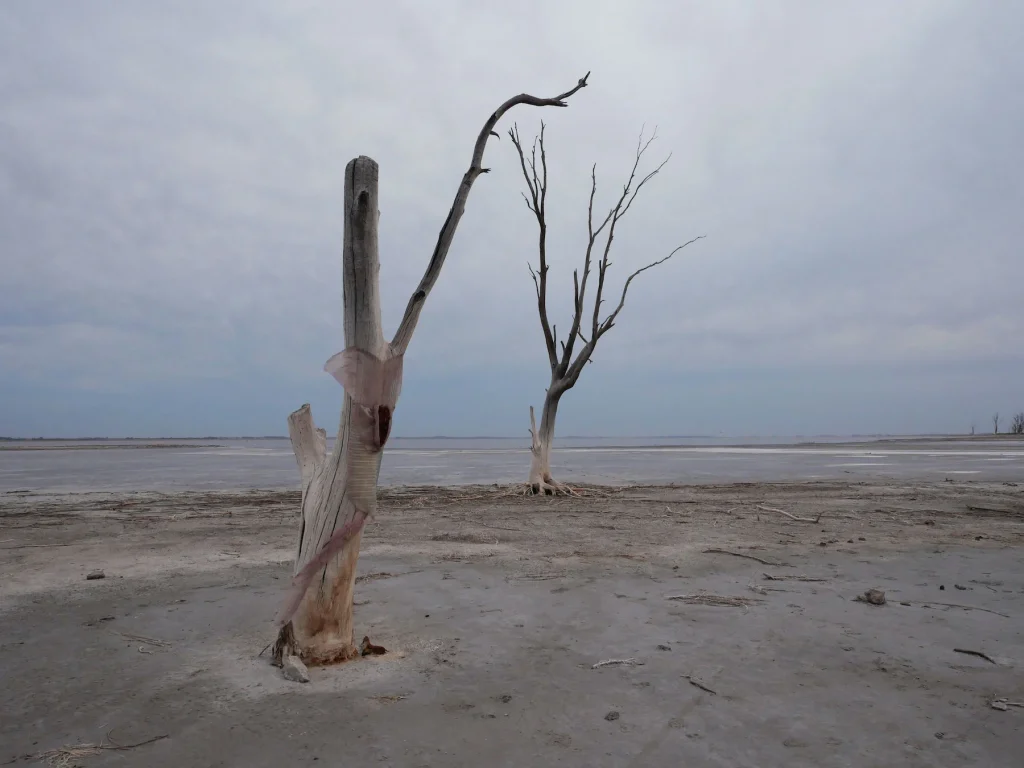
An image haunts me: that of exuviae, moult of semi-rigid skin that arthropods and crustaceans leave behind when they mutate. This became a metaphor for the traces bodies leave behind, and the process of recreating those shapes through long and repetitive actions seem to stop time in a futile intent of grasping the fleeting entities that could have inhabited those casts.
I think of skin as armor; exoskeletons, pieces of corsetry, armor; devices to cover, protect, support. Residual states of shapes that managed to domesticate movement. I take old magazines’ sewing patterns and intervene them by doing an exercise akin to translation or fiction: making them tell another story, that of other bodies, the unexpected beauty of their transitions.
I experiment with different materials that provide flexibility and rigidity to these pieces made with a very frail fabric. Through the use of pigments, acrylic boning, biomaterials, resin, ceramics, metal each piece presents a slight variation than the one before, forming an ensemble of odd kin.
CV Summary
STUDIES
[2010 – 2019] BA in Language and Literature, University of Buenos Aires.
[2012 – 2022] Artist-led Workshops.
[2006 – 2012] Dressmaking workshop.
GRANTS & RESIDENCIES
[2024] HITO Cultural Grant, Buenos Aires, Argentina.
[2023] Activar Patrimonio Grant by National Ministry of Culture, Argentina.
[2023] Red Quincho “Constelaciones” Grant for residencies Poliniza and Epecuén, Argentina.
[2022] Konvent Zero Residency, Cal Rosal, España.
SELECTED EXHIBITIONS, ART FAIRS, CONTESTS
[2024] Blando en un lugar blando. Espacio Acoyte, CABA, Argentina.
[2024] Beso todo lo que encuentro. Jaques Martínez Gallery, Buenos Aires, Argentina.
[2023] Pinta BA Photo Art Fair. Buenos Aires, Argentina.
[2023] Entes en fuga. Cott Gallery, CABA, Argentina.
[2023] Premio Fundación Fortabat.
[2021] Toda indicación es un desvío. Acéfala Gallery, CABA, Argentina.
[2019] Instante suspendido. Ambos Mundos Gallery, San Isidro, Argentina.
Rafał Wysocki is GlogauAIR resident from January, 2025 to March, 2025
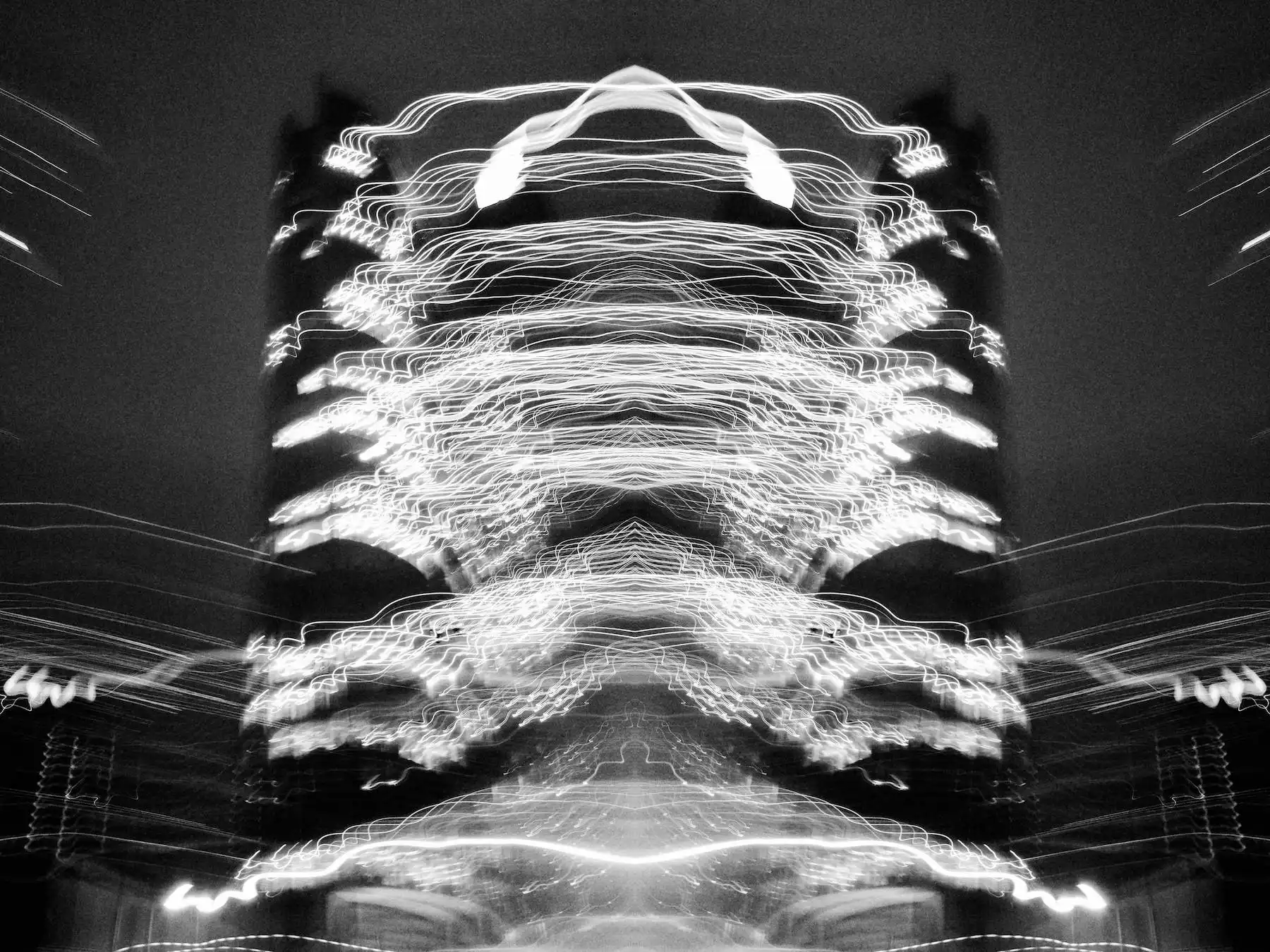
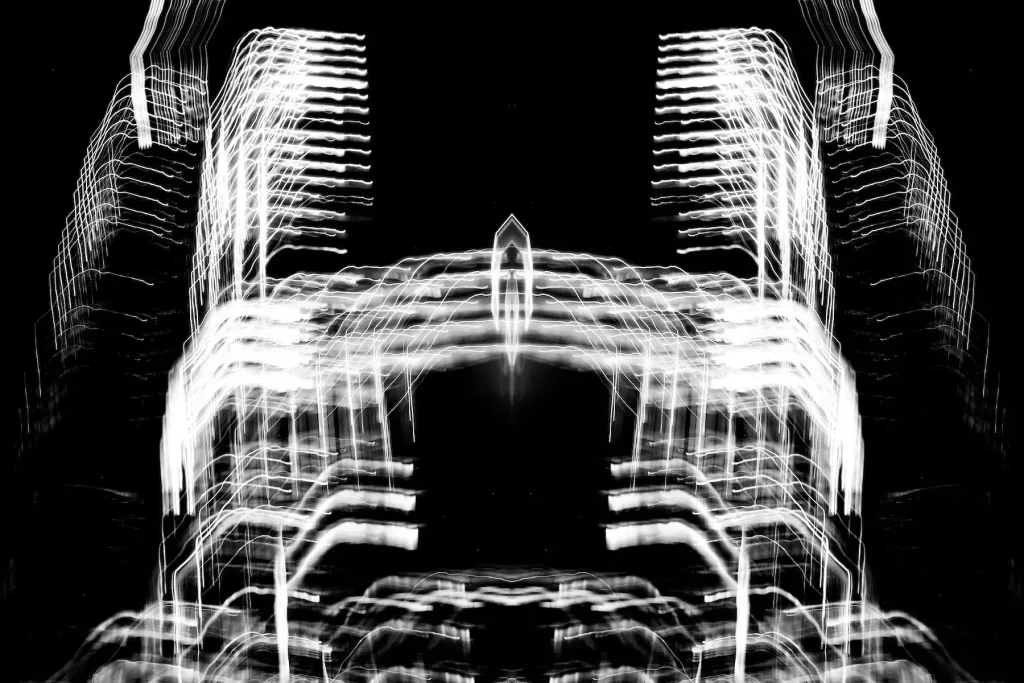
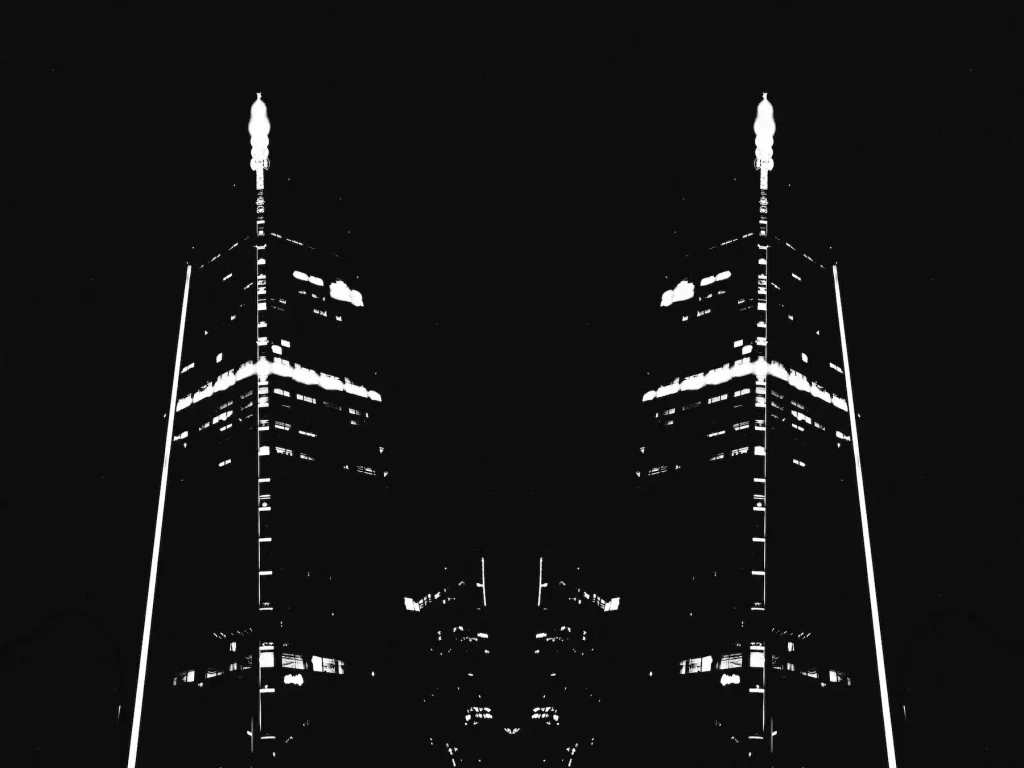
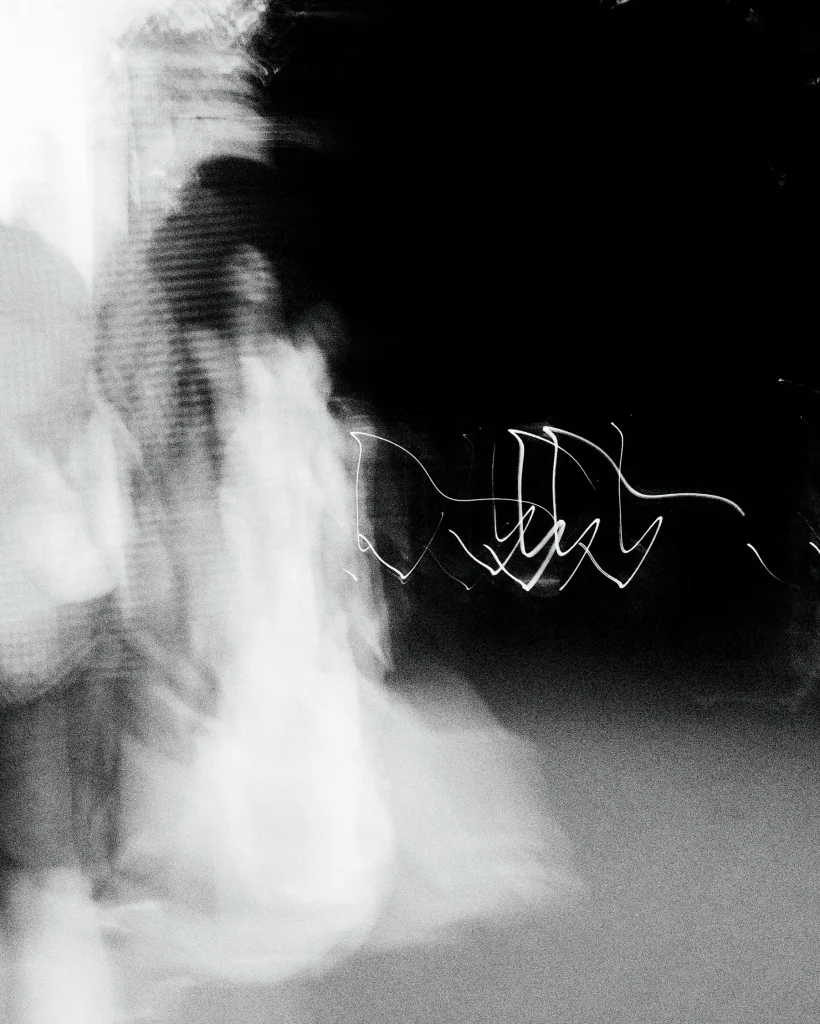
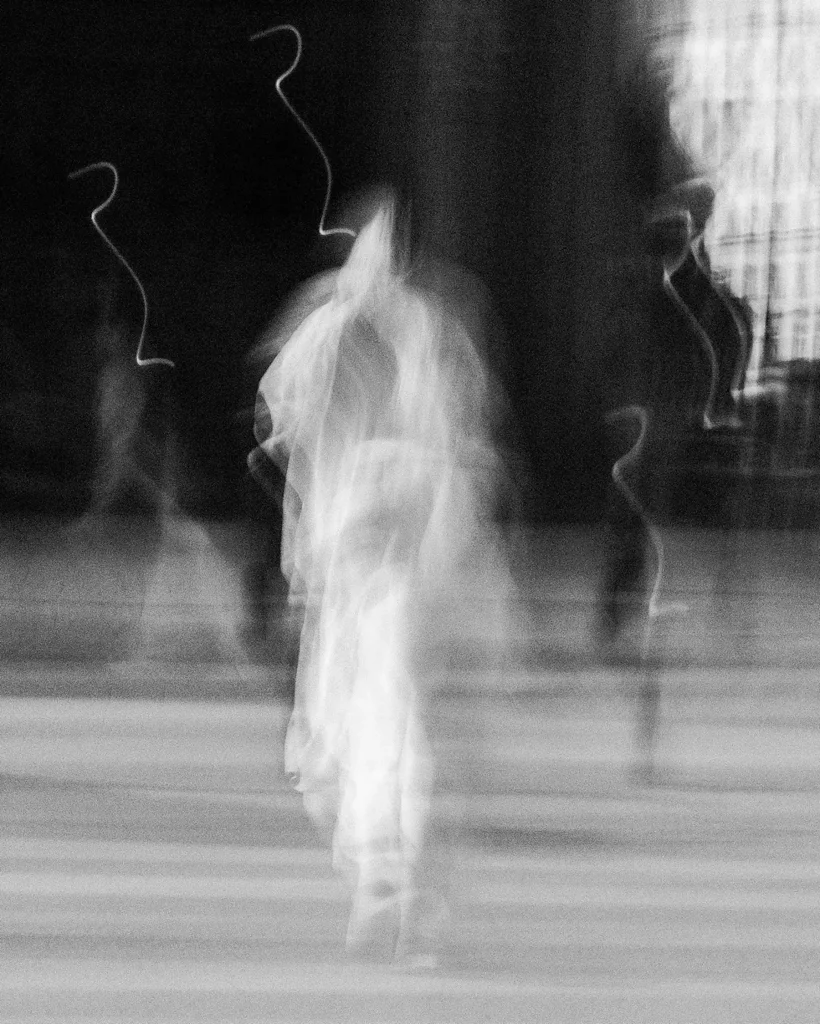
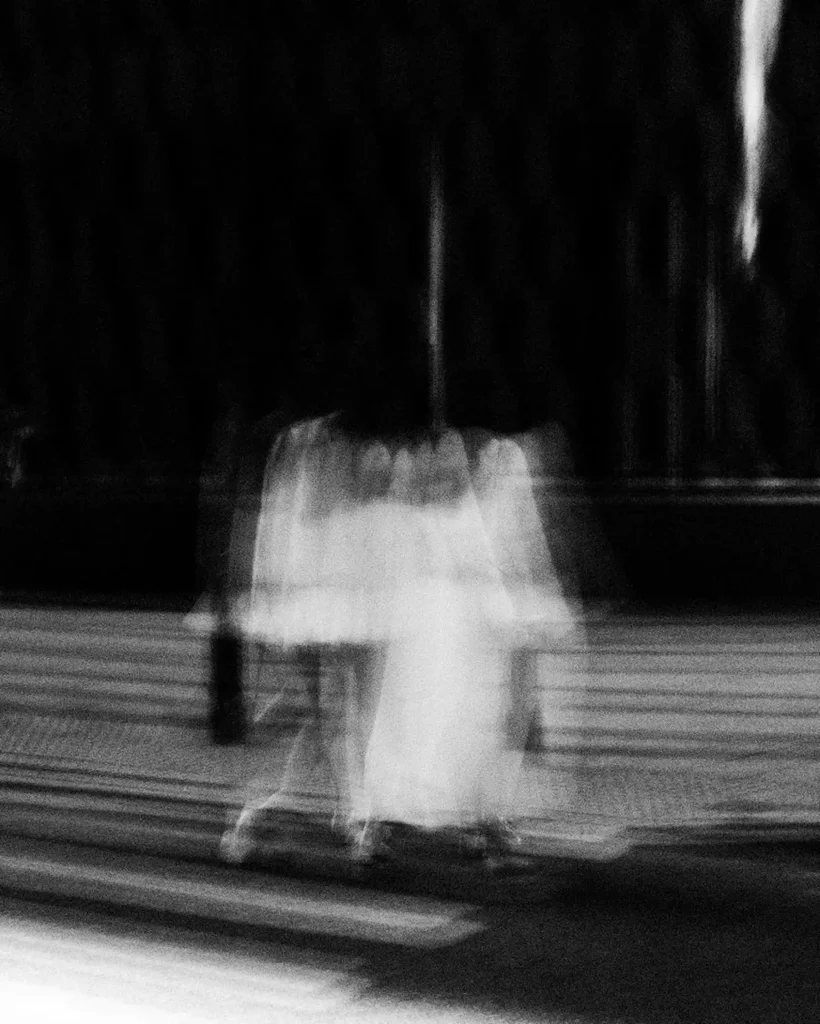
Rafał Wysocki is a multidisciplinary photographer driven by spontaneity and abstraction. His work explores the interplay of movement, light, and form in both natural and human-made environments—using techniques like cyanotype to craft new visual narratives. Embracing the unexpected, he incorporates surprise and error within his practice. Rafal aims to evoke a sense of mystery and emotion, inviting viewers to find their own meaning within his work.
Meet the Artist
Can you give us an introduction to yourself and your practice?
I studied industrial design at the Academy of Fine Arts in Kraków. I wanted to connect two worlds: art and function. When you create something useful, you also give it an artistic aspect. I thought about focusing solely on art instead of trying to create something useful, because art gives you more freedom. When you do design, it can bring a lot of joy, but you have to follow some rules.
And how did you get into photography?
I used photography as an extension of my vision, looking for images that could inspire my drawing and painting. I never delved deeply into photography because I saw it as a tool to capture images. Later, I started to view the camera as something that can transfer your vision from reality to your computer, where you can see it later. That made me realize I could be a creator, which led me to explore photography more deeply. For me, it was a long journey from trying to preserve moments to creating images through photography.
And how long do you work with photography?
It’s not that long. For a long time I have been taking photographs, but the conceptual part came just a few years ago.
What fascinates you about photography right now? What are you trying to achieve with your work?
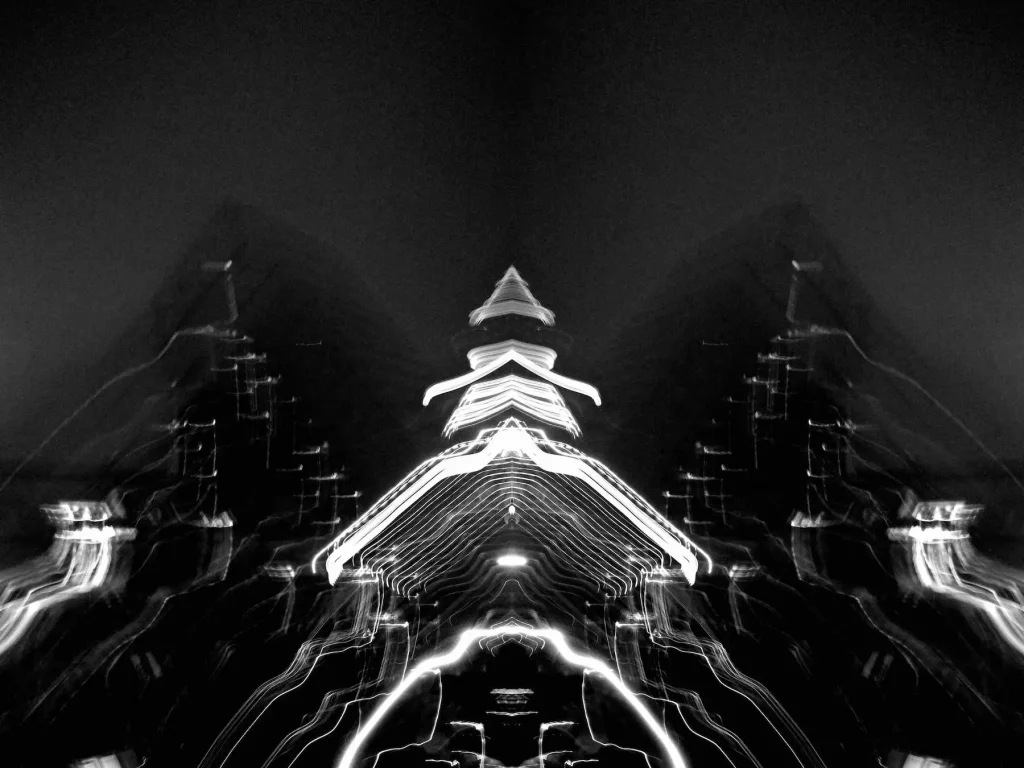
I think that’s a good question. I believe you can capture a part of what surrounds you and convey a feeling of the moment. I was doing night photography in Warsaw with a small camera, just walking and taking photographs. I combined some of these photos, reflecting and attaching them to each other, which created strange figures and light objects. It was about finding unexpected images in things we pass by without noticing. I also took some photographs of people with a bit of movement. This comes from the idea that I’m not capturing the exact moment; I’m creating it. I try to make the faces in my photographs more universal rather than personal. So, that’s what I was doing in Warsaw. At the same time, I was exploring other photography projects and didn’t limit myself to just night photography.
Can you tell a bit more about your experience here in Berlin so far? Does the city affect your work?
The idea behind choosing Berlin was that it’s close to Poland and Warsaw, yet very different. It’s not far away, but it offers a completely new experience. Berlin is much larger in scale than Warsaw. When you move around Warsaw or its surroundings, you start seeing the same things over time. I believe, as a photographer or artist, you need to explore different places and experience moments of surprise. Even if things change in the place you see every day, you tend to stop noticing them.
I felt like I needed to leave Warsaw for a while because I had been there for too long. Berlin seemed like the best option for me because this was a good opportunity to experience something new without going too far. At the same time, I didn’t know what to expect, which made it exciting. Even if we think something doesn’t influence us, it still does, because we take in images and they start working inside us. I see Berlin as some kind of puzzle to be solved. When you go out, it might be the worst time for photography if you’re looking for light, but it’s also a challenge. I think you can confront this challenge and create something out of it.
And how’s your experience living in the residency with other artists?
It’s different because, at home, I’m surrounded by people I know, and I divide my time between work and projects. Here, it’s all about focusing on the project. It’s a great experience to see how far I can go with it. I also appreciate the communication with other artists here; it’s an important part of the experience.
Who are some of your favourite artists or artists who have influenced your work?
Maybe David Lynch. He passed away recently. To me, he’s an inspiration as an artist. I see him as a visual artist, and what I like about his work is that it doesn’t matter if he’s painting, writing, or directing—his art is coherent. I think it’s about the possibility of expressing yourself without being limited to one medium. That’s what I like about his art. It’s not just about the camera; you can expand beyond it. You are not limited to your camera. And it’s not your God. People think, “Oh, this is my tool,” but you can expand beyond it. I see that in David Lynch’s work.
I am a multidisciplinary photographer driven by spontaneity and abstraction. My work explores the interplay of movement, light, and form—in both natural and human-made environments—using techniques like cyanotype to craft new visual narratives. Embracing the unexpected, I incorporate surprise and error within my practice. I aim to evoke a sense of mystery and emotion, inviting viewers to find their own meaning within my work. From long-term projects to daily photographic explorations, I seek to reveal my unique perspective through diverse photographic processes.
My current project, “Art Streams,” documents the vibrant art scene of Berlin, juxtaposing the official art world of galleries with the unsanctioned art of the streets. I explore the interplay between these two spheres, examining how posters, graffiti, and other forms of street art interact with and challenge traditional notions of art. Through photography, video interviews, and process documentation, I create portraits of artists working across diverse mediums, exploring their unique perspectives on art’s meaning in their lives and its role in society. My work embraces spontaneity and experimentation, reflecting the dynamic energy of the creative process I am capturing.
CV Summary
I’m Rafał, a multidisciplinary artist whose work spans the intersections of art, design, and therapy. My journey began at the Academy of Fine Arts in Krakow, where I earned a bachelor’s degree in design in 2005. I furthered my studies in visual communication at Bielefeld University in Germany through the Socrates-Erasmus program. My professional career unfolded with roles at design studios in Warsaw, and I recently completed postgraduate studies in art therapy. These diverse experiences inform my creative practice, where I utilise photography, cyanotype, linocut, and painting to explore a wide range of artistic expressions.
Recent Exhibitions
Gallery Nowe Miejsce, Warsaw 10.24 Abstract City Landscape
Gallery Wschodnia, Warsaw 9.24, Street photography