Archives: Artists

  • Marios Stamatis

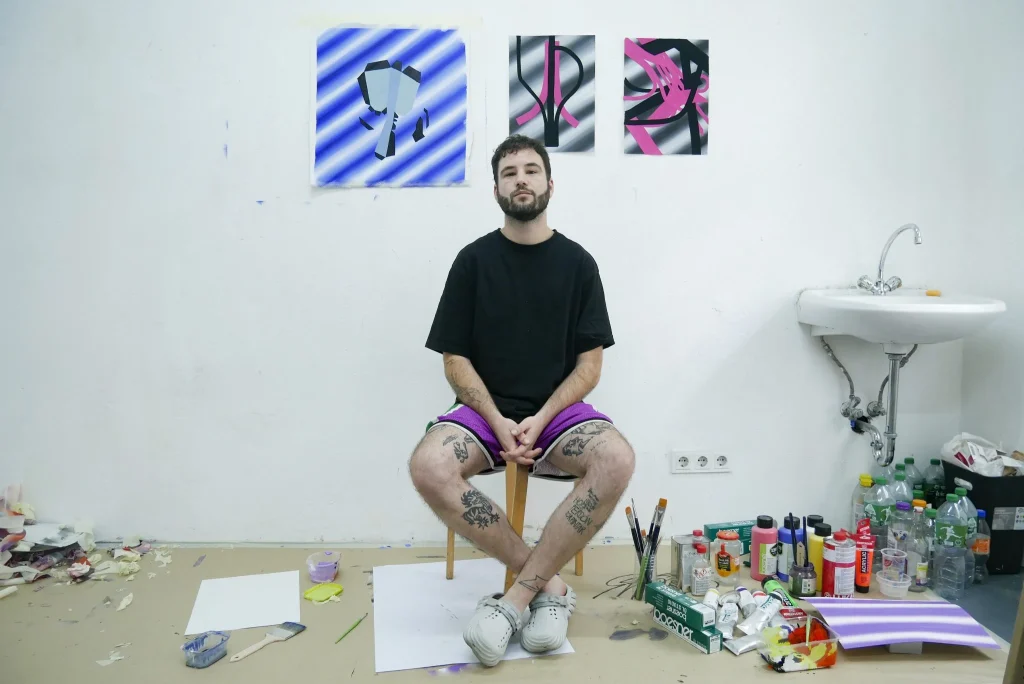
    Marios Stamatis

    Marios Stamatis is GlogauAIR resident
    from July, 2024 to September, 2024

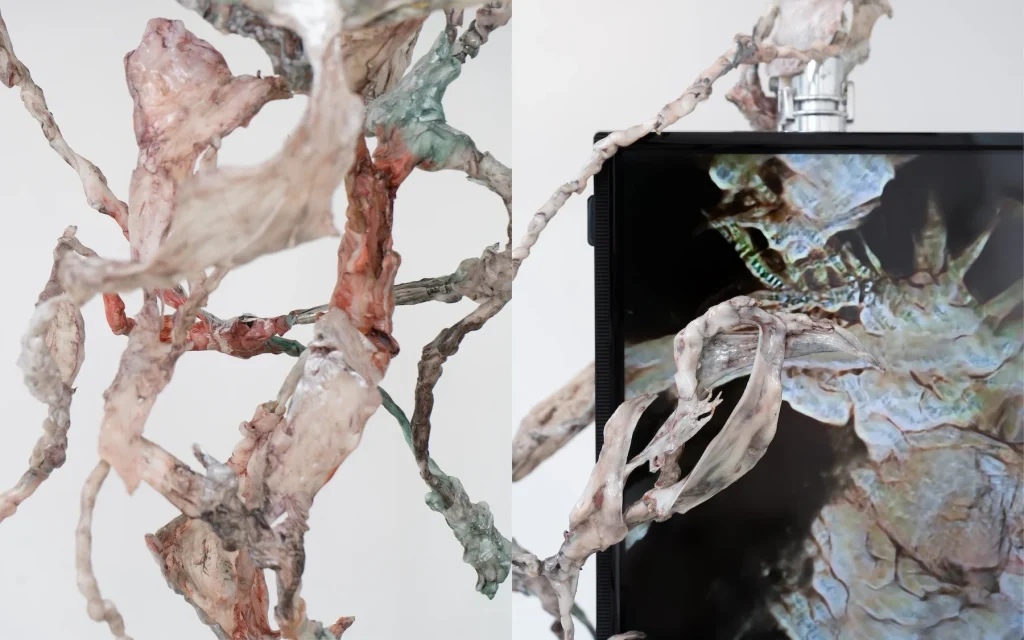
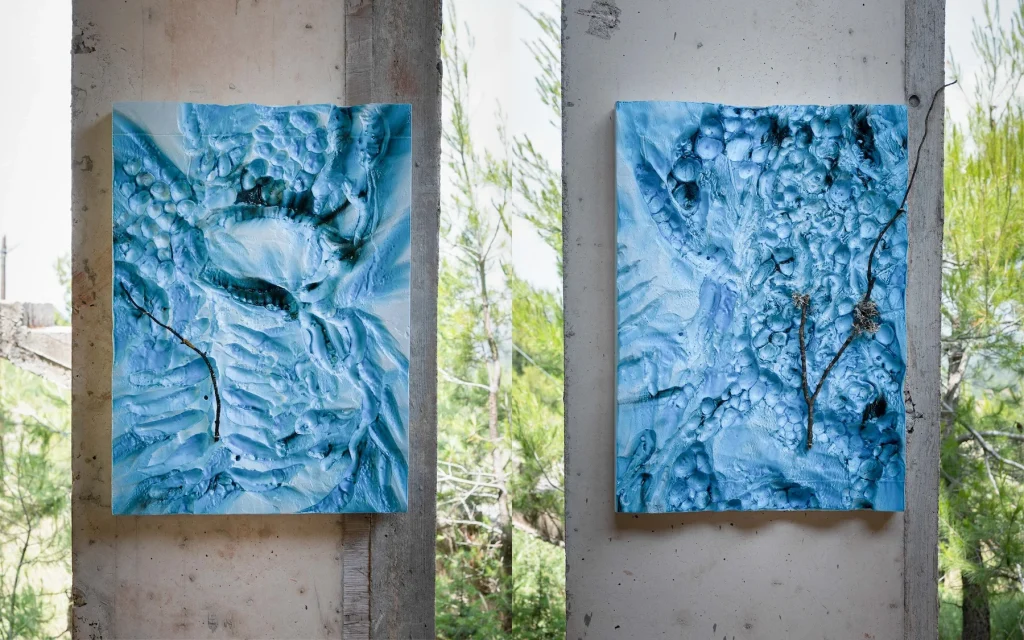
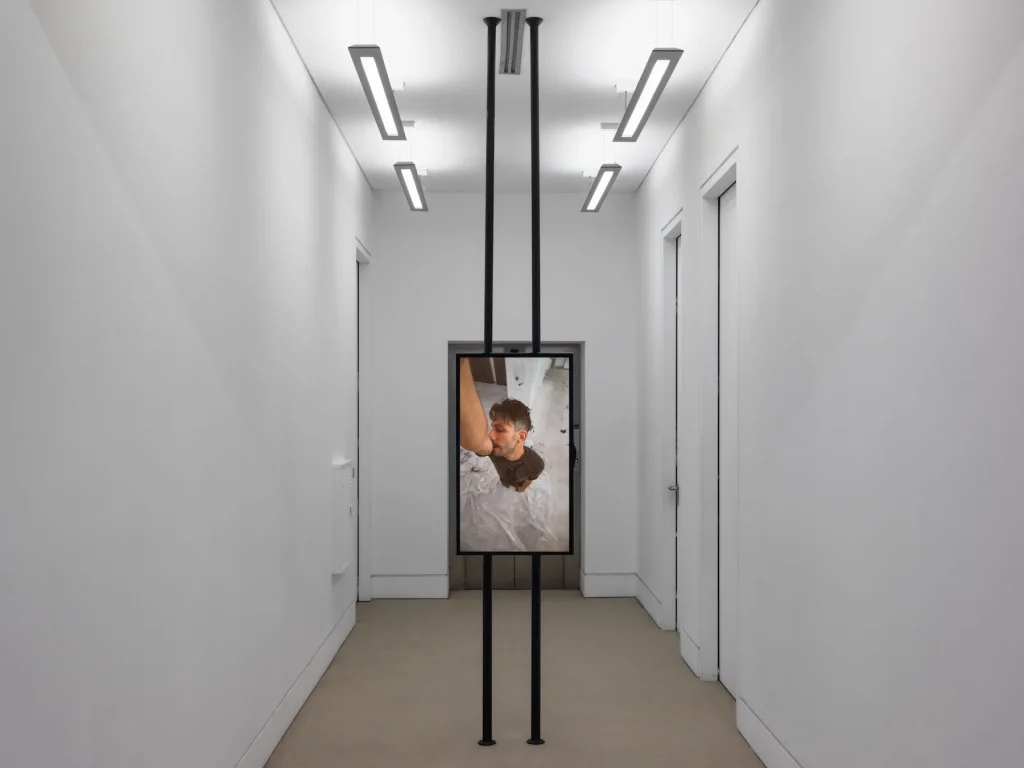
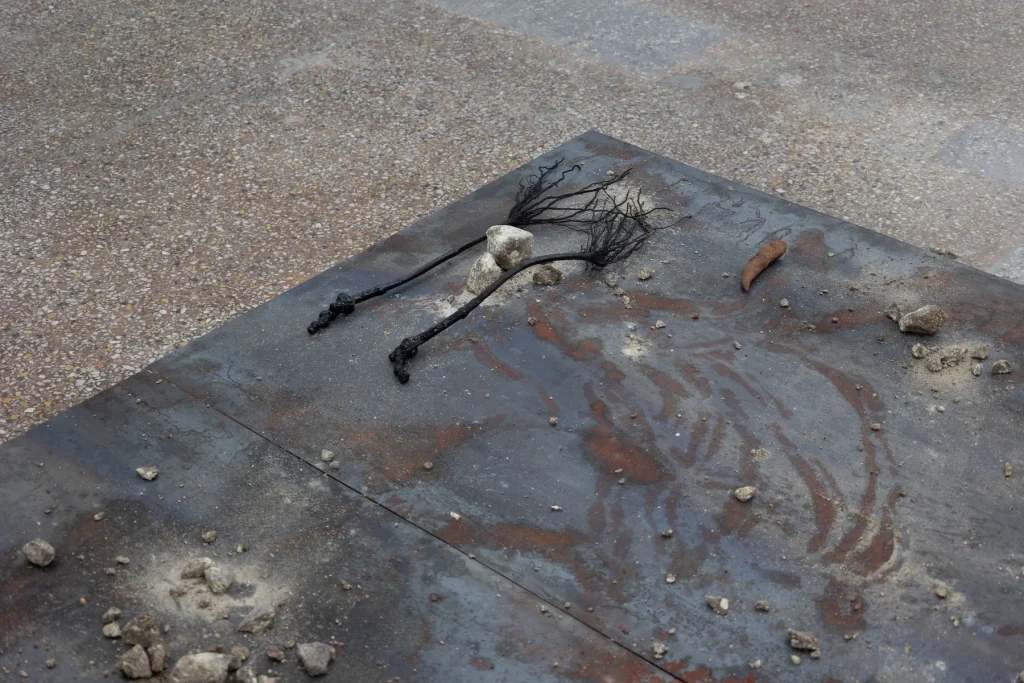
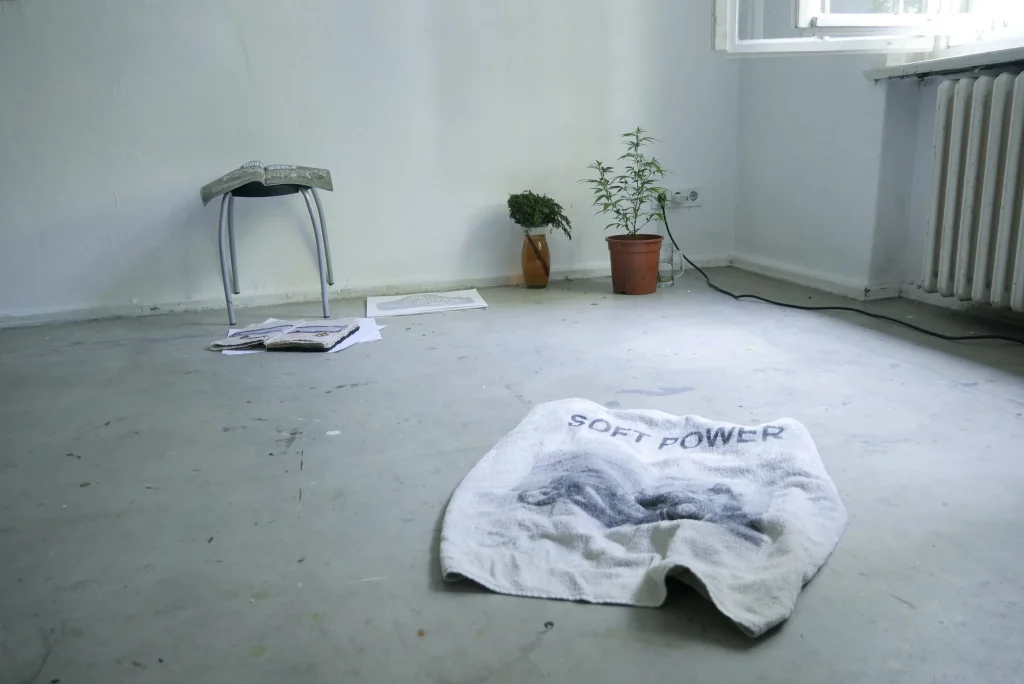
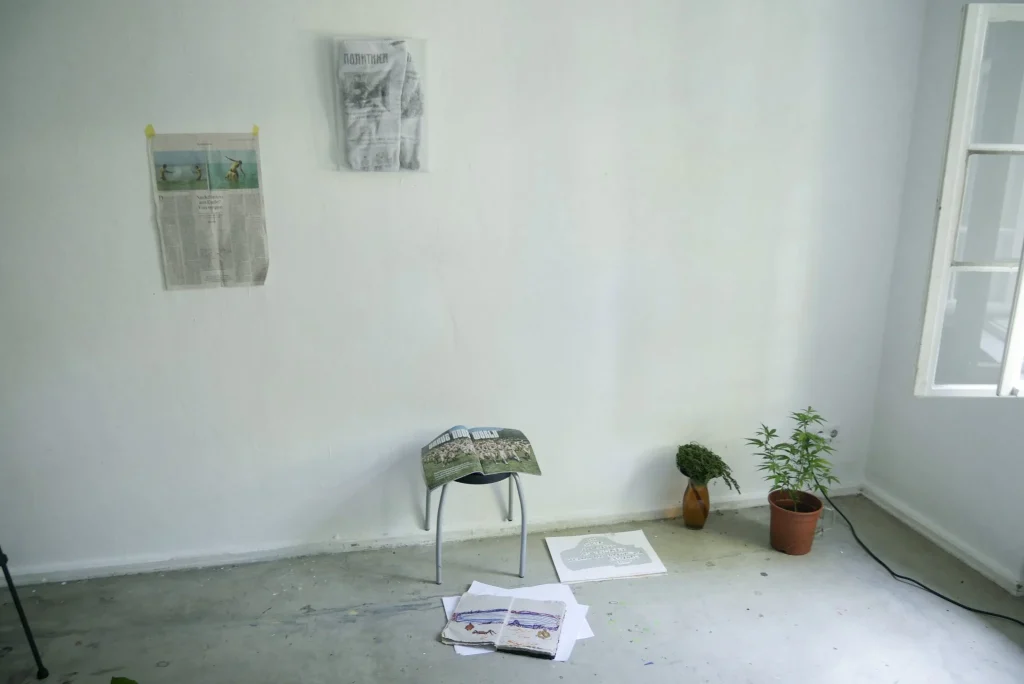
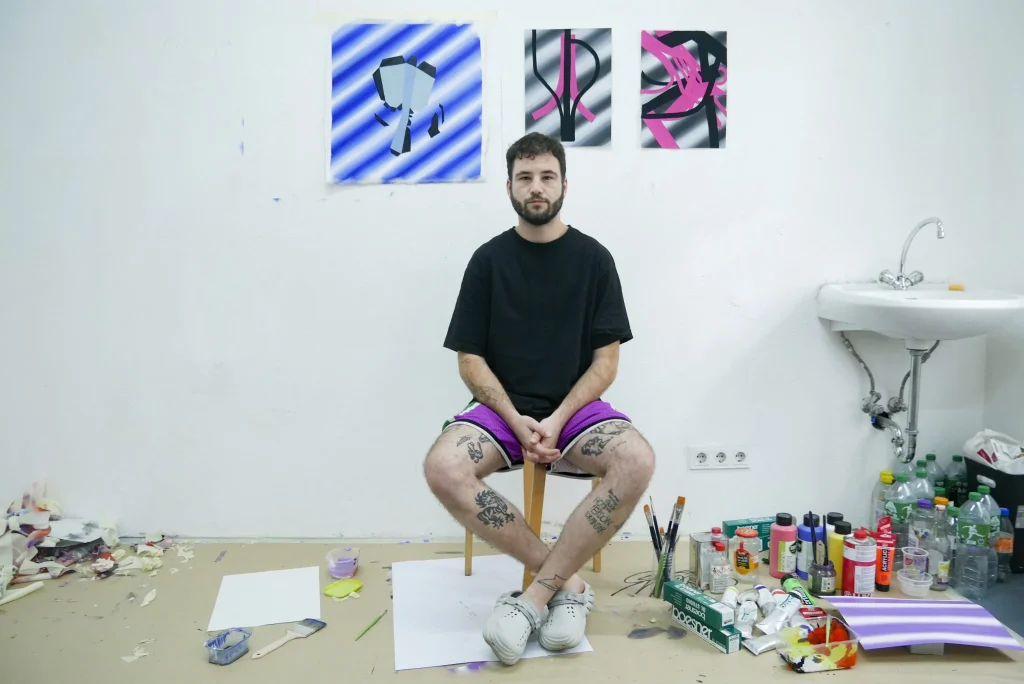
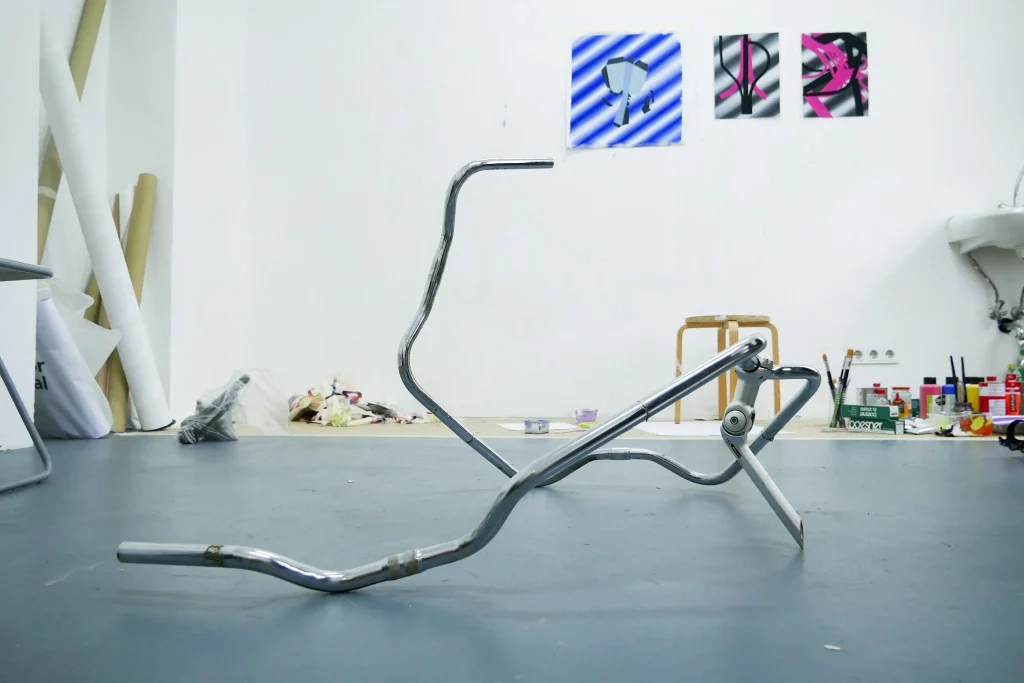
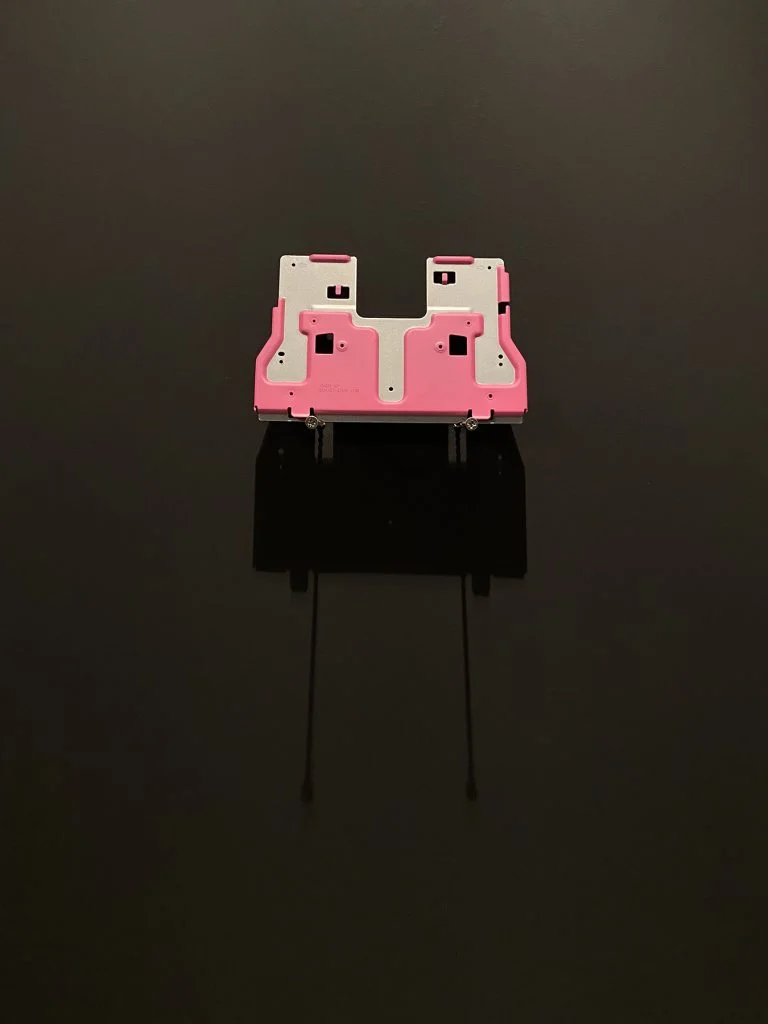
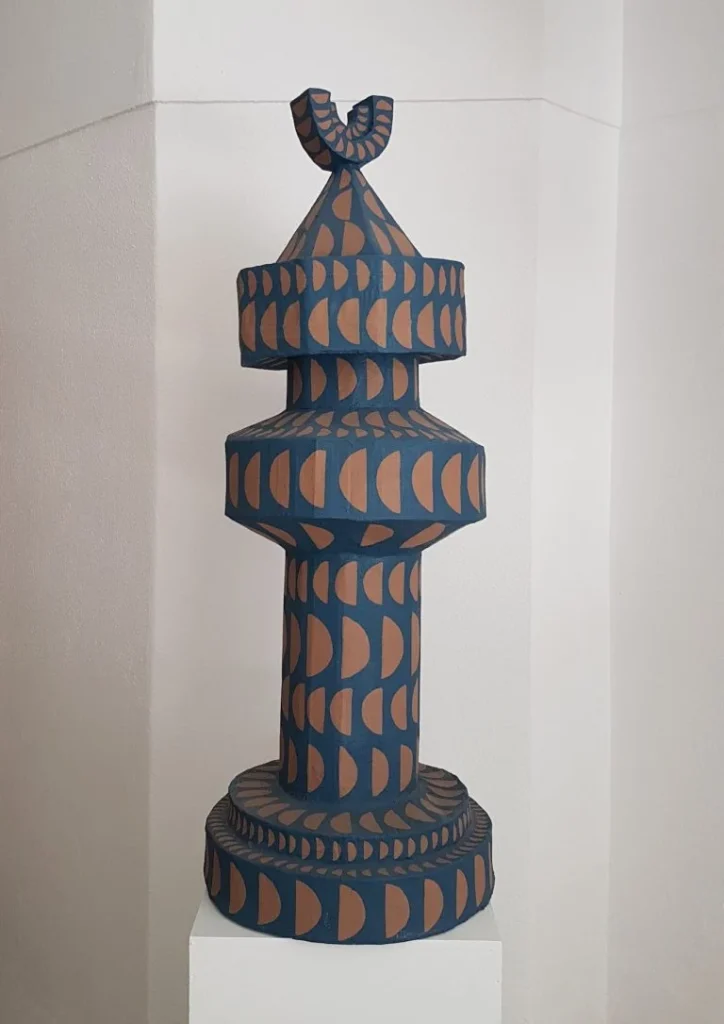
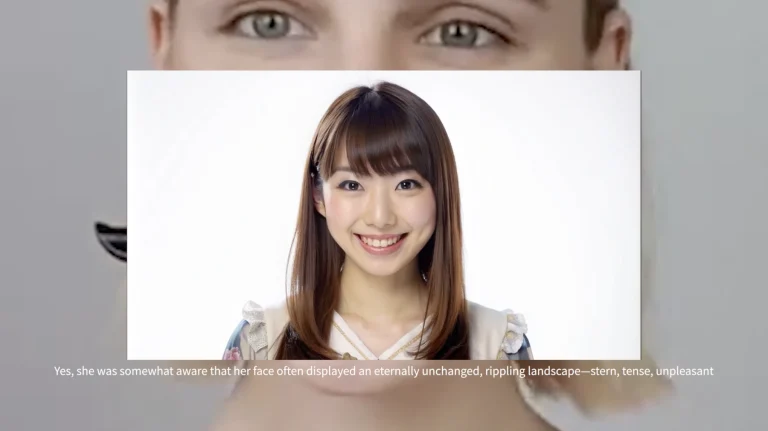
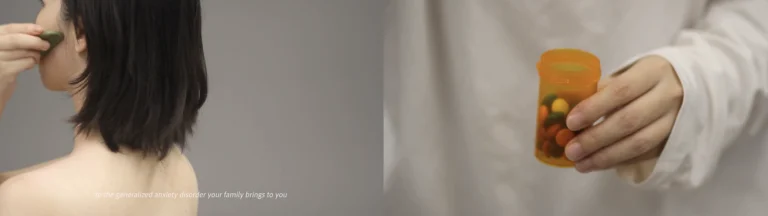
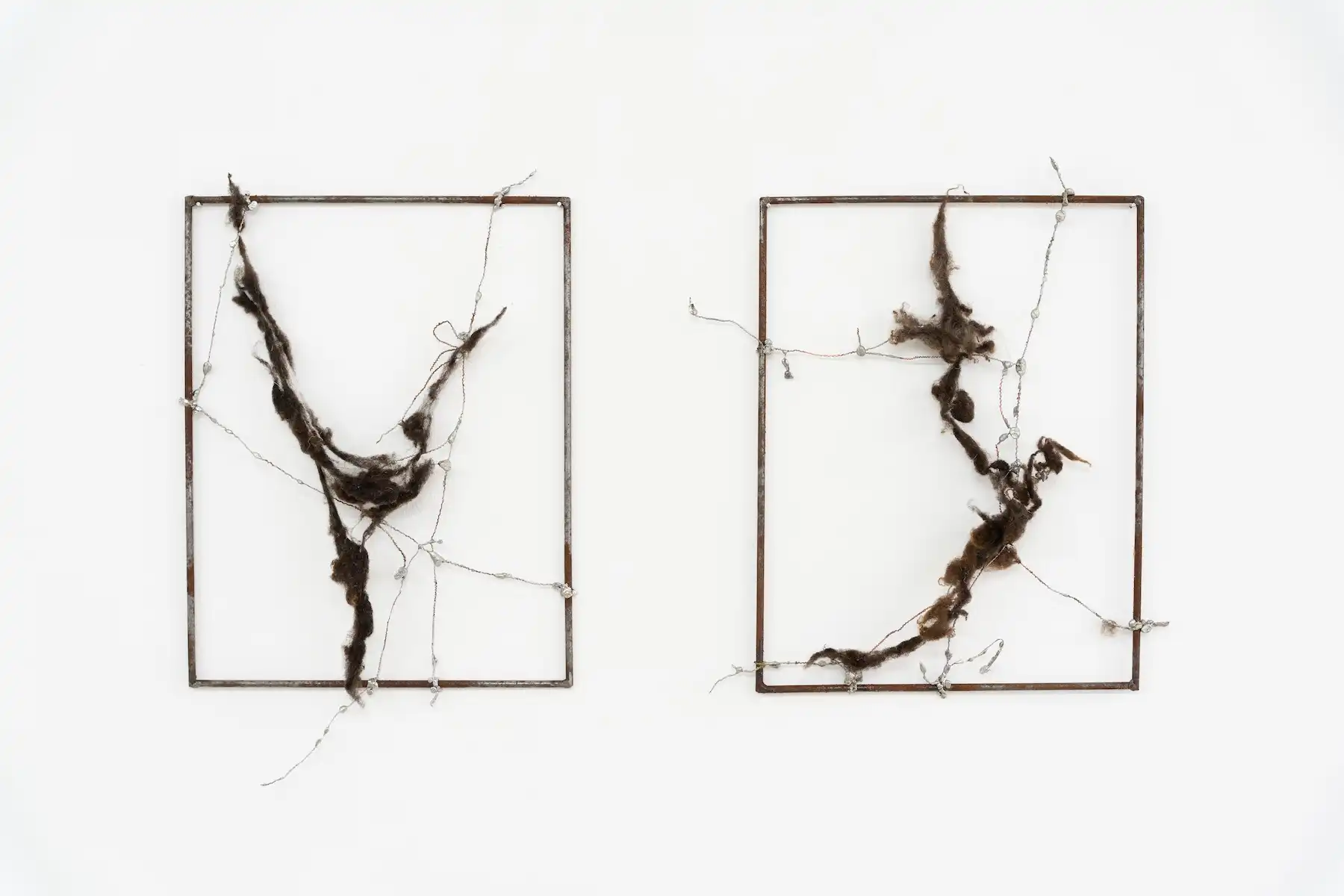
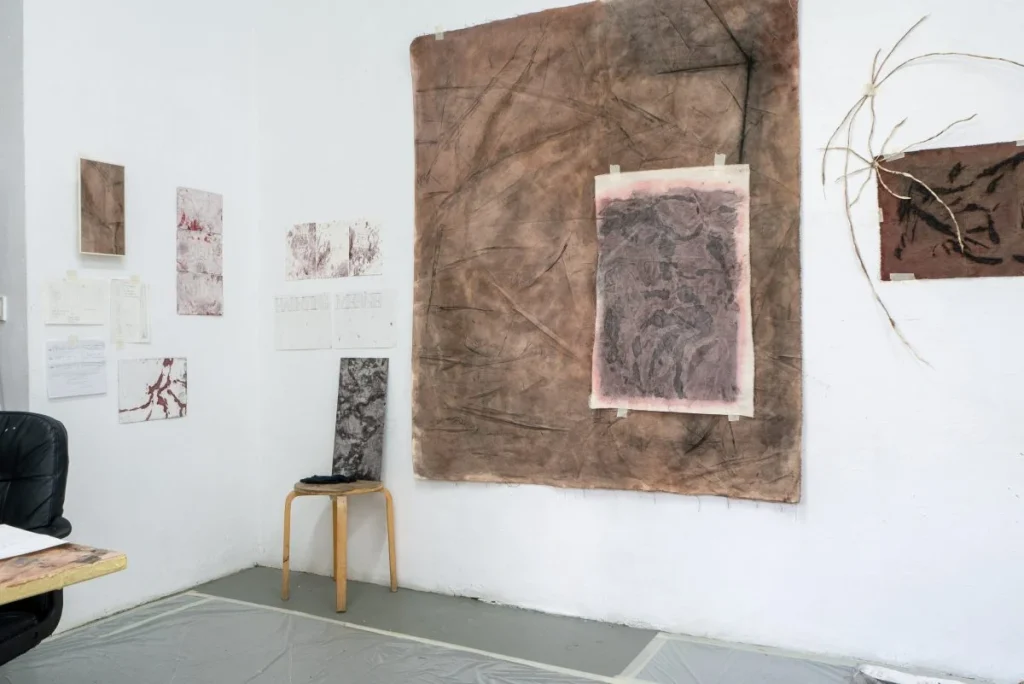
    Marios practice includes sculpture, performance, video, sound, and text. Through decentralised physical and neural fluidity in the form of expression, his work explores the increasing influence and growing impact of new forms of intelligence on the human psyche, intellect, and ultimately the body.

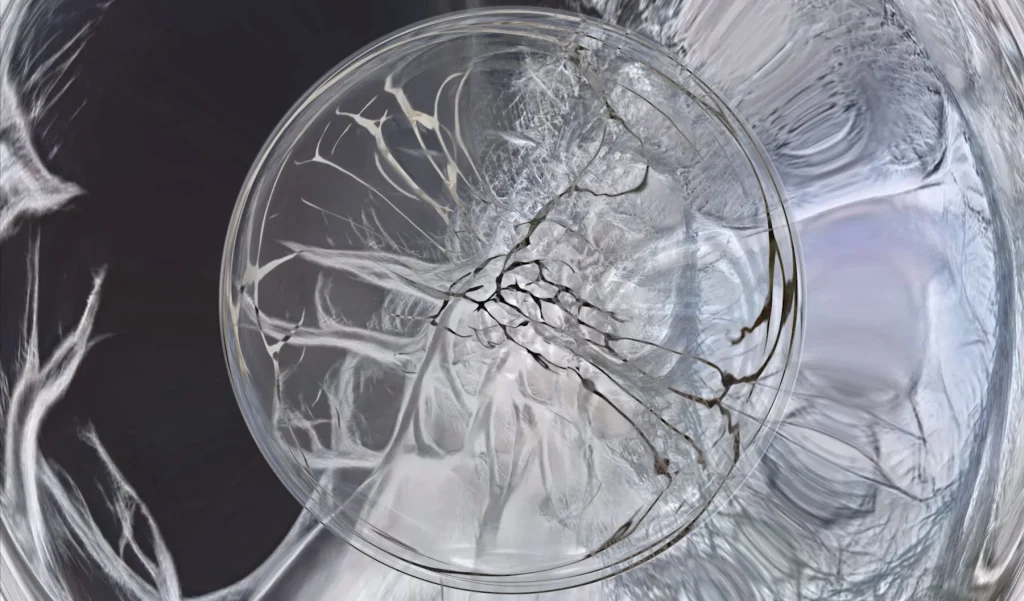
    Drawing inspiration from the fields of anatomy, and algorithmic cognition, this new body of work examines human relationships through technology. The research focuses on notions such as symphysis, hybridism/mutation, parasitism/vampirism, becoming and togetherness.

    Meet the Artist

    Can you give us an introduction about yourself and your practice?

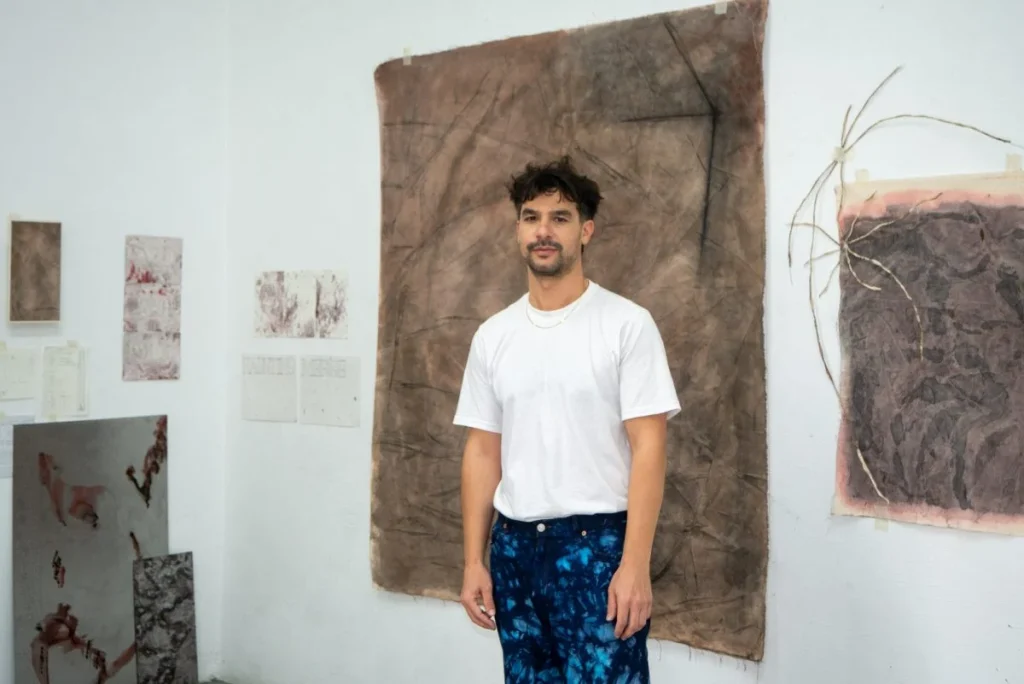
    My name is Marios Stamatis. I am an artist, educator, and designer currently based in Athens, Greece. Previously, I lived in London, where I studied, lived, and worked for a decade. I pursued my education at Camberwell College of Arts and Goldsmiths University, where I completed my MFA.
    My research delves into techno-social entanglements, particularly focusing on the relationship between humans, nature, and artificial intelligence. I explore how new technologies influence our lives, shape the way we communicate, and affect our interactions with the environment. Additionally, I explore how these evolving relationships influence our political landscape and reality – how they impact our sense of togetherness, as well as the stress, fatigue, and awkwardness this friction imposes on our bodies.

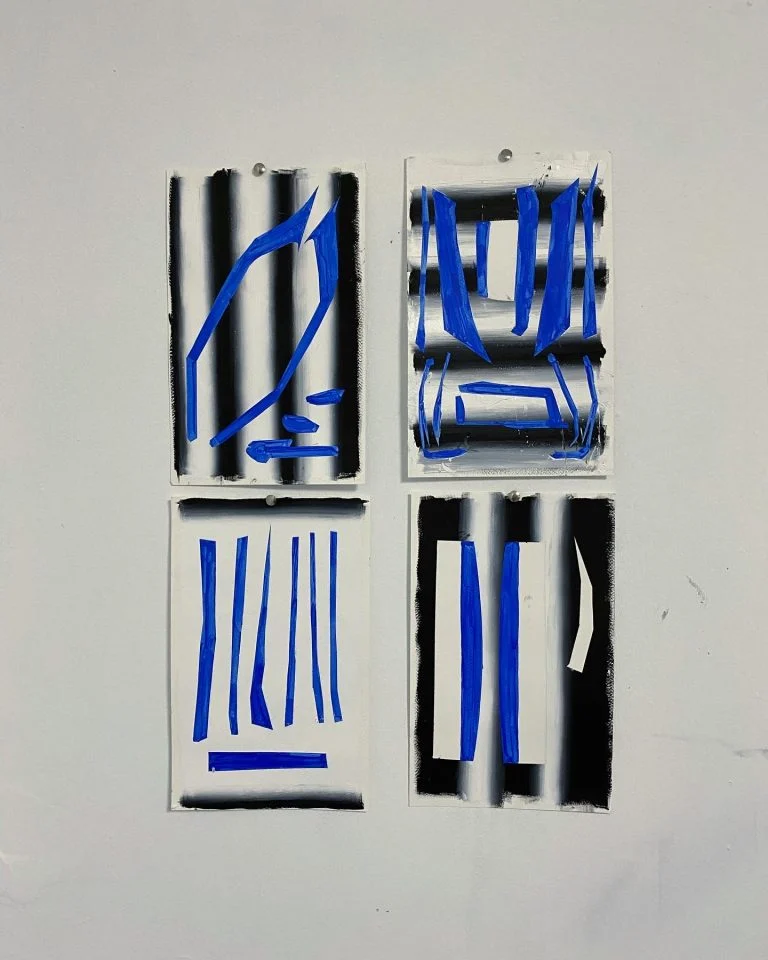
    In practical terms, my work raises questions about how AI changes the way we perceive, understand, and represent ourselves. My practice primarily encompasses sculpture, performance, video, and drawing. I am particularly captivated by abstraction and enjoy experimenting with various techniques that push the boundaries of each medium’s conventional notions.

    Tell us more about your fascination with potential singularity, revolving around artificial intelligence?

    I like to think of it as a new form of dualism. On one hand, we have technology as an external instrument, and on the other, we have the human body and mind. The hypothesis of technological singularity suggests a future point in time where artificial and machine intelligence could surpass human intelligence and capabilities, leading to uncontrollable and irreversible technological growth.

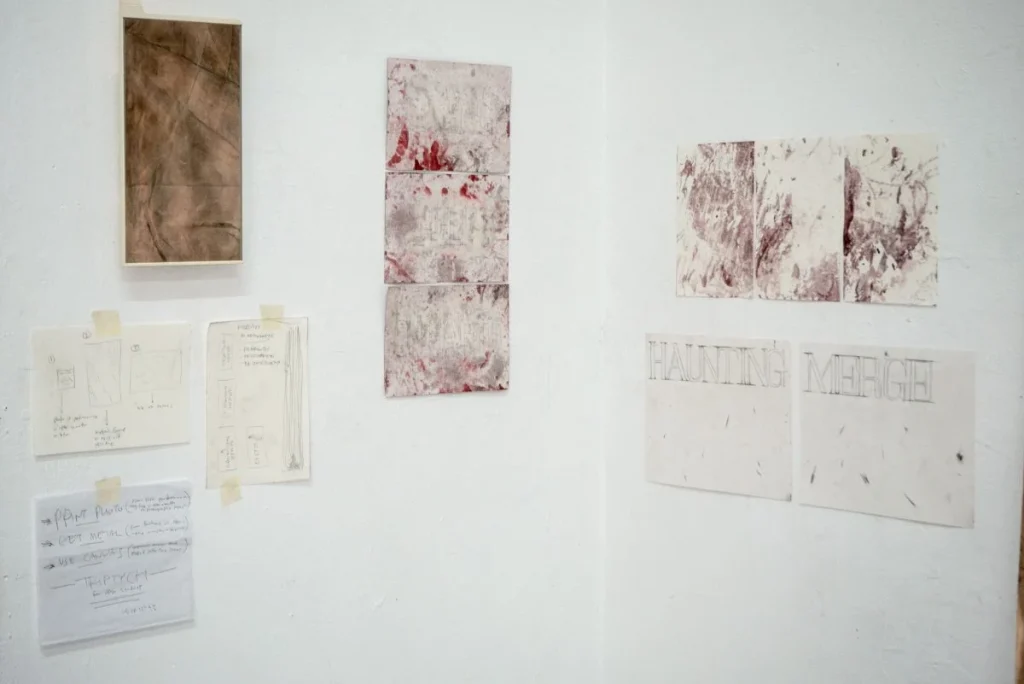
    However, before reaching that point, I believe there needs to be a complete merge of the two—what I describe as a haunting merge of artificial intelligence with the human body and mind. This hypothesis demands that we reorient ourselves within this new socio-political regime, as new forms of intelligence emerge and become integrated into our daily lives and activities.

    This integration affects how we communicate and interact with one another, how we engage with our environments, how we think, consume, fall in love, and build relationships. This haunting merge fosters prolonged associations between contrasting elements like desire and detachment, connection and isolation, vitality and mortality, ambiguity and certainty. In essence, this external force—technology and new forms of intelligence—becomes a catalyst for deep inward human reflection.
    Who are some artists which have greatly influenced your artistic journey?

    I find that I’m more influenced and inspired by my peers—my friends, colleagues, and contemporaries. Our discussions and interactions inspire me, especially the way they approach their work, their methodologies, and how they generate new ideas and ways of thinking. So, I would say that my friends and peers are a significant source of inspiration.

    Generally, I don’t draw inspiration from art or other artists when I’m creating or thinking about art. Instead, I’m inspired by ideas—mundane, everyday notions or things, like time, for example. Currently, I’m particularly inspired by the concept of time and synchronicity, especially in the context of techno-capitalism. I’m intrigued by how new forms of intelligence influence our perception and understanding of time, and how they shape our ideas of productivity within this context.

    In terms of art, I’m more drawn to experiential and immersive works. Moments that evoke strong emotional reactions in me often come from experiencing dance or performances. Social interactions also have a profound emotional impact on me.

    One particularly inspiring moment for me recently was watching an interview with the Greek artist Yiannis Kounelis. While I’m interested in his art, it was the poetic way he spoke about his art, language, and personal experiences in the interview that deeply resonated with me. 
    What is your relationship with the art world and the art market? What do you think about it?

    Given that I often work with non-tangible media, such as performance and video, it’s challenging to sell work that isn’t a physical object. This has shaped my relationship with the art market. While I create both non-tangible works as well as sculptures and drawings which could be more marketable more often, I don’t feel a strong connection to the traditional art market. 

    Interestingly, I’ll be showing work at an art fair, Art Athina, in September, which places my practice within that context. For this show I’m doing a performance, and it’s intriguing to consider what a performance can mean in the setting of an art fair or within the art market. In previous performances in collaboration with artist Lea Collet, we explored the relationship between the art market and performative work, which isn’t easily sold or physically grasped. We experimented with ideas like offering a rolling contract for a performance, similar to a subscription service, as a way to navigate this challenge. This approach treats art more like a service than a commodity, extending its value over time.

    How are you finding GlogauAIR as a resident? How is it living with other artists?

    This experience relates to my earlier point about getting inspired by social interactions. I find inspiration primarily from people, and my time here has been centred around meeting great, inspiring individuals. I truly enjoy living with these inspiring people and picking their brains—it’s an amazing experience, not only engaging with their minds but also learning from their experiences and what they bring with them.

    I’m very interested in exchanging personal experiences, ideas, methodologies, and ways of thinking. My experience here has been focused on that exchange. I’ve met some amazing fellow artists, and the staff at GlogauAIR is fantastic—extremely generous, which is something I highly value in life.

    I feel fortunate to be in the same space and to share time with generous people. I’m happy to be part of this feedback-based ecosystem.

    How are you finding Berlin, how is it influencing your practice?

    Berlin is an interesting city. My experience here has been quite unique. Similar to other major cities I’ve lived in—more like Athens than London—Berlin has become a tourist mecca. This isn’t necessarily a problem with Berlin or its residents, but rather with how these cities have become such significant tourist attractions.

    It can feel a bit disorienting, as though the city lacks a certain local personality. I’m not referring to a national or cultural identity, but rather to a distinct local vibe. Berlin does have its own vibe, which is what I appreciate. I enjoy the fact that it’s incredibly vibrant, with people from so many different backgrounds living here and exchanging ideas. This diversity is something I truly value.

    However, the tourist aspect is something I’m not particularly fond of, though it’s difficult to avoid. This seems to be the case across much of Europe at the moment. My main question is how to survive in a city that has become such a popular destination, especially one that attracts people for its alternative or underground culture, which has now become more mainstream. It feels like we’ve come full circle in that regard –merged in a way.

    What plans do you have after the residency?

    I’ll be returning to teaching in September, something which I look forward to. Art-wise, I’ll be participating in the Art Athina art fair in Athens, curated by Nicolas Vamvouklis. I’ll be working with Callirrhöe gallery and will perform a piece with dancer-performer Yiannis Tsigris.

    That’s what’s happening immediately after the residency. However, the GlogauAIR showcase sparked some new ideas for a project that I’m really excited about. I’m envisioning it as a three-part project. The GlogauAIR showcase served as a trailer, a one-minute video preview of what’s to come. The next two parts will likely involve a longer video, possibly a three-channel setup, along with a live performance happening simultaneously. I’m thrilled about this direction, and the theme will continue from the showcase.

    There are a couple of exciting group shows scheduled, with an exhibition later this year curated by Dimitrios Trikas and early next year with the Office of Hydrocommons in collaboration with ATOPOS CVC curated by Eleni Riga.

    In May, I’ll be in Athens for the Onassis AiR. I’m really looking forward to this two-month residency, where I’ll continue developing and expanding the ideas and themes I’ve been working on. It’s something I’m really excited about.

    Statement

    Marios Stamatis is an Athens-based artist, designer, and educator. His practice includes sculpture, performance, video, sound, and text. Through decentralised physical and neural fluidity in the form of expression, his work explores the increasing influence and growing impact of new forms of intelligence on the human psyche, intellect, and ultimately the body. By embracing the interconnections between organic and non-organic life, affect becomes the catalyst for reimagining these transformative co-existences.

    He holds an MFA in Fine Art from Goldsmiths University of London, and was awarded the Stavros Niarchos Foundation Artist Fellowship ARTWORKS 2022. He has participated in various artist residency programmes such as Villa Bergerie, and has presented his work in galleries and institutions internationally. He has worked collaboratively as an artist duo with artist Lea Collet. Currently, he teaches at the Frances Rich School of Fine and Performing Arts.

    GlogauAIR Project

    Midcore

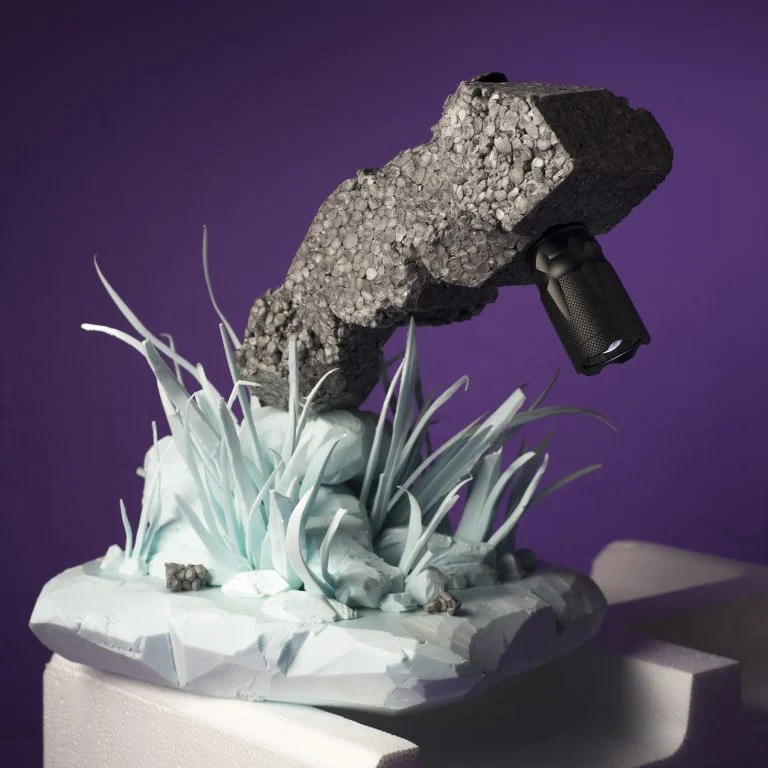
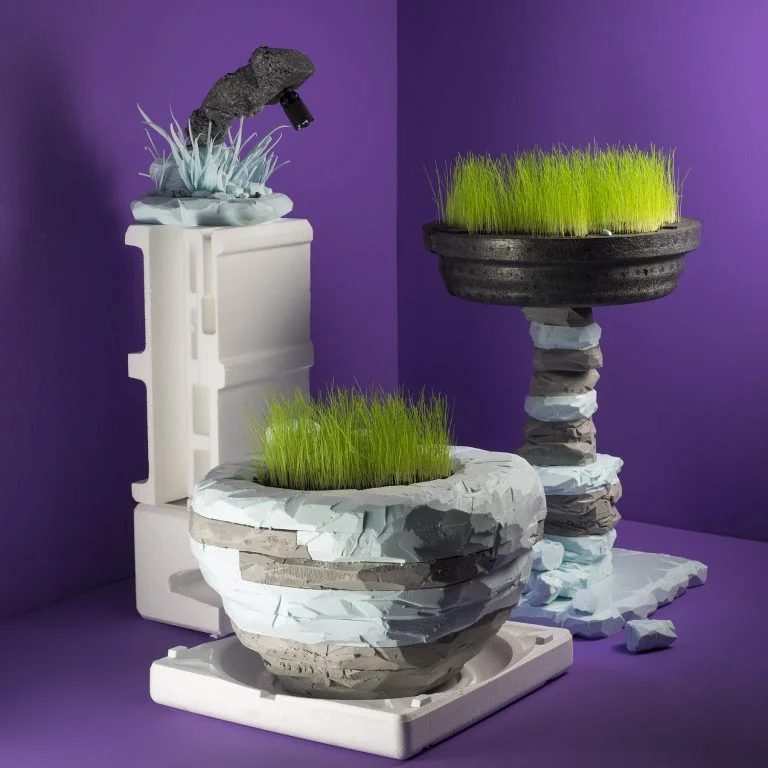
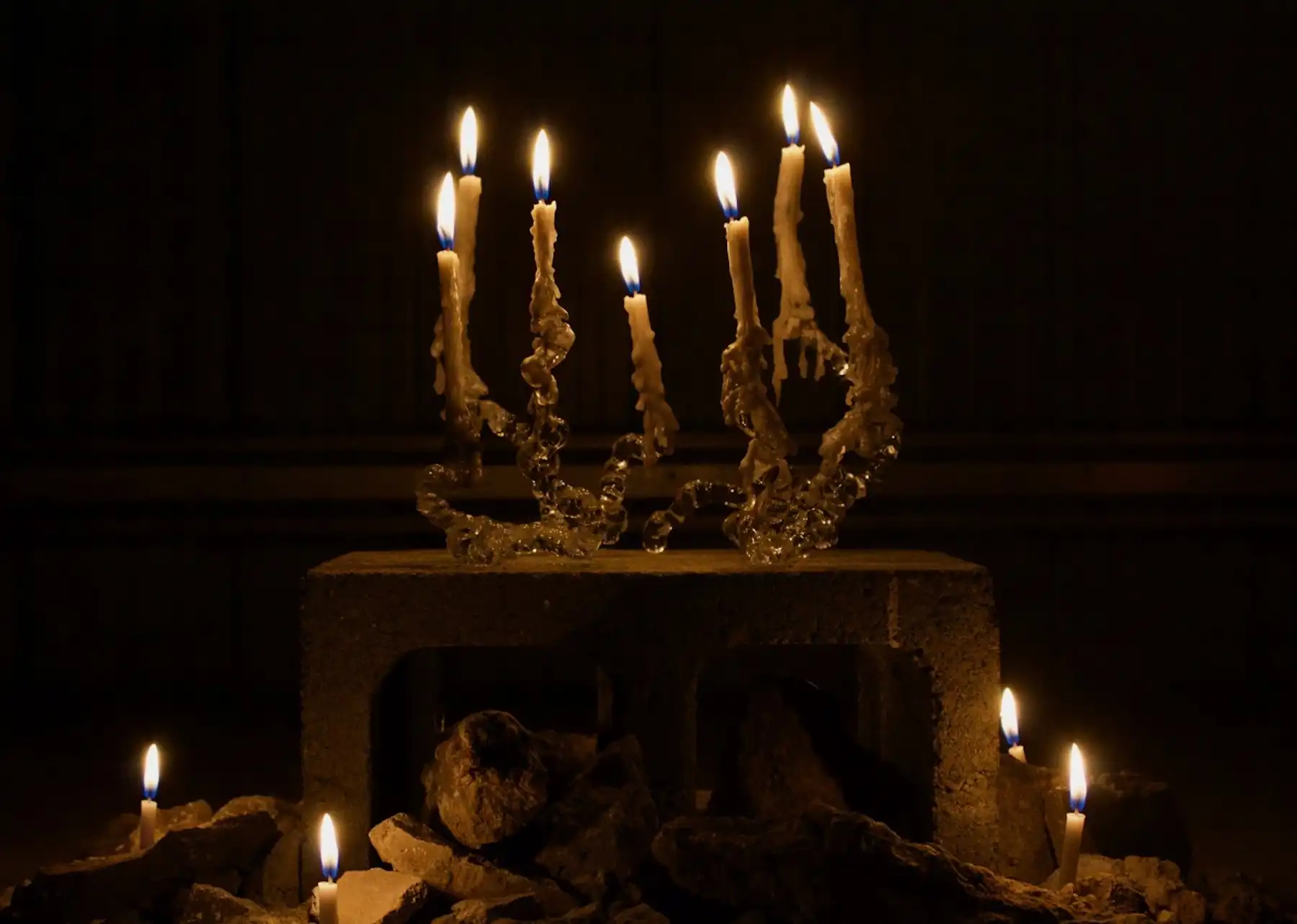
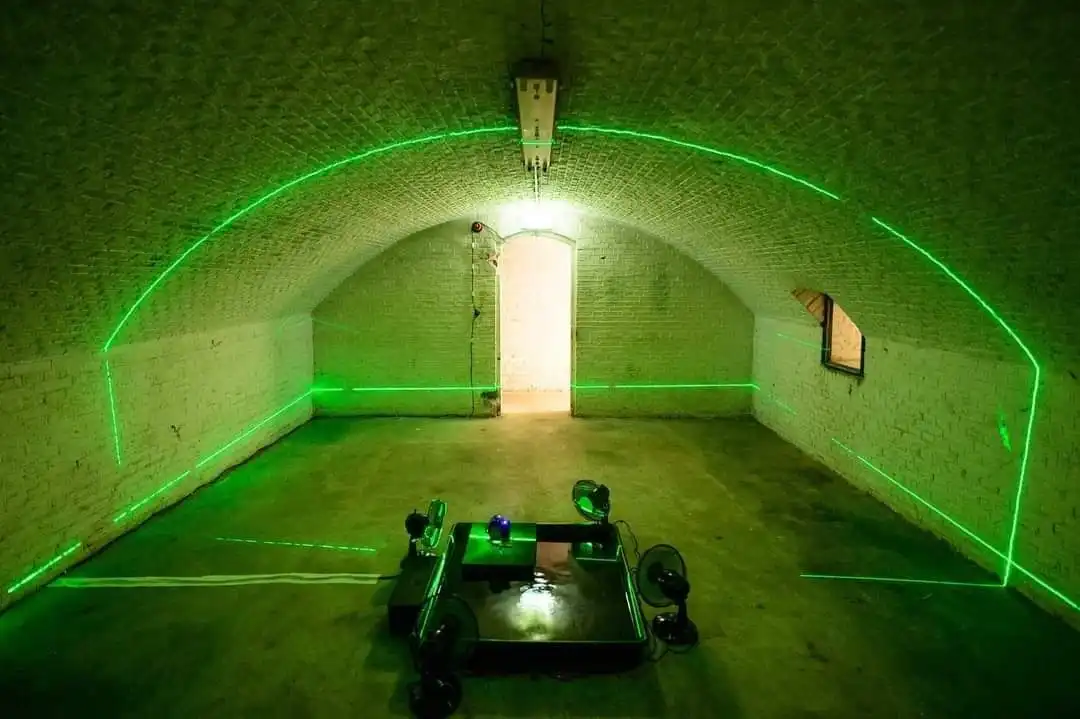
    Drawing inspiration from the fields of anatomy, and algorithmic cognition, this new body of work examines human relationships through technology. The research focuses on notions such as symphysis, hybridism/mutation, parasitism/vampirism, becoming and togetherness. Additionally, future discourse on the potential singularity* will round out this set of references, examining the dynamic tension between humans and artificial intelligence. This new work consists of an installation (sculptures, objects and sound). It addresses the contemporary phenomenon of midness reflecting our current environment by highlighting physical fatigue associated with media saturation and the accompanying sense of unease and awkwardness.

    * typically refers to a hypothetical future point in time when artificial intelligence and machine intelligence could surpass human intelligence and capabilities.

    CV Summary

    Solo & two-artist Exhibitions & Performances

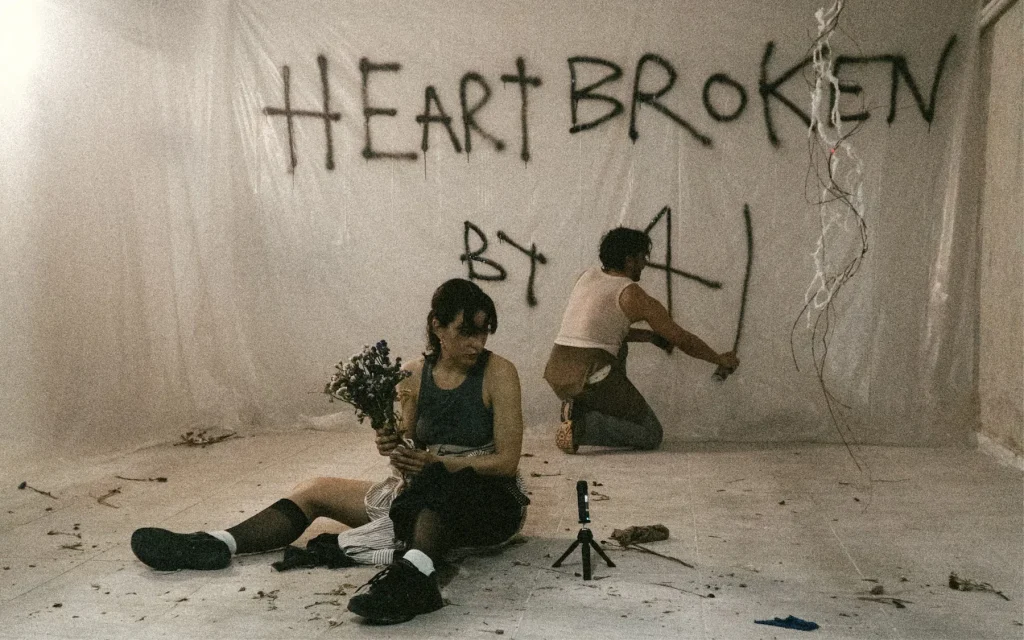
    • 2023 Heartbroken by AI, ARTWORKS, Athens, GR
    • 2021 Tactile Ghost, cur. Elina Axioti, Castle, Antiparos, GR
    • 2018 SLOW FADE, cur. Felice Moramarco and Sayori Radda, Gossamer Fog, London, UK
    • 2018 Soft Anonymity, Goldsmiths, London, UK
    • 2017 Scenarios of the Pool, cur. Natalija Paunić, Peckham Experiment, London, UK
    • 2017 How Deep is your Love?, cur. Rebecca Sainsot-Reynold, Tower Hamlets Cemetery Park, London, UK
    • 2016 I am eager to see how you look on the outside, commissioned by Nathalie Boobis and Insa Langhorst

    Selected Exhibitions & Performances

    • 2024 Whispers, cur. Stella Christofi, Niokastro Pilos, GR
    • 2024 And All Our World is Dew, cur. Eva Vaslamatzi, ACG Collection, Athens, GR
    • 2024 Hell Remains, cur. Arepo, Haus N Athen, Athens, GR
    • 2024 Shifting, cur. Florent Frizet, One Minute Space, Athens, GR
    • 2023 UNBOXING CALLAS, cur. ATOPOS CVC, Greek National Opera, Athens, GR
    • 2023 Garden Shed, cur. Jonathan Hammer, Villa Bergerie, Aragon, SP
    • 2022 Tassos Vrettos: The Forest’s Riddle, cur. Nadja Argyropoulou, Nobel Building, Athens, GR
    • 2022 Dirty Laundry, cur. Marian Luft and ION, Keiv, Athens, GR
    • 2022 Collector’s House, cur. David Krnansky, 38.17429042141923, 23.58474316242082, GR
    • 2022 Back to Athens, cur. Ariadne Tzika, Apart, Athens, GR
    • 2022 Up there my eyes were breathing, cur. Frauke Alina Becker, Raus Project, Athens, GR
    • 2021 Art Athina 2021, cur. Konstantinos Lianos, Keiv, Athens, GR
    • 2021 Every Offbeat Step, Every Footprint Left, cur. Matyas Malac, Prisoning Museum, Uničov, CZ
    • 2021 Beyond Nostalgia Hijack, cur. Konstantinos Giotis, CAN Gallery, Athens, GR
    • 2021 PLAGUE SHIP, cur. Proto Gallery System, Mediterranean Sky, Elefsina, GR
    • 2021 Gardening (an indoor activity), cur. Georgia Liapi, Zoumboulakis, Athens, GR
    • 2020 Urban Antibodies, cur. Konstantinos Giotis and Natalia Janula, weekend, Athens, GR
    • 2020 Lovebug, cur. Jinho Lim, Outsight, Seoul, KOR
    • 2020 Please Please me, cur. Vassiliki Plavou, The Symptom Projects, Amfissa, GR
    • 2020 Cra(u)sh, cur. Vassiliki Plavou, Grace, Athens
    • 2019 Most Dismal Swamp, cur. Dane Sunderland, Arebyte, London, UK
    • 2019 Startpoint Prize 2018, cur. Radek Vana, Arti et Amicitiae, Amsterdam, NED
    • 2019 Unstitched Resources, cur. Insa Langhorst, Studio One Oh Six, Los Angeles, USA
    • 2019 Vocalis, cur. Alice Jacobs, Beaconsfield, London, UK
    • 2019 Genesis 2.1, cur Vassiliki Plavou, Kappatos, Athens, GR
    • 2018 Non-Standard, cur. Mattia Giussani, t-space, Milan, IT
    • 2018 Total Refreshment, cur. Felice Moramarco, London, UK
    • 2018 Accidental Encounters, cur. Hyperlink Athens, Grace, Athens, GR

    Gallery
  • Neda Kovinić

    Neda Kovinić

    Neda Kovinić is GlogauAIR resident
    from July, 2024 to September, 2024

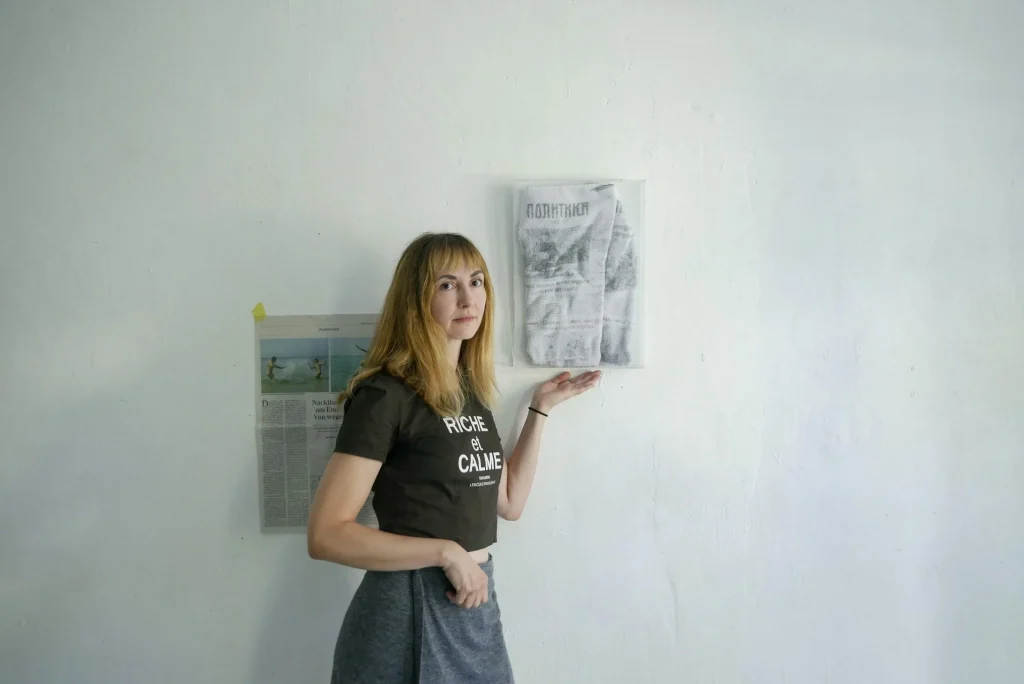
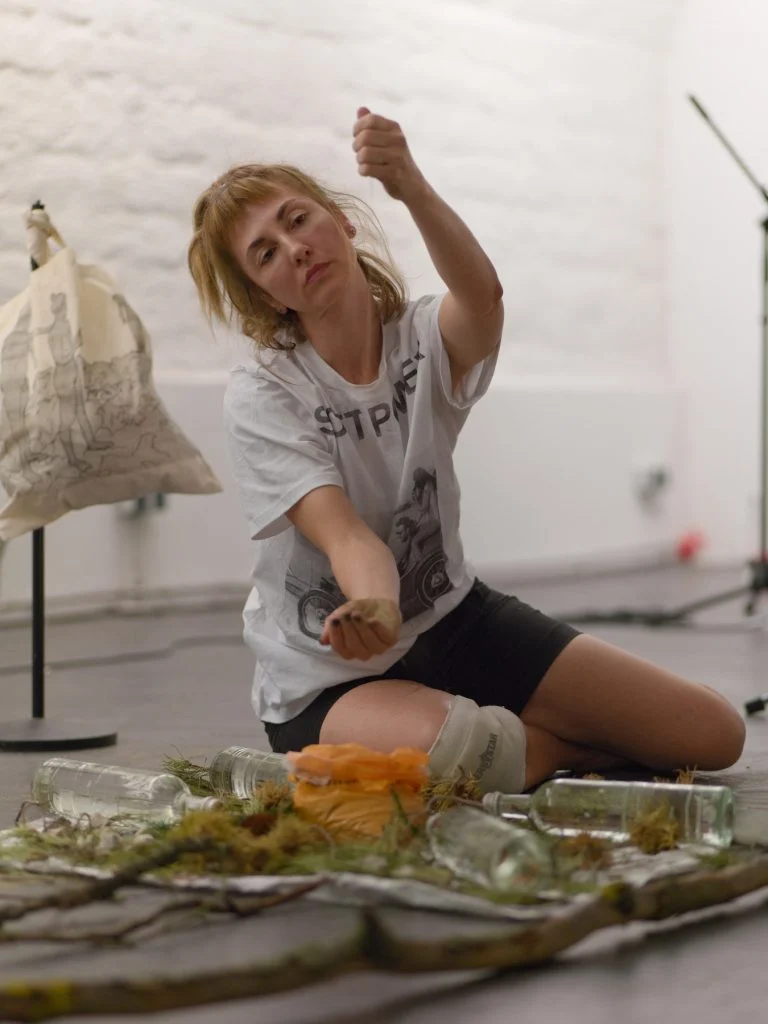
    Neda Kovinić’s practice focuses on the intersection of body politics, social relations, and ecology, examining how these elements shape our movements in space. Her work responds to contemporary crises like the climate emergency, political disorientation, and ongoing conflicts. In contrast to these “dark sides of contemporaneity,” she advocates for creating performative communities through collective research and a processual approach.


    Meet the Artist

    Can you give us an introduction about yourself and about your practice?

    I’m Neda, a research-based artist working across various mediums, including installation, filmmaking, and performance. I was born in Belgrade, in what was formerly Yugoslavia, and I completed my Master’s and PhD in Belgrade, Serbia. I am currently living in Berlin and aiming to relocate here permanently.

    My experiences growing up during the 1990s, amidst wars, bombings, isolation, sanctions, and major crises, have deeply influenced my art practice and life path. Today, thanks to my artistic endeavours, I am fortunate to live and work in Europe.

    In response to the crisis we face, such as ecological and political issues, as well as ongoing conflict, I focus on creating artist communities and collaborating with other artists. I share my resources and opportunities—such as exhibition budgets and gallery spaces—with emerging or less visible artists.

    Initially, my work centred on installation, object art, and filmmaking. However, I later shifted towards live art, aiming to create and produce meaning directly within gallery spaces and museums. This shift also allowed me to further support younger and independent artists.

    Through performance art and community collaboration, I address these crises by engaging in micro-politics, exchanging knowledge, and working collectively. My artworks manifest in various forms, including live performances, installations, experimental films, and research-based work involving text, drawing, and photography.

    Tell us more about your fascination with the Freikörperkultur?

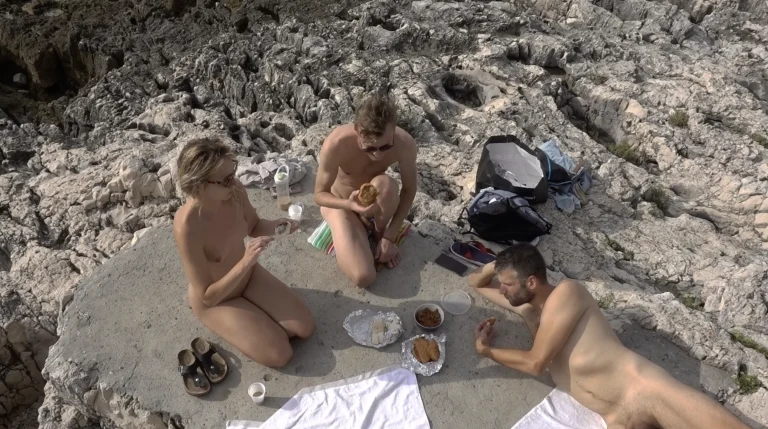
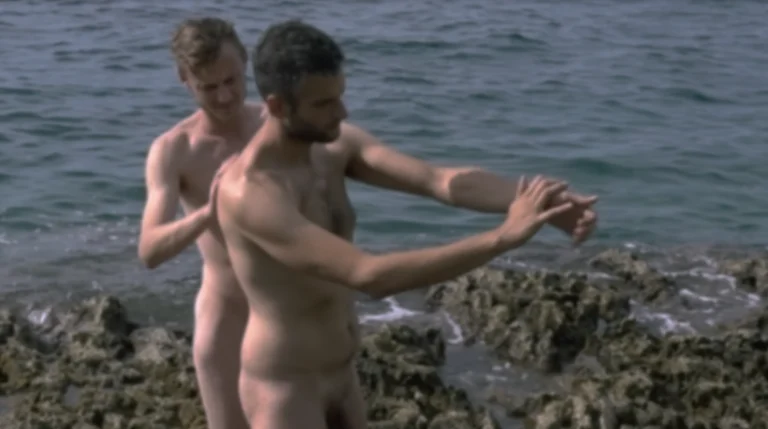
    I’ve been exploring this topic for the past two or three years. It started in 2020 when I went to the Croatian coast with some friends during the pandemic. Everyone was seeking secluded places to escape, and I wanted to experience nature and more rugged terrain.

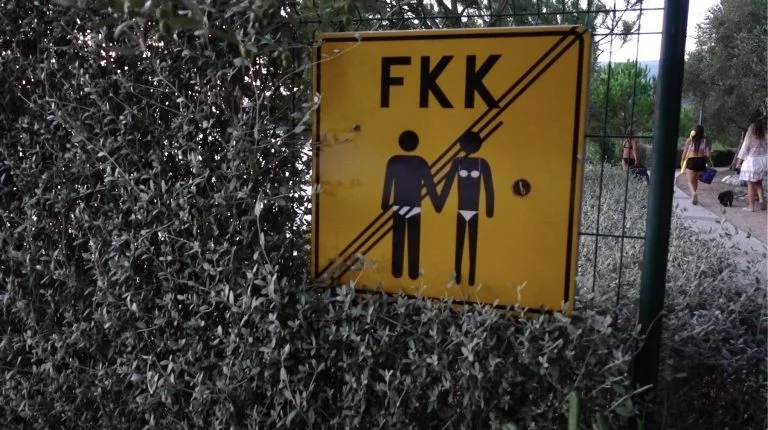
    I recalled from my childhood that FKK (Freikörperkultur) beaches—nature-rich, clothing-optional beaches—were some of the best. However, when I arrived, I found that a well-known FKK beach had been repurposed and was now occupied by mainstream tourists, with concrete replacing the beautiful sand I remembered.

    I continued my search and eventually discovered a small, rugged area behind some rocks, where a few nudists gathered. This spot had a stunning view, beautiful nature, and was very quiet. Over the next few days, as I engaged in conversation with others there and read more about the topic, I realized that the coastlines of former Yugoslavia, including Croatia and Montenegro, had undergone significant changes since the 1990s. The number of nudist beaches had declined, and interest in this culture had waned.

    This shift reflects broader political changes and the rise of conservatism and nationalism, moving away from the values prevalent during the Yugoslav era. For me, this topic is crucial because it illustrates the impact of political and governmental shifts on cultural practices.

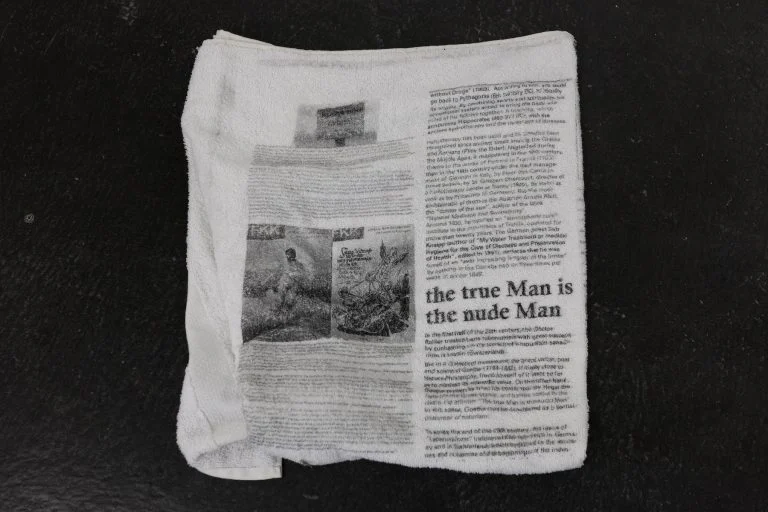
    Furthermore, I researched the origins of free-body culture or social nudity, which I found to be rooted in Germany. While it is often associated with former East Germany, its origins date back to the 19th century. It began with medical and hygiene approaches that promoted sun exposure and exercise for healing. This practice, with its social aspects emphasised by philosophers and medical doctors, has ancient philosophical roots, extending back to figures like Pythagoras, Hegel, and Goethe.

    The evolution of this practice through different ideologies and political contexts is fascinating to me. I am also interested in its ecological potential and the reconnection with landscapes, nature, and the elements such as sea, sun, and skin.

    Who are some artists which have generally influenced your practice?

    Coming from Yugoslavia, I began exhibiting at the Student Cultural Center, a notable venue for conceptual art in the region. This was where Marina Abramović and her group were prominent, though I was particularly influenced by Neša Paripović.

    In terms of 20th-century art history, I was inspired by Marcel Duchamp, as well as the Russian avant-garde movements, including Malevich and Suprematism. Joseph Beuys, who also visited the Student Cultural Center in the 1970s, had a significant impact on our conceptual art scene.

    More recently, I have drawn inspiration from artists like Sophie Calle, Felix Gonzalez-Torres, and Hito Steyerl. I am also influenced by the third wave of performance art, particularly choreography and dance performance.

    I recently encountered a Romanian artist in Hamburg, whose name escapes me at the moment, but I also appreciate the work of Anne Imhof. I value the contributions of choreographers and visual artists who integrate dance and performance into gallery and museum settings, exploring multiple temporalities and landscape dramaturgy.

    What is your relationship with the art market? What do you think about it?

    So far, I haven’t been involved with private galleries or collectors. I primarily receive support from state-funded institutions and residencies, both in Serbia and across Europe, especially in Germany. This is my first private residency.

    I’m inspired by this residency, particularly the place and the team running it in Berlin. Being in Berlin is crucial for developing my current project. Although I hoped for funding, I was not successful in securing it. However, my upcoming funding will come from the Netherlands through the European Pavilion, as well as from German and Romanian sources.

    Regarding the art market, I don’t engage with it and don’t share its values. The art market often evaluates artwork through a monetary system rather than focusing on the cultural meanings and content that artwork can produce and how it is perceived culturally.

    How are you living with other artists here in GlogauAIR?

    Living with other artists at GlogauAIR has been amazing. I truly appreciate being in artist residencies, and this one has a distinct Berlin spirit. People here are very relaxed and chilled, which is quite different from other residencies I’ve experienced. For instance, compared to another German residency, this one feels much more relaxed and joyful.

    I’ve had the opportunity to engage in many dialogues and exchange information with fellow artists. We’ve had reading sessions together, and it’s interesting to note that a few of us chose the same book to read. Despite coming from different countries and generations, we share many common interests and readings. This experience has been highly educational for me. I really can learn a lot here.

    You’re moving to Berlin, right? How do you feel that Berlin has influenced your practice?

    I feel much more encouraged here to experiment. There seem to be no taboos and nothing is censored, except, of course, I’m really disappointed that I arrived in Berlin, Germany, during a time of political censorship. I had imagined absolute freedom in expressing thoughts and being critical of governmental decisions, but that hasn’t been entirely the case. However, on many levels, there is more freedom to express, experiment, and discuss. There are many people to learn from, and Berlin offers great galleries, institutions, festivals, and discursive events to attend.

    What are your plans besides living in Berlin after residency here?

    I have a very packed schedule for the next month. Right after this residency, I’m going to Bucharest to work on a project about censorship and the history of dictatorship in Romania, as well as examining the governments of former Yugoslavia and how democracy is understood today. This is a two-month project.

    Another significant project is with the European Pavilion, titled Liquid Becomings. This project involves four floating pavilions with a group of artists who will sail on the Danube, Vistula, Tagus, and Rhine rivers. We will spend two weeks exposed to the rivers, sailing, living together, and creating artworks while reflecting on the concept of Europe and its future.

    It’s really exciting. I’m also working continuously while I’m here.

    Statement

    In my previous work I have been continuously questioning how body politics, social relations, power structures and ecology are inscribed into bodies and how this in turn shapes our movements in space. The climate crisis, political disorientation, distrust in media language, geopolitical crisis and the permanent war are mapping the circumstances in which I create and towards which I relate to in my artworks. In contrast to the “dark sides of contemporaneity” I suggest creating performative communities, a collective research process and processual approach.

    My work consists primarily of participatory performances by artists with different practices and experiences.

    I place great emphasis on the principles of fair practices, including the capacity for care, empathy, and closeness. I explore body movement exercising on my own in the context of the spaces or I involve local people and the immediate environment in which the group works and holds rehearsals – be it a forest area, an old building complex with its historical references or a new urban landscape. My exhibitions document the process of collective research in the form of an artistic installation. I often use body movement, drawings that I make during the process as well as writings as part of poetic-theoretical narratives in the performances or I edit field recordings into films or sound files.

    GlogauAIR Project

    Dionysian Socialism

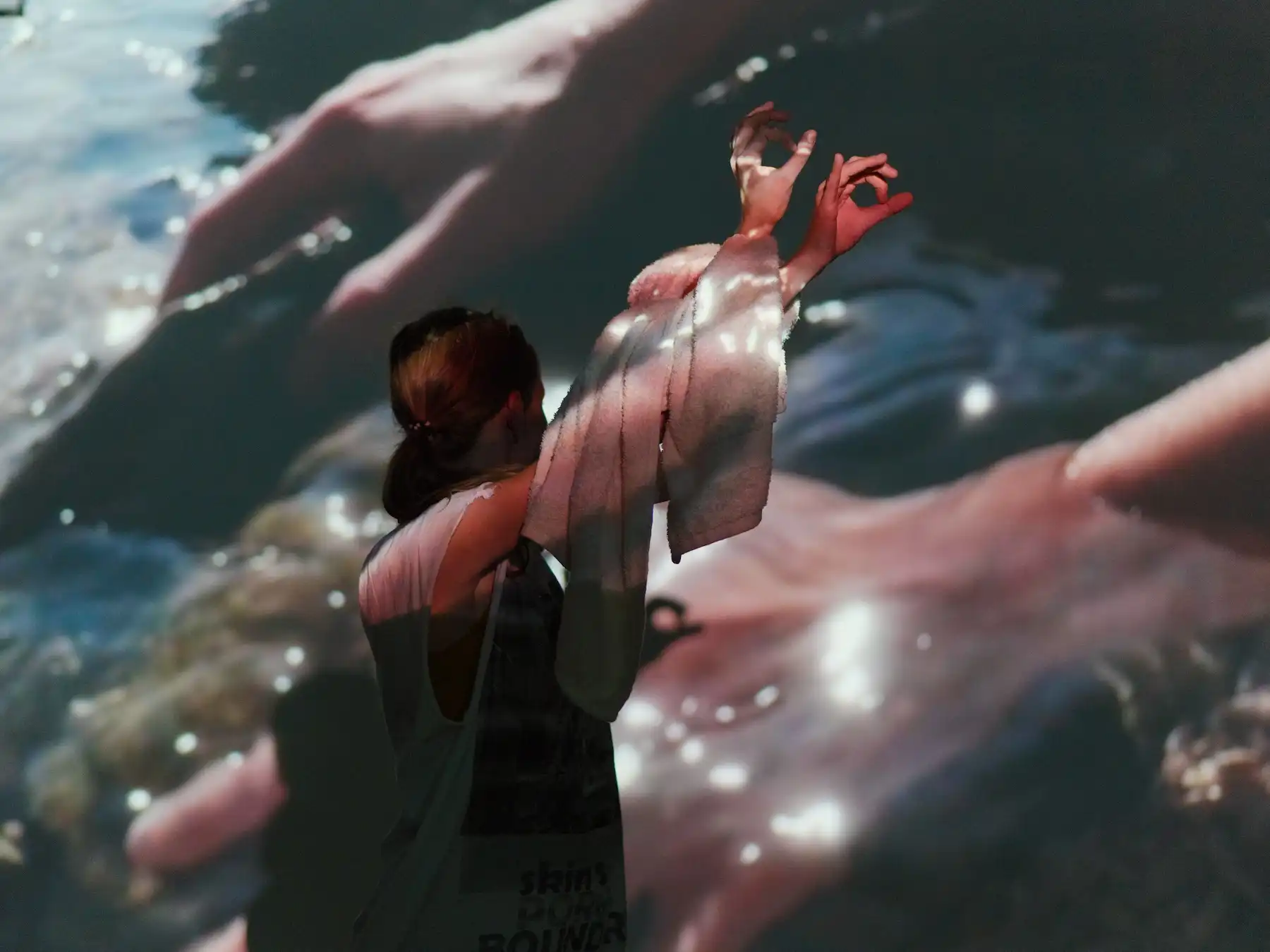
    During my residency at GlogauAIR I would like to continue and extend the research that I conducted during 2022-23 and that was dedicated to the legacy of nudism — known as FreiKörperKultur (FKK) in Germany in the former Yugoslavia.

    Since I will find myself at the source of this unique culture, I will be exploring its historical-philosophical background, and its relocations through the map of Europe under the influence of different political ideologies, witnessing that there is no politics that is not body politics.

    I am particularly interested in communal and the ecological potential of this practice, with its possibility of reconnecting with nature and non-human. The interaction of public and private, public policies and intimacy are reflected in this phenomena.

    Changes in interest towards naturism in public and legally marked places or organized clubs in Germany significantly reflect important contemporary phenomena of hyperproduction and manipulations of images with cell phones and drones. The relationship between public and private, urban infrastructures and intimacy is also reflected in this practice. Furthermore the alienation from nature, fear or disgust from direct contact with the skin and natural elements,

    The changes brought by capitalism influenced attitudes toward this unique culture. The cult of the perfect fitness body, which is promoted by social medias, as well as drone and photography overviewing the allglobe and manipulations with images is mostly to blame for the declining of interests in social nudity, particularly in naturists clubs, famous in Germany.

    FKK or »free body culture« was brought to Adriatic sea from the West Germany in 1960s. Public attitude on this unique culture has been changed after the war in former Yugoslavia in the nineties, with establishing national states and restoring capitalism. Those changes reflected the political shifts – the rise of nationalism, return of religiosity, consumerism and exploratory relation to the environment.

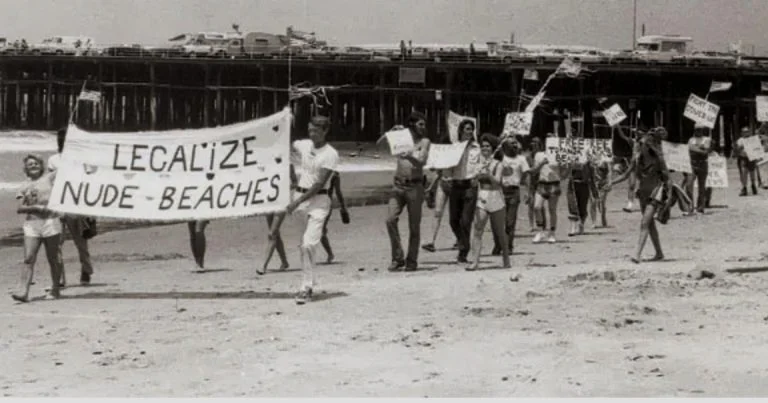
    In the XX century, in Germany in particular, numerous groups emerged that advocated nudism in the context »public health«; they were either left-wing and propagated nudity as an image of equality and liberation, or right-wing and worshiped the ideal of the wild (naked) Germans. In the Nazi era, the nudist movement was forbidden until 1941. After 1945 skinny dipping had spread in GDR and Eastern Europe.

    I would like to channel this ongoing research into a site-specific installation and performance at the exhibition space that draws inspiration from the history of naturism embedded within the urban landscape of Berlin. The performance would merge sound material from the field, narration and body gestures and actions abstracted from direct experiences and sensory memories. Similar to other works featured in my portfolio, I will offer workshops at the studio space, open for the participants. I would explore FKK places in Berlin and archives. I would edit the video material and archival material I collect and exhibit it as a video installation.

    CV Summary

    Neda Kovinic is born in Belgrade in ex-Yugoslavia and lives between Belgrade and Berlin.

    • Will participate in the European Pavilion 2024 project, Liquied Becomings.
    • PhD in performance and documentary installations, Faculty of Fine Arts in Belgrade.
    • Master of Painting, Faculty of Fine Arts, Belgrade.
    • Master of Interior design, Faculty of the Applied Arts, Belgrade, Serbia.
    • Developed dance practice based on early rhythmic-gymnastic trainings and contemporary dance classes in various European dance centres.
    • Since 1996, exhibited in solo and group exhibitions in Serbia and abroad. Created ambient installations, forming an art basis close to conceptual art. Her art practice refers to questions of artist labor, care, ecology and politics.
    • Akademie Schloss Solitude alumna (2022-23).
    • Artworks featured in: Vorspiel / Transmediale / ctm Berlin 2024; 37. Stuttgarter Filmwinter, Stuttgart, Germany, 2024; Heidelberger Kunstverein, Heidelberg, Germany 2023; Manifesta 14 Prishtina, Kosovo, 2022; Artists’ Film International at Whitechapel Gallery London, UK, 2021; Hammer Museum UCLA USA, 2021; Neuer Berliner Kunstverein, Berlin, Germany, 2022, etc.
    Gallery
  • Néstor Del Barrio

    Néstor Del Barrio

    Néstor Del Barrio is GlogauAIR resident
    from July, 2024 to September, 2024

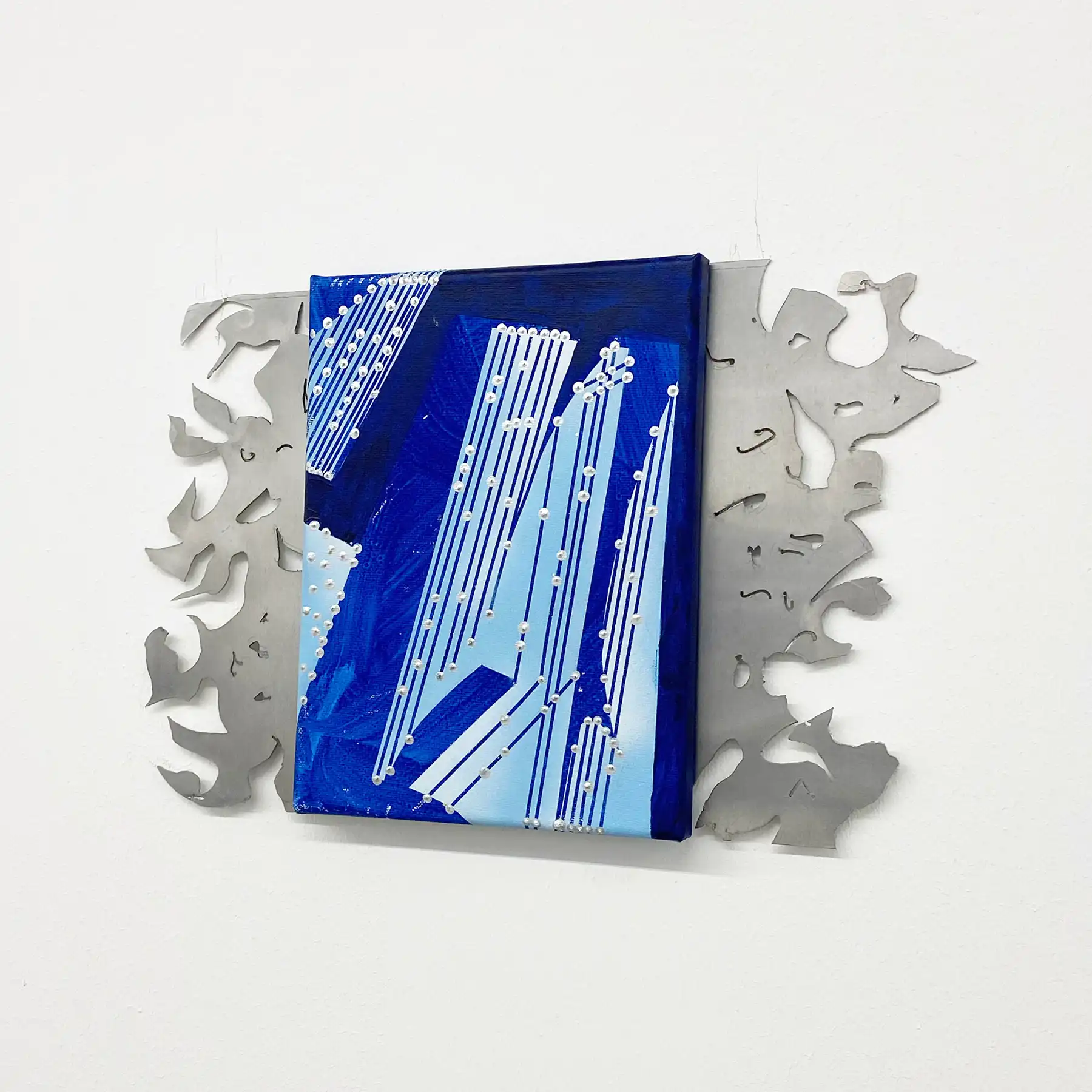
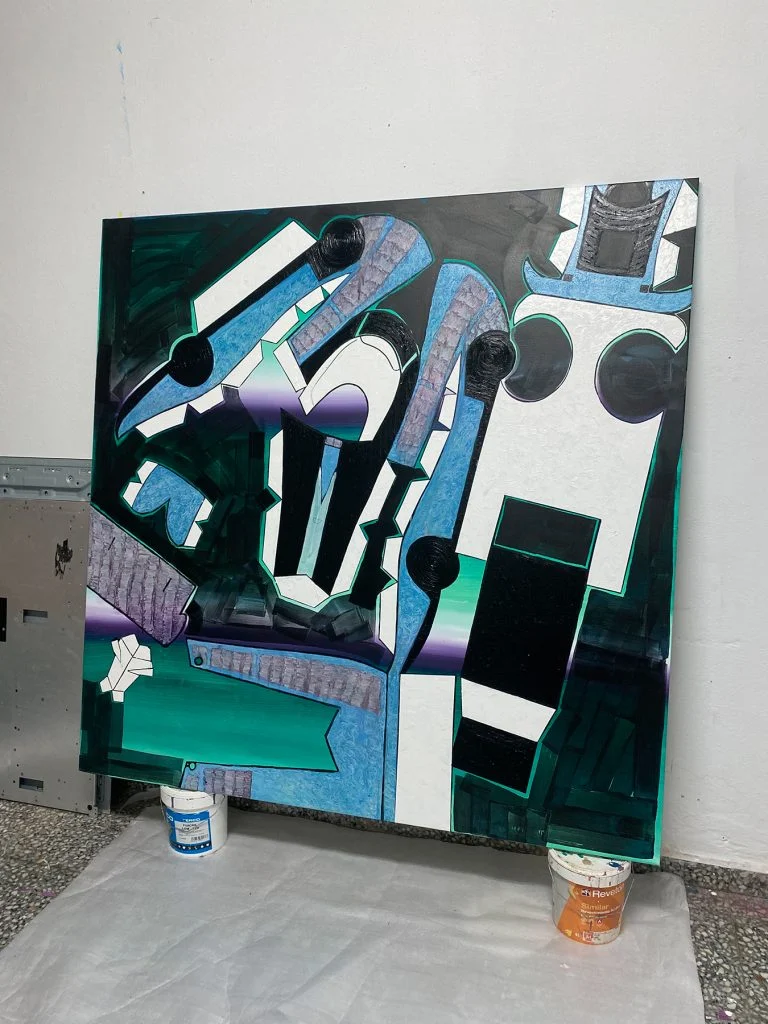
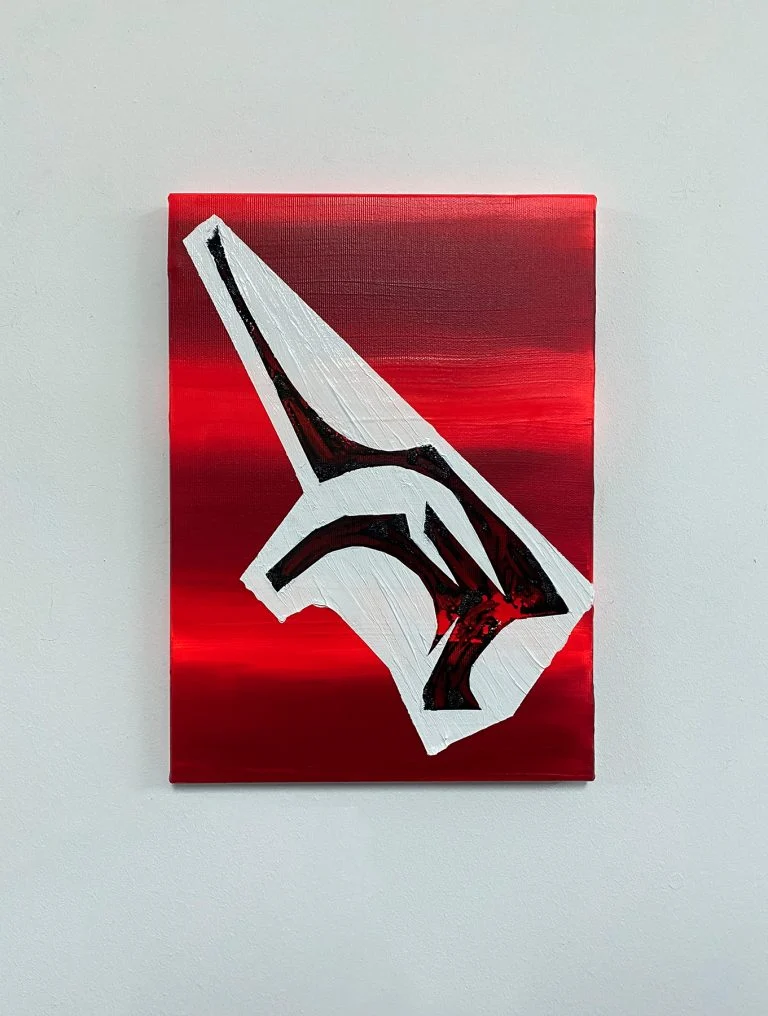
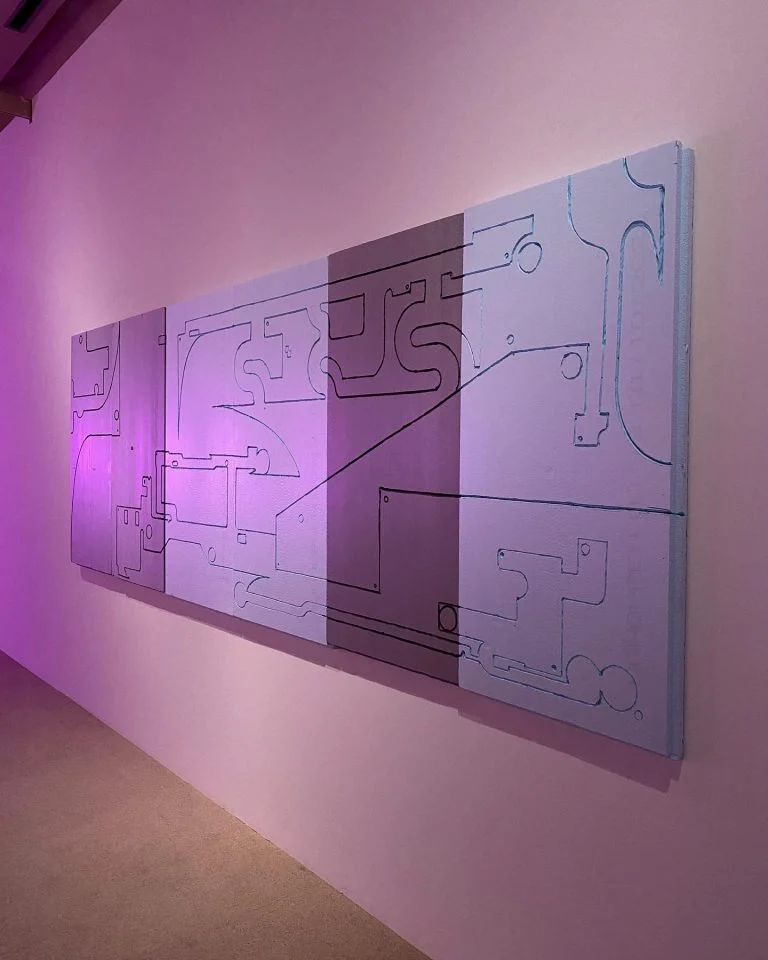
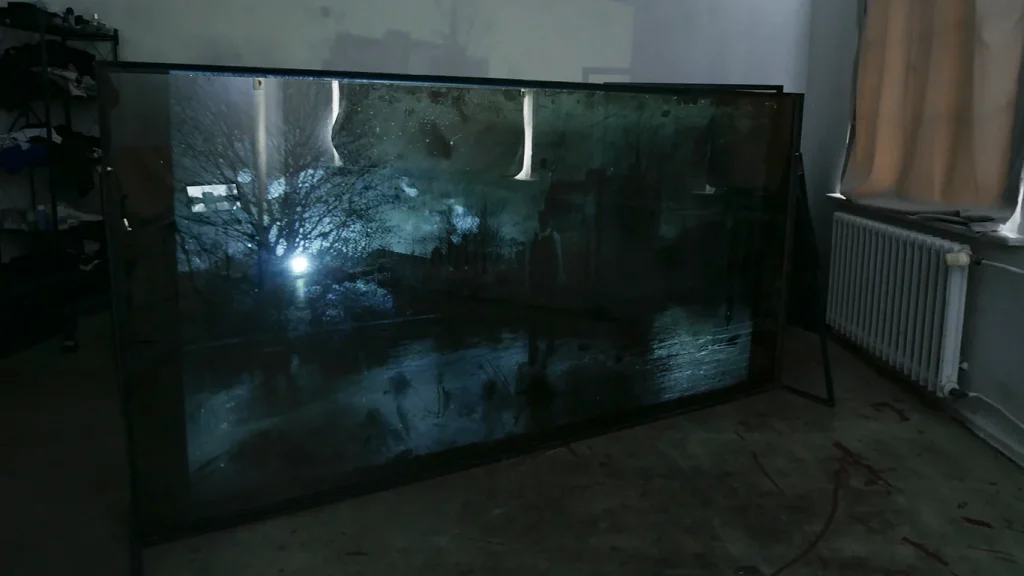
    His pictorial and sculptural works in an aesthetic framework that reflects on industrial processes, the digital world and virtuality, using materials and parts of obsolete technological and industrial components to put them in dialogue with the most traditional artistic narratives of the landscape.


    Meet the Artist

    Can you give us an introduction about yourself and your practice?

    My name is Néstor del Barrio, I’m from the north of Spain and live in Santander. I’m 29 years old and a multidisciplinary artist. I always begin my projects with research, using painting as my main exercise. I enjoy working with found materials and objects I discover in the street, incorporating them into my paintings or sculptures.

    Tell us more about the technical and technological components behind your artwork.

    I come from a family of car mechanics and have always been surrounded by various objects and parts throughout my life. Since childhood, I’ve been interested in how these objects are made and their different shapes.

    My artistic practice today is greatly influenced by this background. I use materials that I find or dismantle from obsolete machines, such as phones or computers, to create specific artistic languages. I am particularly interested in reusing materials to give them new a life . We are currently in a time when excessive production of objects and the use of raw materials are harming the ecosystem. I think that this is the correct way in which I have to create my artistic work.

    Who are some artists that have influenced your artistic practice?

    I don’t have many specific references, but one artist who has influenced me is the Spanish painter Luis Gordillo. I’m interested in the evolution of his painting and the themes he explores. Another painter I admire is Eduardo Paolozzi. I appreciate the aesthetic approach of Paolozzi’s work, similar to Gordillo, but I’m more focused on the form and aesthetics rather than the concepts he used.

    My biggest influence comes from elements I encounter in my everyday life—things I see on the street or during my walks, such as microchips, landscapes, cars, bicycles, and design posters from factories. I draw from these aesthetic forms to create my personal artistic language. I’m interested in developing a unique language from my own experiences rather than translating another artist’s work into my practice.

    What is your relationship with the art market, and what do you think about it?

     I’m currently working with Juan Silió Gallery, which has spaces in both Santander, my city, and Madrid. Through this gallery, I’ve participated in notable exhibitions in ArteSantander fair  and at ESTAMPA fair in Madrid. I’m also involved with other galleries and artists in Spain, as well as in collective shows in countries like Morocco, Paris, and Germany, often working with groups outside my home country.

    I believe that artists should not focus too much on the art market. Their primary focus should be on creating and developing their work, while galleries handle promotion and sales. Today, artists often find themselves juggling both their creative work and the responsibilities of marketing and selling their art, which complicates the process and takes time away from their creative practice.

    How are you finding GlogauAIR as a resident? How is living with other artists?

    I knew about GlogauAIR from other artists who had been here, either for a long or short time. I thought it would be a great opportunity to learn about the art scene in Berlin and gain insights into the art market.

    The residency space is cool. We have a communal area for discussions and meetings, as well as personal workspaces. It’s very stimulating to be in close proximity to other artists, discussing each other’s work and exchanging ideas and concepts.

    Living in a residency like this offers a fresh perspective on my work, overall, it’s been a very positive experience.

    How do you like it in Berlin, and how do you feel it’s influenced your artwork?

    First of all, my work always begins by collecting objects that I find on the street. When I arrived in Berlin, I started exploring the city during my first week, looking for interesting items or materials. I began gathering things I found, including discarded objects, which I used to inspire and develop the project I’m currently working on during this residency.

    The city influences me significantly through how I navigate it—whether by bicycle, bus, or train. This way of moving through Berlin impacts the kind of art I’m creating here, understanding my own body as an object and its relationship with the city.

    What plans do you have after the residency?

    When I return to Santander, I want to start working with the new influences I’ve gained from this experience and try to improve my recent work. I see this residency as a period of evolution because being out of my comfort zone here feels like an exercise, and it’s likely that my work will change as a result. I plan to experiment with a new direction in my sculptures and paintings.

    I would also like to find a way to stay connected with Berlin and continue exhibiting or working with galleries or curators interested in my work. While I know the art scene in Spain well, I’m excited to explore new rhythms and relationships within the art space, as this feels more stimulating to me.

    Statement

    His pictorial and sculptural works in an aesthetic framework that reflects on industrial processes, the digital world and virtuality, using materials and parts of obsolete technological and industrial components to put them in dialogue with the most traditional artistic narratives of the landscape. In doing so, he poses questions to the viewer and himself about the idea of reality, the speed in the contemporary world itself. His work expresses concern about what digital technology and the internet will mean in the future, how it intervenes in the reception of reality itself or the current conception we have of the image. It is through the pictorial act itself that all these reflections are addressed, from technical solutions such as the frame or the support. His works sometimes approach the concept of expanded painting, organizing site-specific installations that fit the exhibition spaces that house them.

    GlogauAIR Project

    The project that I will carry out during the residency at GlogauAIR will be a set of multidisciplinary works resulting from images and elements collected from the city. In my work, I usually start with the reuse of obsolete electronic components and industrial waste to generate new discourses and put them in dialogue with other materials and different elements. On the other hand, I like to work accompanying the sculptural production with a series of paintings, with which I seek to understand the difference between the object and its image. Therefore, I intend to make this multidisciplinary production the result of the city of Berlin itself and my time living in it.

    CV Summary

    EDUCATION

    • 2024 To finalize Master in Artistic Production of the Polytechnic University of Valencia (UPV)
    • 2013-2017 Graduated in Fine Arts at the UCLM University of Castilla la Mancha, Cuenca

    SOLO EXHIBITIONS

    • 2022 PAISAJISMO. Juan Silió Gallery. Santander.
    • 2021 TITANIO. Foundation CASYC. Santander. IMAGEN AMBIENTAL. Solo project Juan Silió Gallery. Artesantander Fair.
    • 2020 EL FIN SERÁ TELEVISADO. La Pause Residency, Marrakech.
    • 2018 TRASFONDOS. Lamosa LAB. Cuenca, Castilla la Mancha.

    COLECTIVE EXHIBITIONS

    • 2024 “Hacia una Arquitectura Plástica” School of Architects of Cantabria. Santander.
    • 2023 “GEN- Z. Spanish Wet Painting”. We collect Gallery, Madrid.
    • 2022 Estampa Fair . Juan Silió Gallery. IFEMA, Madrid. “Bahía, el litoral como ágora”. DILALICA Gallery. Space Los arenales. Santander. “Pintura de los años 90 a nuestros días. Articulando el siglo”. Collection Los Bragales. Torrelavega. Cantabria.
    • 2021 “BETWEEN-Sensing Potencial Worlds”. Zeppelin University. Friedrichshafen, Germany. “VÍSTEME CON ARTE.” Foundation Bank Santander. Santander. “IMAGEN AMBIENTAL” Foundation Caja Cantabria CASYC. Santander.
    • 2020 “PROYECTO 20/20. FRONTERA < 40” – Casas del Águila y La Parra, Santillana del Mar, Cantabria.
    • 2019 “PARAISO NARUTAL.191219” LALONA Gallery, Gijón. “MODOS DE REPRESENTACIÓN AFK” JUAN SILIÓ Gallery, Santander. “DEL CUADERNO DEL COLECCIONISTA” artistas cántabros de la Colección Los Bragales. Castillo de Argüeso, Cantabria.
    • 2018 X BIENNAL DÁRTS RIUDEBITLLES, Work in paper. Sant Pere de Riudebitlles, Barcelona. PREMIOS CASIMIRO SAINZ 1999-2017. Fondos Ayuntamiento de Reinosa. Castillo de Argüeso, Cantabria.
    • 2017 Selected “X Premio Internacional de Grabado y Vino Fundación Vivanco” Briones, La rioja.
    • 2016 Project “Situaciones” collaboration with the artist Jose Aja “Ejercicios de puntería” International meeting l LA SITUCIÓN 2016” Cuenca.

    RESIDENCIES AND PRIZES

    • 2024 GlogauAIR Residency Berlín.
    • 2023 Artist residency Nautilus, Lanzarote.
    • 2020 Artist residency CASYCREA. Santander. Program of International Residency Orbital, with destination in La Pause Residency, Marrakech.
    • 2019 First prize MEET ME IN ARTS best artistic portfolio. Cantabria.
    • 2017 First prize “ XXXVIII Concurso de Pintura Ayuntamiento de Villaescusa” Cantabria.
    • 2016 First prize “ Concurso Nacional de Pintura Casimiro Sainz” Reinosa, Cantabria.

    Gallery
  • Pádraic Barrett

    Pádraic Barrett

    Pádraic Barrett is GlogauAIR resident
    from July, 2024 to September, 2024

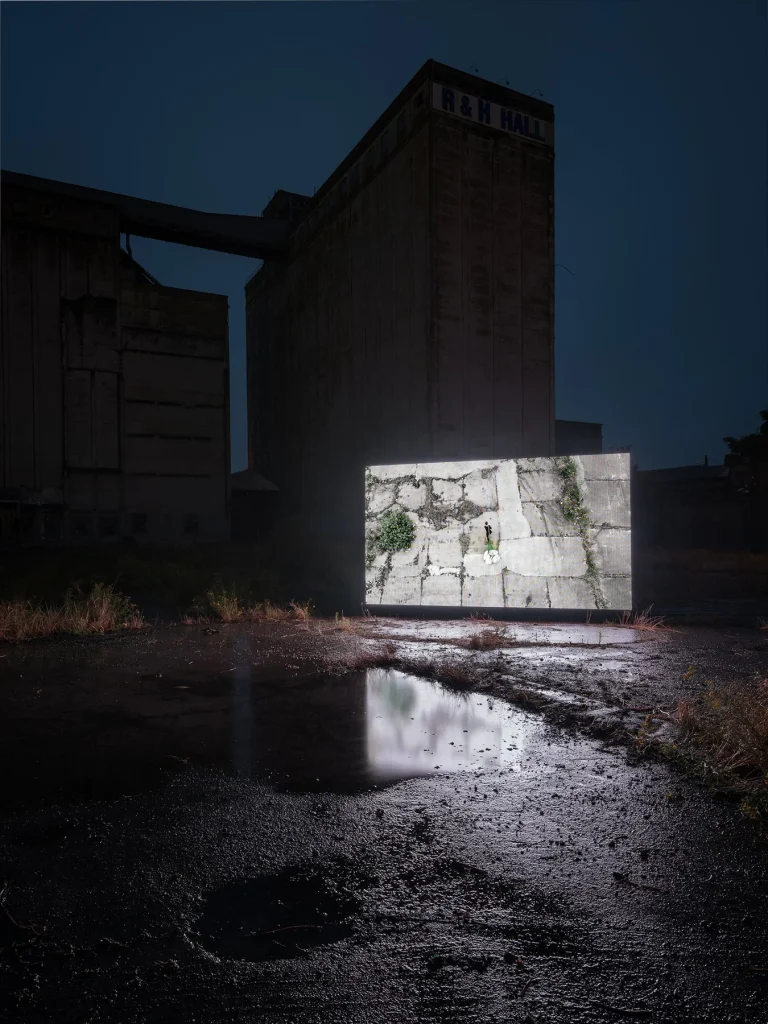
    My work is a response to techno-capitalist structures and explores alternative vantage points in the realm of the Anthropocene, that contains a mapping of futurity. By placing the queer body in a suspended and simulated space in time, I allude to the activation of a state of heterotopia and imagine other ways of being in the world.

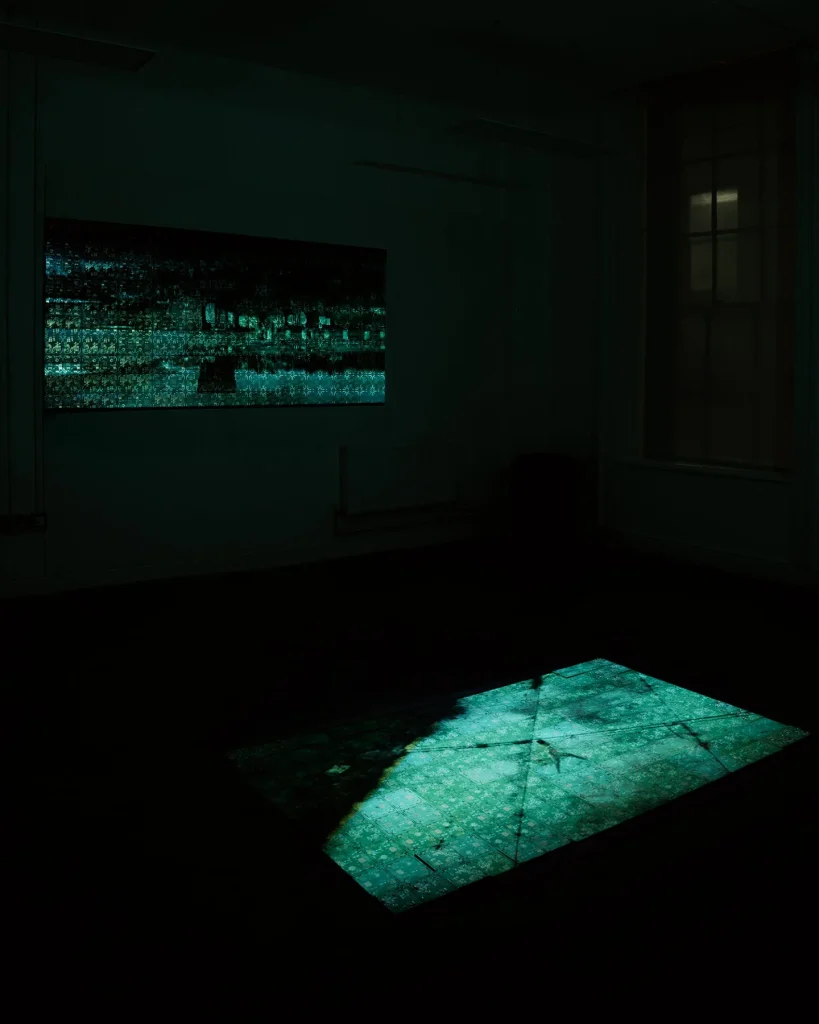
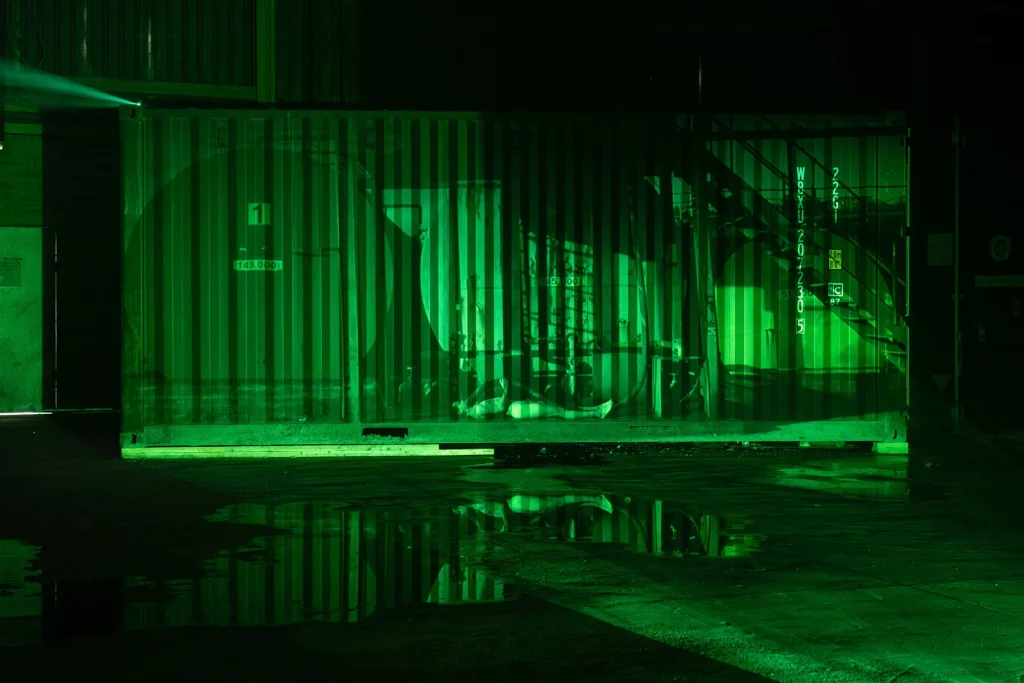
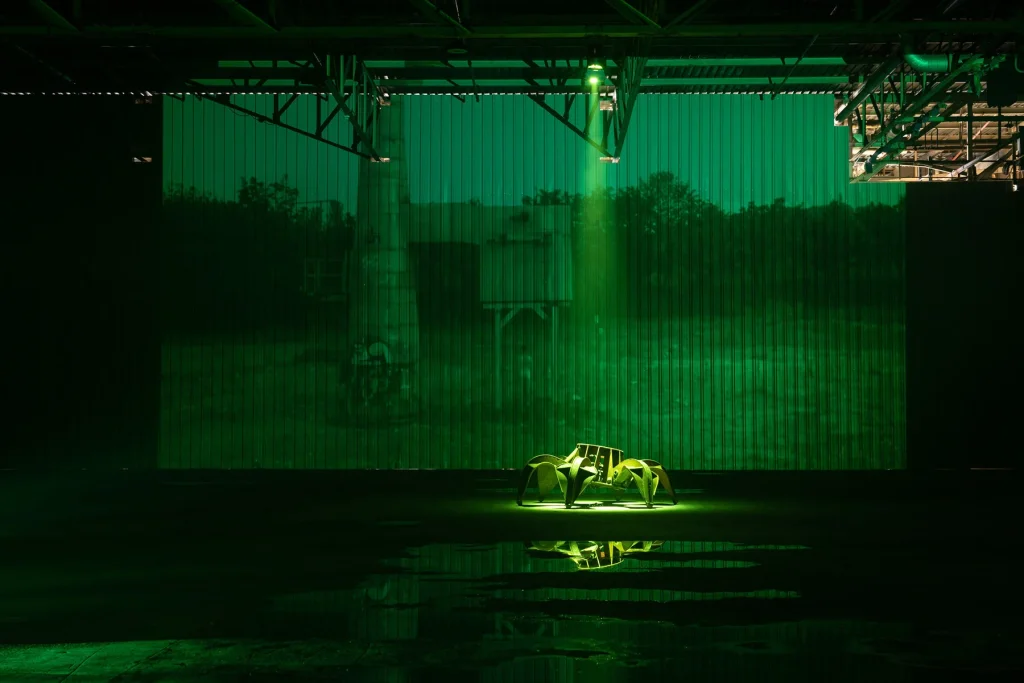
    I merge performance, film and installation to explore human and machine agency through bodily and technological frameworks that can open a space for reflection on the nature of our contemporary experience. These complex relationships are interrogated through nonhuman imagery and post-human landscapes, casting resonances on how the current world is constructed. This demonstrates how the body can mediate the tension between cinematic modes and how we live our lives.

    Explorations of the social and spatial experience to the ubiquity of machines are impressed upon by fictional frameworks that have a direct port into our lives. The work seeks out political imagination and presents a modelling of worlds past and future as a mode of thinking, sensing and seeing across time.


    Meet the Artist

    Can you give us an introduction about yourself and tell us about your background?

    I’m an interdisciplinary artist based in Cork, Ireland. My main mediums are performance, film, and installation. I typically respond to various entities of capitalism, including surveillance, extractivism, and neoliberalism. This often manifests through multimedia installations.

    Tell us more about your fascination with post-industrial/post-human spaces, and how you integrate them into your practice?

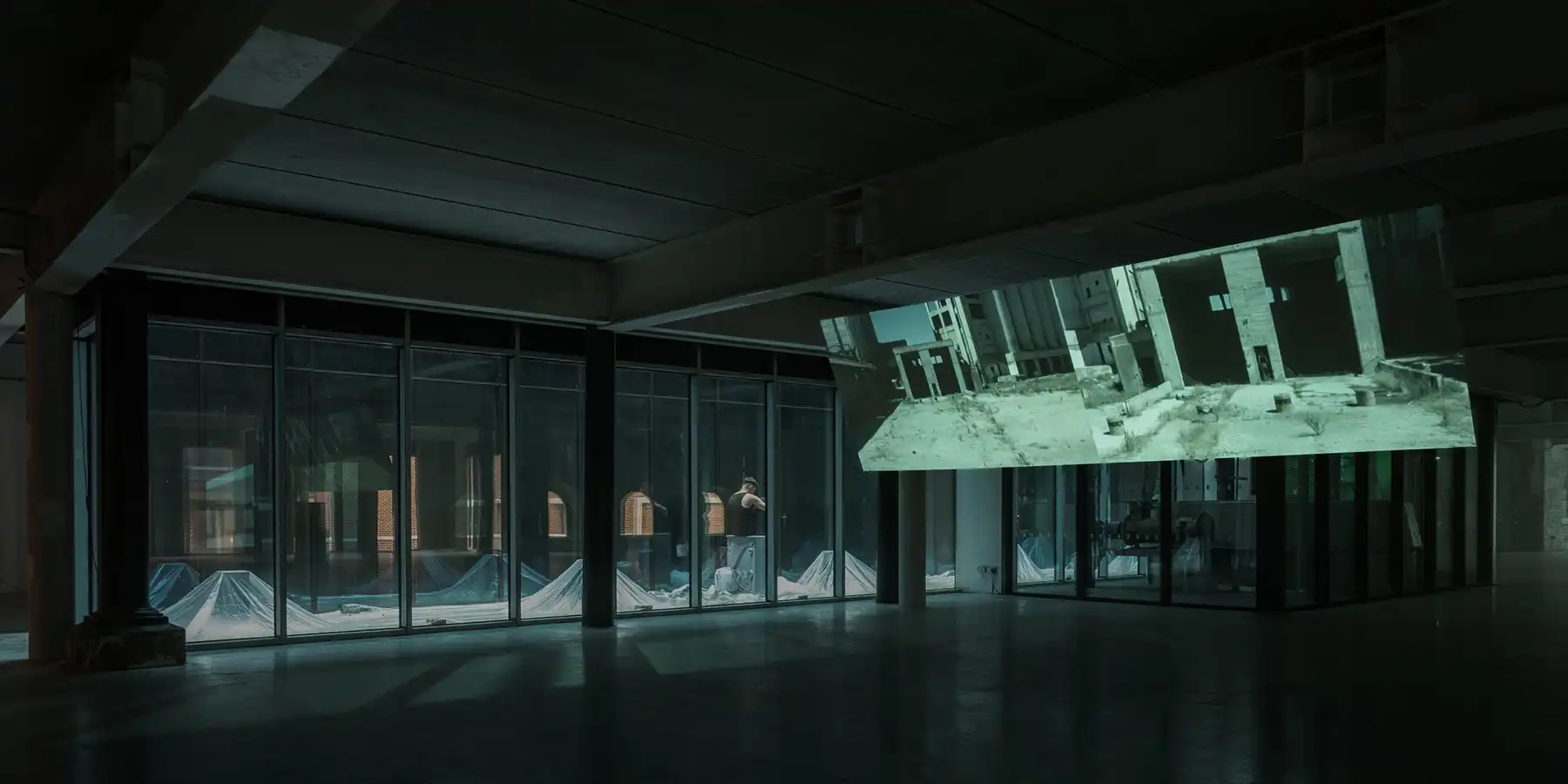
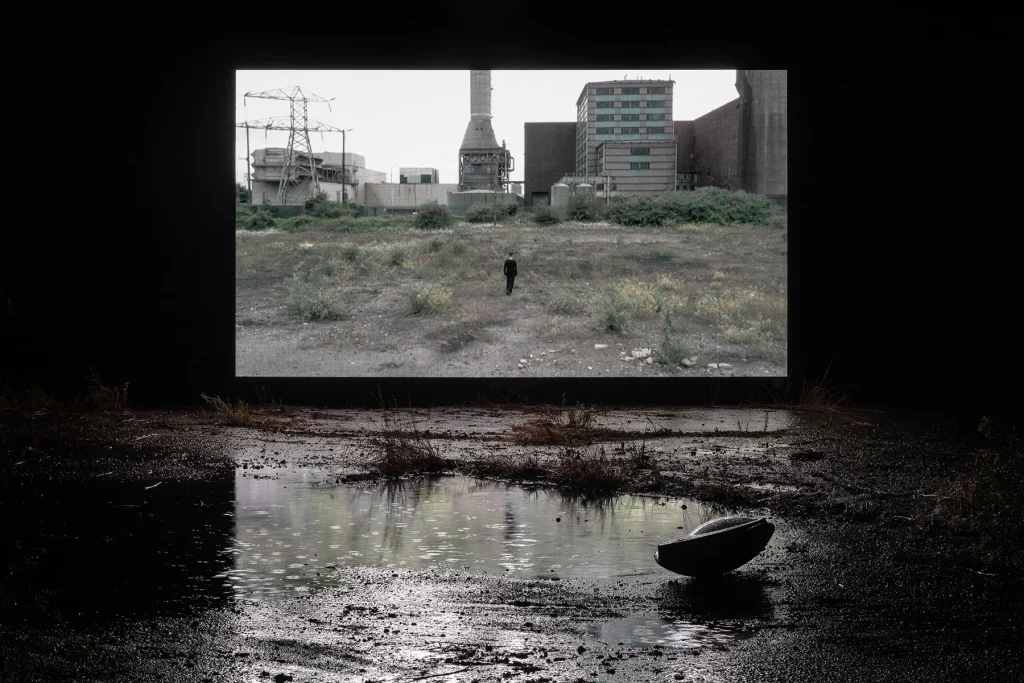
    The fascination came from a desire to world-build. I find these spaces offer a really interesting discourse between their historical production and their existing dilapidated nature. There’s a tension between permanence and impermanence. I also find their current state quite compelling. My strategy is to see these spaces as a stage, situating the body within a conceptually charged site for discourse to occur. 

    What are some artists who have greatly influenced your artistic journey?

    My performance practice is deeply rooted in the Viennese Actionism movement of the 1960s. I’m really drawn to their immediacy and their oftentimes explicit nature. My work typically isn’t too concerned with duration but rather focuses on an enactment or something reflective of the current moment.

    What is your relationship with the art world and the art market? What do you think about it?

    I don’t see myself having a significant relationship with the art world or art market. In Ireland, it feels much more community-driven, and I prefer it that way. From an outsider’s perspective, it seems that many galleries hold a monopoly. I think it’s time for artists to regain some of that autonomy.

    Regarding funding schemes, they are now more project-oriented, which really allows artists to maintain their own artistic integrity.

    How are you finding GlogauAIR now that you are a resident? How is it living with other artists?

    It’s amazing. It feels like being back in college with a strong artistic energy around the place. There is also the potential to collaborate with other artists, which is very fruitful. The artist’s life can be a lonely one, so being surrounded by other artists is incredibly enriching.

    You’ve been in Berlin before, but how is Berlin influencing your practice?

    Besides more access to this kind of space in daily life, as a queer person, I would say it’s been super informative. This is the first time I walk down the street and see myself reflected in other people and vice versa. You don’t really get that level of visibility or integration in other cities. And it’s not just in private spaces—it’s in cafes, bookstores, art shops. Utilizing a lot of queer theory in my practice, Berlin is definitely evolving my own artistic trajectory.

    What plans do you have after the residency?

    Post-residency, I’m working on two exhibitions with my collective Intercite. The first will be at Cork County Hall in November, focusing on the concept of vertigo. The second will respond to the housing crisis and will be situated at the Lab Gallery in Dublin.
    Statement

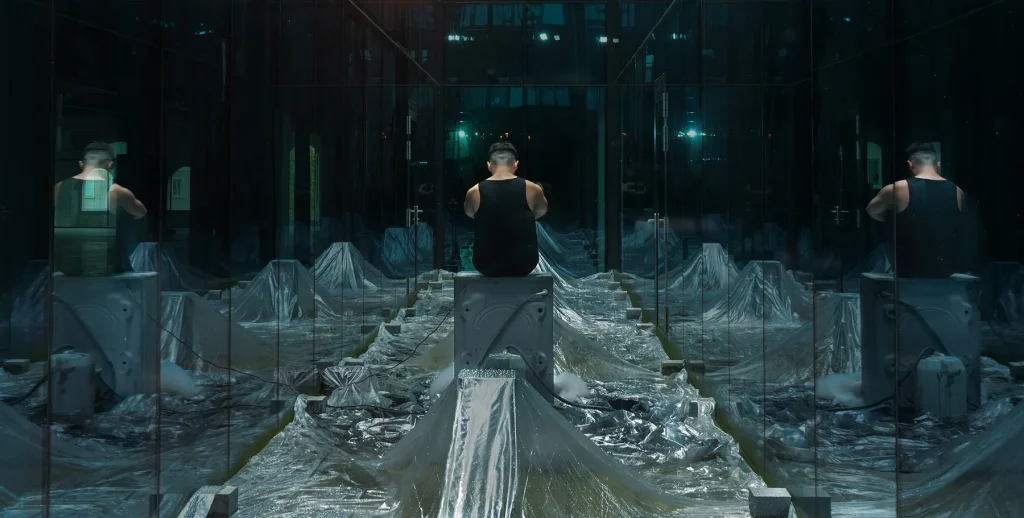
    My work is a response to techno-capitalist structures and explores alternative vantage points in the realm of the Anthropocene, that contains a mapping of futurity. By placing the queer body in a suspended and simulated space in time, I allude to the activation of a state of heterotopia and imagine other ways of being in the world. I merge performance, film and installation to explore human and machine agency through bodily and technological frameworks that can open a space for reflection on the nature of our contemporary experience.

    These complex relationships are interrogated through nonhuman imagery and post-human landscapes, casting resonances on how the current world is constructed. This demonstrates how the body can mediate the tension between cinematic modes and how we live our lives. Explorations of the social and spatial experience to the ubiquity of machines are impressed upon by fictional frameworks that have a direct port into our lives. The work seeks out political imagination and presents a modelling of worlds past and future as a mode of thinking, sensing and seeing across time.

    GlogauAIR Project

    I am proposing a new performance and multimedia installation during my time at GlogauAIR. The work is an interdisciplinary response to the extractive means of capitalism in contemporary life. The implications of industry, machinery and contemporary systems on the body and environment, and the relationship between living and nonliving as put by Debord, aims to question the tension between progress and regress. I wish to draw on the Situationist’ theory of counteracting the Spectacle, by means of constructing live moments, as well as employing Debord’s use of détournement, which involves the use of spectacular imagery to disrupt the flow of the spectacle. The aim for this form of public engagement is to rethink how we view extractive capitalism, labour and the environment. How does acceleration impact the body and planet, and what does it mean to slow down? This is a question I am asking through the performative aspect of this work, drawing agency back to the human.

    CV Summary

    Education & Training

    • 2020-2021 MA (1:1) Art and Process, Crawford College of Art and Design
    • 2020 IMMA Summer School Art and Politics #Statecraft
    • 2015-2019 BA (1:1) Fine Art, Crawford College of Art and Design

    Exhibitions

    • Upcoming
      • The Lab Gallery, INTER_SITE exhibition, Dublin, March 2025
    • Solo
      • Machination, The Municipal Corporation of Culture of San Joaquin, Santiago, Chile, April 2023
      • The Engineering of Consent II, Marina Warehouse, Cork, July 2021
    • Group
      • Error: /Undefined, Pallas Projects Artist-Initiated Exhibition, Dublin, October 2023
      • Oscillation: An Altering Rhythm, Stamp festival, The Counting House, Cork, May, 2023
      • Sluice Screens, IMT Gallery, London, December 2022
      • Lisbon Art Fair, PADA x Sluice curator-led project, Lisbon, November 2022
      • PADA Studios exhibition, Lisbon, August 2022
      • After Light: These Dark Citizens, The National Sculpture Factory, Cork, June 2022
      • Quare, Cork Midsummer Festival, St. Anne’s Park, Cork, June 2022
      • INTER_SITE x Timpeall, K-fest, Kerry, June 2022
      • INTER_SITE x Old Queen’s Castle, Cork, May 2022
      • Pulsating P(l)ace, Faoin Spéir, Backwater Artists Group, Wandesford Quay, Cork, April 2022
      • OUTSIDE, National Sculpture Factory, Cork Centre for Architecture, Cork, November 2021
      • Oileán, Battery Observation Point, Spike Island, Cork, September 2021
      • Standstill, Uillinn West Cork Arts Centre, Cork, August 2021
      • A Soft Rupture, GOMA, Waterford, July 2021
      • Inter_Site x Timpeal, The Marina Market, Cork, June 2021
      • Oileán, The Lord Mayor’s Pavilion, Cork, June 2021
      • COM,MA, No. 46 Grand Parade, Cork, December 2020
      • CONFLUENCE, The Lavit Gallery, Cork, January 2020
      • Backwater Artists Group, Members Show, Studio 12, Cork, December 2019
      • Dismantle, CCAD, Sharman Crawford St, Cork, June 2019
      • PRINT.ED #5 Espai Cultural Eina, Barra De Ferro, Barcelona, April 2019
      • TAUTOPHONY: Why do we rattle? Why do we sweat? The Kino, Cork, May 2018
      • Trouvaille, Wandesford Quay Gallery WQG, Cork, October 2015
    Awards

    • Arts Council of Ireland, Project Award, 2024
    • Cork City Council Individual Bursary Award, 2024
    • Arts Council of Ireland, Individual Artist Bursary Award, 2023
    • Cork City Council Individual Bursary Award, 2023
    • Culture Ireland funding, 2023
    • K-fest Screaming Popes Prize Finalist, 2022
    • Cork City Council Individual Bursary Award, 2022
    • Arts Council of Ireland, Agility Award, 2021
    • Arts Council of Ireland, Project Award, 2021
    • RDS Visual Art Awards long list, 2021
    • Postgraduate Residency award, Sample Studios, 2021
    • Valerie Gleeson Development Bursary Award, 2020
    • The Ciarán Langford Memorial Bursary, Backwater Artists Group, 2020
    • RDS Visual Art Awards long list, 2019
    • Lavit Gallery Student of the Year Award, 2019
    Residencies

    • PADA Studios Artist-in-Residence, July/August 2022
    • The Gallery at No. 46 Grand Parade Curatorial-Residency, 2019
    Visiting lectures

    • Artist talk, Crawford College of Art & Design, November, 2023
    • Artist talk, inter_site collective, Crawford College of Art & Design, December 2021
    • Artist talk, inter_site collective, Sample Studios, August 2021

    Gallery
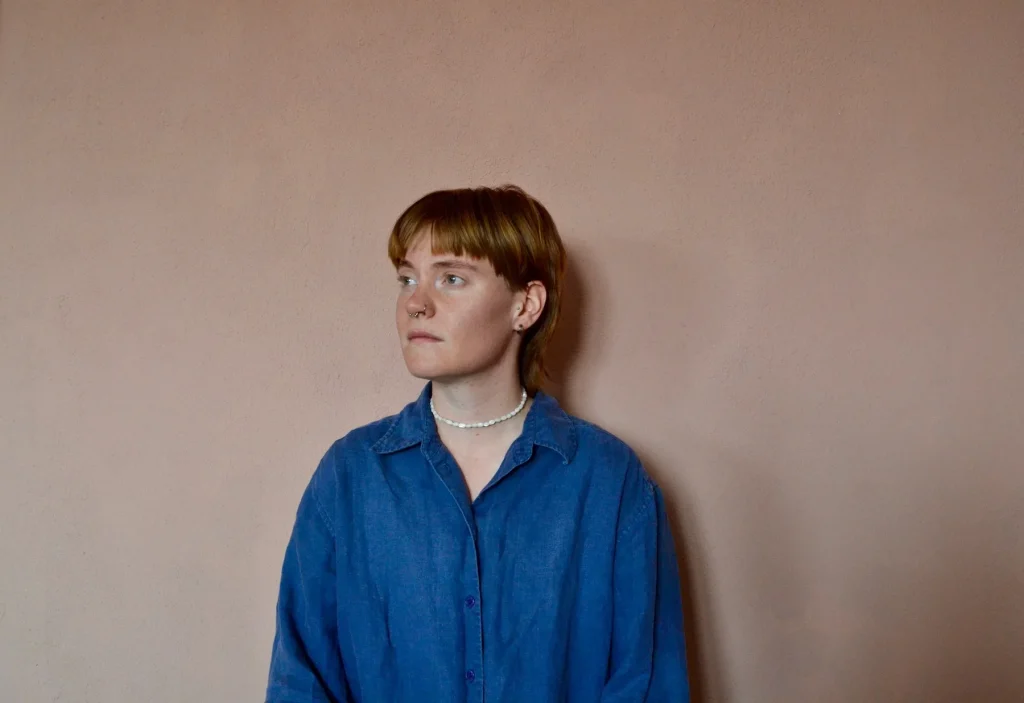
  • April Widdup

    April Widdup

    April Widdup is GlogauAIR resident
    from July, 2024 to September, 2024

    April’s practice has been focused on the political potential of art and its ability to challenge and encourage critical thinking. Envisaging an arts practice that aims to not only create, but to generate meaningful dialogue with their viewers. 


    Meet the Artist

    Who are you?
    I am an early career multidisciplinary artist from Australia, currently living and practicing in Europe. I graduated from the Australian National University, School of Art and Design in 2022, with a Bachelor of Visual Arts. During my degree, I also studied anthropology, where I became interested in how culture shapes everything including our behaviours, lifestyle, values, and even how such elements physically manifest in our rituals and how we build and design our surroundings.

    How would you describe your artistic practice? 
    My emerging artistic practice is situated somewhere between my areas of interest and the political and experiential potential of art. I am interested in themes of identity, social and physical mobility, embodied and spatial interactions, memory and remembrance, phenomenology, and the intersections of structural power and human experience and agency.

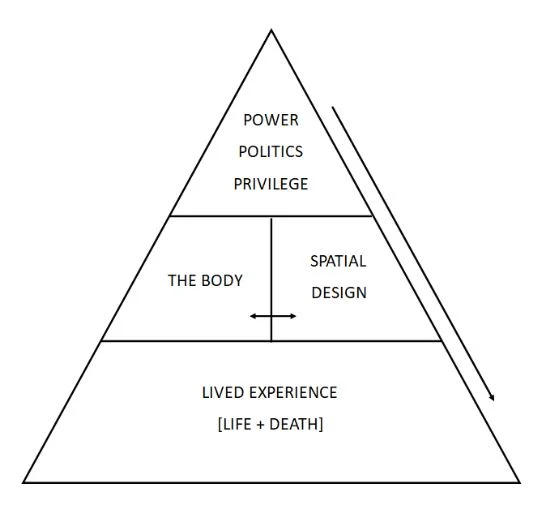
    My work ranges in tone and varies in medium, it is the conceptual themes that are the focus, and the rest follows. I created this pyramid diagram to visualise how I see my areas of interest in relation to one another. I am drawn to the lived experience segment, and how the sections above inform how that manifests for both individuals and society, minorities and majorities.

    I consider myself a multidisciplinary artist, with a particular interest in sculpture, installation, and video art. I also have a background in glass, and so it is a material element often but not always found in my work.

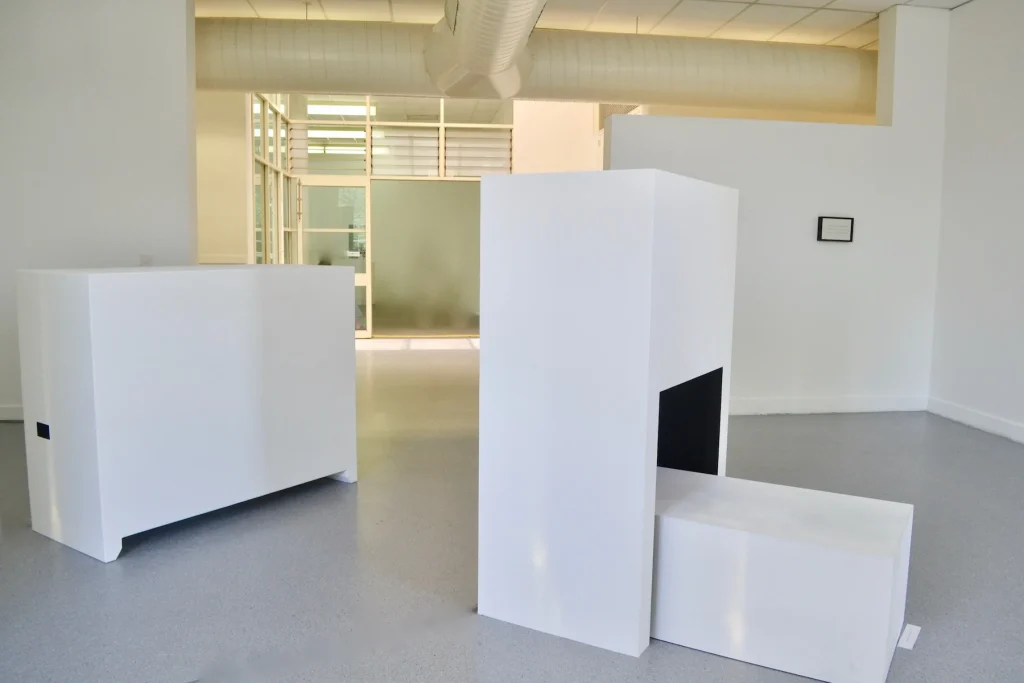
    As my practice is conceptually informed, I find my most used mediums reflecting associated ideas. For example, tools or extensions of perception, such as film, photography, audio, and glass, which can inform how we perceive, engage, learn, and generate ideas of worth. Whereas, my interest in embodied and spatial interactions can be seen in my form and display methods, such as creating physical sculptural forms, some with interactive elements, and installations. I do this to engage my viewers in more than just looking, instead creating something physically tangible, something that requires their presence to complete the work, or a bodily experience. An example of this is my work You Lived, and I will Remember that (2024), which consisted of two large interactive sculptures that asked the viewer to lend themselves to the experience of queer bodies. The works were presented as large plinth-like structures, which viewers either had to crouch down low and peer into, or physically recline into. By physically engaging with the space, and feeling potential discomfort and vulnerability, viewers were confronted with how space is experienced by other bodies.

    What is your methodology or process for creating a new project?
    My process often begins with a line of enquiry, usually regarding themes or areas of interest, the methodology for then starting and completing a project is comprised of four stages:

    Stage 1: Research and early project development
    This is where I begin my research, visiting libraries and museums, mapping my field of interest/enquiry, and engaging in relevant critical conversations to establish a position, concise objects and prepare ideas for work.

    Stage 2: Material tests and Maquettes
    During this stage I begin making and testing, drawing from and building upon developments made in stage 1. I will usually experiment with materials and media, form and display, as well as experiential sensory phenomenology. The tests and Maquettes made during this stage are key in preparation for stage 3.

    Stage 3: Feedback and Adjustments
    This stage focuses on viewer experience and interpretation, requiring critical assessment. Historically, this stage leads to the greatest conceptual and aesthetic changes and developments. I often consider my practice a form of communication, so it is crucial I understand how my work is understood and interpreted. If my intentions are misinterpreted, I will gain insight and feedback on what, how and why. This stage provides the opportunity to reassess and refocus myself and the project so that I am ready for stage four.

    Stage 4: Fruition of work
    The outcome of this stage will reflect the development and work put into the research, testing, feedback, and objectives developed in the previous stages of the process. Resulting in the creation of a new work or the continued development of a work.

    Tell us about the project you are working during your online residency at GlogauAIR
    My residency project will explore how the lived experience is affected and formed through the manifestation and projection of power and privilege, onto the body, and spatial design.

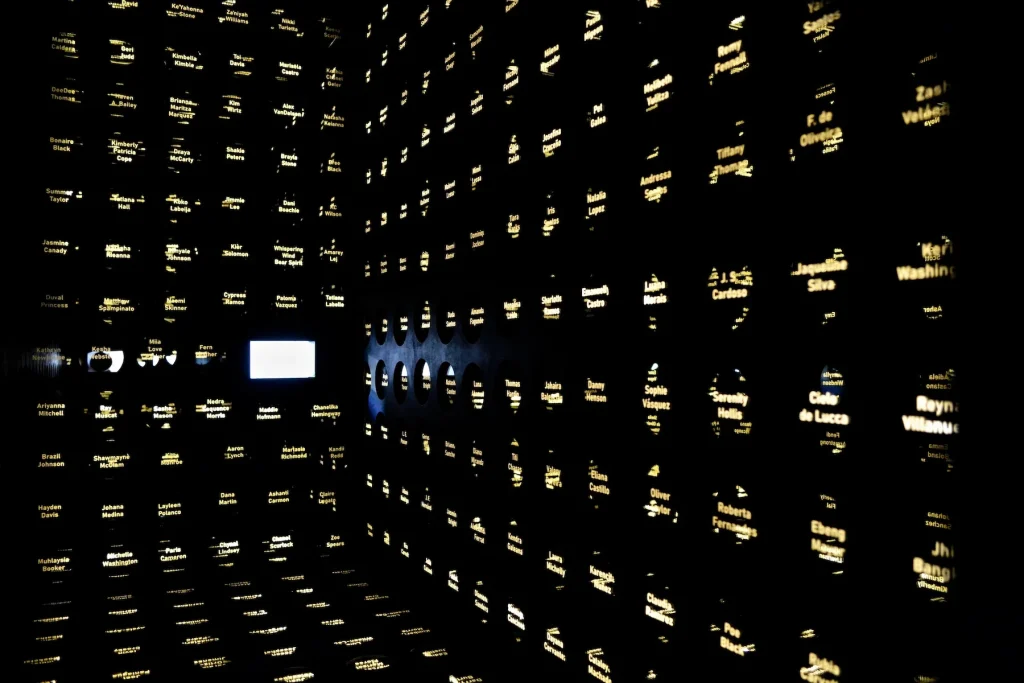
    I will create an audio archive that will include self-conducted interview recordings with members of the queer community, which I will edit and use together to create a non-linear narrative that underscores the profound influence politics and structures of power have on our surroundings, bodies, and behaviours. Ultimately exploring how these elements shape our lived realities, experiences, and feelings.

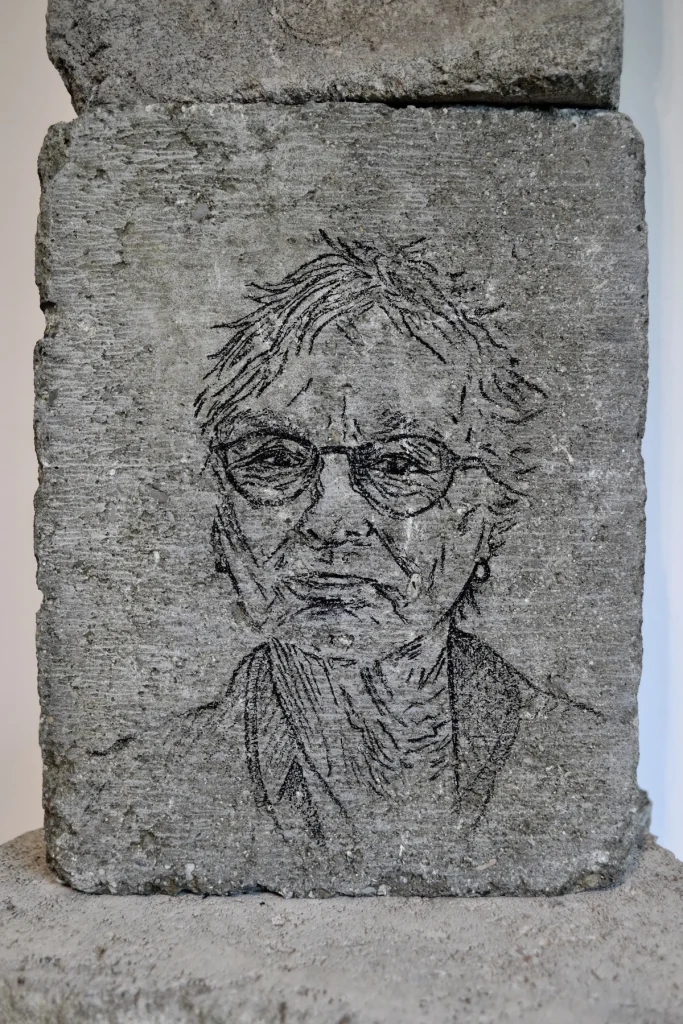
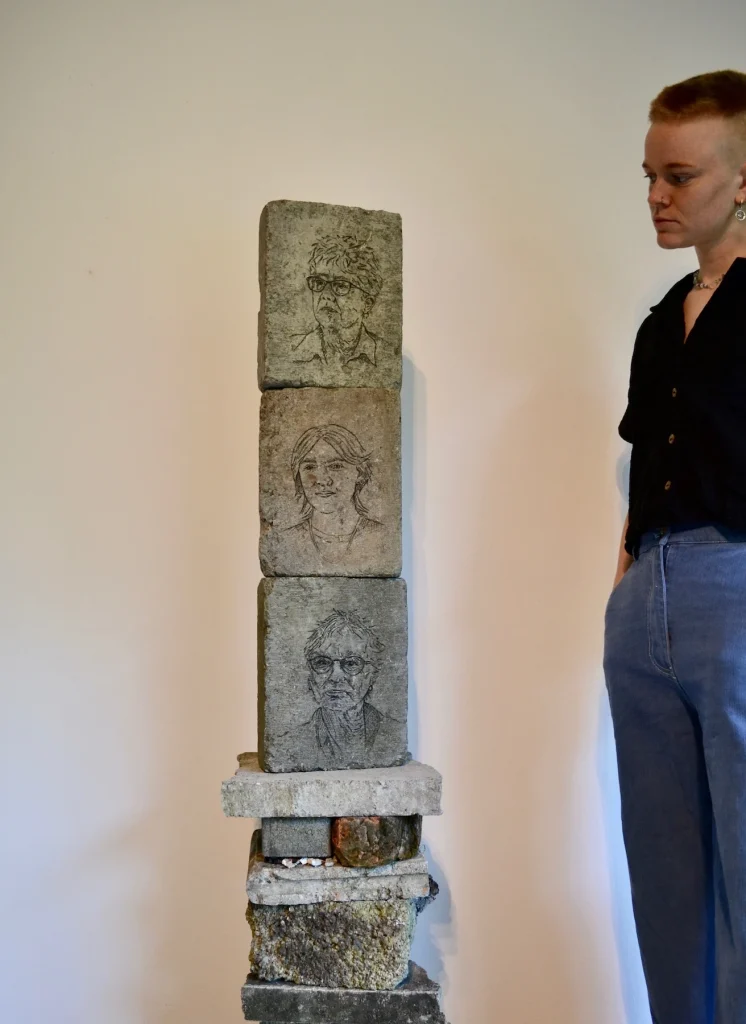
    The participatory project will be an intergenerational anthology of queer reflection and storytelling. Accompanying the audio, will be charcoal portraits of those who have participated in the project. Drawn onto building materials like bricks and stone, which will be stacked to meet the viewer’s gaze, taking the form of pillars. Designed spaces can be understood as a physical means of storing memories, thus calling into scrutiny the erasure of queerness in built environments. The sculptural portraits and auditory encounter will weave together stories, experiences, and queer feelings, to foster a sense of togetherness and continuity.

    I am interested in incorporating storytelling through prosthetic visuality and memory in the development of this project. ‘prosthetic memory,’ is a concept describing a memory that is not based in autobiographical experience but on exposure to vivid meditations generating an emotional response (such as empathy or hate) toward people and experiences of the past whom one has no connection with. Like prosthetic memory, prosthetic visuality is situated between personal ways of seeing and seeing that has been historically and socially constructed by political structures of power. Considering the collective past, much public discourse has been informed and become the product of aestheticized and meditated stories, demonstrating how societal memory is fluid and often politicised.

    To remain relevant in the social consciousness, our prosthetic memories are in constant need of activation and transformation, which provides an opportunity to challenge and shift previous beliefs and alignments to such memories.

    Statement

    April Widdup is an early career multidisciplinary artist from Australia, currently living and practicing in Europe. Widdup’s practice has been focused on the political potential of art and its ability to challenge and encourage critical thinking. Envisaging an arts practice that aims to not only create, but to generate meaningful dialogue with their viewers.

    Widdup’s works often range in tone from playful to more serious, as they explore our relationship to the world at large, from our relationships with ourselves and others, to how we engage with the natural and built environments we inhabit. Exploring the intersections of structural power and human agency to better understand the roles we [can] play as individuals and communities.

    GlogauAIR Project

    Politics and structures of power impact our surroundings, our behaviour, and our experiences in built environments every day, often unbeknownst to the majority. My proposed project for this residency will investigate the relationship between (i) power and privilege (ii) the body (iii) spatial design and effects, and (iv) specifically how they relate to and inform the lived experience and our experiences of life and death. The project will draw on memory studies and the ethical imperative or role of an artist. Employing strategies such as prosthetic memory and visuality, as well as decentring and activating the viewer as a means of creating knowledge. The development of this project will be divided into four stages: Research and early project development (1), Material tests and Maquettes (2), Feedback and Adjustments (3), and Fruition of work (4).

    CV Summary

    Education

    • 2022. Bachelor of Visual Arts, Australian National University School of Art and Design

    Exhibitions

    • 2022. IMMATERIAL #2, Sideway, ACT
    • 2022. SEEN, Tributary Projects Gallery, ACT
    • 2022. GradShow Exhibition, Australian National University, ACT
    • 2022. GradCollect Exhibition, Gang Gang Gallery, ACT
    • 2023. View2023, PhotoAccess, ACT
    • 2023. Sensory Bodies, M16 Artspace, ACT
    • 2023. Cruel Optimism, Tributary Projects Gallery, ACT
    • 2023. Concurrent 5, Concurrent Gallery, ACT
    • 2023. Unseen, Studio Altenburg, NSW
    • 2023. IMMATERIAL #3, Sideway, ACT

    Awards, Grants and Residencies

    • 2022. Art Monthly Australasia Award (EASS Award)
    • 2022. Studio Altenburg Exhibition Award (EASS Award)
    • 2023. ArtsACT Grant: Arts Activities Funding up to $5k
    • 2023. ANU x Corning Museum Sponsored Scholarship
    • 2023. Lincoln City Residency

    Gallery

  • Bob Landström

    Bob Landström

    Bob Landström is GlogauAIR resident
    from July, 2024 to September, 2024

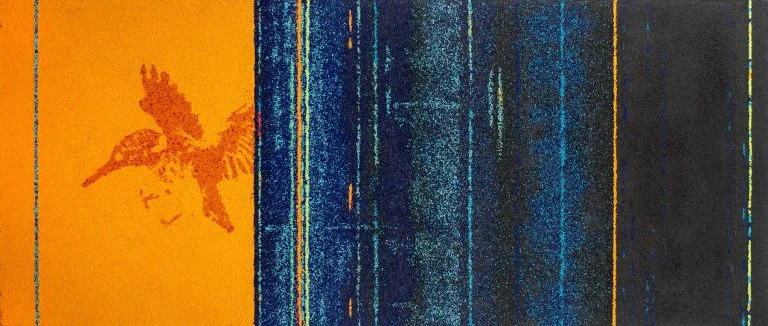
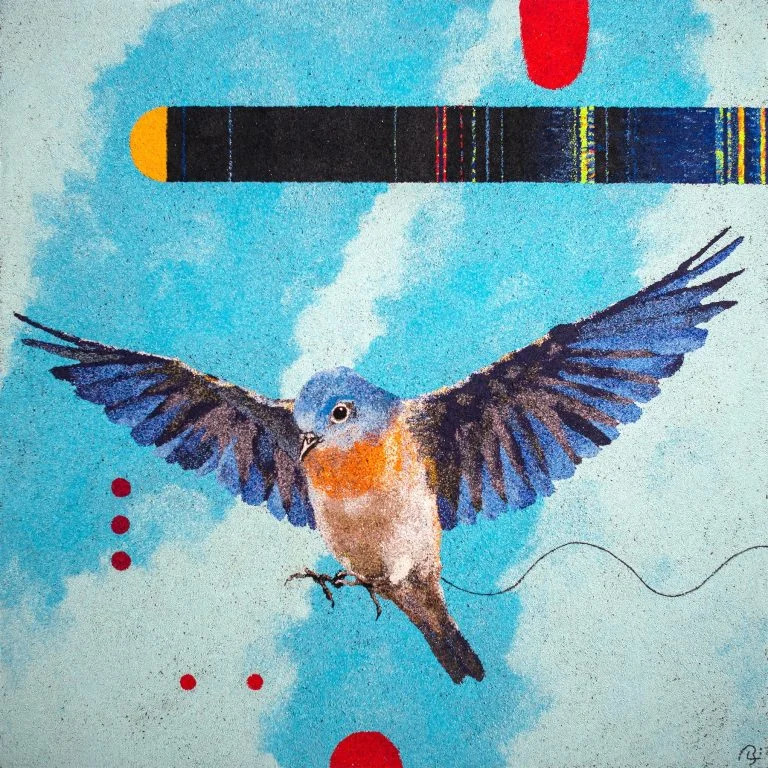
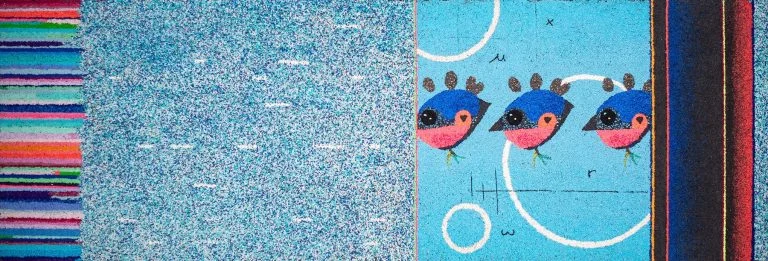
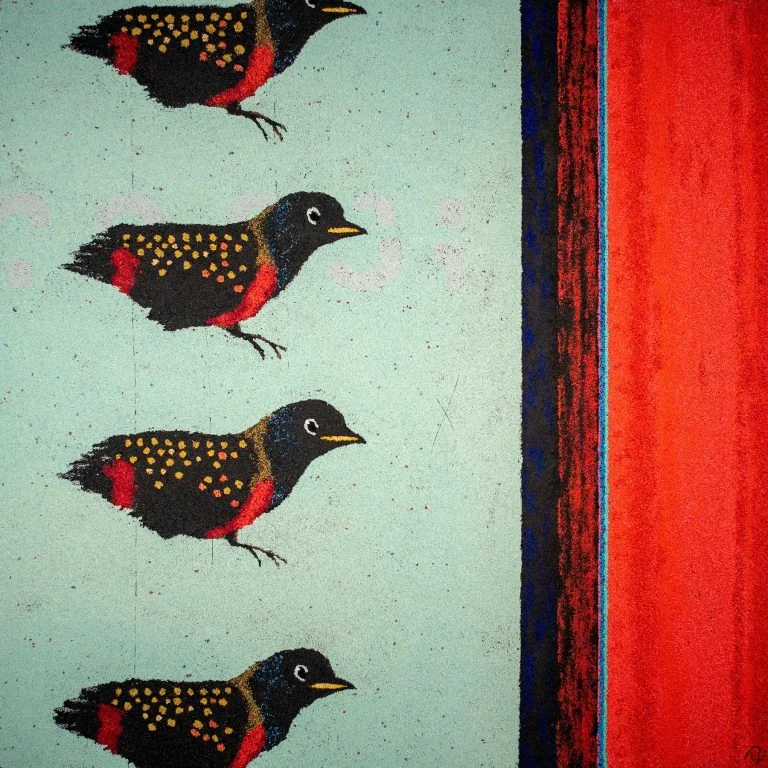
    Bob probs into the intricate dialogue between science and art, with a profound nod to physics and metaphysics. The Earth itself is his painting medium, and in particular, pigmented crushed volcanic rock.


    Meet the Artist

    Statement

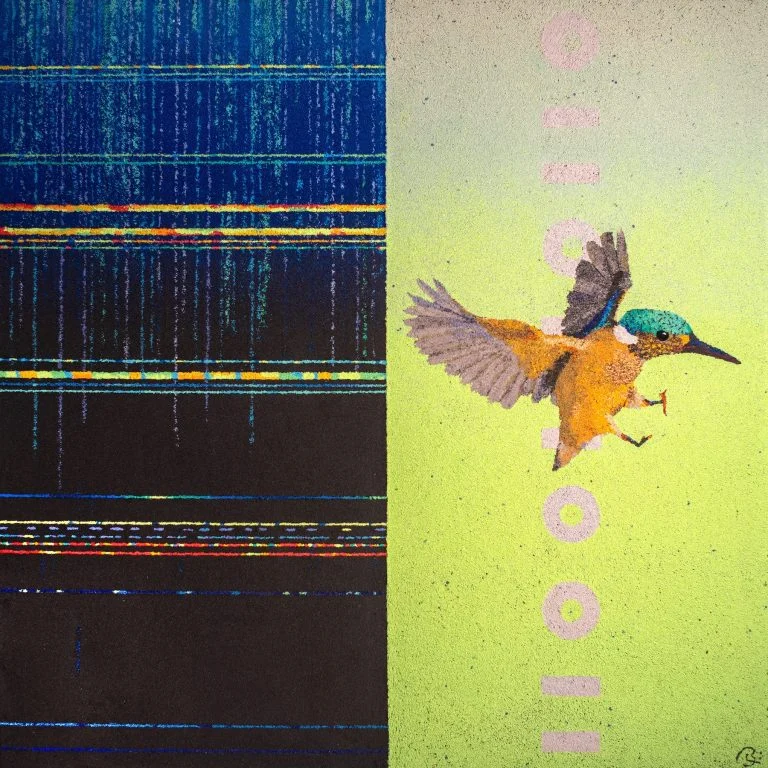
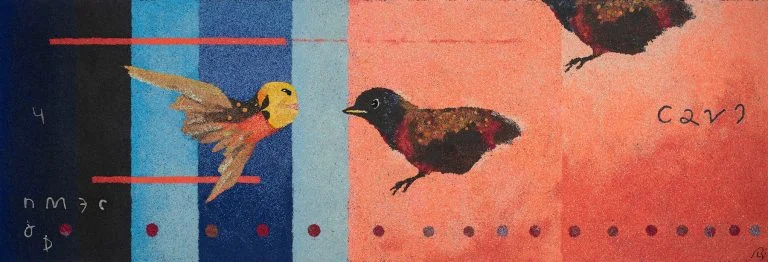
    Bob Landström, a matter painter in Atlanta, Georgia, USA, probes into the intricate dialogue between science and art, with a profound nod to physics and metaphysics. The Earth itself is his painting medium, and in particular, pigmented crushed volcanic rock. This unique technique imbues his works with a rugged, almost geological texture, where each grain of rock is individually colored before being affixed to the canvas, creating a topography that invites tactile exploration.

    Landström’s compositions resonate with echoes of ancient glyphs, reminiscent of those found in cave art, interwoven with snippets of mathematical formulae, fragments of poems, and impassioned ruminations. Through this textured palimpsest, he explores the interconnectedness of human experience across time and space, where layers of meaning converge and diverge like currents in a cosmic stream.

    GlogauAIR Project

    Most think of static as noise. ‘An annoyance tolerated between bits of information.

    Static is information in its own right, revealed with a bit of patience. Random clicks and pops give way to sound emerging ever so faintly. As noise leans into recognized sounds, the mind gradually sharpens. Information is there, just beyond reach, wanting to be understood. In a quantum sense, static is the transition from electromagnetic waves into observable matter.

    During my residency at GlogauAIR, I will further explore this notion of static as a pre-manifestation of materiality. ‘To understand its role in the emergence of physical reality out of the spectrum of natural cosmic energy. That is, not merely noise, but a process of reality forming.Through this, I expect to discover new applications of my materials in ways not seen previously in my work.

    CV Summary

    • 2024. Morton Contemporary, Philadelphia, PA- “Static” (Solo Show)
    • 2023. Alan Avery Art Company, Atlanta, GA- “Florum Somnia” (Solo Show)
    • 2023. Santa Monica Art Museum, Santa Monica, CA- “Looking West”
    • 2022. BG Gallery, Santa Monica, CA- “Multiverse” (Solo Show)
    • 2022. The White Room Gallery, Bridgehampton, NY- “With Certain Uncertainty”
    • 2021. The White Room Gallery, Bridgehampton, NY- “Stray the Course”
    • 2020. Cobb Museum of Art, Marietta, GA
    • 2019. Alan Avery Art Company, Atlanta, GA- “Conjuring Secrets” (Solo Show)

    Gallery

  • Emma Todd

    Emma Todd

    Emma Todd is GlogauAIR resident
    from July, 2024 to September, 2024

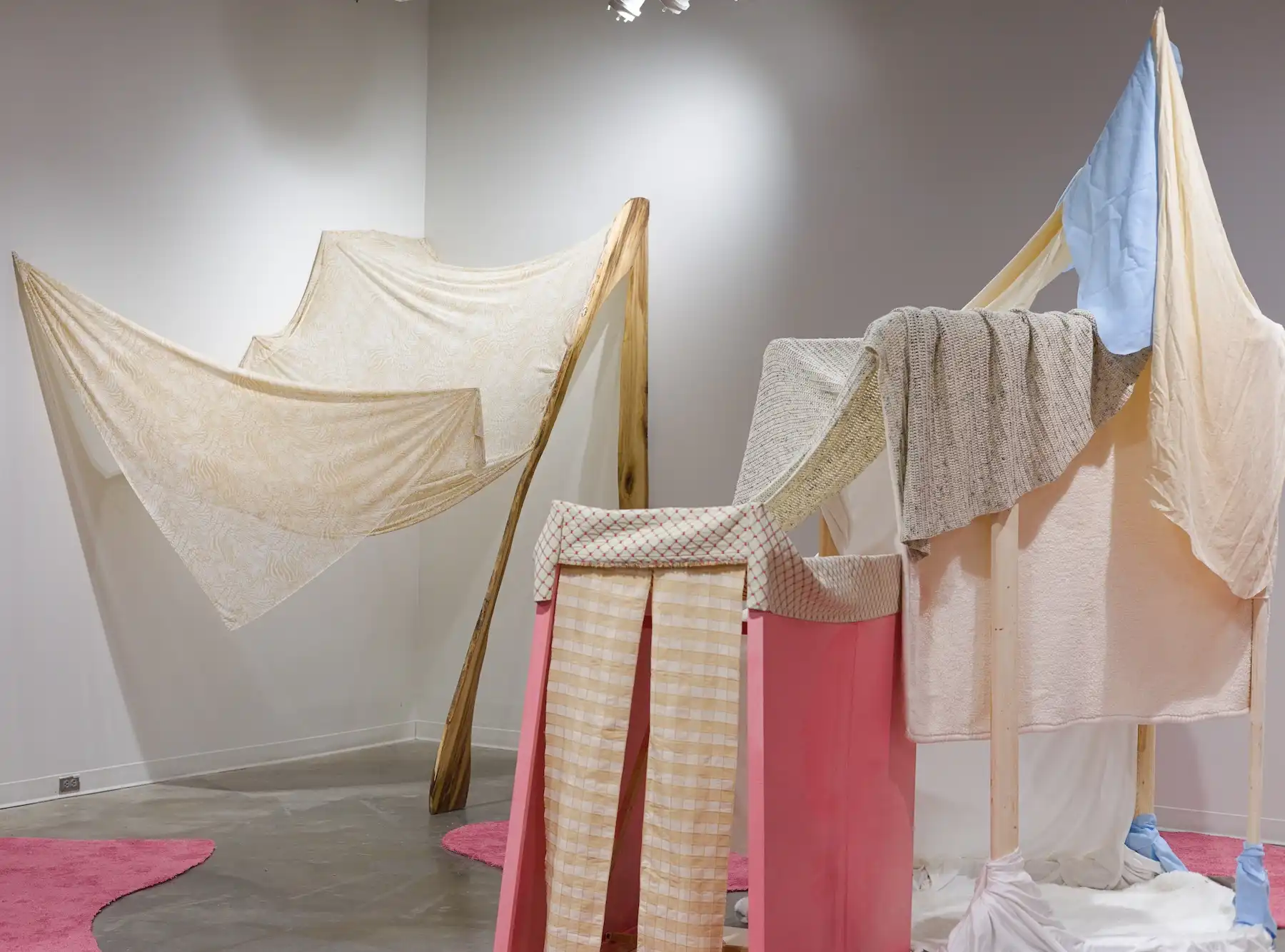
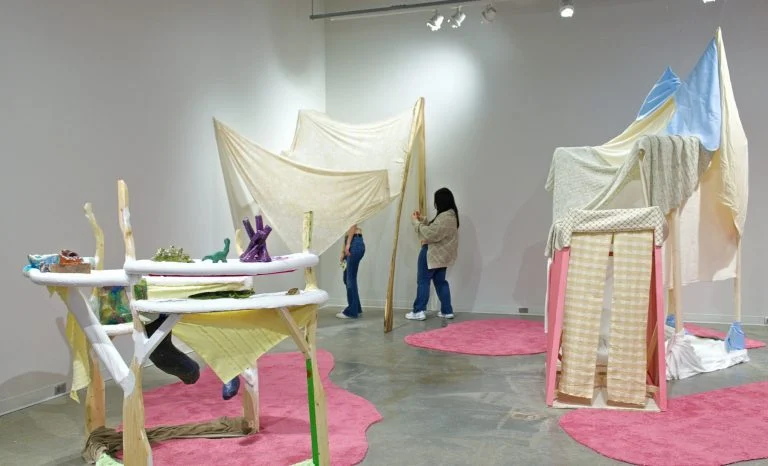
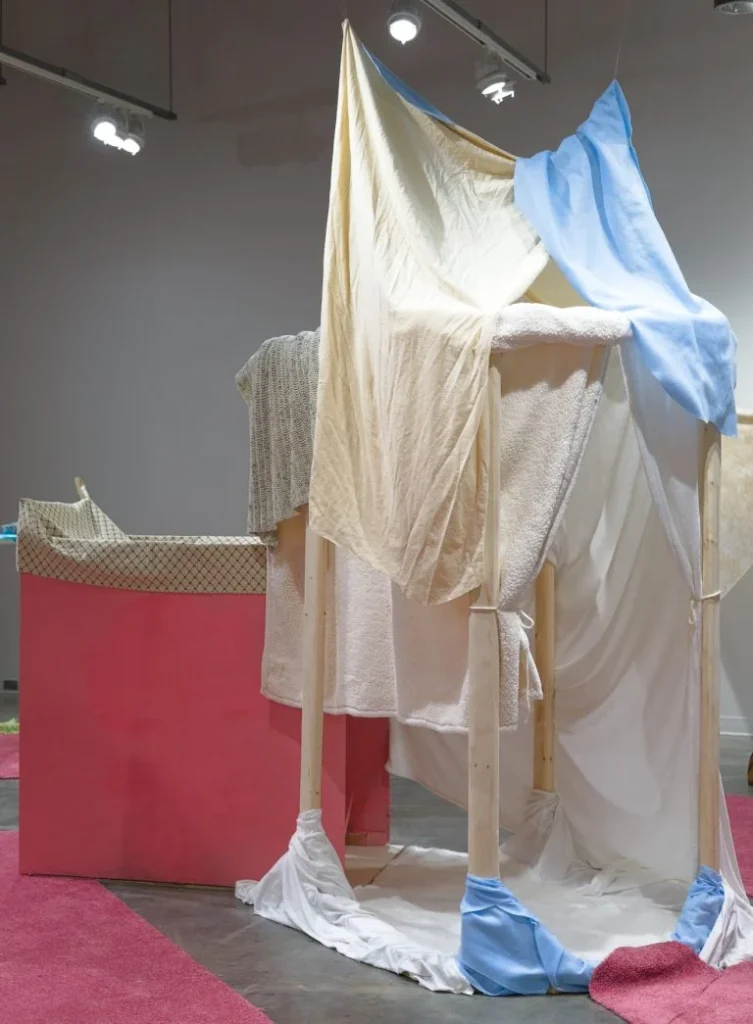
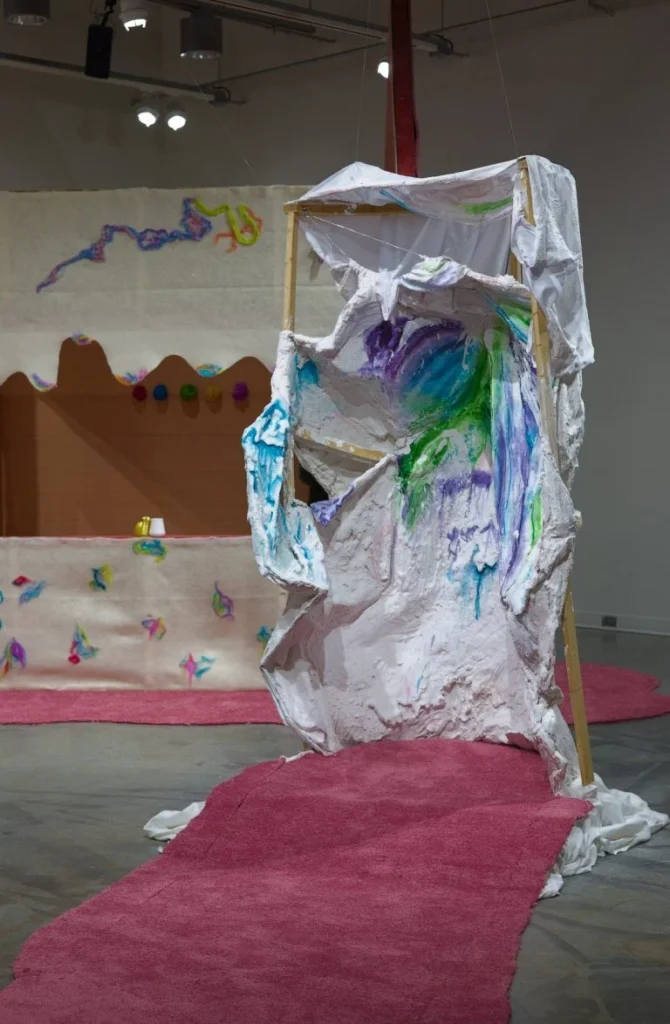
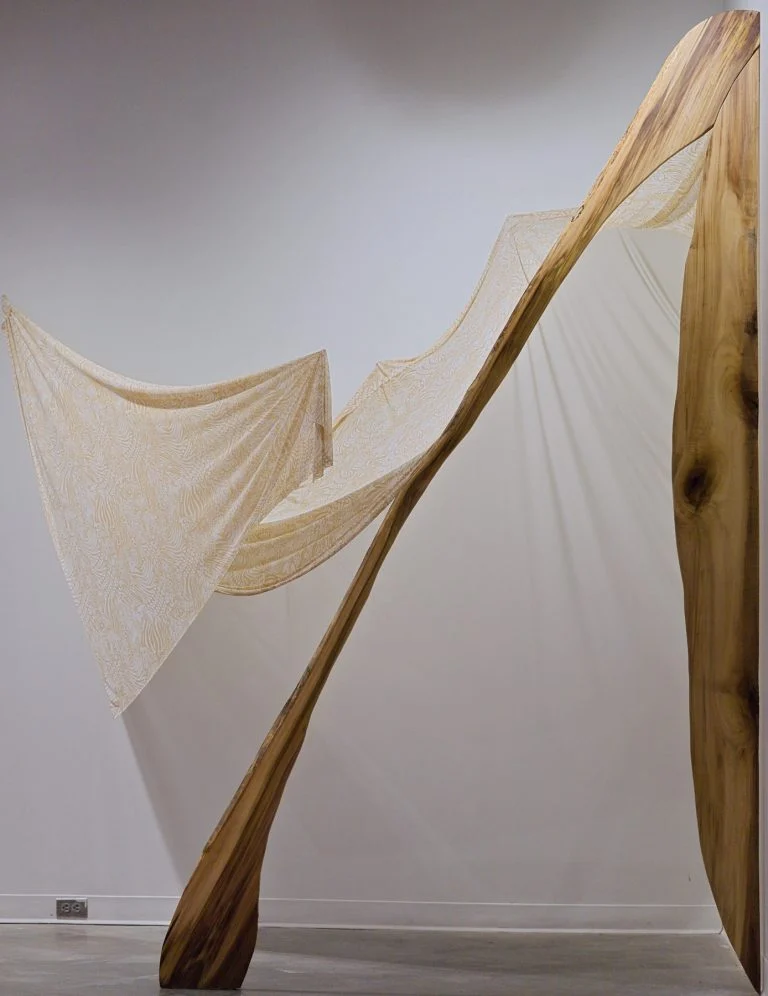
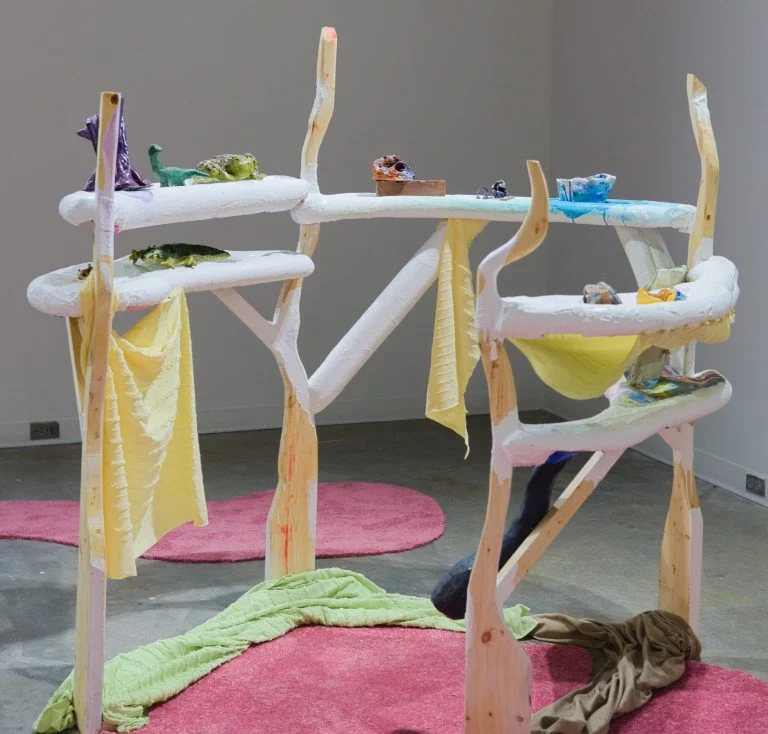
    Emma Todd’s sculptural art practice is rooted in the intersection of space-making and object-creation, characterized by an interdisciplinary approach. Her work emerges from experimental material play, guided by her transdisciplinary philosophies on phenomenology. Todd’s pieces focus on the embodied, interactive, and affective qualities they evoke in viewers, integrating sensorial immersion and subjective experience as central themes. 


    Meet the Artist

    Statement

    My art practice is sculptural: a combination of space-making and object-creation marked by interdisciplinary overlaps. I follow circularities of methods through experimental material play. Stemming from my transdisciplinary philosophies on phenomenology, I orient my pieces around the embodied, interactive, and affective qualities they facilitate for viewers, integrating sensorial immersion and subjective experience as subject matter. Through a refusal of precision in material application, I incorporate the authenticity of materials and artistic labor, straying from representational legibility.

    GlogauAIR Project

    For my project, I envision creating a series of sculptural, environmental installations that are human-sized and enterable. Through qualities of spatial-sensorial immersion, I will encourage embodied, affective, and tactile viewer experiences. The first pieces I’ve completed in this body of work are my stepping stone to exploring how new themes and materials can produce diverse subjective experiences and sensations for viewers. Through these installations, I aim to investigate the capacities of a phenomenologically oriented approach to artmaking and sensorial interactivity in art viewership.

    CV Summary

    EDUCATION

    • 2020-2024. BA with Distinction in Studio Art (Concentration in Sculpture), BA in Cognitive Science (Concentration in Psychology), Minor in Design. University of Virginia, Charlottesville, VA, USA

    FELLOWSHIPS AND RESIDENCIES

    • 2024-2025. Aunspaugh Post-Baccalaureate Fellowship, University of Virginia, Charlottesville, VA, USA
    • 2022. ArtLab Student Artist in Residence at Mountain Lake Biological Station, Pembroke, VA, USA
    • 2019. Virginia Summer Residential Governor’s School for Visual Art, Radford, VA, USA

    EXHIBITIONS

    • 2024. Home, Ruffin Gallery, University of Virginia, Charlottesville, VA, USA
    • 2024. Wanna Play Heap & Seep?, Two-Person Thesis Exhibition, Ruffin Gallery, Charlottesville, VA, USA
    • 2024. On a Scale, McGuffey Art Center, Charlottesville, VA, USA
    • 2023. We Are Resilient Together, J & G Innes LTD Booksellers, St Andrews, Scotland
    • 2023. Hearts: A UVA Exhibition, McGuffey Art Center, Charlottesville, VA, USA
    • 2022. A Summer at Mountain Lake Biological Station, Ruffin Hall, University of Virginia, Charlottesville, VA, USA
    • 2022. 1515 Art Show: Revelations, 1515, Charlottesville, VA, USA
    • 2019. Steel Pier Classic & Surf Art Expo, Virginia Beach Oceanfront, Virginia Beach, VA, USA
    • 2019. Hampton Roads Student Gallery, Chesapeake Central Library, Chesapeake, VA, USA

    EXPERIENCE

    • 2024. Studio Assistant to Conrad Cheung, Charlottesville, VA, USA
    • 2023. Teaching Artist, Ix Art Park, Charlottesville, VA, USA
    • 2022. Creative Director, Scratch Zine, Charlottesville, VA, USA
    • 2021-22. Graphic Designer and Illustrator, Empathable, Charlottesville, VA, USA
    • 2022. Write Climate: Art and Engagement Course Assistant, University of Virginia, Charlottesville, VA, USA
    • 2022. Arts Mentor, Madison House at University of Virginia, Charlottesville, VA, USA
    • 2017-18. Art Camp Teaching Assistant, Virginia Museum of Contemporary Art, Virginia Beach, VA, USA

    Gallery

  • Mab.ko

    Mab.ko

    Mab.ko is GlogauAIR resident
    from July, 2024 to September, 2024

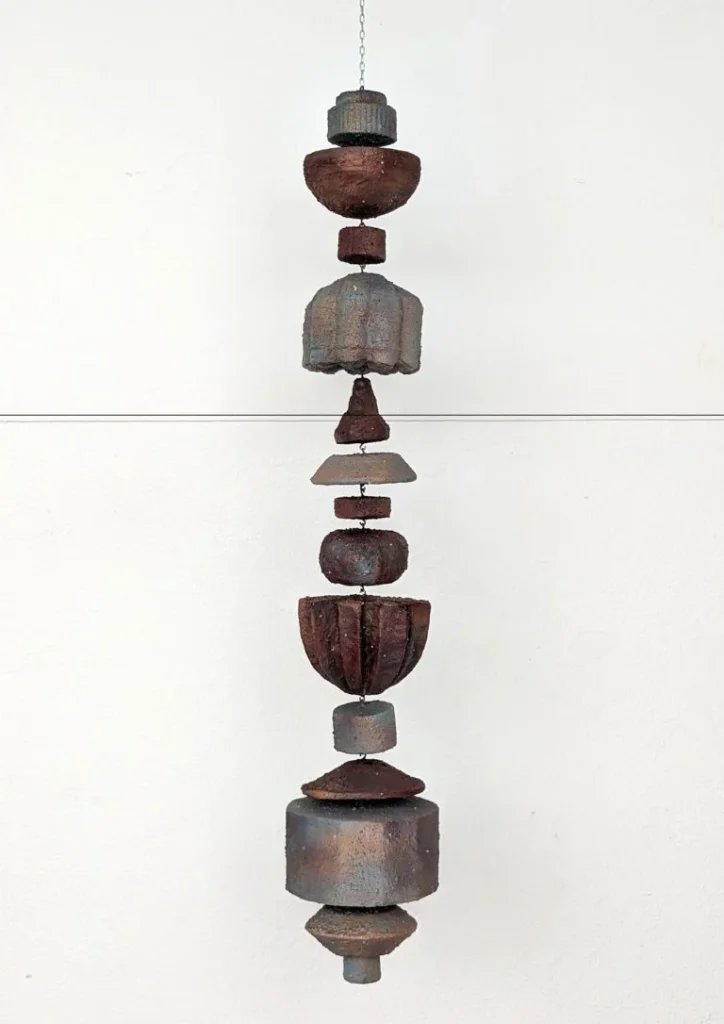
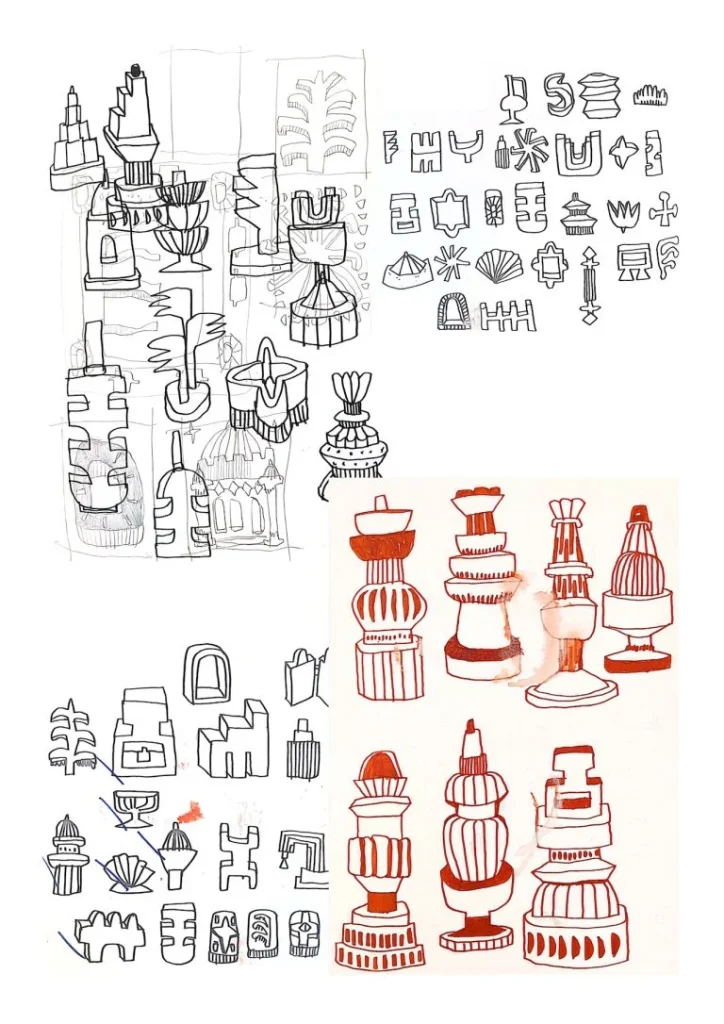
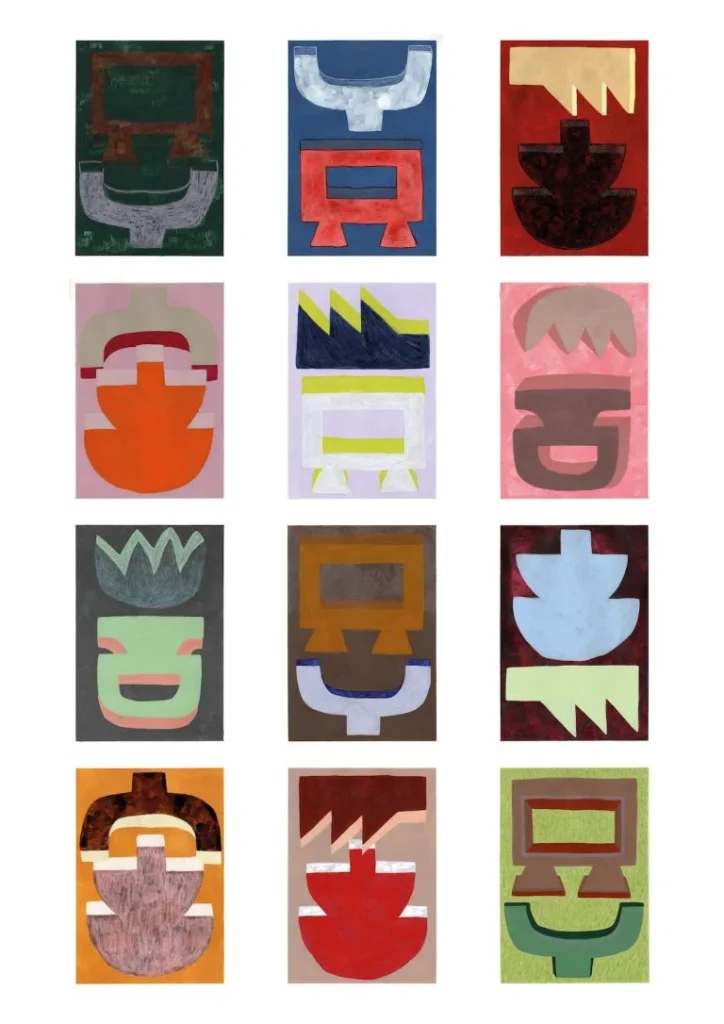
    Mab.ko’s practice is rooted in research on a personal vocabulary, composed of different patterns and archetypal forms. She follows a two-dimensional working protocol in which drawing is the fundamental medium. It engages in a systematic, ritualistic approach where each design research results in a collection of illustrations.


    Meet the Artist

    Statement

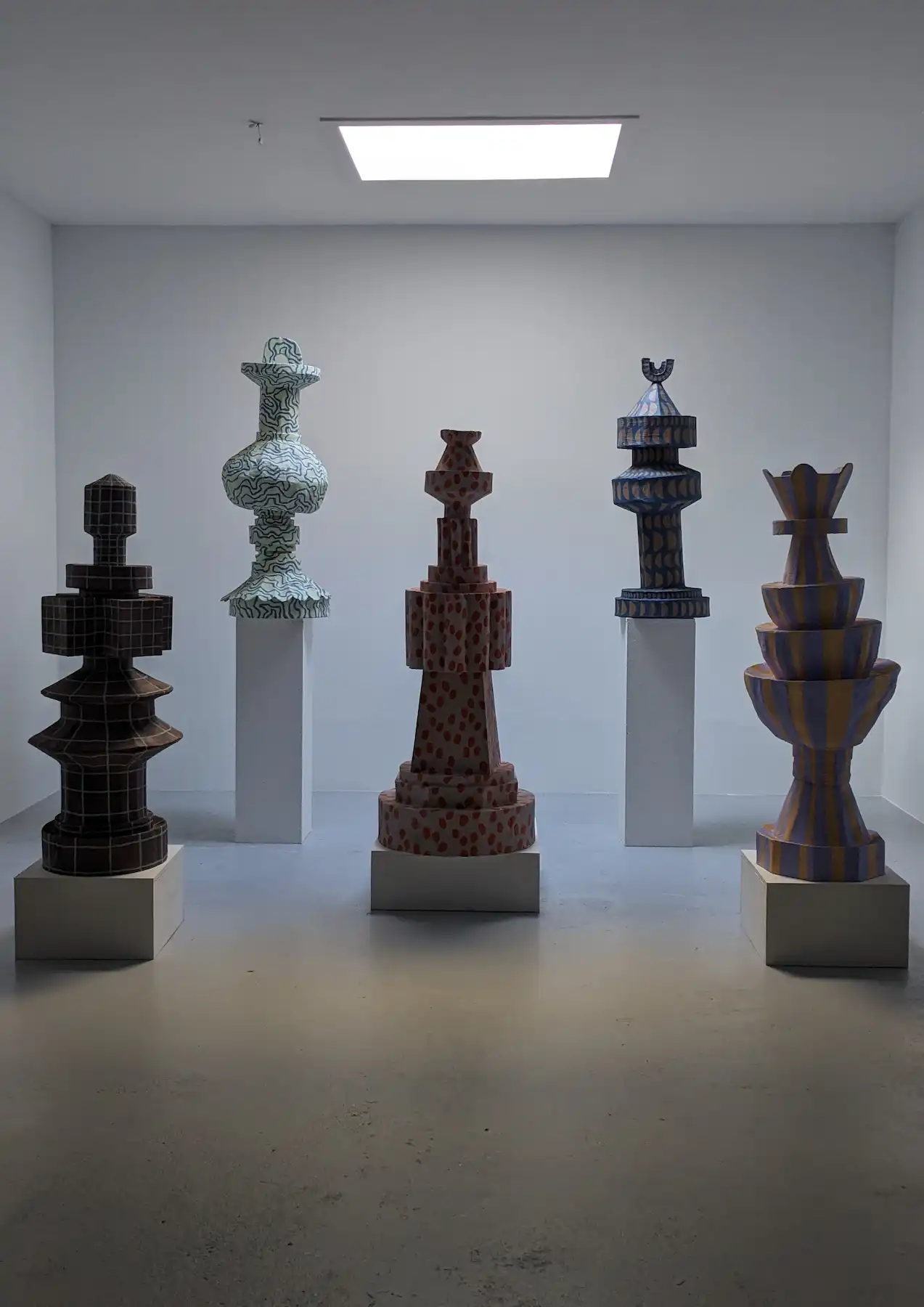
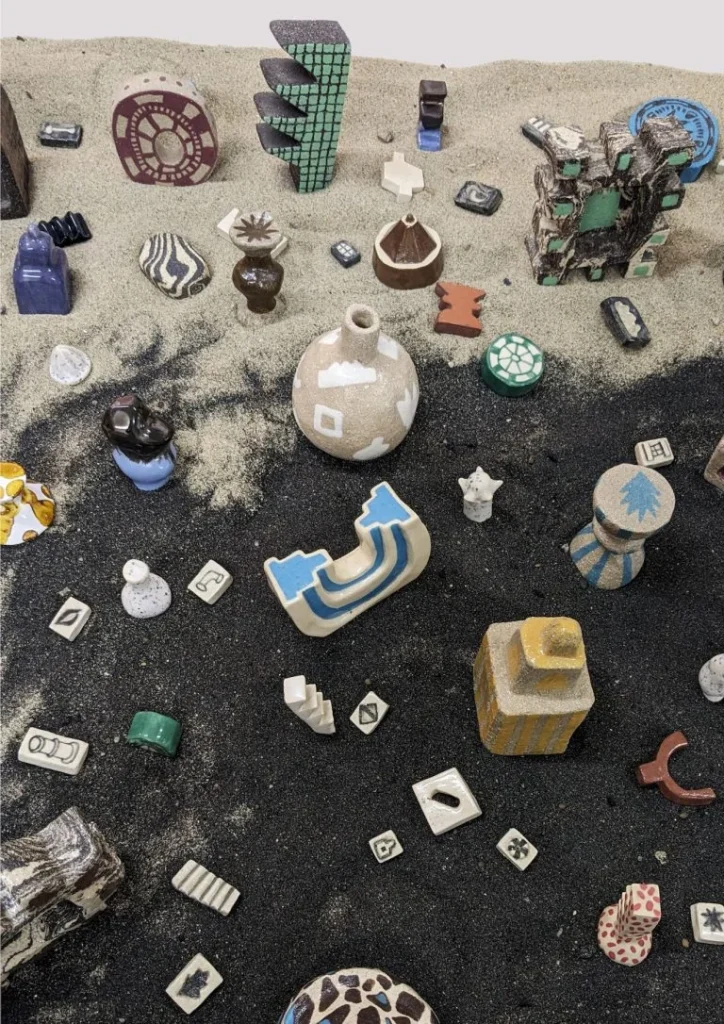
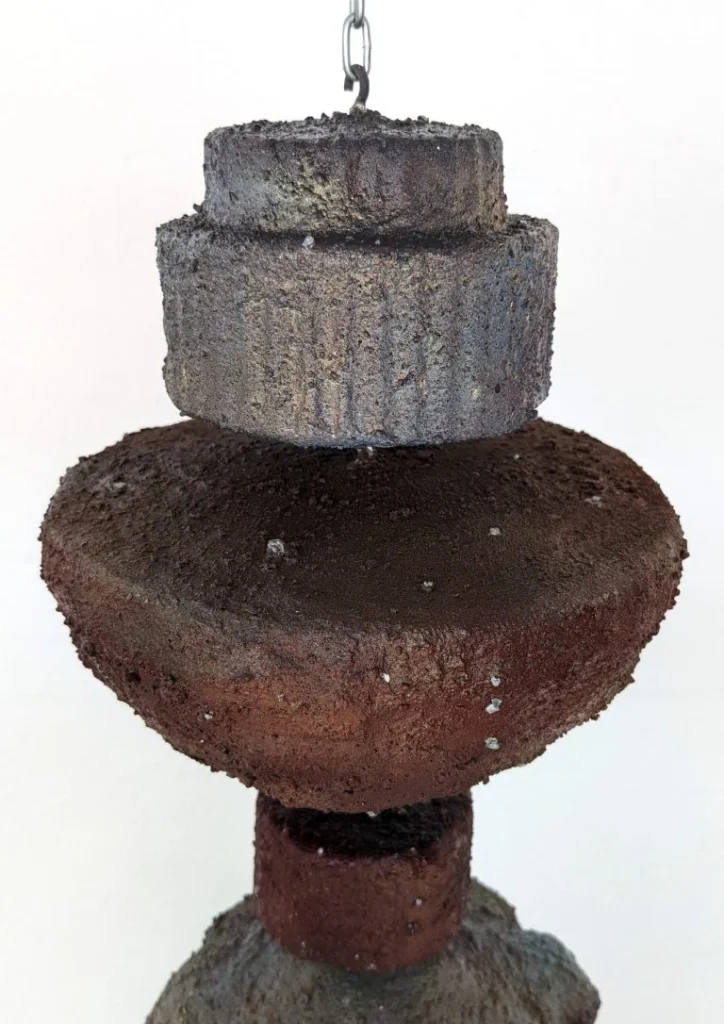
    Mab.ko’s practice is rooted in research on a personal vocabulary, composed of different patterns and archetypal forms. She follows a two-dimensional working protocol in which drawing is the fundamental medium. It engages in a systematic, ritualistic approach where each design research results in a collection of illustrations. Her body of work mainly takes shape in multiple series of three-dimensional objects, from micro-scale totems to more domestic and large, freestanding sculptures. These objects are both the apparatus and the artwork itself, linked to a reminiscence of sacredness.

    GlogauAIR Project

    In the continuity of the creation of those objects, how can I develop a practice around them? By questioning processes that can subconsciously immerse the observer in a sacred atmosphere, I aim to stimulate sensitivity and collective memory through mediums such as sounds, scenography, movements, inducing specific behaviors inherent to my works. During my residency at GlogauAIR, I intend to document these experiments with texts, videos, or drawings that would constitute a sort of inventory of protocols around these artifacts, with the objective of proposing an installation or a performance.

    CV Summary

    • 2024 – Artist residency at FAAP University, São Paulo, Brazil
    • 2024 – Artist residency at Duplex Air, Lisbon, Portugal
    • 2024 – Solo exhibition Sanctuaire at Allmo Space, Porto, Portugal
    • 2022-2023 – Founder of MACS – Artistic and Cultural Association : a place for exhibitions and cultural events, as well as a creative coworking space for artists and craftspeople, Porto, Portugal
    • 2022 – Winner of the National Young Creators Exhibition in the Sculpture category, Lisbon, Portugal
    • 2022 – Finalist in the National Young Creators Exhibition in the Ceramics and Sculpture categories, Lisbon, Portugal
    • 2022 – Solo exhibition Contemplation at MACS, Porto, Portugal
    • 2021 – Group exhibition at the Maracujália art event, Porto, Portugal
    • 2021 – Honourable mention in the Library Illustrazioni illustration competition, Italy
    • 2017-2021 Production of illustrations for architectural studios, France
    • 2017 – Graduated from the National School of Architecture in Versailles, France

    Gallery

  • Konstantina Mavridou

    Konstantina Mavridou

    Konstantina Mavridou is GlogauAIR resident
    from July, 2024 to September, 2024

    Konstantina’s art is a dialogue between the constants of nature and the ever-evolving landscape of technology. By interweaving the physical with the digital, the real with the illusionary, she aims to create a poetic reflection on space, time and perception. 


    Meet the Artist

    Statement

    My art is a dialogue between the constants of nature and the ever-evolving landscape of technology. Drawing heavily from the realms of science, mathematics, and philosophy, my work seeks to explore and question the current technological acceleration and its trends. By interweaving the physical with the digital, the real with the illusionary, I aim to create a poetic reflection on space, time, and perception. My projects delve into themes of movement, transformation, and the interplay between the tangible and intangible. Through my art, I invite viewers to contemplate the nature of experience, the fluid boundaries between technology and nature, and the endless possibilities that lie in interpretation and creation. This journey is not just about observing the world but about engaging with it, challenging our perceptions, and imagining new realities.

    GlogauAIR Project

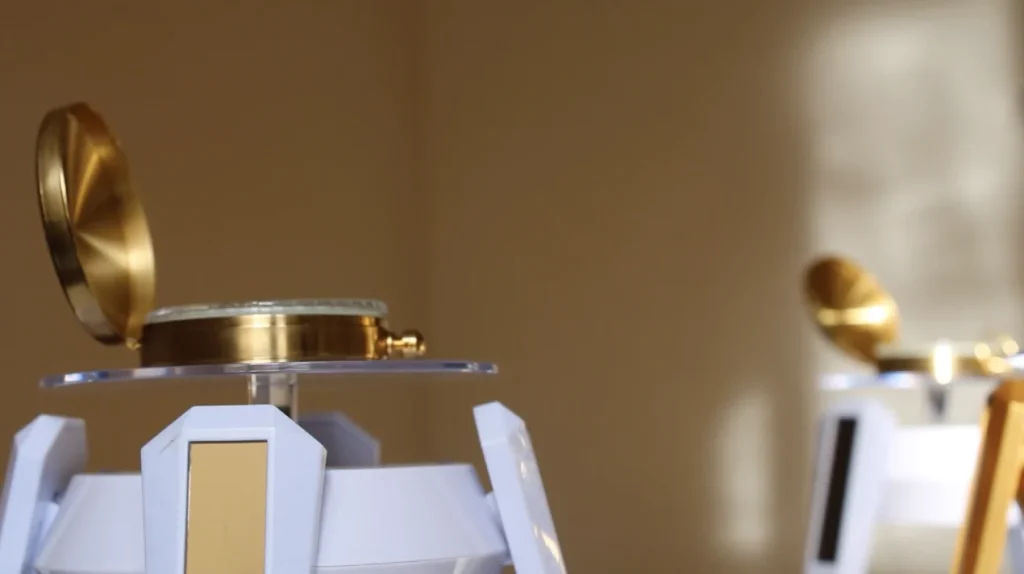
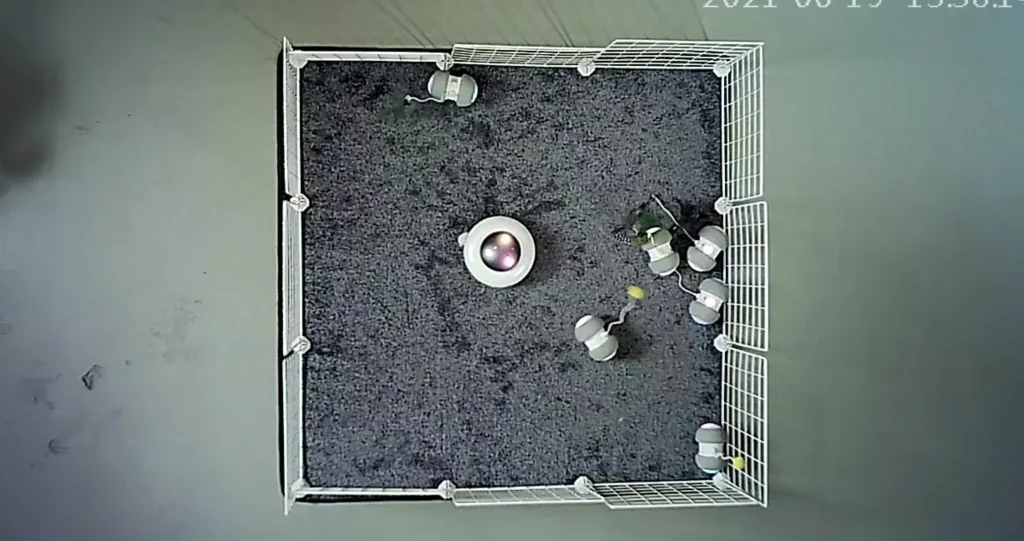
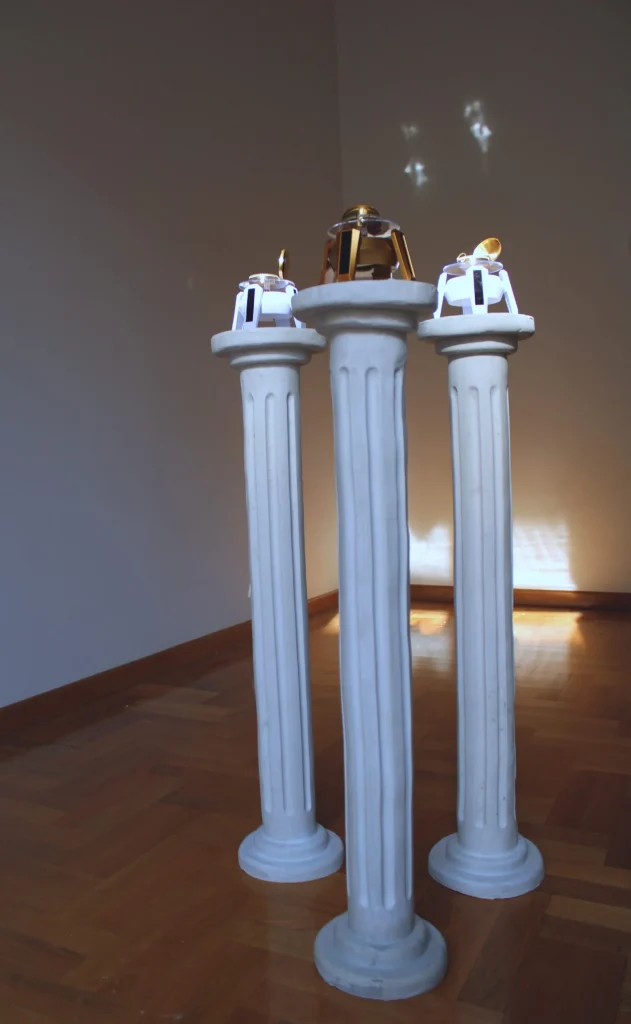
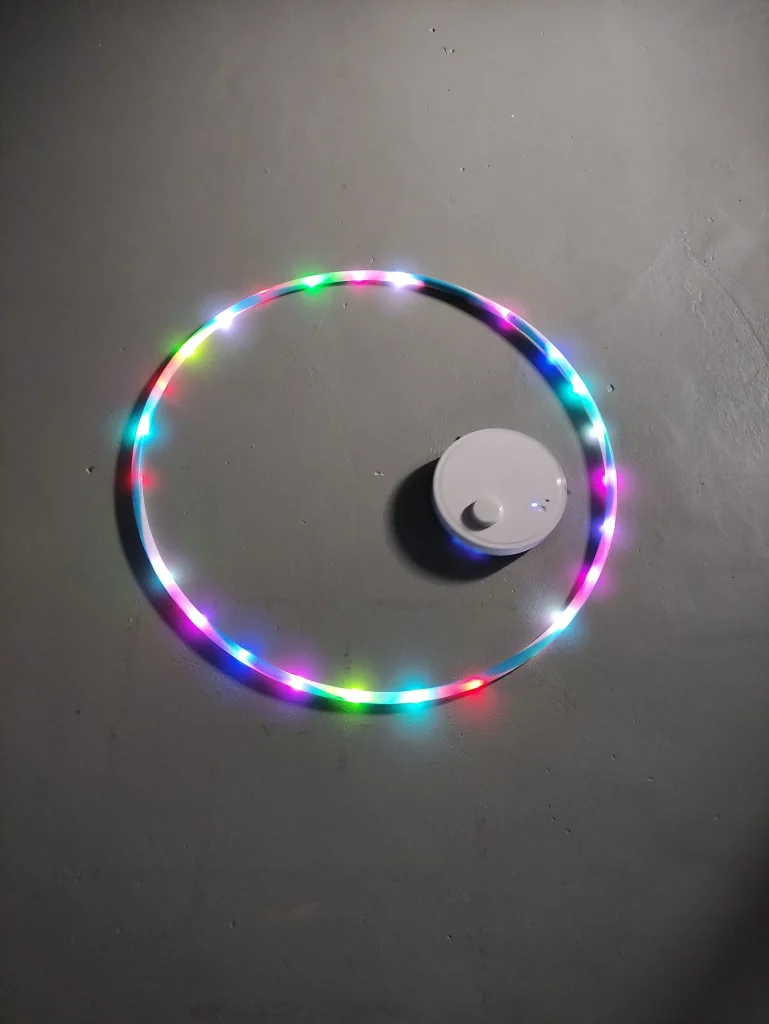
    Through this residency at GlogauAIR, I am aiming to continue to evolve my exploration of (solar) kinetics and interactive media in new conceptual territories, while drawing inspiration from my Greek rich heritage, inviting viewers into a multisensory dialogue with space and perception. My aim is to explore the poetic interplay between light, technology, and natural forces, leading to an immersive installation or views of it that challenges and expands conventional perceptions of space.

    CV Summary

    • Colour Your Dreams In 60 Seconds., January 13th – 31st, 2024, Fotografisk Center, Staldgade 16, 1699, Copenhagen V., Danmark. (The Wrong Biennale)
    • Public screening on Friday, October 13th, 2023, Skabelonloftet on Refshaleøen, Culture Night, Copenhagen
    • ELO (Electronic Literature Organisation) Conference 2023 in Coimbra, Portugal, 12-15 July, 2023 (Via the Unmoving show)
    • Broadcast RietveldTV @AT5 Dutch tv channel, 29-30 April, 2023
    • Tweetakt Festival, Utrecht, Fort Ruigenhoek, 25 June – 10 July, 2022
    • Rotterdam Art Week, The New Current, 17-22 May 2022
    • next beginning, Galerie Wundersee, Dusseldorf, 13 May 2022
    • The Unmoving show, The Wrong biennale, online-worldwide, 2021
    • Invisible: Rake Collective, Online residency, online-worldwide, 2021
    • LekArt Young Talent, Werk aan het Spoel Culemborg, 2021
    • Homepage Art Fair, Mrs Home Page, online-worldwide, 2021
    • The Seed Is Planted, sculptural installation, TAK ART SPACE, 2020-present
    • Graduation Show 2020, Gerrit Rietveld Academie, 2020

    Gallery

  • Erica Zhan

    Erica Zhan

    Erica Zhan is GlogauAIR resident
    from July, 2024 to September, 2024

    Erica Zhan, a Chicago-based artist from southeastern China, uses performance, video, and writing to critique consumerism and competitive culture. Their work examines how capitalism limits freedom, blending humor, melancholy, and play to reclaim authenticity.


    Meet the Artist

    Statement

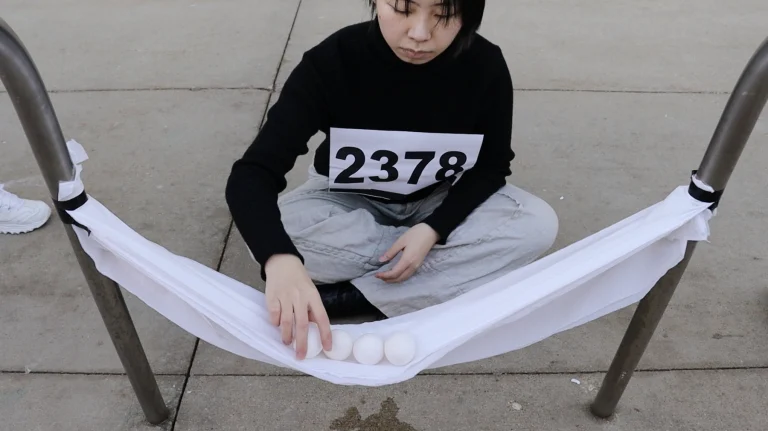
    Erica Zhan (b. southeastern hills in China) is an interdisciplinary artist and writer based in Chicago, US. Swallowed by their experiences of intensive consumerism, celebration capitalism and dynamics of competition, Zhan explores the paradigm of contemporary games and sports, as well as the vulnerability shaped by competitive intensity in the context of late capitalism. Weaving the mediums of performance, video and experimental writing, they simulate and provoke the authentic living situation, scrutinizing the zones of freedom in human society that have been eroded by professionalism and commodification, returning them to their original state of nakedness. Zhan is devoted to transcoding humor, melancholy, sentimentality, play, and poetry.

    GlogauAIR Project

    During this residency I hope to work on my ongoing research-based artistic project “Whole Olympics Catalog”, which is inspired by the visual components of the Olympics and the paradigm of their generating and molding. The title draws inspiration from the American counterculture magazine “Whole Earth Catalog” from the 1960s. I try to elaborate the spirit from the magazine and connect the visual appearance of the Olympics, the representation of the contest, with its strategy of worldwide consumption. This project will mimic the format of a merchants catalog, digging into the historical materials in a playful and unconventional manner, aiming to craft new prosthetics for the Olympics of their banal nationalism and commodification.

    CV Summary

    Education

    • 2023 MA, Visual and Critical Studies, School of the Art Institute of Chicago
    • 2021 BA, International Business with Communication Studies, University of Nottingham (Ningbo)
    • 2019 Summer Study Abroad, Art History, Criticism and Communication, Central Saint Martins

    Exhibitions & Performances

    • 2024 White Heat, {\}() {\}∆‡!(){\} Tangential Unspace Art Lab, Chicago, IL
    • 2024 knock, and the doors of perception shall be opened unto you, International Museum of Surgical Science, Chicago, IL
    • 2023 and the home of the [placeholder]—S1E3, Terrain Biennial 2023, Chicago IL
    • 2023 Exquisite Corpse Video Project, Gene Siskel Film Center, Chicago, IL
    • 2023 and the home of the [placeholder]—S1E1, Comfort Station, Chicago, IL
    • 2023 The time has come, to talk of many things, ACRE Projects Gallery, Chicago, IL
    • 2019 Becoming, Became, I am what I am, Central Saint Martins, London, UK

    Professional Experience

    • 2023-Present Exhibition Assistant, Comfort Station, Chicago
    • 2023 Works of Art Collection Support, Arts Department of Chicago Public Schools, Chicago
    • 2022 Teaching Assistant, School of the Art Institute of Chicago, Chicago
    • 2019-2022 Intern Editor & Public Event Assistant, The Art Newspaper China, Shanghai
    • 2019-Present Freelance Writer
    • 2018 Gallery Assistant, Long March Space, Beijing
    • 2018 Gallery Assistant & Graphic Designer, Magician Space, Beijing
    • 2018 Research Assistant, University of Nottingham, Ningbo

    Publications

    • Walking on A Moment So Fleeting—Watching the Mystery of Jiang Jie’s Life, The Art Journal, August 2023
    • Artists Haven’t Forgotten—20 Years Since 9/11, The Art Journal , September 2021
    • Starting Anew at the Crossroads—Choices and Futures of New Art Graduates, The Art Journal, July 2021
    • Inspiration of Exceptional Status—A New World of Online Art in the Post-Pandemic Era, The Art Journal, April 2021
    • Contemporary Art Leaps Into The Digital Era—The Emerging Global Digital Map of Art Events, The Art Journal, April 2021
    • Sisyphus and The Ship of Theseus—Li Binyuan’s Decade-Long Journey of Self-Sculpture, The Art Journal, December, 2019

    Gallery