Archives: Artists

  • Judith Fang

    Judith Fang

    Judith Fang is GlogauAIR resident
    from October 2024 to December 2024

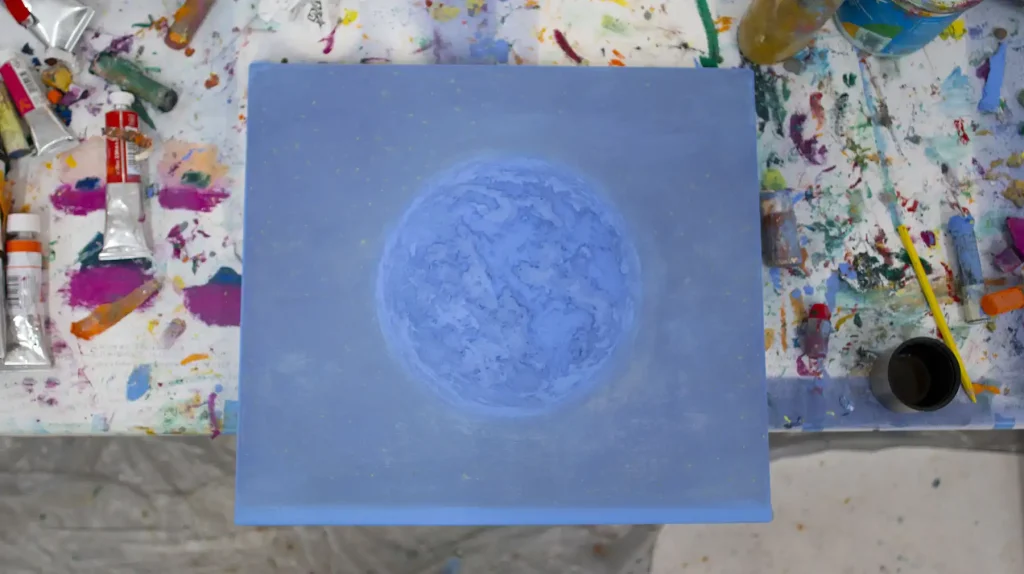
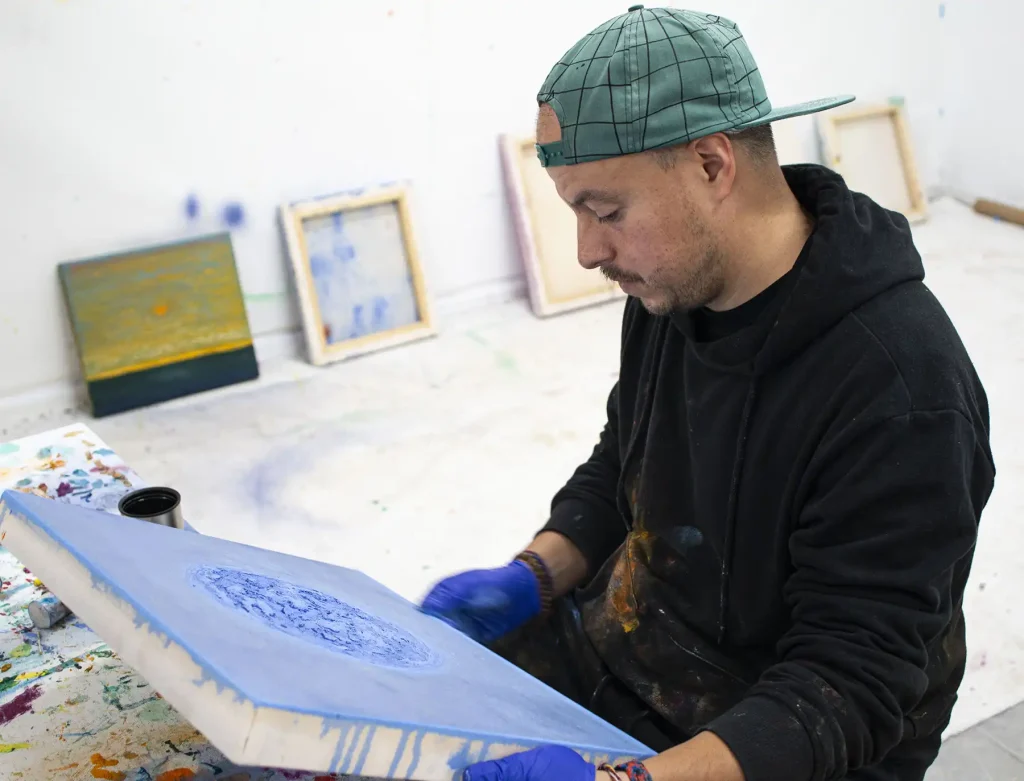
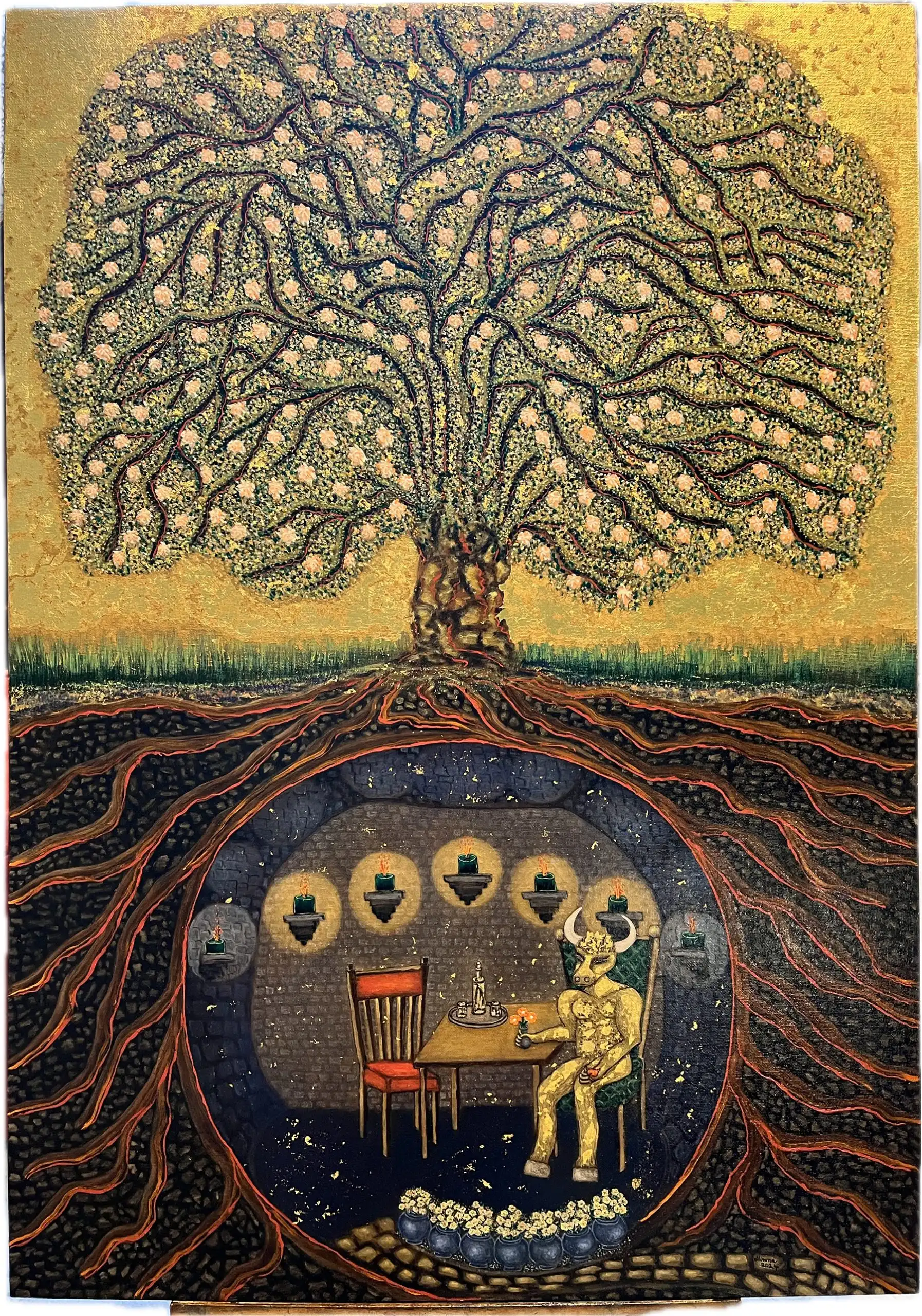
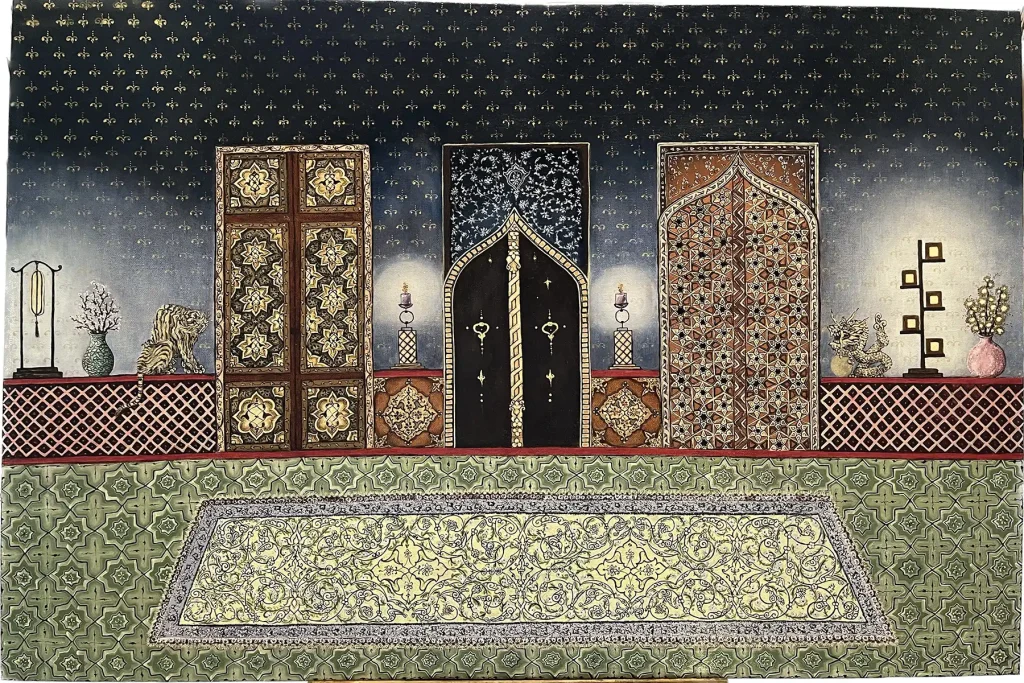
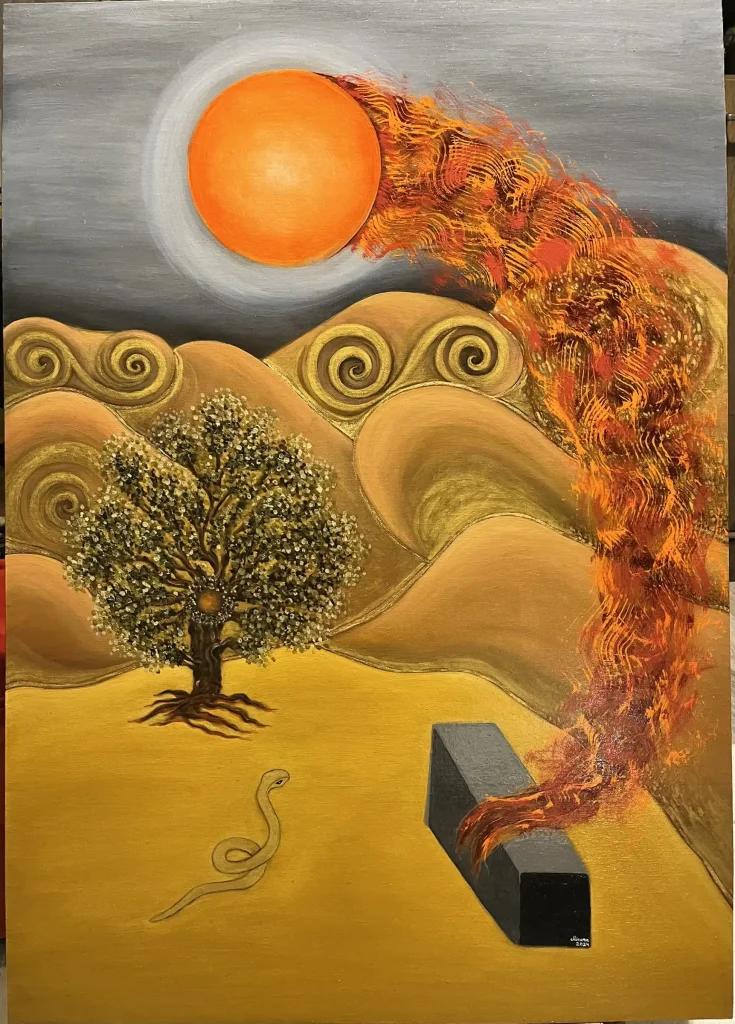
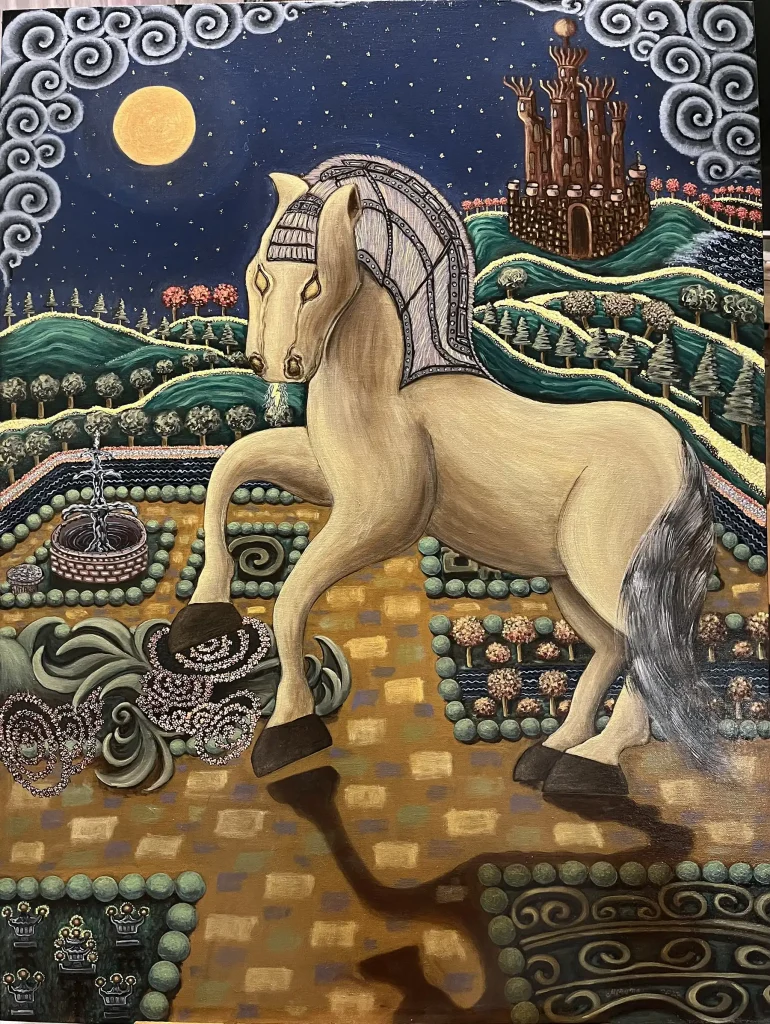
    Judith Fang is an independent artist and amateur astronomer whose work explores the nostalgia and disconnection of urban life amidst constant change. Inspired by the night sky as a stable backdrop to her rootless surroundings, she reflects on shared human experiences across diverse backgrounds. Through her art, she connects science, nature, and language to evoke empathy and poetry.

    Meet the Artist

    Can you give us an introduction about yourself and your background?

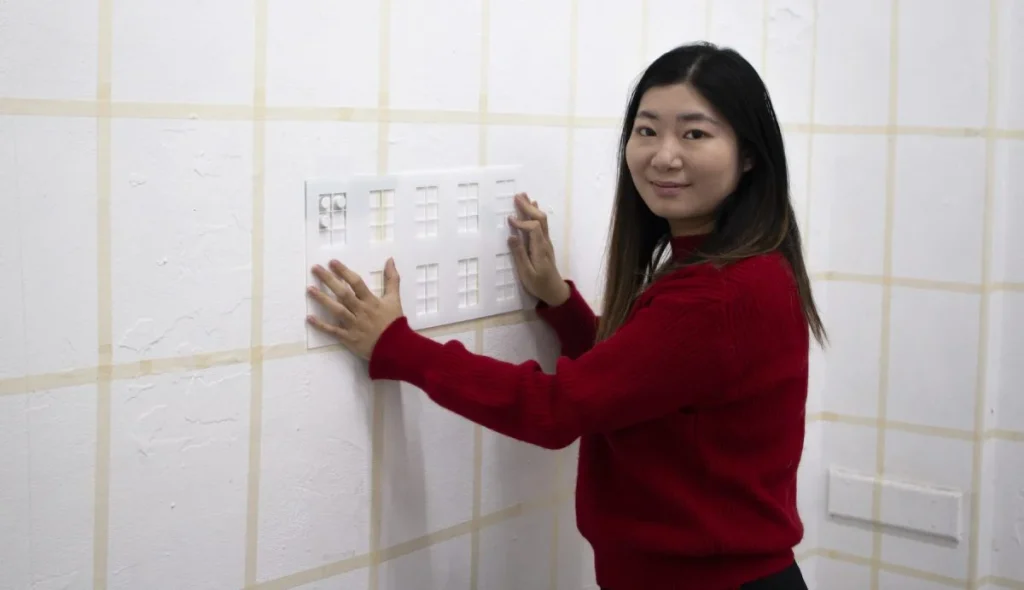
    I’m Judith. I graduated from the School of the Art Institute of Chicago. I spent four years there, but it was abruptly stopped by the pandemic in 2020. I moved to London for another year of study in the middle of my undergraduate, and afterwards, I moved to a very small town in China.

    It’s a historical town of porcelain industry and ceramics. A lot of people who graduated from art school, they’ve all moved to that town. I don’t know why.

    It’s probably that they’re like me – there’s sort of a pressure in China in general – because I was born and raised in Shanghai – living in big cities. Everything needs to be done within a social pace that your parents expect, stuff like that. So escaping from urban life to smaller towns has become a popular move in recent years. That also happens in my artwork as well – the theme of escaping from urban life.
    I remember you saying that moving there made you realize how many stars there are. Is that when your interest in astronomy started?

    Yes, exactly. Because I think the stars really mark how close you are to nature. Every time I was in Shanghai, I didn’t realize that we have so many stars, especially the moon. You can only see the brightest ones in the sky, because of the severe air pollution and the light pollution. You’re living in a bubble of a man-made world. And you don’t really get any idea of how other kinds of life live.

    Was that in addition to the work you were doing before you moved to the suburbs? Or did it break away from the work you were doing before?

    I think there are certain connections. I still have a very long-term anxiety that was from Shanghai, a traumatic experience from Chinese education and pressure from school.

    But I drive my art direction a little bit different from before. I was talking about control and being in control at the very beginning of my career. That’s also why my previous portfolio website is called Judith Square. the idea of the square, compared to the studio, is a very open space outdoors. So I didn’t name my studio a studio. I called it a square. And I make every work interact with physics. I try to leave many decisions to nature itself.

    For example, I do ceramics. And there are a lot of decisions of the color – the appearance is made by the kiln, by the temperature. I used to work with gravity as well. There are ideas around thinking that I don’t have absolute authority when I’m making art. This is also a sort of anxiety treatment as well.

    To me, astronomy perfectly follows that formula. It’s not up to us what happens in the sky or the way the earth turns. Or if a comet decides to come down and wipe us all out. We’re not in control at all. Like in China, during the pandemic, Shanghai was totally locked down at the beginning of the year. And at the end of the year, the little town that I lived in was locked down too. All the shops were closing and people didn’t have enough food. People were drawing in the anxiety. So I just ran all the way to the top of the building, to the rooftop. I grabbed a seat and just sat there stargazing. I realized that the stars rise every single year at the same time. They have their own pace and nothing influences their pace. This sort of macroscopic way of thinking really relaxed me a lot.

    When did the work with Braille begin? Is this recent, and what led you to that?

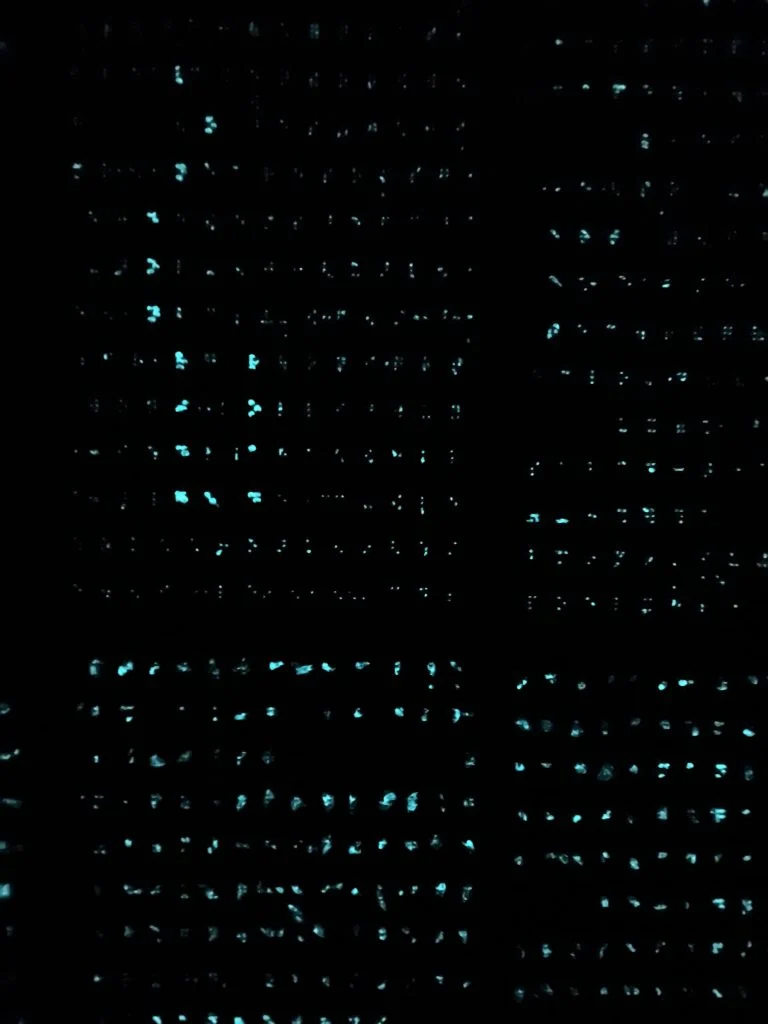
    When I was looking at the stars, there’s a method when you look at them called Star Bridge. You just build compositions between dots to a shape. And then that links by maybe six or five degrees to another star. This is how you seek deeper, celestial bodies, such as galaxies and all the clusters. So I look at all these spots and think about their compositions, trying to link them from one to the other.

    This sort of way of reading the stars made me think of them as a language. We’re making sense of it, at least making them into something comprehensible. So when I read Braille, I realised that they have many connections between them. Braille is also called ‘night language’.

    There are so many poetic parallels between Braille and stars. Another thing I realized is that when I take my telescope, everything that shows in my lens is reversed from the natural world. So you see everything upside down. This is how you write and read Braille – you write it from right to left and read from left to right. I’m highly interested in the connections between these two semiotics.

    As far as being in Berlin, now that you’re almost finished, how has it been working here with your practice as a whole, but also with your interest in Braille?

    In my first proposal to GlogauAIR, I wrote that I was going to paint the night sky outdoors. Then I realized it was too cold, so I didn’t do that. I think that Berlin is very inspiring to me in a lot of ways, even the way of living.

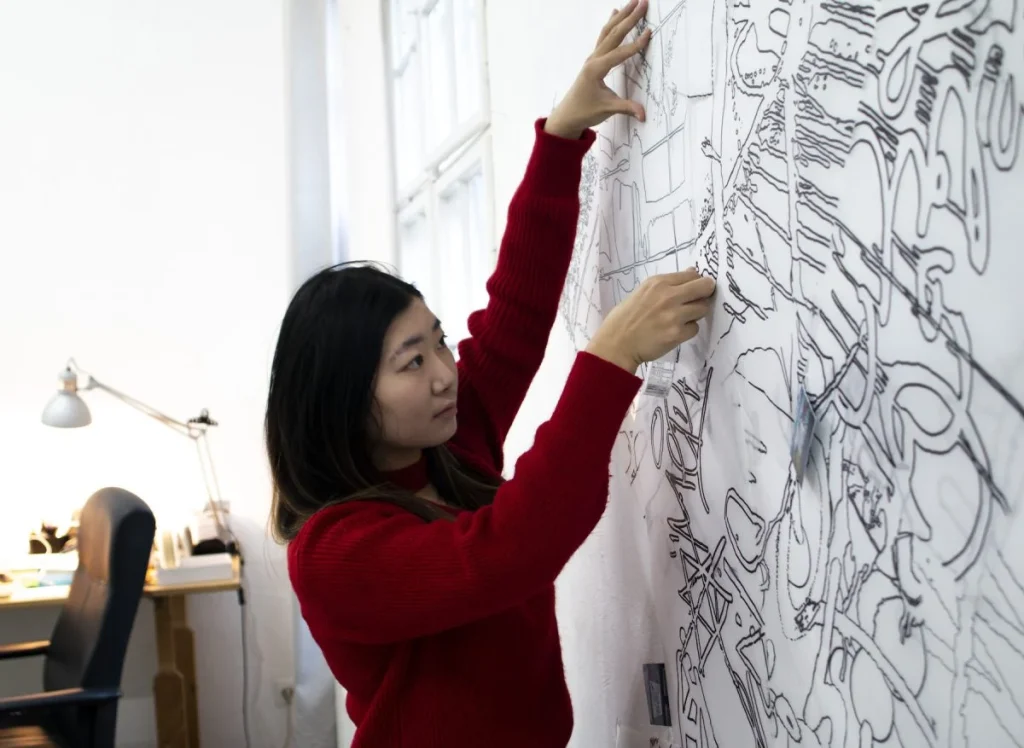
    The way I’m thinking about graffiti was just a random decision I made. I wanted to try something different because I didn’t want to repeat myself. Eventually, I’m recreating the Braille project with an advanced version. Just to make sure the work affects the audience. But still, I do think that the study of graffiti made me learn a lot about the composition of urban life again. This sort of urban life is not the specific urban life that I was trying to escape. It’s about freedom of speech in urban life. It’s more about how we treat all these languages and voices. Anonymous voices especially.

    On the architectural surface, and the urban surface in general. And they have very weird or interesting compositions happening at the same time. With the tracing of graffiti, I don’t know how that would be linked to an independent project yet. The whole idea of graffiti ensured and reinforced my ideas and my interest in semiotic studies. The very blurred boundary between image and text.

    What are your plans for after the residency?

    I like Berlin, first of all. This is my first time here – I lived in London and I moved to Ireland as well, but I’ve never been to other parts of Europe. I want to come back if there is a chance. I’m still looking for opportunities in Amsterdam. I do want to move out of my original country and I’m trying to seek a new way of living. This is what all my artworks are doing as well.

    Statement

    Judith Fang (b. 1998) is an independent artist and amateur astronomer whose work reflects the nostalgia and placelessness of fast-paced urban living amidst relentless change. This sense of rootlessness derived from her familiar surroundings, inspires her to gaze at the stars, viewing the night sky as a constant landscape. Through her art, she delves into the universally shared human experiences across different races and physiological bodies. She examines how nature is embedded in common language and meanings, striving to reveal that the principles of science can serve as a foundation for empathy and poetry.

    GlogauAIR Project

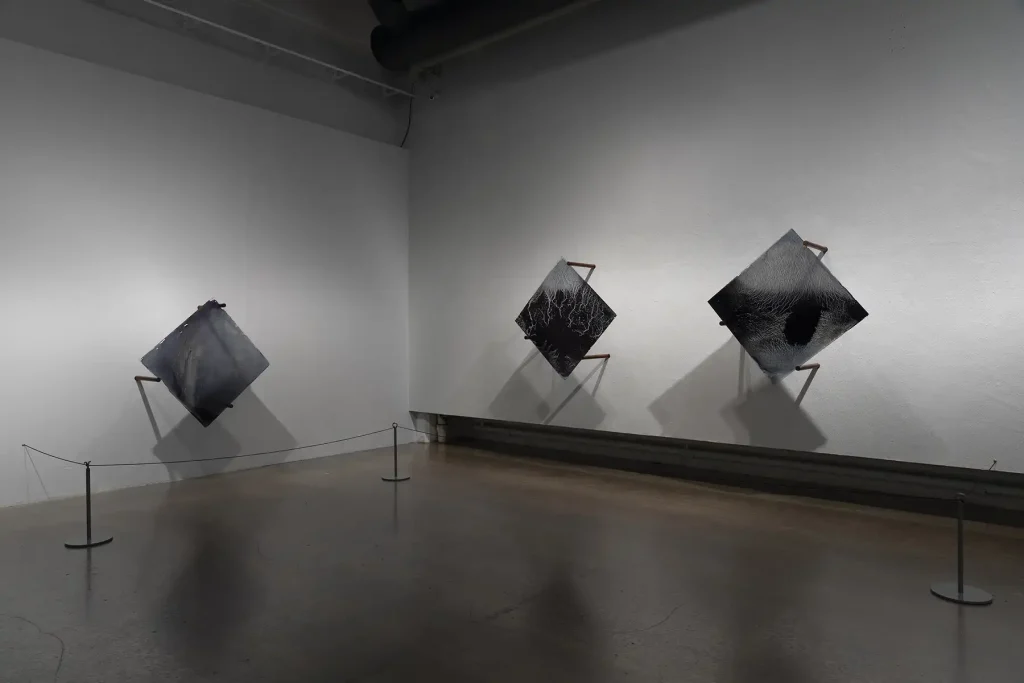
    The semiotics study of Stars and Brailles.

    As my eyes wandered across the night sky, I realized that our modern understanding of constellations is largely a cultural projection rooted in ancient civilizations. The names of stars differ dramatically, from Arabic, and Chinese to Greek mythology, transforming the night sky into a tapestry of anthropomorphic imagination. This revelation prompted me to question semiotics: how we perceive and encode the objective world into our everyday language.

    One profound moment for me was when I learned to read Braille, leading to the epiphany that both stars and Braille represent transcendent languages. They convey information through simple dot compositions, deeply connected to their contexts. For blind individuals, Braille serves a purpose similar to that of stars for those with sight: both are symbols of an endless night, representing a yearning to grasp the unknown external world. This study aims to critique the phenomenology of shifting meanings in language from a semiotic perspective while celebrating the innate human drive for phototaxis, both spiritually and physically.

    CV Summary

    EDUCATION

    • Bachelor of Fine Arts, 2021, The School of the Art Institute of Chicago (SAIC), Chicago, IL
    • Emphasis on Sculpture and Visual Critical Studies
    • Bachelor of Arts (Study Abroad), 2019-20, Central Saint Martins, the University of the Arts London, UK Program of Cultural Criticism and Curation

    SELECTED GROUP EXHIBITIONS

    • 2025 Playground*, Froots Gallery, Jingdezhen, China (upcoming)
    • 2024 What if ‘Faileas’ Evaporate From Liquid, Absent Gallery, Online
    • Constellation, Newtown Castle, Ballyvaughan, Ireland
    • 2021 Don’t Mind the Thing, Wedge Gallery, Chicago, IL
    • Dream Residue, 33 E.Washington Gallery, Chicago, IL
    • 2019 Zendai Art Exhibition, Himalayas Museum, Shanghai, China
    • Shanghai Young Art Fair, 2019 National Tour in China
    • 2018 Light Sleepers, ZhouB Art Center, Chicago, IL

    RESIDENCIES

    • 2022 The Pottery Workshop, Jingdezhen, China
    • 2024 Burren College of Art Residency, Ballyvaughan, Ireland
    • GlogauAIR on-site, Berlin, Germany

    Gallery
  • Jay Lee

    Jay Lee

    Jay Lee is GlogauAIR resident
    from October 2024 to December 2024

    Jay Lee, a nomadic visual artist from Seoul, creates art that explores time, memory, and place through found objects and natural materials. Influenced by motherhood and diverse environments, her work invites viewers to reflect on identity, belonging, and the transient nature of home.

    During her residency at GlogauAIR in Berlin, she will create site-specific works exploring memory, identity, and place, using found and locally sourced materials. Inspired by Berlin’s history and diversity, the project reflects themes of transition and invites viewers to engage with the evolving narrative of identity within the urban landscape.


    Meet the Artist

    Can you give us an introduction about yourself and your background?

    I started painting about seven years ago – it started as a weekend bonding activity with my daughter. It was a sort of a creative outlet for both of us. And then it turned into a more serious job, as you can tell. I started a nomadic practice about three and a half years ago. I just continued experimenting from there, with new mediums based on location, and as inspirations came up.

    How old is your daughter?

    She’s 14 now. So when we started, she was about eight. And we started painting on the largest canvases we could get, because everybody told us, ‘Oh, you gotta start small.’ So we did the exact opposite.

    We were just using rather faster-to-dry mediums, like acrylic, and a little bit of watercolors. It was mostly painting on large scale canvases. Often, we would paint on the floor like action painting. So it was very playful, a lot of movement with the body, with the flow of energy and emotions. Later, we realized that making art sparks better conversation – and better energy – among people.

    As you’re settling into Berlin, do you think your artistic practice is changing at all? How do you find yourself inspired by the city versus nature – by landscapes and all of that?

    It’s always different depending on locations. I’ve been collecting a lot of flowers and plants, little weird things, like hairy balls and pumpkin on a stick. I found it very funny and wanted to use them.

    I was in Istanbul for two and a half months before coming here… it’s always about connecting back to the previous locations and then finding connections and reconnections throughout the journey. I don’t have to stick to only Berlin stories, because everything I experienced and explored in past locations just adds up in the end. I was in Leipzig last year in about the same period, from October until December, so coming back to Germany brings all the memories back. It’s the seasonal changes, like falling leaves. The days get shorter. I find beauty in the transient moments and love having ephemeral elements in my art.

    Berlin has a lot of diverse dynamics in terms of small venues, and a lot of funky exhibitions, non-commercial, experimental. I like it very much. I find it somewhat relatable to the scenes I experienced in New York this year. It’s a busy city, so much is happening. It’s very similar to New York but also different and unique.

    I’ve heard that.

    Still, [Berlin is] homey. Very cozy and chill, compared to New York.

    Yeah, a city for artists.

    Definitely.

    Is this [various materials around the studio] a big thing for your creative process? Picking things up that you see and putting them on the wall for inspiration? Is that your typical process or do you have other ones as well?

    Usually, I’ll just put everything on the floor. But because I’m in this living-and-working studio situation, I have this feeling that I can’t really work on the floor as much as I usually do. So I’m putting more things on the wall and on the desks.

    This time I’m trying to work with a more delicate, smaller scale. Aesthetically, I don’t know what I will do eventually, but I think in terms of size and materials, I want something very delicate. Something tangible, in your hand and then even smaller. In terms of materials, I’m exploring options like glass, casting. Or I may end up making large-scale paintings in the end… who knows.

    I’m collecting a lot of seasonal and local materials and trying to put them together. Glass feels very dominant in this room, because of the street view that I have. I find lots of glasses here… big windows, glass bottles, glass candles, et cetera. I realized I use a lot of candles whenever I come to Germany, especially in this season. It makes the room cozy.

    So as far as being a nomadic artist … after being an artist for six or seven years, you have only been nomadic for three. How did that develop, and what led to that decision?

    First and foremost, I always wanted to explore the world. So when my daughter grew up a bit, and became a teenager, I thought it was my chance to go travel longer-term. I got a job opportunity at a tech company in the US, and thought, okay, I’ll take it. Because it was fully remote, I realized I could spend a lot of spare time doing what I love, which is art and also travel. I decided to just travel across the country – mostly California first, like San Francisco, San Diego, and then extended my reach to Mexico.

    Being in Mexico, I realized I really love doing a lot of experimental installations and learning about local materials and local crafts. So it wasn’t only about paintings anymore, on those framed canvases. The curators there pushed me to go further into three-dimensional works. And it suited me really well. So that’s when I started doing more site-specific installation work researching local materials, often natural, employing tree branches and rocks and found objects.

    I wanted to expand my reach to Europe. Germany was the first country in Europe that I came to practice art, and I really liked it. I decided to split my time into one-third in America, one-third in Europe, mostly around Germany, and one-third in Korea and nearby countries, going back to my family and my daughter.

    I feel like I’m going through a lot of transitions in my life now. I’m thinking I’ll stretch it a little bit further maybe. Stay experimental, at least for the next couple of years. I’m considering Latin America, going further south, going to the jungle and mountains. But I always plan to come back to the major cities like New York or Berlin. I’ve never been to Paris to show my works. So maybe Paris.

    I always leave the summer and winter for my daughter. This year, Istanbul was the place that I went to with her, and we stayed in a residency together. We put on a solo show. It was really awesome to work with her, travel with her and then tell the story through an exhibition.

    So she still makes art?

    Yeah, she makes great art. And sometimes she makes much better things. I’m feeling intimidated by this little young lady! But it’s so awesome because I got it from my mom, this crafty side. I feel very proud of this genetic heritage that we’re getting from all these great women.

    You have some long-term plans set up, but are some of the residencies sort of spontaneous?

    Yeah, I’m planning on doing this crazy jumping from one to another, at least for a couple of years. And then trying to find a place to settle in. It could be Berlin. Very likely. It has a reasonable living cost, I think, considering everything.

    Were you always drawn to art?

    My educational background is in international politics and relations, and I wanted to be a diplomat. I feel doing art is connecting people, understanding culture, so it almost feels like diplomatic action to me, and I think it’s somewhat connected to my core interests and endless curiosity. When I was a teenager, I wanted to be an artist. And then when I got older, I wanted to be a diplomat and travel around the world, so I’m kind of mixing the both. Once I’m trying to settle in, I feel more pressure to know what suits me best for sure. I don’t feel like I need to jump into one option right now. I’m enjoying this experimental and highly productive period. Moving forward, I feel more free to incorporate AI, maybe coding, whatever medium and skills I can utilize at my disposal. I’m still expanding and exploring, rather than just trying to push or limit myself to focus on one thing.

    But everything I make are aligned and they share the same vein. I enjoy this art making process in my moving studios.

    When you move on from this residency, what do you think you’ll take with you from Berlin?

    People. It’s always people, I think. It’s quite funny how small the world is. Even on the first day at GlogauAIR, at the exhibition opening we had here, I bumped into a person that worked at the residency I did last year. I also invited a friend who decided to live here – she’s from Norway, and she’s living here now. We participated in the same group show in Copenhagen, so the world is really, really small.

    And there’s this very unique experience of living in this building. It’s my first residency living with this many people. So this is very new.

    I can imagine.

    Yeah – this is very new, but still I’m feeling like, okay, this is a life that I chose to experience. It’s all about the new experiences. And then also, really figuring out in which environment I thrive. We’ll figure it out. But, you know, that’ll come up naturally.

    Statement

    Jay Lee is a nomadic visual artist from Seoul whose practice deeply explores the passage of time, memory, and the essence of place. Her work is a confluence of found objects, natural materials, and serendipitous encounters, woven together to create pieces that transcend geographical and cultural boundaries. This process reflects the fluidity of identity and captures the transient nature of existence, shaped by the ever-shifting landscapes that she inhabits. Each piece Jay creates is an intimate dialogue between the past and the present, offering a visual narrative that encourages viewers to reflect on their own experiences of belonging, displacement, and the concept of home.

    Jay’s art is profoundly influenced by the rapid transitions of early motherhood and the diverse environments she has traversed, from the bustling streets of New York to the tranquil settings in nature. These varied landscapes are not just backdrops but active participants in her creative process, informing the materials she uses and the themes she explores. Through her work, Jay seeks to foster a deeper connection between individuals and their environments, encouraging contemplation of the temporal and spatial. By inviting viewers into these carefully crafted spaces, she aims to create an immersive experience that resonates on both a personal and universal level, ultimately exploring the ever-evolving narratives of identity, memory, and the search for a sense of place in a constantly changing world.

    GlogauAIR Project

    During my residency at GlogauAIR in Berlin, I will explore the intersection of memory, identity, and place through a series of site-specific installations, paintings, and sculptures. Drawing inspiration from Berlin’s rich history and multicultural vibrancy, I plan to incorporate found objects, natural materials, and elements sourced locally. My work will focus on the themes of transition and transformation, reflecting my ongoing journey as a nomadic artist. This project aims to create a dialogue between Berlin’s past and present, inviting viewers to engage with the evolving narrative of identity within the urban landscape. The pieces will evolve throughout the residency, capturing the fluidity of time and place as they interact with the unique environment of Berlin.

    CV Summary

    Solo Exhibition

    • Unrolled / 2024.09.20 – 09.30 / Arthereistanbul (Istanbul, Turkey)
    • Home of Emotions; Moving Home, Moving Emotions / 2023.09 / El Sur (Mexico City, Mexico)
    • Dreams / 2023.06.23 – 07.23 / KOIK Contemporary (Mexico City, Mexico)

    Three-Person Exhibition

    • Someone’s ( ) Stories / 2024.01.10 – 01.30 / Samseyoung (Seoul, South Korea)

    Selected Group Exhibition

    2024

    • The Summer project / 2024.08.06 – 09.26 / The CUT (Halesworth, UK)
    • At Different Speeds / 2024.06.28 – 07.28 / UA Gallery (Brooklyn, New York, United States)
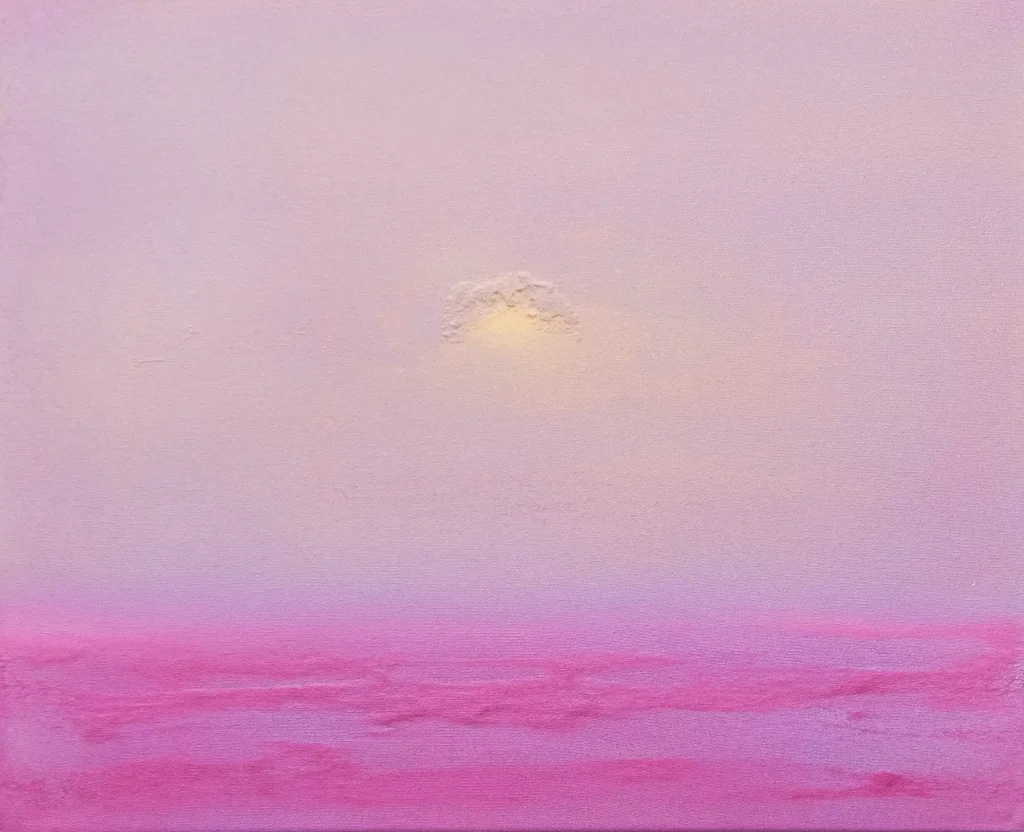
    • The Material Way / 2024.06.12 – 06.14 / 3 Days of Design at Øens Have (Copenhagen, Denmark)
    • Observe and Obsess / 2024.06.05 – 06.13 / UA Gallery (Brooklyn, New York, United States)
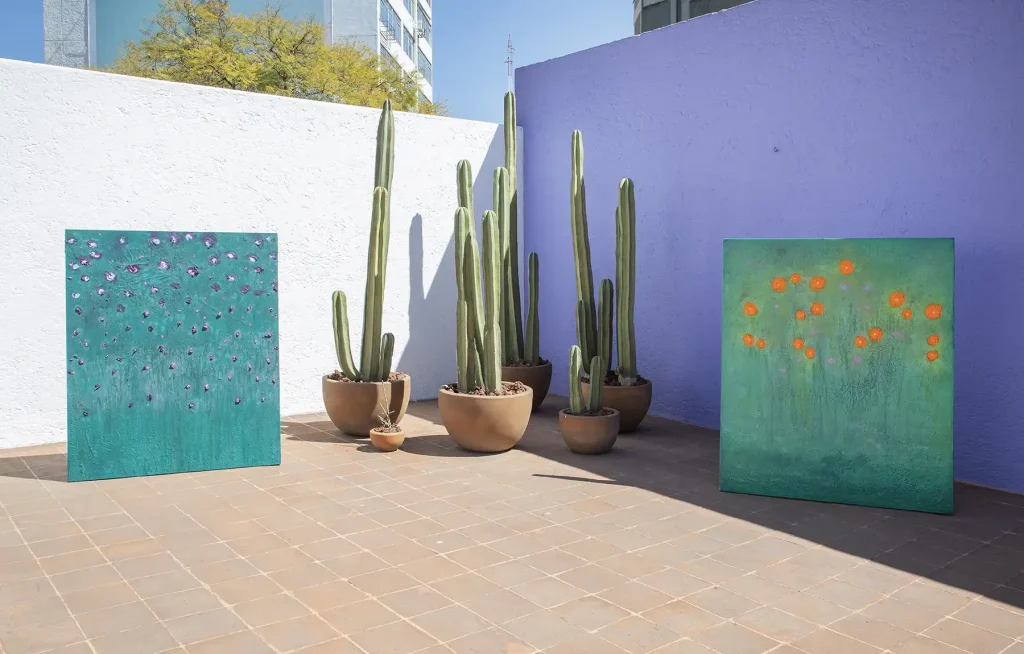
    • Perspectives 2024 / 2024.01.31 – 02.18 / CICA Museum (Seoul, South Korea)

    2023

    • Lichtspiele des Westens 2023 / 2023.12.09 / West (Leipzig, Germany)
    • Say – Sweet, Silence / 2023.12.16 – 12.20 / Alte Handelsschule (Leipzig, Germany)
    • Smoking Materials / 2023.11.16 / Pilotenkueche (Leipzig, Germany)
    • Meals on Different Tables / 2023.02.15 – 02.20 / Gallery Is (Seoul, South Korea)
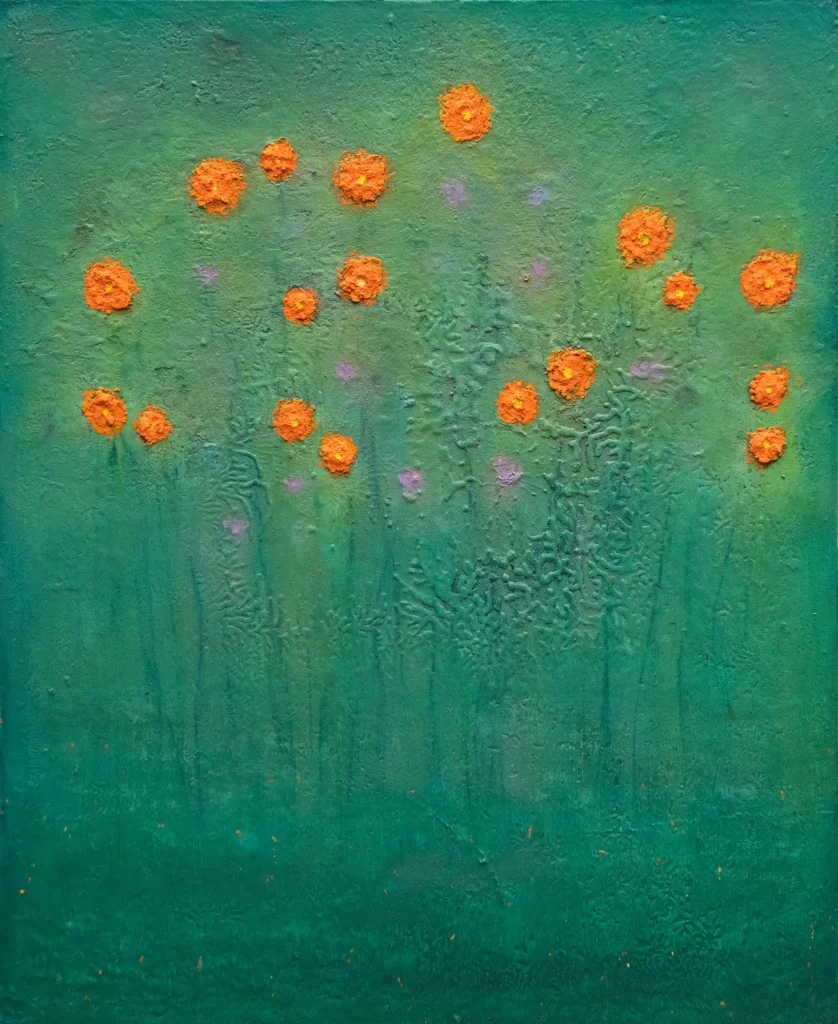
    • The Flap of Wings; Flight / 2023.02.01- 02.06 / Gallery La Mer (Seoul, South Korea)
    2022

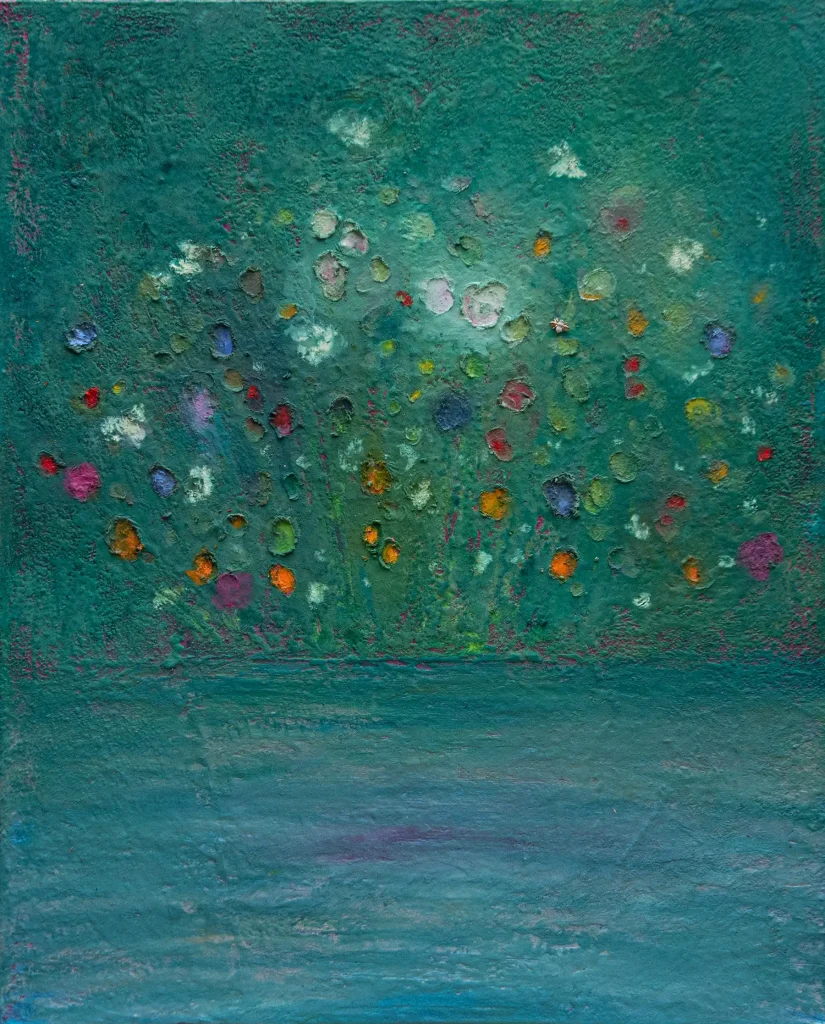
    • My First Painting / 2022. 10.5 – 10.10 / Gallery M (Seoul, South Korea)
    • RAF: Rising Artist Festival / 2022.12.09 – 12.18 / Ccollabohaus Mullae (Seoul, South Korea)
    • Arte Local: Casa de la Cultural Tulum / 2022.11.29 – 12.06 / Terrenos de la Expoferia Tulum (Tulum, Mexico)

    Gallery
  • gwen charles

    gwen charles

    gwen charles is GlogauAIR resident
    from October 2024 to December 2024

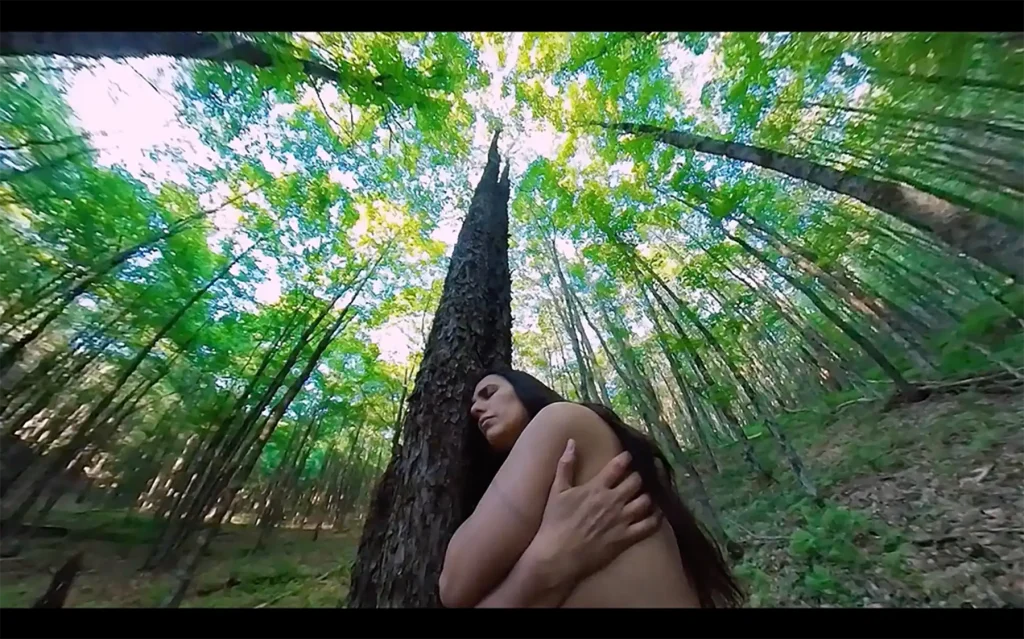
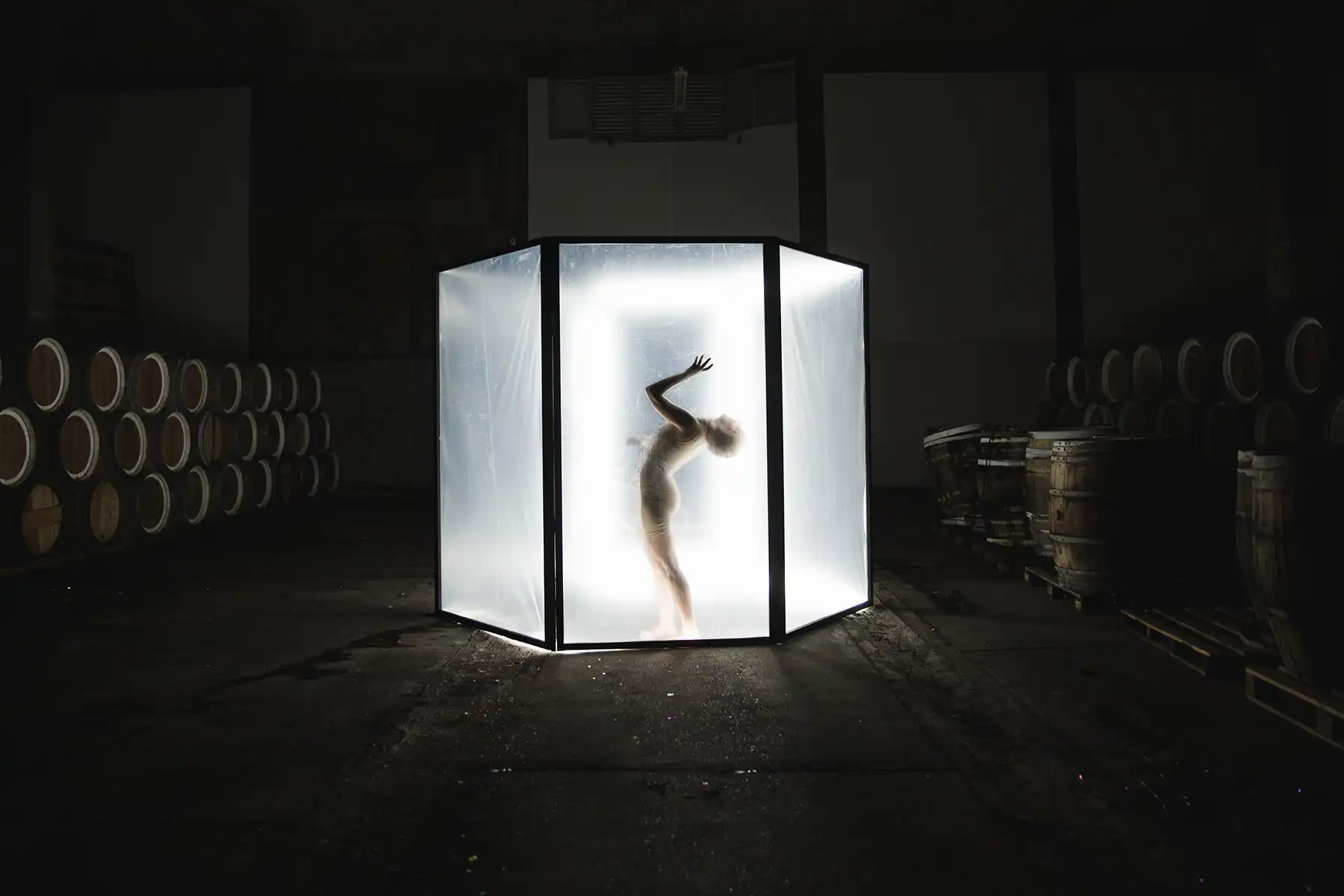
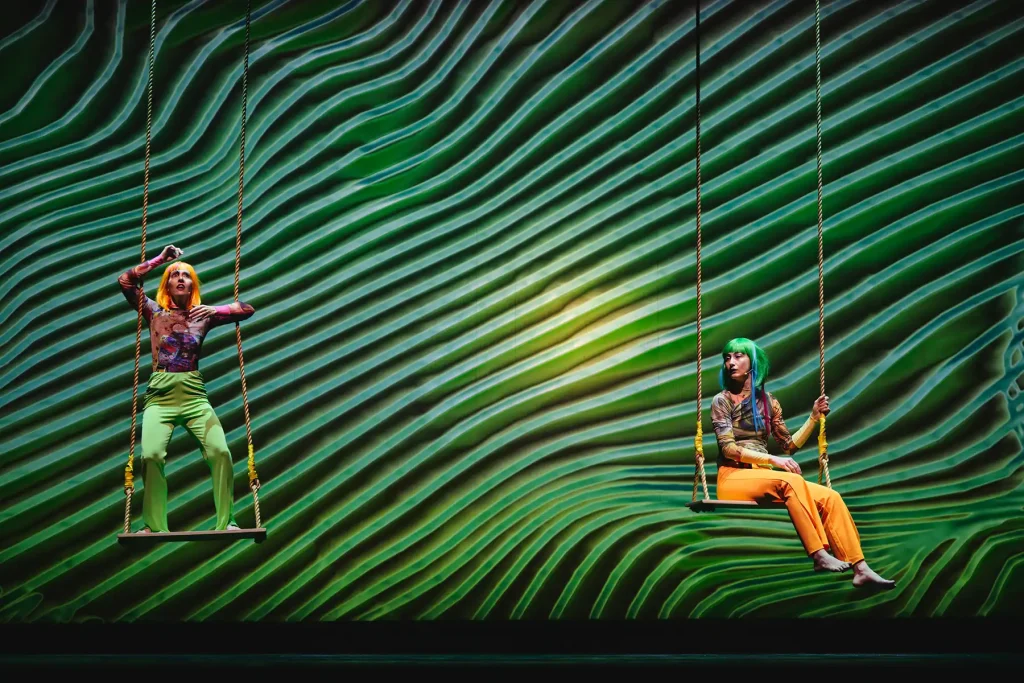
    gwen charles works focus primarily on video, photography and live performative actions, merging elements of reality and magical realism to reflect on the absurdity of daily life using handmade objects and costumes. She translates visceral bodily feelings into movement, capturing these through performance and video. charles’ past work explores themes of the Anthropocene, ecofeminism, and reconnecting with nature, using her body to express the female experience and the evolving needs of humanity.


    Meet the Artist

    Could you give us a little bit of an introduction to yourself and your background?

    I’m gwen charles. I’m a multidisciplinary, conceptually-based performance artist. I’m from New York, and I have been working with video and live performance based work. I went to art school, at Parsons School of Design, in the Fire Arts department. I started my career as an artist as a figurative oil painter. I was really interested in capturing the body moving in space.

    I had always used photography to create the imagery for my paintings, taking photographs of myself or photographing friends and using images from books and magazines, and then collaging them together to create tableaus to recreate on canvas with paint. The images were all about expressing an emotion in paint.
    Unfortunately, I developed an allergy to solvents and paint while at art school. It was a huge blow to my career and my sense of self, because I was a “painter”. And then I asked “now who am I? What am I going to do if I cannot paint?”

    And then I realized that those photographs could be the artworks themselves. I started to distill down what the artwork was really about. I ask, “What does the work want to say?”

    It was still about capturing the body in space, expressing an emotion, but I was no longer tied to a particular medium. So now my work is multidisciplinary and multimedia. What medium can best express this emotion or idea? The expression is the focus. The medium becomes secondary.

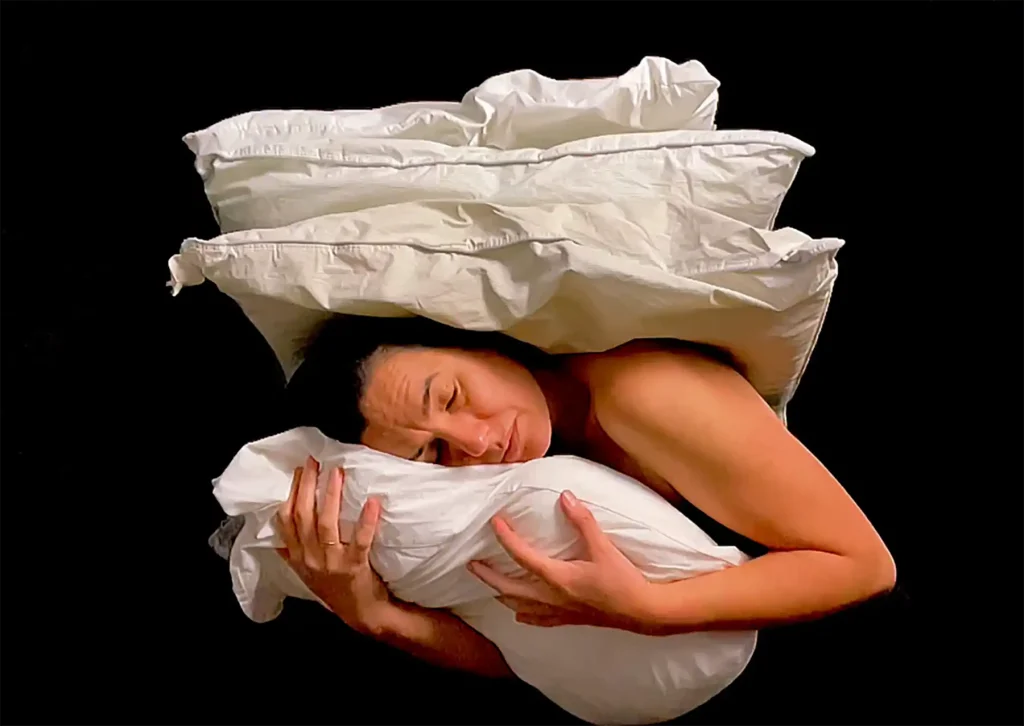
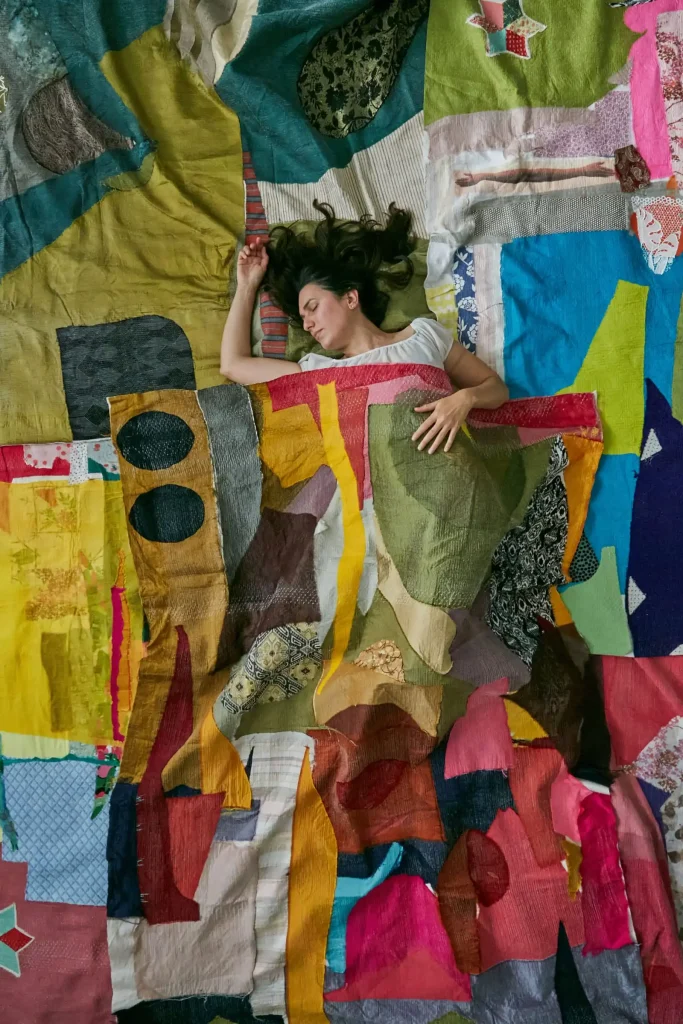
    Right now I’m working with themes of rest and comfort, and the desire to find comfort myself. After a long period of caretaking for family members and the need to find comfort for myself I have been drawn to use bedding, which I see as a symbol of comfort, and has led me to want to make blankets and pillows. So I’m actually fabricating different objects that are blankets or pillows to use in these performance-based projects.

    Under the scope of multidisciplinary art, I know it didn’t immediately start with themes of rest. I want to know, what themes did you start out with, and how did that develop and fluctuate? What other ideas did you play with before you got to this one?

    I’ve been working within performance art since the early 90s, wanting to express my emotions in relationship to other people. So how do I express the connection between two people? One of my first series of performances was a costume that connected two people that was 60 yards long, and I wanted to illustrate the invisible thread that’s between us and show that in some way. Making costumes and objects to support the performance is part of my practice so there is still object-making within my studio practice.

    I’ve always been curious about how to make the invisible connections and relationships between people and things visible, and how to picture the expressions of my feelings about the world.. Even in the current works that I’m making about rest, like the last series that I made using felting, they are also talking about these invisible connections between people. I made a series of felted blankets, combining several types of fabrics together without thread or glue. They’re just held together by the tangling of the threads in each fabric intertwined

    together. This tangling of threads is kind of how I see our connections to each other in this world. We come in contact, cross each other and tangle with each other with no binders to keep us together.

    So there’s always been an underlying theme of intimacy with yourself and with other people.

    Yeah, it’s all about a relationship between us all, and seeking out human connection, because isn’t that what it’s all about? What joy to find a sense of kinship and fullness through connection with others, to receive inspiration from the people and the world around you.

    How has Berlin been influencing your practice? How have you been finding inspiration around the city?

    I love working site-specifically and context-dependent. As I work with themes of rest and comfort here in Berlin, some of the ideas that I was working with at home are slightly different. The idea of trying to find rest, forcing yourself to rest, reminding people to rest and using the arts as a way to talk about our lack of rest is a very different conversation in Europe. I feel like Europeans already know how to rest. They already know how to take a leisurely lunch, to relax and have a glass of wine.how to take a long walk and enjoy themselves.

    Some of the questions that I have with my new project, where I am resting in the street, are about how a country with such great emphasis on care and social services still has people that are homeless. We all want to feel a sense of safety and security and be able to rest and feel comfortable. So, that has been a project that I’m doing in different cities and each city does have a different feel to it. San Francisco, New Orleans and New York also have very high homeless populations, so this topic has started to come up for me as I move through different cities and perform this act of rest in public.

    The city has much more green space than other cities do. There’s definitely a focus on being outside in nature, there’s homeopathy and herbalism here. I started to research what magic is here within nature? There is a history of chemistry here. There’s a history of alchemists and trying to make gold out of everything. The first man-made chemically based pigment was created here, Prussian blue was invented here. I was fascinated with that idea of materials that are very local. I’m thinking, how can I use that in my work here? How can I bring that blue in?

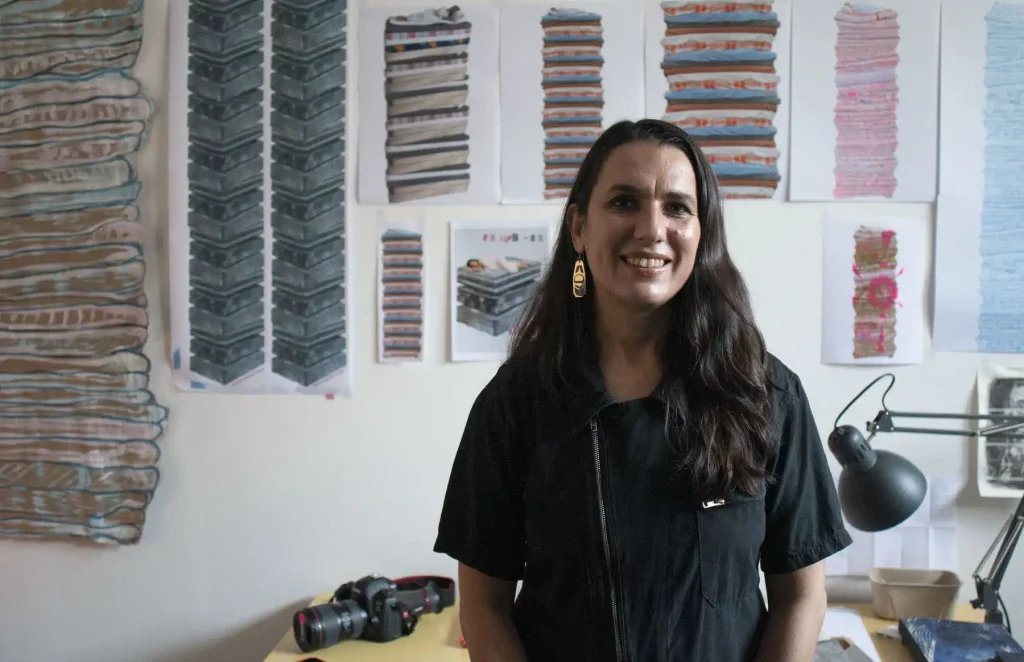
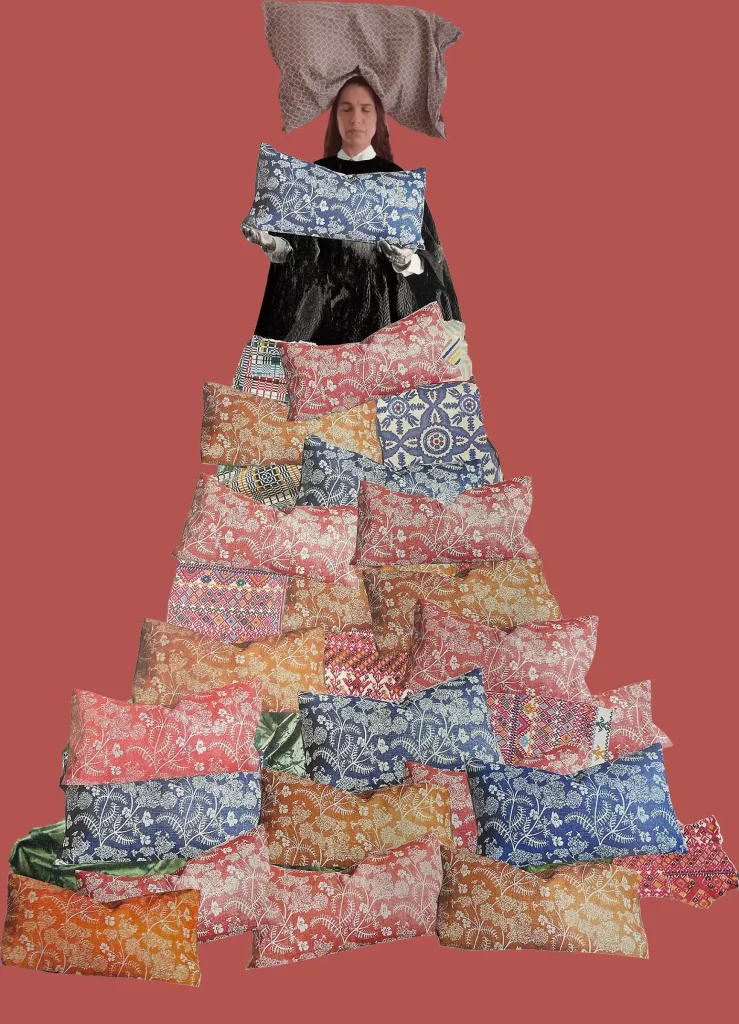
    I’ve been making these collages of mattress stacks that sort of replicate the look of the fairytale The Princess and the Pea. I took all the available mattresses at GlogauAIR in the basement and I stacked up the mattresses to make photographs and collages, then imported them into Photoshop and made the stacks really, really tall. Like in this image, as I stack these mattresses and stack these quilts, they get taller and taller and instead of being more comforting to have more quilts or more blankets or more mattresses, it actually makes it more precarious.

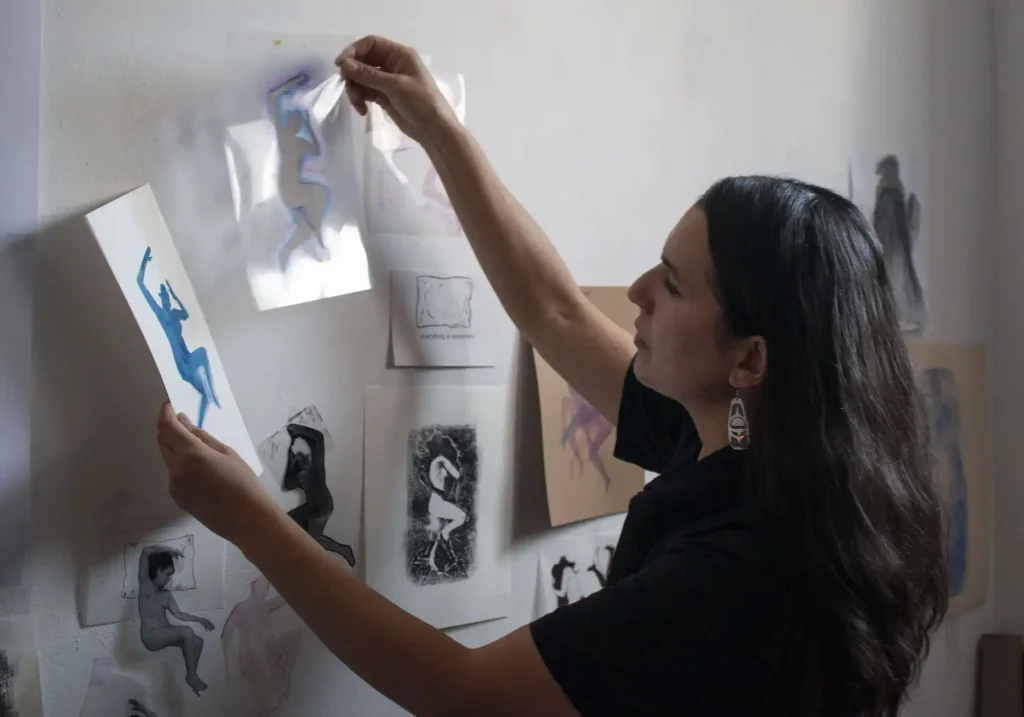
    The other series I’ve been working on is also the body print that is left on the bed. And the remainder of the body. So, the person has left the bed, whether it’s you or a partner, and trying to show the imprint of the body. I’ve been playing with that idea with the absent body.

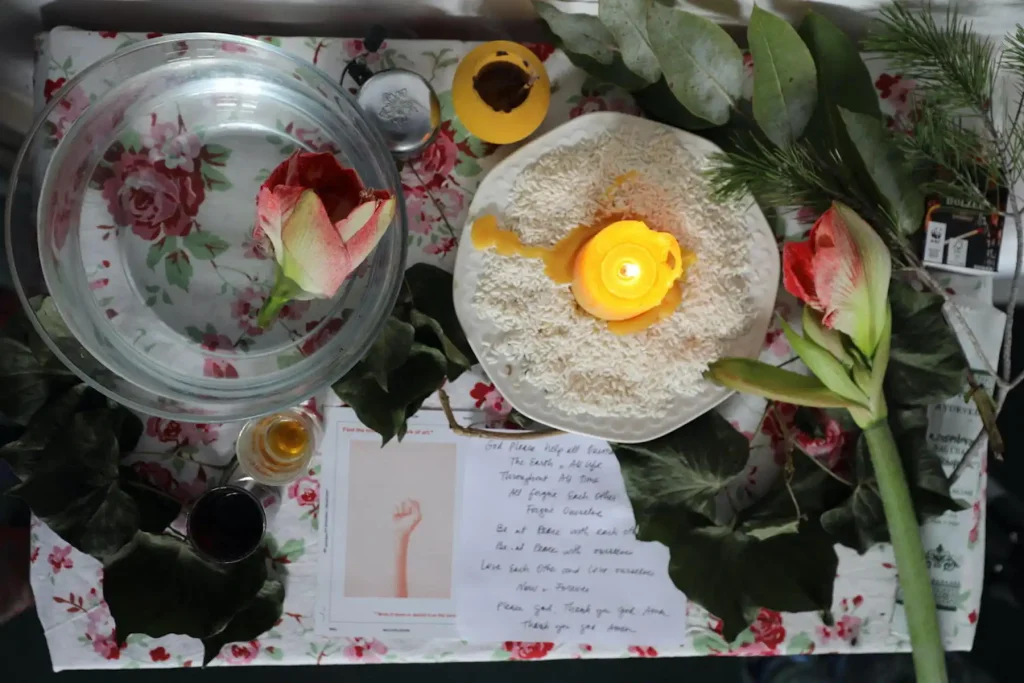
    “What if I honored my creativity as a spiritual practice?
    Crafting an altar in my studio reminds me to celebrate this gift of creation from my ancestors and the universe.”

    So you’re really immersing yourself in the things that make Berlin, Berlin. What do you think you’ll do after this residency? Will you go to a new European city?

    Yes, I’d like to continue this project of resting in public in other cities. I’m hoping to go to Copenhagen next week, and see what would be very unique about resting in Copenhagen. I’ve been resting in all the places that are very Berlin, like the Berlin Wall, the canal, resting on the streets next to graffiti. I’ll see what will be unique about other cities and the Rest in Public project will continue.

    Statement

    Working primarily in video and photography for the past 10 years, an extension of live performative actions for over 25 years, I merge elements of reality and magical realism to reflect on the absurdity of daily life using handmade objects and costumes. I work with translating visceral feelings in my body into movement using objects then translate these feelings and movements visually, currently captured through performance and video.

    My past series of artwork connect to themes of the Anthropocene, ecofeminism and reconnecting to nature, using my body to express the female experience and the changing needs of the human body.

    GlogauAIR Project

    Grief has been my greatest collaborator recently. While reflecting on the intensive period of caretaking of family lately and considering my increasing need for self-care, I have been creating a series of actions exploring metaphors related to rest, caretaking and loss.

    This residency would allow me time to create a series of improvisations based on the theme of seeking comfort while speaking to the local community connecting to the themes in their own life. The completed works will be part of a photo/video series and possibly a short performance during open studios.

    CV Summary

    • TRANSART INSTITUTE, Berlin, Germany
      MFA, 2013. Accreditation: Plymouth University, UK
    • THE NEW SCHOOL FOR PUBLIC ENGAGEMENT, NY, NY BS, 2012, Liberal Arts/ Media Studies
    • PARSONS SCHOOL OF DESIGN, NY, NY 1993-1997 Fine Arts / Painting, BFA Candidate
    • BANK STREET College of Education, NY, NY, 1996-1997, Art Education Certificate candidate
    • GROUP EXHIBITIONS & FESTIVALS 2001- 2024
      09/2024 ELECTION, Online exhibition, Precious things will be Destroyed, 2024 09/2024 HIDING, SHAG, Brooklyn, NY, Pink Ecstasy, 2015
    • 10/2024 SKIN, Fresh Eye Gallery, Minneapolis, MN, Skin, 1995
    • 10/2024 RADICAL REIMAGINING, The Newark Museum, Newark NJ, Pillows, 2022
    • 03/2024 REFURBISH, Vivid Theater, Summit, NJ, Recover, 2023
    • 12/2023 O MY SOUL, Collaboration with The Moving Architects, Women’s Club, Montclair NJ, Comforter, 2023
    • 09/2023 INSPIRED BY WEIGHT OF AN OBJECT, Montclair Art Museum, Montclair NJ, Recover, 2023
    • 09/2023 CROSS-CULTURAL PERSPECTIVES, The Newark Museum, Newark NJ, Long Rest, 2022
    • 09/2023 UNWEARABLE ART SHOW, Drawing Rooms Gallery, Jersey City, NJ, 5 works
    • 09/2023 SHAPES OF MOVEMENT, Lummi Island, WA, with Crystal Gregory and The Moving Architects
    • 06/2023 A COMPLEXITY OF JOYS, MAPSpace, Port Chester, NY, Uterus Slingshot, 2021
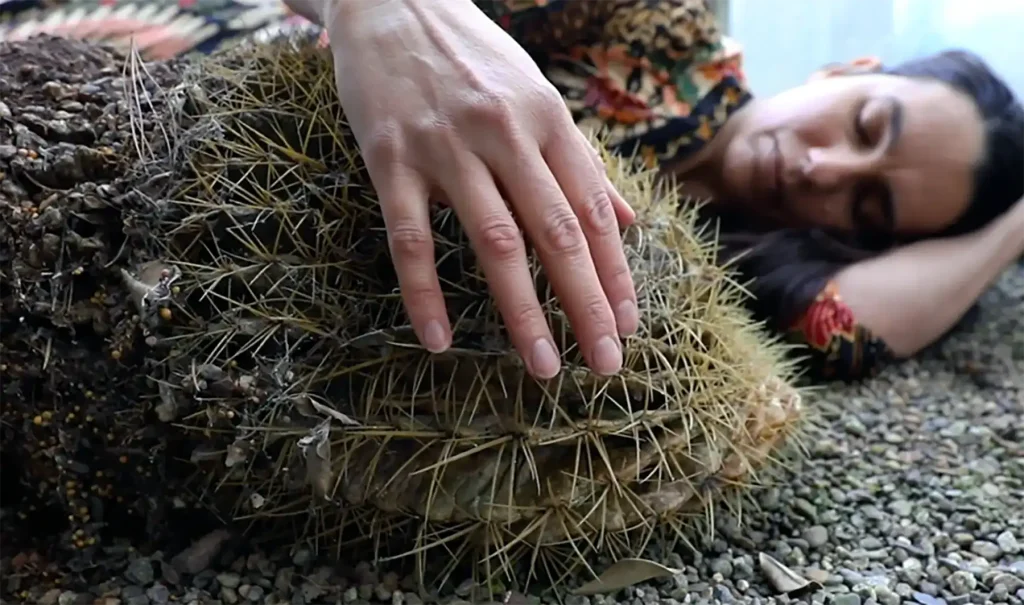
    • 06/2023 TOGETHER/ALONE, Stay at Home Gallery, Paris TN, Lullaby Cactus, 2021
    • 06/2023 EMBODIED KNOWLEDGE, Ely Center for Contemporary Art, New Haven CT, Cascading Eyelashes, 2018 05/2023 ROOTS, TSGNY, El Barrio ArtSPace PS109, NY, NY Root Crown, 2020
    • 04/2023 {RE}HAPPENING FESTIVAL, Black Mountain College, NC, Cactus Care, 2020
    • 04/2023 {RE}HAPPENING FESTIVAL, Black Mountain College, NC, Shapes of Movement
    • 02/2023 FROM ALCHEMY TO NUMINOSITY, Ramapo College Gallery, Ramapo, NJ, Gold Frieze, 2016
    • 12/2022 ERIE GALLERY NIGHT, Erie Museum, Erie, PA, Submersion, 2022
    • 10/2022 ROE VS WADE, Virtual, Anthropology of Motherhood, Uterus Slingshot, 2021
    • 09/2022 FALL FORWARD, with The Moving Architects, Dixon Place, NY, NY, Extended, 2019
    • 08/2022 FRESH AIR with John Halpern, Emporium Capri, Capri Island, Italy, Bark Breathe, 2022
    • 08/2022 CONNECTIONS: CHAUTAUQUA ARTIST-IN-RESIDENCE, Fowler-Kellogg Art Center, CHQ, NY, Moss, 2022 08/2022 FREESPACE DANCE AND FRIENDS, with The Moving Architects, OSPAC, West Orange NJ, Extended, 2019 07/2022 WE WERE NEVER HUMAN, Bronx Academy Arts & Dance, Bronx, NY, Spoon Cactus, 2021
    • 05/2022 ESTIA FEST, LaRussa Theater, Queeens, NY, Curio Cabinet, 2018
    • 03/2022 TAKE ROOT, with The Moving Architects, Green Space, NY, Extended, 2019
    • 12/2021 ACTING BALANCE[D], Spilt Milk Members Show, virtual, sMother 2021
    • 11/2021 WITH CARE, Textile Arts Center, Brooklyn NY, Uterus Slingshot, 2021
    • 11/2021 MAIL ART, The Center for Connection & Collaboration, Asheville, NC, Tryfuss, 2021
    • 10/2021 ANTHROPOLOGY OF MOTHERHOOD, Sleeth Gallery, West Virginia, Spoon Cactus, 2020
    • 10/2021 HATAK, North Willows Attic, Montclair, NJ, virtual, Hands on Healing, 2021
    • 07/2021 POST/FUTURE PERFORMANCE FESTIVAL, Proteo Media, Virtual & NJ, Cactus Care, 2021
    • 07/2021 NATURE/NURTURE, See Me, The Invisible Dog, Brooklyn, Spoon Cactus, 2021
    • 06/2021 MATERNOCHRONICS, virtual, sMother, 2021
    • 07/2021 MY LOVE IS YOUR LOVE, Every Woman Biennial, Copeland Gallery, London UK, Pine Petting, 2020
    • 06/2021 STONES THROW, GREEN SHORT FILM FESTIVAL, Diorama Room, Virtual, Stones Caress, 2021
    • 06/2021 IN7 CREATIVE VIDEO RESIDENCY, Screening, Gardenship, Kearney NJ, Felled, 2021
    • 10/2021 ANTHROPOLOGY OF MOTHERHOOD, Three Rivers Arts Festival, Pittsburgh, Spoon Cactus, 2020
    • 05/2021 TUNE INTO GREEN SHORT FILM FESTIVAL, Diorama Room, Virtual, Grooming, 2021
    • 05/2021 WOMYN’S WERQ, Studio Montclair, Montclair NJ, Salt Moxa,
    • 2018 05/2021 MOVEMENT, SciArt Magazine, Virtual, Revolve, 2020
    • 03/2021 IF NOT NOW, WHEN?, Spilt Milk Gallery, virtual, Grooming, 2020
    • 09/2020 HOMEWORKS, Spilt Milk gallery, Edinburgh, Scotland, Revolve, 2020
    • 09/2020 INSPIRED BY DANCE, Studio Montclair, Montclair, NJ, Forest Within, 2013
    • 09/2020 LEANING INTO THE UNKNOWN: Artist Response to COVID-19, with TMA, Ramapo College, NJ, Jubilee & Knell, 2020
    • 03/2020 IN EXCESS, SPRING/BREAK Art Fair, NYC, video collab with TMA & Crystal Gregory
    • 03/2020 WOMEN PERSISTENCE, POWER, AND STRENGTH, SeeMe, digital screen, Bandit Coffee, NYC, Quell 02/2020 GLIMPSE, Gallery Aferro, Newark NJ, Sketchbooks 1994-5
    • 02/2020 THREADS: Contemporary Textile Art, University of Mayagüez, Puerto Rico, Cascading
    • Eyelashes 12/2019 #ARTTAKESMIAMI, SeeMe digital screen, SCOPE Art Fair, Miami, FL Cascading
    • Eyelashes 11/2019 THREADS: Contemporary Textile Art, El Cuadrado Gris, Puerto Rico, Cascading
    • Eyelashes 08/2019 ELEVATE, with The Moving Architects, The Actors fund, NY, NY, Elevate
    • 08/2019 FAST FORWARD, with The Moving Architects, Dixon Place, NY, NY, Deep Water
    • 06/2019 SELF, Chashama Gala, co-sponsored by SeeMe, NY, NY, Lampara, 2012
    • 06/2019 STATE OF THE ART, Studio Montclair gallery, Montclair NJ, Hands on Hands, 2019
    • 05/2019 VIEWPOINTS 2019, Studio Montclair gallery, Montclair, NJ, Quell, 2018
    • 04/2019 GASHAPON, coLAB Arts, New Brunswick, New Brunswick Cultural Center, Drawing Crystals, 2018 11/2018 WWXI: Eye of the Storm, Pingry School, Basking Ridge, NJ, Glacial Ablation
    • 11/2018 GASHAPON, Creativity Caravan, Montclair NJ. Drawing Crystals, 2018
    • 10/2018 Oh MotHER, Edinburgh, Scotland. Inflatable Collar, 2018
    • 10/2018 THE DOLL SHOW, Ceres Gallery, NY, NY. KitKat, 1996
    • 09/2018 ART LOTTO, Studio Montclair gallery, Montclair. NJ, St. Sybil, 2018.
    • 06/2018 CURRENTS NEW MEDIA FESTIVAL, Santa Fe, NW, Gold Scarf Loop, 2018
    • 05/2018 KOREA BOJAGI FORUM, Seoul, Korea, Flow 2018
    • 03/2018 WWXI: Eye of the Storm, HCCC, Jersey City, NJ Invisible islands, 2018,
    • 12/2017 RED, Textile Study Group of NY, Noho-M55 Gallery, New York, NY, contorque, 2017
    • 11/2017 AMERICA DAWN, live installation & video in collaboration with Moving Architects, Triskelion Arts, NYC 10/2017 SIGHT-SPECIFIC, curated by Kathy Imlay, Brassworks, Montclair NJ, Benevolent Eye series
    • 10/2017 ATTITUDE OF OPENNESS: SNOREBARN COLLECTIVE: North Willows, Montclair NJ
    • 10/2017 FALL FURTHER VI, collaboration with The Moving Architects, Pentacle, NY, NY, Point of Contact 10/2017 MONTCLAIR BANNER PROJECT, with Studio Montclair & Montclair BID, Montclair NJ, glass shards 07/2017 ON BELONGING AND THE VOID BETWEEN, Curated by Asha Ganpat, Gallery Aferro, Newark, NJ 04/2017 AMERICANA, video in collaboration with Moving Architects, The Tank, NYC & JCTC, NJ
    • 12/2016 FREAKSHOW, Index Art Center, Newark NJ, hosted by Rebecca Jampol, Protective Eye Blessings, 2016
    • 09/2016 …LIKE AN EGYPTIAN! Pierro Gallery, South Orange, NJ, Hedjet, 2012
    • 08/2016 SPACEBODIES II, Uferstdios, Berlin, DE, Machine Movements, 2015
    • 07/2016 FESTIVAL X-24, Gainsborough, UK, Detainment, 2012 & Venetian Blinds, 2012
    • 06/2016 SUPER 8 AUCTION, Gallery Aferro, Eyes, 2015
    • 05/2016 VISIONS FROM THE VANGUARD, Montclair Art Museum, Montclair NJ, Eyes, 2015
    • 01/2016 SPACEBODIES, Judson Church Gym, Mixer Movements, 2016
    • 07/2015 5th EXPOSURE AWARD, See Me, Musee du Louvre, Paris, France, Flowerhead series, 2015
    • 05/2015 WATER/COLOR, Studio Montclair Academy Square gallery, Montclair NJ, Waterdance, 2011
    • 05/2015 A LITTLE NIGHT ART XII, Montclair, NJ, Flowerhead series, 2015
    • 05/2014 PREPARED FIELD, Fallowtime Festival, Movement Research, Issue Project Room, NY, NY, S(n)ow, 2012 04/2014 JUXTAPOSE, Darkroom Gallery, Essex Junction, VT, Curated by Kyohei Abe, Clavicular, 2011
    • 04/2014 WOMEN’S WORK, ArtSpace Patchogue, Patchogue, NY, Lampara, 2012
    • 11/2013 PERFORMA, Maribor, Slovenia; Exhaustion Storage, 2011
    • 07/2013 MFA Thesis exhibition, Supermarkt, Berlin, DE, Lampara, 2012
    • 06/2013 LET IT GLOW, curated by Ann Lepore, Jersey City NJ; Plastica Prism, 2012
    • 04/2013 ABSTRACT CURRENTS, POPRALLY, MoMA, NY, NY; Plastica Prism, 2012
    • 10/2012 BREATHING SPACE, Carovec, Croatia; Plastica Prism, 2012
    • 10/2012 TEN: a _gaia milestone, Jersey City NJ; Purple Zizi, 2012
    • 05/2012 MONTCLAIR GALLERY WALK, UCC, Montclair NJ; Plastica Prism, 2012
    • 04/2012 THE MEAL, Art House Co-op, Brooklyn NY; Sufferin’Succotash, 2012
    • 03/2012 THE EXQUISITE CORPSE FILM FESTIVAL, Bowery Poetry Club, NY, NY
    • 02/2011 IN HER STRENGTH, Hudson County Office of Cultural & Heritage Affairs, Jersey City, NJ, Unloading, 12010 03/2011 TOYS, Studio Theater Gallery, Middlesex County College Edison, NJ, Curated by Asha Ganpat, KitKat, 1996 07/2010 WASSAIC ARTS FESTIVAL, Wassaic NY, Summer Performance & Installation: Safety Kiosk, 2008
    • 01/2009 ESSENCIAL MUSIC AND ART SHOW, NY, NY, curated by Ellie Colon, Stuff, 2009 & Shell Shawl, 2009 10/2009 NEWARK ARTS COUNCIL OPEN DOORS, Newark, NJ, Stuff, 2009 & Shell Shawl, 2009
    • 10/2009 PRO ARTS MEMBERS EXHIBITION, Jersey City, NJ, Pom-Pom, 2009 & Shell Shawl, 2009
      10/2009 A CENTENNIAL SHOW, Maplewood Arts Center, Maplewood, NJ, Amorphous polymer cells, 2009 10/2008 PEOPLE WITHOUT CLOTHES: NUDE, NAKED & NAUGHTY, Jersey City, NJ, 2 Bodhisattvas 04/2008 ART & THE CITY Gala and Art Auction, Newark Arts Council, Newark NJ, Double Dutch Bodhisattva 03/2008 WONDER WOMAN: WWIII,_gaia an environment for creative process, Jersey City, NJ, Stillness installation 02/2008 THREADS: Wearable Art Fashion Show, Jersey City Museum, Jersey City, NJ, Safety Kiosk performance
    • 02/2007 FAMILY DAY: ART WITHOUT WORDS, Montclair Art Museum, Montclair NJ, Mattress Parade
    • 10/2006 WEAR THIS OUT – A(D)DRESS, Stevens Institute of Technology, Hoboken NJ, Green Connected 09/2006 ART PARADE, Deitch Projects, Creative Time, Paper Magazine, NY, NY, Mattress Parade
    • 09/2006 PUBLIC ART IN THE LOWER EAST SIDE, NY, NY, Art in Odd Places, three Performances
    • 09/2006 CLOSING NITE AT CB’s, CBGB’s GALLERY, NY, NY, Mattress Parade and Bedding Circus
    • 02/2002 GIFTS AND GOBLINS: THE WOMEN’S PROJECT, Bay Shore, NY, Skin worn by Turner Dance studio 07/2001 BAY SHORE ARTS EXTRAVAGANZA, Bay Shore, NY, with Soulful Dance Theater, Magic Colors

    RESIDENCIES

    • KALA INSTITUTE, BERKELEY, CA, SEPT 2024
      KOLAJ INSTITUTE, New Orleans, LA Aug 2024
      BISCHOFF INN, Tamaqua, PA, June 2024
      ONISM, ImPulsTanz Symposium, Vienna, AU, July 2024
      LAN MARK FARM, Felt Loom Mill, Sharpsburg, KY Spring 2023
      MONIRA FOUNDATION, Performance Residency with the Moving Architects, April 2023 THE CRIT LAB, Fellowship 2023, Virtual, Spring 2023
    • CHAUTAUQUA INSTITUTE, Visual Arts AIR, Chautauqua, NY Summer 2022
      IN7 CREATIVE VIDEO RESIDENCY, Gardenship, Kearny, NJ June 2023 & 2021
      AIR Wilson College Dance Program, with The Moving Architects Chambersburg PA Aug, 2017, 2018, 2019
    • NORTH WILLOW ATTIC RESIDENCY, North Willows Art Space, Montclair NJ, Spring 2018
      WONDER WOMAN: WWXI_gaia an environment for creative process, Eye of the Storm, JC, NJ USA Spring 2018
    • SNOREBARN COLLECTIVE RESIDENCY, Berlin, DE, July 2019 / NYC, USA Oct 2017 /Santa Fe, NM USA, April 2016 JSKD, Republic of Slovenia Public Fund for Cultural Activities, Studio Practice, Ljubljana, Slovenija, Dec 2014
    • CASA LIMANTOUR, Studio practice, Mexico City, Mexico, Aug 2011
      CIC Choreographic Investigative Course, Facilitators: Ivy Baldwin & Jill Sigman, DNA Dance New Amsterdam, 2009 – 2010 WONDER WOMAN: WWIII, _gaia an environment for creative process, Women & War, Hoboken, NJ Winter 2008
    • TASARA CENTRE FOR CREATIVE WEAVING, Creative weaving and dye techniques, Calicut, India, Winter 1997

    Gallery

  • Yoab Vera

    Yoab Vera

    Yoab Vera is GlogauAIR resident
    from October 2024 to December 2024

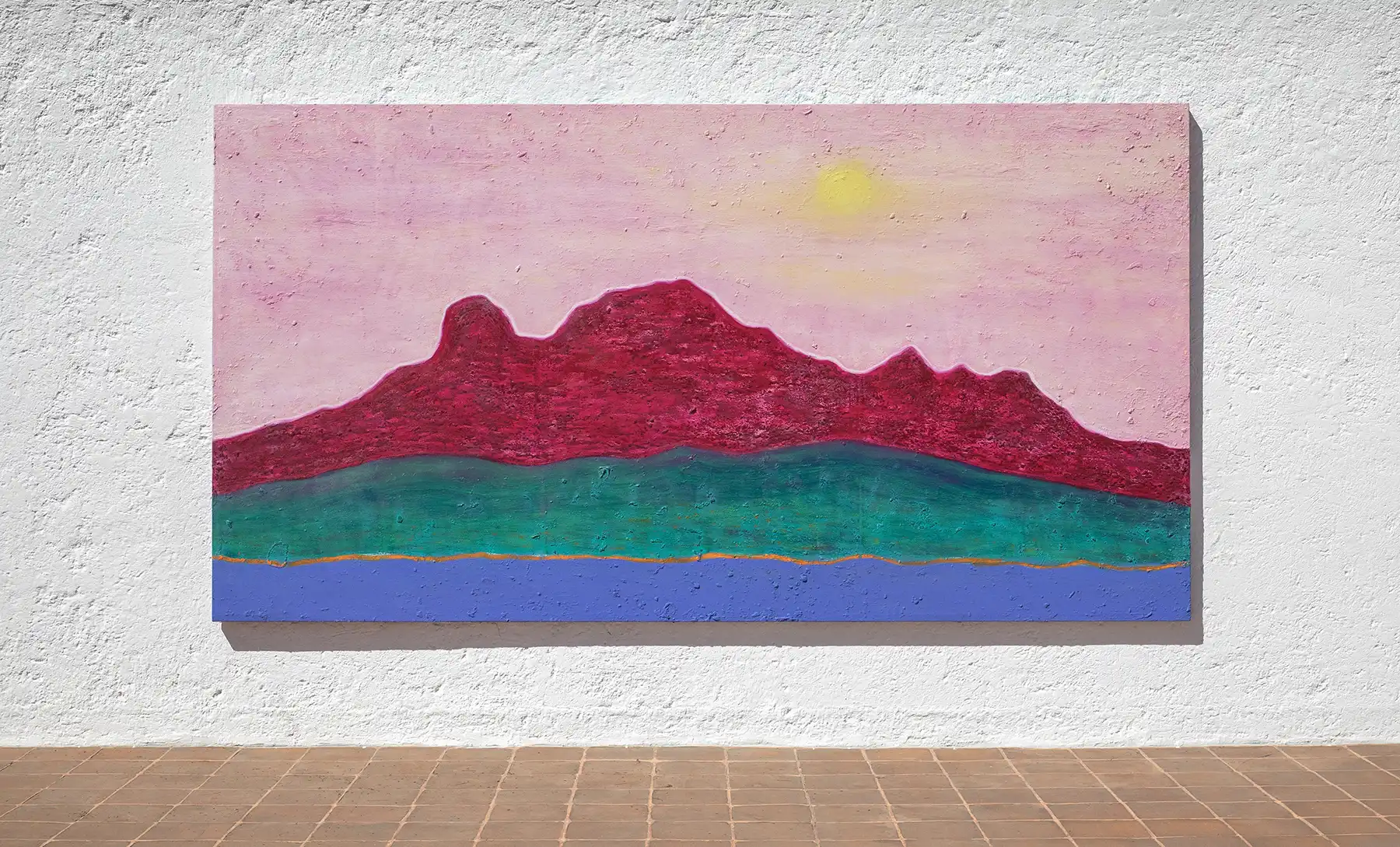
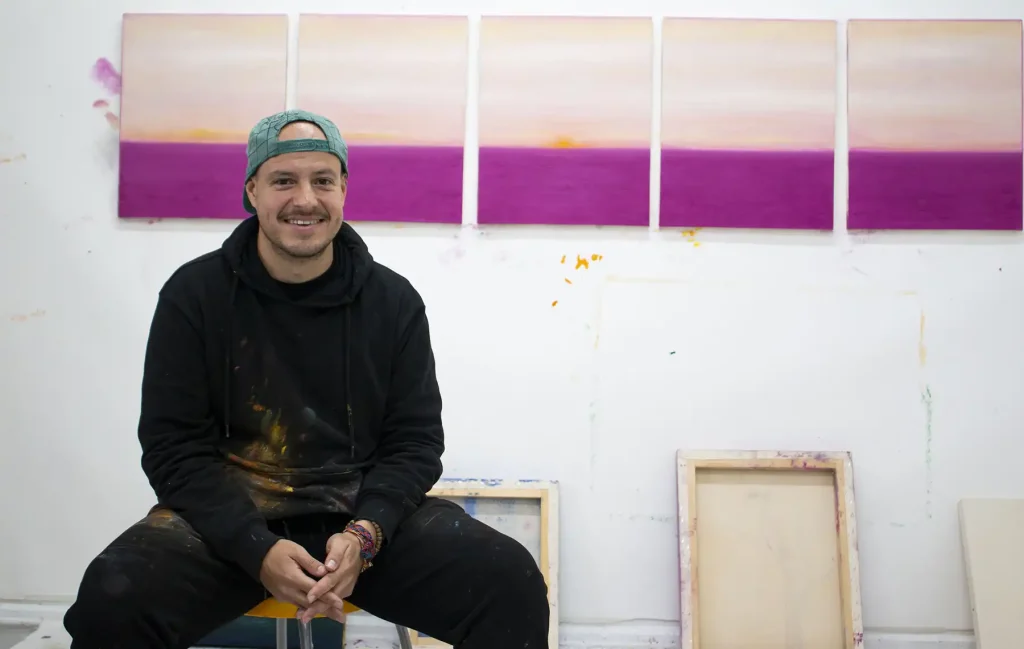
    Yoab’s work uses the horizon as a contemplative motif, blending geometric abstraction with intuitive mark-making. Through a meditative process and materials like oil-stick and concrete, he creates textured surfaces that evoke memory. Vera’s art integrates architecture, spirituality, and neuroaesthetics, using color as a tangible essence of life to explore light, time, and the present moment.

    During his residency, Yoab will explore Alexander von Humboldt’s Kosmos, focusing on the cultural implications of the flora, fauna, and landscapes he documented, particularly the mountain ranges connecting the Americas and Europe. Through mindful observation and journaling, inspired by Humboldt’s practices, Vera will reflect on the interplay between nature and culture, examining how his work and Franz Eugen Köhler’s illustrations inform identity, environment, and postcolonial narratives, while addressing their relevance to contemporary environmentalism and cultural identity.


    Meet the Artist

    Can you introduce yourself and share your background?

    My name is Yoab Vera, and I’m from Coyoacán, a neighborhood in Mexico City known for its vibrant colors and serene atmosphere. Coyoacán embodies a sense of wonder and connection, where memories, textures, and colors converge. Although I lived there until I was 18, I’ve spent the last two decades abroad in cities like New York, Los Angeles, Berlin, and Istanbul. I return to Coyoacán every year to work at my studio, and walking through its tree-lined streets and vibrant facades evokes a contemplative pause that informs my work. This sense of harmony and belonging shapes how I approach abstract landscapes, focusing on contemplation through texture and color.

    How did you first find your way into painting?

    My journey into painting began as a teenager in Coyoacán, where local artists gathered in the town square. Watching them work sparked my curiosity, and I was fortunate to meet a mentor there, Ismael Osorio, who taught me the basics of painting. After highschool, I studied architecture, drawn to its blend of structure and creativity, but my deeper connection to painting soon became clear.

    A pivotal moment was visiting High Times, Hard Times: New York Painting 1967–1975 at the Museo Tamayo, where I saw works by Mary Heilmann and Jack Whitten, which opened my mind to the possibilities of abstraction. I transferred to Hunter College in New York to study art and art history, followed by an MFA at UCLA. These experiences, along with traveling, especially a journey through South America I did, deepened my desire to explore contemplation in my paintings.

    How did your trip to South America influence your approach to painting?

    My trip to South America in 2016 was a turning point in my artistic journey. Particularly, traveling through the Salar de Uyuni, the Atacama Desert, the Andes, and the Pacific coast I formed a deep sensory connection with the landscape. The colors, textures, and vastness of these spaces evoked the same sense of wonder I had as a child in Coyoacán. This realization that landscapes and cities could carry emotional and perceptual resonance reignited my passion for painting, leading me to explore themes of perception, affectivity, and contemplation with a renewed focus on the hybridity between natural and built environments.

    Did you study art in school, and how did it shape your approach to painting?

    Yes, I graduated with an MFA in painting from UCLA and studied art at Hunter College in New York. At Hunter, I focused on color theory with Robert Swain, which helped me approach painting as both an optical and emotional experience. At UCLA, I worked with Silke Otto-Knapp, Rebecca Morris, Monika Baer and Lari Pittman, whose mentorships deepened my understanding of space, materiality, and sensory-perception.

    What draws you to the material concrete?

    Concrete resonates with the built environments of cities like Mexico City, New York, Los Angeles, and Istanbul. In Mexico City, for example, the interplay between brightly painted walls and unfinished concrete creates a textured, stratified landscape that reflects both cultural resonance and personal memory. Using concrete in my paintings allows me to explore the relationship between built environments and natural forms. The textured layers mimic the stratification of the earth, bridging ecological and contemplative concerns. By combining concrete with oil painting techniques, I create surfaces that invite tactile and sensory engagement.

    How did your practice evolve during the pandemic?

    The pandemic offered time for reflection and experimentation. Living with my parents in Mexico, I transformed a small room and later a garden space into my studio, incorporating materials from my surroundings—old wood, polystyrene, and garden textures. This shift toward a more physical and intuitive approach led me to use rollers to layer colors in a way reminiscent of house painting. The resulting works became fragments of the landscapes around me, exploring themes of belonging and interconnection.

    Do you plan your paintings, and what role do landscapes play in your work?

    I rarely plan my paintings in full. They emerge through an intuitive process shaped by my surroundings. Whether it’s the sunsets over the Bosphorus in Istanbul or the garden textures of Mexico City, my environment guides my color palette, textures, and compositions. Landscapes—particularly horizons—are central motifs in my work. Rather than traditional depictions, I use them as structures for contemplation, capturing a sense of pause and interconnectedness that brings us into awareness and vitality.

    What themes do you explore in your work?

    My paintings explore interconnectedness—between people, places, and the earth. Horizons, sunsets, and landscapes serve as metaphors for memory, belonging, and hope. Using materials like concrete ties my work to the built environments we inhabit, while oil-paint introduces warmth and fluidity. Together, these materials create a dialogue between the tactile and the contemplative, offering moments of pause and reflection within the rhythm of everyday life.

    Statement

    I employ the motif of the horizon as a guiding structural event for contemplation. The origin of my modular paintings is geometrically abstract, and I approach the representation of natural phenomena through intuitive mark-making. My process is meditative and tactile, often hybridizing materials throughout the surface allowing textural memories of places to emerge. Using oil-stick and concrete I integrate architecture, spirituality, and neuroaesthetics in what I term “haptic contemplative painting.” In my work, color is likewise material, a ubiquitous and perceivable substance that transmits the heart of everyday life. By distilling the complexity of the passage of time into the simple truth of the rise and fall of the sun, I focus on mindfully exploring reality through the present moment, the changing conditions of light, and the sensory-perceptual components of memory.

    GlogauAIR Project

    During my residency at GlogauAIR, I will delve into Kosmos: A Sketch of a Physical World Description, a seminal work by Alexander von Humboldt. This project aims to explore the cultural implications of the diverse flora, fauna, and landscapes he documented, focusing on the rich mountain ranges and horizons that connect the Americas and Europe. Inspired by the observational and journaling practices employed by Humboldt and his collaborators, I will engage in mindful observation and journaling as a way to reflect on the relationships between these natural elements and the cultural narratives they embody. I will examine how Humboldt’s insights into the interplay of nature and culture, along with the illustrations by Franz Eugen Köhler, contribute to our understanding of identity and environment. Additionally, I will consider the historical context of Humboldt’s work and its impact on postcolonial narratives, questioning how these perspectives continue to shape contemporary discussions around environmentalism and cultural identity.

    CV Summary

    • M.F.A. Painting 2021
    • University of California Los Angeles (UCLA), Los Angeles. CA.
    • I.P.P. Mindfulness Awareness Research Center (MARC). 2020
    • Semel Institute for Neuroscience and Human Behavior at UCLA, Los Angeles. CA.
    • B.A. Art and Art History concentration in Modern and Contemporary Latin American Art. 2013
    • Hunter College. New York, NY.
    • School of Architecture. 2006-2007
    • Universidad Nacional Autónoma de México (UNAM), Mexico City, MX

    Gallery

  • Tania Traver

    Tania Traver

    Tania Traver is GlogauAIR resident
    from July, 2024 to September, 2024

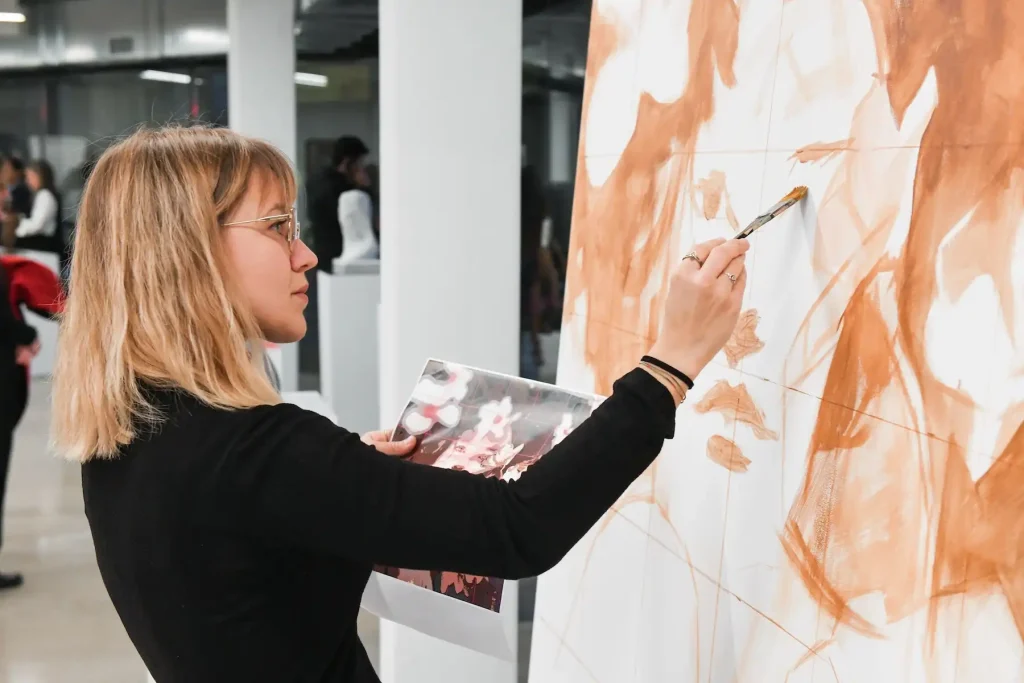
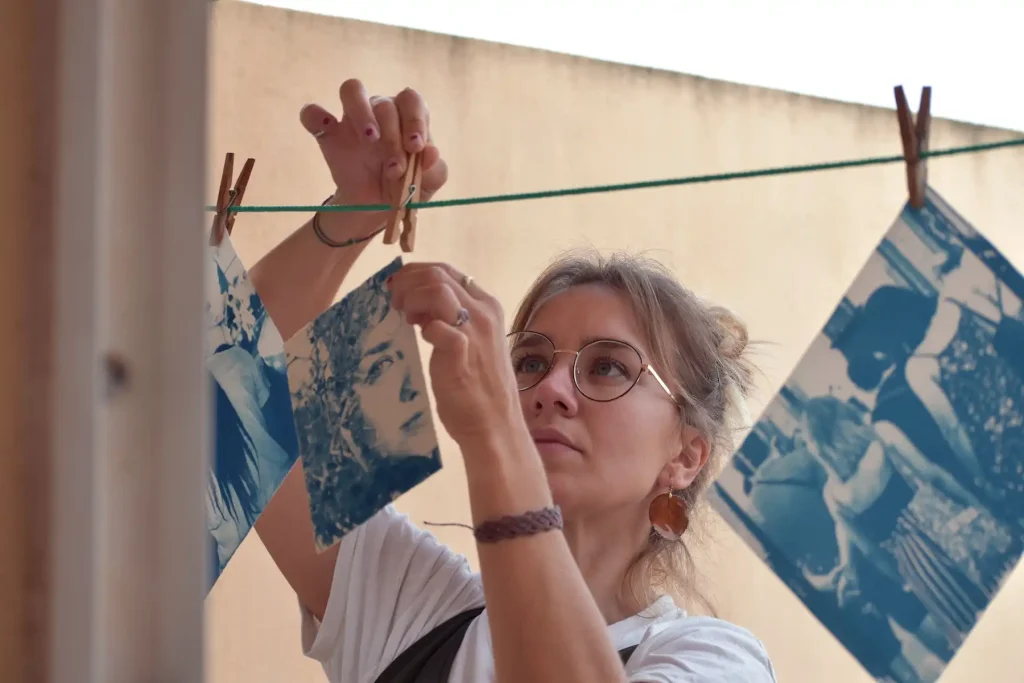
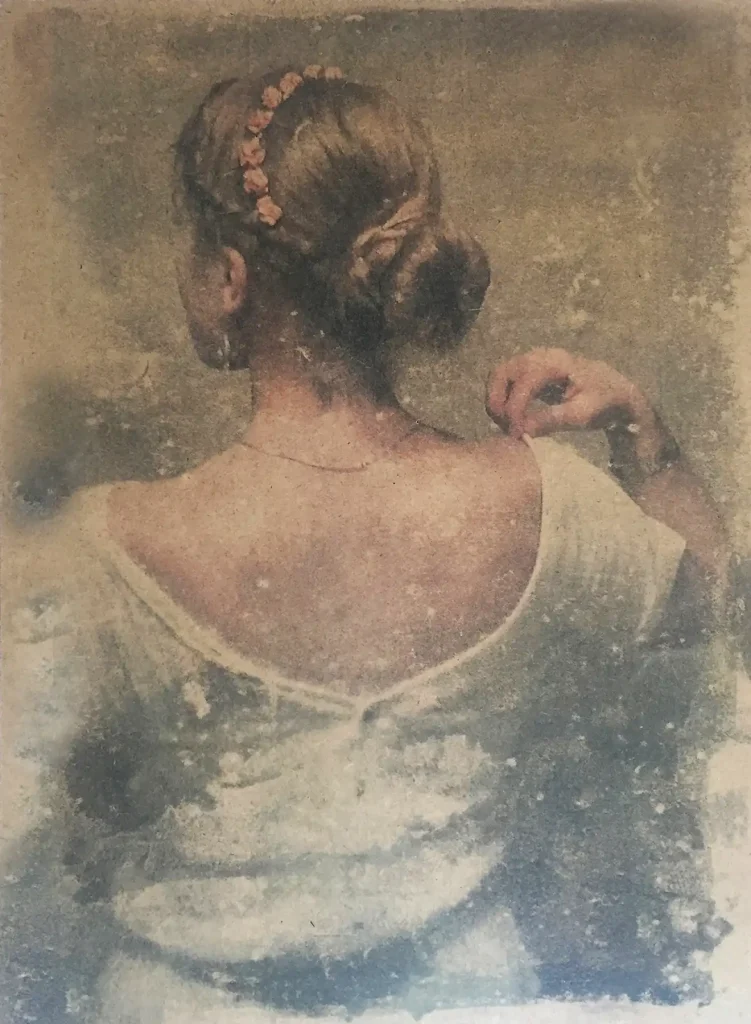
    Tania Traver is an artist from Valencia, Spain currently based in Berlin, Germany. Her work explores different aspects that shape our identity, both cultural and ethnic. In her creative process she investigates the limits between painting and photography through the technical experimentation of cyanotype and the development of pictorial procedures.


    Meet the Artist

    Can you give us an introduction about yourself and tell us about your background?

    I was born in a little town, so things, like the landscape, have influenced my life and my sensibility towards art. From the beginning, I knew art was my only way of life because I wasn’t much of a talker, but I could spend hours painting. After school and college, I studied fine arts. I also took some technical courses, but I already had this vision, this passion, for painting people and their physiognomy. I was really interested in this. After finishing my degree, I started doing commissioned portraits and pursued a master’s degree in traditional techniques and analog photography.

    It was in Seville when I developed an interest in the people moving through a big city with lots of tourism and migration. I was curious about where all these people on the street came from. I spent five years as a freelance artist, working on mural paintings. During these years, I also trained to be a teacher in a college. I wanted to pass on my passion for art to new generations. I have participated in solo and group exhibitions and conducted workshops.

    You’ve been painting murals recently, right? Tell us about your compositions. Do you prefer portraits or landscapes?

    Yes, painting murals has been my source of livelihood for the past three years. It requires being in good physical condition to spend hours going up and down a scaffold with the paints on my back but I like challenges and it is something that I have enjoyed a lot. Many people don’t understand the difference between painting a portrait in your studio sitting on a stool and creating a realistic painting standing on the rung of a ladder 6 metres high.

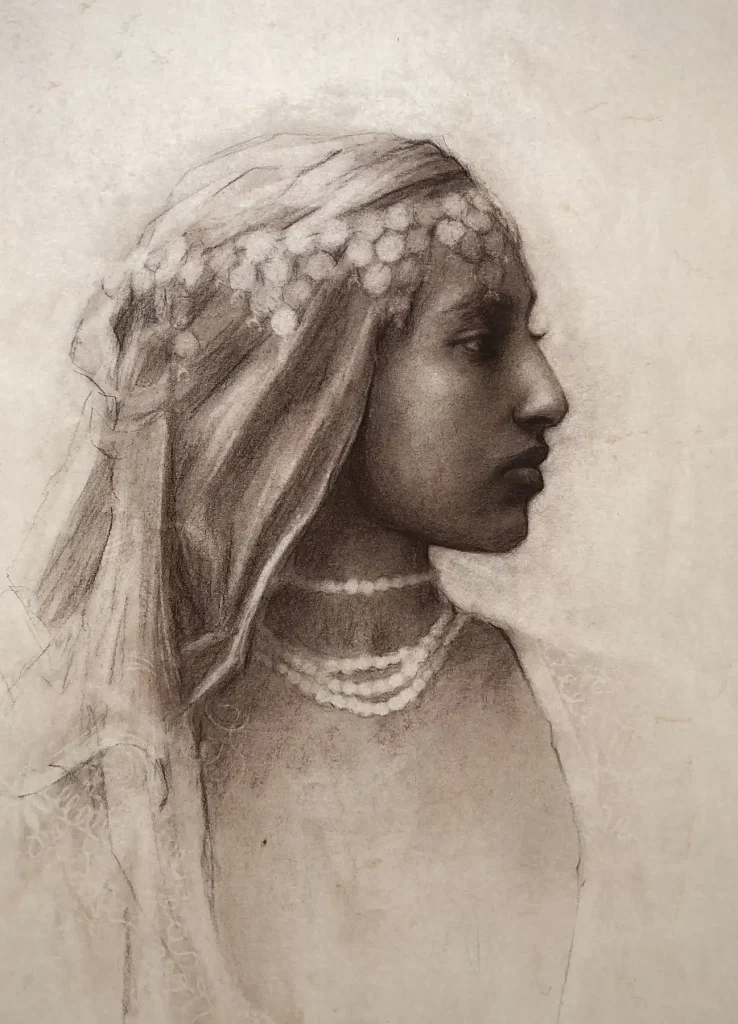
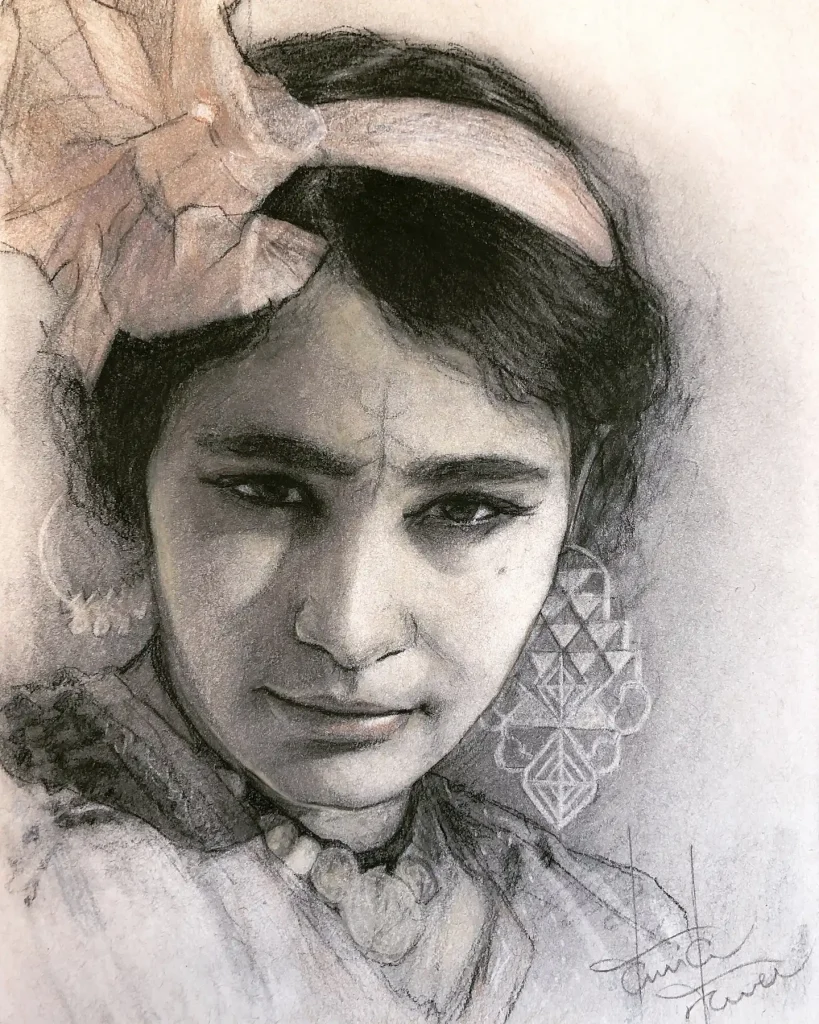
    I prefer portraits, definitely. I don’t know why, but I feel a need to paint faces. I love the landscape because I live and work in the rural environment, and I find it very inspiring to be surrounded by mountains. But my compositions are different because there is always, at least, a face and floral motifs, that do not refer to landscape painting.. I understand this conjugation of portraits, especially women, and flowers as a metaphor to talk about personal flourishing. I often try to mix these portraits into a magical atmosphere when composing murals.

    Who are some artists which have influenced your whole artistic practice?

    Initially, most of my references were male painters. I remember before starting my degree at home we had a book? of a collection of the great masters of painting, so I wasn’t exposed to very many female artists. . One of my favourite painters is Rembrandt, but I have also been influenced by the work of the Pre-Raphaelites and Alphonse Mucha.. A few years ago, I realised I couldn’t name a female painter as an influence, and my discomfort among so much masculinity began to sharpen, so I started looking for women in art history to take as examples.

    After becoming more aware by reading feminist authors, such as Betty Friedan or Simone de Beauvoir, I tried to dislodge the patterns I had inherited so as not to repeat them again and I changed my discourse. Then I realised how many were forgotten in history books. Although there is an endless list, I could name Artemisia Gentileschi, Berthe Morisot or Mary Cassatt as influential. In a more conceptual sense, I’ve been inspired by Georgia O’Keeffe and Judy Chicago. In a closer context, Maruja Mallo and in photography, there’s Ouka Leele. And in real life, so to speak, I needed references who would be a model to follow, not so distant. In painting, there’s a muralist from Catalonia named Lily Brick. Her life and childhood were very similar to mine, and she made me feel like I could achieve great things too. Seeing a woman succeed with murals on the street made me believe I could do it as well.

    What’s your relationship with the art market and the art world? What do you think about it?

    I see this world as very elite, still a few steps above me. I have always lived with the theory of “you can do it alone”. I’m quite solitary and try to do everything myself. I don’t have relationships with galleries, but I still struggle. And on top of that, many of the galleries around me were run by men, which kept me on the sidelines because I did not know how to balance that situation of power between genders. I was still alarmed by the statistics of professional women in the art system. I remember a course I took at the Institute of Contemporary Art in Madrid that talked about that; the artist and self-management, the art market, how to price artworks, contacting gallery owners and art collectors…

    Now, after this internal dilemma, I think I might need some help because many people don’t appreciate my work otherwise. I want to live well through my art, and if the pay isn’t good enough, I might need to enter the art market. Networking is something I need to work on. I need to generate contacts that validate my artistic work, because they are an opportunity for doors to open which I would not have access with my own means.

    How are you finding GlogauAIR? How do you like living with other artists?

    I have to say that this is my first artistic residency, so I have come with a lot of desire to share points of view with other artists who are developing their own creative processes. I think it’s really cool because everyone has their own little world in their room. It’s beautiful. When I was in Spain, I was often working alone, I hardly invested time in meeting many artists regularly. I had a rather stressful routine, just sharing if we did some collaboration for work, but the leisure of visiting museums or exhibitions was becoming less and less. And mostly, making art for customers, not for me.

    Now, we’re living together, exchanging conversations, seeing each other’s processes, ideas, and references. It’s very enriching. And especially, I can focus simply on finding my voice as a painter and defining the line of my work.

    How are you liking Berlin? How do you think it’s influencing your practice?

    I love it. It feels like the planets are finally aligning, finding some masks on the street after I was thinking about masks the whole day, that was a sign. There’s a sense of freedom here, and I get a lot of inspiration from the streets. For example, I recently saw a man performing with a crystal ball, which felt magical and very different from where I lived before and decided to paint this particular scene. I think this scene has helped me to focus my research on a style of magical realism, since some of the references mentioned above are influenced by surrealism, I like to mix both concepts.

    I think Berlin can benefit me a lot in the development of my project here. Because I want to talk about people and cultural identity, and examine a concept which is changing all the time. I like to walk through the busy streets as a drifting artist, and also observe the new ways of appropriating space, the synergies derived from migration and tourism.

    You’re staying six months in the residency, right? Do you have any plans yet for after the residency?

    Yes, I’m super happy because 6 months is a good amount of time to connect with the city and the rhythms of life here. As for later plans, the truth is, not really. I postponed my entire work schedule to 2025, but if a brilliant opportunity arises here, I will not hesitate to stay for a second. I feel that art is much more appreciated here in Berlin, and I wouldn’t mind staying. I want to take advantage of everything I can find here and improve my German. I’m still freelancing, so I’ll look for opportunities that could take me a step further. Maybe I’ll stay if I find someone who wants a mural painted or whatever. If not, I’ll return to Spain. In the meantime, I am also developing my Master’s dissertation to become a professor, and in January, I will defend it in court.

    Statement

    Tania Traver is an artist from Valencia, Spain currently based in Berlin, Germany. Her work explores different aspects that shape our identity, both cultural and ethnic. It is based on the conjugation of one’s own experiences stored in memory and the stories told by others, deposited in our imagination.

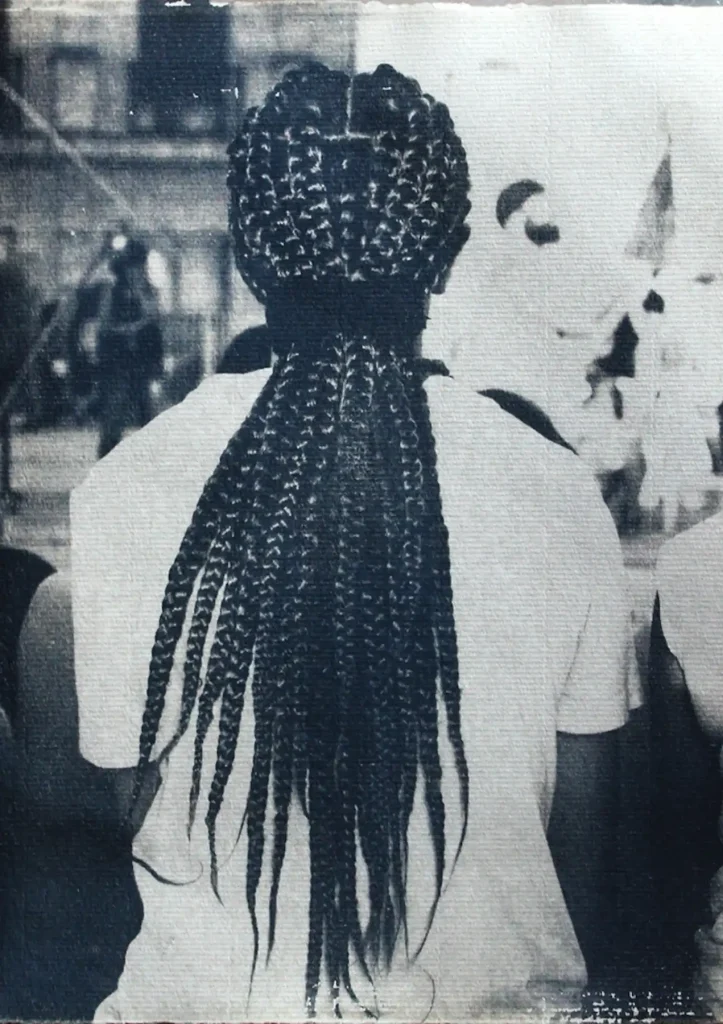
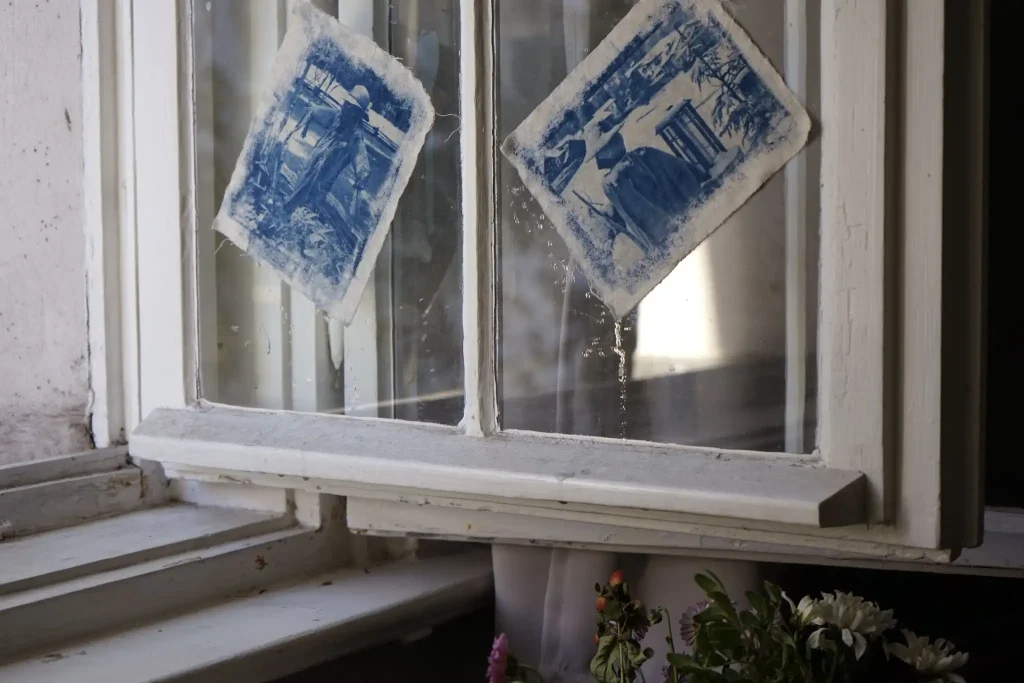
    In her creative process she investigates the limits between painting and photography through the technical experimentation of cyanotype and the development of pictorial procedures. This analogical register poses the different perceptions of the viewer before the same representation of the subject and questions the rhetoric of artistic language.

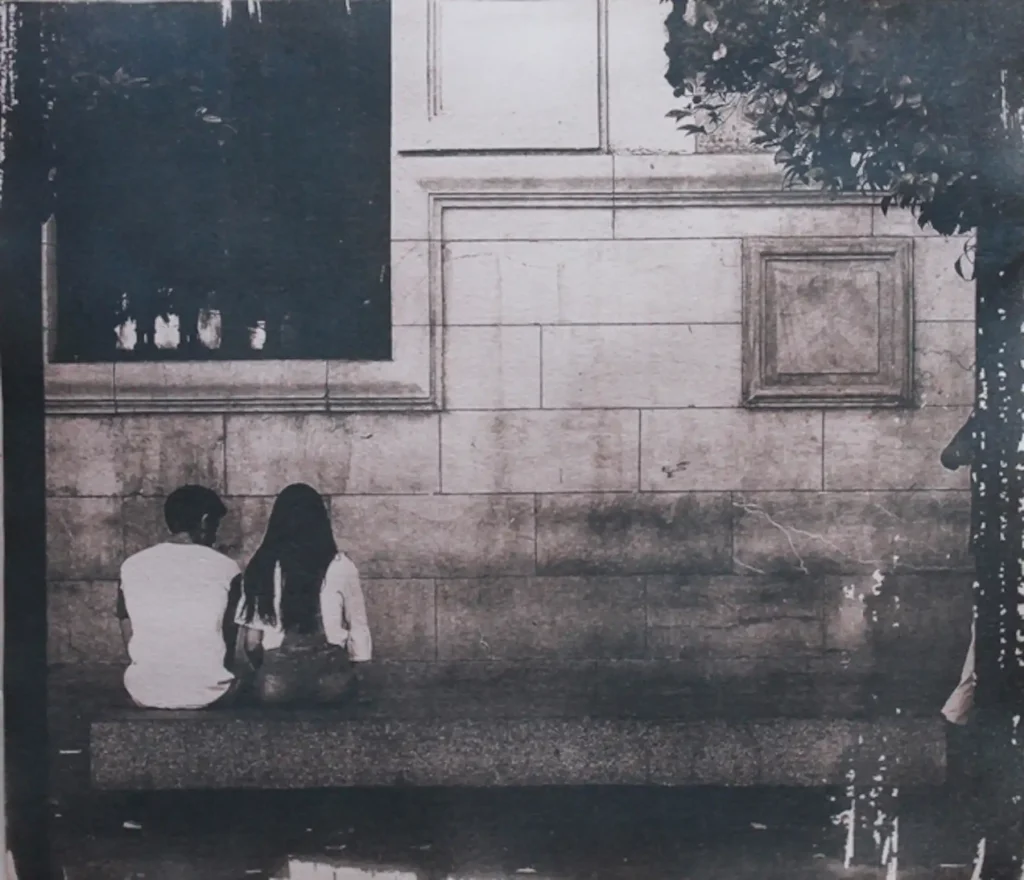
    Motivated by the lack of a sense of belonging, she analyses the migration movements and cultural transformations of large cities through the eyes of the outsider. She portrays figures from the reverse to reflect on anonymity and the hidden parts that end up being relegated to oblivion.

    GlogauAIR Project

    The project “The Gaze of the Other” addresses personal concerns about migration and the fluctuation of identity. The detachment from the place of origin, motivated by the rural exodus, has generated a need to deepen the knowledge of urban problems. Upon landing in the city of Berlin, a series of concerns arise that articulate this work, the new spaces of flow, the social portrait, the hybridism of passers-by, the formulation of identities. Through numerous photographic tours, the aim is to study different aspects derived from gentrification, as well as the standardization of central areas and the loss of identity, new forms of appropriation of spaces, the spectacularization of cultural diversity, and the reduction of collective significance. The idea of this search is to be exposed in a plastic way in order to place the creation of images in a real contemporary context.

    CV Summary

    Education

    • 2024. Women Rural Artists Cultural Tectònica project, Valencia.
    • 2022. Master’s Degree in Secondary Education, University of Valencia.
    • 2021. The Artist and Self-Management, Institute of Contemporary Art of Madrid.
    • 2018. Painting workshop with Denis Sarazhin, La Galería Roja, Seville.
    • 2017. Master’s Degree in Art: Idea and Production, University of Seville.
    • 2016. Hyperrealism Workshop, Lifelong Learning Centre, Valencia.
    • 2011. Degree in Fine Arts, Polytechnic University of Valencia.

    Exhibitions

    Solo

    • 2024. Let’s open our eyes. Uniques Foundation, Barcelona.
    • 2023. Ways of understanding Painting. Plenary hall of the town hall of La Serra d’en Galceran, Castellón.
    • 2022. Painting with a woman’s eyes. Hermitage of Sant Joan d’Albocàsser, Castellón.
    • 2021. Rocart Culture. II Peñíscola Art Festival. Ephemeral Museum of Peñíscola, Castellón.
    • 2020. A retrospective look. Exhibition Hall of the Town Hall of Atzeneta del Maestrat, Castellón.
    • 2019. The language of the artist. Exhibition space of the Old Hospital of Culla, Castellón.

    Collective

    • 2015. The shape of the time. Municipal exhibition hall of the Mislata Cultural Centre, Valencia.
    • 2014. Illustrated poems by Vicent Andrés Estellés. Exhibition Hall of the City Council of Sumacàrcer, Valencia.
    • 2013. Alter Ego. Sala de Les Naus of the City Council of Valencia.

    Experience

    • 2019 – now. Freelance artist, painting instructor and muralist, Valencia.
    • 2018. Student intern at the Andalusian Centre for Contemporary Art, Seville.
    • 2016. Intern at the Office of Culture and Tourism, Castelló.

    Gallery

  • Juan Couder

    Juan Couder

    Juan Couder is GlogauAIR resident
    from October 2024 to December 2024

    Juan explores photography as a fluid, ephemeral process rather than a fixed image, embracing its transient, material nature through dialogue between author and work. Using an “expanded camera” concept, he equates camera, darkroom, studio, and exhibition space, highlighting the medium’s fleetingness and the meaningful human desire to make it permanent.


    Meet the Artist

    Statement

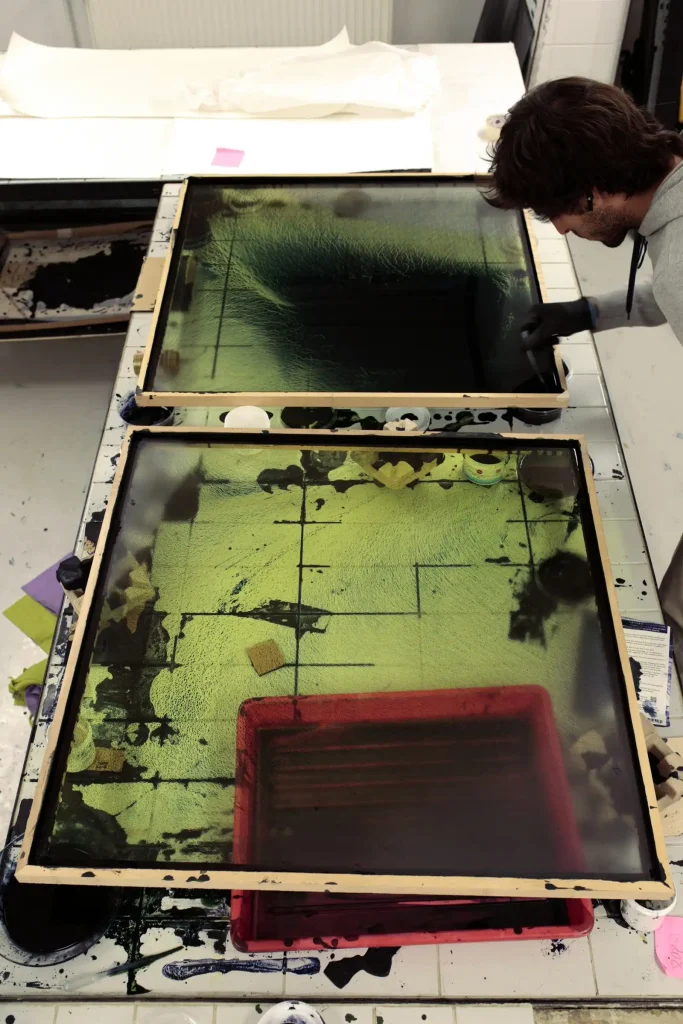
    I am interested in photography as a process rather than a final image. As a latent being instead of a crystallised moment. In my practice, the process embraces its liquid, opaque and ephemeral materiality, positioning the author-work relationship in terms of dialogue.

    I work with a concept of expanded camera that explores the equivalence between camera, darkroom, studio, and exhibition space. In this way of seeing photography, I pay attention to the relationship that this medium has with the fleeting, and our insistence on making it fixed. The image is not an indelible stroke in iron, but an infraleve light being, which disappears with the slightest sigh. It is in its fleetingness that I find its metaphorical power; and in our endeavour to fix it, I see a gesture loaded with meaning.

    GlogauAIR Project

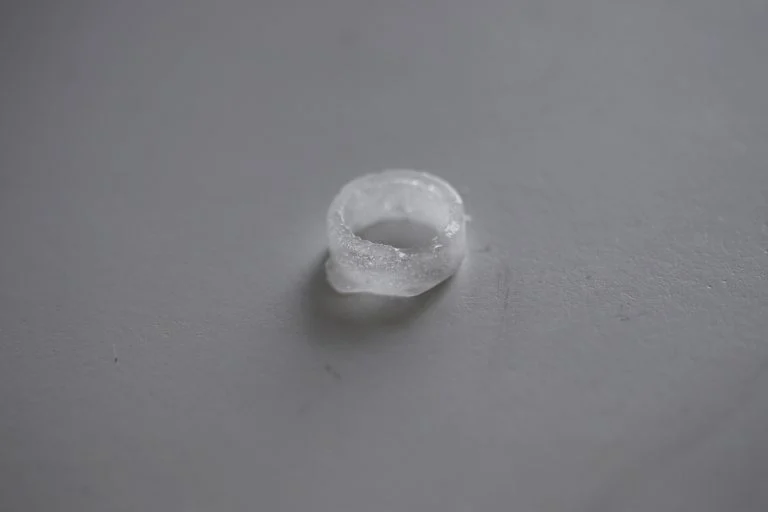
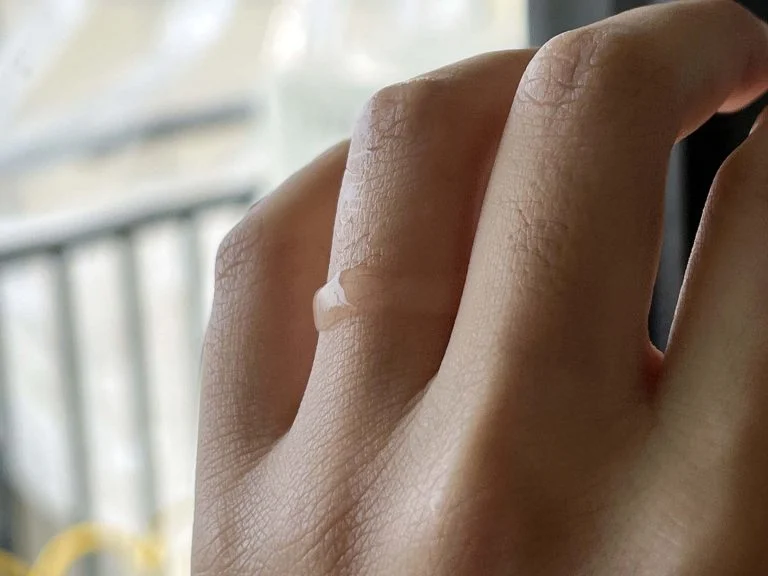
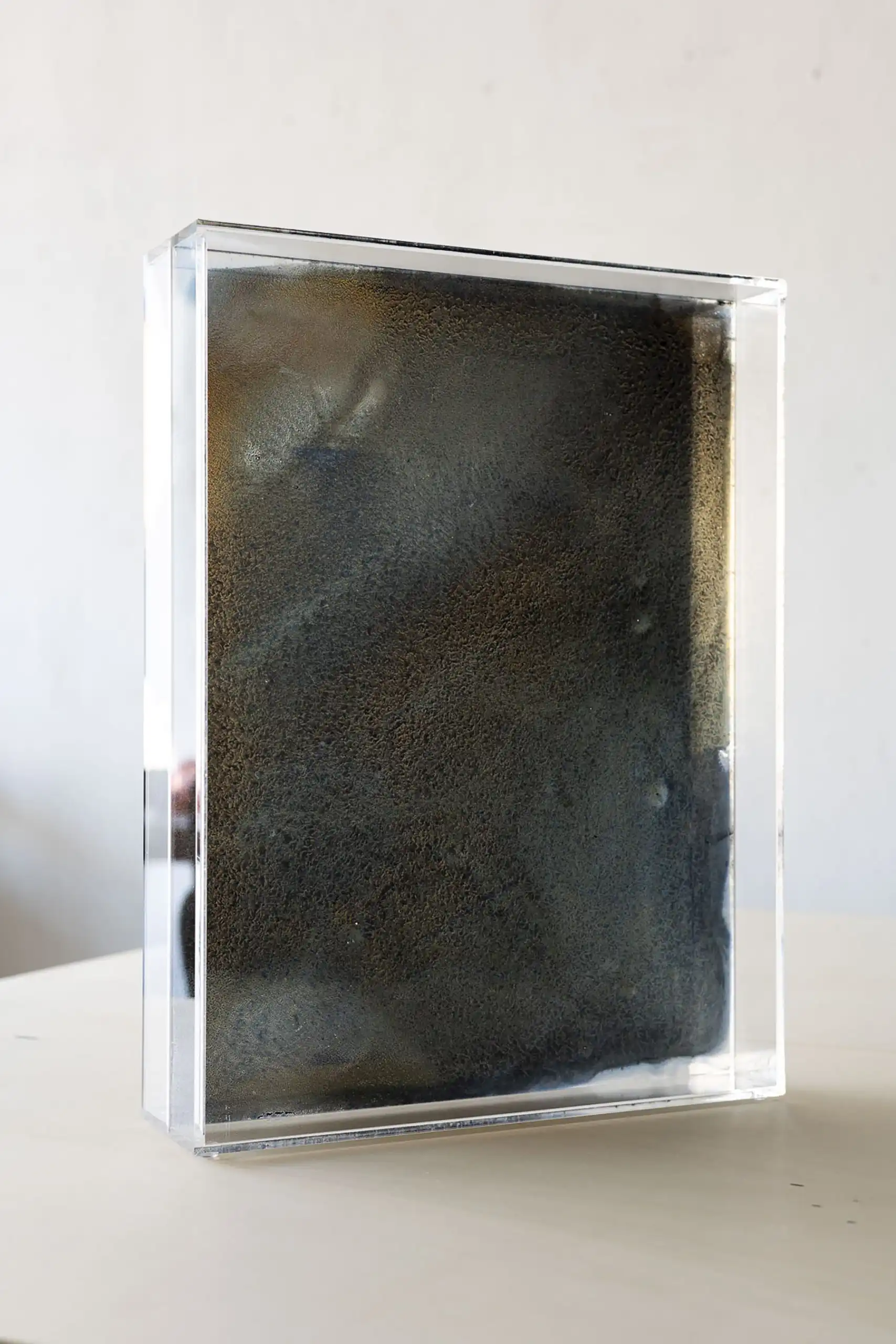
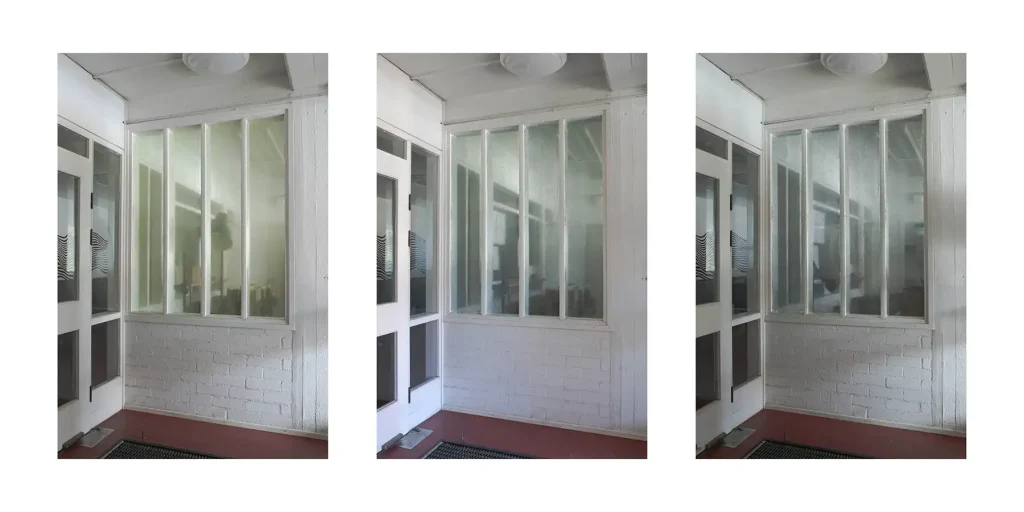
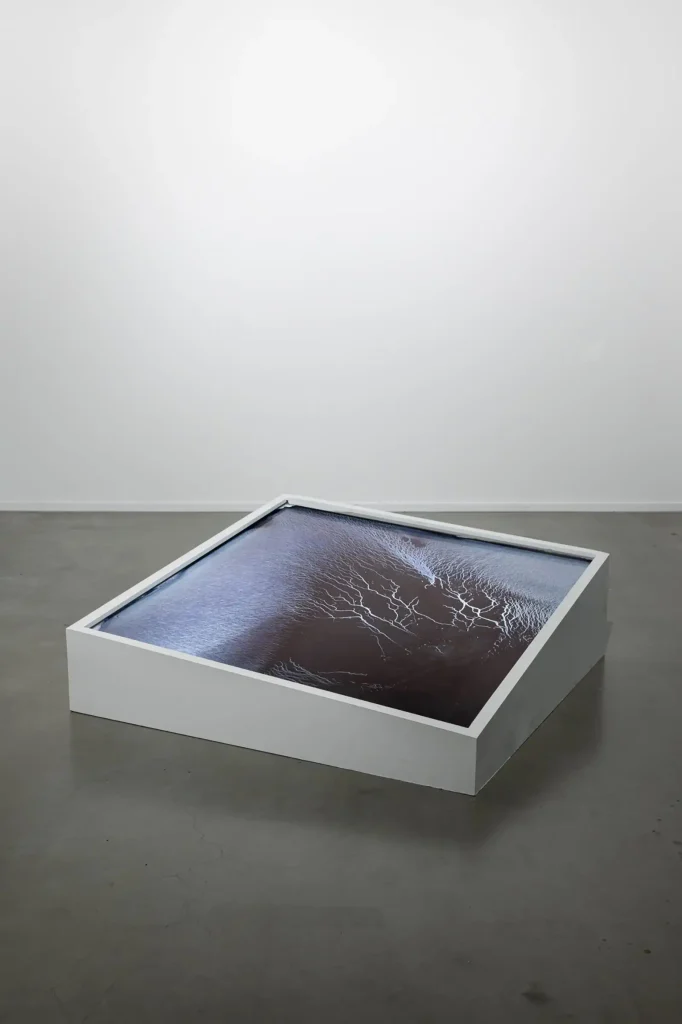
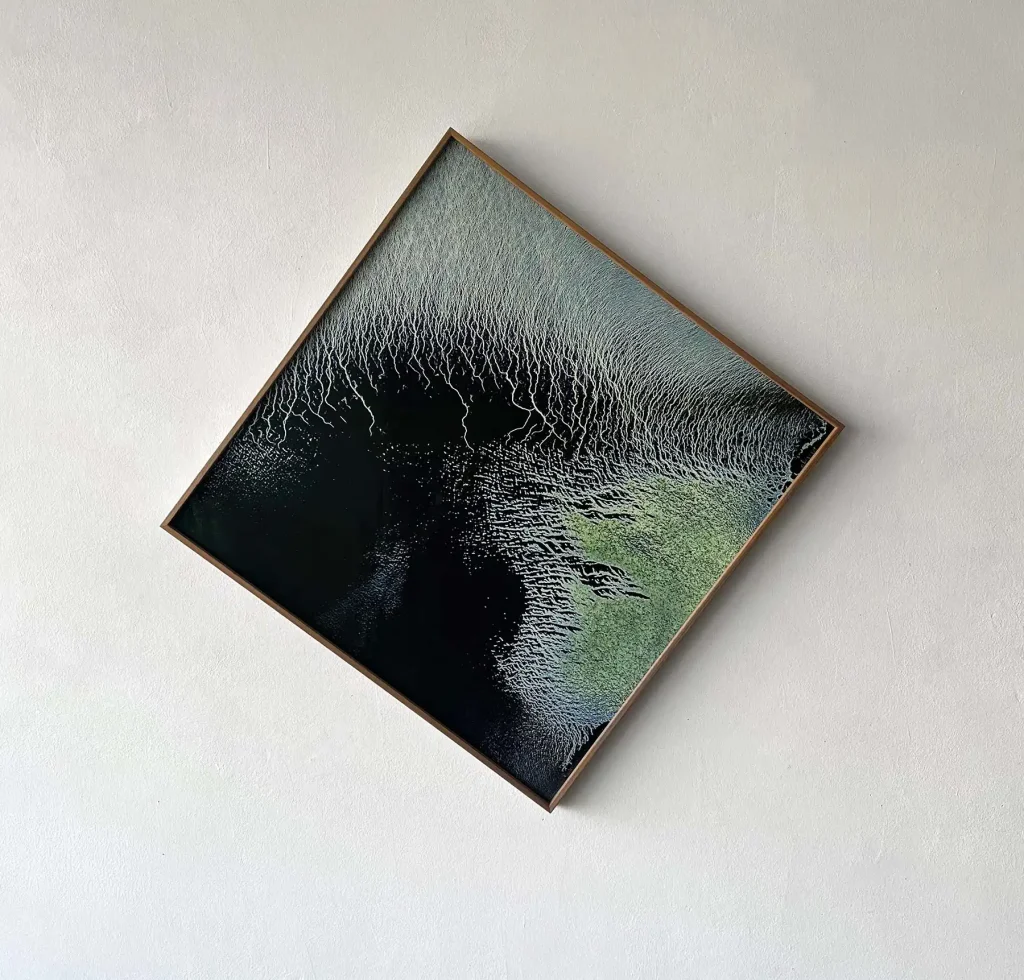
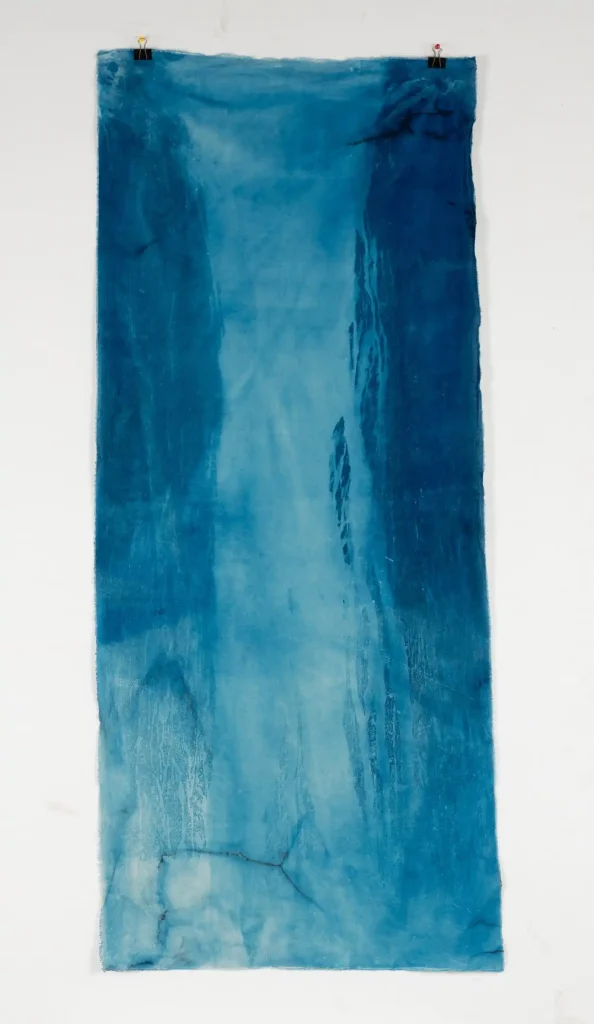
    In 2020 a personal encounter with a waterfall derived in a series of explorations on photography as an ephemeral time measuring device. Clepsydra (2020-) takes its name from an ancient Egyptian device used to measure time by observing the flow of water out of a vessel. Inspired by these water timekeepers, the project incorporates similar processes of dripping, sedimentation and crystallisation with photographic emulsion. Cyanotype is a photographic process based on ferric salts that relies on water and sunlight. With this unfixed medium, the project explores photography as a body vulnerable to time, presenting photographic objects that transform according to the light conditions of their environment.

    CV Summary

    • 2023 MA Photography, Aalto University, School of Arts, Design and Architecture. Helsinki. FI
    • 2018 Course by artist Javier Vallhonrat: Creativity and Strategies in Contemporary Photography. Madrid. SP
    • 2024 The Active Image: Political Ecologies & Photographic Agency, Featured artist, The Sustainable Darkroom & Folk House Darkroom. Bristol, UK
    • 2024 Image of the Helsinki Photomedia Conference. FI
    • 2023 Biji Buaya, Artistic collaboration with the Migrant Ecologies Project.
    • 2023 Espoo Cultural Centre, Group show, Helsinki. FI
    • 2023 MoA 23, The Finnish Museum of Photography, Group show, Helsinki. FI
    • 2023 Plat(t)form 23, Fotomuseum Winterthur. CH
    • 2023 Leon es Photo. First accessit Ex+S 23. SP
    • 2022 Dipoli Gallery, Group show curated by Outi Turpeinen, Helsinki. FI
    • 2021 JustMad, International Emerging Art Fair, Group show, Madrid. SP

    Gallery

  • Leanne Finnegan

    Leanne Finnegan

    Leanne Finnegan is GlogauAIR resident
    from October 2024 to December 2024

    Leanne Finnegan is an Irish visual artist based in Berlin, working primarily with video and text. Her practice explores the sacred in post-modernity, recontextualizing images to create playful dialogues that counteract alienation and disconnection. She reflects on the “pain of becoming a subject” and the desire to dissolve beyond individuality, drawing on Poetic Imagery, the Religious Imaginary, and Eroticism to seek solace from solitude.


    Meet the Artist

    Can you give us an introduction about yourself and tell us about your background?

    My name is Leanne Finnegan and I’m an Irish artist. I am currently based in Dundalk but will be making the move over to Berlin in the next month. In 2022, I graduated from my Art bachelors and since then I have been continuing to develop and expand my practice.

    How would you describe your artistic practice?

    I would consider myself to be a video artist but my practice is quite multi-disciplinary. The work’s foundations are often in research and personal writings which spiral into a video format, or sometimes photography or sometimes objects.

    Since I’ve begun working I have always been interested in ideas of spirituality and transcendentalism. At the moment I’m really interested in looking at this in a contemporary context, where the sacred exists today, what shape it takes. I’m also interested in its cultural and personal functions.

    Still from Field Trip.

    What is your methodology or process for creating a new project? 

    I feel like I’m chasing ideas, or answers to my own questions. So the initial stage is a personal reaction and process. Oftentimes I start with a question, or an interest and explore it from a few different angles, trying to find resolutions or remedies. This usually leads me into the realm of esoteric or religious ideas and then that is usually refracted by psychological or more straight laced philosophy – then it comes back to a personal realm of trying to make sense of all the information.

    With the next part I like to go again into a more imaginative playful space and build up narratives which react to the ideas, working perpendicularly from each other. This output usually looks like a narrative for a video work. But I also really enjoy making ‘artefacts’ in my practice. Like objects that would exist in that world. I feel like this usually comes from an itch to use my hands again if I have been thinking and writing for too long.

    Tell us about the project you are working during your online residency at GlogauAIR.

    I have went into this residency with GlogauAIR to develop a film work which is following on from a period of writing and reading. For this narrative I have been jumping between Julia Kristeva’s notions of psychosexual development, Georges Batailles writings on Transgressions, the relationship of physicality and immateriality – particularly outlined by some of the writings of the Beguines movement.

    Fundamentally I have been zoning into the idea of burying and dirt as a substance and a character’s act of embodying something higher. It’s been a very enjoyable time fleshing this work out.

    My output for this residency which you can see on my Virtual Studios is a series of photographs of spiritual sites – a burial site and a rag bush. This has been a process for me to consider set building for the film. I have been really inspired by the theatricality of the sets of Sergei Parajanov and also Derek Jarman.

    What led you to explore a multidisciplinary artistic practice?

    In my work I’m very interested in world building so I like to make objects/images/videos as different expressions and representations for the world in question. Like in this project for GlogauAir being able to make sculptures and textile outputs create a new extension of that world.

    And even the act of photographing the sculptures is an exciting process for me because it takes it further into a new context. For me these pictures give an impression that they are documentations of a real site and it’s kind of a work of documentary-fiction.

    That’s an example of where I find a multidisciplinary approach to be really satisfying. And as I said earlier, sometimes I just want to make things with my hands.

    How do your Irish roots influence your vision and creative approach?

    I would say it definitely has, as it would for anybody who has been raised in a culture or space. I can definitely locate the religious interest quite specifically. Ireland, in our recent history, has been an extremely catholic country, which has been deeply embedded into the state. Over the years this has changed and the church has lost its hold on the government and society, but the remnants of it are everywhere and especially institutionally.

    When I was younger, I went to catholic schools and clubs and camps, not specifically by the wishes of my family but because the majority of schools and outlets were – so the religious imagination was a part of daily life. There were long periods of masses and sitting in church which burns images, stories and atmospheres into your brain.

    Specifically the contrast between the world of the church and the world I knew outside of the church, which in a way felt quite plastic. And not even specifically the aesthetics but also the feeling or promise of a God. I think this contrast has had a large influence.

    What were the first moments or experiences that sparked your interest in themes such as the “sacred” in postmodernity?

    Like I mentioned above, the early religious exposure has been a major spark for that. But I think I came around to it again in my practice as an older, non-religious person as a tool for meaning-making and as an act of catharsis. I had become really interested in ideas of ‘spiritual poverty’ and probably to a degree existentialism.

    I was also very curious about – again back to Ireland – where the place of religion and faith was relocated to in a society which (from my perspective) is no longer as concerned with faith. After decades behind us of really routinely having an outlet for the sublime and ‘higher experiences’, I wanted to see where this energy had been transferred to and what it has transmuted to be.

    Still from Rattleback Musings.

    Your creative process begins with research. How do you decide which thematic pathways to follow or which ideas to develop?

    My process of research has always been by the impulse of private and personal feelings, trying to work them out by reading, which leads to a million different rabbit holes and perspectives.

    Again, I like this to happen instinctively. I find for example cross researching to be a very exciting way to work. So I will read for a period of time and think about certain concepts, while also going through archive material, finding images and texts that for some reason resonate.

    Then coming to a certain point, piling them all together, and beginning to find links between images and ideas. I find at this point, I begin to get a thicker understanding of how I feel about the themes and the world they live in.

    What role does writing play in the transition from research to the materialization of your works?

    Writing feels like shaking the cobwebs, it’s a very direct and immediate medium which requires no resources to do and there are no limitations. Writing enables me to put my specific voice and perspectives back into the work.

    It begins to abstract and walk further away from the research and the work can take on a life of its own. Which I always find exciting and surprising.

    You mention figures like Julia Kristeva, Georges Bataille, and Simone Weil as influences. Which of their ideas resonate most deeply with your work?

    I have been really keen to play off two ideas in my new body of work. First is Julia Kristevas take on psychosexual development which is the process that happens from the birth of a baby to around the age of four. When a baby is born, coming from the womb, they see no distinction from themselves and their mother and to the objects and landscapes that surround them, they’re all one in a sense. Pain is shared and everything is an extension of themselves.

    Over the course of development, particularly with the introduction of language they begin to – and are taught to – see and seek separations. So through this process they end up as a self-perceived individual with an isolated identity. In my past works, I have been really interested in the feeling of wanting to almost, metaphorically go back to a ‘womb’ state, and dissolute a sense of self. For a long time in my practice I have been thinking about the Womb/Void dichotomy, and how these ideas are viewed differently depending on what culture and time you’re looking at. Notably I was very interested in the contradicting opinions of it. Where 20th-century western philosophers see the void as a place of nothingness and fear, 13th-Century mystics viewed it as a space of endless creation. So still in my practice I’m thinking and working through these ideas.

    The second idea, in this specific body of work, is Georges Batailes notion of Transgression. He has this idea that areas in society which are considered taboo (dirt/sex/death) are areas – when faced – can be transformative. As they bring you to an area where you are faced with the limits of your individuality, and where boundaries between yourself, the other and the landscape can begin to dissolve. It offers a disruption in the separations in which we exist everyday. He argues that the act of transgression can offer moments of ‘continuity’ which can be described as a feeling of being in touch with the infinite or divine or as I bring it back to the symbolic ‘womb state’/’return’. So from this I have been thinking about developing this symbol of dirt and digging.

    You speak of “antidotes” to alienation in your work. Do you believe art has a therapeutic or transformative power?

    I think it is for sure cathartic and a good piece of music, art or film can get you in touch with that sense of ‘continuity’ or sublime.

    In your practice, you integrate religious imagination and semiology. How do you think these elements can connect with contemporary audiences?

    Kind of like I said above, I’m interested in all images and creations – functional or recreational – as some kind of cry for connection that elicits meaning making. For me putting contemporary materials or language in a format that is inspired by ritual practice can put a light on how those acts and feelings are still very much alive in the collective imagination.

    Statement

    My name is Leanne Finnegan (b.1998) and I am a visual artist from Ireland currently based in Berlin. I work through video and text. My work often explores the appearance of the sacred in post-modernity. In my practice I recontextualize images to create playful dialogues that serve as antidotes to feelings of alienation and disconnection. In my practice I consider the ‘pain of becoming a subject’ and the desire to dissolve into something more real and less isolated than the individual. I am interested in how we can take respite from our solitude through Poetic Imagery, the Religious Imaginary and Eroticism.

    GlogauAIR Project

    My project explores themes of dissolution, disillusionment, and devotion through video and image-based work, examining how the erotic and religious imagination can serve as an antidote to feelings of disconnection. Inspired by Georges Bataille’s concept of erotic dissolution and the religious ecstasy of the Beguine movement, I seek to explore immaterial solutions. By linking cannibalism, Christianity, and eroticism, I aim to uncover where the divine hides in a contemporary context and our perpetual desire to find it. Through a documentary-style narrative infused with magical realism, I focus on modern expressions of this longing, particularly in digital spaces, which act as both setting and character.

    CV Summary

    Education

    • 2018-2022 IADT, Dún Laoghaire — First Class Honours BA Art

    Residencies

    • 2023 Culterim, Dahlewitz, Germany
    • 2023 Segotia, Dublin, Ireland [Online]
    • 2022 Pilotenkueche, Leipzig, Germany

    Awards

    • 2024 Agility Award Arts Council Ireland
    • 2023 Agility Award Arts Council Ireland
    • 2023 Emerging Artist Louth Arts Council
    • 2022 RDS Visual Art Awards (Longlist)
    • 2022 Ormound Graduate Award (Runner up)

    Exhibitions

    • 2024 Members Exhibition, Daylight, Dublin, Ireland
    • 2024 BKB Studio Artists Exhibition, BKB Studios, Dublin, Ireland
    • 2023 Luftwurzeln, Culterim, Berlin, Germany
    • 2023 LUGHNASA, Phase Space Arts, Dublin, Ireland
    • 2023 36. Stuttgarter Filmwinter – Festival for Expanded Media, Kunstbezirk Gallery, Stuttgart, Germany
    • 2022 Pleasure Seed, Kunstverein Ars Avanti, Leipzig, Germany
    • 2022 IDKF, Kulturinsel-Stuttgart, Stuttgart, Germany
    • 2022 Lichtspiel des Westens, Karl-Heine Straße Leipzig, Germany
    • 2022 Open Studio, Pilotenkueche, Leipzig, Germany
    • 2022 Controlled Voltage 003, Complex, Dublin, Ireland
    • 2022 IADT Graduate Show, IADT, Dublin, Ireland
    • 2022 Propositions, IADT, Dublin, Ireland
    • 2020 Open Submission, Highlanes Gallery, Drogheda, Ireland
    • 2019 Place Project, IMMA, Dublin, Ireland

    Gallery

  • Maria Mitsi (MITΣI)

    Maria Mitsi (MITΣI)

    Maria Mitsi (MITΣI) is GlogauAIR resident
    from October 2024 to December 2024

    MITΣI is a Berlin-based Cypriot artist and VJ blending real-time visuals, digital scenography, and sound. Her work, inspired by nature and the “sublime,” appears in global exhibitions and festivals, merging digital tech with interactive performance and stage design.


    Meet the Artist

    Statement

    MITΣI is a Cypriot multidisciplinary artist and VJ, currently based in Berlin. Specializing in real-time visuals, digital scenography, and performance, she explores the intersection of digital technology, electronic music, experimental sound, site-specific installations, and stage design.

    Active globally in exhibitions, festivals, and interactive performances, MITΣI utilizes computer software, hardware, and projection mapping techniques. Inspired by nature, space, and the concept of the “sublime,” she seamlessly merges sound and visuals to evoke humanity’s attempts to imagine the vast unknown.

    While her work has received occasional funding, she recently participated in the Prague Quadrennial of Performance Design and Space, as well as the Distortion Ø Festival in Copenhagen. Additionally, she delves into digital scenography in dance and body participation, employing choreographic tools and materials to explore new dimensions of performance and set design.

    GlogauAIR Project

    The project stems from my diverse background in digital scenography, site-specific installations, and the creation of visionary 2D + 3D images through live and/or generated visuals. My aim is to continue exploring deep philosophical inquiries surrounding the concept of the “sublime”—its complexities expressed through visual aesthetics, self-body integration, and the merging of digital technology with physical/natural spaces.

    The “sublime” reflects the awe and terror experienced when confronting the immense power of natural forces. It also resonates with a modern perspective that explores the “invisible power” of digital technology, blending the natural with the technological to evoke a sense of the sublime in contemporary contexts.

    I seek to delve into the human+self experience, investigating natural and unexplained phenomena as filtered through digital data. Through this practice and research, I aim to create an atmospheric environment immersed in digital imagery and interactivity, while integrating human experience into a conceptual and emotional landscape.

    CV Summary

    Education

    • 2018. Master of Arts By Research. For a Programme of Work Entitled: “How Digital Scenography Affects the Visual Spectacle in a Site-Specific Choreographic Installation ”, University of Hertfordshire, United Kingdom
    • 2014. Bachelor of Multimedia and Graphic Arts. Cyprus University of Technology, Cyprus

    Performances + Festivals

    • 2024. Live Visual Performance. C Y WE RAVE VOL. 03, Cyprus
    • 2024. Live Visual Performance. Ophan. Limassol, Cyprus
    • 2024. λάβα/LAVA. Site-specific Installation/ 3-Dimensional Canvas. Distortion Ø Festival in Copenhagen, Denmark
    • 2024. Live Visual Performance. About Blank. Berlin, Germany
    • 2023. VICTOR X. Participatory/Immersive Performance. w/ Nasia Papavasiliou. Prague Quadrennial of Performance Design and Space, Czech Republic
    • 2023. Live Visual Performance. Distortion Unidad Records, Madrid, Spain
    • 2023. THE AWESOME PERFORMANCE. Live/Choreographic Visuals. ByTheWay Productions. Mikis Theodorakis Theatre. Dance Days Chania Festival, Greece
    • 2023. Live Visual Performance. Art & Research Exhibition, Awareness, Cyprus
    • 2023. Live Visual Performance. C Y WE RAVE VOL. 02, Cyprus
    • 2023. Live Visual Performance. Distortion Unidad Records. The Garage of the Bass Valley, Barcelona, Spain
    • 2023. Live Visual Performance. Distortion Unidad Records, Madrid, Spain
    • 2023. Live Visual Performance. Oddity, Greece
    • 2022. THE AWESOME PERFORMANCE. Live/Choreographic Visuals. ByTheWay Productions. Rialto Theatre. Cyprus Choreography Platform, Cyprus
    • 2022. DIFFERENT REALITIES. Video Art. Urban Awareness, Cyprus
    • 2021. VICTOR. Immersive Theatre Performance. w/ Nasia Papavasiliou. ETKO Winery, Cyprus
    • 2017. Live Generated Interactive Wall. IKEA House Party-Future Room. SOHO London, United Kingdom
    • 2017. LOVESTUCK. Set Design and Live Visual Effects. Musical Theatre. London, United Kingdom
    • 2016. απεραντοσύνη/VASTNESS. Interactive/Immersive Choreographic Installation. London, United Kingdom
    • 2016. THE DIGITAL MOSAIC. icoNICity. Urban Gorillas, Cyprus
    • 2014. LIMITATIONS. Interactive Digital Performance. Pop Up Festival Nicosia, Cyprus
    • 2014. L’ELEPHANT. Experimental Animation. 13th International Festival Countryside Animafest, Cyprus
    • 2014. Pixathlon. Worldwide Photography Competition, Cyprus
    • 2013. Imagine Cup. Games category. Local semi-final competition, Cyprus
    • 2013. LISTENING TO LIMASSOL. Soundscape composition. International Short Film Festival. Limassol, Cyprus

    Gallery

  • Miruna Mogosanu

    Miruna Mogosanu

    Miruna Mogosanu is GlogauAIR resident
    from October 2024 to December 2024

    A multidisciplinary artist with a background in drama, engineering, and psychology, Miruna creates paintings as portals to imaginary worlds and interconnected parallel universes. Influenced by the I Ching, Tarot de Marseille, and psychological archetypes, her work offers an immersive, philosophical journey that both asks and answers profound questions. Each piece begins with a clear vision but evolves organically, shaping its own narrative, inviting viewers to explore the authentic self and escape the monotony of daily life through dreams, stories, and fantasies.


    Meet the Artist

    Statement

    I’ve studied drama for 2 years, and I’ve learned to play with feelings, ideas and images. I’ve always been drawn to the idea that every painting should tell a story. I’ve graduated electrotechnic and aerospace engineering. I study psychology as a hobby. Psychology, the teachings in I Ching, The Book of Changes and the Tarot de Marseille cards follow the same structure and I find it fascinating.

    Dreams. Stories. Fantasies.

    My paintings are portals to imaginary worlds, interconnected parallel universes, a journey in search for the authentic being within. They are meant as a short immersive experience, an escape from the boredom of day to day life, a philosophical experience that asks questions and gives answers at the same time.

    Although I always have a clear image in my mind when I start, at one point the painting starts to have a will of its own. Things appear or disappear, and sometimes the whole narrative changes.

    GlogauAIR Project

    The Fool and The World

    What is the purpose, my purpose or your purpose?

    In the past few years I have been drawn into the fascinating word of the tarot deck and have started to study the symbolism of the Tarot de Marseille cards, explained by Alejandro Jodorowsky.

    The more I studied the more it became clear the cards are a psychological journey of becoming, as well as a mirror that shows the reflection of the soul and its struggles in search of redemption.

    For some time now I had in my mind a painting focused on the first and last card of the major arcana, the first one being The Fool, a permanent beginning, while the last one is The World, an infinite epilog.

    Instead of 1 painting my project is to create a series of paintings, different sizes. Each painting will be a stand alone universe, part of a hero’s journey: places, guardians, stops and adventures. The stand alone worlds create the journey. Each hero chooses his own path. Different encounters may create different heroes.

    CV Summary

    2018 – 2022. King’s Foundation School of Traditional Arts, the open program

    • traditional Persian miniature painting, 3 courses
    • sacred geometry, 10 courses
    • colour harmony, 1 course
    • oil painting, 4 courses

    2020 – 2022. online sacred geometry and arabesque design with Adam Williamson

    Gallery

  • Nicole Hipp

    Nicole Hipp

    Nicole Hipp is GlogauAIR resident
    from October 2024 to December 2024

    Nicole is a Berlin-based new media artist blending virtual and physical worlds, drawing on her identity as a lesbian, Mexican-German, and autistic woman. Her work champions inclusivity, challenges norms, and sparks reflection through art and advocacy.


    Meet the Artist

    Statement

    As a Berlin-based new media artist and technologist, I explore the intersection of virtual and physical worlds, blending art and technology in evolving ways. My identity as a lesbian, Mexican-German, and autistic woman deeply influences my work, giving it a distinct perspective and voice. Beyond being an artist, I am an advocate for inclusivity, using my platform to challenge societal norms and celebrate diversity. My art serves as both a visual and thought-provoking commentary, aiming to inspire emotions, provoke change, and shift conventional perspectives on life.

    GlogauAIR Project

    This multimedia art project draws from my experiences as a latina lesbian woman in Germany, exploring the pain of discrimination and anxiety faced by marginalized communities. It seeks to document and address these challenges, using art to inspire empathy, understanding, and dialogue. While my past work has focused on large-scale, interactive installations, this project will begin as an online exhibition. This format provides flexibility, reach, and the opportunity to gradually refine the project, making it the first step toward developing a larger, more impactful body of work.

    CV Summary

    Education

    • 2022. B.A in Interaction and Digital Media. Mexico City
    • 2021. Diploma in contemporary art. Mexico City

    Projects / Collaborations

    • 2024. Routes In x Soho House Mentorship. Berlin
    • 2023. Special Guest at Patrick Thomas Studio. Berlin

    Gallery