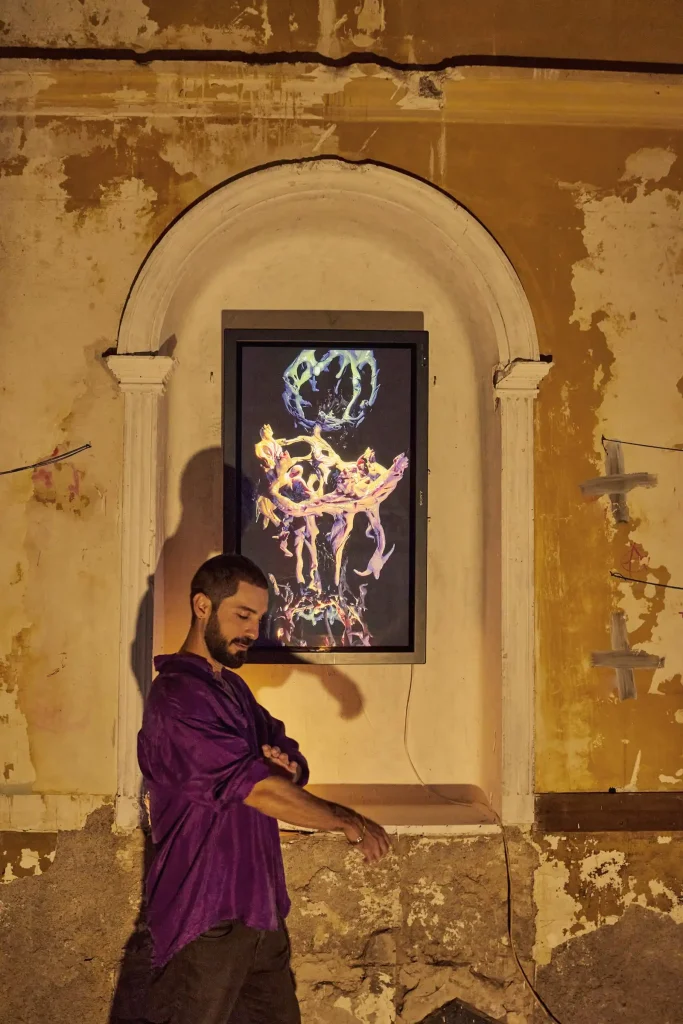
Archives: Artists

  • Lucila Sancineti

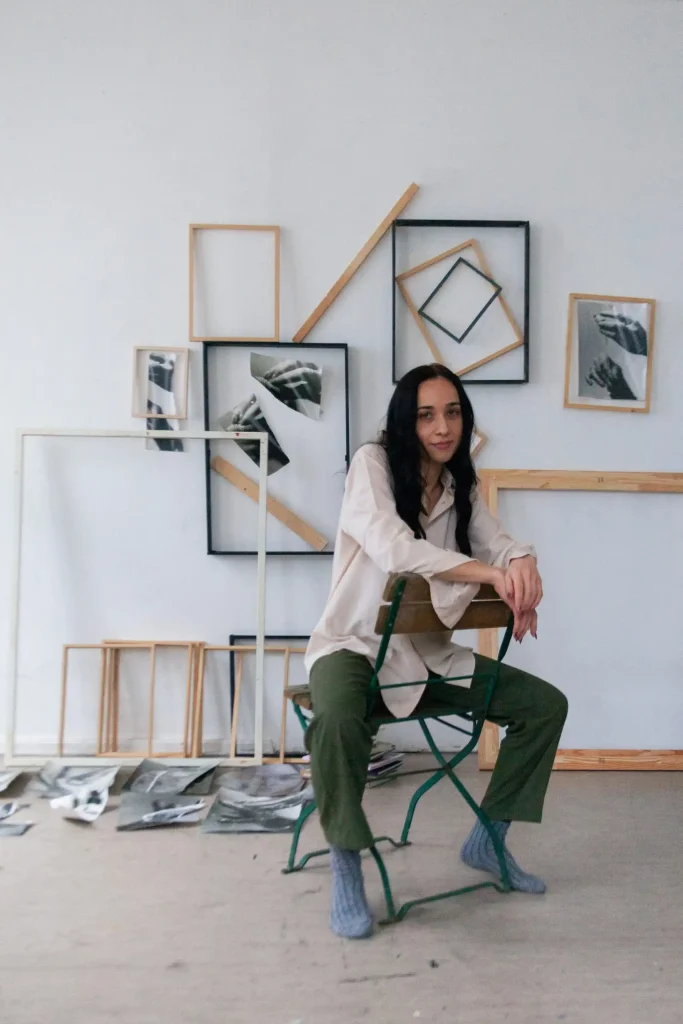
    Lucila Sancineti

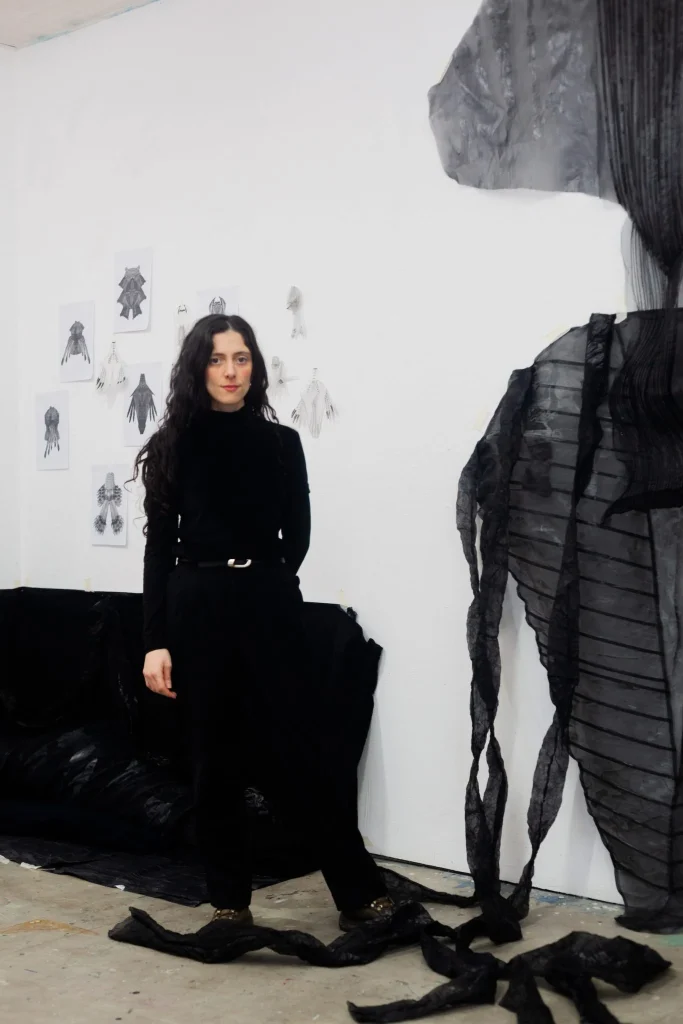
    Lucila Sancineti is GlogauAIR resident
    from January, 2025 to March, 2025

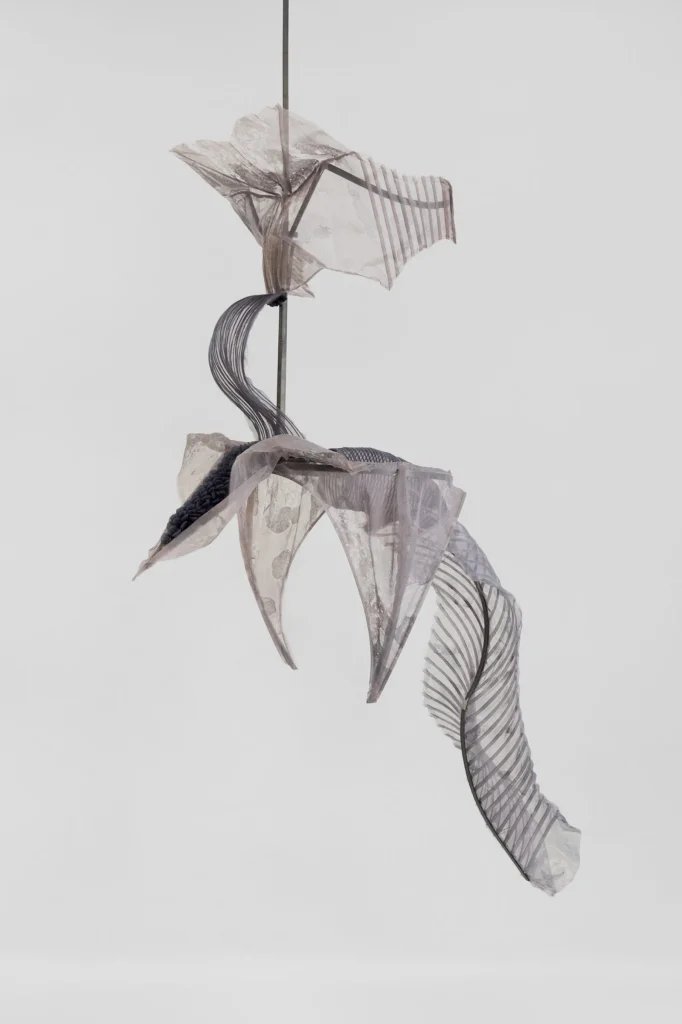
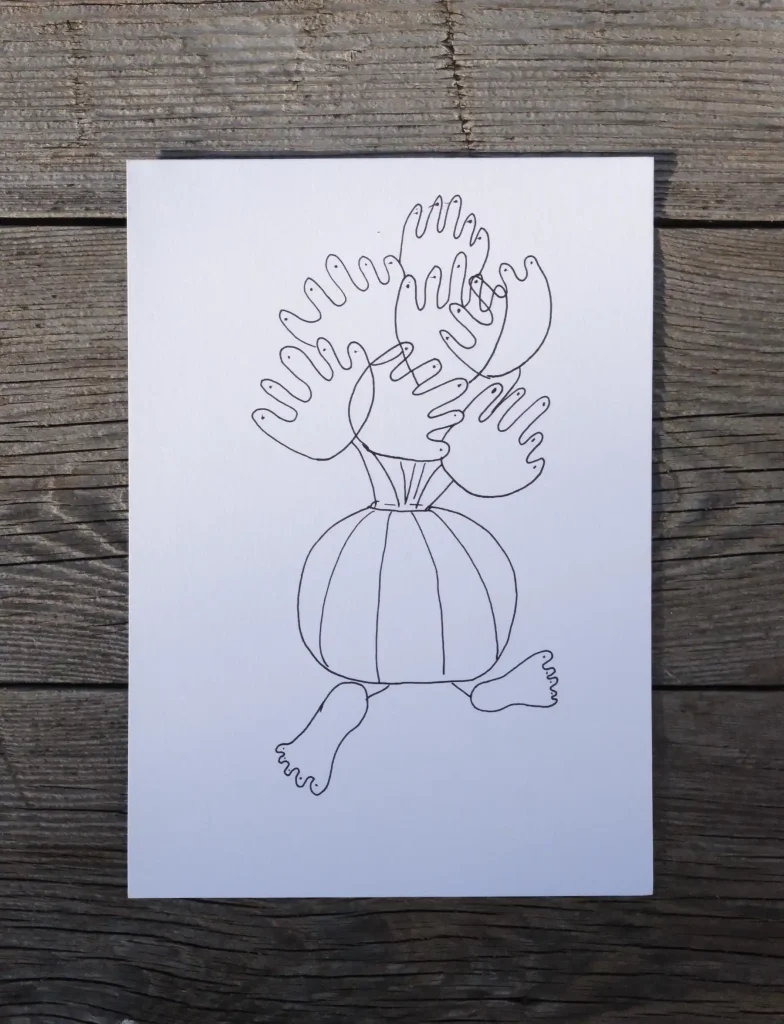
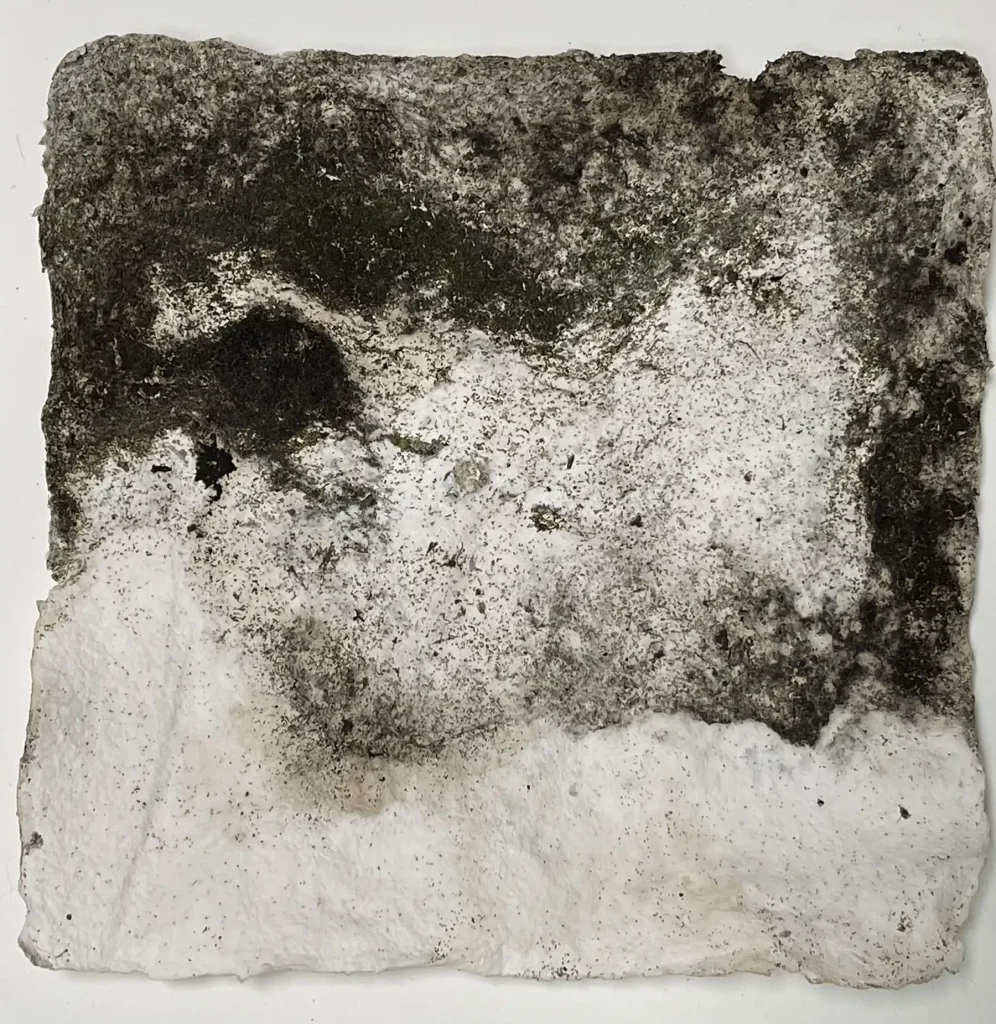
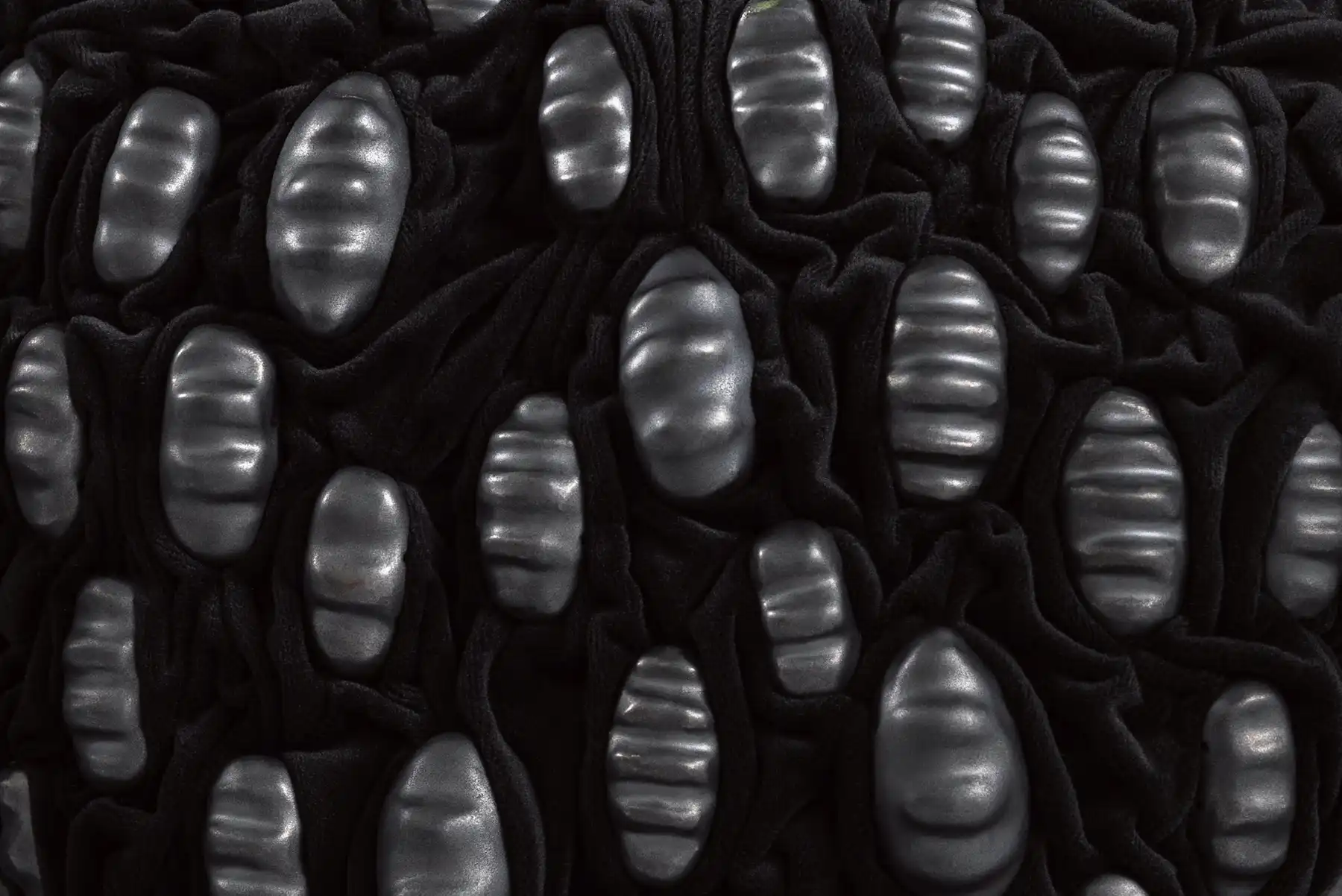
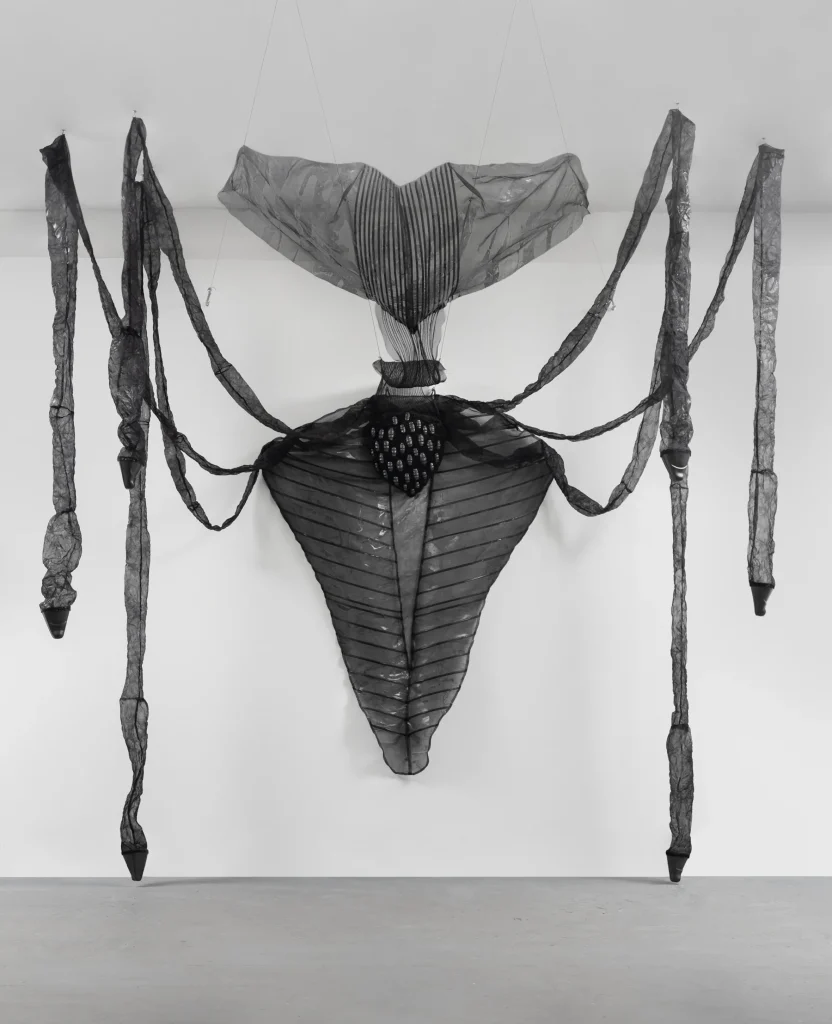
    Lucila Sancineti explores the intimacy of matter and the body in her artistic practice, where everything a body touches becomes a body. Her work invites a tactile encounter with porous surfaces, fostering connections with otherness through fragments like scales, crusts, and fossils. These remnants evoke suspended states of transformation, embodying a temporal paradox. Her pieces become poetic attempts to grasp the ungraspable, the elusive flow of change and becoming

    Meet the Artist

    Can you give us an introduction about yourself and about your background? 

    I’m a visual artist from Argentina. I work across disciplines, experimenting with different materials and techniques. I think that I’ve always been curious and interested in very diverse things. For example when I was young I wanted to be a marine biologist and I was also obsessed with the Egyptians, jewellery and fantasy books. At university I studied Literature, and at the same time I trained myself as an artist through different workshops. I took sewing lessons with a seamstress for five years, which was actually something in-between sewing and haute couture. I mean it wasn’t just sewing, it was also in a way fashion designing. Besides, I took painting and sculpture classes with other artists and studied scenography for a while. I was also teaching at a high school.

    So in these years when I was beginning my artistic practice I was in contact with a lot of different things. I started painting but quickly began to incorporate all these other areas of interest. It was really bothering me to separate my passions, that literature seemed to be one thing and art another thing. At some point I started to intertwine all these worlds and practices and I think that right now my art has a lot of this. And because I love to learn new techniques to incorporate into my work, I’m constantly taking new workshops, like ceramics or biomaterials workshops.

    So you don’t work in just one medium?

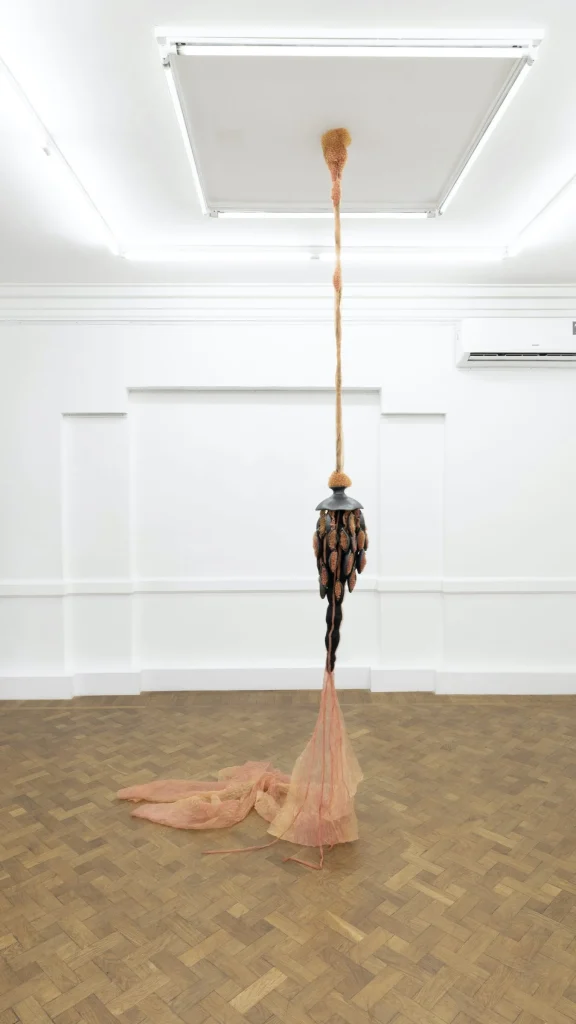
    No, I always work across different mediums to create object-like pieces and installations. I’m interested mostly in building atmospheres, and for the pieces to really take up the space, to inhabit it, sometimes in a parasitical way even. I want people to feel that they are co-inhabiting the space, that they are entering a habitat where you have to share that space with the pieces. It’s very important for me that the pieces feel like entities, in the sense of something that is alive or has been alive, so you wonder whether this is what’s left of a critter, maybe the skin of a critter, their remains, something that was here and it’s not anymore. And you are trying to understand what this was, what its shape was, how it behaved. You’re constantly pursuing something that keeps getting away, it’s like hunting, chasing this entity that is constantly moving.

    I feel like this comes from my interest in narrative, in story-telling. I want you to be able to think ‘Oh, if this is the leg, then what happens with the head?’ And to start thinking about that piece, trying to build a story in your mind about what’s happening with it.

    Can you tell us about your recent work and what are you planning to work on during the residency?

    My current project started with a research on fashion patterns. I was looking at sewing patterns from old fashion magazines like La Mode Illustrée, and also at exuviae, that are the skins that insects and other species leave after they moult. Sometimes you can see the whole cast of the insect attached to a tree. I have this love/repulsion relationship with insects, I feel very attracted to them, but at the same time very disgusted by them. I like that feeling. When you feel disgusted by something, for me, it’s a good feeling. It shows that there is something happening with how we understand the world, with how we were taught to understand the world.

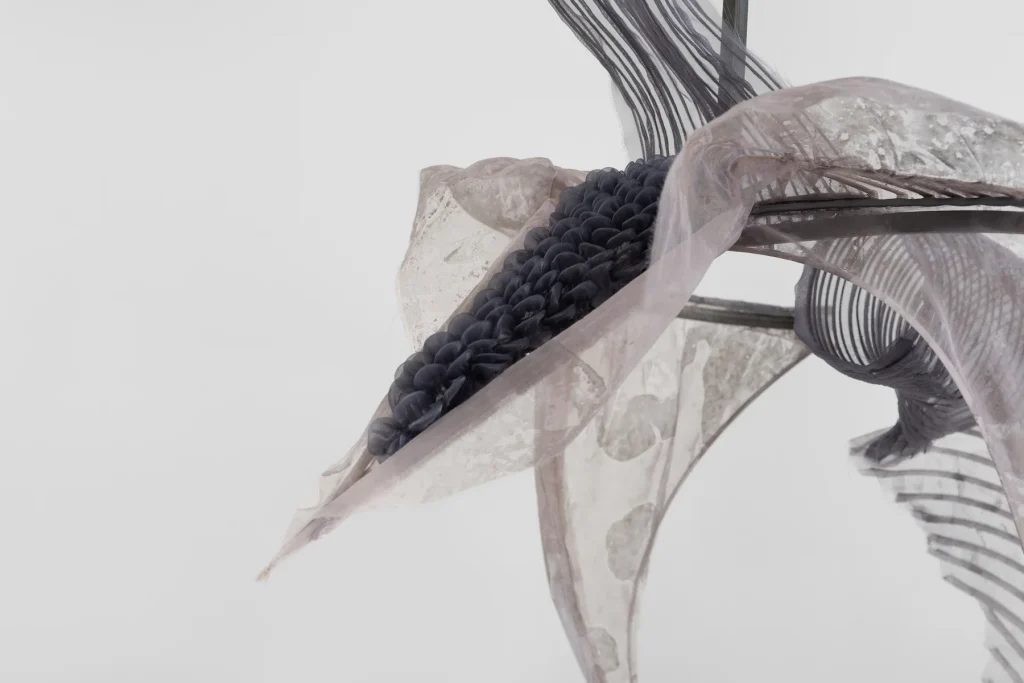
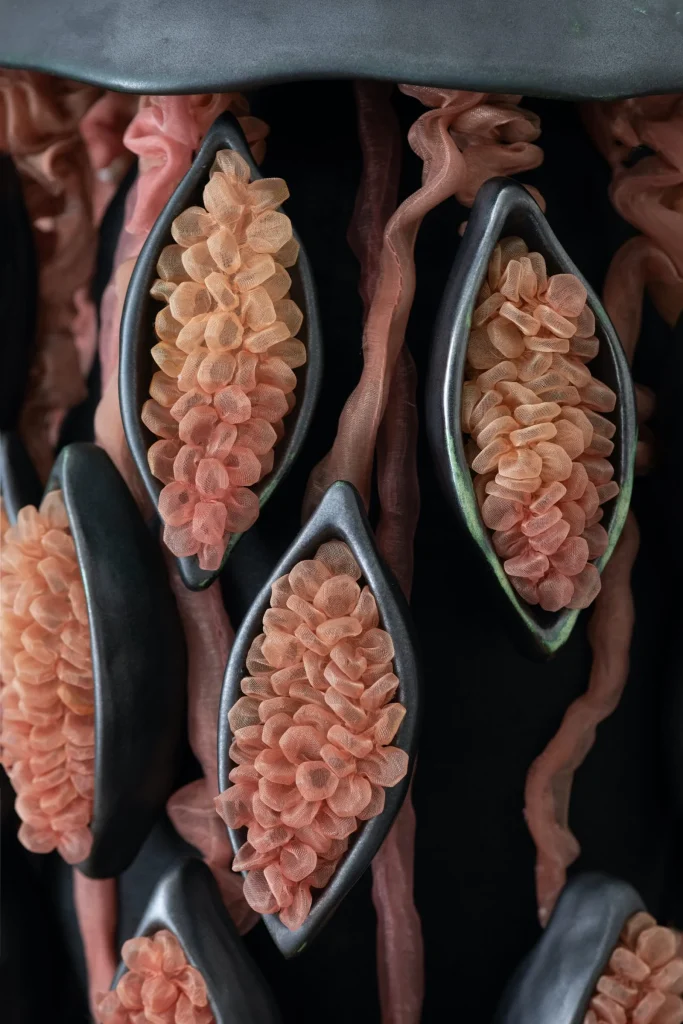
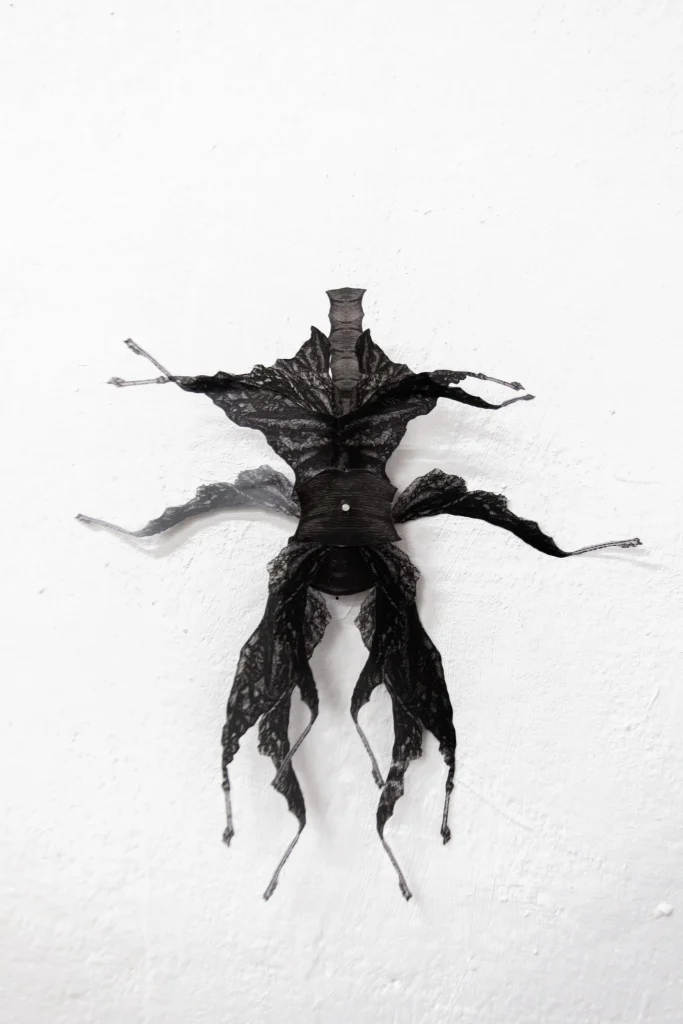
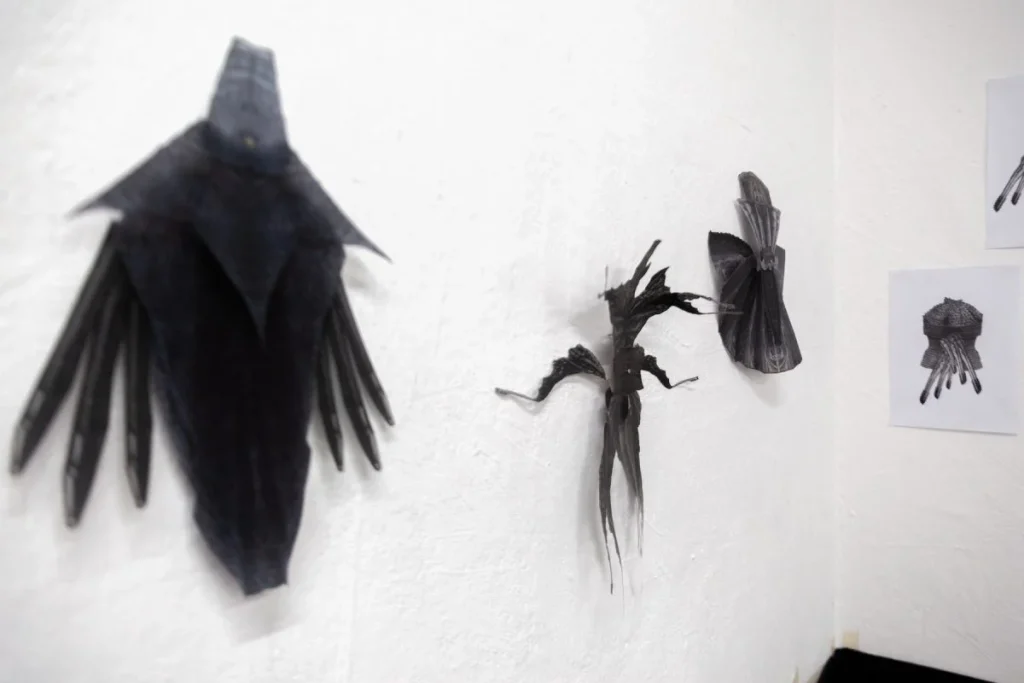
    So while looking at exuviae and at the sewing patterns, I started thinking that our skin actually grows with us. With people you don’t see the phases of change as you do with insects through these skins they leave, that show a mutated organism. These casts are like frozen stages of the body. It’s like a picture of a body, but a physical picture. I began to wonder, if our human bodies mutated, what would that look like? I started building these pieces with this idea, as if we could have these skins that were shed by some human-insect-like shape. What I’m doing at the residency is a continuation of that process of crafting textile pieces that investigate shapes that come from mutated fashion patterns. At the same time, it’s an investigation on creating different textures using one very specific fabric, organza, and shaping it organically so that it feels like a layer of skin.

    I’m also working on a series of digital collages that I started some time ago, using the illustrations from the fashion magazines I took the patterns from. What I’m finding here at the residency is that I’m having time to explore a lot of different lines of work that were there but in a sort of latent state. I also started to play with light. It’s not that I can’t do it at home, but here I have the time and mental space to explore all these possibilities. All these little things start to unfold and feed my main project. 
    Can you tell a bit about the connection of fashion and contemporary art? How is it connected to you? 

    I’m interested in fashion as a way of expression and experimentation. Lately I’ve been looking at designers or pieces that, in a way, reshape the body and its possibilities. For instance, hoop skirts in the 1500s and then crinolines in the 1800s, which had a big wire structure. We can think it was an ornamental item, and at the same time it had a social purpose. It allowed certain movements and not others. For example, these big skirts wouldn’t allow you to get close to another body, they set a physical distance. Then, designers like Elsa Schiaparelli or Alexander McQueen redefined what is the shape of a body. I mean, why does a body have to have a certain shape, like a waist, a shoulder? We can play around with it. McQueen started to design these pants that revealed the butt crack, and the body changes. There is a different understanding of the body. I’m interested in these designs that are a bit weird in terms of reshifting our perception of our shapes, our boundaries. This is also something that sci-fi narratives explore: the ability to mutate our bodies, the idea of the body as something malleable. There is this story by Ursula K Le Guin, who is an amazing writer, about a world where people don’t have a fixed biological sex and every month for a period of time they “become” sexually male or female, they have sex and then for the rest of the month they are latent, or asexual. The story explores the type of relationships or society this particular humanity creates.
    Who are some artists, writers that you love or who influenced your work?

    I take inspiration from a lot of different places. I read a lot of fiction and I also watch a lot of movies, so these are two huge sources of inspiration. I also have artists that are very important to me, for example, Louise Bourgeois. Somehow I feel she would be my mother and maybe David Cronenberg would be my father. I’m a happy child of those two. 

    When I look at artists, I try to look at people who also work with installation or textile. I’ve been investigating artists like Ruth Asawa, Magdalena Abakanowicz. She’s an amazing Polish artist who works mainly with sculpture and has a series of works that are made with different fibers like rope and animal hair. She weaves these fibers and creates huge pieces that are kind of coats, but at the same time feel like presences, as if they had their own personality.

    And of course there are a lot of authors that I really love. I’m very interested in speculative fiction, sci-fi, horror, authors like Ursula K Le Guin or Octavia Butler who talk about the potential of different bodies or different ways of being and interacting with otherness and with our world and with other worlds. I like when authors create worlds so that we can think “Ah, this might be a reality”. Right now I’m reading China Mieville, and also Latin American authors working with “new weird” fiction. An Argentinian author I like, Juan Mattio, says that in our current stage of capitalist societies realism is not enough for us to grasp or reflect on our reality and experiences, and I agree.

    Statement

    Everything a body touches becomes a body. Matter becomes skin that, porous, invites caress, longs for inscriptions, urges an omnivorous passion for surfaces. In my artistic practice I explore processes to foster organisms that tighten the boundaries that connect us to otherness. These propose an immersion in a temporal paradox: the encounter with remains -scales, crusts, fossils, relics- fragments that suggest suspended stages of mutation. I construct my pieces as frustrated attempts to interpret the mechanisms of flux of that which refuses to be captured.

    GlogauAIR Project

    “other crusts” / on-going project

    An image haunts me: that of exuviae, moult of semi-rigid skin that arthropods and crustaceans leave behind when they mutate. This became a metaphor for the traces bodies leave behind, and the process of recreating those shapes through long and repetitive actions seem to stop time in a futile intent of grasping the fleeting entities that could have inhabited those casts.

    I think of skin as armor; exoskeletons, pieces of corsetry, armor; devices to cover, protect, support. Residual states of shapes that managed to domesticate movement. I take old magazines’ sewing patterns and intervene them by doing an exercise akin to translation or fiction: making them tell another story, that of other bodies, the unexpected beauty of their transitions.

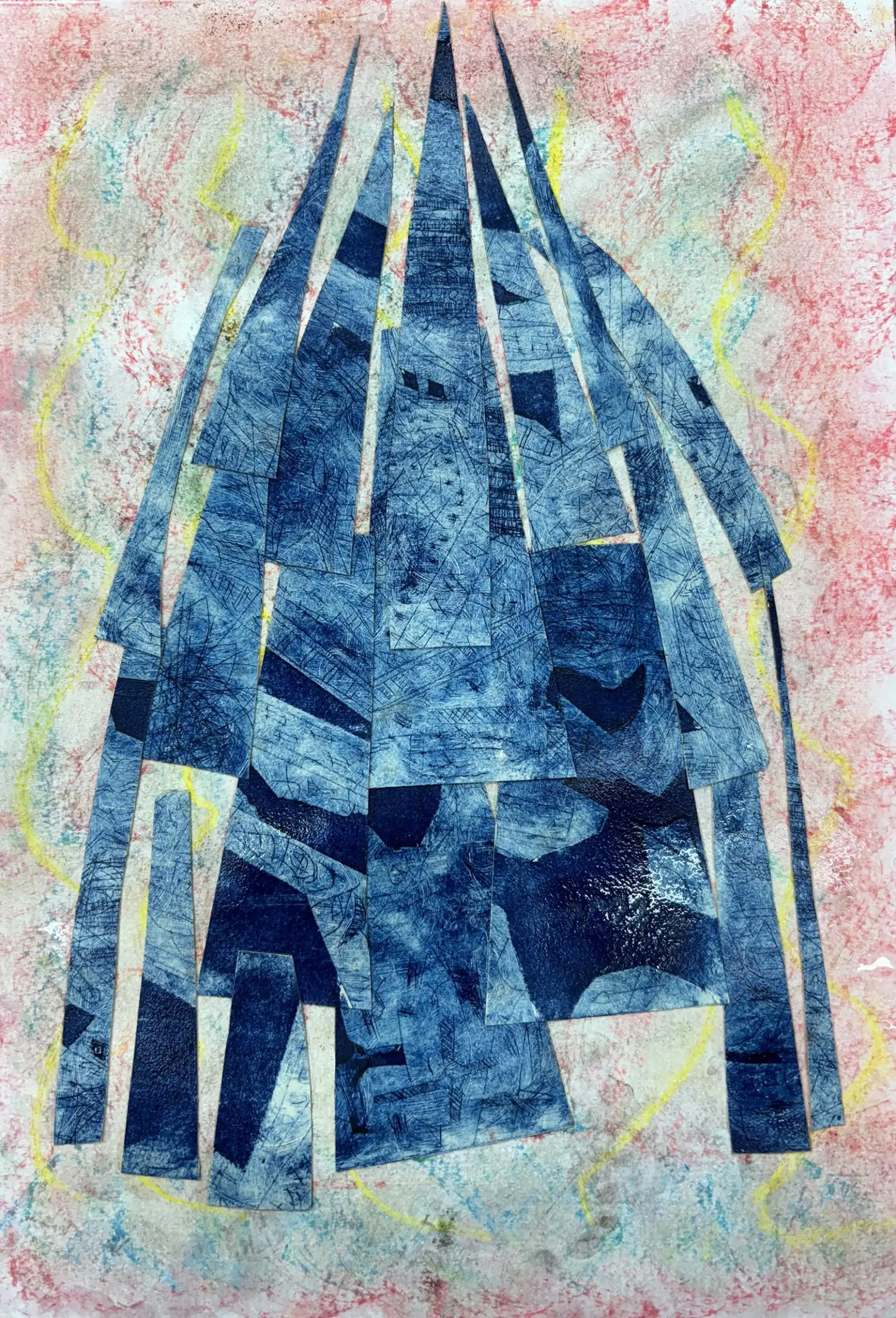
    I experiment with different materials that provide flexibility and rigidity to these pieces made with a very frail fabric. Through the use of pigments, acrylic boning, biomaterials, resin, ceramics, metal each piece presents a slight variation than the one before, forming an ensemble of odd kin.

    CV Summary

    STUDIES

    • [2010 – 2019] BA in Language and Literature, University of Buenos Aires.
    • [2012 – 2022] Artist-led Workshops.
    • [2006 – 2012] Dressmaking workshop.

    GRANTS & RESIDENCIES

    • [2024] HITO Cultural Grant, Buenos Aires, Argentina.
    • [2023] Activar Patrimonio Grant by National Ministry of Culture, Argentina.
    • [2023] Red Quincho “Constelaciones” Grant for residencies Poliniza and Epecuén, Argentina.
    • [2022] Konvent Zero Residency, Cal Rosal, España.

    SELECTED EXHIBITIONS, ART FAIRS, CONTESTS

    • [2024] Blando en un lugar blando. Espacio Acoyte, CABA, Argentina.
    • [2024] Beso todo lo que encuentro. Jaques Martínez Gallery, Buenos Aires, Argentina.
    • [2023] Pinta BA Photo Art Fair. Buenos Aires, Argentina.
    • [2023] Entes en fuga. Cott Gallery, CABA, Argentina.
    • [2023] Premio Fundación Fortabat.
    • [2021] Toda indicación es un desvío. Acéfala Gallery, CABA, Argentina.
    • [2019] Instante suspendido. Ambos Mundos Gallery, San Isidro, Argentina.

    Gallery
  • Rafał Wysocki

    Rafał Wysocki

    Rafał Wysocki is GlogauAIR resident
    from January, 2025 to March, 2025

    Rafał Wysocki is a multidisciplinary photographer driven by spontaneity and abstraction. His work explores the interplay of movement, light, and form in both natural and human-made environments—using techniques like cyanotype to craft new visual narratives. Embracing the unexpected, he incorporates surprise and error within his practice. Rafal aims to evoke a sense of mystery and emotion, inviting viewers to find their own meaning within his work.


    Meet the Artist

    Can you give us an introduction to yourself and your practice?

    I studied industrial design at the Academy of Fine Arts in Kraków. I wanted to connect two worlds: art and function. When you create something useful, you also give it an artistic aspect. I thought about focusing solely on art instead of trying to create something useful, because art gives you more freedom. When you do design, it can bring a lot of joy, but you have to follow some rules.

    And how did you get into photography?

    I used photography as an extension of my vision, looking for images that could inspire my drawing and painting. I never delved deeply into photography because I saw it as a tool to capture images. Later, I started to view the camera as something that can transfer your vision from reality to your computer, where you can see it later. That made me realize I could be a creator, which led me to explore photography more deeply. For me, it was a long journey from trying to preserve moments to creating images through photography.

    And how long do you work with photography?

    It’s not that long. For a long time I have been taking photographs, but the conceptual part came just a few years ago.

    What fascinates you about photography right now? What are you trying to achieve with your work?

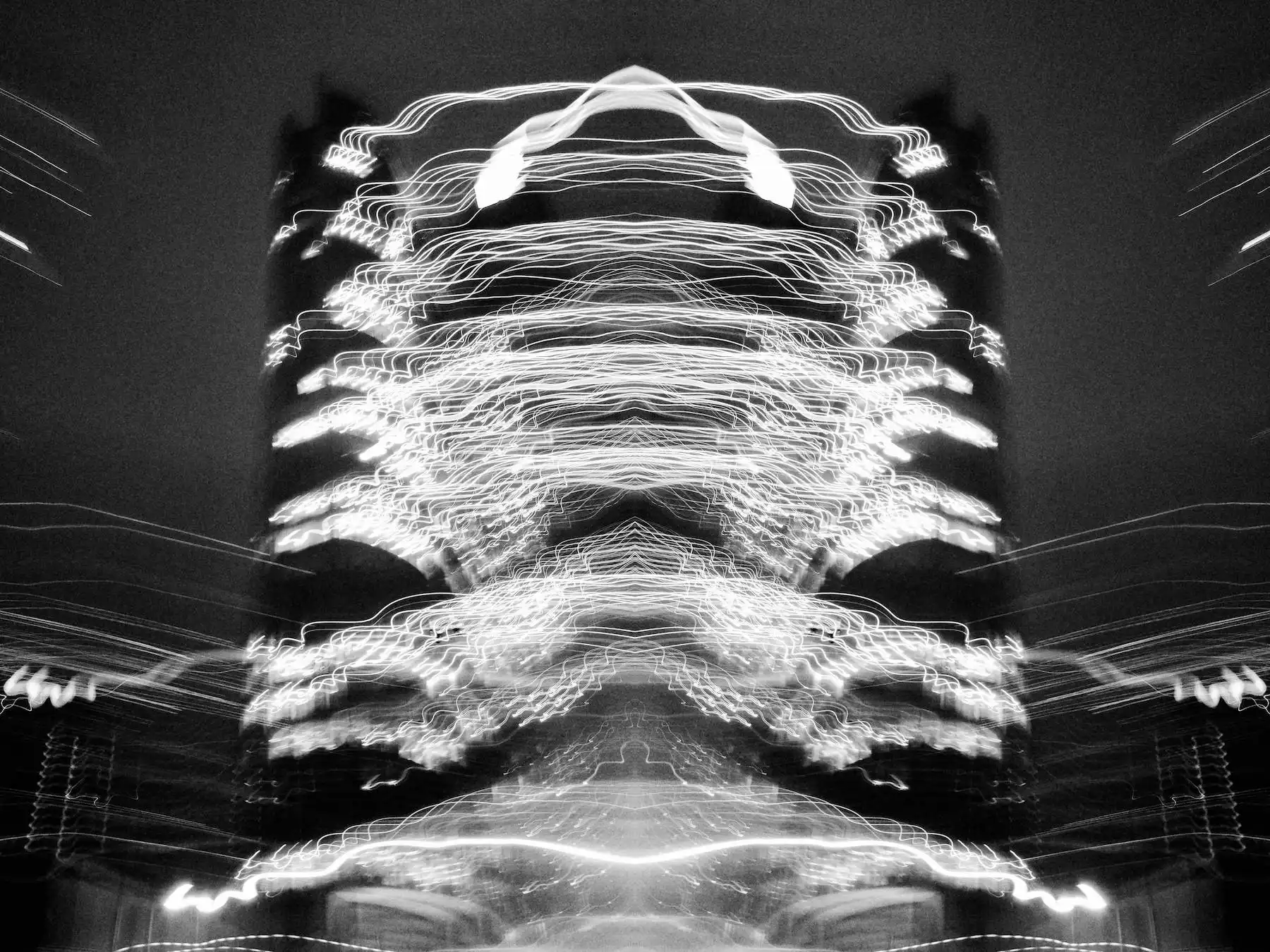
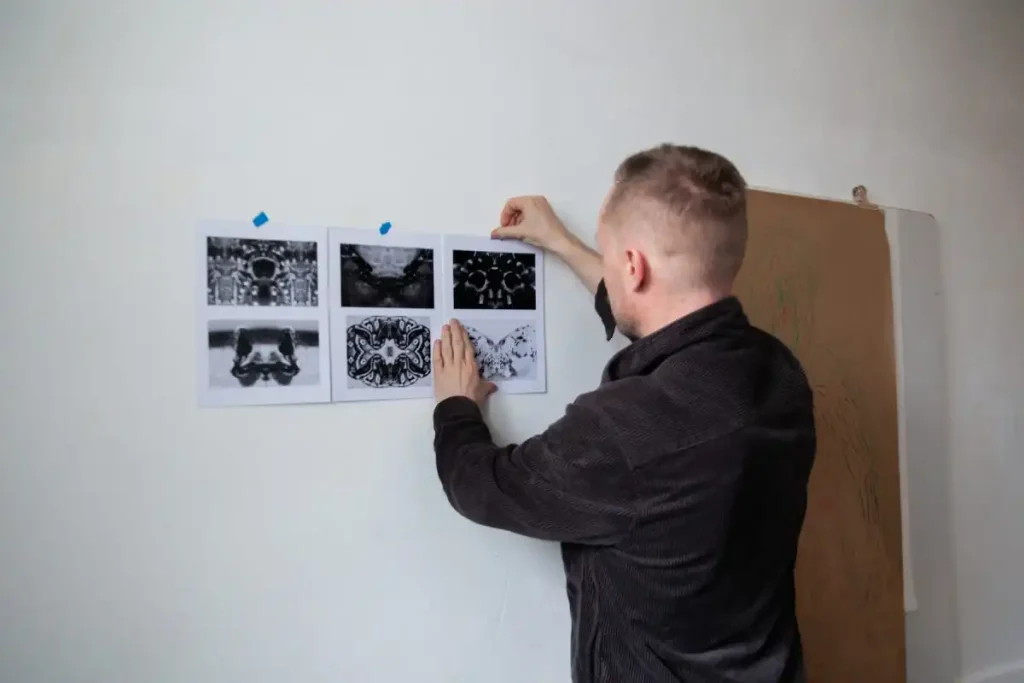
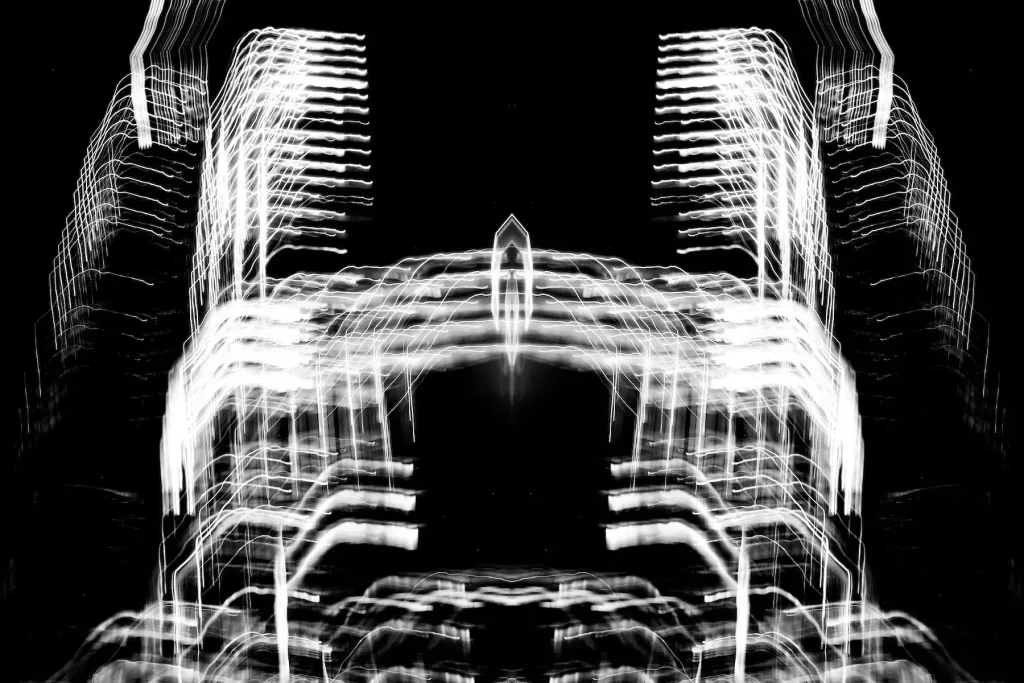
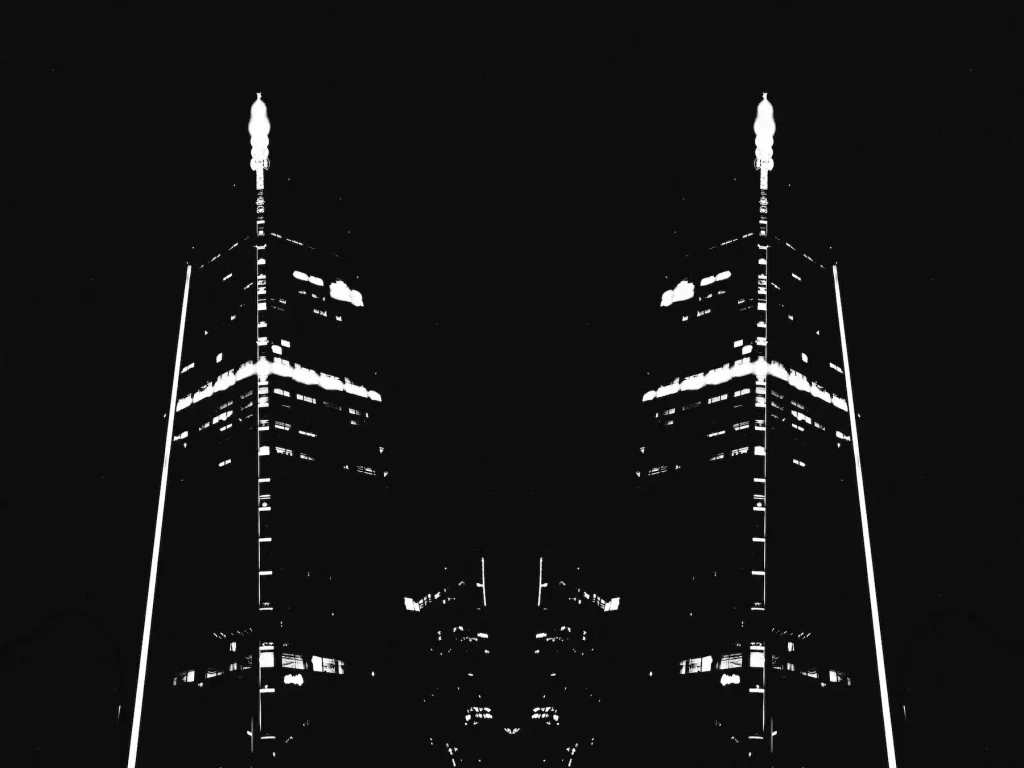
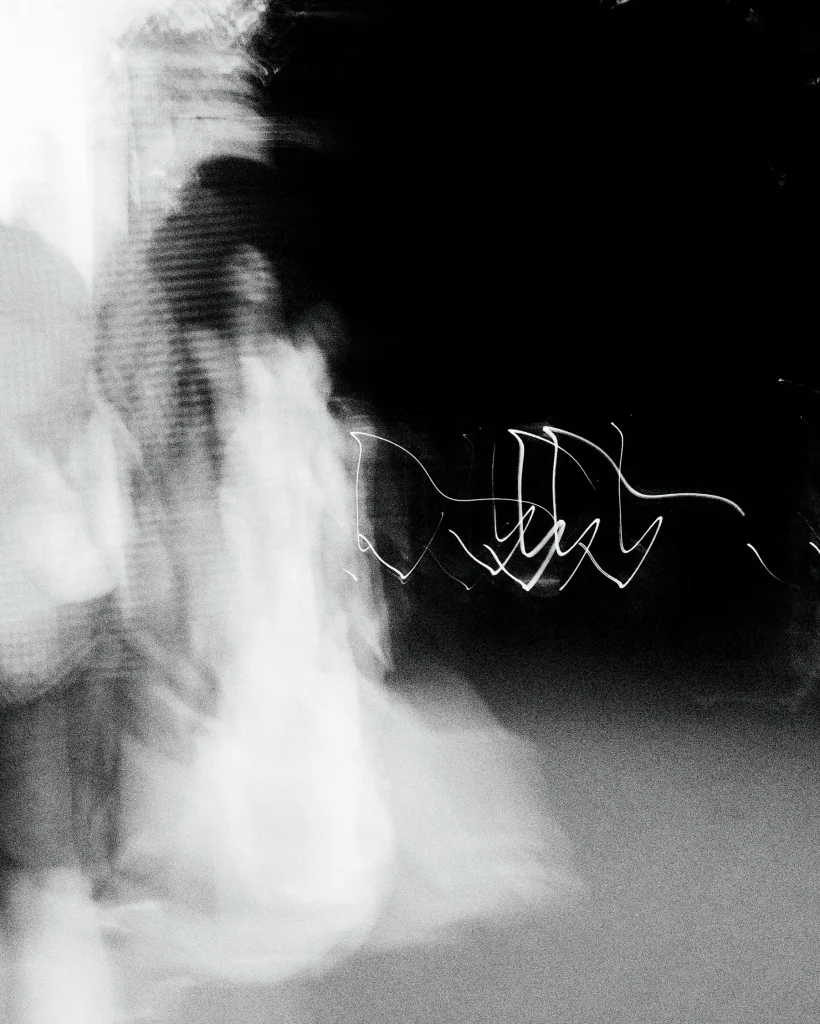
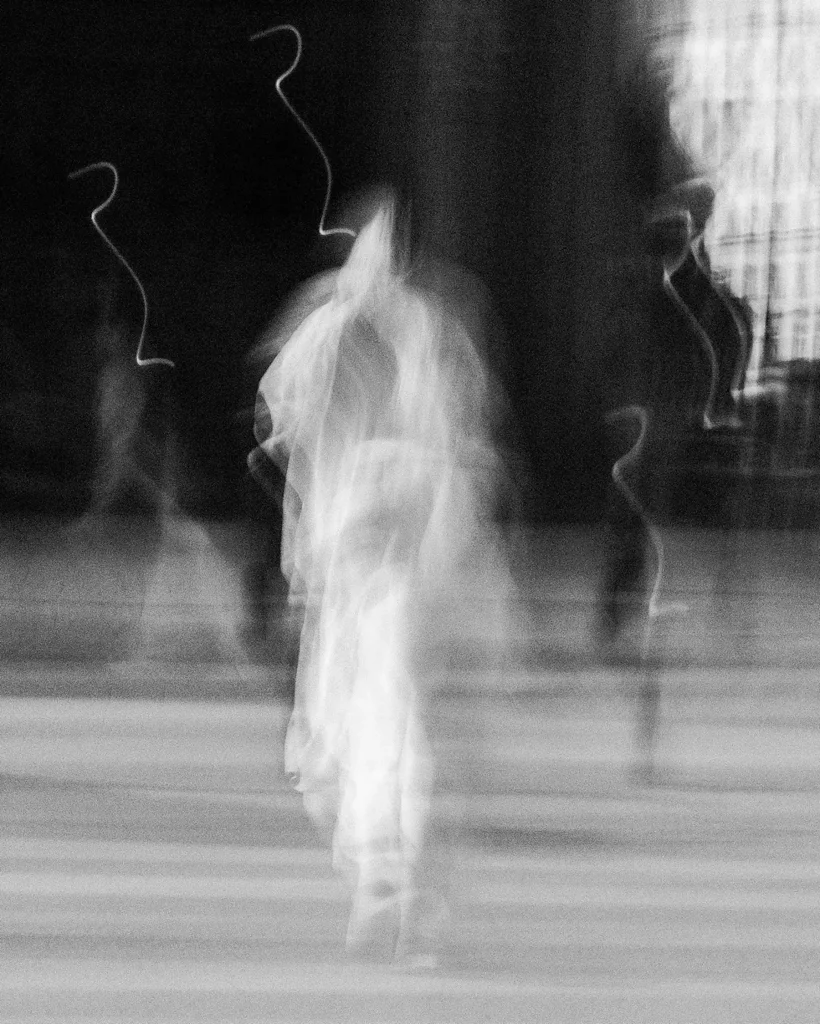
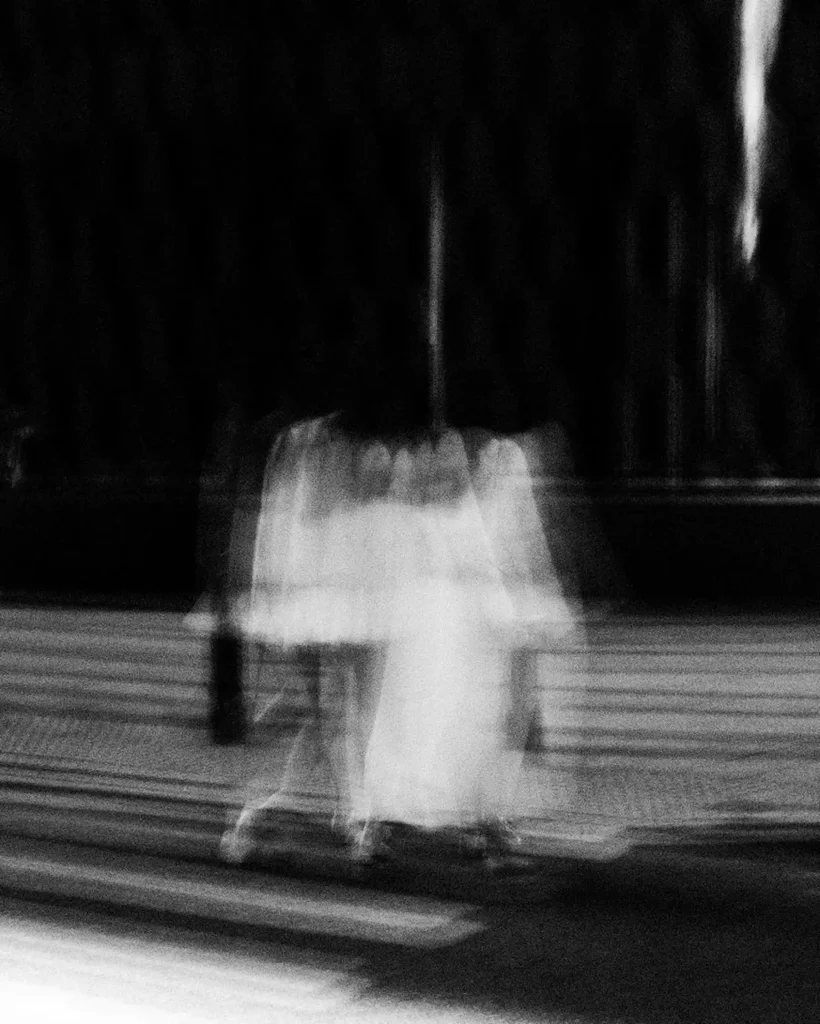
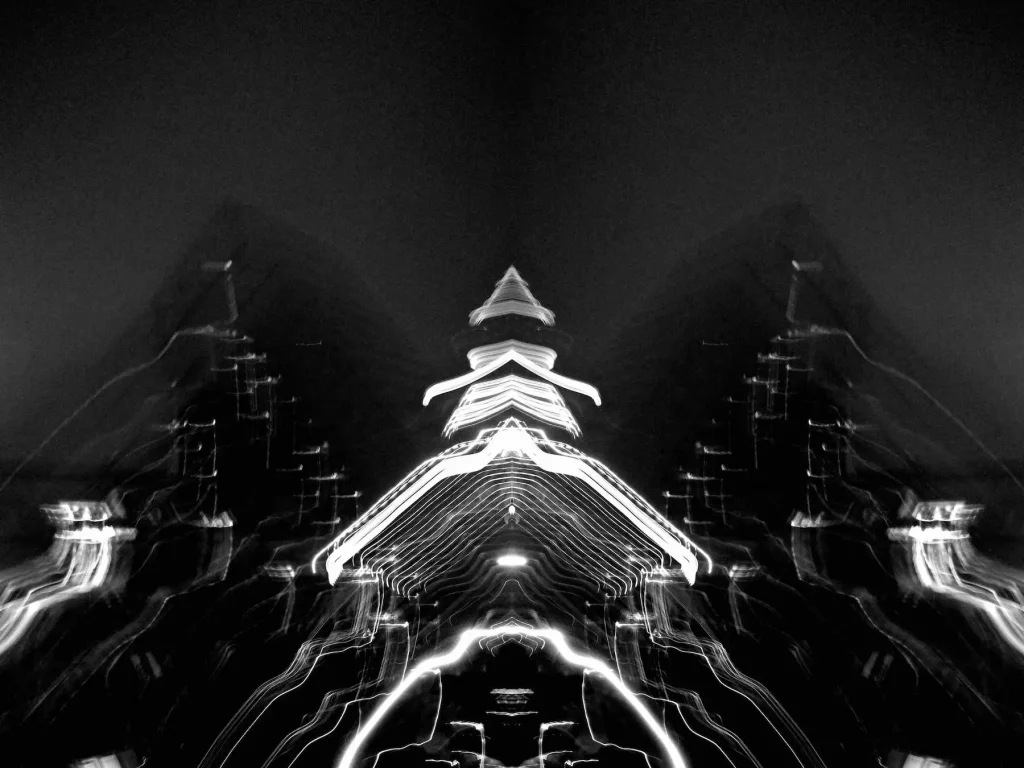
    I think that’s a good question. I believe you can capture a part of what surrounds you and convey a feeling of the moment. I was doing night photography in Warsaw with a small camera, just walking and taking photographs. I combined some of these photos, reflecting and attaching them to each other, which created strange figures and light objects. It was about finding unexpected images in things we pass by without noticing. I also took some photographs of people with a bit of movement. This comes from the idea that I’m not capturing the exact moment; I’m creating it. I try to make the faces in my photographs more universal rather than personal. So, that’s what I was doing in Warsaw. At the same time, I was exploring other photography projects and didn’t limit myself to just night photography.

    Can you tell a bit more about your experience here in Berlin so far? Does the city affect your work?

    The idea behind choosing Berlin was that it’s close to Poland and Warsaw, yet very different. It’s not far away, but it offers a completely new experience. Berlin is much larger in scale than Warsaw. When you move around Warsaw or its surroundings, you start seeing the same things over time. I believe, as a photographer or artist, you need to explore different places and experience moments of surprise. Even if things change in the place you see every day, you tend to stop noticing them.

    I felt like I needed to leave Warsaw for a while because I had been there for too long. Berlin seemed like the best option for me because this was a good opportunity to experience something new without going too far. At the same time, I didn’t know what to expect, which made it exciting. Even if we think something doesn’t influence us, it still does, because we take in images and they start working inside us. I see Berlin as some kind of puzzle to be solved. When you go out, it might be the worst time for photography if you’re looking for light, but it’s also a challenge. I think you can confront this challenge and create something out of it.

    And how’s your experience living in the residency with other artists?

    It’s different because, at home, I’m surrounded by people I know, and I divide my time between work and projects. Here, it’s all about focusing on the project. It’s a great experience to see how far I can go with it. I also appreciate the communication with other artists here; it’s an important part of the experience.

    Who are some of your favourite artists or artists who have influenced your work?

    Maybe David Lynch. He passed away recently. To me, he’s an inspiration as an artist. I see him as a visual artist, and what I like about his work is that it doesn’t matter if he’s painting, writing, or directing—his art is coherent. I think it’s about the possibility of expressing yourself without being limited to one medium. That’s what I like about his art. It’s not just about the camera; you can expand beyond it. You are not limited to your camera. And it’s not your God. People think, “Oh, this is my tool,” but you can expand beyond it. I see that in David Lynch’s work.

    Statement

    I am a multidisciplinary photographer driven by spontaneity and abstraction. My work explores the interplay of movement, light, and form—in both natural and human-made environments—using techniques like cyanotype to craft new visual narratives. Embracing the unexpected, I incorporate surprise and error within my practice. I aim to evoke a sense of mystery and emotion, inviting viewers to find their own meaning within my work. From long-term projects to daily photographic explorations, I seek to reveal my unique perspective through diverse photographic processes.

    GlogauAIR Project

    My current project, “Art Streams,” documents the vibrant art scene of Berlin, juxtaposing the official art world of galleries with the unsanctioned art of the streets. I explore the interplay between these two spheres, examining how posters, graffiti, and other forms of street art interact with and challenge traditional notions of art. Through photography, video interviews, and process documentation, I create portraits of artists working across diverse mediums, exploring their unique perspectives on art’s meaning in their lives and its role in society. My work embraces spontaneity and experimentation, reflecting the dynamic energy of the creative process I am capturing.

    CV Summary

    I’m Rafał, a multidisciplinary artist whose work spans the intersections of art, design, and therapy. My journey began at the Academy of Fine Arts in Krakow, where I earned a bachelor’s degree in design in 2005. I furthered my studies in visual communication at Bielefeld University in Germany through the Socrates-Erasmus program. My professional career unfolded with roles at design studios in Warsaw, and I recently completed postgraduate studies in art therapy. These diverse experiences inform my creative practice, where I utilise photography, cyanotype, linocut, and painting to explore a wide range of artistic expressions.

    Recent Exhibitions

    • Gallery Nowe Miejsce, Warsaw 10.24 Abstract City Landscape
    • Gallery Wschodnia, Warsaw 9.24, Street photography
    Gallery
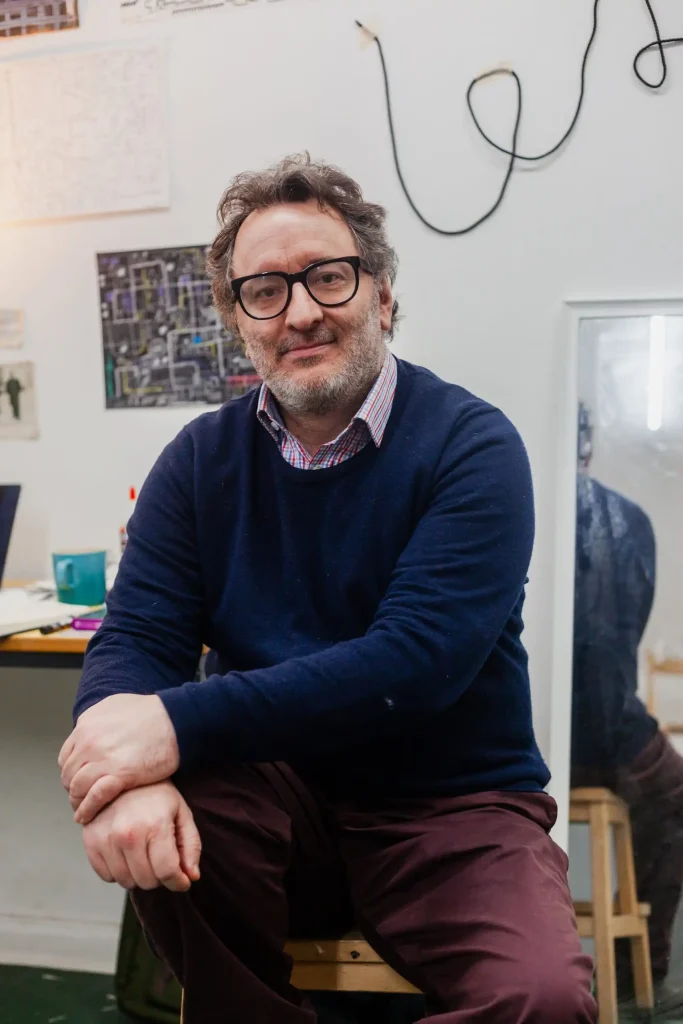
  • Marcus Miller

    Marcus Miller

    Marcus Miller is GlogauAIR resident
    from January, 2025 to March, 2025

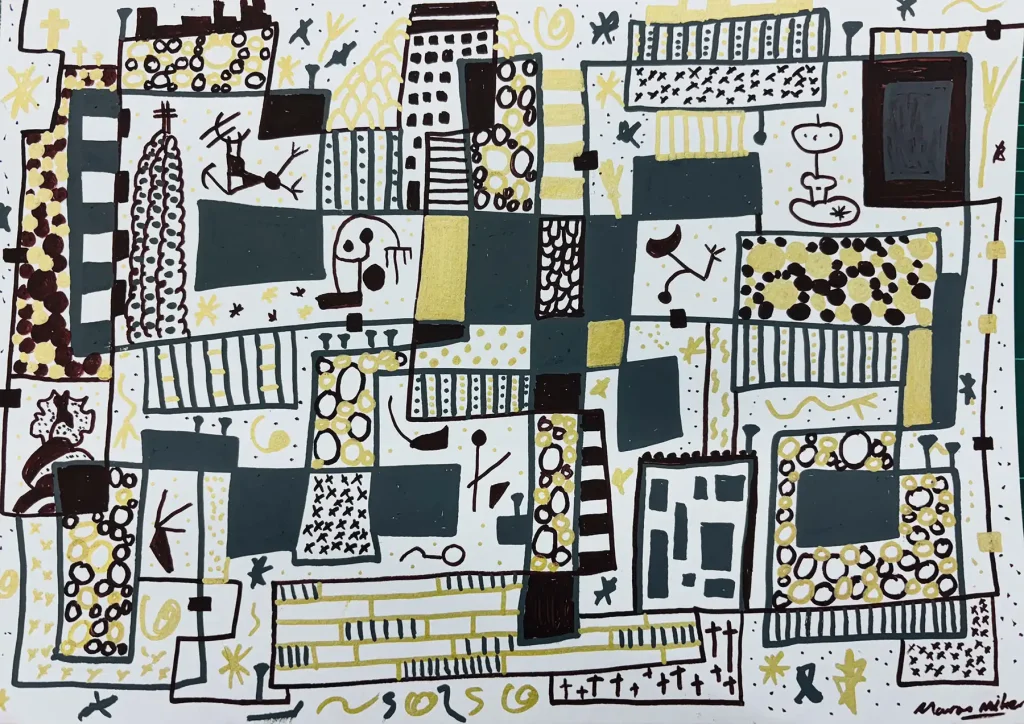
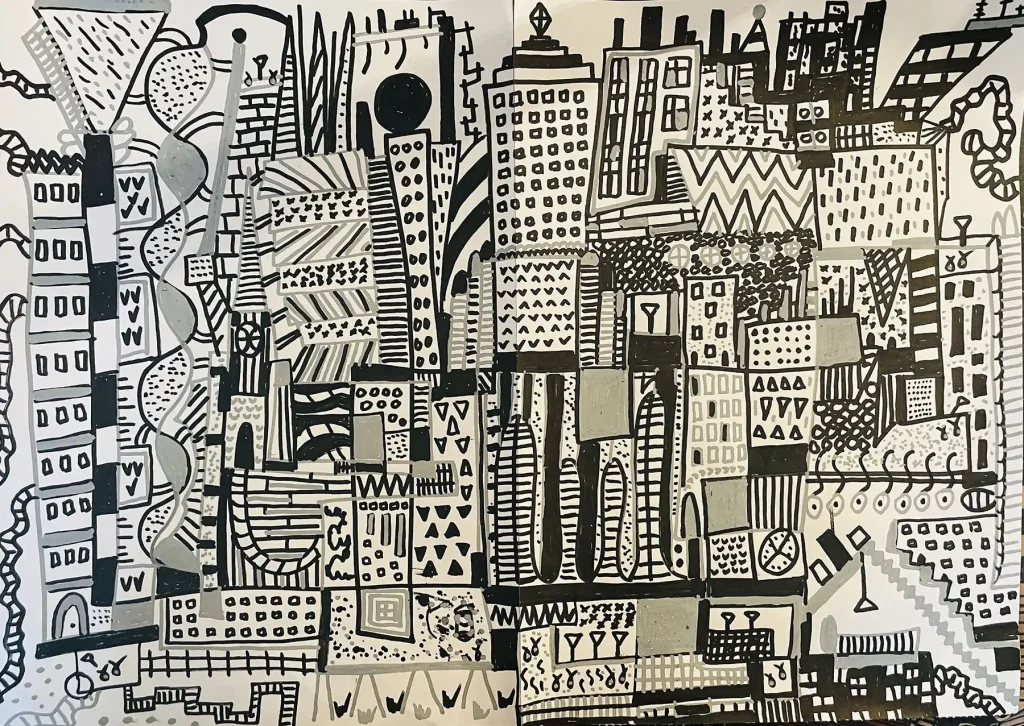
    Marcus Miller works across drawing, print-making and painting. He explores the ways in which desire is mapped in the contemporary cityscape. Marcus is interested in expressive potency and authenticity, seeking to explore the full range of human experience through the visceral suggestiveness his work: from the epiphanic joy of a reconfigured garden, to the intensity of city life, with all its pleasures, pains, and aids to addiction.

    He is developing his recent work in print-making to explore both real and imagined
    contemporary cityscapes and how these urban landscapes act as aids to stimulation, both for creative acts and acts of solace, as well as aids to addictive and destructive behaviours.


    Meet the Artist

    Can you give us an introduction about yourself and about your artistic background?

    I’m 50, but I’m also what they call an emerging artist. So I’m a bit late to the party, I think. I started my practice in 2018 and was essentially just daubing away at the bottom of my garden in my shed, producing these pieces. A couple of years ago, I thought to myself, that I need to take this seriously. It was going very well, people saying my work is pretty good, and I decided to go to an art school. I thought if I’m going to go to one, I’ll go to a good one. So I applied to the Royal College of Art, and they gave me a scholarship. I thought that’s a good sign. Since then, this is my second residency. I did a print residency in Barcelona last autumn. I chose Barcelona, because I’d never been there before and I wanted to experience it. And then also I wanted to experience Berlin, because I’d never been to Berlin before.  What I didn’t know, which I thought was quite interesting, was that the founder of GlogauAIR residency came from Barcelona. That really appealed to me. I thought, that’s spooky, but in a good way.  So I’m here now.

    I think in terms of my practice, a good starting point is Paul Klee’s famous quote that a line is a dot that went for a walk. I really like that phrase. It’s suggestive of the dynamic and fluid nature of the line and the possibilities that it offers. It’s also suggestive of the wanderer around the city, or the flaneur, to use Walter Benjamin’s term. And that’s very much at the heart of my practice. I’m very interested in the city as the overarching structural metaphor, in terms of representing society and community, but also notions of culture and justice.

    I think probably my biggest influence is not an artist, but a poet. He’s British, but moved to America in 1939, called W.H. Auden. The possibilities of the city and all it engenders is at the heart of his work. There’s a great quote from him that really resonated with me. “We rebuild our cities, not dream of islands”.  What that suggests to me is you need to engage in the messiness and chaos, and wonder of city life and everything it can offer, and not be drawn into romantic fantasies of rural idols. I’m very much a city boy, and being here in Berlin at the heart of an amazing city is really core to my practice. I think the first big influence for me here and some of my earlier work was New York City. It’s just an incredibly dynamic and energetic place.  One thing I really liked was the gridiron system. It’s a way of imposing order on chaos, trying to make sense of this incredible throbbing urban mess and sprawl, but actually drawing it together into a cohesive pattern. The drawings and paintings I’ve been doing, that wandering, loose sort of grid structure is the formative aspect of my work. In terms of process, that’s where I start with. I just have a loose, wandering line and then just take it from there. I should point out as well I’m not a representational artist. There’s another famous quote, which is from Philip Guston, he said “I paint what I want to see”. And that’s exactly what I do. I’m interested in the possibilities of the more dynamic and unconscious forms of representation.

    Another aspect I think is important to talk about, I have a background in psychoanalysis. I was at one point doing a doctorate, which was attempting a Lacanian reading of a post-war epic poem by American poet John Berryman called The Dream Songs. I abandoned my PhD in frustration halfway through and moved on in my life. But I think it is very true that nothing is wasted in life. Once I started practicing art seriously, I realised that psychoanalysis was also at the heart of my practice because what I’m trying to do in my work, is to map desire in the city. Essentially, unconscious drive and unconscious desire lie at the heart of psychoanalysis. I’m trying to map in a loose way those unconscious drives in my artwork and exploring ways in which creative and destructive elements are represented across the cityscape. Another thing I was very much attracted to was Lacans’ notion of desire and how desire is manifested in my wanderings around the city. For Lacan, desire is something that is ultimately unsatisfiable. We’re searching for something, but it’s always beyond the reach.

    Can you tell us about your recent work and your plans for the residency?

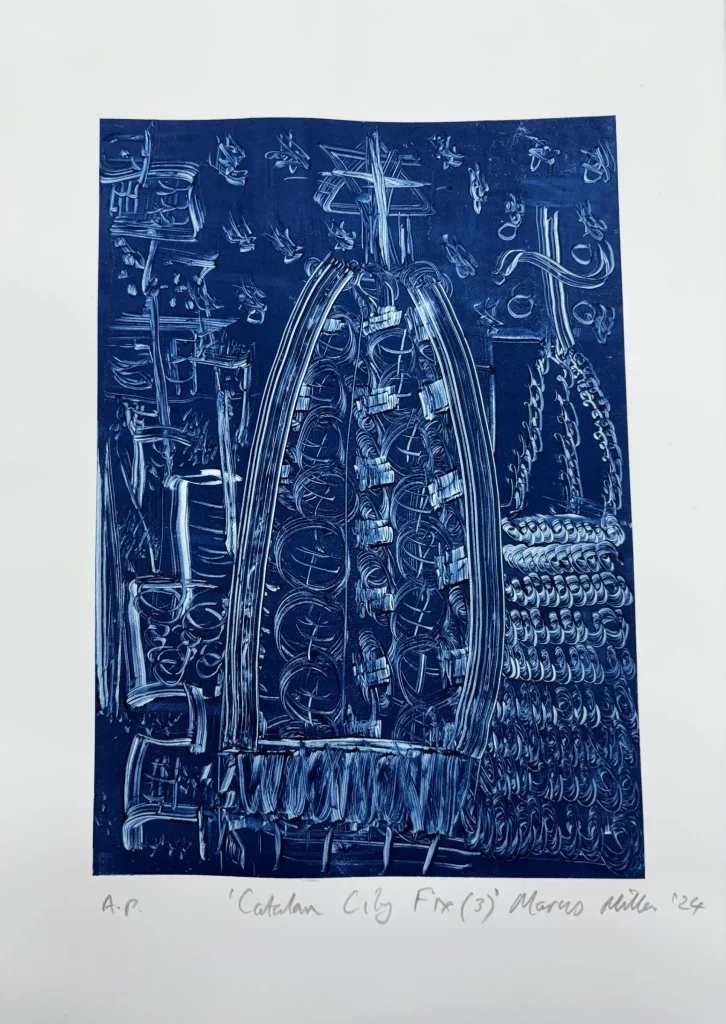
    Last year I started a series of works with the title City Fix.  I quite like that title because it’s playful, it suggests my fixation on cities, but also a fix is a gesture of addiction and I’ve definitely struggled with elements of addiction in my life and the city as a spur and an aid to addiction is clearly, if you look at my work, part of what I’m aiming to get at. I started off by doing a series of prints which were loosely working with New York City, and then I moved, and developed my print residency in Barcelona. It was a natural development to use the cityscape of Barcelona. I wasn’t sure what I was going to make of it, but it’s incredible how different cities have different energies. In Barcelona there’s beauty on every corner. It’s just the most ridiculously beautiful city I’ve ever been to.  You can sense the artistic energy of the place. Picasso, Gaudi and all the modernist movement.  I did a series of works there and then, as I said, I wanted to come to Berlin because I was interested in the differences. I deliberately wanted to come to a cold northern European city in winter to challenge myself with a completely different dynamic and Berlin certainly delivered that.

    What I’ve been doing here is just walking around and getting a sense of the energy and dynamism of this incredible city. What immediately strikes you with Berlin is the overwhelming sense of history and division and the war. You can sense that tension between creation and destruction. I’ve been doing a series of drawings, trying to get that loosely representational Berlin vibe, elements just riffing, the TV tower and the bridge near GlogauAir, seeking to get the sense of the place. I’ve done a series of paintings, using different materials like cardboard, which was nice. I like the textures that were provided by  painting directly onto unprimed wooden boards. I am exploring different processes. For instance, my works have gotten bigger and I think that actually suits my art. The pieces I was doing last year were relatively small. I think because I was learning my craft more than anything, especially with printmaking, so I didn’t want to get ahead of myself. I needed to make sure I was within my capabilities. But I’m feeling more comfortable now and I’m happy to expand again. I might hang a canvas from a ceiling and then weigh it down, paint directly onto that. Suzy suggested painting onto a shower curtain. I’m going to continue the experimentation. Being here it’s a great opportunity to do things like that. So I’m very much looking forward to it.

    How do you like your experience at GlogauAir so far?

    It’s a fantastic residency. It really appeals to me because its location is great. It’s right at the heart of the city. You can walk to places and pick up on the energy really nicely. It’s pretty as well, it’s by the canal and that’s lovely. Even in winter, it’s just lovely to walk along there. Kreuzberg is just a mad, bad, wonderful, exciting place.

    GlogauAIR is also interesting because I think it’s clearly great stuff. Hugely experienced and very supportive and a fantastic support network there. But equally, it’s just as important meeting and talking to other artists. Since I’ve concentrated on my art I’ve realised how important it is to engage creatively with other people. It’s great to talk to another artist. I love my wife and kids, but they don’t quite understand the process and techniques and the underlying motivations for what we’re trying to do in the same way that other artists do.

    Just getting ideas and inspiration and talking about each other’s work and going to galleries, going to shows together, for me, is hugely thrilling and exciting.

    Statement

    I am an emerging artist working across drawing, print-making and painting, whose interest is in exploring the ways in which desire is mapped in the contemporary cityscape. I am interested in expressive potency and authenticity, seeking to explore the full range of human experience – and my history – through the visceral suggestiveness of my work: from the epiphanic joy of a reconfigured garden, to the intensity of city life, with all its pleasures, pains, and aids to addiction. Here I’m exploring the ways in which colour, composition and mark-making can be most effectively used to convey the intensity of urban experience. With dual British and Irish citizenship, educated at Oxford University – BA(Hons) English- and London University – BSc(Hons) Psychology. More recently I trained at the Royal College of Art in London, where I received a scholarship. This autumn I have been working on an artist residency in Barcelona, exploring my ‘City fix’ series.

    GlogauAIR Project

    In this project I want to develop my recent work in print-making to explore both real and imagined contemporary cityscapes and how these urban landscapes act as aids to stimulation, both for creative acts and acts of solace, as well as aids to addictive and destructive behaviours. In Freudian terms, this can be constructed as a visual representation of the two ‘drives’ underpinning city life: Eros (the creative drive) and Thanatos (the death drive). To date, my work has been informed by the topography and architecture of London, New York, and Barcelona. Over the course of this residency I will extend this series by exploring the city of Berlin in depth, working with different and larger materials and returning to painting to interpret both creative and destructive psycho-social drives as they are made manifest in Berlin’s urban context.

    CV Summary

    Education

    • 2024 Royal College of Art
      Part of the Fine Art cohort on the Graduate Diploma in Art & Design
      Awarded Graduate Diploma Scholarship
    • 2004-7 London University
      BSc(Hons) Psychology
    • 1993-6 Oxford University
      BA(Hons) English Language & Literature

    Publications

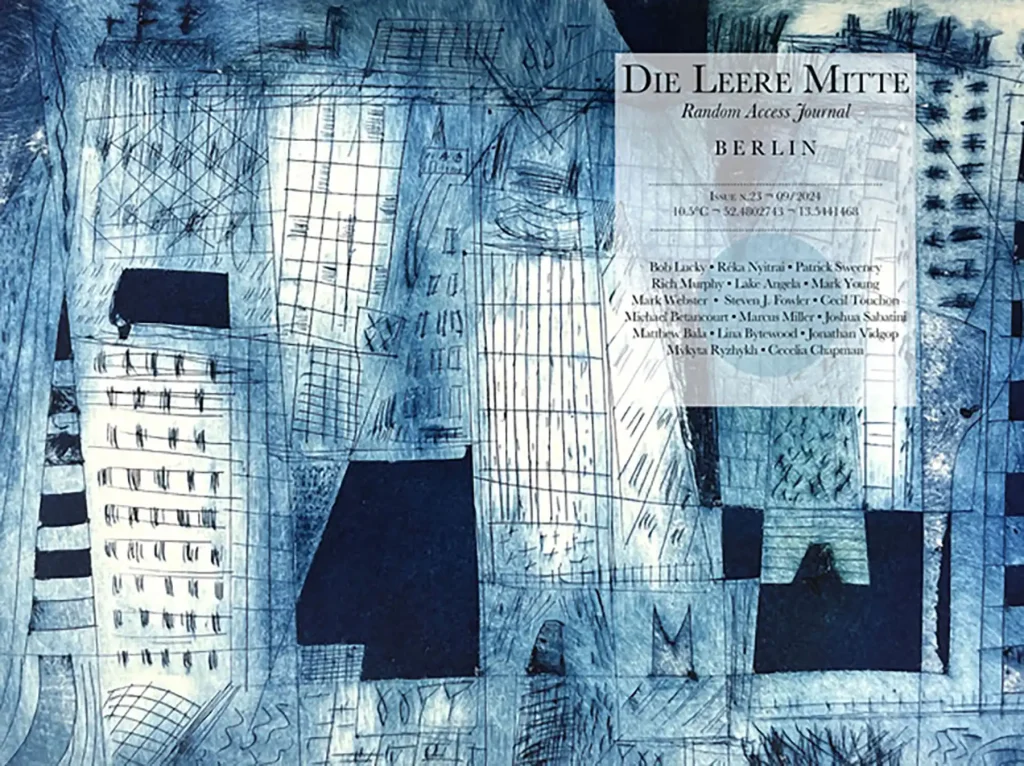
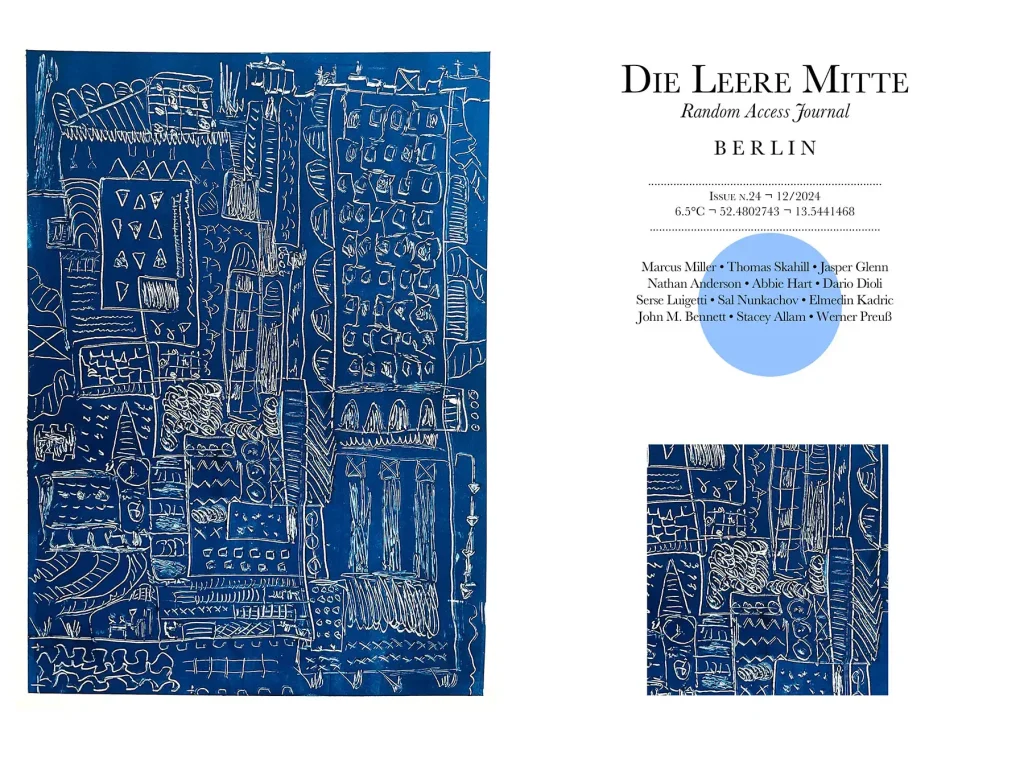
    • 2024 Die Leere Mitte
      Cover artist for issues 24 and 23

    Residencies

    • Autumn 2024 Barcelona
      Print residency at La Maldita Estampa studio & gallery
    Exhibitions

    • Dec 2024 London
      Lloyd’s Art Group Winter Exhibition, Old Library, Lloyd’s, London

    Other

    • Experienced financial journalist across digital, print and broadcast media

    Gallery
  • Samantha Jensen

    Samantha Jensen

    Samantha Jensen is GlogauAIR resident
    from 2025 to March, 2025

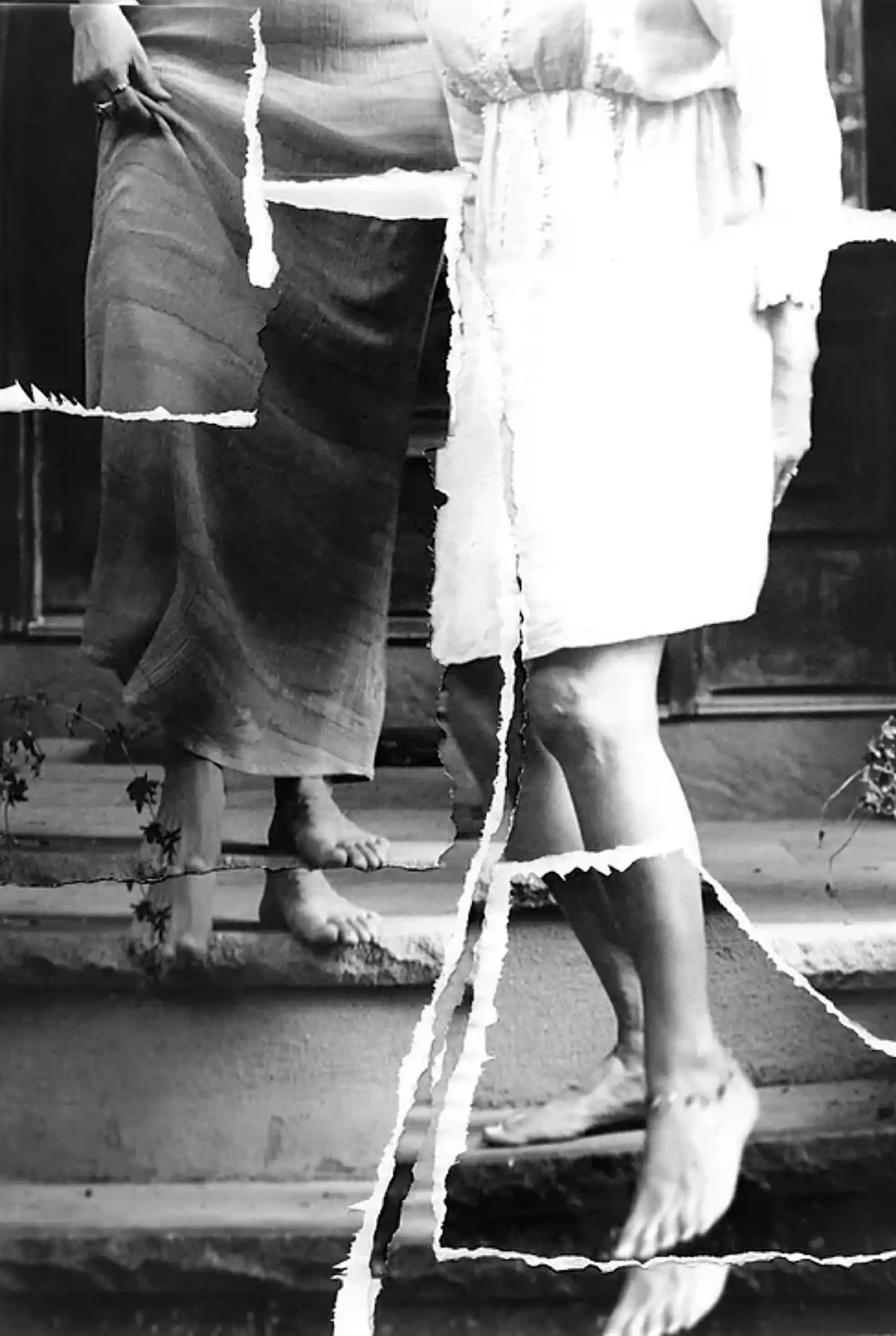
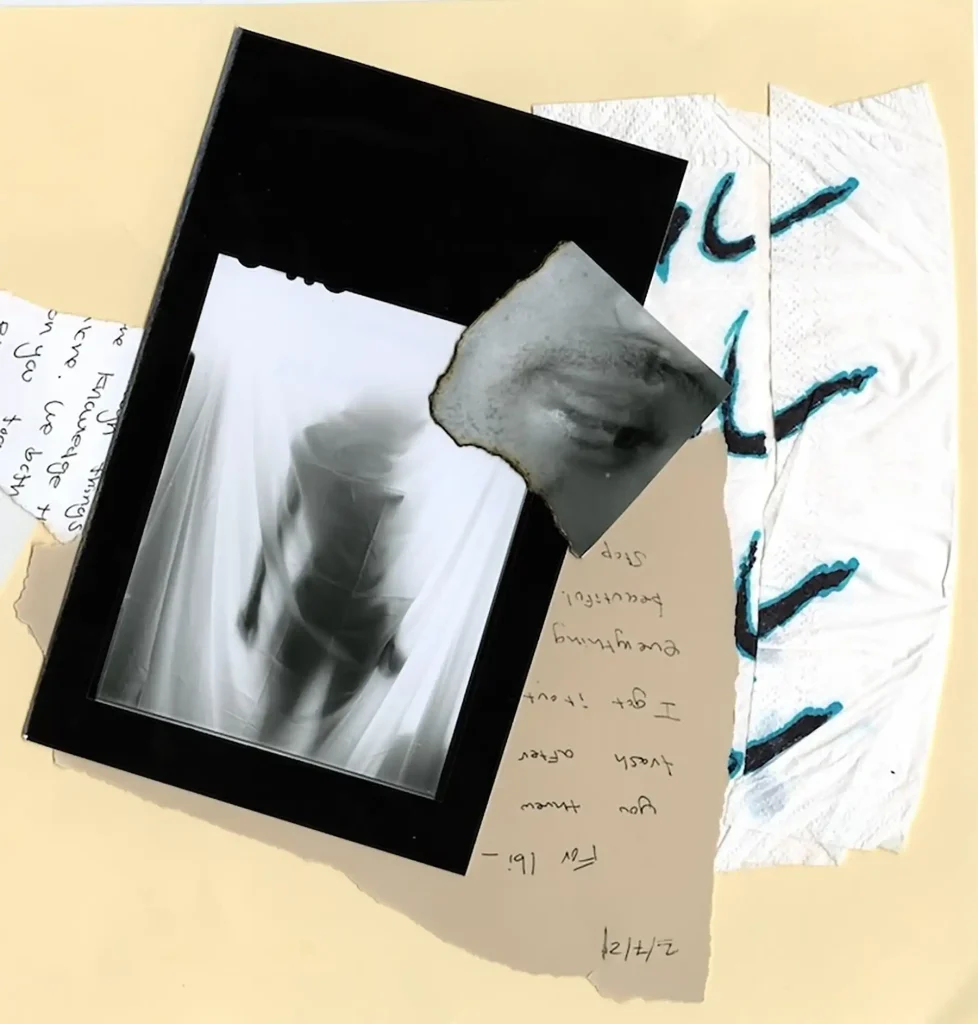
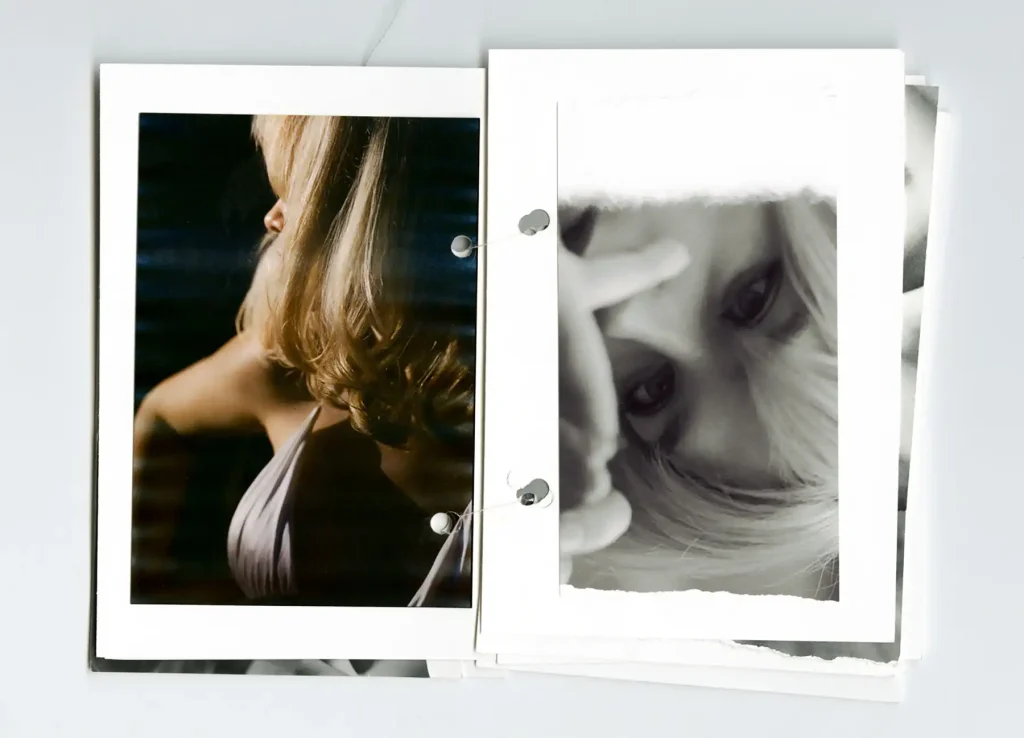
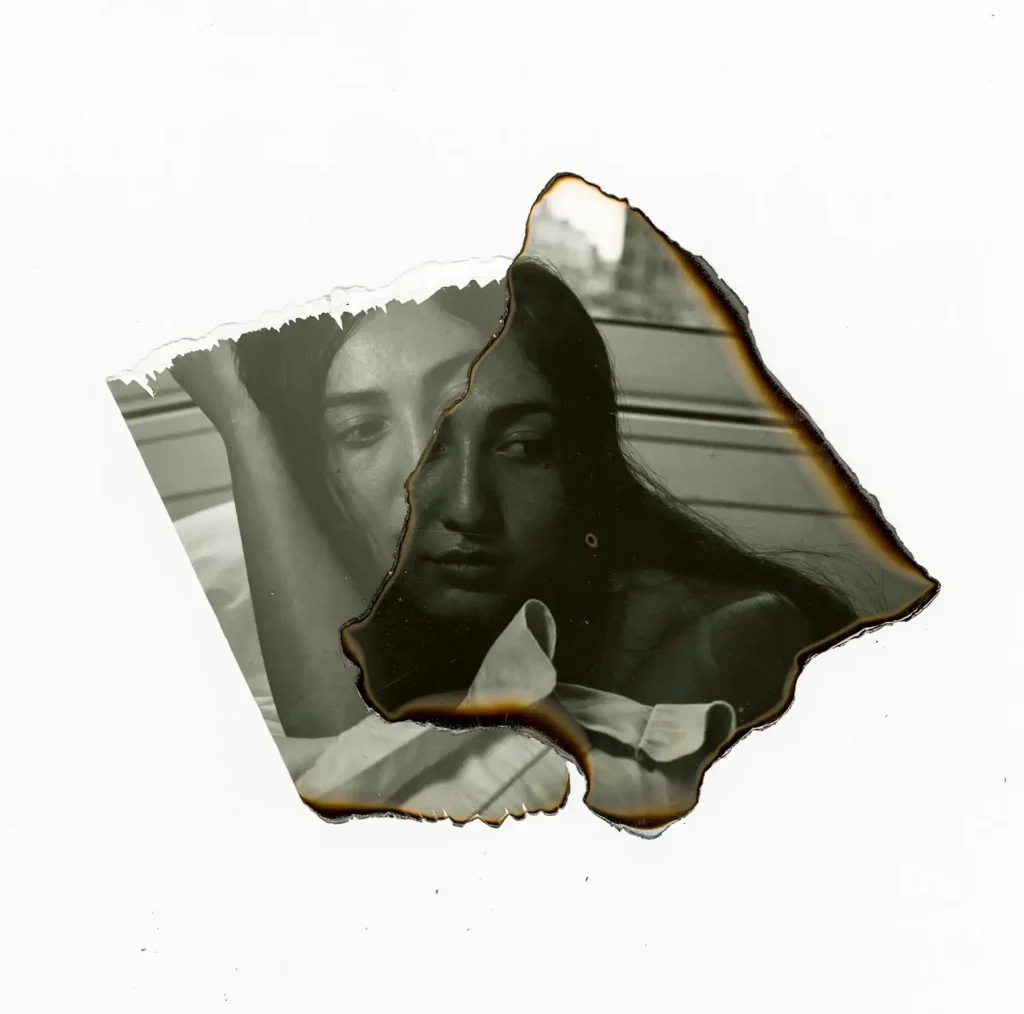
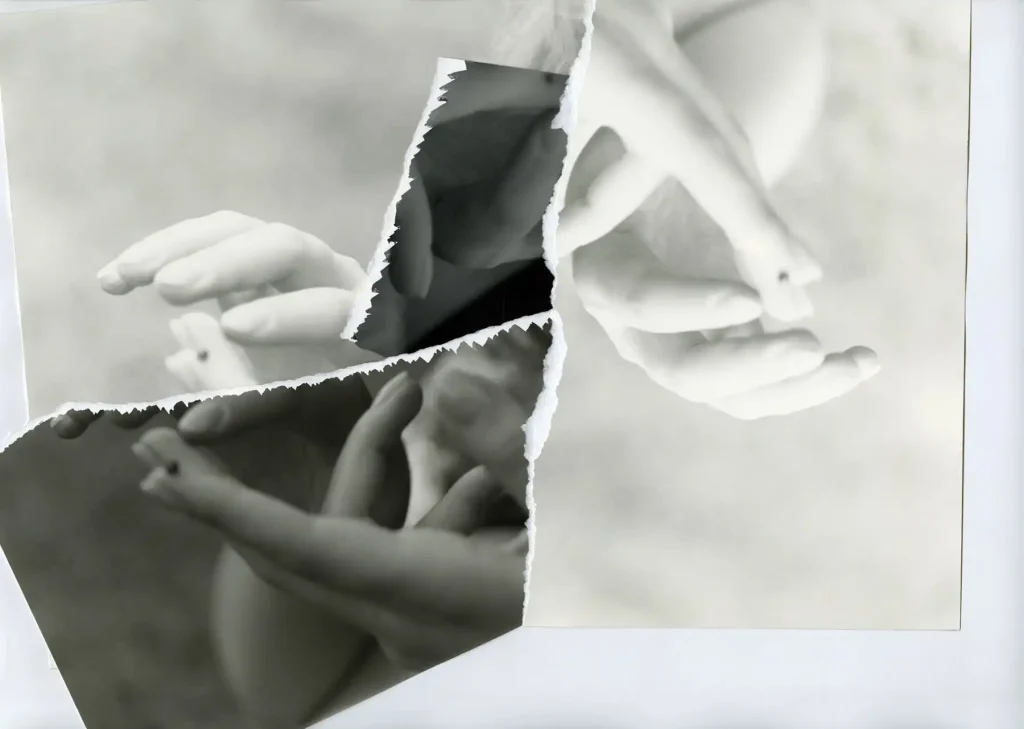
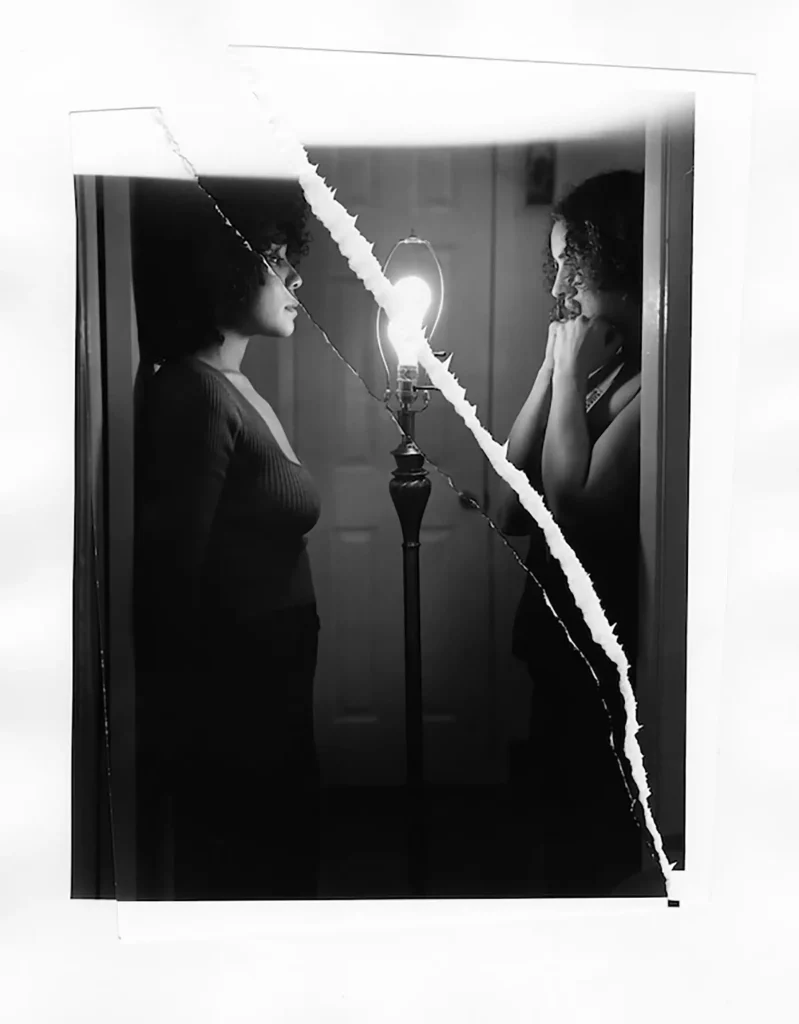
    Samantha’s work explores the limitations of portrait photography in capturing fixed identities, embracing fragmentation and reconstruction. Through tearing and reassembling images, she invites viewers to piece together meaning, reflecting the human desire to heal and preserve connections. Her collages highlight the beauty in rupture and imperfect restoration.


    Meet the Artist

    Can you introduce yourself and tell us about your artistic background?

    My name is Samantha Jensen. I was raised in Northern California, and I am now based in Brooklyn. I came to photography through a collage background. I was taught darkroom printing through this incredible artist who taught me through experimentation – solarization, double exposures, etc. The next few years I taught myself how to print professionally in community darkrooms throughout Brooklyn. I think my background in collage as well as trying out all the mistakes of darkroom printing from the start, was important later in my photography work. I feel like I have two different practices, but here at GlogauAir I’m trying to find a way to merge them. My single-image photography work is often about identity, our interior and exterior worlds, and how we exist and navigate within spaces. It’s a mix of portraiture, still lifes, and landscapes. The other practice is collage work – working with fragments of images, ripped paper. It’s more conceptually and definitely more experimental.

    What kind of themes do you usually work with?

    I often find myself looking at people, relationships, and places and exploring what time does to them. How does time rupture things? What does this look like visually? When I first arrived in Berlin, I spent a lot of time editing an ongoing project called where flowers won’t, time will grow. This project is an ongoing exploration into the changing landscape of California as well as a personal study about the changing landscapes of my own family and the inherited traumas of the body. In this growing collection of photographs, this project seeks to equally position the landscape and my familial subjects as both a witness and the witnessed to the ways the ecosystem of our bodies, our families, and our landscapes are shaped by what is ongoing and chronic.

    Rupture and repair are also themes I work with a lot. My work often involves the physical ripping of prints, and I am always drawn to photographing broken things. I mess up stuff. A lot of my work involves scratches and folds and sharp edges. Right now, I am doing experiments on expired darkroom paper where I crumple the paper – which rips the top layer off before exposing. It is not just the fractures I am interested in though, it is also how the disparate pieces get reattached, presenting them to the viewer to be structured anew, employing our desire as humans to heal and preserve relationships.

    How do you like living in Berlin? Do you think it affects your art in a way?

    I love it. I think arriving here completely shifted the work I had planned to do here. Within a few days here, I thought a lot about Berlin’s flat gray light. The lack of sun. I usually photograph with lots of light and deep shadows. Of course, being in Berlin in January, this is not exactly possible. So I began waking up a bit before the sun and going out in the early mornings on sunnier days, walking around the neighborhood and shooting street still lifes. I had planned to work with only b&w film, but when I came here, I had the urge to fill my studio up with color. Perhaps to compensate for the greyness.

    With the street still lives, I wanted to also capture the loneliness I felt at the beginning. I didn’t know anyone here and I usually find people to photograph through friends. I’ve never been like “shit, who do I photograph?” So I just went around, and then I started to fall in love with photographing the streets around me. I call them street still lifes because I wouldn’t say I am a street photographer. These images are a bit different, they’re very close-up. I try to capture the light bouncing off objects, broken windows, trash left behind left behind. I want to abstract the objects a bit, make them into something different. Repurpose.
    That said, I am also doing a lot of b&w work – expired paper experiments and silver gelatin printing at Bildband – a very magical darkroom here in Berlin.
    How do you like your experience at GlogauAIR so far and living with other artists?

    It’s cool, because although the artists on my floor do mostly painting & textile work, I like it because it pushes me to think differently. I think with photography, you can enter this bubble where you’re surrounded only by other photographers and you can stay in that bubble. Then your work starts to look like everyone else’s. I think it’s good to come out of the bubble sometimes and be inspired by different art forms. And I love all the residency visits we do. So, yeah so far, I love it.

    Can you tell us about some of your favorite artists or artists who inspire you?

    I feel like right now, I am inspired mostly by writers. I’ve been reading Octavia Butler and Clarice Lispector and Etel Adnan here. I love looking at poems, prose, or novels, and then translating the feelings I get from them into a visual practice. I also think I’ve been looking a lot at the work of my professor from ICP, Keisha Scarville. She plays with surrealism and the uncanny and it’s all image-based work. She does a lot of overlapping and collage.

    Statement

    My process is an exploration of the limitations of portrait photography to present fixed identities – of efforts to consolidate a subject within the confines of a frame. Instead, I engage with fragmentation and invite the viewer to put the pieces together.

    The collages often begin as single images, but within the printing process the images are ripped and torn. The disparate pieces are then reattached, presenting them to the viewer to be structured anew, employing our desire as humans to heal and preserve relationships. Rupture and restoration are both collaborative processes.

    My work is concerned with the construction of wholes from parts — moments are to narratives as a touch is to care; as a gesture (both in my tearing of the paper, and in those almost imperceptible physical gestures of my subjects) is to a series of possible persons and their relationships. Present through all of this, though, is the recognition that tears – both in images and in relationships – can rarely be seamlessly mended, and that in spite of this there is beauty in their “repair.”

    GlogauAIR Project

    [Project description]

    CV Summary

    EDUCATION

    • 2020 BA in Art History, New York University
    • 2023-2024 One Year Certificate Program: Creative Practices, International Center of Photography

    SELECTED GROUP EXHIBITIONS

    • 2024
      • i don’t know if i am in this world, Dear Friend Books, Brooklyn NY
      • The Analog Forever Exhibition, LightBox Photographic Gallery, Astoria OR
      • The Shape of Things, BAU Gallery, Beacon NY
      • JRNL SHOW, FotoFilmic, Bowen Island, British Columbia
      • The Sun Never Sets, Worlds Through Minds, 141 Canal, New York NY
      • Shared Spaces, International Center of Photography, New York NY
    • 2023
      • Embodied Knowledge, Ely Center of Contemporary Art, New Haven CT
      • Scribbles, Carter Burden Gallery, New York NY
      • Figures in the Landscape, Aplomb Gallery, Dover NH
      • Beyond the Frame: A Contemporary Exploration in Mixed Media Photography, Target Gallery, Alexandria VA
      • International Juried Exhibition, The Center for Contemporary Art, Bedminster NJ
    • 2022
      • Small Works: Just in Time, Starta Arta Gallery, New York NY
      • Wood and Paper, Williamsburg Art & Historical Center, Brooklyn NY
      • Strange Paradise: A Window into Surrealism, Kay Daughterty Gallery, Solomons MD
      • SHIM Photography Exhibition, Atlantic Gallery, New York NY

    AWARDS & RESIDENCIES

    • 2025 GlogauAIR Art Residency, Berlin Germany
    • 2024 Profifoto New Talent Award 24/2
    • 2022 New Futures Artist Award at The Other Art Fair, Brooklyn NY

    PUBLISHED IN

    • Alex Sharp for Interview Magazine, April 2024
    • Three Body Problem, Wonderland Magazine, April 2024
    • Foto Filmic JRNL 19 (WINTER 2024 ISSUE)
    • Revue Collé, Issue No. 147
    • Art Seen Magazine, Issue No. 8 (Summer 2023)
    • Vellum Magazine Issue No. 26

    Gallery

  • Alexandra Tahereh Kaucher

    Alexandra Tahereh Kaucher

    Alexandra Tahereh Kaucher is GlogauAIR resident from January, 2025 to March, 2025

    Alexandra’s work grapples with the notion of cultural identity as a second generation Iranian immigrant, growing up in America. Drawing from her mother’s recollection and a mix of archival and contemporary media, she navigates the complexities of heritage, globalization and the space between cultures. Through media collage, Kaucher examines themes such as feminism, consumerism, and social standards in western culture, contrasting with her persian roots.


    Meet the Artist

    Can you tell us a bit about yourself? Specifically, we’d love to know about your background.

    I am Alexandra Tahereh Kaucher, I am a director currently based in Brooklyn, I am a second-generation Iranian immigrant who grew up in the U.S. My film work and video installations primarily grapple my cultural identity, feminism, and consumerism. I play Persian tar and do music too. 🙂

    How would you describe your artistic practice? 

    I consider myself an experimental filmmaker. I make documentaries and video art. I love working with media collage pulled from both archival and contemporary sources, mixed in with my own photography. I am extremely inspired by Bruce Conner, Chris Marker, Shirin Neshat, and Harmony Korine.

    I am very drawn to repetition, I think that is very influenced by my love for Persian art, there’s a lot of repetition in the carpets, architecture, and handiworks. Repetition gives a sense of harmony and order amongst the chaos.

    What is your methodology or process for creating a new project?

    I like to have everything out in front of me so I can place it like in a collage, I don’t always work linearly. Working linearly is stifling for me. There is a kind of push and pull with editing that I love where you are informing it and it informs you, it feels like another form of sculpting. 

    I sometimes discover one clip and then I want to explore how I can repurpose that idea or distill it into something new. I have always been drawn to collage, when I was a little girl I used to cut up my mom’s magazines and make little collages– which my mom surely kept. I am in active pre-production of my project which has involved conducting interviews to see what story elements I want to use for the final film. I want the story of this film to emerge collaboratively with the subjects because it’s ultimately their story and I want to be true to them.

    What’s the project you’re working on during GlogauAIR’s residency?

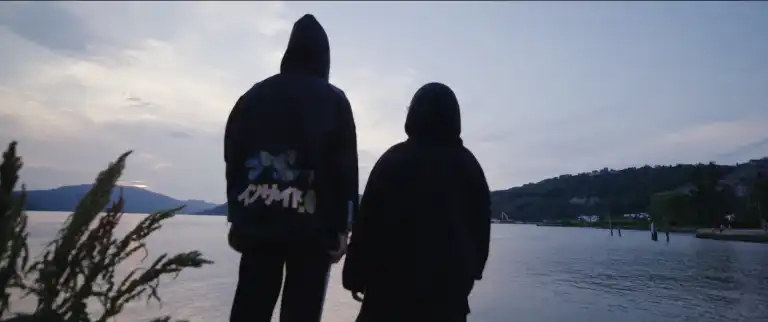
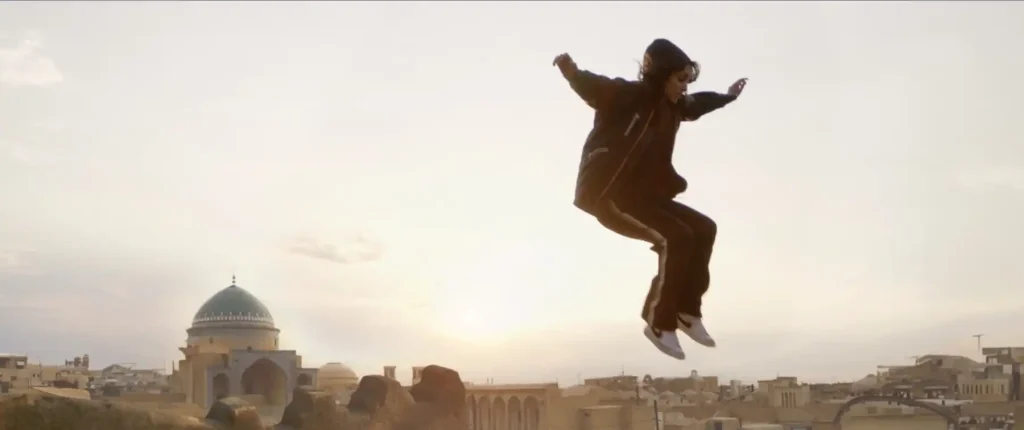
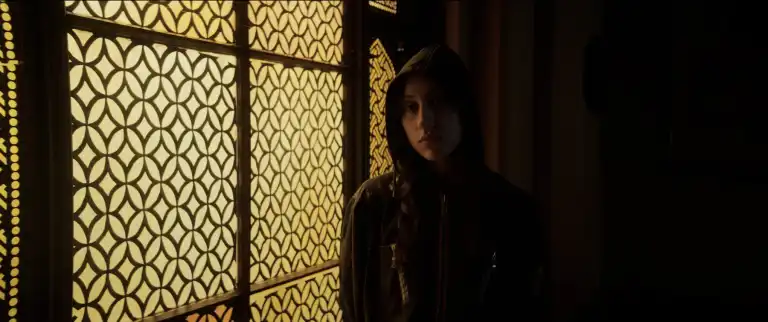
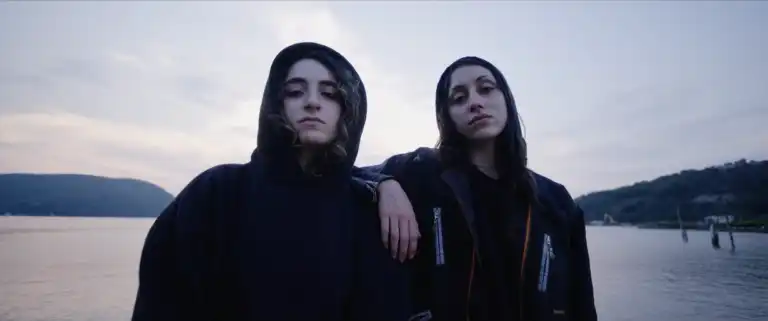
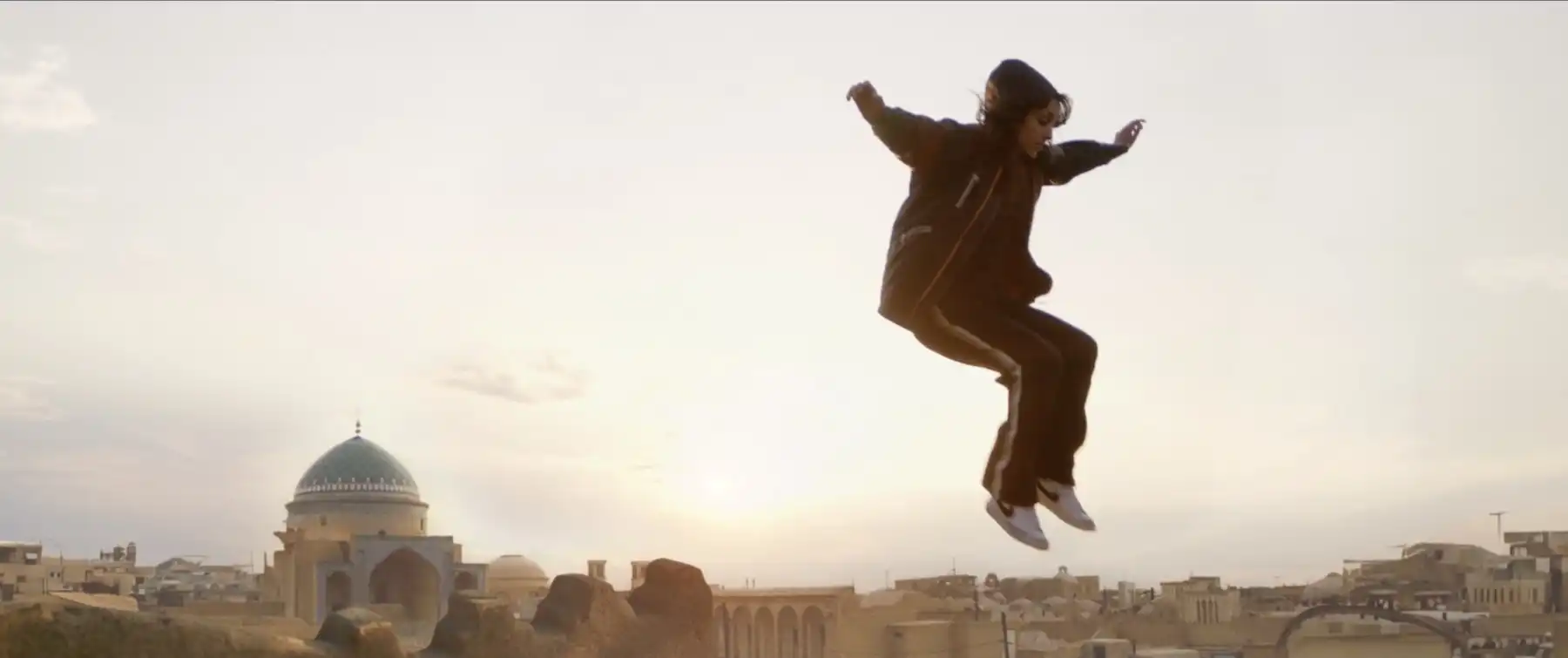
    During my residency at GlogauAIR, I have been working on my latest film, Never Move Backwards, an intimate portrait of an all-female parkour troupe in Iran.

    Statement

    As a second generation Iranian immigrant growing up in America, my video work primarily grapples with the notion of cultural identity. I grew up with only a second-hand account of Persian culture, relying on my mother’s account of growing up there. This has made getting in touch with my roots exceedingly difficult, as I am always cast as an outsider looking in. My work is about charting that heritage, from the perspective of growing up in the Western world, and also from the perspective of Iranians, and the disparate place in between.

    Through omnifarious media collage pulled from both archival and contemporary media sources, I attempt to distill what Iranian culture permeates in a world ever expanding with globalism ideals in the internet age. I am interested in exploring feminism, consumerism, and decoding social standards in western culture, and how that juxtaposes with my persian heritage.

    GlogauAIR Project

    Never Move Backwards is an intimate portrait of an Iranian female parkour troupe in Shiraz, Iran. The team is captivated by the freedom and fluidity of their movements—the way they seem to defy gravity and transcend the limitations of their environment. Parkour represents everything she has been longing for: freedom, strength, and the courage to push beyond boundaries.

    The film examines the dystopian feeling of coming of age, as one finds out what their limits are. Parkour is a visual representation of testing those limits, and I seek to understand what draws these women to a sport defined by a sense of fearlessness. Is it nihilism? Rebellion? Is it that they have no fear of death because they view their lives with a bleak outlook? The film will explore themes of rebellion, youth, and counter culture set against the backdrop of Iran’s ever mutable cultural identity.

    I am inspired by women practicing parkour in Iran by the sheer bravery and physical and mental strength it takes to do parkour. There are so many fears one must conquer to put yourself into the mindset of yes I can defy gravity. Women’s bodies themselves have long been a symbol of rebellion and often politicized.

    Women’s bodies are forever under threat, making themselves smaller, but doing parkour is the antithesis of being small.

    Parkour is about taking one’s own body and pushing its physical limits and becoming the strongest version of itself enough to soar over buildings and concrete. I’m interested in the sport being a transcendence of the body over the materiality of the physical space in which we reside.

    Parkour represents a leap of faith, jumping into the unknown, the willingness to put oneself at risk for something greater.

    SELECTED EXHIBITIONS

    • 2024 Woman Made Gallery, Down There Showing Utera (2023)
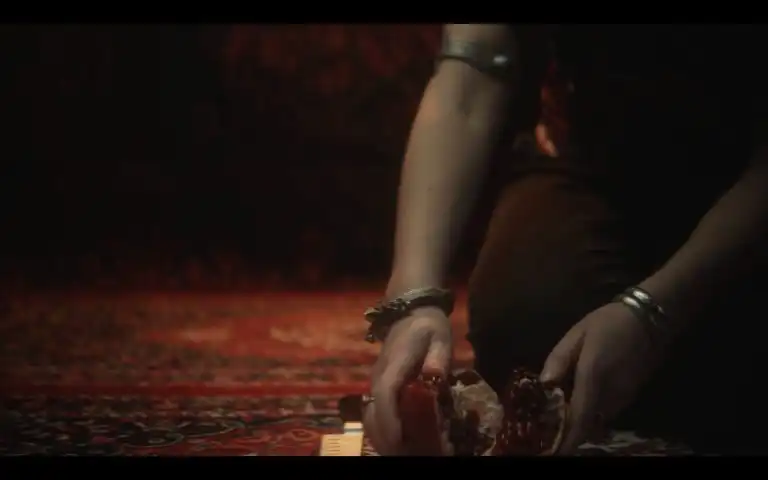
    • 2023 Kato Wong Gallery Here is Iran Showing How to Cut a Pomegranate (2020)
    • 2023 Women Made Gallery Tickled Pink Showing Whimsical Pussy (2020)
    • 2023 New House Art Space Hysterical – Showing: Utera
    • 2023 Women Made Gallery – Women Life Freedom Exhibition Showing: Haft Sin
    • 2023 Women Made Gallery Tickled Pink Showing Whimsical Pussy (2020)
    • 2022 Artist in Residence Valluris-Golfe-Juan – Installation Showing Unrest in Iran, Utera,

    SELECTED WORK

    • 2020 How to Cut a Pomegranate 2019 Unrest in Iran
    • 2020 Atlanta Film Festival Experimental Shorts
    • Swedenborg Society Film Festival 2019 – Curated by Nora Foster (Frieze art fair) & Gareth Evans (White Chapel Gallery) Barcelona International Short Film Festival, CODEC Film Festival 2019,
    • Rome Independent Prisma Awards,VASTLAB Experimental 2021,
    • Fisura, International Festival of Experimental Film & Video, ULTRAcinema Alessandria Film Festival, Esto Es Para Esto, Experimental Superstars,
    • 2019 Bend Low, Sweet Branch, Bend Low
    • The Lift-Off Sessions, LEGACY’ The Film Club Toront, Transparent Film Festival Experimental Superstars, End of Days Film Festival, Rome Independent Prisma Awards Sunday Shorts Film Festival, Varese International Film Festival,
    • VASTLAB Experimental 2021
    • 2018 Fashion is Love Commissioned by Non-profit Custom Collaborative
    • Featured in Re-make, Fashion Film Festival Milano 2019 LA Fashion Festival 2019, Awareness Film Festival 2018 MICGénero, Fashion Film Festival Chicago,
    • Artfools – Eco Fashion Film Festival
    • 2017 Créme
    • AVIFF Cannes
    • 2016 Solid Form – Kelli Cain Featured in Alpine Modern 2015 Grapes and Water Music Video for Ray Knight
    • Aesthetica Short Film Festival

    SELECTED COMMISSIONED WORK

    • 2024 Byredo
    • 2023 Feda X Hitachi Energy
    • 2023 Learning Lessons of Appropriation X BBC Storyworks
    • 2022 An Ecuadorian Indigenous community works to preserve the rainforest X BBC Storyworks
    • 2022 Harnessing the Power of Water X BBC Storyworks
    • 2022 – Dancing Towards Happiness X BBC Storyworks
    • 2022 – Sleeping Well X BBC Storyworks
    • 2022 – Creating the sustainable mine of the future
    • 2022 Pathways – connecting the world’s largest offshore wind farm to power six million homes in the UK
    • 2022 Sunbeam
    • 2022 Smoked Dung & Arctic Thyme X BBC Storyworks
    • 2022 Preserving Every Drop water conservation in Jamaica X BBC Storyworks 2022 Running to stand still X BBC Storyworks
    • 2021 Building Communities in Turin X BBC Storyworks
    • 2021 Resilience in a remote fishing town X BBC Storyworks
    • 2021 Humanising Energy X BBC Storyworks
    • 2021 Living with a congenital heart defect X BBC Storyworks
    • 2020 The women breaking barriers in haemophilia X BBC Storyworks
    • 2020 How to increase the amount of plastic we recycle X BBC Storyworks 2020 Watch gang – Everytime
    • 2020 Oshin // 212/232
    • Fashion Film Festival Milano 2020
    • 2020 Simple diagnostic tests empowering myeloma patients X BBC Storyworks 2019 The forest classrooms raising responsible children X BBC Storyworks

    EDUCATION

    • 2008-2009 New York University in Florence, Florence, Italy Coursework in Italian language, literature, and art
    • 2010 New York University in Madrid, Madrid, Spain Coursework in Spanish language, literature, and art
    • 2011 New York University, College of Arts and Science, New York, NY Bachelor of Arts
    • Major: European and Mediterranean Studies Minor: Italian

    Gallery

  • Cláudia Köver Jordão

    Cláudia Köver Jordão

    Cláudia Köver Jordão is GlogauAIR resident
    from January, 2025 to March, 2025

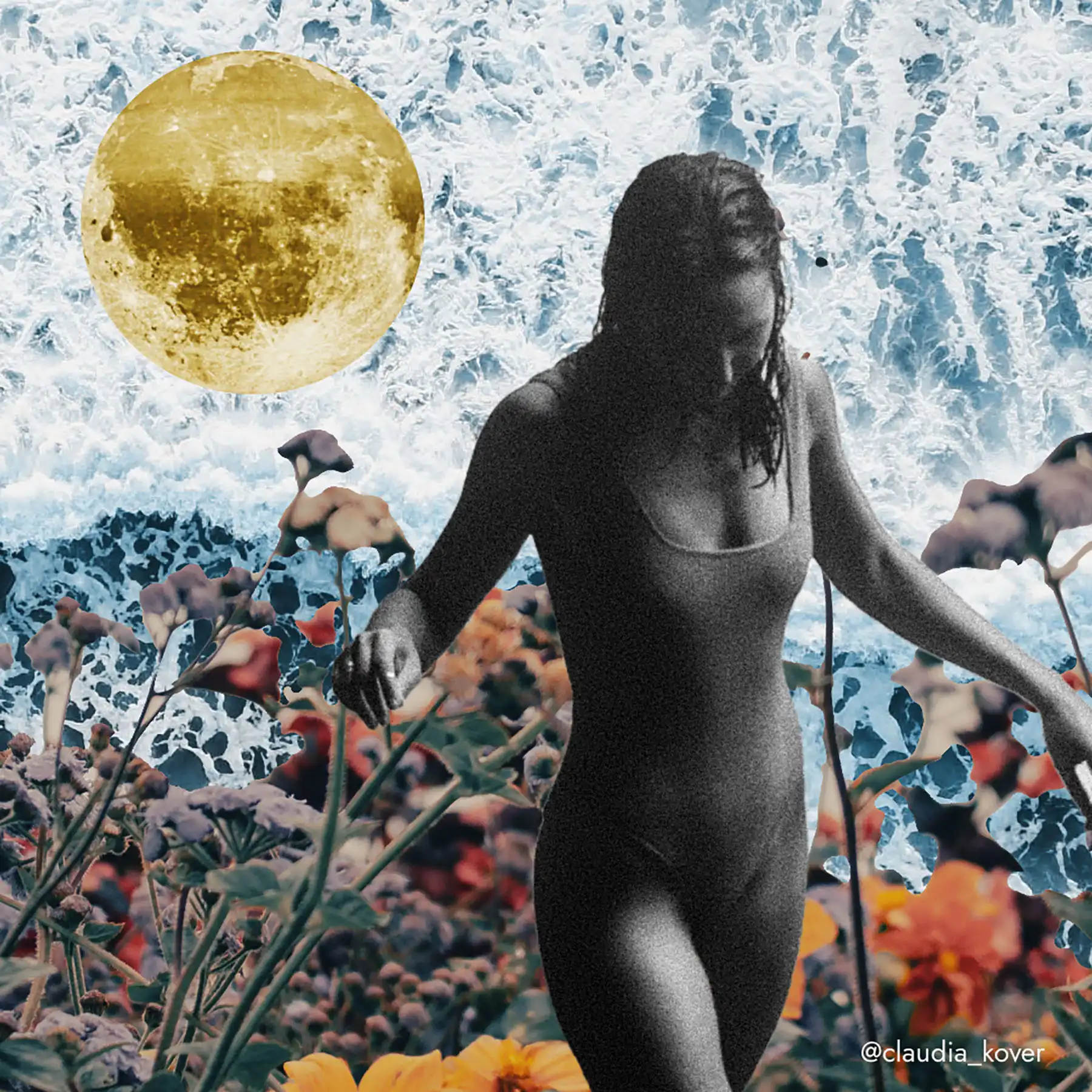
    Cláudia Köver Jordão is a Portuguese writer and multidisciplinary artist whose work explores identity, the multiplicity of self, and belonging through poetry, short stories, collage, drawing, and documentary photography.


    Meet the Artist

    Can you tell us a bit about yourself? Specifically, we’d love to know about your background.

    I was born and raised in Lisbon and grew up in a multicultural environment where art was a part of my daily life. Much like moving between languages, I found myself naturally shifting between two seemingly opposing traits: a deep creative drive and a highly structured mind-set. With time, I have learned to embrace these contrasts as complementary.

    I pursued media studies because it allowed me to bring those two elements together. Moreover, I could delve into different mediums such as writing, radio, photography or editing. After years working across journalism, advertising, and communications, I transitioned into international development.

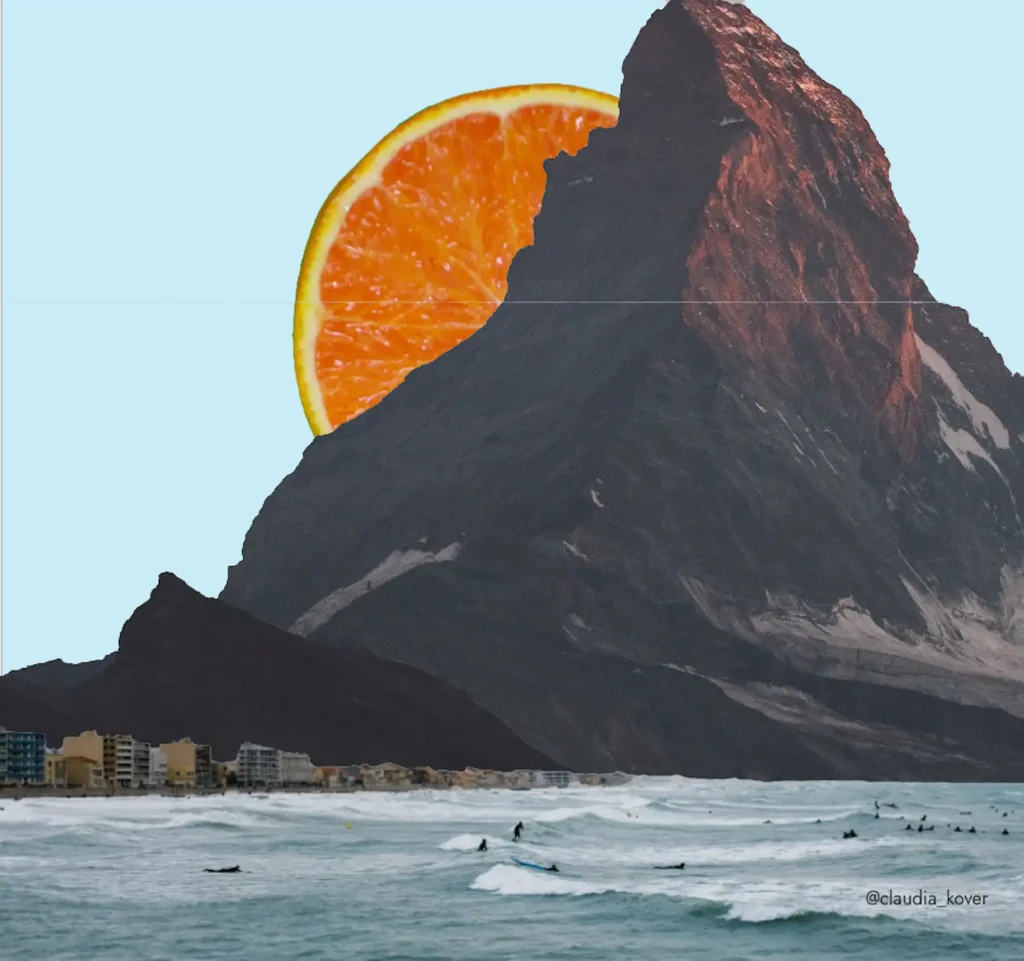
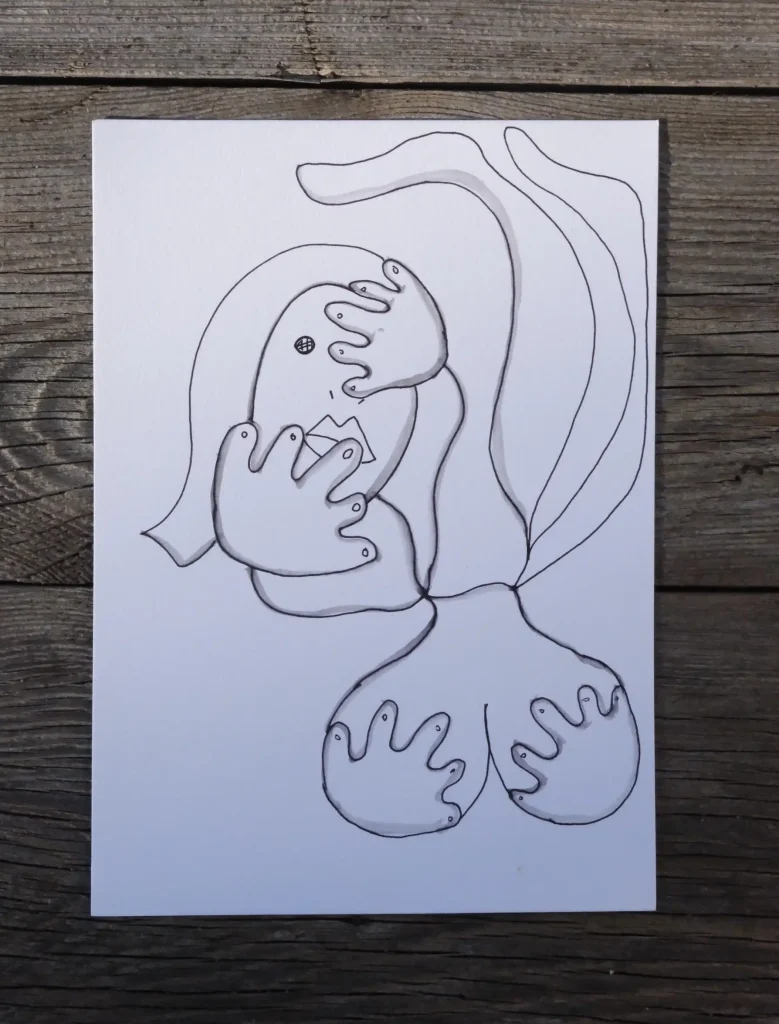
    Throughout my career, I have continued nurturing my creative practice – publishing writings in multiple languages across different countries, and exploring various artistic mediums from digital and analogue collage to painting and drawing.

    After living in Brussels for many years, my move to Kigali in 2021 marked a significant evolution in my creative journey as I had the opportunity to interact with a larger artistic community. This growth took on new meaning when I lost my father last year, who had been a crucial creative mentor throughout my life. Learning to make artistic decisions without his guidance has been challenging, yet this process has deepened my artistic maturity and pushed me to share my work with broader audiences.

    How would you describe your artistic practice? 

    My artistic practice explores themes of identity, belonging, and the multiplicity of self. Growing up between cultures shaped my perspective – I often felt disconnected from my heritage. Ironically, living far from Portugal has deepened my connection to its cultural roots and I have allowed myself to explore my “portugalidade” in ways I never did before.

    Storytelling is at the core of all my work, which may stem from my journalistic background. The main mediums I have worked with are writing, including short stories and poetry, photography, drawing and collage. Yet, I am always eager to try and learn new skills and crafts.

    My work is particularly influenced by the Portuguese poet Fernando Pessoa, who wrote through multiple identities, each with their own life story and way of writing. Like Pessoa, I’m interested in how we contain many selves. I also draw inspiration from the Bauhaus movement’s way of bringing together art, craft, and function, breaking down the walls between different types of creative expression.

    Recently, my focus has shifted to include themes of mortality and spiritual legacy. Through my work, I explore what we leave behind after we are gone.

    What is your methodology or process for creating a new project?

    My artistic work typically originates from one of two sources: emotion or play. Sometimes I am processing complex feelings, which naturally flow into writing first. Other times, I discover something intriguing while making art purely for enjoyment.

    I keep track of ideas wherever I am – on my phone or scraps of paper. Once an idea takes shape, I shift into a more structured approach – conducting research, developing concepts, and setting clear timelines for experimentation and completion.

    Travel has been a constant in my life since childhood and plays a big role in my practice. It both inspires me and gives me space from everyday life. I often capture these experiences through small photo stories, always anchored in storytelling. I feel like a piece is finished, when the story feels complete.

    Tell us about the project you are working during your online residency at GlogauAIR. 

    A central theme I aim to explore is what we leave behind after we pass away – both physical objects and stories that span generations. In Portugal, with its detailed historical records and tradition of long family names, we can trace our ancestry far back. Yet our knowledge of those who came before us becomes increasingly sparse with each generation. We might write a paragraph about our great-grandmother, but only a sentence about our great-great-grandmother. This raises the question: who are we after we are gone and why we do we care about it?

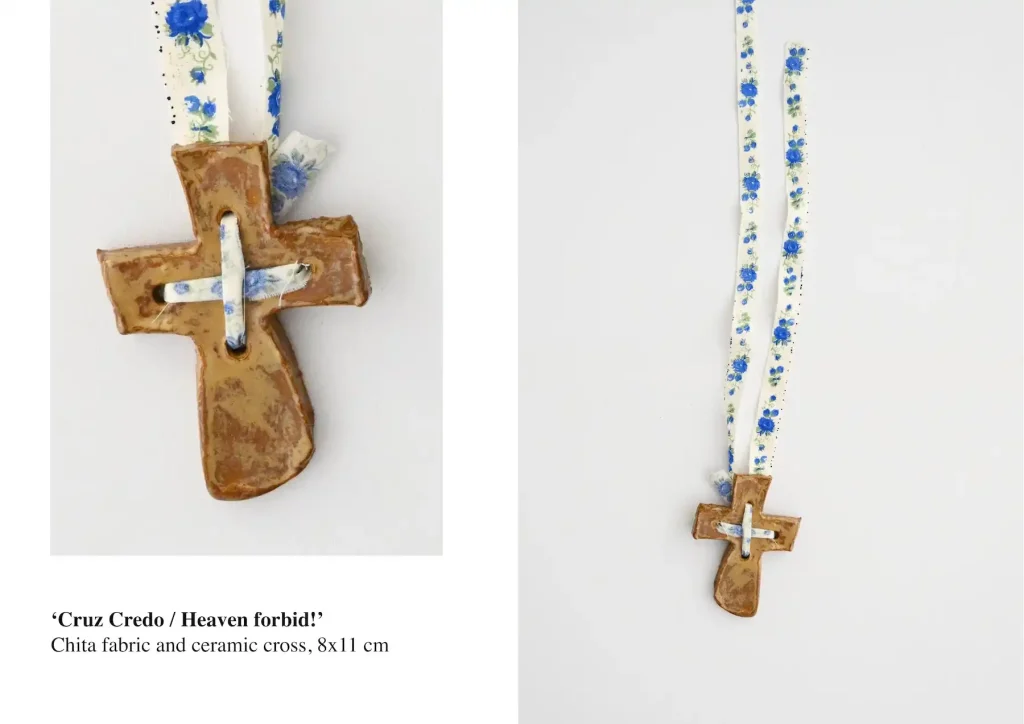
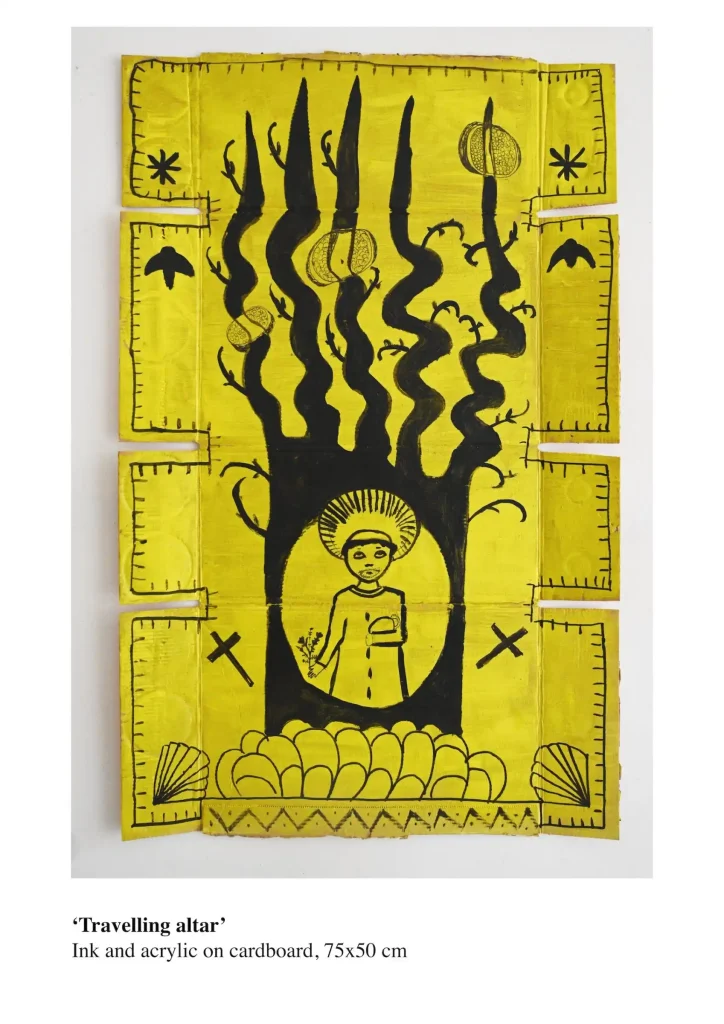
    I want viewers to be transported when they encounter my work, as if they’ve stepped into someone’s home, surrounded by the objects and energy they left behind. For this, I am researching Portuguese folklore and traditions, particularly ancient legends passed through generations. The project has drawn me to traditional crafts like pottery and sewing, with a focus on protective superstitions and spiritual beliefs.

    While my previous work translated emotions into words and then visuals, this project manifests as physical pieces that carry meaning and story. Furthermore, I will use poetry and other mediums to complement them.

    I am exploring the idea of an alter ego character, I create artefacts and weave their stories. In a way, this connects to my own desire to produce art that fills my home – pieces that will one day be discovered and tell their own tales after I’m gone.

    Statement

    Cláudia Köver Jordão is a Portuguese writer and multidisciplinary artist from Lisbon working with poetry and short-stories, digital and analog collage, drawing, and documentary photography, among others. Published in multiple languages, she moves comfortably between creative and structured environments, leading her to work across journalism, communications, and diplomacy, whilst letting these experiences feed into her artistic practice. Stemming from her multicultural upbringing, her work explores themes of identity, the multiplicity of self, and belonging. She currently lives and creates in Kigali.

    GlogauAIR Project

    Cláudia Köver Jordão delves into Portugal’s rich folklore and traditions, exploring ancient legends and their cultural resonance. Whilst exploring traditional crafts like pottery and sewing, she investigates protective superstitions and connections to the spiritual realm. This journey serves as a pathway to her cultural and spiritual roots, examining the complex dynamics of inherited traditions. Moving further from her previous focus of translating emotions into words, and words into visuals, she now aims to further bring these to life by creating meaningful decorative pieces.

    CV Summary

    • Certificate in Drawing ArCo – Centro de Arte e Comunicação Visual 2004
    • Bachelors in Communication and Cultural Studies – Universidade Católica Portuguesa 2008
    • Young Creators Award (literature category) 2010 – Clube Português de Artes e Ideias (CPAI)
    • Certificate in Analogue and digital Photography – Cenjor – Centro Protocolar de Formação Profissional para Jornalistas – 2011
    • INOV-Art Scholarship for Arts and Culture – Ministry of Culture 2011
    • Masters in European Studies – Universidade Nova de Lisboa – 2014
    • Certificate in Sewing – Wonderland, Brussels, 2016
    • Published in Brazilian Literary Magazine “Subversa”, poetry 2017
    • Published in Portuguese/Galician Magazine “Revirada Feminista”, poetry 2017
    • Published Short-story “Little One”, HCE Review, published by the University College of Dublin, 2017
    • Published in Portuguese/Galician Magazine “Revirada Feminista”, poetry 2018
    • Published in Contemporary Portuguese Poetry Anthology, “Entre o Sono e o Sonho – volume 1” (Chiado Books, poetry 2018
    • Published in Contemporary Portuguese Poetry Anthology, “Entre o Sono e o Sonho – volume 3” (Chiado Books), poetry 2023
    • Published in Txon poetry magazine, Cape Verde, 2024
    • Certificate in Arts Management- University of London 2024

    Gallery

  • Fahsai Chainarong

    Fahsai Chainarong

    Fahsai Chainarong is GlogauAIR resident
    from January, 2025 to March, 2025

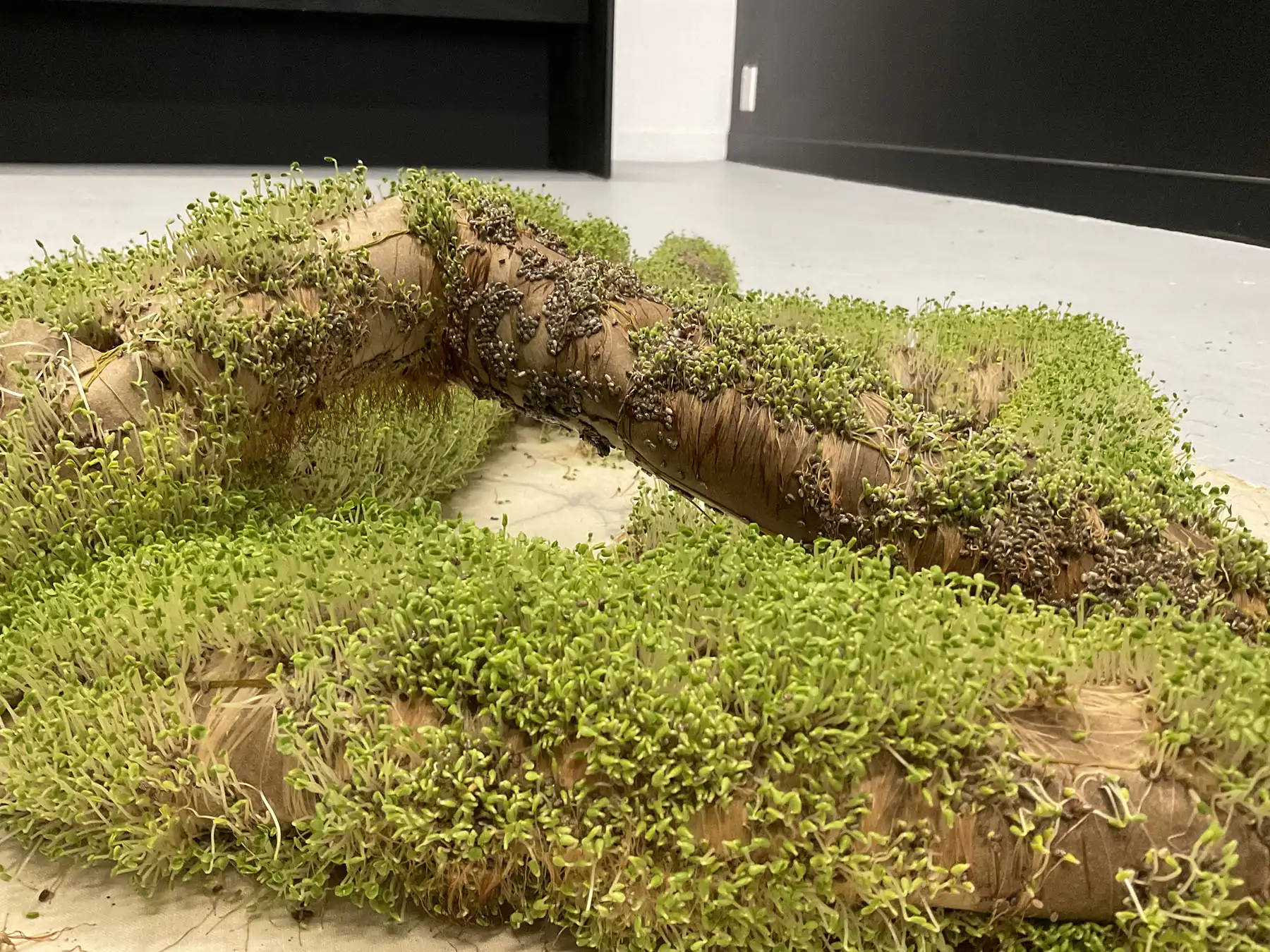
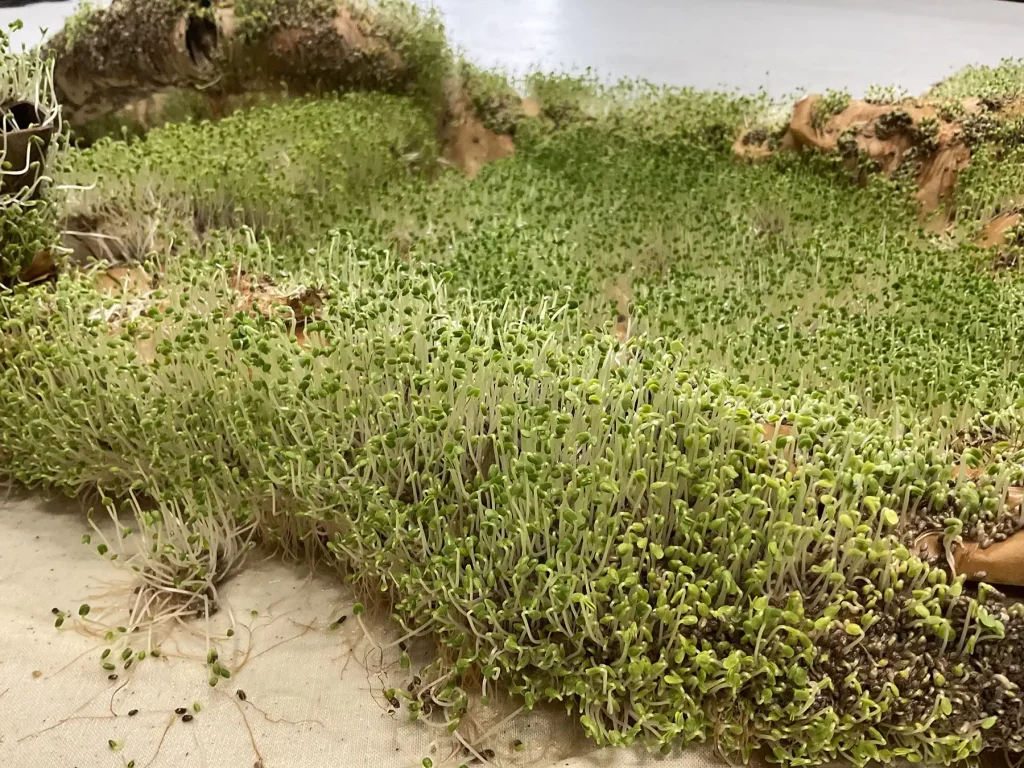
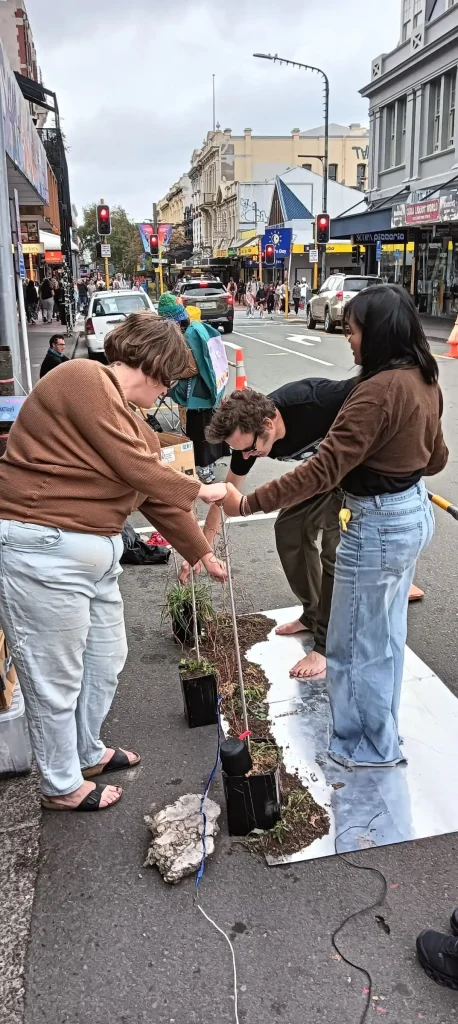
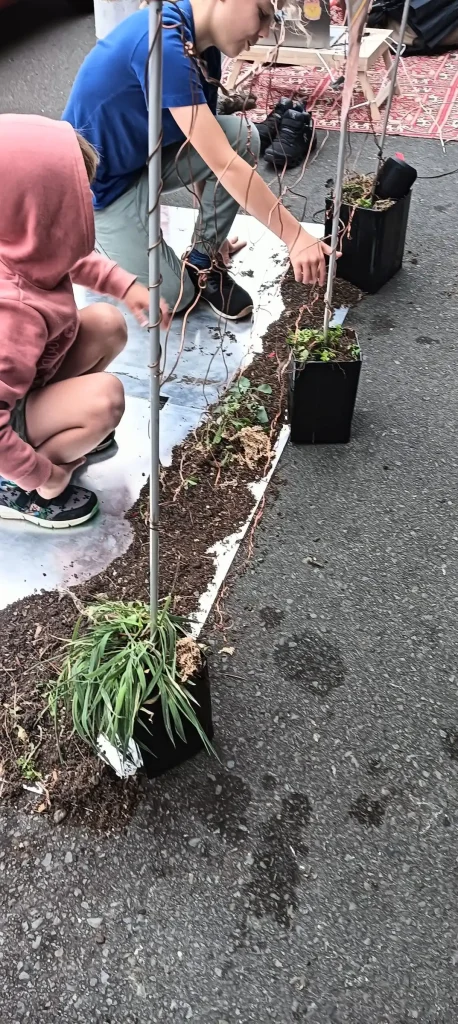
    Fahsai is a Thai multidisciplinary artist currently based in New Zealand. She creates performative installations blending technology and nature to explore human-microbe coexistence. Her work, evolving from planting chia seeds to plant-based sound systems, engages audiences emotionally and physically, promoting connection and comfort.


    Meet the Artist

    Statement

    Fahsai, a multidisciplinary artist born in Natkhonrasahima, Thailand, currently studies and lives in Wellington, New Zealand. She is known for creating performative installations that use technology to acknowledge the co-existence between microbes and humans.

    Her previous works focused on the intersections between Nature, Humanity, and the need for connection, culminating in a time-based practice that included carefully planting chia seeds. This interest has spurred their more recent works that have taken on the technological domain, from exploring the plant-facilitated audio synthesis and creating sound systems from plant and copper that require audience participation to be active. Her venture uses a blend of technological and organic materials to push the boundaries of art and public engagement.

    Fahsai aims to make her art not just seen but felt and experienced. She seeks to evoke emotional and physical reactions from participants, contributing to her artistic practice and fostering a sense of self-preservation and calming comfort by sound and space.

    GlogauAIR Project

    While developing the process of “ this being I must create”, a performative installation for Massey exposure 2024, an ambitious soundscape and immersive atmosphere that vibrates emotions through our physical body. However, the final result left me unsatisfied, and I kept criticising my artistic abilities. I returned to Thailand for the holidays and consulted with my sister about what troubles me. She mentions that “Śūnyatā” means emptiness or voidness in Buddhism to guide us in distinguishing between appearance and reality. To understand that reality exists in relation to other causes and conditions, like two solid objects making contact to create sound, one must know that they are not a negation of existence but rather the undifferentiation from which all apparent entities arise. Therefore, my proposal for GlogauAIR 2025 utilises soundscape to communicate a linguistic pattern that simulates vacuity, calmness, and temporalities; staging in domestic space related to where we were during our conversation that how led to this passion for developing art pieces that involve performance soundscape visualising my understanding of Śūnyatā.

    CV Summary

    • 2024 This being I must create- Massey Exposure 2024, Wellington, NZ
    • 2024 Internal Organics- Lead curator and guest artist MEANWHILE Gallery, Wellington, NZ
    • 2024 Untilted – Clear view, Massey University, Wellington, NZ
    • 2024 PLANT-BASED ORCHESTRA – PARK(ing) Day 2024, Wellington, NZ
    • 2024 Impermanence- Group show, Engine room, Massey University, Wellington, NZ
    • 2021-2025 Bachelor of Fine Art with Honours, College of creative arts Toi rawhārangi, Wellington NZ

    Gallery

  • Flávio Malaguti

    Flávio Malaguti

    Flávio Malaguti is GlogauAIR resident
    from January, 2025 to March, 2025

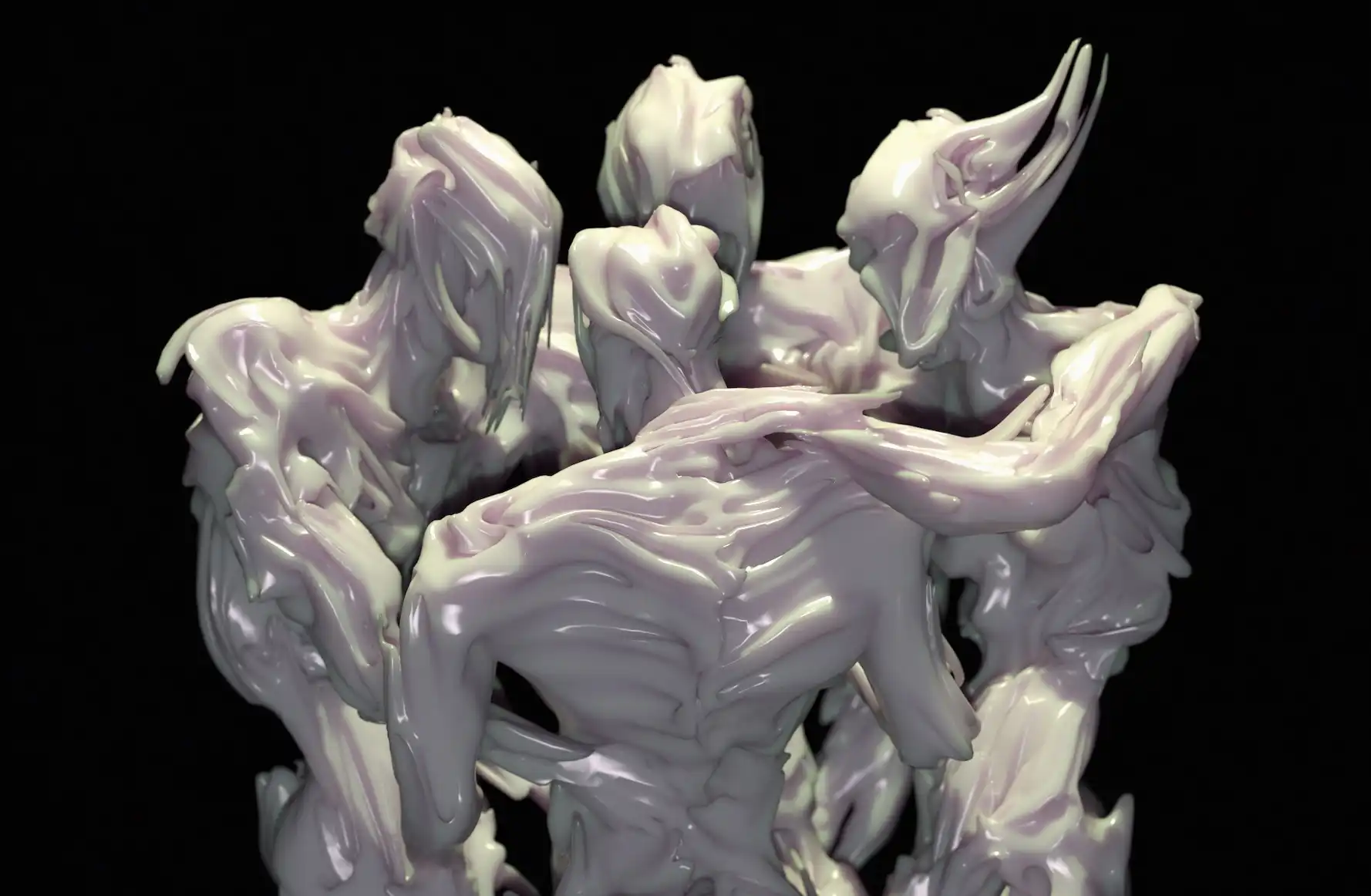
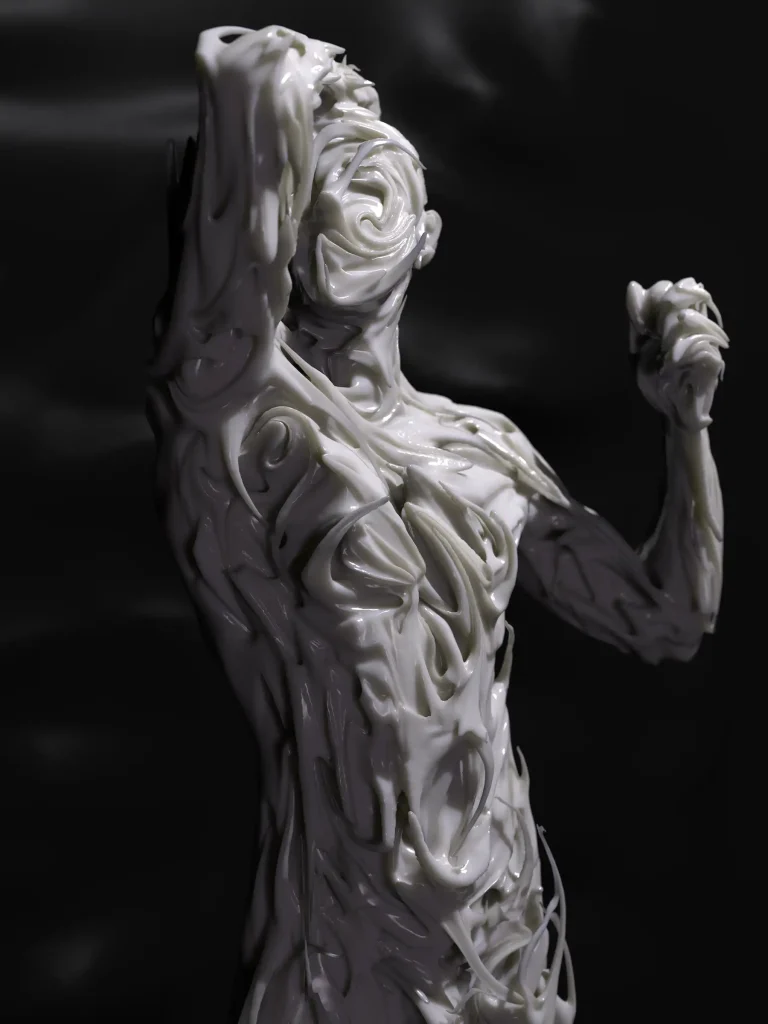
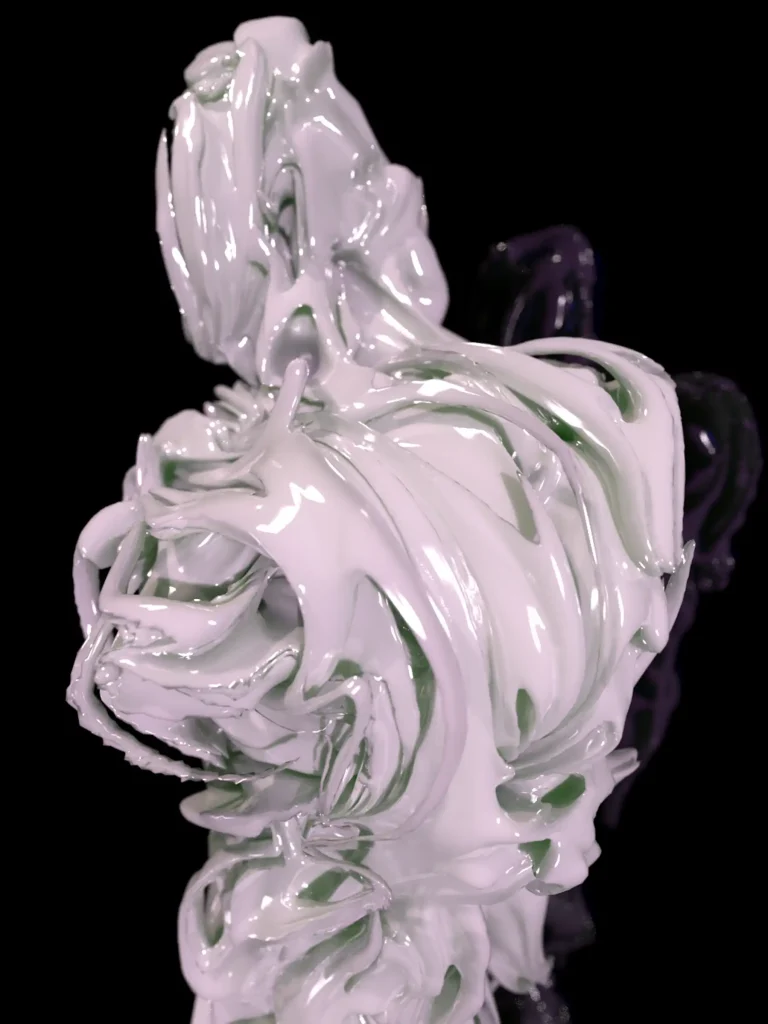
    Flávio Malaguti is a Brazilian artist from Florianópolis exploring self-perception and LGBTQ+ identity through digital sculpture and clay modeling. Influenced by surrealism, futurism, and local folklore, his biomorphic works blur the line between reality and imagination.


    Meet the Artist

    Statement

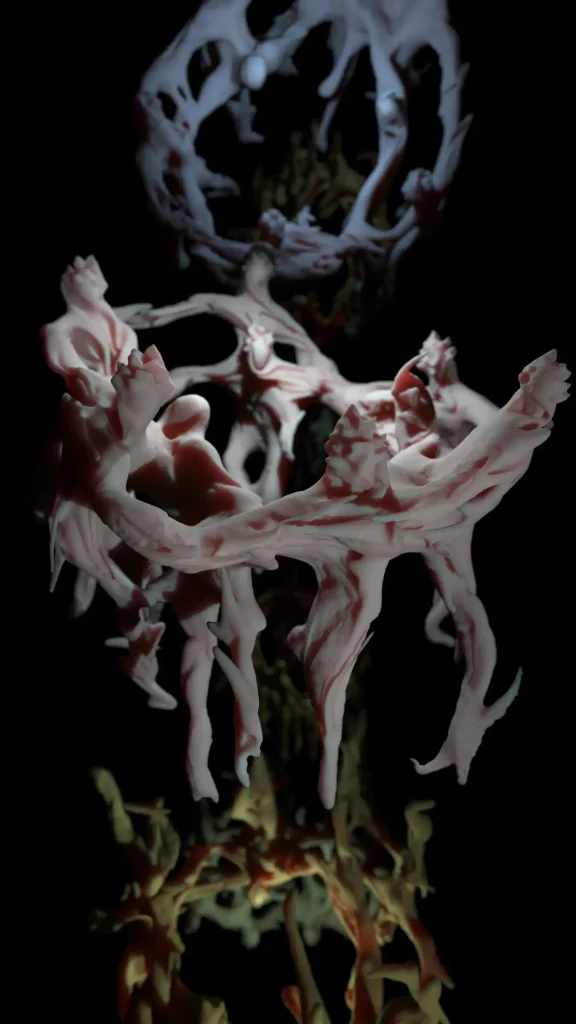
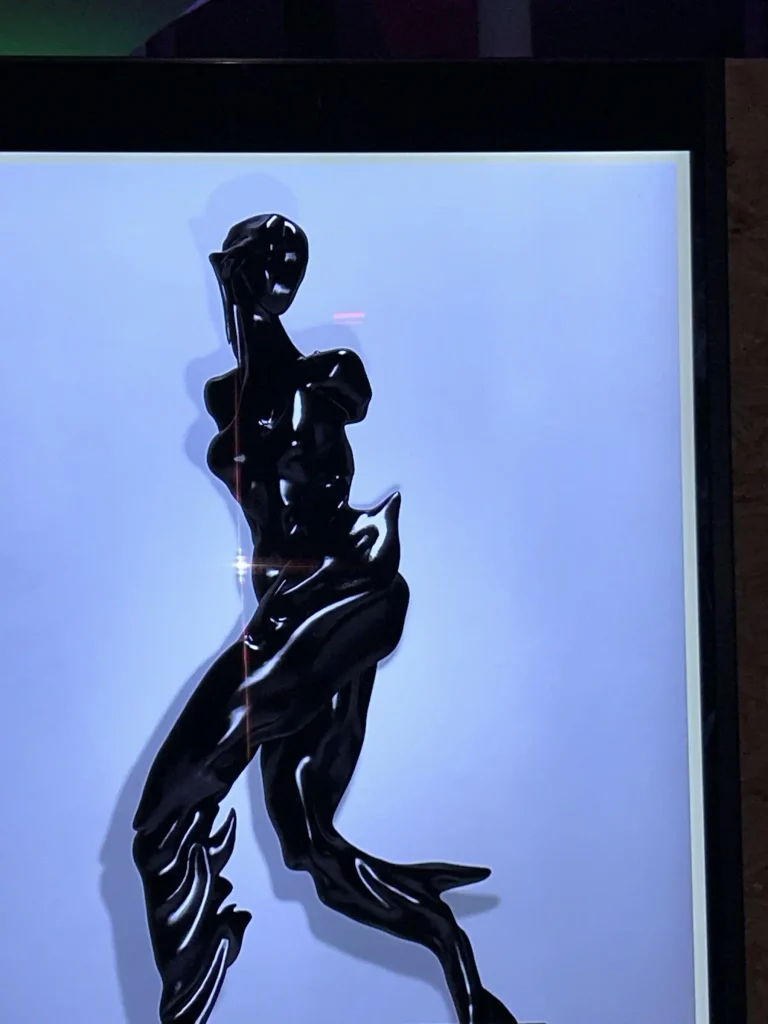
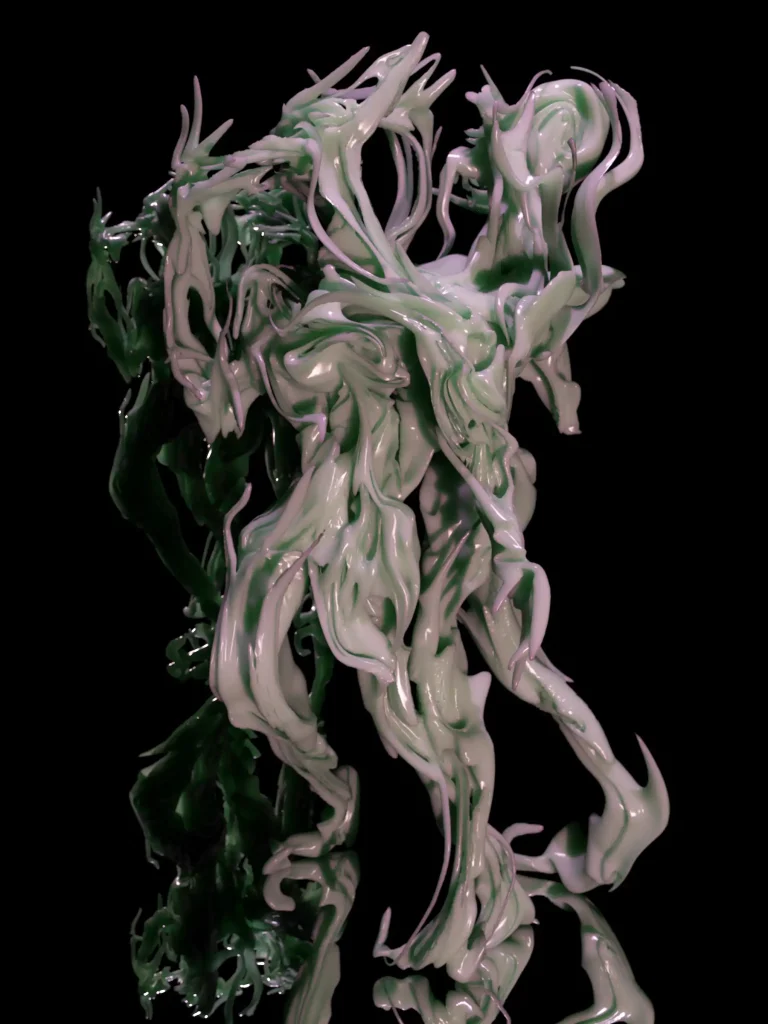
    Flávio Malaguti is a Brazilian artist from Florianópolis, where he currently lives and works. His work explores themes of self-perception and identity, focusing on the LGBTQ+ experience. Specializing in digital sculpture, clay modeling, and photogrammetry, Malaguti draws inspiration from surrealism, futurism, spatialism, and anthropomorphism. The natural textures and folklore of his hometown island—its tales, myths, and characters—also shape his creations. Through surreal, biomorphic forms that merge the familiar with the alien, Flávio challenges perceptions of reality and invites reflection on the boundaries between the real and the imagined.

    GlogauAIR Project

    During my residency at GlogauAIR, I will explore armor as both a physical and symbolic form through photogrammetry and 3D sculpting. Using my body in various poses as the foundation for digital sculptures, I aim to reimagine armor and surface as reflections of identity, strength, and vulnerability. By combining natural textures with surreal forms, I will examine the tension between concealment, revelation, and the construction of self.

    CV Summary

    Education

    • Politecnico di Milano – Interior Design, Milan, Italy (2010-2012)
    • UNISUL – Architecture and Urbanism, Florianópolis, Brazil (2007-2010)

    Group Exhibitions

    • PUNKISM ◦ Paris, 2022
    • DISRUPT ◦ Rotterdam, 2022
    • TEMPORAL VISION ◦ NYC, 2022
    • METAPRIDELAND ◦ NYC, 2022
    • SCOPE ART FAIR ◦ Miami, 2023
    • NFT BRASIL ◦ São Paulo, 2023
    • INTERWINDED ◦ Lisbon, 2023
    • LIMINALICA ◦ Barcelona, 2023
    • NFT RIO ◦ Rio de Janeiro, 2023
    • CREATORS HOUSE ◦ NYC, 2024
    • NFT BRASIL ◦ São Paulo, 2024

    Gallery

  • Hani Kim

    Hani Kim

    Hani Kim is GlogauAIR resident
    from January, 2025 to March, 2025

    Hani Kim is a South Korean artist based in Berlin whose work explores introspection and psychological complexity. Drawing from her experiences living in multiple cities, she captures the interplay between her subconscious and external reality. Her art balances instinct and control, reflecting the tension between chaos and order, the conscious and the subconscious.


    Meet the Artist

    Statement

    Hani Kim is an artist from South Korea, currently living and working in Berlin. Over the past 12 years, she has spent about a third of her life in Seoul, Bern, Milan, and London. Her experiences living in diverse cities have enriched her perspective but also introduced a sense of mental confusion, influenced by the blend of Eastern and Western cultural elements. This inner dialogue is reflected in her art through themes of introspection and psychological complexity. Her work captures the interplay between her inner thoughts and feelings, shaped by both the chaos of her subconscious and the external world.

    The dynamic interplay between instinct and control lies at the heart of her work, where natural forms evolve and transform into deliberate compositions. By allowing spontaneity to guide the initial stages of her work, she taps into the raw, unfiltered energy of the moment. However, as the work evolves, she introduces layers of control, refining and shaping the forms to reflect deeper meanings. This balance between the instinctive and the deliberate is central to her practice, reflecting the complexities of life itself, where we are often caught between chaos and order, the conscious and the subconscious.

    GlogauAIR Project

    At times, I have found myself struggling against the darker side of my being, which tried to control me and pull me into the depths of shadow. Living far from family and navigating life in unfamiliar spaces, I often felt overwhelmed by emotions that I hadn’t fully recognized or addressed. These experiences, marked by alienation, cultural misunderstanding, and homesickness, have sometimes eroded my confidence and left me frustrated. Yet, I choose not to escape these feelings but to confront them, exploring their depths and transforming them into art.

    This new project, titled “Innerscape” arises from the suffocating intensity of these inner storms. I seek to transmute chaotic emotions into concrete forms on canvas to share my struggles and vulnerabilities in the hope of creating connections with viewers. Working primarily with oil and acrylic, I am also open to experimenting with new materials and textures to better capture the nuances of these emotions. Through research on colors and symbols, I hope to combine visual forms that evoke deeper emotional resonance with the audience.

    Additionally, I would like to introduce music and light—mediums I have yet to explore—into the project as auxiliary elements, creating an immersive atmosphere. These tools are intended to serve as subtle yet important devices, helping to better convey the emotional landscapes I wish to express and inviting viewers to imagine and connect with those feelings.

    Ultimately, my goal is to spark a dialogue about our hidden struggles, turning personal battles into shared reflections that promote empathy and understanding.

    CV Summary

    • 2022-2023 Drawing & painting courses, Kunst Schule Berlin, Germany
    • 2009-2014 BA Communication Art, University of Sejong, Seoul, South Korea

    Gallery

  • Katherine Howard Rogers

    Katherine Howard Rogers

    Katherine Howard Rogers is GlogauAIR resident from January, 2025 to March, 2025

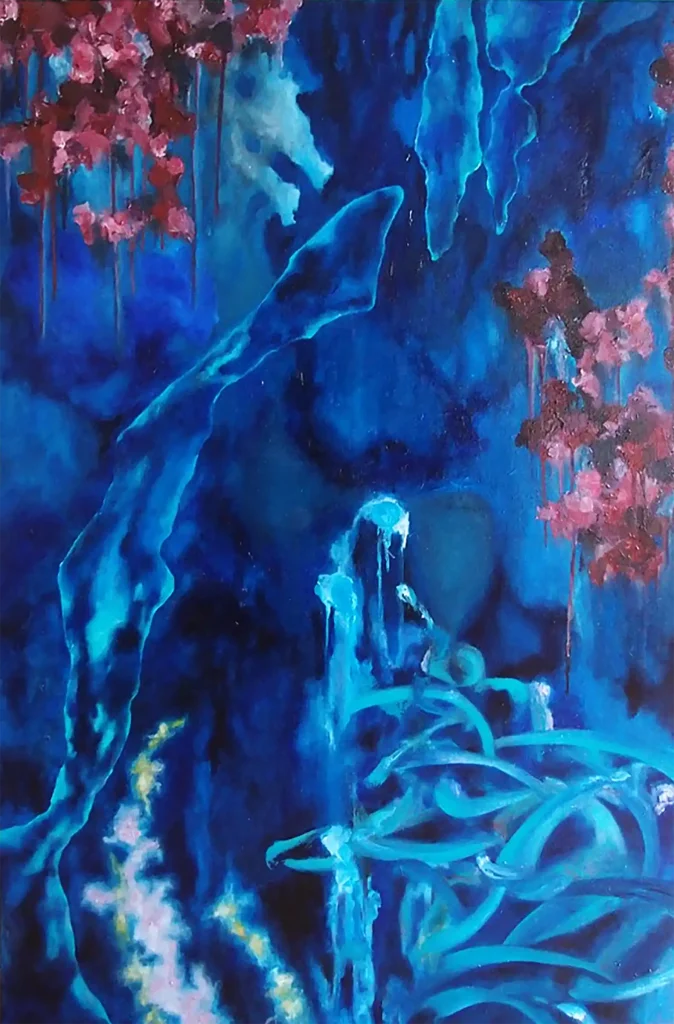
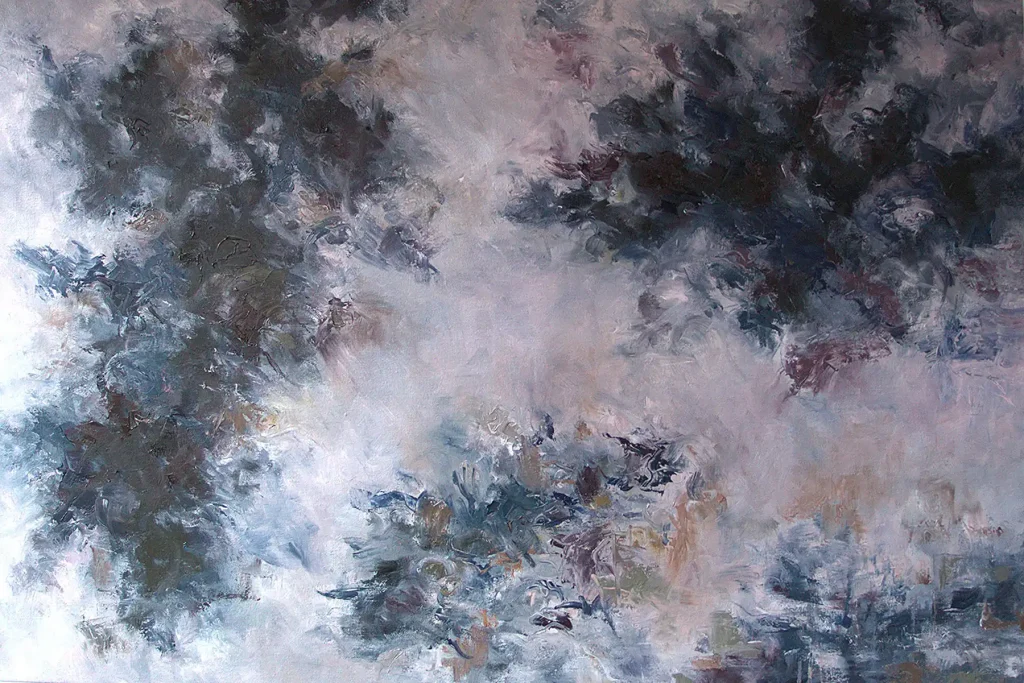
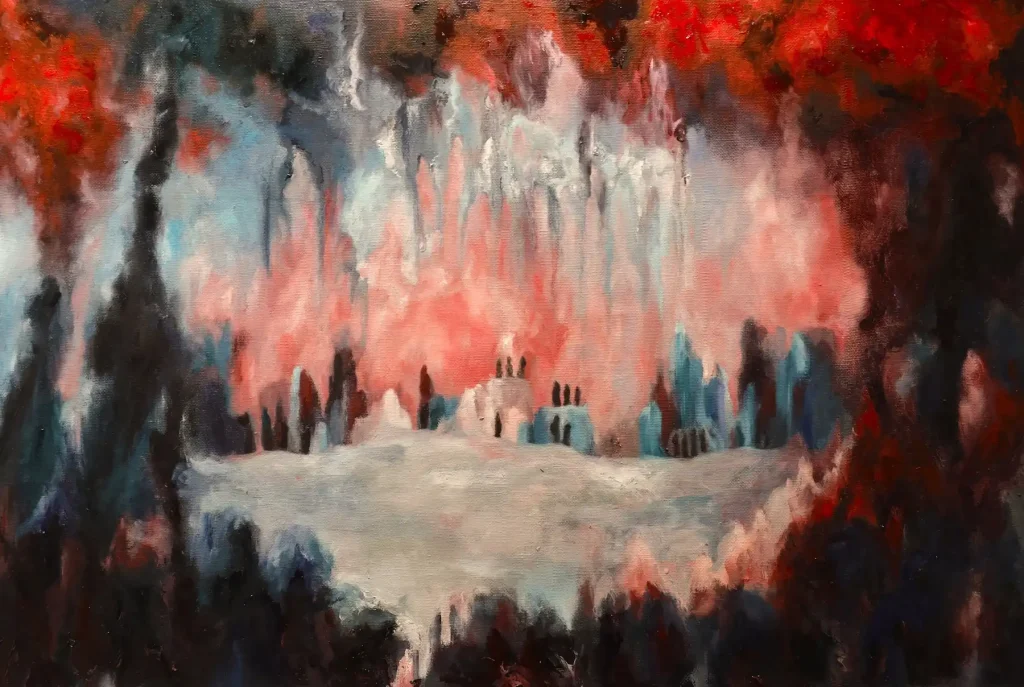
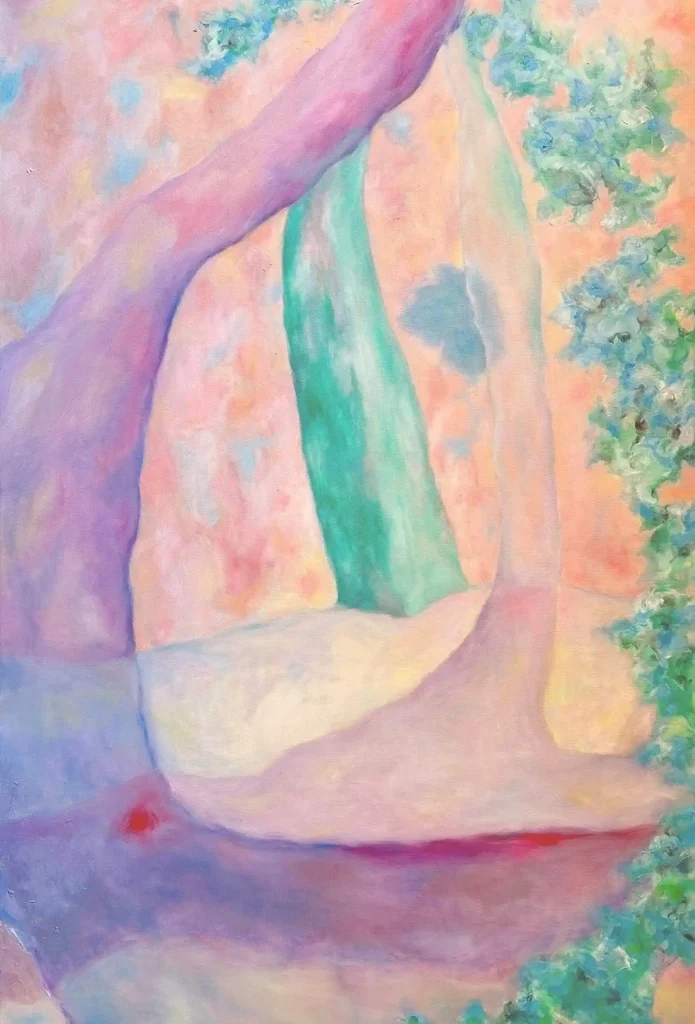
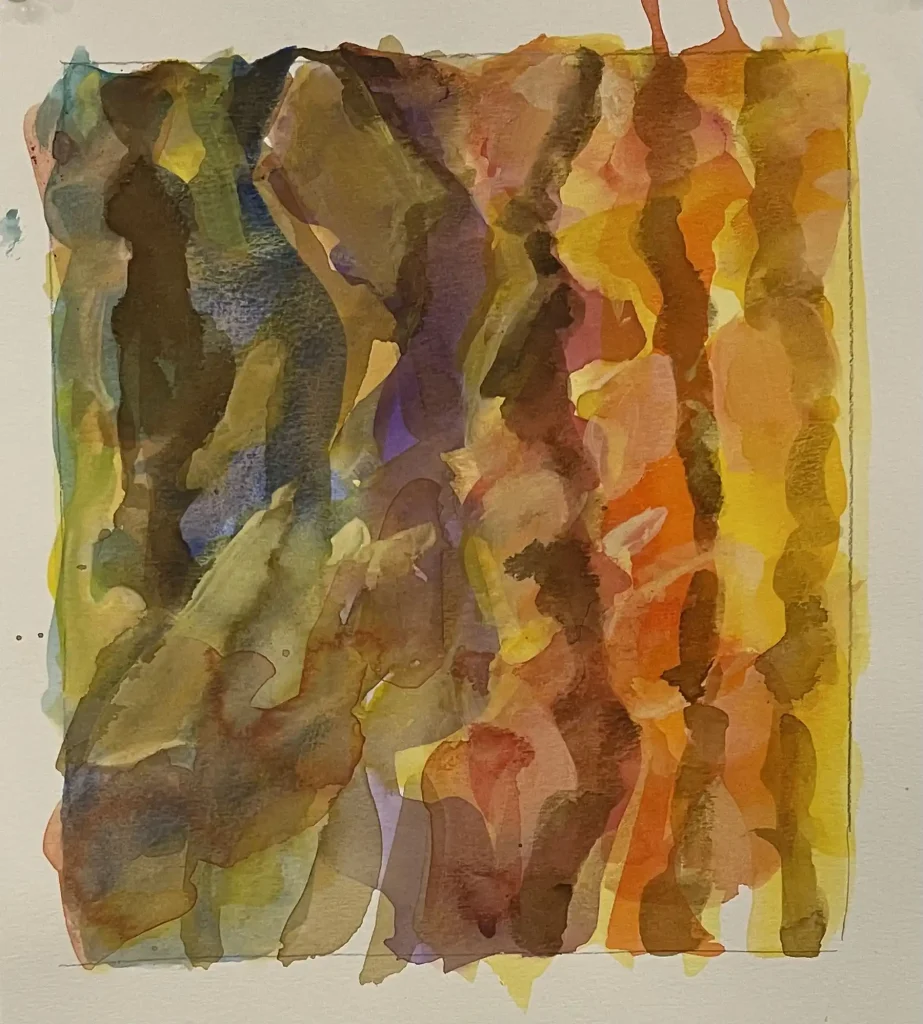
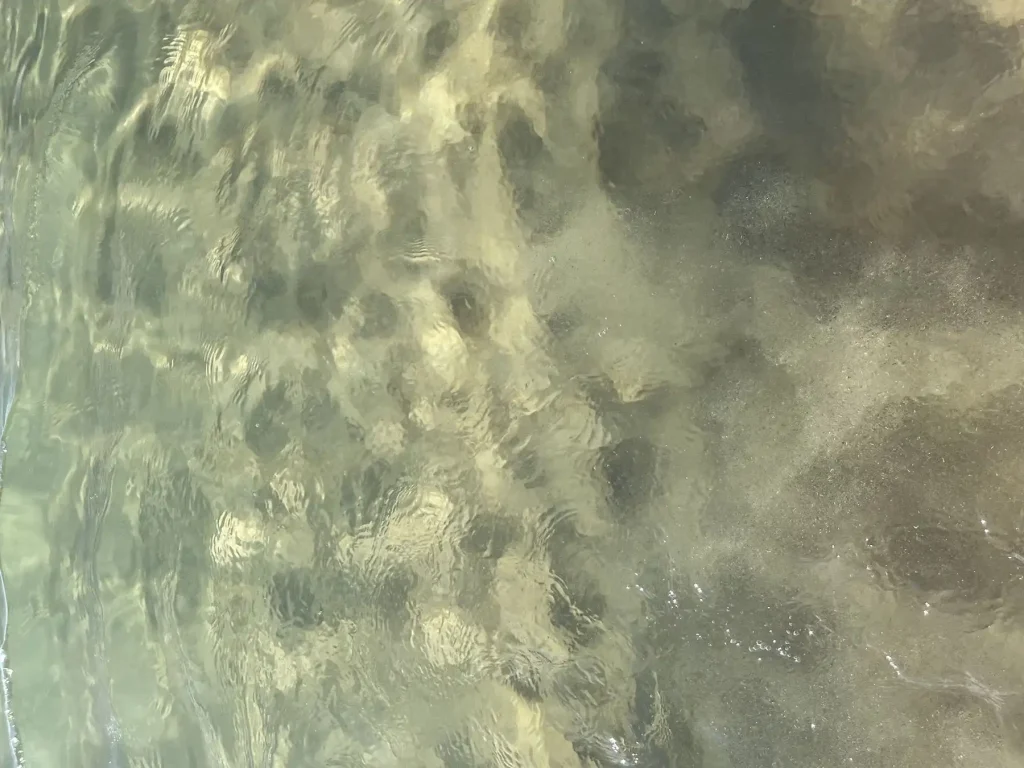
    Katherine’s work reflects their belief in water’s constant motion and its connection to memory. She begins by applying fluid paint layers with their body and brushes to capture the sensation of water. Then, using tools like a power sander or palette knife, they remove layers to uncover hidden structures of gesture and color. This process of building and erasing creates an oscillating relationship between memory, belief, and image-making.


    Meet the Artist

    Statement

    My relationship with water is based on belief, as water is in constant motion, water lives in my memory. My work is about the experience of how memory and willed belief, find relationship through building an image. After taking photographs the painting begins on the floor. First, thinned, fluid layers, are applied with my full body and brushes, recall embodied sensations of the water. Second, using a power sander, scrapper or palette knife the paint is worn away, revealing a hidden structure-history of gesture and colour. The two phases oscillate.

    GlogauAIR Project

    I have been relying on painting to make real my belief in my experiences of water. I want to explore the role photography plays in this process and to try video as well as other mixed media. To see if there are ways that the process might shift so that the end result is not always a painting. Additionally, to explore if digital media might enable a shared experience of belief. Making the work more accessible. To see if a memory once shared is altered. And does this alter the experience of belief? Can digital media be as real as painting, for me?

    CV Summary

    EDUCATION

    • 1985 Pratt Institute Brooklyn New York: B.F.A
    • 1987 Pratt Institute, Brooklyn, New York: Teacher Certification program.
    • 1994 Bard College, Annandale-on-Hudson, New York: M.F.A.
    • 1999-2002 University of Illinois at Chicago: 18 credits in Master of Art History program.
    • 2014 Waldorf Teacher Certification, Steiner College, Sacramento, CA.

    Residencies

    • Ox Bow Longform, Saugatuck, IL. 2024
    • Vermont Studio Center, Johnson, VT 2002

    Exhibits

    • Bridgeport Art Center, Chicago, IL. 2020
    • C.G. Jung Institute, Evanston, IL. 2006

    TEACHING EXPERIENCE

    • Chicago Waldorf School, Chicago, IL. 2012-present
      • High School Arts teacher and student advisor
      • Course Listing: Art History, Studio Art Painting and Drawing
    • Oakton Community College, Des Plaines, Illinois
      • Assistant Professor Studio Arts and Art History, 2002-2004
      • Course Listing: Studio Art Painting and Drawing
      • Independent Study (11 students)
      • Department Representative for Animation and Cultural Student Clubs
    • Adjunct Faculty, 1999-2002
      • Course listing: 3-D design, Art History, Studio Art Painting and Drawing
    • Packer Collegiate Institute, Brooklyn, New York
      • Head of Lower School Arts 1986 – 1996
      • Interviewed and mentored new faculty
      • Created inter-disciplinary arts curriculum with class teachers, grades K-4
      • Produced and hung stage settings for Winter Festival
      • Designed May Festival costumes, grades K-4 (over 350 costumes)
      • Administered purchasing of all art supplies for K-4 visual arts program
      • Presided over three major student art exhibits per year
      • Created inter-disciplinary arts curriculum with Museum of Modern Art
      • Taught studio art to grades K-8
    • Pratt Institute, Brooklyn, New York 1990-1995
      • Teacher training supervisor
      • Trained student teachers and evaluated performance
      • Presented seminars on classroom management
    • Bard College, Annandale-on-Hudson, New York 1992-1994 – Adjunct Professor
    • P.S. 1 Alternative Museum, Queens, New York, 1986-1987 – Art Teacher and Multicultural Art Program Administrator grades 5-8

    GRANTS & AWARDS

    • Faculty Endowment Grant, Packer Collegiate Institute, Brooklyn, New York: 1
    • Elaine DeKooning Grant, Bard College 1993-1994

    Gallery