Archives: Artists

  • Suyi Xu

    Suyi Xu

    Suyi Xu is GlogauAIR resident from January, 2023 to March, 2023 and from July, 2025 to September, 2025

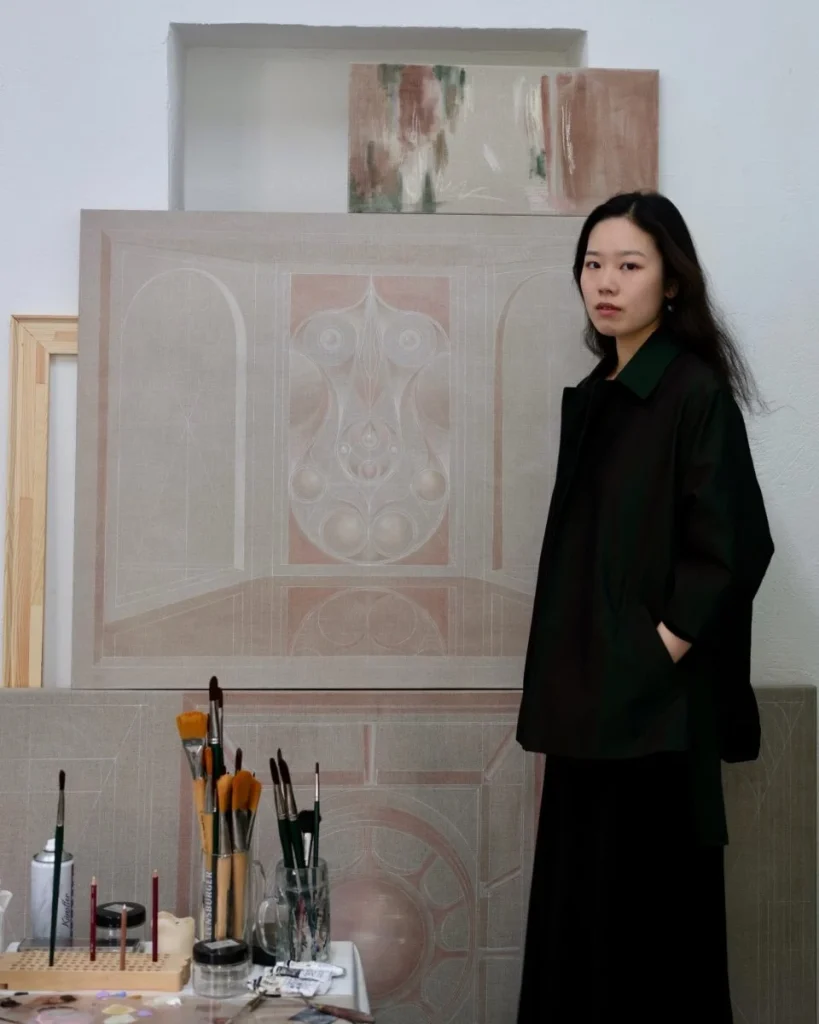
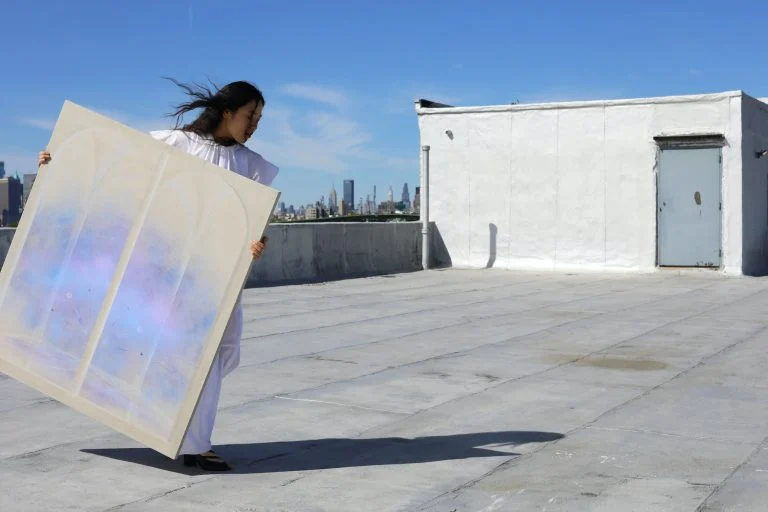
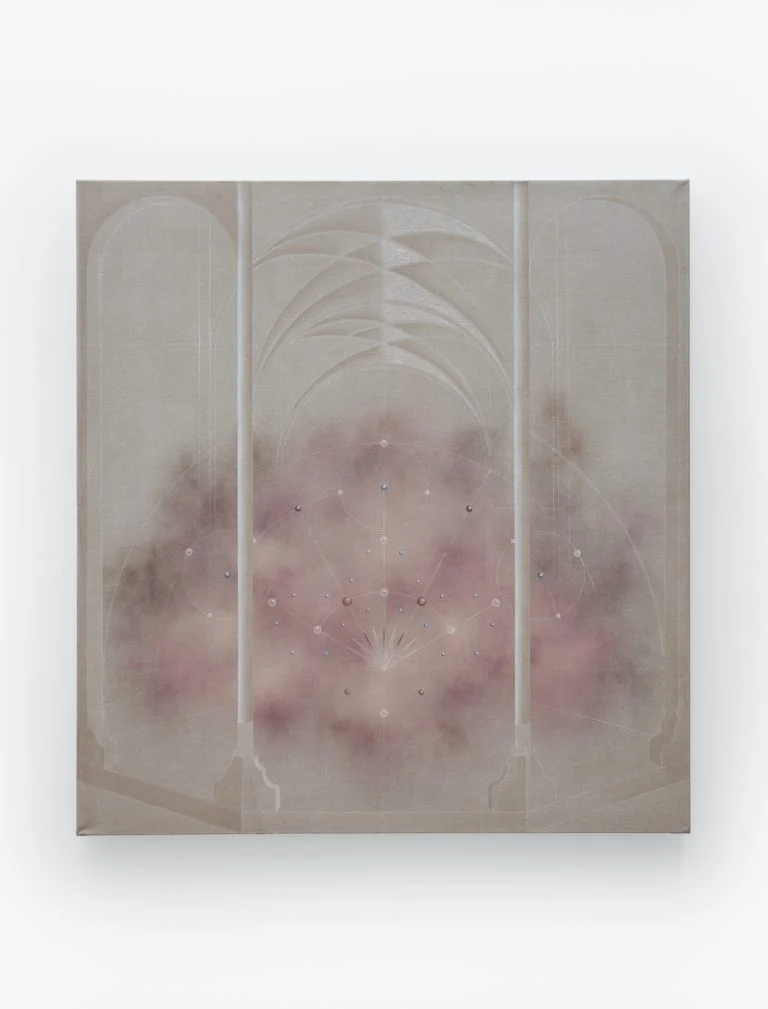
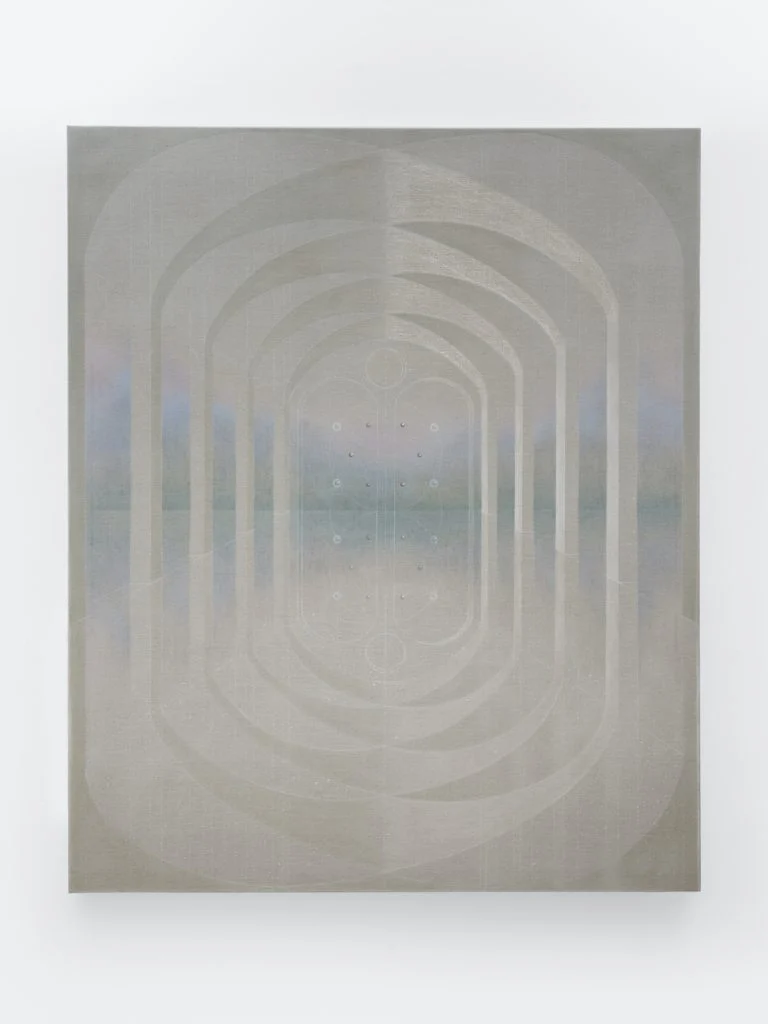
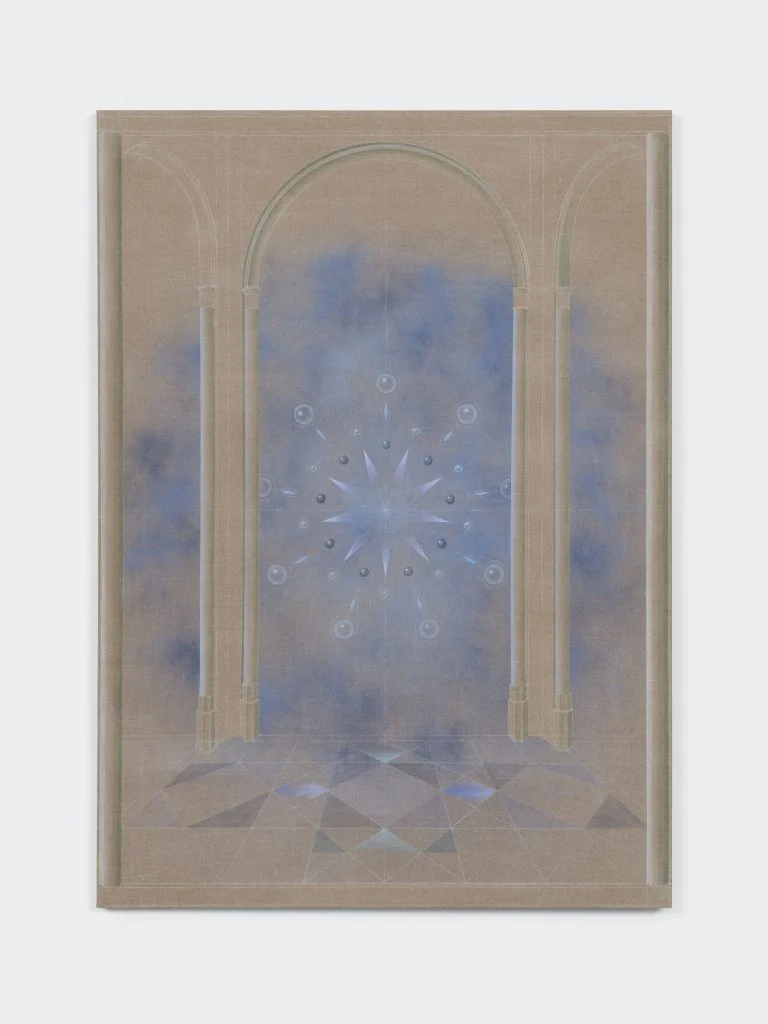
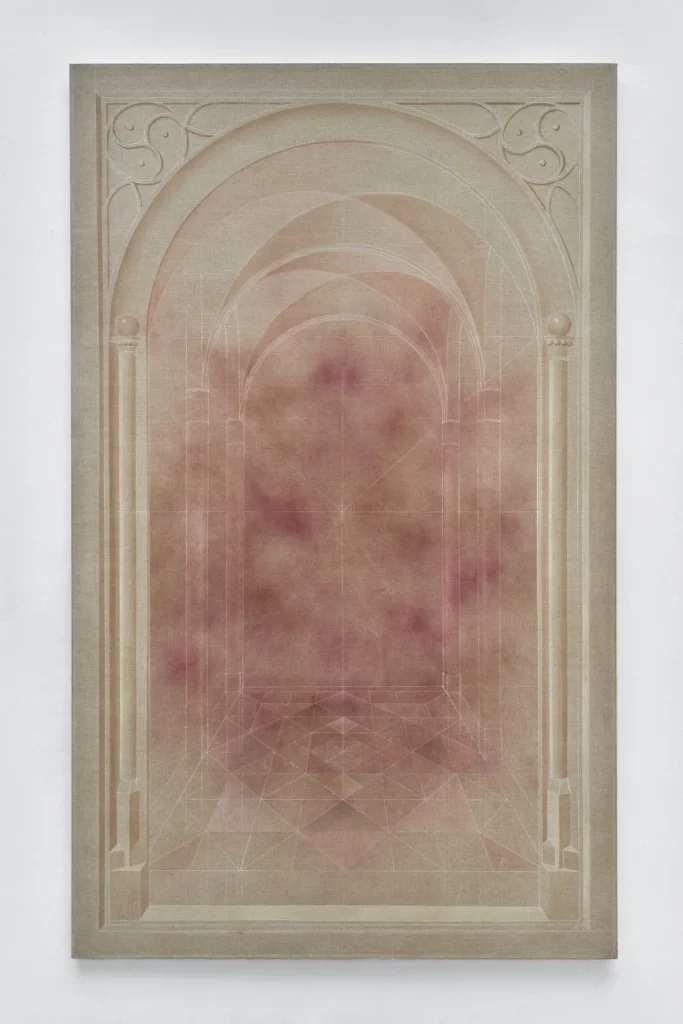
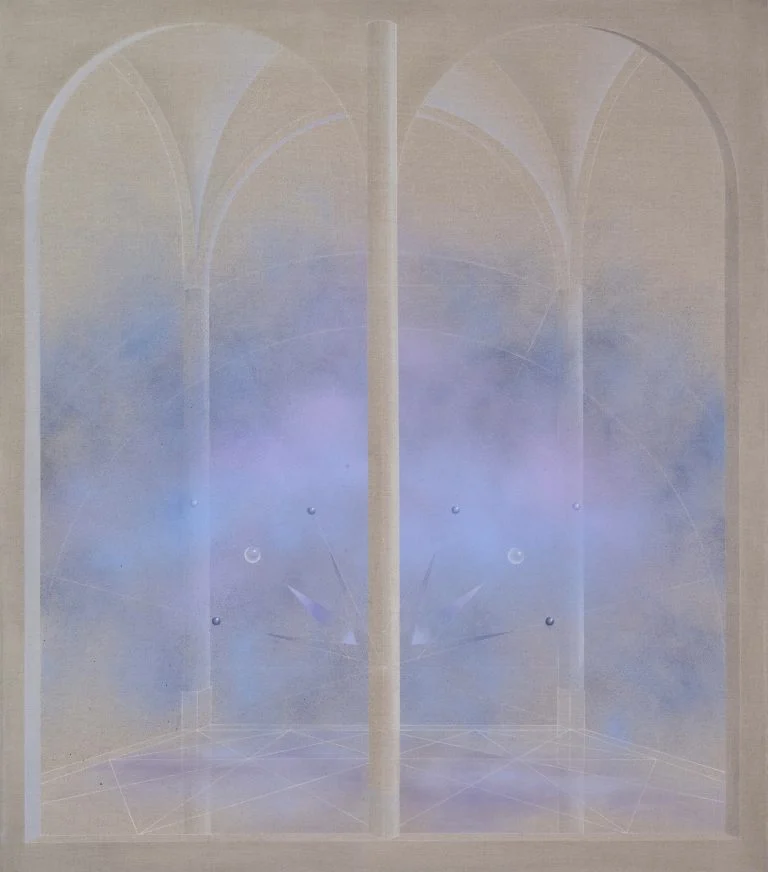
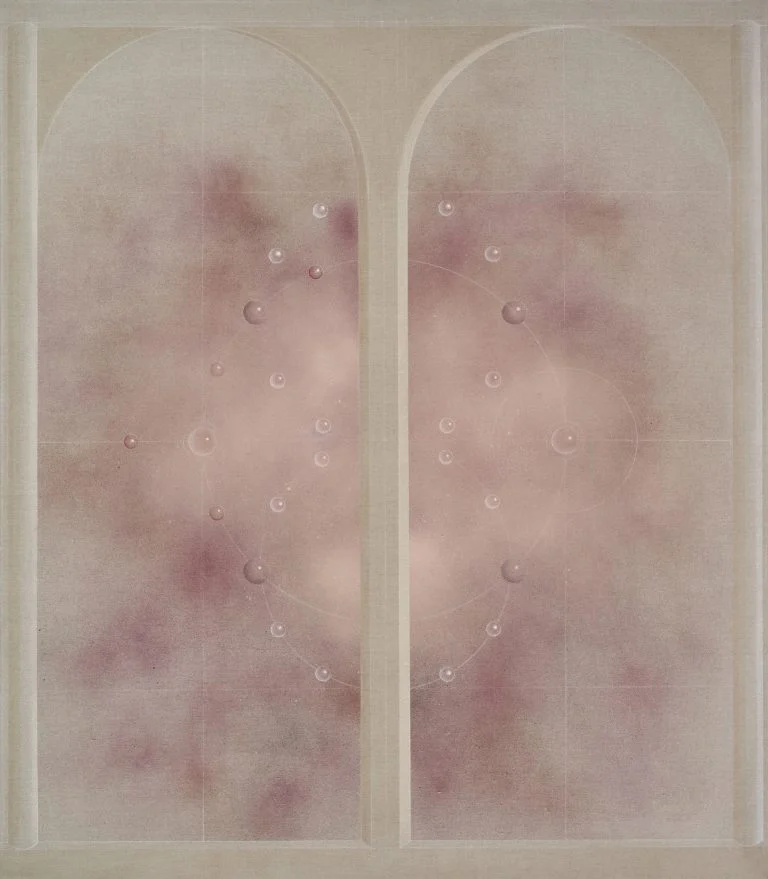
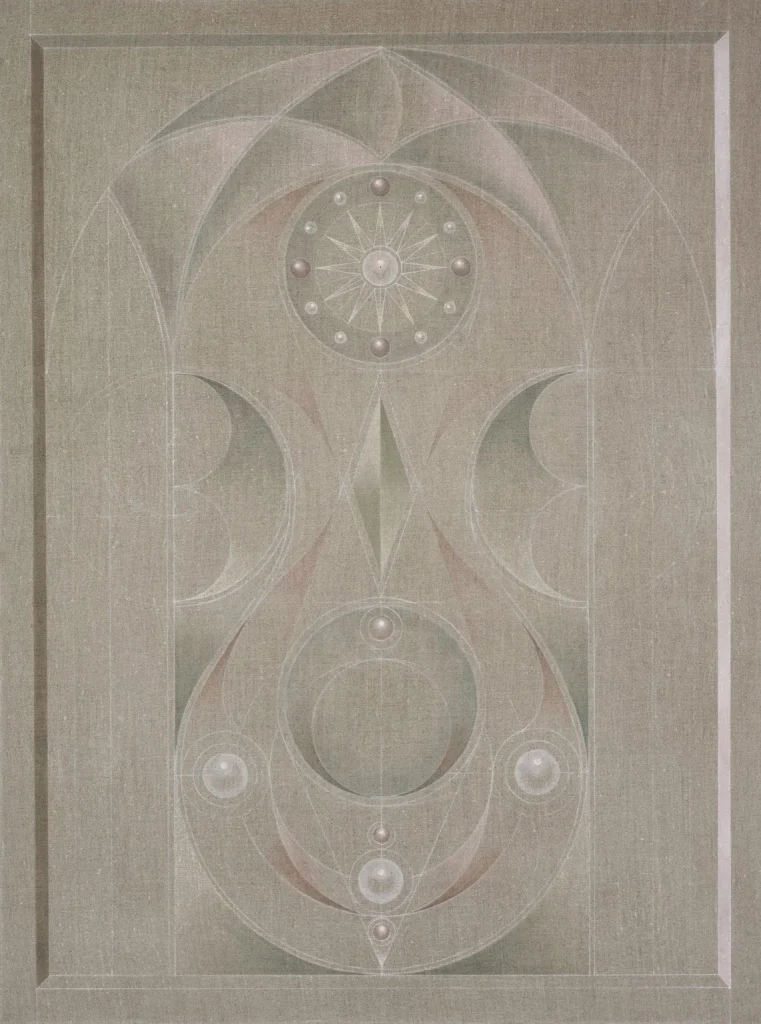
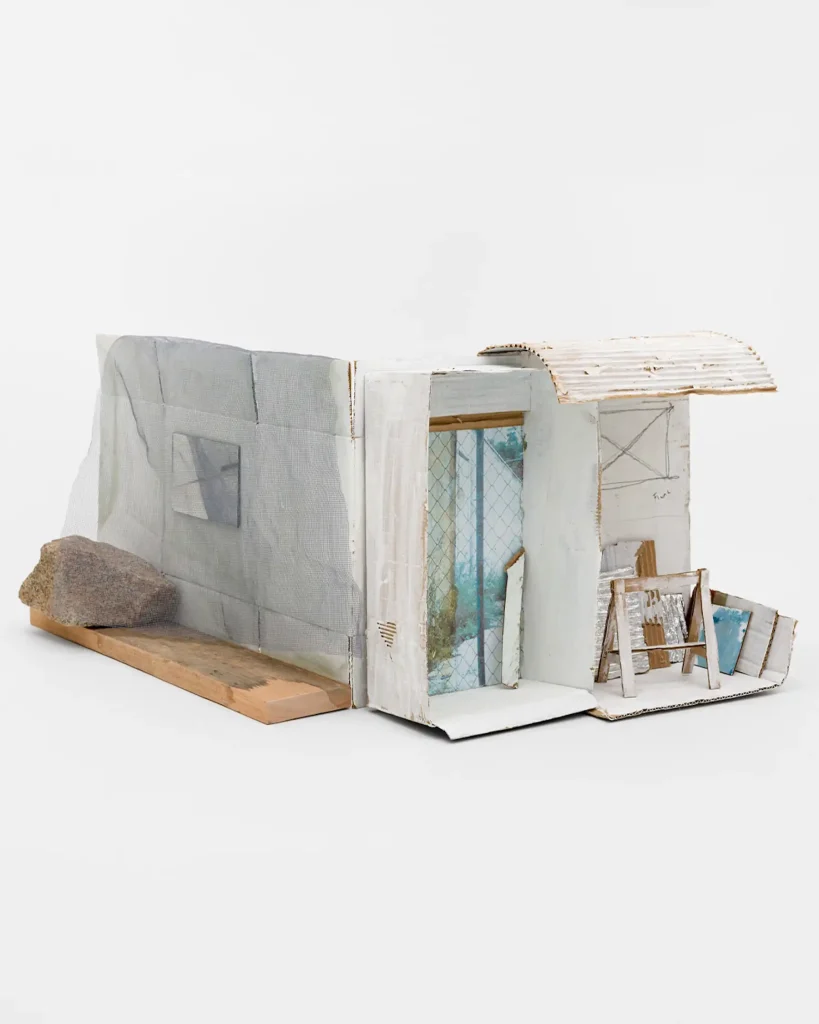
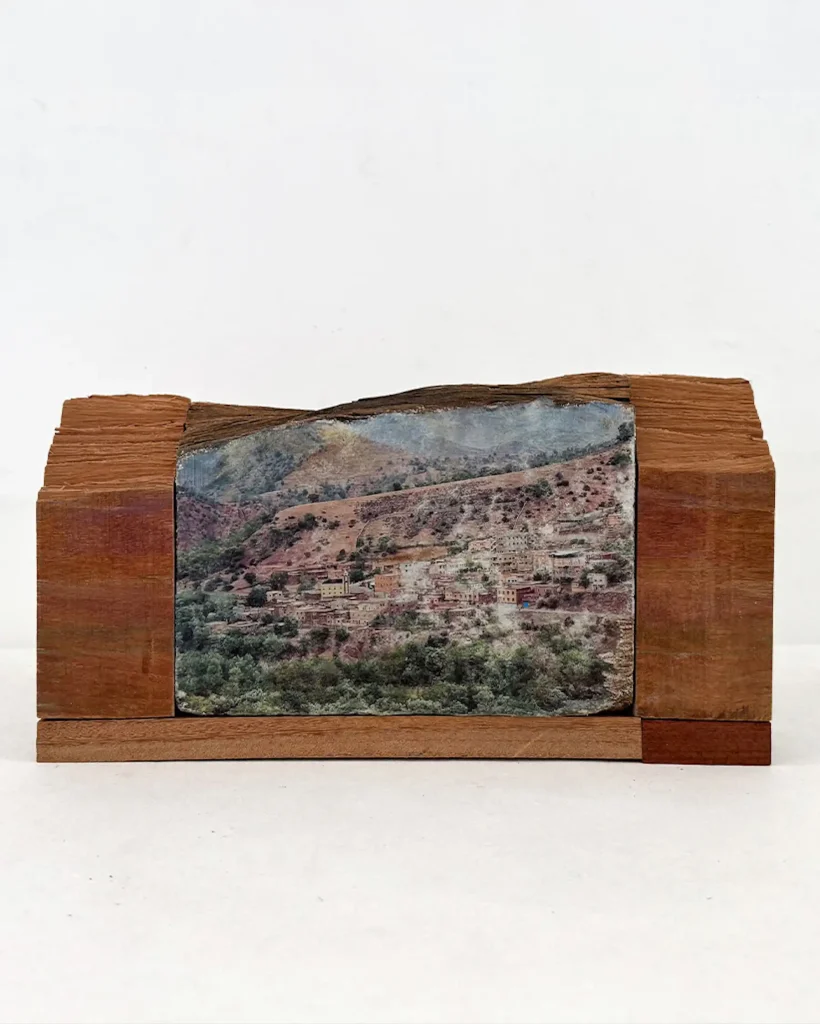
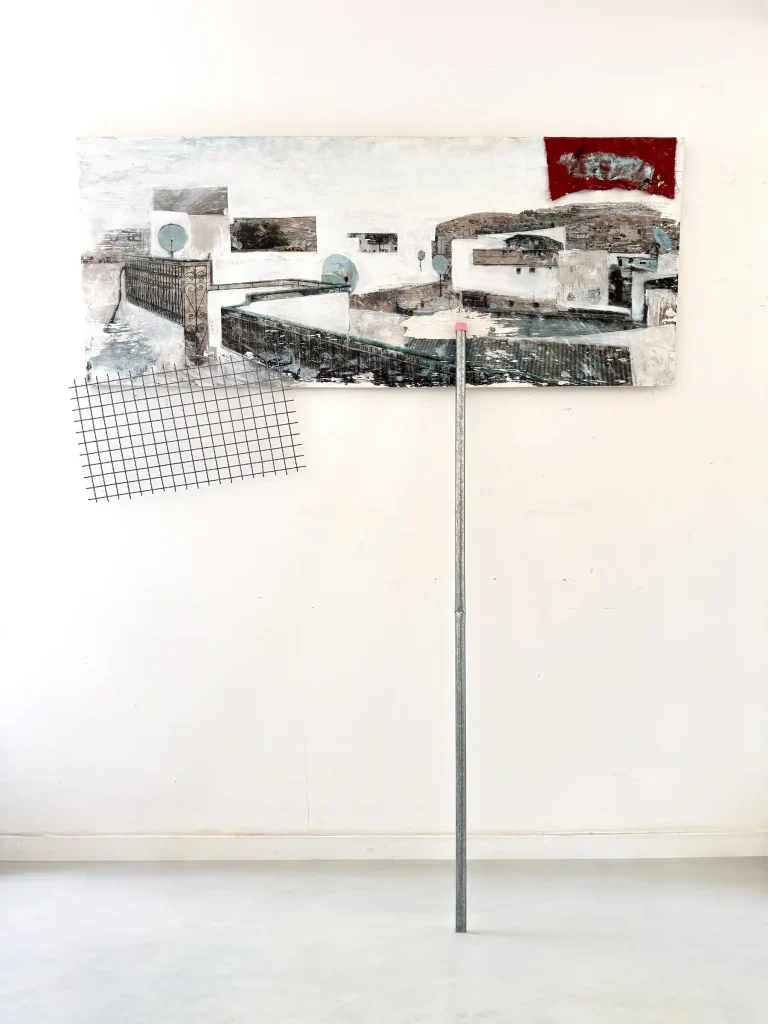
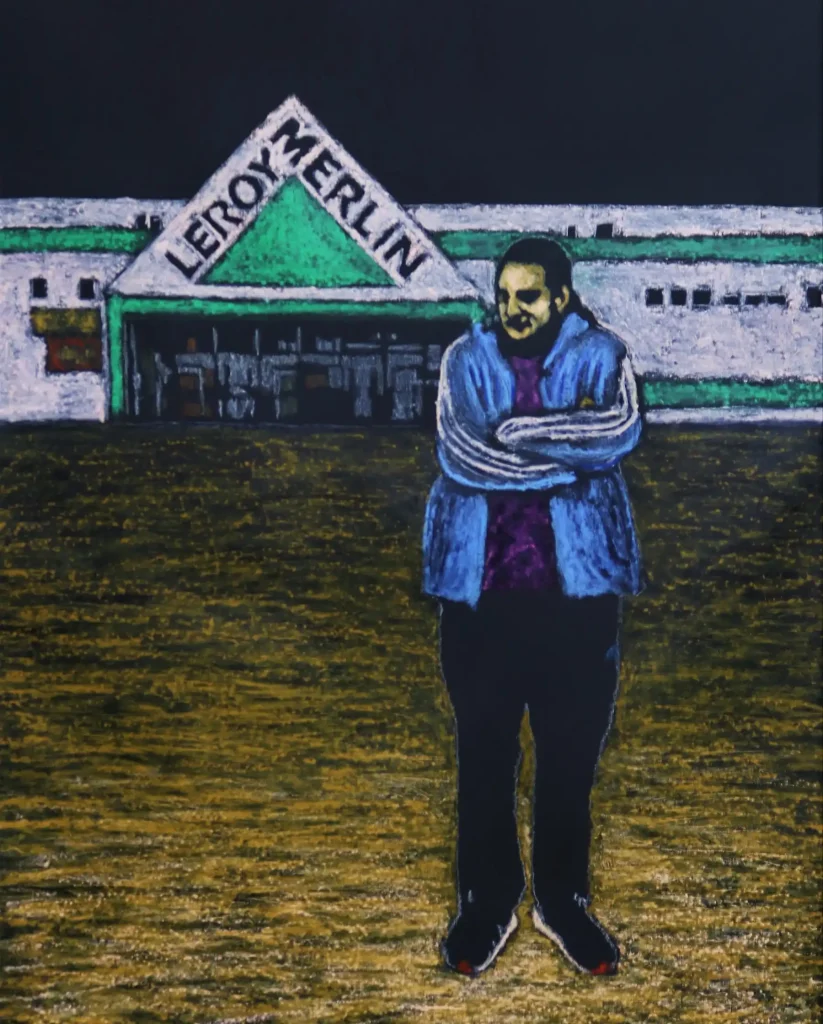
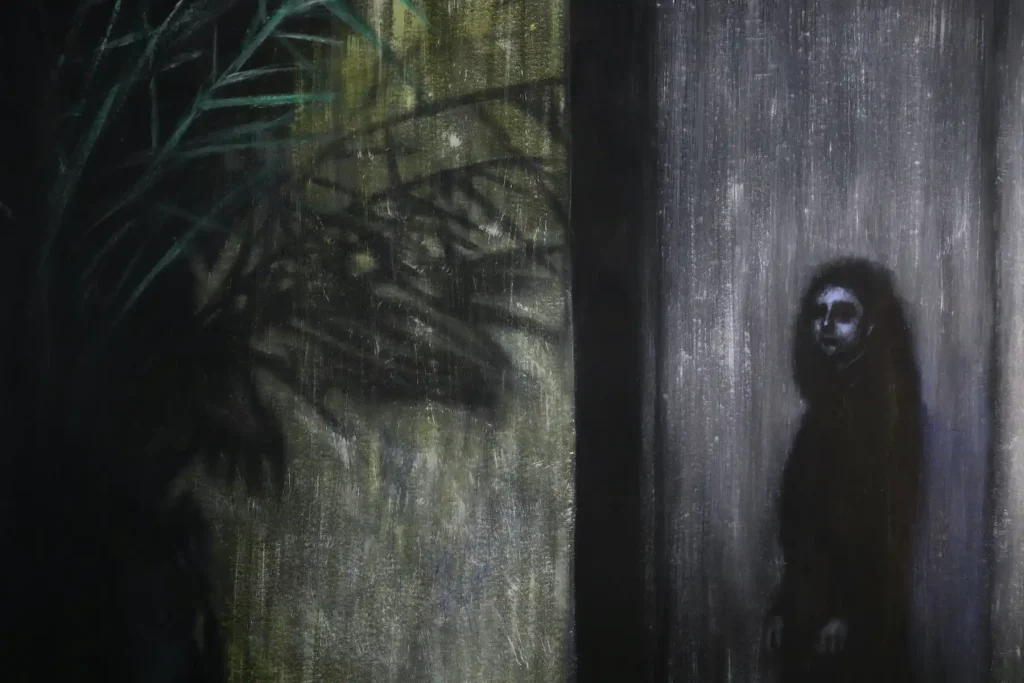
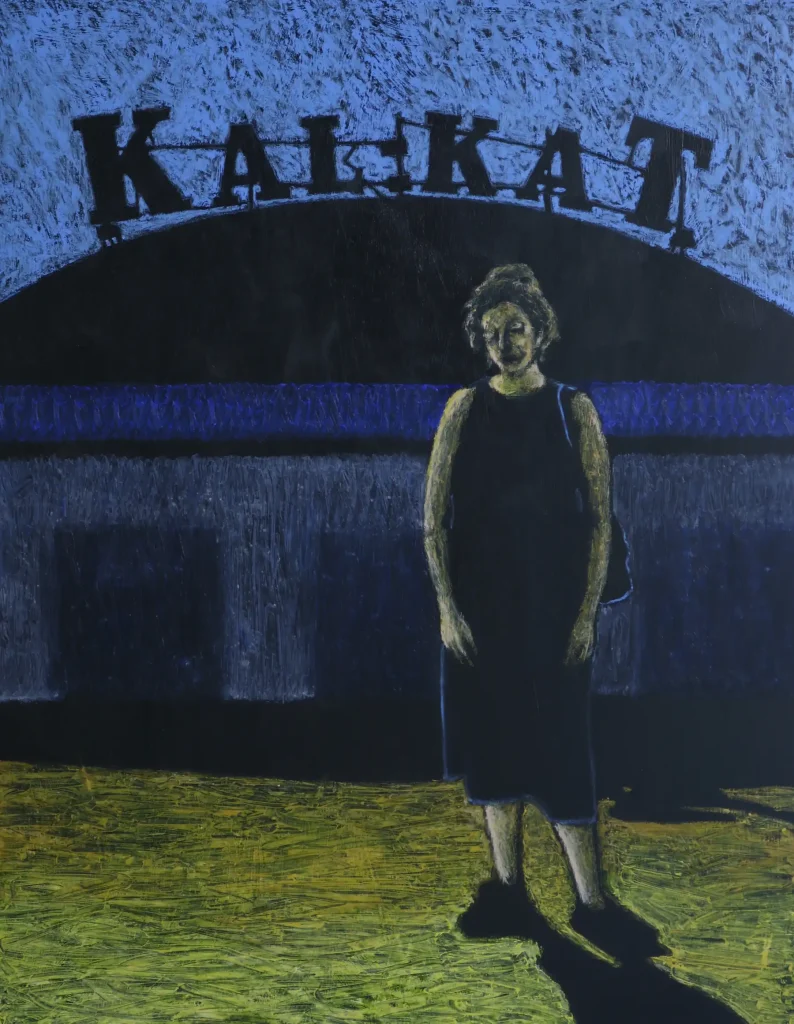
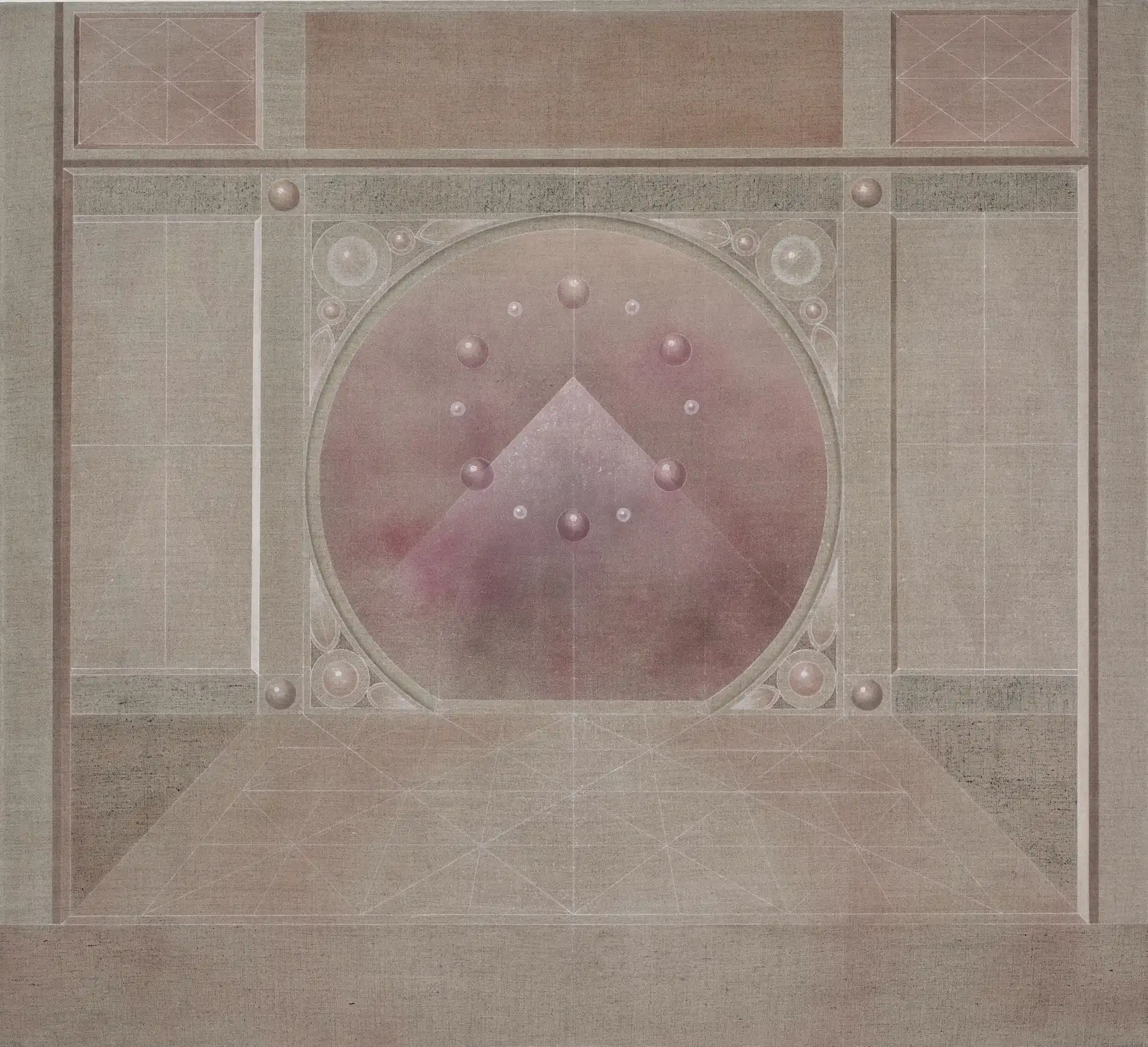
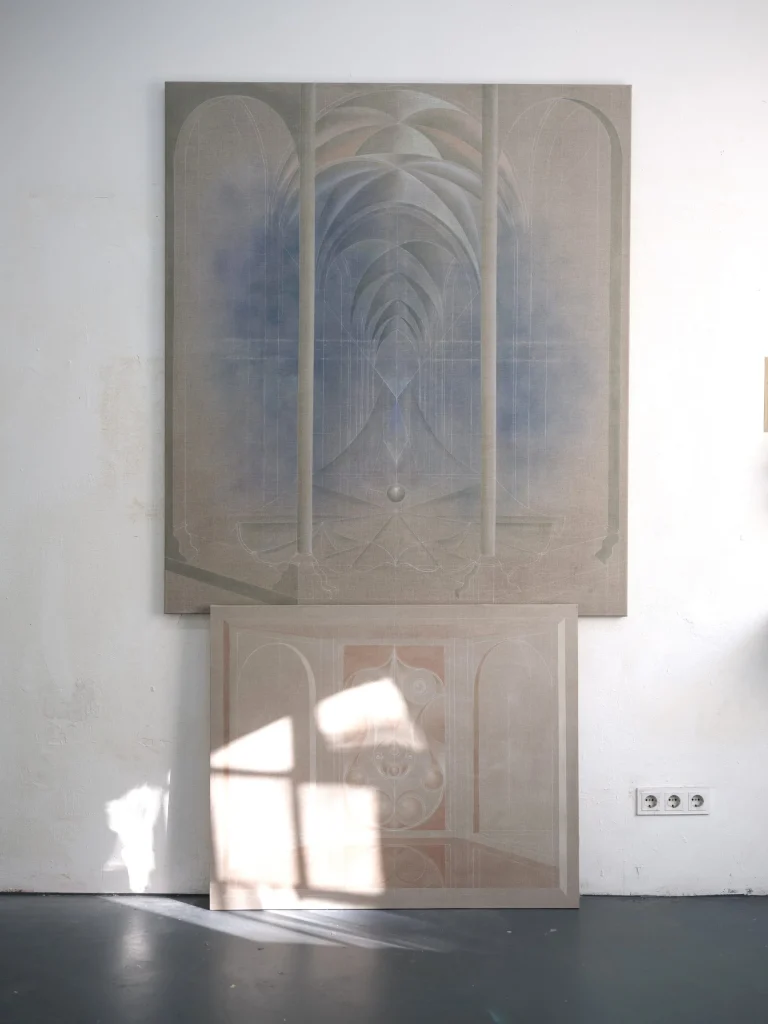
    In Suyi Xu’s paintings, space and light converge in contemplation. By blending historical references with counterfactual narratives, she questions the idealism and authorship of art history.

    Introducing this weekend’s online resident Suyi Xu, New York-based painter. Her practice contemplates space, interiors and architecture, morphing them into a study about light and color fields. In her paintings, historical references are interjected with counterfactual narratives, addressing the idealism and authorship of these, especially how western institutional spaces act as a site of worship and repository of power and knowledge.


    Meet the Artist

    Interview 1

    In Suyi’s practice, painting is used as a way of embodied thinking, every painting has its own journey. Architecture provides a formalist composition where colors meet and interact: each block, each space, is a color field to play with light. By manipulating perspective, framing, and chromatic choices, she aims to merge subject matter with a formal consciousness and resolve the tension between two-dimensionality and illusions. The subjects are responses to the spiritual crisis of contemporary existence, and the method a visceral engagement with the painting medium driven by the idea of a sacred intent.

    Interview 2

    Can you start by giving us a background about yourself? How did you start making art? And how would you describe your current artistic practice?

    I came to painting late in college. I was studying art history and my art education was kind of like a mismatch of things. I was trained in the language of historical painting, but the mentor that I had for my painting was kind of a descendant of abstract expressionism. So, I see through every painting, even if they’re figurative, in the eyes of the formalist.

    I think my fascination with light or my major frame of influences is rooted in the Dutch Golden Age, especially the transcendent brushstroke of Rembrandt, as well as the vernacular of mystical painters and the color-filled movement.

    I can see from your artworks that your main inspirations are art history and museums. What can you tell us about sources of inspiration in general?

    I was really fascinated with historical museums because I think of them as sites of culture. Usually they’re designed in a way that’s very similar to cathedrals and churches. I found that parallel very interesting because they’re both like places of worship where people go there to see art and hopefully get some sort of transcendent experience. So I’m very fascinated with how they indoctrinate people through their monumentality, through beauty.

    Indeed, your paintings have this sort of holiness. I would say, they reflect a very spiritual environment. What about spirituality and this other dimension that emerges from your work?

    I think that I’ve always had a very fraught relationship with spirituality. I was raised atheist growing up, and it’s something that never came across my mind until I was in my early adulthood, when I first started living by myself in New York City. It was until then that I started to feel a hunger for some sort of spiritual experience.

    To me, spirituality means consciousness and embracing the unknown. I think that painting has been a really good medium for me to look for it. I still couldn’t really put it in words yet. But I think the closest thing that I could say that I want to reach is a form of grace.

    Your color palette is always very muted and soft. What can you tell me about it?

    There is a concept, that I believe was invented by Duchamp, called infrathing, which pretty much refers to the sensitivity to the most minute shade of differences. I found that really relevant to my use of color. I always tell people when they see my work that I want them to hold their breath when they see it. That’s how you can really see the differences and subtlety. And it’s also how I feel when I’m painting, that I’m holding my breath in order to express how I’m feeling.

    Do you have any anecdote or story from your career that had an impact on your work or on you as an artist?

    I think there was a very distinct shift in my painting from the time I was in grad school. When I first started painting, my work was very figurative.

    I made a lot of paintings that featured mostly a female protagonist on the center stage. To me figuration is meant to pleasure. And I used to be very indulgent with that pleasure, until I had one critique with my teacher. It was about painting that’s figurative, but the background is like this dark, moody interior space. The teacher was pointing at the figures in the foreground and said: “this is your conscious”. And then she pointed at the architectural details in the background and said: “this is your subconscious”. She also said that you convey much more feeling and stories through just the painting of pure space.

    Hearing that was like an epiphany and I started to gradually move away from the figure and pay a lot more attention to the background. And now my work has just evolved into pure space.

    What about your relationship with the art market and the art world? What goals do you want to achieve with your art?

    It’s not really a question that I think consciously. I think I’m a painter because it’s a persistent practice. It’s a nonverbal habit and it’s the only way I can exist in the world.

    Especially when I was in New York, I was almost reacting against what the art market or the contemporary art world has to offer. I think people were drawn to artworks that are much more stimulating, that grab your attention instantly, which is something that I was kind of rebelling against. There were moments where I felt very lost because all the works that are in my surroundings and got attention in the art market are completely different from what I’m making.But I was encouraged by a lot of mentors that told me to keep being persistent in what I do, because if I didn’t let my voice be out in the world, then there would only be the other voices.

    Why did you decide to join GlogauAIR? You were already an online resident. Do you find some differences in being on site? Is Berlin having an influence on you?

    I joined the online residency at a very strange time because I was in a transition phase and I couldn’t really travel or leave the U.S. due to visa problems. I think the online provided a really great framework for my practice, but the onsite is a much more visceral and much more influential experience.

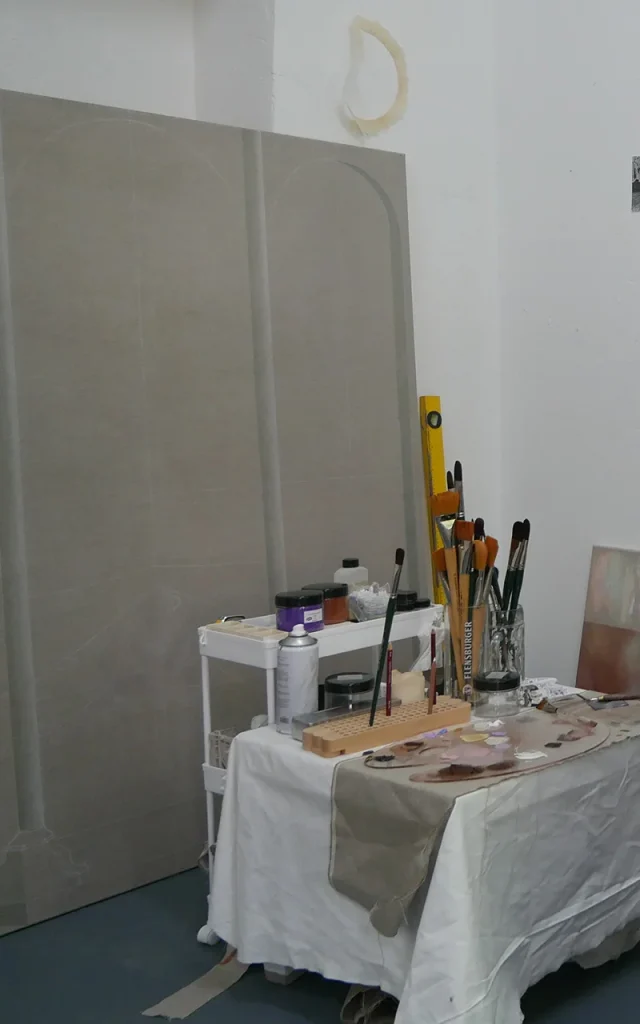
    What I really love about being in a community of artists is how it really challenged my notion of comfort. Because when I am in New York, my practice is very solitary with very little interaction with other people in my daily life. My studio is in a very far off neighborhood. It’s very desolate. So, I found this merging of people and art really interesting.

    I also find there’s a merging between art and life, because I’m living in my studio, which is something that is also new to me. I used to be someone who always placed things in their certain drawers and categories and made things very organized and distinct. But I’m kind of embracing this fluidity of living with my art all the time.

    I think it’s a very exciting experience. Initially, it was a little bit strange to be always with my work and experience it constantly. But now, I’m also embracing this idea that being productive or being creative doesn’t always have to be the moment that I’m holding a paintbrush. It could happen any time during the day, through conversations, interaction with other people, or just taking a walk near the canal. It could also congeal into something interesting that will manifest later.

    For what concerns the city, I think Berlin has a different sense of time compared to the environment I’m used to living in. With this much slower, more intentional pacing of time, I think it also comes with more space. Here I feel more relaxed and more comfortable with myself as I can embrace this kind of openness in both the sense of time and space.

    What are your plans after the residency?

    I’m staying in Berlin for a month. Then I will go back to New York and work on some future group show projects there. And then hopefully I will find a way to come back to Berlin.

    Statement

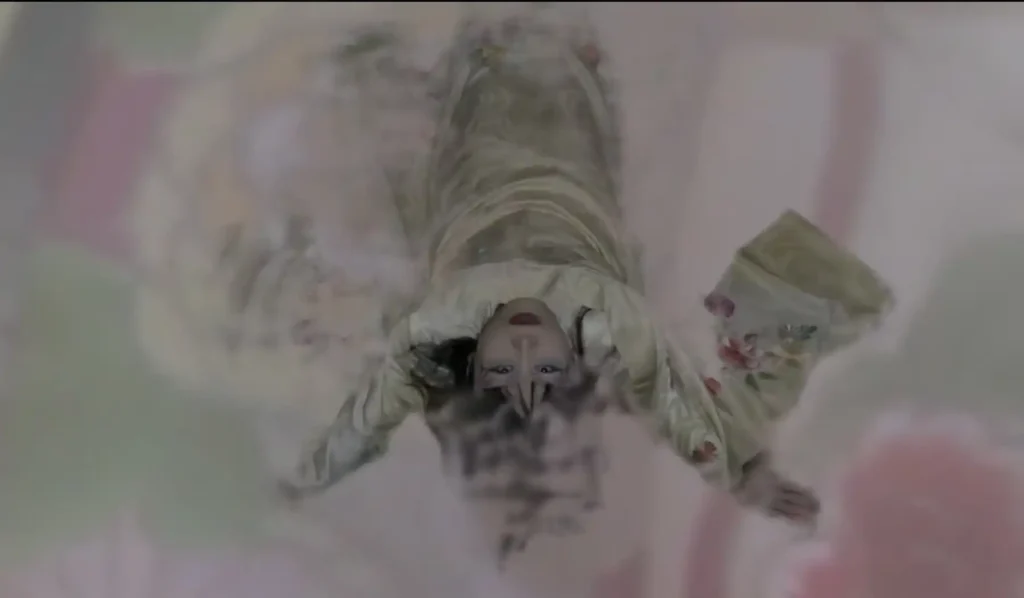
    Suyi Xu’s recent works unfold a series of gridded planes, opening a study on perspective in which shapes and forms emerge from hazy mists like afterimages. She enacts the ritual of architecture, yet discards the integrity of architectural form in the process of making—horizon vanishes, perspective spins, interior folds inward, and spatial relations are obscured by sudden burst of light. The undoing stems from a desire to reach a state prior to reason and the conscious mind. Her fascination with the void in the center of the canvas is informed by Simone Weil’s spiritual philosophy of undoing the self.

    GlogauAIR Project

    During my residency at GlogauAIR, I wish to deepen my research into the interplay of surface, light, and spatial relations. Using my paintings as roadmaps, I wish to bring the ceremony of space beyond the medium of a two-dimensional surface. Focusing on temporal experimentation and chance encounter, I will explore how space can be experienced not as a static form but as a dynamic medium for movement and perception.

    CV Summary

    • Suyi Xu is an artist who currently lives and works in Brooklyn, New York.
    • Xu earned her B.A. in Art History and Visual Arts from Barnard College (New York) and her M.F.A. in the Fine Arts Department of the School of Visual Arts (New York) in 2022.
    • Xu’s work has been exhibited in the U.S., Europe, and Asia, including:
      • solo presentation at the Independent Air Fair with Europa Gallery (New York, 2025)
      • solo exhibition Apparitions (Mamoth, London, 2024)
      • Free Fall (Europa, New York, 2024)
      • All that is Solid Melts into Air (Fou Gallery, New York, 2022)
      • group exhibitions at Kasmin Gallery x Artistic Noise Benefit Auction (New York, 2025)
      • Perrotin (Shanghai, 2025)
      • Huxley Parlour (London, 2024)
      • Rachel Uffner Gallery (New York, 2024)
      • Openforum (Berlin, 2024)
      • Fortnight Institute (New York, 2023)
      • Galerie Hussenot (Paris, 2022)
    • Her works are included in the public collections of Powerlong Museum (Shanghai), Xiao Museum of Contemporary Art (Rizhao, China), and Long Museum (Shanghai).

    Gallery
  • Annette Karin Richards

    Annette Karin Richards

    Annette Karin Richards is GlogauAIR resident from July, 2025 to September, 2025

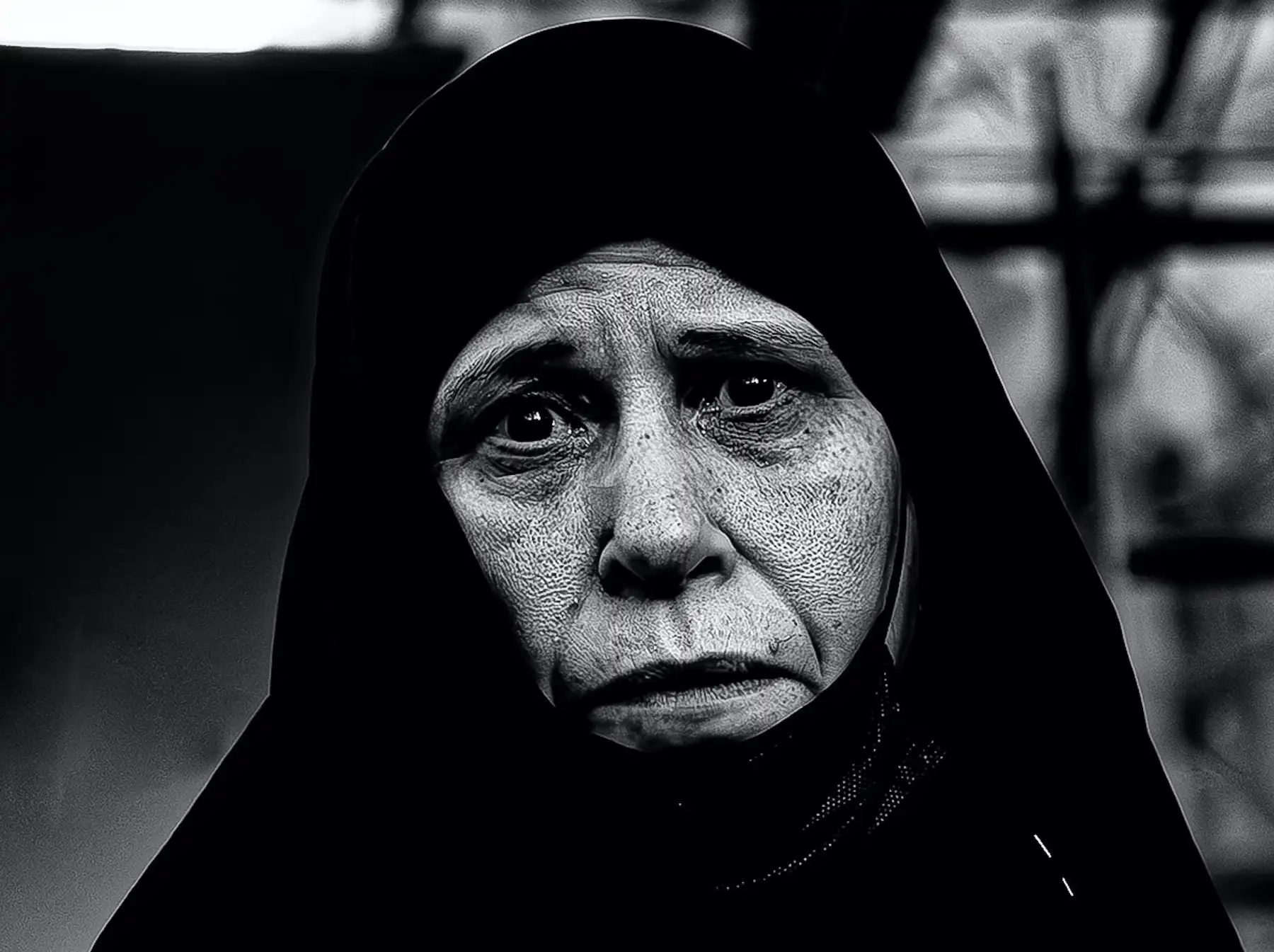
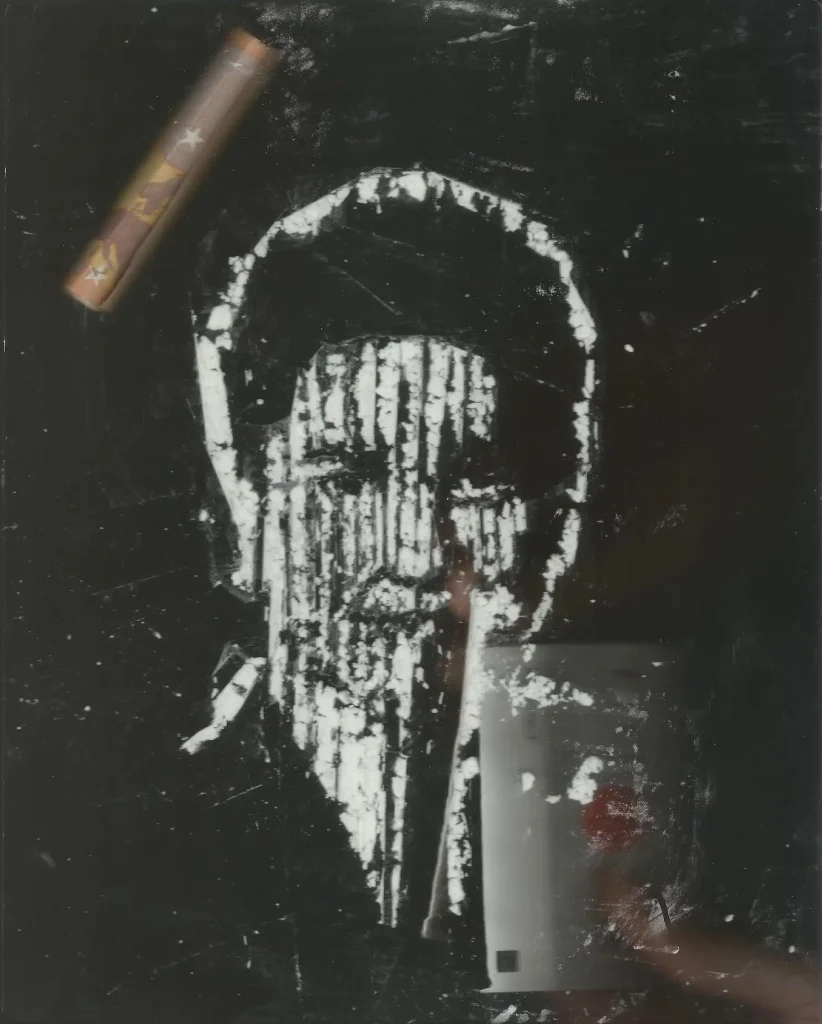
    Annette-Karin Richards is a New Zealand artist and writer working across photography, drawn to environmental portraiture, expressionist abstraction, and landscapes. Her practice probes the deep imprints of colonialism, not as distant histories, but as living relationships etched into people and place. She listens to silences, to what has been hidden or erased, working in the thresholds between memory and forgetting, absence and presence, decay and light. Her images emerge from spaces where grief and resilience co-exist, offering not answers, but openings.


    Meet the Artist

    How do you use photography to explore the ongoing impact of colonialism in your work?

    Photography, for me, is not only about making images — it is about listening to what lingers in the fractures of history. Colonialism severed connections to land, culture, and belonging, and those echoes are still with us.

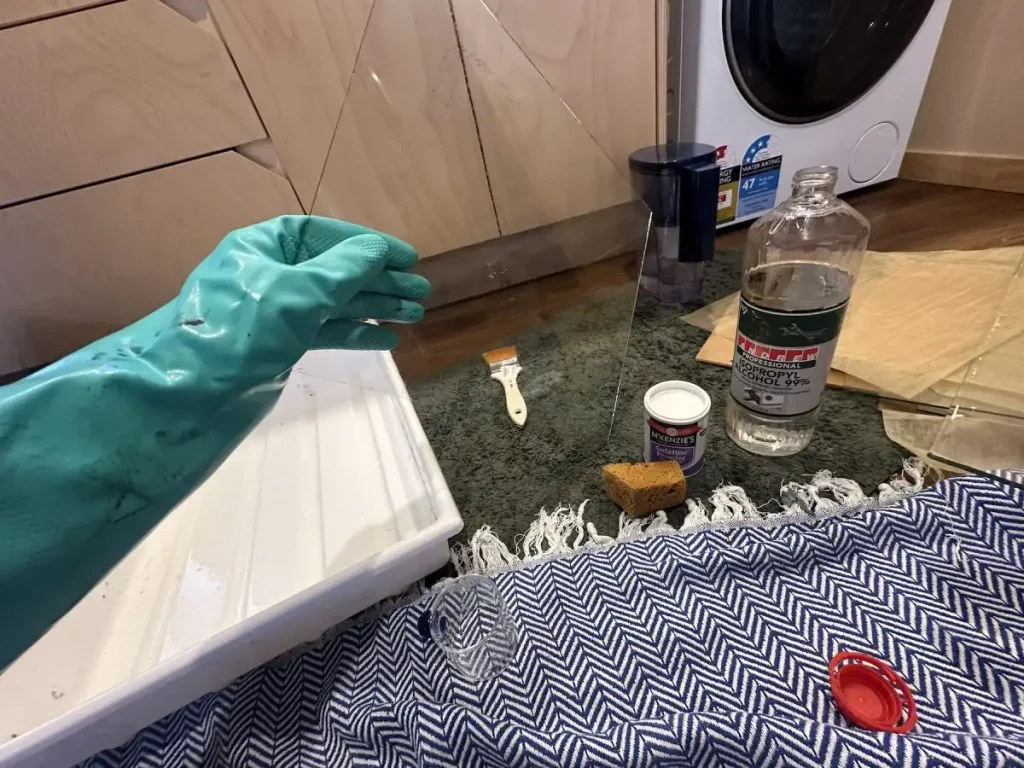
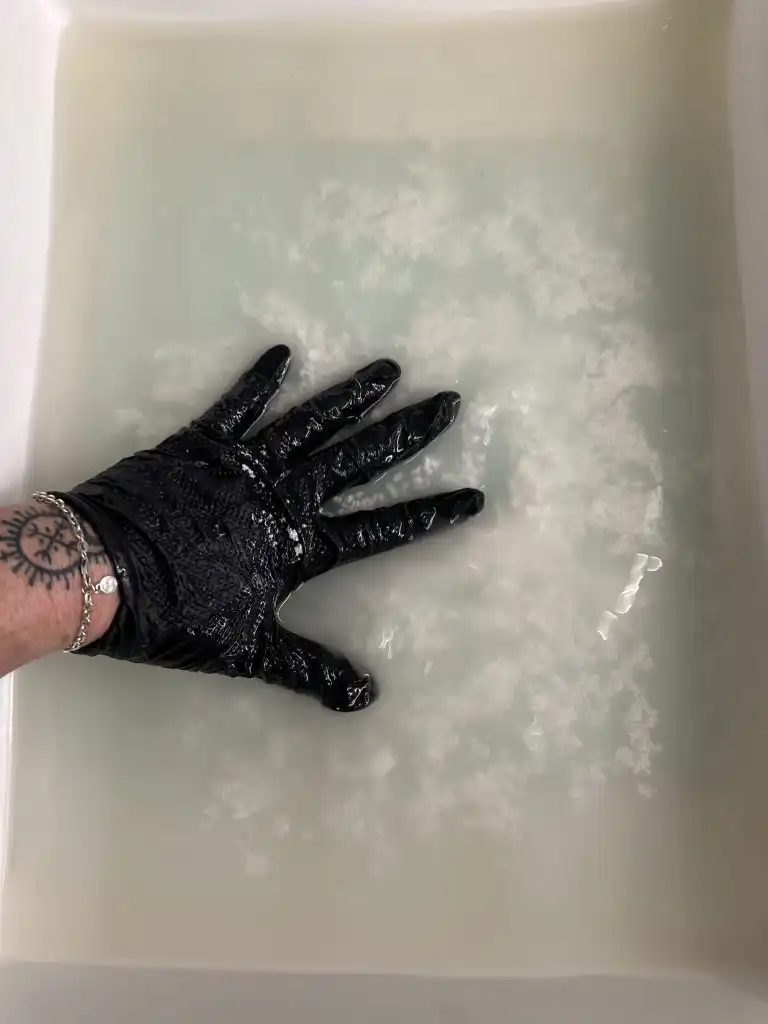
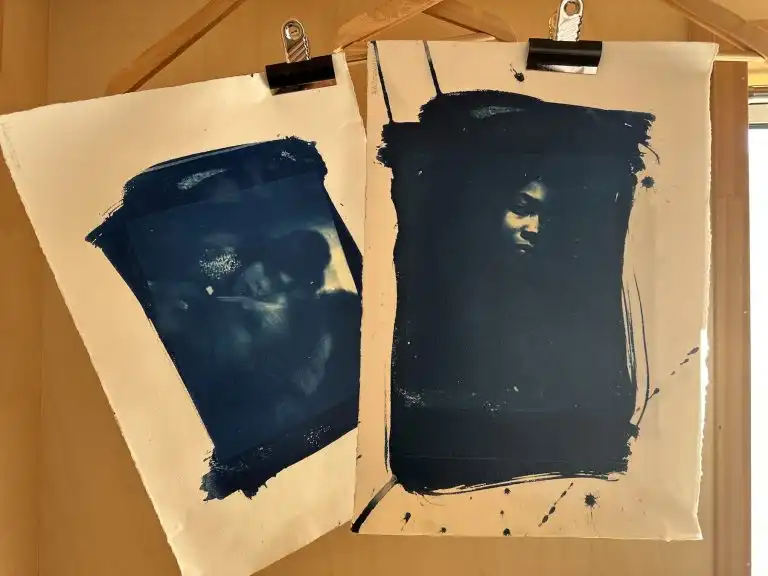
    I work with fragile 19th-century glass processes, embracing imperfection, cracks, and accidents as a language of memory. Each plate becomes a site where grief and resilience coexist. The photographs are not fixed objects but living traces of rupture and repair, carrying the weight of what is remembered — and forgotten.

    Can you tell us more about your experience in Berlin and how it influenced your current work?

    Berlin was pivotal. Especially time in Kreuzberg, Kotti, and Little Istanbul — places where fracture and resilience live side by side. That coexistence has shaped how I think about rupture and repair.

    But Berlin was only one part of a wider journey. I had been living in Denmark, studying a master’s in photojournalism focused on crisis and conflict. When I realised that path wasn’t mine, I left, and that decision opened space for art. I travelled through Germany, Belgium, France, Holland, and the UK before returning home to Aotearoa. Each place left its trace, but Berlin’s rawness continues to inform how I photograph memory and belonging.

    How does your current residency connect with your broader artistic journey?

    This residency feels like a convergence. The darkroom is not only a technical space — it mirrors my inner work. Just as the emulsion clings imperfectly to glass, I’m learning to accept what clings in me and to release what no longer serves.

    The journey across continents — my birthplace in Olpe, ancestral sites in the UK, the layered histories of Europe — has deepened my sense of connection to Aotearoa. Returning home, I’ve realised that our belonging here flows through the manaakitanga of Māori, whose generosity allows us to stand on this land. That reflection is now at the heart of my work.

    What is the role of abstraction in your photography?

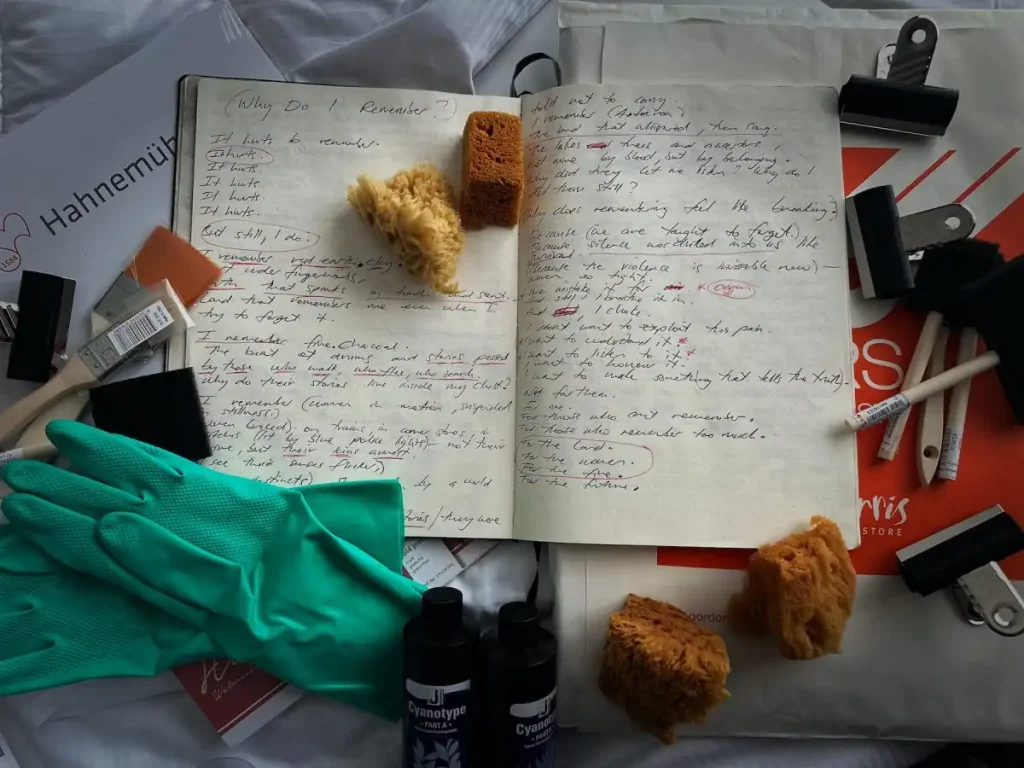
    Abstraction lets me move beyond representation into something closer to memory — layered, fragile, shifting. I’m less interested in showing what something looks like than in making visible what it feels like: grief, recognition, resilience, belonging.

    The cracks, the uneven coatings, the way light leaks and stains — these are not mistakes but the work itself. They echo how memory moves: fragmented, porous, bleeding across time. Abstraction offers space for viewers to enter the work and locate their own stories within it.

    What have you discovered about yourself through this residency?

    That the work and the life are inseparable. In the darkroom, fragility is not something to resist but to embrace. The slow process of coating glass, of watching light emerge and dissolve, is also the process of learning how to live — with openness, with release, with attention.

    At this point in my journey, I’ve realised the work is not just about photography. It is about purpose, about how to inhabit this life fully — present, rooted, responsive to both light and fracture.

    Is there a specific memory or place that has shaped your work during this residency? How did you include it in your practice?

    Yes — several, across different timelines. In Olpe, Germany, my body remembered before my mind did — a recognition etched into place. In the UK, ancestral threads surfaced. And here in Aotearoa, my sense of belonging has been reflected back through Māori manaakitanga — a reminder that belonging is granted through generosity as much as through land.

    Those moments filter into the darkroom. Each plate becomes a mirror of layered experiences: light breaking through fracture, belonging redefined, memory surfacing. The work has become both art and healing — showing me that the cracks are not endings, but beginnings

    Statement

    Annette-Karin Richards is a New Zealand artist and writer working across photography, drawn to environmental portraiture, expressionist abstraction, and landscapes. Her practice probes the deep imprints of colonialism—not as distant histories, but as living relationships etched into people and place. She listen to silences, to what has been hidden or erased, working in the thresholds between memory and forgetting, absence and presence, decay and light. Her images emerge from spaces where grief and resilience co-exist—offering not answers, but openings.

    GlogauAIR Project

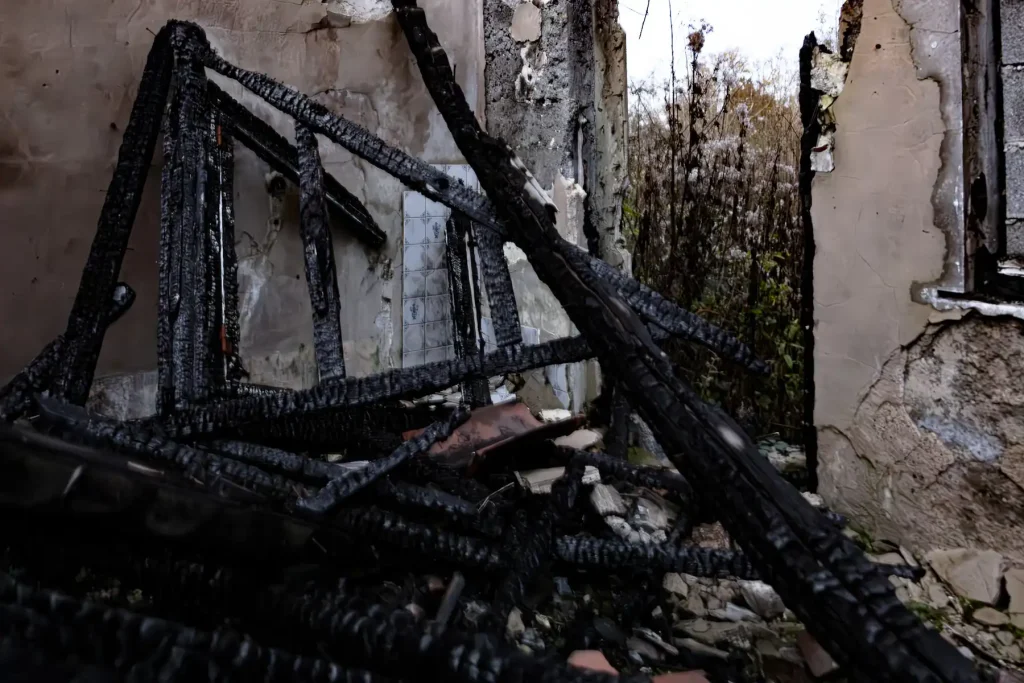
    How the Light Gets Out is an interrogation of the female gaze within colonial and patriarchal frameworks. It is a meditation on rupture, not rapture—where women are not symbols but presences, unflinching in their visibility. Set within fractured urban spaces and haunted architectures, the project reveals how light seeps through destruction, how memory lingers in ruins, and how resistance endures across generations.

    CV Summary

    • Annette Karin Richards is a New Zealand photographer and writer with an international practice, having exhibited in Paris, New York, Seoul, and Toronto, with upcoming shows in Venice and Barcelona.
    • Her work explores the intersections of memory, identity, and colonial histories through evocative visual storytelling.
    • Blending environmental portraiture, abstraction, and landscape, her images challenge erasure and illuminate what has been hidden or silenced.
    • Supported by mentors and organisations such as Eyes In Progress, Valerie Fougeirol, Ed Kashi, and The Big Idea, Annette’s practice is rooted in listening—closely, ethically—to marginalised voices and the geographies they inhabit.

    Gallery
  • Megan Sharkey

    Megan Sharkey

    Megan Sharkey is GlogauAIR resident
    from July, 2025 to September, 2025

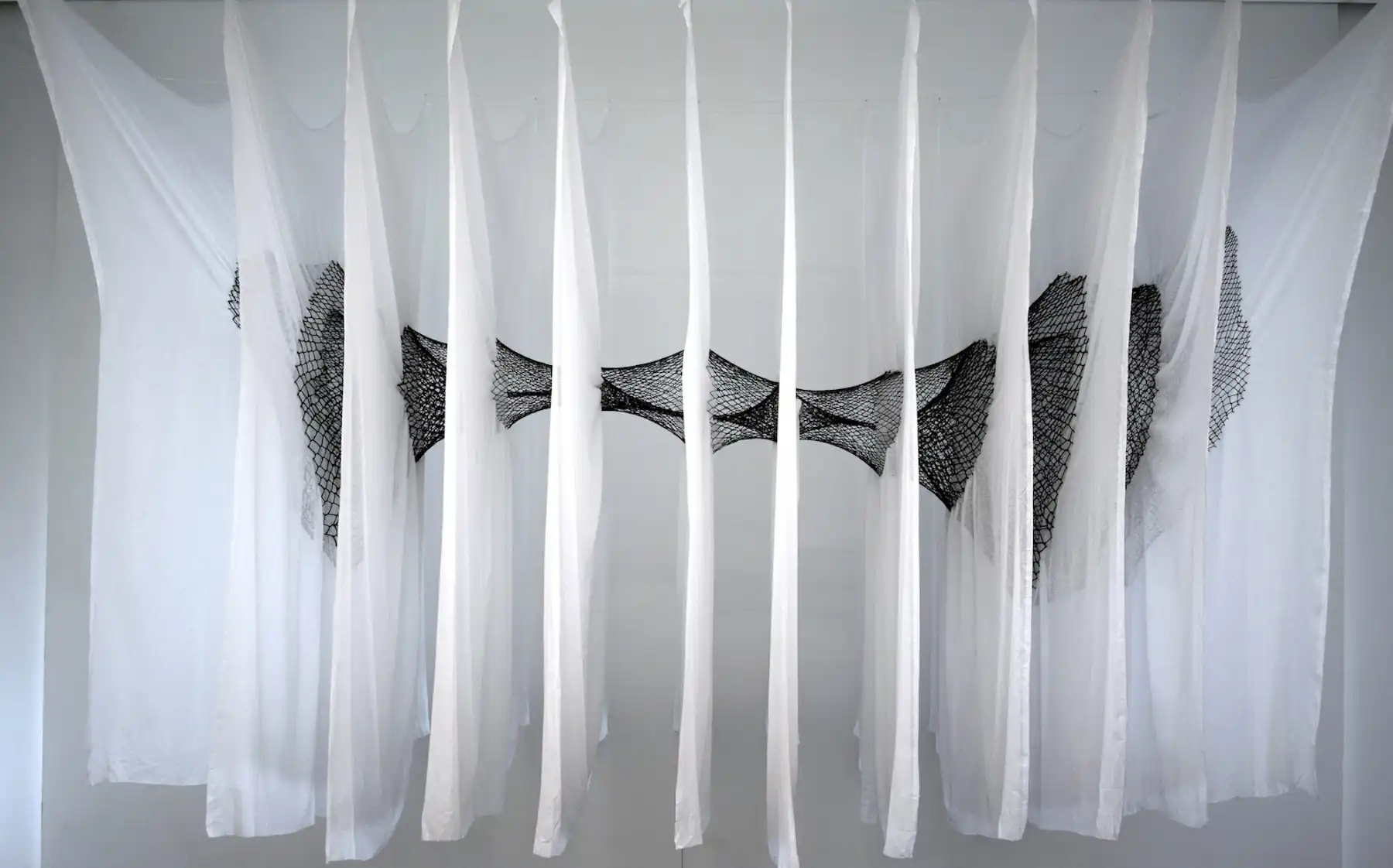
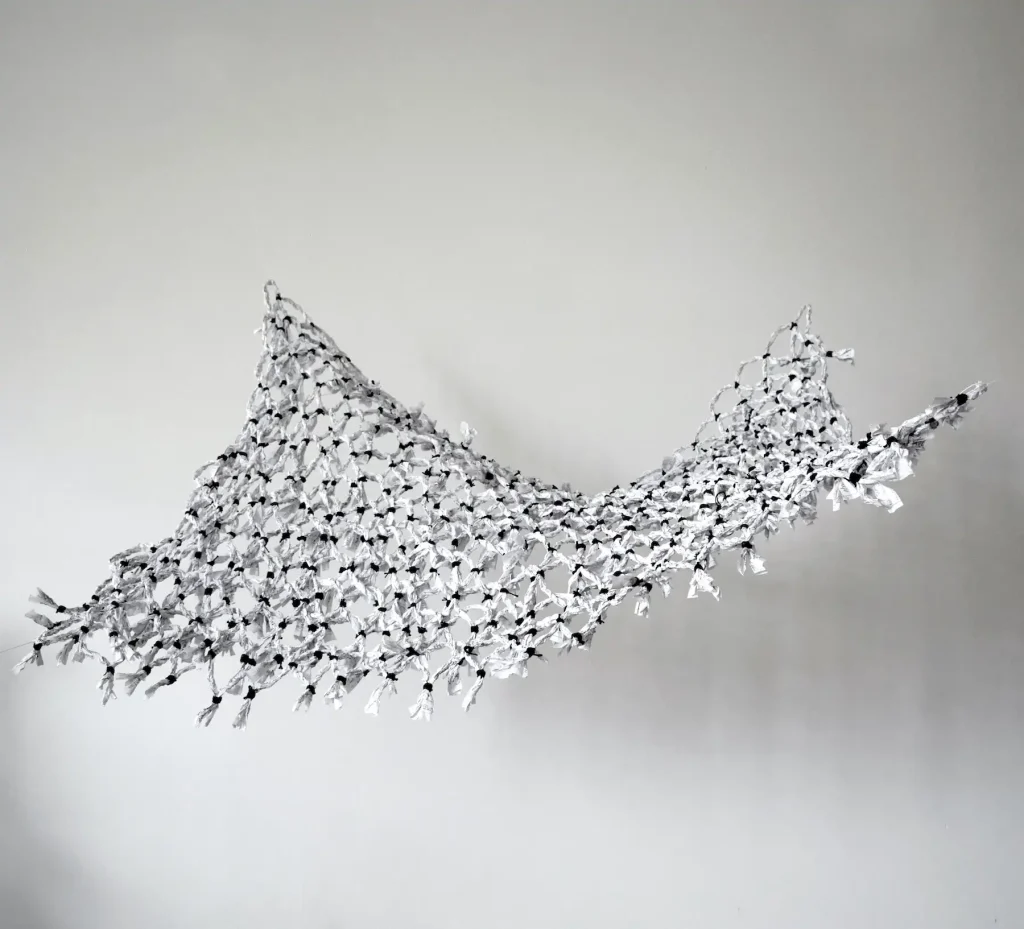
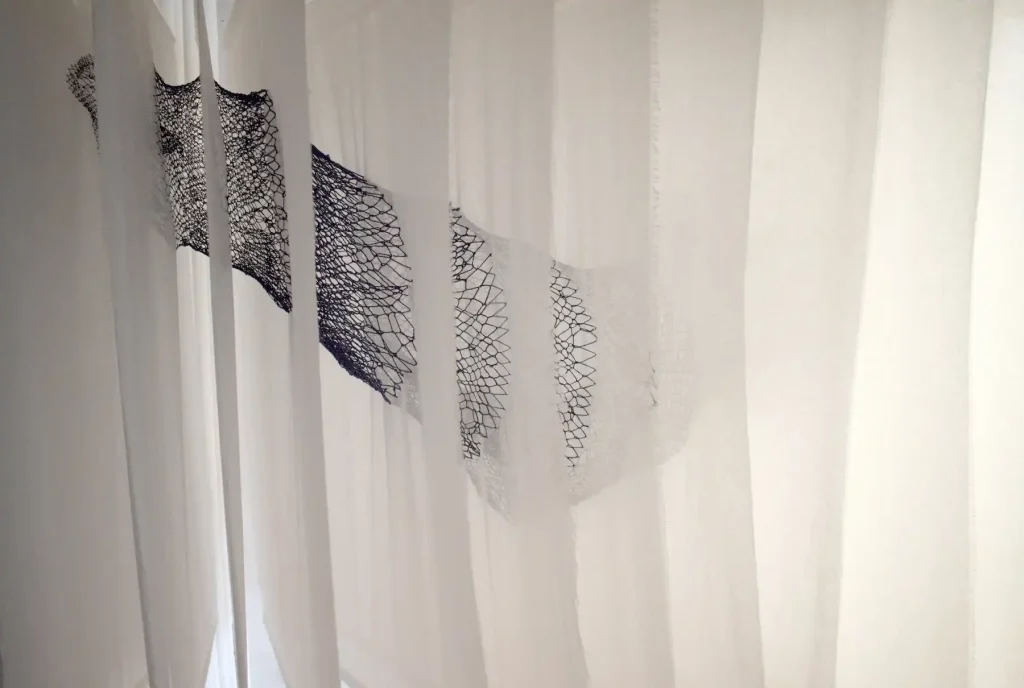
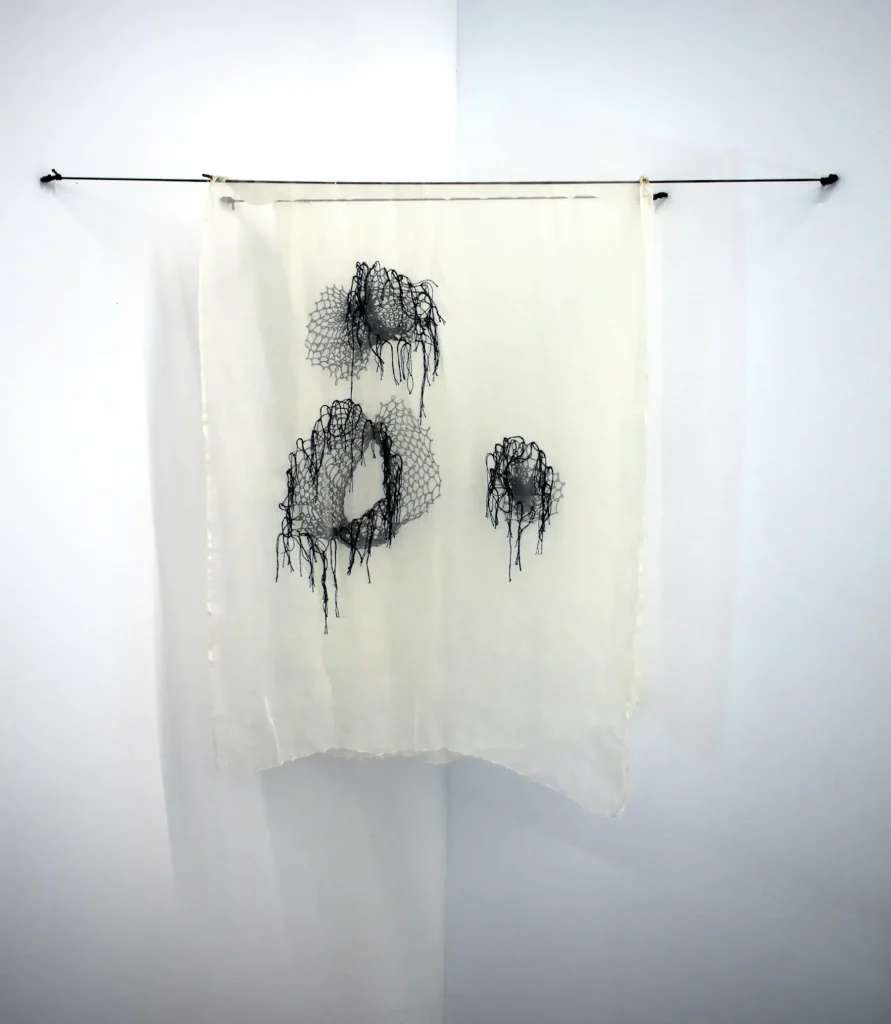
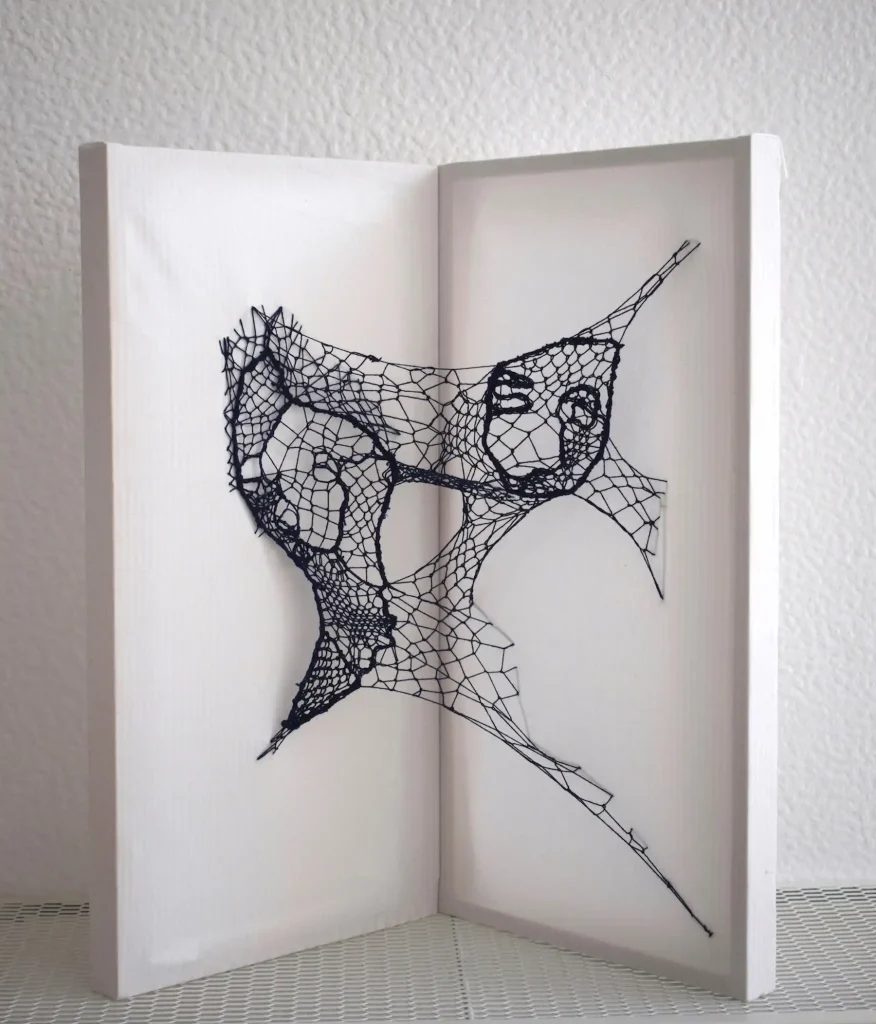
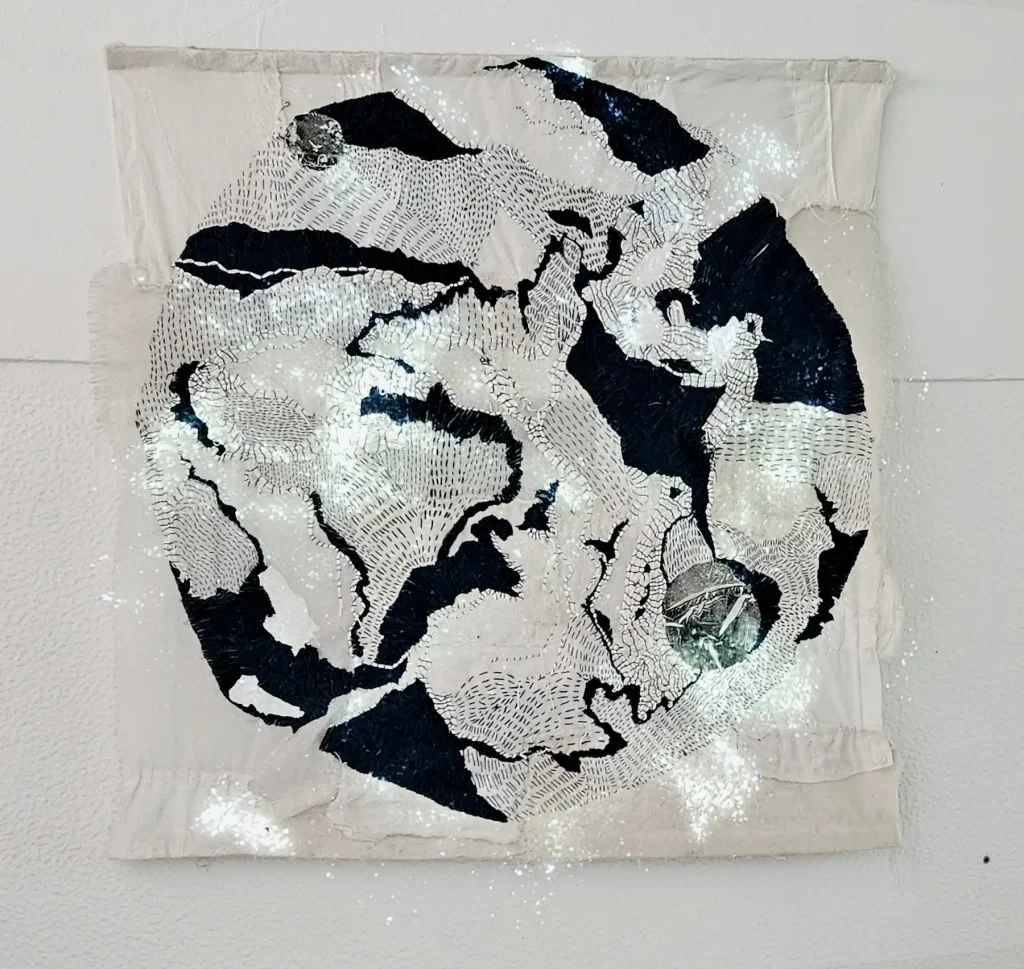
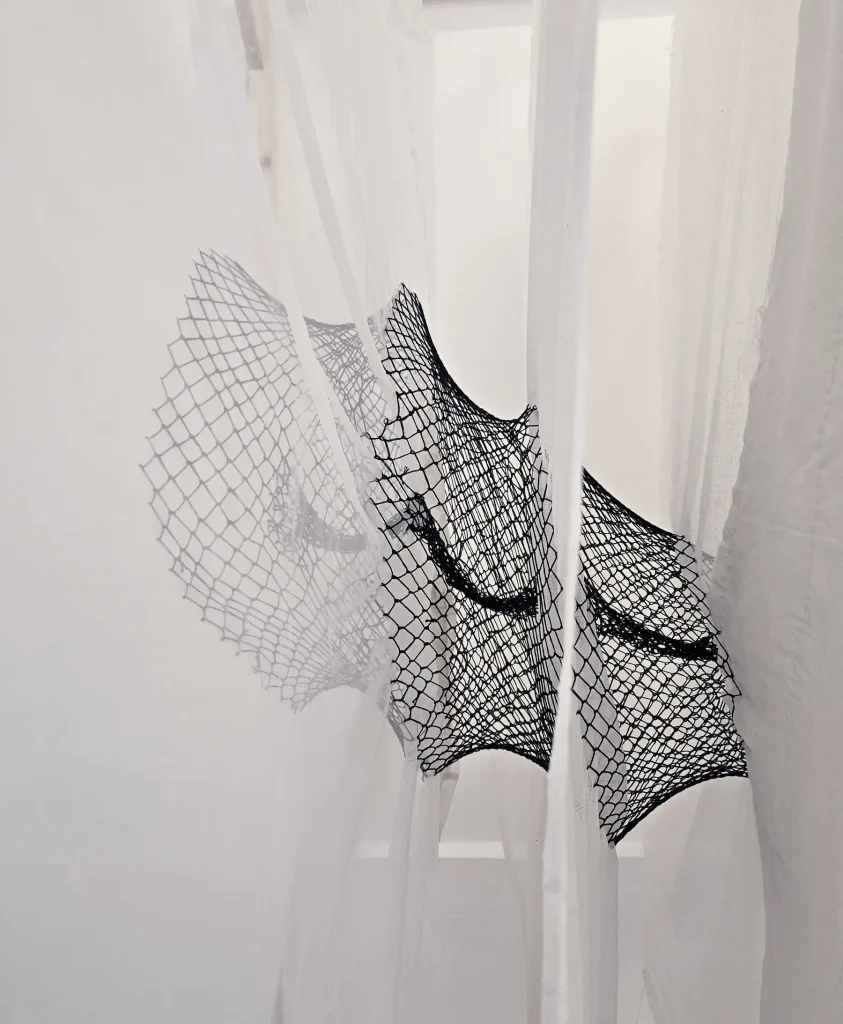
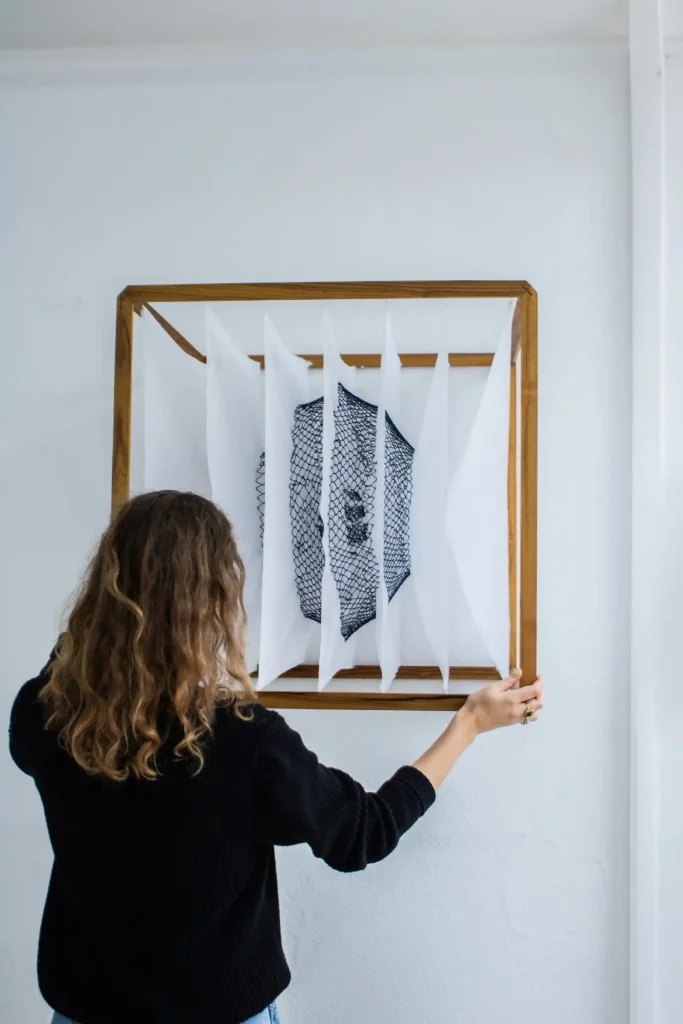
    Megan Sharkey is an artist whose practice explores presence, memory, and the physicality of time through hand-stitched and lace-making techniques. Working primarily in abstract 2D and 3D forms, her pieces give shape to intangible experiences and are grounded in materiality, care, and light. Originally from Wales and now based in Porto, Sharkey has exhibited internationally in both solo and group exhibitions.


    Meet the Artist

    Statement

    Megan Sharkey is an artist whose work explores presence, memory, and the physicality of time. Using hand-stitched and lace-making techniques, she creates mostly abstract 2D and 3D pieces that give form to intangible experiences. Rooted in materiality, care, and light, her work invites pause and reflection. Originally from Wales, she lives and works in Porto and has exhibited her work in solo and group shows internationally.

    GlogauAIR Project

    During this residency, I would like to further explore the three-dimensional forms I’ve been developing over the past year. I’m particularly interested in how different structures or ‘containers’ – using light, layered fabric, and hand-made lace – can create an emotional and immersive encounter between the viewer and the work. I plan to experiment with how these pieces can shift in scale and form, and to explore the responses they evoke. This project will continue to centre themes of emotion, presence, connection, and ritual.

    CV Summary

    • 2025 – Group Exhibition,XI WTA Biennial – The Four Elements, Miami Institute of Fine Arts, Miami, USA
    • 2025- Group Exhibition, Between the light and the invisible, MACS, Porto, Portugal
    • 2024 – Solo Exhibition,TEMPO, Museu Quinta de Santiago, Porto, Portugal
    • 2024 – Awarded,First Award – The 15th International Textile and Fibre Art Biennial Scythia, Ivano-Frankivs’k, Ukraine
    • 2024 – Duo Exhibition,Protected Areas / Áreas Protegidas, Biblioteca Municipal de Santa Cruz da Graciosa, Azores, Portugal
    • 2024 – Group Exhibition,Biennale Objet Textile à La Manufacture, Roubaix, France
    • 2023 – Artist Residency,Biennale Internationale de Lin du Portneuf, Quebec, Canada
    • 2022 – Group Exhibition,Unfinished Exhibition, OKNA Eastern European Centre, Porto, Portugal
    • 2022 – Solo Exhibition,Tales from tall stones, Hotelier-O Art Space, Porto, Portugal

    Gallery
  • Pei Shan Lee

    Pei Shan Lee

    Pei Shan Lee is GlogauAIR resident
    from July, 2025 to September, 2025

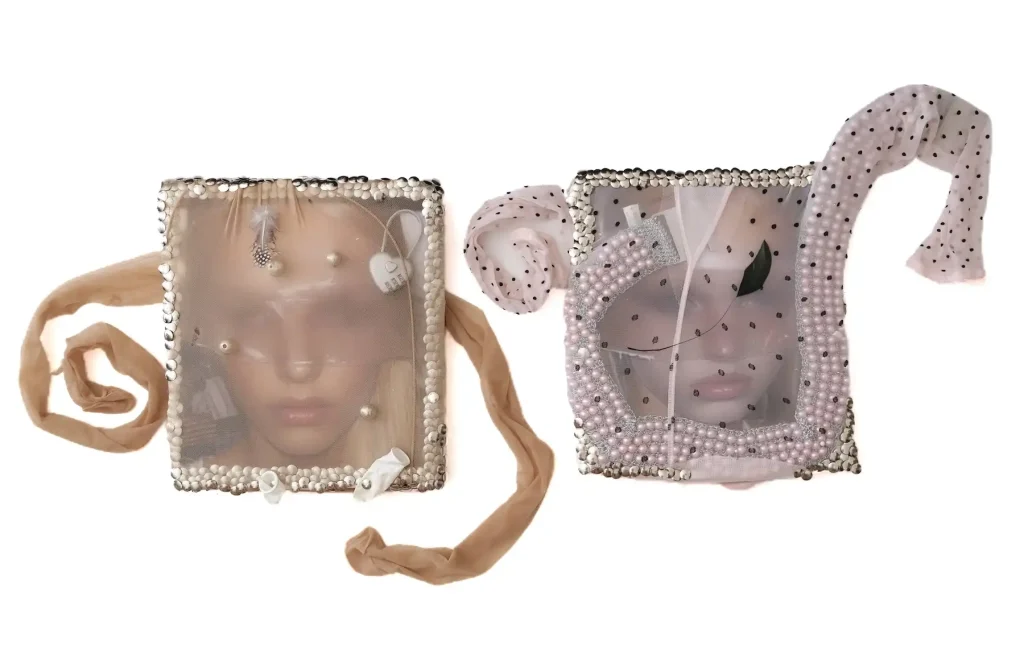
    Pei Shan Lee creates art that blends dreamlike images, digital visuals, and sculpture to explore identity in a fast-changing, tech-driven world. Her work reflects on how the idea of “self” is no longer fixed, but made of memories, data, and shifting experiences. Using surrealism and non-Western storytelling, she builds unstable, fragmented spaces that question what it means to exist in a time shaped by technology, disconnection, and constant change.


    Meet the Artist

    Statement

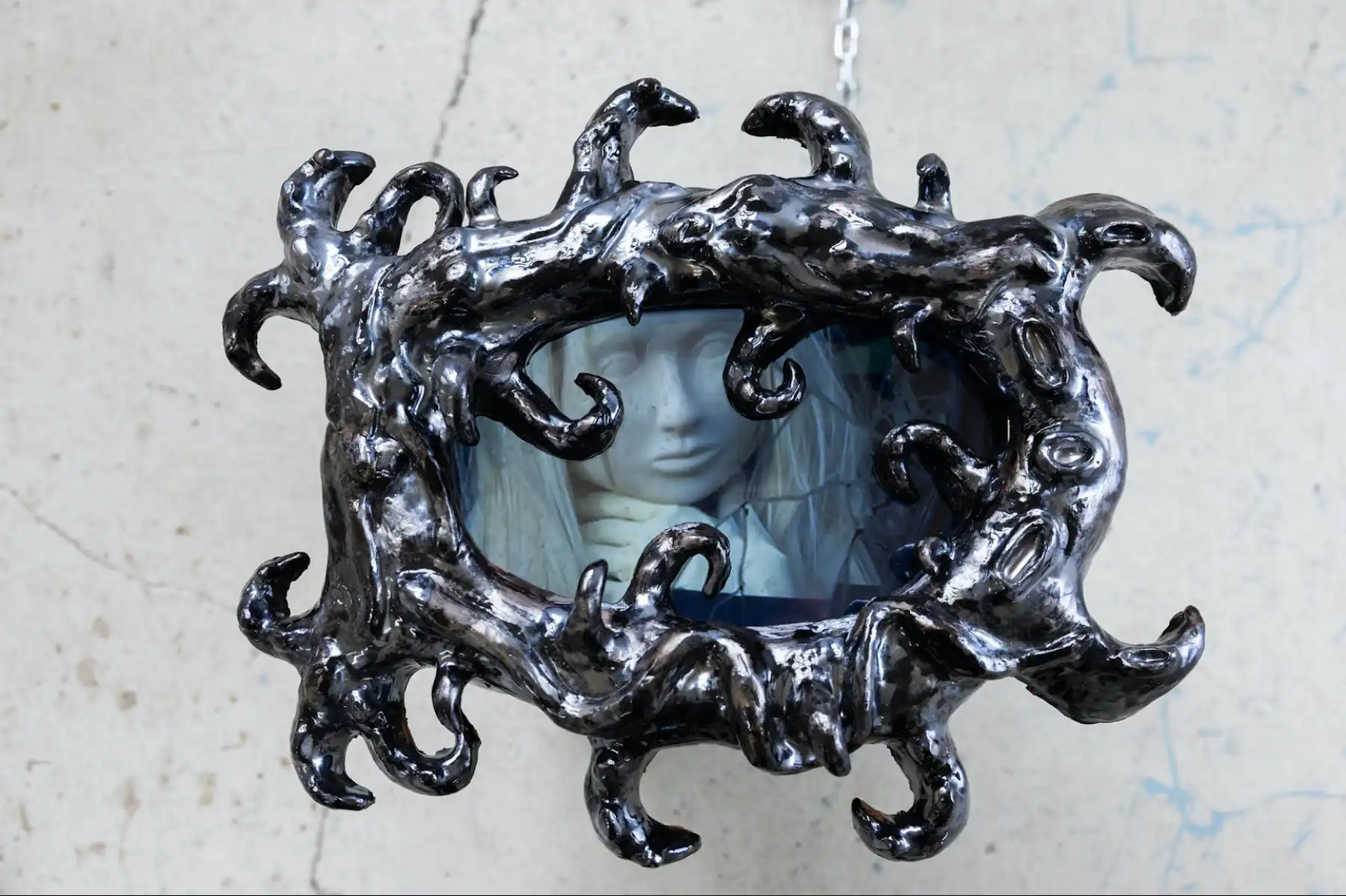
    Pei Shan Lee’s work flows between dreamlike imagery, generative visuals, and sculpture, centered on the posthuman body, memory, and virtual boundaries. She employs surrealism and non-Western narrative structures to construct fragmented, unstable spaces that reflect the ambiguity and uncertainty of identity amid accelerating technology, cultural displacement, and shifting subjectivities. Lee’s practice responds to a posthuman hybrid reality where the “self” is no longer a fixed entity but a fluid structure composed of data, memory, and fragments. Her works exist in states of dislocation, decay, and the beauty of rupture, quietly questioning the boundaries and meaning of existence in a generation defined by simulation, uncertainty, and continual transformation.

    GlogauAIR Project

    During this residency, I will continue my research into the unstable boundaries of the human body through artificial extensions such as masks, prosthetics, discarded objects, and ceramics. My work explores metamorphosis as a continuous state—where bodies, identities, and materials shift, fragment, and reorganise beyond fixed categories. Drawing from posthumanist thinking, I am interested in how the self dissolves into hybrid, part-organic, part-synthetic forms. The project combines AI-generated imagery, photography, and sculpture to create spaces where the familiar turns unsettling, evoking the strange tension between organic transformation and synthetic presence. Through this, I explore how identity becomes fluid, fragmented, and quietly uncanny.

    CV Summary

    Education

    • 2018–2023 ACADEMY OF FINE ARTS PIETRO VANNUCCI

    Exhibitions

    • 2022 La Futura Natura— Spazio Arca di Pan, Panicale, Italy
    • 2025 We Art Open— No Title Gallery, Spazio Spuma, Venice, Italy
    • 2025 107ma Young Artist Collective — Bevilaqua La Masa Foundation, Venice, Italy
    • 2025 The Slime Knows— Erratum Projects, Brasserie Atlas, Brussels, Belgium

    Residencies

    • 2025 GlogauAIR Online Program

    Work Experience

    • 2023 Cultural mediator for the European Cultural Centre during the 2023 Architecture Biennale, Venice, Italy.
    • 2021–2022 Assistant to artist Giulia Cenci for the realization of the project Dead Dance at the 59th International Art Exhibition of La Biennale di Venezia, Pietraia di Cortona, Italy.

    Gallery
  • Kandice Kardell

    Kandice Kardell

    Kandice Kardell is GlogauAIR resident
    from July, 2025 to September, 2025

    United States


    Meet the Artist

    Coming soon

    Statement

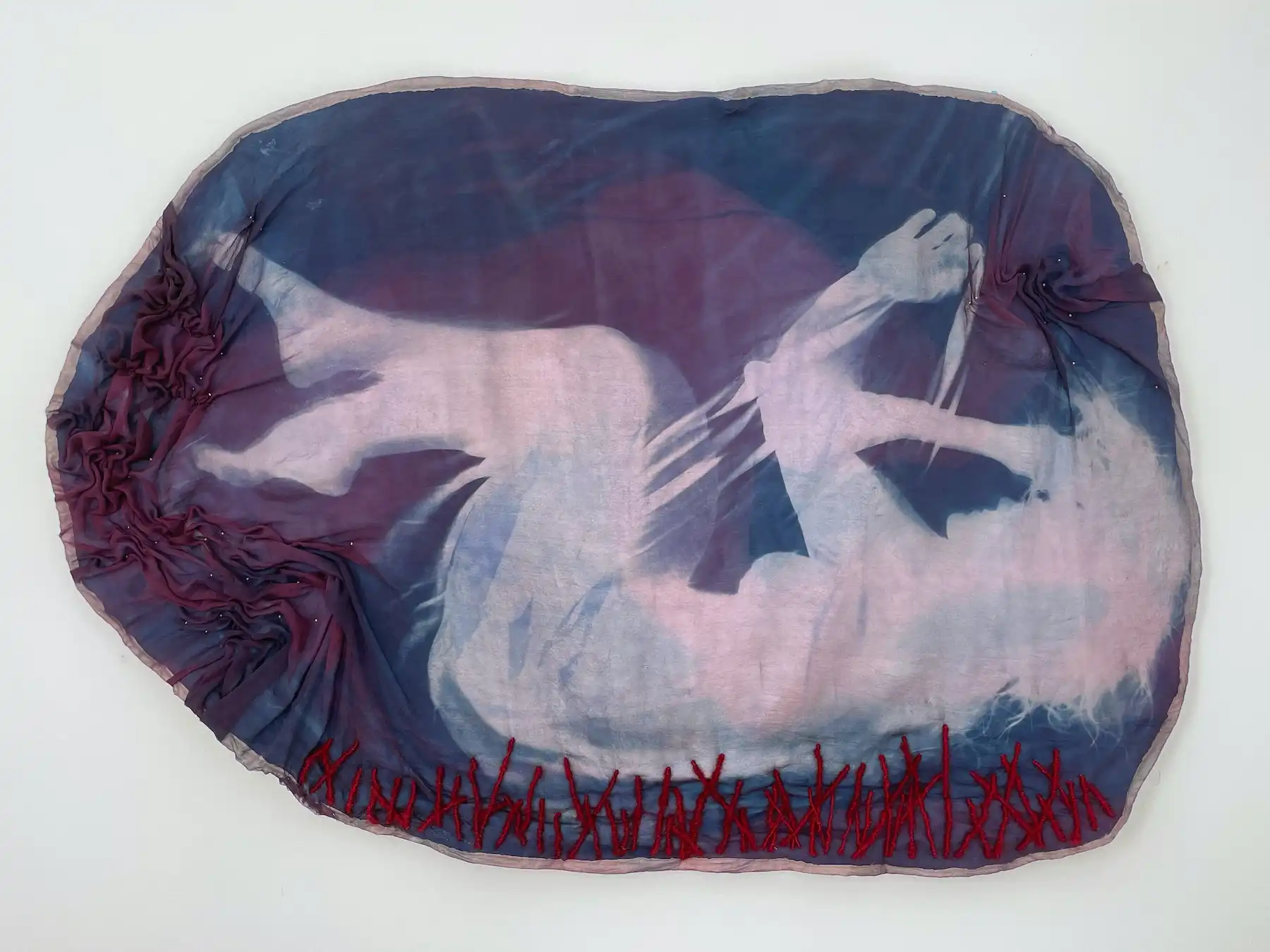
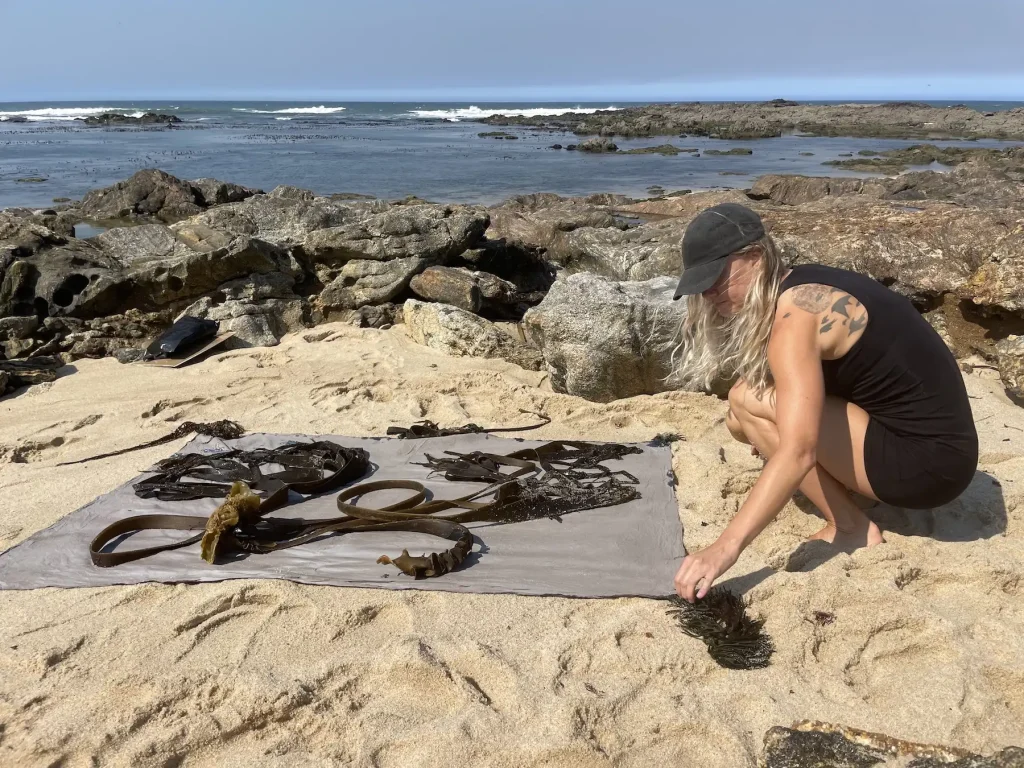
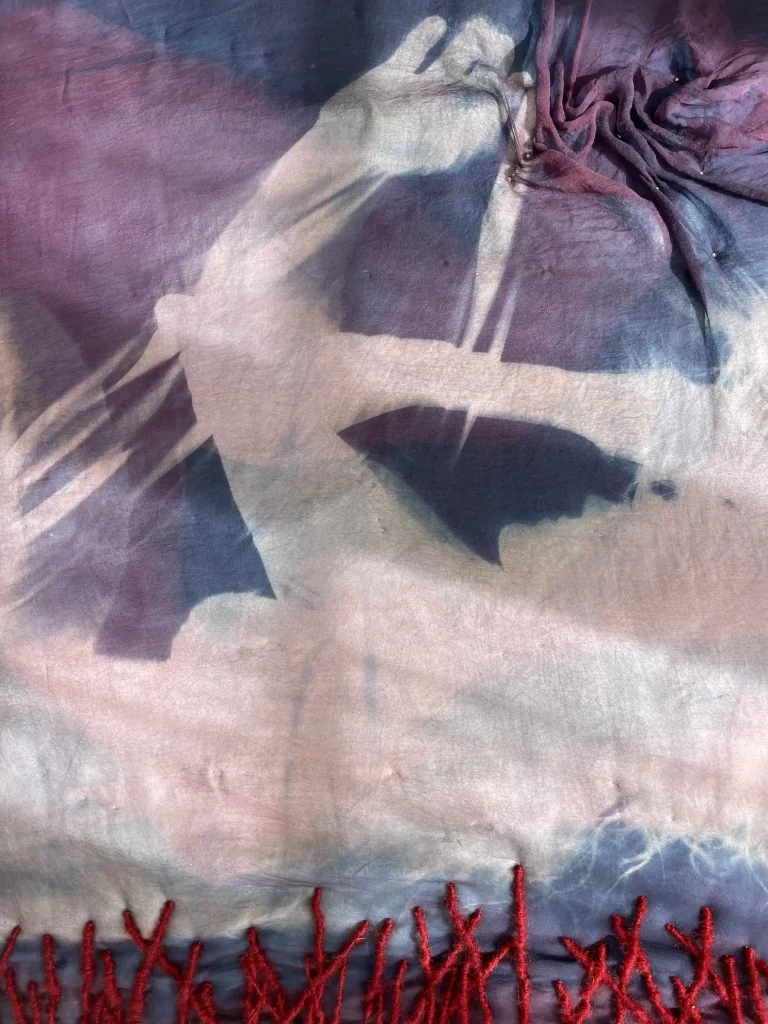
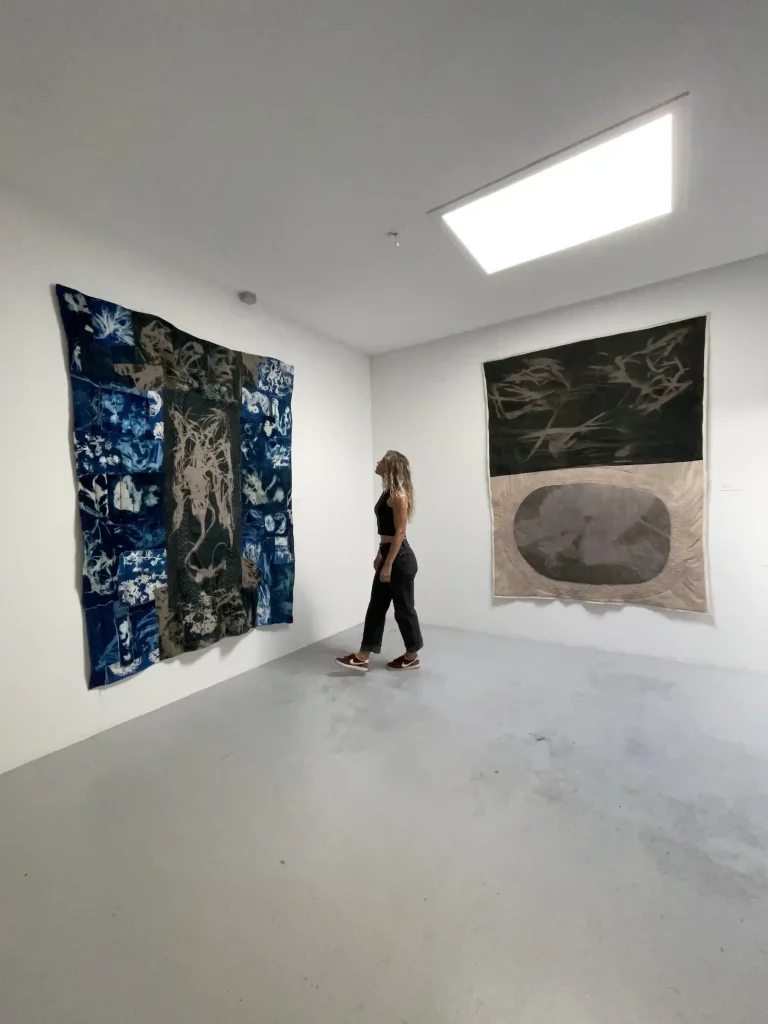
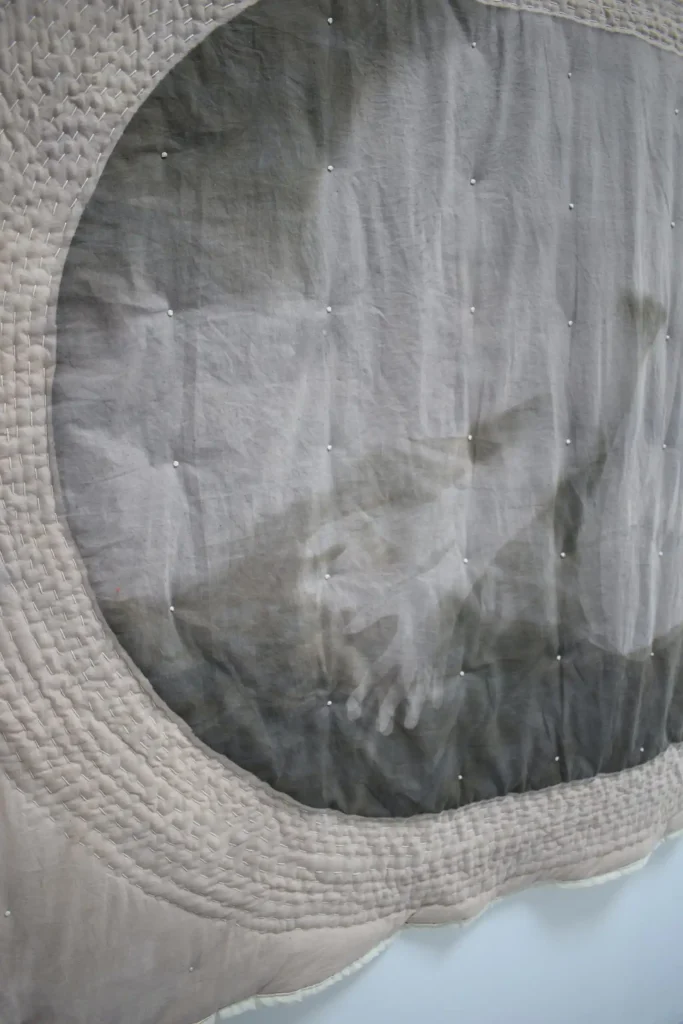
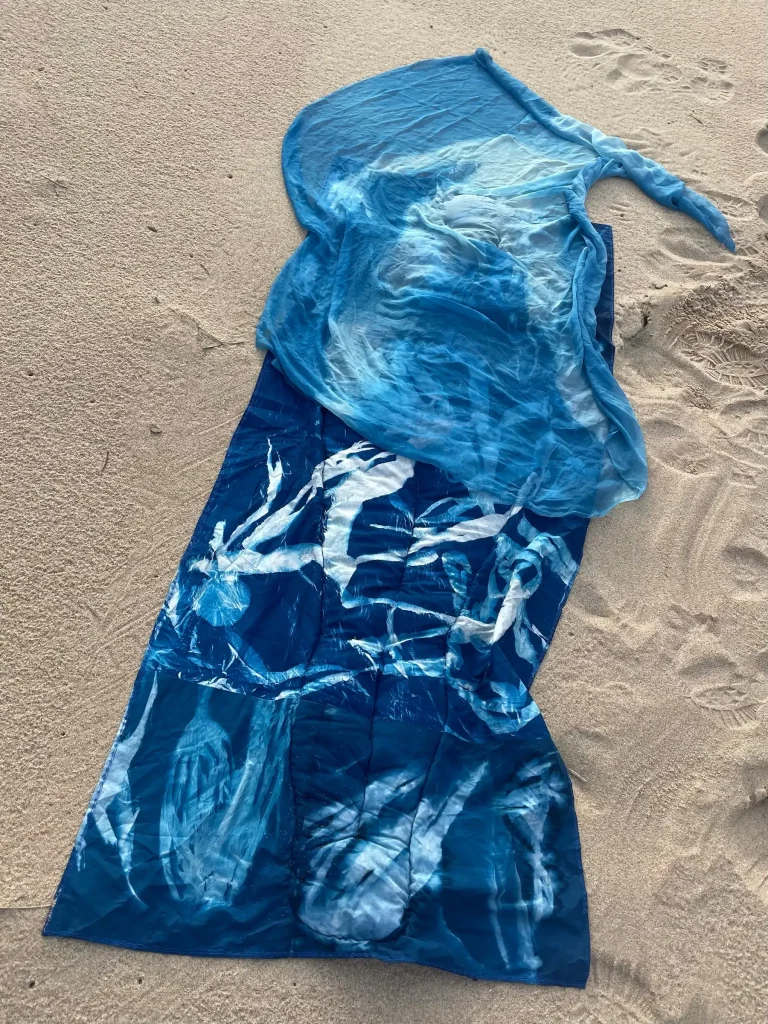
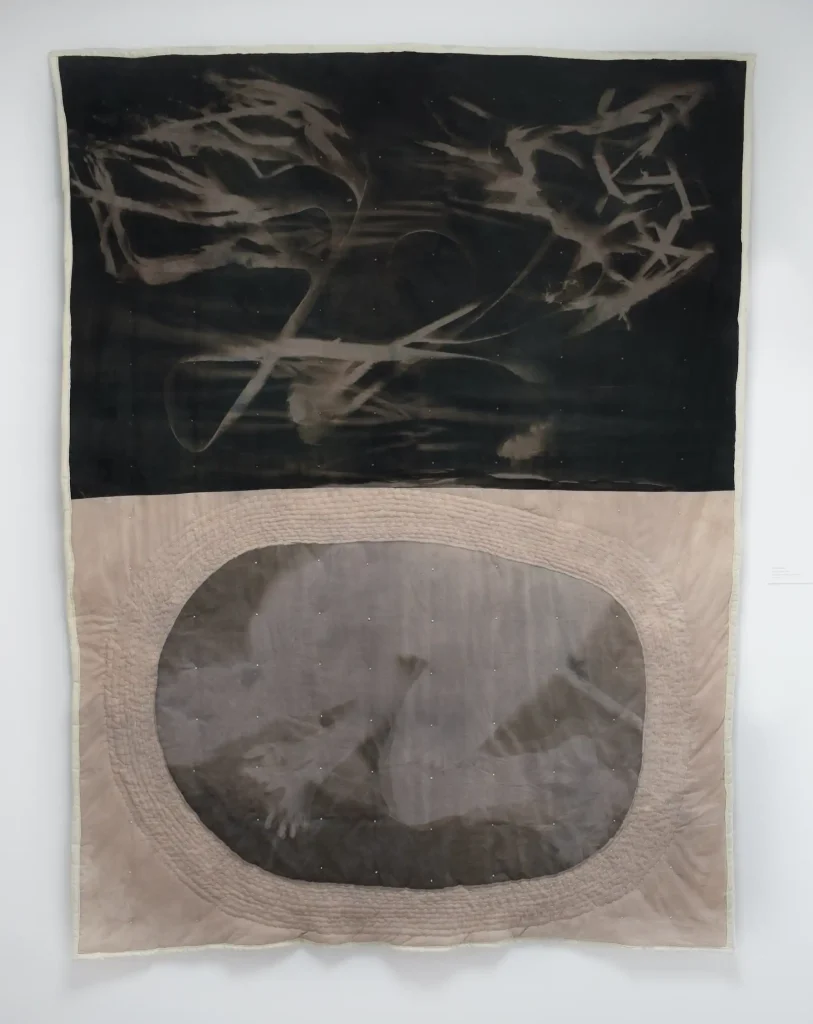
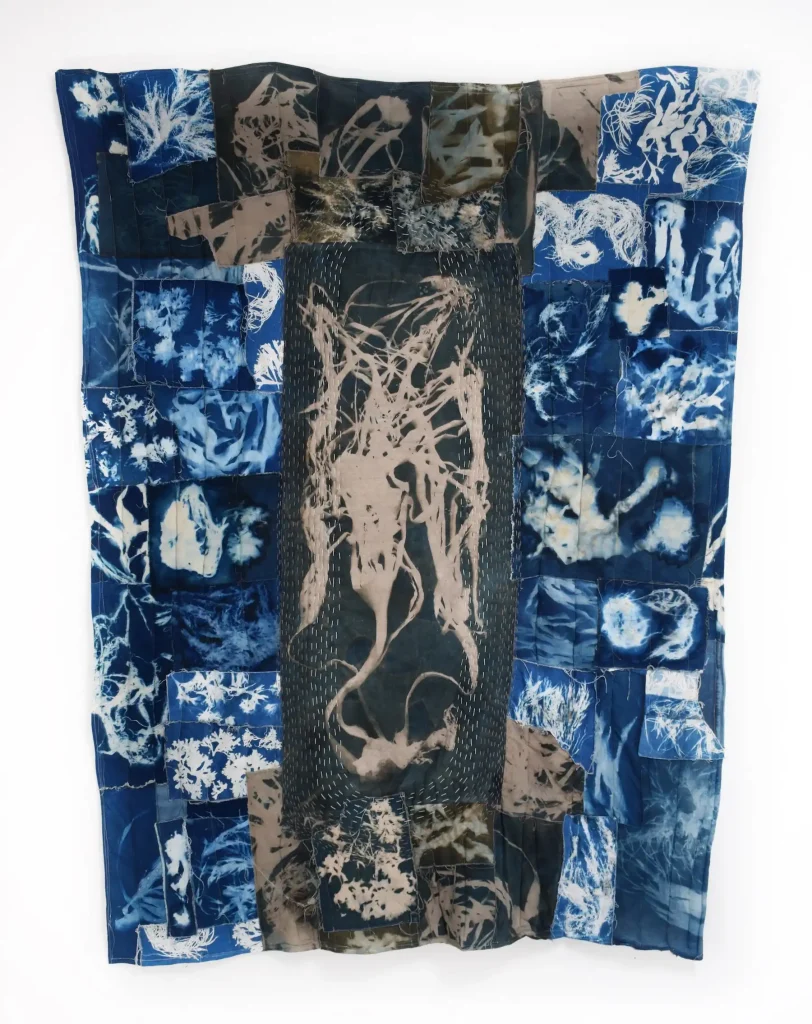
    My work explores the interplay between death and desire, examining how societal suppression of grief and denial of mortality disconnect us from the natural world. Cyanotype, natural dyes, hand-stitching, and foraged materials are integral to my process, with many of my pieces developed outdoors. The landscape itself becomes both medium and collaborator, as the sun, wind, water, and earth make their marks–intentionally or not. I invite reflection on impermanence, loss, and our place within an ecological and emotional whole.

    GlogauAIR Project

    Western culture’s pursuit of permanence—whether in art, memory, or environmental control—stands in contrast to natural cycles of impermanence and decay. This project expands my sustainable, site-specific practice near the sea as I explore materials derived from foraged algae to create works that embrace impermanence and reflect on grief, mortality, and ecological interconnection.

    CV Summary

    Bachelor of Fine Arts, Arizona State University

    2025

    • MESCLA, group exhibition, Mouco, Porto, Portugal
    • TOWARD 2050, group exhibition, Desert Botanical Garden, Phoenix, AZ

    2024

    • Spinning Away, solo exhibition, Allmo Gallery, Porto, Portugal
    • 100x100x100, group exhibition, Atelier 968, Porto, Portugal
    • Co-Crafting Democracy: Fiber Arts and Activism, group exhibition, Women of the Hall, Seneca Falls, NY

    2023

    • Portraits and Stills, solo exhibition, Cave Bombarda, Porto, Portugal

    2021

    • 2020, solo exhibition, Desert Crafted, Phoenix, AZ
    • Light Sensitive, juried group exhibition, Art Intersection, Gilbert, AZ

    2020

    • Death/Desire, solo exhibition, Biophilia, Phoenix, AZ
    • Light Sensitive, juried group exhibition, Art Intersection, Gilbert, AZ

    2019—2021

    • Tempe Studio Artist, Tempe Community Arts/Tempe School District, Tempe, AZ

    2018—2019

    • Molly Blank Fund Teaching Artist, Arizona State University, Tempe, AZ

    Gallery
  • Shuai Yang

    Shuai Yang

    Shuai Yang is GlogauAIR resident
    from July, 2025 to September, 2025

    China


    Meet the Artist

    Coming soon

    Statement

    My practice critiques the measurement-based épistémè that erodes subjectivity and authenticity. I engage with sculpture, performance, drawing, and painting, and embed the philosophy of printmaking (multiplicity, identicality, plurality, etc.) as a foundational conceptual threshold, revealing how institutional systems impose artificial order on an organic world, and seeking an embodied epistemology as an alternative.

    With support from the Donald C. Kelley Award, granted by the Printmaking Department at Massachusetts College of Art and Design (Boston, United States)

    GlogauAIR Project

    I aim to continue working with sculpture, conceptual drawing, and performative engagement, and to explore alternative epistemologies of measurement that diverge from the mathematical order. This philosophical endeavor will involve investigating knowledge, representation, and the subject-object problem through a combination of research and studio practice.

    CV Summary

    • M.F.A., Visual Arts, Columbia University, New York
    • B.F.A., Printmaking, Massachusetts College of Art and Design, Boston

    2024

    • At-Will Adaptation, Eli Klein Gallery, New York
    • Allure of the Land, Nars Main Gallery, New York
    • The Residency, Eli Klein Gallery, New York
    • Vermont Studio Center Residency, Johnson, Vermont
    • NARS Foundation International Artist Residency, New York
    • Visiting artist, Pratt Institute, New York

    2023

    • MFA Thesis, Wallach Gallery, Lenfest Center for the Arts, New York
    • Visiting artist, Massachusetts College of Art, Boston
    • Panel artist, LATITUDE Gallery, New York
    • Morty Frank Travel Grant, LeRoy Neiman Center for Print Studies, Columbia University, New York

    2022

    • Donald C. Kelly Artist Travel Grant, Massachusetts College of Art, Boston

    2021

    • Columbia University MFA Summer Show, Chashama Space, New York
    • First Year Show, Lenfest Center For The Arts, Columbia University, New York
    • I Thought It Was A Drought, 164 Ashburton Ave, Yonkers, New York

    2019

    Boston Printmakers Exhibition, Framingham State University, Framingham

    Gallery
  • Daniela Federighi

    Daniela Federighi

    Daniela Federighi is GlogauAIR resident
    from July, 2025 to September, 2025

    Brazil


    Meet the Artist

    Coming soon

    Statement

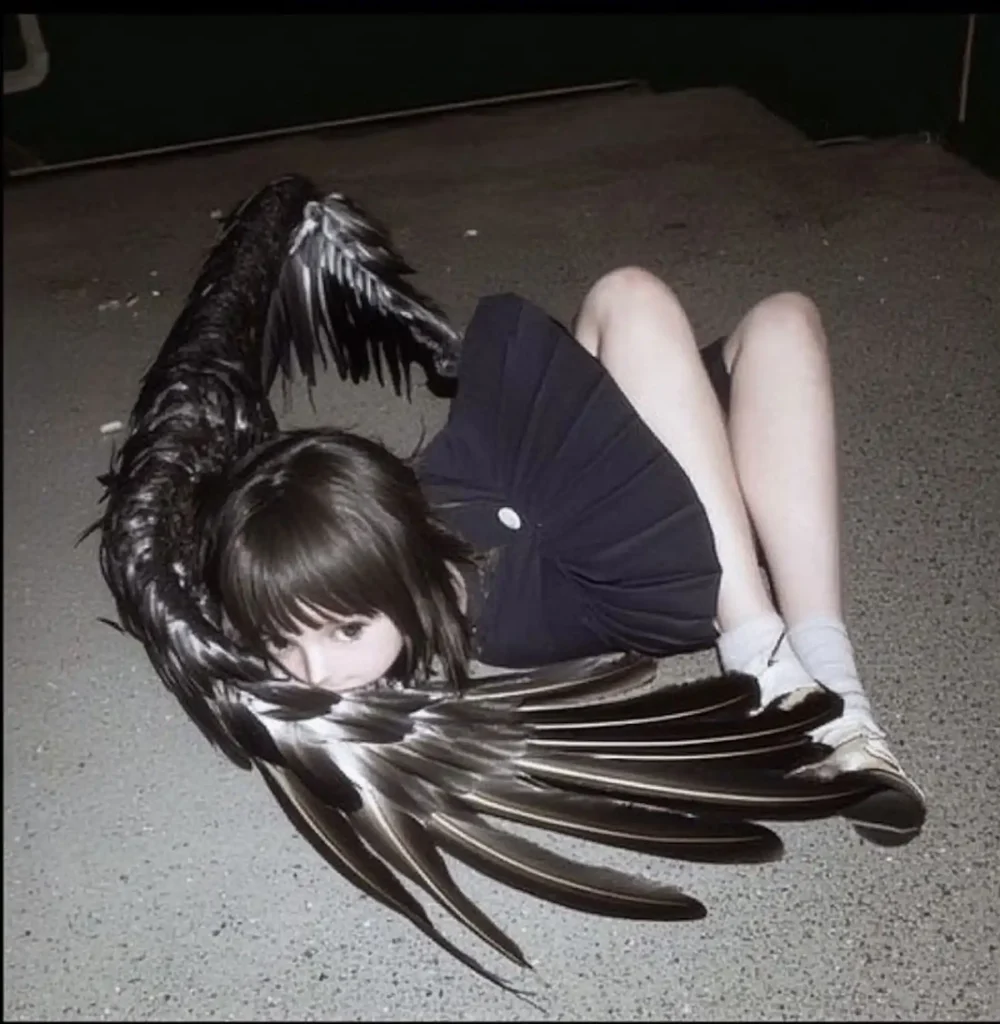
    Daniela Federighi is a Brazilian visual artist whose work explores and experiments with material, sensory, and almost theatrical encounters in everyday life. Her attentive observation of daily surroundings focuses mainly on spatiality tied to her lived experiences along the way, while also flirting with a sense of fable and possible fiction.

    She is currently building a body of work that emerges from the collection of personal records and ordinary materials with constructive and poetic potential — elements that are often manipulated, displaced, and juxtaposed. Formally, she works with photography, video, text, sculpture, collage, and assemblage, connecting analog and digital media in a kind of non-linear visual-material diary while also building bridges between seemingly disconnected fragments of the landscapes she collects.

    GlogauAIR Project

    During my time at GlogauAIR, I intend to deepen my practice of observing my surroundings by establishing new dialogues with a completely different context: the city of Berlin. As a foreigner, I expect visual and linguistic contrasts to emerge as meaningful triggers for investigation, and I’m curious about the kinds of encounters that may arise while wandering through the city.

    I’m interested in exploring tensions between materials and themes, which will likely be addressed through the use of found objects, personal items, and records in different media. Conceptually, I’ve been recently drawn to the idea of “trips,” understood as traveling, walking, imaginary journeys, and how that might relate to more intimate concerns, especially those connected to “home.” In this sense, I see the experience at GlogauAIR as a meaningful opportunity to potentially unfold this line of thought. I envision this body of work as a visual narrative of this period spent away from home.

    CV Summary

    Visual Artist

    1999, São Paulo, Brasil

    Education

    • 2023-today | Study group and mentorship with Charles Watson; online
    • 2023 | Property & Provenance by Charles Watson; Rio de Janeiro, Brasil
    • 2019–2022 | University of Hertfordshire; Bachelor of Graphic Design
    • 2018–2019 | Escola Britânica de Artes Criativas (EBAC); Foundation Art & Design

    Group Exhibitions

    • 2025 | Contra-horizonte, Galeria ArteFASAM; São Paulo, Brasil
    • 2025 | Play-Date; São Paulo, Brasil
    • 2022 | Contínua; Galeria Luís Maluf; São Paulo, Brasil
    • 2022 | Para Você, Camnitzer; Residência Edifício Vera; São Paulo, Brasil
    • 2020 | Arte da Lembrança, Bianca Boeckel Galeria; São Paulo, Brasil
    • 2020 | Arte da Quarentena, Artsoul via Bianca Boeckel Galeria; Online

    Residencies

    • 2024 Residência Edifício Vera, São Paulo, Brasil

    Gallery
  • Alejandra Prieto

    Alejandra Prieto

    Alejandra Prieto is GlogauAIR resident
    from July, 2025 to September, 2025

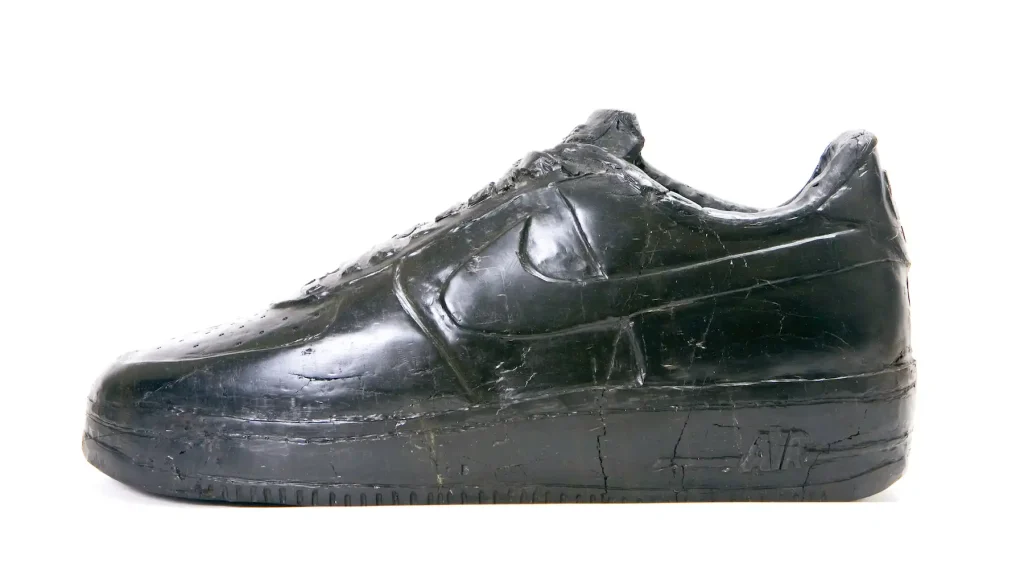
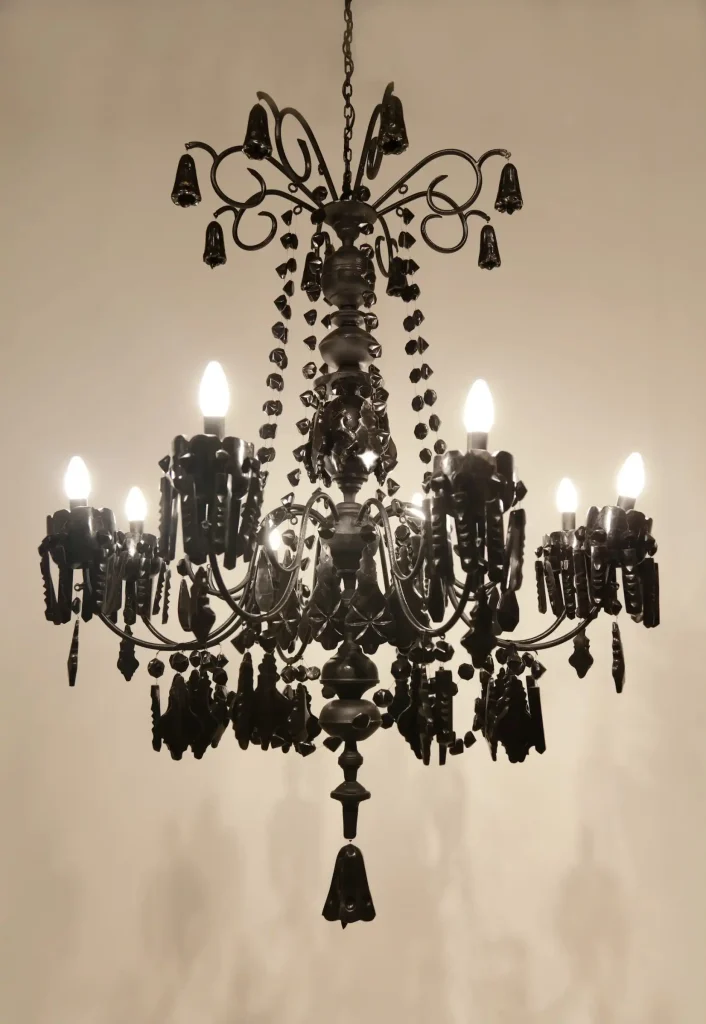
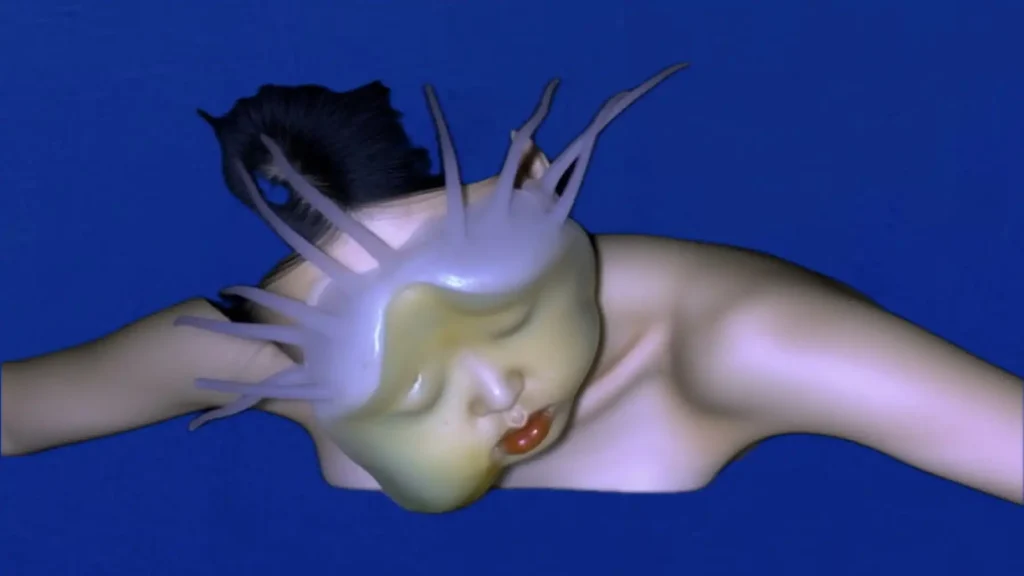
    Alejandra Prieto is a Chilean artist whose practice explores the connections between chemical elements found in minerals and the human body. Through this lens, she investigates how materials extracted from the earth such as lithium, used both in electronics and mental health treatment, can shape our biology, perceptions, and global systems.


    Meet the Artist

    Could you tell me a bit about your background and the project you are proposing for this three-month residency here at the GlogauAIR?

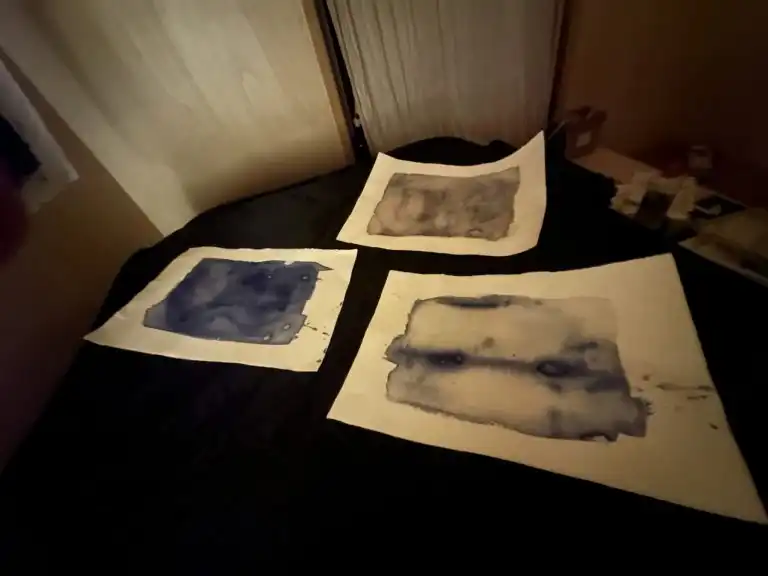
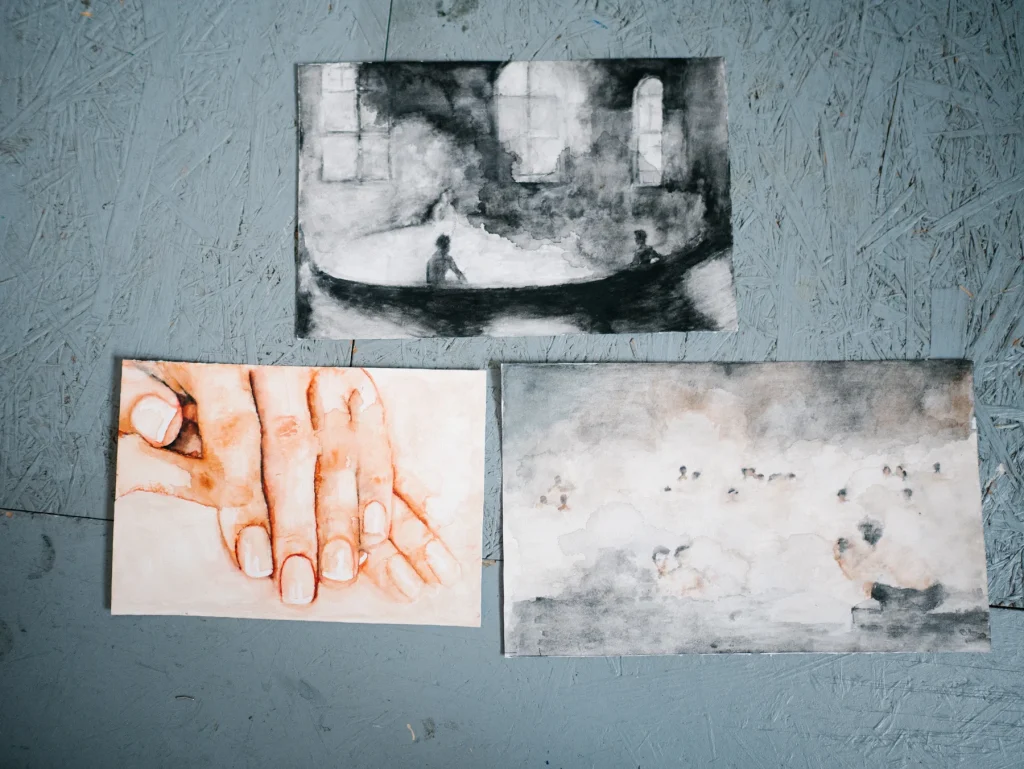
    In my usual practice, I work mainly with sculpture, often using heavy or even toxic materials like copper or lithium. So I tend to work outside the city, in the countryside, where I also have the space I need. At the same time, I’ve always enjoyed painting with watercolors. I have a neurological condition called Essential Tremor, which makes my hands shake and this complicates the painting process a bit, but that’s exactly what draws me to it. It fascinates me to explore this relationship between my body, its movement, and the paint itself.

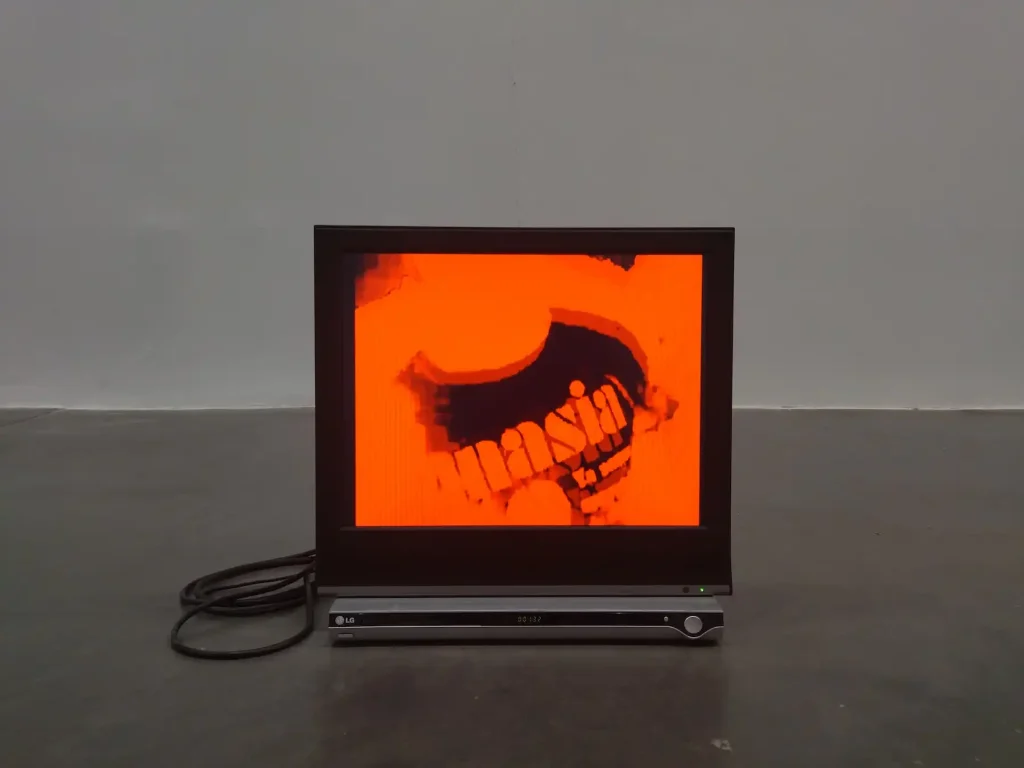
    During this residency, I plan to present two projects. The first is a series of watercolors based on my research into chemical elements and their connection to the human body. The second is a video project where I ask ChatGPT the following prompt: “25 Contemporary Art Project Ideas, Specifically Created by Artists from the Global South.” With this one I want to empathise in a humorous way the European gaze in the art world towards Latin American artists, there’s often this expectation that our work should highlight poverty, victimhood, or exoticism. While these themes are undoubtedly valid, they also carry the risk of becoming clichés, and for many of us they can feel limiting.

    How do chemical elements relate to the human body in the materialization of your work? 

    I work with the elements of the periodic table with a holistic perspective. I’m fascinated by how chemical elements connect the human body with both living and non-living organisms. Our bodies are full of these elements: iron in the blood, calcium in the bones, copper, zinc and others in smaller amounts. The lack of them affects the balance in our bodies. Objects around us are also made of the same elements, which means that the possible relationships between everything are endless and often surprising.

    One of my favorite elements is lithium. It’s used in batteries, but it can also be prescribed for bipolar disorder. That duality says a lot about the subjective and complex role of these elements in our lives, and about how they’re tied to the way the world is organized politically and economically. We as humans tend to think of ourselves as something separated from the world around us, but in reality, everything is interconnected, belonging to a much larger web.

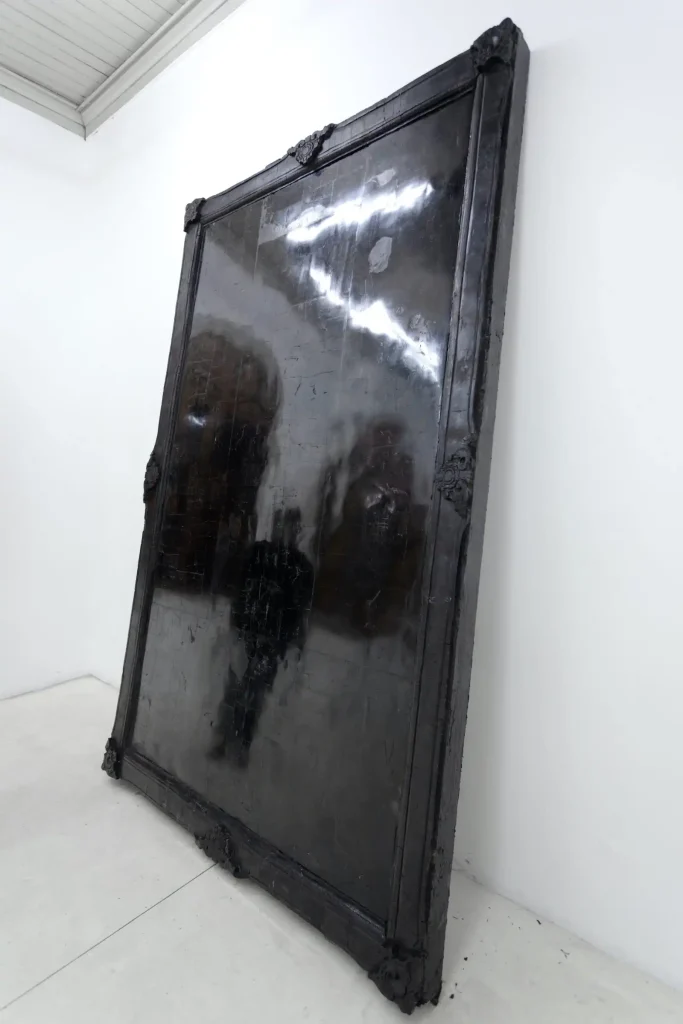
    My work with the elements is an attempt to tell their stories: what they do, how they transform when treated in specific ways, and how they act within different practices. Sometimes my approach is more physical, other times more conceptual. For example, I’ve made body sculptures out of coal, but I’ve also created a short film inspired by nitrogen. The piece recreates a parallel future where suicide by nitrogen—often known as “the sweet death”—is socially accepted. It was a way to reflect on both the material’s properties and its psychological implications.

    In your practice you explore ways of expressing and externalizing psychological illnesses. What limitations do you see in contemporary social and artistic approaches to these subjects?

    Artistically, I think these themes have started to be explored more openly in recent years, which I see as a positive shift. Bringing them to light helps to break down the stigma and taboo that often surround them and makes it easier for people to relate with it.

    Socially, I think we still have a long way to go. Mental and neurological conditions are often treated as something abnormal and people experiencing them can easily be marginalized or judged. But most of these conditions come from imbalances in the chemical processes of the brain. Again, the elements are present here. If we collectively understood the close interaction and co-existence between humans and all elements and organisms around them, we’d have more tools—and more compassion—for addressing these realities.

    Statement

    My work is primarily centered on the chemical elements found in minerals and in our own bodies, in order to connect seemingly distant worlds. Elements extracted from the earth can affect us on multiple levels. Lithium, for example—used in the batteries that power our electronic devices—also serves as a mood stabilizer for bipolar disorder. This latter connection to our neurochemistry turns the material into an actor with multiple layers of impact, affecting not only our economy and geopolitics, but also altering our bodies and subjectivity.

    GlogauAIR Project

    The project consists of a video titled “25 Contemporary Art Project Ideas, Specifically Created by Artists from the Global South.” The video is based on asking that question to ChatGPT and recording the answers, which will then be projected on loop. Alongside the projection, I plan to present five small-format watercolors based on my research into chemical elements and their relationship with the human body.

    CV Summary

    • Alejandra Prieto was born in Santiago, Chile, in 1980.
    • She holds a Bachelor’s degree in Arts from the Pontificia Universidad Católica de Chile and a Master’s degree in Visual Arts from the Universidad de Chile.
    • Solo exhibitions:
      • Galería Gabriela Mistral, Santiago
      • Proyecto Fachada at Sala de Arte Público Siqueiros, Mexico City
      • Y Gallery, New York
      • Galería Die Ecke, Santiago
      • Sala Arte CCU, Santiago
      • Sagrada Mercancía, Santiago
    • Group exhibitions:
      • 11th Havana Biennial
      • 7th Mercosur Biennial in Porto Alegre
      • Palais de Tokyo, Paris
      • Saatchi Gallery, London
      • Paul Kasmin Gallery, New York
      • NC-Arte, Bogotá
      • MAC USP, São Paulo
      • National Museum of Women in the Arts, Washington D.C.
      • Roebling Hall Gallery, New York
      • Färgfabriken, Stockholm
    • Residencies:
      • Art OMI, New York
      • La Tallera, Cuernavaca
      • URRA, Buenos Aires
      • ISCP, New York
      • LARA (Latin American Roaming Art)

    Gallery
  • Carlos Bonet

    Carlos Bonet

    Carlos Bonet is GlogauAIR resident
    from July, 2025 to September, 2025

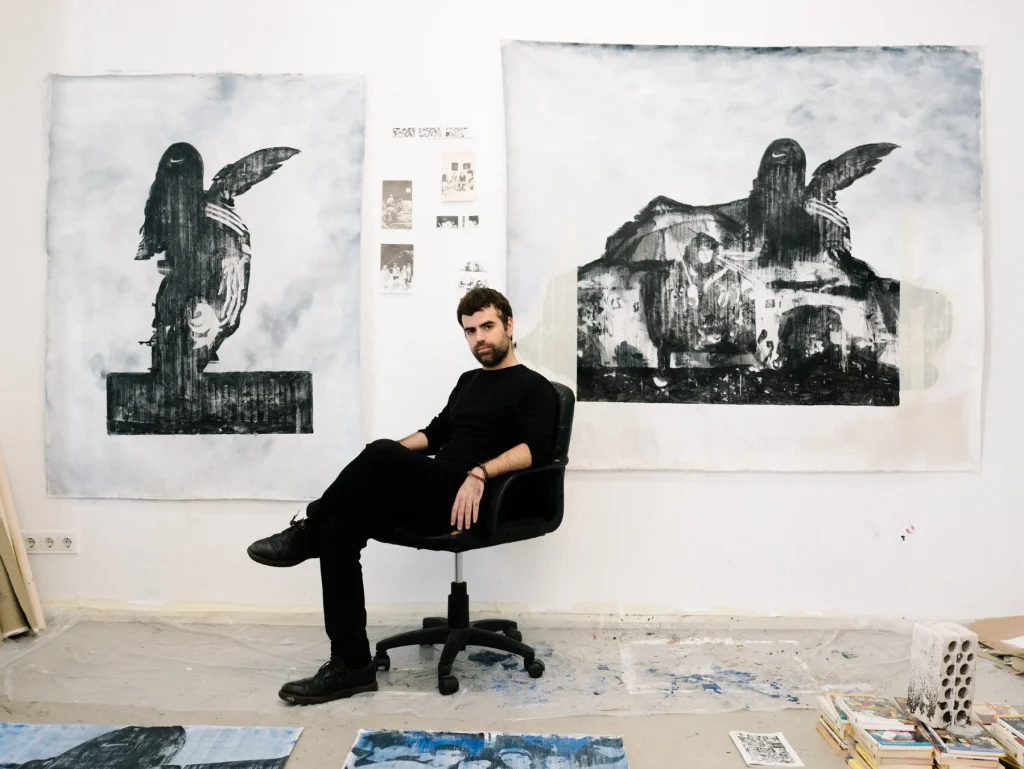
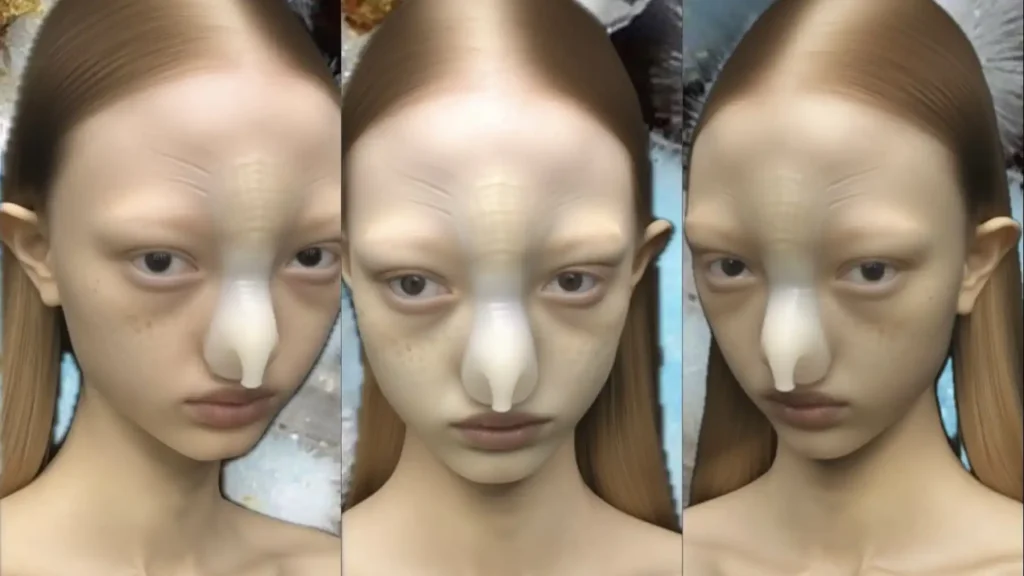
    Carlos Bonet is a multidisciplinary artist working across audiovisual and pictorial media, with a parallel focus on cultural mediation. He has contributed to spaces like EACC (Espai d’Art Contemporani de Castelló) and is co-founder of the assembly-based contemporary art space CÚMUL. His work investigates the relationship between power and pleasure within capitalist structures and often includes cultural phenomena such as techno and punk.

    Meet the Artist

    Could you tell me more about your background and the project you are proposing for this three-month residency at GlogauAIR?

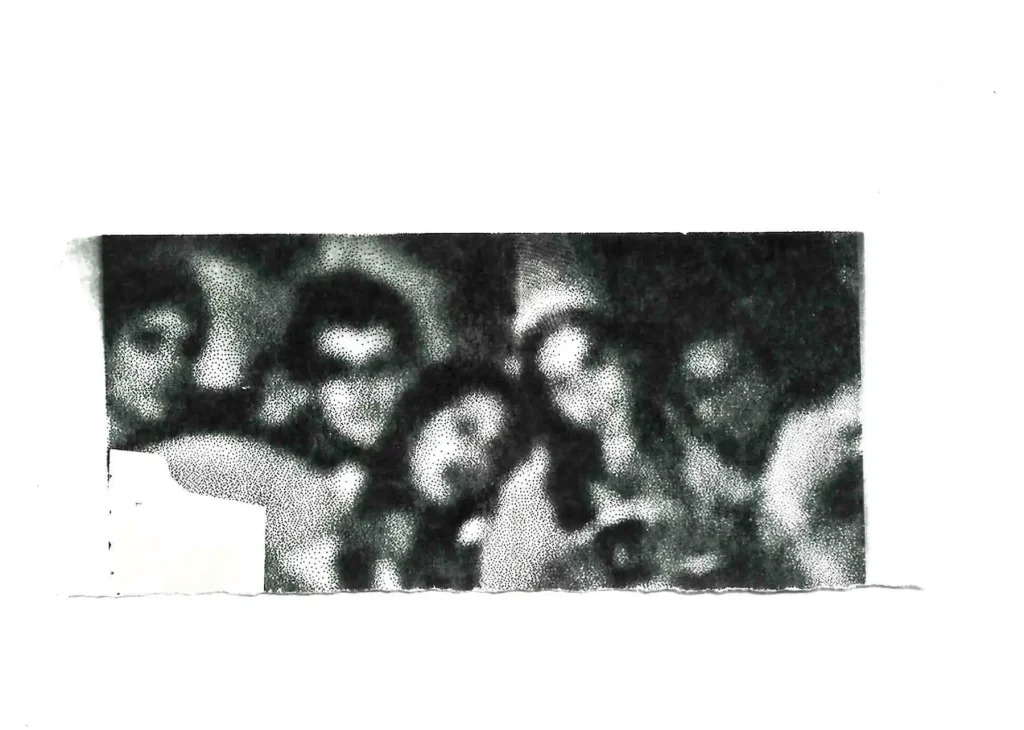
    The project has two antecedents: one is a residence I did at the Konvent 2.0 in Cal Rosal, Barcelona, where I was working on the relationship between clubbing and the industrial area. I wanted to find a nightclub in a very big industrial area that would give me this feeling of being in a sort of ecclesiastical temple, the idea of ritual. The second one comes from a project I was doing for an exhibition in the contemporary museum of my city. The work was about “the young workers”, the people who built the museum at the end of the 90 ́s. The generation of the housing bubble, the “golden era”, political corruption, the boom of nightclubbing, people would work, buy a car, and go partying. It was a very hedonistic context and I found it interesting to work on these relationships. During this research I found an image of five friends partying at Pirámide, a nightclub in Castellón, my city. It had been taken during a night in 2009, the same year that the club closed due to the 2008 economic crisis. And I started to think about the after party, the idea of the end of the party, the end of nightclubbing, the end of the housing bubble, the consequence of extreme political corruption, and also the end of hedonistic life. It all felt to me like a poetic analogy.

    Later, I found a book from my childhood called “The Famous Five” by Enid Blyton, and I instantly made the connection between the five in the image and the five of the book. What was interesting to me is that the book described a very archetypical idea of youth, which was a total contrast with the friends in the picture. So my work is about putting teenagehood and youth in perspective. I feel particularly interested in this moment of life because it’s the time when people build their identity, the identity of a group, and where all the romanticism of the absolute ideas come from, also political ideas.

    Your project could be interpreted self-referential, given that you share both the age and hometown of its protagonists. How do your personal experiences after the economic crisis intersect with the characters in The Famous Five? What aspects of the contrast between the historical context in the book and your own at that moment captured your attention the most?

    The question is interesting because it lets me explain this. Despite the title, this is not an autobiographical project through which I aim to narrate something personal or intimate. It is more a collective portrait in which we never see the faces of these five friends. My interest is for the viewer to fill in that gap with their own experience. I’m fascinated about what happens during the teenage years and the interpretation of social and cultural movements, by making a contrast between them and the contradictions of the famous archetypes of that era. For example, “The Famous Five” are five friends who represent idealized models of youth, figures perfectly shaped to fit in society. Their concept of life and adventure is completely different from that of the five friends after the club. For the latter, adventure is tied more to excess, drugs, and nightlife. This contrast brings up the idea of a lost innocence and reflects the signs of a depressed, troubled era.

    Would you say that your very early experiences in a context of economic restriction shaped your artistic vision and trajectory? If so, how do you feel they have influenced your way of perceiving and creating?

    Well, even though I try to distance myself, my personal vision is present. My memories from that time are not only mine, but also experiences from friends or other people. I lived and observed the things that most young (and not so young) people saw at that time such as the TV news shows or political speeches. Ultimately, this project is a portrait and analysis of that period of youth from an observer’s perspective, it could be me or any other viewer, interested in knowing more about the story behind this. Although it focuses on a specific time and place, I believe it transcends that local category and can be understood by any other generation or anywhere else in the world. In the end, local questions are universal.

    In your project for GlogauAIR, you aim to evoke the ghostly presence of these five friends to explore the themes of hedonism, power and capitalism. Could you tell us more about the mediums you have chosen for this representation and why?

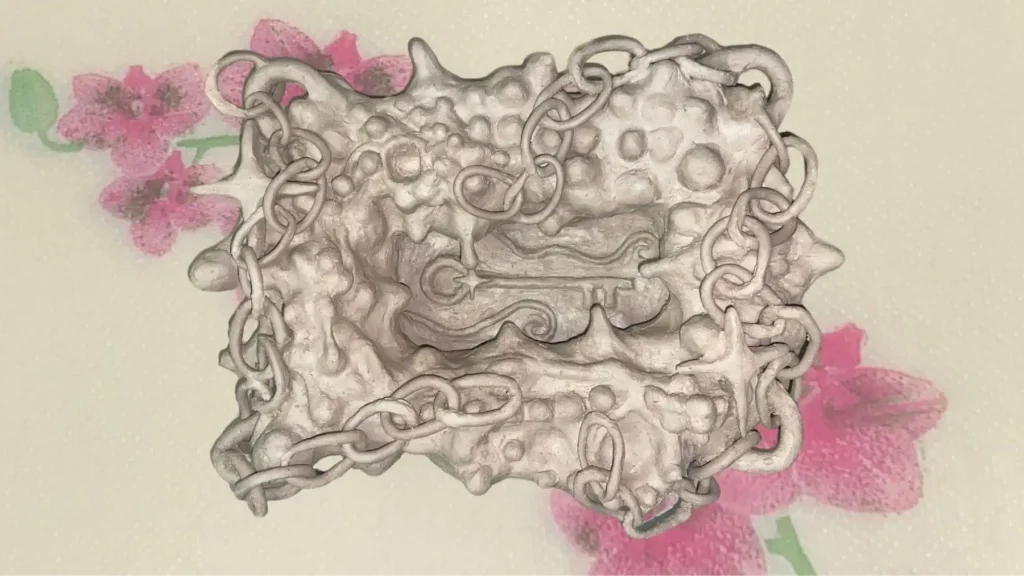
    This is a project carried out using painting, photography and video. The materials I am using as references are files found on the internet or my own images. For example, I went to the Pirámide nightclub years after it closed and documented its state of abandonment with video and photography. All this with the intention of reconstructing that ghostly idea of those five friends in the midst of that abandonment and to recall the idea of what we once were collectively.

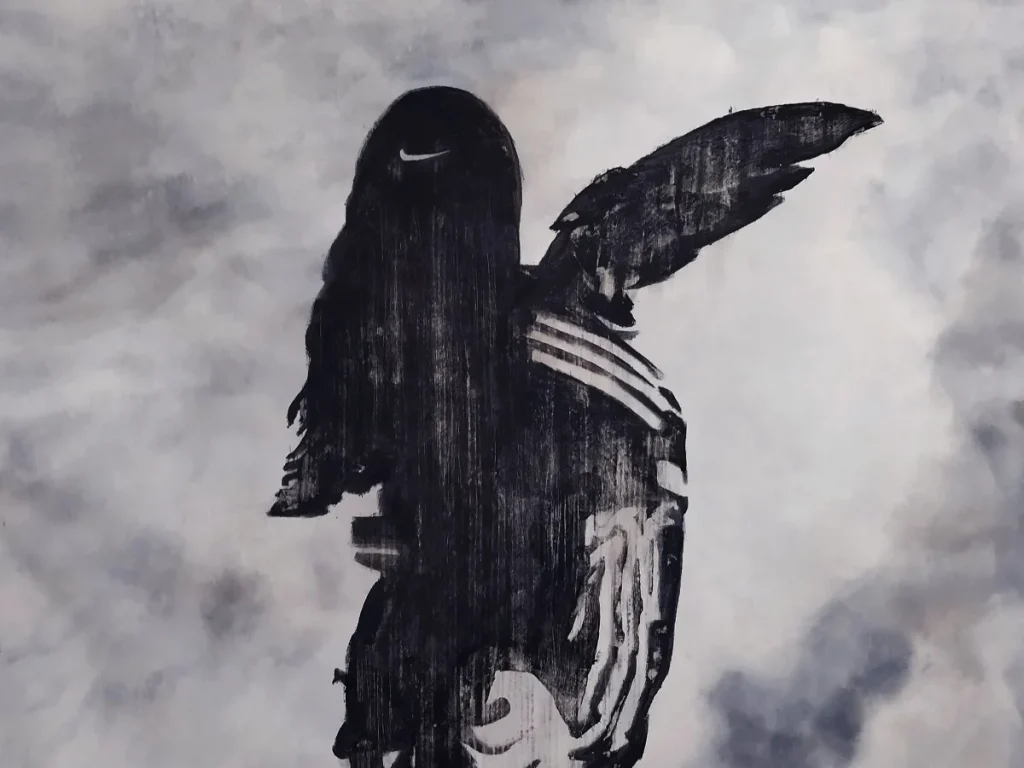
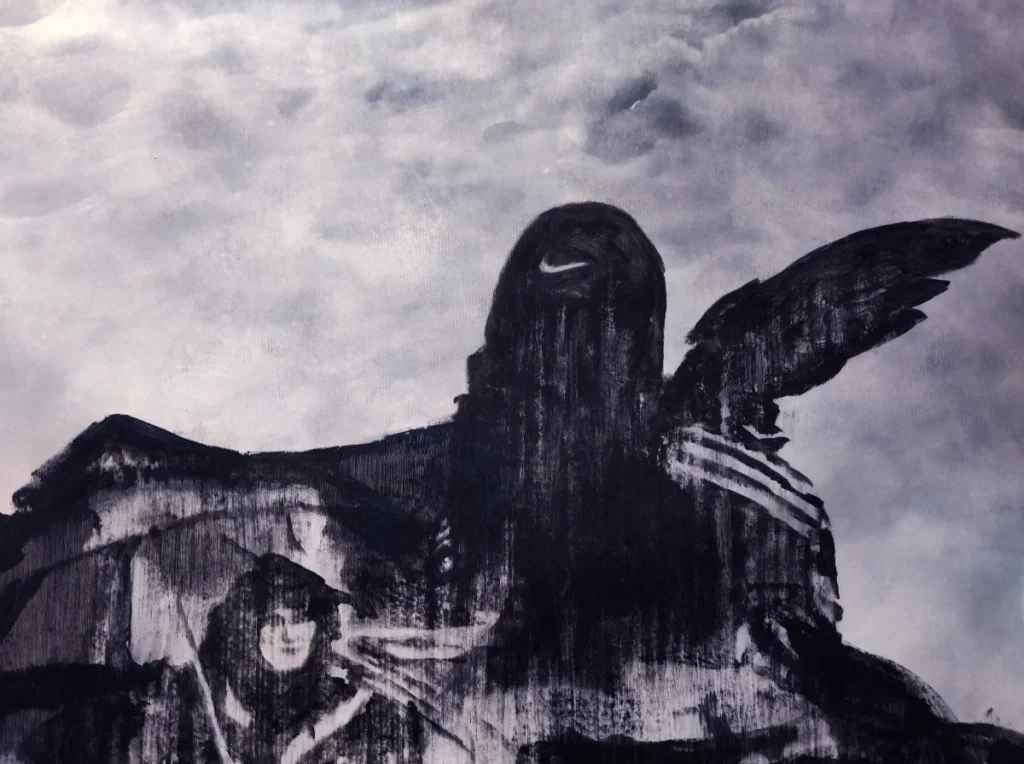
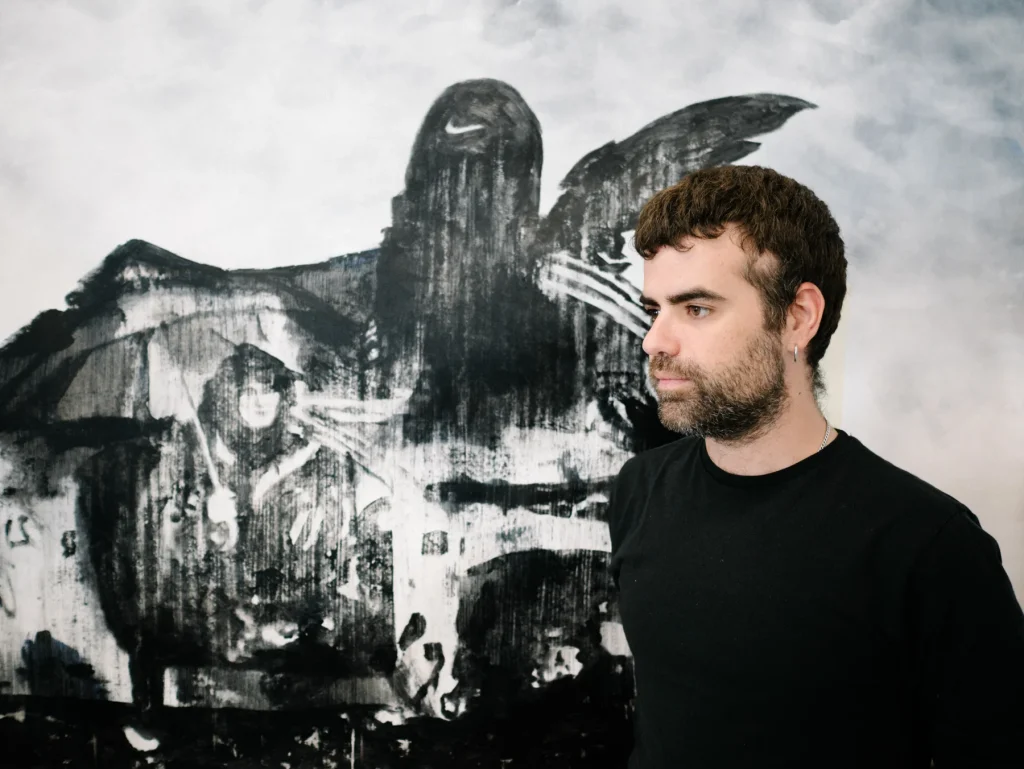
    On the other hand, my walks around Berlin have given me the idea of the monumental. And the images are constructed with this intention, not only as a tribute, but also under the idea of constructing something incomplete, shapeless and antagonistic to a sculptural genre that often embraces the idea of totality and the epic of romantic ideals. Ideals that also feed into the archetype that shapes our cultural view of adolescence and youth. To this end, I have designed a kind of angel that appears repeatedly and is inspired by the one-winged hero drawn by Paul Klee.

    But the idea of this project, it’s not closed. It’ll probably develop as an open painting project, or a video project. This is only one part of that. The idea is to keep working with the same generation, illustrating more stories like the famous five, happening in another context, in another place. Like the punk movement, or squatting houses for example. Bringing another perspective to the cultural movements of youth.

    Statement

    Carlos Bonet is dedicated to audiovisual and pictorial creation from a multidisciplinary perspective. He combines his work with cultural mediation, participating in spaces such as EACC (Espai d’Art Contemporani de Castelló) and CÚMUL, a contemporary art space that operates on an assembly basis, of which he is a co-founder.

    As an artist, he is interested in investigating the relationship between power and pleasure in the capitalist context. He also explores various cultural phenomena such as techno music and the evolution of punk in specific locations.

    GlogauAIR Project

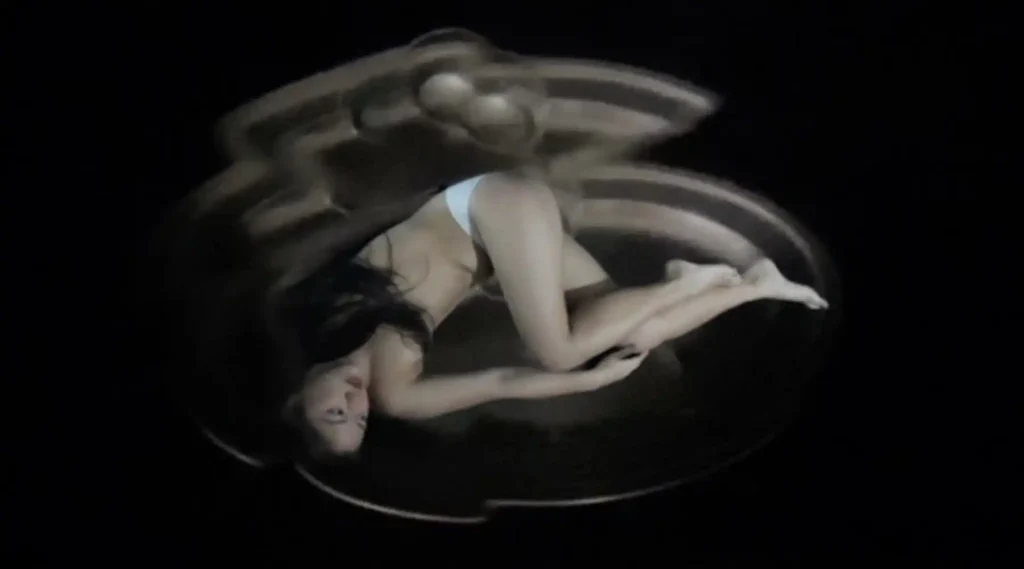
    When we were The Five is a (self-)fictional story based on a photograph taken at the Pirámide nightclub in 2009 (the year the club closed due to the economic crisis that began in 2008). The protagonists of the image appear distorted, anonymous, almost ghostly… stripped of a specific identity, thus becoming the collective identity of any teenager who in those years was beginning to discover the world during a hedonistic era that was coming to an end.

    The fictional part of the project is inspired by the different stories told in the young adult novel series The Famous Five by writer Enid Blyton. These novels, so popular in our country among the different generations born since the middle of the last century, emerge as the poetic backbone of the project. This creates a contrast with the different model of youth presented in Blyton’s novels and shows the social reality of an era marked by the excesses of the property bubble and also by the shortcomings of the economic crisis (and hangover) that followed.

    In early 2025, I visited what remains of the Pirámide nightclub, now abandoned, in the municipality of Cabanes, with a camera. My intention in taking all the images was simply to reconstruct the ghost of those five anonymous figures who seemed so happy on that night in 2009. That same week, I bought 15 illustrated copies of the different Famous Five novels so that I would have archive images to support me. With all this, I saw that I already had enough material to carry out a film and installation project and thus be able to reconfigure the image of what we once were.

    CV Summary

    • Organisation and presentation of the CINE Y CIUDAD film series, EACC 2025
    • Organisation and presentation of the ESPAI CINEMA film series: UTOPÍA, EACC, 2024
    • Talk in the Contar con Imágenes series, Menador. Castelló 2023
    • Organisation and participation in the La neu no es fon al Juny residency, EACC. Castelló 2023
    • Publication of the photo book AUTO DE FE, PÓLVORA publishing house. 2023
    • Selection for the EAN (Encontro de Artistas Novos) artistic residency, Cidade da Cultura, Santiago de Compostela, 2022
    • Exhibition El descrèdit de la realitat, EACC (Espai d’Art Contemporani de Castelló). June, 2022
    • Exhibition El descrèdit de la realitat, EACC (Espai d’Art Contemporani de Castelló). June, 2022
    • Exhibition Cúmul OpenStudio, Cúmul. Castelló. April, 2022
    • Exhibition Gas, Ajuntament de Benicàssim. Benicàssim. September, 2021
    • Exhibition At the Summer Rave, Novella Gallery. Sagunto, June 2021
    • Selection for residency and exhibition at Bilis Negra. Tierra Seca y Fría, Konvent Punt Zero. Barcelona, May 2021
    • Exhibition Crisis, Museu Molí d’Arroç, Almenara. April 2021
    • EMAC Festival Exhibition, Borriana. May 2021
    • Online Exhibition Alégrame esas Pascuas, Online ABC Cultural. January, 2021
    • Krampus Showroom Exhibition, Cúmul. Castellón, December 2020, 2021, 2022, 2023, 2024, 2025.
    • VÍTOL collective exhibition, Museu Belles Arts de Castelló, 2022
    • Organisation and participation in the VÍTOL conference. Cúmul together with Consorci de Museus. May 2022
    • Creator, together with Jorge Alamar, of the Quema en Villores (Castelló) residency project. La Fotoescuela, Valencia
    • Assistant to Julián Barón in his exhibition C.E.N.S.U.R.A. La Reunión. Llotja Cànem, Castelló. January 2022
    • Assistant to artist Jon Cazenave for the Galerna project curated by Julián Barón. EACC. Nov 2021

    Gallery
  • Anton Vertwen

    Anton Vertwen

    Anton Vertwen is GlogauAIR resident
    from July, 2025 to September, 2025

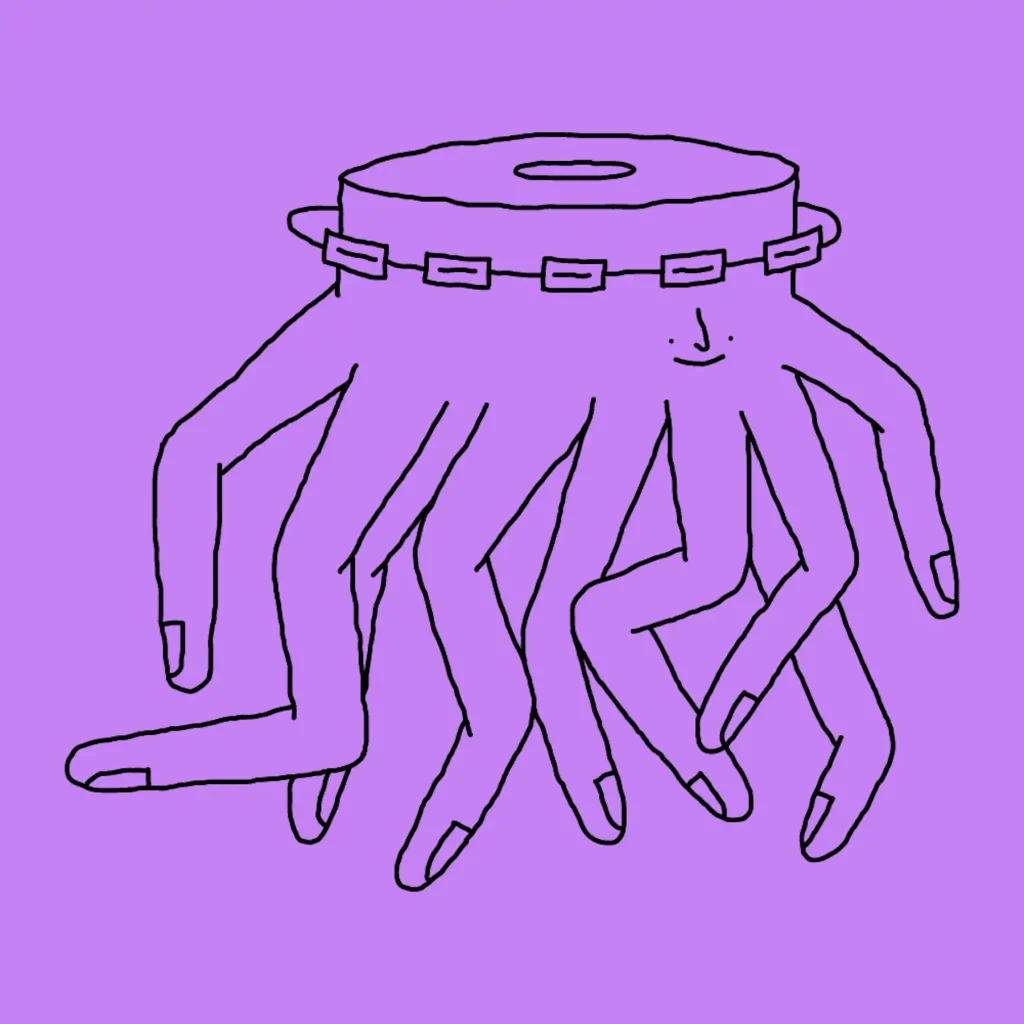
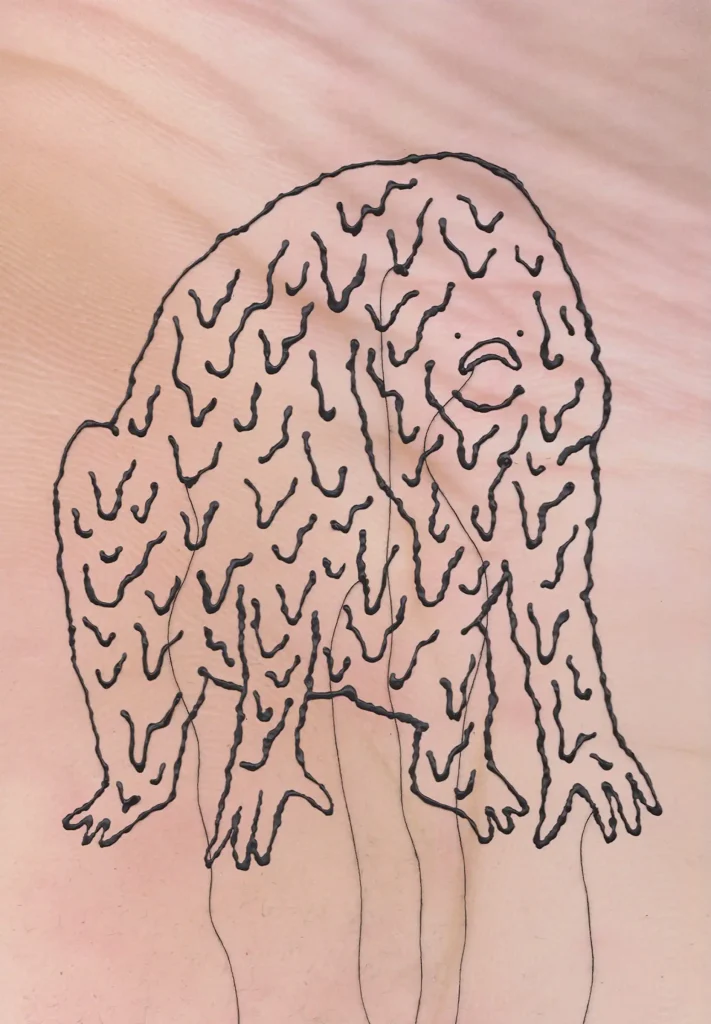
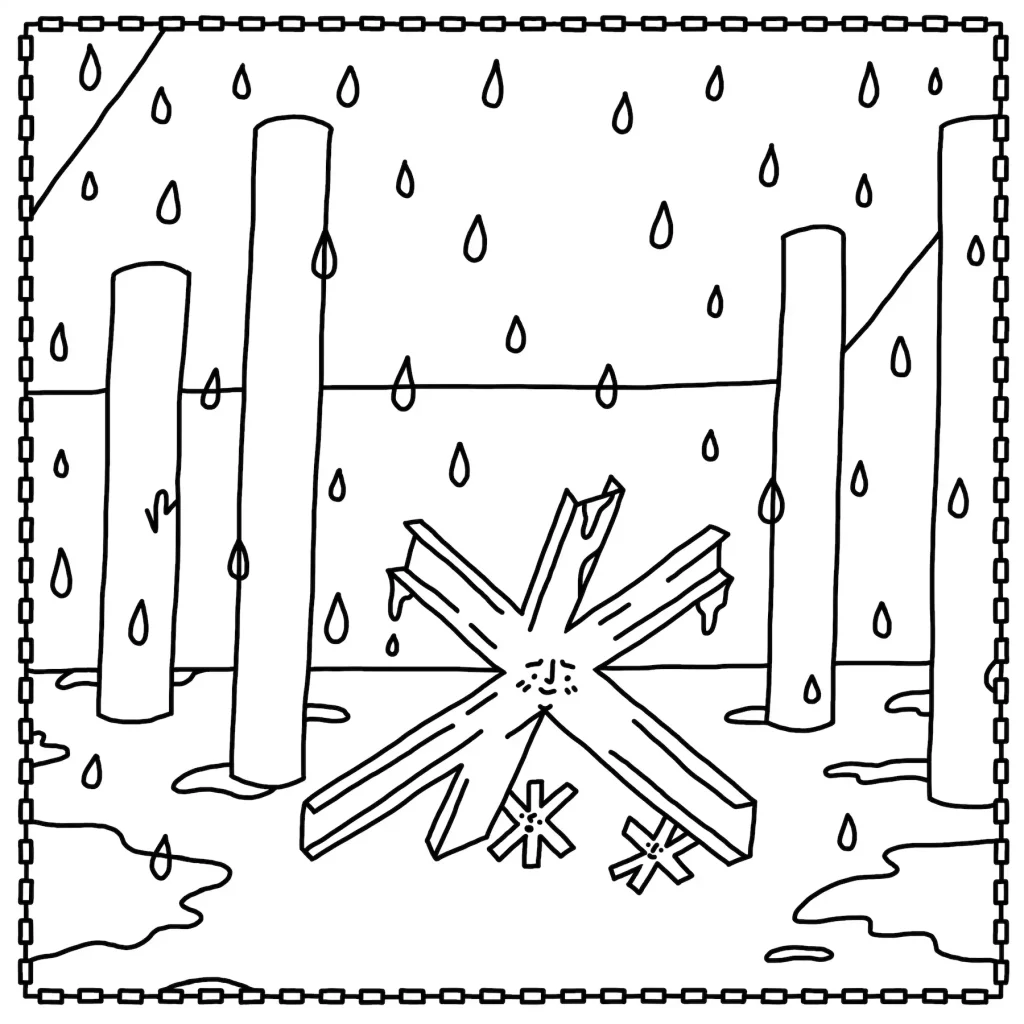
    Anton works with visuals and text, trying to keep them simple and unpretentious, yet intriguing and engaging. His projects are filled with humor and the absurd, and mainly tell personal stories – of war and home, loneliness, overthinking, cruelty and beauty.


    Meet the Artist

    Can you tell us a bit about your artistic background and the project you are proposing for this three-month residency at GlogauAIR?

    i’ve been doing some kind of creative projects since school. In 2018, i started doing it professionally as an illustrator for the Ukrainian Burning Man community, drawing colorful stickers and posters. Eventually, i decided to focus on more personal projects. Then in 2022, the full-scale invasion started, so my work took a more serious turn. In December 2022, i received an artist grant from Adobe, and took it as sort of a push to pursue the artistic career further. But i’ve never had a proper art education.

    i’m very interested in artifacts – objects that appear in your life and accumulate memories and emotions. A few days ago, i found a couple of super fancy candlesticks – a blessing from Berlin’s “Zu Verschenken” (to give away) culture. And today i stumbled upon a beautifully specific toy – a little hot dog stand. There’s some magic in these things – stories they had before me, stories they’ll have with me. Those items will carry my memories from this residency and who knows what else?

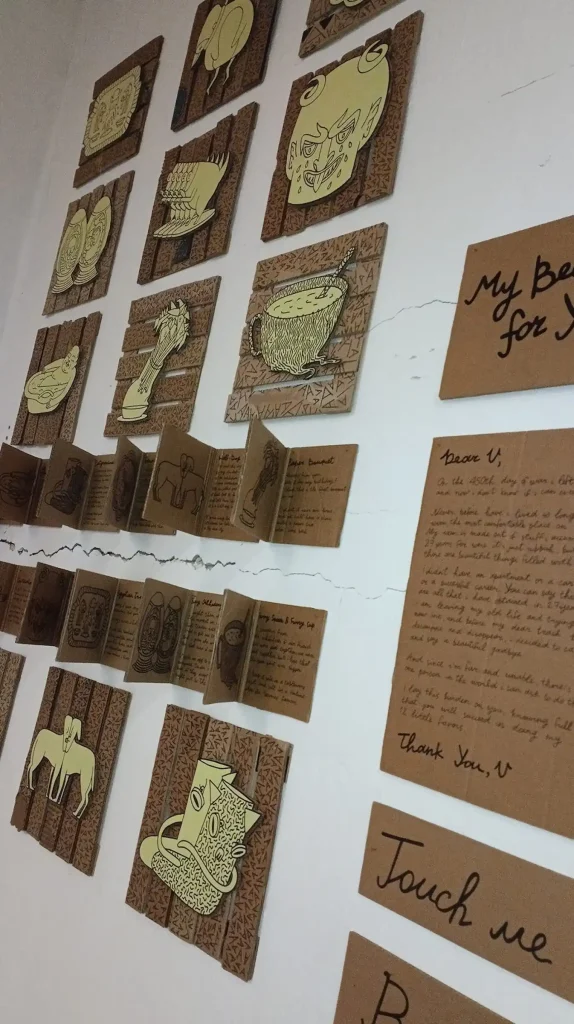
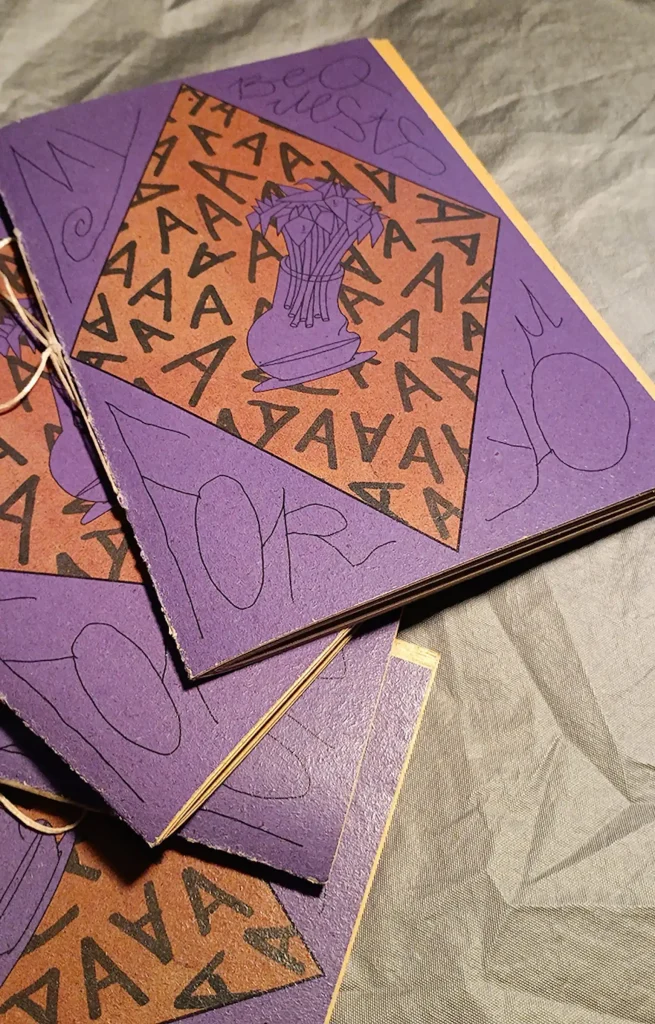
    One of my most important projects was also about artifacts – a cardboard installation titled “My Bequests For You”. In 2023, i was living with my best friend in Kyiv, in an apartment full of useless but precious things. i left Ukraine abruptly, and the burden of dealing with my artifacts was left to my friend. So i wrote her instructions, more poetical than practical, on what to do with my stuff. It’s a story about my life in Kyiv and our relationship. A goodbye to my home.

    Now i want to make a central project of this theme – a handmade encyclopedia about me, but with artifacts. i’m still thinking of some whys and hows of it, but if i do a good job, this could become a lifelong project.

    Your personal story of living in a refugee camp in Berlin has deeply influenced your work. How would you describe the process of transforming those life-changing stories into humorous representations of your artworks?

    i use humor a lot; it’s my favorite tool. i use it partly to emphasize and remind myself that my drama is not the biggest drama in the world. i’ve lived in a camp for three months, and some people have lived there for a year or more. Some are still living there. Many people recognized as men, such as myself, are not even allowed to leave the country. And many people are not even privileged enough to be alive anymore. So, it’s all very relative.

    Humor is really a defense mechanism – but an evolved one, a tool of inspiration that i can apply to my art. It’s a reaction and reflection on all the absurdity and cruelty around.

    What is the process in which drawings and storytelling interact in your project? Are there any artists who influenced your work?

    Most of the time, i still operate as an illustrator: for me, the story or idea comes first. i think of a thing that worries me or of a theme suggested by an open call. i think of how i can relate to it. How can i express myself through things that i have some authority to talk about – which are usually personal stories. After that, i start thinking of how i can visualize or realize it.

    My inspiration comes from all kinds of places and people. Davey Wreden is a game designer who made one of my favorite video games – The Beginner’s Guide (2015). Mechanically, it’s a simple exploration game where you just walk around and listen to the author’s narration, but the story is intriguing and psychologically complex. i’m fascinated by the artist’s ability to do so much with so little.

    Marcus Oakley is a visual artist. He does minimalistic illustrations, but they are somehow captivating in a way that i want to achieve myself. Again, i’m fascinated by the simplicity. His ability to grab my attention with just a few lines is magical to me.

    Obvious Plant is an artist that makes funny and absurd fake products. They are a very good designer, and i adore how creatively they work with the format of a product straight from a supermarket shelf.

    I’ve seen in your first solo exhibition in Berlin that you mixed painting, installation, interactive experiences and performance. How are your messages communicated to your audience through these different artistic expressions?

    i did a lot of stuff for that show. Partly it was to try new things and to push myself to do more – i know i can do more, i just need a deadline.

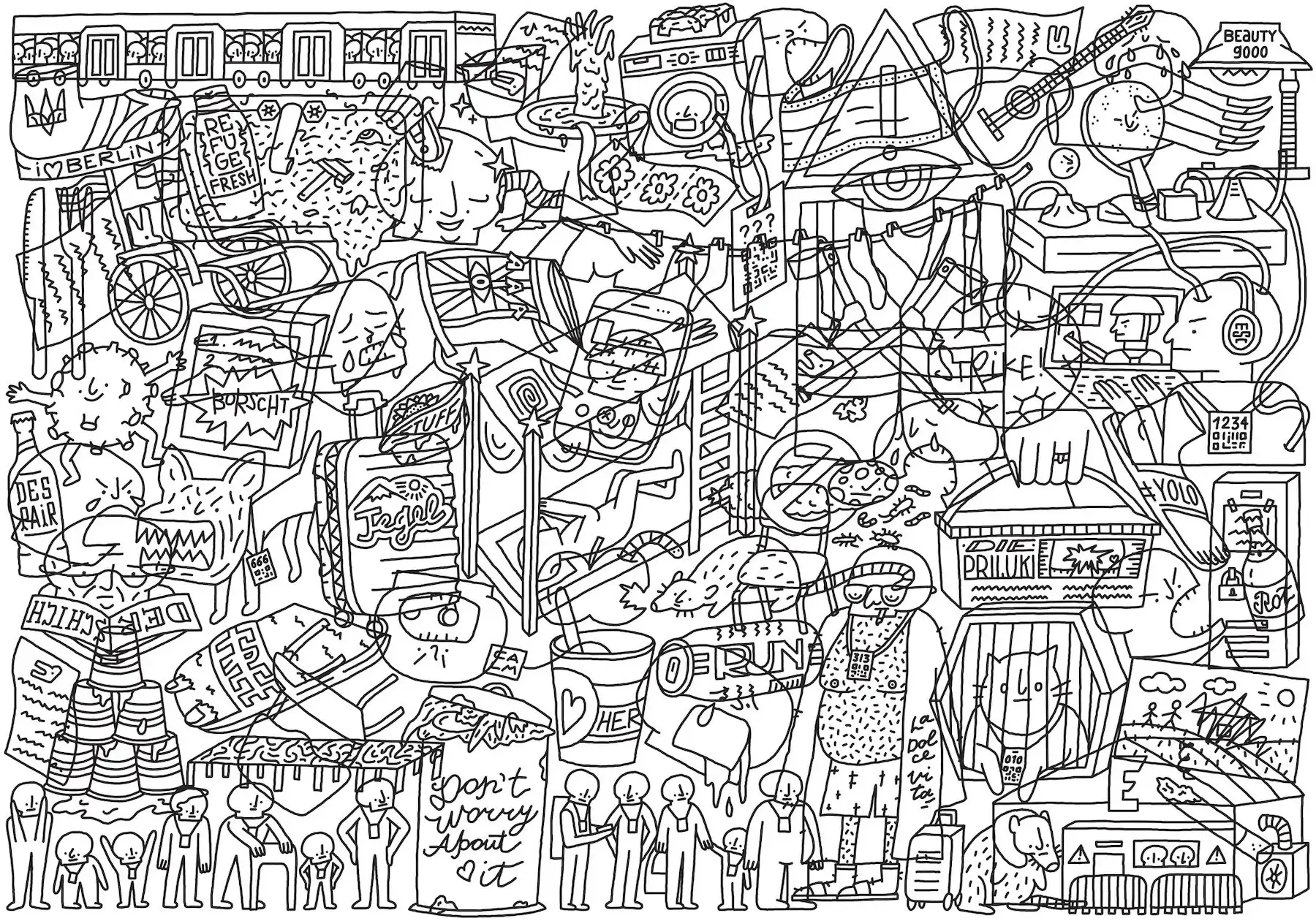
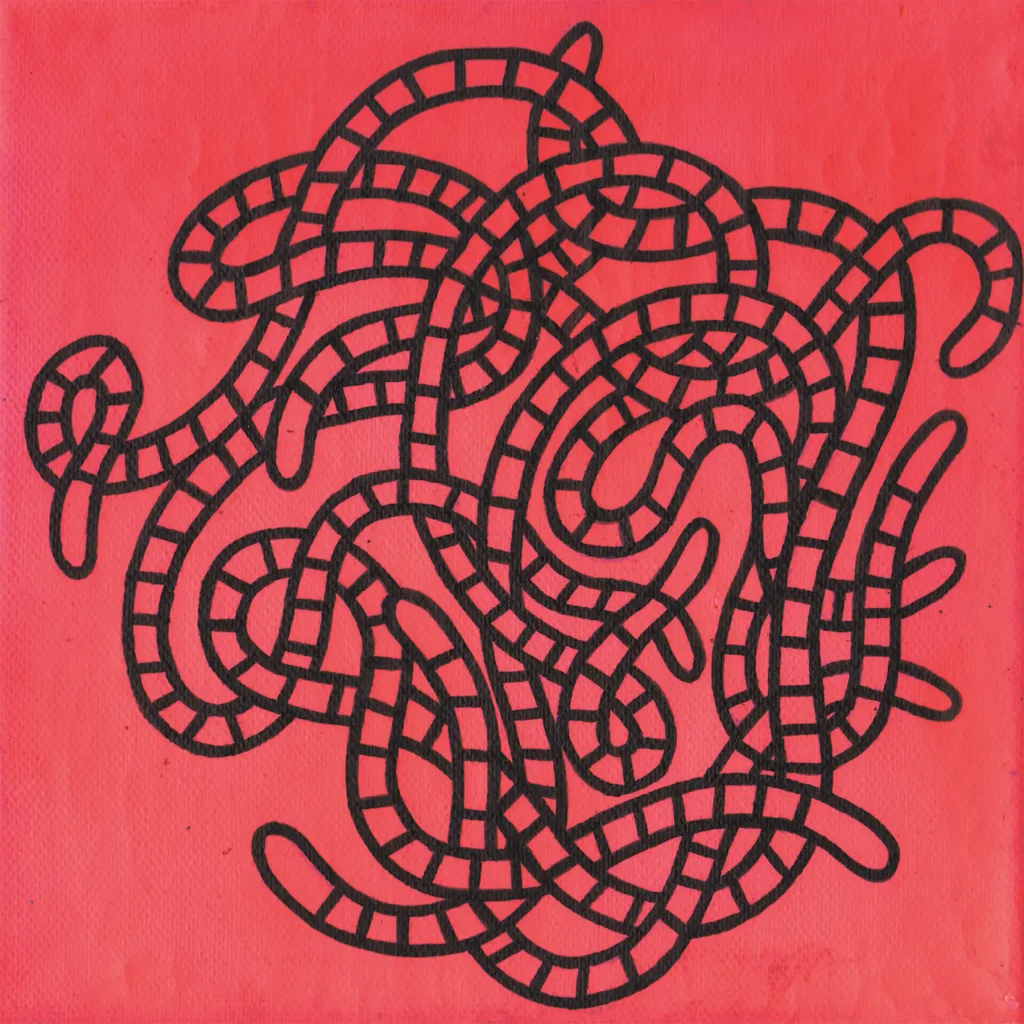
    It’s not so much about the message. The message was in the main artwork, a hidden-objects canvas about my time in a refugee camp. A mess of black lines overlaying each other, a maze of unpleasant visuals, and a searching game that came with a list of things to find. I thought it was a suitable format to express the chaos and intensity of my time in the camp and the absurdity of that place existing in the year of our lord, 2025.

    The main reason i did that much is because i wanted to create an experience for people. For me, a conventional exhibition experience is walking around a white room with a couple of artworks far apart. Some of them i might find visually interesting, very rarely i would feel something towards them. Maybe there are some texts to read – maybe they are even readable. After 10–15 minutes, i’m done.

    For me, this is just not enough. So when it comes to my projects, i want to do something more engaging, more entertaining. i like art that is clever, but also fun. It may sound shallow to some, but this is just who i am – here and now.

    Statement

    I work with visuals and text, and try to keep them simple and unpretentious, yet intriguing and engaging. My projects are filled with humor and the absurd, and mainly tell personal stories – of war and home, loneliness, overthinking, cruelty and beauty.

    My process consists of walking around the room while talking to myself, a lot of planning and writing, and a little bit of drawing.

    Some of my recent projects are a hidden-objects painting of a refugee camp i lived in, a collaborative zine about guilt and shame, and a visual story of my relationship with my backpack.

    GlogauAIR Project

    The main thing I’ll work on is about artifacts. I come from Ukraine, where many people (for various reasons) have hoarder tendencies, stockpiling all kinds of things for decades. I think i got this from my grandpa. But while in his case it’s bolts and radio stuff, for me, it’s abandoned toys or funny details i pick from the streets.

    I like to imagine their stories before me. A lot of these things get a new story – my story – of people and places around me. Some artifacts carry stories that made me who i am.

    I want to create the foundation of what could become a lifelong project: an encyclopedia of my artifacts – an art book, a physical fragile object i would have to update and take care of forever.

    CV Summary

    Self-taught conceptual artist from Kyiv, started in 2018 as a volunteer illustrator for the Ukrainian Burning Man community. In 2022, lived through the first year of the full-scale invasion in Ukraine, focusing on personal projects. Had my first solo exhibition and received an artist grant from Adobe. In 2023, fled the war, participated in my first residency in Warsaw and later moved to Berlin. In 2025, had my first Berlin personal exhibition.

    Solo exhibitions

    • “Can you find yourself in a refugee camp?” (UA Nest, Berlin, 2025)
    • “Hedgehog Family” (Vagabond, Kyiv, 2022)

    Recent group exhibitions

    • “Artifacts of Defiance” (Mojo Studios, Berlin, 2025)
    • “Transient” (New Fears Gallery, Berlin, 2025)
    • “Alternative” (90mil, Berlin, 2025)

    Recent art residencies

    • Guilt & Shame Art-lab (Tbilisi, 2024)
    • Resettlement at LiTE-HAUS Gallery (2024, Berlin)
    • Ujazdowski Castle Centre for Contemporary Art (Warsaw, 2023)
    Received an Adobe Creative Residency Community Fund in 2022.

    Gallery