Archives: Artists

  • Lihi Shmuel

    Lihi Shmuel

    Artist main image

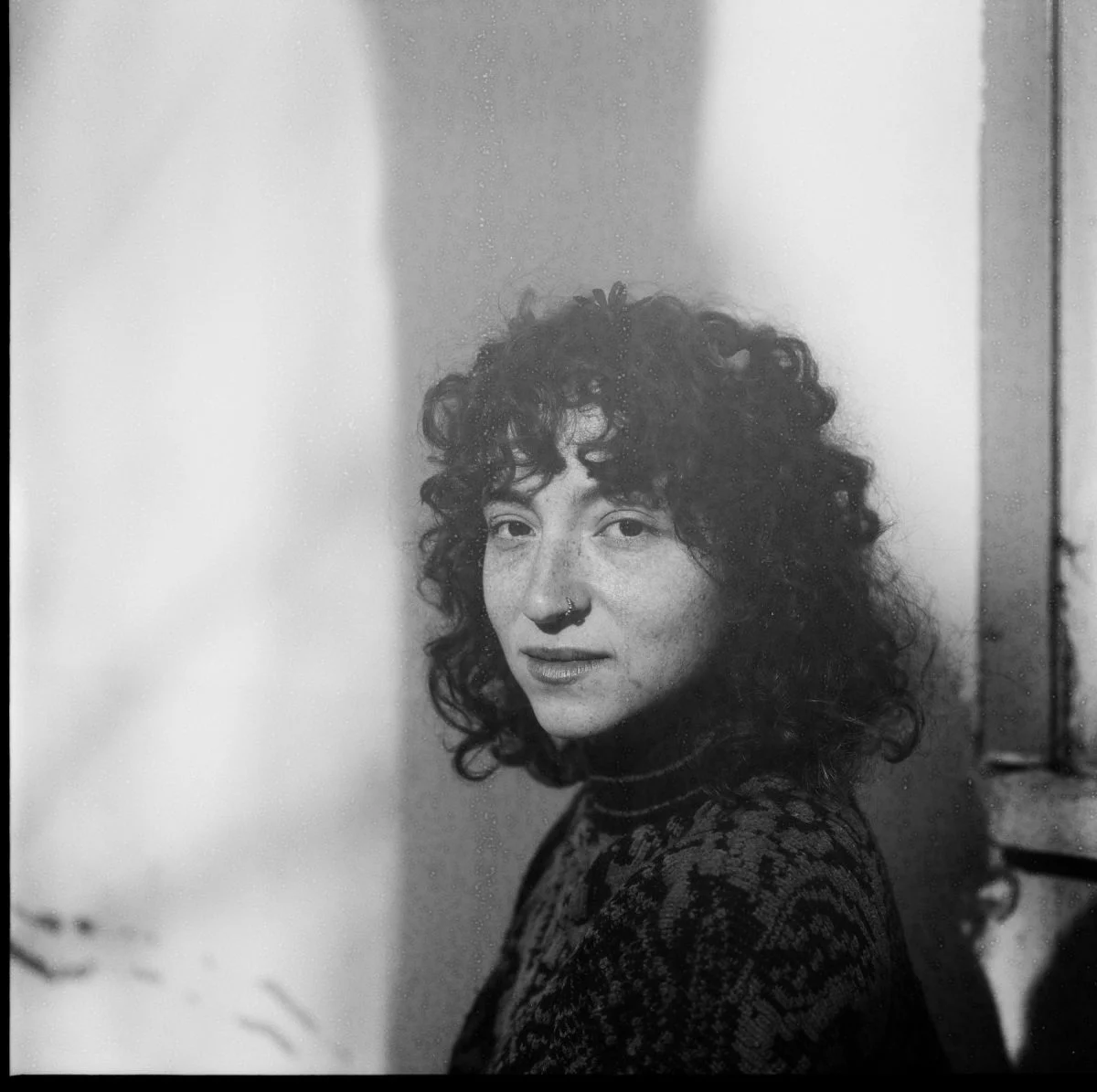
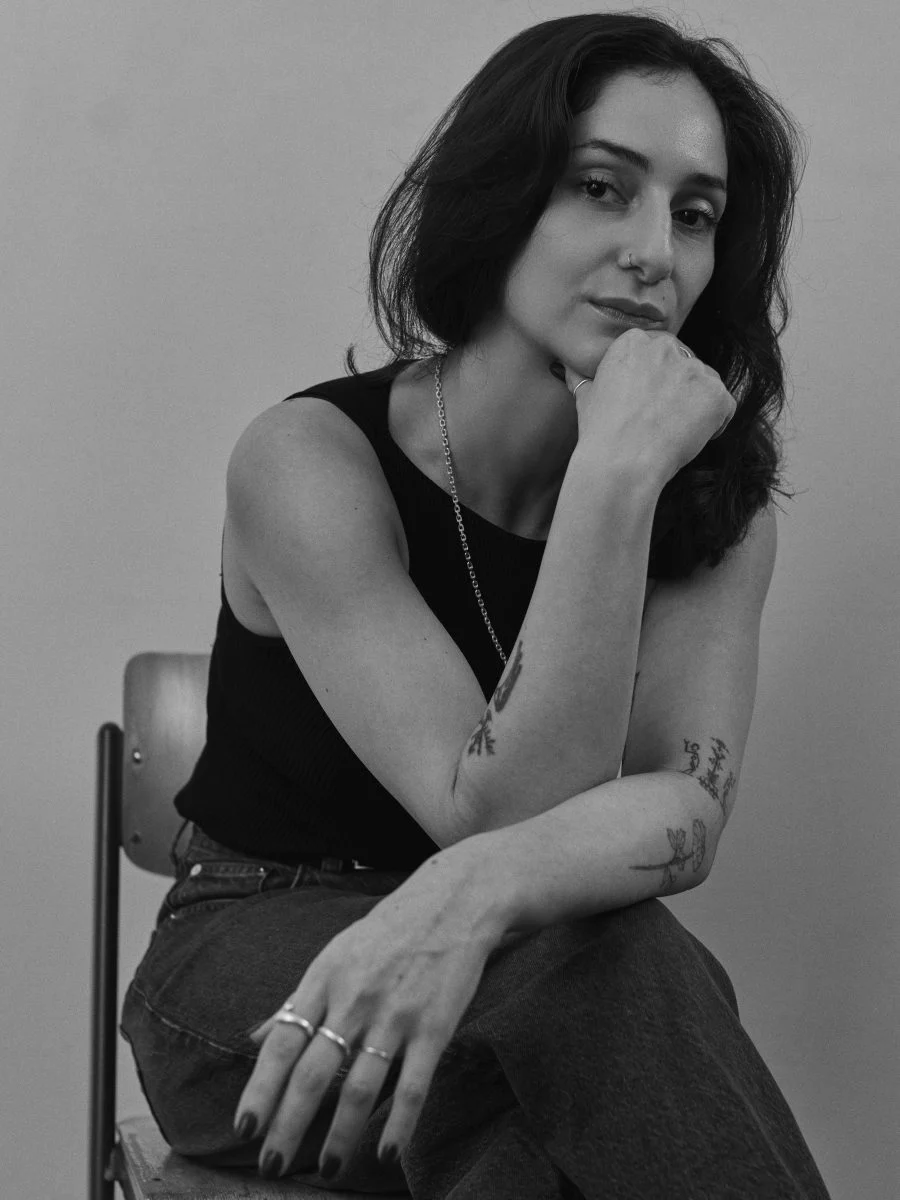
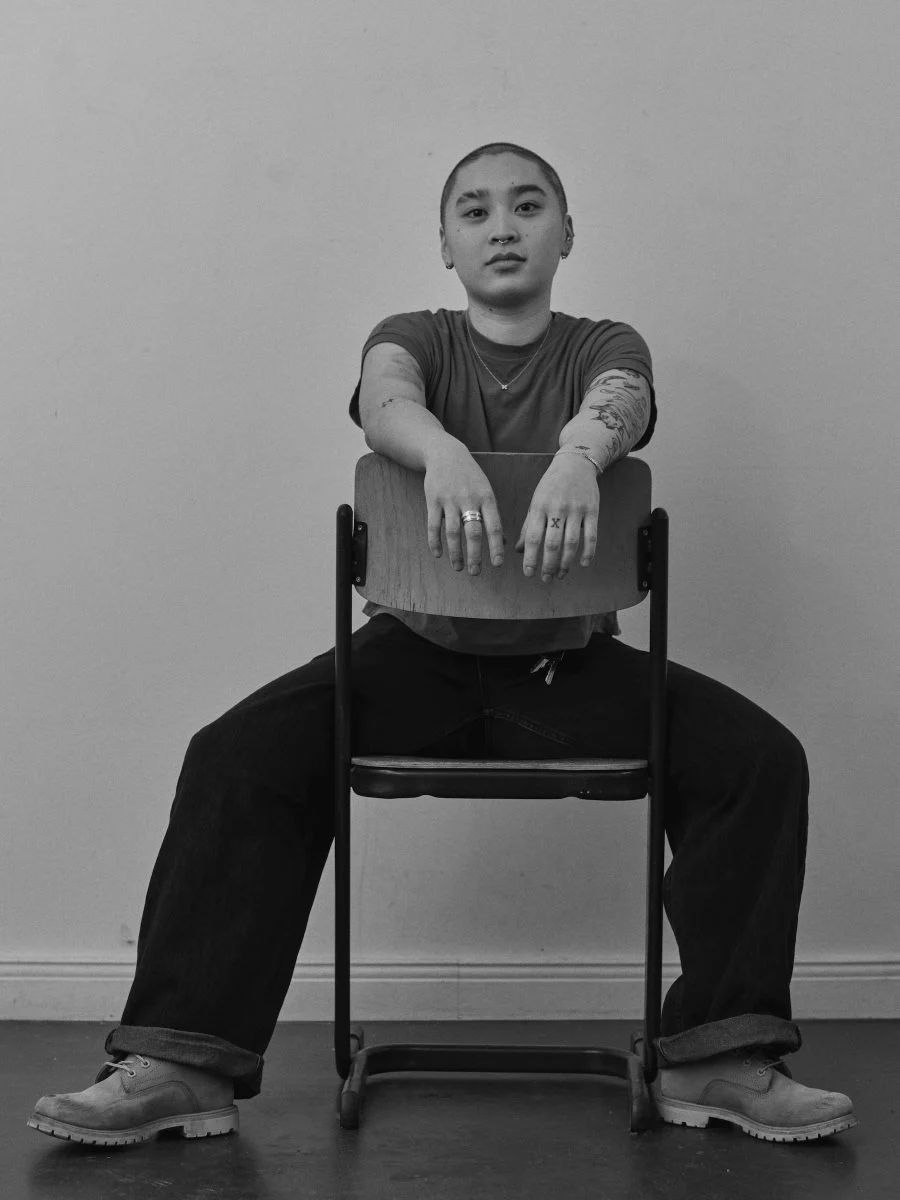
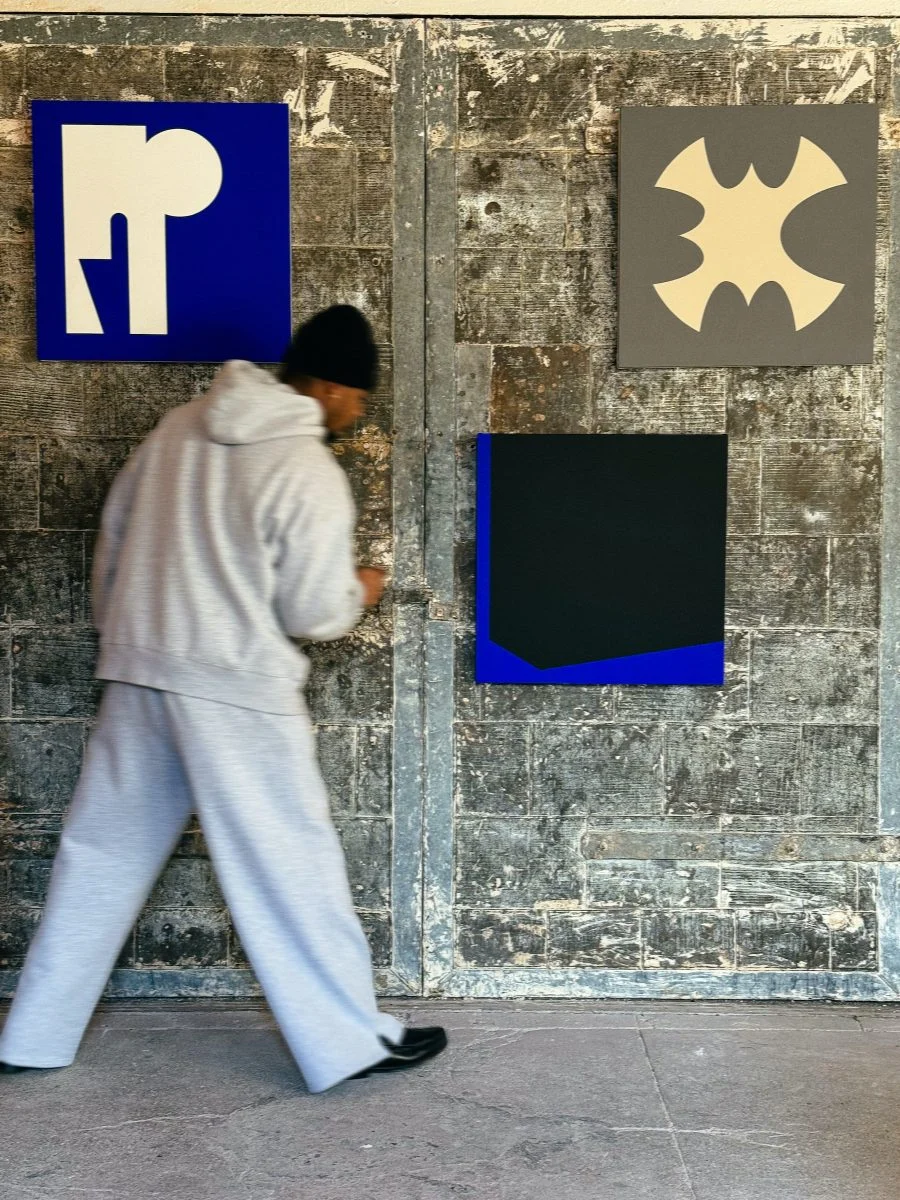
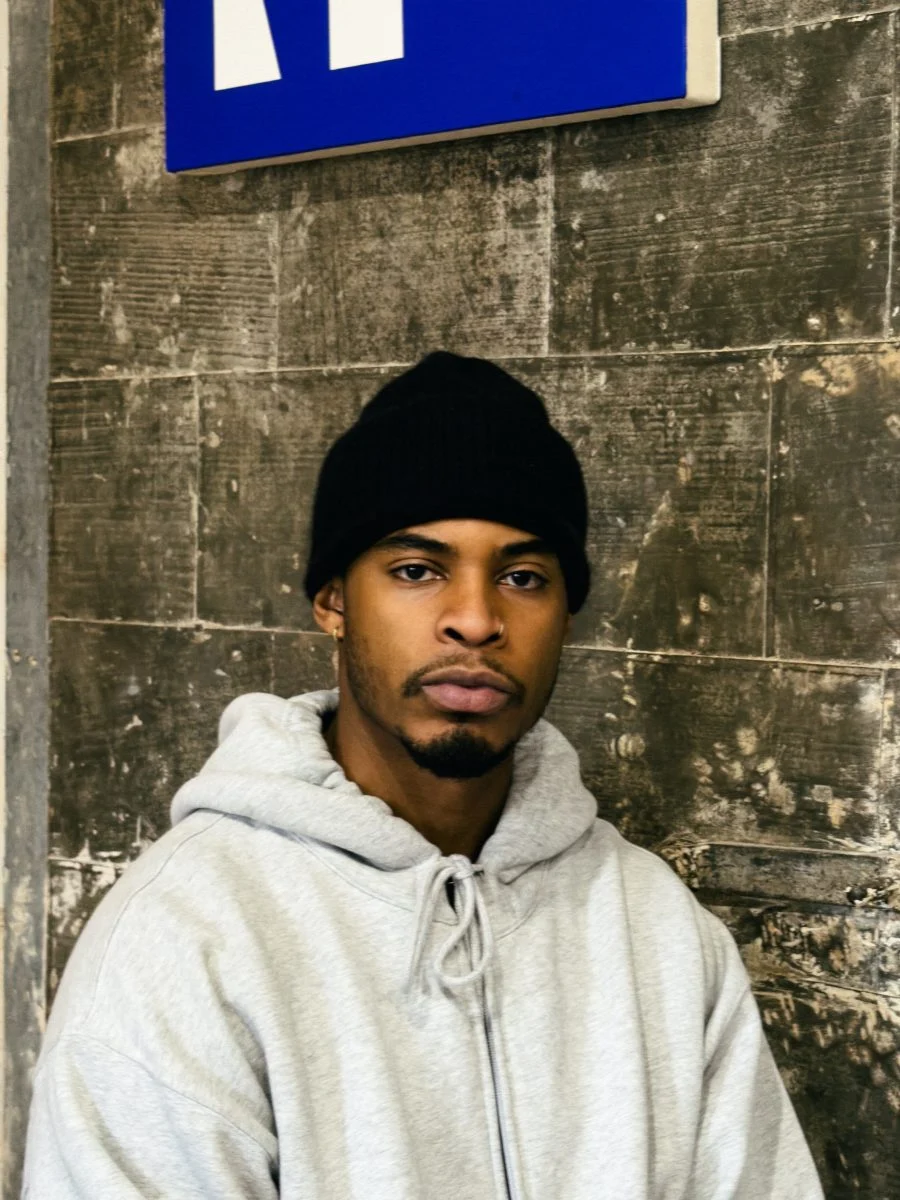
    Lihi Shmuel is GlogauAIR resident from April 2026 to June 2026. (Q2)

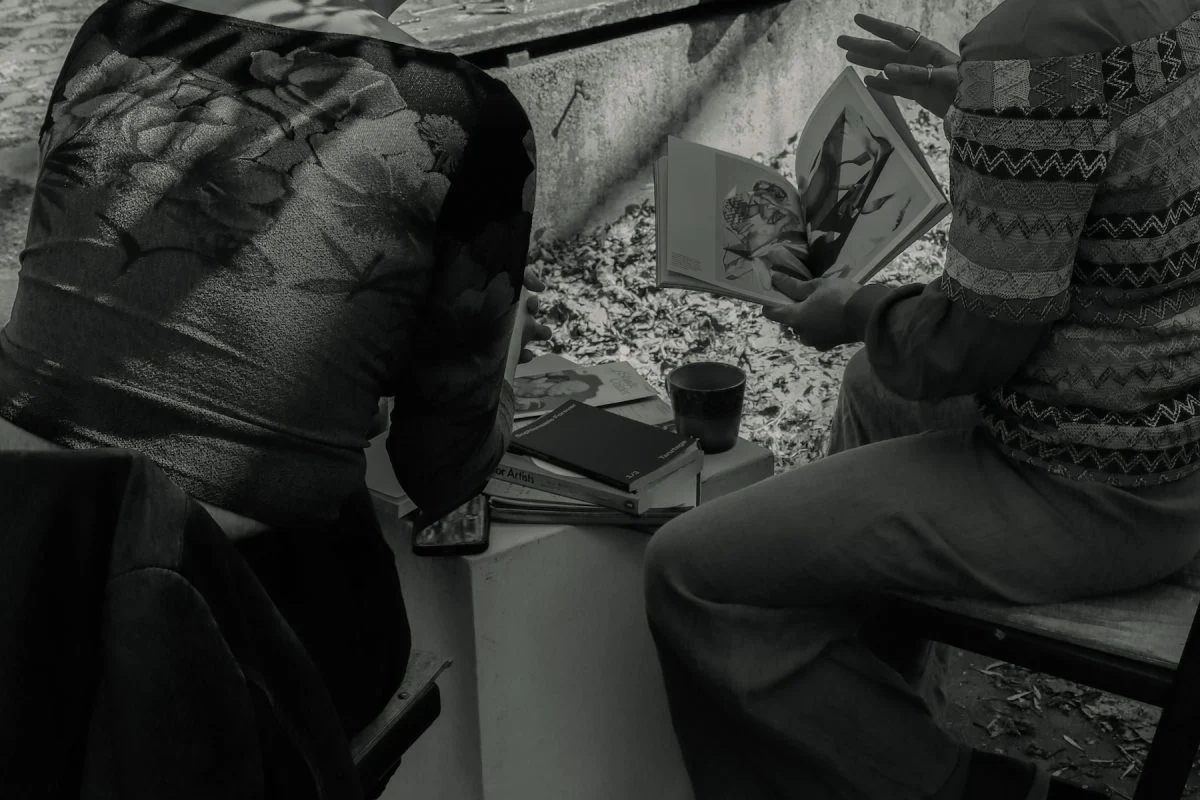
    Lihi’s curatorial practice explores the “in-between” spaces where art meets daily life and language often fails. Inspired by participatory practices and community focused art, Lihi approaches curation as an act of translation – converting fragmented memories and sensory experiences into cohesive narratives. They believe that while not every artwork speaks for itself, a curator provides the essential voice that anchors it in the world.

    Meet the Artist

    Tell me a bit about yourself and what you’re working on during your residency at GlogauAIR. 

    ​I identify as a multidisciplinary creative because I resist ticking a single box. Whether I’m acting as an artist, a manager, or a curator, I find that my work lives in the spaces between those roles. Currently, my focus is curation – specifically the ability to take disparate elements, draw a line between them, and weave a cohesive narrative through art.
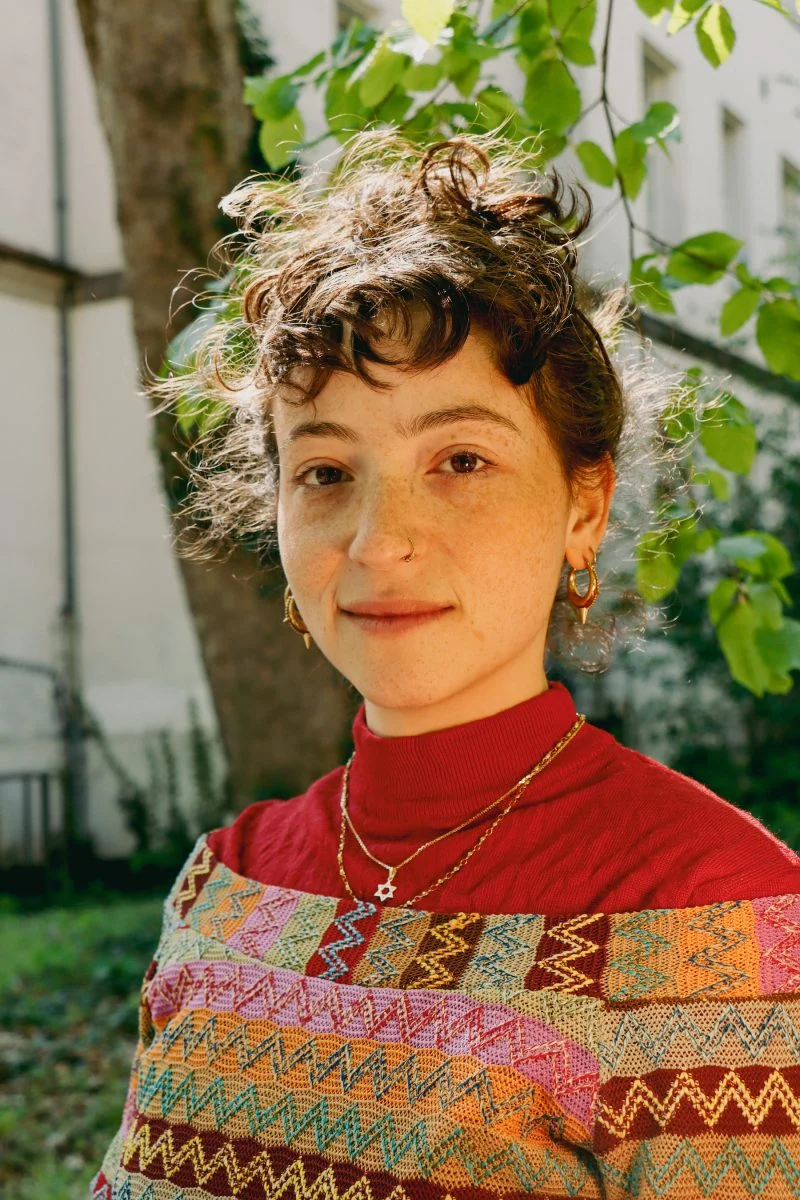
    ​While I’ve curated in various settings before, GlogauAIR represents a professional deepening for me. I’m here to “dip my toes in the water” of high-level curation, learning how to translate my storytelling intuition into a professional, institutional context. It’s an incredibly exciting evolution.

    What’s the inspiration behind the show you’ll be curating during your time at GlogauAIR?

    My approach to curation is rooted in the belief that art must be a conversation starter. If art is a reflection of life, then artists are the conduits who take the “messy, beautiful, and controversial” reality around them and transmute it into something visual.
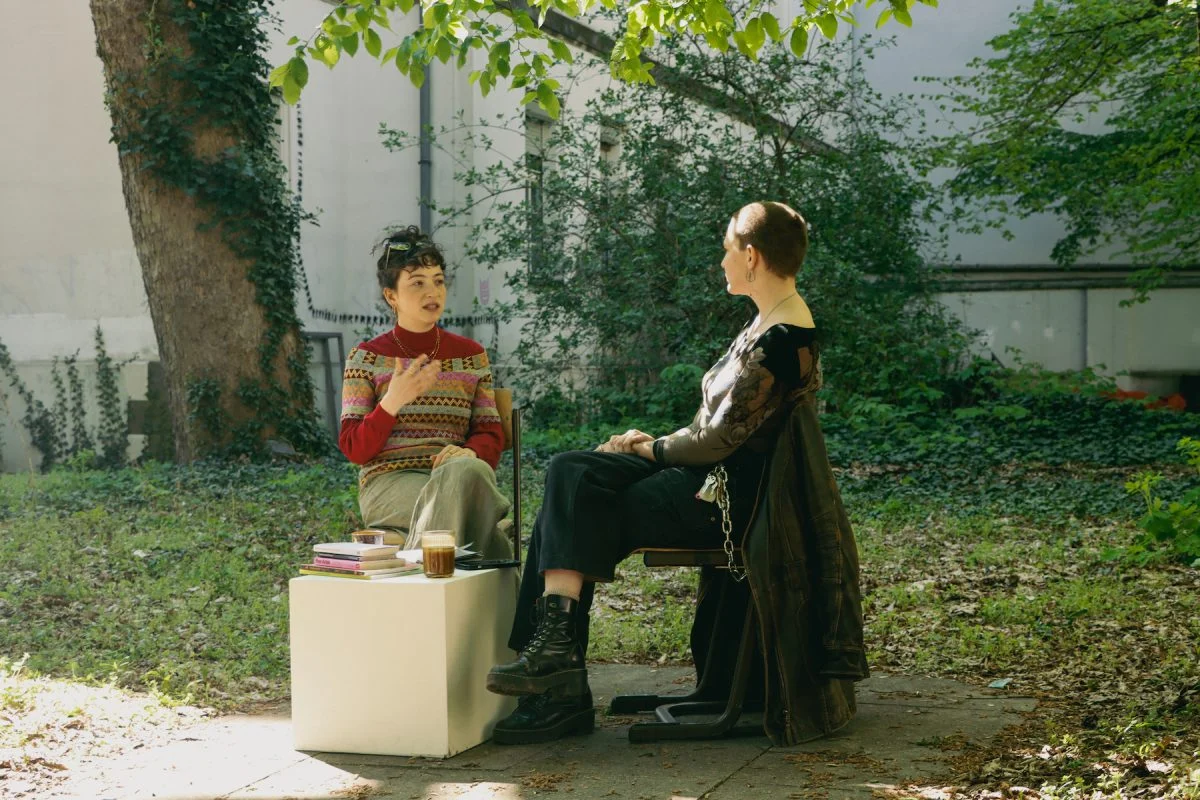
    ​However, the industry often refuses to allow for that messiness. My work focuses on the widening gap between the reality of being a creator and the rigid expectations of the art world. Broadly speaking, I want to illuminate the barriers that certain artists face, barriers that exist on top of an already brutal competition. In this industry, many begin the race several meters behind the starting line. My goal is to force a recognition of that deficit.

    ​I’m naturally drawn to these themes because I live them. There is a strange irony in the creative sector: it presents itself as kind and open, yet it can be incredibly predatory. It is an industry built on who you know and how you present, often prioritizing social capital over raw ability. I’ve always found the traditional “networking” of this sector difficult to navigate. I want to challenge the way people “consume” one another in these spaces and refocus on the work and the person behind it.

    How do you build a cohesive show visually and ideologically?

    It begins with authenticity. I look deeply into an artist’s history and their personal statement to ensure their practice aligns with the show’s core mission. From there, I look for the “connective tissue” between artists.
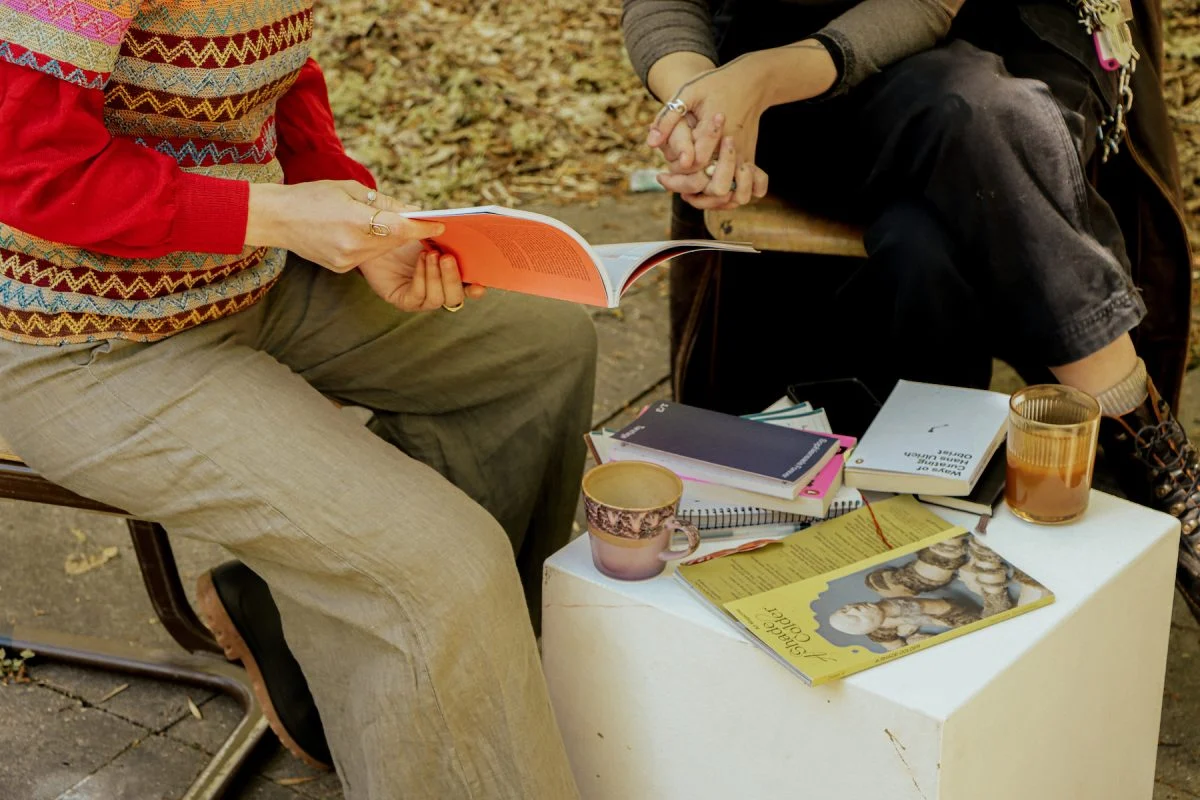
    ​To me, a curated show is a story; every artwork is a different chapter or a specific paragraph. My job is to write that narrative. No piece can be disconnected from what the viewer saw before it or what they will see after it. The relationship between the artists is just as important as the relationship between the viewer and the canvas.

    What do you want people to take away from your show?

    ​I hope this exhibition serves as an opening for a more gentle, caring way of showcasing art and networking. I want to foster an understanding that artists carry “baggage”; that they have complex lives and struggles that exist outside of their identity as a “creator.” If we can acknowledge the person behind the art, we might finally move toward a more equitable industry.
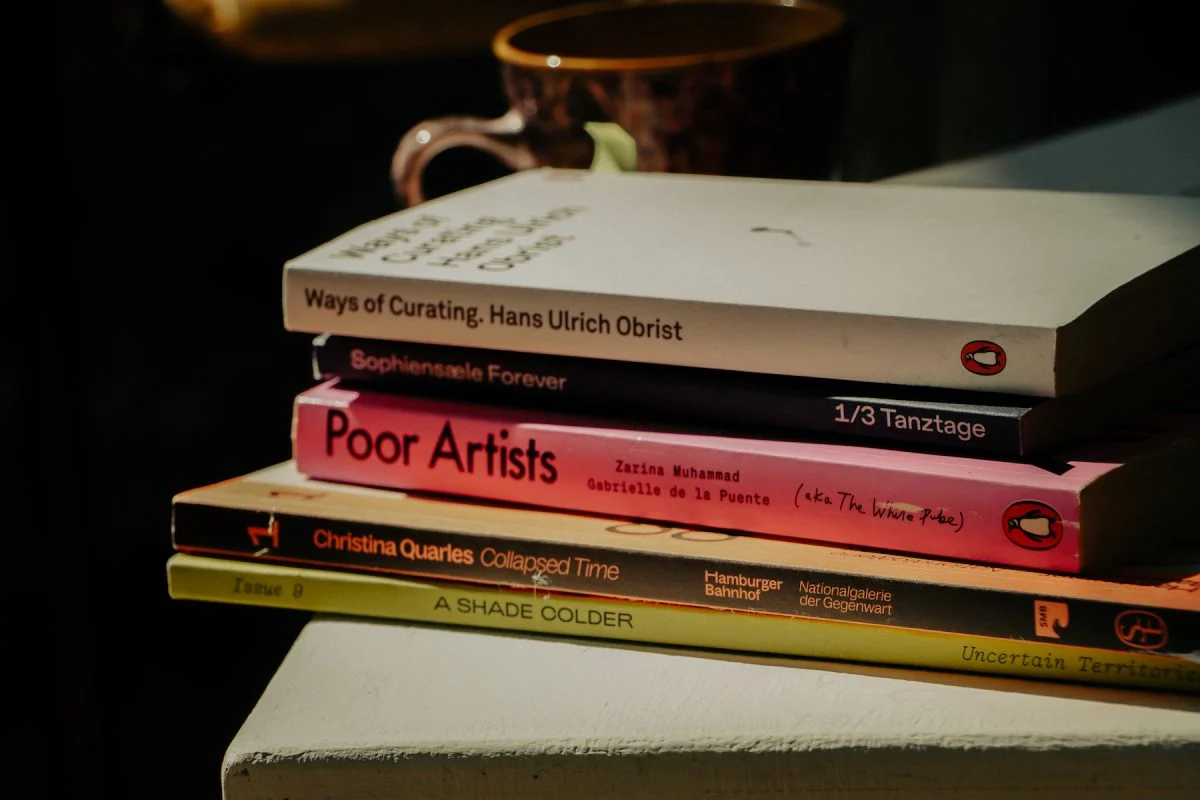
    Interview Jo Birdsell (jobirdsell.com)

    Photos Raviva Nsiama (@raviva.ziama)

    • Statement
    • GlogauAIR Project
    • CV
    • Gallery
    • More

    Statement

    My curatorial practice explores the “in-between” spaces where art meets daily life and language often fails. Inspired by participatory practices and community focused art, I approach curation as an act of translation – converting fragmented memories and sensory experiences into cohesive narratives. I believe that while not every artwork speaks for itself, a curator provides the essential voice that anchors it in the world. At GlogauAIR, I aim to foster a dialogue that transforms the personal into the collective, granting both artists and viewers permission to speak through the work.

    GlogauAIR Project

    Networking often feels like a performance, rewarding those with the loudest voices and the “right” social cues. But how do we connect when we lack the mask? This project explores the ecology of artistic connection, focusing on the barriers (like language, neurodiversity, parenthood or introversion) that isolate talent. At GlogauAIR, I’m looking at the invisible walls that keep talent isolated and the exhaustion of trying to fit through narrow gates. This exhibition is about the struggle to be seen and the beauty of connecting without the noise.

    CV

    WORK EXPERIENCE

    • February 2024 – Present
      Art Mediator, ARTERNATIVE, Berlin, Germany
    • January 2023 – January 2025
      Manager and Facilitator, COMMUNIPAINTING, Berlin, Germany / Lisbon, Portugal
    • December 2025 – March 2026
      Semmel Exhibitions, Berlin, Germany – Exhibition Support
    • October 2025
      quovadis Festival, Frankfurt, Germany – Production Team and Artist Management
    • April 2025 – July 2025
      Klaus Weber Atelier, Berlin, Germany – Studio Manager Intern
    • October 2024 – February 2025
      Mais Uno+1 / Aurélie d’Incau, Lisbon, Portugal – Cultural Manager and Artist Assistant
    • July 2021 – May 2023
      Flughafen BER, Berlin, Germany – Airline Representative

    More

    We do not have any further information at this time.
  • Adela Angulo Portugal

    Adela Angulo Portugal

    Artist main image

    Adela Angulo Portugal is GlogauAIR resident from January 2026 to March 2026. Q1

    Adela Angulo Portugal is a Spanish visual artist who explores the boundaries of painting and the language that emerges around it. She seeks new perspectives on the familiar in order to question the conception of painting, its structures, and its historical weight from a critical and poetic standpoint. Her work addresses themes of human existence that evoke the emotional, the intimate, and the sensitive.

    Meet the Artist

    Can you tell me a bit about yourself and what you’re working on for your residency?

    I’m Adela from Spain, and I’m a painter and a visual artist.

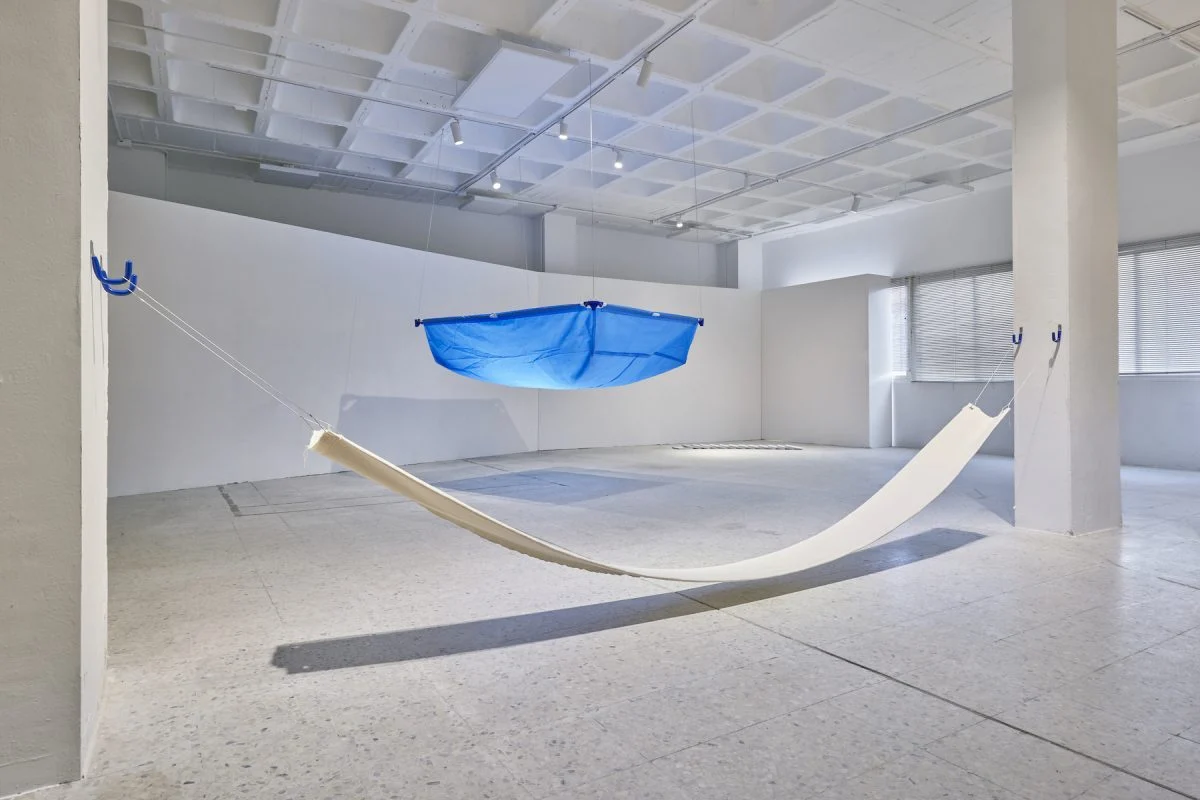
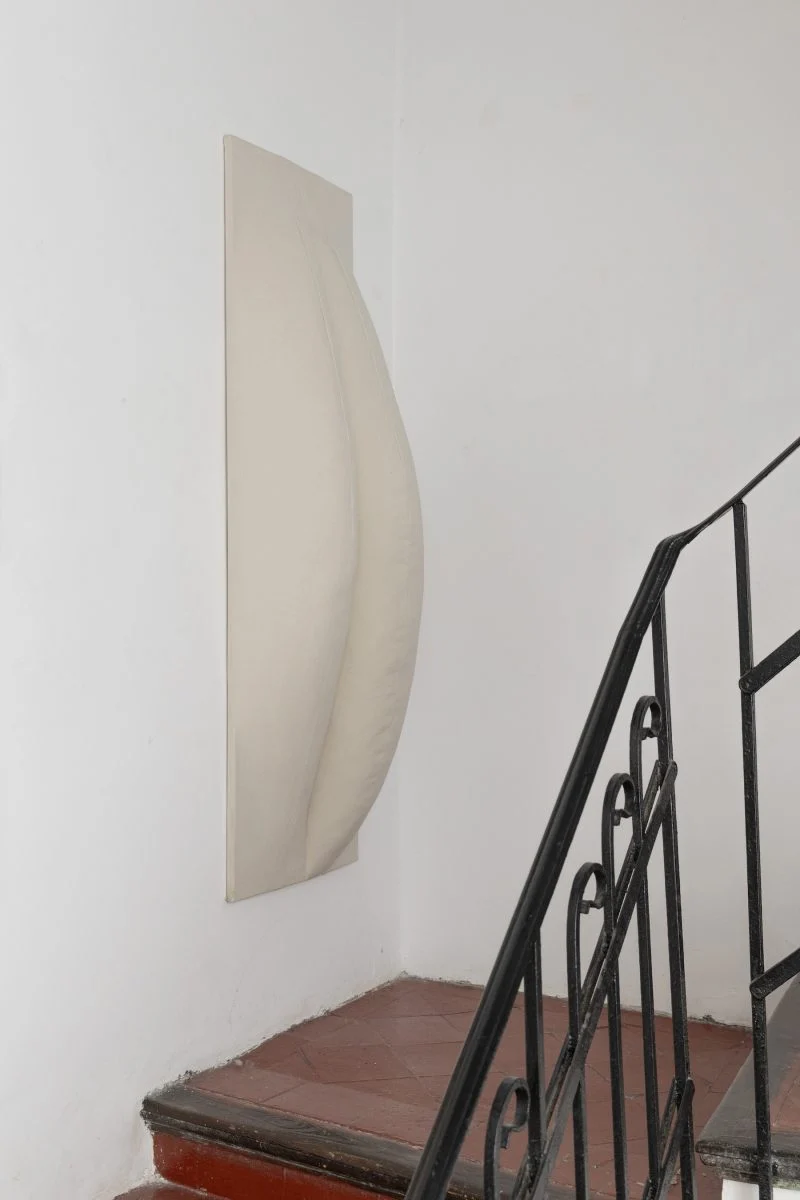
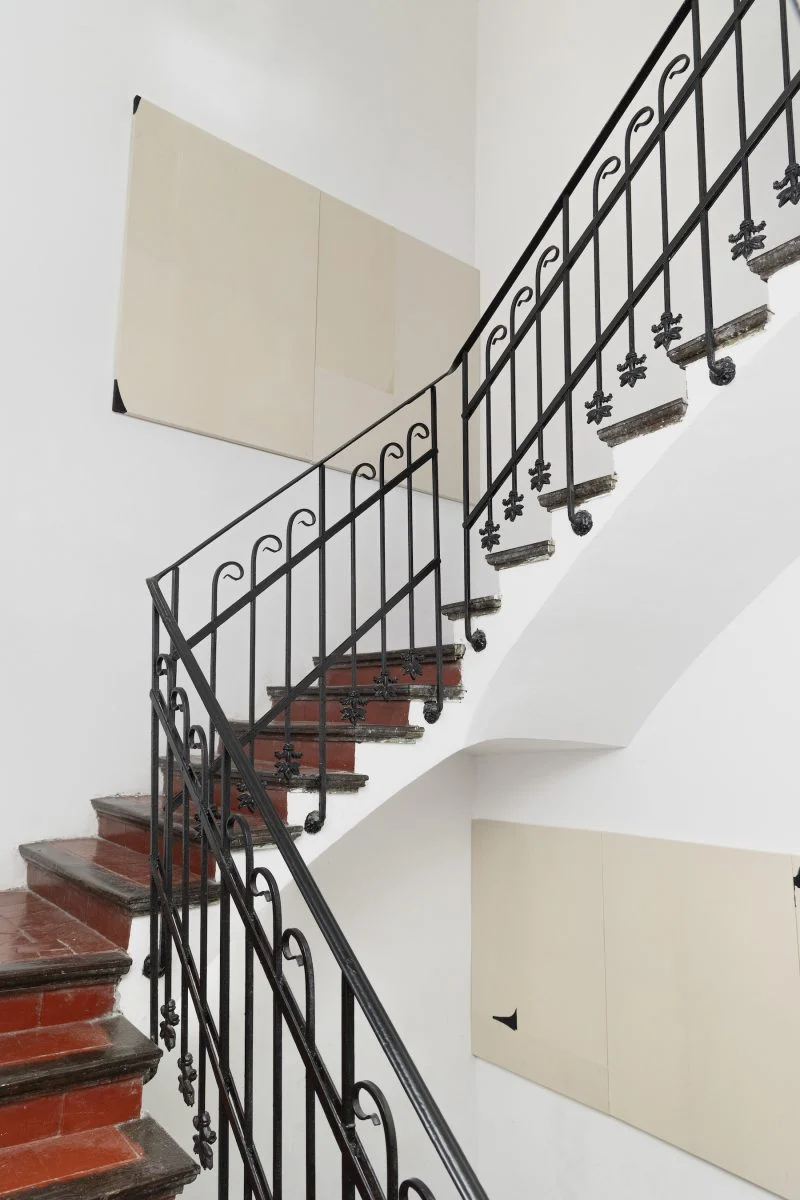
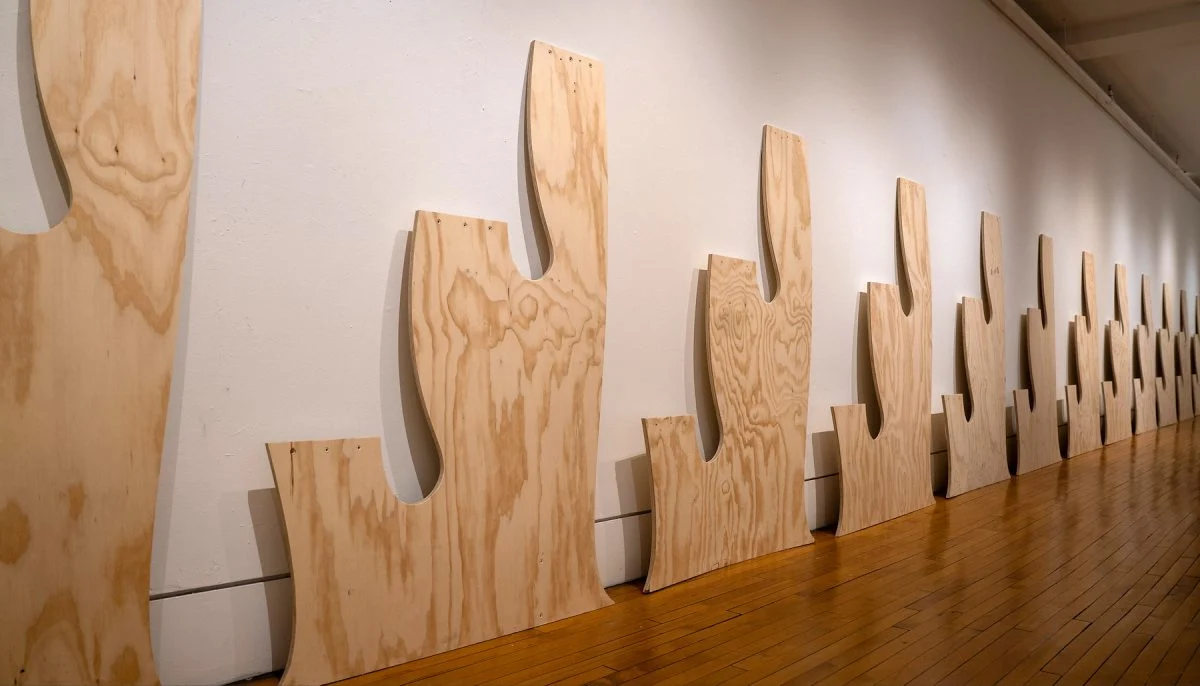
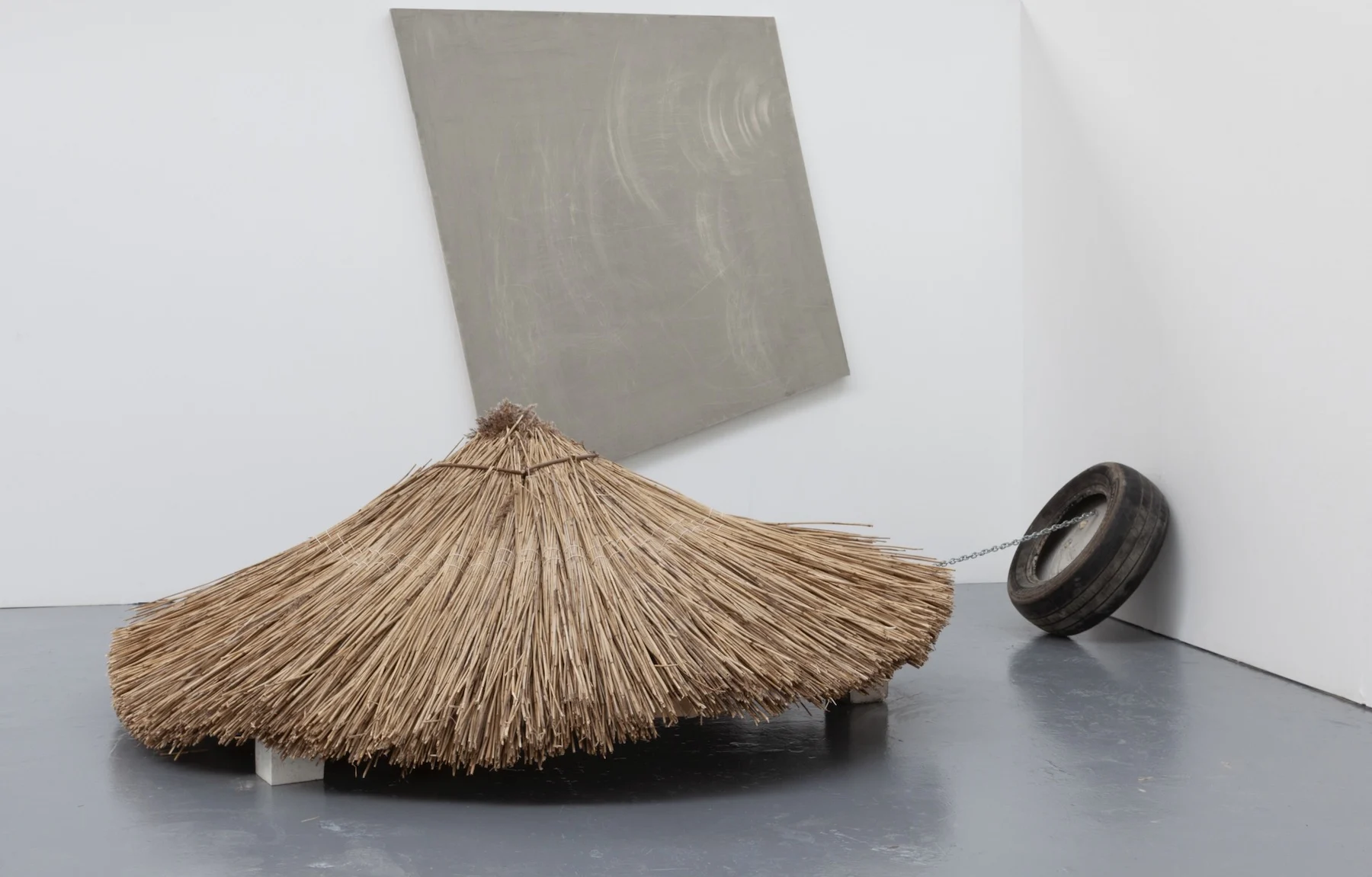
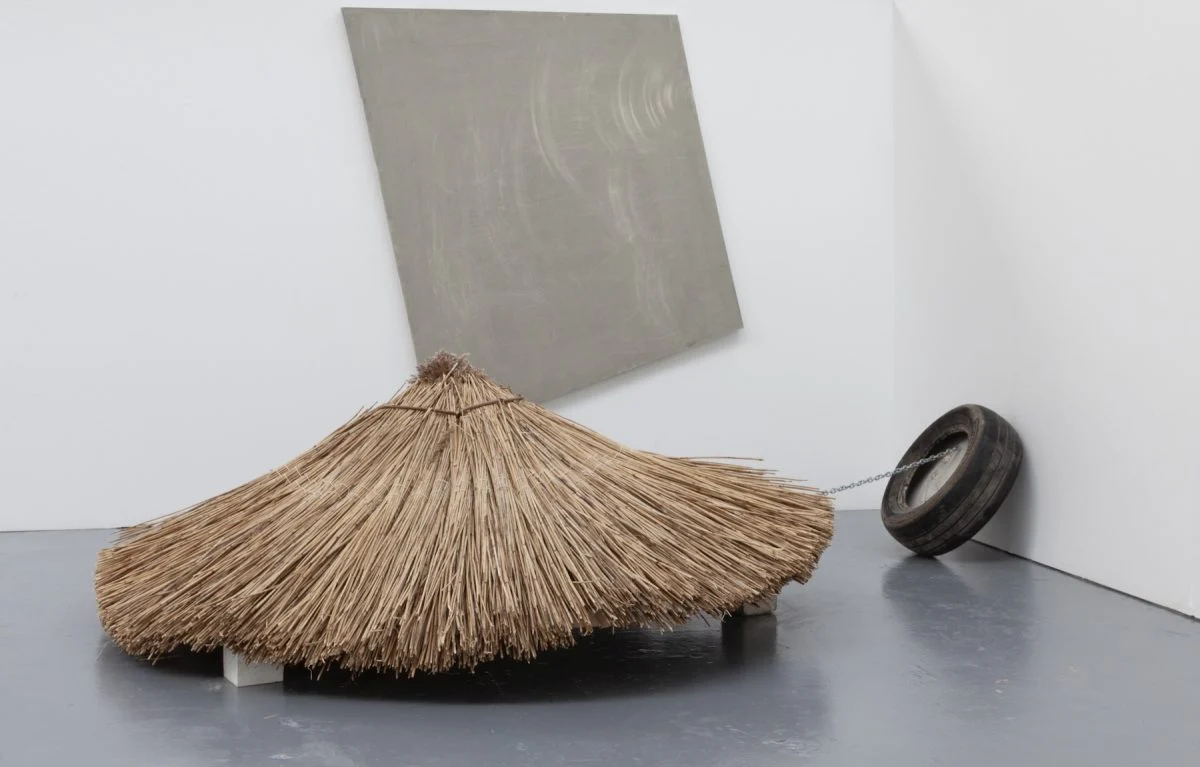
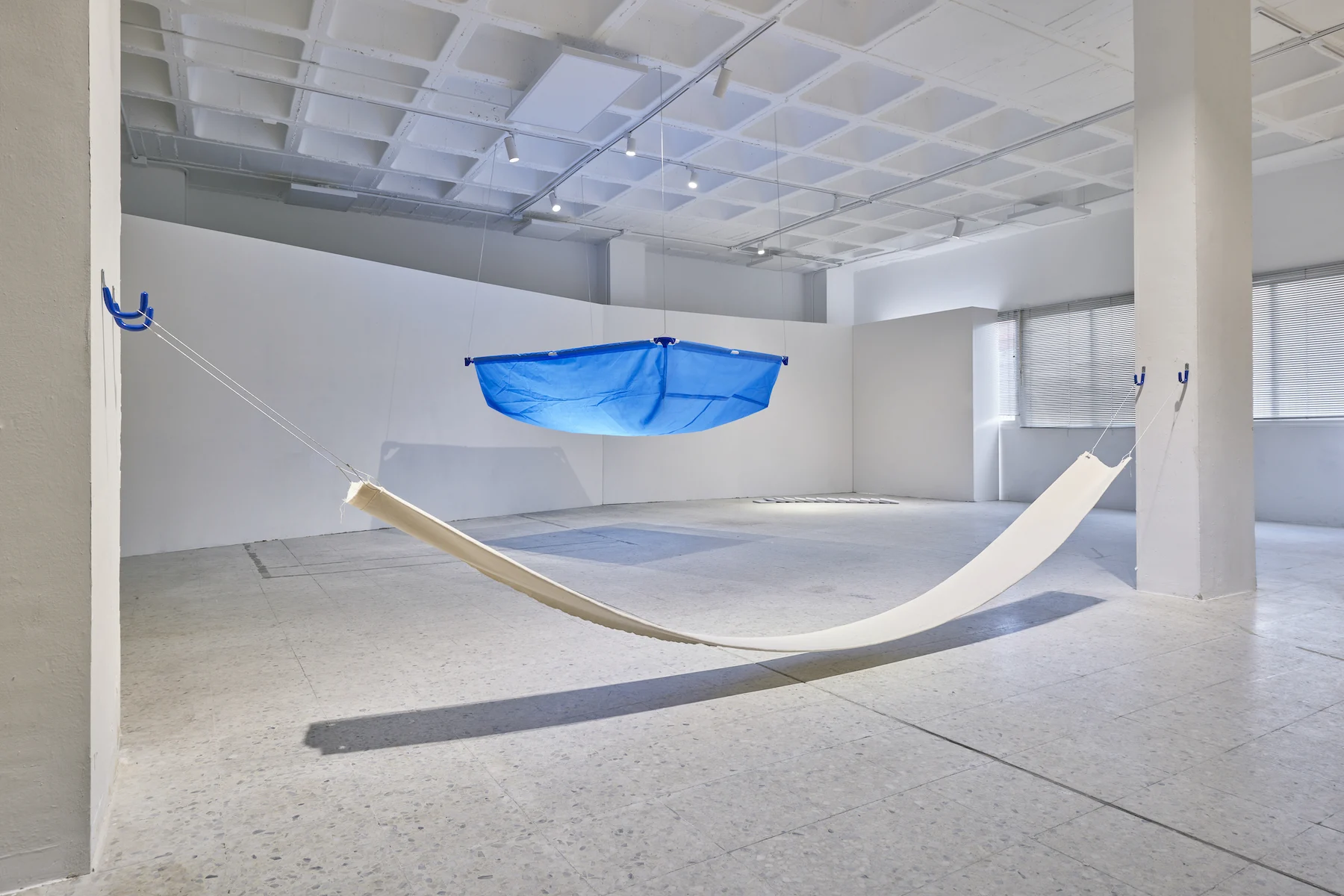
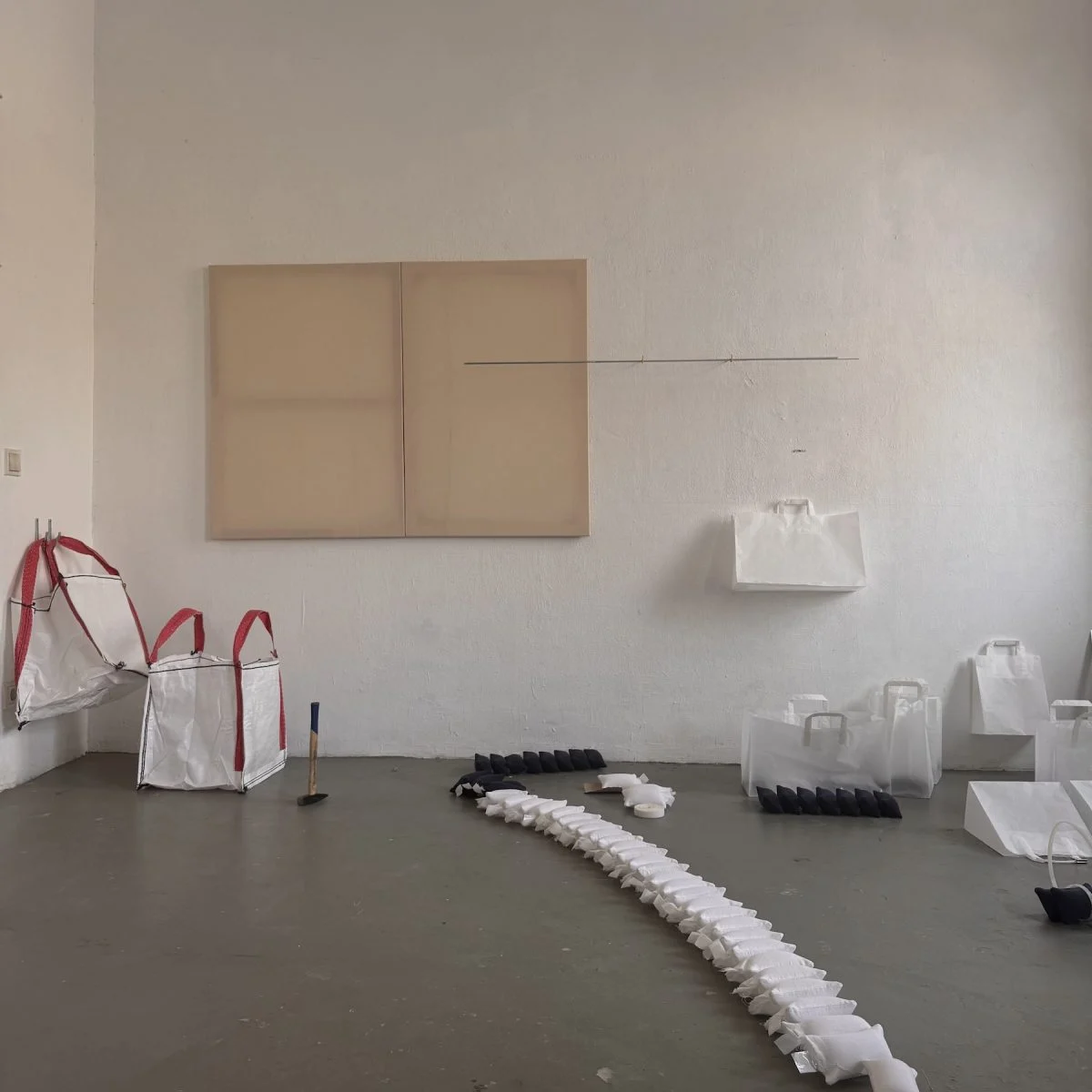
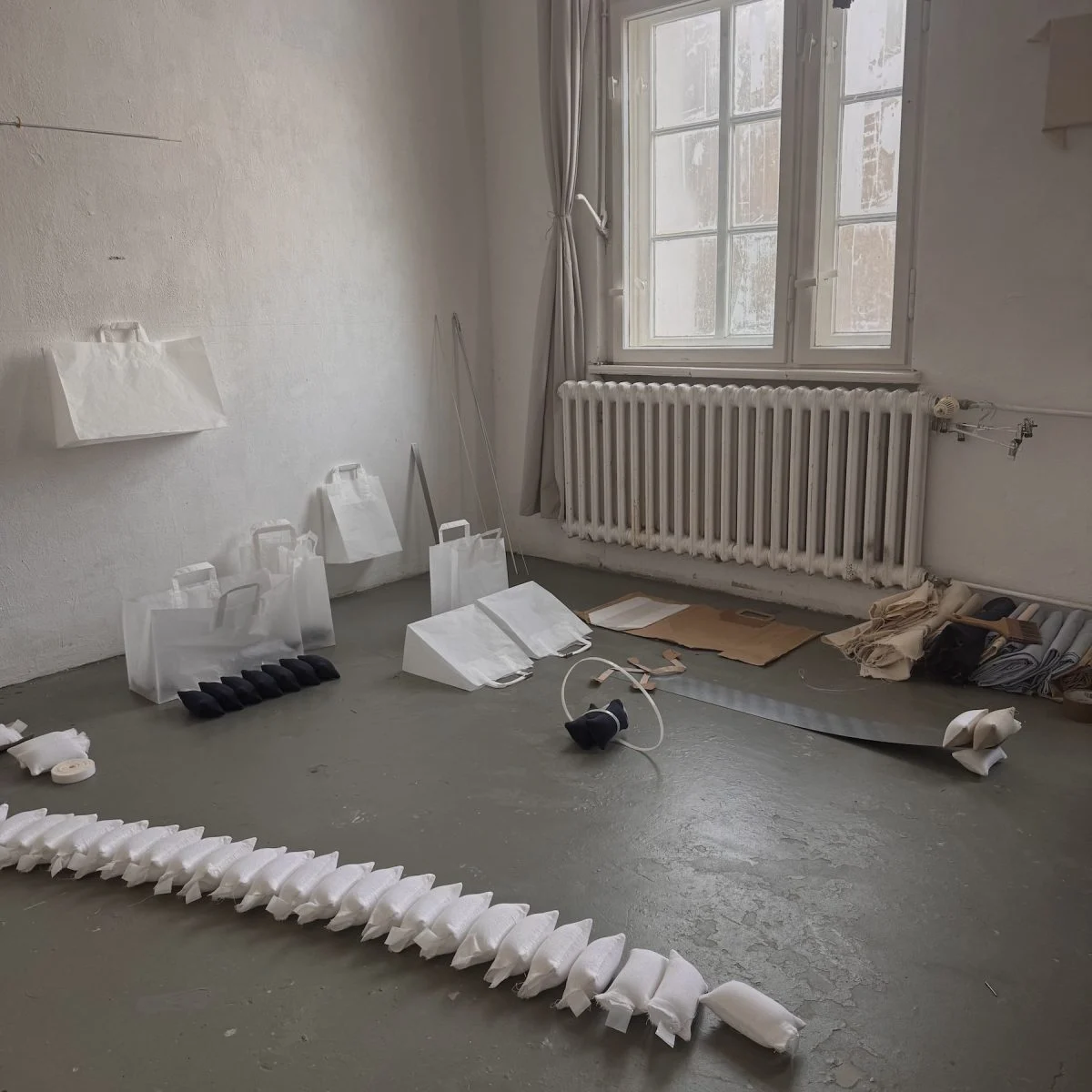
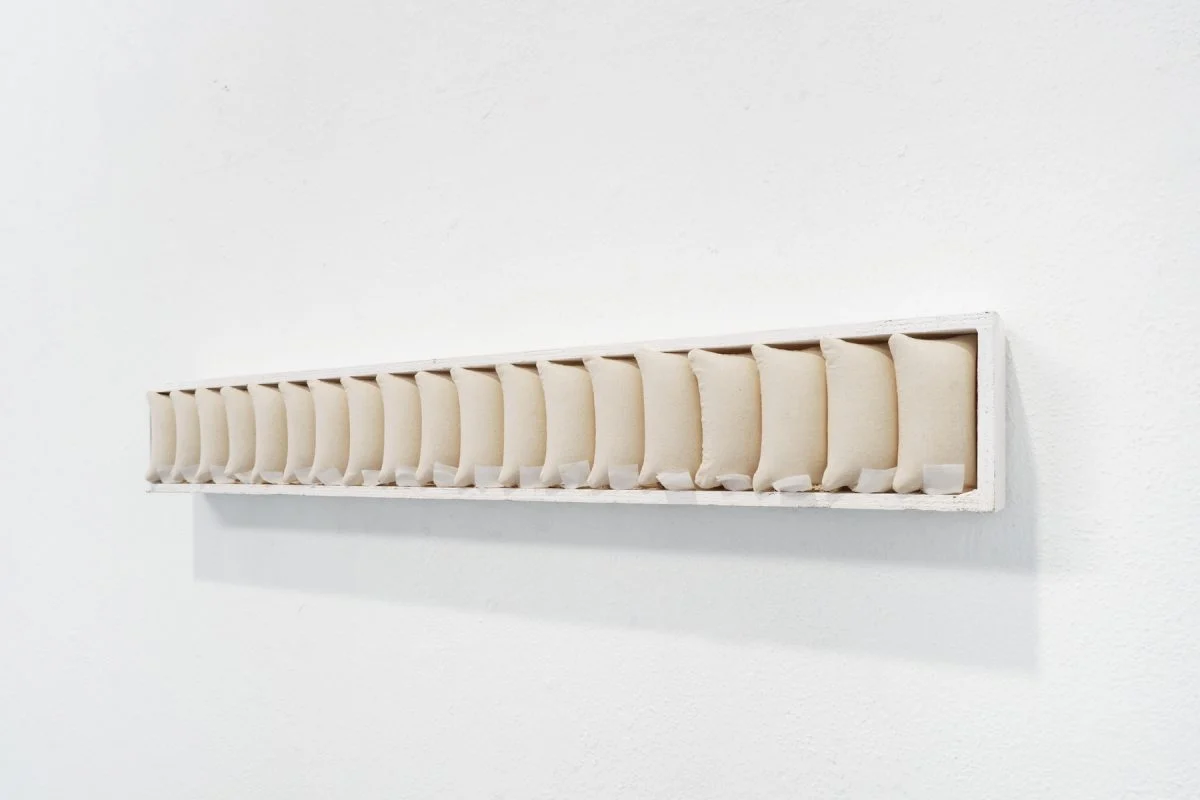
    During the residency, I started developing a project, which was related to horizontal painting, similar to a body arc, lying, resting, or sleeping. It questions traditional ways of exhibiting paintings, where they’re always on the wall.

    My project took another direction. because I started working with other materials. I needed to move away from certain structures. Working with painting is typically the same materials: the canvas has to be super straight and super thin, and everything has to be super perfect.

    But it doesn’t have to be like that. My work questions the idea of straightness or verticality.

    What do you mean when you say your paintings are like “bodies”?

    When I’m working with materials in the studio, it’s almost like having a relationship with the materials. I try to have a kind of dialogue to understand how they work: sometimes they need some time, or something’s not working, and it’s nice to let them take a breath. The thing is, when I am working with any kind of material, it doesn’t have to be a painting material, it feels necessary to take care of them.

    It’s almost like these objects have some kind of feeling, so I’m not just working with things. I have a responsibility to them. I feel that they’re maybe not alive, but they have like something… They’re almost like plants. The plants are there, and you take care of them. That’s the kind of relationship we have.

    What usually comes first in your work: a concept, a physical gesture, or a material decision?

    The thing is that everything comes from working in the studio.

    There I might find some things or some aspects of objects that I want to take care of. For example, when I see objects lying on the floor, I think about the way they are layered or what the connection is between them.

    What do you hope people feel when they see this project?

    I want them to take time to see my work. My work is visually simple, but it has a lot of details and a lot of tiny things that you need to stop and see, fully taking your time. I don’t know if they are going to feel the same way as I feel when I’m making the work, but it’s a good opportunity to stop and reflect.

    Interview Reese Saddler (@reeseesaddler)

    Photos Ksenia Proskuryakova (@ksenyapro)

    • Statement
    • GlogauAIR Project
    • CV
    • Gallery
    • More

    Statement

    Adela Angulo Portugal (Madrid, 1999) is a visual artist who explores the boundaries of painting and the language that emerges around it. She seeks new perspectives on the familiar in order to question the conception of painting, its structures, and its historical weight from a critical and poetic standpoint.

    Her work addresses themes of human existence that evoke the emotional, the intimate, and the sensitive. She engages with essential questions of the creative process and the configuration of the pictorial image, with her pieces acquiring a corporeal character — relating to space and thus presenting themselves as sensitive bodies.

    GlogauAIR Project

    This project explores painting as a horizontal, bodily act—an act of laying down, of resting, of opening the body to space and matter. It also questions traditional ways of exhibiting painting, shifting away from the upright, wall-mounted format to embrace horizontal modes of display that invite rest, suspension, and physical proximity.

    The work investigates the horizon not as a fixed or continuous line, but as a series of perceptual breaks that suggest continuity: a space of interruptions, held together by the gaze that tries to make sense of what is fragmented.

    CV

    Education

    • 2022 Master’s Degree in Research on Artistic and Visual Practices, UCLM, Cuenca
    • 2021 Degree in Fine Arts, UCLM, Cuenca
    • 2019–2020 Accademia di Belle Arti di Brera, Milan

    Solo Exhibitions

    • 2025 Round knife, Provisional 23, Madrid
    • 2025 Possibility is the Trick, GE53, Valencia
    • 2024 When the Sky is Cloudy the Sun Doesn’t Burn, Chaíz, Madrid
    • 2024 Let it Weigh, Río&Meñaka, Barcelona
    • 2024 A Lump in the Throat, STAIN Projects, Mallorca
    • 2022 In Small, Sala Pequeña, BBAA Cuenca
    • 2021 Untitled I, Sala de la Escalera, BBAA Cuenca

    Group Exhibitions

    • 2025 Where´s Paradise?, ESTAMPA, Madrid
    • 2025 PAINT(H)ING NOW, Ilgaz Yildiz Gallery, Madrid
    • 2025 The flight of the fly, STAIN Projects, Art-o-Rama Marsella, Francia
    • 2025 Bending Reality, SATIN Projects, UVNT Madrid
    • 2024 Montones de Mantequilla ft Sofía Briales, Madrid
    • 2024 Silence Between Sounds, STAIN Projects, Sawb Barcelona
    • 2023 SAVIA II, AP1, Artnueve, Murcia
    • 2023 Gen Z, Río&Meñaka, Madrid
    • 2022 Slippage, Re-affect, Reflection, Sala Acua, Cuenca
    • 2022 Porosities (Research Gathering), Cuenca
    • 2022 Cubicle, C/ Alcalá 94, Madrid
    • 2022 Alchemy, Espacio Naranjo, Madrid
    • 2021 Technologies of the Counter-straight, Sala Larga, BBAA Cuenca
    • 2021 Emergency, C/ Argensola 14, Madrid
    • 2021 Open House, Casa Balandra, Mallorca
    • 2021 Natalia López de la Oliva, Alex Eiffel, Sofía López Briales, Adela Angulo Portugal, Sala de la Escalera, BBAA Cuenca
    • 2020 Horror Vacui, Espacio Kanoko, Cuenca

    Grants / Residencies

    • 2026 GlogauAIR, Berlin, Germany
    • 2025 PADA Studios, Lisboa, Portugal
    • 2025 SAVIA Open Call
    • 2022 Grant – Studio Residency at Wecollect Studios

    More

    We do not have any further information at this time.

  • Heami Lee

    Heami Lee

    Artist main image

    Heami Lee is GlogauAIR resident from January 2026 to March 2026. (Q1)

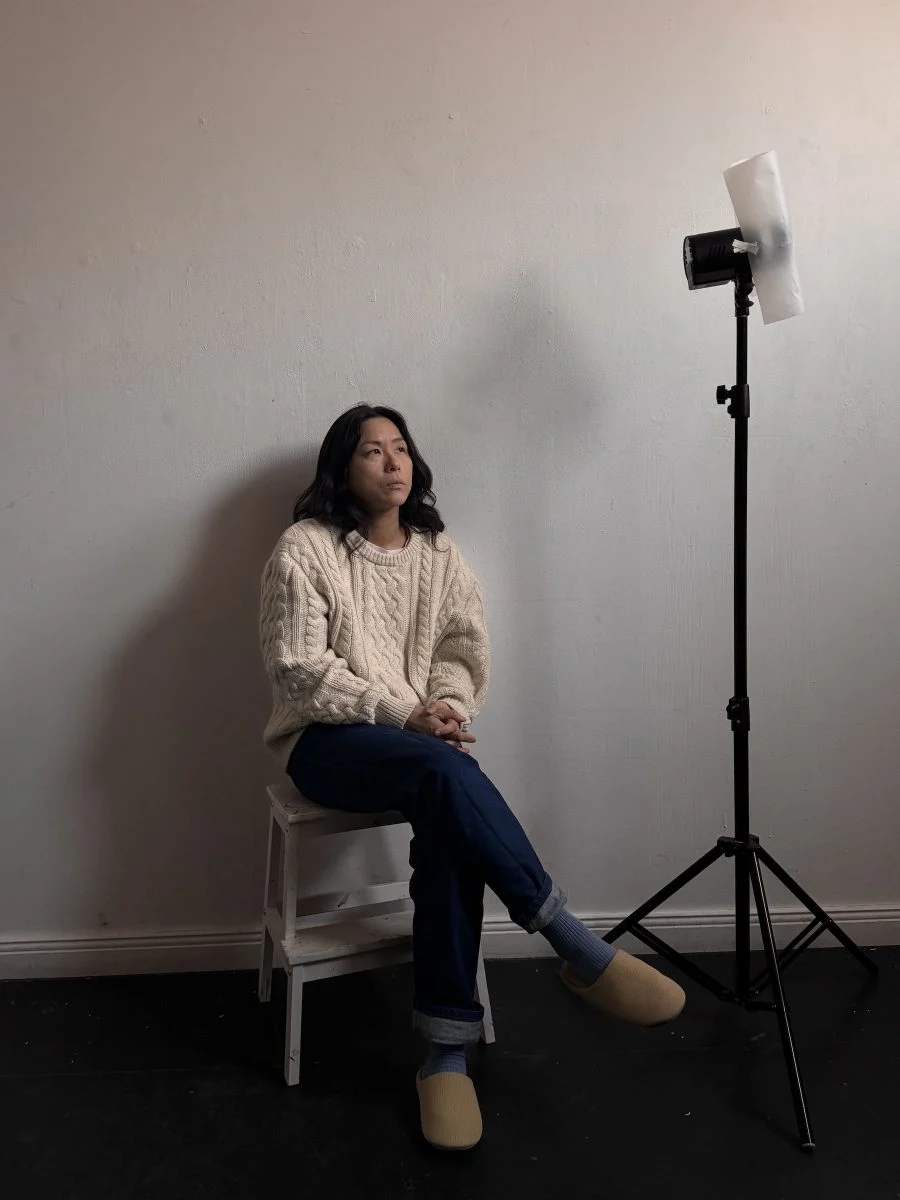
    Heami is a traditionally trained still life photographer and director, working across commercial and personal projects. Her training taught her to shape light, refine detail, and focus on precision, while her personal work explores memory, connection, and the human experience. Heami combines structure with lived experience, creating images that reflect both clarity and vulnerability. Each photograph carries traces of her own life, while inviting viewers to engage with the subjects and moments she captures.

    Meet the Artist

    Can you tell me a bit about yourself and what you’re working on for your residency?

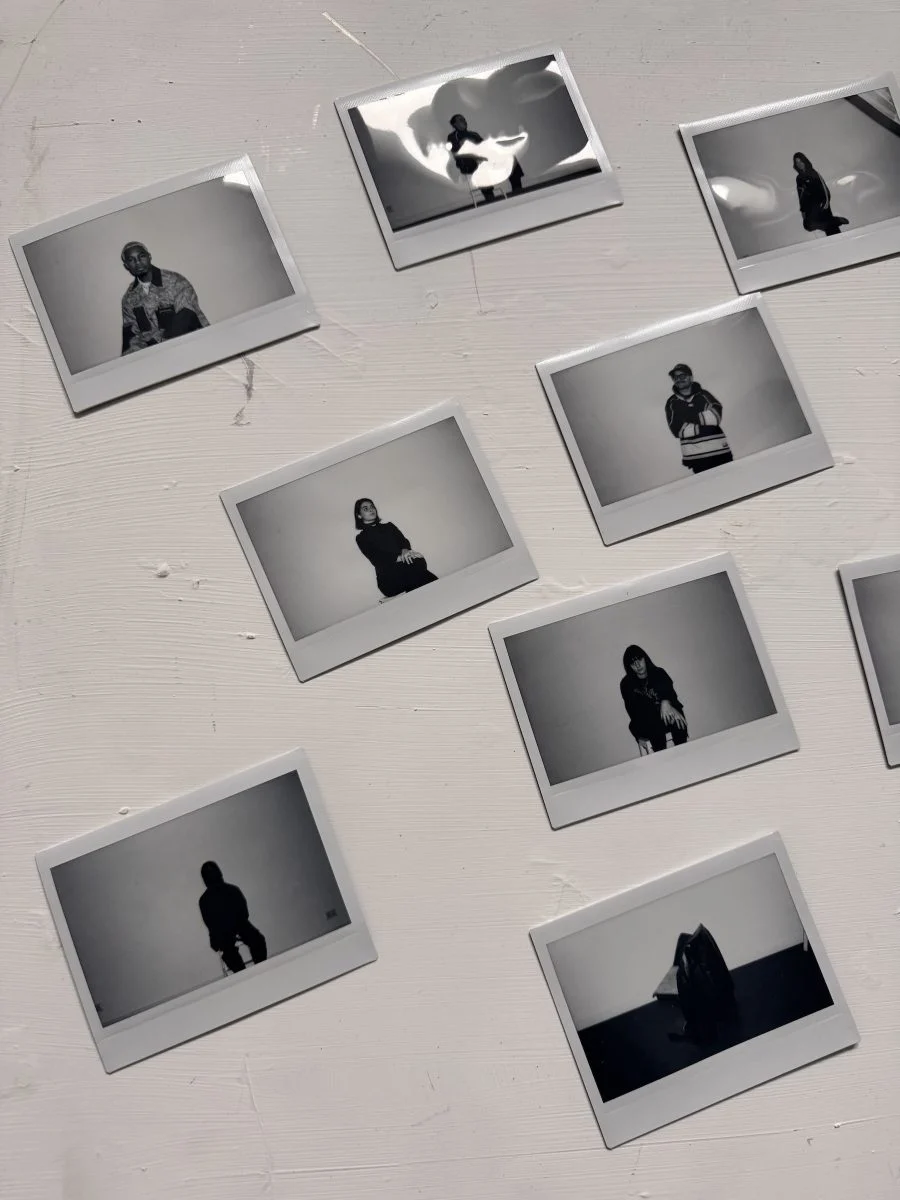
    It’s a queer project based in Berlin. Basically I’m documenting my integration into Berlin as a city and a queer city. I’m also photographing people that I meet in the space that I’m living in, in my work living studio. I’ve decided that everything’s going to be black and white. I decided that before I got here.

    Why did you want to do black-and-white versus color?

    I think I go through phases. My commercial work has been a long haul of lots of color and saturation. I’ve always had this romantic idea of Berlin and coming here in the winter when I was younger. It seems nice bundling up in the streets and it’s always gray. I guess even before I got here I was committed to the idea of photography in black and white, even the documentary photos with my little camera.

    Did you want to extend this product to different cities as well?

    I have personal projects going all the time.

    I have one project that I am working on in the US that’s called Where I Stand and it’s a portrait series of queer Asian-Americans. Everyone picks a space that they want to be represented in, whether it’s a personal tie or somewhere they want to justify.

    It’s shot with a really shitty point-and-shoot film camera on purpose, so at the end of the work, when you just look at it, it feels like a family album because it’s something that we don’t get to see and visibility matters.

    I did think about how as a queer woman, especially being not in my 20s and exploring my life in a different way at my age, I could possibly extend this project to different cities and different residences.

    What usually comes first when you’re creating: an idea, a feeling, or the image itself?

    So my personal work always reflects my life. A lot of it is simply a reflection of my life that I want to spotlight. With my professional career it’s a bit more romantic because my partner is also heavily involved.

    We’re very integrated. Sometimes I see it [an image] in my head and we have to photograph it together. Or I photograph it alone.

    Sometimes I see it in my dreams and I have to wake up and do it. I rush to my studio and photograph it. There’s different ways to work around the same platform, you know? It’s the same medium, but different emotional sense too.

    Visually and emotionally, it’s all different, all over the place of my personality. But it’s always the same thing or photo.

    How does being queer influence your work? Does being queer influence your way of thinking about intimacy, visibility, or representation in your work?

    Not only am I queer, I’m also Asian. Not only am I a queer Asian, I’m also a woman. I grew up in a world that looks very different from when I was little in terms of representation, cultural acceptance, and respect.

    I hope that when I’m old that the world looks even more different than when I was little or when I’m at this age. And me producing work that reflects my life helps with that. Maybe not in the grander scheme of things, but everything is interconnected.

    I had never seen a queer Asian project when I was little. Representation matters because when you’re a kid, or even when you’re old, seeing yourself reflected empowers you in a way because silence is hard to deal with.

    You said before for one of your previous projects, you would ask someone to pick a space that represents them. Is that what you also hope to do here? When you’re going out and meeting people in Berlin?

    A lot of photography doesn’t end with that one snapshot. With photography, there’s a lot of lead-in. This goes for commercial work, too.

    I think sometimes people feel like a photo is just a photo. But just like a painter, you spend time with that light. You spend time with that person.

    And there’s different approaches obviously. For me, where I stand taking the photo is the shortest amount of time. Actually talking to them is a bigger part of the project.

    I have another project called Strangers in My Room. Part of that project is the strangers that you never see in that project itself. There’s always this lingering conversation that’s happening besides the photo.

    There’s the leading up to the photo and after the photo. Long story short, yeah, I’m asking them a lot of questions, because it’s also me learning about Berlin.

    It’s about me learning about queer Berlin. It’s also me respecting the time that they’re giving me.

    Interview Reese Saddler (@reeseesaddler)

    Photos Ksenia Proskuryakova (@ksenyapro)

    • Statement
    • GlogauAIR Project
    • CV
    • Gallery
    • More

    Statement

    I am a traditionally trained still life photographer and director, working across commercial and personal projects. My training taught me to shape light, refine detail, and focus on precision, while my personal work explores memory, connection, and the human experience. I combine structure with lived experience, creating images that reflect both clarity and vulnerability. Each photograph carries traces of my own life, while inviting viewers to engage with the subjects and moments I capture.

    GlogauAIR Project

    This project is an exploration of queer culture in Berlin, created through a blend of documentary photography, portraiture, still life, and videos. While my background is rooted in commercial photography and direction—where precision, control, and polish are central—this work marks a conscious shift away from those constraints. I am consciously loosening my grip on perfection and allowing uncertainty, emotion, and instinct to guide the creation of these images.

    As a queer woman of color arriving in Berlin as a stranger, my identity and perspective are inseparable from the project. My newness to the city—navigating unfamiliar streets, languages, and social codes—becomes part of the work itself. I am interested in what reveals itself when I allow the project to unfold, guided by curiosity rather than certainty. I love strangers and the brief, meaningful connections that arise when two lives intersect by chance—moments that feel touched by a little magic, as if they were meant to happen. This work grows out of those encounters, where coincidence and intention blur.

    Berlin’s queer culture is expansive and layered, shaped by long histories of resistance, survival, and reinvention. Yet the visual language of queerness has too often centered white, male perspectives. This project shifts that frame, centering sapphic, POC-forward, and trans-forward narratives that resonate closely with my own experience. Collaboration is central to my process; the people I photograph are not subjects, but participants whose presence shapes the project as a whole.

    This project is also about breaking away from the expectations of my commercial training, from the need to resolve every image, from the idea that I must arrive knowing what I am making. I am allowing myself to be changed by the process. There is excitement in not knowing where the work will lead, in trusting that the act of showing up—with curiosity and care—is enough.

    Ultimately, this project reflects my life at this moment, shaped by a desire for connection, a comfort with solitude, and a willingness to move forward without a map. Rather than defining queer Berlin, the work seeks to witness it. Through this residency, I hope to create a body of work that feels honest, intimate, and alive, allowing space for the possibilities that emerge when we remain open to them.

    CV

    Awards / Honors

    • 2025 — Ap 41 Selected Awards
    • 2024 — Ap 40 Selected Awards
    • 2023 — AP 39 Chosen Awards
    • 2022 — AP 38 Selected Awards
    • 2020 — AP 36 Selected Awards
    • 2019 — Tokyo International Foto Awards
    • 2018 — PDN Taste Grand Prize
    • 2017 — PDN Taste Second Place: Editorial
    • 2015 — PDN Taste First Place: Travel

    Selected Exhibitions

    • Lore Degenstein Gallery, “Flow” – 2023. This exhibition focused on water and was produced in conjunction with an exhibition on view at the Lore Degenstein Gallery at Susquehanna University from September 2 to October 13, 2023.
    • Honolulu Biennial, “Flooded” – 2018. A collaborative photo essay and multisensory installation presented by the Honolulu Biennial Foundation as part of Visions of the Future, curated by Isabella Ellaheh Hughes, shown in Waikīkī featuring photography by Heami Lee along with art direction, food styling, and prop styling collaborators.
    • The Center for Fine Art Photography, “Water” – 2017
    • Photo Synthesist, “Contaminated Landscape” – 2014

    More

    We do not have any further information at this time.
  • Petr Karpov

    Petr Karpov

    Artist main image

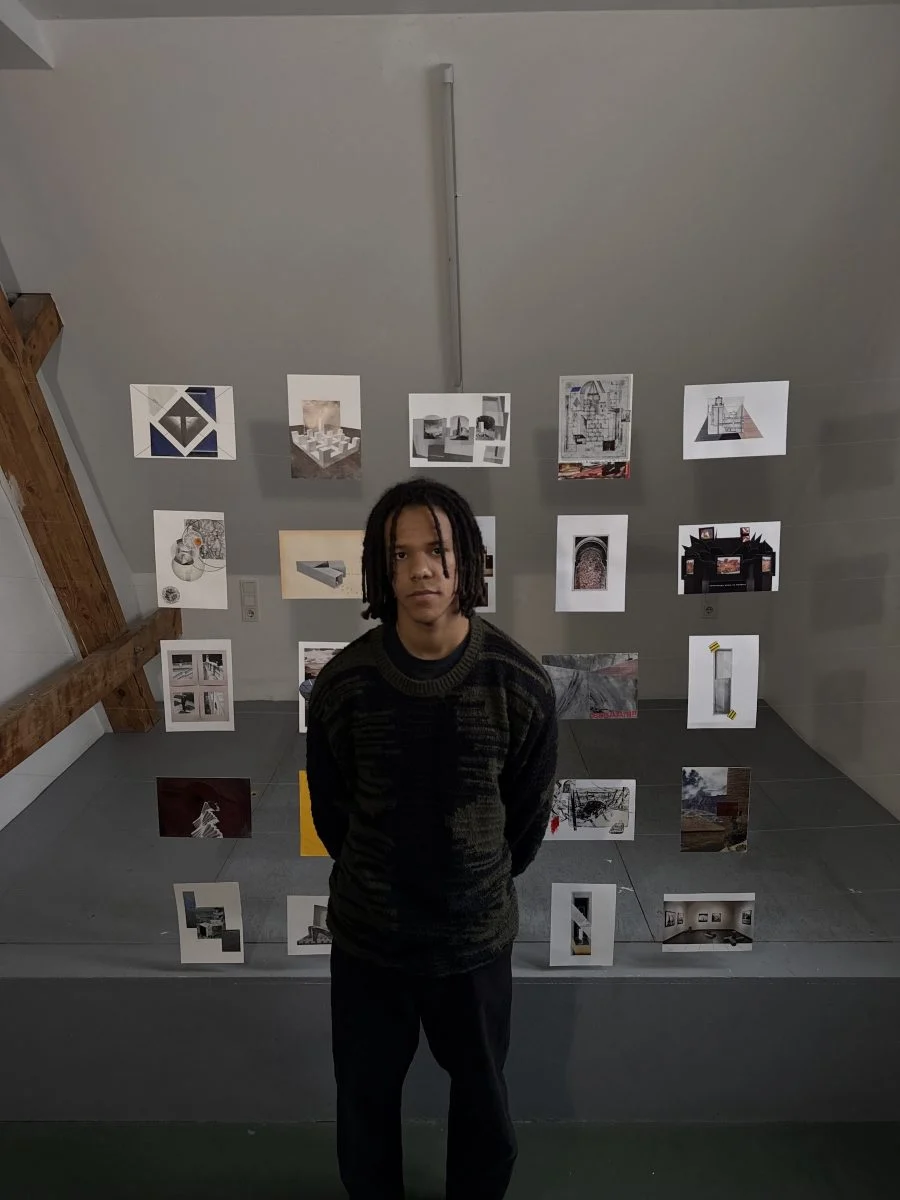
    Petr Karpov is GlogauAIR resident from January 2026 to June 2026. Q1

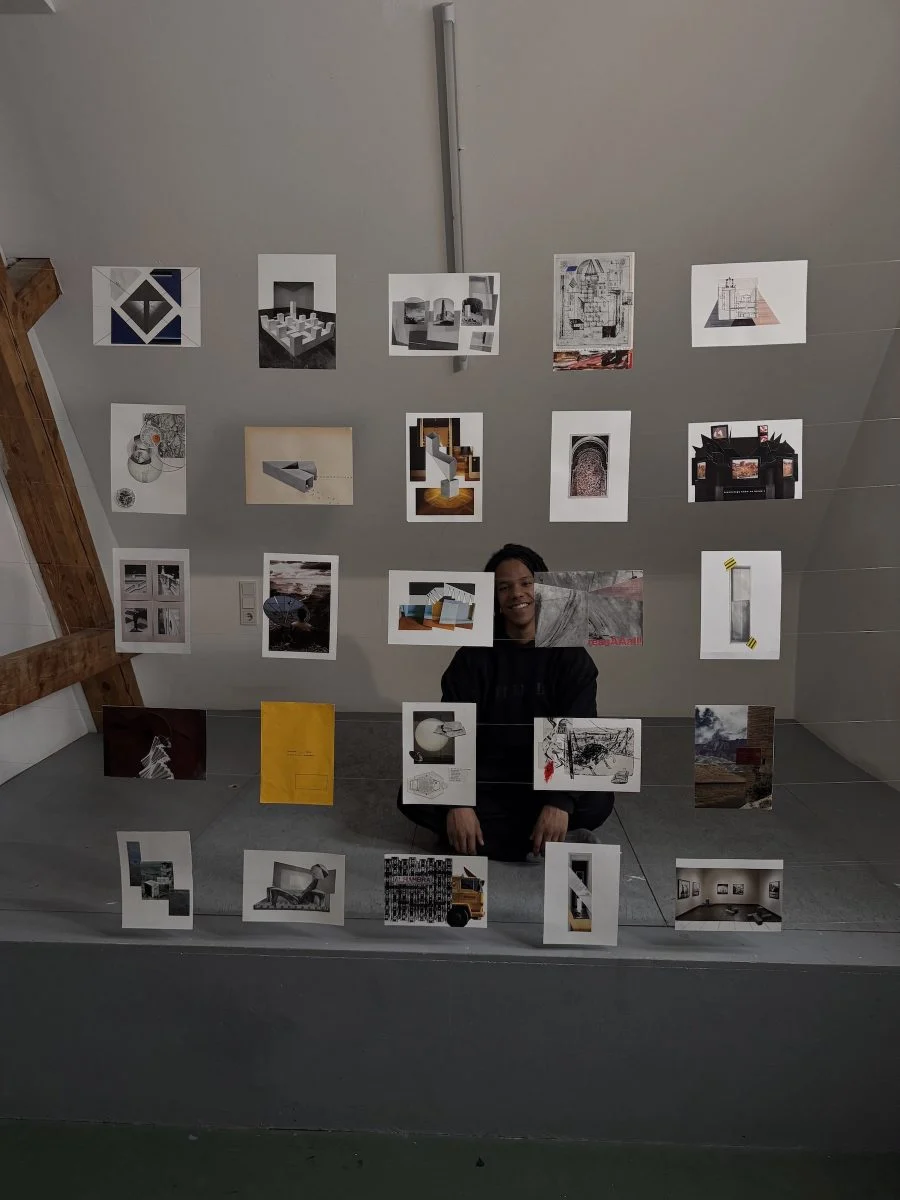
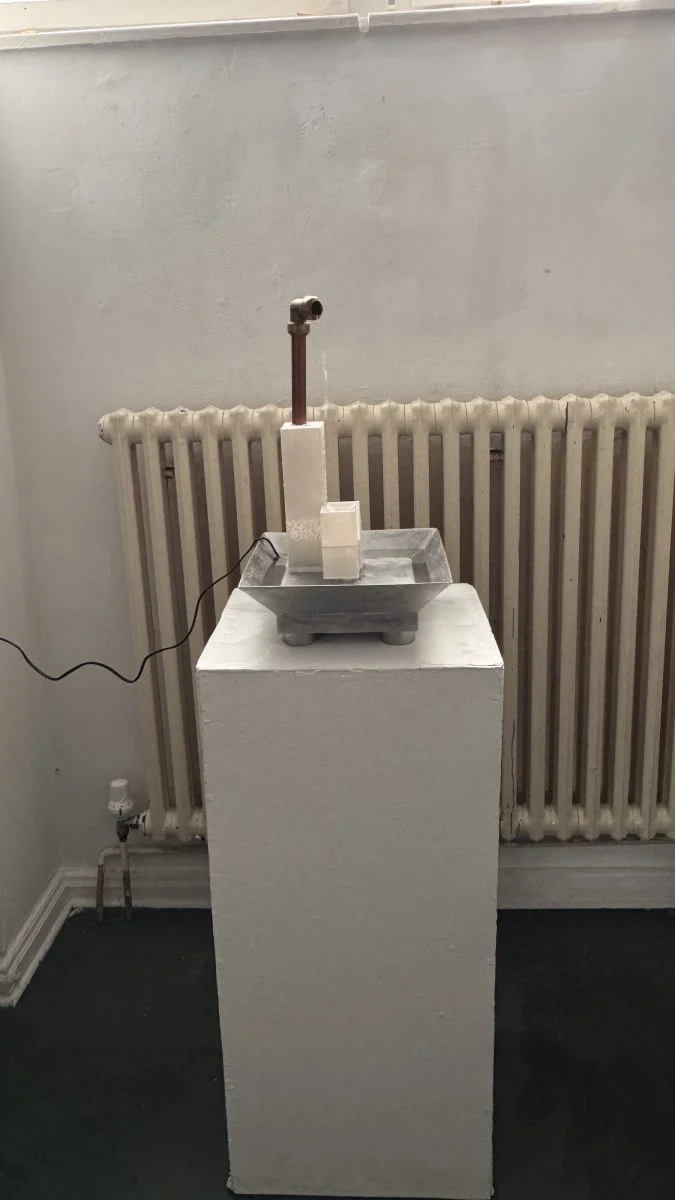
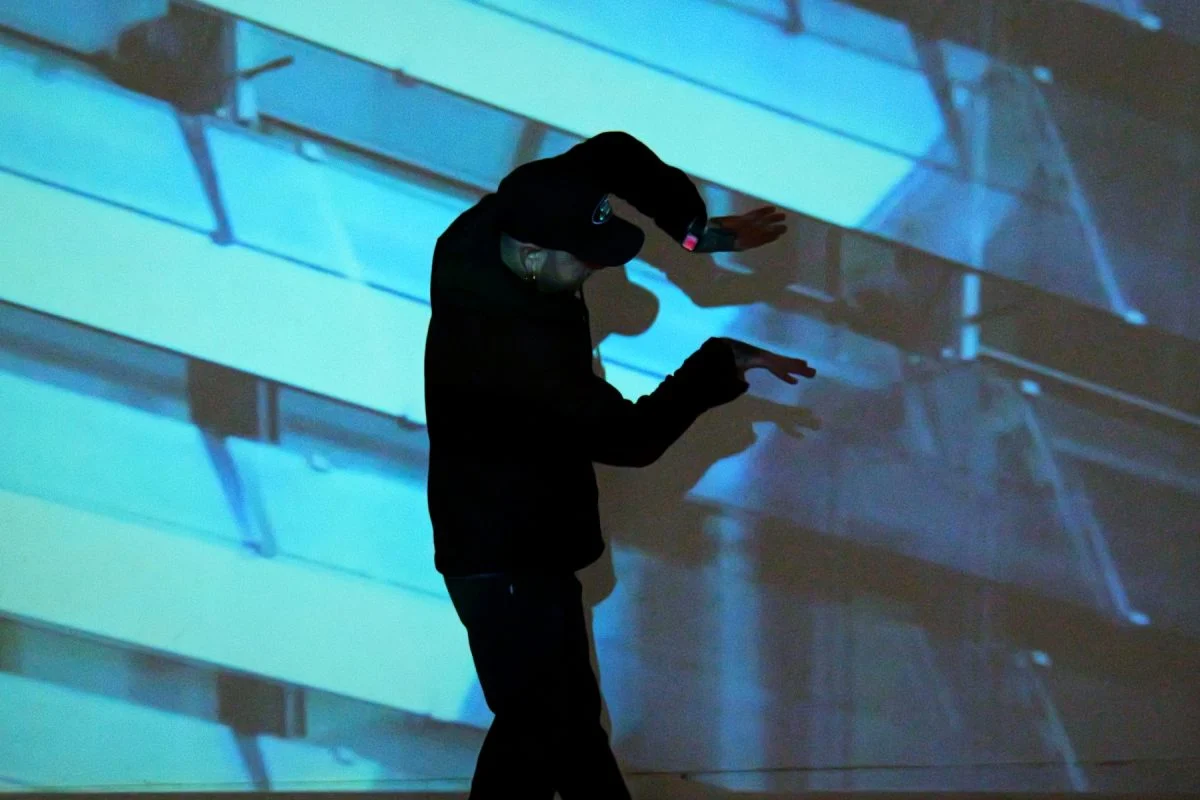
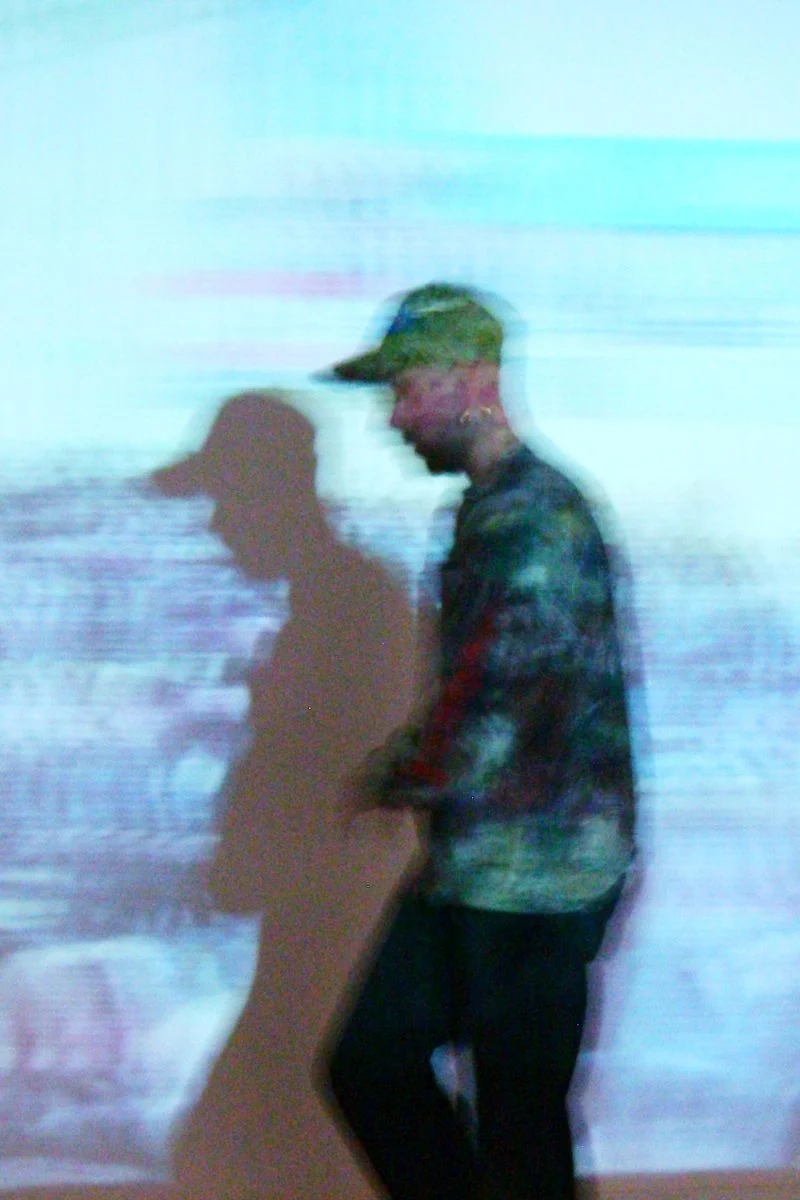
    Petr Karpov is an architect, artist, and dj from the United States whose research-based creative practice rests between visual art, performance, and spatial investigation. Currently, Petr creates sculptural objects – functional or ornamental, many act as two-way channels: both sculpting spectatorship and documenting the effect that audiences have on their space. He uses these objects to create montage, as well as to explore questions of authorship, utility, and ornament.

    Meet the Artist

    Can you tell me a bit about yourself and what you’re working on for your residency? 

    I’m Petr. I’m 24. I’m black and Russian. I studied architecture and visual arts at Princeton University. I do sculptures, installations, and performances. I also DJ. 

    Generally, my practice deals with modernism; its forms, processes and theories. My work is a product of this but also a critique of it. More specifically at the residency, I’m interested in ideas around lifespans of artwork. 

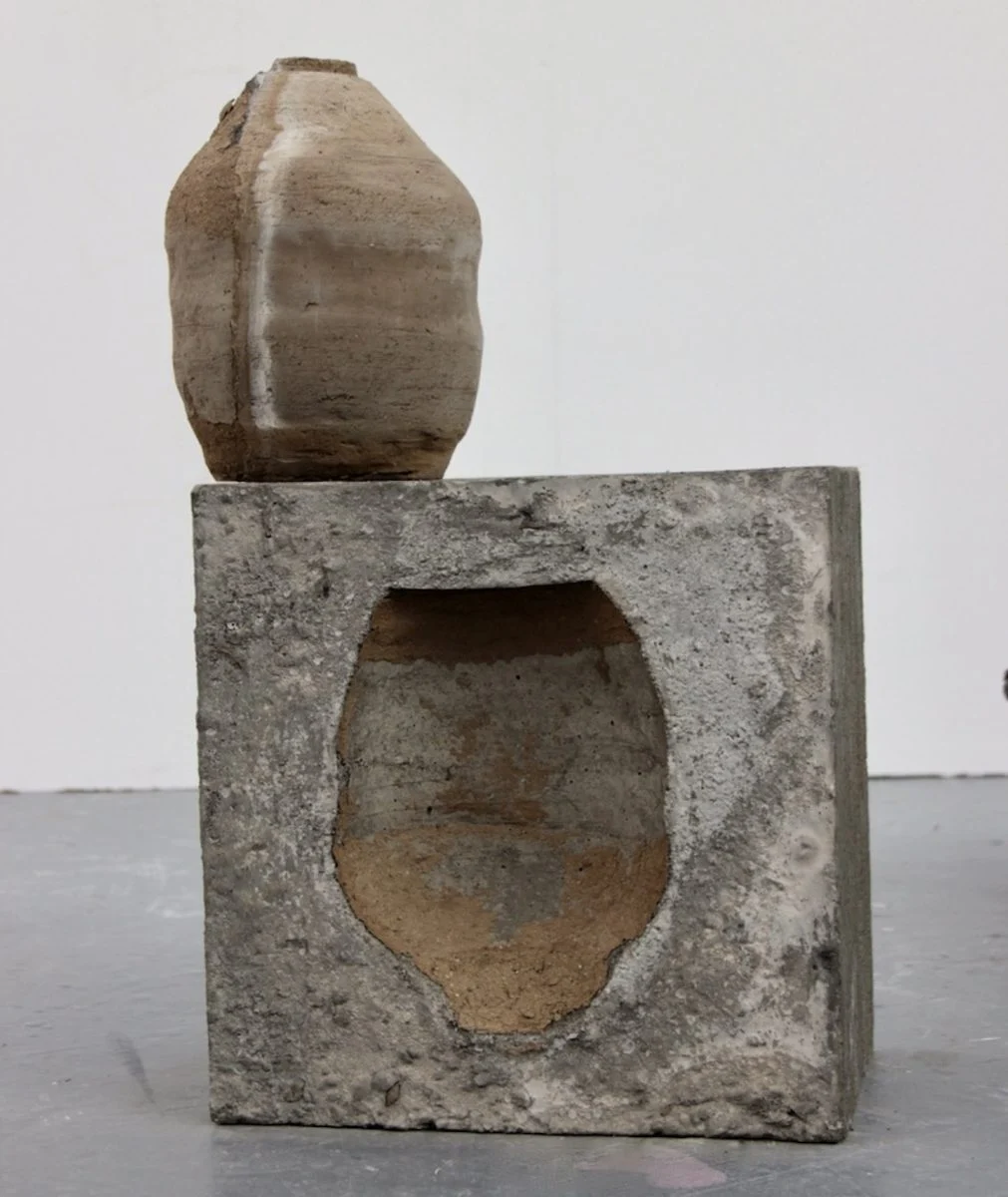
    I’ve been doing research into material longevity, so looking into how long the objects we build will be preserved for, the tension that comes with creating for both a defined present and an imagined future, and speculating about the future people who may receive these artifacts. I’ve been interested in making objects out of very contrasting materials, such as paper and concrete, and thinking about what message or form I want to send into the future. 

    Those same thoughts led me to question whether we can reuse artworks, what other uses something you create may have, and incorporating the functional into the ornamental. 

    You describe yourself as having a fascination with spectatorship. Can you tell me where this fascination came from? 

    All of us are spectators – constantly – whether we realize it or not. And when I say spectator, I mean both spectator to content and media, but then also unintentional spectatorship. 

    I’m talking about the moments when we unintentionally learn from other people, their processes and rituals, and we change how we act based on this process of learned behavior. In artwork, I think that this manifests as artworks that allow audience members to switch between roles of spectator and actor. Seeing another audience member interact with an object, and building on it – getting your own ideas to connect with a piece. 

    With active spectatorship – when spectators are forced to be actors – this participation or use of an artwork becomes its own building material and an artwork can be built from this interaction with spectators. 

    You’re also a DJ. Can you tell me more about how you got into it, why you integrated it into your practice, and how you create a setlist for a project? 

    If you want to be really specific, Brandon Schell got me into it when I was studying in Copenhagen, but I feel like it is just a good reflection of my visual art practice. 

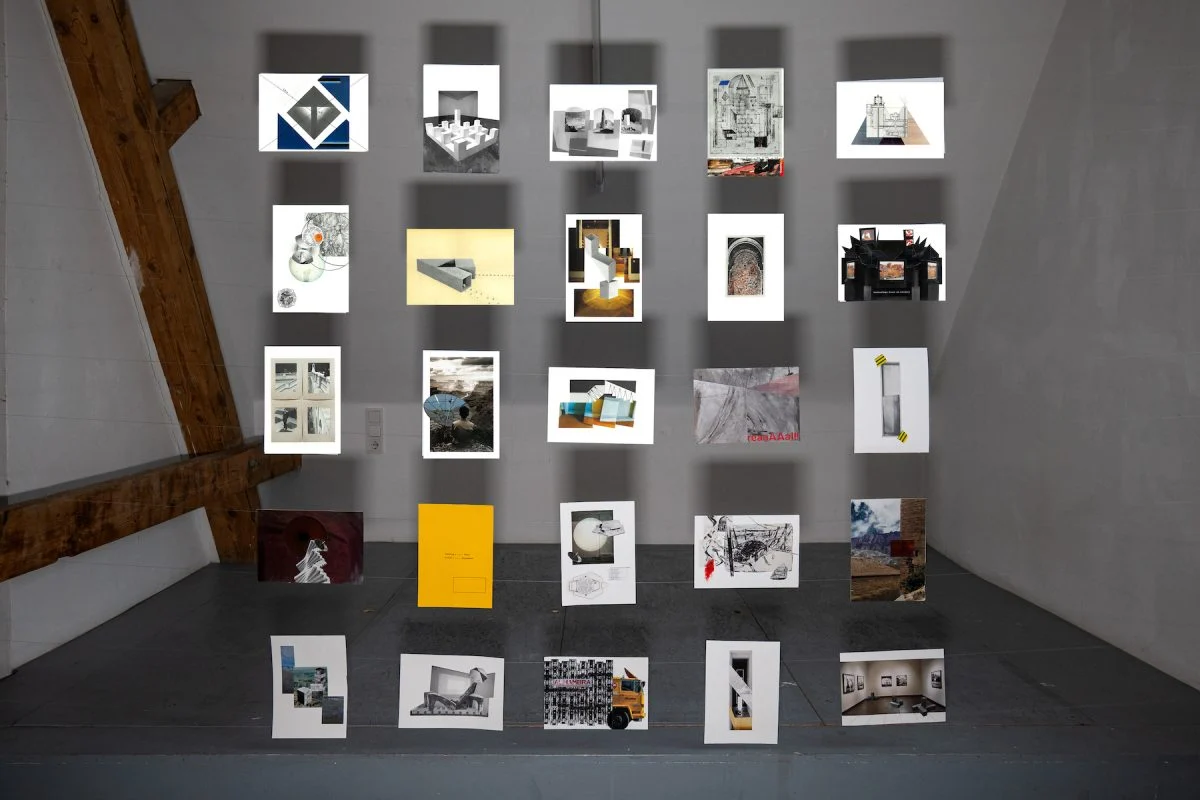
    I started off doing a lot of collage and I feel like DJing and collage are similar – this idea of a remix, taking something out of its context and putting it in conversation with things that it wasn’t meant to interact with. I think that can produce cool and unexpected things.

    Obviously a DJ is an actor whose main role is to shape the spectatorship, but at the same time, anybody that’s attending the event or dancing is an actor in that performance. The event wouldn’t be what it is without an active audience. 

    I’ve had past exhibitions where I’ve been exhibiting works in a gallery setting, but then I tried to take it out of that white cube setting by organizing a rave in the space. I was interested in the change in spectatorship and how it would make the work be perceived differently. 

    When you create works that both document and shape movement, what do you hope viewers become aware of about themselves? 

    I don’t think that the goal is necessarily discovery and each work is different. 

    Sometimes it can be discomfort or absurdity. Sometimes it’s just art for the sake of being art. I did this show free useless that was about Afro-suprematism and tried to fully separate work from any meaning. Separate art from aesthetics or from myself as an artist. It was just art being art, not trying to push an agenda or have a motive.

    Interview Reese Saddler (@reeseesaddler)

    Photos Ksenia Proskuryakova (@ksenyapro)

    • Statement
    • GlogauAIR Project
    • CV
    • Gallery
    • More

    Statement

    Petr Karpov is an architect, artist, and dj from the United States whose research-based creative practice rests between visual art, performance, and spatial investigation. Currently, Petr creates sculptural objects – functional or ornamental, many act as two-way channels: both sculpting spectatorship and documenting the effect that audiences have on their space. He uses these objects to create montage, as well as to explore questions of authorship, utility, and ornament.

    GlogauAIR Project

    During the residency, I would like to continue exploring my fascination with the act of observation: how individuals – especially myself – navigate their role as spectators in the theater of the everyday. I intend to fabricate an architectural intervention in which mundane daily rituals take physical form and my time in residence becomes materially concrete. I’m excited by the prospect of working alongside methods and concerns that differ greatly from my own: I hope to arrive as a spectator to others’ processes, allowing dialogues and unexpected encounters to guide my work and open new modes of relation.

    CV

    Education

    • Bachelor of Arts in Architecture – Princeton University

    Solo Exhibitions

    • The Common Presents “““ (2024) – an arena, a scanner, and a series of performances. In collaboration with Luke Shannon.
    • free useless (2023) – a body of Afro Suprematist work created in response to independent research into the practice and writing of Kazimir Malevich

    Group Exhibitions

    • durchgang? (2025) – curated by Franz Rodwalt
    • Senior Show (2024) – curated by Deana Lawson
    • To be Held (2024) – artist book by Ben Denzer
    • Livity (2023) – Black Arts Collective, curated by Azi Jones
    • Anticulation (2022) – Black Arts Collective, curated by Omar Farah

    Awards

    • Lucas Award in Visual Arts (2024) – for excellence and quality of a senior’s body of work; awarded by faculty nomination to graduating seniors in a senior-prize context
    • Sam Hutton Fund for the Arts (2022) – supporting a summer study under Franz Rodwalt

    Additional Information

    • The Collective: Founder of the Black student art collective formed in spring 2022 after curating stitching, an exhibition of mixed-media works by 13 student artists.
    • Related curatorial involvement: Omar Jason Farah, linked to the Black Arts Collective and curator of Anticulation, is noted for curation of exhibitions focused on Black queer archives.

    More

    We do not have any further information at this time.
  • Lara Marino

    Lara Marino

    Artist main image

    Lara Marino is GlogauAIR resident from January 2026 to March 2026.
    Q1

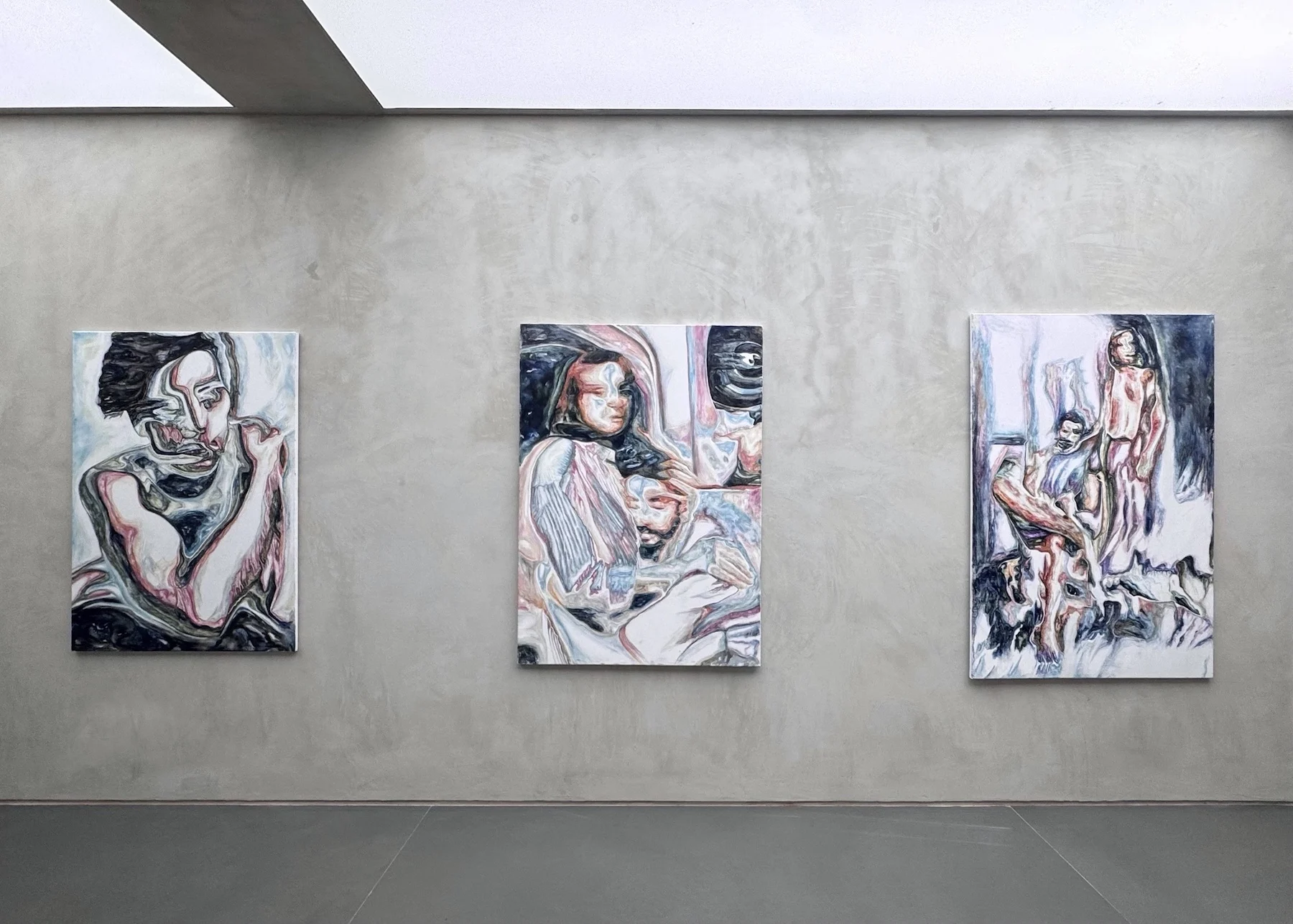
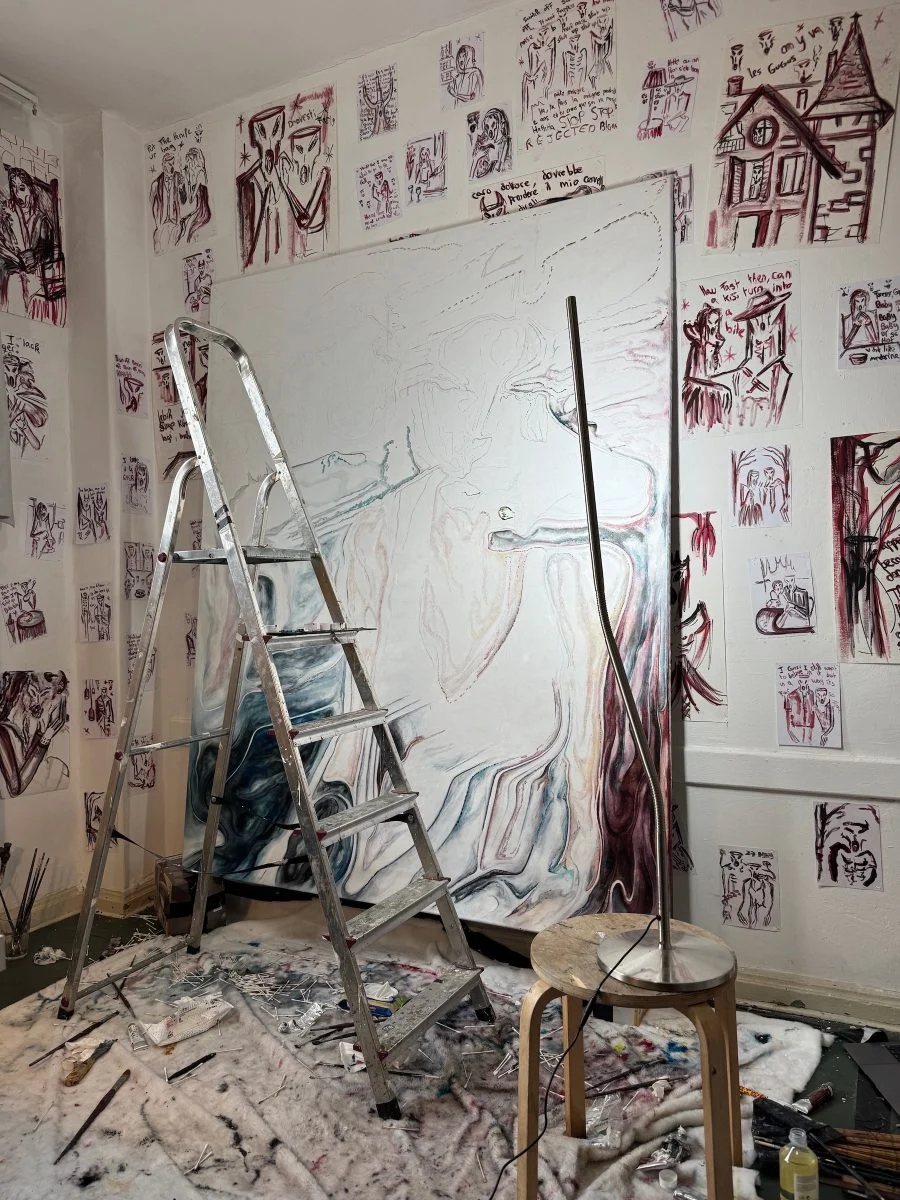
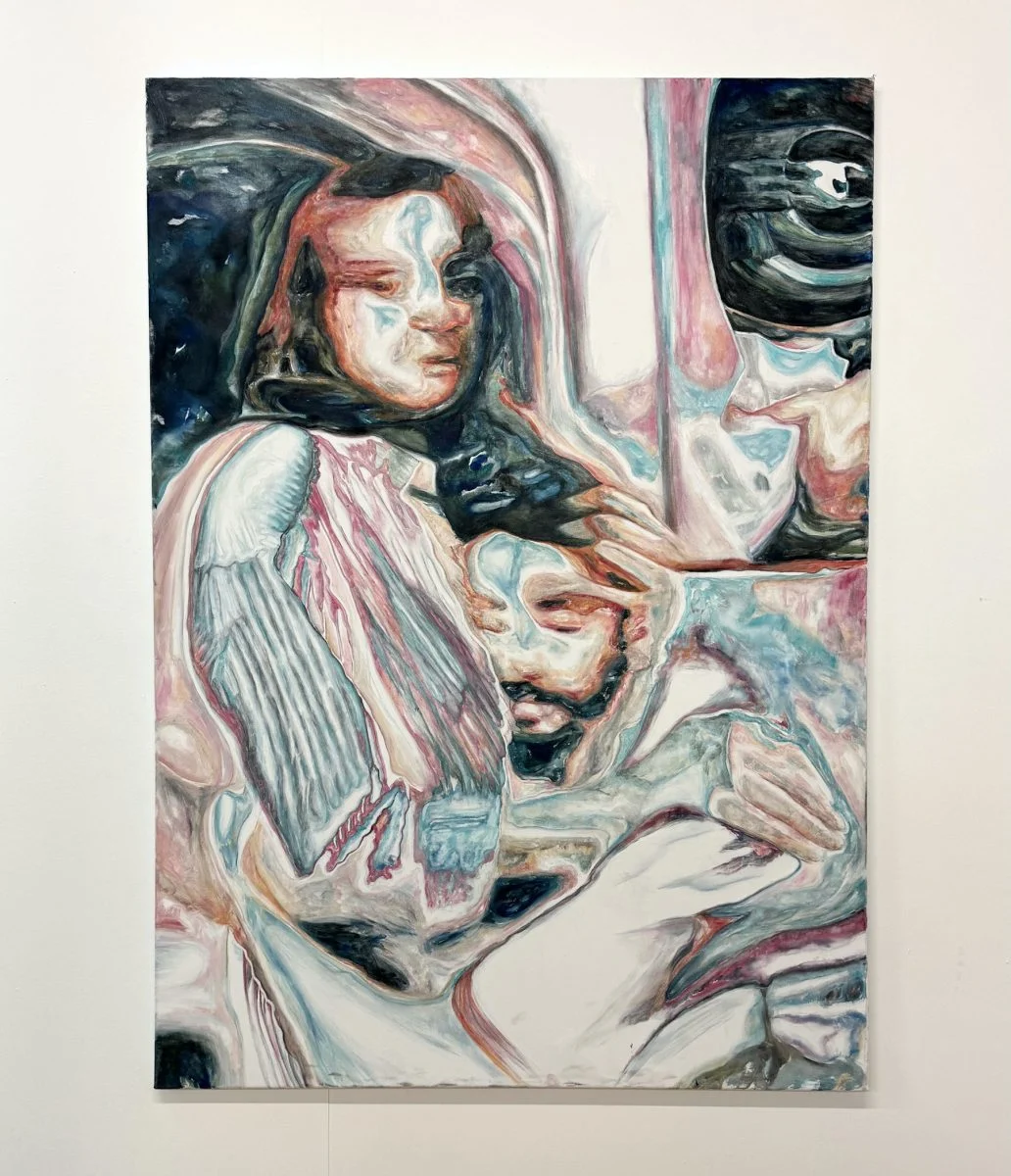
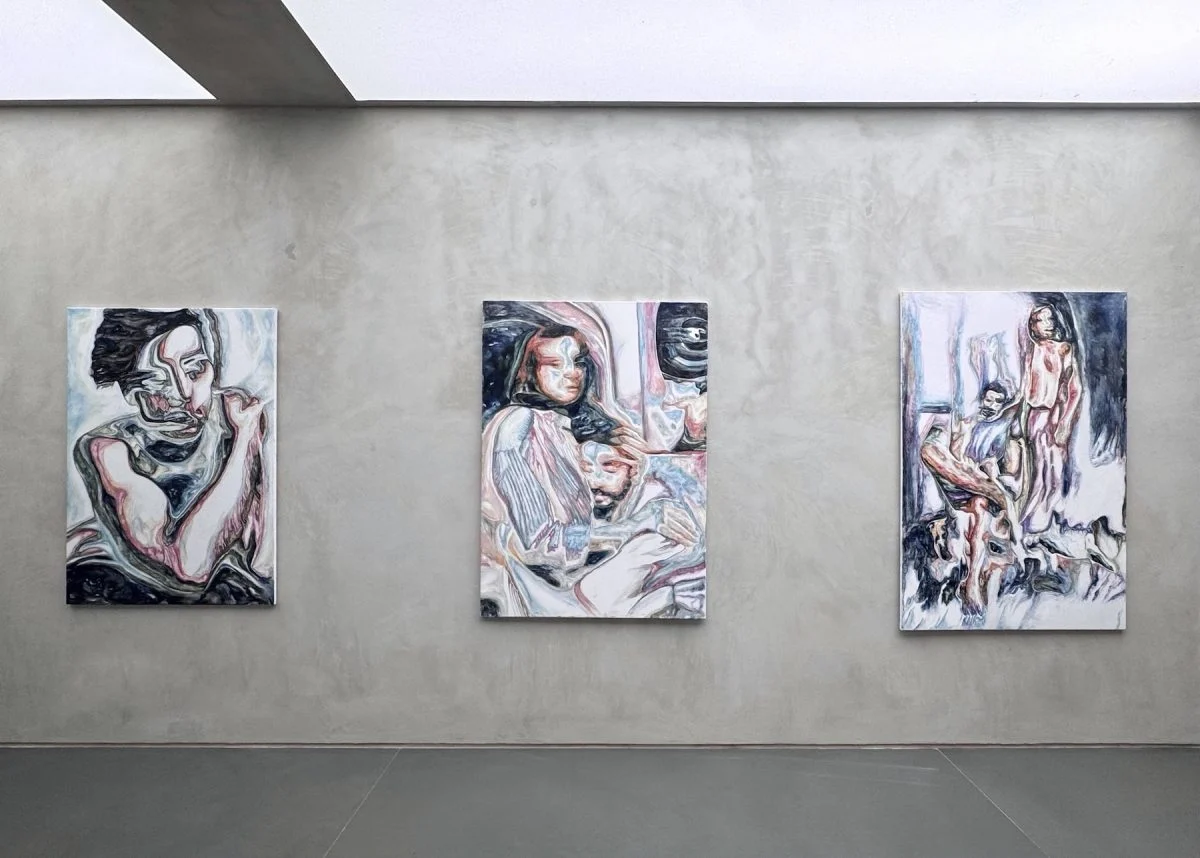
    Lara Marino is a Swiss artist whose practice unfolds through painting, drawing, and writing. It engages states of psychic and bodily tension, and the ways unstable images persist, fragment, or disappear. Painting becomes a space of continuous transformation, where matter, memory, and gesture remain in a state of crisis.

    Meet the Artist

    Can you tell me a bit about yourself and what you’re working on for your residency?

    I graduated with a Bachelor of Fine Arts from École cantonale d’art de Lausanne in Switzerland. At that time, I was doing multidisciplinary art. After this, I went to Indonesia and spent two years there after my studies to reconnect with my home.

    After the residency, I’m going to do a Master’s of Fine Arts at the Royal College of Art, because I really want to focus on painting more.

    I also started an art collective in Switzerland, called Space 28, in order to build a community between artists, especially for emerging artists. For me, doing a residency was one of the keys to doing this because I wanted to work in a community and to build links with other people from other cultures as well.

    I have two different practices: functional and quick drawing and painting. Both function as extensions of each other. My work is mostly focused on the female body under pressure. I question that relationship and the relationship between the environment and the woman’s conditioned body.

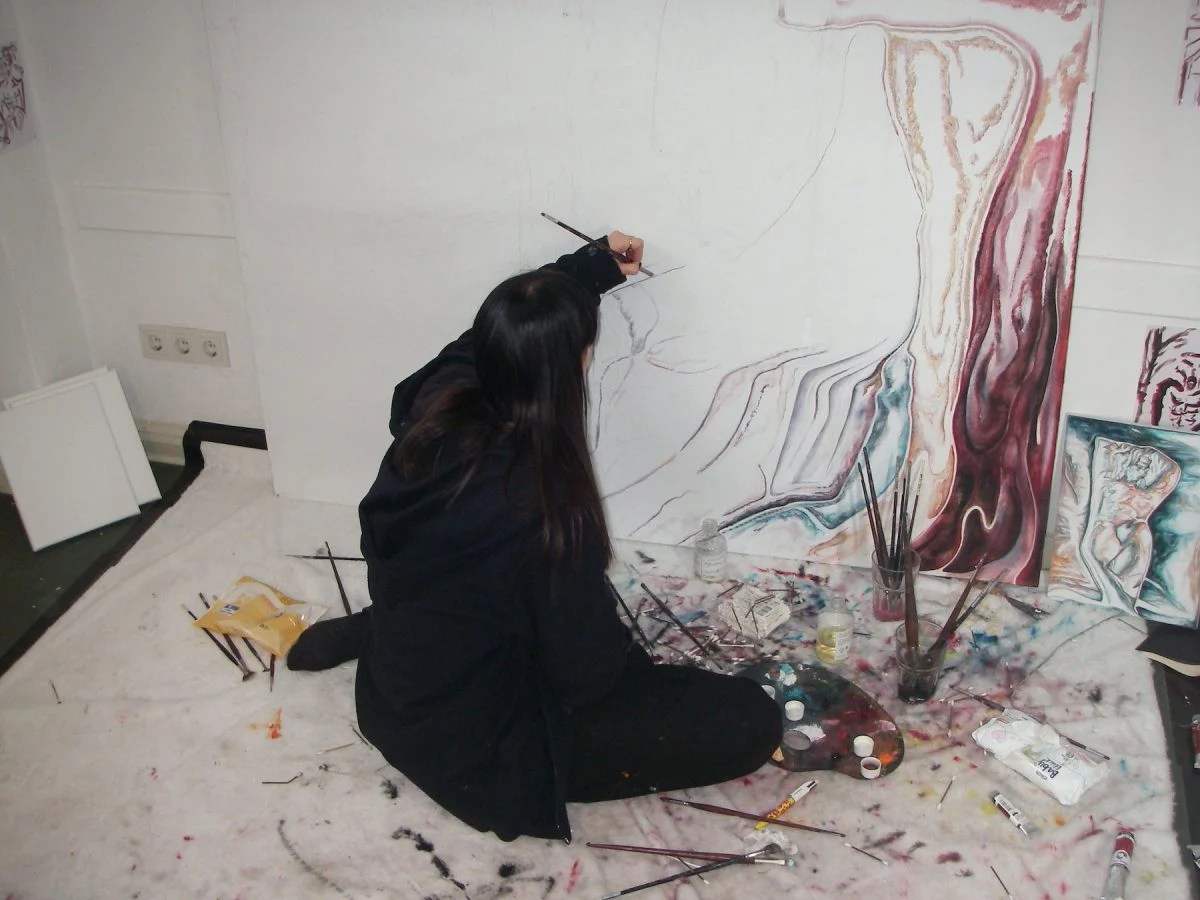
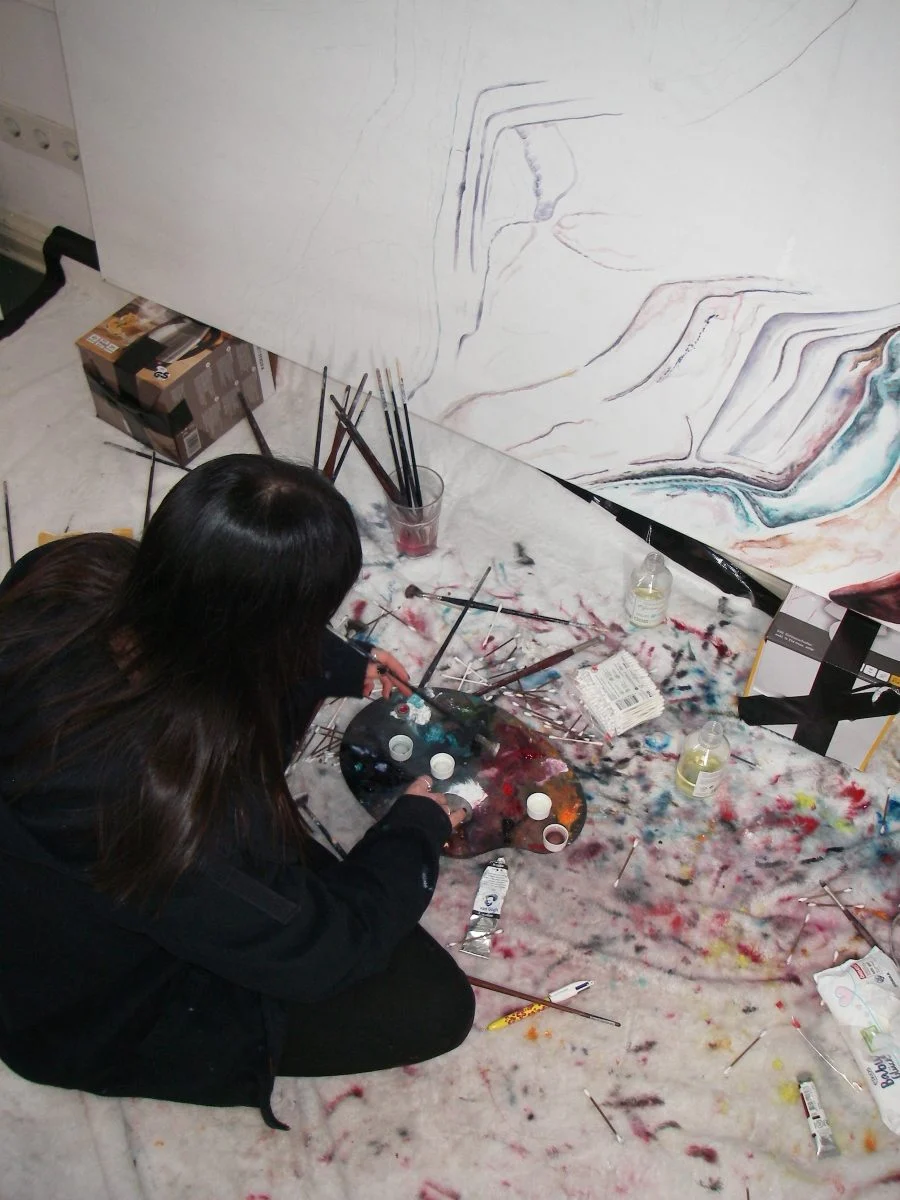
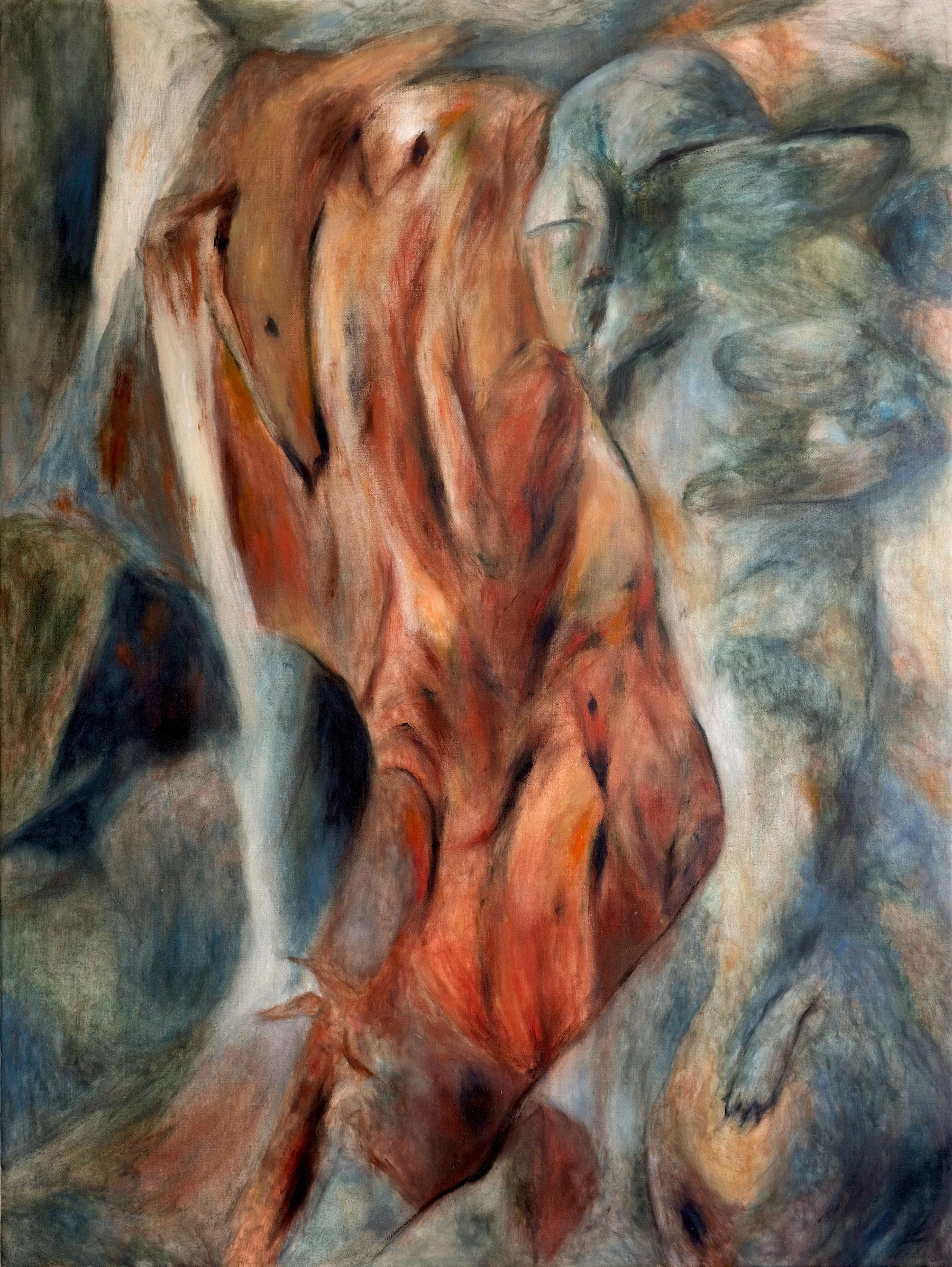
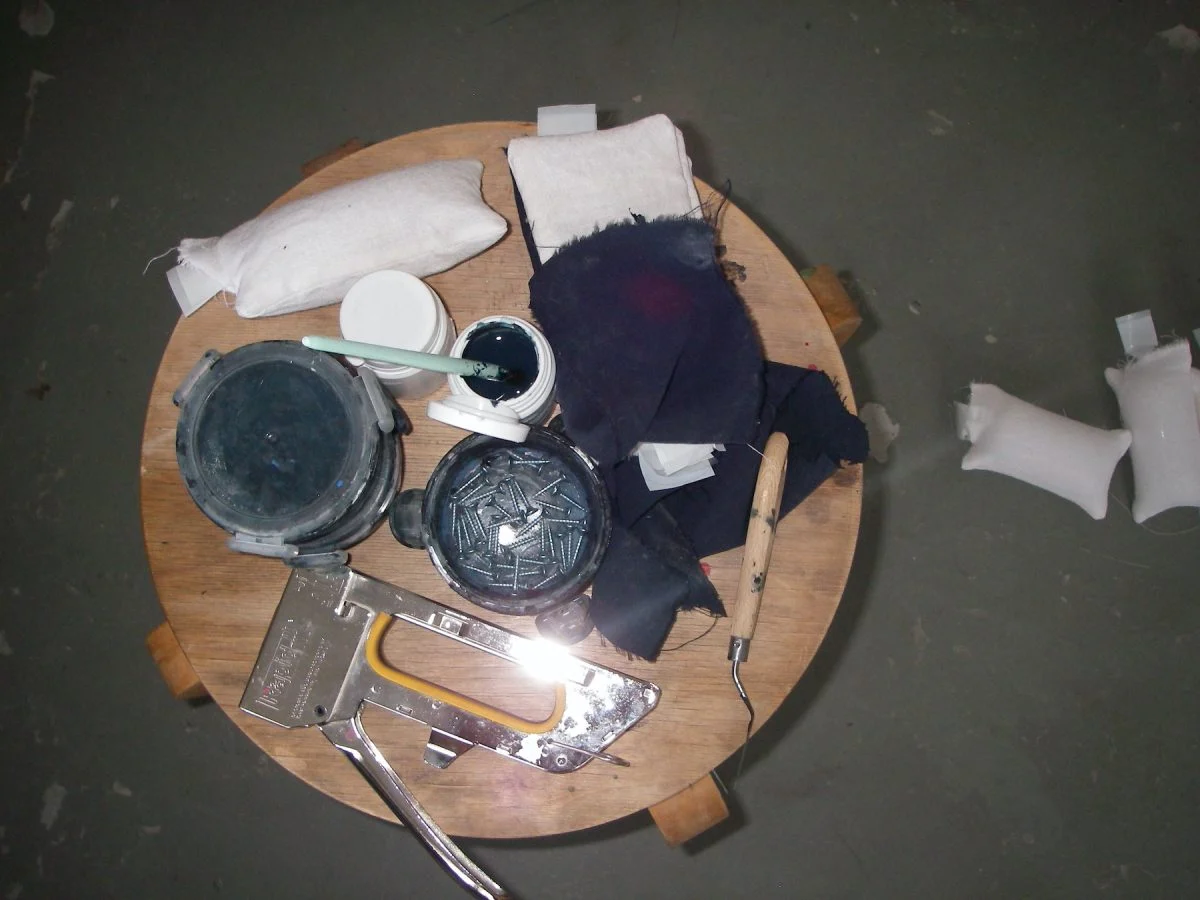
    I’m mostly focused now on the practice of painting, mostly working with oil paint. Sometimes I combine the oil with my own blood, but it was a bit difficult to bring my own blood here. I’m interested in the link between the environment and human beings, as well as the relationship between the process of painting and the act of self-destruction.

    The oil is really slow and dense, yet the blood is oxidative and organic. So they have this relation of self-destruction in the painting. And I’m really interested in this destruction.

    And it’s good because I like the material. It’s not the color. I’m not interested in the color of the blood. It’s about this difference between the two materials, like a fatty and dirty one, and one that’s very transparent and almost like water.


    During your time at GlogauAIR, you’re exploring how feminist writing influences your painting process. What excites you most about letting text and image “mix” or influence each other more directly?

    I will always be more comfortable trying to have a conversation about my work and talking about other artists that I feel related to before trying to explain a specific work. When you are still in the process of understanding how your work functions, it’s easier to relate to people who you are influenced by.

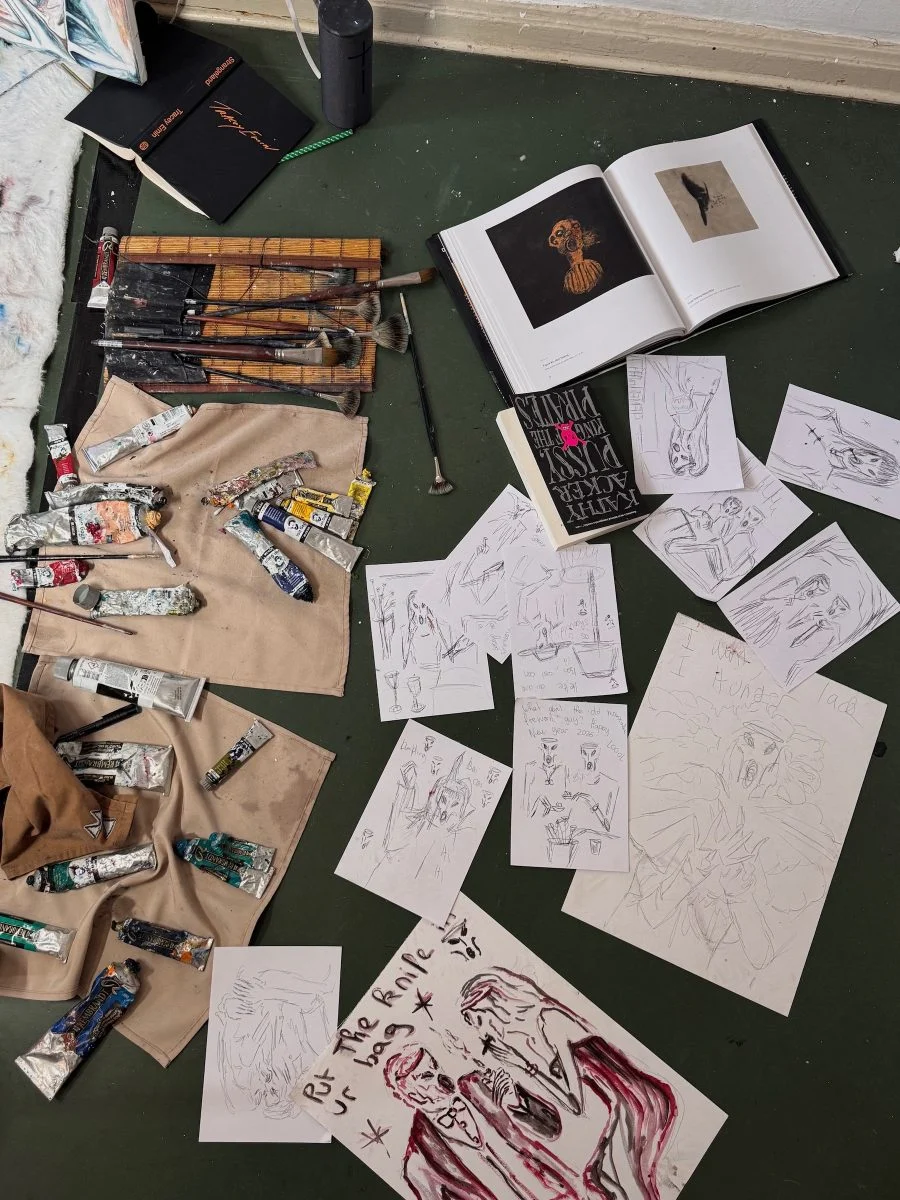
    I’m influenced by Tracy Emin, Kathy Acker, and also Hélène Cixous. Cixous is an eco-feminist writer, and she writes about this condition between the body and women’s pressure.

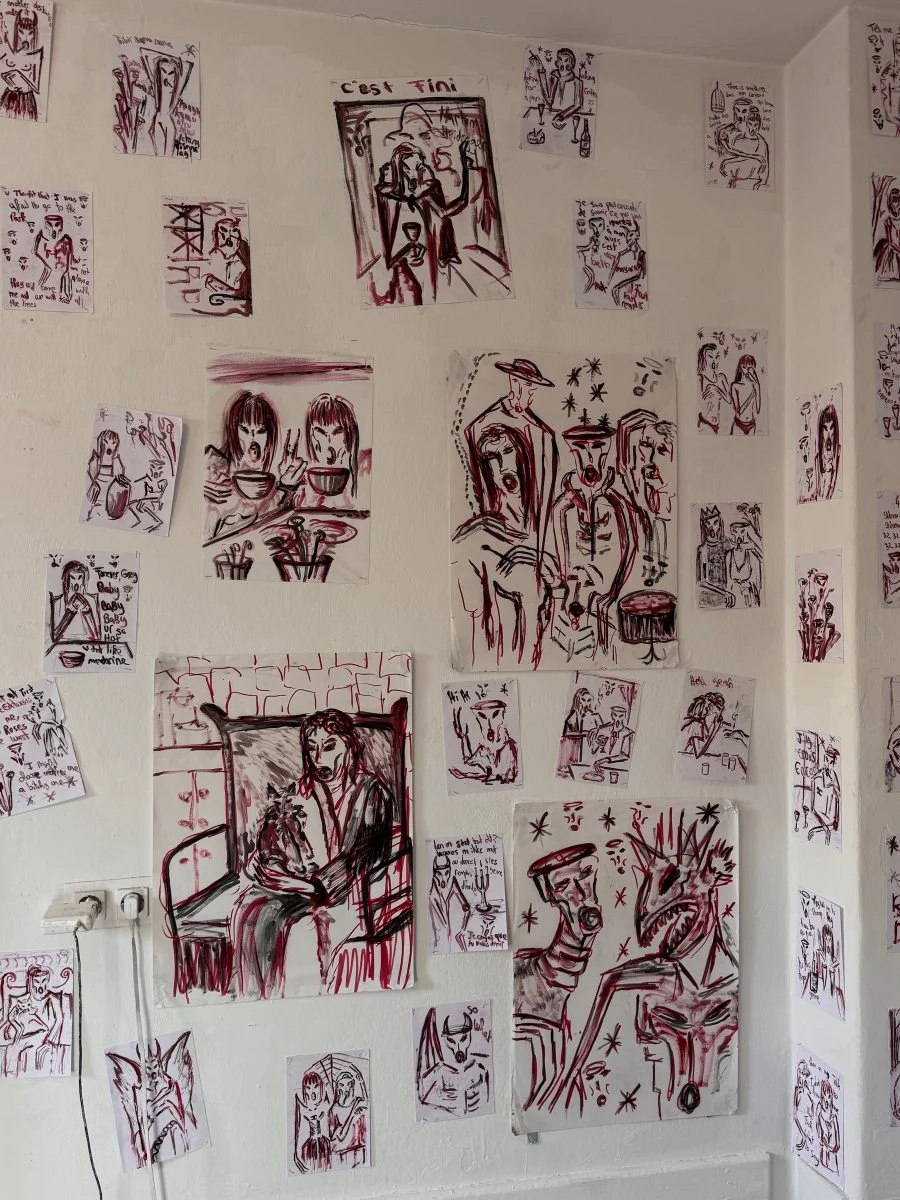
    I also read texts from Kathy Acker. She has this approach in her text where it’s not from A to Z, but it’s written with a diffracted narrative distortion. I feel like I have the same relationship with the drawing; it doesn’t matter how my drawings are settled, because it works anyway.

    For me, writing enters the work as a gesture close to the body and the surface. Writing communicates the same idea as the image, just in a different way. When they both enter the work, it just becomes one thingー like a body. When I’m trying to explore this, I am going very quickly. When I have an idea, I immediately transfer it, but the painting process is more about obsessive control. So working on a specific area would be like a super close-up of one narrative drawing. So this logic extends to both the body and the environment. I approach the body as an ecosystem subjected to intensive regimes of control.

    In the same way, the environment is exploited, exhausted, and then partially repaired. From an eco-feminist perspective, the body and the environment are closely connected. Both function as surfaces of control and destruction, sometimes imposed, sometimes consciously maintained.


    A lot of your work deals with tension, repetition, and moments of collapse. What keeps bringing you back to those themes?

    I guess they are repeating, but I guess so many things are repetitive in our daily lives. We’re doing so many things as human beings; everyone is sleeping every day, everyone is eating every day. There are so many things that we are doing as repetitive gestures, but it’s slightly different every day.

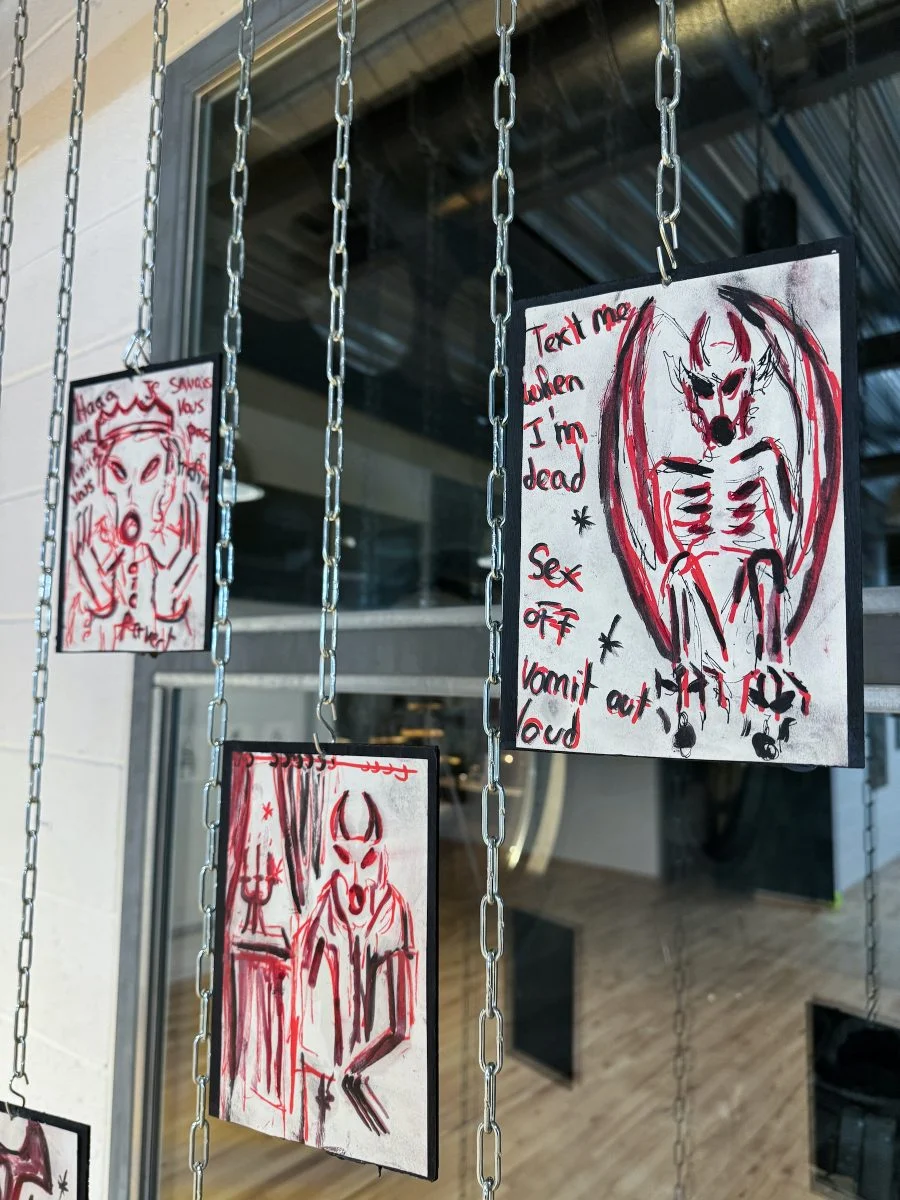
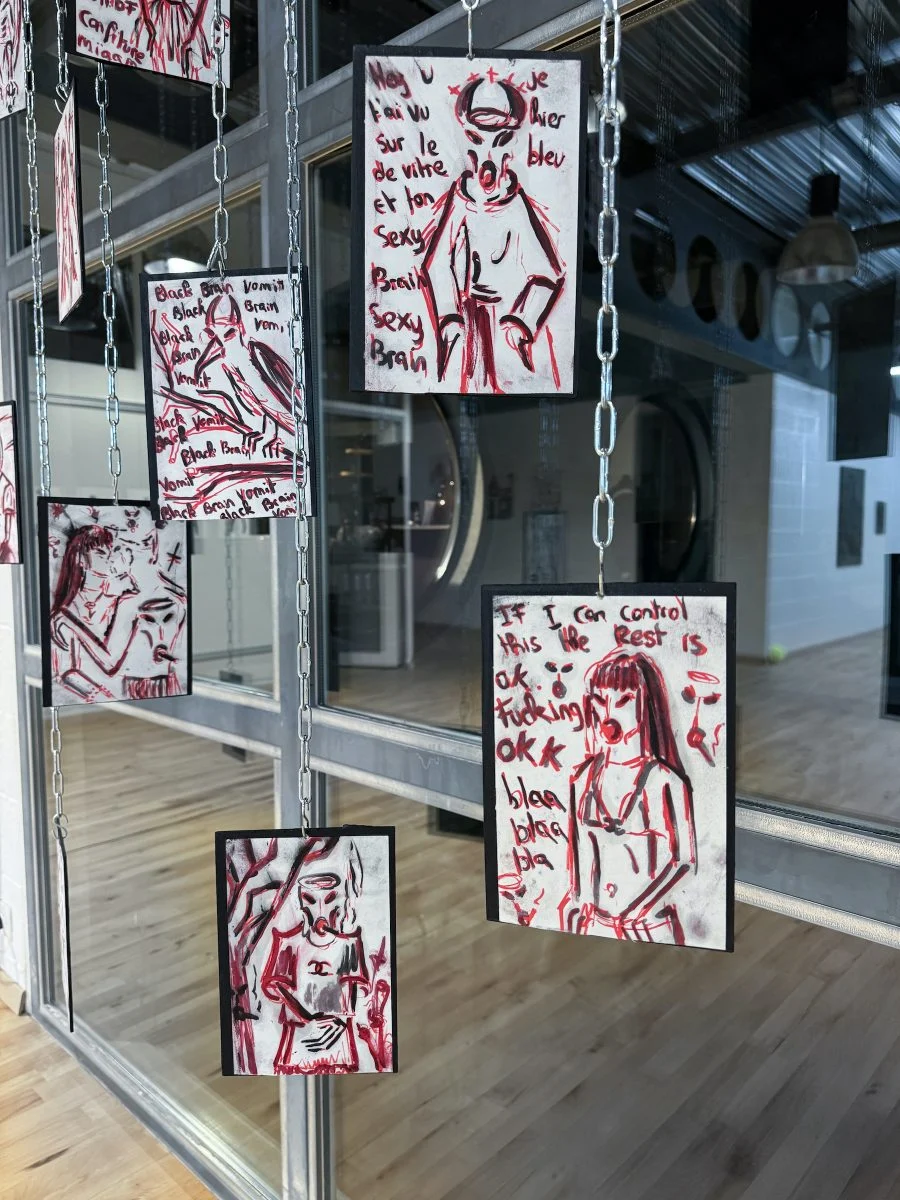
    As human beings, we’re always evolving. Even though the characters in my work are repeatedly coming back to my work, there is no limit to their evolution or destruction, or the way they will talk or the way they will think. In a way, I see those monsters or characters as a representation of how we are evolving as well.

    They are changing every day, but sometimes they are in the same mood. Sometimes they want to be chill, and sometimes they want to be quiet.


    Repetition shows up a lot in your work. What does returning to the same image or gesture again and again allow you to explore or uncover?

    I also wanted to show you the work of Marina de Van, who writes and acts in the movie Dans ma peau.


    Interview Reese Saddler (@reeseesaddler)

    Photos Ksenia Proskuryakova (@ksenyapro)

    • Statement
    • GlogauAIR Project
    • CV
    • Gallery
    • More

    Statement

    My practice unfolds through painting, drawing, and writing. It engages states of psychic and bodily tension, and the ways unstable images persist, fragment, or disappear. The figures that traverse the work restage the body as a system subjected to cycles of control, collapse, and repetition. Oil and blood structure the material conditions of the paintings through distinct temporalities, slow or unstable. Painting becomes a space of continuous transformation, where matter, memory, and gesture remain in a state of crisis.

    GlogauAIR Project

    The residency period at GlogauAIR would be dedicated to deepening the relationship between painting and writing within an ecofeminist frame of thought. The project is conceived as a sustained research process combining reading, writing, and painting as a single field of inquiry. I am interested in how feminist texts—particularly those of Kathy Acker—can inform fragmented, repetitive, or unstable pictorial processes. The residency would support a slow, reflective practice in which writing and painting continually contaminate one another.

    CV

    SOLO EXHIBITIONS (SELECTION)

    • 2025
      Monsters’ Love Story, Espace Inspyro, Bandung, Indonesia
      Gnomies Loverrr, as part of the Espace 28 program, Lausanne, Switzerland
    • 2023
      LBNG, Espace Baiq, Bandung, Indonesia — curated by Agung Hujatnika
    • 2021
      MELK, ECAL, Lausanne, Switzerland — curated by Stéphane Kropf
    • 2019
      The Demon Dance, Gerrit Rietveld Academie, Amsterdam, The Netherlands — curated by André Klein

    GROUP EXHIBITIONS (SELECTION)

    • 2025
      Garage Ghost, Espace 28, Lausanne, Switzerland
    • 2024
      Warehouse, Edition 3, Ruang Seni, Yogyakarta, Indonesia
      RAN — curated by Rain Rosidi, Jakarta, Indonesia
    • 2023
      Raga — curated by Pidi Baiq, IKOPIN University, Bandung, Indonesia
      La Grange, Edition 5, Ruyères, Switzerland
    • 2022
      Paradis, Quartier Général, La Chaux-de-Fonds, Switzerland
      La Grange, Edition 4, Ruyères, Switzerland
    • 2021
      Espace Arlaud — ECAL diploma exhibition, Lausanne, Switzerland
      Brain Scan — ECAL diploma exhibition, Galerie Élac, Lausanne, Switzerland
      Door — curated by Denis Savary, Halle de Sébeillon, Lausanne, Switzerland
    • 2020
      Klemperer, studio project (after Brouhaha. Les mondes contemporains), with Lionel Ruffel — ECAL, Lausanne, Switzerland
      Traducteurs cleptomanes (after A Confederacy of Dunces by John Kennedy Toole), curated by Gina Proenza & Nicola Federico — ECAL, Lausanne, Switzerland
    • 2019
      Too Much Noise — curated by Rochelle Feinstein & Mario de Vega, ECAL, Lausanne, Switzerland
      Insomnia Talks in My Tea — curated by Yvonne Dröge Wendel, Gerrit Rietveld Academie, Amsterdam, The Netherlands

    CURATORIAL PROJECTS

    • 2025
      SLOKE — co-curated — R.A.W. collective — Espace 28 (independent art space), Lausanne, Switzerland
      Garage Ghost — collaboration between R.A.W. Collective (Switzerland) and Buku Seni Rupa (Indonesia) — Espace 28, Lausanne, Switzerland
    • 2022–2024
      Warehouse Project — co-founder with Hendra Priyadhani (independent art space, Editions 1–4), Yogyakarta, Indonesia

    RESIDENCIES

    • 2026
      NARS Foundation, New York, United States (upcoming)
    • 2025
      School of Visual Arts (SVA), New York, United States

    AWARDS AND GRANTS

    • 2021
      Ernest Manganel Prize, Ernest Manganel Foundation, ECAL, Lausanne, Switzerland
    • 2017
      Visual Arts Prize, Gymnase Auguste-Piccard, Lausanne, Switzerland

    EDUCATION AND PROFESSIONAL TRAINING

    • 2025
      Co-founder of the R.A.W. collective, Lausanne, Switzerland — in collaboration with Elsa Wagnières, Vincent Paley, Loris Marino, and Laura Alegre
    • 2020–2021
      Bachelor of Arts in Visual Arts, ECAL – École cantonale d’art de Lausanne, Switzerland
    • 2024 – present
      Studio assistant to Karim Noureldin, Lausanne, Switzerland
    • 2019
      Erasmus Exchange Program, Gerrit Rietveld Academie, University of the Arts Amsterdam, The Netherlands
    • 2018–2019
      Foundation Year in Art and Design, ECAL – École cantonale d’art de Lausanne, Switzerland
    • 2017–2019
      Certificate of General Education, specialization in Arts, Gymnase Auguste-Piccard, Lausanne, Switzerland

    More

    We do not have any further information at this time.
  • Cian Handschuh

    Cian Handschuh

    Artist main image

    Cian Handschuh is GlogauAIR resident from January 2026 to March 2026. Q1

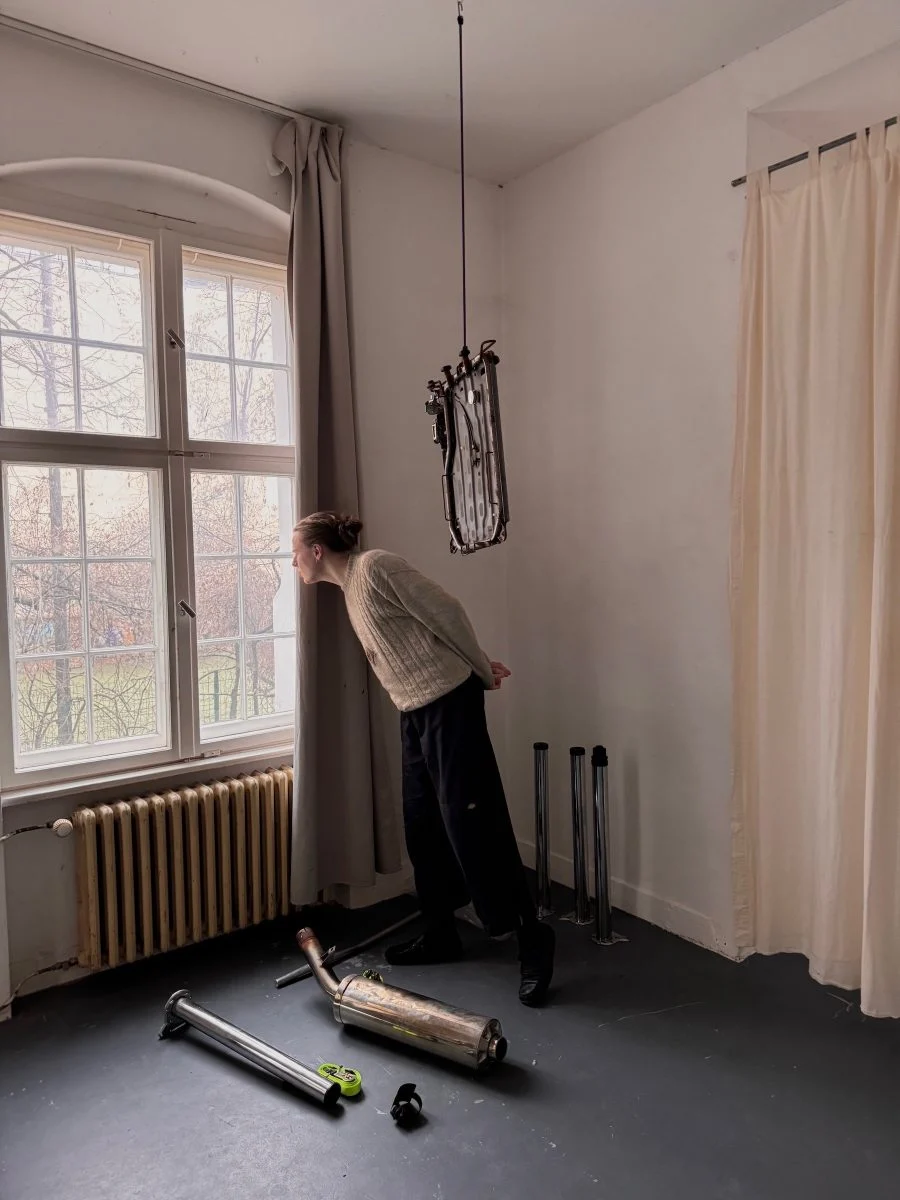
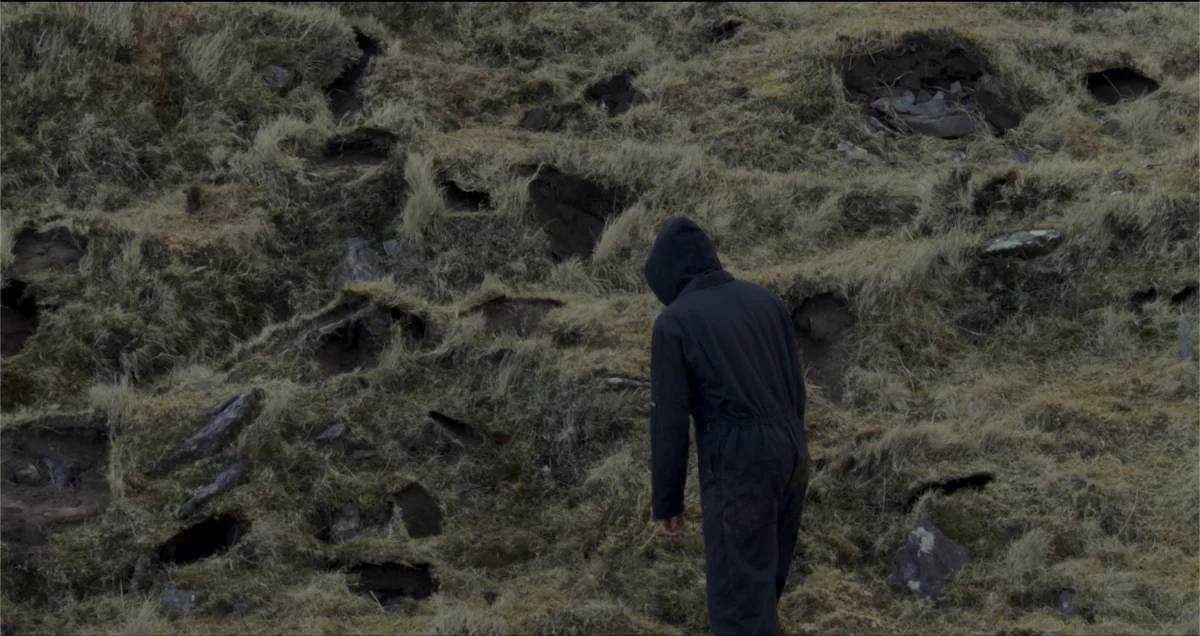
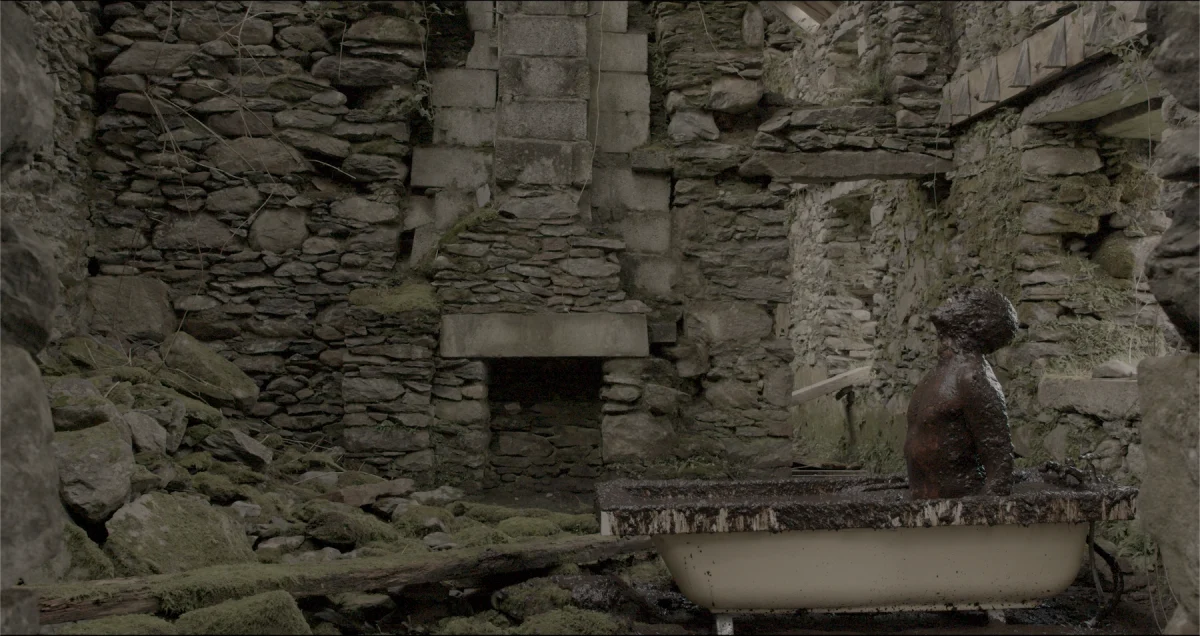
    Handschuh’s practice engages sculptural installation and site-specific intervention to explore questions of dwelling, ownership, land dysphoria, wildness, and heritage. His work examines links between body and land using dwelling as a mutual space and as such an analysis point for their interaction. This draws from the built environment and its function as an ‘extended body’ and thus contrasting and combining formal modern building materials with those of the natural world.

    Meet the Artist

    Can you tell me more about your background and what you’re working on for your residency?

    You often talk about “dwelling” as a space where body and land meet. What does dwelling mean to you, and how do you hope people feel when they step into your work?

    You work a lot with gleaned and recovered materials in your previous works. How do these materials shape the direction of a piece once you start working with them?

    During your time at GlogauAIR, you’re continuing your investigation into ownership and land possession. What question feels the most urgent to you at the moment?

    Interview Reese Saddler (@reeseesaddler)

    Photos Ksenia Proskuryakova (@ksenyapro)

    • Statement
    • GlogauAIR Project
    • CV
    • Gallery
    • More

    Statement

    Handschuh’s practice engages sculptural installation and site-specific intervention to explore questions of dwelling, ownership, land dysphoria, wildness, and heritage. His work examines links between body and land using dwelling as a mutual space and as such an analysis point for their interaction. This draws from the built environment and its function as an ‘extended body’ and thus contrasting and combining formal modern building materials with those of the natural world. The work seeks to shorten the proximity between us and dwelling and provide a sense of nearness with material and land.

    GlogauAIR Project

    Building on my recent work isn’t all land holy, every structure a temple(2025), I intend to use the time afforded by the GlogauAIR residency to further develop my ongoing investigation into ownership, land possession, and the value assigned to “prefabricated” objects.

    My practice approaches objects through an animistic lens, proposing a porous relationship between people and things—one in which boundaries dissolve through an almost osmotic exchange. This perspective resists human hierarchies over objects, instead suggesting a shared agency. Central to this approach is my use of gleaned, foraged, and recovered materials: remnants that are borrowed rather than owned, and which arrive already charged with their own histories.

    CV

    Isn’t all land holy, every structure a temple

    • PuntWG, Amsterdam, NL – (07/2025)

    The quagmire

    • Curated by Lottie Stephens, Berlin, DE – (08/2025)

    Anarchive

    • Artlink, Fort Dunree, Inishowen – (08/2025)

    FromDust

    • Platform Arts, Belfast – (03/2025)

    Notions: Home, Placeand Speculations

    • PeoplesMuseum, Limerick – (02/2025)

    RDS Visual Art Awards2023

    • IMMA (IrishMuseum of Modern Art), Dublin – (01/2024)

    More

    We do not have any further information at this time.
  • Jin Fang

    Jin Fang

    Artist main image

    Jin Fang is GlogauAIR resident from January 2026 to March 2026. Q1

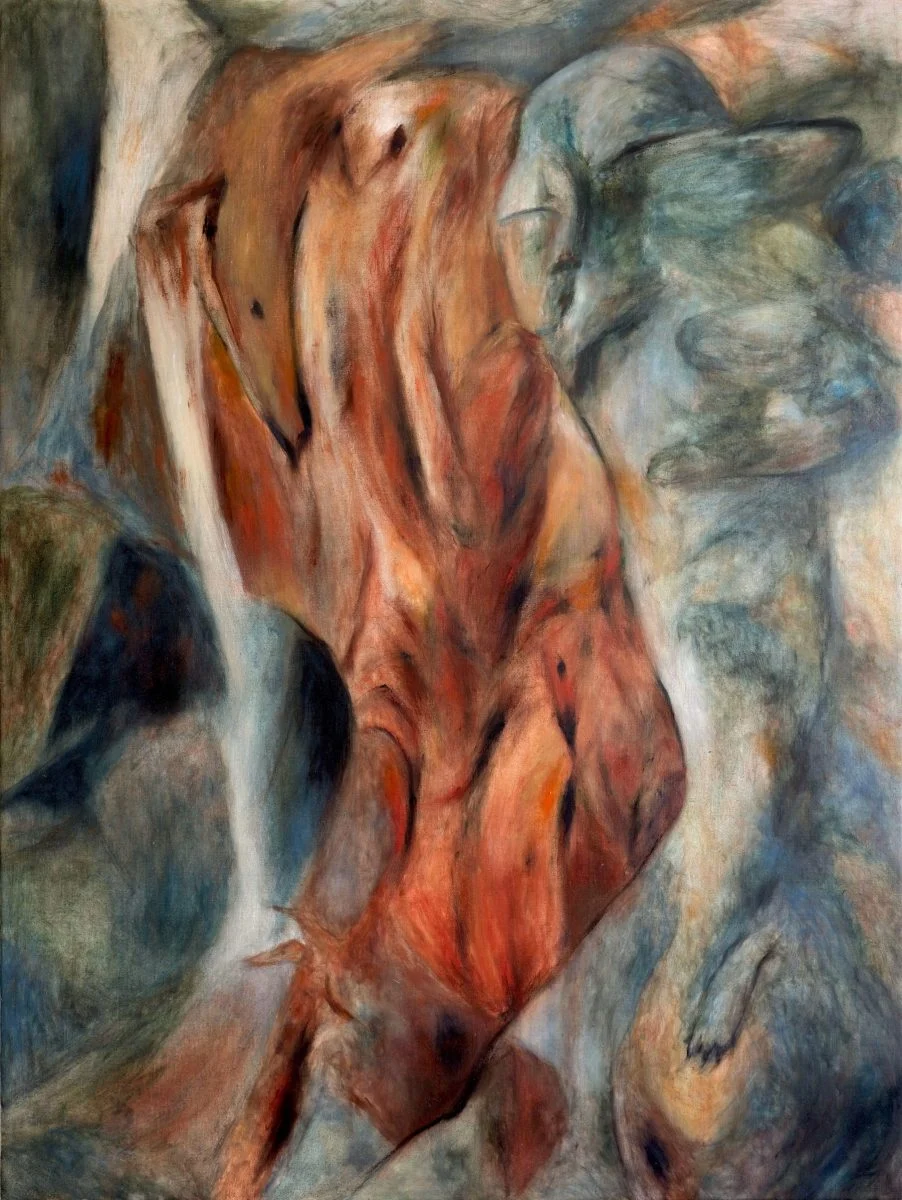
    Jin Fang is a Chinese artist working between the Netherlands and China. Her practice grows from cross-cultural lived experience and attentive observation. Through painting and drawing, Fang explores connections between nature, creatures, spirituality, memory, and the subconscious, constructing coexisting spaces where ambiguous beings emerge through layering, erasure, and reconstruction. Images unfold gradually rather than from fixed plans, moving between collapse and repair, reflecting life as unstable, temporary, and continuing in ruins.

    Meet the Artist

    Could you tell me about yourself and what you are currently working on at GlogauAIR? 

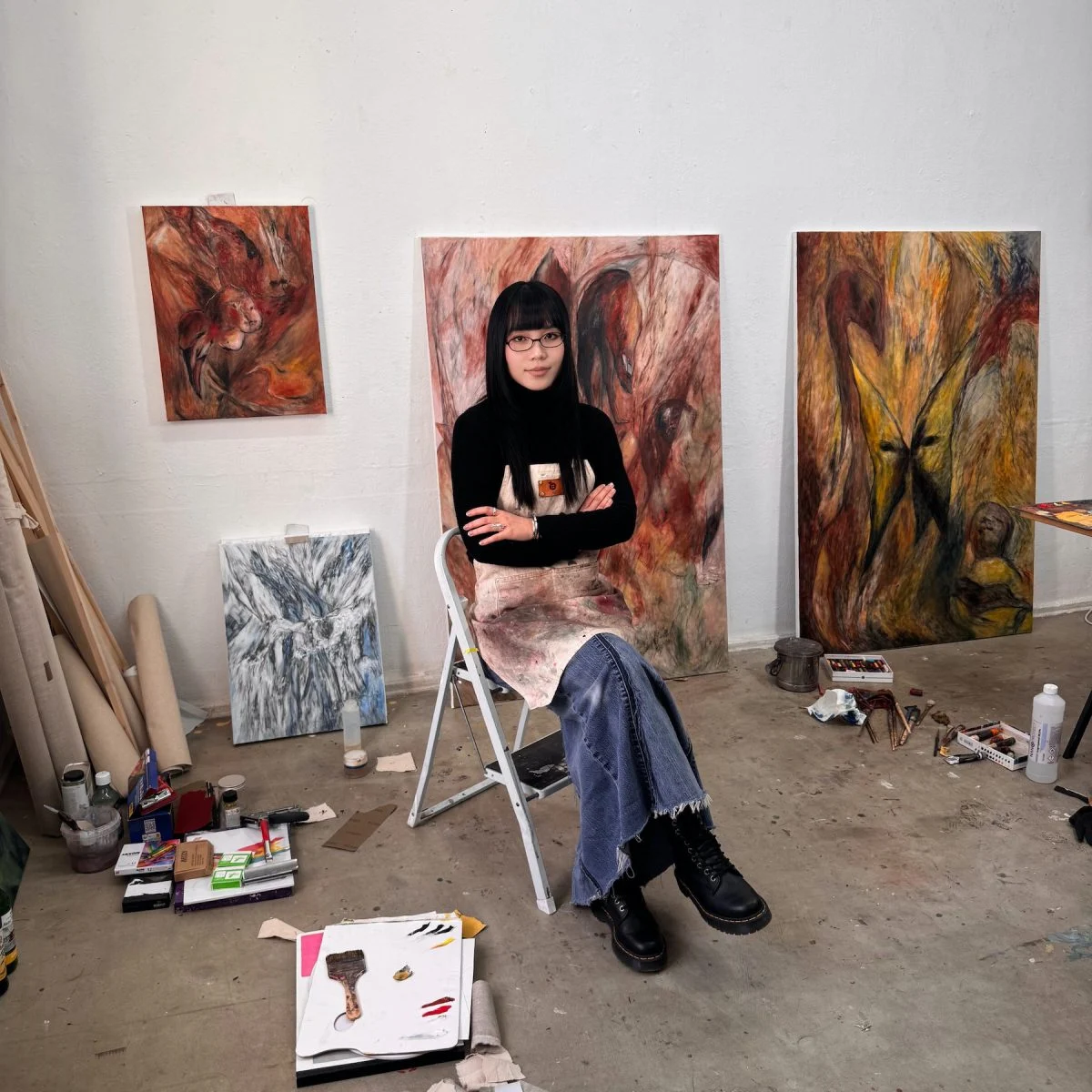
    I’m a Chinese artist, currently living and working between China and Europe. I graduated with a Master’s of Arts in Painting from the Royal College of Art in London two years ago. Recently, my practice has grown out of movement, traveling or living in an unfamiliar place, and paying attention to subtle shapes in the environment. My perception is inspired by Chinese mythology, ancient cave paintings, and non-anthropocentric thinking. I try to create a world in which all beings are searching for a place of belonging. 

    My main goal at GlogauAIR is to create a new group of paintings that is for a stable and entangled life form relationship between human and non-human beings. 


    You’re interested in human and non-human spiritual networks. What does “connection” mean to you in this context? 

    I try to create a world that is not narrated from a human-centered perspective. For me, connection describes how human nature, animal and a creature, landscape, and imaginary beings exist with shared fields of influence. It’s not a fixed bond, but a shifting set of relations shaped by coexistence, dependency, and attention as well. My thinking now is influenced by Anna Tsing’s research on non-human centered worlds. 

    She writes about a specific mushroom called matsutake that is especially important to me for my practice because the mushroom cannot be industrially cultivated. Matsutake mushrooms only grow in a forest disturbed by humans. Because they only grow in forests disturbed by humans, they depend on a complex ecological relationship. Because they resist control, they reveal a world unlike modern industrial production—one shaped by chance and cooperation. 

    We often imagine progress as moving towards efficiency or stability, but the mushroom suggests otherwise. Life continues in ruins. Capitalist expansion produces damage and instability, yet within these broken spaces, new networks form between species and people. This perspective helped me think about the connection as something fragile, temporary, always forming and dissolving. This way of thinking comes from my own experience, actually. 

    At one point in my life, an animal quite literally saved me, which deeply changed how I understood interdependency between species. In many Chinese mythological stories, humans are able to connect with animals, spirits, ghosts, or supernatural beings. Bodies, consciousness, and fate can shift between different kinds of life forms. These narratives imagine a porous world where boundaries between species are unstable and relational. In my painting, I try to hold this sense of a connection as well. The space I create does not have a clear center or hierarchy: different things like human or nonhuman, real or imaginary, co-exist and influence one another.


    Your process involves layering, erasure, and scraping. How do you know when a form wants to stay and when it needs to disappear? 

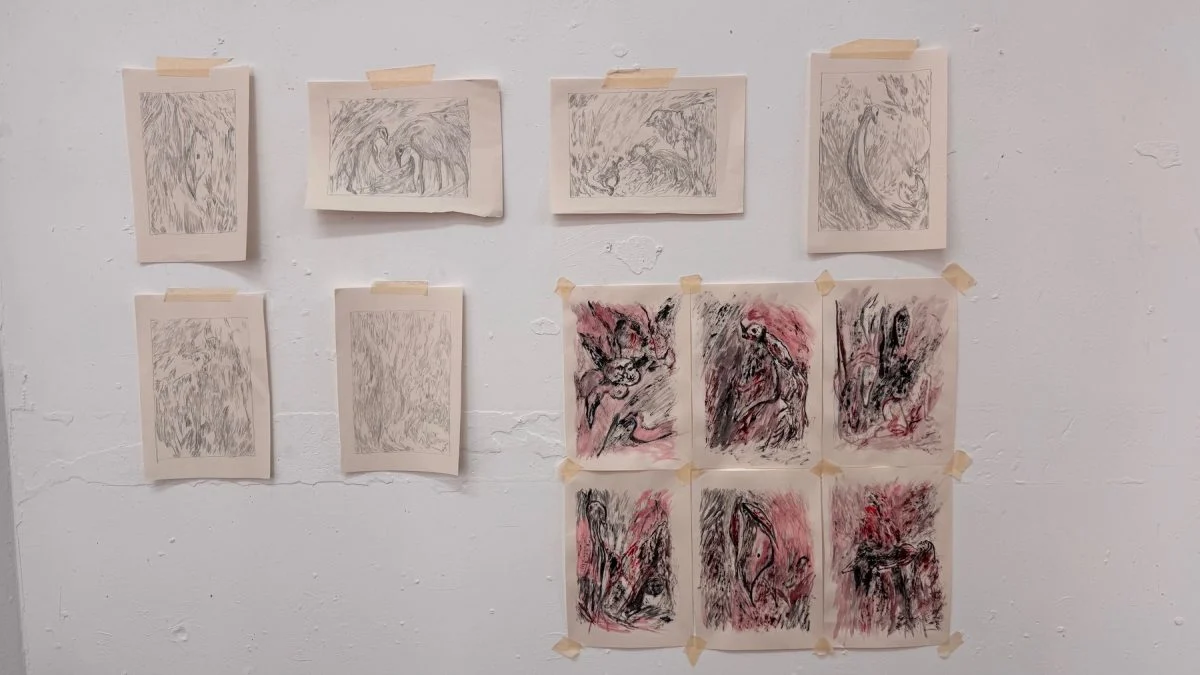
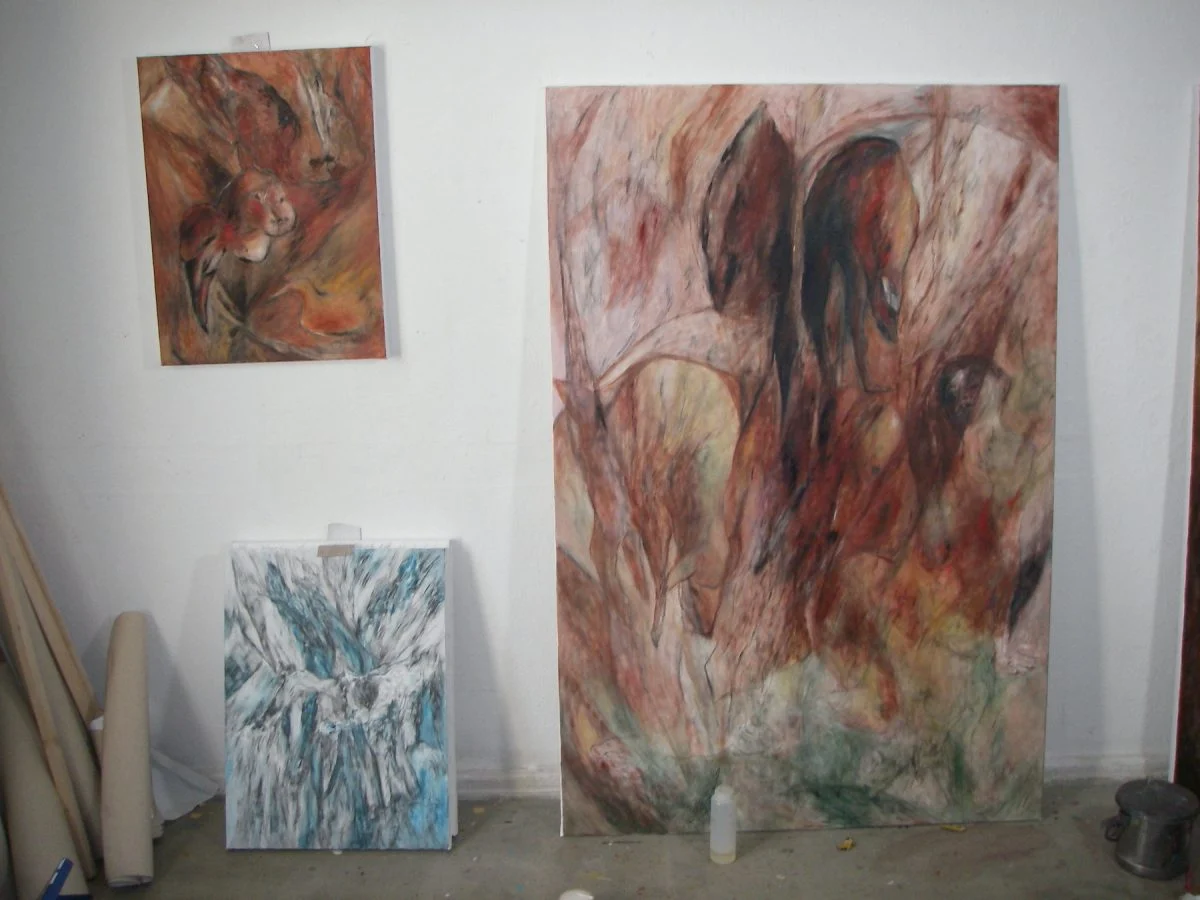
    Layering, erasing, and scraping are really essential to my process of painting. And because my painting does not begin from a fixed image, I build it through layering, erasing, and reworking, which allows the impressions from daily life, or subconsciousness, to surface gradually, rather than starting with a fixed plan for the first layer of my painting. With this process, after layers and layers, some fragments of humans and creatures begin to appear. I often then interrupt what is already there, through scrapping or removing part of the surface, so that something unexpected can emerge. 

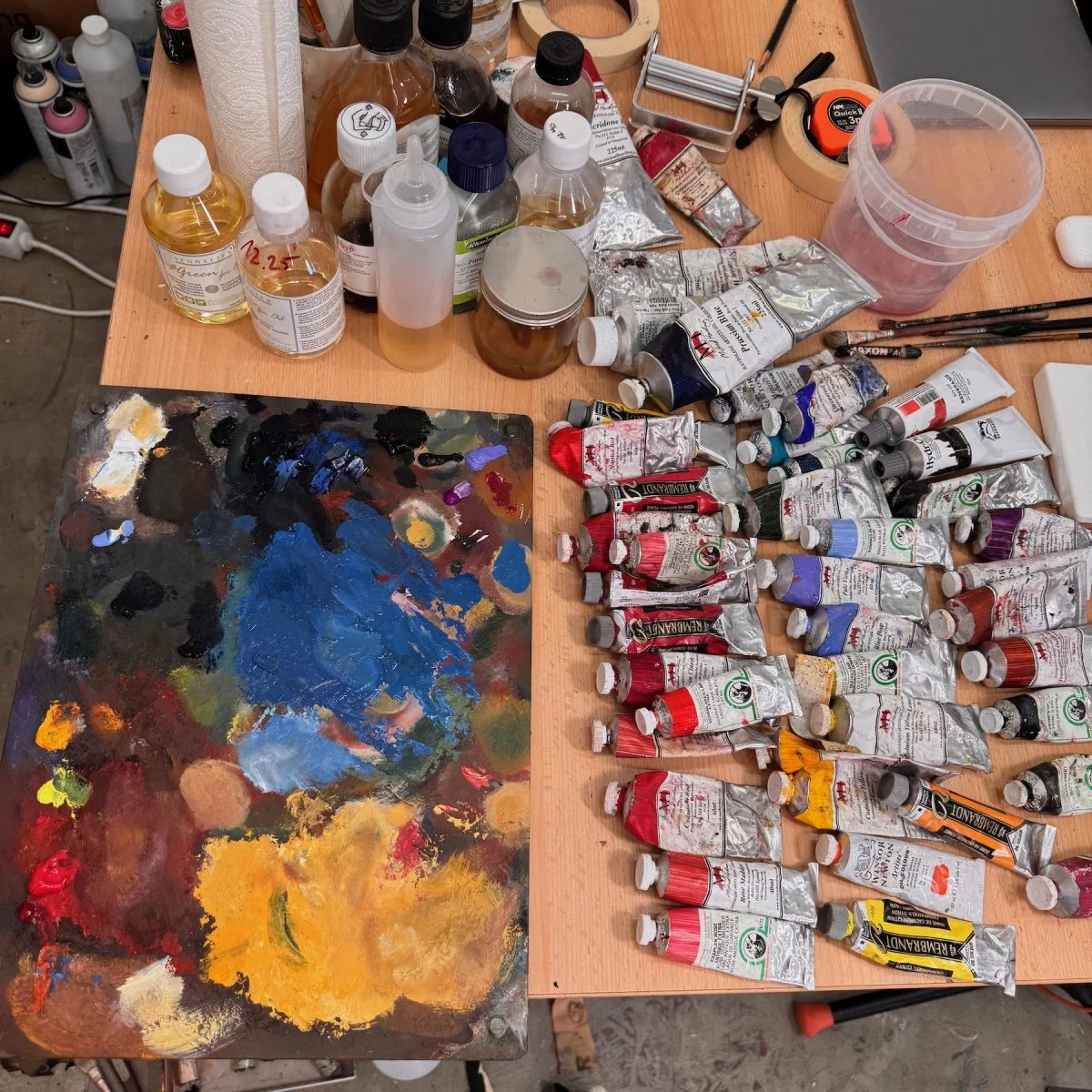
    I think destruction becomes a way for an open space in my painting; sometimes a form disappears completely. I think the trace it leaves behind can change the rhythm of the whole painting. Usually, during the process of my painting, I use turpentine or alcohol to destroy part of my painting, and something new or refreshing can emerge from the ruins, so this also comes back to the last question about why I said how life can grow from the ruins. For me, painting is like a continuous circle of collapse and reconstruction, where the absence can turn into presence. With that shift in the balance, it allows my work to breathe. 


    Is there a rhythm or pace you fall into while painting that feels essential to your process? 

    Yes, but I’m going to talk more about the rhythm of my painting practice. I think both a slow and a faster rhythm feel essential to my process. I move between building and removing, working and opposing. Sometimes I spend a long time just looking before I make a really small or tiny change to my painting. This pace allows the image to appear gradually, and it keeps the painting open to uncertainty, I think. 

    Actually, the first layer of the painting is quite spontaneous to me. I work quickly at the beginning, and my subconscious leads the painting rather than me having rational control. If everything is really planned well from the start of the painting, I think the painting would feel too fixed to me. I want each brush stroke and color to feel like a pose coming from within the body or from the subconscious when I paint the first layer of the painting. 

    After the first layer of the painting, the rhythm slows down. I return to the surface over and over, adding or scraping and adjusting, because somehow I usually repeat working on the same tiny part of my painting again and again until I’m satisfied with it. As the painting nears completion, I often return to the fast speed of the first layer. I feel like these shapes bring a sense of energy and allow the painting to close itself to the same inner pulse with which it began.


    Interview Reese Saddler (@reeseesaddler)

    Photos Ksenia Proskuryakova (@ksenyapro)

    • Statement
    • GlogauAIR Project
    • CV
    • Gallery
    • More

    Statement

    Jin Fang is a Chinese artist working between the Netherlands and China. Her practice grows from cross-cultural lived experience and attentive observation. Through painting and drawing, Fang explores connections between nature, creatures, spirituality, memory, and the subconscious, constructing coexisting spaces where ambiguous beings emerge through layering, erasure, and reconstruction. Images unfold gradually rather than from fixed plans, moving between collapse and repair, reflecting life as unstable, temporary, and continuing in ruins.

    GlogauAIR Project

    During her residency at GlogauAIR, Fang is developing a new body of paintings exploring non-linear life-forms and interspecies entanglements through process-based image-making, expanding her visual language of unstable beings and inviting reflection on coexistence beyond a human-centered perspective.

    CV

    Education

    • 2024 MA, Painting, Royal College of Art, London, UK
    • 2020 BFA, School of the Art Institute of Chicago, Chicago, USA

    Awards

    • 2023 The Ali H. Alkazzi Scholarship Award, Royal College of Art

    Biography

    • Born 1994, Chinese; currently working and living between the Netherlands and China

    More

    We do not have any further information at this time.
  • Conrad Kaczor (Icon Sleepy Tut)

    Conrad Kaczor (Icon Sleepy Tut)

    Artist main image

    Conrad Kaczor (Icon Sleepy Tut) is GlogauAIR resident from January 2026 to March 2026. (Q1)

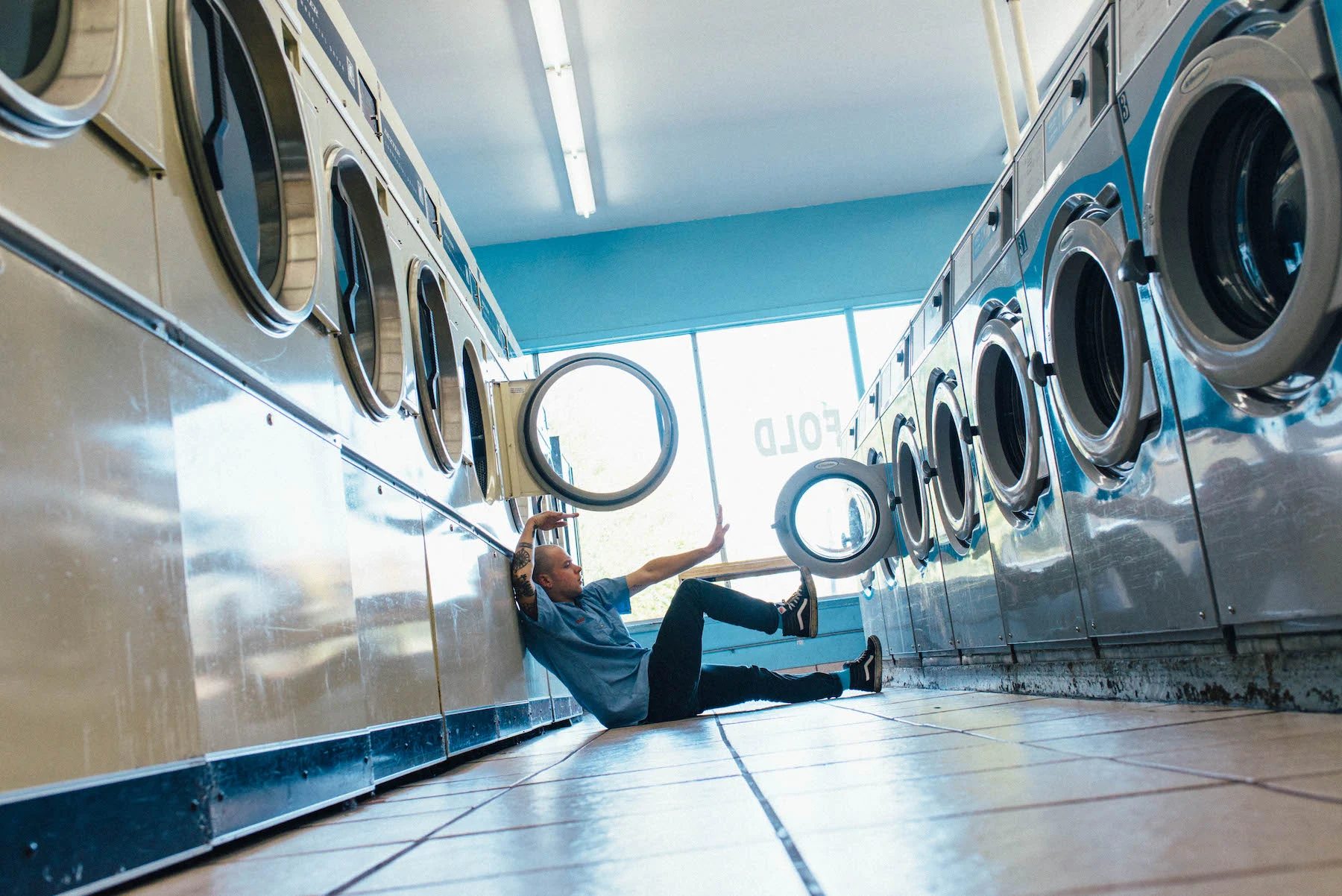
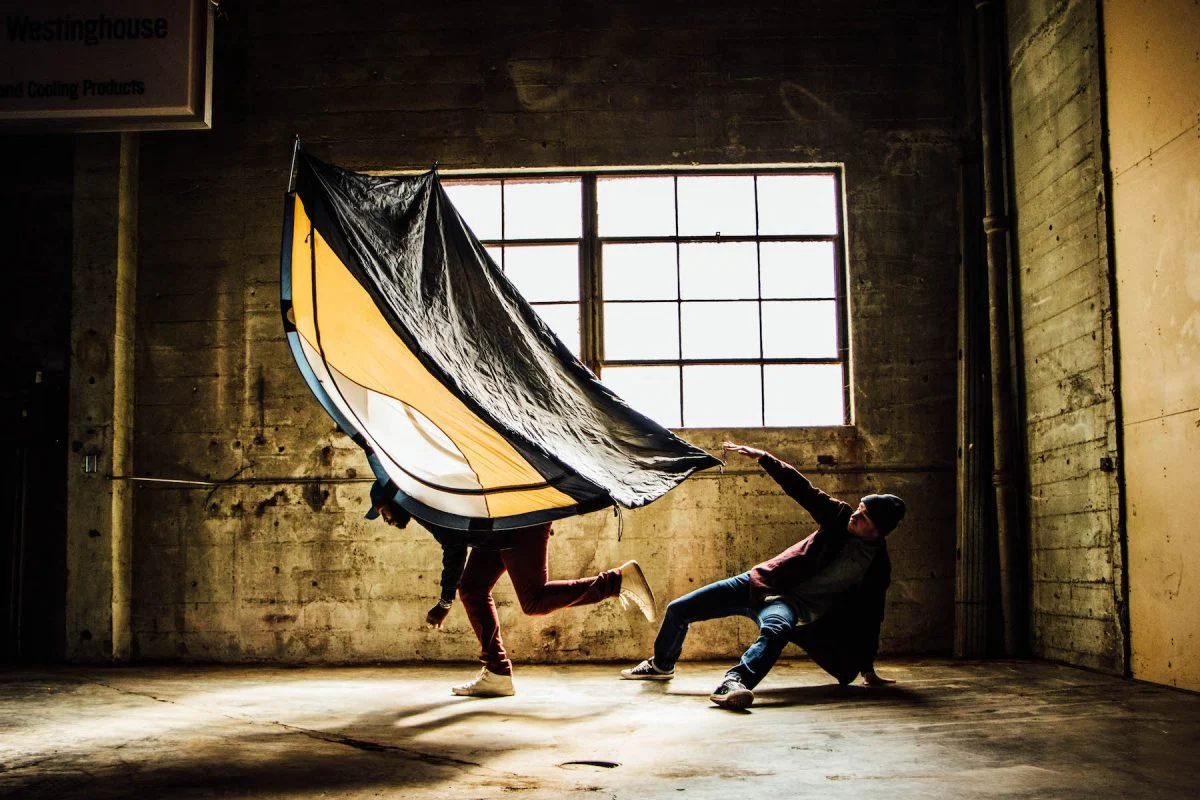
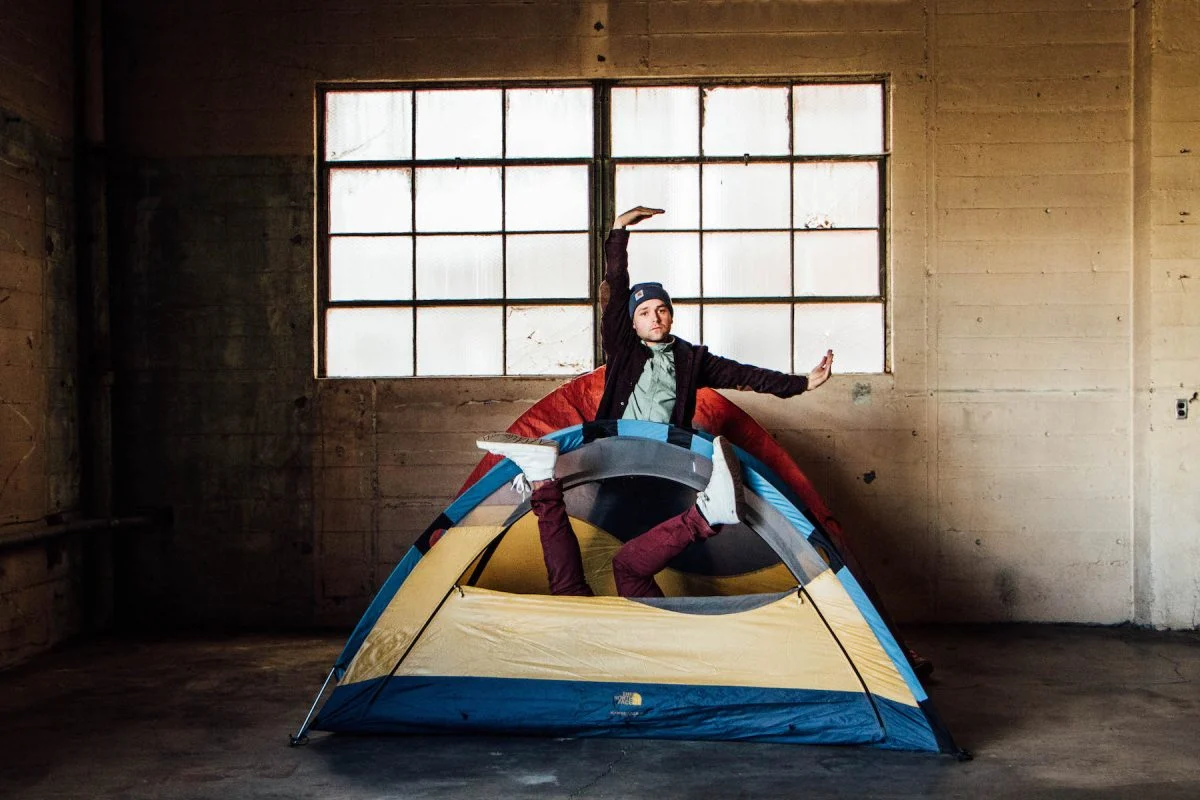
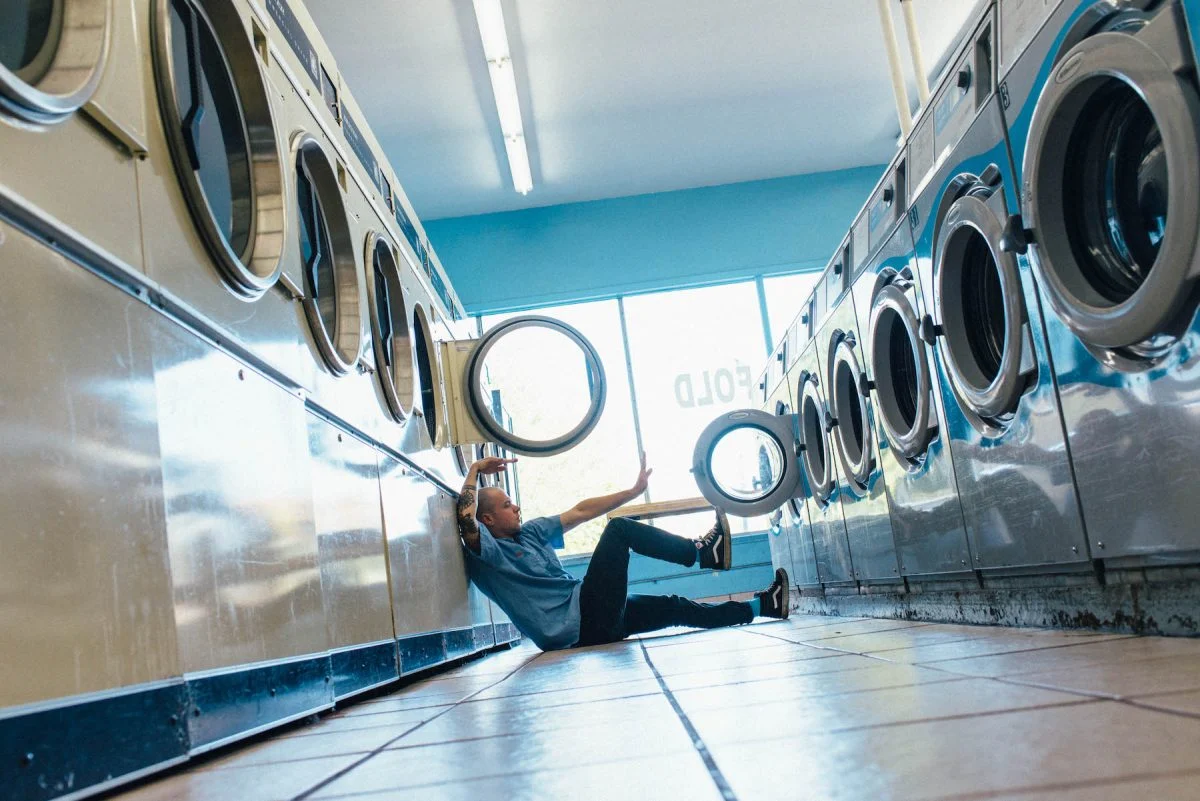
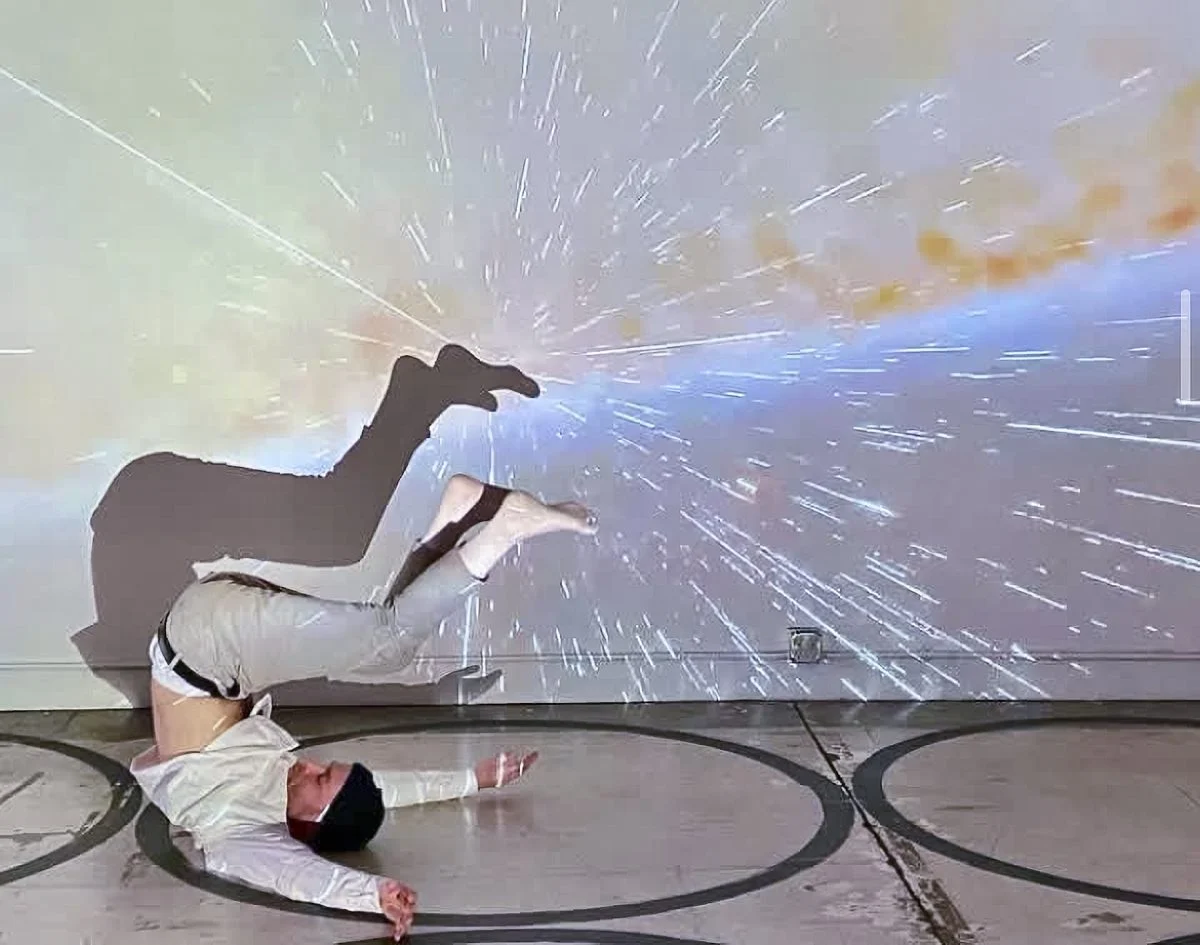
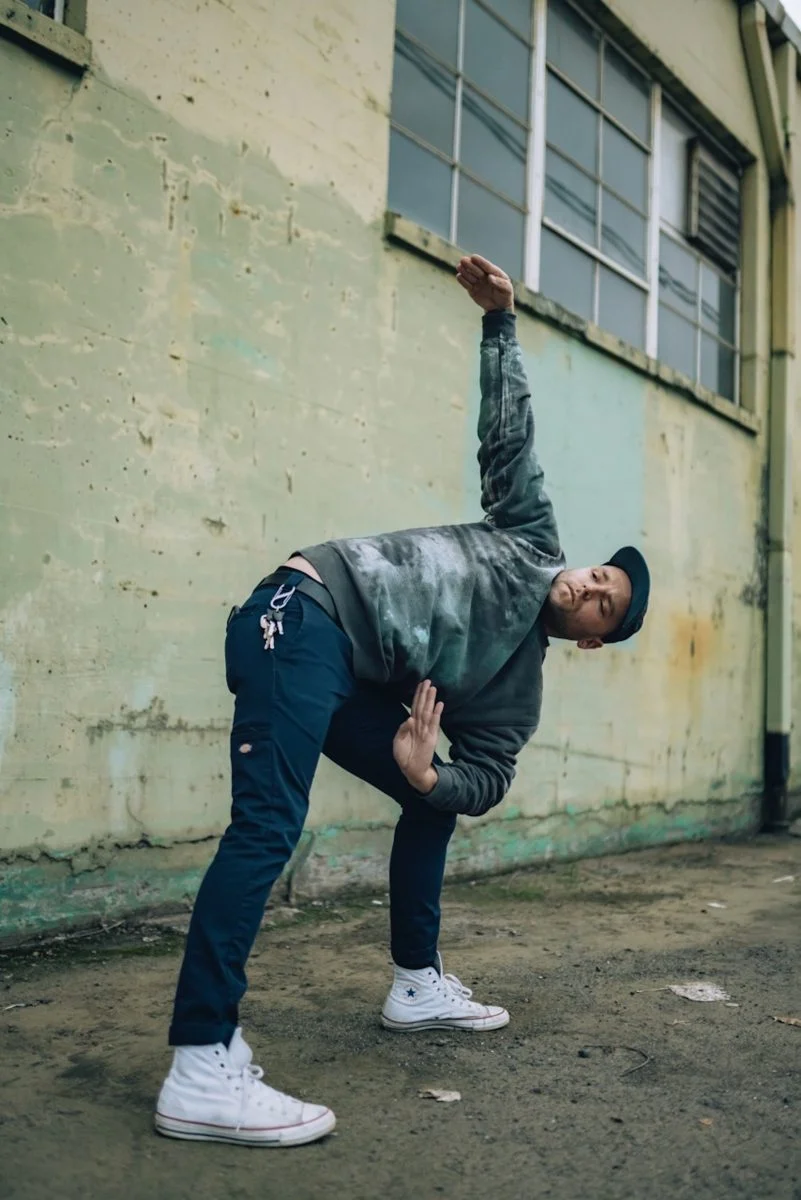
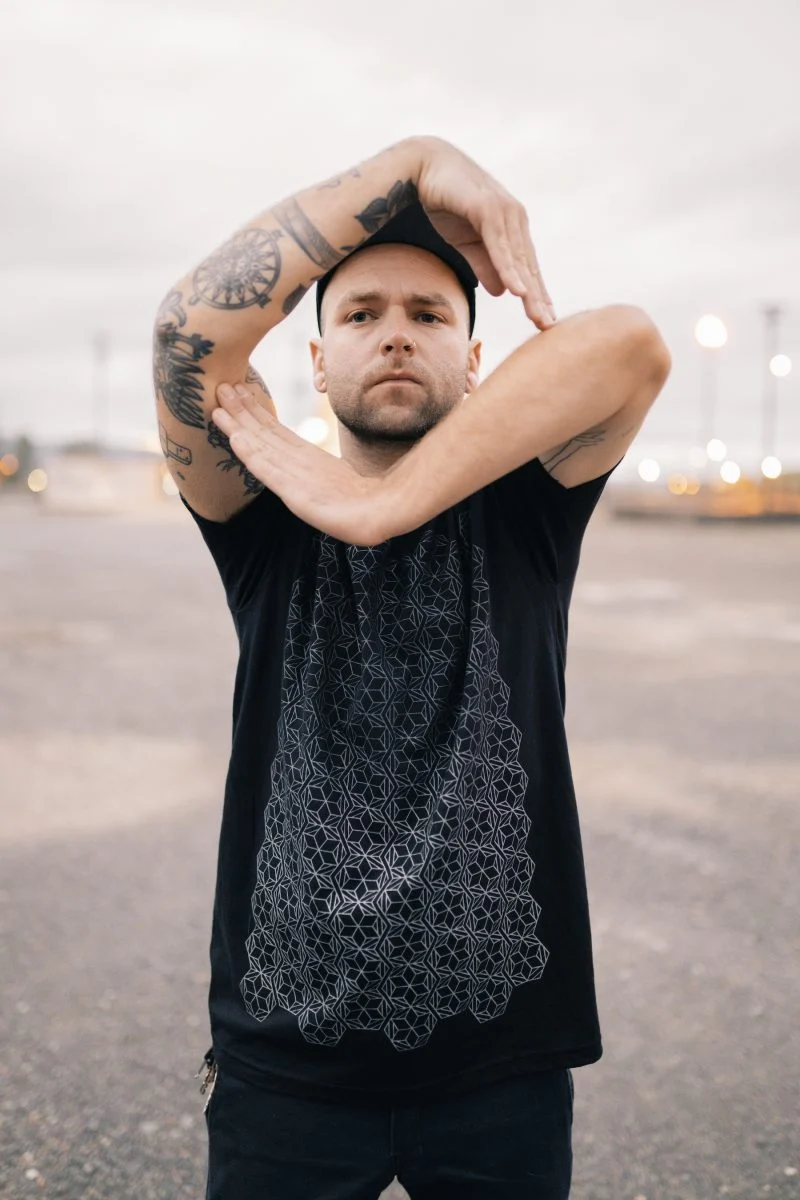
    Conrad Kaczor is a mixed media artist rooted in street dance, whose practice continues to grow toward contemporary movement and art. Through solo performance and digital processes, he explores personal and collective histories shaped by memory, grief, and transformation. Conrad at the moment lives in Portland, Oregon USA.

    Meet the Artist

    Could you tell me about your background and the project you are proposing for this three-month residence here at GlogauAIR?

    First and foremost, I’m a dancer and performer, but I am more of a multimedia artist. I don’t just dance: I’m a videographer, filmmaker and a photographer. I do sound and I do digital art as well.

    I’m a street dancer and I specifically do a style called popping. Popping is a street dance that comes from the West Coast, Los Angeles, and goes back to the Bay Area in the 70s.

    I’ve been doing this style for 20 years. I tour, teach, and perform popping all over the world. In my twenties, I was struggling to become a professional dancer, and I was not getting any gigs at the time. All of my friends were getting commercial work and I was struggling. During that time I had this really fun hobby and passion at the time: videoing. I loved to film myself dancing, add edits, and post it on YouTube. When YouTube first started coming out in the late 2000s, I remember talking to my friend who was an amazing dancer, and I asked him, “Hey, you’re getting gigs and I’m not, what should I be doing with myself because this sucks,” and he said, “Hey, you’re pretty good at doing video work and making videos, how about you go to film school?” So I went to film school and I became a filmmaker. Fast forward, I made a few films, specifically dance films, and then I made a documentary that was awarded throughout film festivals. I started doing a lot of freelance work and I got really burnt out.

    Coming back to dance, within street dance and popping there’s only commercial work, battling, or teaching. There was a time where I didn’t like battling because I was constantly losing and it really discouraged me. It ate my soul up quite a bit and soon I discovered the theater scene because I really loved performing and sharing my art. I ended up taking modern contemporary dance at a community college and then I got into a dance company. That opened doors to theater and art and contemporary art out there in the world and that’s where I kind of end right there.

    At GlogauAIR I’m working on this project based upon my process through grief. When my mom took her own life three years ago, it was such an intense moment in my life. I wasn’t able to get out of my bed, I wasn’t able to dance, I was not able to do anything.

    Once you see my performance Kola, you see the process of the stages of grief that I went through. I did this performance once a year ago and now at Glo I’m continuing to develop further into it and to further myself into the process of it.

    Can you explain what tutting is? Do you remember what first drew you to tutting specifically? What was it about that style that made you feel like, “This is my language or this is me?”

    As stated earlier, I perform a style called popping. It’s very mechanical, there’s lots of body control, and it’s a very illusional dance style. Within popping, there’s these sub styles: there’s waving, tutting, animation, and robot, and all these styles are within the umbrella of this family of popping. People know me for this specific style called tutting. The actual term is King Tut style. The old schoolers back in the 80s would mimic Egyptian hieroglyphics, and would do these funky King Tut poses. Once they started figuring out, “Oh, these are really cool angles,” they started making shapes with it and then it started to evolve.

    When I was growing up, before I had any hobbies or a passion, I was inspired by my mother who was a painter, and she was super into modern and contemporary art and very into surrealism. So I always had this upbringing and influence of geometry, cubism, surrealism, and abstractness and contemporary art because of her.

    I got into dance in the early 2000s, because I was a raver club kid. I really didn’t know any of these styles beforehand. I just liked to dance and dance was my place of escapism as well. It was the only place I could be free and feel comfortable. I was such an insecure, shy kid at the time.

    The only place I could go to be free were these spaces. A year later within my partying and dancing and figuring myself out, there was a dance circle going on and these folks were doing the robot, and they started waving and tutting and doing all this geometry with their arms. I thought, “This is really freaking cool.” They were the coolest people at the party and like gods to me. I was a shy and insecure kid, so to me they were really freaking cool by expressing themselves with their bodies. I wanted to do what they were doing, so I shifted my cultures from nightlife into street dance.

    These guys were a bit older than me, so I was like their little brother. I had a fake ID and I would go roll with them at the clubs and parties. I discovered that there is this massive culture. I had to go to Los Angeles to find the source of it. This was before YouTube and Facebook and any sort of social media. There was this forum called Soul Seek, where you could go and share videos and whatnot, but there was also a chatting room feature. There was a popping room there and it was my way of connecting and then going to LA was through that. Once I got to LA, I met and saw some of the best poppers in the world who ended up being my friends and guided me in my dance journey.

    Has your relationship to grief or transformation shifted over time as your practice has expanded into different mediums?

    When I was processing grief at first, I actually didn’t know how to process it. I was frozen. I didn’t do any sort of art because I was just too far gone. I was not present at all. The one thing that got me back into creativity was photography. It’s what got me going outside of my room and out of my bed. Going into nature and just taking photos, walking, and being in fresh air was my first introduction to being back into the present world.

    Once I was back into the daily grind working, there was still something missing in my life. I was working out and taking photos. I was getting back into being creative. And then one day, I heard some music, did an arm wave into a tut and started dancing for 15 minutes. It was at that moment I realized what I’ve been missing that whole time: it was movement. My soul was calling for it to move forward in life. When I started doing movement again, I realized that it was the answer to all of my problems or stress.

    I was part of this grieving creative group at the time and they proposed, “Hey, you should do a showcase of your mom and mother’s death or your process of grieving.” I thought it was a good idea and that was the introduction to me getting back into the theater; it was doing the showcase.

    After 20 years of developing your craft, what feels most different about how you approach movement now compared to when you started?

    How I’m different from back then is that I cared about how I looked.

    Now that I’m older I don’t care about how I look, but I care how I feel about it. I approach it with feeling instead of how I look, so if my feeling isn’t there, I know it’s not right. That’s the easiest way to explain it. I know that all these new trends are just to look good, but I know that the feeling isn’t there.

    Interview Reese Saddler (@reeseesaddler)

    Photos Ksenia Proskuryakova (@ksenyapro)

    • Statement
    • GlogauAIR Project
    • CV
    • Gallery
    • More

    Statement

    Conrad Kaczor is a mixed media artist rooted in street dance, whose practice continues to grow toward contemporary movement and art. Through solo performance and digital processes, he explores personal and collective histories shaped by memory, grief, and transformation. Conrad at the moment lives in Portland, Oregon USA.

    GlogauAIR Project

    Conrad performed Kola, a mixed media solo performance, in Portland, Oregon, USA, in February 2025. The work explores generational trauma, grief, and healing through movement and digital processes. During the GlogauAIR residency, he aims to continue developing Kola, expanding it in length and depth while refining its movement and visual language. Through the residency, the work unfolds as a physical exploration of grief, memory, transformation, and lived experience.

    CV

    Kola. — Portland, OR

    Creator / Choreographer / Dancer | 2025

    Personal Development & Healing | 2020–2024

    A period focused on healing, reflection, and artistic recalibration following the loss of his mother.

    Heidi Duckler Dance— Los Angeles & Pacific Northwest

    Board Member / Choreographer / Dancer | 2016–Present

    Feedback Dance— Portland, OR

    Board Member / Choreographer / Dancer | 2020

    Polaris Dance Theatre | Galaxy Dance Festival— Portland, OR

    Choreographer / Dancer | 2019

    NW Film School — Portland, OR

    Filmmaker Degree | 2014–2017

    Portland Community College— Portland, OR

    Modern Dance | 2014–2015

    Cascadia Composers Festivals— Portland, OR

    Choreographer / Dancer | 2018–2019

    Music & Festival Performance Experience — USA & Canada

    Choreographer / Dancer | 2009–Present

    More

    We do not have any further information at this time.
  • Dari

    Dari

    Artist main image

    Dari is GlogauAIR resident from January 2026 to March 2026. Q1

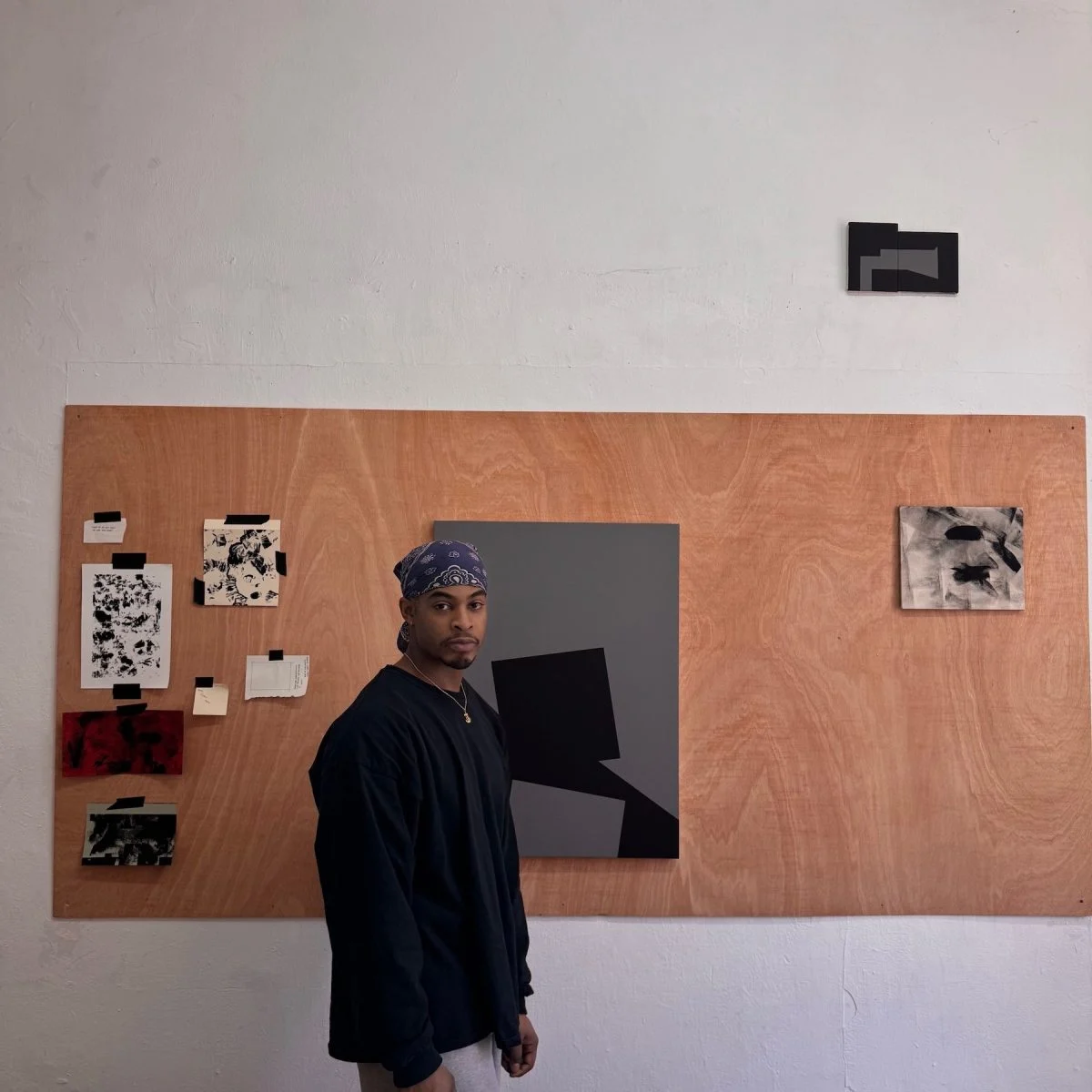
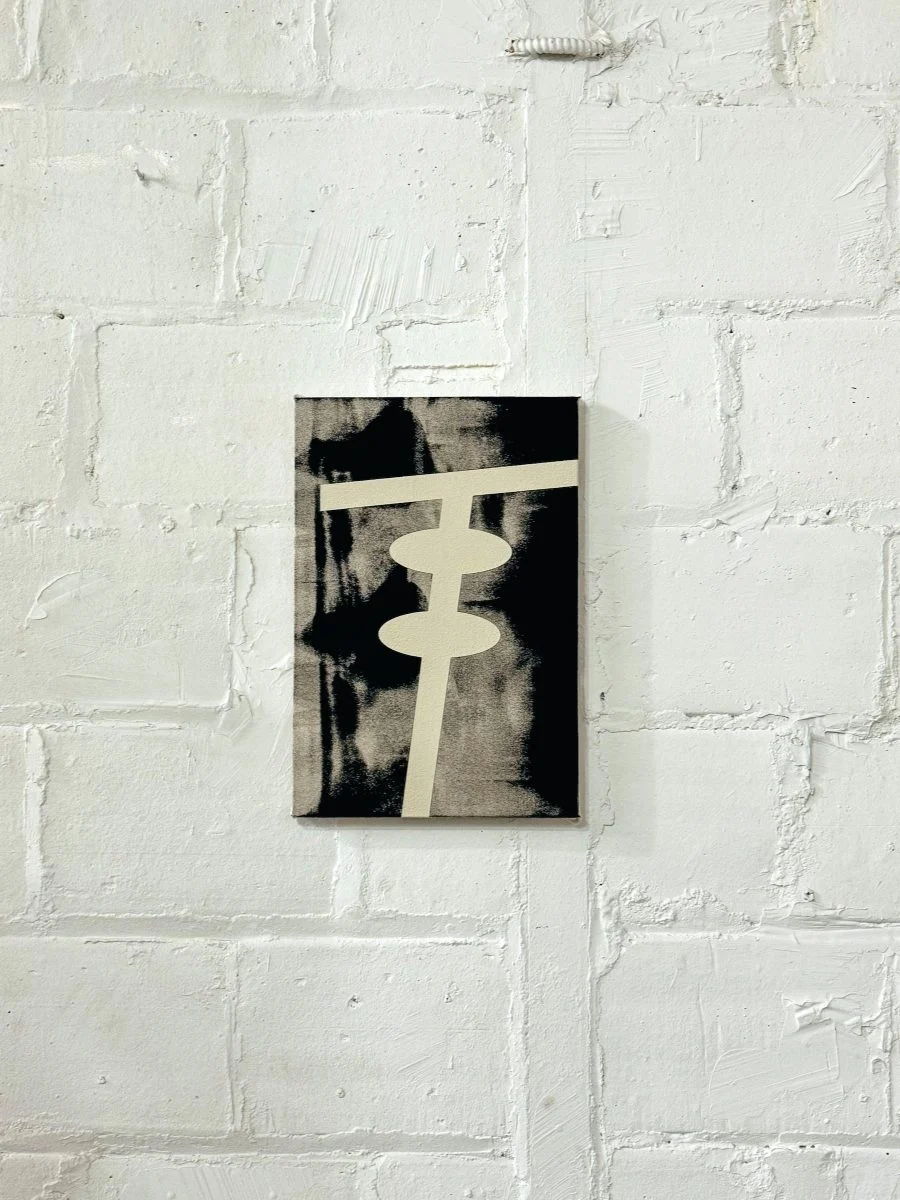
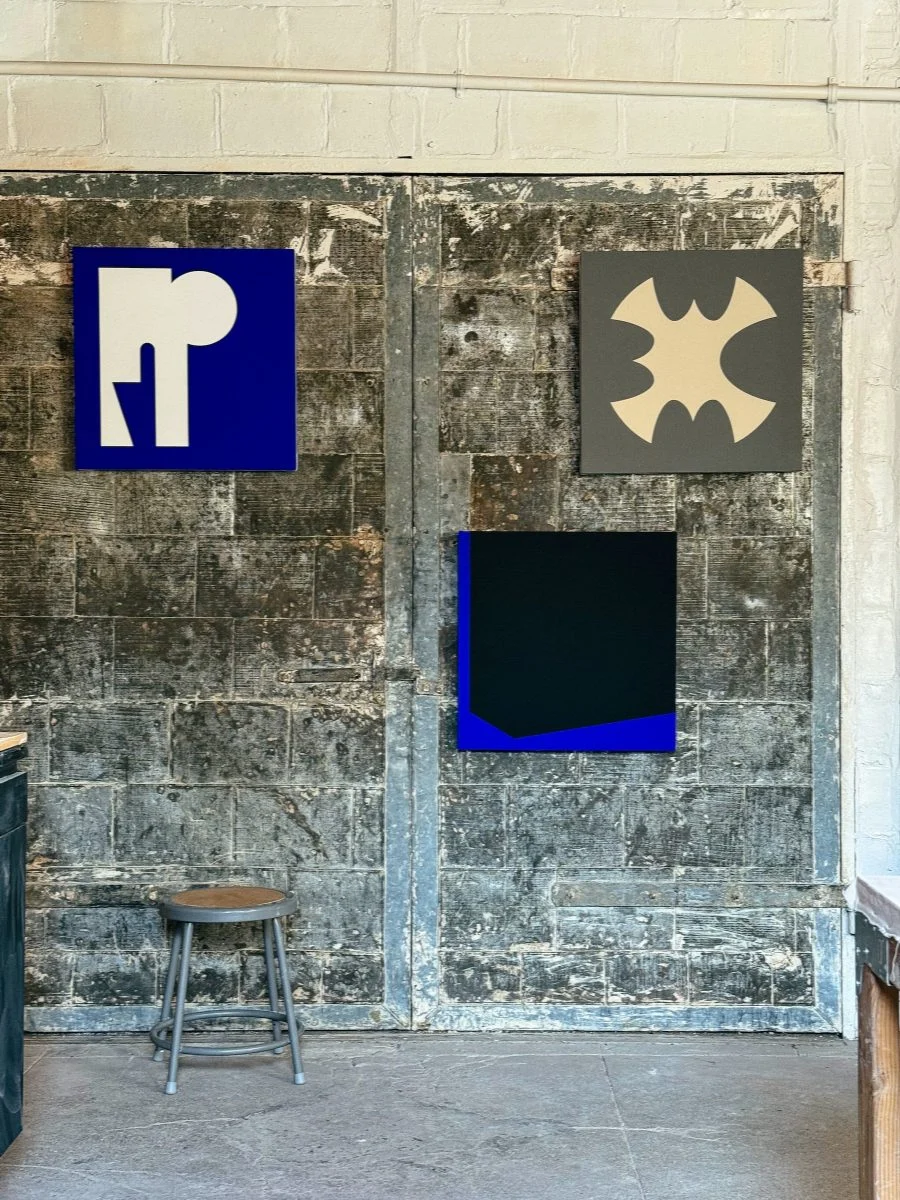
    Dari is an artist from the United States, currently living and working in Brooklyn, New York. His practice moves between highly controlled, flat compositions and a newer body of work shaped by observation and lived interaction. Using hand built supports, repeated masking, sanding, and flat matte paint, Dari constructs works that exist between architecture, memory and encounter.

    Meet the Artist

    Can you tell me a bit about your background and what you’re working on for your residency?

    So I grew up in Detroit. My grandfather was insanely talented with his hands; he could draw, build, fix anything.

    Watching him showed me that making something from nothing is powerful. It’s not just about the object, it’s about the discipline behind it. I’m a self-taught artist, so I’m still kind of new to having these formal conversations about my practice.

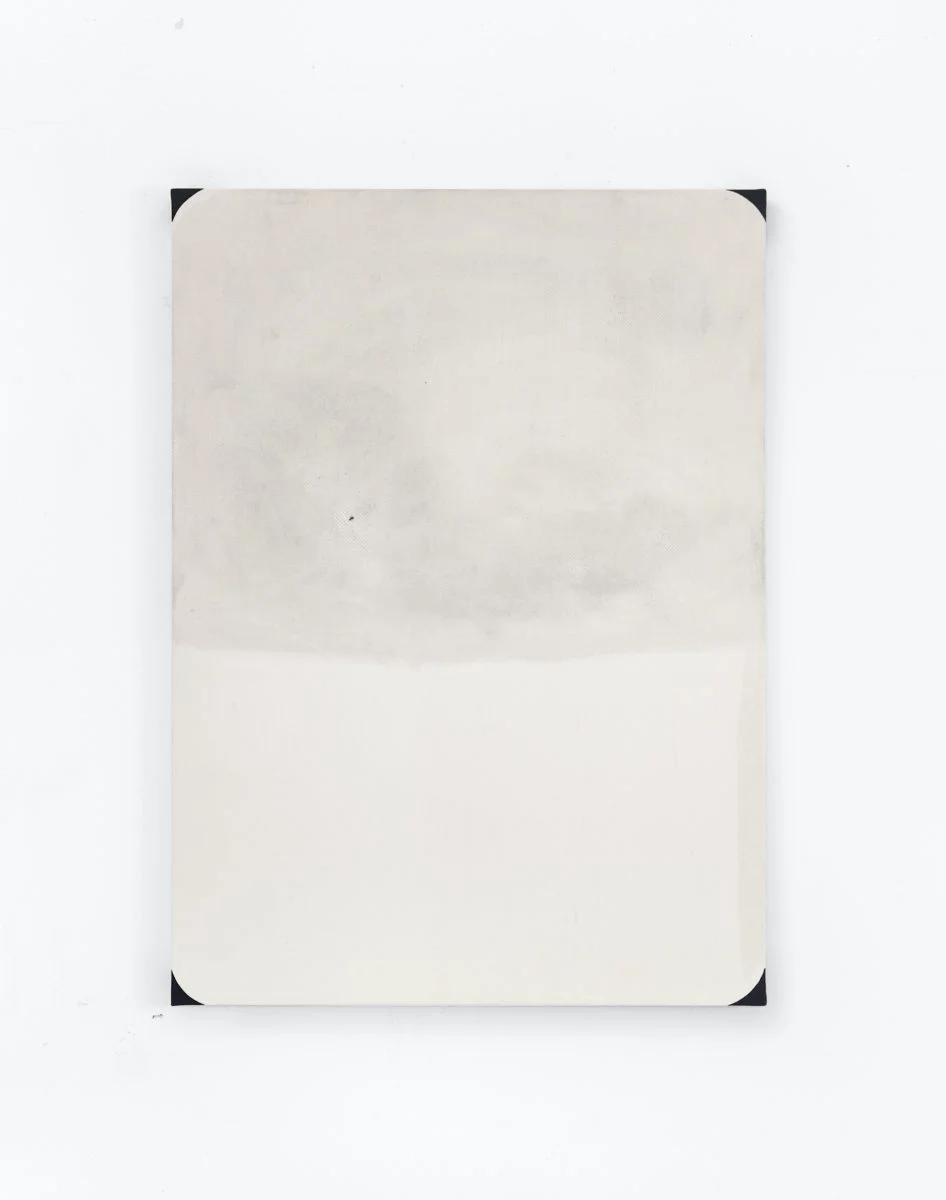
    I didn’t go through critique rooms and theory classes. I just had to figure it out as I went. I think that’s why I build everything from scratch: cutting the wood, stretching the canvas, and even sanding the gesso over and over. I’ve always had to figure it out on my own, so it’s important to me that the work starts there. I don’t want to take any shortcuts.

    For this residency specifically, I’m developing paintings that hold tension without being resolved too quickly. I’m interested in presence and absence, and what’s withheld versus what’s revealed. Being in Berlin, outside of my normal environment, has made me more aware of distance and perspective.

    But being here, the work feels, of course, quieter, but more charged and engaged.


    Your work moves between very controlled compositions and pieces shaped more by observation and lived experience. What pushed you to open up that shift in your process?

    For a long time, control felt like safety. I learned that early on. When parts of your life feel unstable, you find ways to create order.

    So for me, clean edges, flat surfaces, that sort of exact masking, and precision gave me something solid to stand on. But over time, I realized my life was never actually clean or flat. It was layered.

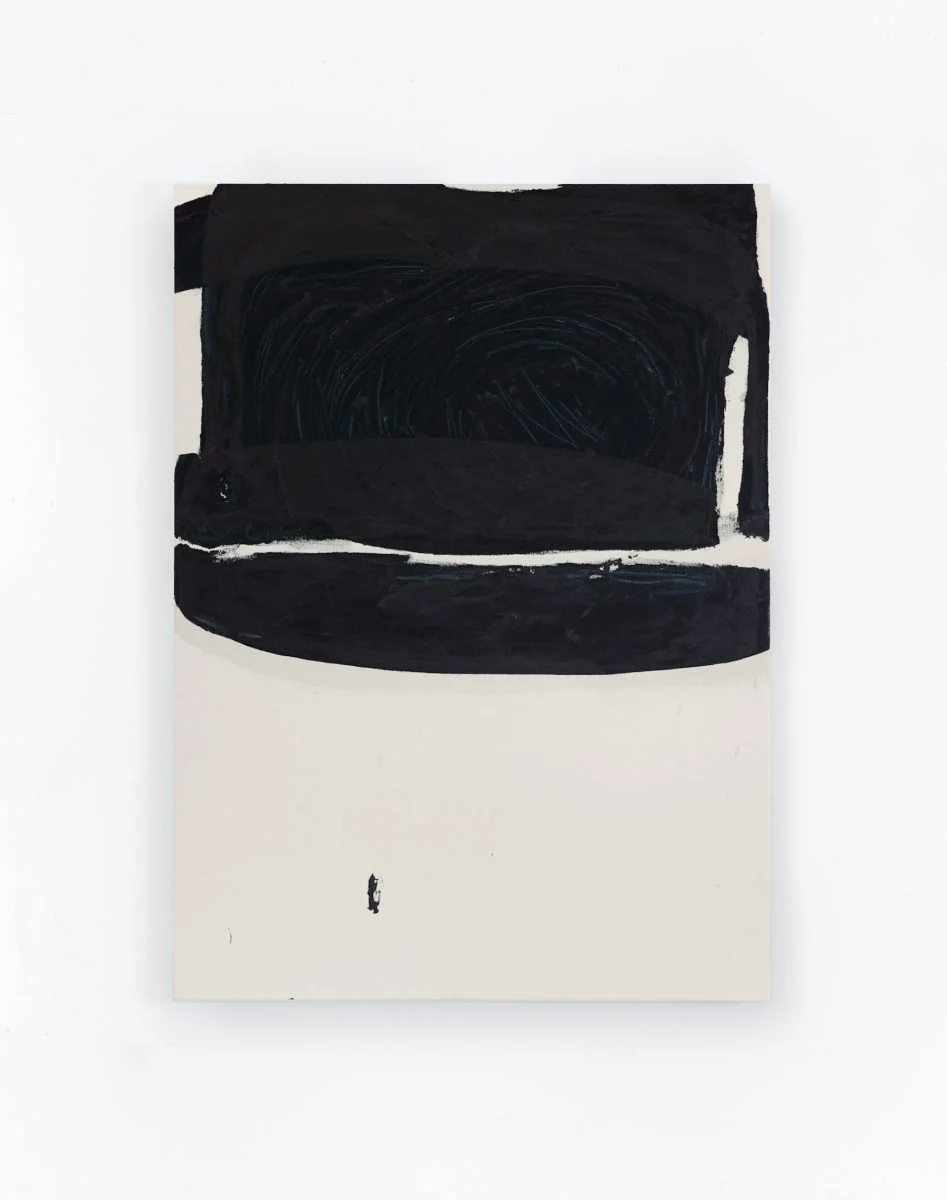
    It’s complicated. It’s emotional. There were periods of distance and then closeness, hurt and then understanding. I think that kind of duality doesn’t fit inside of a perfect rectangle. So I started letting that into my work a little bit, slightly unstable forms, edges that look a little sprayed or loose, transitions that aren’t fully controlled, surfaces that show hesitation. It was not just about abandoning structure altogether.

    It was about letting my lived experiences somewhat interrupt that. Now it’s nice because I can move between both the hard line and this kind of loose abstraction.

    I think the controlled composition holds containment, and those looser works hold residue. I think together they feel closer to how I actually experience the world. And it’s weird to think about it now, but I can see where it comes from.

    My grandfather gave me this discipline of making. My dad gave me steadiness. And early experiences with distance and absence gave me sensitivity.

    I feel like this shift in my process feels like all of those three forces negotiating with each other.


    You think of your surfaces as both structure and record. What kinds of moments or experiences stick with you in your work?

    I feel like the moments that stay with me aren’t loud like people usually intend them to be. It’s the feeling of being watched or watching someone else. The space between two people who care about each other but don’t necessarily know how to express it.

    I grew up very close to my dad, and that closeness taught me how powerful quiet support can be. Not everything meaningful is spoken. But at the same time, growing up made me very attuned to subtle emotional shifts, tone changes, body language, pauses.

    You start reading what’s underneath and sometimes to a fault. When I sand a surface repeatedly, I’m thinking about erosion and patience. When I leave an irregularity visible, I’m thinking about a memory.

    The surface becomes a record of pressure. It holds the physical labor, but it also holds the emotional undercurrent. The final piece doesn’t illustrate a story of my life, It carries the residue of it. That’s fine and I’m okay with that.


    During your residency, you’re intentionally moving away from perfection and allowing irregularities to remain visible. What does it feel like to let go of control in that way?

    It feels very vulnerable, but at the same time, it feels honest and natural. For a long time, perfection was a form of protection for me. If the surface was flawless, nothing penetrated, it was strong, it was contained.

    But I’m at the point in my life where I’m less interested in armor. My relationship with my mom healed over time because we allowed complexity to exist. It was not about being right. It was about being honest, leaving those irregularities. And the painting feels similar. It’s acknowledging that control is not the only form of strength. Sometimes, restraint is strength. Sometimes, softness is strength. Being here in Berlin, away from my everyday norm, makes me more aware of what shaped me.

    I feel my grandfather in the surface prep. I feel my dad in the structure. I feel my mom in the emotional undercurrent of that. Letting go of perfection feels like allowing all of those to coexist on the surface.


    Interview Reese Saddler (@reeseesaddler)

    Photos Ksenia Proskuryakova (@ksenyapro)

    • Statement
    • GlogauAIR Project
    • CV
    • Gallery
    • More

    Statement

    Dari is an artist from the United States, currently living and working in Brooklyn, New York. His practice moves between highly controlled, flat compositions and a newer body of work shaped by observation and lived interaction. The work reflects how perception shifts through personal experience, attention, and proximity.

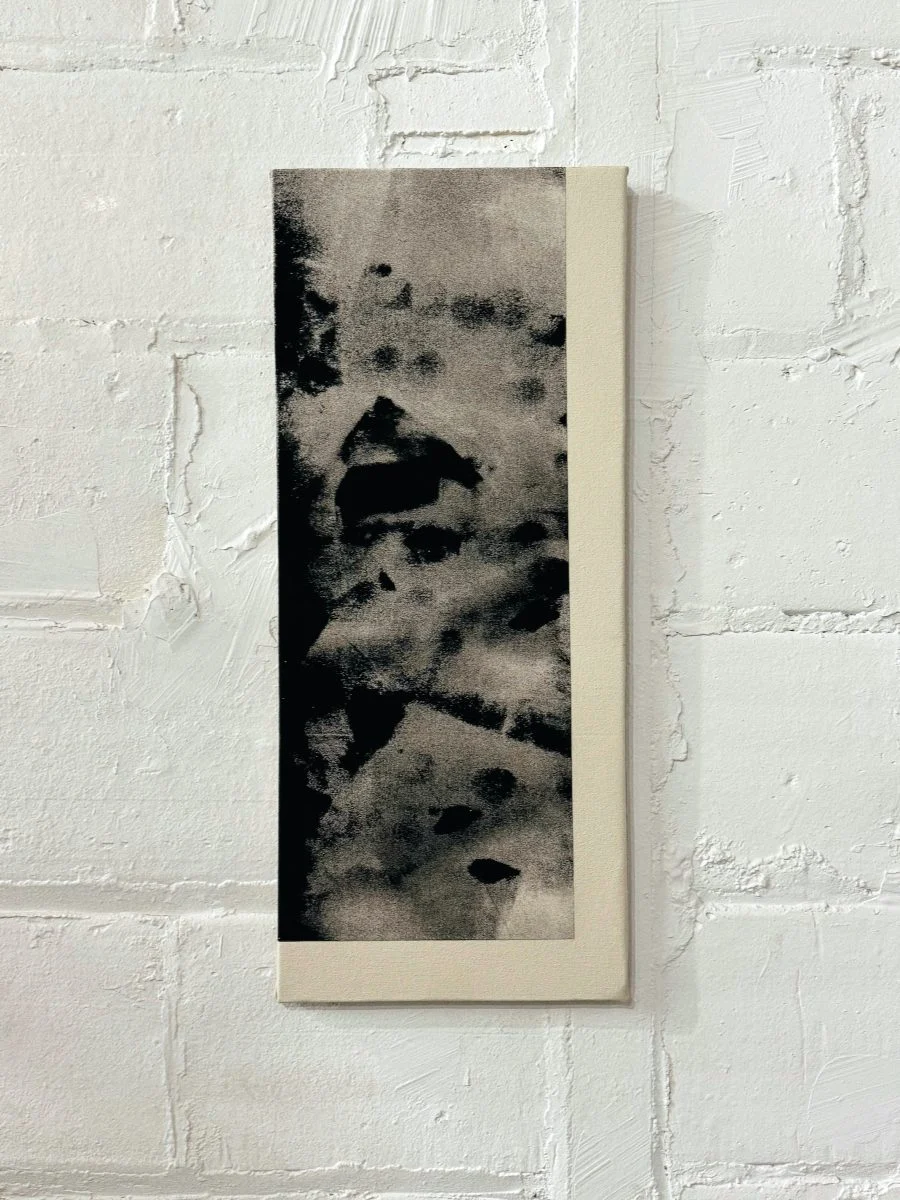
    Using hand built supports, repeated masking, sanding, and flat matte paint, Dari constructs work that sit between architecture, memory and encounter. Some works appear precise and resolved, while others carry signs of erosion, compression and disturbance. This back and forth allows the surface to function both as structure and as record.

    His practice is grounded in perspective and interpretation. What he sees, registers, or isolates within an interaction is not fixed or universal. Each painting holds a specific point of view, acknowledging that the same moment or surface can be read differently by another viewer. The work invites slow looking, asking the viewer to consider how meaning shifts through distance, angle and attention.

    GlogauAIR Project

    During the residency, Dari will develop a body of work that intentionally moves away from perfection and full control. The project focuses on allowing material behavior, surface irregularities, and natural defects to remain visible rather than corrected. Through repeated masking, sanding, and layered application, he will test how restraint can coexist with disruption. The work aims to let small inconsistencies carry meaning, treating imperfection as information rather than error.

    CV

    Education

    • B.A. in International Business, Butler University, Indianapolis, IN
    • Self‑taught studio practice developed independently post‑graduation

    Selected Exhibitions

    • DUMBO Open Studios, Brooklyn, NY (April 2025), Public studio exhibition debut featuring original large‑scale abstract paintings and a self‑developed titling system that invites collectors to rename pieces upon purchase.
    • CROSSING PATHS, Usagi NY, Brooklyn, NY (July 10–23, 2025), Group exhibition exploring cultural fusion and artistic growth.

    Selected Projects

    • Renaming Concept Series (ongoing), Each work is given a temporary title and sold with a pen and written instructions allowing the buyer to rename the piece by crossing out the original title.
    • Handcrafted Canvas Process (ongoing), All works are built from scratch: stretcher bars are cut, canvas is stretched, and surfaces are sanded methodically by hand, ensuring complete authorship over material, surface, and form.

    More

  • Hooria Sanei

    Hooria Sanei

    Artist main image

    Hooria Sanei is GlogauAIR resident from January 2026 to March 2026.
    Q1

    Hooria Sanei is an Iranian multidisciplinary artist and composer whose practice is driven by a belief in art’s capacity to generate social change. Through the integration of sensory, conceptual, and experiential approaches, her work encourages reflection on human experience, identity, and non-verbal modes of communication.

    Meet the Artist

    Can you tell me a bit about yourself and what you’re working on for your residency? 

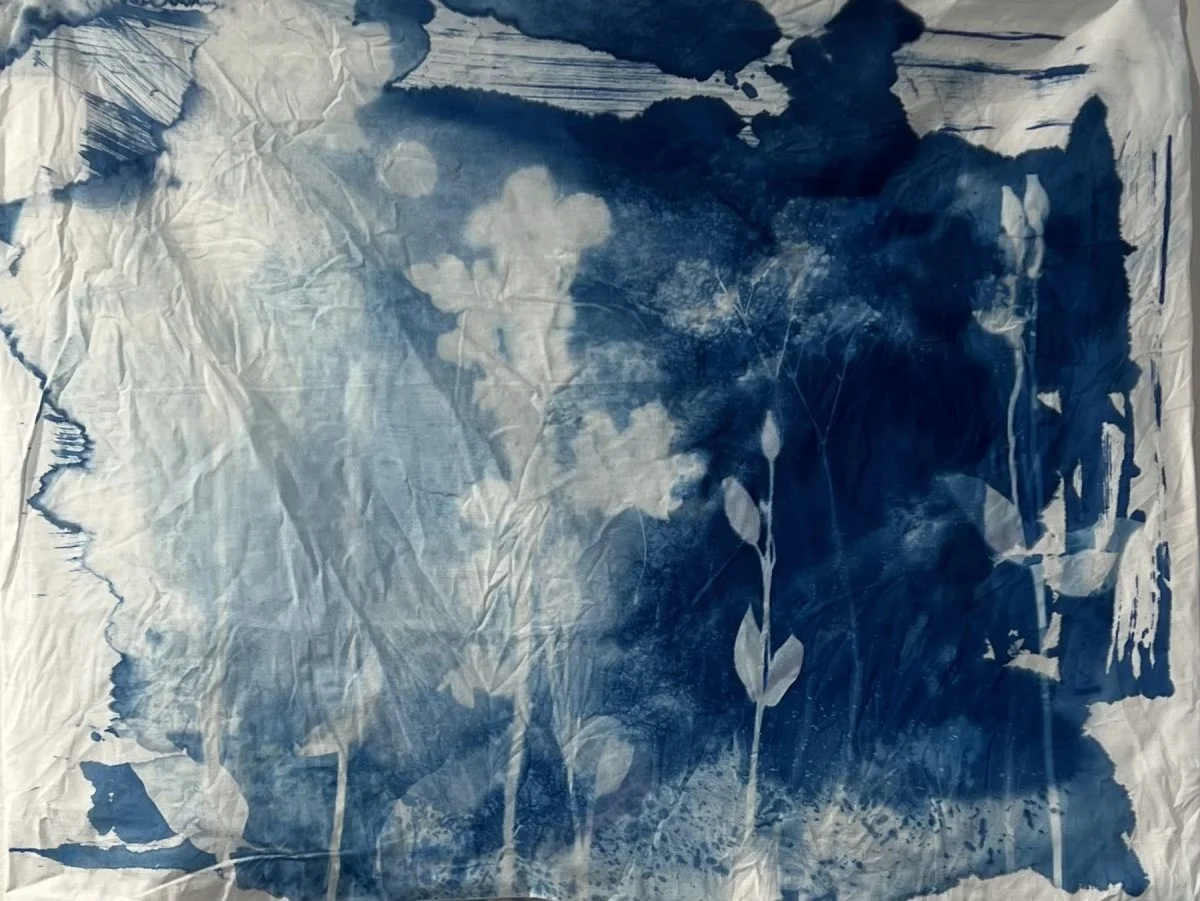
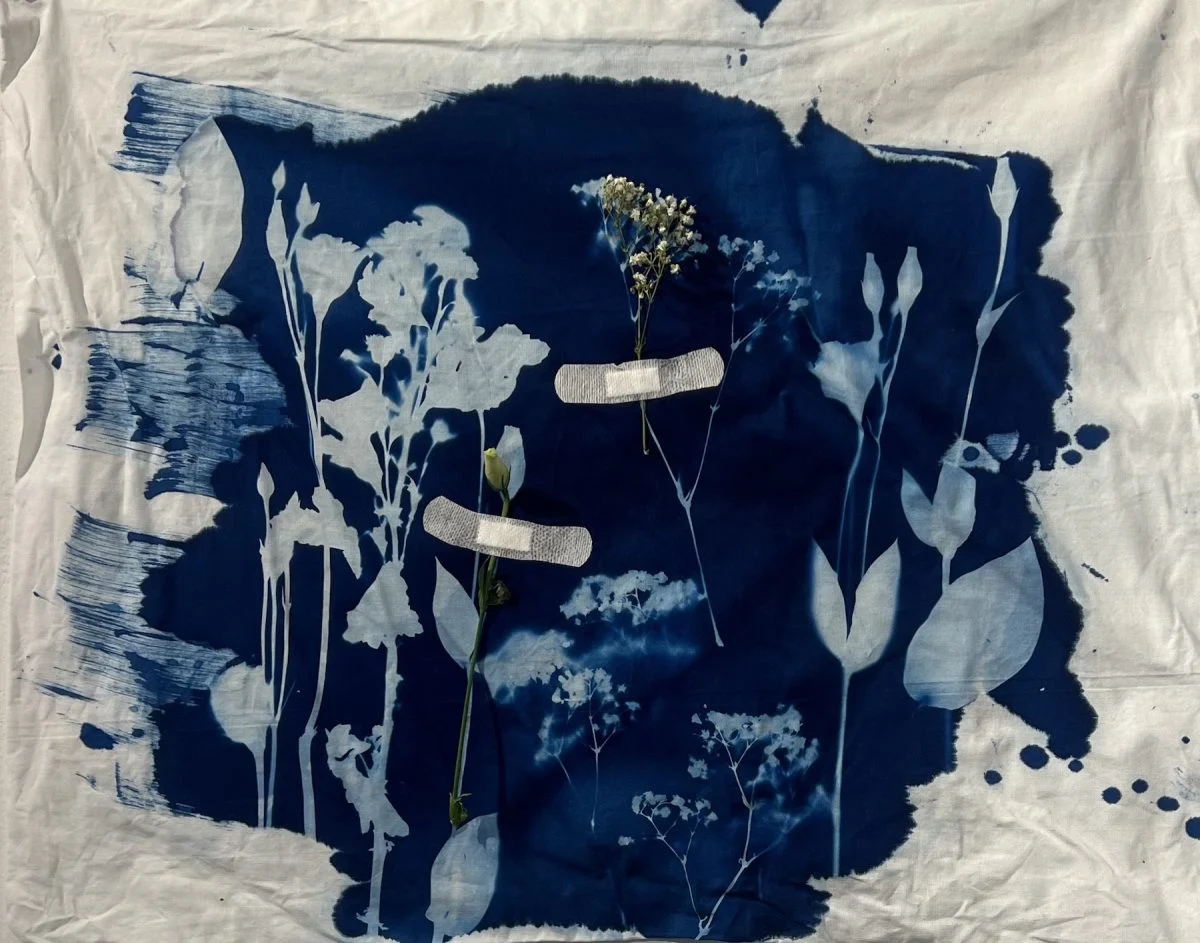
    I’m Hooria Sanei. I studied interaction design at University of the Arts London and I’m doing my PhD right now in Media and Innovation Design and art has always been part of my life. I started with music and since I was a child, I played piano and then I learned how to play cello. Later, alongside the music, I went to the visual side of art with photography and alternative printing. During my masters, my work shifted towards technology-based art and since then I have been exploring how digital tools and media can change artistic expression and the experience of viewing art. I am passionate about the transformative power of art for both human and non-human life, and it has become my way of translating and synthesizing my understanding of the world. 

    In my work, I mostly focus on memory, personal experience, and our connection to places and that’s what I’ve been exploring during my residency. I’m inspired by the philosopher Heidegger and approach art as a way of dwelling and creating spaces where things can reveal themselves and the unseen quietly come into the world through art. I’ve also been exploring how scent, sound, and image can become a unit and make memory a more immersive experience. 

    I’m playing with sensory elements, such as textures and sound, and combining those things to create a work that is more like the real world. 

    Your work moves across multiple mediums (music, photography, etc). What draws you to working in so many different styles? 

    What mostly draws me to working across different mediums is the way that each form interacts and transforms into another. I think for me, living between places and having different experiences has shown me that boundaries are fluid and those overlaps are the reach for creative possibilities. For me art is a way of expression, and the medium I choose depends on the concept I’m exploring or the audience I want to connect with. I’m drawn to uncertainty rather than clear-cut answers, and those are often the moments when techniques collide and something new, sometimes even accidental, emerges. I see these intersections as little black holes that open onto new horizons, where unexpected combinations of materials, sounds, and images can reveal entirely new ways of experiencing the world. 

    A lot of your work touches on identity, memory, and shared experience. How do you approach translating something so personal into a visual language others can connect with? 

    Translating something as personal as memory or identity into visual language is about creating a space where others can see themselves and not just me. I begin from my own experience and lived moments, but not as a fixed story. I use some fragments of my life or stories to bring up some feelings and allow the viewer to connect with their own memories. While the specifics of my experiences are uniquely mine, the themes of memory, identity,

    and transformation are universal. We are all shaped by time, by the moments that define us, and by the silences in between. My work serves as an invitation to reflect on the shared human experience. Personal memory can become something shared, because emotions like longing, change, and presence are familiar to people across cultures and time. Also, perception is more than just looking. We experience the world through our bodies, our memories, and our past experiences, so we perceive works differently from each other. 
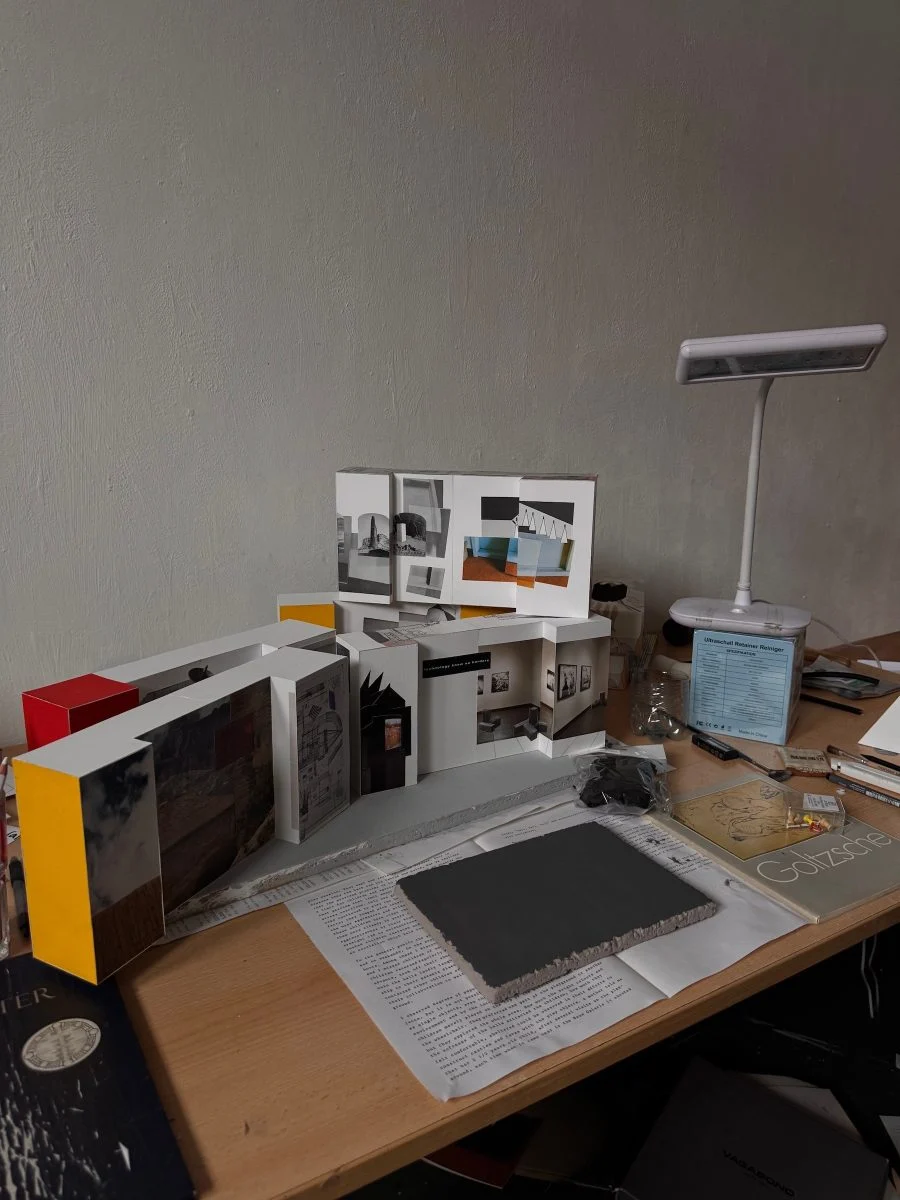
    During your residency, you’re exploring how visual language creates emotional and sensory understanding. What are you most curious to experiment with during this time? 

    I’m interested in moving beyond traditional visual forms to engage multiple senses, creating experiences that are felt as much as they are seen. By incorporating sound, texture, and even scent, I aim to invite viewers into the work in a way that goes beyond observation, fostering a more immediate and emotional connection. Scent can bring up memories and moods that images alone cannot, while sound shapes our sense of identity and belonging. Each of us carries an internal geography of sound, where voices, rhythms, and ambient noises resonate throughout the body, not just the ears. Noise exists both outside and inside, and even familiar sounds can evoke the feeling of home. In this way, sensory elements allow the work to become a vessel for memory, emotion, and presence. 
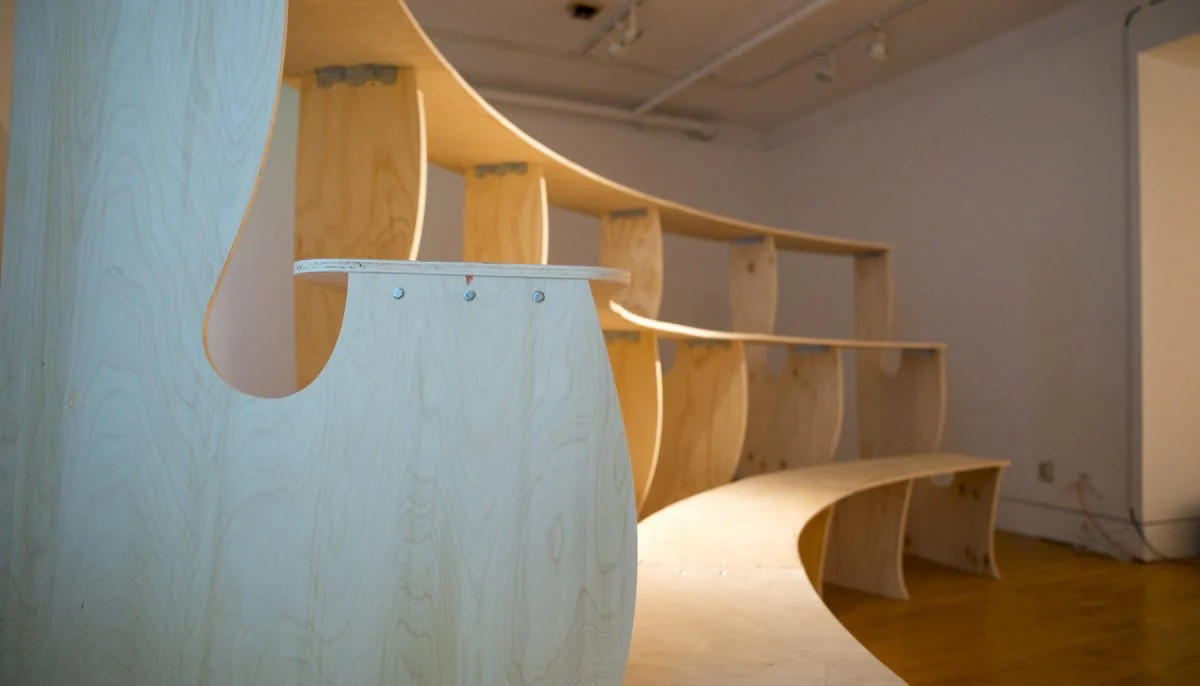
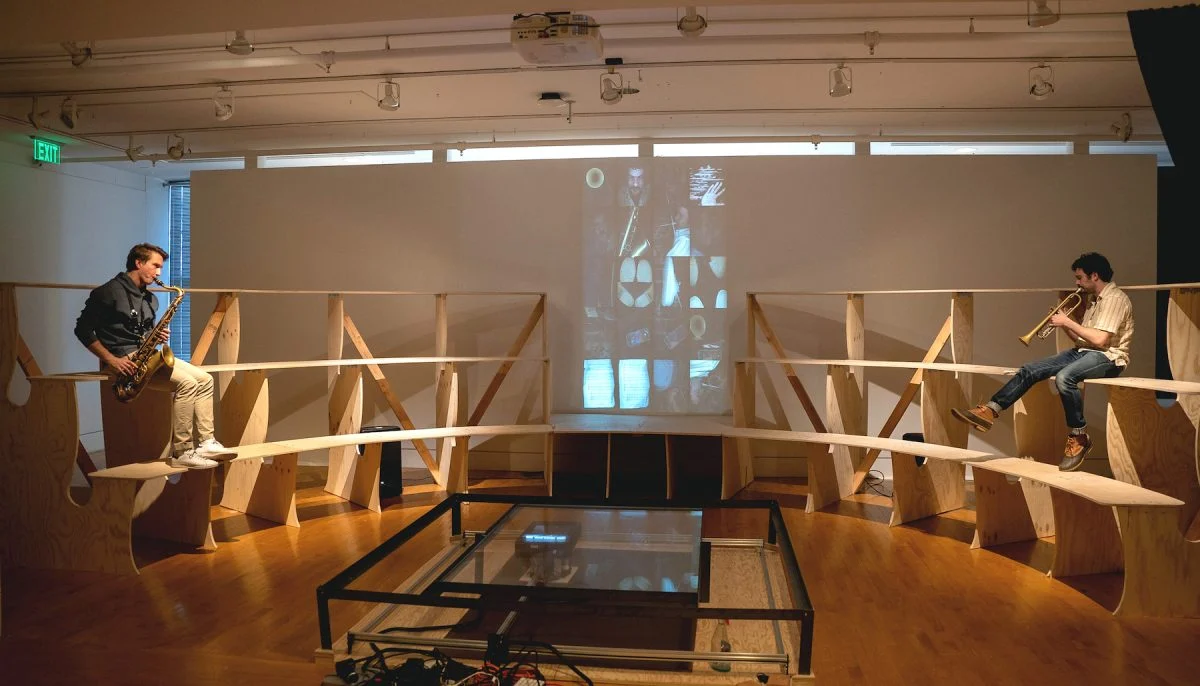
    During my residency, I have been collecting field recordings and archival sounds, noticing how every place has its own sonic character. I am exploring how these sounds, both human and non-human, can layer with visual elements to create a richer, multisensory experience. By combining sound, image, and spatial awareness, I hope to create immersive works that viewers can inhabit fully, where perception, memory, and emotion intersect. This practice allows for moments of discovery, as viewers find their own connections and reflections within the layered sensory environment. 
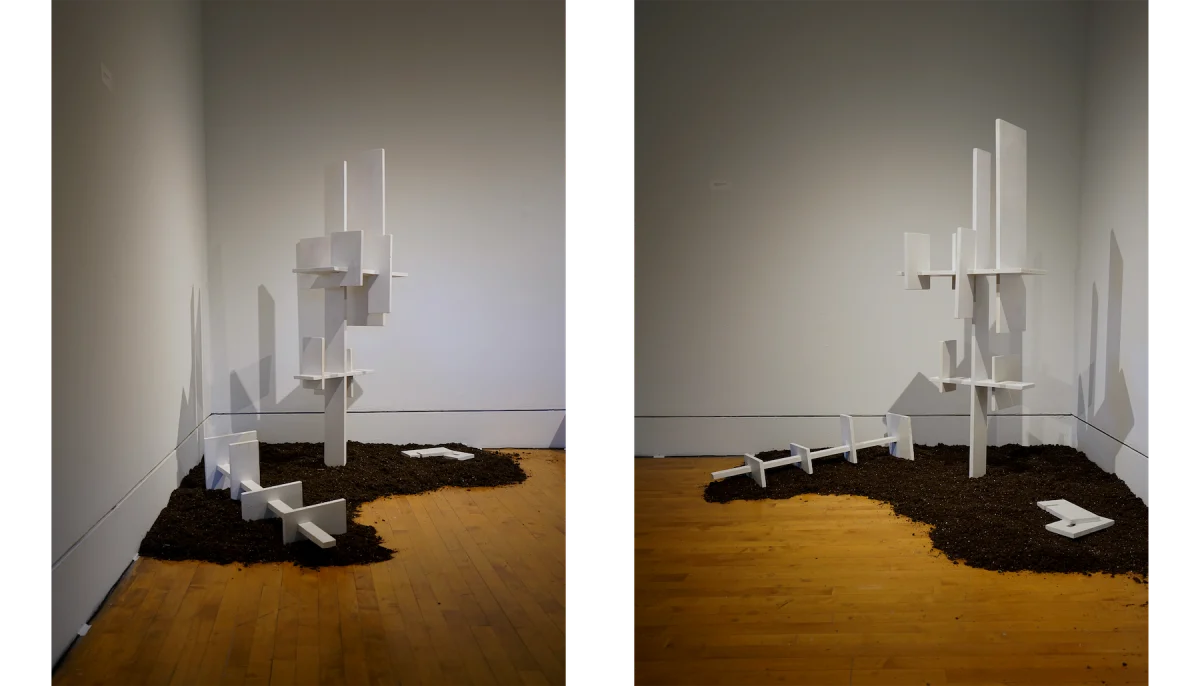
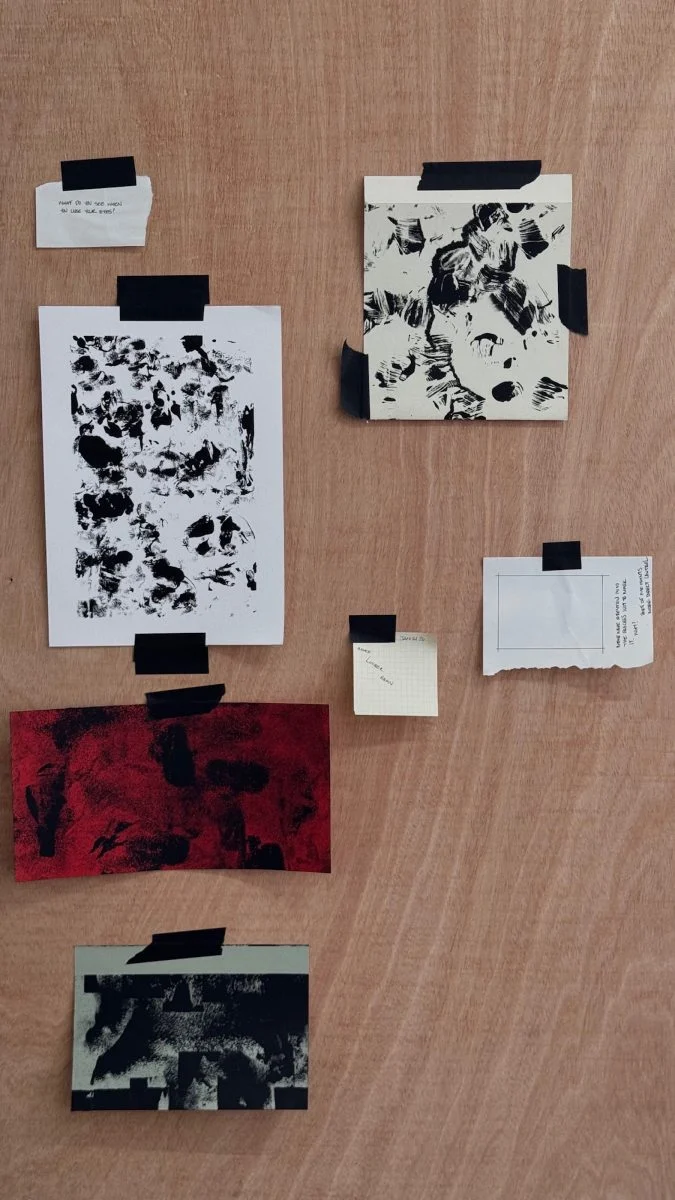
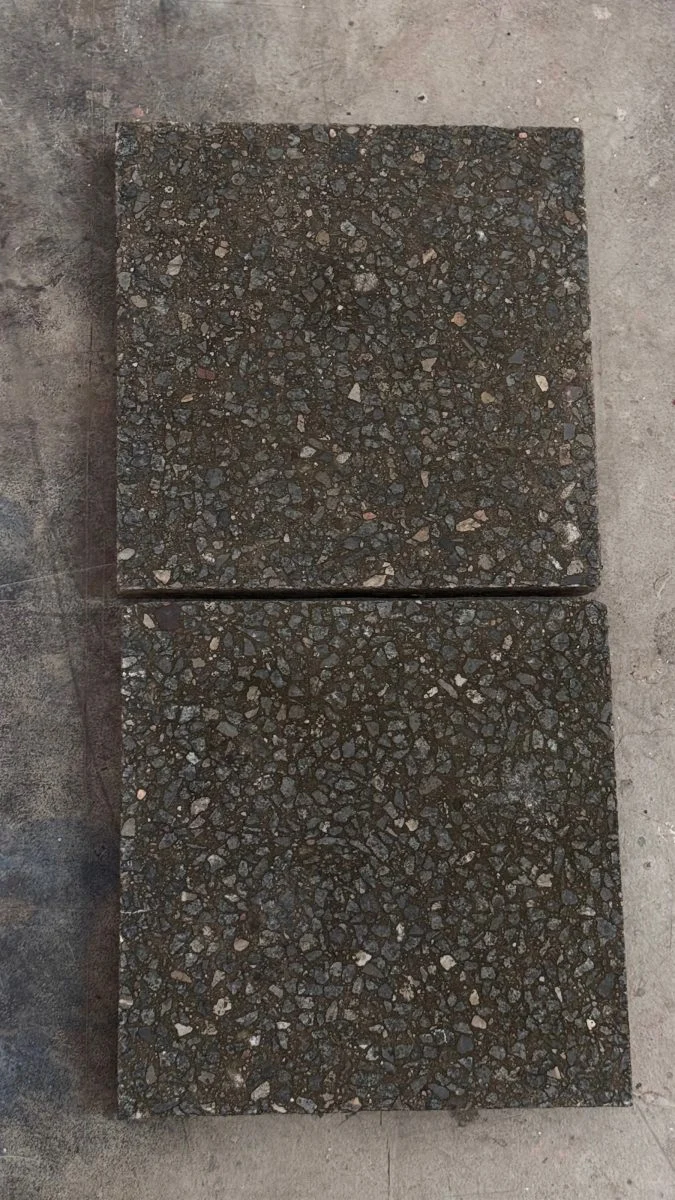
    Through these experiments, I am expanding my practice into multisensory territory, exploring how senses converge, how emotions are evoked, and how memory can be activated through the interplay of sound, scent, and visual form. I want the work to be something experienced physically, emotionally, and mentally, leaving traces that remain with viewers long after they leave the space.

    Interview Reese Saddler (@reeseesaddler)

    Photos Ksenia Proskuryakova (@ksenyapro)

    • Statement
    • GlogauAIR Project
    • CV
    • Gallery
    • More

    Statement

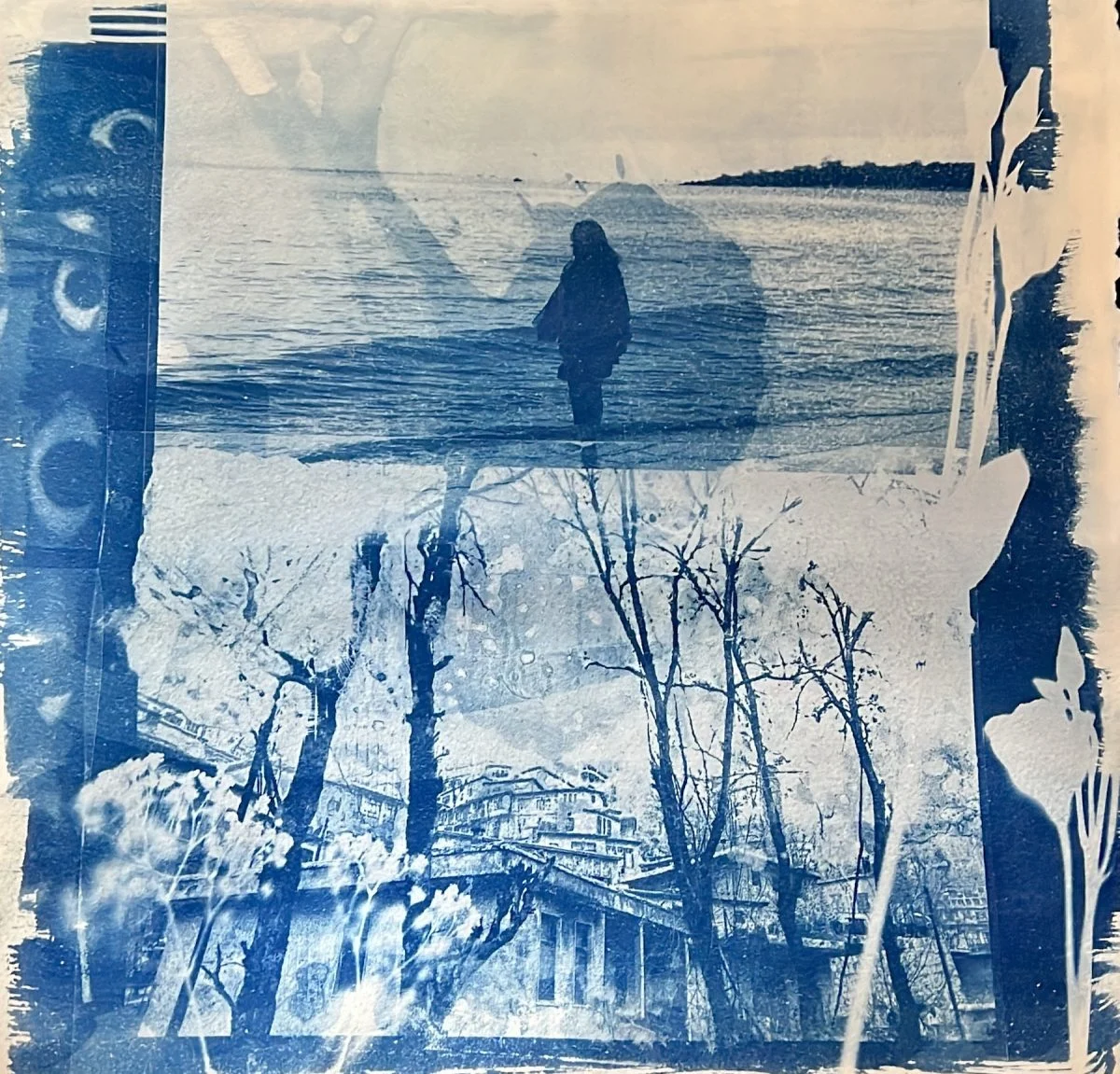
    Hooria Sanei is an Iranian multidisciplinary artist and composer whose practice is driven by a belief in art’s capacity to generate social change. Through the integration of sensory, conceptual, and experiential approaches, her work encourages reflection on human experience, identity, and non-verbal modes of communication. Her practice spans photography, printmaking, music, and installation.

    She holds a Master’s degree in Interaction Design from the University of the Arts London (UAL) and is currently pursuing a PhD in Media Innovation and Design in Canada. Her work has been exhibited internationally, including in Iran, the United Kingdom, and Austria.

    GlogauAIR Project

    During this residency, I would like to further explore how visual elements can function as non-verbal forms of communication. Through photography, printmaking, collage, and other multisensory approaches, I aim to investigate how images convey meaning related to our experiences, identities, and memories, both individual and collective. The project focuses on how visual language can communicate what is often difficult to express through words, creating space for emotional and sensory understanding.

    CV

    Education

    • Doctor of Philosophy and Arts in Design Innovation and Media – Toronto Metropolitan University Toronto
    • Master of Arts in Interaction Design Communication – University of The Arts London
    • Bachelor of Arts in Industrial Product Design – University of Tehran

    Exhibitions

    Solo Exhibitions

    • 2025 Blue Insomnia Soon Art Studio, Vienna, Austria
    • 2019 Woven Identity, Dastan Gallery, Tehran, Iran

    Group Exhibitions

    • 2026 The scent of freedom HELMUT space, Germany
    • 2025 Chasing Horizons & “The Infinite Blue Boomer Gallery: Contemporary London, England, UK
    • 2025 A Menu of Memories Open Eye Gallery Liverpool, England, UK
    • 2025 Gelastic Dream Boomer Gallery: Dreams & Nightmares London, England, UK
    • 2024 The sound of Echo Fox Yard Studio, Suffolk, England, UK
    • 2023 The Holly Art Gallery, Paris, France
    • 2022 What’s left behind Ars Electronica, Linz, Austria
    • 2022 Without Borders Festival University, JKU Linz, Austria

    Publications

    • 2025 Poetry Journal, Netherlands
    • 2025 Arts To Hearts Magazine
    • 2025 Visual Art Journal, Netherlands

    Art Review

    • 2025 – B-Side Guys website, US
    • 2025 – Rock DafuqOut, US
    • 2025 – York Calling website, UK
    • 2025 – Art cabbage, UK
    • 2025 – Online Art Gallery, Iran

    Awards and Residence

    • IF Design Talent Award Winner IF International Forum Design, Hanover, Germany
    • Soon Art residency, Vienna, Austria
    • Eutopia art residency, Kavala, Greece

    More

    We do not have any further information at this time.