Archives: Artists

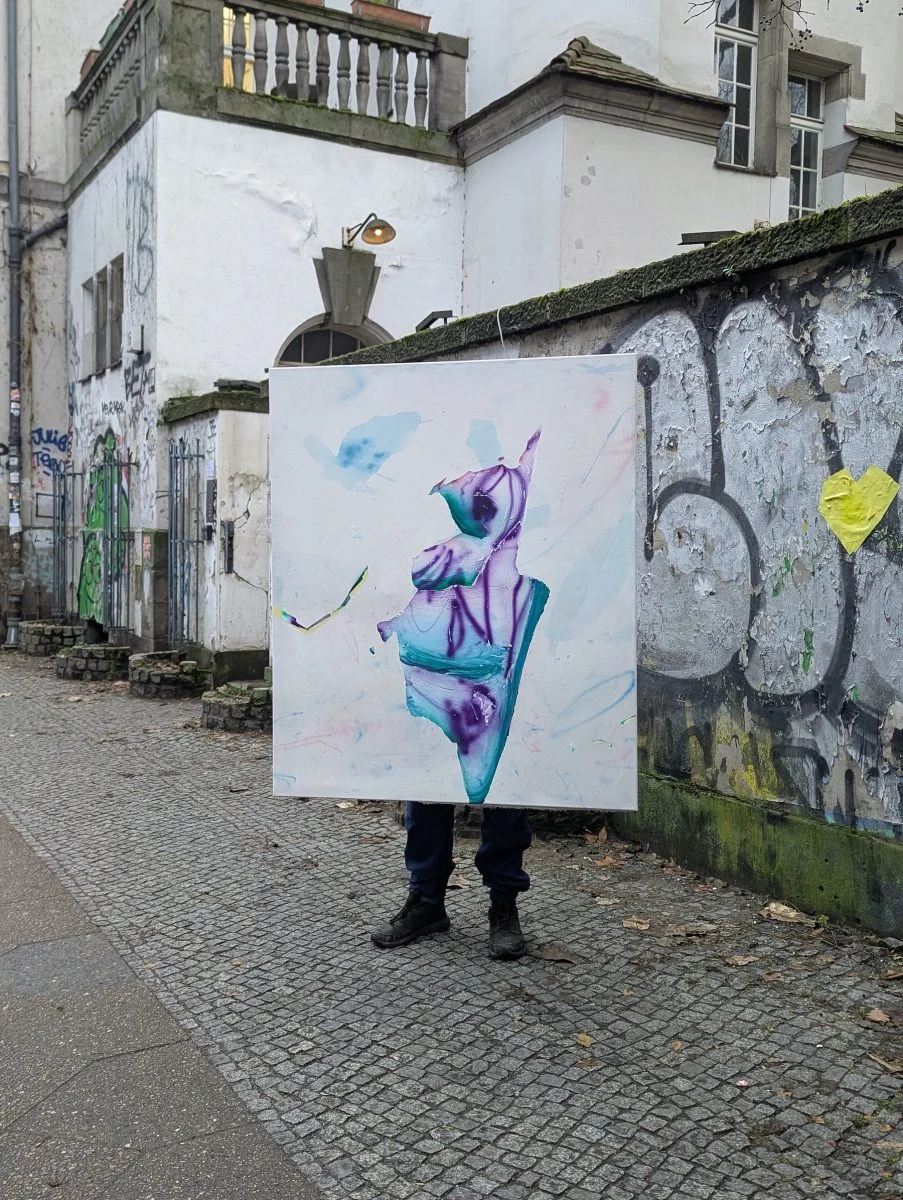
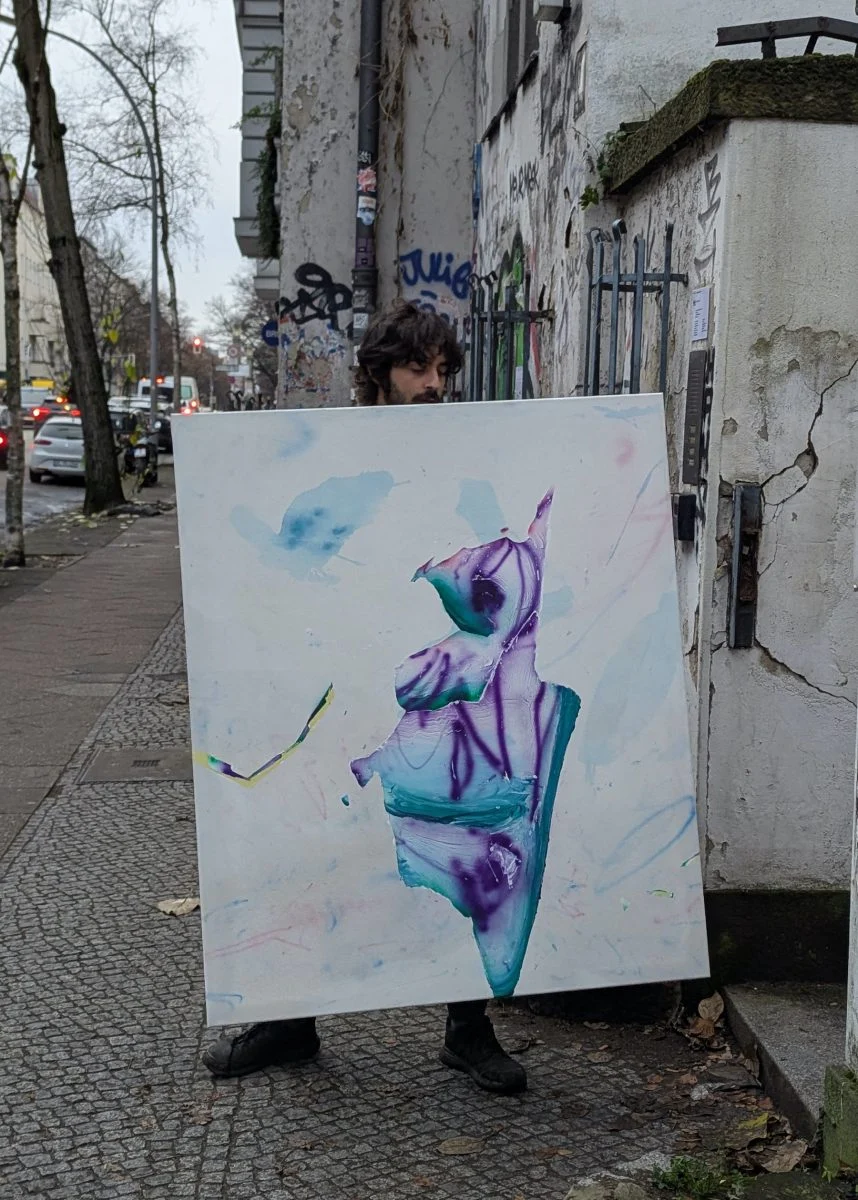
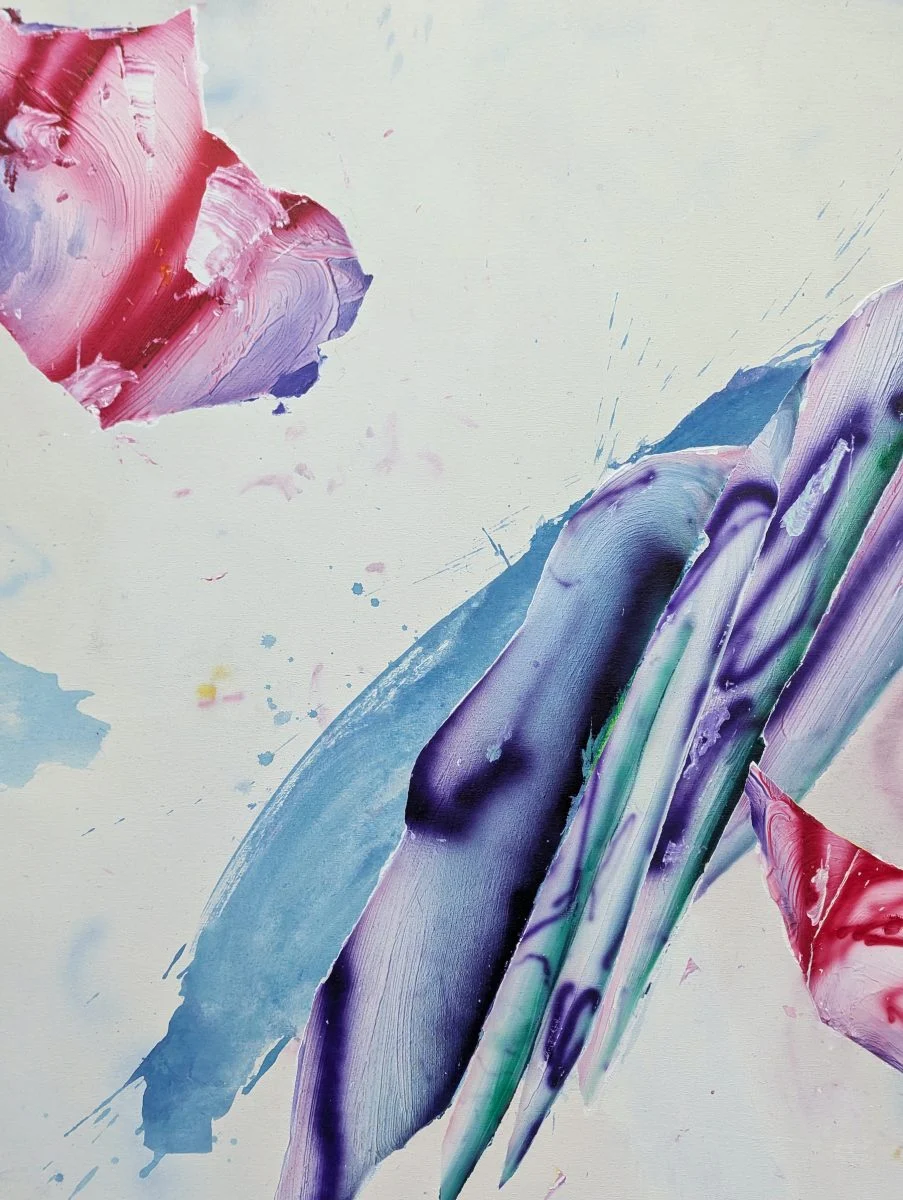
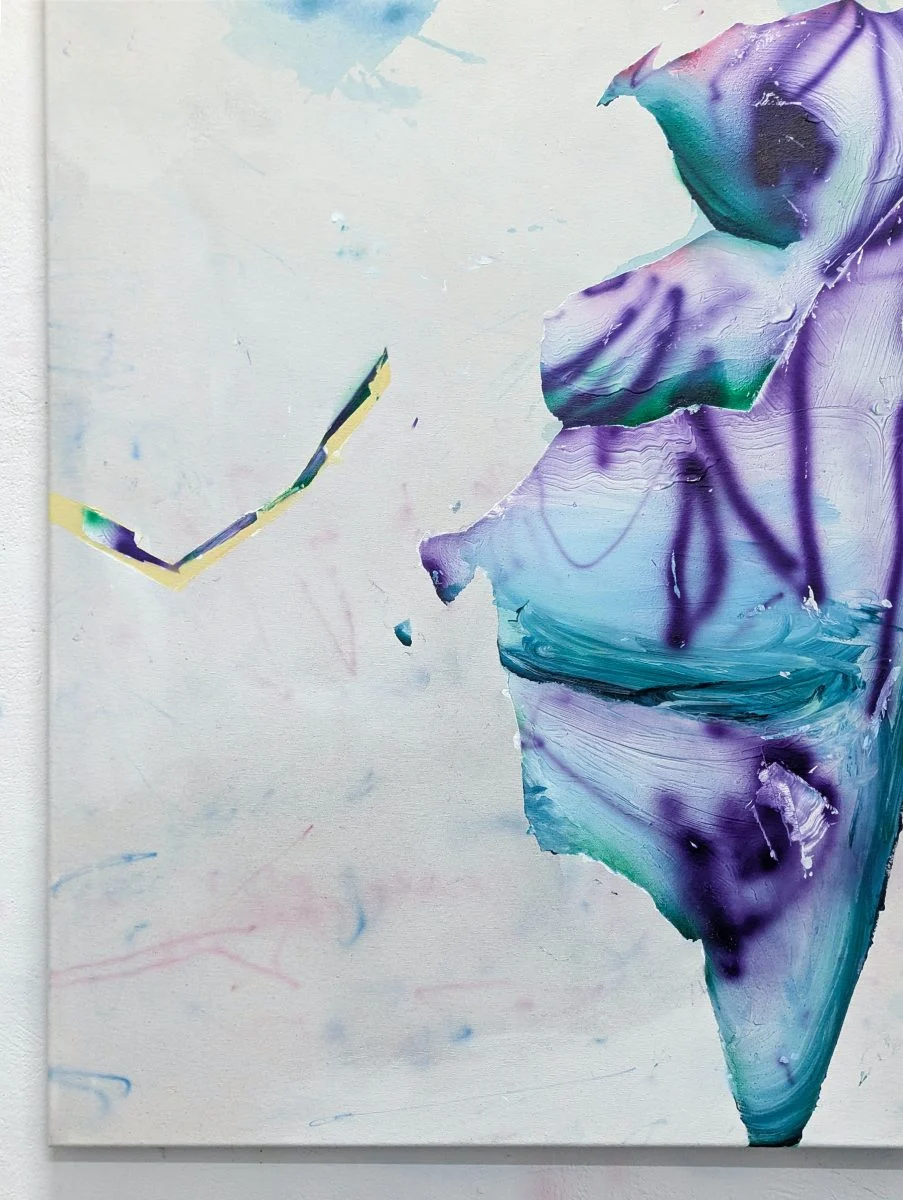
  • Kami Million

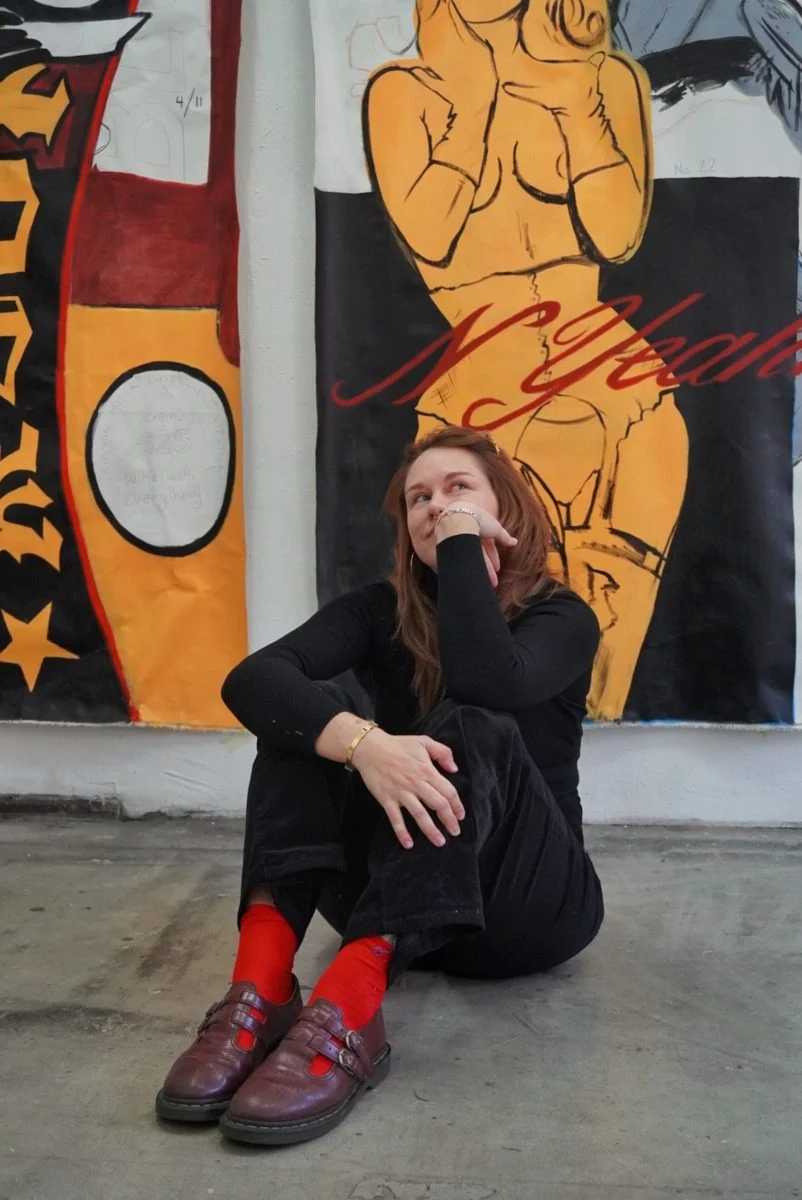
    Kami Million

    Artist main image

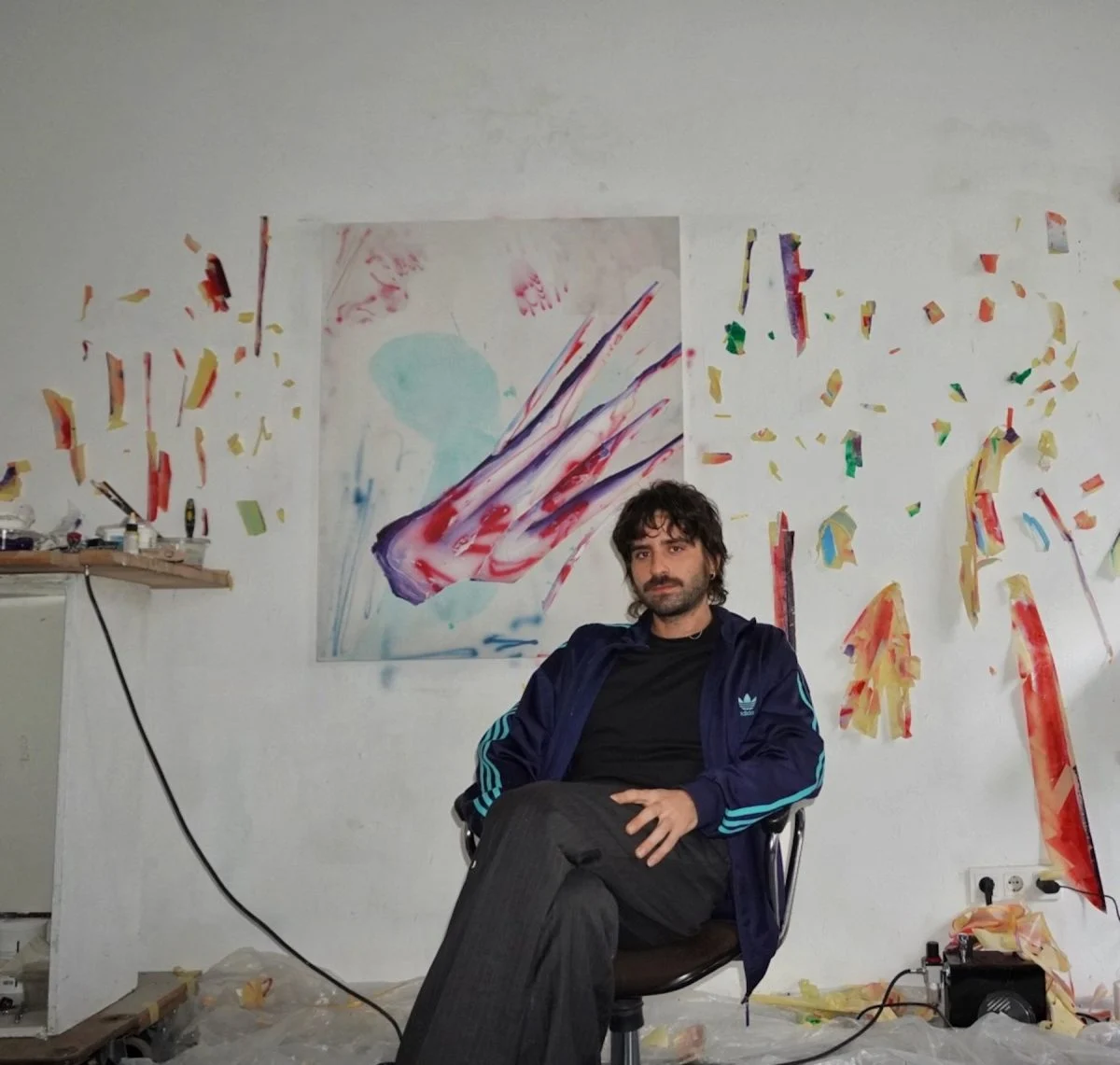
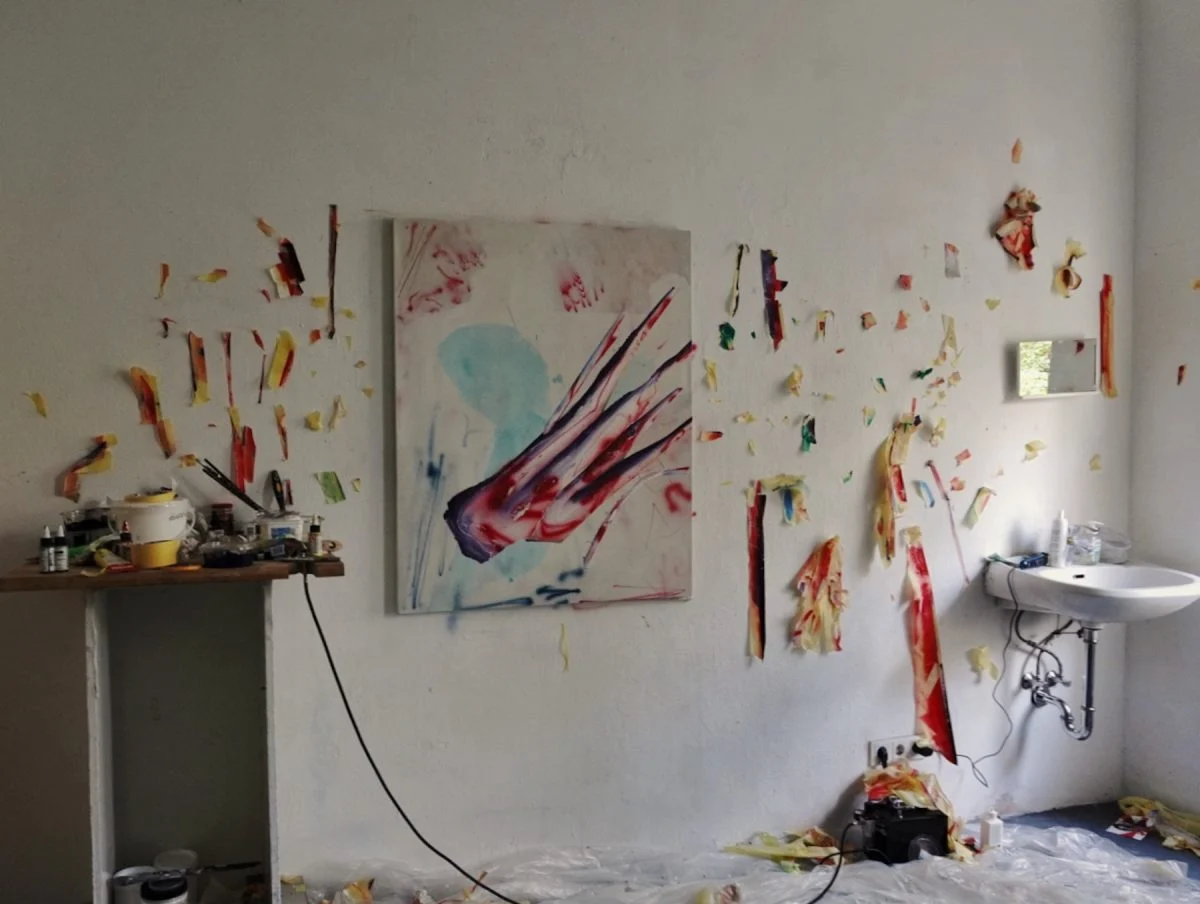
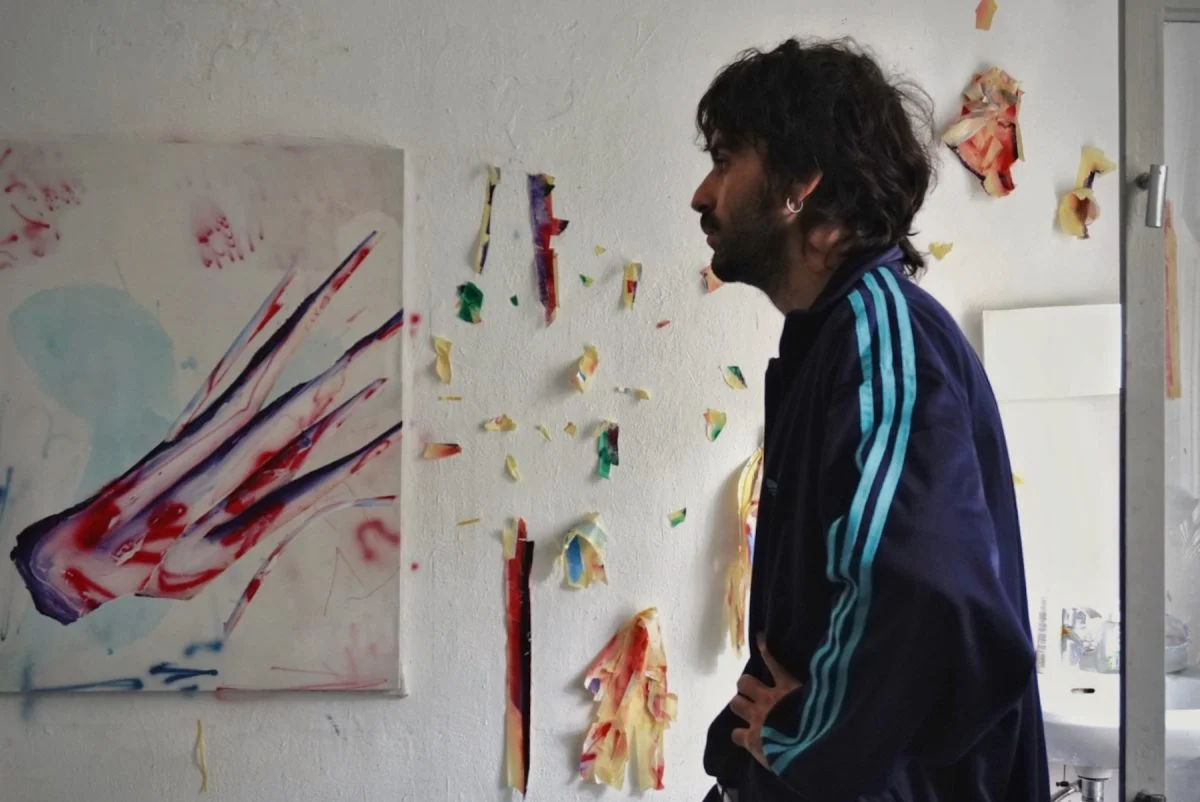
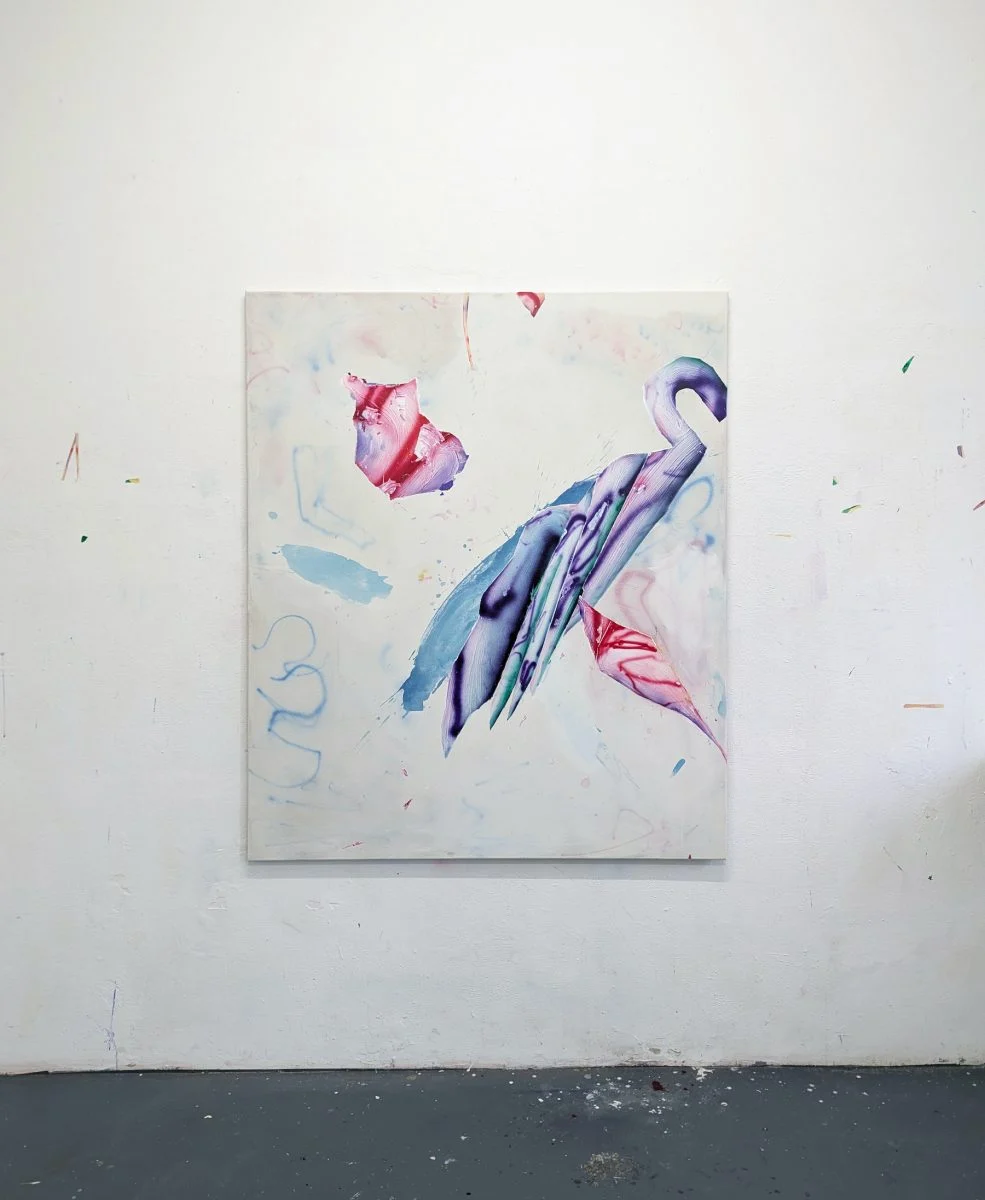
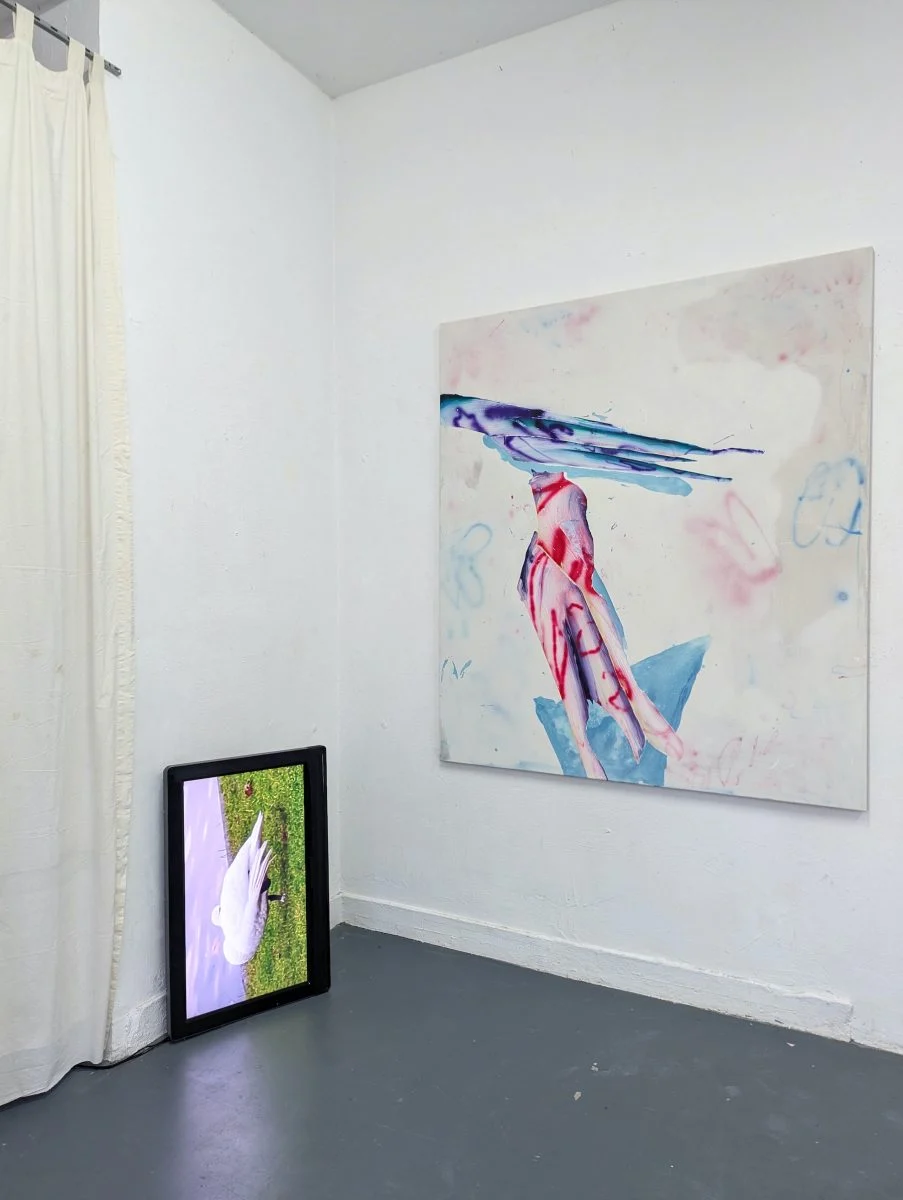
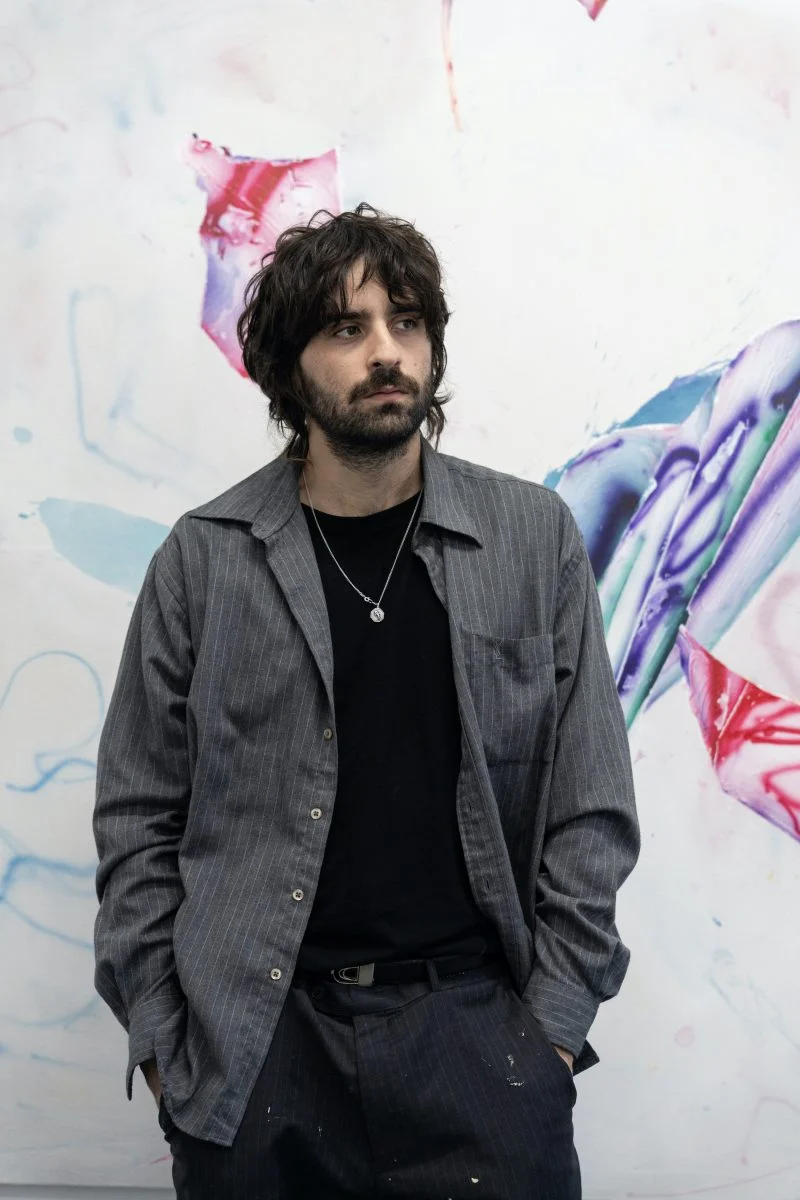
    Kami Million is GlogauAIR resident from January 2026 to March 2026.
    Q1

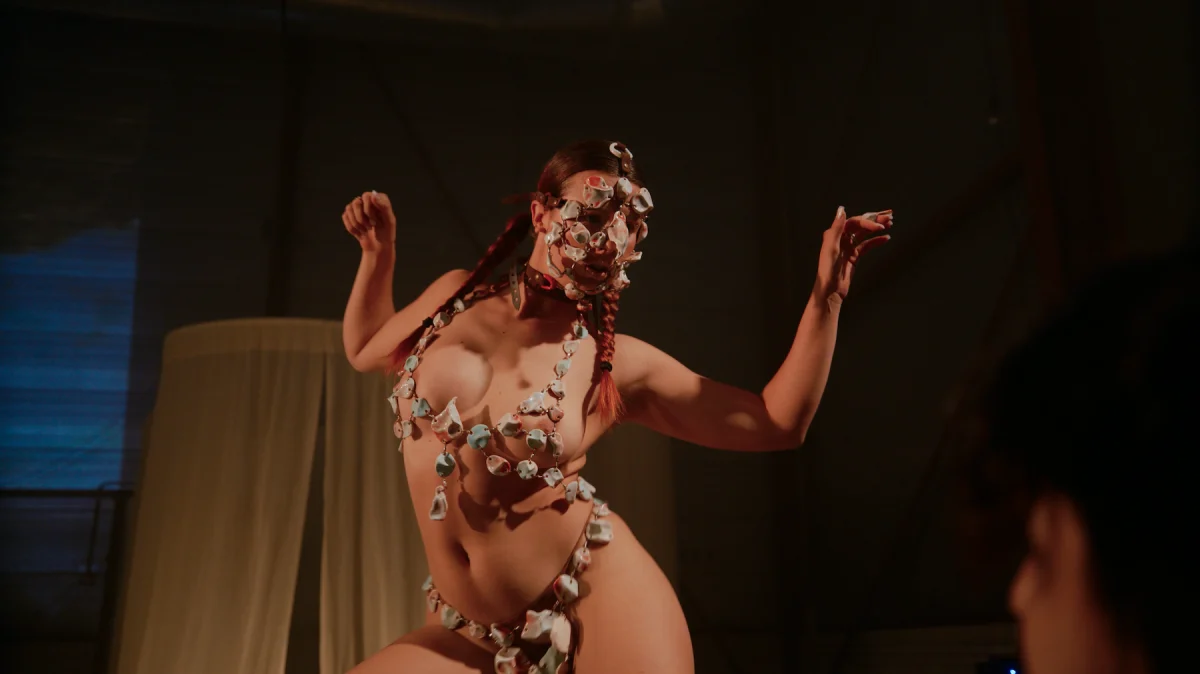
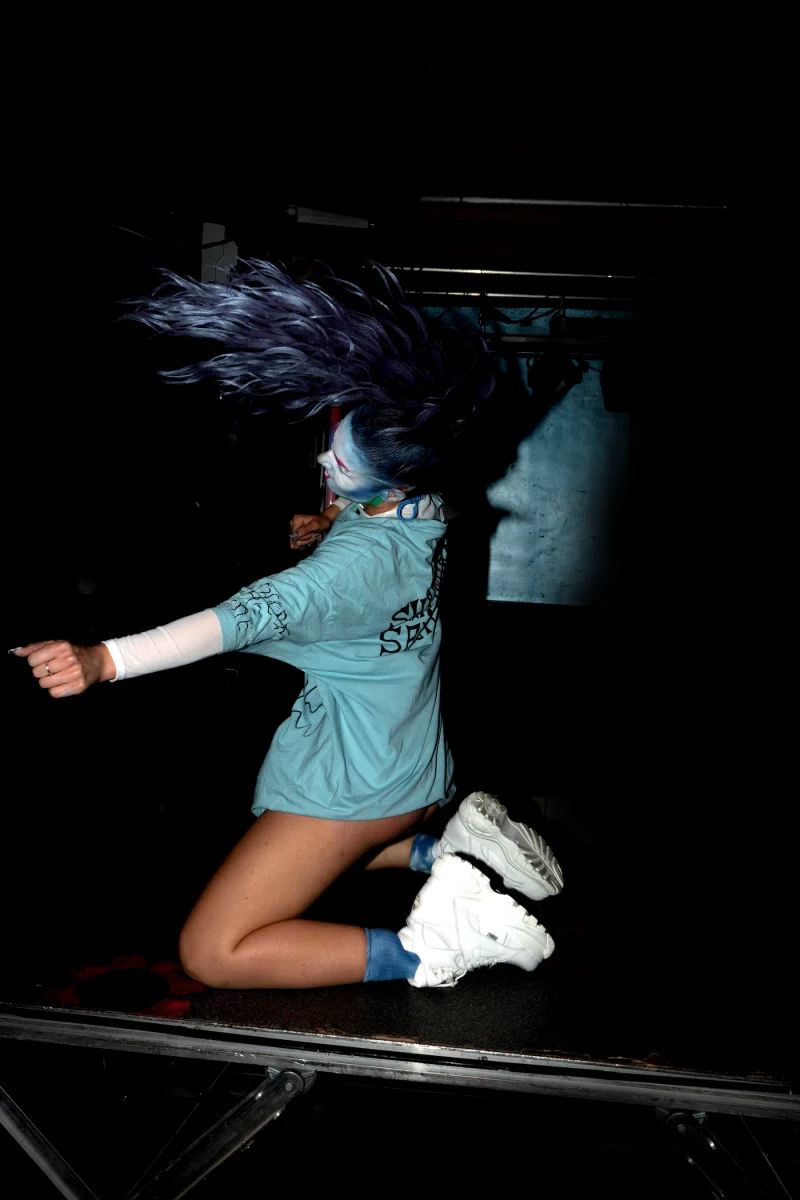
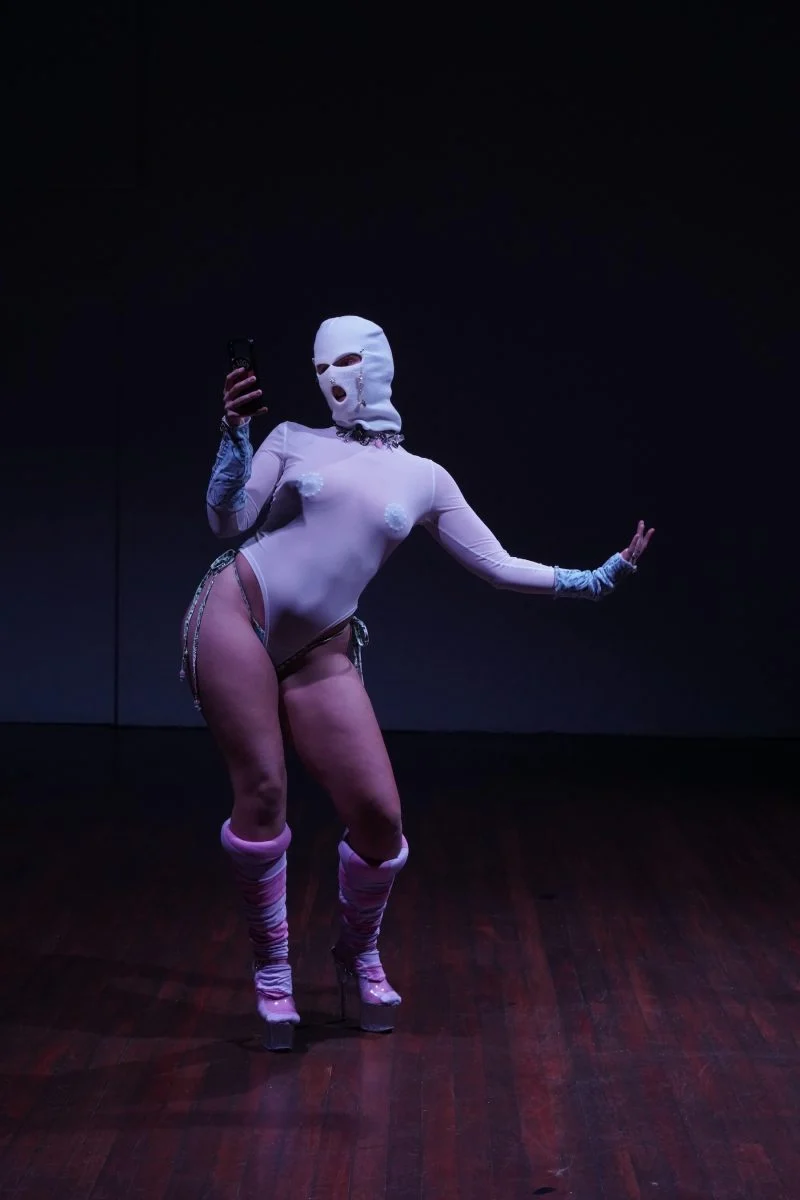
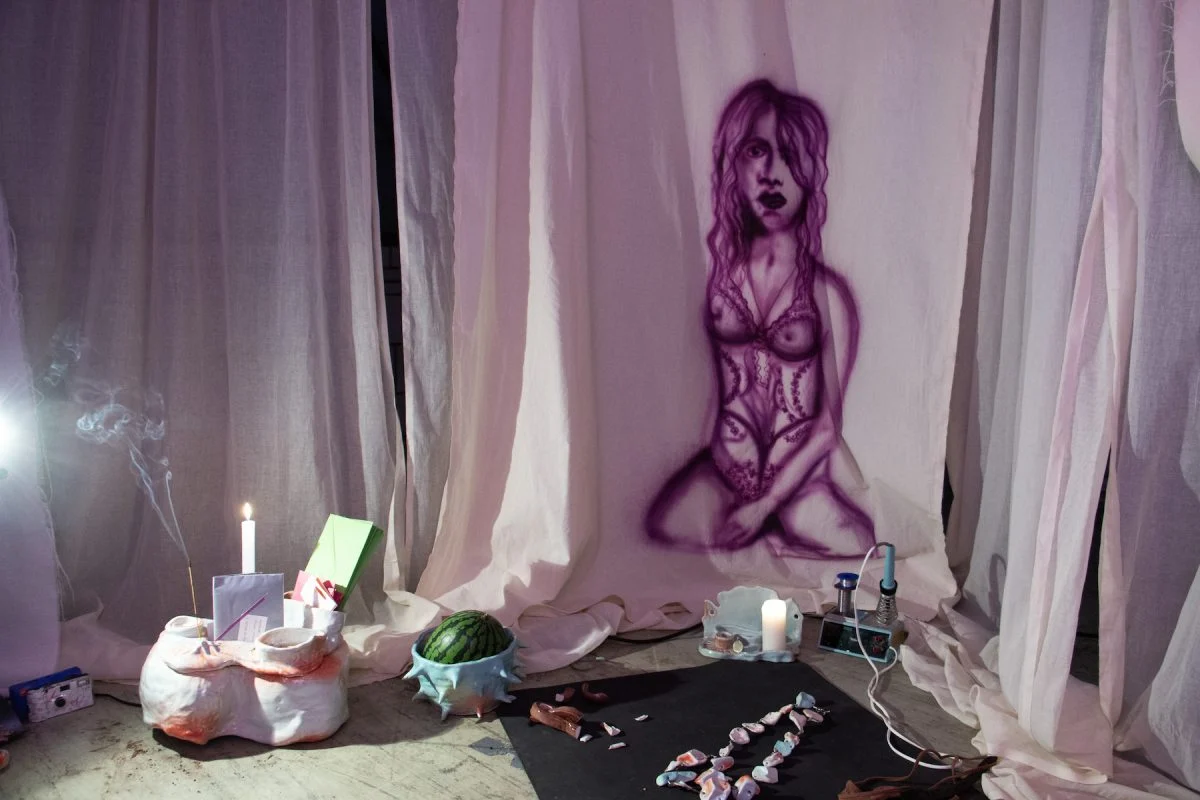
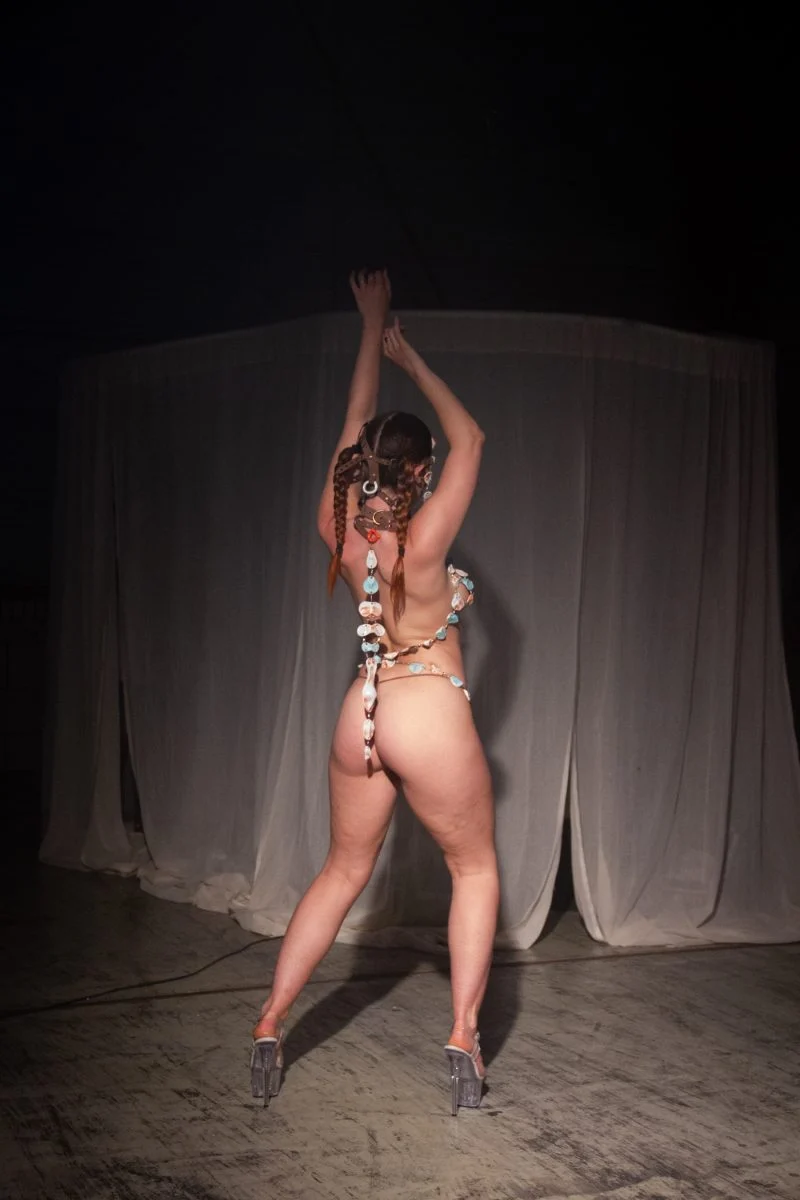
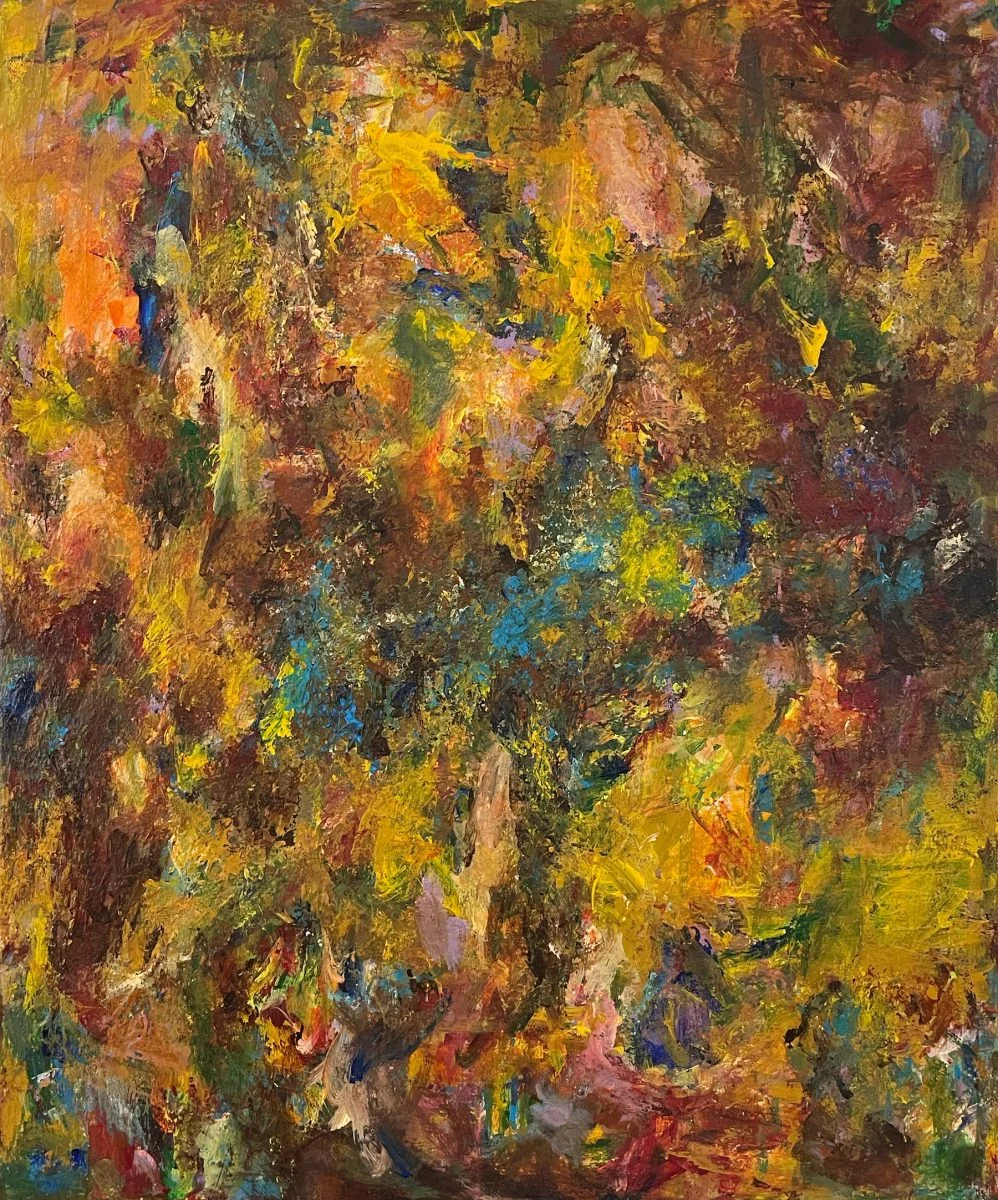
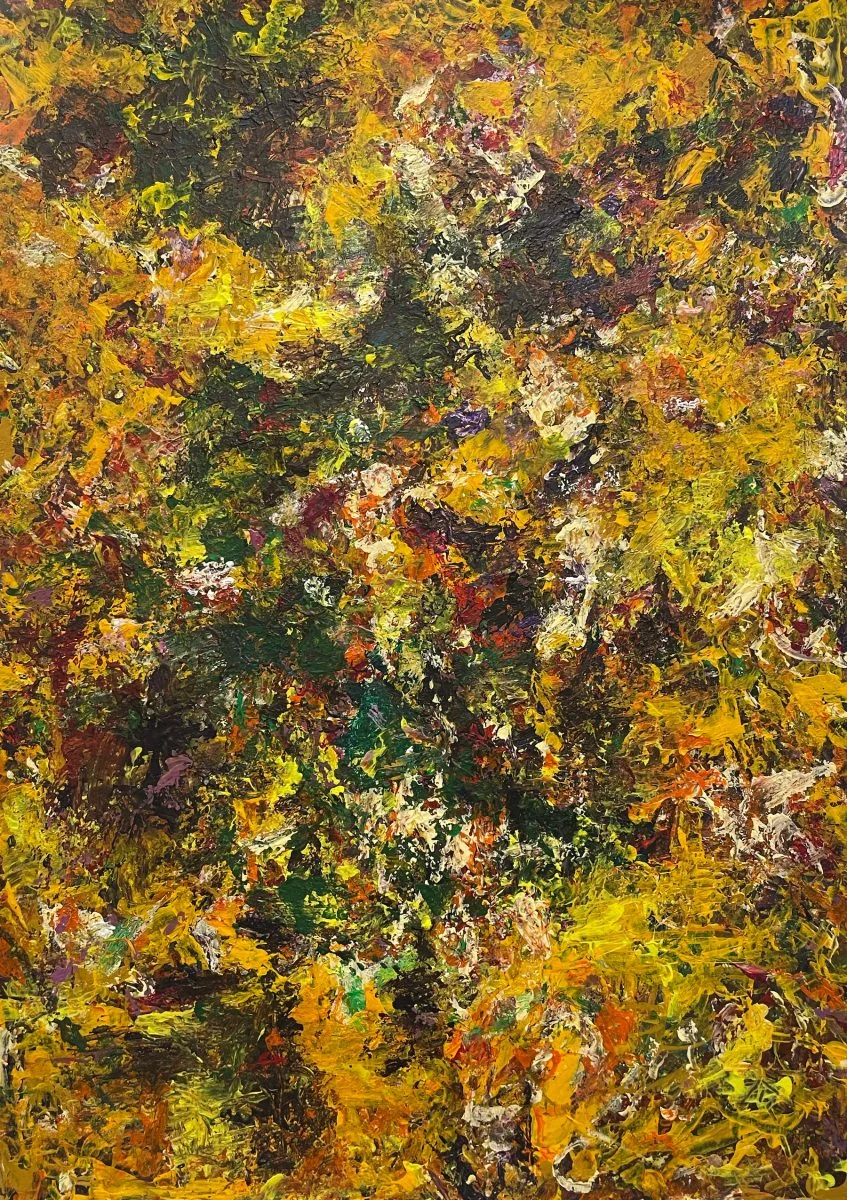
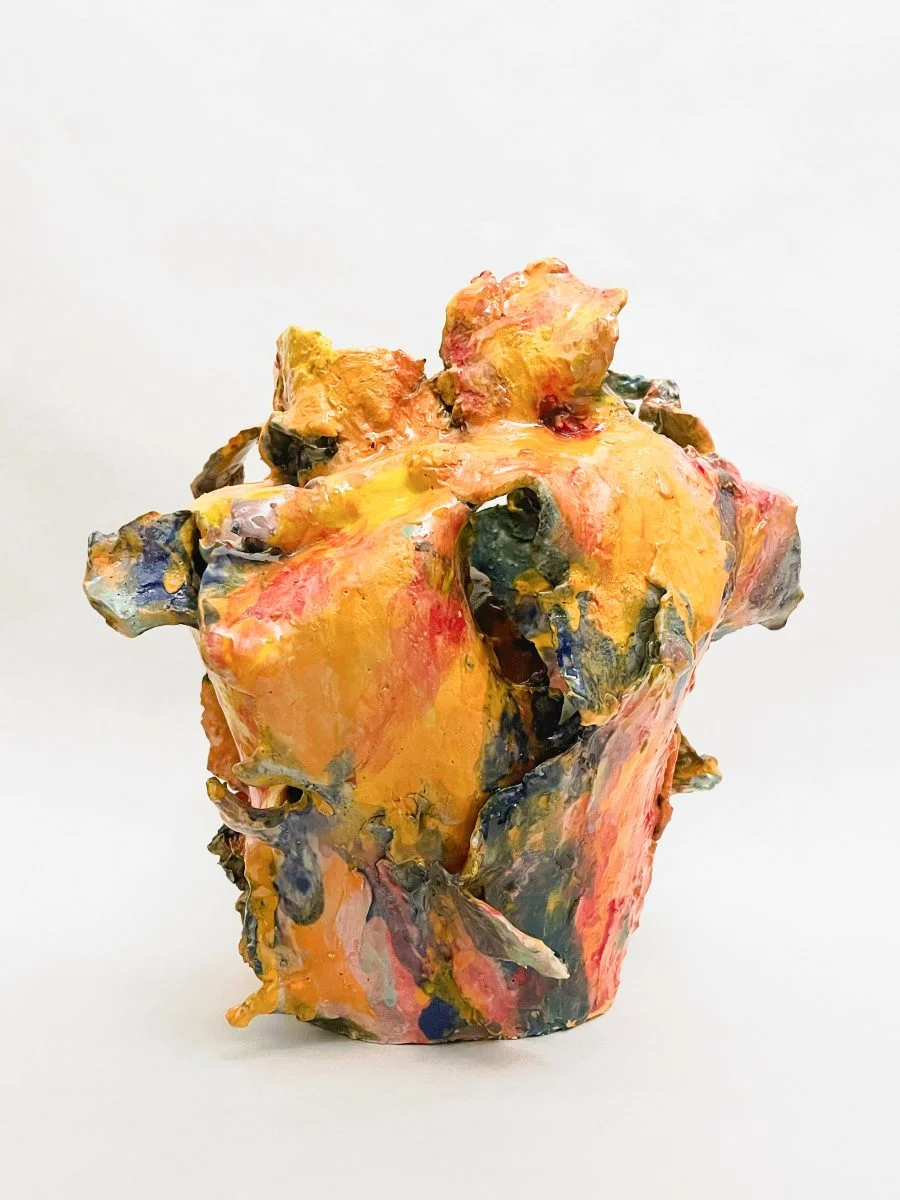
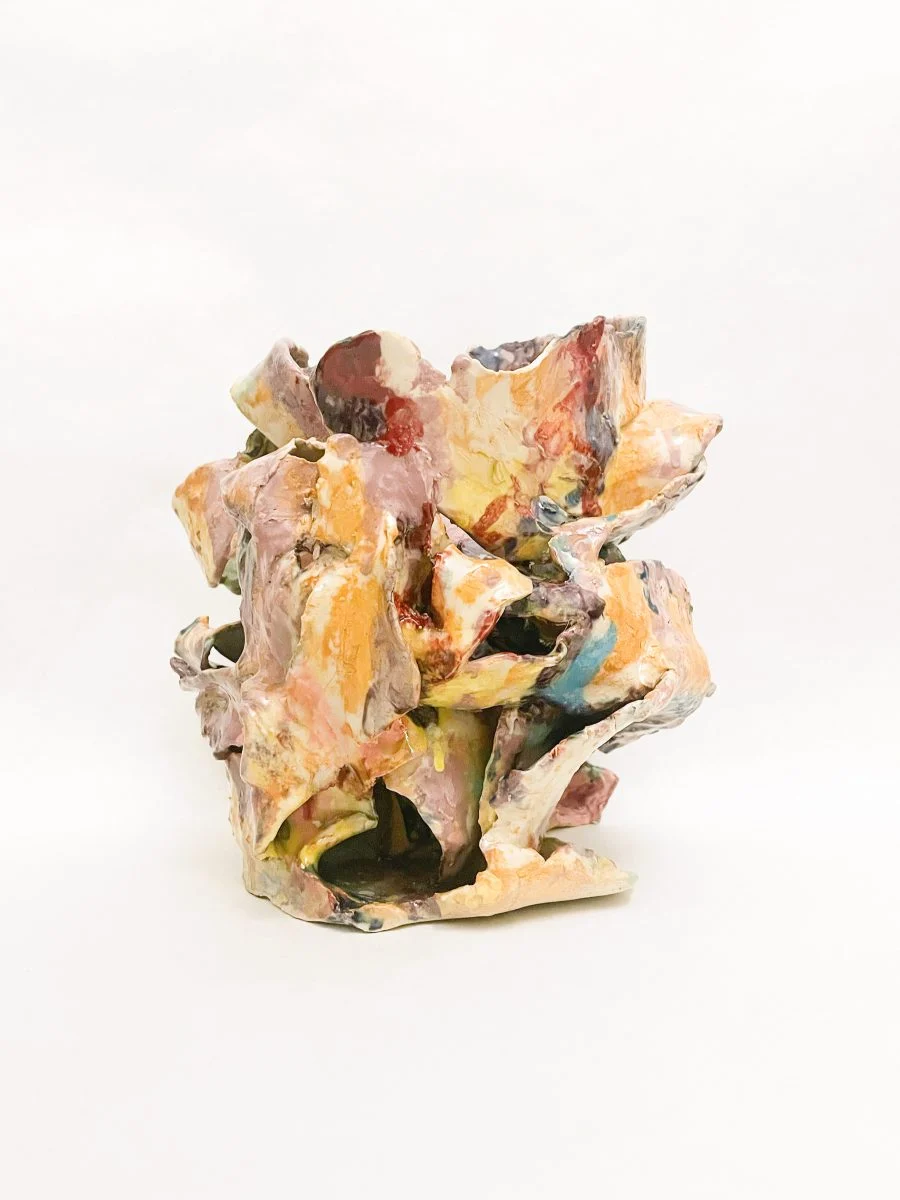
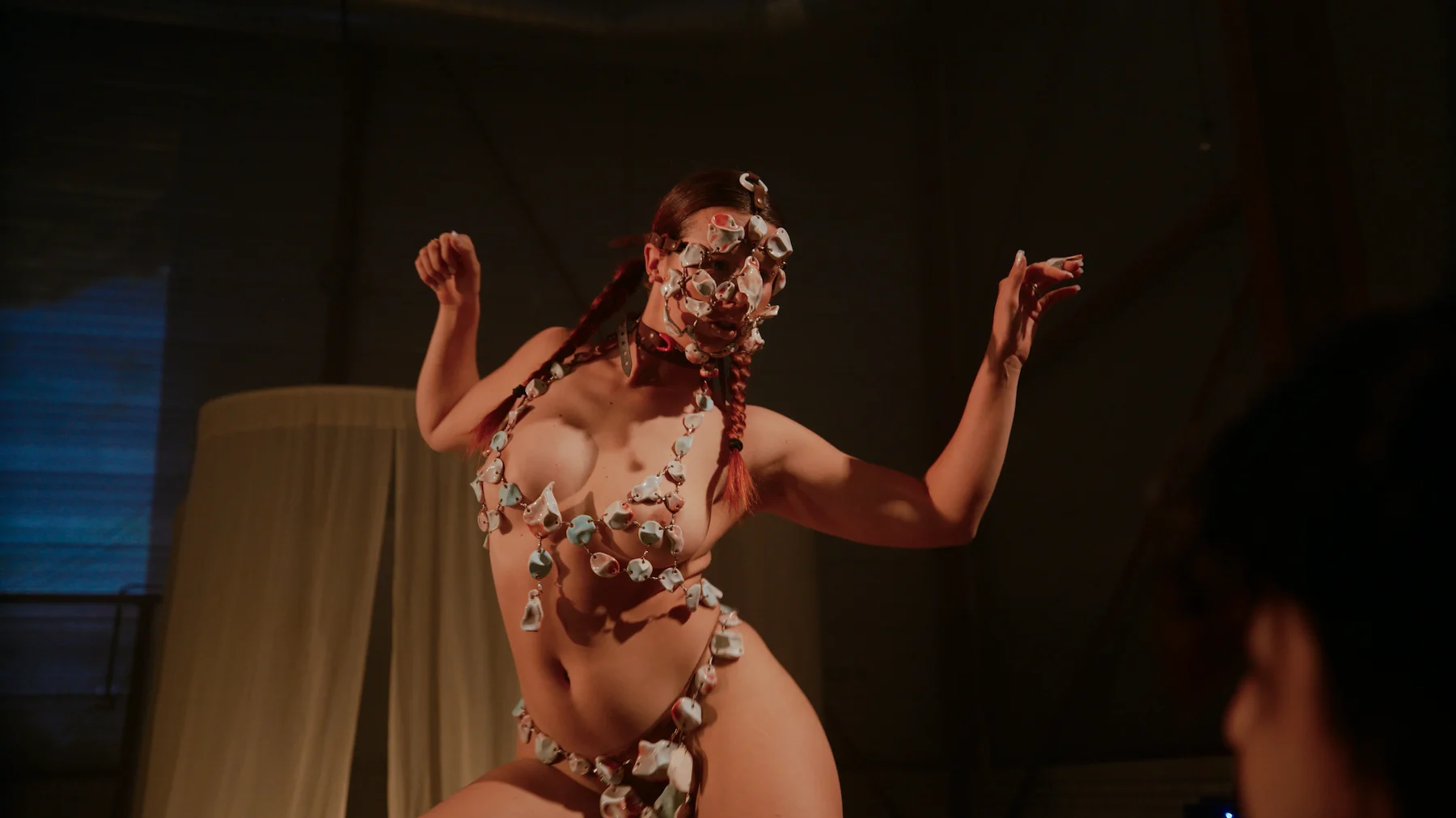
    Kami Million is a chameleon who cycles between different alter-ego’s depending on each context—the mystical pigeon, the farmer dyke, the super-femme stripper, the caring facilitator. Kami hides in order to reveal. They use performance, community gatherings, ceramics, paintings and writing as tools to communicate and feel through, working to destigmatise and decriminalise sex work and deconstruct power relations. They organise talks, dinners, collective writing sessions, film screenings and club nights where sex workers and their allies are invited to gather, to generate more care and visibility for the community of Whores. Their work is both affective and direct, with gestures of care, embracing the contradictions that come with living multiple lives.
    Meet the Artist

    Could you tell me a bit about yourself and the project you are proposing for your three-month residence here at GlogauAIR? 

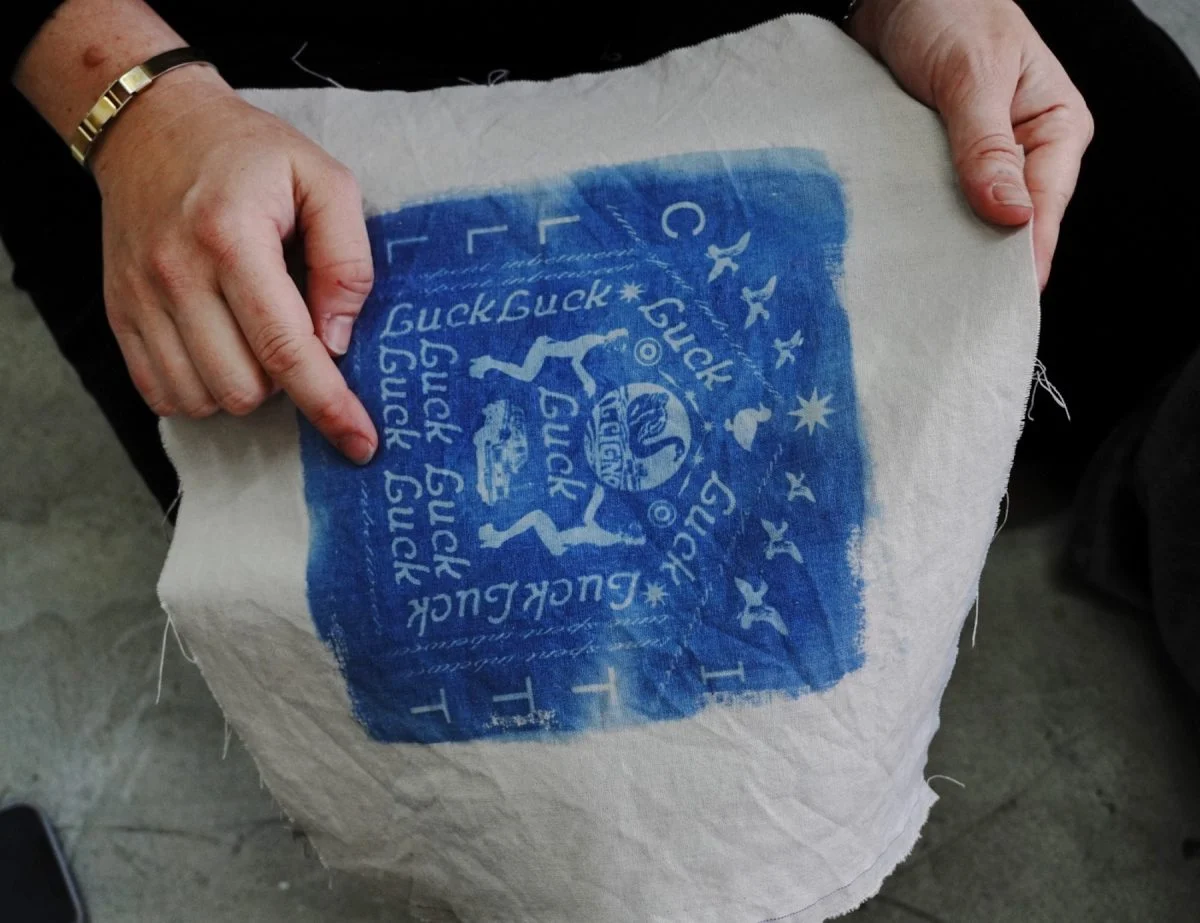
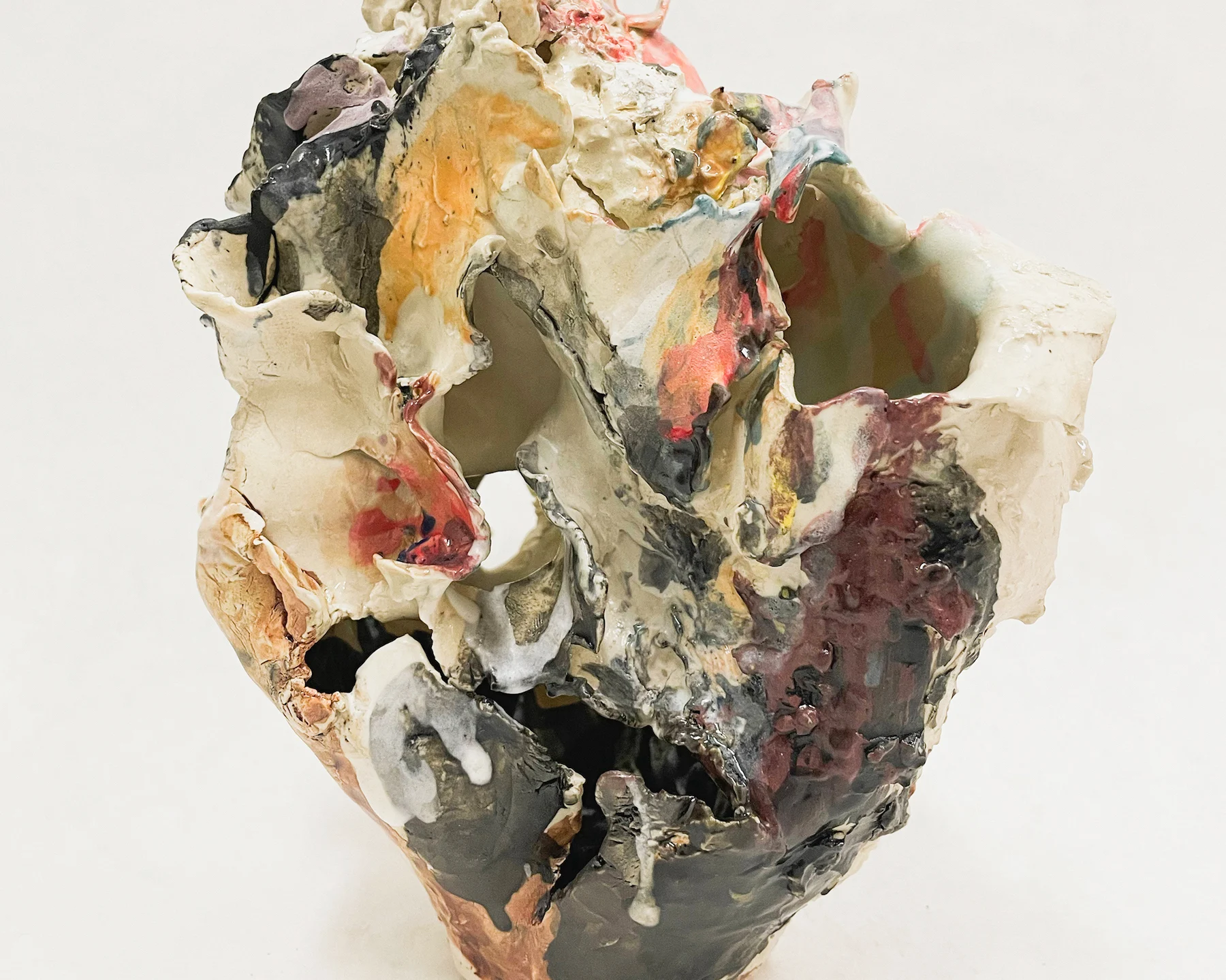
    The common thread in my work is to translate sex worker experiences, aiming to help destigmatize our field and create space for our community to exist. My practice is kind of split up: there’s two islands and one of them is my personal practice that includes ceramics, performance, painting and writing, the other one is the organizing I do for our community where I position myself as a facilitator. 
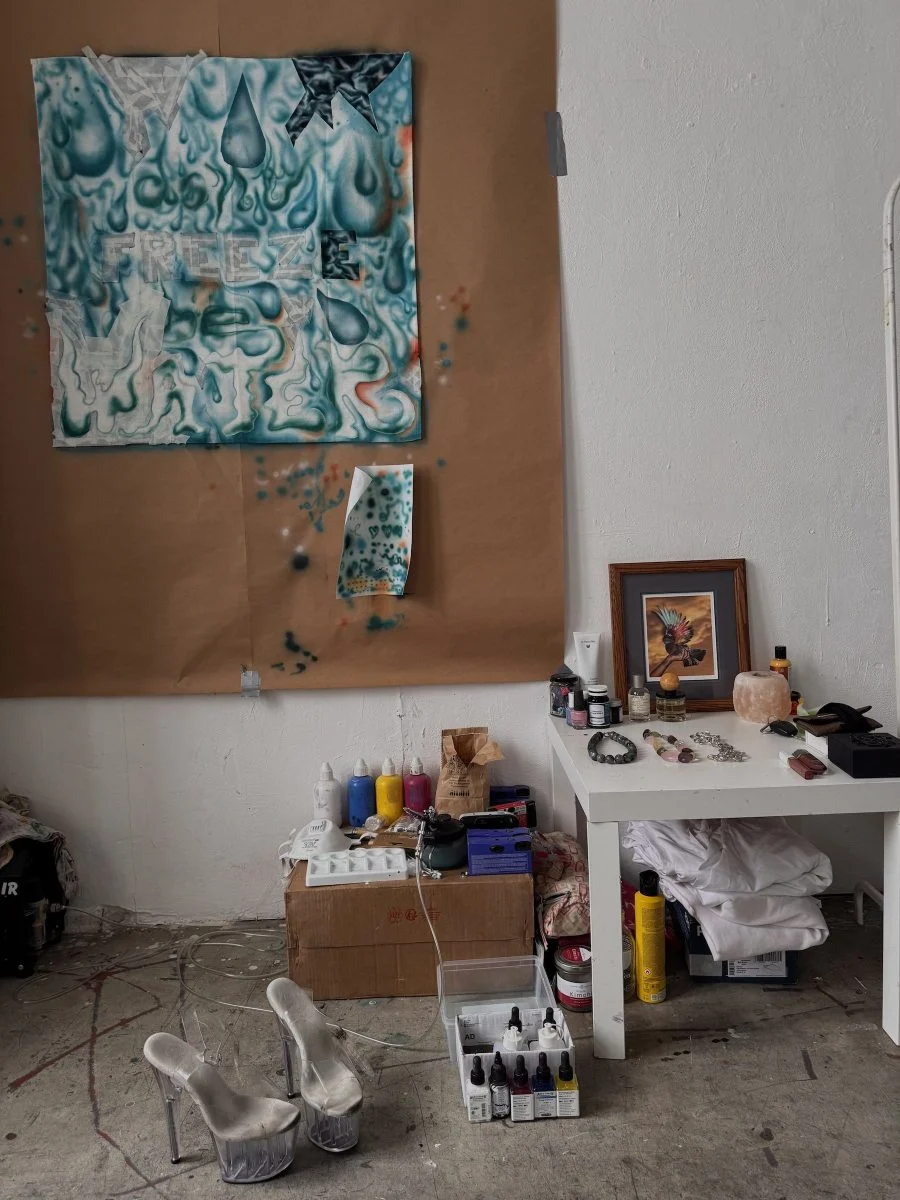
    Me and the people I work with do gatherings for sex workers in which we try to create a space for softness. I did quite some hands-on activism on the streets, here I experienced and saw people dealing with exhaustion and burnout, and felt the need to create spaces in which we can be soft and can whisper and still be heard. Often, sex workers have to scream in order to be heard, or are not heard at all. We have been organizing the Pleasure Providers Pillow Talks which is a gathering in a bookstore where sex workers are invited to share stories in their own way. Next to that we have been doing collective writing and pleasure sessions as well as performance club-nights. This element of facilitating always influences the other side of my practice. 

    Since I do a lot of organizing, in combination with working in the night, and having my practice, I’m usually quite busy. When I came to GlogauAIR, I was really excited to dive deeper into my more personal practice and find a temporary space of focus. 
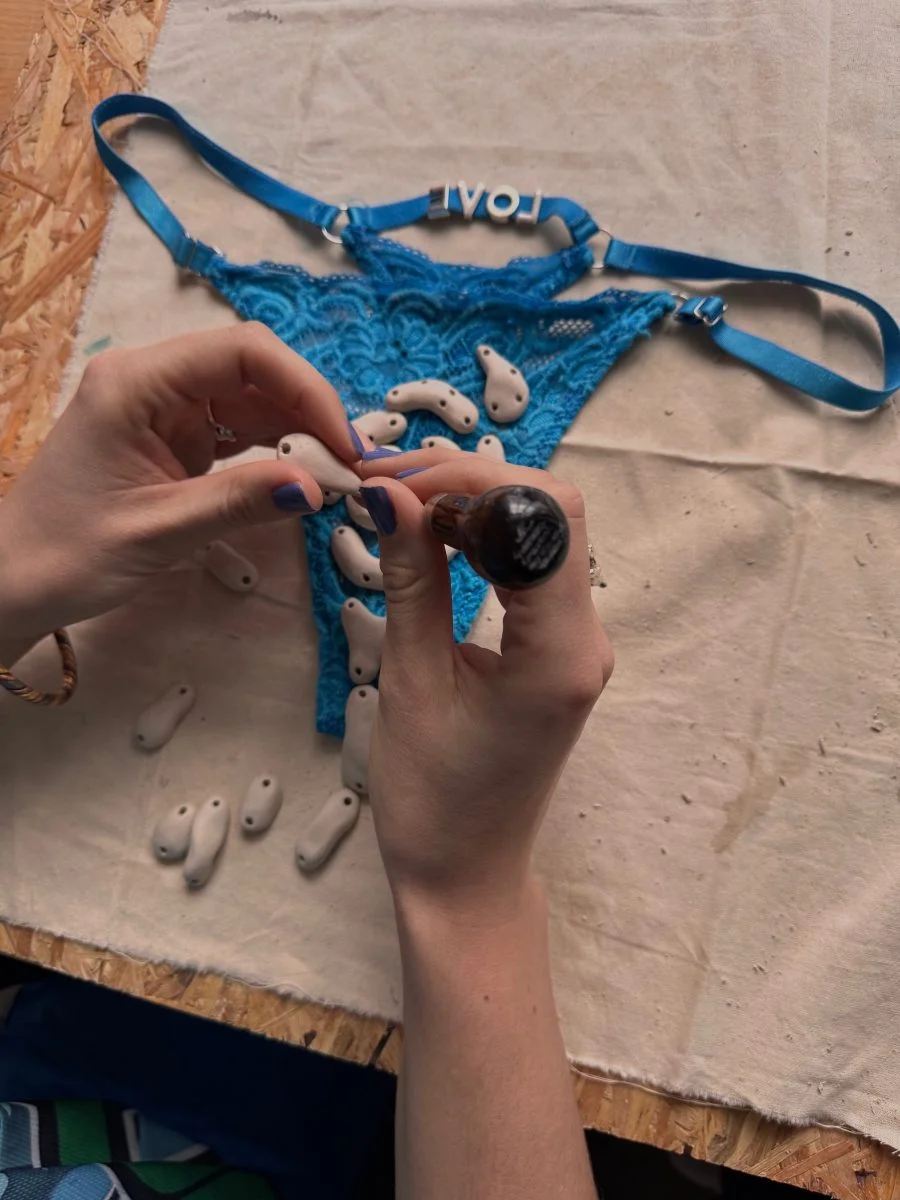
    I came here with the idea to make a work about body fluids and its relationship to release. I want to create a space in which I can honor the grief and sadness that the sex work community experiences. And also acknowledge how closely pleasure and love are connected to grief. As a community that is so stigmatized it is challenging to share feelings of grief, since they can be used as a weapon against us. There’s a lot of hate, there’s a lot of stigma, there’s a lot of discrimination. Therefore, we often have to have a very straight spine and only show our strong side, which makes it hard to show more of this vulnerable side. 

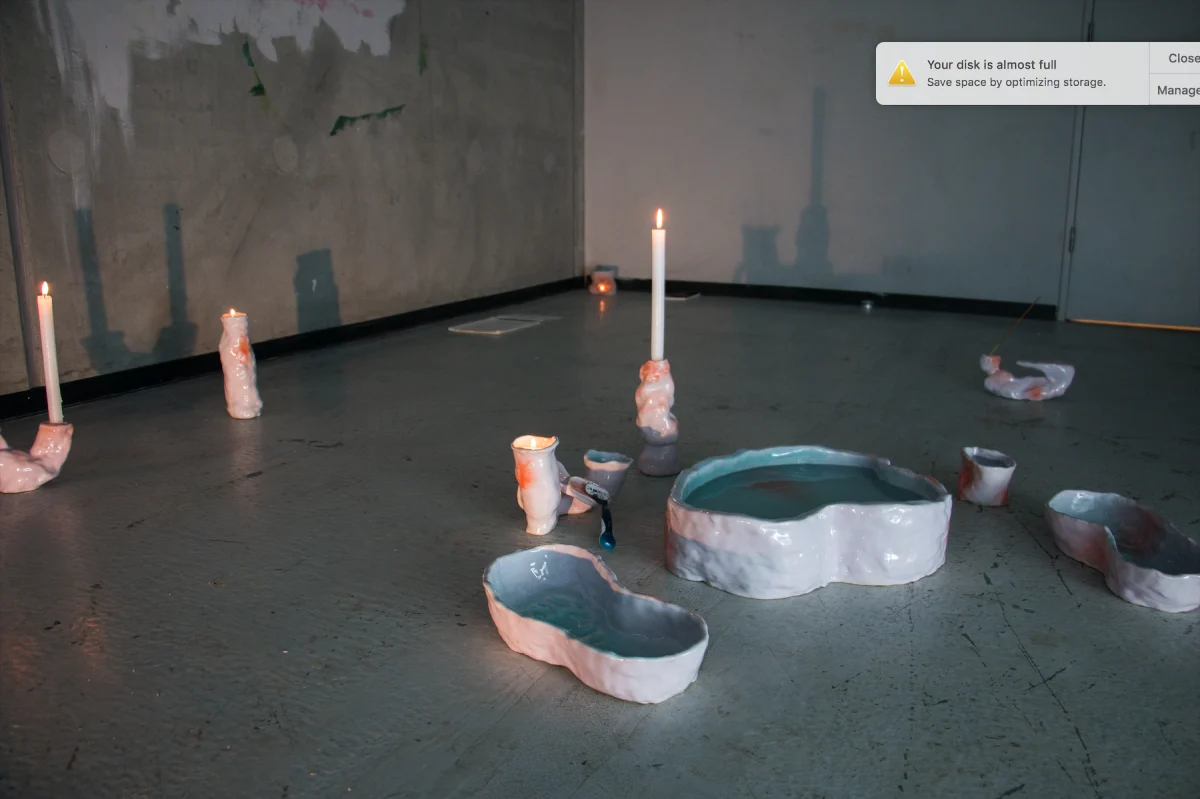
    I wanted to create a work in which I can honor that vulnerable side, because next to joy and strength, there is also sadness and grief within our community. My intent will be to work with ceramics and make a wearable piece as well as to work with sound and eventually make a performance with that. 


    Your current work deals with bodily processes that are very intimate. What do you think changes when these moments become visible through art, and how do you want viewers to sit with that discomfort or intimacy? 

    Indeed, bodily fluids, release, and sadness are all very intimate but also very much universal experiences that everyone can relate to in their own way. As a sex worker, intimacy is something that we interact with a lot, we are able to do this with complete strangers or

    clients that come back and become familiar, this makes us experts at holding space for this intimacy. 

    I think from there came the desire to give a little bit of that to those who don’t know our world, because our reality is very hidden and mysterious because of the stigma, but also because this hidden intimacy is something that I believe people can relate to. I want to grab a little bit of that and actually put it out there, my hands in an open gesture, inviting, almost offering it to an audience. I don’t think it’s up to me to decide how an audience sits with that or feels about that, all I can do is be aware of what I offer. 

    It’s not my goal to trigger. It would be more so an invitation- and maybe, by showing my own vulnerability or putting myself in a very vulnerable place- to invite others to also have a moment of vulnerability with each other after looking at this piece. And hopefully we can create some space to share this intimacy and grief, but also pleasure which can be so close or together with the sadness. 

    Experiences of grief are very personal and beautiful and I understand how we protect this space, simultaneously there is also a beauty in sharing these experiences because it is such a collective experience as well. I hope to invite people to see a little part of our community that’s so hidden. And more importantly, for our community to see themselves, to go back to a place of release and feel it in togetherness. 

    The most beautiful thing with my practice is to perform for my own community; they can feel it the clearest because it comes from our lived experience. At the same time I attempt to create a bridge between my community and allies, and after that civilians, who could potentially become allies after understanding us better. 
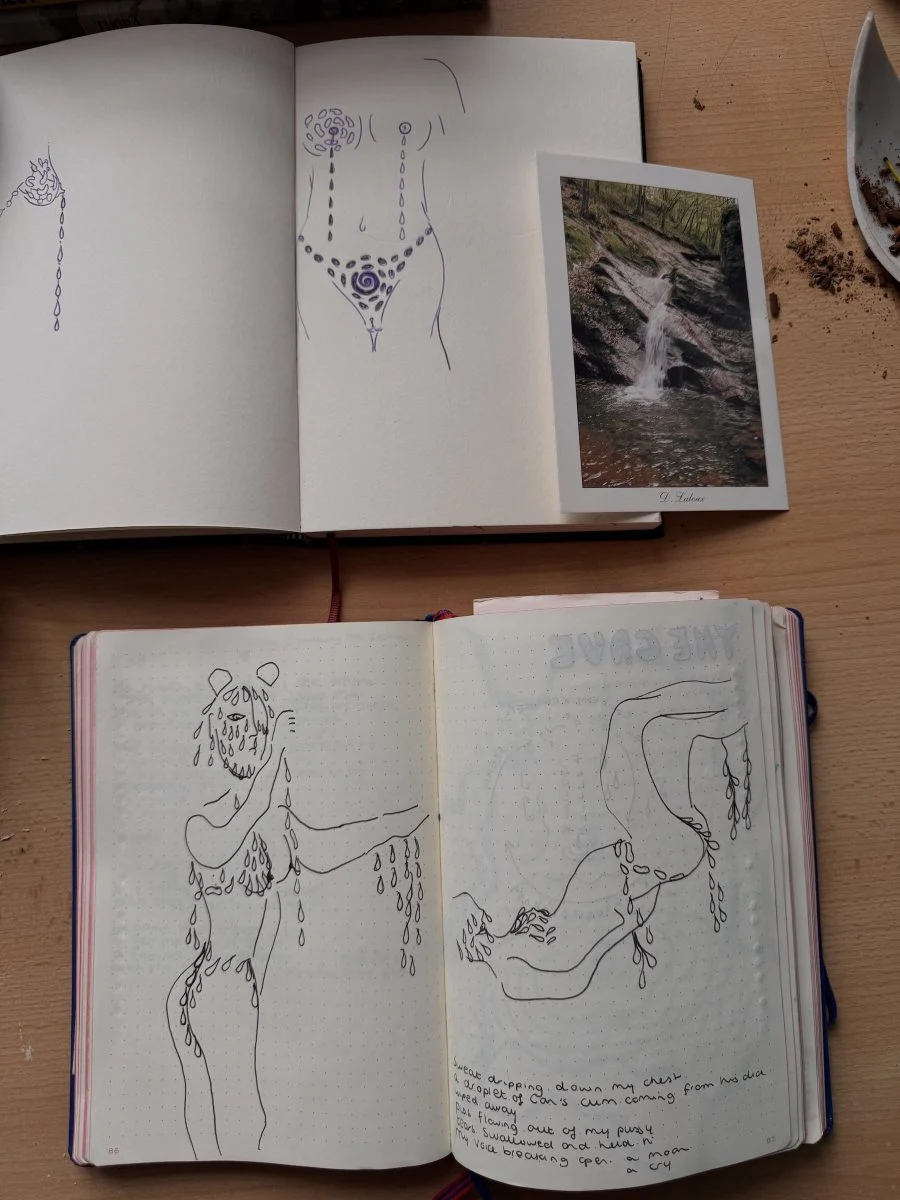
     

    You describe yourself as a chameleon and being able to change between alter-egos. What does each persona make possible that a singular identity would not? 

    I live in very different worlds, coming from a tiny small village, a real farmer environment, to then living in different places and bigger cities, being part of the art community, finding my ways into more anarchist spaces and activism, being part of the nightlife industry that can be sometimes glamorous, and sometimes a horribly exhausting kind of space. One day dancing to 220 BPM Dutch farmer gabber in a big crowd and the other day having a critical conversation on queer feminism in a bookstore. 

    I need the different alter egos to move through all these spaces and to be able to connect with different people in different ways. I see them as sort of layers or masks. That’s why I use masks, drag make-up, and ceramics as a kind of armor around my body and face. Playing with anonymity, or choosing which layer of a persona I want to show is something I am always thinking of. 

    I view our identity as layers that sometimes are transparently layered on top of each other, its variety visible. Other times, I decide to put some layers away and hide them under a

    more opaque mask that only shows one version of a certain alter ego or version of myself. Depending on the context and who will be watching. 

    Earlier in my career as a whore, I had to fully hide, nobody knew I was doing it. Still today I have to hide in moments, I found my way to be more out there but it is still hard to deal with stigma and its effects. Many sex workers have to hide what they do because they might lose their other job, because they are mothers and fear having their children taken away from them. Maybe they’re in a family that wouldn’t accept it, or even because laws can make your landlord pass as a so-called pimp, which is not the case at all. 

    Hiding can be painful and come from a place of survival. At the same time there can be a certain power, or joy from being able to isolate a part of yourself, live that version of you and then put that mask back in its box until it can come out again. The idea of hiding in order to reveal is something I think of a lot in my practice. 
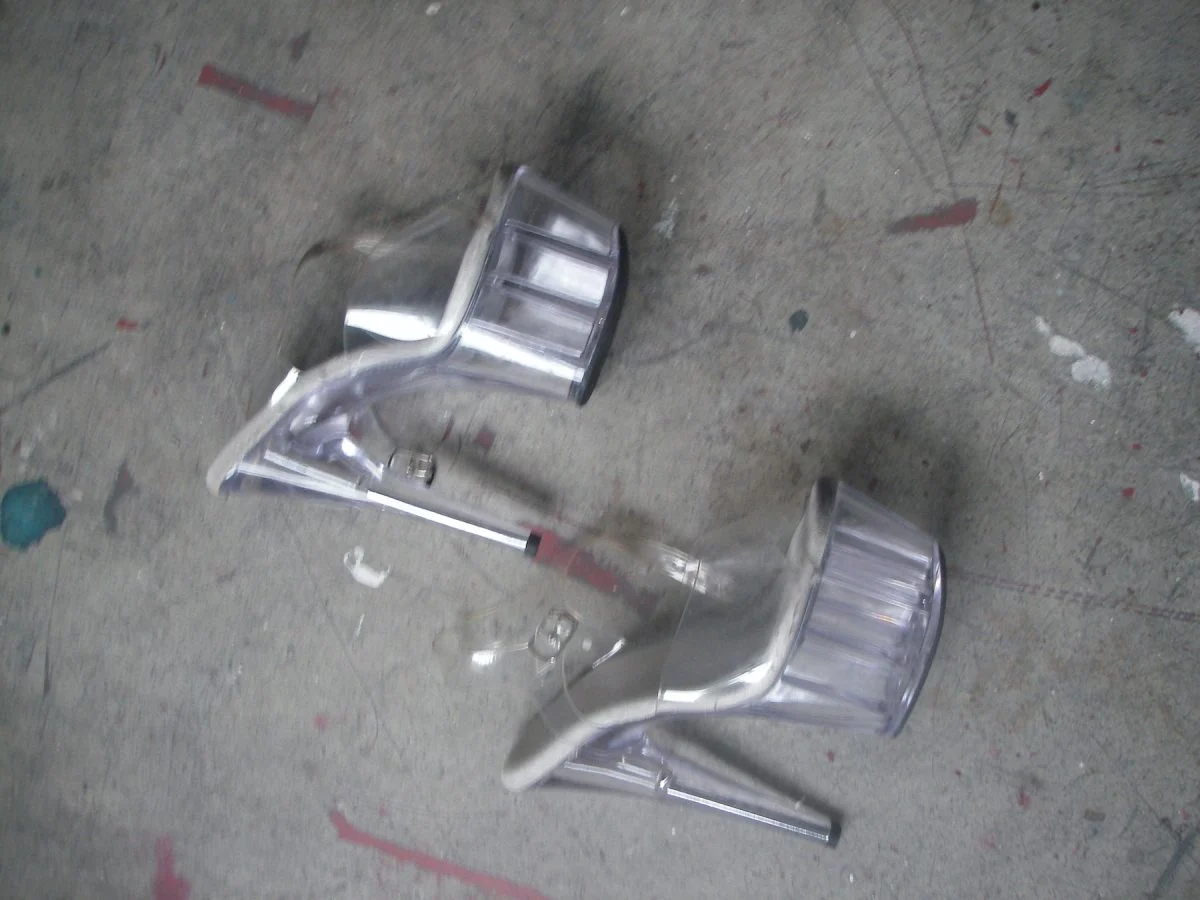
     

    How do you decide which medium (ceramic, painting, performance) best suits a particular idea or feeling you want to express? 

    I think this goes quite intuitively. Sometimes I wish I was this artist that would just fully focus on one thing, but I’m definitely not like that. I always switch between different media. Sometimes when I’m writing, I think about the ceramics. And then when I’m doing the ceramics, I think about the music of the performance. And then when I’m dancing, I think about colors or the painting again. 

    They are like organisms that inform each other. When I discovered ceramics, this material became quite special to me because it taught me so much about slowness in a time where I really needed this. It feels very meaningful to spend time with the clay, I feel like it can hold memories and be a way to process experiences. 

    Painting feels more like a diary or like a direct translation from my brain on the paper. And then the performance, I think, is just the most confrontational, but also the best way of connecting with an audience. I find it the most powerful tool to load the space with a certain ambience that some people in the audience might take with them when leaving.

    Interview Reese Saddler (@reeseesaddler)

    Photos Ksenia Proskuryakova (@ksenyapro)

    • Statement
    • GlogauAIR Project
    • CV
    • Gallery
    • More

    Statement

    Kami Million is a chameleon who cycles between different alter-ego’s depending on each context—the mystical pigeon, the farmer dyke, the super-femme stripper, the caring facilitator. Kami hides in order to reveal. They use performance, community gatherings, ceramics, paintings and writing as tools to communicate and feel through, working to destigmatise and decriminalise sex work and deconstruct power relations. They organise talks, dinners, collective writing sessions, film screenings and club nights where sex workers and their allies are invited to gather, to generate more care and visibility for the community of Whores. Their work is both affective and direct, with gestures of care, embracing the contradictions that come with living multiple lives.

    GlogauAIR Project

    Fluids are an expression of release after tension. I wonder, how is the always moving cycle of fluids coming in and out of the body translating what we feel? A wet and dripping creature, going through the waves of pleasure and pain, excitement and struggle. As a sex worker and artist I have been fascinated by fluidity related to identity and fluids related to the body, these will be the motive during the residency. I want to explore the flow between states of crying, coming, peeing, drooling, sweating, spitting.

    CV

    Education

    • 2022 – 2024 Dirty Art Department MA, Sandberg Institute (Amsterdam, The Netherlands)
    • 2021 – 2022 Non Linear Narrative MA, KABK (The Hague, The Netherlands)
    • 2014 – 2018 Graphic Design BA, ArtEZ Institute of the Arts (Arnhem, The Netherlands)

    Residencies

    • 2024 Heartshaped heads with Dirty Art Department (Montemor O Velho, Portugal)
    • 2023 The Palace Residency (Gorzanov, Poland)

    Selection of group exhibitions and performances

    • 2025 – 05 Sexhibition, LocHal (Tilburg, The Netherlands)
    • 2025 – 04 Dirty Artists Take It Rough, Het Veemtheater (Amsterdam, The Netherlands)
    • 2025 – 03 Situation 1, Gallery Gallery (Naarm/Melbourne, Australia)
    • 2024 – 09 Arty Party, De Melkweg (Amsterdam, The Netherlands)
    • 2024 – 06 DAMPY, Door Open Space (Amsterdam, The Netherlands)
    • 2023 – 05 SNAP and BXLF, Beursschouwburg (Brussels, Belgium)
    • 2023 – 05 DirtyWorld, Sexyland (Amsterdam, The Netherlands)
    • 2022 – 06 Everybody Else, Tac United, United Cowboys (Eindhoven, The Netherlands)
    • 2020 – 09 Jujulove + Telemagic present: The 1€ Cinema, Roodkapje (Rotterdam, The Netherlands)

    Publications

    • 2024 HSSY Magazine (Contributor to Hussy Magazine)
    • 2023 Red Insight, Pleasure Providers Pillow Talks by Gia G. [https://redinsight.org/articles/pleasure-providers-pillow-talk?lang=nl] (Publication feature identifying Gia G. as queer sex worker, sexual educator, pleasure activist, and creator of FLINTA* Pleasure Nights)
    • Hosted “Pleasure Providers Pillow Talk” with Gia G. at San Serriffe in Amsterdam
    • 2022 “How Would You Like To Get Lampooned, My Lord?”
    • 2018 The Matter of Things

    More

    We do not have any further information at this time.
  • Bryn McConnell

    Bryn McConnell

    Artist main image

    Bryn McConnell is GlogauAIR resident from October 2025 to March 2026. Q4

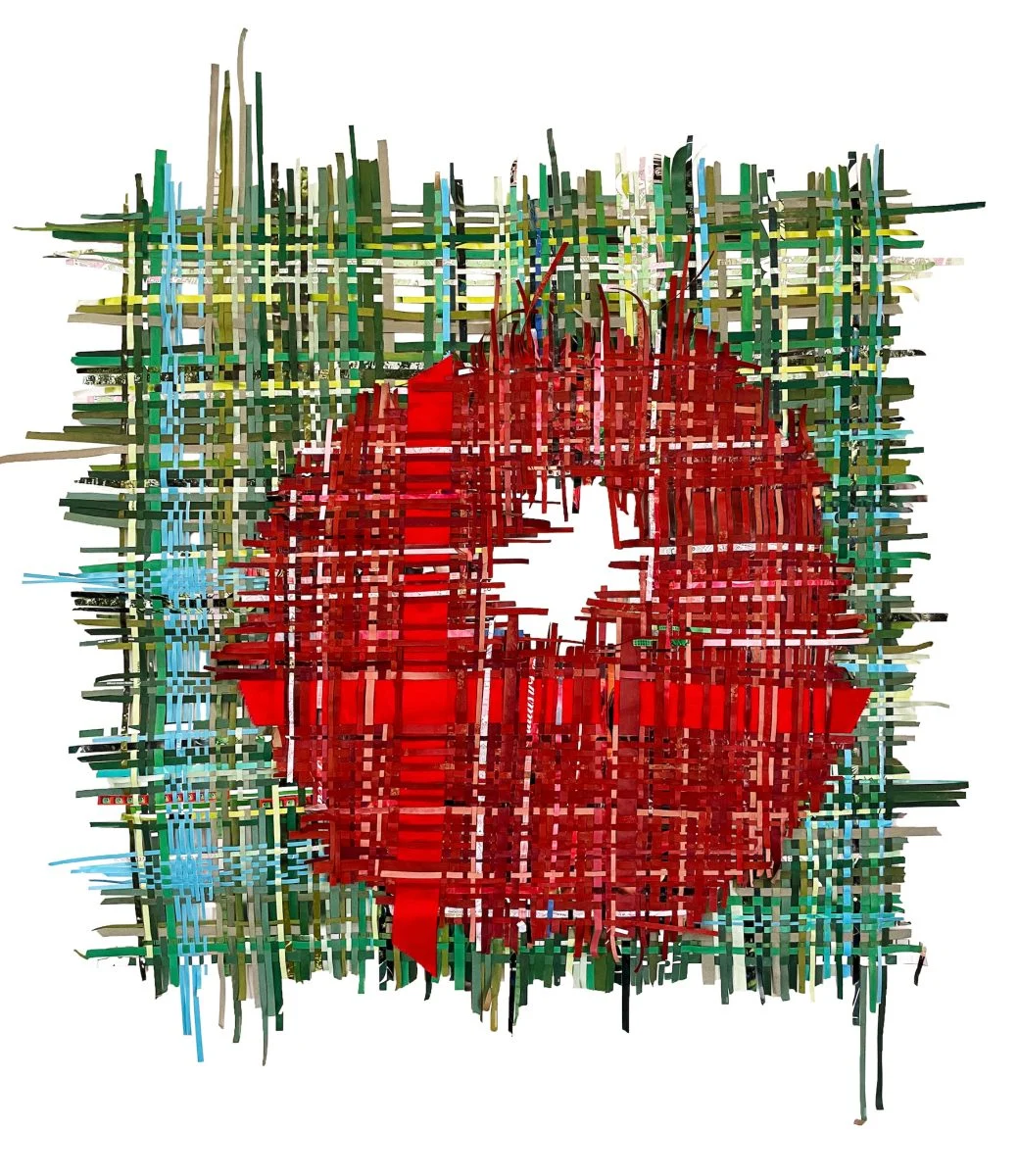
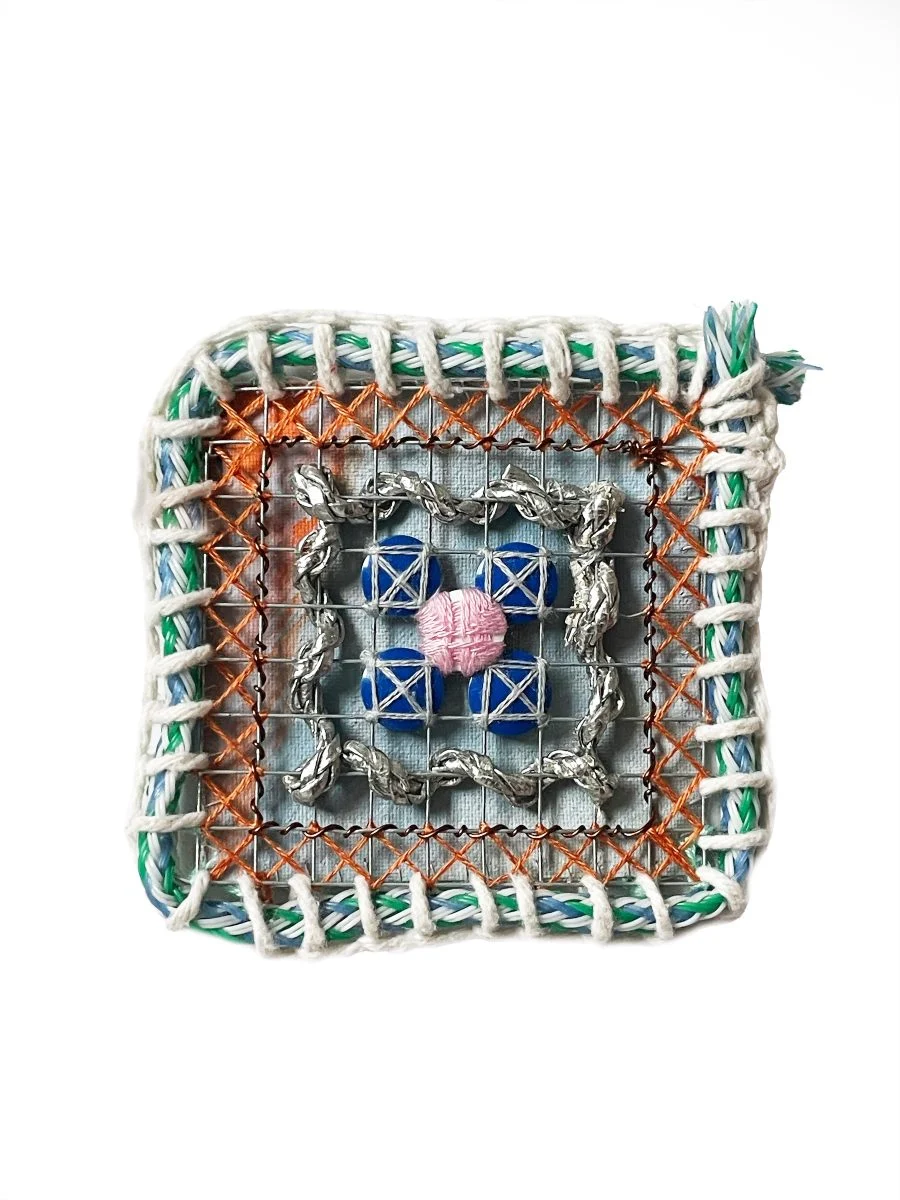
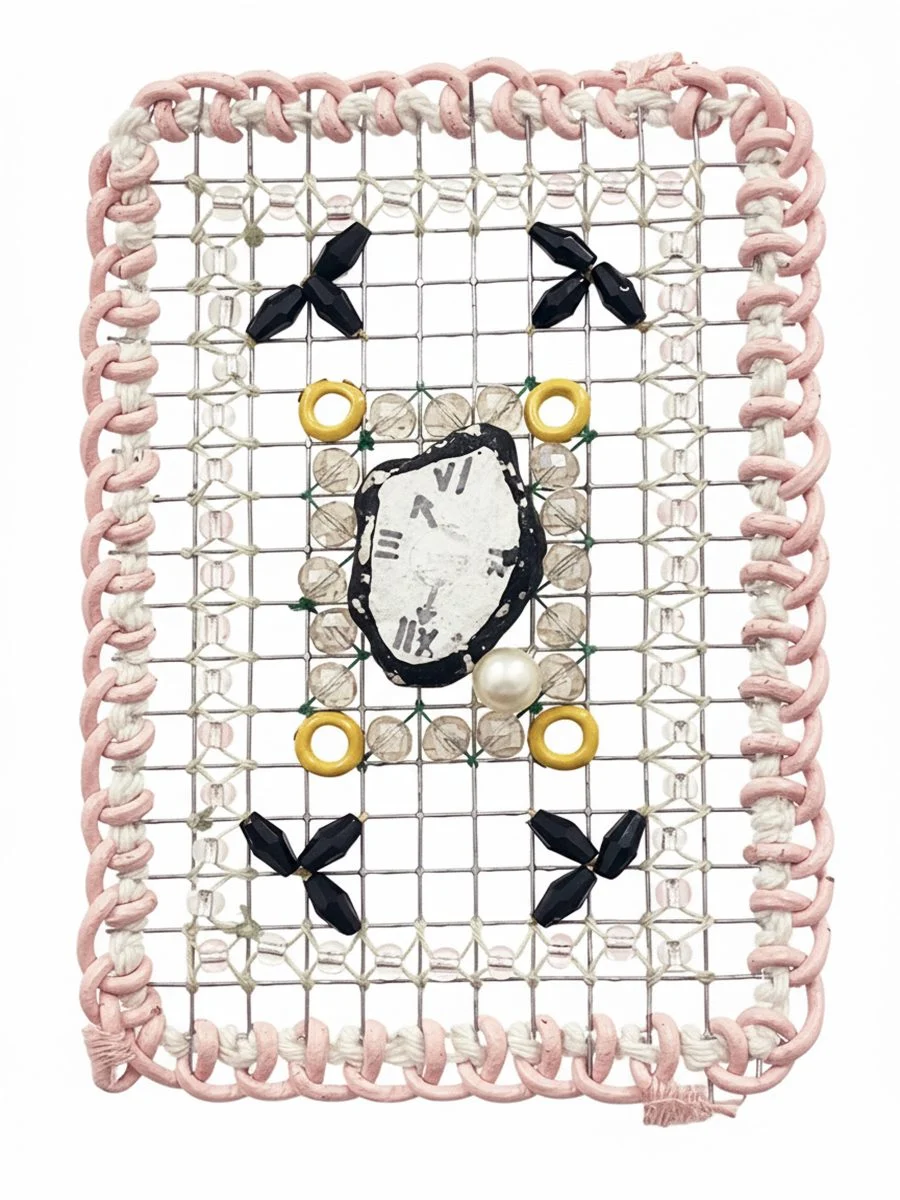
    Bryn McConnell is a visual artist working across mixed-media collage, textiles, and abstract painting, often incorporating and transforming found objects. With a keen eye for pattern recognition and material composition, Bryn constructs visually layered artwork that weaves relationships between seemingly disparate elements.

    With a degree in Architecture and Art at Tulane University, Bryn began her career in New Orleans before relocating to Berlin in 2025 to expand her practice through a broader international context and deepen her exploration of art as a vehicle of connection.

    Meet the Artist

    Can you tell me a bit about yourself and what you’re working on during your residency here?

    I’m from the United States, and I studied architecture before deciding I wanted to go into the arts as a career. I decided I just couldn’t sit at a desk in front of a computer all day long, and I had to do something with my hands. I delved into an artistic practice that then led me to want to move to Berlin. I arrived here in June, and my intention is to stay for several years. The work that I’ve been doing here at GlogauAIR is about this journey and what it means to move to a new country. This process of getting to know a new city, especially a foreign city, and also the personal journey that goes along with that.

    One of the guiding themes for my work is about respectfully integrating. Not to impose yourself onto a new place, but I think Berlin is very receptive to foreigners. It’s almost more normal to not be from here. Although having lived in New Orleans, it was not necessarily the same there. In some ways, New Orleans is more sensitive to this because of Hurricane Katrina. When the entire city was displaced, many of the locals could not return and it left this massive void. People died. It was a tremendous tragedy and the city gentrified even quicker than other places.

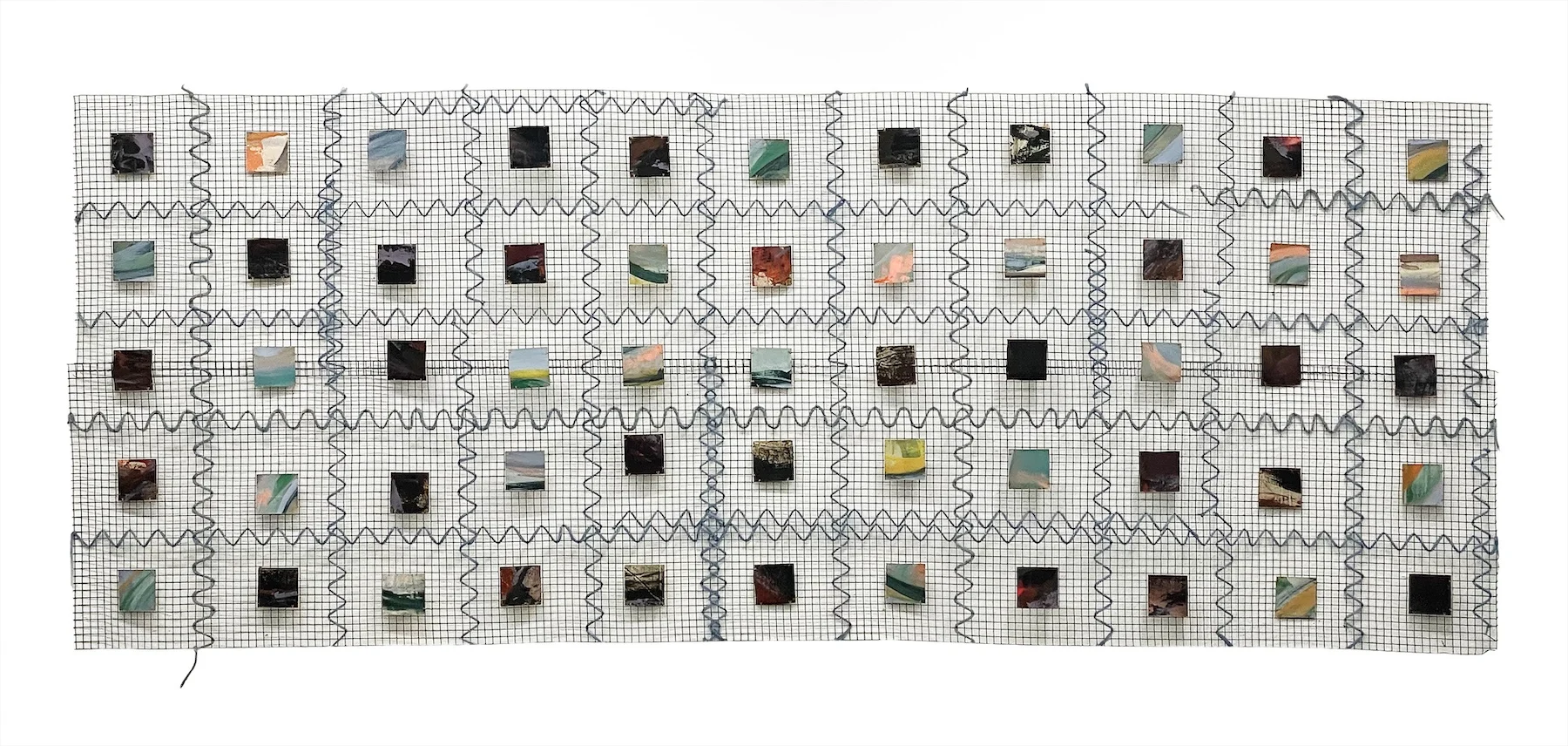
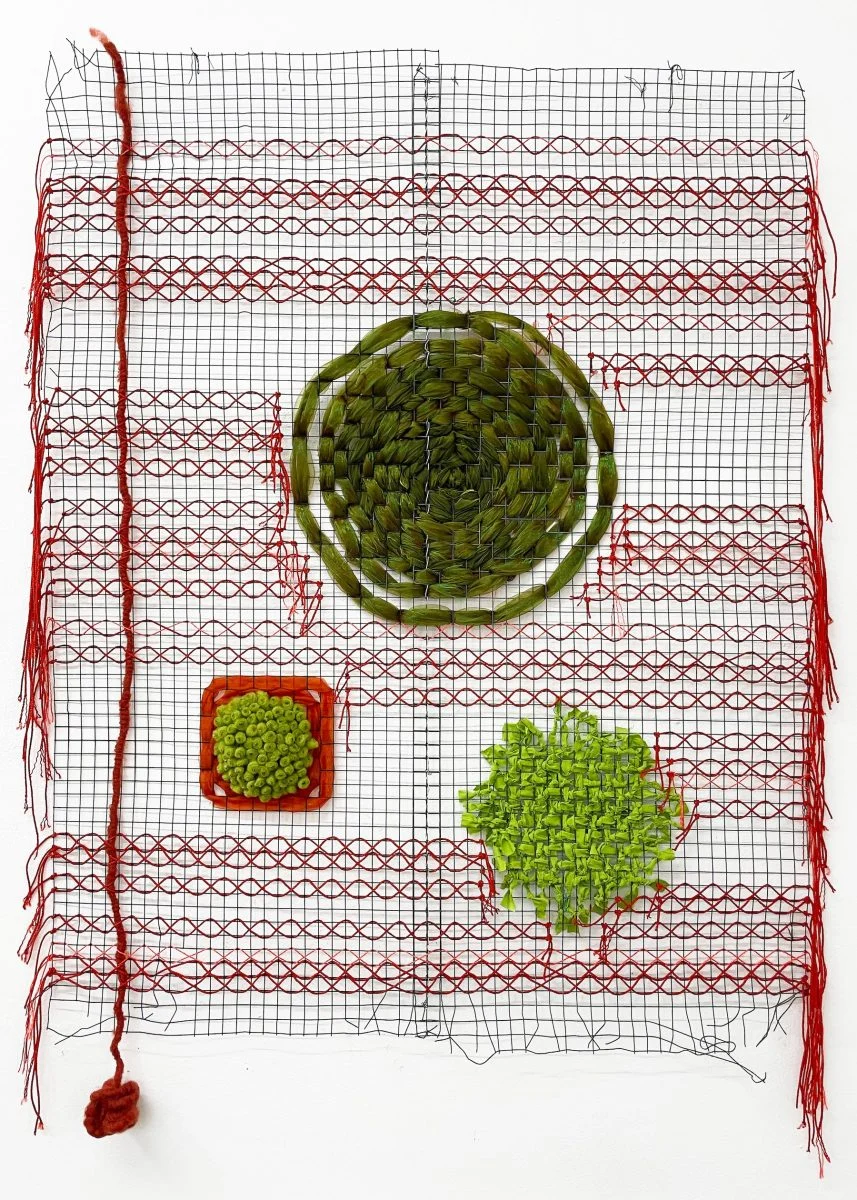
    Being a Tulane student, you’re at a wealthy, primarily white college in a primarily Black city. That’s why with my piece, titled Kottbusser Damm, I am making a point about understanding the ground you’re walking on. Of course, Berlin is a city of opportunity, but it’s not a blank canvas. It’s not here for you to impose on, but for you to align with. Mesh, weave into it.


    I’d love to learn more about your weaving process. You talked before about how your process is mathematical and formulaic. I wonder, is that related to your architecture studies?

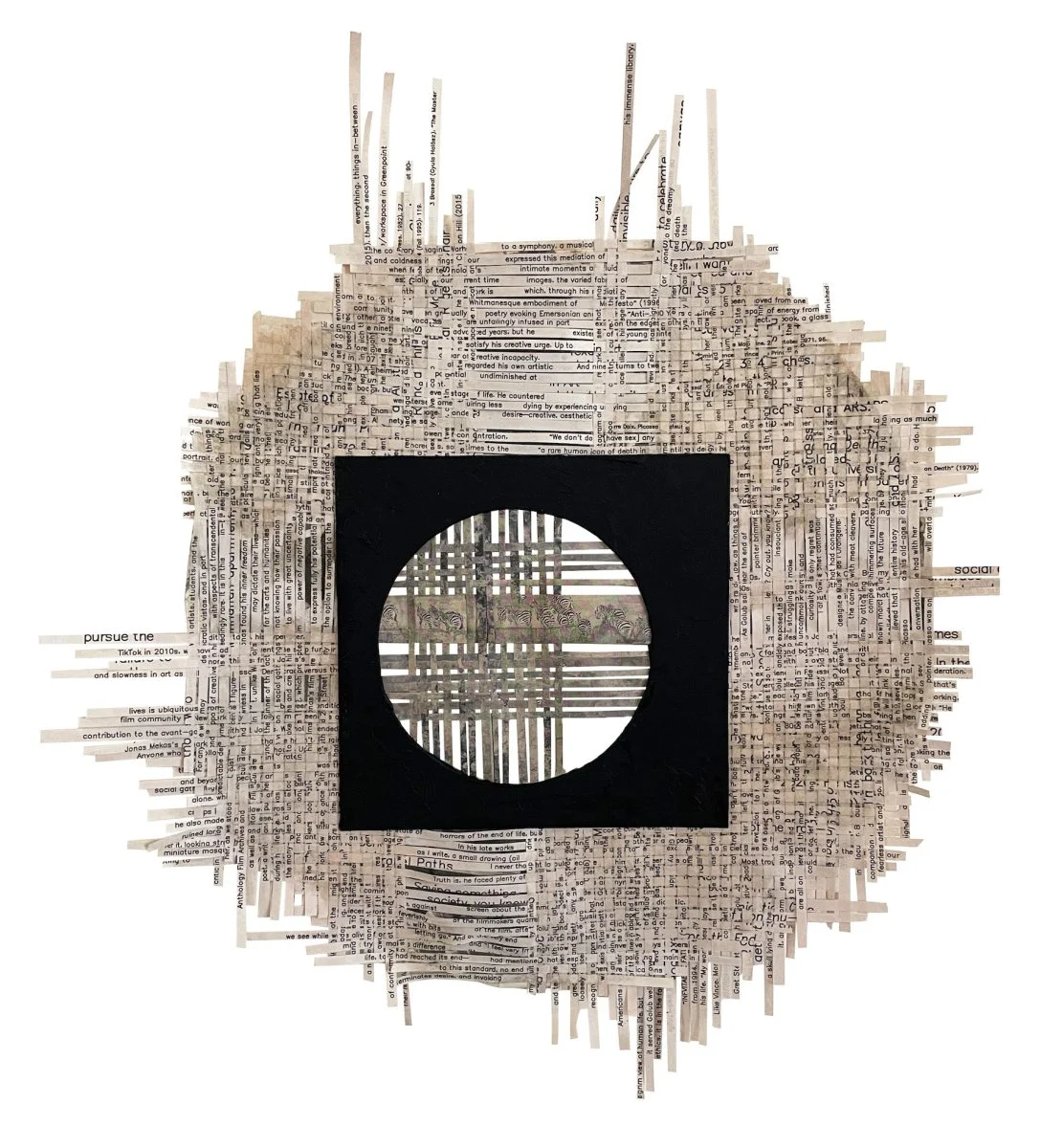
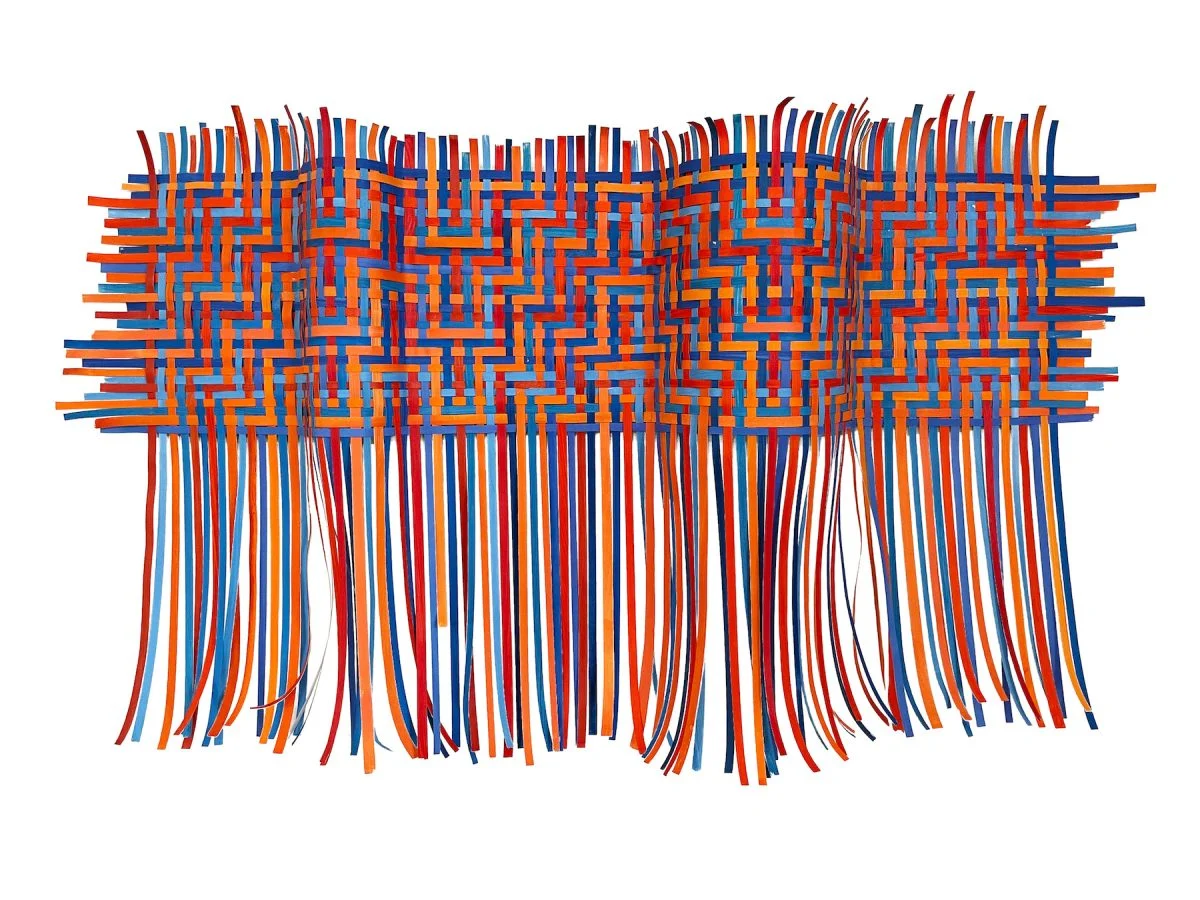
    I think it’s intertwined. I was a math kid. I was good at math class, but not English class. Architecture is about geometry, but it is also creative. My work started with weaving paper.  I would strip paper with an X-Acto blade and weave it into a grid structure. I just enjoy the precision. Before going to college, I was a ballerina. I thought that was going to be my life journey before deciding a degree would be a better idea. It’s really about this perfectionism and precision, and that there’s a correct answer.

    If the grid is wrong, then you see it. It’s not that what’s wrong is good or bad, but it just is…you know if it’s in line or not.


    Are you coming up with the patterns?

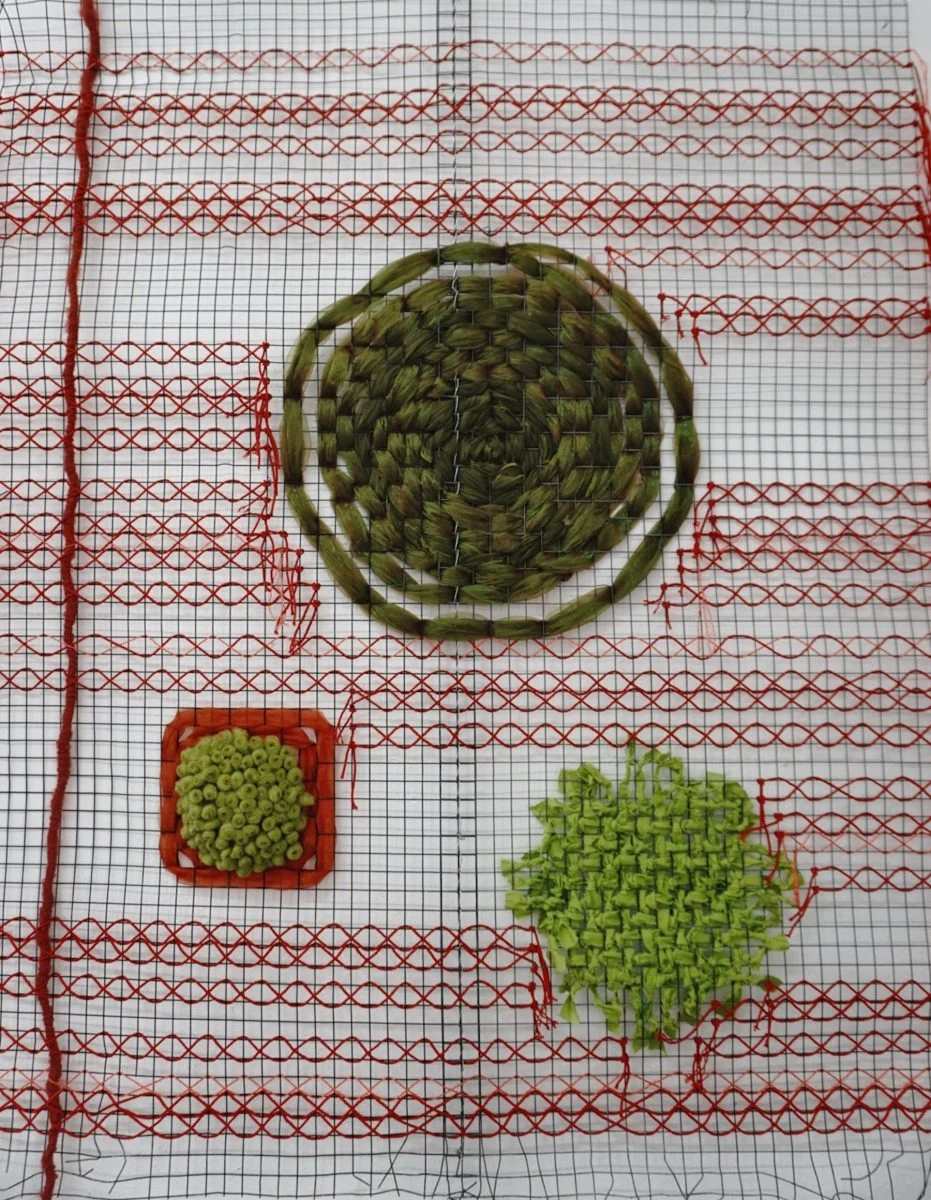
    The patterns are intuitive, but I always have a set of parameters or rules that start a project. Whether it’s a specific story or if I’m doing a map of something. A lot of the first pieces I did in Berlin, I’m tracing a map or diagramming the streets. In my piece, “Breaking Bad Habits,” the red had to be in straight lines and the green had to be circles. When I added the red square to highlight one of the circles, I thought, this still needs to be a square.

    In a study piece I made with columns of thread, I coded it. I picked eight colors because I had rules for myself. I can use these colors four times and each overlaps each other once. So it’s like setting your constraints before exploring. It’s something I learned in architecture school as well.

    Before you design a building, there’s a lengthy research process. What’s the land typography? What buildings exist around here? What are your building codes? How high can you build? You’re lining up all of your parameters before you start designing and working within a framework.


    I’m interested in your emotional backstory to these weavings. What sparked this journey for you?

    With the first works that I did, I was very much analyzing the streets. I started from looking down, analyzing the ground, to then analyzing myself and making a piece that was very internal. Then with my most recent work, I feel like I’m looking up. It’s about gaining confidence and familiarity with Berlin. I know what I’m doing, I know where I want to go.

    I guess it’s very analytical and diagrammatic in that way. It’s like calibrating your emotions. Kind of making a logical sense to the process of being here. But also, I didn’t plan this. I always need to finish the piece, before I ask, okay, what was this about? The idea started with colors or a pattern that I like. I want to replicate this pattern. Then once I’ve finished that, I can see it on the wall, and I think about it for a second, and realise, this is what I was thinking about while I was making this.


    Your art is heavily influenced by place. How has your work shifted visually and aesthetically, moving from New Orleans to Berlin?

    I like to recycle things. Just based on what’s available is different. I used to have a shop I could go to in New Orleans that salvaged building material for one dollar a piece. Or buckets and buckets of bottle caps. You could just pick them up and weigh it out and buy them. It’s different in Berlin just by what’s available. It’s what comes to you. The first piece of mesh that came to me I thought , this is interesting. Let me try working with that. I think the city lends you its tools.

    With color, certainly, New Orleans is completely different. It’s tropical. Berlin has its gray-black aesthetic. I’m not so concerned about what people are going to think, but it’s what’s available. With the work I did with paper. It was all recycled paper. I was working with these bright colors, like pinks and neons. I just think people appreciate that sort of thing more in New Orleans.


    Interview Shay Rutkowski (@sruutrut)

    Photos Yasemin Erguvan (@yaseminerguvan)

    • Statement
    • GlogauAIR Project
    • CV
    • Gallery
    • More

    Statement

    Bryn McConnell is a textile artist whose practice involves weaving and sewing contemporary materials into abstract collages. Her work explores patterning and storytelling with repetitive and meticulous construction methods. Bryn holds a degree in architecture from Tulane University, which informs her approach to creating art.

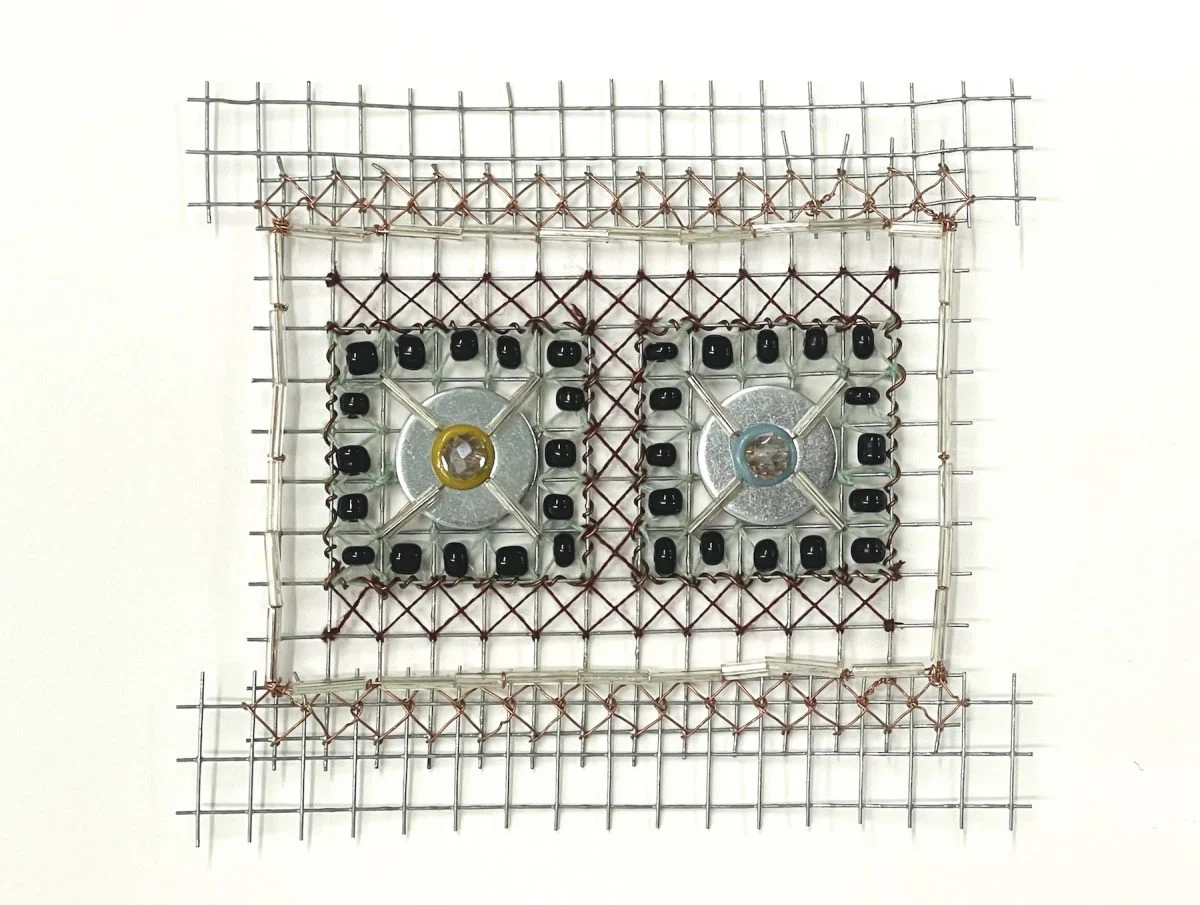
    Bryn’s weavings are built on a metal grid structure. She describes the grid both as a constraint and as a framework that allows creativity to flow. With fabric, wire, or a needle and thread, she delicately sews rhythmic and textured landscapes. Her use of unexpected and disparate materials mesh into a harmonious fabric reflecting the interconnection of all things.

    GlogauAIR Project

    My second quarter at GlogauAIR offers the opportunity to build upon the inspiration, perspective, and knowledge I gained throughout my first quarter and living in Berlin. Upon arriving, I was inspired by the historic sidewalk configurations and a desire to map my path while navigating the city. With wire, fabric, and a needle and thread, I wove depictions of my explorations and the lessons I gained from Berlin.

    I intend on continuing my practice with weaving contemporary materials with a focus on process and repetition. I will reimagine the possibilities of this material as a fabric for design formats including garments, furniture, or architectural uses. These objects will balance between fine art and functional design, similarly to traditional practices like quilting and weaving. By celebrating handcraft and transforming common place materials, I honor historically feminized crafts and fundamentally separate my work from generative and technological perfection.

    CV

    Solo Exhibitions

    • 2025 Not So Distant Memories, Suis Generis – New Orleans, LA, USA
    • 2024 Pneuma, Suis Generis – New Orleans, LA, USA

    Group Exhibitions

    • 2026 Kinetic Canopy, Chemical 14 – New Orleans, LA, USA
    • 2025 VAST: Fundraiser for Hope in Gaza and Drift Kyiv, Paolo Pinkel – Berlin, BE, DEU
    • 2024 Miniature Show, NOLA ‘Nacular Gallery – New Orleans, LA, USA
    • 2024 Apocalypse Ball, Fred Hampton Free Store – New Orleans, LA, USA
    • 2023 Undergraduate Jury Exhibition, Carol Gallery – New Orleans, LA, USA
    • 2022 Undergraduate Jury Exhibition, Carol Gallery – New Orleans, LA, USA

    Commissions

    • 2025, Dr. Gevirtz, Board of Governors Chair, Tulane Medical. Designed and printed 100+ posters to commemorate Charity Hospital.

    Private Collections

    • Wait. Crescent Care, Donated 2024

    Public Collections

    • Into the Sleepsmith’s Atelier. Bywater Museum of Unnatural History, New Orleans (known for dioramas and oddities), Donated 2025
    • Spooky at a Distance. Tulane Sculpture Garden, Acquired 2024

    Education

    • 2019 – 2024 Bachelor of Science in Architecture and Art, Tulane University

    Artistic Practice

    • Bryn McConnell’s work spans mixed-media collage, textile creations, and abstract painting, often incorporating and transforming found objects.

    More

    We do not have any further information at this time.
  • Courtenay K. McCue

    Courtenay K. McCue

    Artist main image

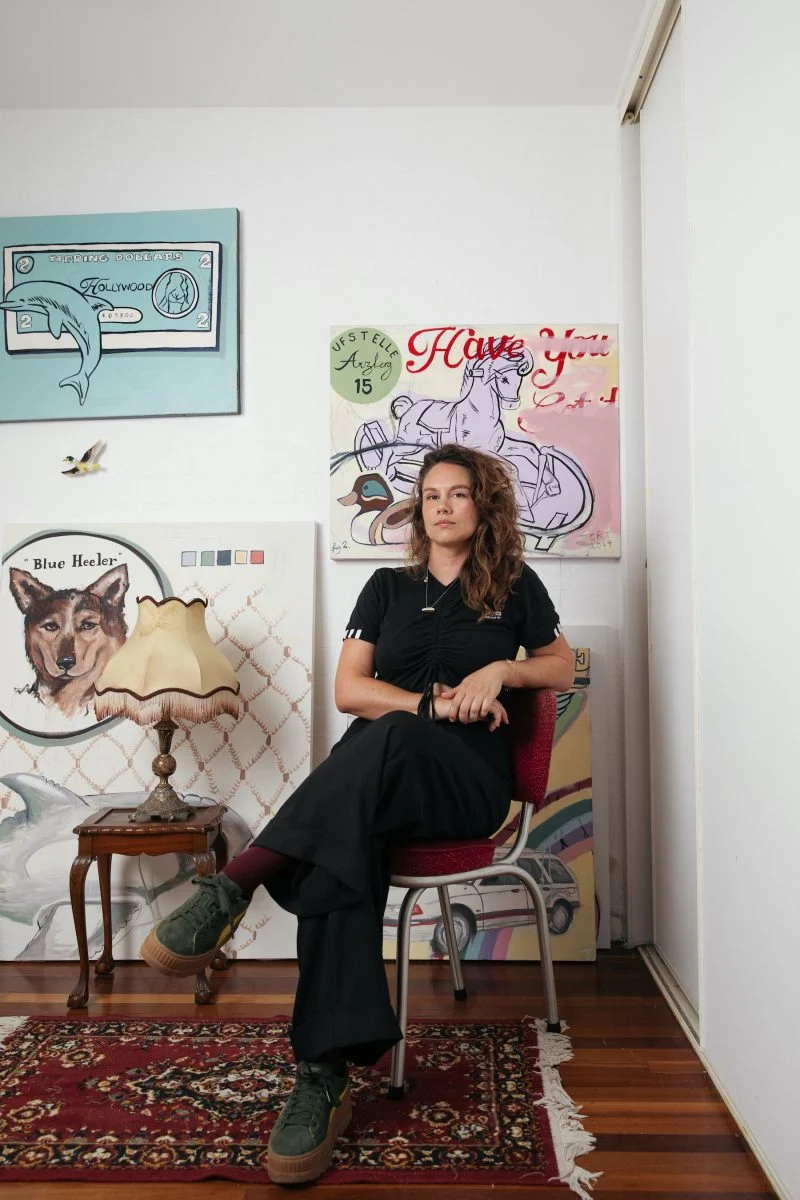
    Courtenay K. McCue is GlogauAIR resident from October 2025 to December 2025.
    Q4

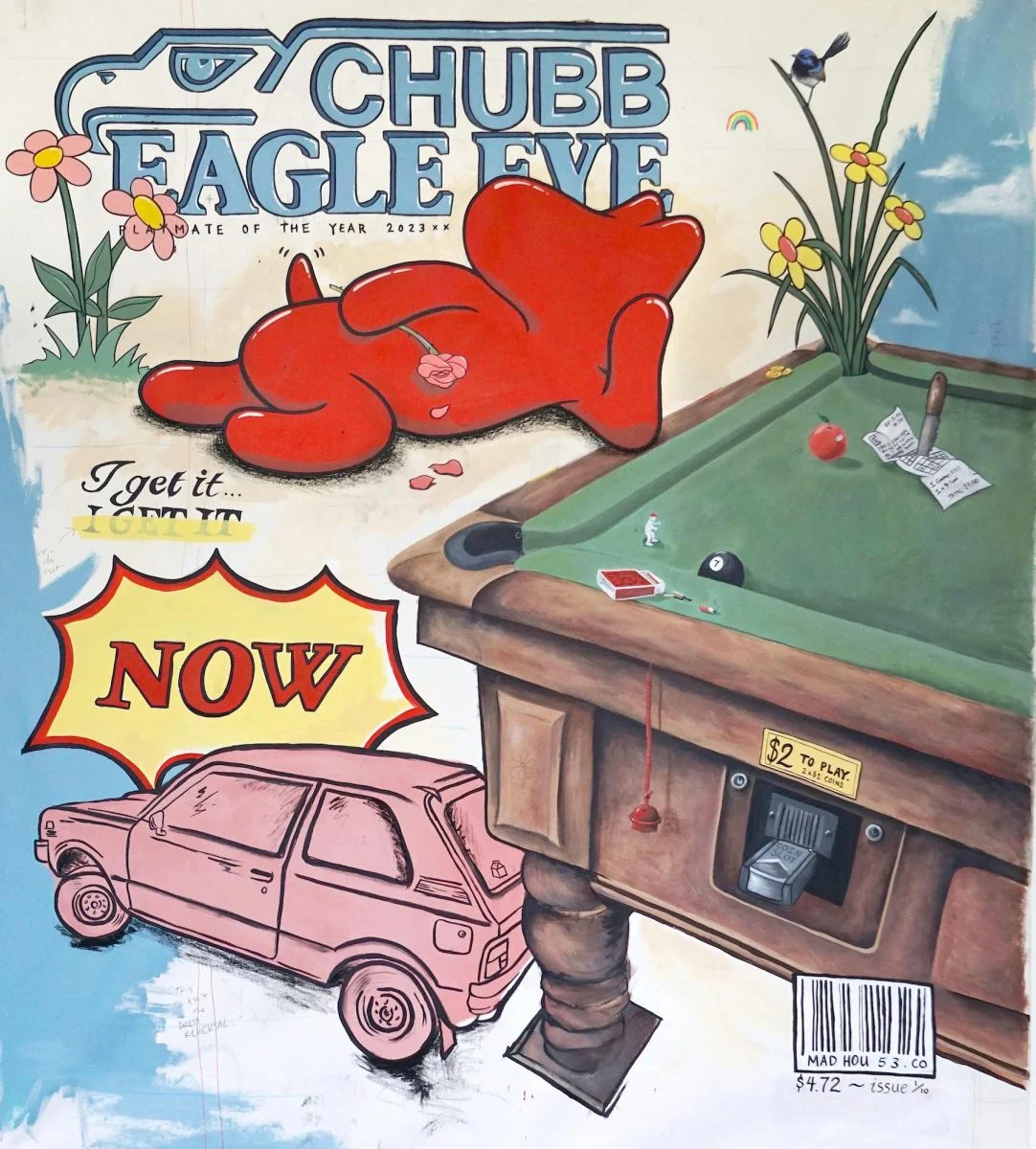
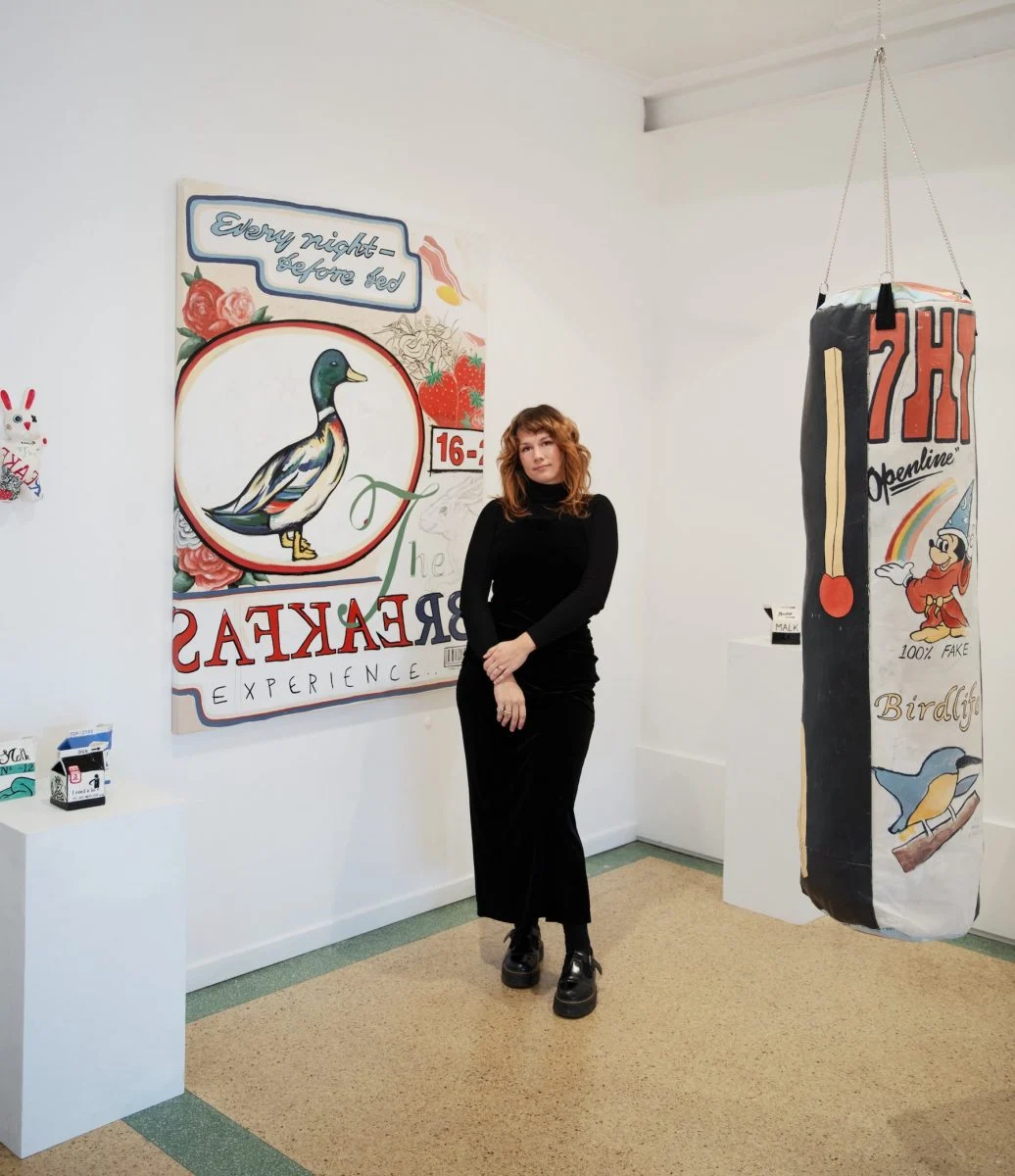
    Courtenay K. McCue blends memory, symbolism, and everyday experience into playful yet thoughtful reflections on life and identity. Working across painting, textiles, ceramics, and installation, her practice unfolds as a dreamscape scrapbook: vibrant, layered, and full of hidden meanings. Her recent projects have expanded into immersive installations, exploring social constructs and how feminine perspectives can be integrated into spaces traditionally coded as masculine.

    Meet the Artist

    Can you tell me a bit about yourself and what are you working on doing your residency here?

    I’m from the Gold Coast in Australia, so Berlin has been a completely different world for me. I came extremely open and not really knowing what to expect, and the shift from a beach lifestyle, waking up at 5AM, surfing, exercising, to this intense, urban environment really rewired me. But in the best way. I’ve found that I can actually be more myself here in which I didn’t realise I needed for myself.

    That shift has filtered into my art also. I didn’t realise how deeply the culture back home shaped me until I stepped out of it. In Berlin, I feel like I can make without second-guessing anything. My work has become darker, grungier, and more raw, not as “pretty,” but much more honest. It actually feels like a return to the style I had about eight years ago, so in a way, this residency has helped me rediscover a part of myself I’d forgotten and ready to push forward again.


    You’ve talked about the intuitiveness behind your paintings. What do you start with, the figure, the colours, or a mix of both? How do you know when a painting is finished?

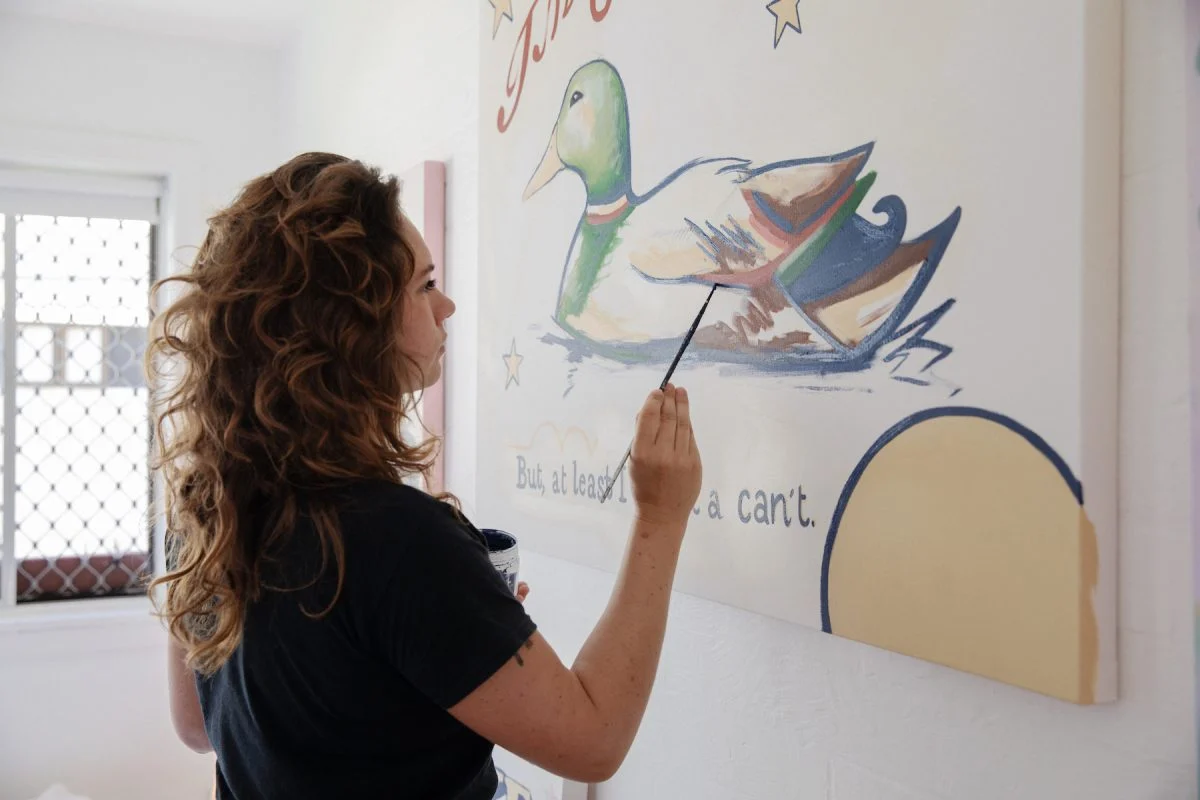
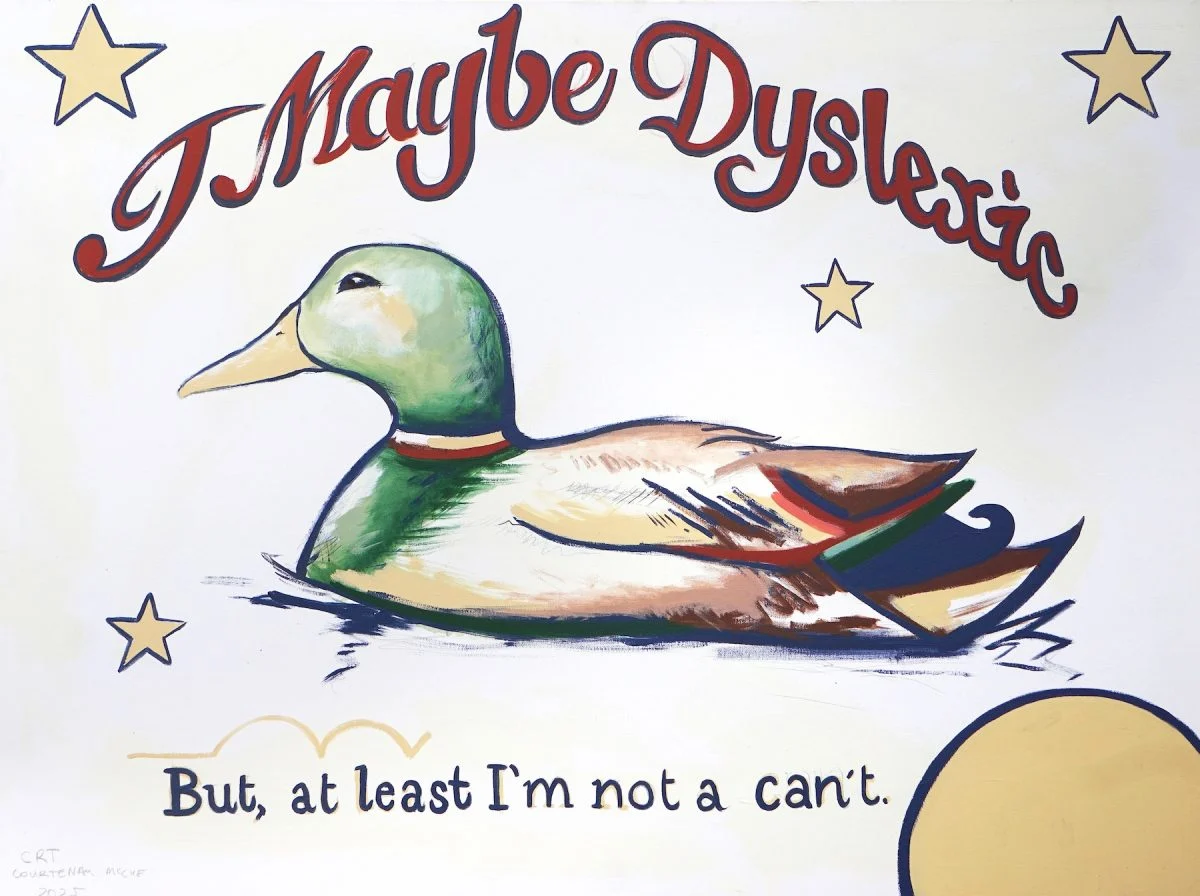
    It’s different every time, but for this painting I started with a horizontal composition and an urge to paint ducks, just to feel some kind of nature around me. Ducks and birds give me nostalgic connection and comfort. At first in this painting were three ducks by a pond and the scene felt calm, but as my mindset shifted over the weeks, I kept painting over it, responding to whatever state I was in at that moment. I usually begin somewhere knowing it’ll eventually change, because I change my mind constantly with art ideas. That fluidity, layering, erasing, reshaping, is what forms my painting style.

    As for knowing when a painting is finished, I’ve learned to hand over control to my intuition and let the work guide me. Some pieces take a year to really click, working on them on and off, because the process, the feeling, and the connection have to align. Creating this body of work in just three months felt very different, almost rushed, but I’m still genuinely happy with the outcome. It captures my time in Berlin in an honest, meaningful way.


    You’re painting female figures that play with the male gaze and fit into a conventional idea surrounding western beauty and body types. How does your symbolism contradict these traditional narratives?

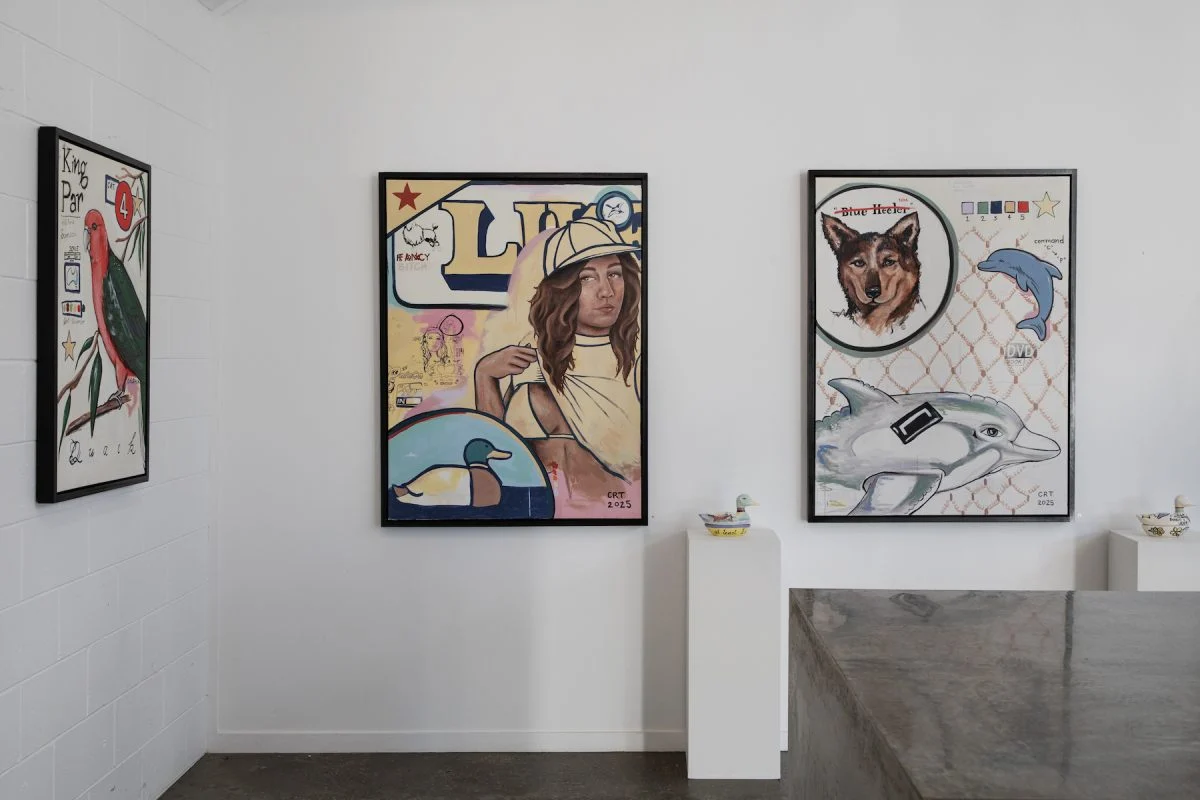
    The symbolism in my artworks play with the tension between innocence and erotica, exploring how the two can coexist and be balanced within myself. The ducks tap into a sense of purity, playfulness, and familiarity, while the more charged elements, like the women, archery and darts; bring in an almost dangerous energy. Those motifs feel to me like a circus scene, places where chance, desire, and spectacle collide. Berlin itself feels like a fun circus, at least the version of it I’ve experienced, so the colours and visual language grew from that chaos: bright, raw, overstimulating. Together, these elements create a world where innocence and erotic charge and push against each other, revealing the messy, honest in-between I’ve discovered.

    I never thought about the male gaze when creating these works, it’s entirely my own gaze, my own sexual desires, and my curiosity about who I am and who I want to be. It comes from what I find attractive, desirable, and visually compelling. I’ve always loved fashion magazines and illustration. Growing up in the 2000’s, magazines were the window into pop culture, long before social media shaped the way we see ourselves and society, so those influences naturally filter into my work. Muses such as Brigitte Bardot, Bettie Page, and Dita Von Teese have always been an inspiration within my works also. With these paintings, I made them a bit more rough and raw, so it isn’t the perfect kind of finished brush strokes, and I’m going to leave them like that. It’s my own portrait of my inner subconscious trying to work out desires and the world.

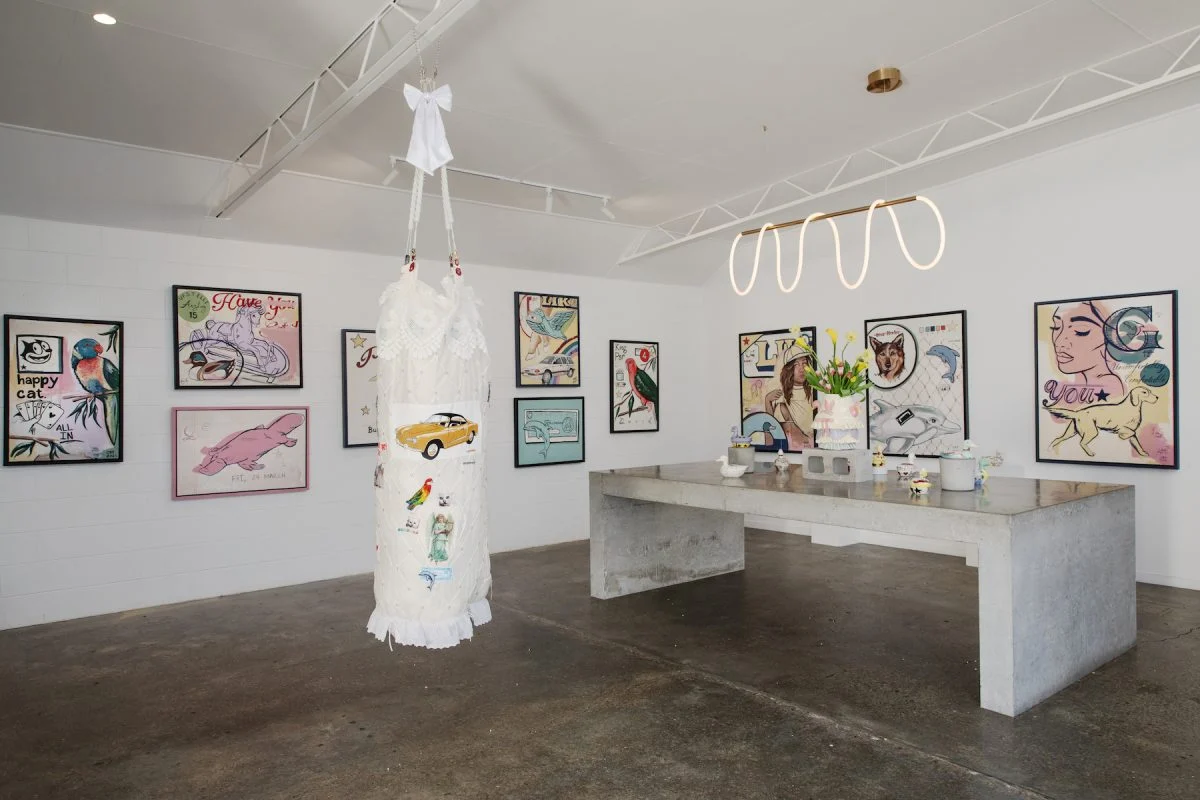
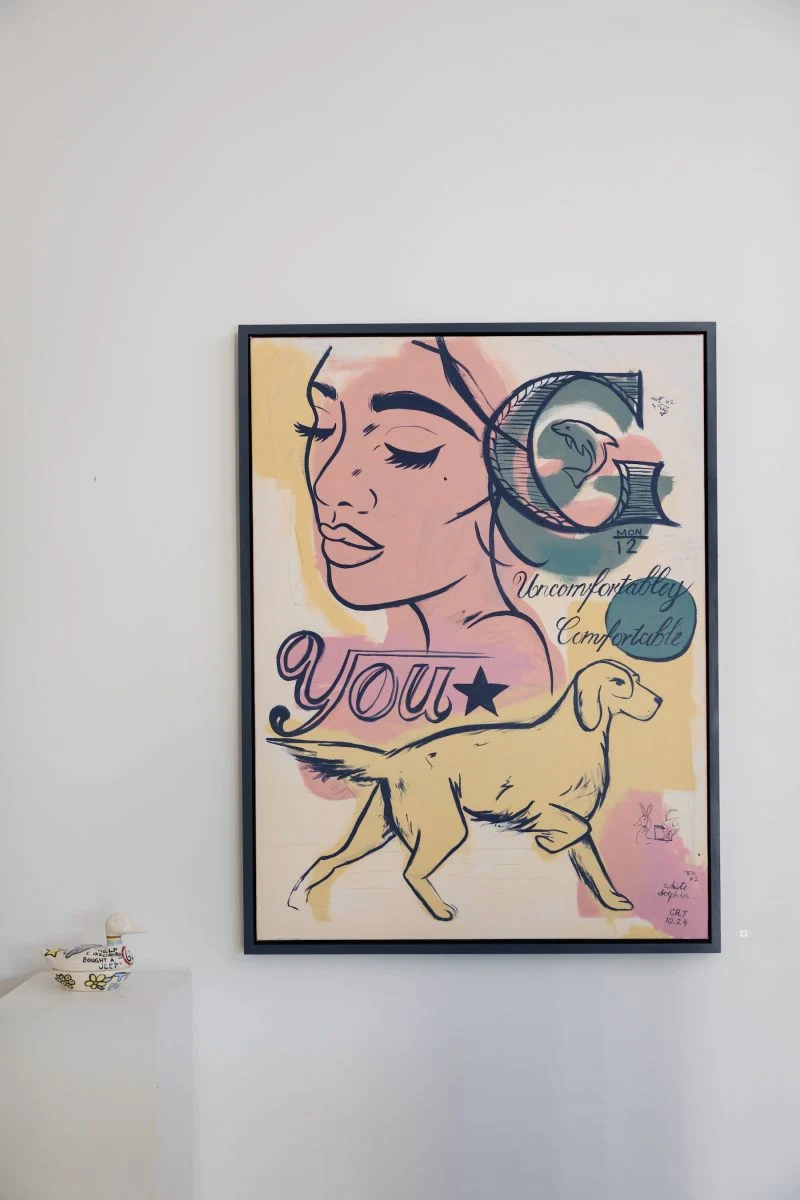
    I’m planning to make the bed with black silk sheets and place it in the center of the room so people can lay on it and view the works from different angles. The car painting is meant to be seen from one direction, and the duck piece from another, so the bed becomes a way to shift perspective. I’m also hand-embroidering the phrase “Uncomfortably Comfortable” onto the pillows, “Comfortable” on one, “Uncomfortably” on the other. It reflects how I move through the world. I’m strangely at ease in discomfort, and the moment things become too comfortable, I get restless. I need a bit of chaos to feel alive again. It frustrates me sometimes, but it’s just who I am in this era of my life.


    Interview Shay Rutkowski (@sruutrut)

    Photos Yasemin Erguvan (@yaseminerguvan)

    • Statement
    • GlogauAIR Project
    • CV
    • Gallery
    • More

    Statement

    Courtenay creates work that blends memory, symbolism, and everyday experience into playful yet thoughtful reflections on life and identity. Working across painting, textiles, ceramics, and installation, her practice unfolds as a dreamscape scrapbook: vibrant, layered, and full of hidden meanings. Each piece functions as a visual diary, capturing objects, moments, people, and memories, often with a humorous or cheeky twist.

    Her process is intuitive and iterative, evolving through cycles of adding, removing, and reimagining. Layers of symbols carry personal significance, while others remain intentionally ambiguous, inviting audiences to form their own interpretations. The process itself is central, allowing the work to reflect shifting relationships between time, memory, and identity.

    Recent projects have expanded into immersive installations, exploring social constructs and how feminine perspectives can be integrated into spaces traditionally coded as masculine. This approach maintains Courtenay’s characteristic humour, honesty, and vibrancy, while engaging audiences in dialogue about belonging and inclusion.

    GlogauAIR Project

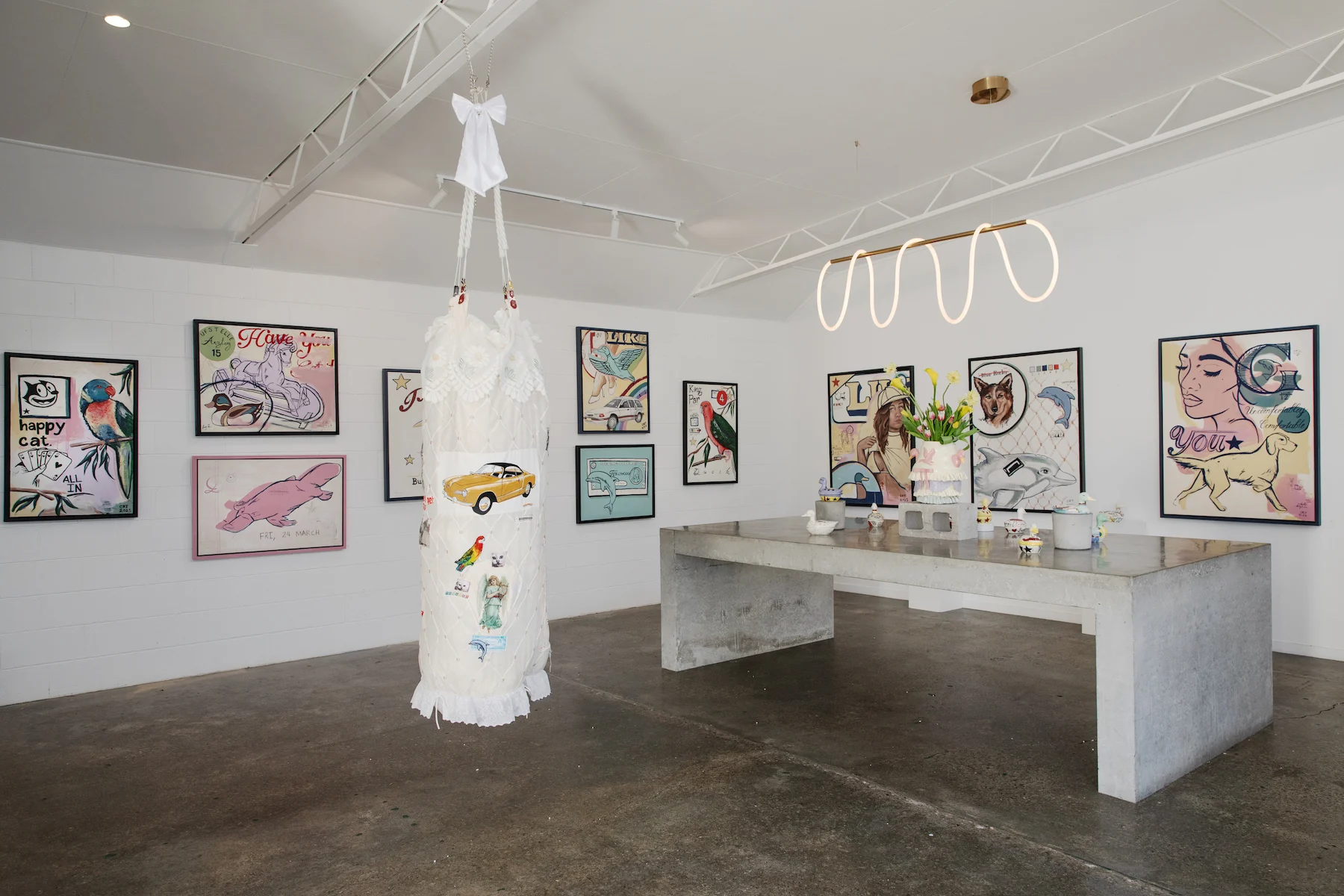
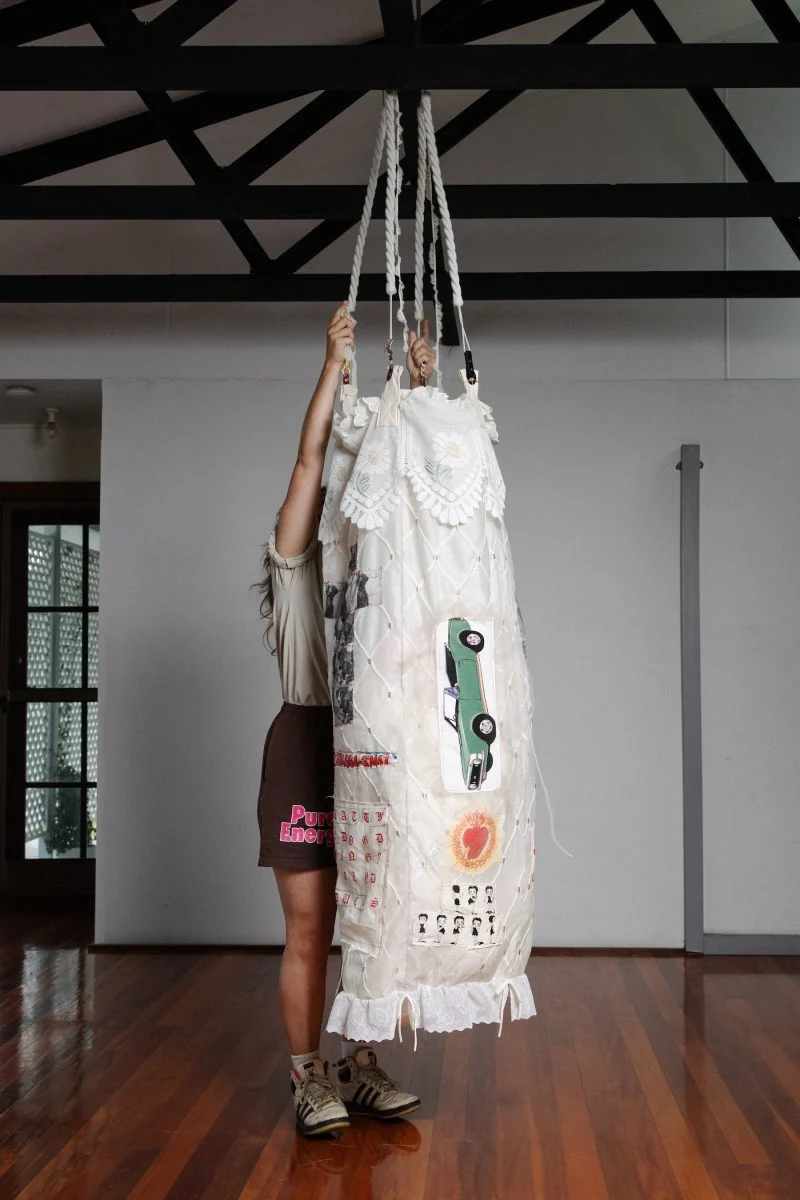
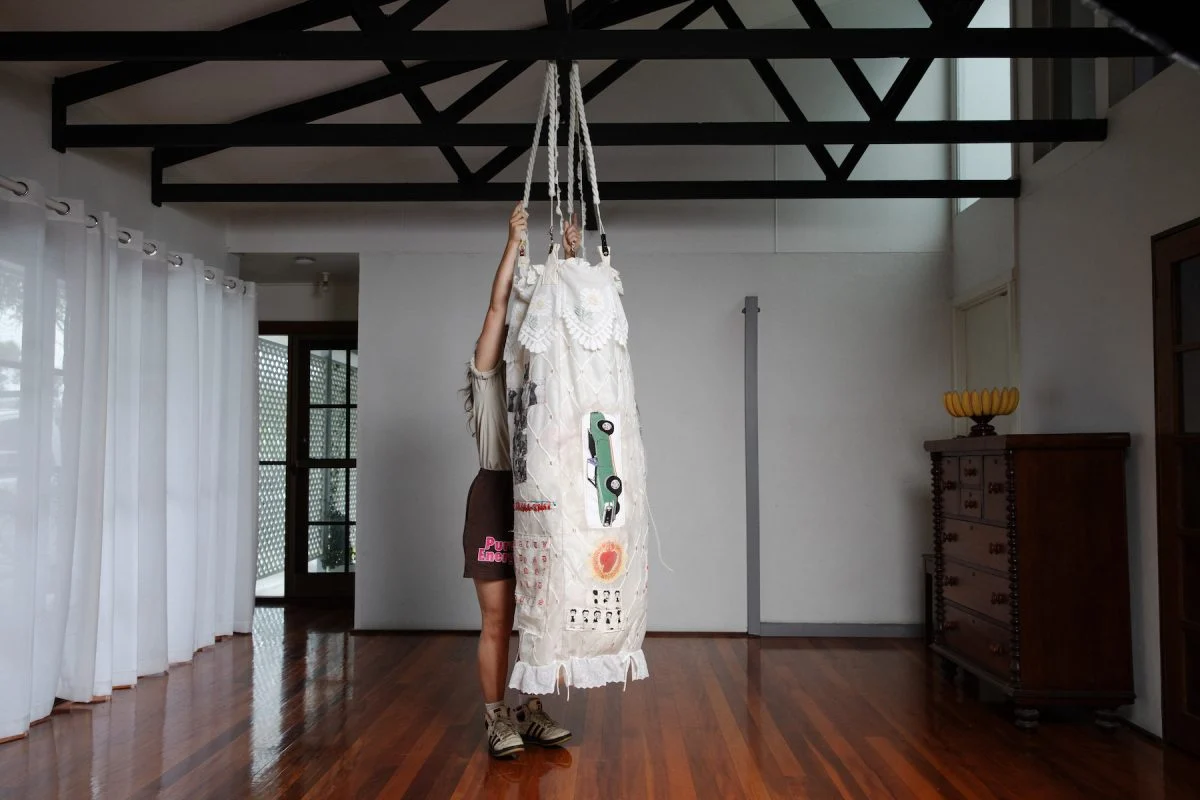
    Building on earlier works, such as a punching bag reimagined with inherited lace, vintage fabrics, and beaded tea towels, this project extends Courtenay’s exploration into gendered spaces and the cultural frameworks that define access, skill, and leisure. Drawing from personal experiences of social constructs, as well as conversations with family and peers.

    Courtenay will create new textile installations alongside paintings during the residency.

    CV

    Exhibitions and Residencies

    • 2025 “Tequila & White Dolphins”, Solo Exhibition, The Bud Club; Mermaid Beach. Gold Coast
    • 2023 Penny Contemporary Art Gallery, Collaboration exhibition with Dion Parker, Hobart, Tasmania, Australia
    • 2023 QBank Art Residency, Queenstown, Tasmania
    • 2023 Stupid Krap link, Group Exhibition, QLD, Australia
    • 2022 Surface Mural Festival, Miami Marketta, Australia
    • 2020 Swell Sculpture Festival link, collaboration District 23 link, Currumbin, Australia
    • 2019 The Queen of the Cross link Mural, HOTA, Gold Coast, Australia
    • 2018 “A Tropical State” First Coast Studios & Sea Walls Group Show, Cairns, Australia

    Education

    • 2014 Diploma of Graphic Design, TAFE, Gold Coast, Australia
    • 2013 Certificate IV in Applied Fashion Design and Technology

    More

    We do not have any further information at this time.
  • Dorota Dziong

    Dorota Dziong

    Artist main image

    Dorota Dziong is GlogauAIR resident from October 2025 to December 2025. Q4

    Dorota has a multidisciplinary practice spanning painting, video/animation, and site-responsive installation. Her practice explores the human need for containment, both physical shelter for our bodies and containers for the things we collect, using playful or absurdist approaches to grapple with complexity. She holds an MFA from KMD, University of Bergen, and an Hon. B.A. in Visual Studies & Art History from the University of Toronto.

    Meet the Artist

    Can you tell me a bit about your background and what you’re working on for this residency at GlogauAIR?

    I had been working as a painter for quite a while, but recently I did my MFA in Norway, and went back to school after quite a long break. Going in I knew I wanted to look into animation, and by the end I was working in video, and video editing more broadly as well as  installation. I really experimented and expanded into being more interdisciplinary at this point, though still very much based in drawing and painting.

    I was really struggling with the rigid frame and the preciousness of painting as these objects that you make. Also because my work is about objects, and collecting objects and the objects we surround ourselves with in our apartments and homes. So that played into it, and the fact that I moved around a lot and lost a lot of studios –that was the reality of Toronto in terms of the housing and real estate crisis. But wherever I moved since, that type of situation is happening everywhere even if it’s to a lesser degree. So even just carrying and packing and storing the paintings that I was making was an uncomfortable and strange thing to do.

    I deal with objects and it comes from being an immigrant and a longer history of my family, having grown up in Poland, with the history of the war, and then communist regime and my grandparents getting expropriated, and ongoing housing instability as an artist.. I am also trying to look beyond myself, which is trickier to do well. That’s what I’m trying to work on too, looking beyond just me and my circumstances to the bigger political or historical context.

    There are two parallel things I’m working on at GlogauAIR that will have some interplay, but right now they’re parallel, and more separate..

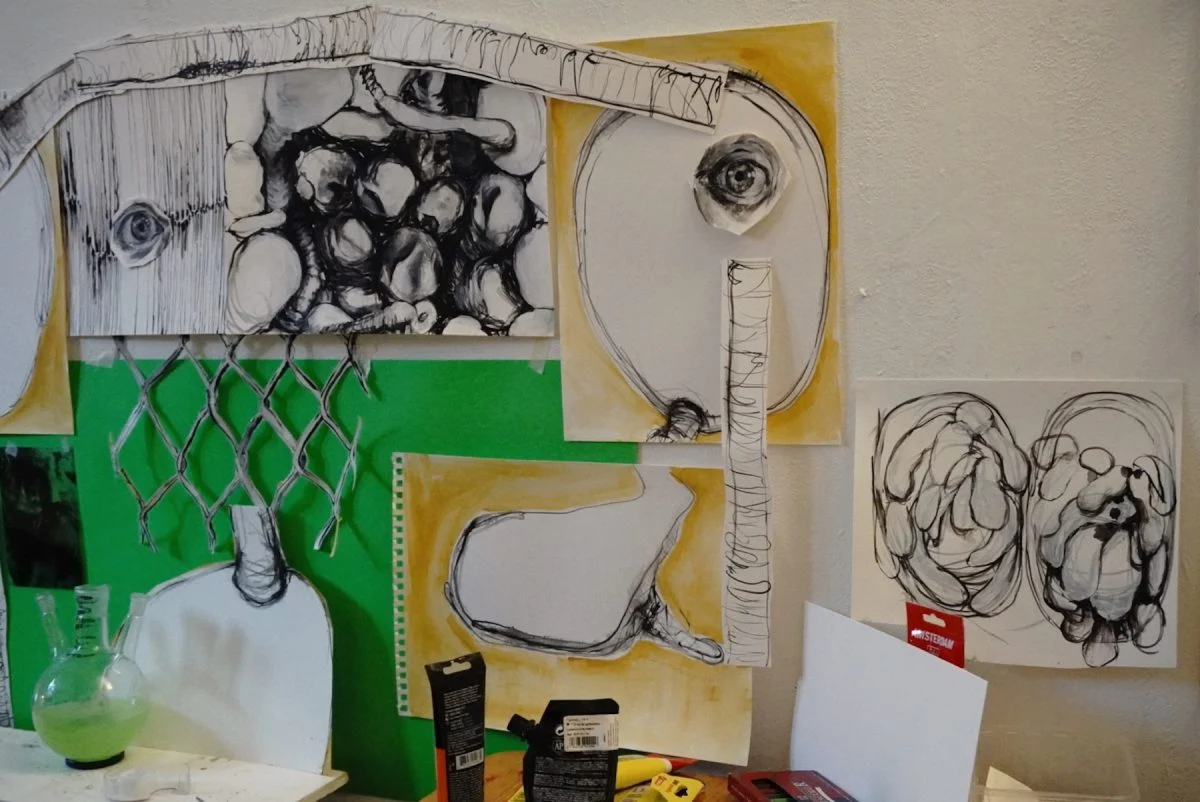
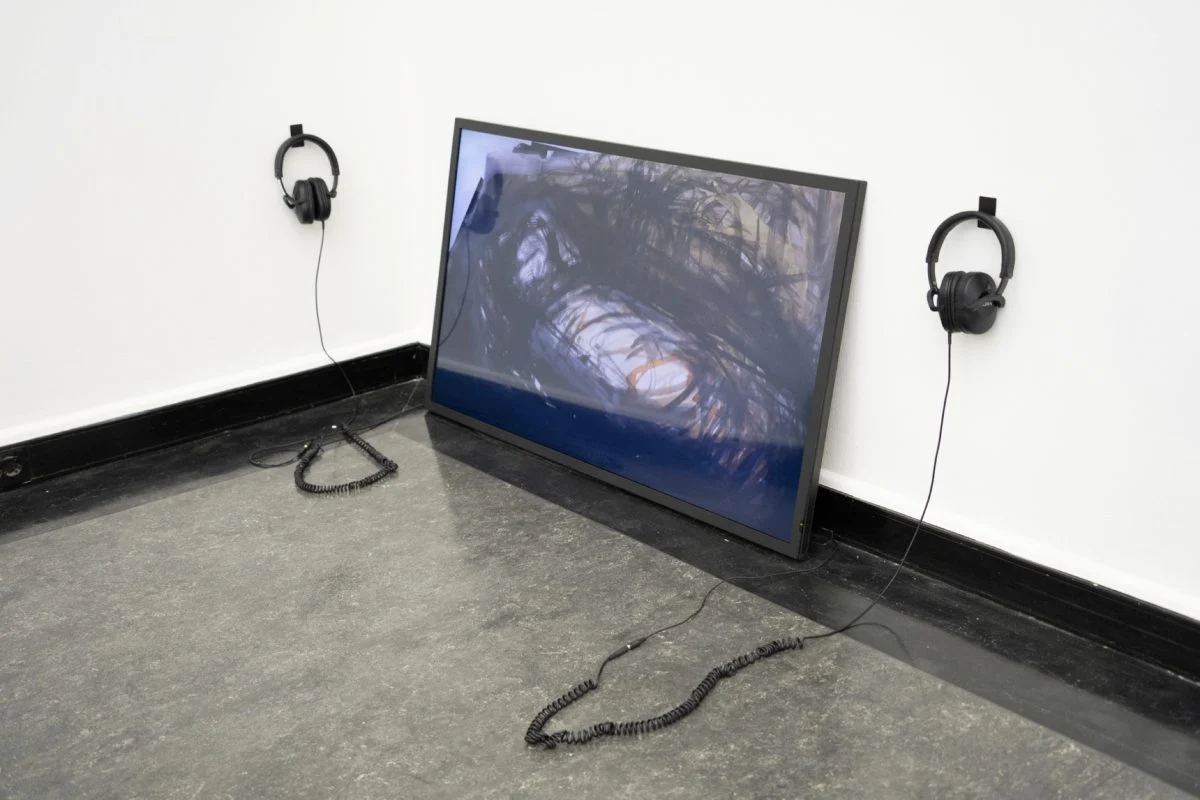
    One of them is an installation, mostly of works on paper, as well as some objects, that is site-responsive and grows slowly throughout the residency on the walls of my studio. Shortly before coming to GlogauAIR I had an exhibition where I was able to work in a similar way, by working on drawings in the space where they were eventually exhibited and responding to that space over time.

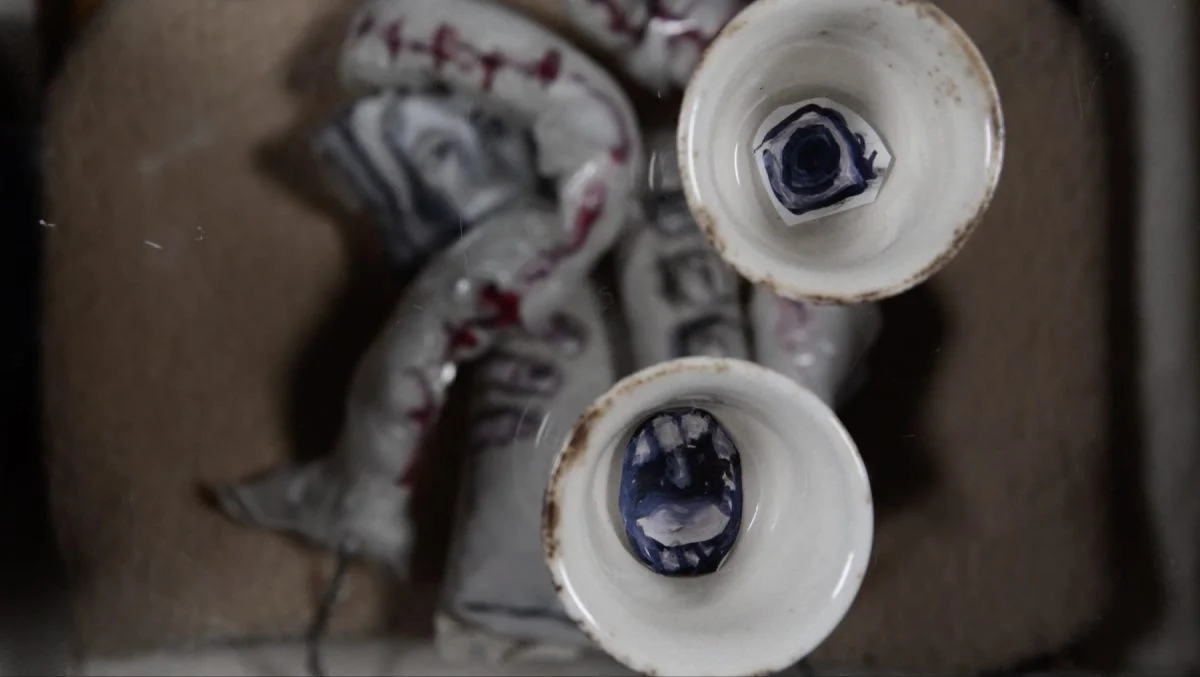
    The other one is a video animation. I brought this cast iron dog that was my mom’s. My mom passed away last year, and I asked my uncle to bring it for me. He brought it from Canada to Poland, and then I went to Poland and brought it to Norway and then I brought it from Norway here with me.  I haven’t unpacked it yet because I want to film the unpacking.

    I want to hear about your process in animating and what pre-production looks like for you. You mentioned beginning to animate unwrapping your dog, are there materials and props guiding the plot or do you have a planned out storyboard?  

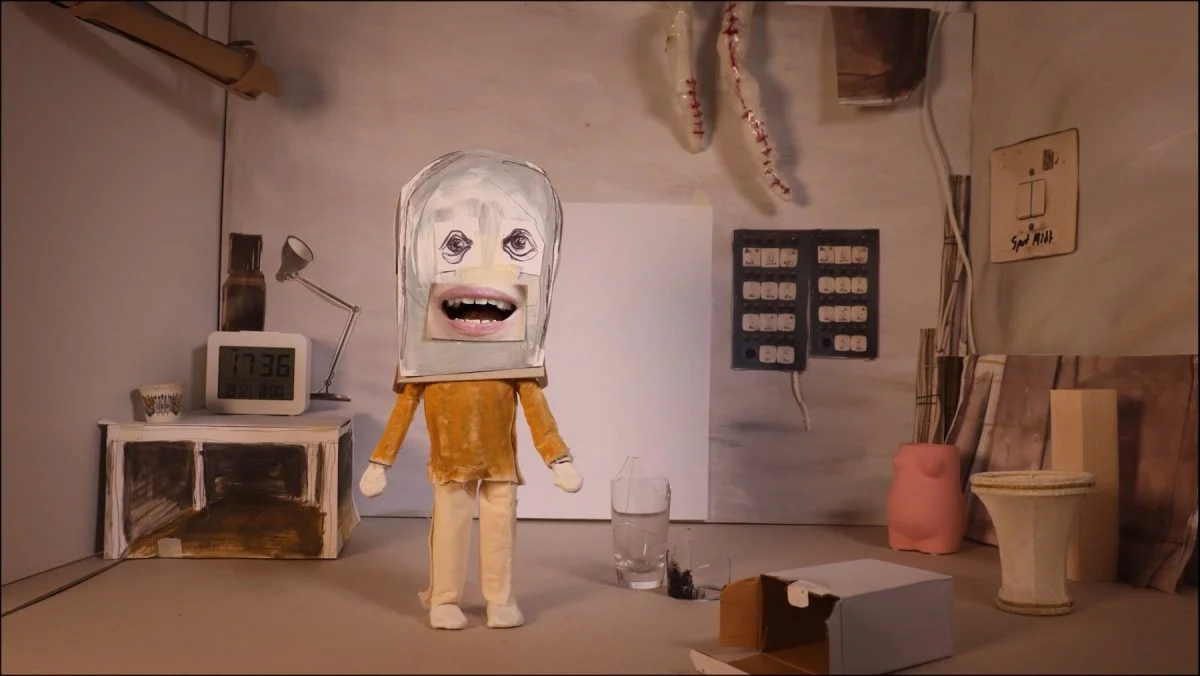
    I’m quite new to animating and video; I made a few short films already, but I’m still very much learning. I don’t come from a background of a filmmaker or an animator, so the way I work is very similar to the way I work with anything else. It is very collage-like just like in painting, where  I was cutting up my paintings and re-collaging them and moving away again from stretched canvas and  using cardboard and being much more non-permanent.

    I don’t have a storyboard. I have some ideas of images and themes. Because I work with containers, I’ll often collect some cardboard boxes or make something that reflects what I’m thinking about. I want to unpack all of them first, being very open to what comes out, giving up control a little bit and following where the materials as I go. I bought some things at the flea market here and am playing with a balance of directing and following.

    Right before I came here, I did a week-long residency in a sound studio in Bergen. Working with sound was even newer to me than video. I started writing and recording this script from the point of view of the dog, so there is some narrative existing already. I have no idea if I’m going to use it, but there was a story that came out this way, so there is more of a throughline that exists.

    Absurdity and absurdism are quite important to me. It comes from collaging and Dada and using absurd as a method to deal with complexity. Speaking broadly, I think we can struggle with complexity of things that can be contradictory and it can draw people to dichotomies. Absurd  juxtapositions can offer nuance through presenting familiar things in unfamiliar ways, disrupting habitual patterns of thoughts and not offering fixed meanings. And hopefully offer different approaches and unexpected connections.

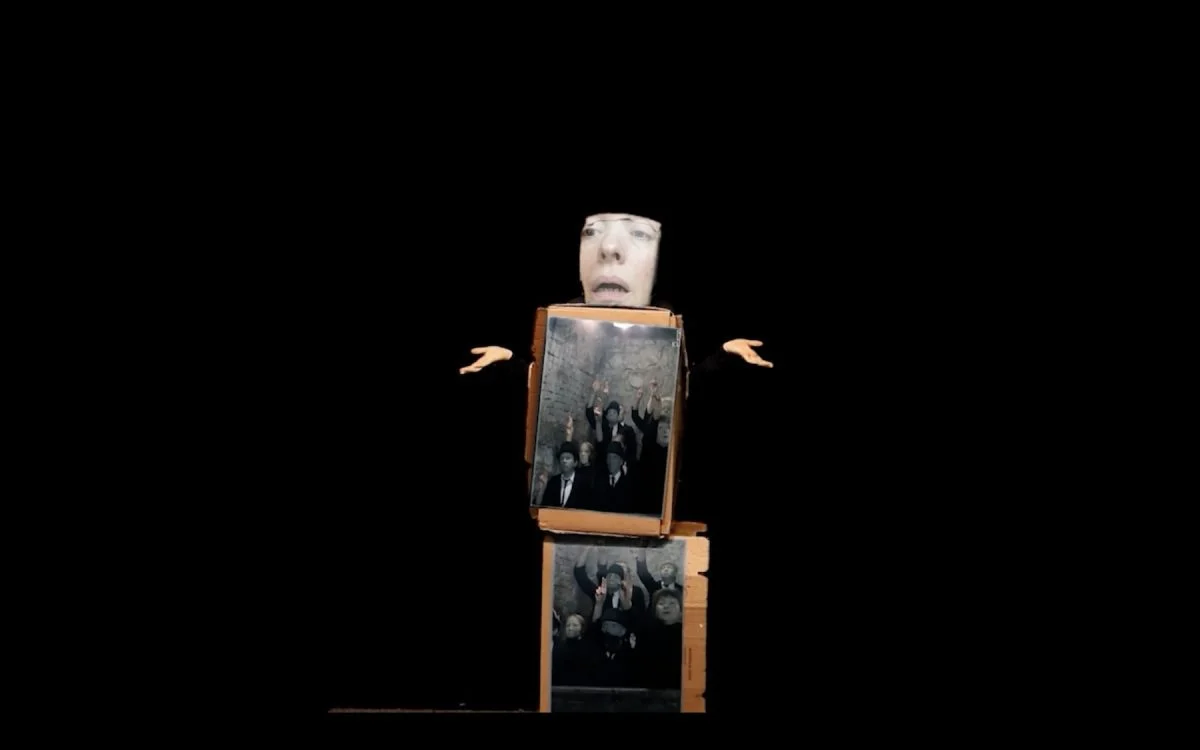
    My last question for you is about your eye motifs, because I see that a lot in your work. You have eyes peeping out of dark corners, an isolated head and hands attached to a body. What’s your intention on abstracting the human body with cardboard and paper?

    It goes back to collage history, for example when you look at the work of Hannah Höch. It’s about this surreal, dadaist, collage-like approach, but also this connection to objects as extensions of us; we don’t end where our bodies end.

    It’s also like putting googly eyes on things. If you put googly eyes on anything, then it becomes like a body. It’s like dealing with objects, and dealing with spaces, and inanimate things, but trying to talk about how they’re kind of animate, and parts of us.

    I also had this idea of monsters. I read Virginia Woolf’s Mrs. Dalloway during the pandemic, and she talked about a monster within us. And I  ended up having these creatures in my films. They’re not scary: they’re really helpless, awkward, very flawed, and DIY. I’m connecting the idea of monster and grotesque. Monsters have been used politically to vilify the Other,  the immigrants, queer people, the poor. Again, the grotesque comes from putting eyes on things,  disembodying a body, and recombining  it. There is an element of post-human, the body not being organic anymore, touching in some way on Donna Haraway’s way of challenging rigid boundaries between human and non-human and hybrid identities, which again challenges polarities.

    Interview Shay Rutkowski (@sruutrut)

    Photos Yasemin Erguvan (@yaseminerguvan)

    • Statement
    • GlogauAIR Project
    • CV
    • Gallery
    • More

    Statement

    Dorota has a multidisciplinary practice spanning painting, video/animation, and site-responsive installation. Her recent work explores the intrinsic human need for containment, both physical shelter for our bodies and containers for the things we collect. Dorota examines real, imaginary, and metaphorical spaces to build a personal universe, using playful or absurdist approaches as a way of grappling with complexity. She recently completed her MFA at KMD, University of Bergen, and prior to that an Hon. B.A in Visual Studies and Art History at University of Toronto in Canada.

    GlogauAIR Project

    I plan to develop a site-responsive installation and animation that explores human needs for shelter and boundaries. I’ve lived in apartments all my life. An apartment is a box for living, a finite, enclosed space that holds personal history, objects, scents, routines, anxieties, the worn-out traces of our repeated movements, and the lives of those who came before.

    The accumulation of possessions turns an apartment into an archive of a person’s identity; it becomes a set for living. Our physical things become extensions of ourselves, gathered, carried, and placed in space. Apartments and cardboard boxes.

    CV

    SELECT EXHIBITIONS

    2025

    • This vessel lets sound, two-person collaborative installation with drawing and sound, Isotop Fellesatelier, Bergen, Norway
    • Sin Objeto/Intet Objekt video performance art event, Metronomen, Frederiksberg, Denmark
    • Every single pocket has a hole in it, Thingness Gallery, Bergen
    • After School Special event, Landmark, Bergen
    • I could only see the back of it, KMD MFA Graduate Exhibition, Bergen Kunsthall, Bergen

    2024

    • It’s windy every day, Galleri Taxi, Bergen solo exhibition
    • Stitching Dialogues, Etobicoke Civic Centre Art Gallery, Toronto, Canada

    2023

    • Tenderness, Modern Fuel Artist-Run Centre, Kingston, Canada
    • (Un)Framed, Propeller Art Gallery, Toronto, Canada

    2022

    • Re(Moved), Red Head Gallery, Toronto, Canada, solo exhibition
    • Through 100 Windows, Clark Centre for the Arts, City of Toronto
    • and all of a sudden, Propeller Art Gallery, Toronto, curated by Simone Rojas-Pick and Chad Wolfond
    • Toronto Outdoor Art Fair, Toronto
    • Still Life, John B. Aird Gallery, Toronto

    Additional Information

    • Clark Centre for the Arts is a City of Toronto cultural facility in Guild Park and Gardens with specialized art studios and gallery spaces.
    • Propeller Art Gallery is an artist-run co-operative and exhibition space in Toronto’s Queen West Art + Design District.

    More

    We do not have any further information at this time.
  • Xinyi Mei

    Xinyi Mei

    Artist main image

    Xinyi Mei is GlogauAIR resident from October 2025 to December 2025.
    Q4

    Xinyi Mei configures an interplay of time-based apparatuses—video, film, photography, performance, mixed-media installation, and writing—to instantiate ephemeral dialogical situations. Her practice interrogates the ruptures, distortions, and entropic flows of communication, examining the mechanisms through which digital mediation dissolves intimacy, presence, and affect.

    Meet the Artist

    Can you tell me about your background and what you’re working on for your three-month residency at GlogauAIR?

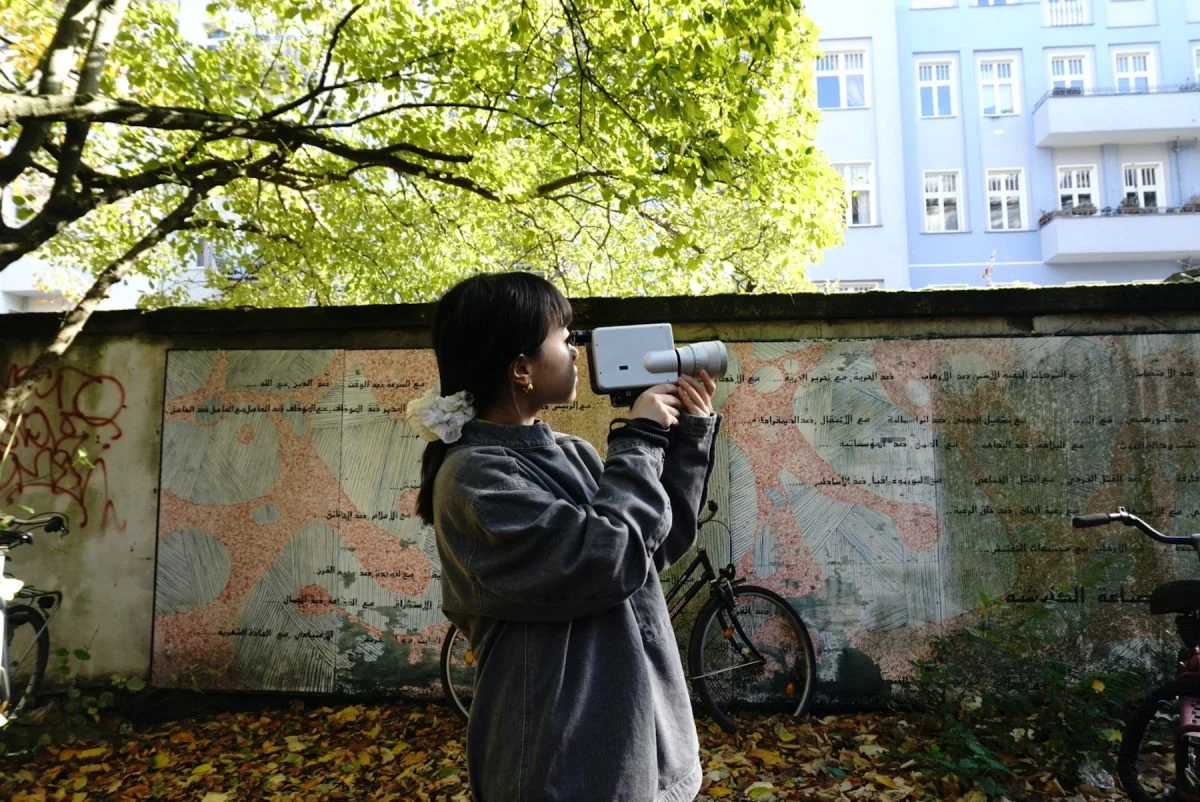
    I’m an artist based in Shanghai and I travel to Tokyo from time to time. I’m working across video, installation, performance, and writing. My practice examines how emotions, memory, and communication are mediated through digital images and shared cultural references.

    Originally, I planned to continue my long-term project Hanging Study, which explores the notion of  “suspension” in both physical and emotional forms. But after arriving in Berlin, I became drawn to a new line of thought inspired by Walter Benjamin’s childhood in Berlin around 1900. I’ve been revisiting the places he described and combining that with a script I’m developing — something between an essay film and a fictional dialogue. The project reflects on how personal and historical memories overlap within the city, and how the act of walking or filming can become a way of reinhabiting those memories.

    I see how you like to work with poetic stories and short fables. What’s your goal in adapting pre-existing works of fiction?

    I’m drawn to fables and existing stories because they already hold a collective memory, they’re shared, repeatable, and slightly worn-out. By re-interpreting them, I can use their familiarity as a surface to project new emotions or contradictions.

    My goal isn’t to “retell” but to contaminate — to let the old story absorb my own experience, language, or political feeling until it becomes something unstable. The adaptation process becomes a way to talk about translation, belief, and how meaning constantly shifts between generations and media.

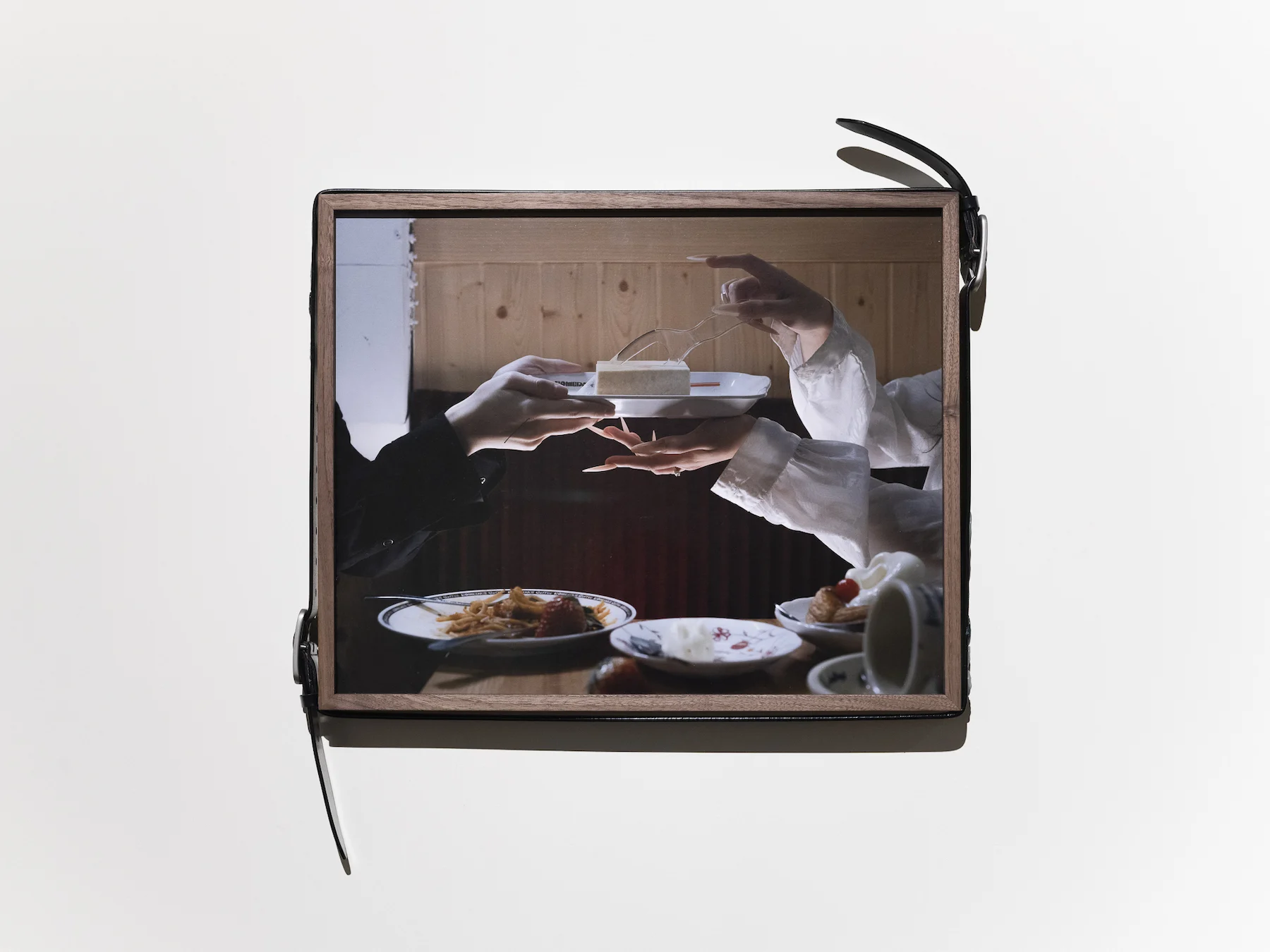
    Your most recent solo show, The Melancholy Magician, The Diner’s Experience, has a vast array of mediums. What was your process in balancing mixed media for your show, and how did you tie them all together?

    For me, working across different mediums isn’t about showing variety but about extending one language into another — when words fail, sound continues; when sound dissolves, materials start to speak. I often treat each medium as a translation of another, and the tension between them becomes the real substance of the work.

    Rather than trying to balance or unify them, I wanted the materials to miscommunicate — to produce small dissonances and frictions. The show became a choreography of failed translations, where the viewer oscillates between comprehension and sensation. That’s where I locate intimacy — in the gap between understanding and feeling.

    Interview Shay Rutkowski (@sruutrut)

    Photos Yasemin Erguvan (@yaseminerguvan)

    • Statement
    • GlogauAIR Project
    • CV
    • Gallery
    • More

    Statement

    Xinyi Mei configures an interplay of time-based apparatuses—video, film, photography, performance, mixed-media installation, and writing—to instantiate ephemeral dialogical situations. Her practice interrogates the ruptures, distortions, and entropic flows of communication, examining the mechanisms through which digital mediation dissolves intimacy, presence, and affect. Mei’s work operates within the space of the post-historical, where eros and pathos are fragmented, processed, and redistributed across the networks of virtuality, rendering encounters both disembodied and hyper-sensual.

    GlogauAIR Project

    Hanging Study” investigates the physical and metaphorical conditions of suspension—precarity, fragility, hesitation, and the tension between rootedness and drift. During her 2023 GlogauAIR online residency, Mei developed the project through installations, performances, drawings, and short film experiments. For this Berlin residency, she will research suspended infrastructures and logistical cultures, creating new images and installations that respond to the city’s urban, political, and ecological spaces.

    CV

    “Hanging Study” investigates the physical and metaphorical conditions of suspension—precarity, fragility, hesitation, and the tension between rootedness and drift.

    During her 2023 GlogauAIR online residency, Mei developed the project through installations, performances, drawings, and short film experiments.

    For this Berlin residency, she will research suspended infrastructures and logistical cultures, creating new images and installations that respond to the city’s urban, political, and ecological spaces.

    More

    We do not have any further information at this time.
  • Rage Kamiyama

    Rage Kamiyama

    Artist main image

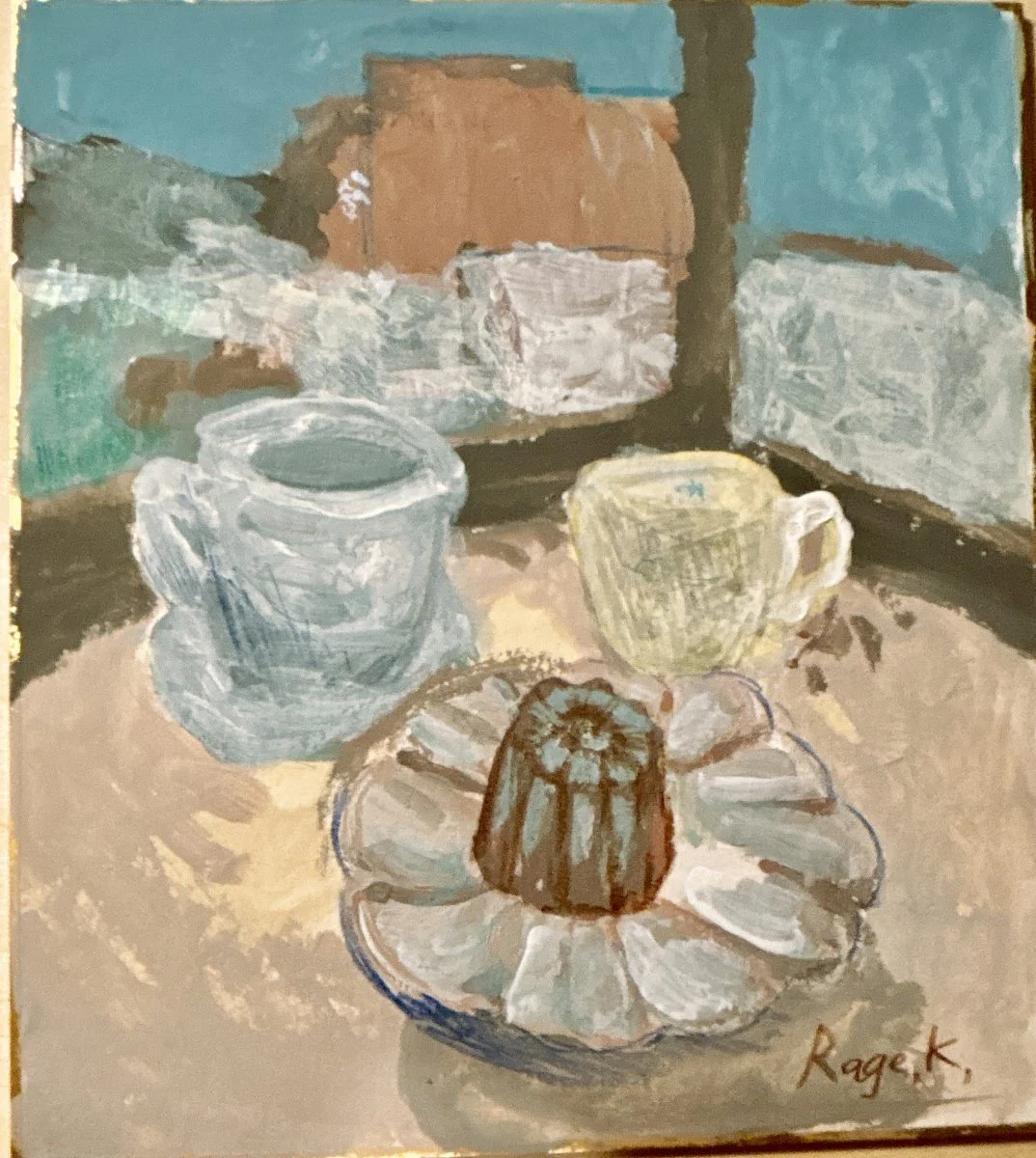
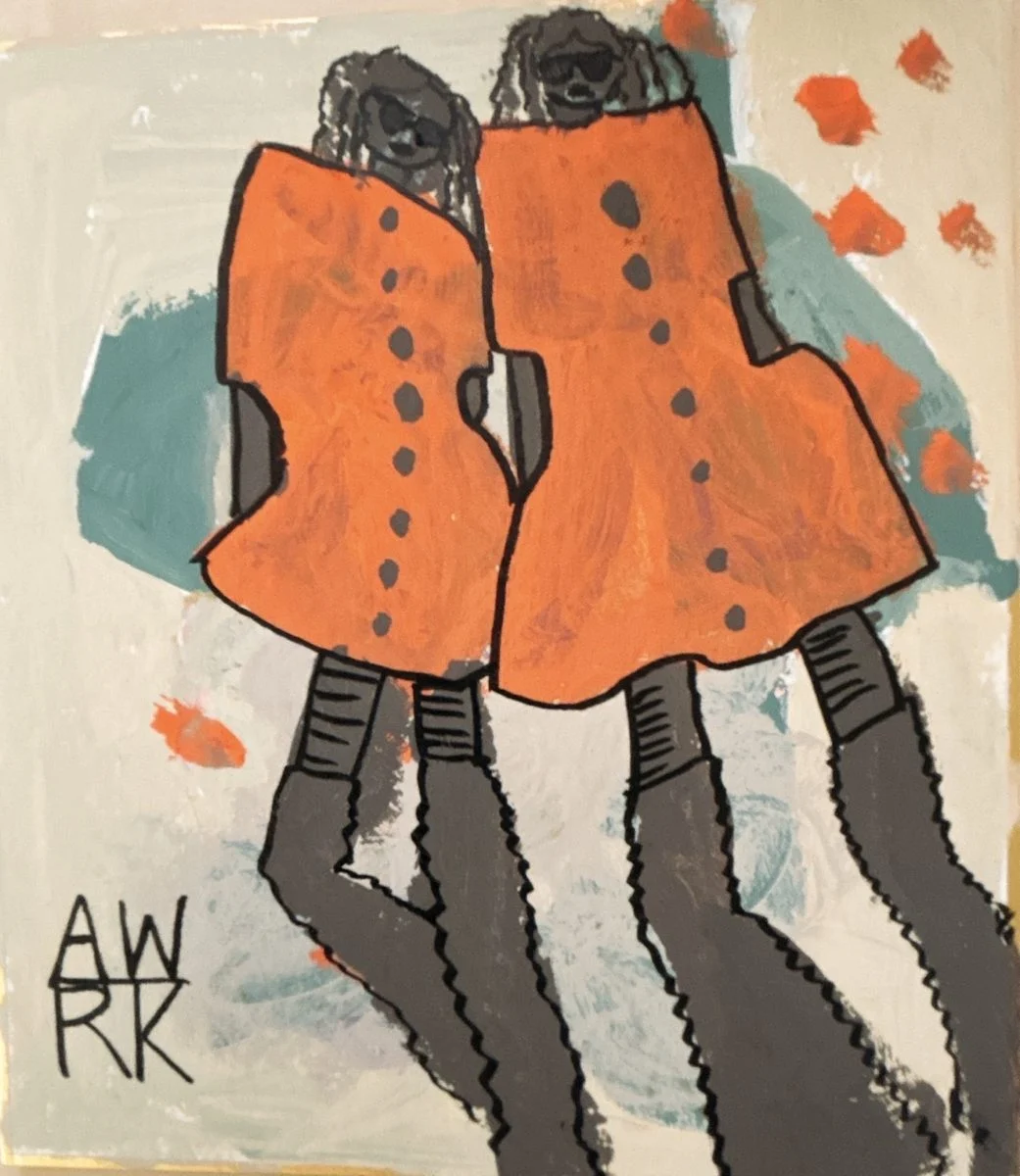
    Rage Kamiyama is GlogauAIR resident from October 2025 to December 2025. Q4

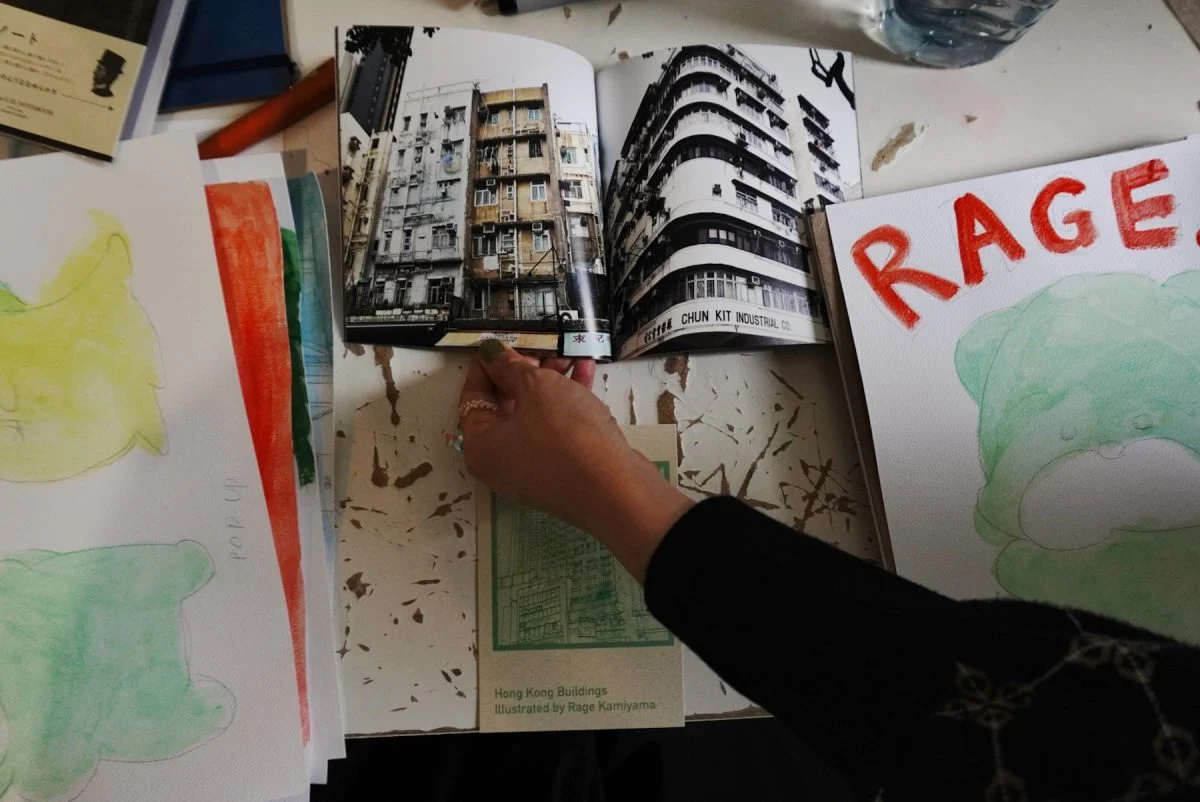
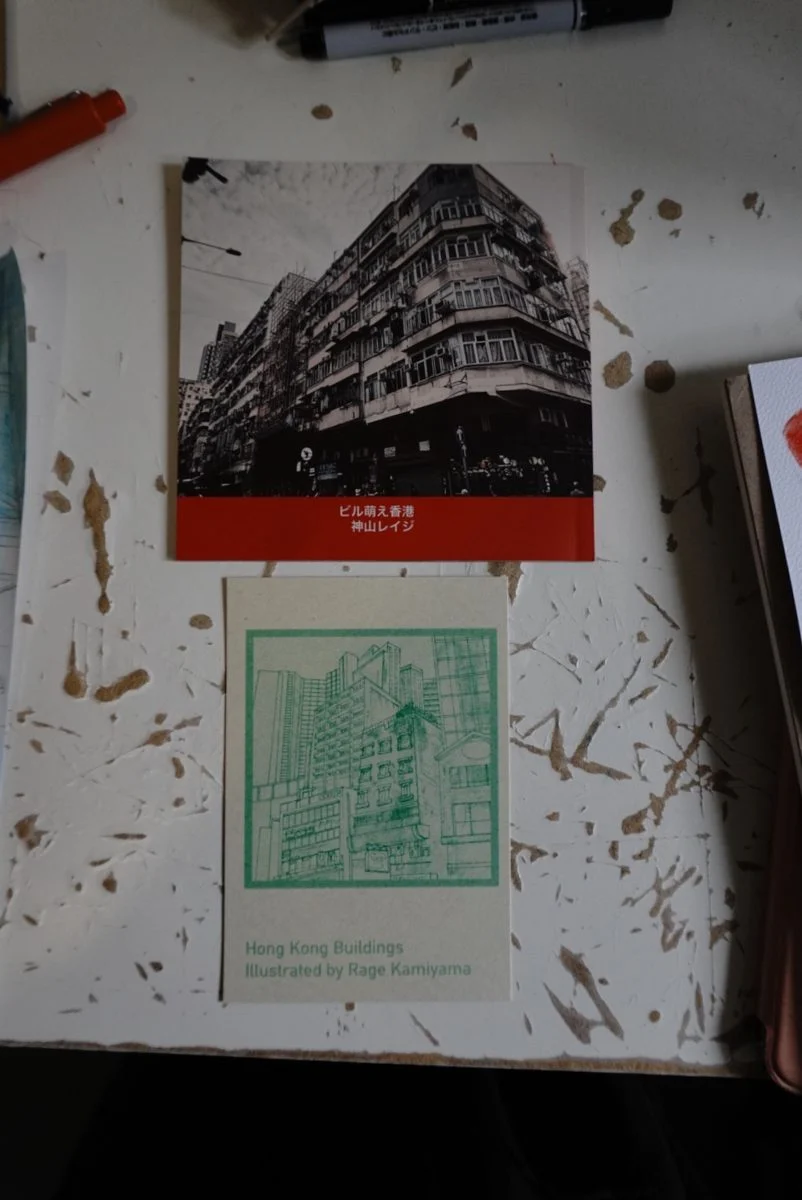
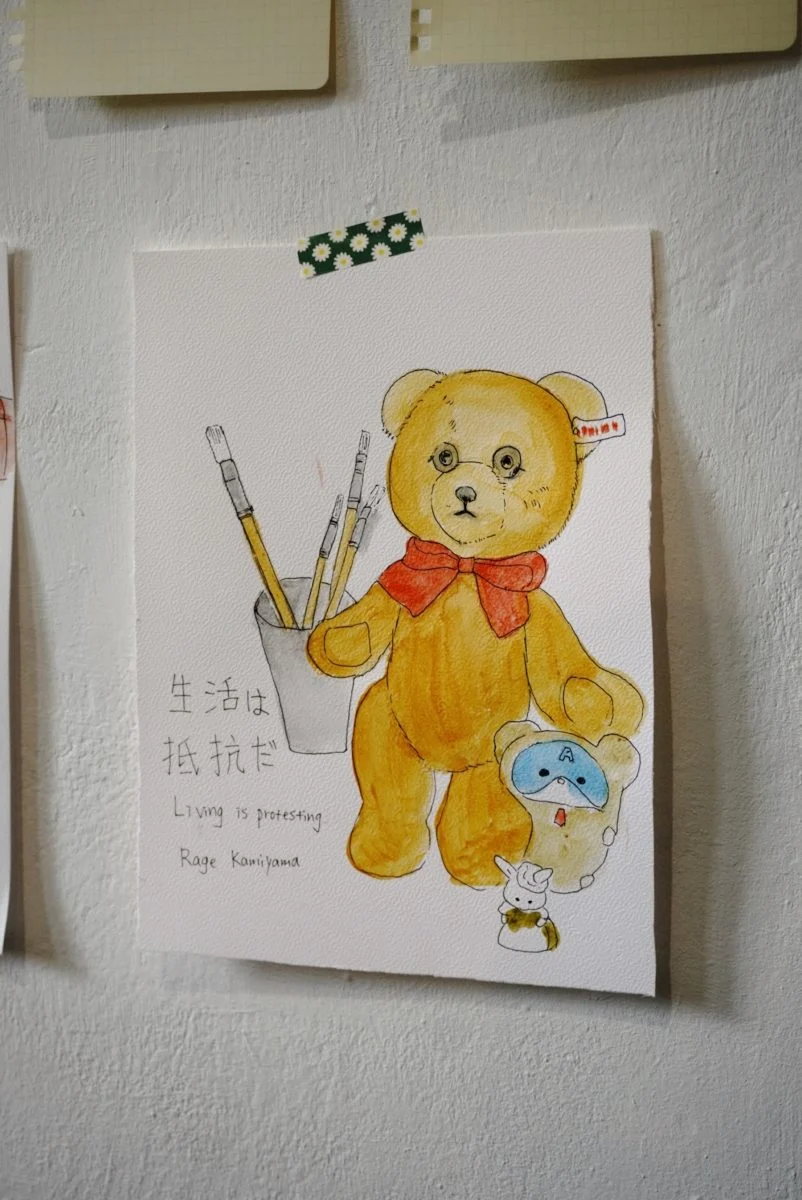
    Rage defines themselves as “gender-defying” and believe that diversity is the key for humans to survive. Each work by Rage is in a different style as they are experimenting with materials, but mainly they use digital, watercolour and acrylics, as well as zinemaking. Originally, Rage started as a manga artist and their style blends Osaka people’s unique sense of humor with British jokes.

    Meet the Artist

    Can you tell me a bit about your background?

    I started as a comic artist and I’ve made several independent zines before. Then I worked as an English teacher and also as a manga teacher. I was able to do my work and focus on my side project as well make independent zines.

    But I thought, making zines and focusing on my career as an artist is my priority. So I became a full-time artist this year. And this year I tried to experiment with acrylics and watercolor rather than focusing entirely on comics.

    When I’m doing fine art, there are more opportunities to talk to other people such as gallery visitors and curators, whereas you only have interactions with editors when you draw comics.

    I made several works for my solo exhibition, which was a small one, and several group exhibitions this year. Now, I’ve made it to Berlin so I think I’ve done quite a lot of things this year as an artist.


    What are you working on during this three-month residency?

    I’m already working on my comics zine to show during open studios.

    Also I’m trying to make several acrylics and watercolor paintings, firstly to include in my zines and secondly to record what I’m doing in Berlin. It’s like taking notes on everything.


    How is your art gender defying as opposed to a passive confrontation? How would you want your work to confront your audience?

    I was thinking about that yesterday. My theme is partially based on my gender. Because gender should not be a burden to anyone, not to me either.

    Inside my zine, I’m trying to express my opinion on how people should perceive their gender. As I wrote in my artist statement, the terms non-binary and gender-neutral sounds passive to me. It’s a way to avoid saying that I’m a woman or I’m a man. I don’t want to be a woman or a man, I  just want to be me rather than anything else and I want to be remembered in that way, not as a girl or a boy.

    I want to be remembered as Rage Kamiyama, as themself. My art has several inspiration sources and the disorientation that comes from gender is part of my theme. I don’t want to be tied to my chair with the concept of gender.


    I know you’re talking about working with acrylics and watercolours, but I also know you do digital. What do you enjoy about working between analog digital mediums?

    Digital is more convenient because if you go and work on it you can just send it to the publishers or printing service, whereas if you work on paper you have to scan it or take photographs and then make it into A4 to send. What is interesting with analog is that you can’t expect things to be perfect like your mind has imagined. Acrylics and watercolors can be interesting because you can’t get out the stains or wriggling lines. If you work on digital, you can just redo everything.

    I like how acrylics and watercolors create an unexpected result. For comics I first draft my opinions on paper, because writing it out is easier for me to take information in. After that I try to order it to be more comprehensive, and then I make a digital draft and send it, redraw it, and send it to the printing service. But sometimes I draw something on paper, and I don’t like the outcome and then I redraw it digitally. An analog version is more experimental, whereas in digital I can express my opinions very clearly from the start.


    I’d love to talk more about zine making because zine making has such a political, and even anarchist history to it. How has your relationship with zines developed?

    I think in Japan there are quite a lot of zine making workshops and zine making festivals. In Japan it was related to Otaku activities because many geeks in Japan traditionally produced their own zines to express their opinions and what they found or what they felt…but in my case, I would like to look into its history as well.

    I actually haven’t thought about the anarchist part of zines before because it’s quite a normal thing in Japan, but actually it is a very political way to express your opinions. I’m aiming to get into the publishing or manga industry, because in that way I can express my opinions to wider audiences.


    Interview Shay Rutkowski (@sruutrut)

    Photos Yasemin Erguvan (@yaseminerguvan)

    • Statement
    • GlogauAIR Project
    • CV
    • Gallery
    • More

    Statement

    Rage defines themselves as “gender-defying”, as they feel that the word “non-binary” is a bit passive. Their works are based on Rage’s views on the world, which states that it is vital not to lose hope in this devastating time, and Rage’s works explore how to regain humanity and positivity through living. They believe that diversity is the key for humans to survive, and explore the way for us to thrive.

    Each work by Rage is in different style, as they are experimenting with materials, but mainly they use digital, watercolour and acrylics. Zinemaking is also a crucial part of the work, as they believe that storytelling is the best way to express one’s opinion. Originally, Rage started as a manga (comic) artist. Readers can feel the sense of humour, which is the mixture of Osaka (Japan) people’s unique sense, and British jokes.

    GlogauAIR Project

    Firstly, I would like to explore the city of Berlin, which plays a crucial cultural role in this time in terms of its history.

    Then, I would like to produce two zines: one with sketches of the city, and one with essay comic. It would be like a visual diary of my experience in Berlin, which is quite different from cities like Tokyo and Osaka. I hope that I can regain ways to find hope in this difficult time, by communicating with local people and finding power in this city’s atmosphere.

    CV

    2018

    • BSc Digital Film Production, University of Greenwich, UK

    2022

    • Group exhibition “Circus”

    2023

    • Nuit Blanche Kyoto 2023

    2025

    • Solo exhibition “Mind the Gap.”
    • “Dynamic Contemporary Artist 15”, Fukuoka Asian Art Museum
    • “Woman’s Essence Show 2025”, St Art Gallery, London
    • “Another Sky”, Dojima-Hama Tower, Osaka
    • “Journey”, Meitetsu Art Gallery, Nagoya
    • “Tsukuru-hitotachi” exhibition, Kyoto Takashimaya Department Store
    • “Blue Summer”, Aiiro Gallery, Osaka
    • “Flower Garden”, Gallery Uemachi, Osaka
    • “Art Expo”, Galerie 24b, Paris

    More

    We do not have any further information at this time.
  • Carlos Pesudo

    Carlos Pesudo

    Artist main image

    Carlos Pesudo is GlogauAIR resident from October 2025 to March 2026. (Q4)

    Carlos is a visual artist from Spain, currently based in Madrid. His work explores ambiguity and unease, with images that linger on an undefined threshold between abstraction and figuration. Carlos works intuitively, treating the canvas as an unknown space. The scenes that emerge—dynamic and theatrical—feel both strange and familiar, and reflect his fascination with certain forms in nature, particularly those that strike him as violent or illogical.

    Meet the Artist

    Can you tell me a bit about yourself and what you’re working on during your residency at GlogauAIR?

    I was always interested in art, maybe because my grandfather was a painter. When I was seven years old, he taught me how to work with oil paint. So I started painting really young. The studio where I used to work in my hometown is where he used to paint. It’s kind of a magical place, where everything started for me.

    Right now, I’m nearing the end of changing my artistic process. Something interesting happened recently, while preparing my last solo show, and now I want to explore it. My first idea was about going for something more purely abstract. But in the end I feel I’m being more precise with forms and volumes, to be more precise on the ambiguity. That’s a paradox, actually; being more precise with ambiguity. For example, I was thinking about swans. I have this thing with the swans. The swans are somehow connected with my first solo show in Madrid that was all about a rubber duck I found randomly in Berlin a long time ago, floating above the canal.  Last year when I was visiting Berlin, I spent one afternoon in the canal drawing the swans. And then I thought, that only when you are watching and drawing them, you realize how weird they are with the movements. How they look, how they change. Sometimes you don’t even know what you are looking at,  but you just know it’s a swan. I’m interested in this point, about perception. But I will never represent a swan.

    In your most recent works, your colors are uniform and distinct. What is your process in choosing color?

    My recent paintings from my last show were these kinds of color studies from the sea. Also in my video work, there is this abstract color sequence. I went inside with my camera and took in the colors.

    Normally I don’t question the color. Why did I choose that color? Because the colors are, they choose me. Colors contain so much emotional weight. At this point, it’s not something rational in my head, I just go. Sometimes if I establish some rules for using those colors, in the end, I will probably change it.

    You use the words violent, illogical and strange alongside your relationship to the natural world. Are you referring to the nature of humans or non-humans when you talk about the natural world?

    For those adjectives, it’s always in terms of image; this violence of the image, the illogical, is probably the opposite of humans. But it can also have these relations to humans. For example, in dance, there’s this weird movement a body has. When things look abnormal, maybe when it’s an image of something we don’t know, it becomes weird and then it’s a distortion of something.

    It’s also about this kind of inspiration I have from nature. When I was using this high magnifying lens-for example, I just looked at some insects, and found images which were really crazy. But they are mostly crazy because they don’t actually belong to our world. They don’t belong to our dimension, the human dimension. I mean, we coexist with all these images. They are surrounding us all the time. But they’re still not taking part in our usual imagery of the world.

    Watching these kinds of images from nature is sometimes really violent for me. And I guess they connect with my abstract inner world. So when I work with abstraction, all these things that I see, show up in my paintings. They’re wandering in my subconscious and appear.

    Interview Shay Rutkowski (@sruutrut)

    Photos Yasemin Erguvan (@yaseminerguvan)

    • Statement
    • GlogauAIR Project
    • CV
    • Gallery
    • More

    Statement

    Carlos Pesudo is a visual artist from Spain, currently based in Madrid. His work evokes ambiguity and unease. His visual research has led to a complex interplay of forms and registers—gestural, expressive, yet also subtle and delicate paintings that unfold through a balance of action and restraint. His work exists in a constant state of tension, with images that linger on an undefined threshold between abstraction and figuration.

    In the studio, Carlos works intuitively, seeking out unexpected and unsettling forms. For him, the canvas is an unknown space—one that reveals itself only through the act of painting. It is a process of summoning an image and a sensation not yet known.

    The artist’s approach to image-making challenges traditional codes of representation. The ambiguity within his paintings invites viewers to question what they are seeing. The scenes that emerge—dynamic and theatrical—feel both strange and familiar, revealing, almost unintentionally, his fascination with certain forms in nature, particularly those that strike him as violent or illogical.

    GlogauAIR Project

    Drift and Collapse

    This still-undefined proposal draws inspiration from forms found in nature and the environment at large—particularly those that appear strange, violent, or illogical. It will focus on the underlying relationship between my personal language of abstraction and certain as-yet-undetermined elements from both the city and the natural world, including vegetation, insects, arachnids, and other invertebrates. This relationship will ultimately be shaped by the specific environment in which the project takes place—the in situ experience—which will define the execution and final nature of the work.

    The project consists of paintings and a short video art piece, and stems from the conceptualization of a new series I have recently begun to develop, titled Drift and Collapse. In this series, subtlety is intertwined with disruptive form, proposing a play of perspectives and tensions, suspended within delicate spaces. These are paintings developed through various processes and layers, as if they were ecosystems, where multiple visual languages interlock, generating a process of transformation within the painting itself.

    Drift is understood as an accumulative and ongoing process of gradual change. In this process, each layer, each gesture or detail, acts as a small trace of that constant transformation. Drift advances subtly, creating a sense of movement that is almost imperceptible. However, this process of transformation reaches a limit in collapse.

    Collapse represents that critical moment when a system loses its stability, and its structure either disintegrates or abruptly transforms. It is an act of redefinition, where what once seemed stable and cohesive becomes distorted, giving way to a new form of dissonance within the work. This tension between the gradual and the abrupt—between the softness of drift and the rupture of collapse—is what animates the aesthetic proposal of the series.

    Drift and Collapse is also a process of searching, one inherent to every creative act—a search for something unknown, which ultimately culminates in the random. Drift is understood here as that indirect pursuit of randomness, the process that precedes the moment of encountering something.

    CV

    Education

    • 2016-2018 Master in Artistic Production. Fine Arts Faculty San Carlos (UPV), Valencia (Spain).
    • 2018 Fine Arts Faculty of Bahía (UFBA), Salvador de Bahia (Brasil).
    • 2012-2016 Fine Arts Faculty, (UPV) Fine Arts Faculty San Carlos, Valencia (Spain).
    • 2014-2015 The Hungarian University of Fine Arts – Magyar Képzőművészeti Egyetem (MKE), Budapest (Hungary).

    Solo exhibition

    • 2025 Deriva y colapso, Herrero de Tejada Gallery, Madrid (Spain).
    • 2024 El guateque, Yusto Giner Gallery, Madrid (Spain).
    • 2022 Este cuadro me mira raro, Herrero de Tejada Gallery, Madrid (Spain).
    • 2021 Zero space, Kevin Kavanagh Gallery, Dublín (Ireland).
    • 2021 OVO, Yusto Giner Gallery, Marbella (Spain).
    • 2021 It doesn’t belong to us, SomoS Arthouse, Berlin (Germany).
    • 2020 Espacio Cero. Herrero de Tejada Gallery, Madrid (Spain).
    • 2019 ¿Quién pagará el pato?. Herrero de Tejada Gallery, Madrid (Spain).
    • 2019 MARTE Contemporary Art Fair – Awarded as emerging artist – Premio Marte Castellón. Castellón (Spain).
    • 2017 Vanitas Vanitatum, PRÁM Gallery, Prague (Czech Republic).

    Colective exhibitions

    • 2025 Urvanity Art Fair, Herrero de Tejada Gallery, Madrid (Spain).
    • 2024 Los Mellizos, Herrero de tejada Gallery, in the exhibition space “Tha house”, Madrid.
    • 2024 Estampa Art Fair, Galería Yusto Giner, Madrid.
    • 2024 La invitación(with artists: Michael Swaney, Guillermo Pfaff, Tracey Slater, Julia Santaolalla, Miguel Marina, Narowé, Eloy Arribas, Marie-Cécile Aptel, Max Kesterloot, Amaya Suberviola, Chiaohan Chueh, Julián Cruz, Maillo, and María Tinaut.) Herrero de Tejada Gallery, Madrid (Spain).
    • 2023 Zona Maco, Yusto Giner Gallery, Mexico City (México).
    • 2023 Shoot speed / kill light(with artists: Cristina de Miguel, Austin Lee, Marria Prats, Mie Olise, Jana Schröder, Kotie Paloma, Renee Estee, Loren Erdrich, Eloy Arribas and Maillo), Herrero de Tejada Gallery in collaboration with Urvanity Art Fair, Madrid (Spain).
    • 2023 Urvanity Art Fair, Herrero de Tejada Gallery, Madrid (Spain).
    • 2023 Estampa Art Fair, Herrero de tejada Gallery, Madrid (Spain).
    • 2022 Art Brussels, Filomena Soares Gallery, Brussels (Belgium).
    • 2022 Urvanity Art Fair, Yusto Giner Gallery, Madrid (Spain).
    • 2021 Estampa Art Fair, Yusto Giner Gallery, Madrid (Spain).
    • 2021 Estampa Art Fair, Herrero de Tejada Gallery, Madrid (Spain).
    • 2021 Estampa Art Fair (Postponed 2020 edition) Herrero de Tejada Gallery, Madrid (Spain).
    • 2020 JustMad Contemporary Art Fair, Herrero de Tejada Gallery, Madrid (Spain).
    • 2019 FIN (de la cuarta parte), Herrero de Tejada Gallery, Madrid (Spain).
    • 2017 Mapa y Cultura. Collblanc Espai d’Art Gallery. Culla (Spain).
    • 2015 Spaces of uncertainty, KRAKERS, Krakow (Poland).

    Awards

    • 2023 Acquisition prize Kells Collection, Urvanity Art Fair, Madrid (Spain).
    • 2020 Grant by the Foundation Davalos Fletcher. Castellón (Spain).
    • 2019 MARTE Contemporary Art Fair – Awarded as emerging artist – Premio Marte Castellón. Castellón (Spain).
    • 2017 Honourable mention on a video-art projection, Biennal Ciutat Vella Oberta 2017. IVAM Lab. Valencia (Spain).

    Artistic Residencies

    • 2025 Summer residency-Absract Mag, Chateau de forbin, Marsella.
    • 2022 Residencia Nautilus, Lanzarote (Spain).
    • 2021 SomoS, Berlín (Germany).
    • 2019 Centre d’Art La Rectoría. Barcelona (Spain).
    • 2017 PRÁM. Prague (Czeck Republic).
    • 2017 Culla Contemporánea, by Collblanc Espai d’Art Gallery, Castellón (Spain).

    Collections and Museums

    • Kells Collection.
    • John Márquez Foundation.
    • Papartus Collection.
    • Aldebarán Collection.
    • Casa de indias Collection.
    • Teresa Calvo collection.
    • Castellón City Museum (Spain).
    • Goverment of Castellón, Diputación de Castellón (Spain).

    More

    We do not have any further information at this time.
  • Binyu Chen (Bing)

    Binyu Chen (Bing)

    Artist main image

    Binyu Chen (Bing) is GlogauAIR resident from October 2025 to December 2025. Q4

    Bing 饼, a Chinese pancake that never had a certain flavor. Through performance, sound, and text to explore unstable states where boundaries between subject and object, human and non-human, visible and invisible begin to blur. For Bing, these unstable states are not failures but possibilities—ways of opposing interpretation, resisting discipline and questioning this world.

    Meet the Artist

    Can you tell me a bit about yourself and what you’re working on for your residency here?

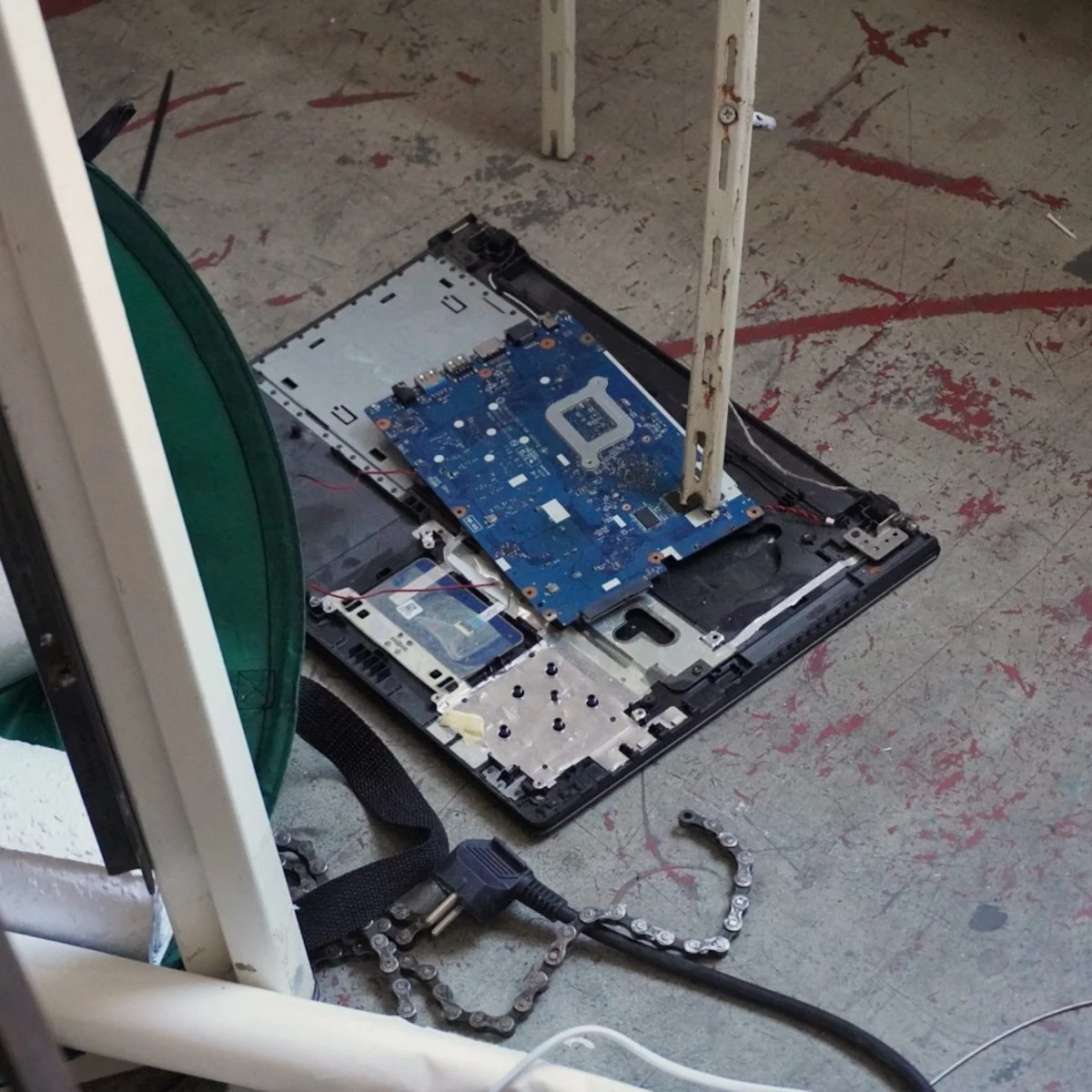
    I am here to collect and work with discarded objects–recycling in my own way. Trash can really reflect the history and the culture in different cities, and also the way people abandon  things in different places. For example, some people just abandon things on the street in Berlin, because it’s tolerated. But in London, where I studied, you can only abandon things in the yard or, if you have something really big to throw out, you have to contact a company to do that and pay the fee. It’s very different.

    In my hometown, I come from a very remote place in China near Chongqing, and people don’t really abandon things. They like to reuse them or give them to homeless people directly. It’s hard to find something really abandoned.

    So, when I showed my father my studio at GlogauAIR, he was shocked because he thought I was digging from a trash bin. He didn’t know it is easy to collect abandoned things here. He was like, oh, my God, it’s so bad. I didn’t expect your life to have this much struggle in Europe!  I was like, it’s not that bad!

    The way people abandon things reflects the power structure in society. People can also be abandoned. If you lose the ability to work for this society, it can easily abandon you. Like homeless people, they lose their identity, they are “abandoned”, and they could be any of us. There’s no difference between human and non-human under the society’s structure.

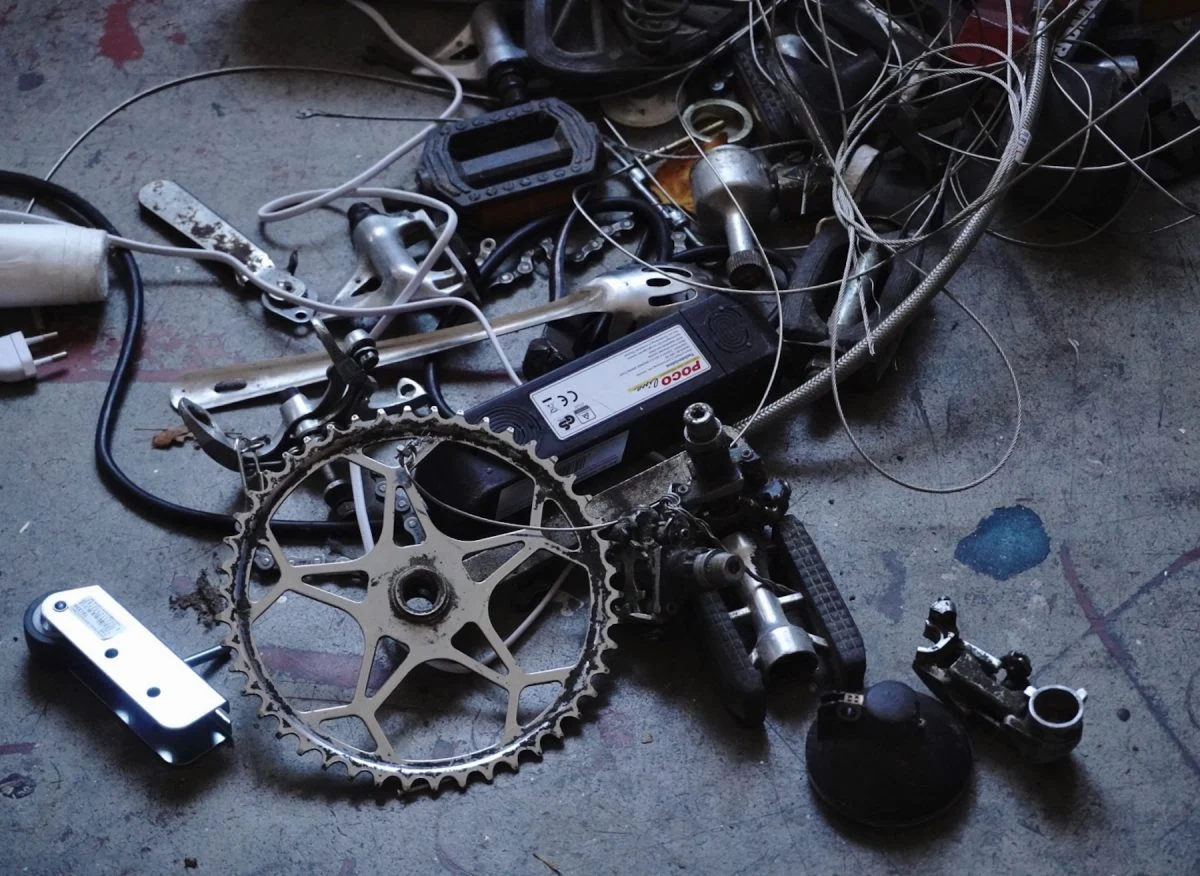
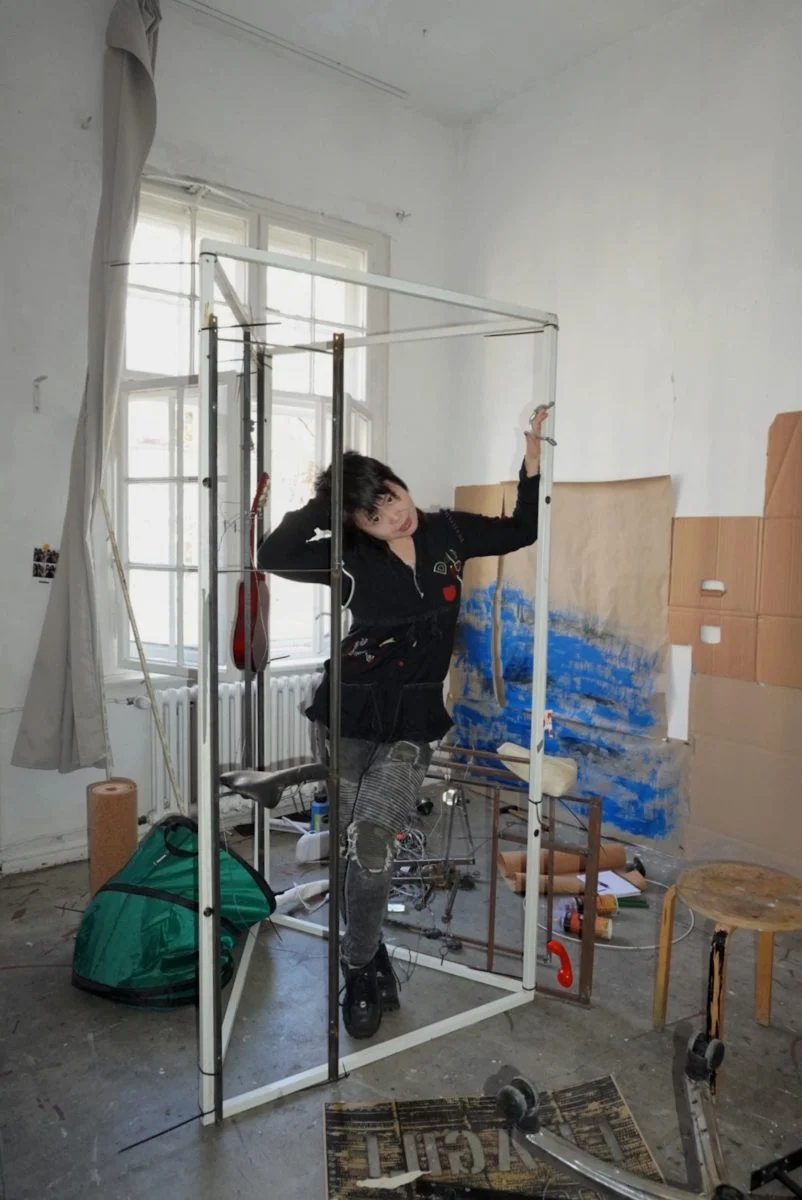
    For my residency, I’ve collected a lot of trash– mainly bicycle parts. I want to turn them into a music machine, to play by themselves. But at the same time, I want to do a performance to disturb the machine when playing–to have a dialogue with them. It reflects my concept of human and non-human– a conversation between them and me.


    You’re de-centering human forms in your art. You also offer a vulnerable and in-depth insight to your identity through text. How do these two approaches work together for you that on the surface may seem contradictory?

    The non-human concept always begins from human thoughts. It’s not only my concept, it’s philosophical. It all starts from who I am. I ask, what is the relationship between me and the world, and how do I communicate with it? And trying to make this world become better, or making myself become better. If someone says I only work with objects, and that my work has nothing to do with human beings, I don’t think it makes sense. It would lose the point of exploring things.

    My work explores how society disciplines ourselves. My first point is the law. How laws shape us. Judgment actually comes from law. It disciplines our body directly, then it impacts our thoughts. That is also why I am constantly doing performance. Because people really need to use the body to feel the world and themselves and their connection with the world again. To resist the discipline of the law within judgment. That’s actually how I started to make art, and the core of my concept is how to resist discipline.

    Another point is my technical medium. More specifically, in language and social media. That’s why I work with text. Language also conceals the power structure. The language you use and the way you express yourself reveal your social status. But at the same time, language is also a tool that can be used as a means of resistance.  It’s a reasoning problem. You take different steps to try to solve the answer. My concept behind my art is like a mind map–a mind map of resisting discipline, that makes me start to think about power structures.

    What makes a power structure is dualism. I can’t say what creates dualism. I’m still using my art to explore this. If we really need to abandon dualism, we need to start to blur the boundary between human and non-human. That’s how I start to decentralize human form.

    That’s why I don’t think my approaches conflict at all.


    You take on personas that have drastically different appearances in your video art. How do you create these characters, and what are the stories behind the performance?

     It’s actually very easy for me, because those kinds of different characters, they all come from myself.  Sometimes I’m a serious and academic person—I observe the world and think very carefully. That’s reflected in the character who uses a ruler to measure objects and the world.

    But sometimes I feel like I’m a clown. This personality was shaped by my childhood.  In my hometown, we don’t have culture at all. People don’t respect culture. They don’t read. They hate people. They hate knowledge. They hate knowledgeable people. So, I pretended I didn’t know anything when I was a kid, because that’s the only way they accepted me. That’s why it’s also one of my personas, being a clown, because otherwise I couldn’t survive in my home environment. I have to be the clown, otherwise nobody is going to be friends with me, or always judge me. That’s how this clown character in my work, “PATHETIC”, came from: they touched objects using other people’s “bodies” (their thoughts).

    Sometimes I just feel like I’m an innocent internet kid-I explore the world through the internet. That’s why I have a piece called “Internet.” It’s complicated to figure out what is going on in my mind all the time. For me, everything is so complicated. It’s like I cannot feel myself, my emotions well. Performance is a way to know myself better.


    Interview Shay Rutkowski (@sruutrut)

    Photos Yasemin Erguvan (@yaseminerguvan)

    • Statement
    • GlogauAIR Project
    • CV
    • Gallery
    • More

    Statement

    Bing 饼, a Chinese pancake that never had a certain flavor. Through performance, sound, and text, with amateur skill and chaos, they are always trying to create a blurred space where the boundaries between subject and object, human and nonhuman, visible and invisible, becomes unstable. These unstable states are not failures but possibilities — they are their ways of opposing interpretation, resisting discipline, and questioning this world.

    GlogauAIR Project

    I have long been fascinated by waste. To me, garbage is a kind of history—what people throw away reflects culture and life. My project Social Discarded System grows from this interest: I collect discarded materials and turn them into sculptures, installations, or instruments. In performance I play them in raw, physical ways, then process the sounds in Ableton Live, inviting the audience to reflect on the signals hidden in these objects. My practice resists discipline and creates spaces where boundaries between subject and object, human and non-human, visible and invisible become unstable. Waste is the best medium between human and non-human: pure objects that still hold human history. By de-centering the human, I explore relations between post-human and non-human, and imagine ways of working together today.

    CV

    EDUCATION

    • Kingston University, London, UK
    • Master of Fine Art | Expected 2025

    PROJECT EXPERIENCE

    • Office Party
      • Curated and organized a collaborative group exhibition with nine artists, developing logistics, setup and promotion.
      • Engaged audiences by providing insights into artworks and serving as DJ during the opening, creating an interactive atmosphere.
    • Becoming-Other-Than
      • Participated in a multidisciplinary exhibition led by Abbas Zahedi, integrating diverse artistic disciplines into a cohesive display.
      • Collaborated with artists to present new perspectives, expanding the depth of the exhibition.

    WORK EXPERIENCE

    • NGO Queer Community, Shenyang, China
    • Event Organizer & Documentary Filmmaker | Feb 2022 – Present
      • Organized art and music events to strengthen local queer community and promote cultural exchange.
      • Connected with regional communities, facilitated discussions, and showcased documentaries.
      • Developed collaborative relationships with stakeholders to enhance event impact.

    More

    We do not have any further information at this time.
  • Jing Xia

    Jing Xia

    Artist main image

    Jing Xia is GlogauAIR resident from October 2025 to December 2025. Q4

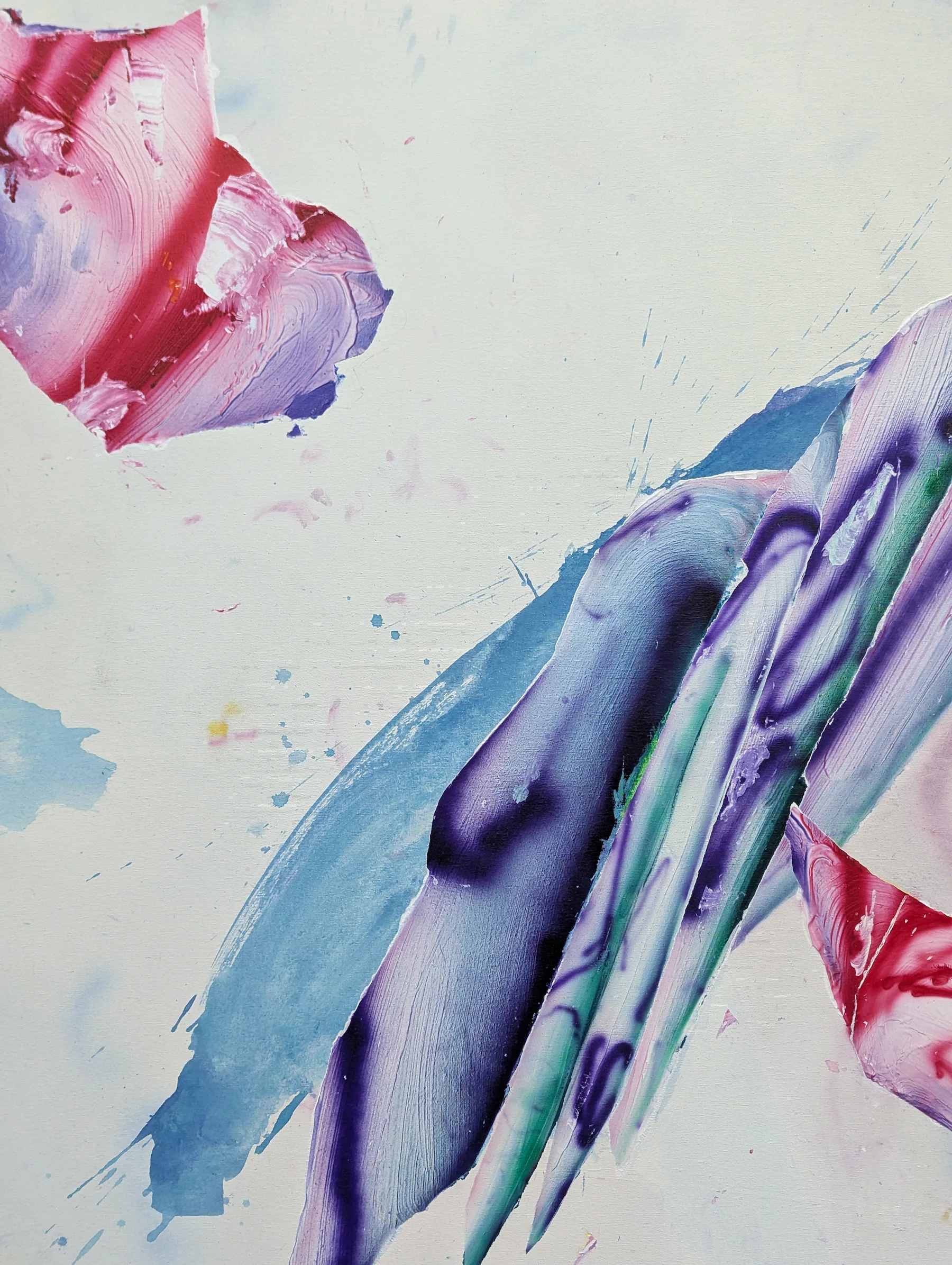
    Trained in industrial design at Emily Carr University (Canada) and Lund University (Sweden), Jing Xia grounds her practice in experimentation. Her work begins without a predetermined outcome. Gestures and textures accumulate through trial and error, often traced by found tools that inscribe immediacy and presence. Forms shift between chaos and balance, fluidity and tactility, echoing cycles of making, unmaking, and remaking. Each work unfolds as a process of becoming, attuned to movement, transformation, and moments of discovery.

    Meet the Artist

    Can you tell me a bit about yourself and what you’re working on so far at the residency?

    I’m a visual artist working with installation, sculpture and painting. I’m Chinese-Canadian. I was born in China and I moved to Canada about sixteen years ago. For the past ten years, I’ve lived in Vancouver. My practice is quite process driven. I am obsessed with designing processes and coming up with different methods of making. Currently, I’ve gravitated towards the idea of designing a process so that the work can make itself. At GlogauAIR, I’m taking inspiration directly from my daily routine and the surroundings. I try to embrace chance elements and unpredictable factors such as fragments of conversations I overhear, the rain, and the objects, flowers, and tree branches I stumble upon during my walks in the neighborhood.

    Right now I’m working on a wall installation inspired by my morning walks, and my book of rain project. I’m also playing with decomposing leaves. I probably want to make a sculpture from them but I’m still testing it so I don’t know what the final outcome will be. We’ll see how it plays out.

    You have these textures between sculpture and painting that evoke various movements and have altering relationships with negative space. What does playing with texture in both sculpture and painting entail?

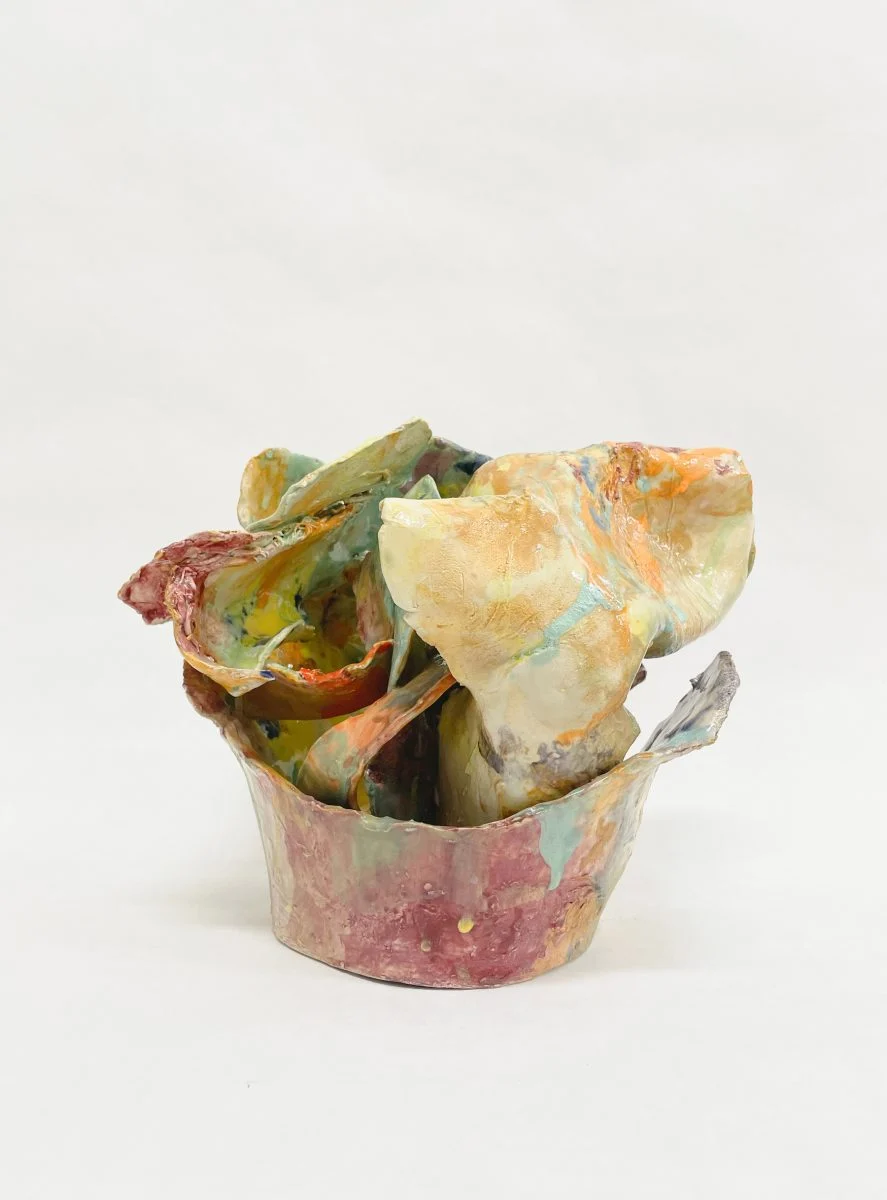
    The textures are the direct result of my experimentation with different methods of making. This applies to both sculpture and painting. For example, in my ceramic sculptures, I ask myself, “What if I use cake piping tools to apply this clay slip?” “ What if I smash these two vessels into one?” “ What if I drop this sculpture onto a textured surface to let gravity and the surface shape the work?” I’m quite rough—maybe even brutal—with my materials. I’m not a gentle maker. In that sense, all my sculptures feel like survivors. They’ve survived my experimentation.

    The same goes for my paintings. The textures in the painting are quite thick because they are layers and layers of trial and error. I don’t use paintbrushes much. I do use them, but not as much as I use the things I see around me. For instance, I use chopsticks. I use rocks. I use fabrics. Sometimes I use my hand directly.I love when the paint becomes very bodily.

    How do you know when you finished a sculpture and when you finished a painting?

    My heart tells me. It produces a pleasing sensation within me when it sees something satisfying. But it can also say, “Wait, not done yet.” I feel that time is a really good indicator. I often leave the work and give it some distance—maybe a few days, maybe a few weeks. When I return to it, I look again to see if I still like it. If I do, I consider it done, at least for now.  If not, I keep working on it.


    Interview Shay Rutkowski (@sruutrut)

    Photos Yasemin Erguvan (@yaseminerguvan)

    • Statement
    • GlogauAIR Project
    • CV
    • Gallery
    • More

    Statement

    Trained in industrial design at Emily Carr University (Canada) and Lund University (Sweden), Jing Xia grounds her practice in experimentation. Her work begins without a predetermined outcome. Gestures and textures accumulate through trial and error, often traced by found tools that inscribe immediacy and presence. Forms shift between chaos and balance, fluidity and tactility, echoing cycles of making, unmaking, and remaking. Each work unfolds as a process of becoming, attuned to movement, transformation, and moments of discovery.

    GlogauAIR Project

    The project consists of works inspired by encounters with the city’s quiet wilderness—roadside flowers, foraged remnants, and fragments of nature woven into the urban fabric. Drawing from places where wildness overtakes structure and resilience blooms through cracks, it speaks to the beauty that arises from a dynamic dialogue between collision and harmony.

    CV

    EXHIBITIONS

    • 2025Arts 2025, Surrey Art Gallery, Surrey, Canada
    • 2025Clean Slate, North Van Arts, North Vancouver, Canada
    • 2024Fragments of Passage, CICA Gallery, Vancouver, Canada

    PROFESSIONAL EXPERIENCE

    • 2020 – 2024 Founder/Creative Director, Or Atelier, Vancouver, Canada
    • 2018 – 2019 Intern, Monica Förster Design Studio, Stockholm, Sweden

    GRANTS

    • 2025 DTES Art Grant, Vancouver Foundation, Canada

    EDUCATION

    • 2017 – 2018 Industrial Design Program, Lund University, Lund, Sweden
    • 2015 – 2017 Industrial Design Program, Emily Carr University, Vancouver, Canada

    More

    We do not have any further information at this time.
  • Andie James

    Andie James

    Artist main image

    Andie James is GlogauAIR resident from October 2025 to December 2025. Q4

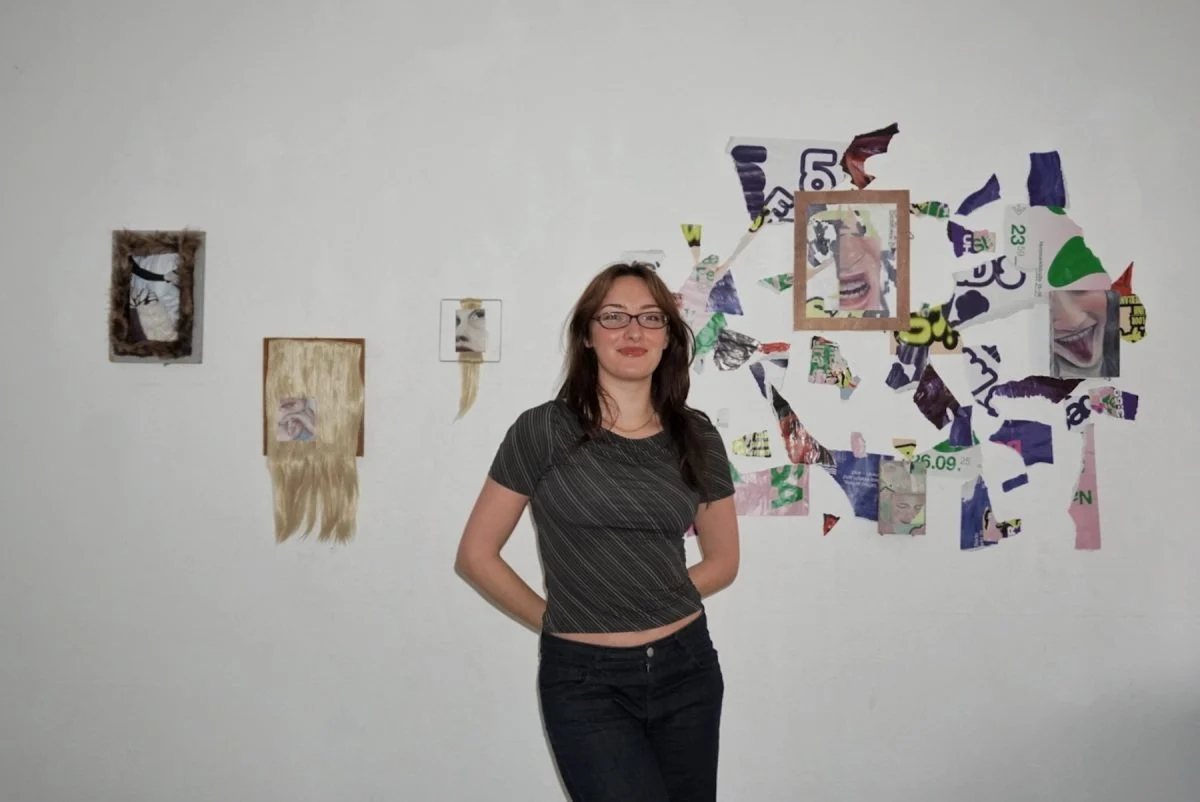
    As an interdisciplinary artist, Andie explores moments of connection within public spaces, particularly the physical and emotional traces left behind as we share space with strangers. Her process is both archival and expressive, documenting socio-material exchanges that evoke humour, joy, and discomfort.

    Meet the Artist

    Can you tell me a bit about yourself and what you’re working on for your residency?

    I’m an Australian interdisciplinary artist who primarily works in painting, based in London. Recently, I’ve expanded my practice to include digital as well as printed and analog mediums.

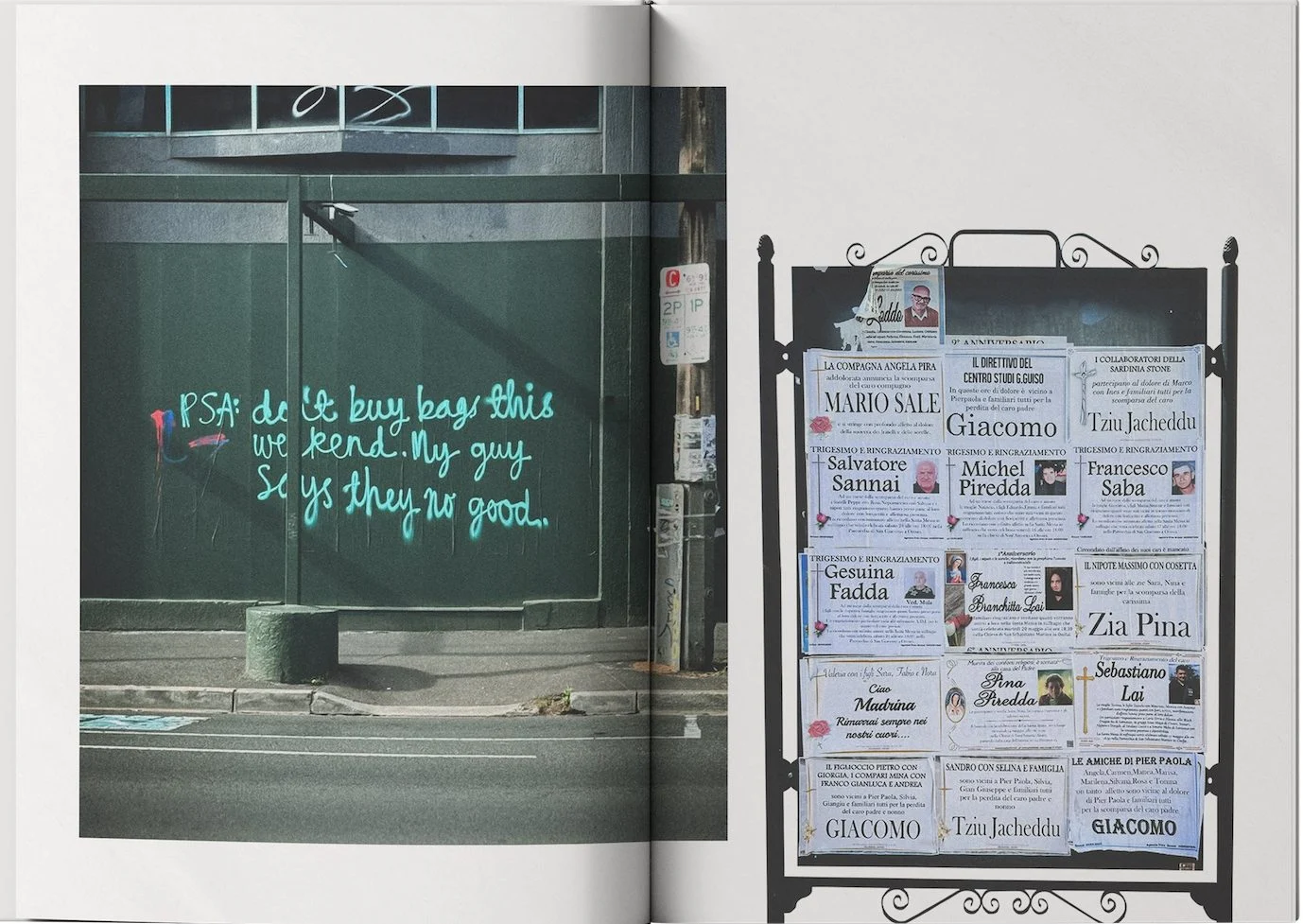
    I’m interested in the relationships we have with people in public spaces, and what remains when we’ve departed the scene. In other words, the residue that we leave, whether emotional or tangible. I see it as a need to express and locate ourselves within a broader social fabric.

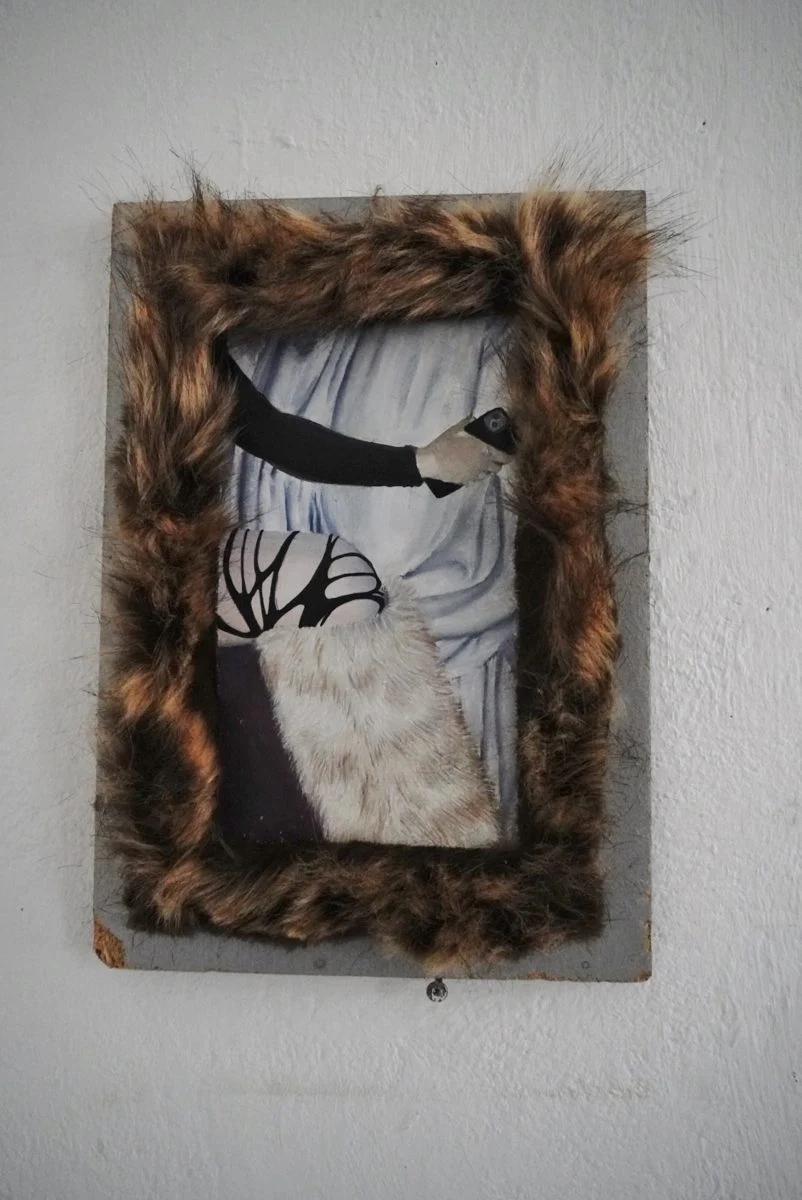
    Part of what I’m interested in doing is archival, collecting and presenting things together, but it’s also a bit interpretive; I’m putting my own spin on it. At the residency, I’m collecting analog fragments including discarded objects and street posters, but I’m also collecting digital leftovers, like old text messages and screenshots. I want to build up these textured, layered surfaces, whether physical (through painting) or digital (through creating websites or interactive spaces). I was saying to one of the residents that I had decided to call myself the digital garbage collector.

    The other thing I wanted to do here was try to find ways to initiate co-authorship of these exchanges, not only to observe them and present them, but also to find ways for people to participate. Hopefully through the Showcase Window and in Open Studios, I can work on that last bit of making it participatory, of getting people involved. It’s been easier for me to create these canvases that are all physical residue, but I need to start finding ways to express it digitally and communally.


    The first thing I look for is new meanings or new interpretations created through accidental compositions; For example, when ten posters are layered on top of each other and each is decaying through weather or being ripped apart. Sometimes words get arranged that create something new, or sometimes you see a face from one person interacting with the subject matter of another. It creates a new composition, a new meaning from things that were otherwise completely unrelated. I like those unique arrangements, which tends to happen a lot in Berlin.

    I also look for compositions that reflect my own interests. With a background in figurative painting, I’m attracted to narratives, compositions where there is some tension or relational component. For example, a scowling face from one street poster overlaying a happy phrase from the poster below, the decay and ripping has united them in one composition with new meaning.

    I also look for what’s unique about every city, for example Berlin has a lot of graphic posters. Bologna, on the other hand, has literary quotes and poems drawn in sharpie on all of the city walls. I noticed when I was visiting that people tend to preserve these phrases well, like there was a reverence for that type of expression. I’ve become obsessed with the visual signature of people and places; If Berlin communicated with graphics, Bologna communities through literature.


    Is there something aesthetically in the color and texture that makes you notice something or stare at it for longer?

    I have always found colour quite difficult in painting, and sometimes observing accidental colour arrangements in spaces is really inspiring for me. I have always liked the texture of ripped paper. I’ve also found that painting on poster paper, or having it half-ripped off, absorbs paint in a way I really like. It gives this fuzzy effect, which makes it easier for me to create paintings that feel slightly more diffused.
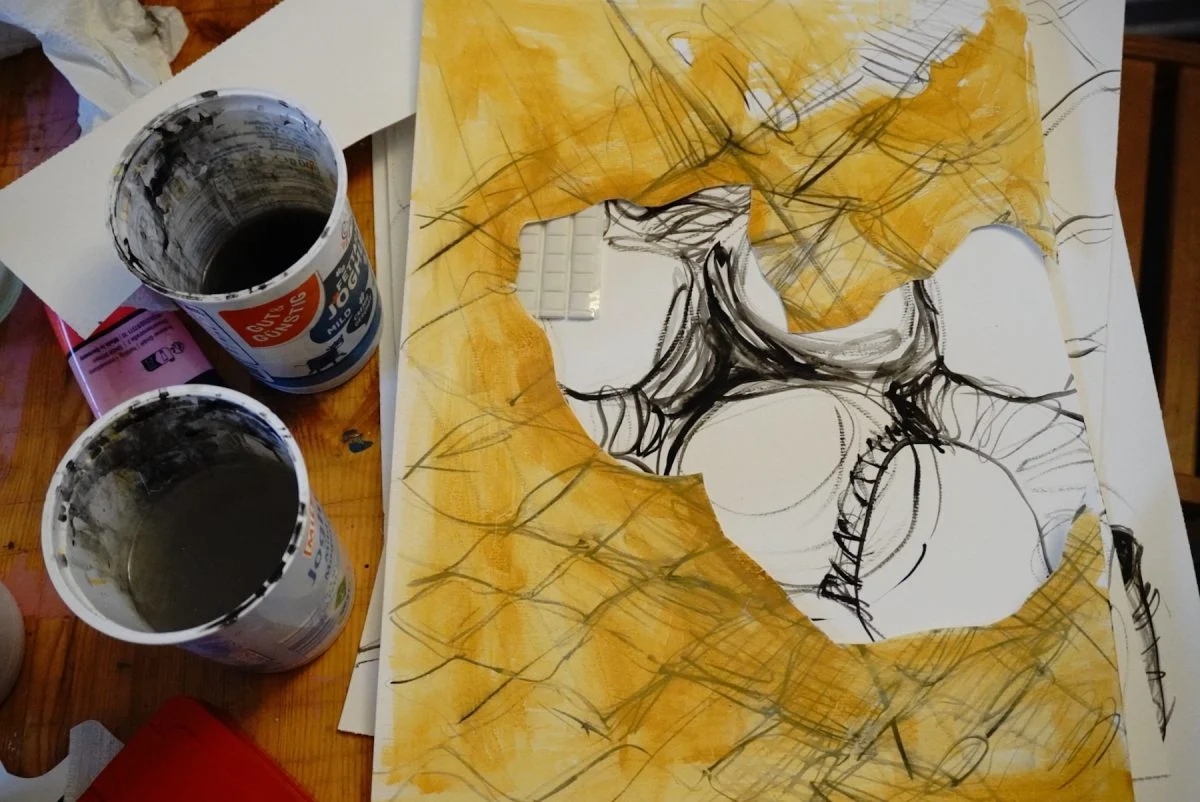
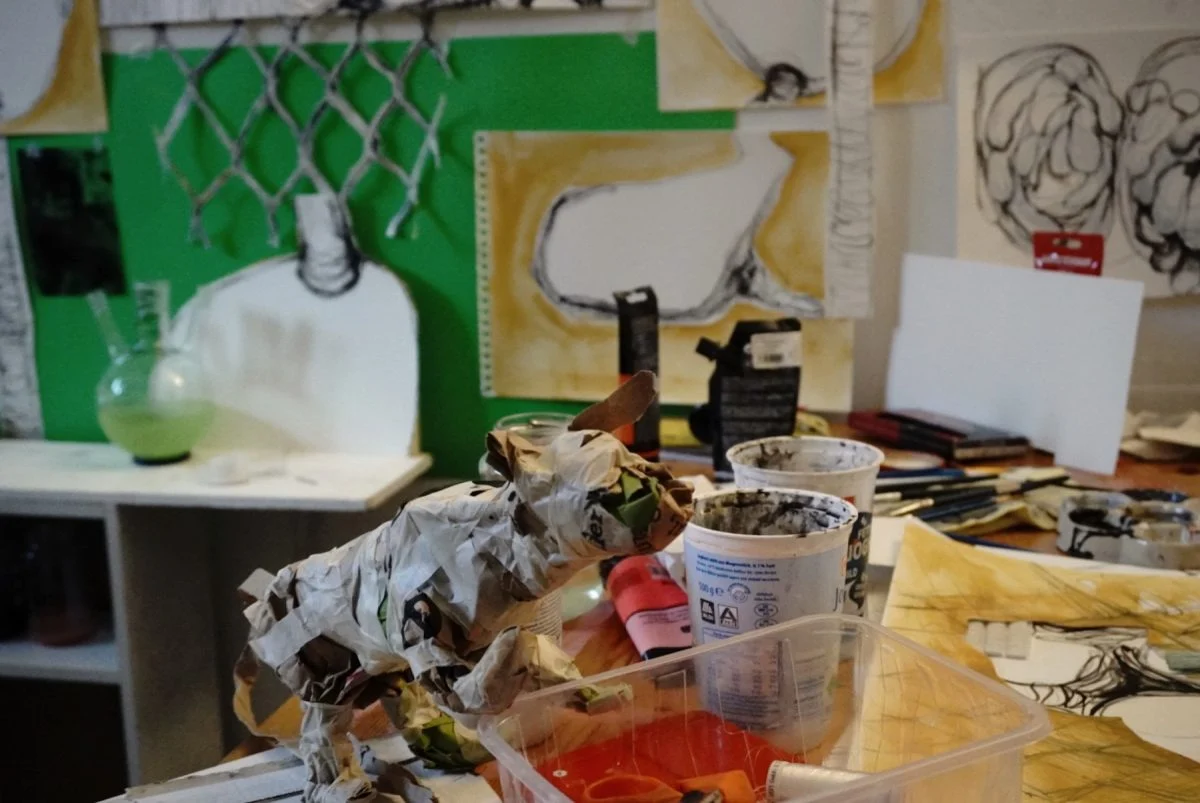
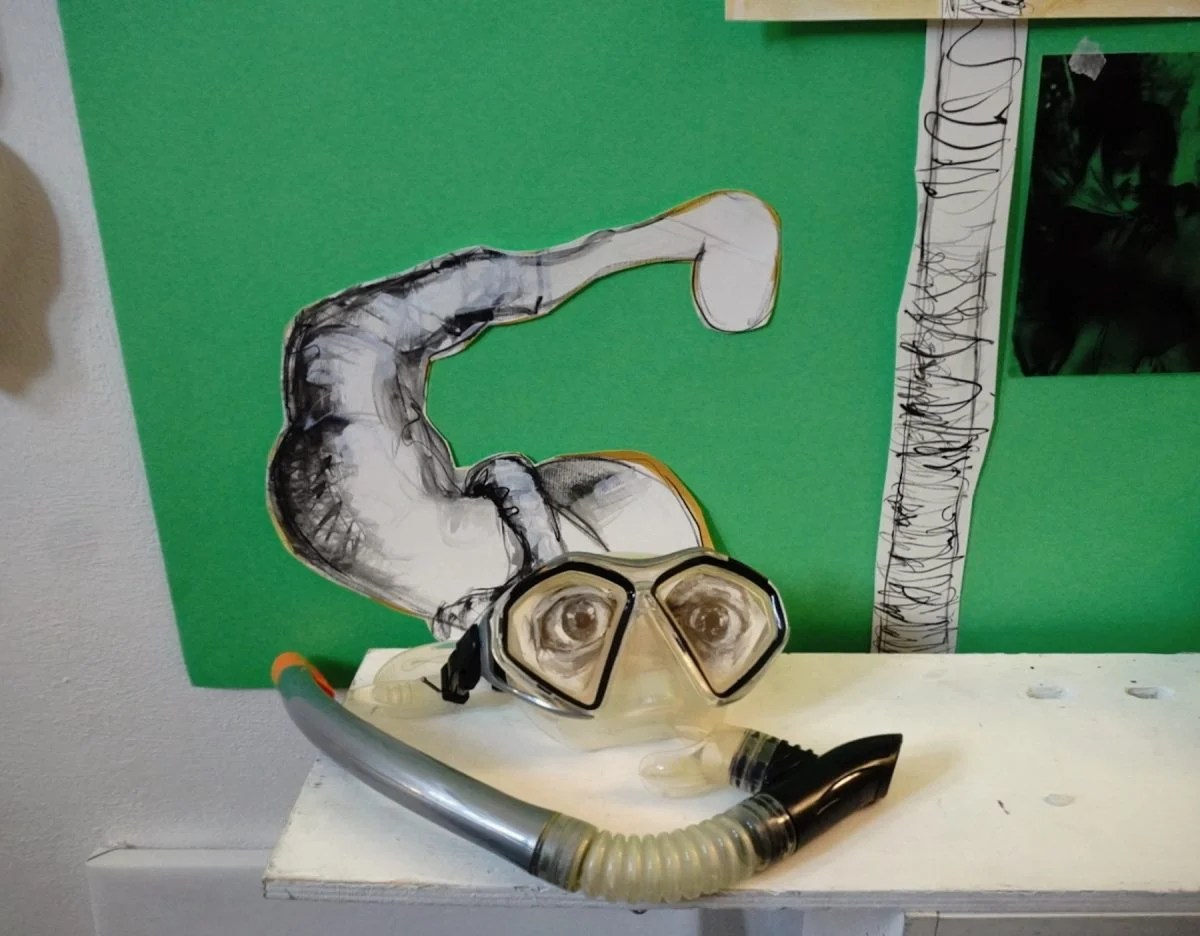
     

    Going back to the website you made and having smartphones serve as a digital matrix for human interaction–what are your expectations and realities for this project?

    Once I start thinking about this, I realise how many things are out of your control when you open something up to the public. I am trying to balance authentic exchanges with people, while also having some restrictions so that it’s appropriate enough. I don’t need it to be super family-friendly, but I do want some control over how people interact with it.

    My core issue is regulation. I want there to be anonymity, so people can feel liberated to participate authentically, but this opens up opportunities for misuse or offence. In the digital world, people often behave differently than they would in a public context.
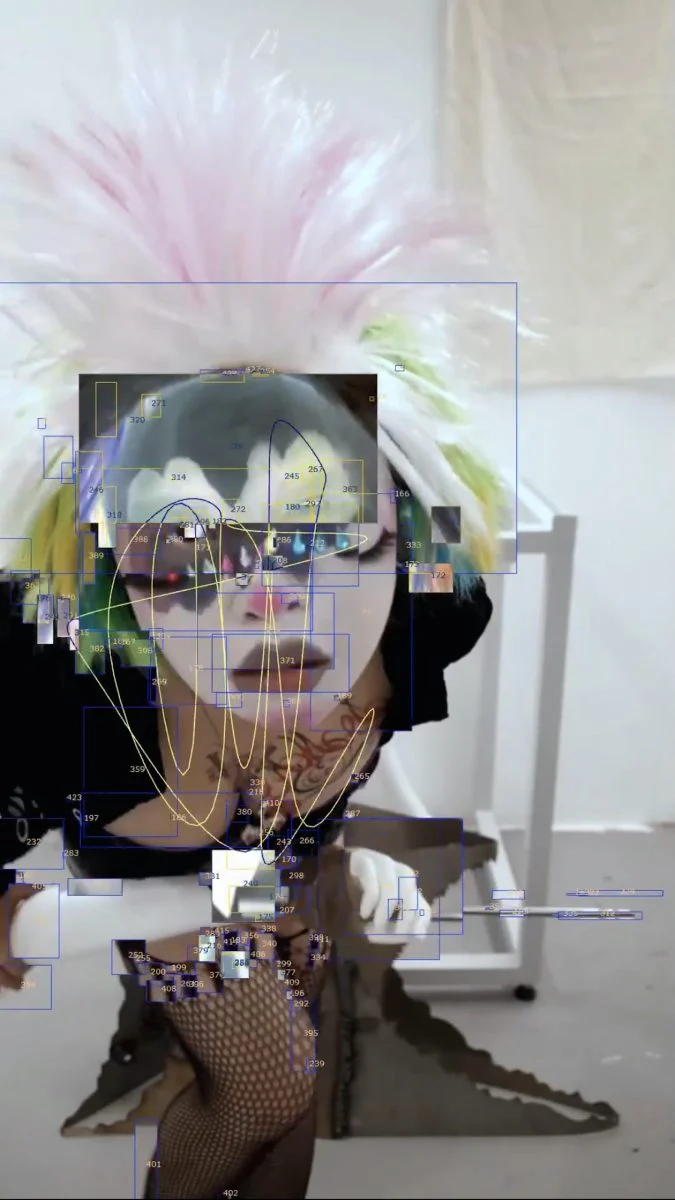
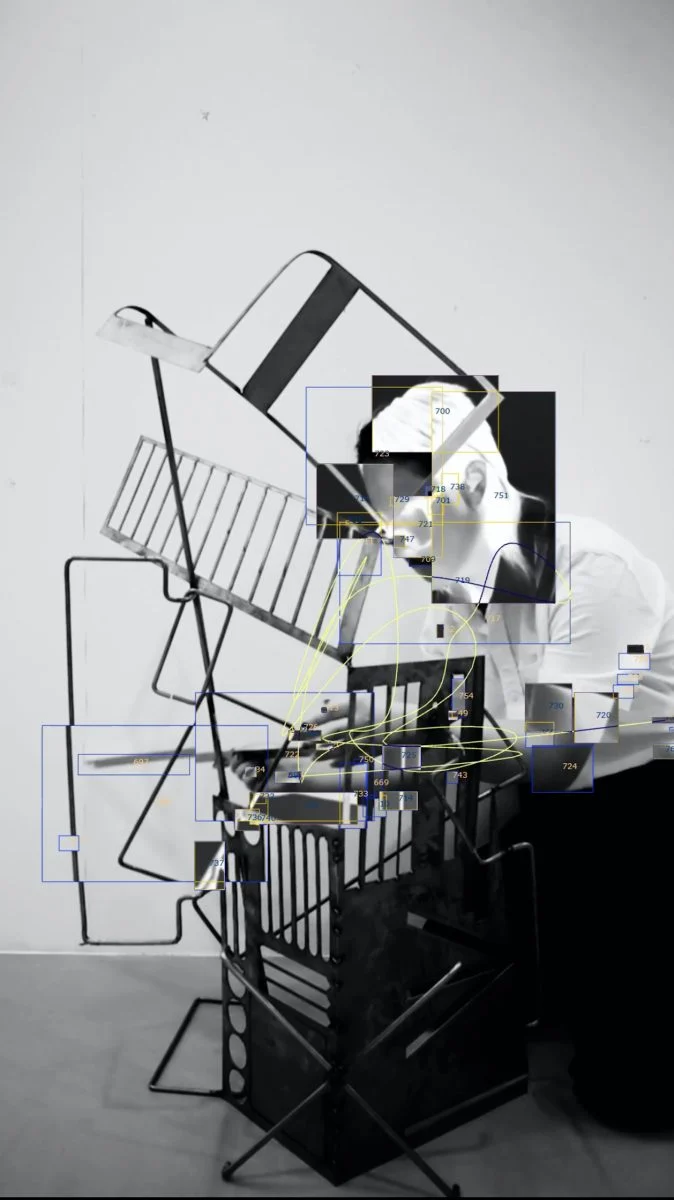
    I’m trying to make my screenshot exchange project carefree and fun, while still leaving room for participants to express a bit of vulnerability through their anonymity. I’m also considering how to moderate if I immediately approve and publish things online. There is a lot of joy from the immediate gratification of seeing one person’s clutter interact with another’s. But immediacy leaves no time for moderation. It’s a balancing act between joy and oversight.


    Interview Shay Rutkowski (@sruutrut)

    Photos Yasemin Erguvan (@yaseminerguvan)

    • Statement
    • GlogauAIR Project
    • CV
    • Gallery
    • More

    Statement

    As an interdisciplinary artist, Andie explores moments of connection within public spaces, particularly the physical and emotional traces left behind as we share space with strangers. Her process is both archival and expressive, documenting socio-material exchanges that evoke humour, joy, and discomfort.

    Her oil paintings serve as narrative accompaniments to these exchanges. She depicts quiet interactions between people, their behaviours, their fixations and their props, in moments that might otherwise have been forgotten. In this way, her figurative paintings elevate the mundane, drawing attention to the beauty of everyday objects and interactions.

    GlogauAIR Project

    My project at GlogauAir invites onlookers to contribute their emotional and physical residue to form a collective portrait. Fragments—digital notes, screenshots, scraps, letters, video diaries, old clothes—will be printed, displayed, scrapbooked and archived across screens, installations and zines.

    I will also initiate these exchanges, through interactive digital platforms and installations, encouraging participants to form collective artworks together. In doing so, I seek to emulate the socio-material exchanges I observe organically in public spaces, and use it as a tactic to cultivate connections between strangers through artmaking and archiving.

    CV

    Awards.

    • National Emerging Art Prize Finalist, October 2024

    Shows.

    • Brunswick Street Gallery ‘Centrepiece’ Show, December 2024
    • Menace Co. Group Show, September 2024
    • No Vacancy Annual Exhibition, August 2024
    • iSquared x Modulr Studios Group Show ‘Burnt Toast’, July 2024
    • iSquared Gallery Group Show ‘Let Them Eat Cake’, May 2024
    • Gemzine x Neon Parlour Group Show, March 2024, Neon Parc Brunswick / Neon Parc South Yarra
    • Berlin Art Institute Fellows Exhibition, July 2023
    • BAI Open House & BAI Fellows exhibition, June 2023
    • Brunswick Street Gallery ‘Fifty Squared Art Prize’, July 2023

    Residencies.

    • Can Serrat Art Residency, June 2025
    • Berlin Art Institute Residency, January 2023

    More

    We do not have any further information at this time.