Archives: Artists

  • Ashley Kraynak

    Ashley Kraynak

    Ashley Kraynak is GlogauAIR resident
    from July, 2025 to September, 2025

    Ashley Kraynak is a graduate of Art History, with a minor in Philosophy, from the University of California-Los Angeles. Her undergraduate studies focused primarily on contemporary art and its position as an instrument for social change and conversation. She is interested in relating themes of human connection and comfort with urban landscapes and movement.

    She gained experience in contemporary art through work at both the Hammer Museum in Los Angeles and Altman Siegel Gallery in San Francisco. In the fall of 2024, during her six months studying Art History abroad at Humboldt-Universität zu Berlin, she developed curatorial experience as a Curatorial Assistant at GlogauAIR.

    Meet the Curatorial Resident

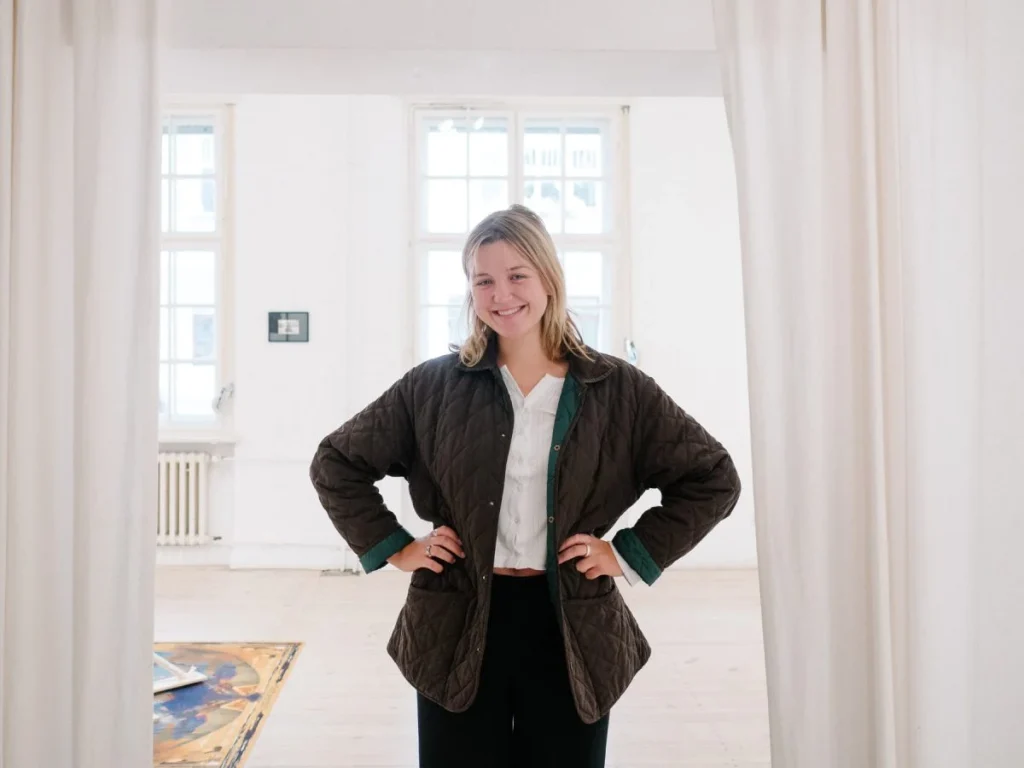
    Could you tell me about your background and the project you’re proposing for this three-month curatorial residency at GlogauAIR?

    I am originally from San Francisco. I studied art history at UCLA and I just graduated in June. I studied abroad at Humboldt University in Berlin last year and I was a curatorial assistant at GlogauAIR, that’s how I got connected to the curatorial residency program, which is fairly new as we know.

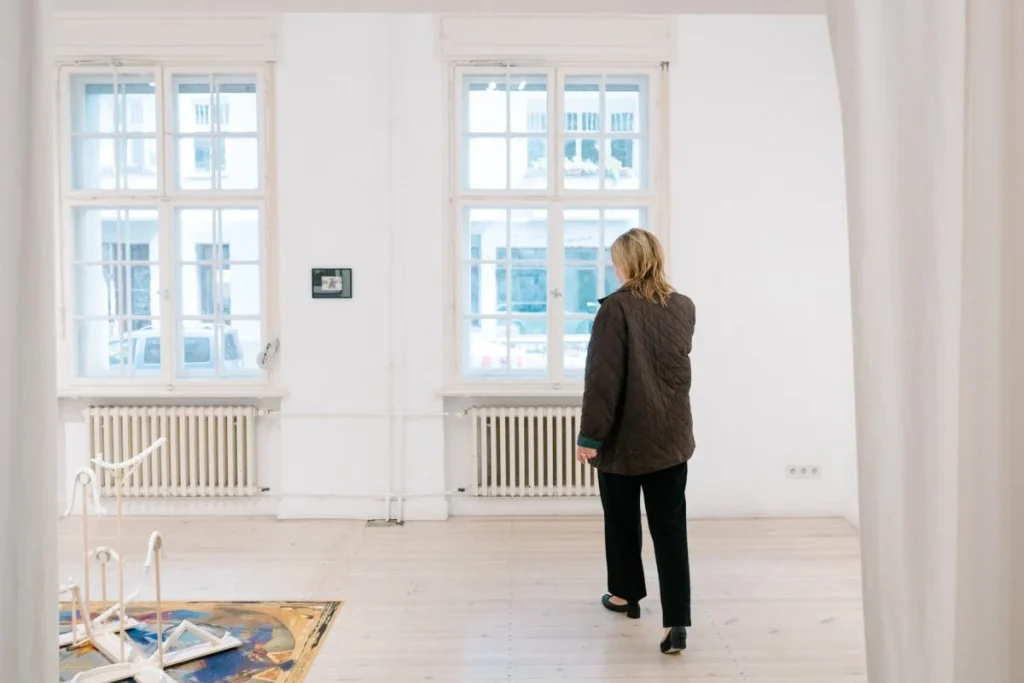
    The project that I proposed is based on the idea of home and comfort. I think it started because we’re in an artist residency, so it’s different from your typical gallery space, because the space itself is a little bit more homey. It has these windows and heaters that remind me of an apartment. It interests me how certain spaces can provoke emotions. Experiencing the city in my solitude and it being kind of lonely but also getting to know people and visiting their homes and as I made friends, but also understanding how lonely a city can be and make you feel all had an impact on my topic.

    I was searching for my home away from home because California is so far away, so that’s how the concept for the exhibition came about in the first place.

    You’re interested in the relationship between human connection and comfort within urban landscapes. In this sense, what inspiration do you draw from Berlin? How do you see these themes represented in the city?

    I think what happens with human connection in a big city is very interesting as opposed to any other smaller city where the life rhythm is slower, many people live with big families— and you hang out with your family a lot. But here, especially in the art world, there are many young people who come alone. On one hand there’s a great sense of artistic community, but on the other hand, the city is always changing and growing and there are new people leaving and new people coming in, and that can create feelings of loneliness. It can also be exciting, but it means that you seek out comfort in different ways.

    In the winter, when I was studying alone, I felt that friends were the warmth and the comfort that I needed. They were my home and now that it’s summer, I see the same thing, but in a different way – on the balconies a lot of people having wine with their friends and enjoying the long sunshine, and when I see things like that, I’m picking up ideas for my concept as well, like who do you invite into your home and to the different rooms of your home.

    Have you managed to find this home feeling in the city so far?

    I would say so. Even beyond the fact that a lot of my friends that I studied with live elsewhere and they have gone back home, I found that the more I find out about Berlin as a city, the more I like it, and there’re many places that I used to go to frequently…so it becomes more like home even though it’s nothing like California by any means. I find little bits and pieces that I relate to and it feels nice to know my way around nowadays.
    I know that you were recently choosing the artists for your upcoming exhibition. How did you manage the selection process? Have you faced any difficulties in it?

    I would say the restriction was that artists needed to be based in Berlin. That way transport was easy, and they could attend the opening, but that wasn’t too difficult because there are so many artists in Berlin. It was actually fun to try to find them, and I checked out so many artists and found other ones too because I had a long list to go through. For selecting the mediums, I’m really drawn to photography, for example, since it’s a personal hobby of mine, and I loved Giulia Gr’s work. That part of the selection process was the most fun, because we could go through her whole archive together. I also liked working on diversifying the paintings included. Arbnor Karaliti’s paintings have these beautiful colors and very realistic characters, while Suzanne Levesque’s pieces are generally darker and a different medium – they include textiles. One difficulty was my worry about whether the pieces would blend smoothly when hung next to each other, but I think ultimately their differences are what give the concept depth.

    Could you expand a bit more on the themes that will be represented in your exhibition? How are you planning to present these concepts within the space in our project space?

    Because I have the three rooms in the project space, I want to organize them not necessarily like a moving narrative, but bits and pieces depending on the room of different elements of what you do in a home, maybe even what you do outside the home, and what a space makes you remember, and what it makes you feel. For example, the first room will address the concept of dream life, and there’s some surrealistic art that I’m interested in for that.

    The works of one artist I visited, Jonathan Esperester, depict a sort of dreamscape. They all have beds and sometimes paintings on the walls, sometimes there is a dark figure in the corner, which he said reminded him of dreams from his childhood. Often the center is more detailed, and it fades out around the corners – it’s like you’re having a dream or at least remembering something. Either way, there are elements of the subconscious present.

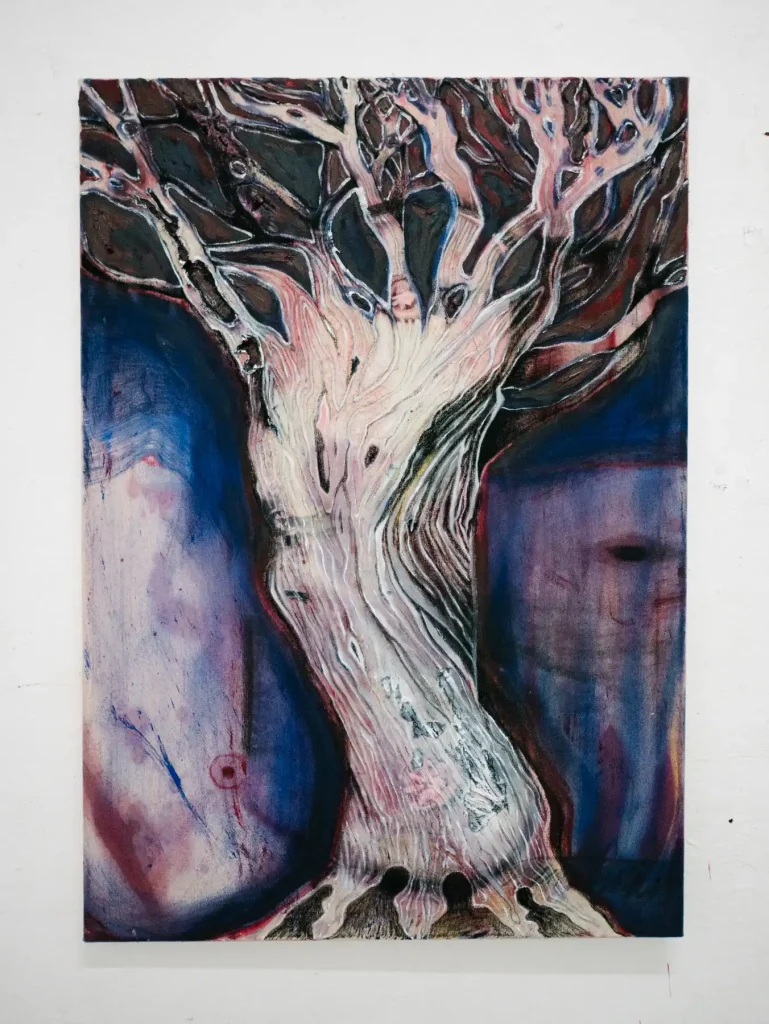
    Suzanne Levesque, like I mentioned, works with patchwork and textiles on the canvas – there are little pieces here and there of bedding, pillows, and fabric, even things like little paintings she passed by in her childhood home. It made me think about how we grew up and where we grew up has so much to do with who we are now, and the things that we dream also have to do with who we are and what we want or what we’re scared of, so I was really interested in that. I want my personal experience in Berlin to be a part of the exhibition as well, solitude but then also togetherness. I like that because it’s personal for me but for many people as well, especially in a city. It’s like, I’m alone but I have a community wherever I go, in any space.

    Interview Vanesa Angelino (@vaneangelino)

    Photos Leon Lafay (@leonlafay)

    Statement

    Ashley Kraynak is a graduate of Art History, with a minor in Philosophy, from the University of California-Los Angeles. Her undergraduate studies focused primarily on contemporary art and its position as an instrument for social change and conversation. She is interested in relating themes of human connection and comfort with urban landscapes and movement.

    She gained experience in contemporary art through work at both the Hammer Museum in Los Angeles and Altman Siegel Gallery in San Francisco. In the fall of 2024, during her six months studying Art History abroad at Humboldt-Universität zu Berlin, she developed curatorial experience as a Curatorial Assistant at GlogauAIR.

    GlogauAIR Project

    Ashley will participate in the curatorial residency at GlogauAIR through an exhibition titled The Residence. The project will present various works that navigate the fluid and multifaceted concept of home. It will explore how personal and collective histories shape our understanding of a “residence”, whether as a place, a memory, or an emotional state. As a reflection on the connection between inhabited space and identity, a landscape or a home can be a symbol of either peace of anxiety, depending on its capacity to shift, stay static, welcome in visitors or reject them.

    CV Summary

    Education

    • 2021 – 2025 BA Art History, Minor in Philosophy, University of California-Los Angeles
    • 2024 – 2025 Study Abroad, Humboldt-Universität zu Berlin

    Work Experience

    • 1/2024 – 6/2025 Gallery Ambassador, Hammer Museum
    • 10/2024 – 12/2024 Curatorial Assistant, GlogauAIR gGmbH
    • 6/2024 – 8/2024 Gallery Intern, Altman Siegel Gallery
    • 9/2023 – 6/2025 Treasurer, Art History Undergraduate Student Association
  • Rita Fernández

    Rita Fernández

    Rita Fernández is GlogauAIR resident
    from July, 2025 to September, 2025

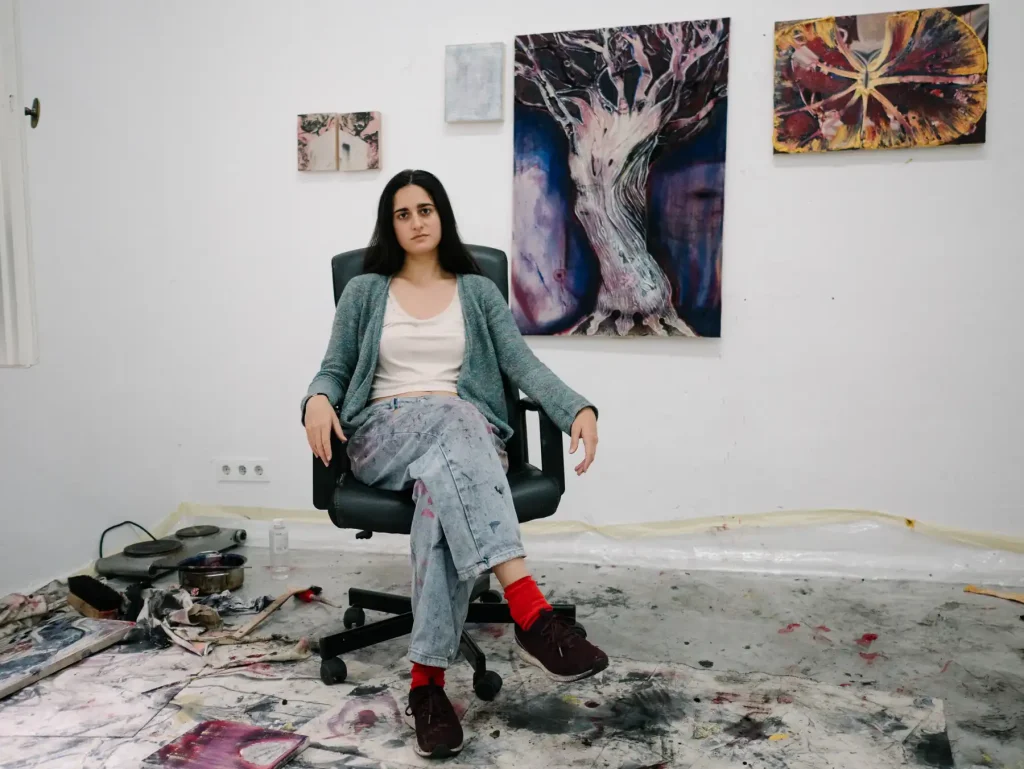
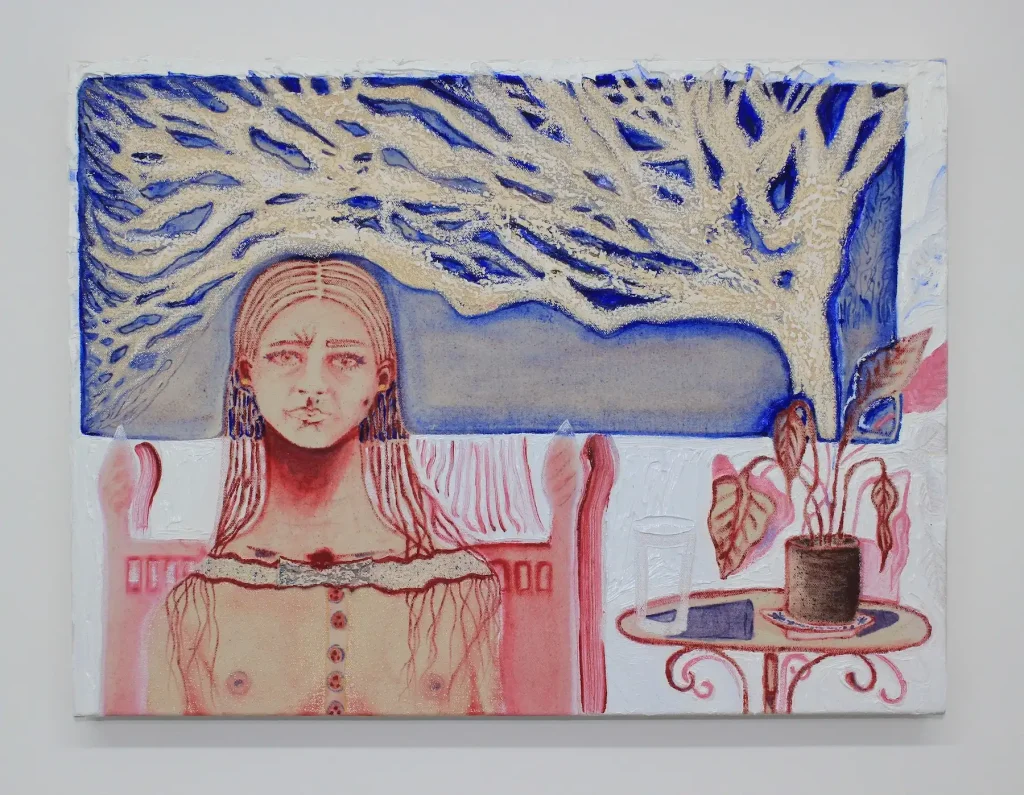
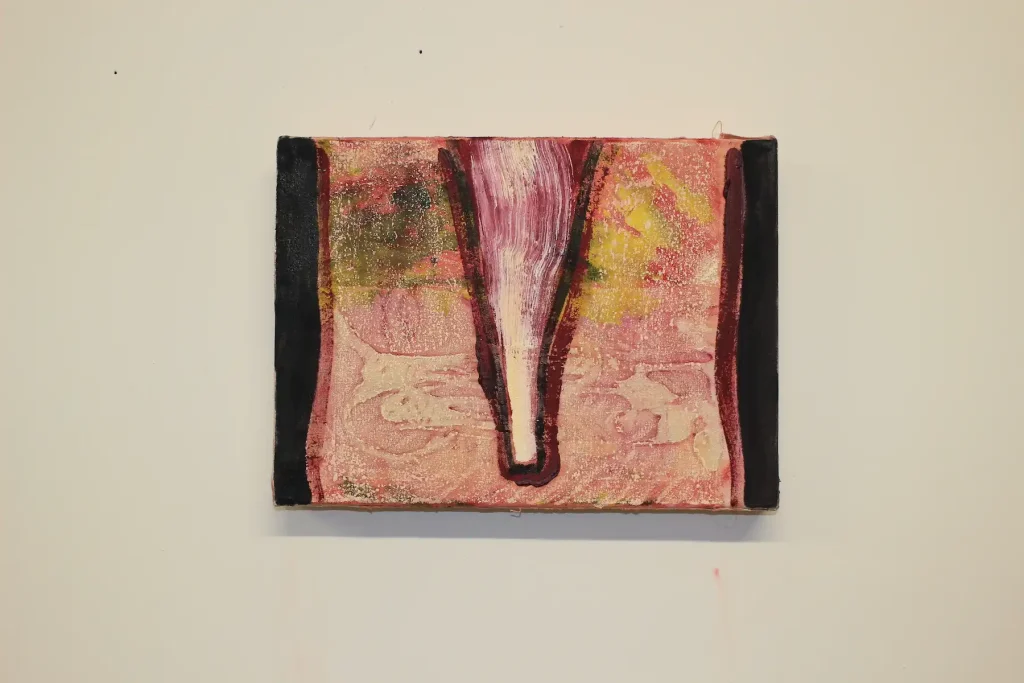
    Rita Fernández’s work is an exploration of self-portraiture and its limits. Through the dissection of personal experiences and striking images gathered from memories, dreams and the daily life, her work is a constant inquiry about the self and what constitutes an identity. Fernández likes to consider her practice as a matrix of self-reflection and representation. Her philosophical formation plays an important role in the way she conceives and approaches the creation of her artwork.
    Cover photo by Gonzalo Maggi


    Meet the Artist

    Could you tell us a bit about your artistic background and the project you are proposing for this three-month residency here at GlogauAIR?

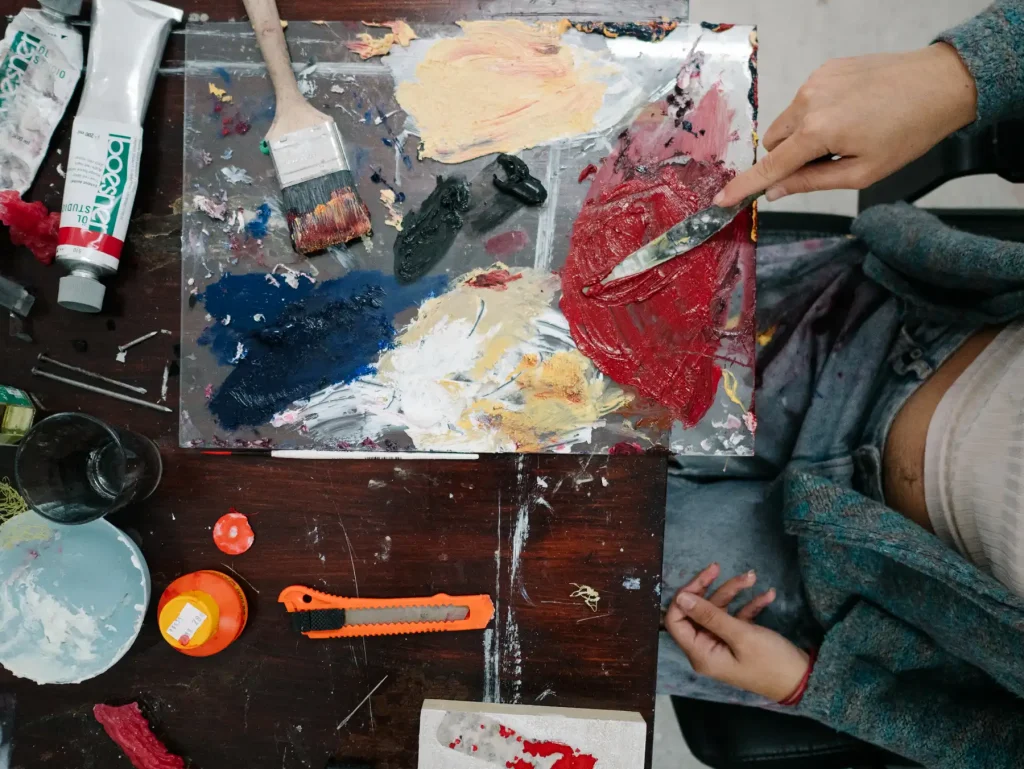
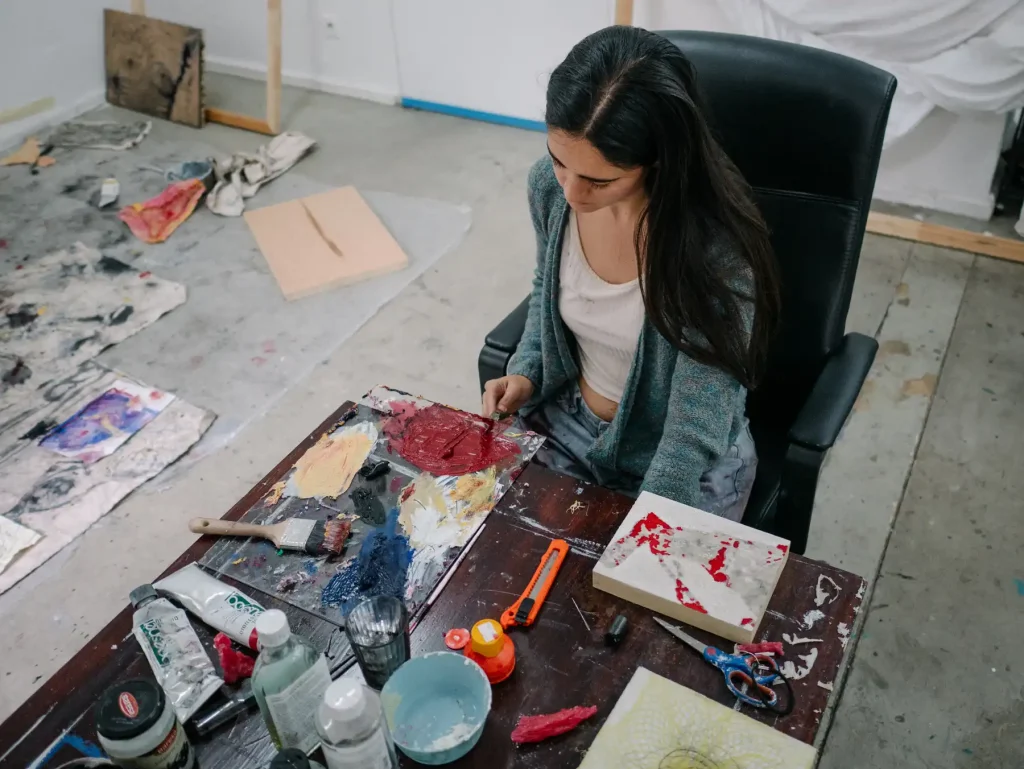
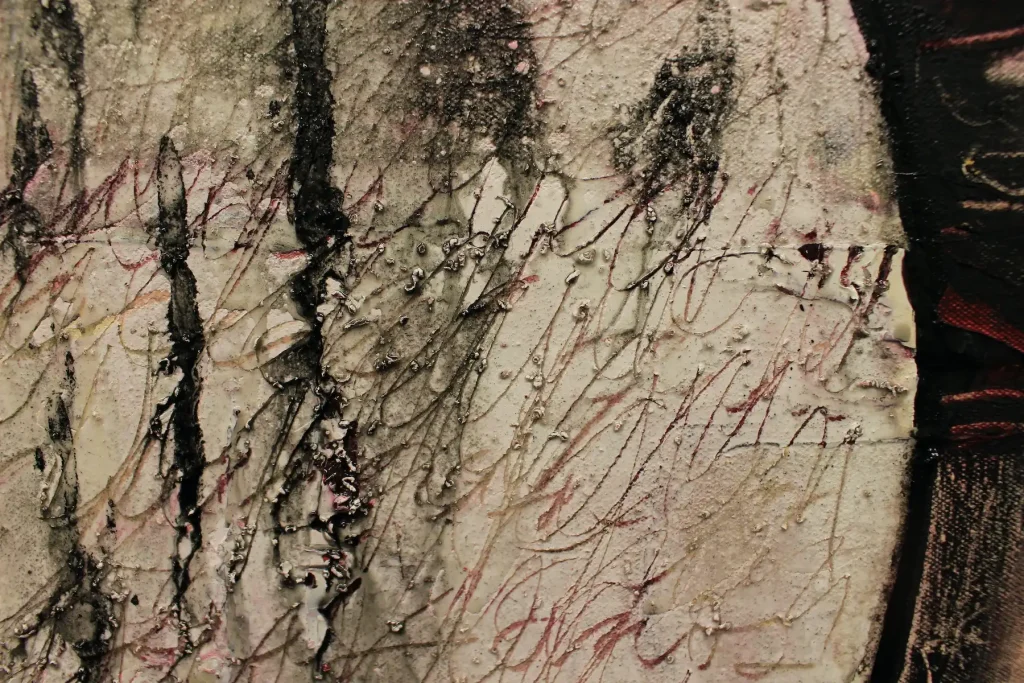
    I’ve been painting since I was 15, but I decided to study philosophy first and then did my master’s degree in painting at the Royal College of Art in London, where I’m living right now. So, my background is mostly painting, drawing, and occasionally ceramic and sculpture, but my practice is mostly based within the materiality of paint.

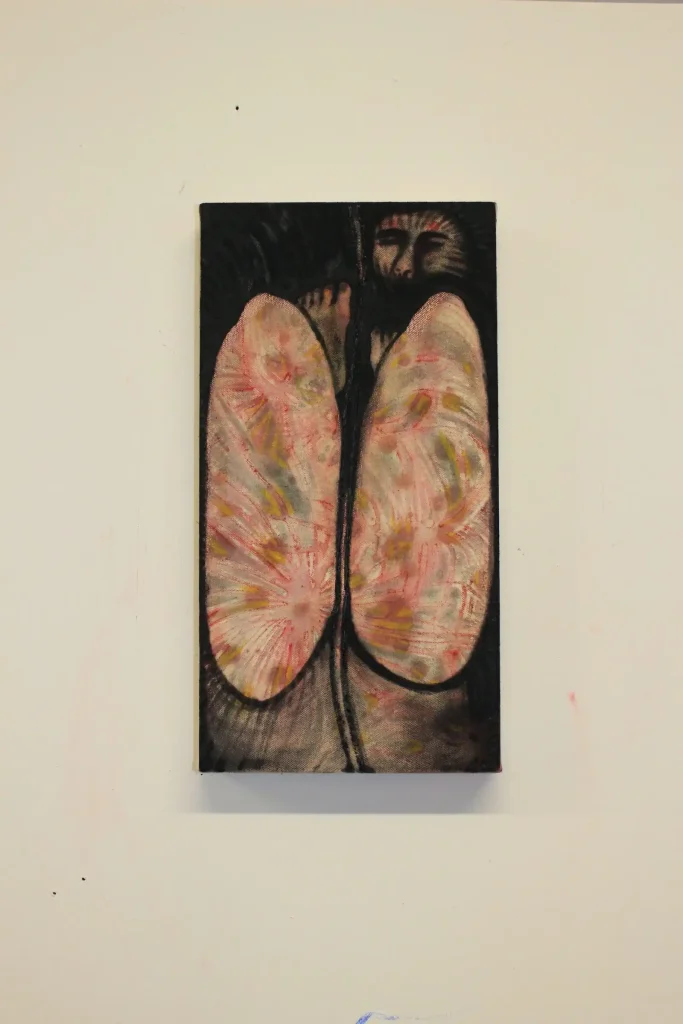
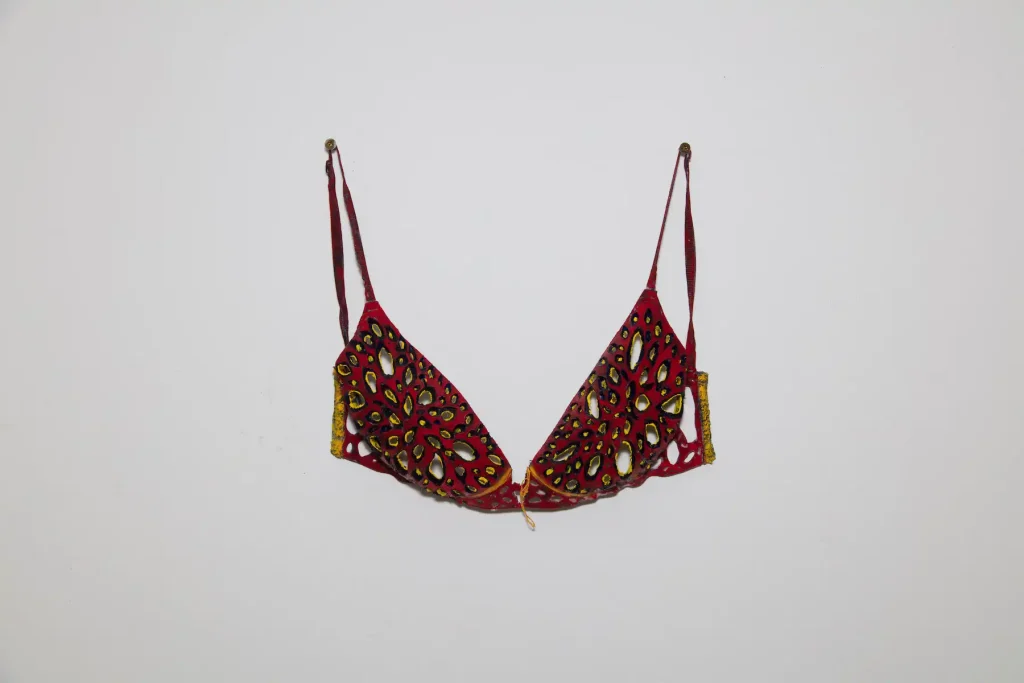
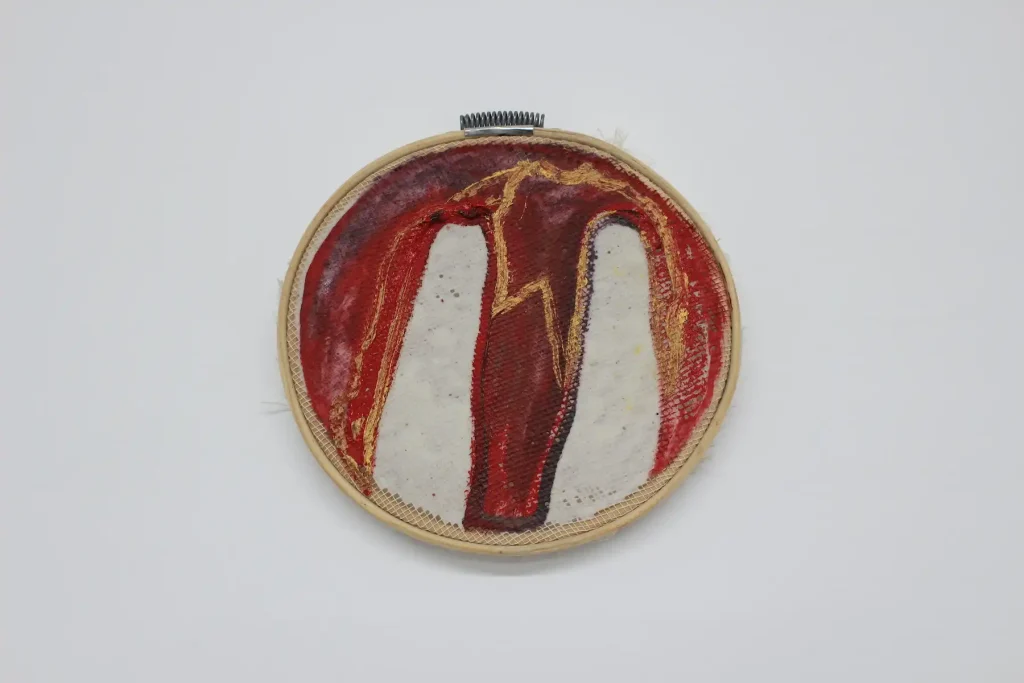
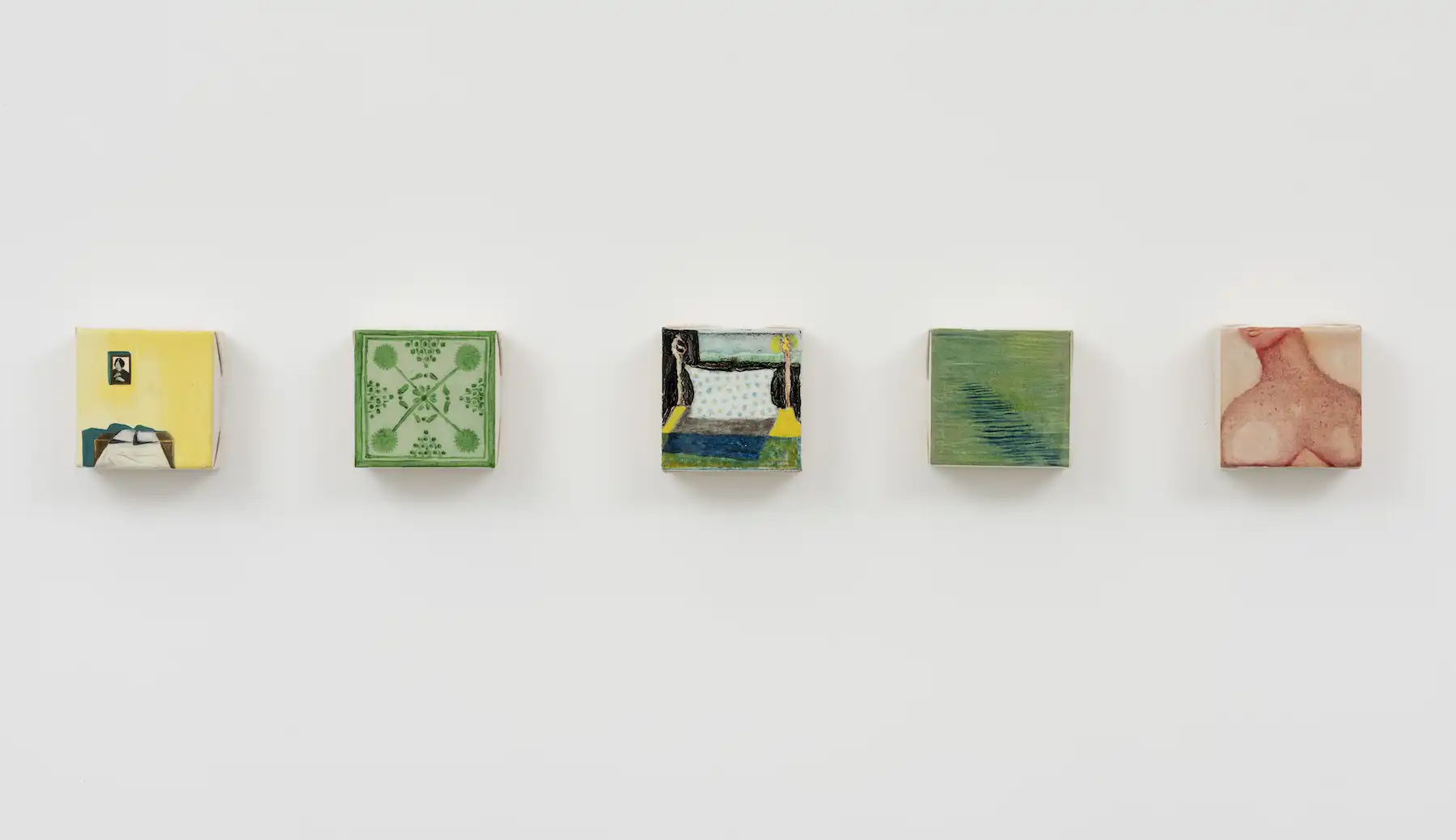
    The project that I’m doing at GlogauAIR is related to things that I’ve been working on for a long time, mostly related to self-portraiture but I don’t like to talk about self-portraiture as what people in general would think about, the depiction of the artist, because there’s a huge cultural background behind it. I like to think about self-portraiture as a matrix for defining identity and the self. What I do is mostly related to my own body, through a feminist lens of course, because in Mexico feminism is very important not only ideologically but as a way of survival too, considering the violence against women that is happening there. For the project here, I’ve been thinking about this concept from Clive Cazeaux, a philosopher who talked about the materiality of the concepts. I want to play with the concept of intimacy but by grabbing the intimate object like underwear and using it as a painterly or mark-making object.

    What led you to work with underwear and what role does it play in the narrative of your artworks?

    In the beginning, the underwear was something very playful and not so straightforwardly conceptual. It started after my degree show at the RCA. The studios at school were quite empty because most of the students had left, but I stayed for a month alone in what used to be a studio for eight people and I had a lot of space to play around in. I remember I was doing laundry one day and I had this very old bra that I took out of the laundry and I thought: I cannot wear this anymore! So I’m going to make something with it. I brought it to the studio and cut pieces of it, then painted on it, and it ́s through the playfulness of the material that the idea came to mind. In terms of the narrative in particular, it remains as an ongoing process. I like this idea of using not so typical materials and inserting them in a painting to make it more personal. Underwear in particular seems like the most directly personal item of clothing too, something worn by only one person, in this case, myself.

    In your work, we can see many fragments of the female body represented. How do you see women’s empowerment within today’s social and political context and how does your current work connect within this context?

    I think right now there’s a lot of feminist art that has been going on for many years and the idea of being a feminist artist can also be a bit limiting for women artists in general because a lot of us do make feminist work, even if we don’t try to because it’s a way of survival, right? A way of contesting or responding to what’s going on. In my particular case, a lot of the representation the body comes from my upbringing in Mexico, where I felt very observed as a teenager by older men, and I always heard comments like: “You have to take care of yourself”, “Don ́t show too much”, and so on. So hearing these things repeatedly while you are growing up makes you inevitably more aware of your own body in a way that is a bit foreign, because you’re not thinking of your body as how you perceive it, but as how the rest of the world does.

    That ́s why a lot of my paintings or drawings are from this first-person perspective because I feel like I ́m regaining that power of how I look at my own body regardless of what the rest of the world thinks of it.

    How do your final pieces interact with you and your personal life, and how do you see your evolution through them?

    My work is deeply related to what I’m going through at the moment of the making. It’s just as immediate as it’s personal. It responds to an urgent need to somehow externalise what’s happening in my head at the time, not just because of a need for expression, it’s mainly a materialising and visualising need. My brain requires to see and touch what I’m feeling and thinking. Painting is useful in this situation as it’s a combination of these two things: images and materials.

    Now, regarding the evolution, often, when I finish a work that I really like I have the feeling that the changes provoked in me by the work are greater than the ones that I am able to do to it. As if the creator-creation relationship was reversed, the work has transformed me in a more significant way than the fact of the creation of the work in itself. It ́s like I have to adapt to what has come up, to what I’ve made, which many times is something totally new and not too similar to other things I’ve done before.

    So, when I look back to old work I can see not only what I thought or felt during a particular moment of my life, but also what the work did to me, and how that transformation altered the following works.

    Statement

    Rita Fernández (b. 1999), is a Mexican artist graduated from the Royal College of Art (MA: Painting). She has a BA in Philosophy from Universidad Nacional Autónoma de México and a background in the film industry.

    Her work is an exploration of self-portraiture and its limits. Through the dissection of personal experiences and striking images gathered from memories, dreams and the daily life, her work is a constant inquiry about the self and what constitutes an identity. Fernández likes to consider her practice as a matrix of self-reflection and representation. Her philosophical formation plays an important role in the way she conceives and approaches the creation of her artwork.

    GlogauAIR Project

    The idea that I’d like to develop during my residency in GlogauAIR is to re-explore a project that I’ve called “Body-of-work”. I’ve been gestating this project since July 2024, within the last weeks of my MA at Royal College of Art. The concept is to create pieces with my used intimate clothing, such as panties, brassieres, etc. to play with themes such as intimacy, sexuality, privacy and identity. What I aim for with the intervention of the clothing is to investigate the body as an erosive medium and how to painterly play with the intimate material eroded by it. Theoretically, I entertain the idea of philosopher Clive Cazeaux, the metaphoricityof material to push for the maximum potential of significance of each of the paintings. On the other hand, in practice, I intuitively approach the materials and play with its pictorial possibilities. With this in mind, I intend to explore the depths of intimacy deposited in some objects, such as underwear, and other items of personal use.

    For the Open Studios week, I’d like to explore the possibility of playing with the possibilities of installation rather than the more traditional hanging of painting exhibitions. Of course, this will also depend on the result of the works created during the residency and they’re potential installation possibilities.

    CV Summary

    EDUCATION

    • 2024 MA: Painting – Royal College of Art
    • 2023 BA: Philosophy – Universidad Nacional Autónoma de México
    • 2020 Diploma: History of Mexican Art – Museo Amparo and Instituto de Investigaciones Estéticas UNAM

    TEACHING

    • 2024 Artist talk – TURPS BANANA Art School.
    • 2023 Teaching Placement – University of Westminister.

    SELECTED GROUP EXHIBITIONS

    • Body Songs. Fitzrovia Gallery. London. March 2024.
    • I am not cruel, only truthful. The Hockney Gallery. London. April 2024.
    • Master’s Exhibition. The Royal College of Art. London. June 2024.
    • Ripples. Hypha Studios. London. August – September 2024.
    • QUEER 3.0. Embassy of Mexico in The United Kingdom. London. August 2024.
    • The Epitome of Decay and Decline. Safehouse 2. London. September 2024.
    • The LIDO Open. The LIDO Stores. Margate. September – October 2024.
    • The Miniatures Challenge. Canal Boat Contemporary. London. November 2024.
    • Seeing Loud. Zebra’s Room at Hootananny. London. November 2024.
    • If Heaven Falls. The LIDO Stores. Margate. February 2025.
    • Fragmented Wholeness. London. Mucciaccia Gallery. March – April 2025.

    AWARDS

    • The HINE Prize 2024: shortlisted.

    RESIDENCIES

    • GlogauAIR, 2025.

    PRESS & PUBLICATIONS

    • Can you actually afford an MFA’s grad work?Plaster. 2025.
    • 6 London Art Graduates to Watch in 2024. Ocula. 2024.
    • Sarah Larby, Artists and Their Tools, UAL, 2024.

    Gallery

  • Suyi Xu

    Suyi Xu

    Suyi Xu is GlogauAIR resident from January, 2023 to March, 2023 and from July, 2025 to September, 2025

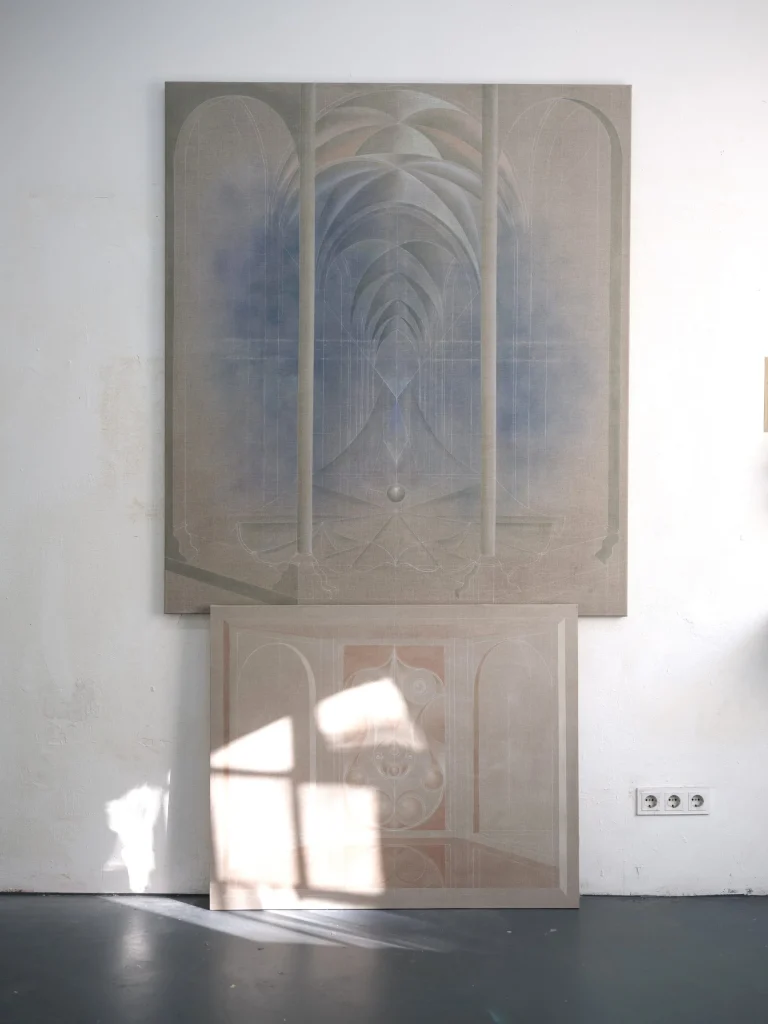
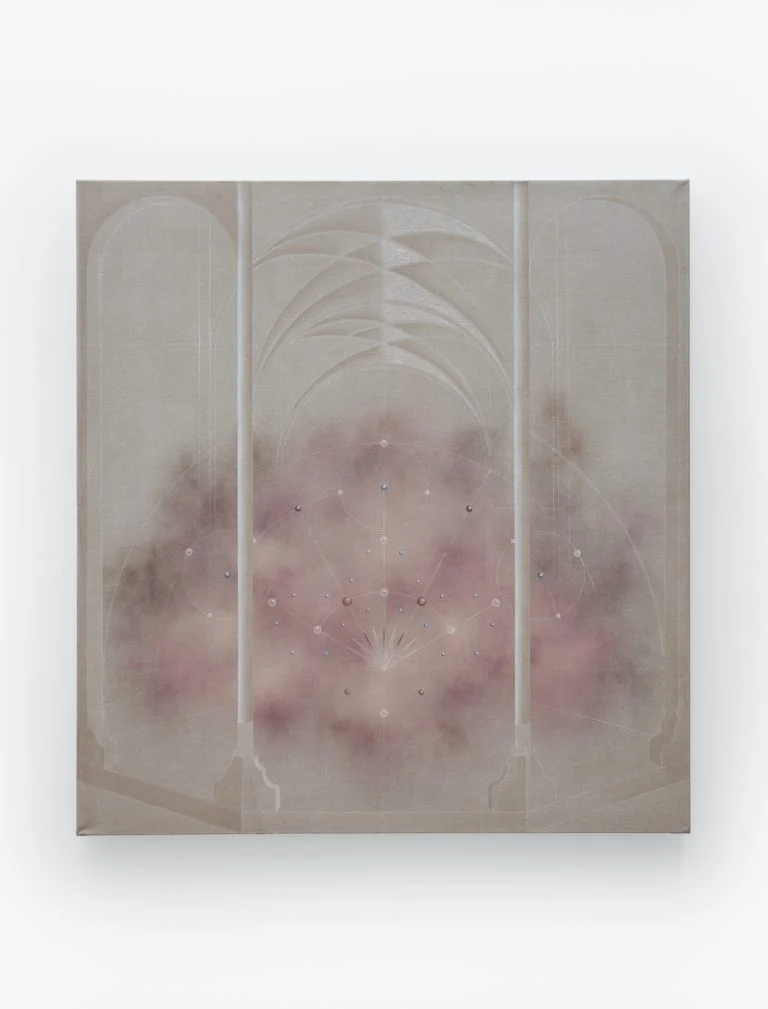
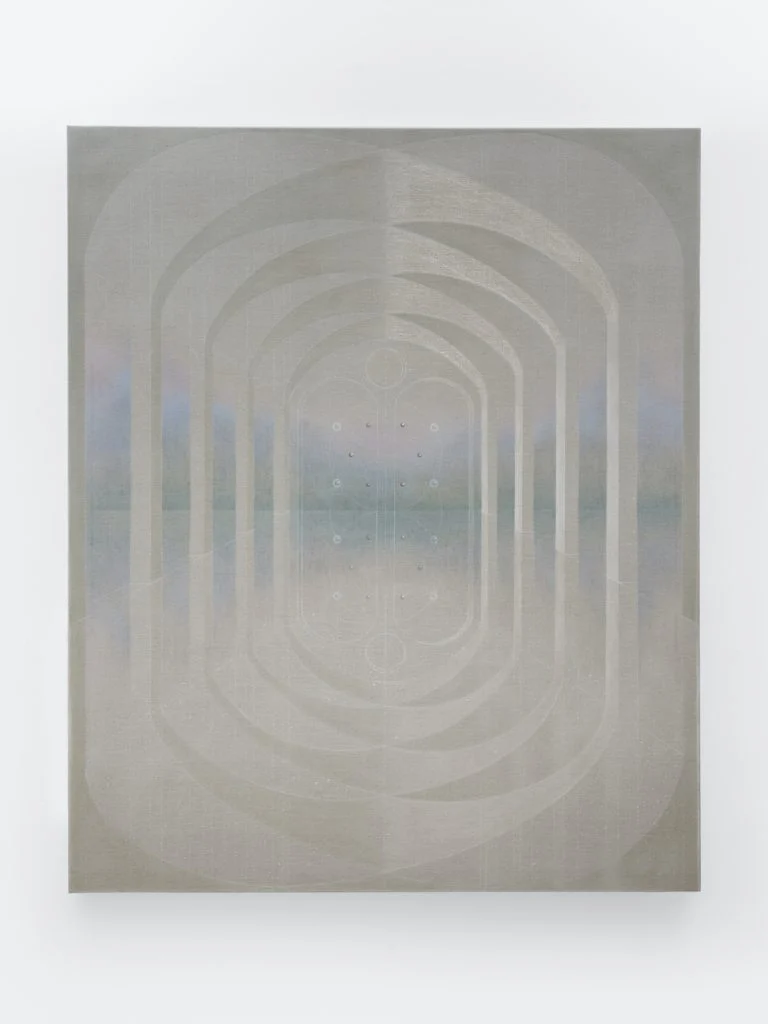
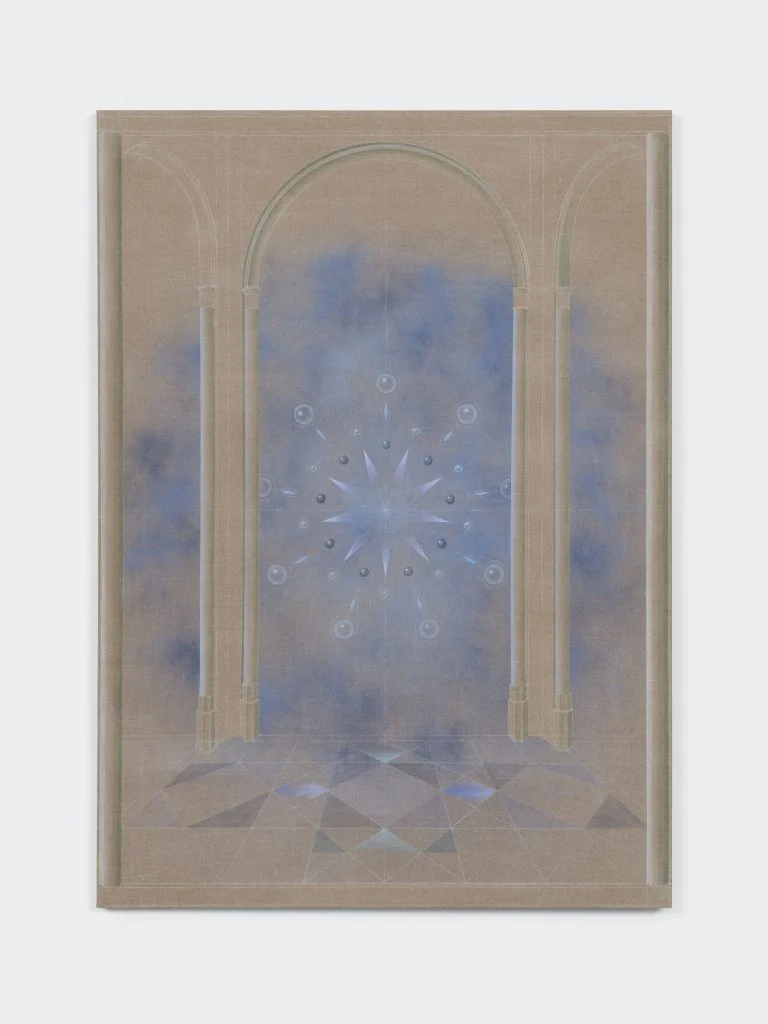
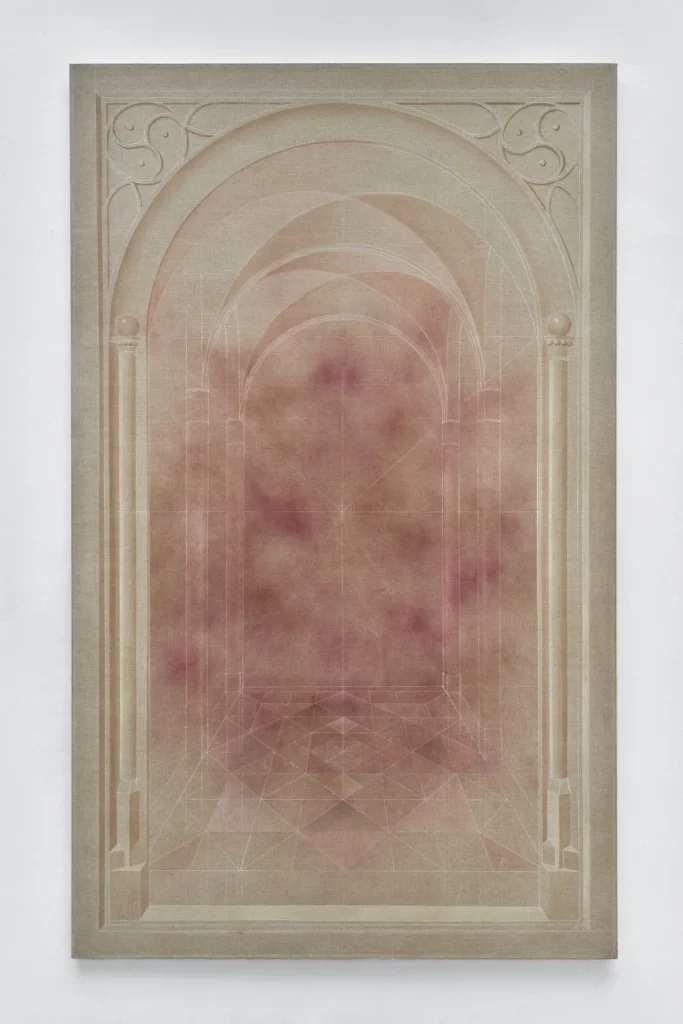
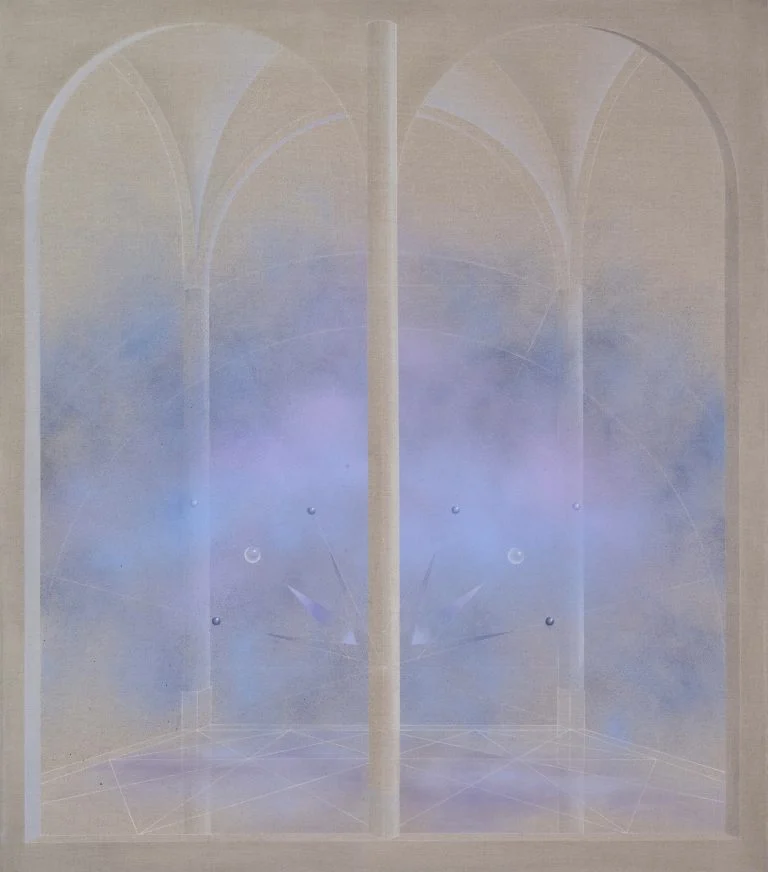
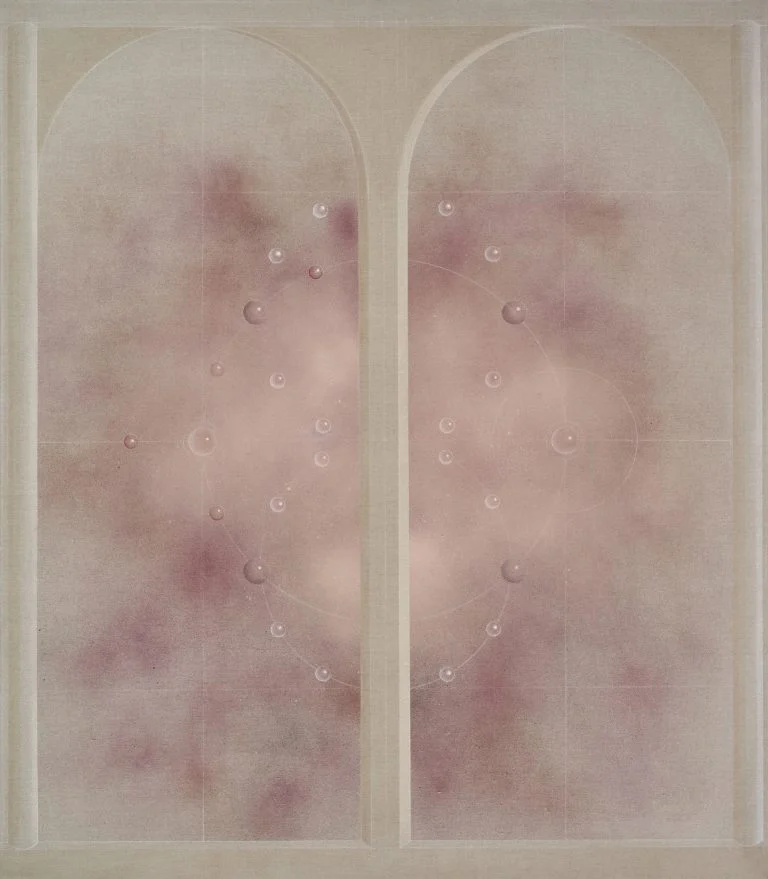
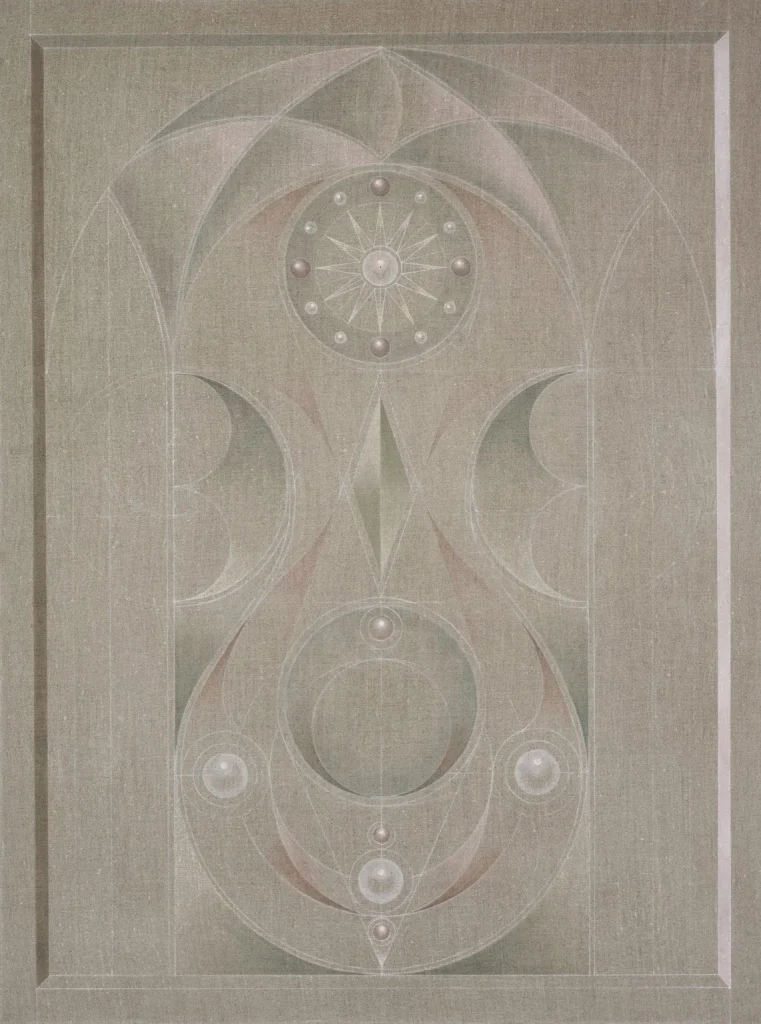
    In Suyi Xu’s paintings, space and light converge in contemplation. By blending historical references with counterfactual narratives, she questions the idealism and authorship of art history.

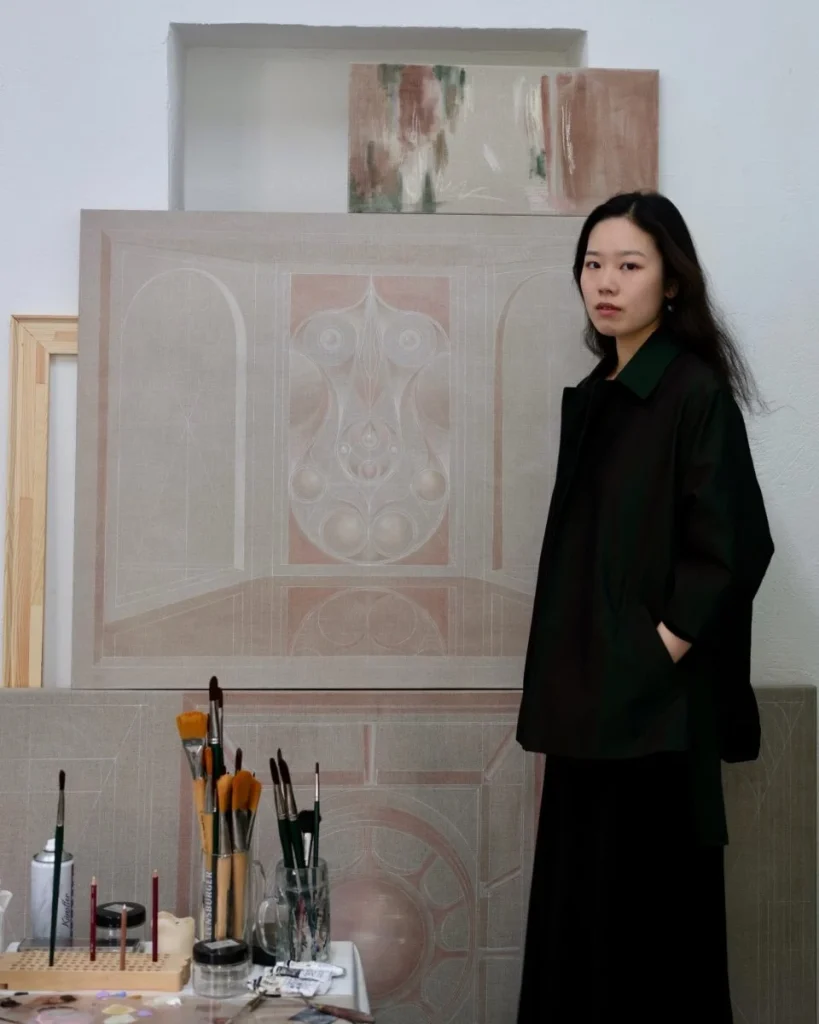
    Introducing this weekend’s online resident Suyi Xu, New York-based painter. Her practice contemplates space, interiors and architecture, morphing them into a study about light and color fields. In her paintings, historical references are interjected with counterfactual narratives, addressing the idealism and authorship of these, especially how western institutional spaces act as a site of worship and repository of power and knowledge.


    Meet the Artist

    Interview 1

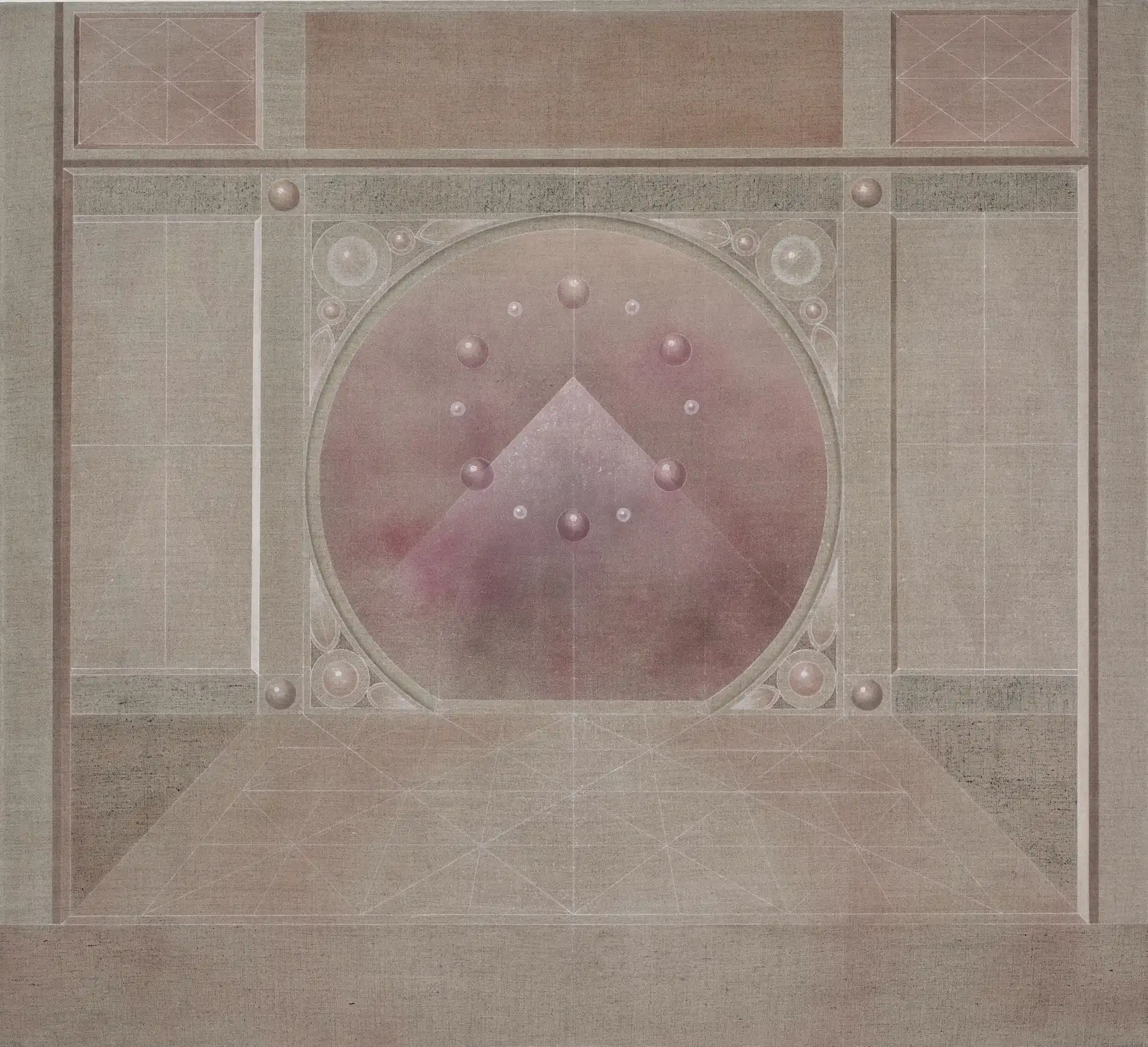
    In Suyi’s practice, painting is used as a way of embodied thinking, every painting has its own journey. Architecture provides a formalist composition where colors meet and interact: each block, each space, is a color field to play with light. By manipulating perspective, framing, and chromatic choices, she aims to merge subject matter with a formal consciousness and resolve the tension between two-dimensionality and illusions. The subjects are responses to the spiritual crisis of contemporary existence, and the method a visceral engagement with the painting medium driven by the idea of a sacred intent.

    Interview 2

    Can you start by giving us a background about yourself? How did you start making art? And how would you describe your current artistic practice?

    I came to painting late in college. I was studying art history and my art education was kind of like a mismatch of things. I was trained in the language of historical painting, but the mentor that I had for my painting was kind of a descendant of abstract expressionism. So, I see through every painting, even if they’re figurative, in the eyes of the formalist.

    I think my fascination with light or my major frame of influences is rooted in the Dutch Golden Age, especially the transcendent brushstroke of Rembrandt, as well as the vernacular of mystical painters and the color-filled movement.

    I can see from your artworks that your main inspirations are art history and museums. What can you tell us about sources of inspiration in general?

    I was really fascinated with historical museums because I think of them as sites of culture. Usually they’re designed in a way that’s very similar to cathedrals and churches. I found that parallel very interesting because they’re both like places of worship where people go there to see art and hopefully get some sort of transcendent experience. So I’m very fascinated with how they indoctrinate people through their monumentality, through beauty.

    Indeed, your paintings have this sort of holiness. I would say, they reflect a very spiritual environment. What about spirituality and this other dimension that emerges from your work?

    I think that I’ve always had a very fraught relationship with spirituality. I was raised atheist growing up, and it’s something that never came across my mind until I was in my early adulthood, when I first started living by myself in New York City. It was until then that I started to feel a hunger for some sort of spiritual experience.

    To me, spirituality means consciousness and embracing the unknown. I think that painting has been a really good medium for me to look for it. I still couldn’t really put it in words yet. But I think the closest thing that I could say that I want to reach is a form of grace.

    Your color palette is always very muted and soft. What can you tell me about it?

    There is a concept, that I believe was invented by Duchamp, called infrathing, which pretty much refers to the sensitivity to the most minute shade of differences. I found that really relevant to my use of color. I always tell people when they see my work that I want them to hold their breath when they see it. That’s how you can really see the differences and subtlety. And it’s also how I feel when I’m painting, that I’m holding my breath in order to express how I’m feeling.

    Do you have any anecdote or story from your career that had an impact on your work or on you as an artist?

    I think there was a very distinct shift in my painting from the time I was in grad school. When I first started painting, my work was very figurative.

    I made a lot of paintings that featured mostly a female protagonist on the center stage. To me figuration is meant to pleasure. And I used to be very indulgent with that pleasure, until I had one critique with my teacher. It was about painting that’s figurative, but the background is like this dark, moody interior space. The teacher was pointing at the figures in the foreground and said: “this is your conscious”. And then she pointed at the architectural details in the background and said: “this is your subconscious”. She also said that you convey much more feeling and stories through just the painting of pure space.

    Hearing that was like an epiphany and I started to gradually move away from the figure and pay a lot more attention to the background. And now my work has just evolved into pure space.

    What about your relationship with the art market and the art world? What goals do you want to achieve with your art?

    It’s not really a question that I think consciously. I think I’m a painter because it’s a persistent practice. It’s a nonverbal habit and it’s the only way I can exist in the world.

    Especially when I was in New York, I was almost reacting against what the art market or the contemporary art world has to offer. I think people were drawn to artworks that are much more stimulating, that grab your attention instantly, which is something that I was kind of rebelling against. There were moments where I felt very lost because all the works that are in my surroundings and got attention in the art market are completely different from what I’m making.But I was encouraged by a lot of mentors that told me to keep being persistent in what I do, because if I didn’t let my voice be out in the world, then there would only be the other voices.

    Why did you decide to join GlogauAIR? You were already an online resident. Do you find some differences in being on site? Is Berlin having an influence on you?

    I joined the online residency at a very strange time because I was in a transition phase and I couldn’t really travel or leave the U.S. due to visa problems. I think the online provided a really great framework for my practice, but the onsite is a much more visceral and much more influential experience.

    What I really love about being in a community of artists is how it really challenged my notion of comfort. Because when I am in New York, my practice is very solitary with very little interaction with other people in my daily life. My studio is in a very far off neighborhood. It’s very desolate. So, I found this merging of people and art really interesting.

    I also find there’s a merging between art and life, because I’m living in my studio, which is something that is also new to me. I used to be someone who always placed things in their certain drawers and categories and made things very organized and distinct. But I’m kind of embracing this fluidity of living with my art all the time.

    I think it’s a very exciting experience. Initially, it was a little bit strange to be always with my work and experience it constantly. But now, I’m also embracing this idea that being productive or being creative doesn’t always have to be the moment that I’m holding a paintbrush. It could happen any time during the day, through conversations, interaction with other people, or just taking a walk near the canal. It could also congeal into something interesting that will manifest later.

    For what concerns the city, I think Berlin has a different sense of time compared to the environment I’m used to living in. With this much slower, more intentional pacing of time, I think it also comes with more space. Here I feel more relaxed and more comfortable with myself as I can embrace this kind of openness in both the sense of time and space.

    What are your plans after the residency?

    I’m staying in Berlin for a month. Then I will go back to New York and work on some future group show projects there. And then hopefully I will find a way to come back to Berlin.

    Statement

    Suyi Xu’s recent works unfold a series of gridded planes, opening a study on perspective in which shapes and forms emerge from hazy mists like afterimages. She enacts the ritual of architecture, yet discards the integrity of architectural form in the process of making—horizon vanishes, perspective spins, interior folds inward, and spatial relations are obscured by sudden burst of light. The undoing stems from a desire to reach a state prior to reason and the conscious mind. Her fascination with the void in the center of the canvas is informed by Simone Weil’s spiritual philosophy of undoing the self.

    GlogauAIR Project

    During my residency at GlogauAIR, I wish to deepen my research into the interplay of surface, light, and spatial relations. Using my paintings as roadmaps, I wish to bring the ceremony of space beyond the medium of a two-dimensional surface. Focusing on temporal experimentation and chance encounter, I will explore how space can be experienced not as a static form but as a dynamic medium for movement and perception.

    CV Summary

    • Suyi Xu is an artist who currently lives and works in Brooklyn, New York.
    • Xu earned her B.A. in Art History and Visual Arts from Barnard College (New York) and her M.F.A. in the Fine Arts Department of the School of Visual Arts (New York) in 2022.
    • Xu’s work has been exhibited in the U.S., Europe, and Asia, including:
      • solo presentation at the Independent Air Fair with Europa Gallery (New York, 2025)
      • solo exhibition Apparitions (Mamoth, London, 2024)
      • Free Fall (Europa, New York, 2024)
      • All that is Solid Melts into Air (Fou Gallery, New York, 2022)
      • group exhibitions at Kasmin Gallery x Artistic Noise Benefit Auction (New York, 2025)
      • Perrotin (Shanghai, 2025)
      • Huxley Parlour (London, 2024)
      • Rachel Uffner Gallery (New York, 2024)
      • Openforum (Berlin, 2024)
      • Fortnight Institute (New York, 2023)
      • Galerie Hussenot (Paris, 2022)
    • Her works are included in the public collections of Powerlong Museum (Shanghai), Xiao Museum of Contemporary Art (Rizhao, China), and Long Museum (Shanghai).

    Gallery

  • Annette Karin Richards

    Annette Karin Richards

    Annette Karin Richards is GlogauAIR resident from July, 2025 to September, 2025

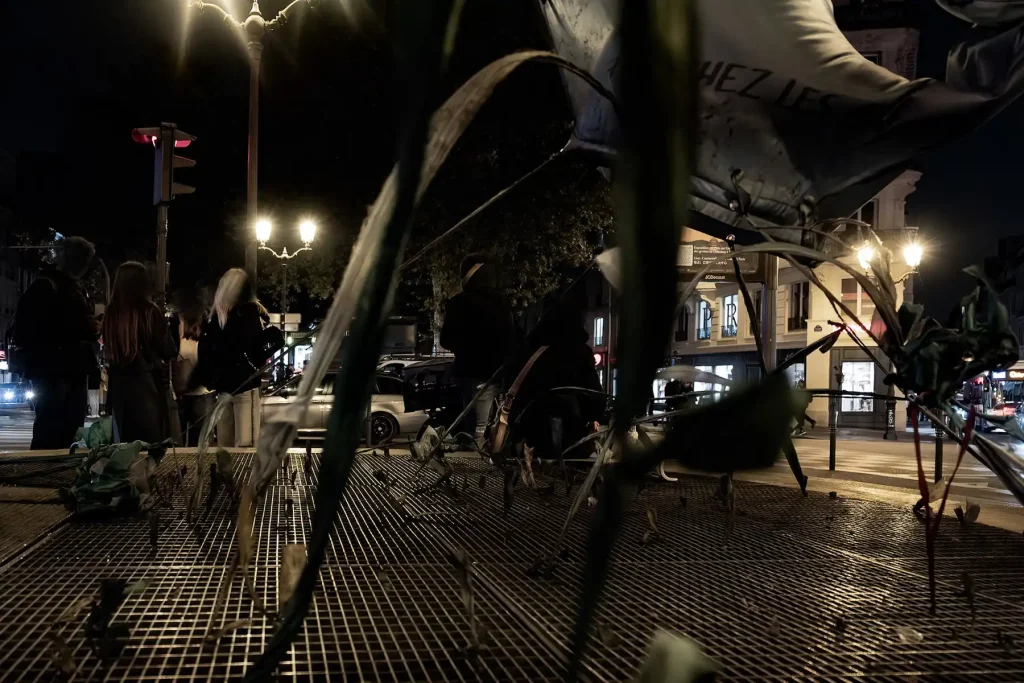
    Annette-Karin Richards is a New Zealand artist and writer working across photography, drawn to environmental portraiture, expressionist abstraction, and landscapes. Her practice probes the deep imprints of colonialism, not as distant histories, but as living relationships etched into people and place. She listens to silences, to what has been hidden or erased, working in the thresholds between memory and forgetting, absence and presence, decay and light. Her images emerge from spaces where grief and resilience co-exist, offering not answers, but openings.


    Meet the Artist

    How do you use photography to explore the ongoing impact of colonialism in your work?

    Photography, for me, is not only about making images — it is about listening to what lingers in the fractures of history. Colonialism severed connections to land, culture, and belonging, and those echoes are still with us.

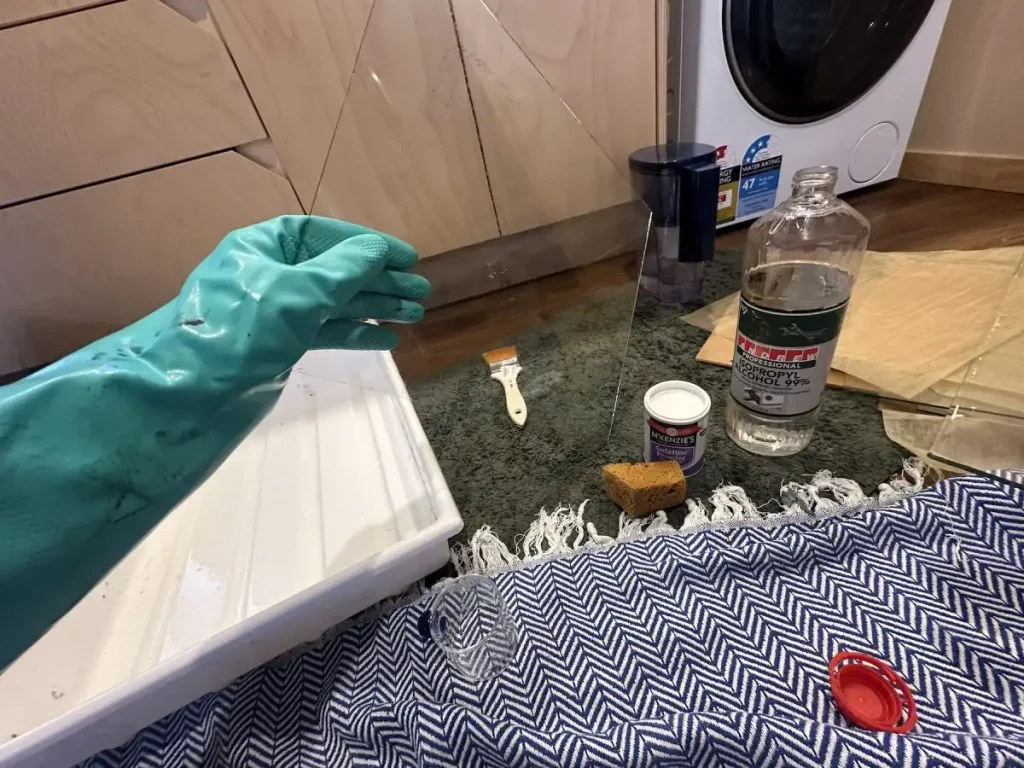
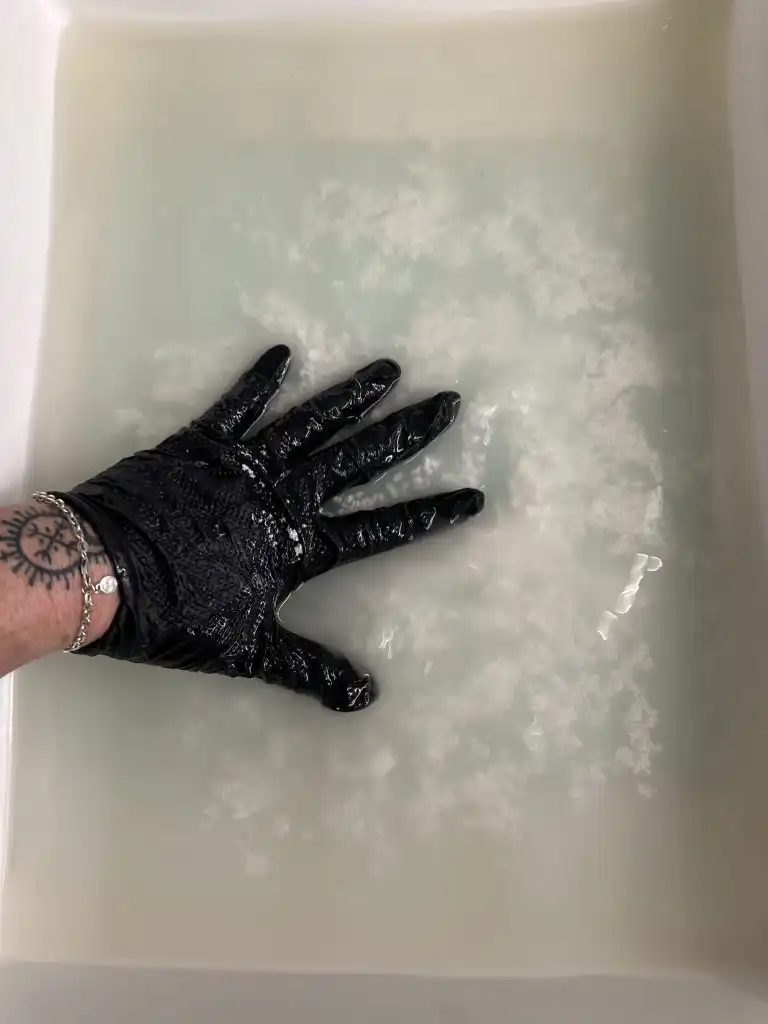
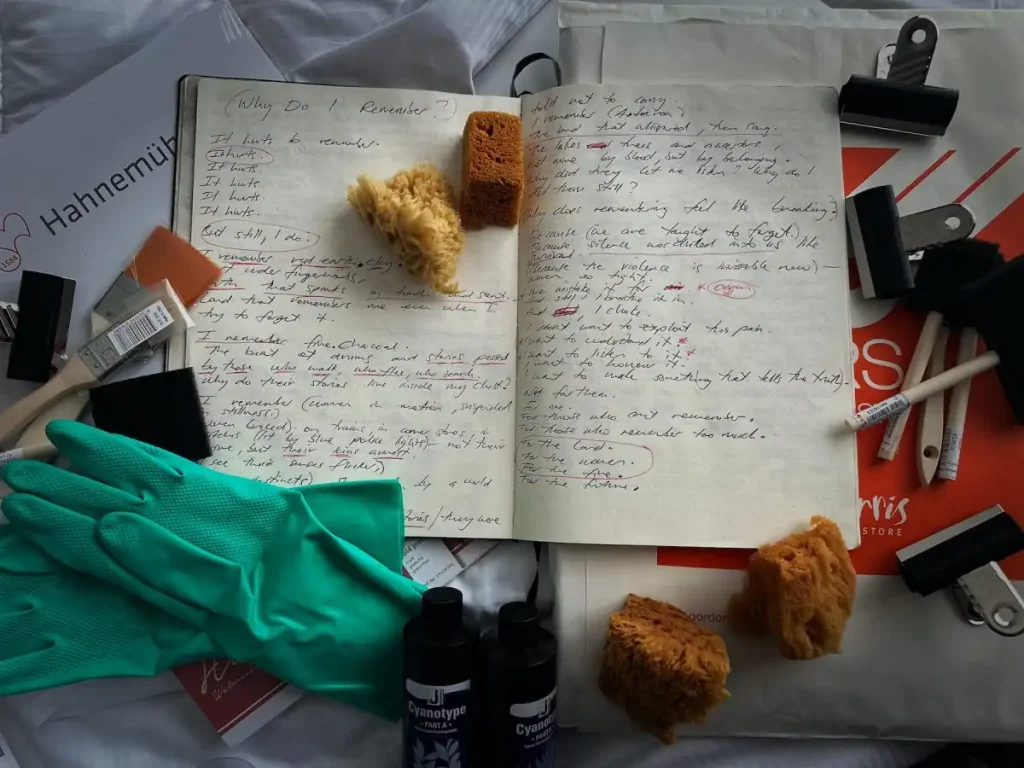
    I work with fragile 19th-century glass processes, embracing imperfection, cracks, and accidents as a language of memory. Each plate becomes a site where grief and resilience coexist. The photographs are not fixed objects but living traces of rupture and repair, carrying the weight of what is remembered — and forgotten.

    Can you tell us more about your experience in Berlin and how it influenced your current work?

    Berlin was pivotal. Especially time in Kreuzberg, Kotti, and Little Istanbul — places where fracture and resilience live side by side. That coexistence has shaped how I think about rupture and repair.

    But Berlin was only one part of a wider journey. I had been living in Denmark, studying a master’s in photojournalism focused on crisis and conflict. When I realised that path wasn’t mine, I left, and that decision opened space for art. I travelled through Germany, Belgium, France, Holland, and the UK before returning home to Aotearoa. Each place left its trace, but Berlin’s rawness continues to inform how I photograph memory and belonging.

    How does your current residency connect with your broader artistic journey?

    This residency feels like a convergence. The darkroom is not only a technical space — it mirrors my inner work. Just as the emulsion clings imperfectly to glass, I’m learning to accept what clings in me and to release what no longer serves.

    The journey across continents — my birthplace in Olpe, ancestral sites in the UK, the layered histories of Europe — has deepened my sense of connection to Aotearoa. Returning home, I’ve realised that our belonging here flows through the manaakitanga of Māori, whose generosity allows us to stand on this land. That reflection is now at the heart of my work.

    What is the role of abstraction in your photography?

    Abstraction lets me move beyond representation into something closer to memory — layered, fragile, shifting. I’m less interested in showing what something looks like than in making visible what it feels like: grief, recognition, resilience, belonging.

    The cracks, the uneven coatings, the way light leaks and stains — these are not mistakes but the work itself. They echo how memory moves: fragmented, porous, bleeding across time. Abstraction offers space for viewers to enter the work and locate their own stories within it.

    What have you discovered about yourself through this residency?

    That the work and the life are inseparable. In the darkroom, fragility is not something to resist but to embrace. The slow process of coating glass, of watching light emerge and dissolve, is also the process of learning how to live — with openness, with release, with attention.

    At this point in my journey, I’ve realised the work is not just about photography. It is about purpose, about how to inhabit this life fully — present, rooted, responsive to both light and fracture.

    Is there a specific memory or place that has shaped your work during this residency? How did you include it in your practice?

    Yes — several, across different timelines. In Olpe, Germany, my body remembered before my mind did — a recognition etched into place. In the UK, ancestral threads surfaced. And here in Aotearoa, my sense of belonging has been reflected back through Māori manaakitanga — a reminder that belonging is granted through generosity as much as through land.

    Those moments filter into the darkroom. Each plate becomes a mirror of layered experiences: light breaking through fracture, belonging redefined, memory surfacing. The work has become both art and healing — showing me that the cracks are not endings, but beginnings

    Statement

    Annette-Karin Richards is a New Zealand artist and writer working across photography, drawn to environmental portraiture, expressionist abstraction, and landscapes. Her practice probes the deep imprints of colonialism—not as distant histories, but as living relationships etched into people and place. She listen to silences, to what has been hidden or erased, working in the thresholds between memory and forgetting, absence and presence, decay and light. Her images emerge from spaces where grief and resilience co-exist—offering not answers, but openings.

    GlogauAIR Project

    How the Light Gets Out is an interrogation of the female gaze within colonial and patriarchal frameworks. It is a meditation on rupture, not rapture—where women are not symbols but presences, unflinching in their visibility. Set within fractured urban spaces and haunted architectures, the project reveals how light seeps through destruction, how memory lingers in ruins, and how resistance endures across generations.

    CV Summary

    • Annette Karin Richards is a New Zealand photographer and writer with an international practice, having exhibited in Paris, New York, Seoul, and Toronto, with upcoming shows in Venice and Barcelona.
    • Her work explores the intersections of memory, identity, and colonial histories through evocative visual storytelling.
    • Blending environmental portraiture, abstraction, and landscape, her images challenge erasure and illuminate what has been hidden or silenced.
    • Supported by mentors and organisations such as Eyes In Progress, Valerie Fougeirol, Ed Kashi, and The Big Idea, Annette’s practice is rooted in listening—closely, ethically—to marginalised voices and the geographies they inhabit.

    Gallery

  • Megan Sharkey

    Megan Sharkey

    Megan Sharkey is GlogauAIR resident
    from July, 2025 to September, 2025

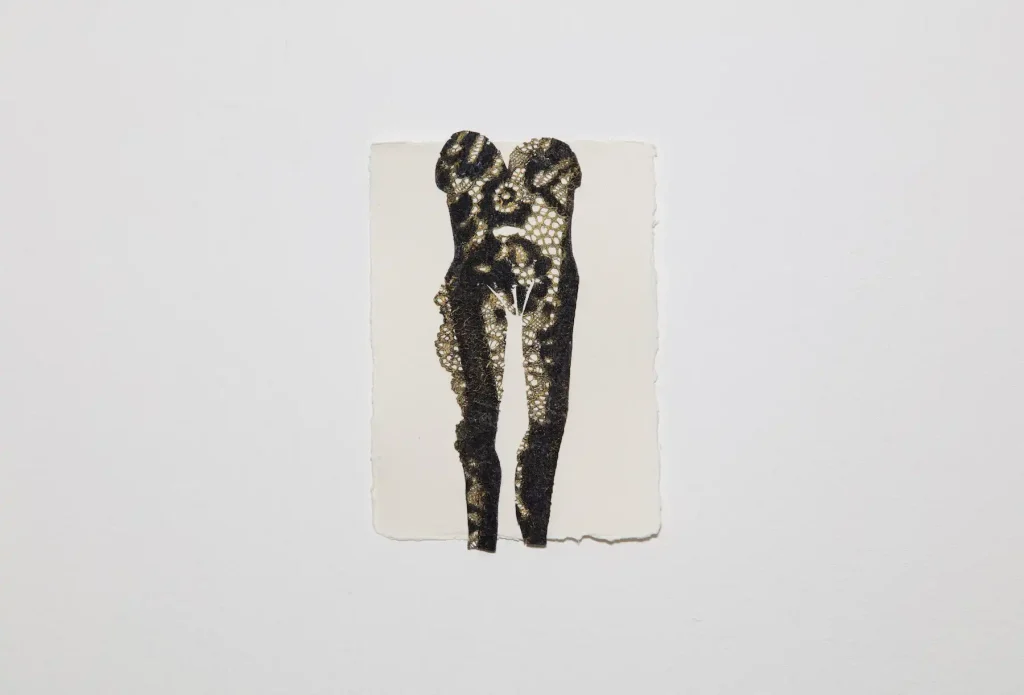
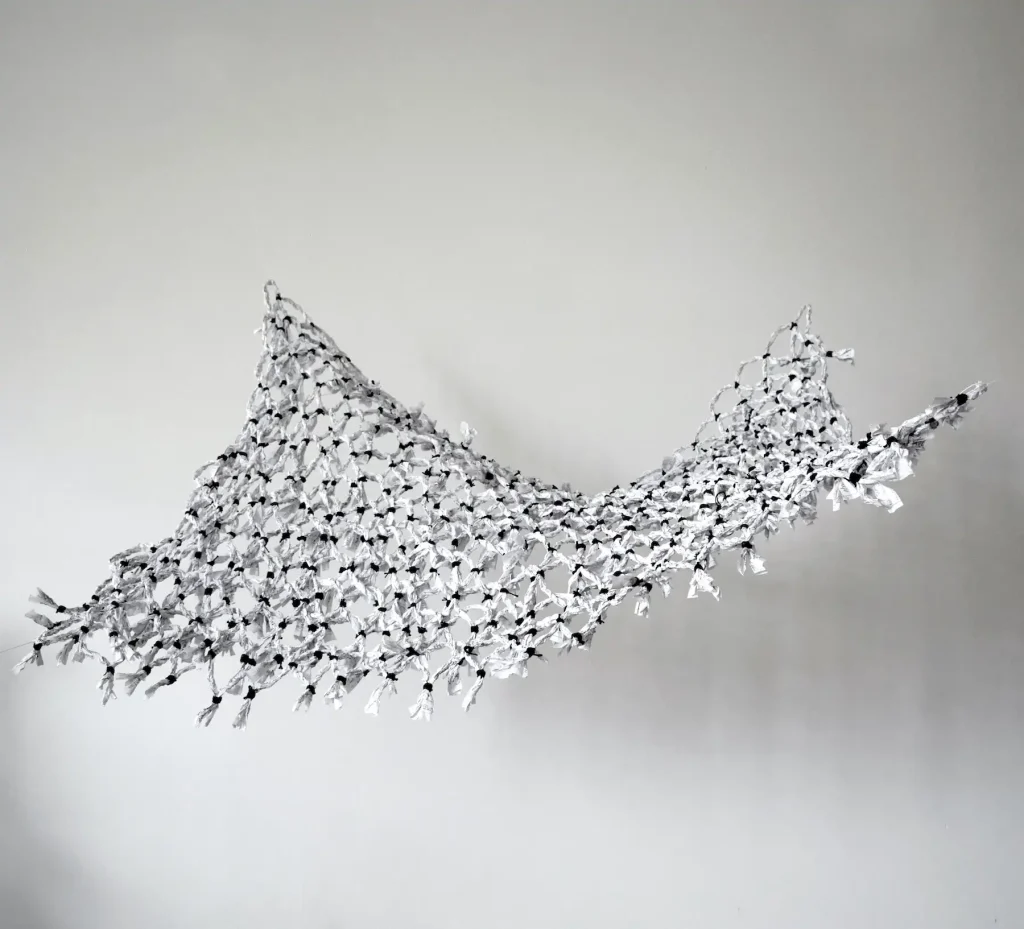
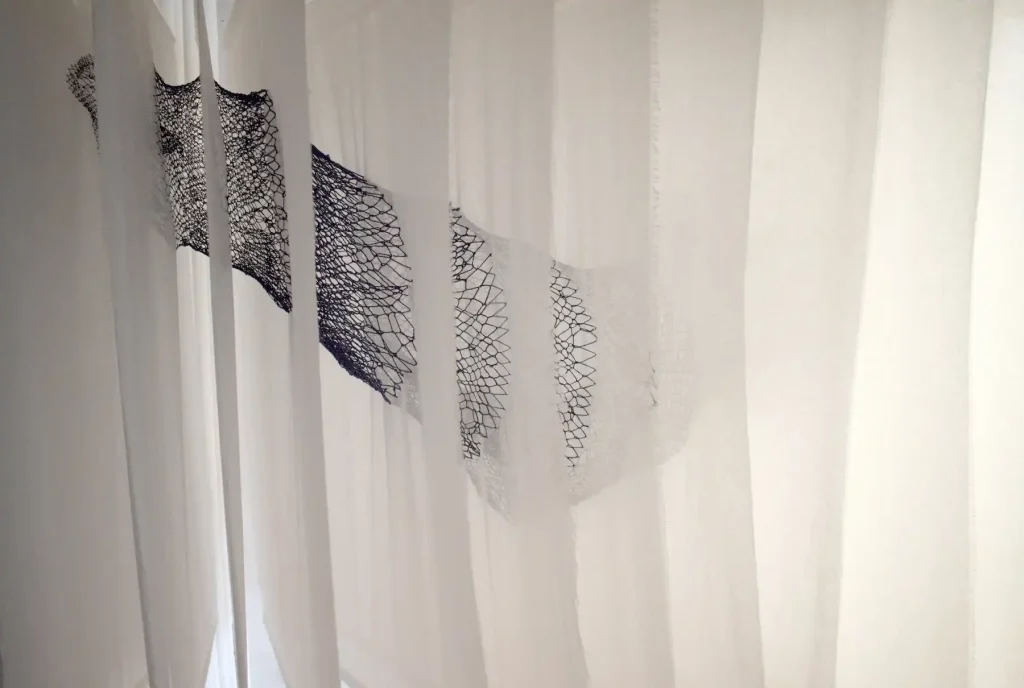
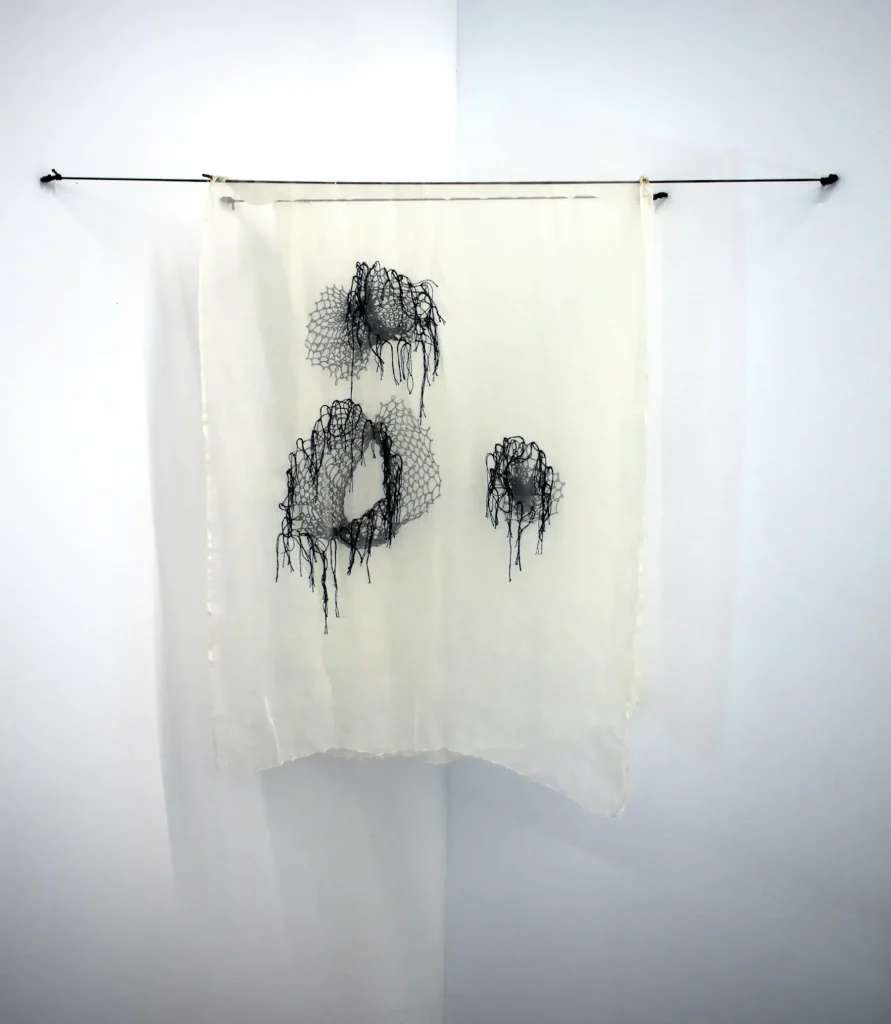
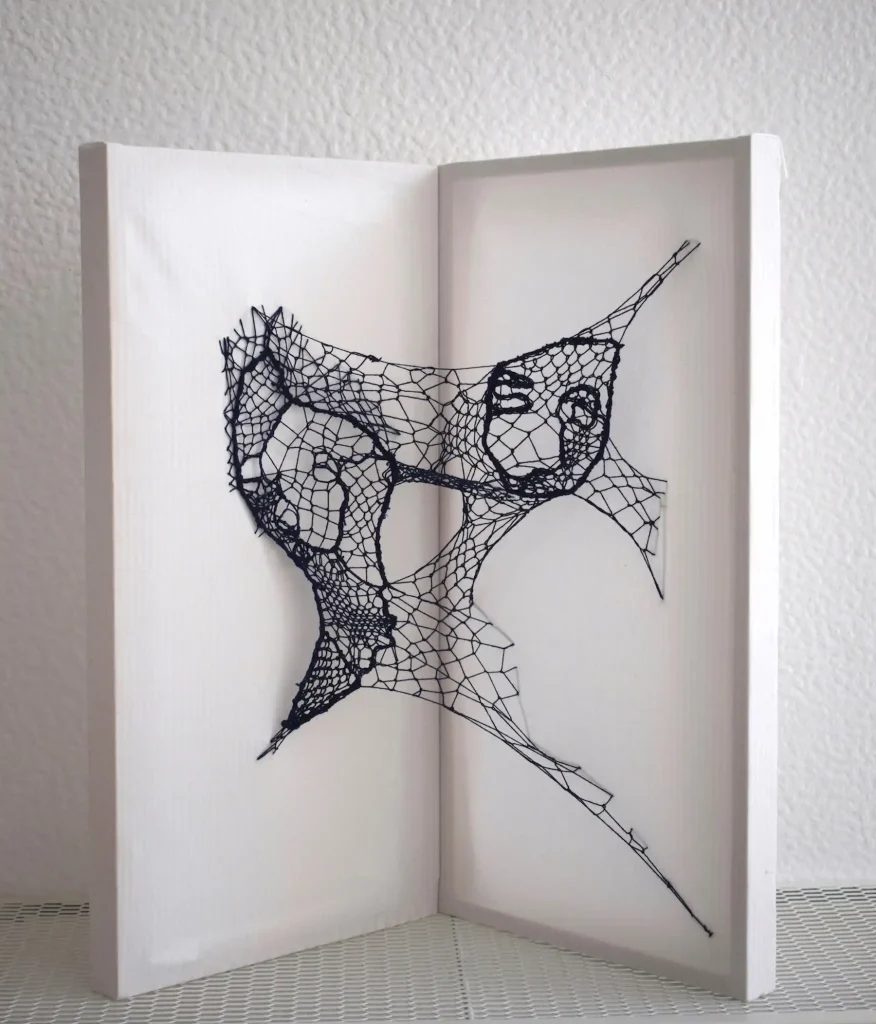
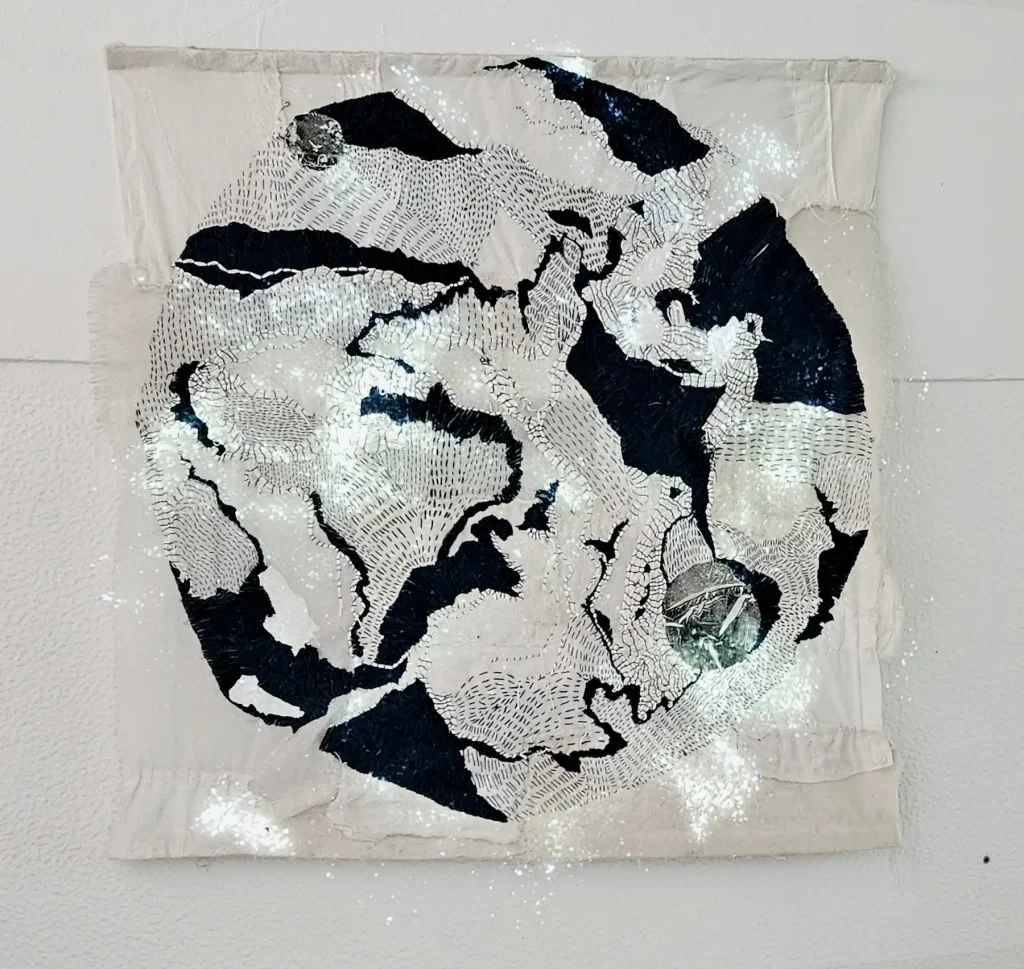
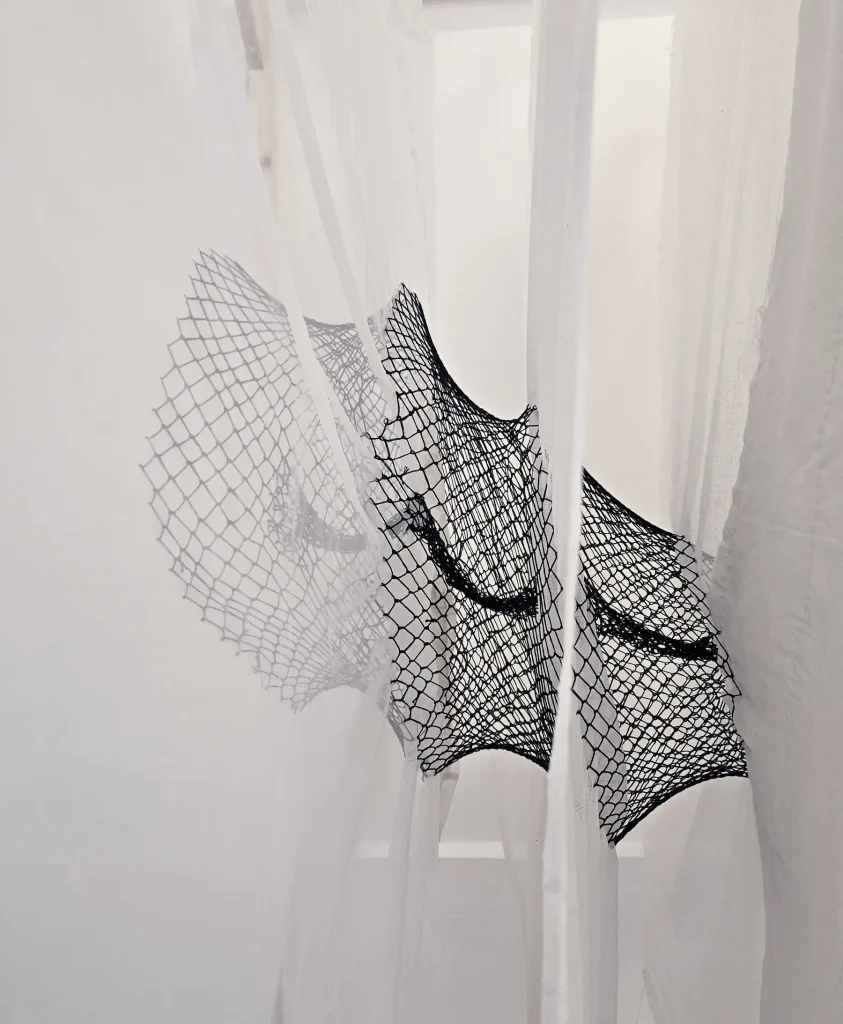
    Megan Sharkey is an artist whose practice explores presence, memory, and the physicality of time through hand-stitched and lace-making techniques. Working primarily in abstract 2D and 3D forms, her pieces give shape to intangible experiences and are grounded in materiality, care, and light. Originally from Wales and now based in Porto, Sharkey has exhibited internationally in both solo and group exhibitions.


    Meet the Artist

    Statement

    Megan Sharkey is an artist whose work explores presence, memory, and the physicality of time. Using hand-stitched and lace-making techniques, she creates mostly abstract 2D and 3D pieces that give form to intangible experiences. Rooted in materiality, care, and light, her work invites pause and reflection. Originally from Wales, she lives and works in Porto and has exhibited her work in solo and group shows internationally.

    GlogauAIR Project

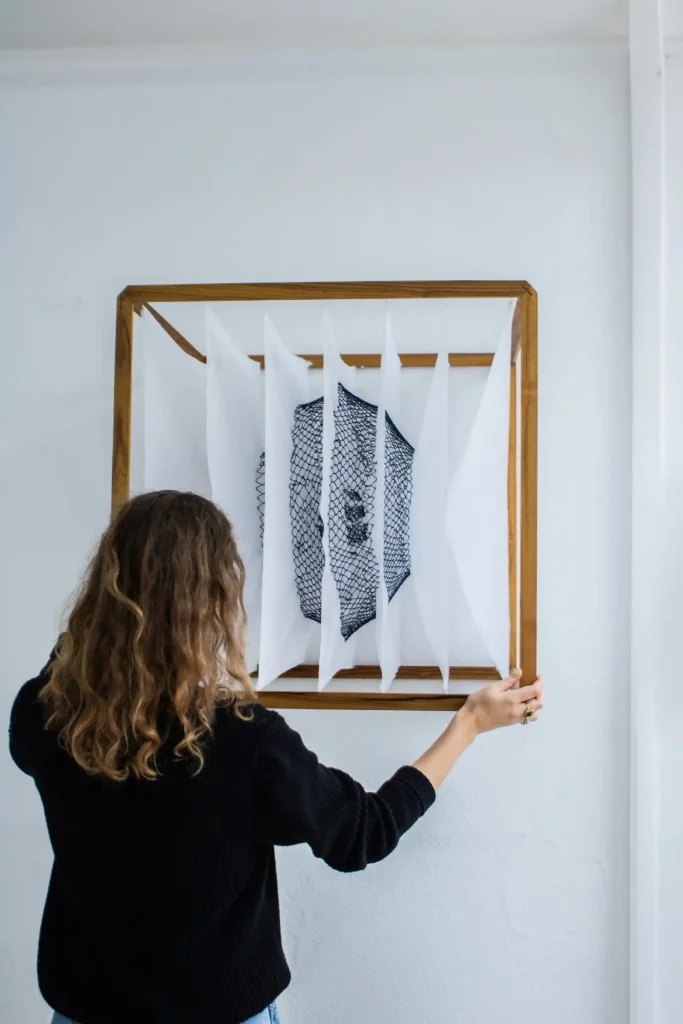
    During this residency, I would like to further explore the three-dimensional forms I’ve been developing over the past year. I’m particularly interested in how different structures or ‘containers’ – using light, layered fabric, and hand-made lace – can create an emotional and immersive encounter between the viewer and the work. I plan to experiment with how these pieces can shift in scale and form, and to explore the responses they evoke. This project will continue to centre themes of emotion, presence, connection, and ritual.

    CV Summary

    • 2025 – Group Exhibition,XI WTA Biennial – The Four Elements, Miami Institute of Fine Arts, Miami, USA
    • 2025- Group Exhibition, Between the light and the invisible, MACS, Porto, Portugal
    • 2024 – Solo Exhibition,TEMPO, Museu Quinta de Santiago, Porto, Portugal
    • 2024 – Awarded,First Award – The 15th International Textile and Fibre Art Biennial Scythia, Ivano-Frankivs’k, Ukraine
    • 2024 – Duo Exhibition,Protected Areas / Áreas Protegidas, Biblioteca Municipal de Santa Cruz da Graciosa, Azores, Portugal
    • 2024 – Group Exhibition,Biennale Objet Textile à La Manufacture, Roubaix, France
    • 2023 – Artist Residency,Biennale Internationale de Lin du Portneuf, Quebec, Canada
    • 2022 – Group Exhibition,Unfinished Exhibition, OKNA Eastern European Centre, Porto, Portugal
    • 2022 – Solo Exhibition,Tales from tall stones, Hotelier-O Art Space, Porto, Portugal

    Gallery

  • Pei Shan Lee

    Pei Shan Lee

    Pei Shan Lee is GlogauAIR resident
    from July, 2025 to September, 2025

    Pei Shan Lee creates art that blends dreamlike images, digital visuals, and sculpture to explore identity in a fast-changing, tech-driven world. Her work reflects on how the idea of “self” is no longer fixed, but made of memories, data, and shifting experiences. Using surrealism and non-Western storytelling, she builds unstable, fragmented spaces that question what it means to exist in a time shaped by technology, disconnection, and constant change.


    Meet the Artist

    Statement

    Pei Shan Lee’s work flows between dreamlike imagery, generative visuals, and sculpture, centered on the posthuman body, memory, and virtual boundaries. She employs surrealism and non-Western narrative structures to construct fragmented, unstable spaces that reflect the ambiguity and uncertainty of identity amid accelerating technology, cultural displacement, and shifting subjectivities. Lee’s practice responds to a posthuman hybrid reality where the “self” is no longer a fixed entity but a fluid structure composed of data, memory, and fragments. Her works exist in states of dislocation, decay, and the beauty of rupture, quietly questioning the boundaries and meaning of existence in a generation defined by simulation, uncertainty, and continual transformation.

    GlogauAIR Project

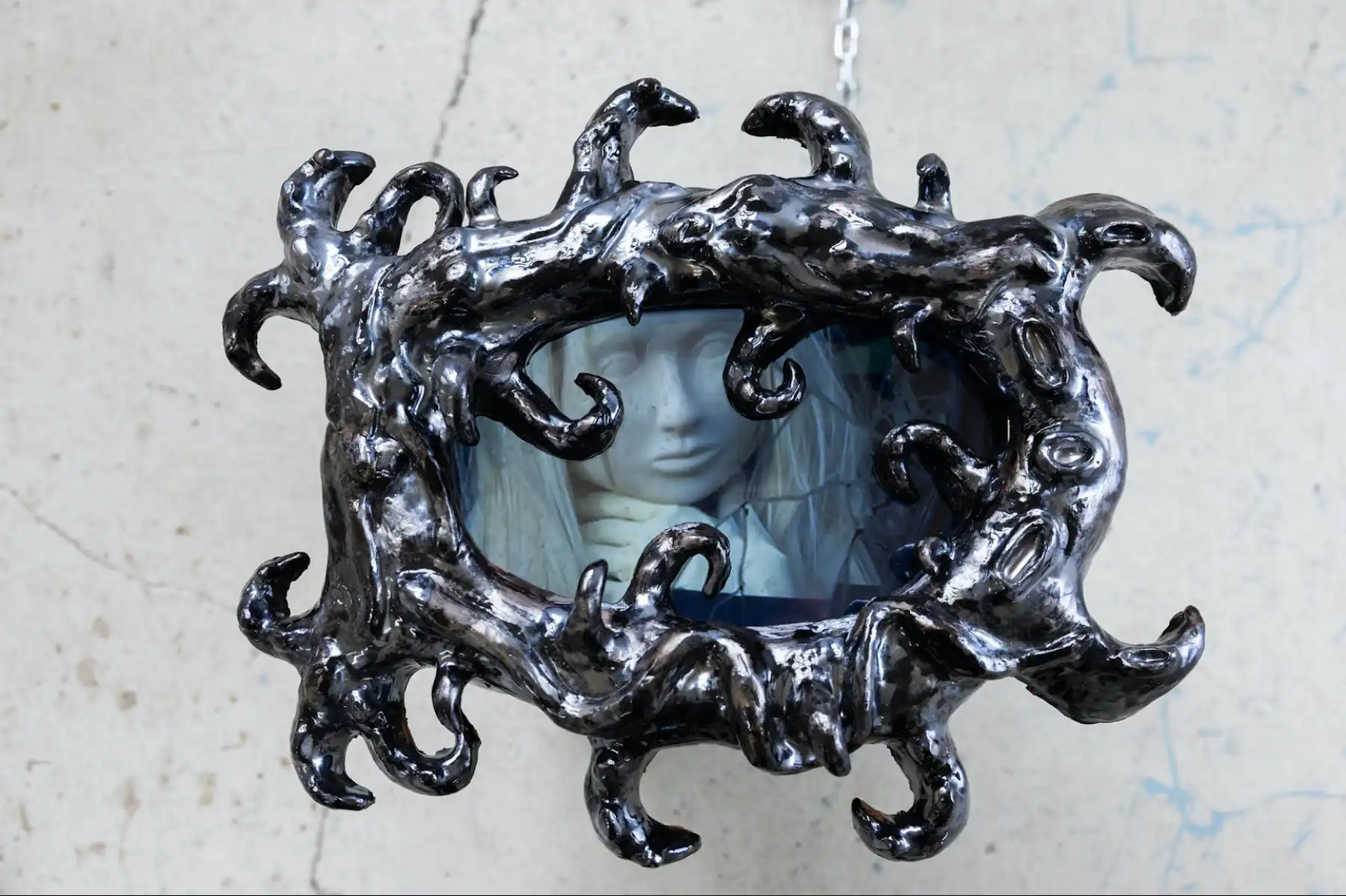
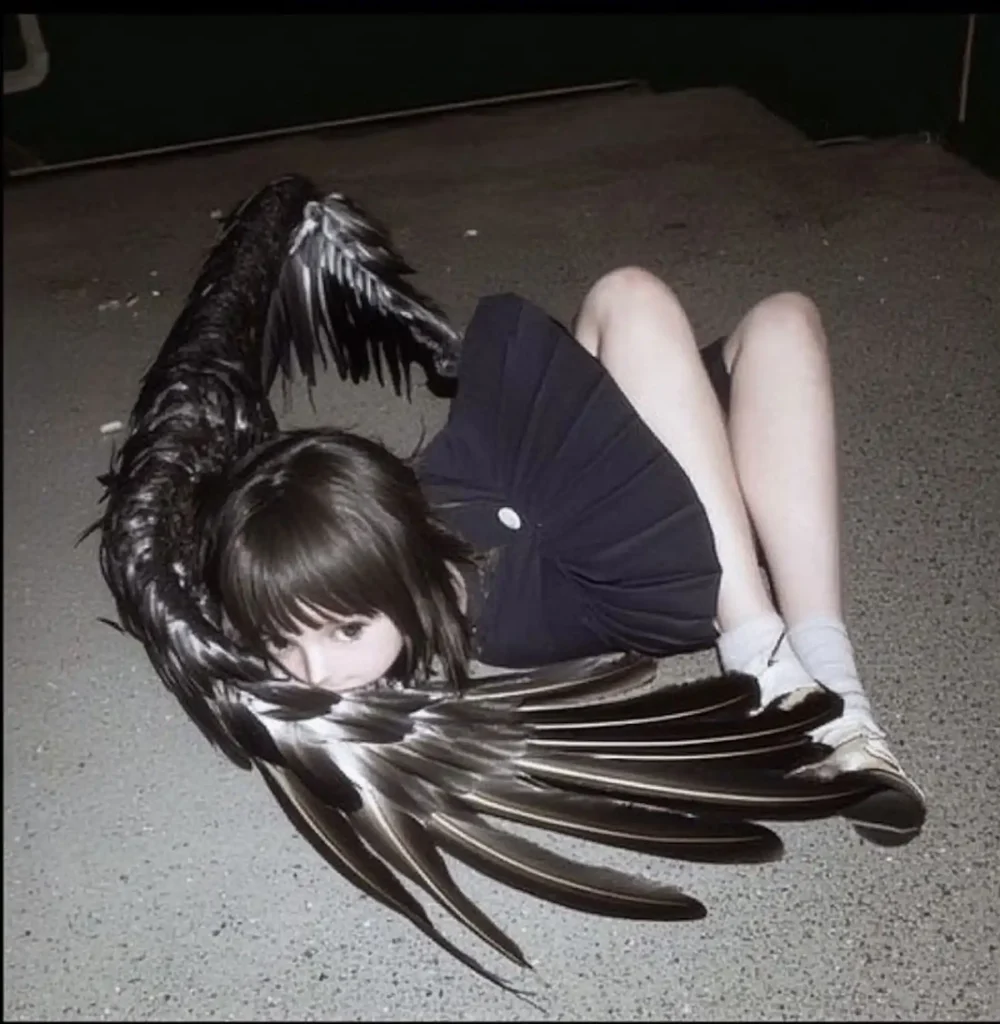
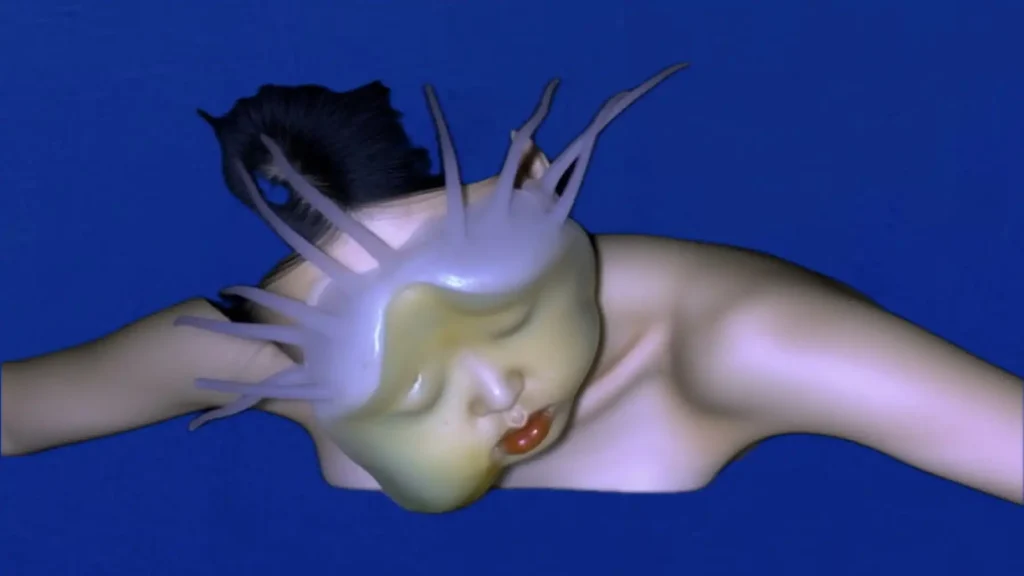
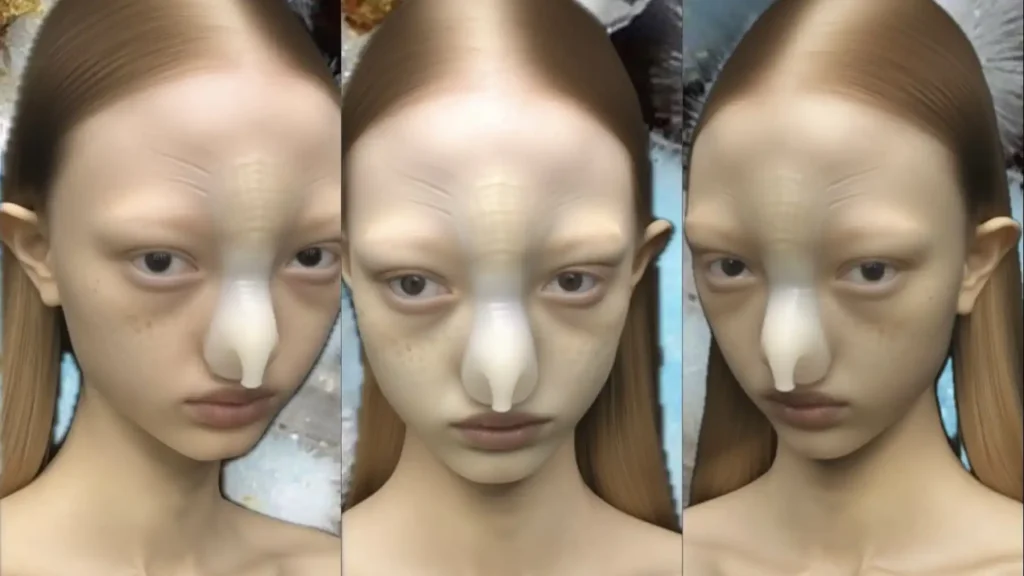
    During this residency, I will continue my research into the unstable boundaries of the human body through artificial extensions such as masks, prosthetics, discarded objects, and ceramics. My work explores metamorphosis as a continuous state—where bodies, identities, and materials shift, fragment, and reorganise beyond fixed categories. Drawing from posthumanist thinking, I am interested in how the self dissolves into hybrid, part-organic, part-synthetic forms. The project combines AI-generated imagery, photography, and sculpture to create spaces where the familiar turns unsettling, evoking the strange tension between organic transformation and synthetic presence. Through this, I explore how identity becomes fluid, fragmented, and quietly uncanny.

    CV Summary

    Education

    • 2018–2023 ACADEMY OF FINE ARTS PIETRO VANNUCCI

    Exhibitions

    • 2022 La Futura Natura— Spazio Arca di Pan, Panicale, Italy
    • 2025 We Art Open— No Title Gallery, Spazio Spuma, Venice, Italy
    • 2025 107ma Young Artist Collective — Bevilaqua La Masa Foundation, Venice, Italy
    • 2025 The Slime Knows— Erratum Projects, Brasserie Atlas, Brussels, Belgium

    Residencies

    • 2025 GlogauAIR Online Program

    Work Experience

    • 2023 Cultural mediator for the European Cultural Centre during the 2023 Architecture Biennale, Venice, Italy.
    • 2021–2022 Assistant to artist Giulia Cenci for the realization of the project Dead Dance at the 59th International Art Exhibition of La Biennale di Venezia, Pietraia di Cortona, Italy.

    Gallery

  • Kandice Kardell

    Kandice Kardell

    Kandice Kardell is GlogauAIR resident
    from July, 2025 to September, 2025

    United States


    Meet the Artist

    Coming soon

    Statement

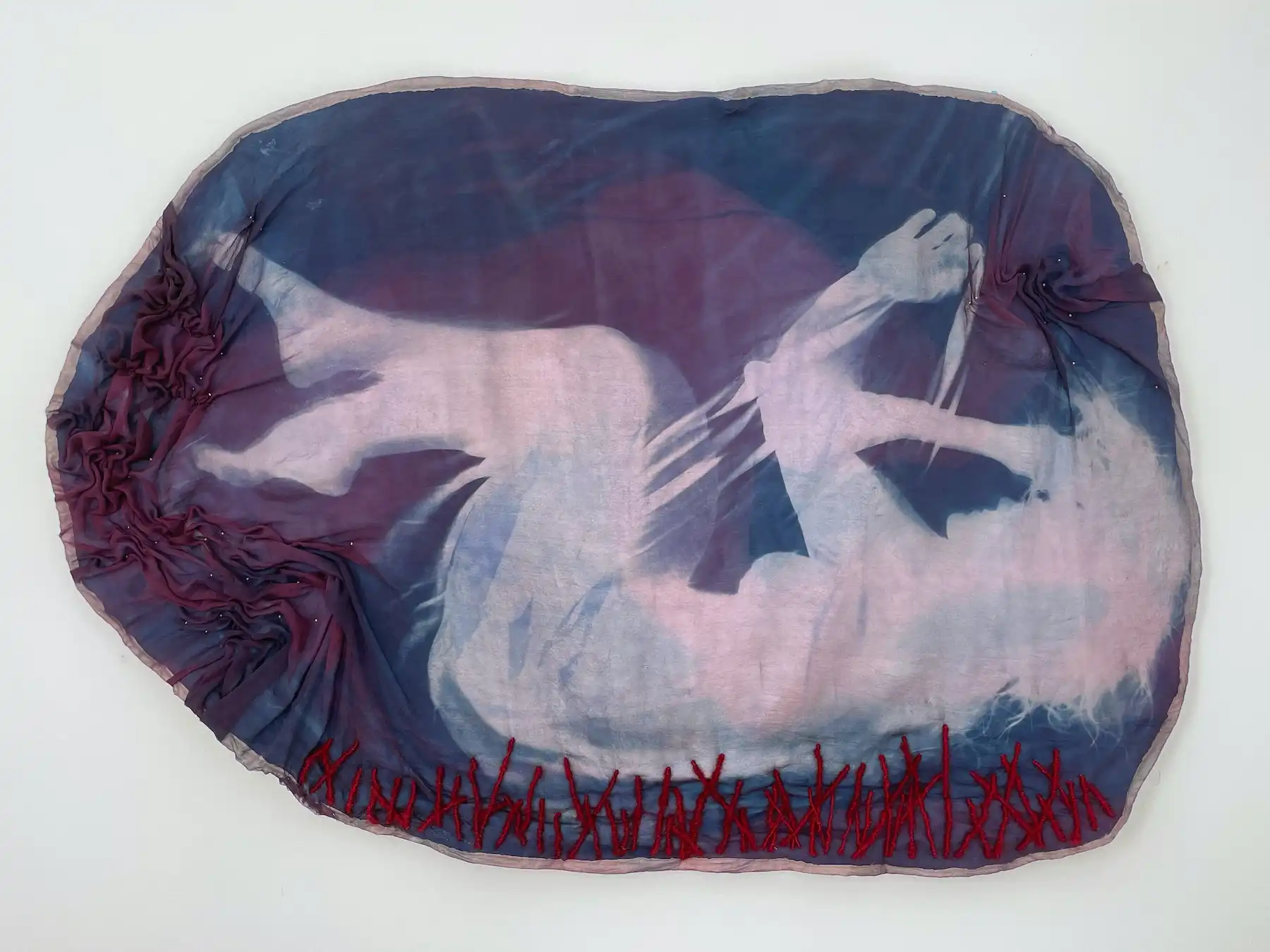
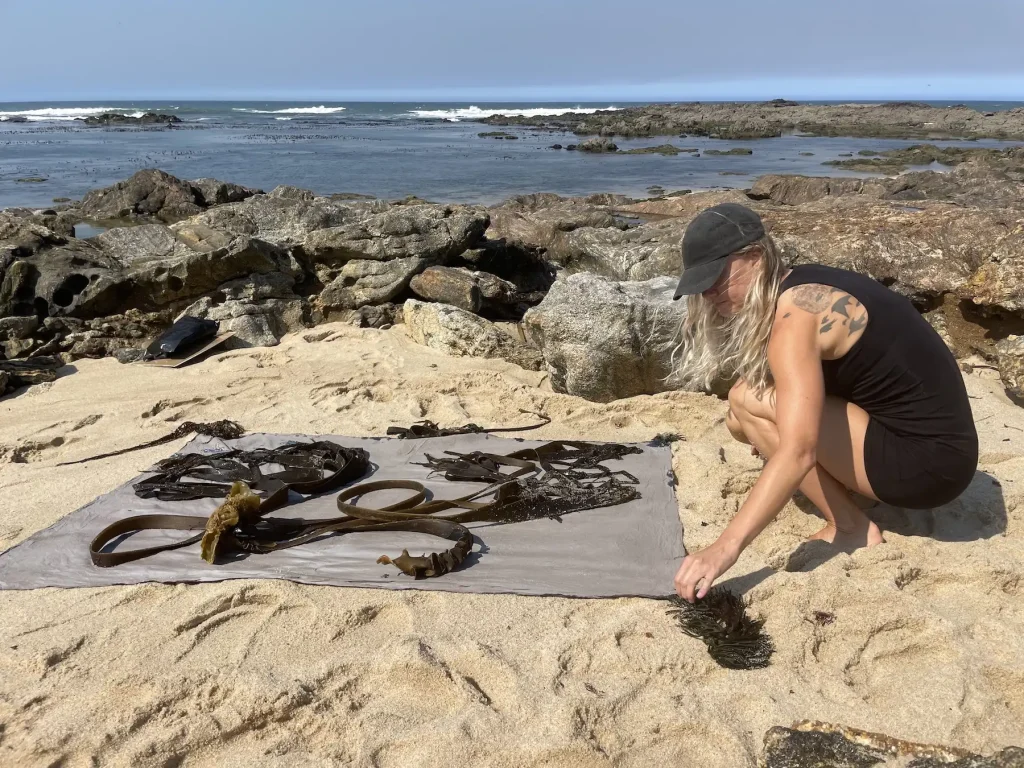
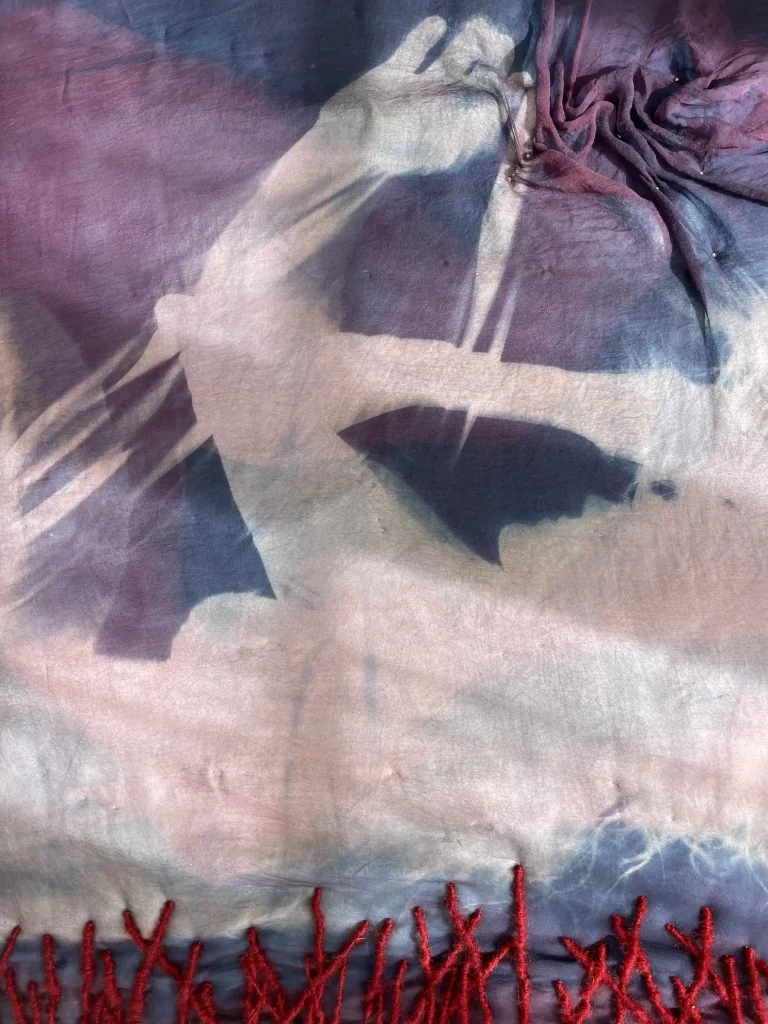
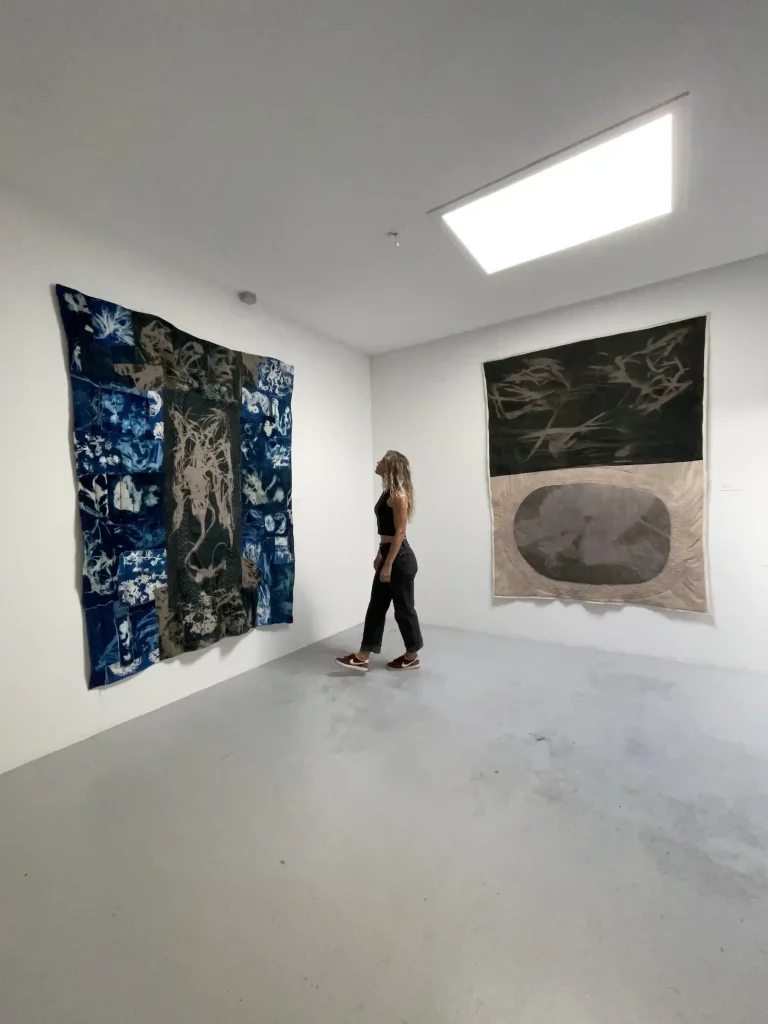
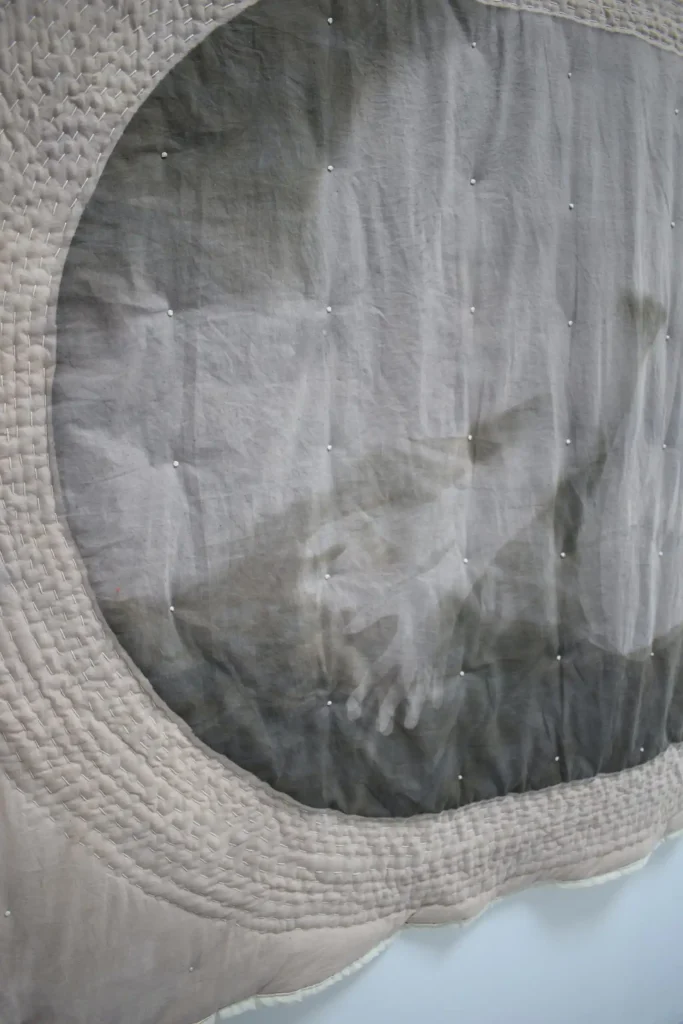
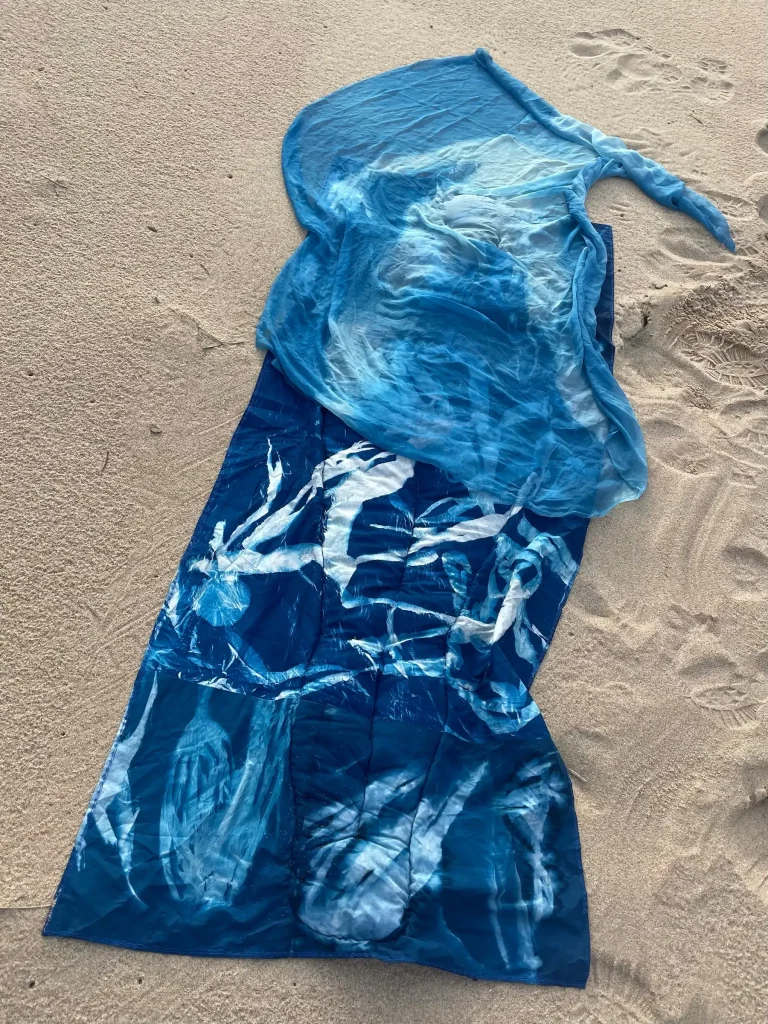
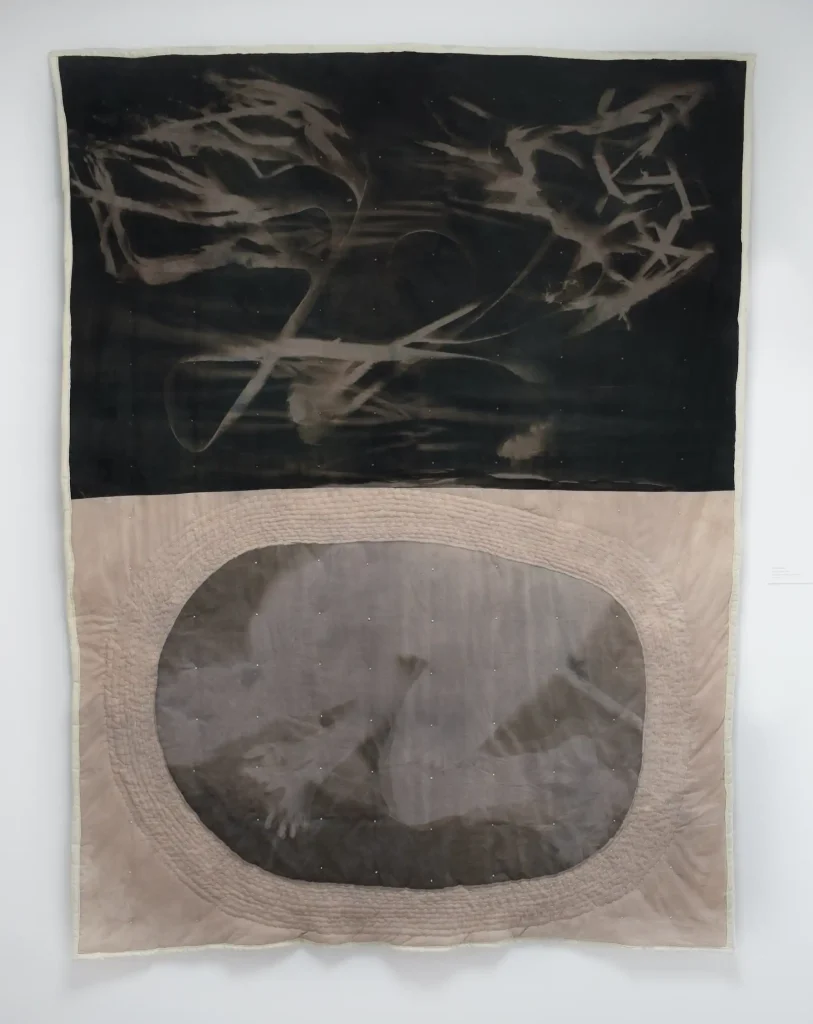
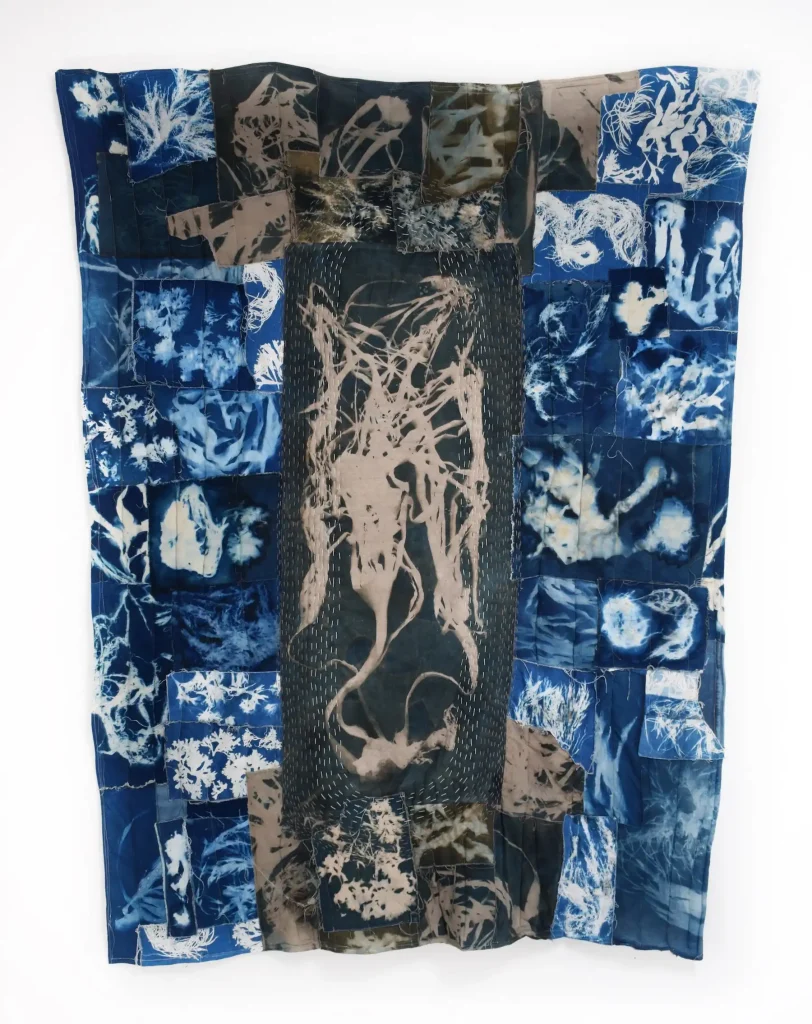
    My work explores the interplay between death and desire, examining how societal suppression of grief and denial of mortality disconnect us from the natural world. Cyanotype, natural dyes, hand-stitching, and foraged materials are integral to my process, with many of my pieces developed outdoors. The landscape itself becomes both medium and collaborator, as the sun, wind, water, and earth make their marks–intentionally or not. I invite reflection on impermanence, loss, and our place within an ecological and emotional whole.

    GlogauAIR Project

    Western culture’s pursuit of permanence—whether in art, memory, or environmental control—stands in contrast to natural cycles of impermanence and decay. This project expands my sustainable, site-specific practice near the sea as I explore materials derived from foraged algae to create works that embrace impermanence and reflect on grief, mortality, and ecological interconnection.

    CV Summary

    Bachelor of Fine Arts, Arizona State University

    2025

    • MESCLA, group exhibition, Mouco, Porto, Portugal
    • TOWARD 2050, group exhibition, Desert Botanical Garden, Phoenix, AZ

    2024

    • Spinning Away, solo exhibition, Allmo Gallery, Porto, Portugal
    • 100x100x100, group exhibition, Atelier 968, Porto, Portugal
    • Co-Crafting Democracy: Fiber Arts and Activism, group exhibition, Women of the Hall, Seneca Falls, NY

    2023

    • Portraits and Stills, solo exhibition, Cave Bombarda, Porto, Portugal

    2021

    • 2020, solo exhibition, Desert Crafted, Phoenix, AZ
    • Light Sensitive, juried group exhibition, Art Intersection, Gilbert, AZ

    2020

    • Death/Desire, solo exhibition, Biophilia, Phoenix, AZ
    • Light Sensitive, juried group exhibition, Art Intersection, Gilbert, AZ

    2019—2021

    • Tempe Studio Artist, Tempe Community Arts/Tempe School District, Tempe, AZ

    2018—2019

    • Molly Blank Fund Teaching Artist, Arizona State University, Tempe, AZ

    Gallery

  • Shuai Yang

    Shuai Yang

    Shuai Yang is GlogauAIR resident
    from July, 2025 to September, 2025

    China


    Meet the Artist

    Coming soon

    Statement

    My practice critiques the measurement-based épistémè that erodes subjectivity and authenticity. I engage with sculpture, performance, drawing, and painting, and embed the philosophy of printmaking (multiplicity, identicality, plurality, etc.) as a foundational conceptual threshold, revealing how institutional systems impose artificial order on an organic world, and seeking an embodied epistemology as an alternative.

    With support from the Donald C. Kelley Award, granted by the Printmaking Department at Massachusetts College of Art and Design (Boston, United States)

    GlogauAIR Project

    I aim to continue working with sculpture, conceptual drawing, and performative engagement, and to explore alternative epistemologies of measurement that diverge from the mathematical order. This philosophical endeavor will involve investigating knowledge, representation, and the subject-object problem through a combination of research and studio practice.

    CV Summary

    • M.F.A., Visual Arts, Columbia University, New York
    • B.F.A., Printmaking, Massachusetts College of Art and Design, Boston

    2024

    • At-Will Adaptation, Eli Klein Gallery, New York
    • Allure of the Land, Nars Main Gallery, New York
    • The Residency, Eli Klein Gallery, New York
    • Vermont Studio Center Residency, Johnson, Vermont
    • NARS Foundation International Artist Residency, New York
    • Visiting artist, Pratt Institute, New York

    2023

    • MFA Thesis, Wallach Gallery, Lenfest Center for the Arts, New York
    • Visiting artist, Massachusetts College of Art, Boston
    • Panel artist, LATITUDE Gallery, New York
    • Morty Frank Travel Grant, LeRoy Neiman Center for Print Studies, Columbia University, New York

    2022

    • Donald C. Kelly Artist Travel Grant, Massachusetts College of Art, Boston

    2021

    • Columbia University MFA Summer Show, Chashama Space, New York
    • First Year Show, Lenfest Center For The Arts, Columbia University, New York
    • I Thought It Was A Drought, 164 Ashburton Ave, Yonkers, New York

    2019

    Boston Printmakers Exhibition, Framingham State University, Framingham

    Gallery

  • Daniela Federighi

    Daniela Federighi

    Daniela Federighi is GlogauAIR resident
    from July, 2025 to September, 2025

    Brazil


    Meet the Artist

    Coming soon

    Statement

    Daniela Federighi is a Brazilian visual artist whose work explores and experiments with material, sensory, and almost theatrical encounters in everyday life. Her attentive observation of daily surroundings focuses mainly on spatiality tied to her lived experiences along the way, while also flirting with a sense of fable and possible fiction.

    She is currently building a body of work that emerges from the collection of personal records and ordinary materials with constructive and poetic potential — elements that are often manipulated, displaced, and juxtaposed. Formally, she works with photography, video, text, sculpture, collage, and assemblage, connecting analog and digital media in a kind of non-linear visual-material diary while also building bridges between seemingly disconnected fragments of the landscapes she collects.

    GlogauAIR Project

    During my time at GlogauAIR, I intend to deepen my practice of observing my surroundings by establishing new dialogues with a completely different context: the city of Berlin. As a foreigner, I expect visual and linguistic contrasts to emerge as meaningful triggers for investigation, and I’m curious about the kinds of encounters that may arise while wandering through the city.

    I’m interested in exploring tensions between materials and themes, which will likely be addressed through the use of found objects, personal items, and records in different media. Conceptually, I’ve been recently drawn to the idea of “trips,” understood as traveling, walking, imaginary journeys, and how that might relate to more intimate concerns, especially those connected to “home.” In this sense, I see the experience at GlogauAIR as a meaningful opportunity to potentially unfold this line of thought. I envision this body of work as a visual narrative of this period spent away from home.

    CV Summary

    Visual Artist

    1999, São Paulo, Brasil

    Education

    • 2023-today | Study group and mentorship with Charles Watson; online
    • 2023 | Property & Provenance by Charles Watson; Rio de Janeiro, Brasil
    • 2019–2022 | University of Hertfordshire; Bachelor of Graphic Design
    • 2018–2019 | Escola Britânica de Artes Criativas (EBAC); Foundation Art & Design

    Group Exhibitions

    • 2025 | Contra-horizonte, Galeria ArteFASAM; São Paulo, Brasil
    • 2025 | Play-Date; São Paulo, Brasil
    • 2022 | Contínua; Galeria Luís Maluf; São Paulo, Brasil
    • 2022 | Para Você, Camnitzer; Residência Edifício Vera; São Paulo, Brasil
    • 2020 | Arte da Lembrança, Bianca Boeckel Galeria; São Paulo, Brasil
    • 2020 | Arte da Quarentena, Artsoul via Bianca Boeckel Galeria; Online

    Residencies

    • 2024 Residência Edifício Vera, São Paulo, Brasil

    Gallery

  • Alejandra Prieto

    Alejandra Prieto

    Alejandra Prieto is GlogauAIR resident
    from July, 2025 to September, 2025

    Alejandra Prieto is a Chilean artist whose practice explores the connections between chemical elements found in minerals and the human body. Through this lens, she investigates how materials extracted from the earth such as lithium, used both in electronics and mental health treatment, can shape our biology, perceptions, and global systems.


    Meet the Artist

    Could you tell me a bit about your background and the project you are proposing for this three-month residency here at the GlogauAIR?

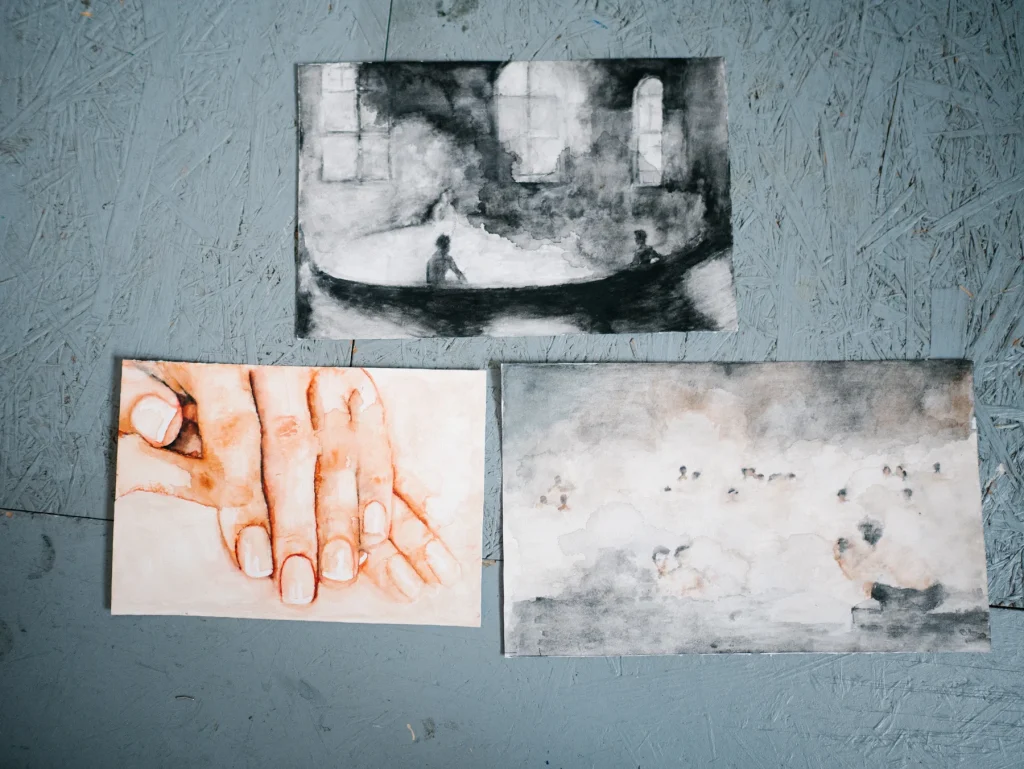
    In my usual practice, I work mainly with sculpture, often using heavy or even toxic materials like copper or lithium. So I tend to work outside the city, in the countryside, where I also have the space I need. At the same time, I’ve always enjoyed painting with watercolors. I have a neurological condition called Essential Tremor, which makes my hands shake and this complicates the painting process a bit, but that’s exactly what draws me to it. It fascinates me to explore this relationship between my body, its movement, and the paint itself.

    During this residency, I plan to present two projects. The first is a series of watercolors based on my research into chemical elements and their connection to the human body. The second is a video project where I ask ChatGPT the following prompt: “25 Contemporary Art Project Ideas, Specifically Created by Artists from the Global South.” With this one I want to empathise in a humorous way the European gaze in the art world towards Latin American artists, there’s often this expectation that our work should highlight poverty, victimhood, or exoticism. While these themes are undoubtedly valid, they also carry the risk of becoming clichés, and for many of us they can feel limiting.

    How do chemical elements relate to the human body in the materialization of your work? 

    I work with the elements of the periodic table with a holistic perspective. I’m fascinated by how chemical elements connect the human body with both living and non-living organisms. Our bodies are full of these elements: iron in the blood, calcium in the bones, copper, zinc and others in smaller amounts. The lack of them affects the balance in our bodies. Objects around us are also made of the same elements, which means that the possible relationships between everything are endless and often surprising.

    One of my favorite elements is lithium. It’s used in batteries, but it can also be prescribed for bipolar disorder. That duality says a lot about the subjective and complex role of these elements in our lives, and about how they’re tied to the way the world is organized politically and economically. We as humans tend to think of ourselves as something separated from the world around us, but in reality, everything is interconnected, belonging to a much larger web.

    My work with the elements is an attempt to tell their stories: what they do, how they transform when treated in specific ways, and how they act within different practices. Sometimes my approach is more physical, other times more conceptual. For example, I’ve made body sculptures out of coal, but I’ve also created a short film inspired by nitrogen. The piece recreates a parallel future where suicide by nitrogen—often known as “the sweet death”—is socially accepted. It was a way to reflect on both the material’s properties and its psychological implications.

    In your practice you explore ways of expressing and externalizing psychological illnesses. What limitations do you see in contemporary social and artistic approaches to these subjects?

    Artistically, I think these themes have started to be explored more openly in recent years, which I see as a positive shift. Bringing them to light helps to break down the stigma and taboo that often surround them and makes it easier for people to relate with it.

    Socially, I think we still have a long way to go. Mental and neurological conditions are often treated as something abnormal and people experiencing them can easily be marginalized or judged. But most of these conditions come from imbalances in the chemical processes of the brain. Again, the elements are present here. If we collectively understood the close interaction and co-existence between humans and all elements and organisms around them, we’d have more tools—and more compassion—for addressing these realities.

    Statement

    My work is primarily centered on the chemical elements found in minerals and in our own bodies, in order to connect seemingly distant worlds. Elements extracted from the earth can affect us on multiple levels. Lithium, for example—used in the batteries that power our electronic devices—also serves as a mood stabilizer for bipolar disorder. This latter connection to our neurochemistry turns the material into an actor with multiple layers of impact, affecting not only our economy and geopolitics, but also altering our bodies and subjectivity.

    GlogauAIR Project

    The project consists of a video titled “25 Contemporary Art Project Ideas, Specifically Created by Artists from the Global South.” The video is based on asking that question to ChatGPT and recording the answers, which will then be projected on loop. Alongside the projection, I plan to present five small-format watercolors based on my research into chemical elements and their relationship with the human body.

    CV Summary

    • Alejandra Prieto was born in Santiago, Chile, in 1980.
    • She holds a Bachelor’s degree in Arts from the Pontificia Universidad Católica de Chile and a Master’s degree in Visual Arts from the Universidad de Chile.
    • Solo exhibitions:
      • Galería Gabriela Mistral, Santiago
      • Proyecto Fachada at Sala de Arte Público Siqueiros, Mexico City
      • Y Gallery, New York
      • Galería Die Ecke, Santiago
      • Sala Arte CCU, Santiago
      • Sagrada Mercancía, Santiago
    • Group exhibitions:
      • 11th Havana Biennial
      • 7th Mercosur Biennial in Porto Alegre
      • Palais de Tokyo, Paris
      • Saatchi Gallery, London
      • Paul Kasmin Gallery, New York
      • NC-Arte, Bogotá
      • MAC USP, São Paulo
      • National Museum of Women in the Arts, Washington D.C.
      • Roebling Hall Gallery, New York
      • Färgfabriken, Stockholm
    • Residencies:
      • Art OMI, New York
      • La Tallera, Cuernavaca
      • URRA, Buenos Aires
      • ISCP, New York
      • LARA (Latin American Roaming Art)

    Gallery